
Why Most Healthcare Marketing Strategy Documents Never Translate Into Real Growth
Healthcare marketing strategy is discussed extensively in hospitals today. Presentations are created, plans are approved, agencies are onboarded, and execution begins with enthusiasm. Yet months later, leadership often feels dissatisfied. Visibility may improve, activity may increase, but growth remains inconsistent and fragile.
This gap does not exist because healthcare marketing strategy is unclear. It exists because most strategies are designed to look complete on paper, not to survive real patient behaviour.
In healthcare, strategy fails not at planning but at translation.
Why Healthcare Marketing Strategy Looks Strong but Performs Weak
Most healthcare marketing strategies are built around channels, campaigns, and timelines. They outline what will be done, where it will be promoted, and how often content will be published. These elements create a sense of structure and control, which leadership finds reassuring.
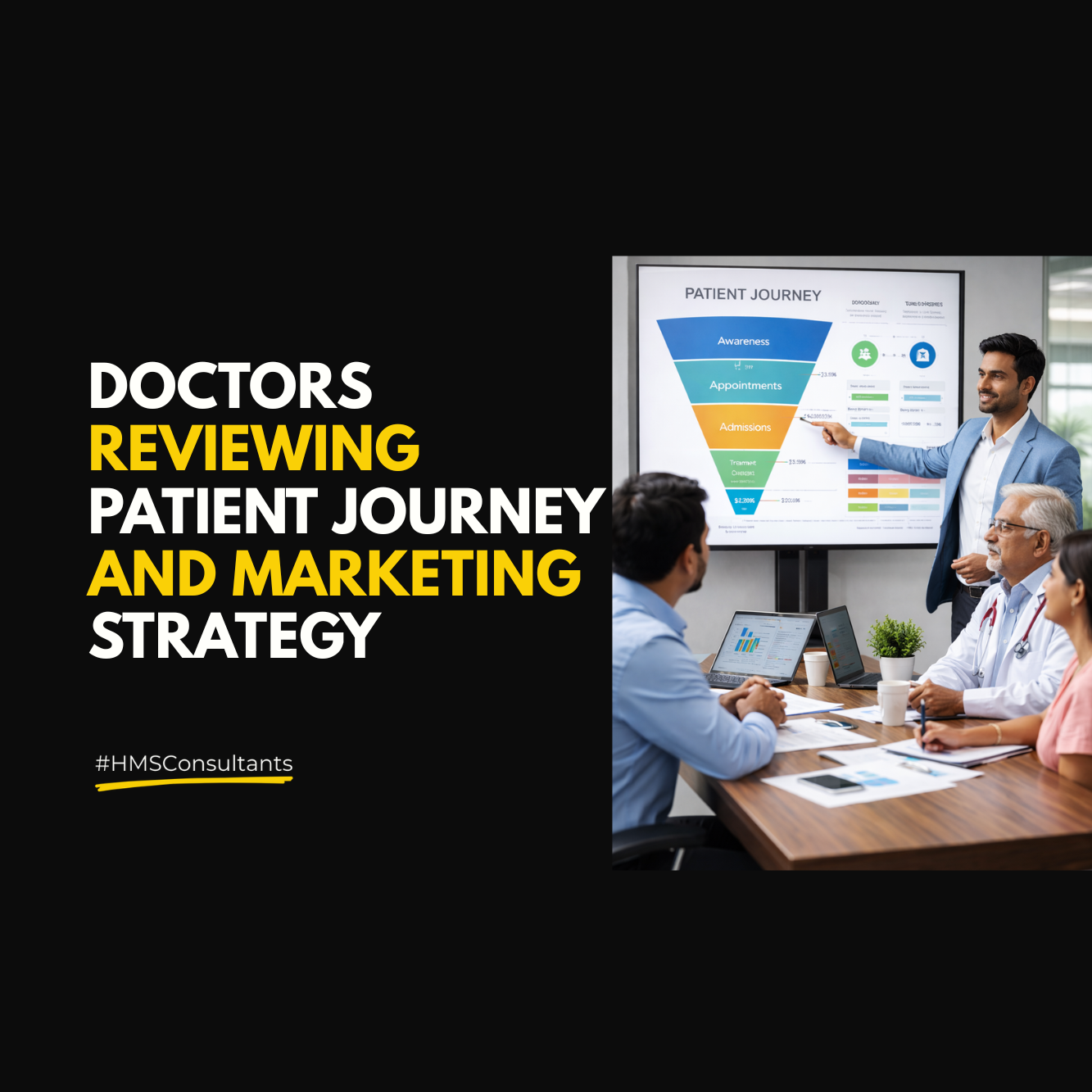
What they rarely address is how patients actually move from uncertainty to decision. Strategy documents often assume linear behaviour see message, trust hospital, book appointment. In reality, healthcare decisions are fragmented, emotional, and delayed.
When strategy is built on idealised behaviour instead of real behaviour, execution struggles no matter how disciplined the team is.
The Missing Layer in Most Healthcare Marketing Strategy
The missing layer is decision design.
Patients do not need more exposure. They need fewer unanswered questions. They hesitate not because they haven’t seen the hospital, but because they are unsure about outcomes, processes, costs, or communication.
A healthcare marketing strategy that does not explicitly map patient hesitation points remains incomplete. It may generate traffic, but it does not generate confidence.
This is why many hospitals feel they are “doing marketing” but still lack predictability.
Why Strategy Breaks Down at the Point of Experience
Healthcare marketing strategy often exists independently of patient experience. Messaging promises clarity, care, and guidance, while real interactions feel rushed, fragmented, or inconsistent. Patients notice this mismatch immediately.
Marketing then gets blamed for overpromising, while operations blame marketing for unrealistic expectations. In reality, the strategy failed to align communication with experience from the beginning.
A strong healthcare marketing strategy is not just a communication plan. It is an experience-alignment framework.
How Healthcare Marketing Strategy Should Be Designed Instead
Effective healthcare marketing strategy starts with understanding how patients think before they choose, not how hospitals want to be seen. It asks questions such as:
What worries patients most at each stage?
Where do they pause or delay decisions?
What information reduces fear instead of increasing it?
Strategy then becomes a system that gradually builds clarity and reassurance, rather than a set of promotional activities.
When this shift happens, marketing begins to feel calmer, more focused, and more effective.
Why More Execution Does Not Fix a Weak Strategy
Hospitals often respond to underperformance by increasing execution intensity. More ads, more content, more platforms. This creates movement but not momentum.
If the underlying healthcare marketing strategy does not resolve patient uncertainty, increasing output only amplifies confusion. Patients see more messages but do not feel more confident.
Growth improves only when strategy is corrected not when execution is accelerated.
The Role of Trust in Healthcare Marketing Strategy
Trust is not a by-product of marketing in healthcare. It is the primary objective.
Every strategic decision should be evaluated through one lens: Does this reduce patient hesitation? If the answer is unclear, the activity adds noise rather than value.
Hospitals that centre trust in their healthcare marketing strategy experience better conversion, stronger referrals, and lower long-term marketing pressure.
Why Leadership Determines Strategy Effectiveness
Healthcare marketing strategy reflects leadership thinking. When leaders demand quick results, strategies become reactive. When leaders allow learning cycles, strategies mature.
Hospitals that treat marketing as a leadership agenda not a departmental task build strategies that compound instead of resetting every year.
This leadership patience is often the difference between temporary visibility and sustainable growth.
What Real Success Looks Like in Healthcare Marketing Strategy
Successful healthcare marketing strategy rarely feels dramatic. Growth becomes steadier. Patients arrive better informed. Consultations become smoother. Referrals increase naturally. Marketing spend stabilises rather than escalates.
These outcomes indicate that strategy is working at a behavioural level not just a reporting level.
Hospitals often notice this only in hindsight, because real strategy success is quiet.
Conclusion: Healthcare Marketing Strategy Must Be Built for Reality, Not Presentation
Healthcare marketing strategy fails when it is designed to impress internally instead of guide patients externally. Plans look complete, but behaviour remains unchanged.
Strategy that works accepts complexity. It respects patient psychology. It aligns communication with experience. It prioritises trust over tactics.
In healthcare, strategy does not succeed because it is well-written.
It succeeds because it makes decisions easier for patients.
Hospitals that understand this stop rewriting strategies and start building systems that grow with confidence, not pressure.
A healthcare marketing strategy is a structured approach to building patient trust, visibility, and growth by aligning communication, experience, and decision-making with how patients actually choose healthcare providers.
Most healthcare marketing strategies fail because they focus on channels and campaigns instead of patient decision behaviour. When strategies do not address patient hesitation, fear, and uncertainty, execution may increase activity without improving growth.
Healthcare marketing strategy defines why and how marketing should influence patient decisions, while execution focuses on what is implemented. Strong execution cannot compensate for a weak or misaligned strategy.
More activity does not improve healthcare growth if the underlying strategy does not reduce patient uncertainty. Increased exposure without clarity often amplifies confusion rather than building confidence.
Patient trust is the core objective of healthcare marketing strategy. Patients make healthcare decisions only when confidence outweighs fear, and strategies that prioritise trust consistently outperform those focused on promotion.
Healthcare marketing strategy should be designed around patient hesitation points, decision stages, and emotional readiness rather than platforms or timelines. Strategy becomes effective when it mirrors how patients think, not how hospitals plan.
Healthcare marketing strategy fails when communication promises do not align with real patient experience. Inconsistent interactions, rushed explanations, or unclear processes undermine trust and weaken strategy impact.
A healthcare marketing strategy shows early signs through improved patient confidence and smoother consultations, while sustainable growth builds gradually as trust compounds over time.
Leadership determines healthcare marketing strategy effectiveness by setting expectations and allowing learning cycles. Short-term pressure leads to reactive strategies, while long-term thinking enables sustainable growth.
A healthcare marketing strategy is sustainable when it is patient-centric, trust-driven, aligned with experience, and allowed to evolve through learning rather than constant reinvention.
is something we strongly believe in, which means ‘Knowledge without application is the same as having no knowledge at all
Akhil Dave
Principle Consultant
Ready to take your Personal Brand to the next level?
Share your details below and we will connect with you to discuss your growth strategy.
Cost-Effective Marketing Solutions for Healthcare Providers
Cost-effective hospital marketing is essential for healthcare providers to attract and retain patients…

What Small Hospitals Can Teach Big Hospitals About Patient Care
Small hospitals win lifelong trust not through technology, but through personal care, time,…
MedTech & Robot Surgeons: Future of Clinics in India
Robot surgeons and MedTech innovations are redefining healthcare in India. From precision and…
The Role of Local SEO in Driving Patients to Clinics and Hospitals
Learn how local SEO can turn searches into real patient visits. Optimize Google…
What’s the First Marketing Step for Any New Health Brand?
The first marketing step for any new hospital or clinic isn’t posting online…
Why Most Healthcare Marketing Strategy Documents Never Translate Into Real Growth
Most healthcare marketing strategies fail not because of poor execution, but because they…