


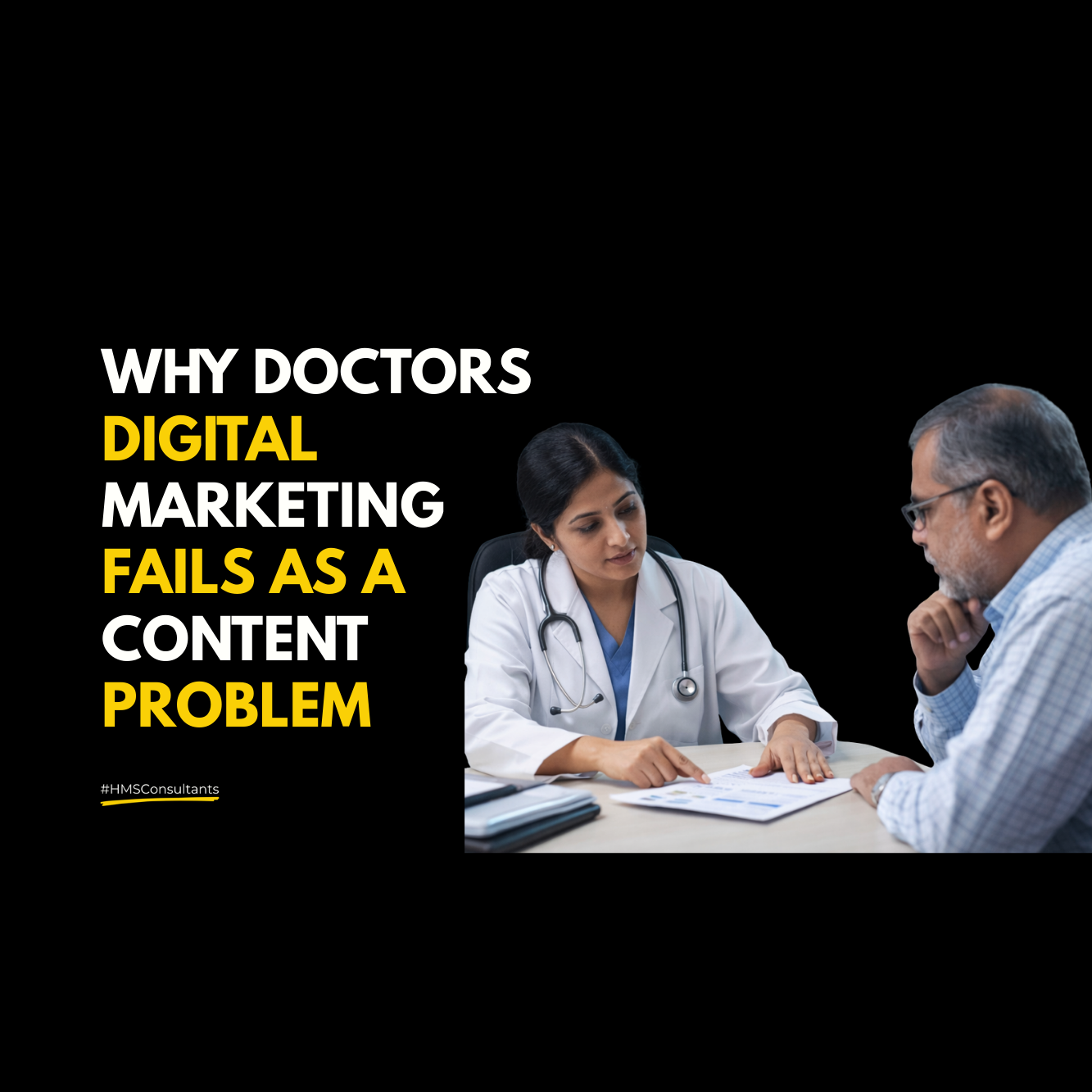
Why Doctors Digital Marketing Fails When It Is Treated as a Content Problem
Doctors digital marketing fails when it is treated as a content volume problem. Patients do not need more information they need help making confident healthcare decisions.
Health care marketing is the process of helping doctors, clinics, hospitals, diagnostic centres, wellness businesses, and healthcare organisations communicate their services clearly and responsibly to patients.
It includes activities such as:
But the purpose is not only to promote a healthcare service.
The purpose is to help patients understand the healthcare provider, trust the information, and make better decisions.
Good healthcare marketing connects the right patient with the right healthcare service through clear, ethical, and useful communication.
Regular marketing often focuses on attention, interest, sales, offers, product benefits, and quick conversions.
Healthcare marketing works differently because the decision is more sensitive.
A patient choosing a doctor, treatment, clinic, or hospital is not only thinking about price or convenience. They may also be thinking about safety, trust, experience, diagnosis, recovery, family concerns, and medical credibility.
This makes healthcare marketing more responsible.
A healthcare brand cannot communicate like a fashion brand, food brand, or retail brand.
It must be careful with claims, language, promises, images, patient stories, treatment information, and promotional messaging.
This is why ethical healthcare marketing is important.
In healthcare, trust is the foundation of every decision.
Before booking an appointment, patients may check:
If these trust signals are weak, patients may hesitate.
This means healthcare marketing should focus on building confidence before asking for action.
For example, a patient may not immediately book a consultation after seeing one advertisement. But if the patient sees clear content, helpful explanations, doctor credibility, good reviews, and a responsible digital presence, the trust level improves.
Healthcare marketing is not only about being visible.
It is about being credible.
Patient education is one of the strongest parts of healthcare marketing.
Many patients search online because they do not understand their symptoms, treatment options, risks, procedures, or recovery process. They want simple answers before they speak to a doctor.
Healthcare content should help answer questions such as:
When healthcare marketing answers real patient questions, it becomes valuable.
It helps patients feel informed rather than pressured.
This is why healthcare content should educate before it promotes.
Healthcare digital marketing has become important because patients now search online before choosing healthcare services.
They use Google, social media, YouTube, websites, maps, reviews, and online directories to compare providers and understand services.
A strong healthcare digital marketing approach may include:
But digital marketing in healthcare should not be random.
Every digital activity should support patient understanding, trust, and service clarity.
A website should not only look modern. It should answer patient questions.
Social media should not only look active. It should educate and build confidence.
Google reviews should not only increase numbers. They should reflect genuine patient experience.
This is where healthcare marketing strategy becomes important.
Work with HMS Consultants
Need a clear plan to grow brand visibility, patient footfall and revenue? Explore Hospital Marketing Strategy Consulting.
See Hospital Marketing Strategy ConsultingBook a free 30-min call
Many healthcare businesses do marketing, but not all have a strategy.
They may post regularly, run ads, update their website, or create videos. But if these activities are not connected to patient needs and business goals, results may remain weak.
A healthcare marketing strategy helps answer important questions:
Without strategy, marketing becomes an activity.
With strategy, marketing becomes direction.
Healthcare marketing must be responsible because it influences patient decisions.
Healthcare businesses should avoid misleading claims, exaggerated promises, fear-based messaging, fake urgency, unrealistic before-after communication, and unethical promotion.
Patients deserve honest and clear information.
Ethical healthcare marketing focuses on:
This is especially important for doctors, clinics, hospitals, and healthcare consultants.
Marketing should support patient confidence, not manipulate patient fear.
A healthcare marketing consultant helps healthcare businesses understand how to communicate, position, and grow responsibly.
The role is not only to suggest posts or advertisements.
A healthcare marketing consultant studies the full picture, including:
The consultant helps healthcare businesses understand what is working, what is missing, and what needs improvement.
This makes healthcare marketing consulting different from basic marketing execution.
Many professionals understand marketing tools, but healthcare marketing requires a deeper understanding of patients, trust, ethics, medical communication, and healthcare business growth.
The HMS Certified Healthcare Marketing Consultant Program helps serious professionals understand this specialized field with a structured consulting-led approach.
The program introduces participants to healthcare marketing strategy, digital presence review, patient communication, service positioning, healthcare marketing audits, proposal planning, personal branding, and business development guidance.
It is designed for professionals who want to understand healthcare marketing beyond regular promotion and learn how to guide doctors, clinics, hospitals, and healthcare businesses with responsibility.
HMS provides structured learning, tools, frameworks, and guidance. The participant’s growth depends on learning consistency, communication ability, practical application, and market development.
Health care marketing is not regular marketing with a healthcare name.
It is a specialised approach that deals with patient trust, medical credibility, ethical communication, education, digital visibility, and responsible brand building.
In healthcare, marketing should not only create attention. It should create understanding.
It should not only promote services. It should build trust.
It should not only bring enquiries. It should help patients make informed decisions.
For professionals who want to grow in this field, understanding what health care marketing really means is the first step. The future of healthcare marketing will need people who can combine strategy, ethics, patient understanding, and business growth thinking.
Health care marketing is the process of helping doctors, clinics, hospitals, diagnostic centres, and healthcare businesses communicate their services clearly, build trust, improve visibility, educate patients, and support responsible business growth.
Healthcare marketing is different because it deals with patients, medical decisions, trust, ethics, treatment doubts, doctor credibility, and sensitive communication. Regular marketing often focuses more on attention, offers, and quick sales.
Patient trust is important because healthcare decisions involve safety, fear, medical credibility, family concerns, and confidence. Patients usually choose healthcare providers they feel they can trust.
Healthcare digital marketing can include website improvement, SEO, Google Business Profile, social media, educational content, doctor videos, reviews, local visibility, paid ads, and enquiry tracking.
Ethical healthcare marketing is important because patients should receive honest, clear, and responsible information. Healthcare marketing should avoid false claims, fear-based messaging, fake promises, and misleading communication.
A healthcare marketing consultant can help doctors, clinics, hospitals, and healthcare businesses review their digital presence, improve patient communication, strengthen service positioning, guide content strategy, and support ethical business growth.
Yes. The program helps serious professionals understand healthcare marketing strategy, patient communication, digital presence review, healthcare marketing audits, consulting frameworks, proposal planning, and business development guidance.
No. HMS Consultants does not guarantee clients, income, employment, or fixed earnings. The program provides structured learning, tools, frameworks, mentoring, and guidance. Success depends on the participant’s effort, communication, market development, and consulting delivery.
Share your details below and we will connect with you to discuss your growth strategy.
Doctors digital marketing fails when it is treated as a content volume problem. Patients do not need more information they need help making confident healthcare decisions.
Healthcare digital marketing is no longer only about social media visibility. This blog explains how trust, reputation, content authority, reviews, patient retention, and the Digital Health Gap influence long-term...

Learn how healthcare businesses can capture the attention of Gen Z by embracing authenticity, personalization, sustainability, and inclusivity. This blog offers practical marketing strategies and insights tailored for healthcare...
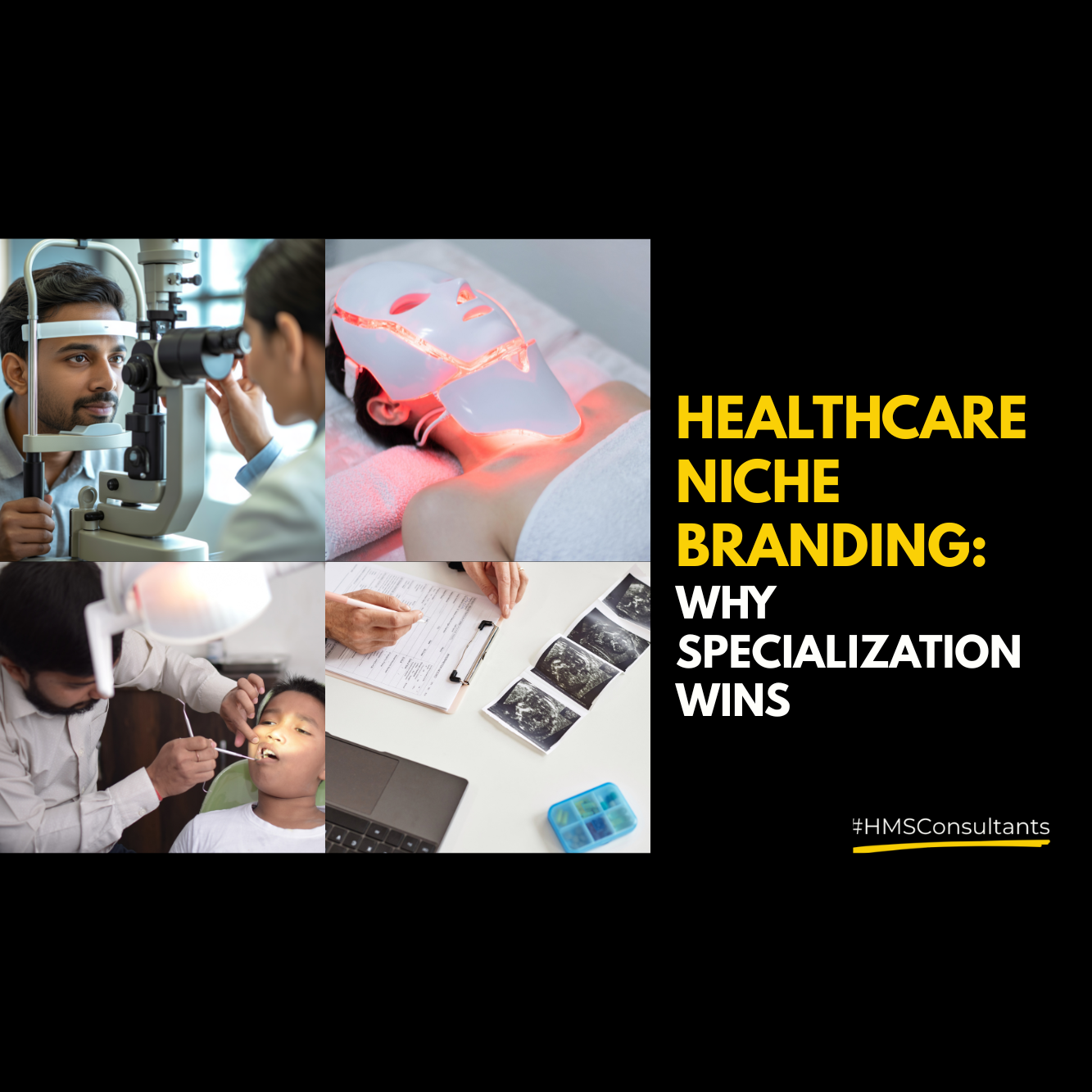
Patients now prefer specialists over general hospitals. Super-specialty clinics in eye, skin, dental, and fertility care grow faster with focused branding and trust.
In 2025, platform-specific features are the key to healthcare marketing success. Learn how hospitals, clinics, and health brands can boost reach and patient trust.
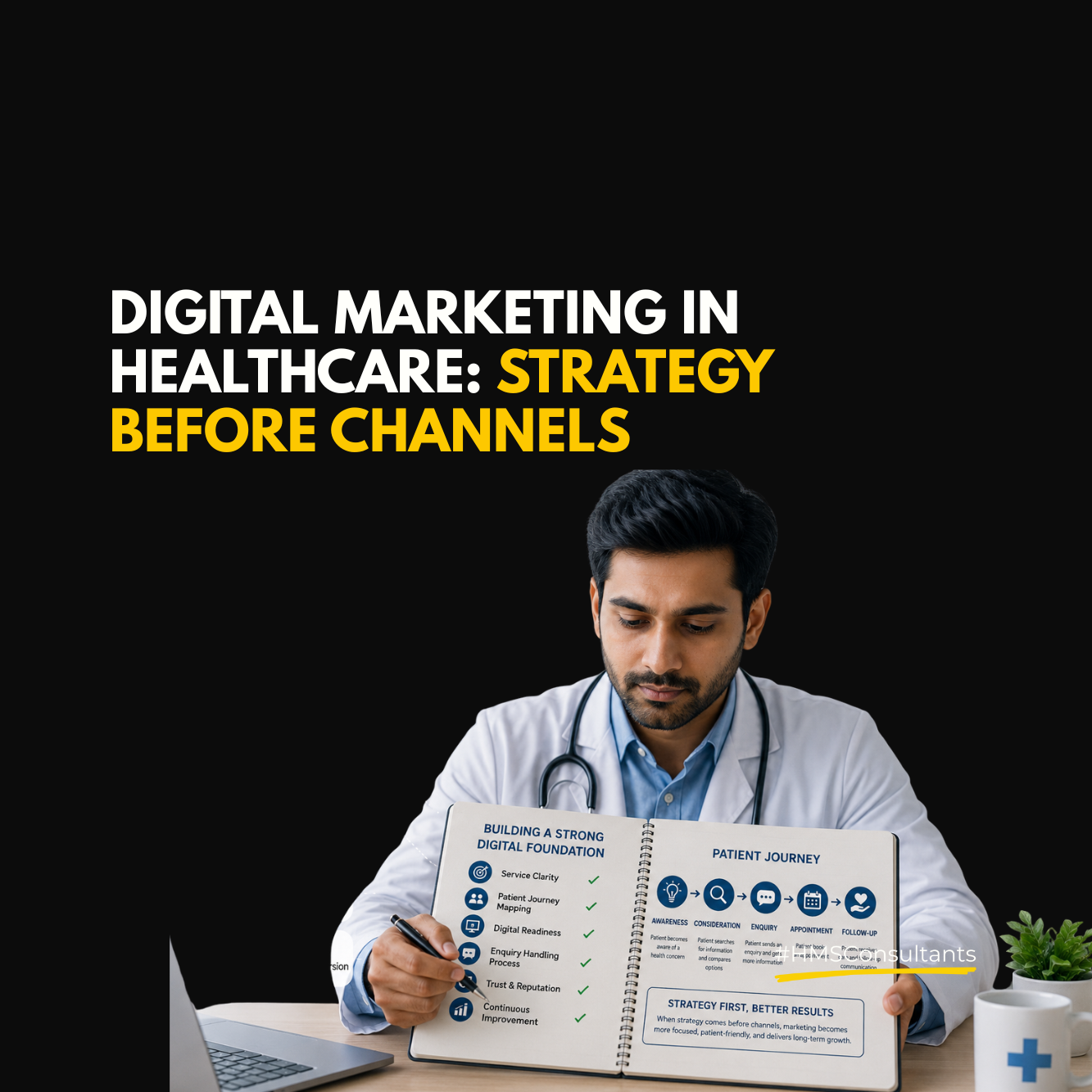
Digital marketing in healthcare works best when strategy comes before channels. Learn how service clarity, patient journey mapping, digital readiness, and trust-building create more effective healthcare marketing outcomes.