



How to Choose the Best Healthcare Marketing Agency in 2025
Not all marketing agencies are built for healthcare. Learn how to choose one that aligns with trust, compliance, and patient growth in 2025.
Many hospitals think PR means press releases, media coverage, or public events. These are part of it, but they are not the full picture. In healthcare, public relations is closely connected with patient trust.
This means healthcare marketing cannot depend only on random posts, occasional ads, or basic promotion.
Patients and families do not choose a hospital casually. They search online, read reviews, ask others, check the website, call the hospital, and observe how clearly the hospital communicates.
A patient may not understand every clinical detail, but they can sense whether the hospital feels organised, responsive, and trustworthy. That is why hospital public relations should not be treated only as publicity. It should be seen as a trust-building system.
A hospital’s image is shaped by small experiences such as:
When these areas are ignored, PR becomes reactive. The hospital starts responding only after trust is already affected.
One of the biggest gaps in hospital public relations is unclear communication. Many hospitals promote their services, but they do not always explain them in a way patients can understand.
Patients often want simple answers:
If this information is missing or confusing, the patient may delay the decision or choose another hospital. Good hospital PR is not only about speaking to the public. It is about speaking clearly and responsibly.
Patient feedback is one of the strongest signals of reputation. But many hospitals treat feedback only as a complaint, instead of seeing it as an opportunity to improve.
A delayed response, unclear billing explanation, rude staff interaction, long waiting time, or poor follow-up may seem like a small operational issue. But when these experiences repeat, they become reputation issues.
Patients may share their experience through:
Hospitals should regularly review feedback and understand what patients are saying. If the same issue appears again and again, it should not be ignored. Reputation management is not only about replying to reviews. It is also about learning from them.
A hospital may have one brand message, but patients experience the hospital through different people. The front desk may say one thing, the call team may say another, and the department may explain something differently.
This creates confusion.
In healthcare, confusion directly affects trust. Patients want to feel that the hospital team is informed, aligned, and confident. If staff members give different answers about appointments, reports, doctor availability, services, or follow-up, the hospital may appear disorganised.
Hospitals should train patient-facing teams on:
Public relations is not handled only by management or marketing teams. Every staff member who speaks to a patient contributes to the hospital’s image.
Patients often check reviews before choosing a hospital. A few unmanaged reviews can influence whether someone decides to call, visit, or avoid the hospital.
Many hospitals either ignore reviews or respond in a very generic way. Some responses sound defensive, while others do not address the concern at all. This can make patients feel that the hospital does not listen.
A better online reputation response should include:
Online reputation is now a major part of hospital public relations. It cannot be treated as an optional activity.
Hospitals are not just treatment centres. They are part of the communities they serve. A hospital may be known for its services, but if it is not visible as a responsible healthcare voice, it may miss an important trust-building opportunity.
Community presence can include:
This does not mean every hospital needs big events. It means the hospital should be seen as active, helpful, and connected to local health needs. A strong community presence builds trust before patients need treatment.
Hospitals often think about crisis communication only after a problem happens. This can create confusion, delay, and inconsistent responses.
A crisis may come from a patient complaint, social media issue, negative media attention, misinformation, service disruption, or internal communication failure. If the hospital does not know who should respond and what should be communicated, the situation can become worse.
Hospitals should prepare answers to questions like:
Crisis communication should be planned before it is needed. A prepared hospital appears responsible and controlled. An unprepared hospital may appear silent, defensive, or confused.
A hospital may promote care, trust, advanced facilities, and patient-first service. But if the actual patient experience does not match that promise, reputation suffers.
Patients remember what they experience more than what they see in advertisements.
If the hospital promotes smooth appointments but patients face confusion, there is a gap. If the hospital talks about compassionate care but staff communication feels cold, there is a gap. If the hospital promises patient support but follows up weakly, trust is affected.
Hospital public relations must connect marketing promises with real patient experience. The message outside the hospital should match what patients feel inside the hospital.
Hospital public relations should not begin after reputation damage. It should be part of everyday hospital communication.
The silent gaps in hospital PR often appear in small places: unclear information, ignored feedback, weak review response, inconsistent staff messaging, poor crisis readiness, and marketing promises that do not match patient experience.
These gaps may not create immediate damage, but they slowly affect how patients see the hospital.
Hospitals that want long-term growth need more than promotion. They need communication systems that support clarity, credibility, patient confidence, and trust. A strong hospital public relations strategy helps hospitals protect their reputation before damage happens and build trust before patients walk in.
PR in a hospital means public relations. It is how a hospital communicates with patients, staff, community, media, and the public to build trust, manage reputation, handle feedback, and respond responsibly during sensitive situations.
The role of public relations in a hospital is to strengthen patient trust through clear communication, review response, reputation management, crisis readiness, community connection, and better coordination between hospital messaging and patient experience.
The four main roles of PR in a hospital are trust-building, reputation management, crisis communication, and community connection. Together, they help hospitals communicate responsibly, respond to concerns, protect reputation, and build long-term credibility.
The scope of public relations in a hospital includes patient communication, review management, complaint handling, staff messaging, media communication, crisis readiness, community outreach, online reputation, and aligning marketing promises with actual patient experience.
For doctors, PR means building trust through clear communication, credibility, patient education, reputation, and online presence. It helps patients understand the doctor’s expertise and feel more confident before choosing consultation or treatment.
Share your details below and we will connect with you to discuss your growth strategy.
Not all marketing agencies are built for healthcare. Learn how to choose one that aligns with trust, compliance, and patient growth in 2025.

Cost-effective hospital marketing is essential for healthcare providers to attract and retain patients in the competitive healthcare landscape. However, healthcare providers often face budget constraints that make investing in...

Marketing a hospital in 2026 is shifting beyond websites as patients make zero-click decisions through Maps, reviews, AI search, and trust signals. This blog explains how hospitals can improve...

A practical 2026 personal branding strategy for doctors covering platform priorities, content pillars, video, consistency, and trust-building to turn online visibility into patient enquiries.
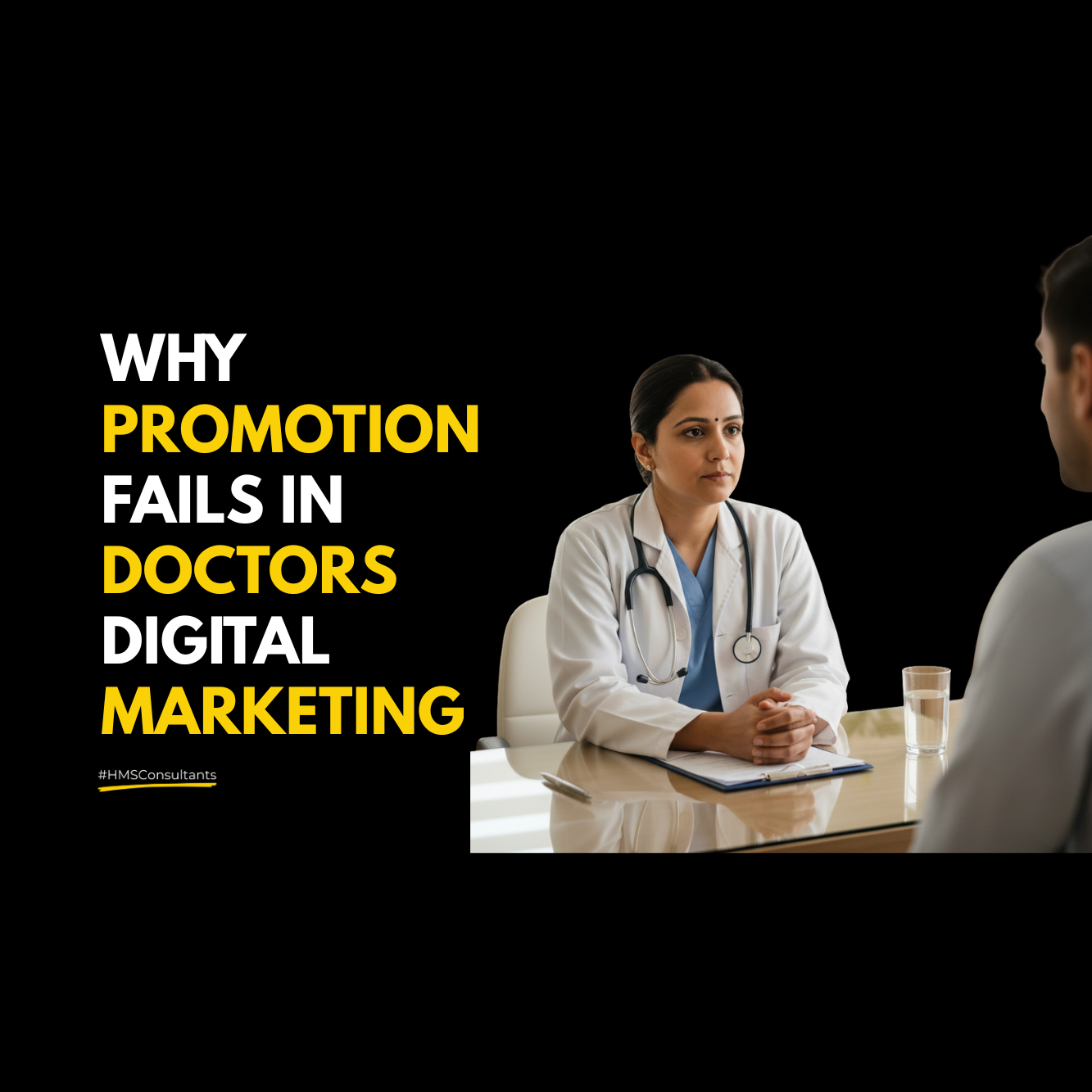
Doctors digital marketing fails when it is treated as promotion instead of professional presence. In healthcare, trust is built through calm, ethical communication, not visibility.

Hospital marketing audit is the first step to identifying what's helping—or hurting—your hospital's growth. This comprehensive 2026 checklist covers website performance, SEO, Google Business Profile, social media, branding, patient...