
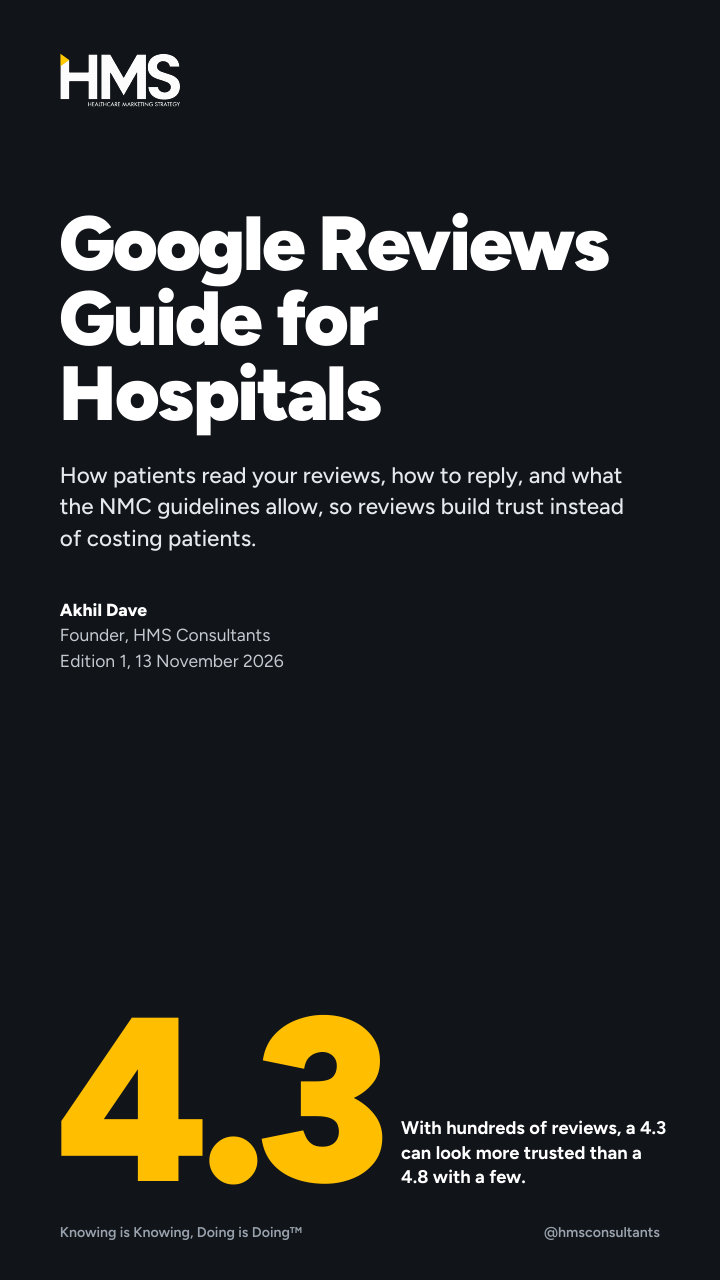
Google Reviews Guide for Hospitals
How patients read your reviews, how to reply, and what the NMC guidelines allow, so reviews build trust instead of costing patients.
18 pages. Free. Includes reply templates, a weekly routine, a review scorecard and a 90-day plan.
Get the free eBook
What is inside
- Why patients meet your hospital on Google first
- Rating, volume and recency: what patients really read
- Reply rules and four ready reply templates
- What reviews reveal that audits miss
- The NMC view on asking for reviews, with grey areas marked
- A weekly review routine, scorecard and 90-day plan
Who should read it
Hospital owners and administrators, patient experience and marketing teams, doctors who run clinics, and students of healthcare management.
A quick preview
Can a hospital reply with clinical details to a review?No. Never confirm the reviewer was a patient or share clinical details. Para 7.4.
Can we ask patients for Google reviews?The guidelines bar testimonials and fake or paid reviews and do not clearly address unsolicited reviews. The eBook gives the HMS view.
Does a high star rating matter more than the review count?Both matter, along with recency and replies. The eBook shows how patients read them.
The eBook has the full list, with the paragraph number for every point.
Want HMS to help you apply this?
HMS Reputation Management builds review handling, patient feedback and public communication within the NMC guidelines.
Frequently asked questions
Who is this eBook for?Hospitals and clinics that want reviews to build trust.
Does it include reply templates?Yes. Four templates, plus the rules for using them.
Does it follow the NMC guidelines?Yes. It is built on the guidelines of 6 October 2026 and marks grey areas clearly.
Is the eBook legal advice?No. It is general information. Take advice from a healthcare lawyer on your review policy.
General information, not legal advice. See our privacy policy.