

Local Marketing for Clinics & Hospitals in India 2025
Discover how Indian clinics and hospitals can grow in 2025 using local marketing language, culture, trust, and digital tools to boost patient footfall.
Reputation is built through experience.
Every patient treated well, every difficult case handled with clarity, every recovery supported with genuine care these accumulate over time into a professional standing that peers and patients recognise and trust. But reputation lives in the memory of people who have already encountered the doctor. It travels through conversations, a colleague’s recommendation, a family member’s advice, a general practitioner’s referral.
Doctor branding works differently. It exists in the spaces where patients who have never met the doctor are forming their very first impression:
One system works backwards from experience. The other works forwards from discovery. A doctor who only has one without the other has an incomplete patient acquisition structure regardless of how strong either element is individually.
For most of medical practice history in India, reputation was sufficient. Patients found doctors through trusted human networks, family physicians, colleagues, relatives who had been treated. The decision chain was entirely relationship-based.
That chain still operates. But it now has a step that did not exist a decade ago.
Even a patient who receives a strong referral now almost always performs a digital verification before making the call. They search for the doctor’s name. They look for reviews. They check whether there is any content that helps them understand who this doctor is and how they approach care.
This is where doctor branding either supports or undermines the referral.
When a referred patient searches and finds:
The referral converts. The trust transferred by the referring person is reinforced by what the patient finds digitally.
But when a referred patient searches and finds an incomplete listing, no reviews, outdated information, or simply nothing of substance the trust weakens. The patient hesitates. In many cases they search again this time for the specialty rather than the name and find another doctor whose digital presence answers their question more confidently.
The referring doctor never finds out. The patient is simply gone.
A doctor with a strong reputation typically has:
A doctor with strong doctor branding typically has:
Neither list is more important than the other. A doctor with strong branding but no clinical reputation will not retain patients. A doctor with a strong reputation but no doctor branding will not reach patients who are searching.
The gap between the two is where growth either happens or stalls.
There is a specific moment in the patient decision journey where weak doctor branding quietly creates a loss that most doctors never trace back to its source.
A patient is told by their family physician – “You should see Dr. XYZ for this. Excellent surgeon, very experienced.”
The patient goes home. Before calling, they search for the name. The search returns a basic listing. A few directory entries. No reviews worth reading. No content. No speciality page. Nothing that answers the question forming in the patient’s mind: “Can I trust this doctor with my specific problem?”
The patient does not call. They search instead for the condition “best orthopaedic surgeon for knee replacement in Ahmedabad” and find a doctor whose digital presence answers exactly that question:
The referral is lost. The reputation did not fail. The doctor branding was not there to support it.
This happens silently, repeatedly, and without any visible signal to the doctor that it is occurring. The phone just rings slightly less than it should.
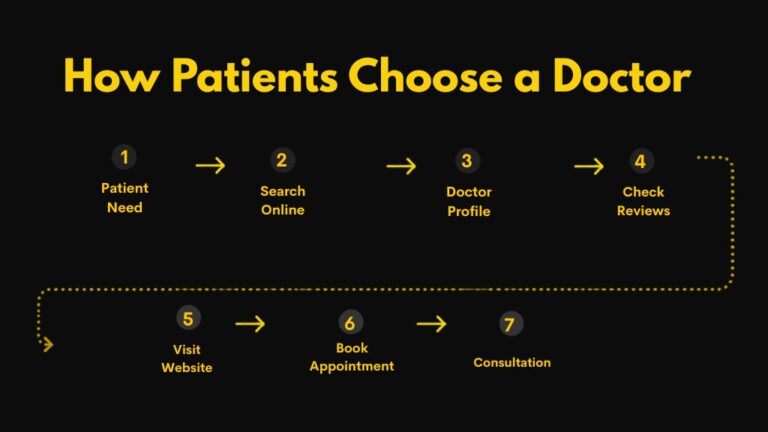
Doctor branding is not about becoming a content creator or posting daily. It is about building specific digital structures that ensure the right patient finds the right doctor at the right moment.
In practice this means:
Owning the name search – When a patient searches the doctor’s name, the result should be clear, complete, and confidence-building. Google Business Profile, hospital profile pages, and specialty directories should present consistent, accurate, and current information.
Building speciality-specific presence – Content that speaks directly to the condition a patient is searching for not a general list of services. A patient searching for a laparoscopic surgeon should land on content specifically about that procedure and that doctor’s approach to it.
Review architecture – Not just having reviews but having a system that generates them consistently and responds to them professionally. Reviews are the closest digital equivalent to word-of-mouth and the most trusted signal a new patient encounters.
Content that answers before the consultation – Educational content addressing questions patients are already asking online. Not promotional. Not credential-listing. Patient-relevant answers to real healthcare concerns that position the doctor as a credible and accessible source of guidance.
AI discoverability – In 2026, patients ask AI tools which doctor to see. A doctor whose digital presence is structured, specific, and content-rich will appear in those responses. A doctor with a thin or generic online presence will not regardless of clinical standing.
A doctor's reputation is the foundation of long-term patient trust. Doctor branding is the system that makes that reputation visible to patients who have not found the doctor yet.
In 2026, a doctor with a strong reputation and weak branding is a well-kept secret. Patients who already know them trust them completely. Patients who are searching will simply not find them.
The doctors growing consistently are not always the most experienced. They are the ones whose reputation and doctor branding work together so that every referred patient finds confirmation when they search, and every searching patient finds a reason to trust before they call.
Reputation earns the appointment. Doctor branding earns the first search.
Building a brand as a doctor starts with owning your name on Google, creating specialty-specific digital content, building a consistent review presence, and publishing educational material that answers real patient questions all working together to build patient trust before the first consultation.
Yes, but in healthcare, the most effective form of self-promotion is not advertising. It is doctor branding through educational content, Google visibility, patient reviews, and specialty-specific digital presence. This builds genuine patient trust rather than promotional attention, which is what actually converts new patients consistently.
Start with one clear specialty focus. Build a complete Google Business Profile. Collect and manage patient reviews consistently. Publish content that answers the questions your patients are already searching online. These four steps form the foundation of a credible and discoverable doctor brand in 2026.
Promoting a doctor effectively in 2026 means building digital presence across search, reviews, and AI platforms, not just running ads. Specialty-specific content, consistent Google visibility, patient testimonials, and educational authority together create sustainable promotion that works long after any individual campaign stops running.
Share your details below and we will connect with you to discuss your growth strategy.
Discover how Indian clinics and hospitals can grow in 2025 using local marketing language, culture, trust, and digital tools to boost patient footfall.

A digital marketing consultant audits far more than social media or advertisements. This blog explains how consultant-level hospital marketing audits uncover AI discoverability gaps, patient journey drop-offs, competitor positioning...

Healthcare jobs in India offer stability, learning, and career growth. This blog compares traditional healthcare employment with consulting and explores which career path makes sense for professionals seeking long-term...
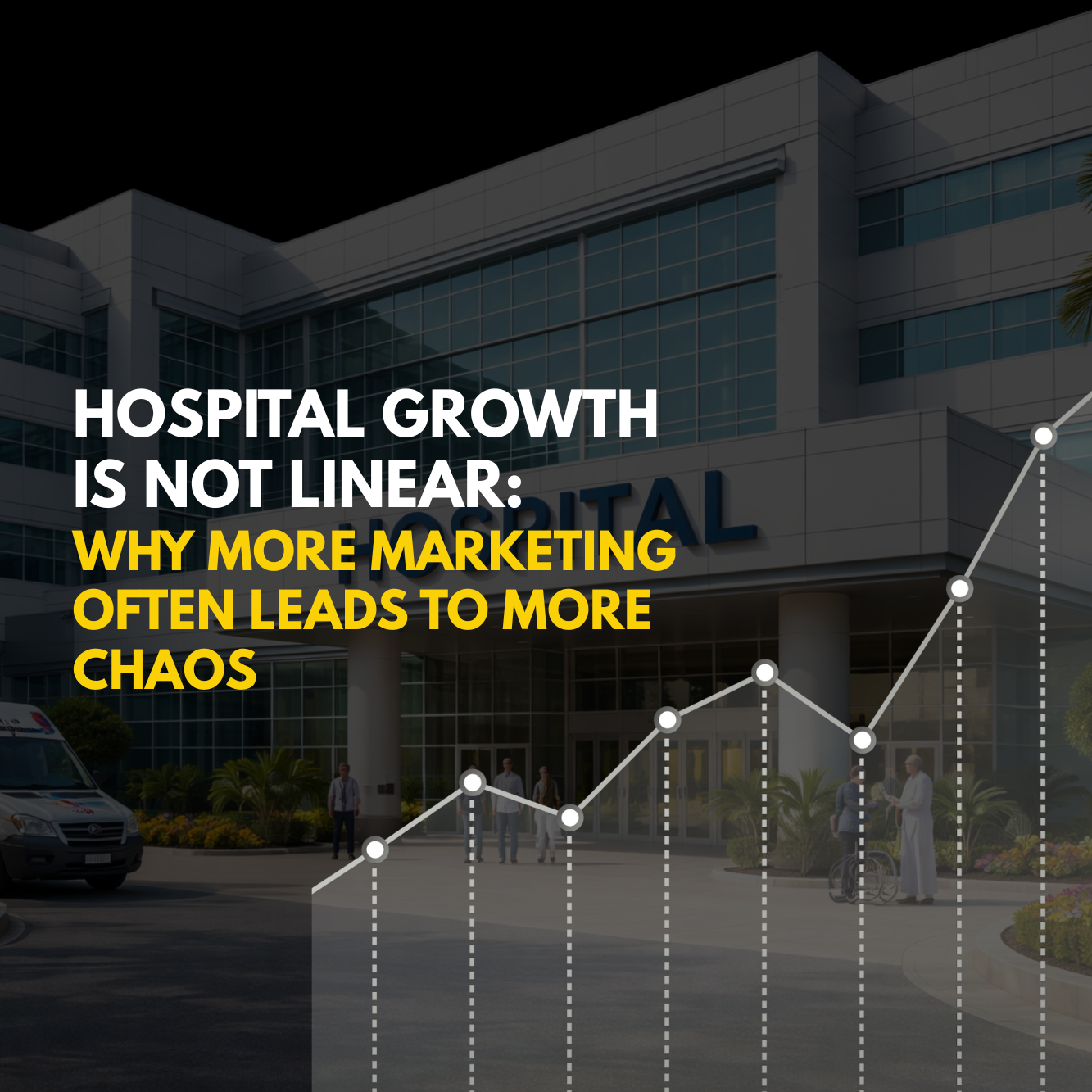
Hospital growth is not linear. As marketing increases demand, weak systems, strained teams, and fragile patient experiences are exposed. This article explains why growth often feels chaotic before hospitals...
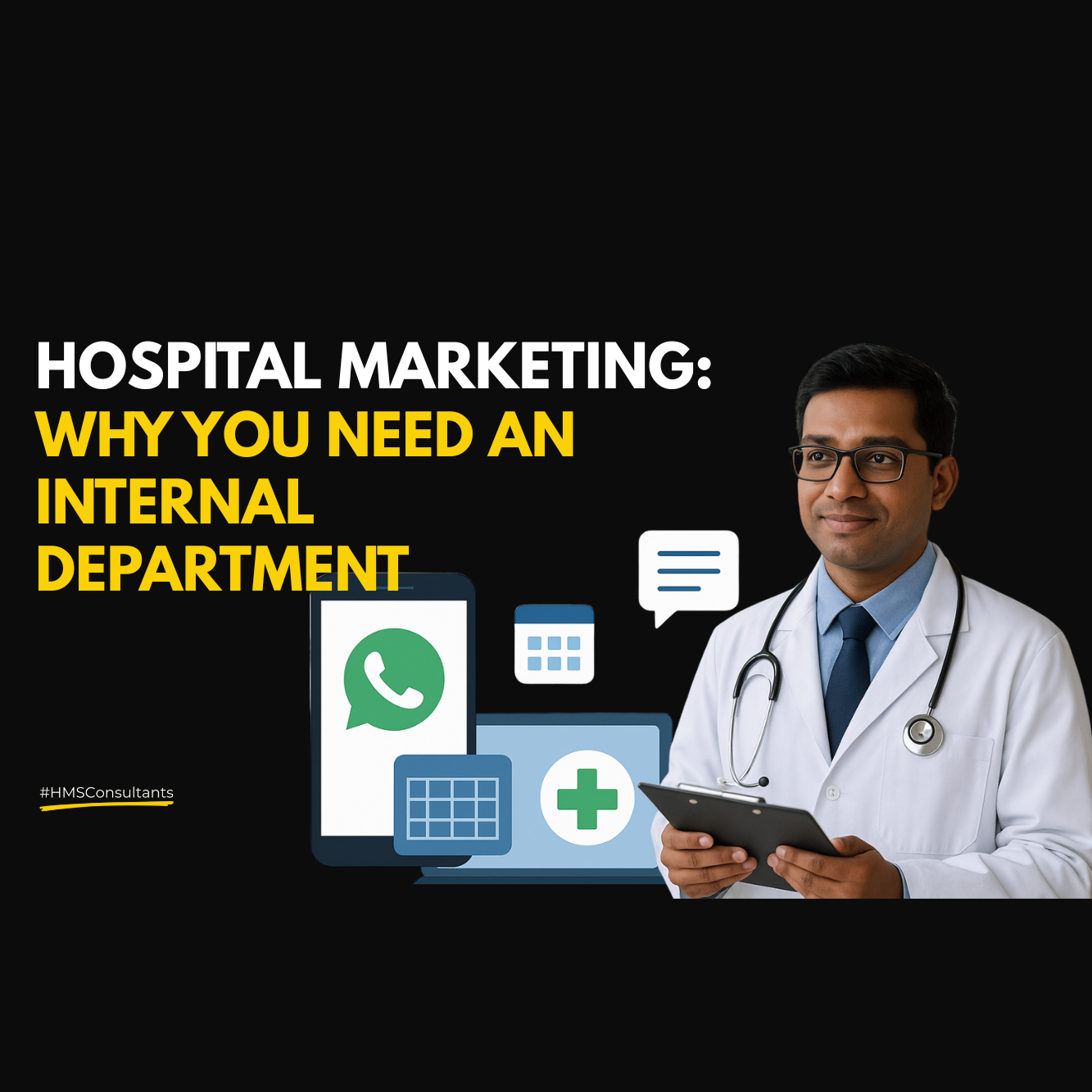
Modern patient engagement in India is shifting from traditional calls to digital touchpoints like WhatsApp and online portals. This blog explores key strategies hospitals can use to improve communication,...
Your hospital website is more than a brochure it’s your digital front door. Learn how to design a site that builds trust and drives patient bookings.