

The Hidden Cost of Poor Enquiry Handling in Hospitals
Hospitals lose patients not to competitors but to poor enquiry handling. Quick, clear, and caring responses can boost patient trust, conversions, and hospital growth.
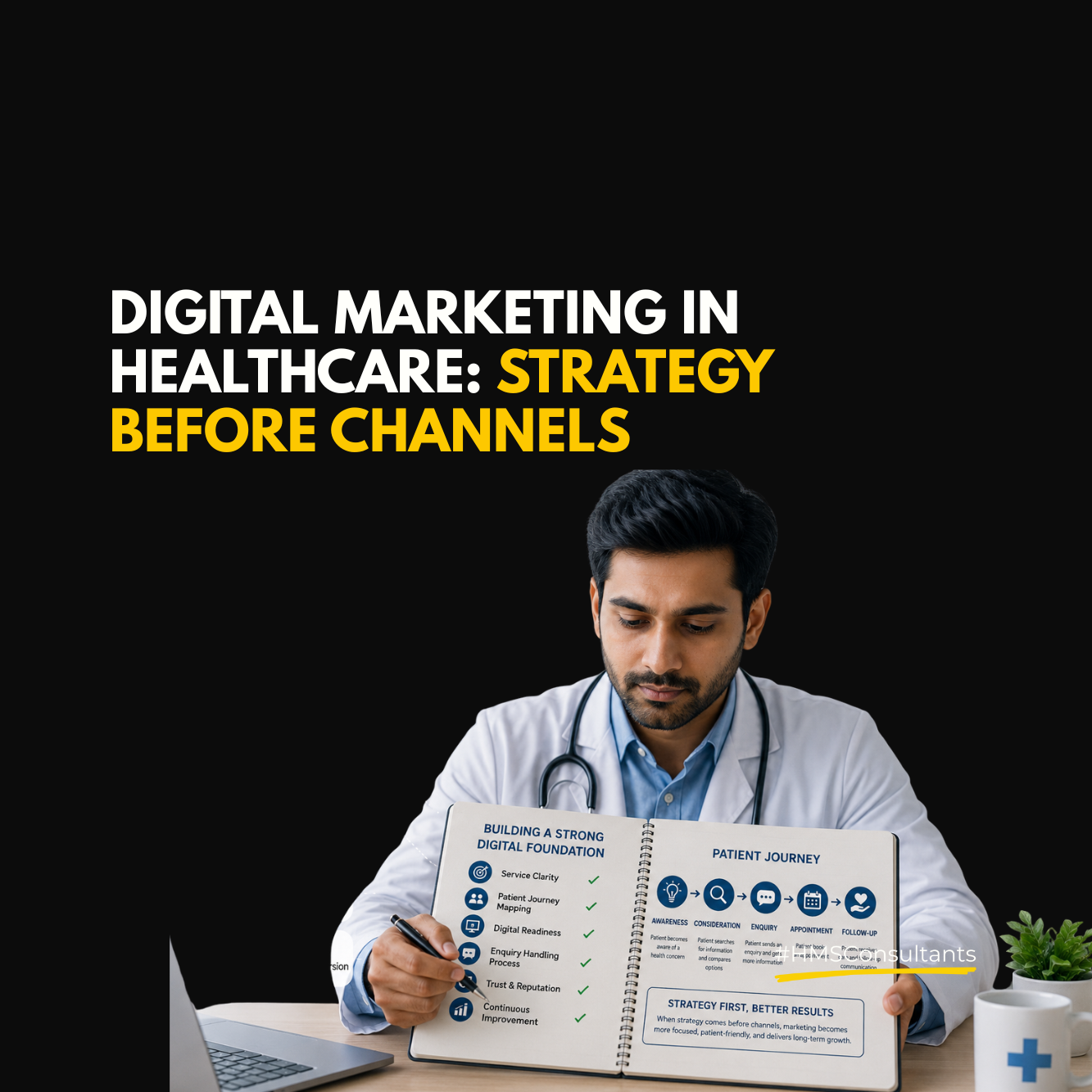
Many people still think healthcare marketing means social media posts, ads, banners, videos, campaigns, or offers.
But healthcare marketing is much deeper than that.
It deals with patients, trust, medical decisions, fear, confusion, credibility, and care. A patient does not choose a doctor or hospital the same way they choose a fashion product or restaurant.
Before making a healthcare decision, patients often look at:
This means healthcare marketing professionals need to understand the patient journey, not just marketing tools.
Execution is necessary. A healthcare business needs content, SEO, Google Business Profile updates, social media, campaigns, websites, ads, and patient communication material.
But execution without strategy can become random.
A clinic may post regularly but still fail to build trust.
A hospital may run ads but still attract poor-quality enquiries.
A doctor may have a website but still not communicate services clearly.
A diagnostic centre may invest in marketing but still not know which service line needs focus.
This is where healthcare marketing strategy becomes important.
Strategy helps answer important questions such as:
Without these answers, marketing becomes only activity. With strategy, marketing becomes direction.
Healthcare businesses are becoming more competitive. Patients now compare options before choosing a doctor, clinic, or hospital.
Because of this, healthcare businesses expect marketing professionals to bring more than basic execution ability.
They need professionals who can:
These expectations are changing the meaning of a healthcare marketing career.
Professionals who want to grow in healthcare marketing jobs should start building practical skills that go beyond task completion.
Important healthcare marketing skills include:
These skills help professionals move from execution-based roles to strategy-led roles.
A person who only executes may wait for instructions.
A person with strategy skills can identify gaps, ask the right questions, and suggest better directions.
For example, instead of only creating a social media post, a strategic healthcare marketer will ask:
This is the difference between doing marketing work and understanding healthcare marketing.
Professionals who can think this way become more valuable to healthcare businesses.
As professionals build stronger strategy skills, some may also explore the role of a healthcare marketing consultant.
A healthcare marketing consultant does not only execute marketing tasks. A consultant helps doctors, clinics, hospitals, and healthcare businesses understand what is missing, what needs improvement, and how marketing can support growth responsibly.
This role may include:
For people already working in healthcare marketing jobs, consulting skills can help them grow beyond routine execution and build a stronger professional identity.
Many professionals working in healthcare marketing understand tools and platforms, but they may not always receive structured exposure to consulting thinking, audit methods, patient communication, proposal planning, or healthcare business growth strategy.
The HMS Certified Healthcare Marketing Consultant Program is designed to help serious professionals build this specialized capability.
The program focuses on practical learning areas such as healthcare marketing strategy, digital presence review, patient communication, service positioning, consulting frameworks, proposal preparation, personal branding, and business development guidance.
It is meant for professionals who want to move from basic execution thinking to a more strategic and consulting-led approach in healthcare marketing.
HMS provides the structure, tools, frameworks, and guidance. The participant’s growth depends on learning consistency, communication ability, market effort, and practical application.
Healthcare marketing jobs are no longer limited to execution. The industry now needs professionals who can understand patients, communicate responsibly, analyse digital presence, think strategically, and support healthcare business growth.
Execution will always matter. But execution without strategy may not create strong results.
For professionals who want to grow in healthcare marketing careers in India, the next step is to build stronger healthcare marketing skills and learn how to think beyond tasks.
The future of healthcare marketing will belong to professionals who can combine execution with strategy, ethics, patient understanding, and consulting thinking.
The HMS Certified Healthcare Marketing Consultant Program is a structured professional development and consulting enablement program for people who want to build healthcare marketing consulting skills with HMS training, tools, frameworks, mentoring, and guidance.
Yes. The program can be useful for professionals working in healthcare marketing jobs who want to build stronger strategy skills, consulting thinking, patient communication understanding, and healthcare business growth capability.
No. This is not a job or employment opportunity from HMS. It is a consulting business opportunity for serious professionals who want to work independently and build their own healthcare marketing consulting practice.
Participants can learn healthcare marketing strategy, digital presence audit, patient communication, clinic and hospital growth diagnosis, proposal creation, client communication, personal branding, business development, and ethical healthcare marketing.
No. HMS Consultants does not guarantee clients, income, employment, or fixed earnings. The program provides training, tools, frameworks, mentoring, and business development guidance. Success depends on the participant’s effort, discipline, communication, market development, and consulting delivery.
Yes. The program is designed to help selected participants understand healthcare marketing from a strategic and consulting-led perspective, so they can build stronger professional capability beyond basic marketing execution.
Share your details below and we will connect with you to discuss your growth strategy.
Hospitals lose patients not to competitors but to poor enquiry handling. Quick, clear, and caring responses can boost patient trust, conversions, and hospital growth.
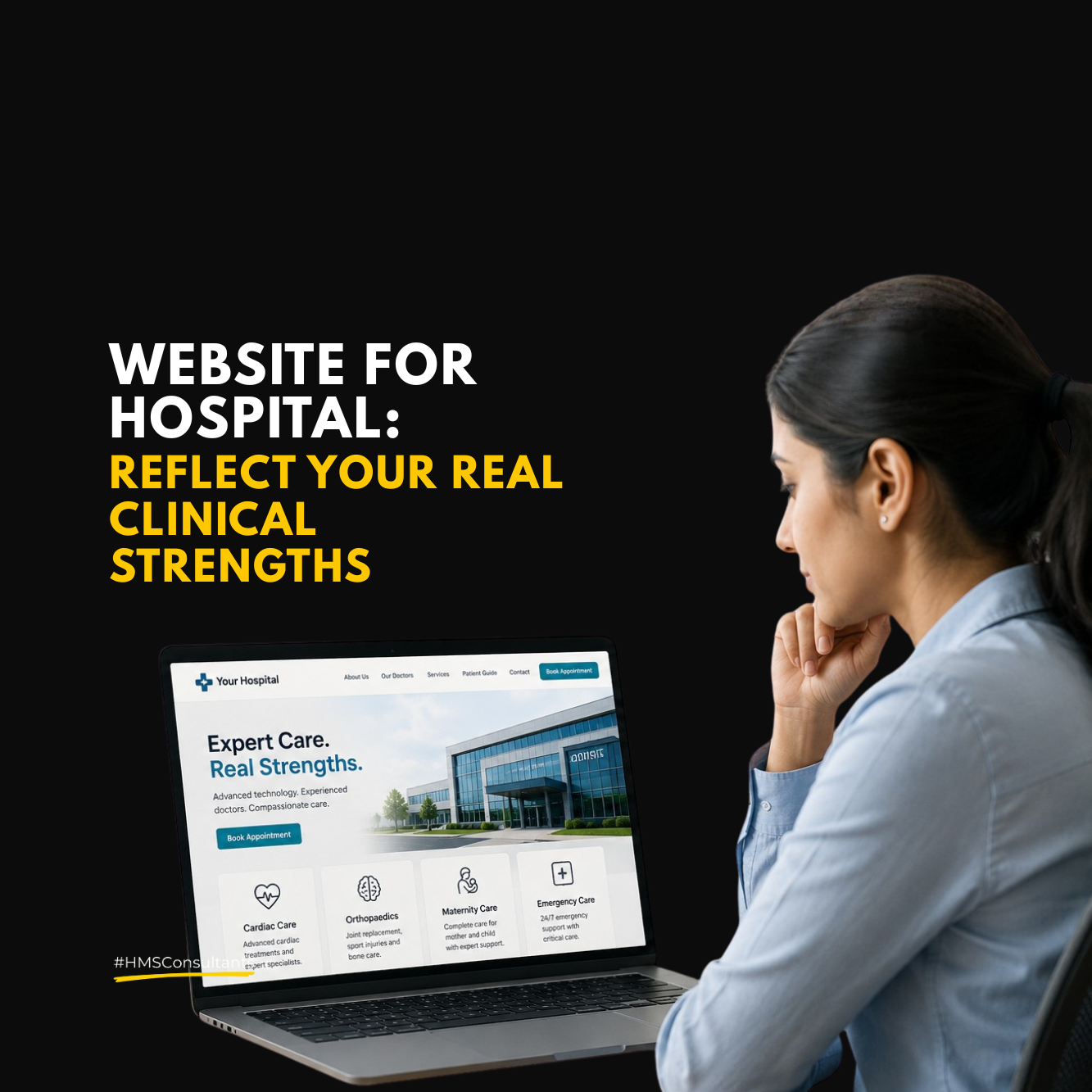
A website for hospital in 2026 is no longer just a digital presence. This blog explains why specialty-specific, AI-readable, and patient-intent-driven websites are becoming essential for discoverability, patient trust,...
Hospital growth rarely slows overnight. It weakens quietly through missed patient signals, communication gaps, and unnoticed trust issues hidden in everyday interactions.
Most healthcare marketing strategies fail not because of poor execution, but because they ignore how patients actually make decisions. Real hospital growth comes from trust, clarity, and experience alignment.
Marketing strategy of hospital often looks strong on paper but fails in execution. This blog explores how gaps in patient communication, experience, and internal systems affect conversions and real...
Not every patient sees your hospital the same way. Gen Z trusts digital-first communication, Millennials value convenience, and Boomers seek relationships and reassurance. Learn how to tailor hospital marketing...