The Complete Clinic & Hospital Growth Guide for Doctors
Why Your OPD Is Inconsistent And What To Fix Before Spending on Marketing
Doctors do not search “marketing trends.”
They search:
- Why is my OPD not growing?
- How to increase patient footfall in clinic?
- Why are patients not choosing my hospital?
- How to rank clinic on Google Maps?
- Should I hire a marketing agency?
- What is the right marketing budget for clinic?
- What is the right clinic marketing strategy?
If you have searched any of these questions, you are not alone.
Across India, clinic owners and hospital promoters are facing the same reality:
- Clinical outcomes are strong
- Infrastructure is adequate
- Experience is sufficient
- Yet patient flow feels unpredictable
This is not a competence problem.
It is a visibility and clarity problem.
This guide answers the most common growth questions doctors ask and outlines what must be structurally fixed before any marketing effort begins.
1. Why Are Patients Not Coming to My Clinic?
This is usually the first question.
The assumption is:
“Maybe competition is high.”
But in most cases, patients are not rejecting you after evaluation.
They are excluding you before evaluation.
Modern patient decision-making happens in three silent steps:
- Search
- Compare
- Validate
If your clinic is not visible during these moments on Google Maps, reviews, website clarity, or digital consistency you never enter the shortlist.
The issue is rarely medical competence.
The issue is pre-visit perception.
2. Why Is My OPD Inconsistent?
Inconsistent OPD is often blamed on:
- Seasonality
- Competition
- Economic slowdown
While these factors matter, the deeper causes usually include:
- Weak Google Business Profile presence
- Poor or unmanaged reviews
- No structured patient follow-up system
- Inconsistent communication tone
- Unclear positioning (what exactly are you known for?)
When visibility and patient experience are fragmented, trust weakens and trust drives OPD.
OPD growth strategy is not about ads.
It is about reducing uncertainty in the patient’s mind.
3. How Do Patients Choose a Doctor Today?
Doctors assume patients compare clinical expertise.
Patients compare reassurance.
They ask:
- Is this place reliable?
- Do others trust them?
- Are reviews recent?
- Does the doctor communicate clearly?
- Is the hospital professional?
Search behaviour reveals this clearly.
Queries like:
- “best hospital near me”
- “best clinic for diabetes”
- “top orthopaedic doctor near me”
are not about ranking first.
They are about emotional safety.
If your clinic marketing strategy ignores psychology, visibility alone will not convert.
4. How to Increase Patient Footfall in Clinic
High-intent search:
“How to increase patient footfall in clinic”
The wrong answer:
Run ads.
The right sequence:
Step 1: Clarify Positioning
What are you known for?
General care? Diabetes? Women’s health? Preventive care?
If your positioning is unclear, no marketing can compensate.
Step 2: Fix Local Discoverability
- Optimize Google Business Profile
- Ensure accurate NAP (Name, Address, Phone)
- Encourage ethical reviews
- Add updated photos and services
Local SEO for clinics drives sustainable footfall.
Step 3: Structure Patient Journey
- Appointment confirmation
- Reminder system
- Post-visit follow-up
- Feedback loop
Without CRM or WhatsApp automation, patients forget, delay, or drop off.
Step 4: Align Communication
Your website, GMB, social media, and offline messaging must sound coherent.
Footfall increases when clarity increases.
5. How to Rank Clinic on Google Maps?
Another high-intent question.
Google Maps visibility depends on:
- Complete Google Business Profile
- Review volume and recency
- Category accuracy
- Consistent local citations
- Proximity and engagement
Maps ranking is not a shortcut strategy.
It reflects consistency and reputation.
If your Google rating is below 4.0, that alone may reduce patient conversion by 30–40%.
6. Why Do Reviews Matter So Much?
Doctors often ask:
“Are reviews really that important?”
Yes.
Reviews are modern word-of-mouth.
When patients search:
- “best clinic near me”
- “hospital for surgery near me”
they filter based on ratings.
But review management is not about asking aggressively.
It begins with:
- Reduced waiting time
- Clear communication
- Transparent billing
- Polite staff behaviour
Reputation is operational before it is digital.
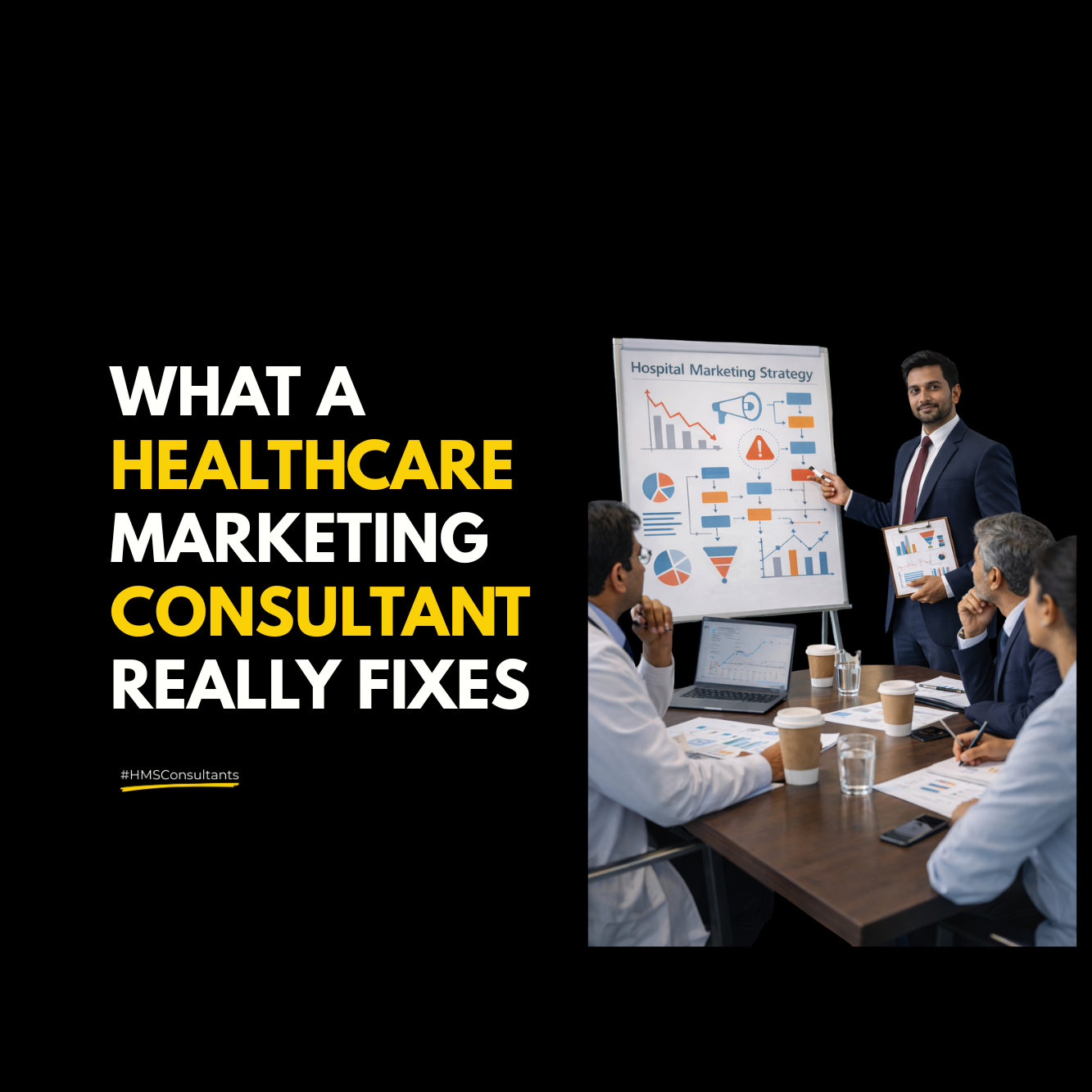
7. What Is Hospital Marketing Strategy?
Hospital marketing strategy is not advertising.
It is structured clarity across:
- Positioning
- Patient journey
- Visibility
- Communication
- Internal alignment
Marketing becomes necessary only after clarity is established.
Ads amplify structure.
They cannot replace it.
8. Should I Hire a Marketing Agency?
This question reflects anxiety about control.
Doctors fear:
- Loss of voice
- Over-commercialization
- Ethical compromise
The real question is not agency vs no agency.
It is:
Do you have internal clarity before execution?
If not, external execution will create noise.
Strategy must precede tactics.
9. What Is the Right Marketing Budget for Clinic?
Another common search.
There is no universal number.
Budget should depend on:
- Revenue targets
- Service mix
- Geography
- Existing visibility
- Operational readiness
If your patient experience is weak, increasing budget increases dissatisfaction.
Budget follows clarity.
10. How Important Is Personal Branding for Doctors?
Personal branding for doctors is not self-promotion.
It is professional visibility.
Patients trust:
- Consistent communication
- Educational content
- Clear positioning
- Familiarity
Doctors who publish educational insights ethically build long-term authority.
Silence does not build credibility in the digital era.
11. Can Doctors Do Digital Marketing Ethically?
Yes — if done responsibly.
Ethical healthcare marketing includes:
- Educational posts
- Awareness campaigns
- Transparent service communication
- Responsible review management
It excludes:
- Exaggerated claims
- Before-after manipulation
- Guarantees
- Fear-based messaging
Marketing done correctly strengthens professional dignity.
12. What Role Do CRM, HMIS, and WhatsApp Play in Growth?
Growth is not only acquisition.
It is retention.
Technology enables:
- Appointment reminders
- Follow-up scheduling
- Chronic patient tracking
- Feedback collection
- Re-engagement campaigns
WhatsApp funneling improves conversion dramatically when structured ethically.
Patient journey mapping transforms irregular OPD into predictable growth.
13. Why Visibility Alone Does Not Guarantee Growth
Many clinics increase Instagram activity or run Google Ads but see no revenue shift.
Because:
- Positioning is unclear
- Internal workflows are misaligned
- Staff is untrained
- Conversion systems are absent
Marketing without internal alignment creates temporary spikes, not sustainable growth.
14. The Real Diagnostic Question
Instead of asking:
“How to get more patients?”
Ask:
“What is preventing patients from confidently choosing us?”
Growth is a clarity problem before it is a promotion problem.
15. The Structured Approach to Clinic & Hospital Growth
A sustainable medical practice growth strategy requires:
- Diagnostic audit
- Positioning clarity
- Patient journey mapping
- Visibility architecture (SEO, Maps, Reviews)
- Ethical communication framework
- Technology integration (CRM, WhatsApp, EMR)
- Measured amplification
When structure precedes visibility, growth becomes predictable.
Final Thought
If you have been searching:
- How to increase OPD
- How to grow hospital revenue
- Why patients are not choosing my clinic
- How to improve Google rating
- How to market a new clinic in India
You are not searching for marketing.
You are searching for clarity.
Marketing is not the solution to confusion.
Clarity is.
When clarity is designed into your positioning, patient journey, and communication system, visibility becomes a natural outcome.
If This Resonates
If these questions feel familiar and you would prefer a structured diagnostic conversation instead of random execution advice, you may connect with HMS Consultants.
We operate as strategy advisors, not execution agencies.
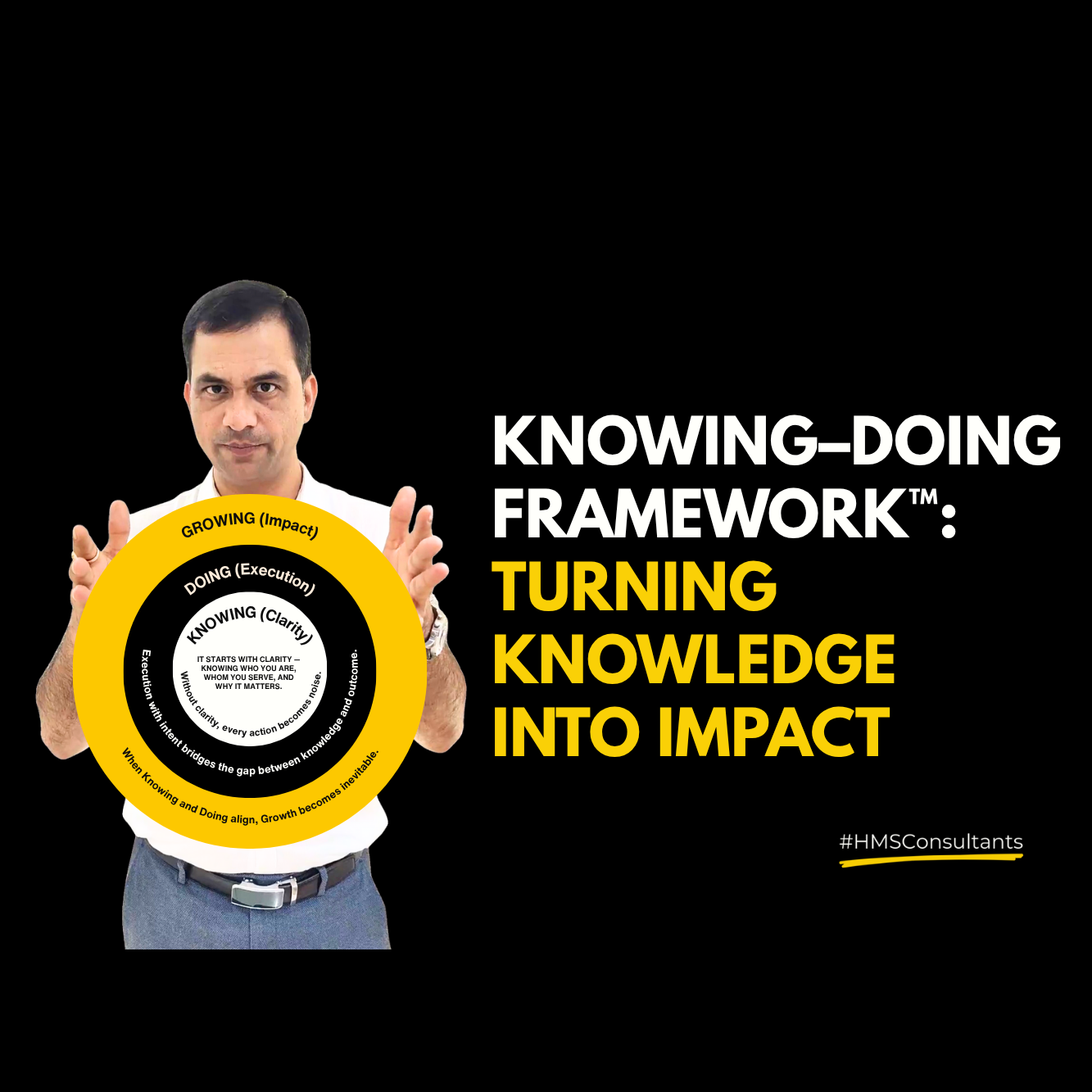
is something we strongly believe in, which means ‘Knowledge without application is the same as having no knowledge at all
Akhil Dave
Principle Consultant
Ready to take your Personal Brand to the next level?
Share your details below and we will connect with you to discuss your growth strategy.
Time as Currency: Why Speed of Care is the New Marketing Advantage
Patients value time as much as treatment. Discover how faster consultations, quick reports,…
Personal Branding for Doctors: The 2026 Playbook
A practical 2026 personal branding strategy for doctors covering platform priorities, content pillars,…
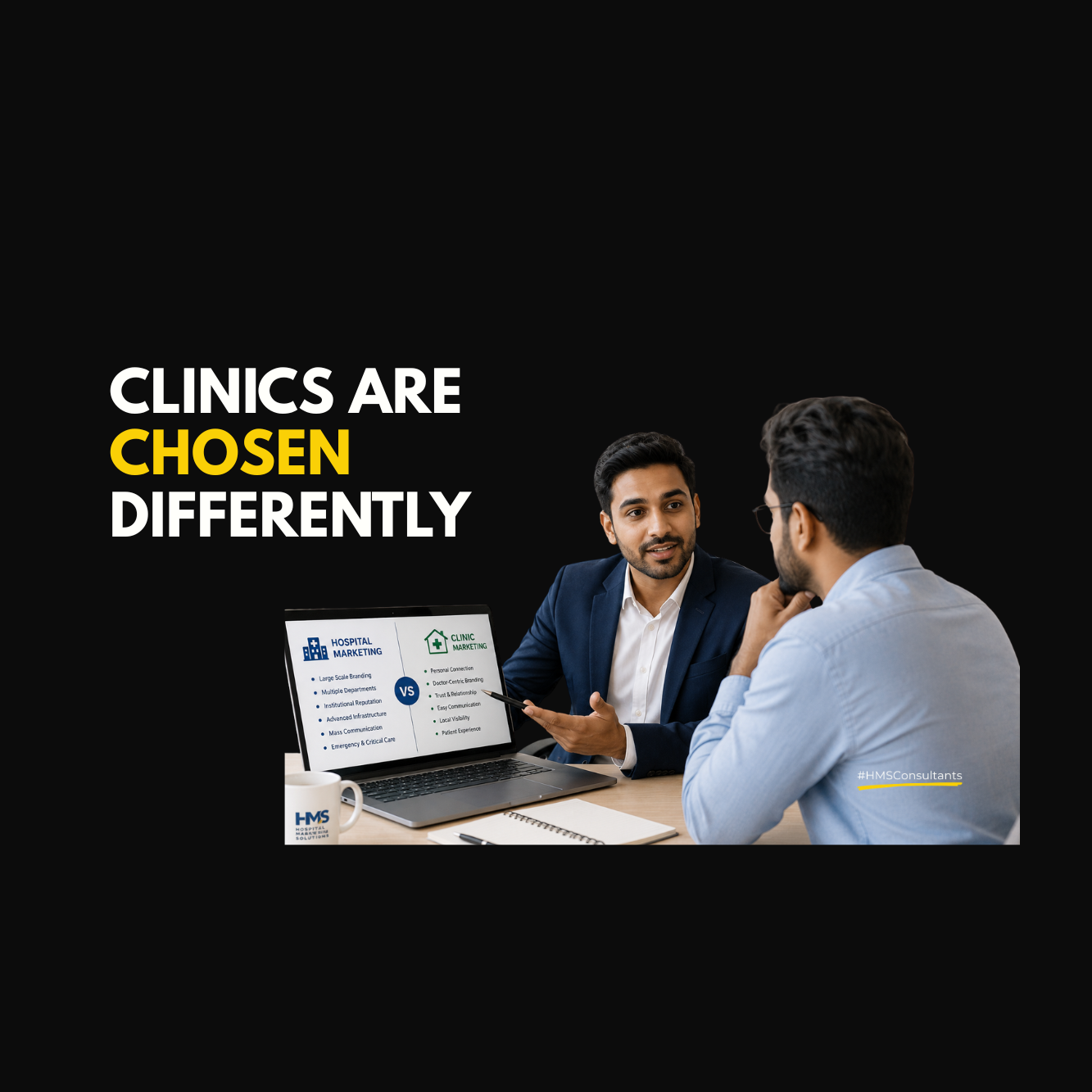
Marketing a Clinic Is Different From Marketing a Hospital
Marketing a clinic requires a different strategy from hospital marketing because patients evaluate…
Medical Marketing: Effective Strategies to Boost Your Healthcare Practice
Explore innovative healthcare marketing strategies for clinics, doctors, and hospitals to boost patient…
Healthcare Marketing 2025: Why Platform Features Matter
In 2025, platform-specific features are the key to healthcare marketing success. Learn how…
Why Healthcare Businesses in India Need a Strategic Digital Marketing Consultant
Every healthcare brand is online but few grow strategically. A digital marketing consultant…