
Personal Branding for Doctors: The 2026 Playbook
A practical 2026 personal branding strategy for doctors covering platform priorities, content pillars, video, consistency, and trust-building to turn online visibility into patient enquiries.


Quick answer: The questions patients and families ask your reception or enquiry team before booking show what your communication is not yet explaining. Collect the recurring ones without patient details, check where each is answered and who owns the answer, then fix one gap at a time before planning another campaign.
Latest update: Patient information must stay factual under the NMC notice of 6 October 2026, which restricts testimonials, before and after material, success-rate claims, superlatives and offers. See section 9.
Last updated: 31 October 2026 · By Akhil Dave, Founder & Principal Consultant, HMS Consultants
Before planning your hospital’s next campaign, spend some time listening to the people who answer patient enquiries. Ask them one simple question: what do people repeatedly ask us before they book an appointment? You may find that your next communication priority is already waiting in those conversations.
This guide builds on my LinkedIn newsletter, The Questions Patients Ask Before They Book, and turns it into a practical approach for hospital and clinic teams.
Key takeaways
Reception, enquiry handling and patient coordination teams hear questions that may never appear in a campaign review. Typical examples:
| What patients ask | What it may tell you | What to check |
|---|---|---|
| “Which doctor should we consult?” | Services and appointment routes may be unclear | How doctors, specialities and booking are explained on the website and in posts |
| “Will we need to come again for the reports?” | People worry about repeat travel and time | Whether the visit process and report timelines are explained |
| “Can someone explain what the estimated cost includes?” | Cost inclusions and exclusions are not clear | Who can explain inclusions, exclusions and what needs individual assessment |
| “My father does not understand English. Will someone help him?” | Language and support needs are not visible | Whether language help is available and communicated |
| “Where do we go when we arrive?” | Directions or arrival steps are missing | Entrance, department and arrival instructions |
These questions are a useful starting point for understanding what people need from your communication. A campaign may have successfully introduced your hospital, while the person responding may still need help deciding what to do next.
Consider an illustrative situation. A daughter is arranging a consultation for her father. She has seen the hospital’s post, visited its website and found the appointment number.
When she calls, she asks about the doctor’s availability. Then she asks whether investigations can be completed on the same day, how long they should plan to stay and whether someone needs to accompany him throughout the visit.
A report might record this as an enquiry that did not become an appointment. That label tells us very little. Perhaps she needs to arrange leave from work. Perhaps the family is travelling from another town. Perhaps she is trying to avoid bringing her father twice because travelling is difficult for him.
Until we understand the question behind the question, recommending another promotional message may be premature. This is where healthcare marketing requires closer observation. For tracking and handling enquiries, see WhatsApp OPD for hospitals.
Hospital communication naturally includes information about doctors, facilities, technology and services. There is another layer worth examining: the information someone needs to approach that service.
A person may understand that a hospital offers a particular consultation but remain uncertain about which department to contact, what documents to bring or what happens after booking. From the organisation’s perspective these may seem like small administrative details. For someone coordinating care, they can decide whether the next step feels manageable.
As healthcare marketers, we should ask whether our communication answers both questions: what do we offer, and how can someone access it? A website that answers both is covered in how to build a hospital website that converts.
Collecting these questions does not need a complicated research exercise.
| If people repeatedly ask | Review |
|---|---|
| Which doctor to consult | How services and appointment routes are explained |
| What the estimated cost includes | Whether the right team can explain inclusions, exclusions and what needs individual assessment |
| Where to go or which entrance to use | Directions, department names and arrival instructions |
The purpose is to identify where a clearer explanation or a better process would help. Internal teams are part of the brand experience, as explained in internal marketing strategy for hospitals.
| Type of question | How to handle it |
|---|---|
| Public information | Answer clearly on the website, in posts and in scripts: departments, documents to bring, directions, what happens after booking |
| Individual conversation | Route to the right person: for example, estimates that depend on the person’s situation |
| Clinical question | Refer to the appropriate qualified professional, not to marketing or reception scripts |
A useful communication system recognises those differences.
Integrated Marketing Communication can sound like a discussion about channels, campaigns and brand consistency. At a practical level, it means checking whether the information in a social post, on the website and in a telephone conversation works together.
Imagine a campaign inviting people to enquire about a new service. The website provides little further explanation, and the person answering the phone has not been briefed about the campaign. Each team may have completed its assigned activity, yet the person seeking information still has to connect the pieces.
That is a management issue worth diagnosing. Before expanding the campaign, clarify what information each interaction should provide, who owns the next step and how the enquiry moves between teams. For the wider framework, see integrated healthcare marketing strategy.
AI can help organise anonymised enquiry themes, prepare draft FAQs or suggest alternative ways to explain administrative information. The hospital team must still check whether the information is accurate, suitable and consistent with its actual processes.
For example, an automatically generated answer about appointment availability is only useful if it reflects the current schedule. A polished explanation of a service can create confusion if the hospital cannot deliver the process it describes. The valuable starting point is the question: what are people finding difficult, and what would help them? Tool selection comes after that diagnosis. See also AI in healthcare marketing.
That is how observation becomes useful work. Fold the learning into your hospital marketing strategy and monthly review.
Latest update: The NMC notice of 6 October 2026 restricts testimonials, before and after material, success-rate claims, superlatives and offers, and prohibits solicited or incentivised reviews.
Clearer patient information is not promotion. Keep FAQs and service pages factual, do not present cost explanations as offers, and have material checked. Read the NMC advertising guidelines guide, or book an NMC compliance audit.
Work with HMS Consultants
Not sure what your reception team hears every day? Start with a structured look at your enquiry journey.
Common ones include which doctor to consult, whether reports need a second visit, what the estimated cost includes, how long to plan for, who will help family members who do not understand English, and where to go on arrival. Your own reception team can tell you which ones are most frequent.
Ask the people who answer calls and handle patient coordination what people repeatedly ask, what they have to explain several times and where they need another department’s help. Record themes without patient names or identifiable health information, then compare them with your website, social posts and call scripts.
Not necessarily. The label says little about the conversation. The person may need time off work, may be travelling from another town or may be trying to avoid bringing a family member twice. Understanding the reason behind the question helps you decide what to improve.
Practically, it means checking that a social post, the website and a phone conversation give consistent information and that each team knows who owns the next step. It is less about channels and more about the person seeking information not having to connect the pieces alone.
AI can help organise anonymised enquiry themes, draft FAQs or suggest clearer ways to explain administrative information. The hospital must check accuracy, suitability and consistency with its actual processes, and should decide what needs to improve before choosing a tool.
Questions about which department to contact, documents to bring, directions, arrival instructions and what happens after booking usually suit public information. Cost questions often need an individual conversation, and clinical questions need the appropriate qualified professional.
A short monthly discussion with the reception, enquiry and patient coordination teams is a practical start. Pick one gap, make one change, then ask the team what they are hearing afterwards.
For teams who want to know what is working before they spend more.
Explore the AuditFor hospitals that need strategy, positioning and a connected plan.
Explore Hospital ConsultingFor hospital teams who want frontline and marketing staff aligned.
Explore Training for HospitalsFor websites and social channels that must stay within the NMC rules.
Explore the NMC AuditReading inspiration: this reflection was prompted by extracts from Marketing 7.0 by Philip Kotler, Hermawan Kartajaya and Iwan Setiawan. The healthcare examples and practical recommendations are the author’s own interpretation.
Disclaimer: HMS Consultants is a healthcare marketing consultancy. We are not medico-legal experts or a law firm. References to the NMC guidelines reflect our understanding of public information and are not legal advice. Please consult a qualified healthcare lawyer before acting.
About the author: Akhil Dave is Founder & Principal Consultant of HMS Consultants, with 25+ years in healthcare marketing.
Work with HMS Consultants
Which question does your reception team answer repeatedly, and what could your hospital change to answer it more clearly? Let us help you act on it.
A practical 2026 personal branding strategy for doctors covering platform priorities, content pillars, video, consistency, and trust-building to turn online visibility into patient enquiries.
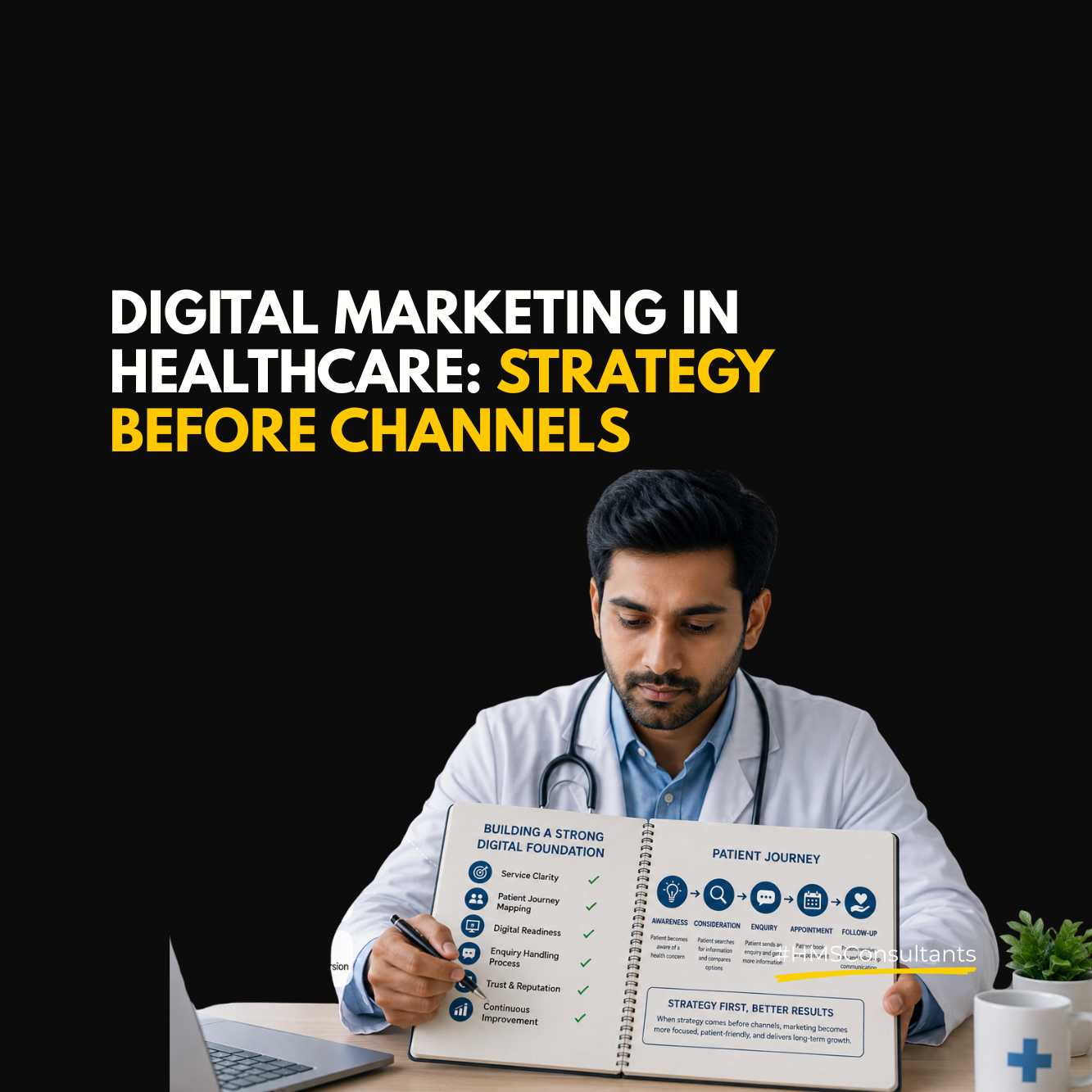
Digital marketing in healthcare works best when strategy comes before channels. Learn how service clarity, patient journey mapping, digital readiness, and trust-building create more effective healthcare marketing outcomes.
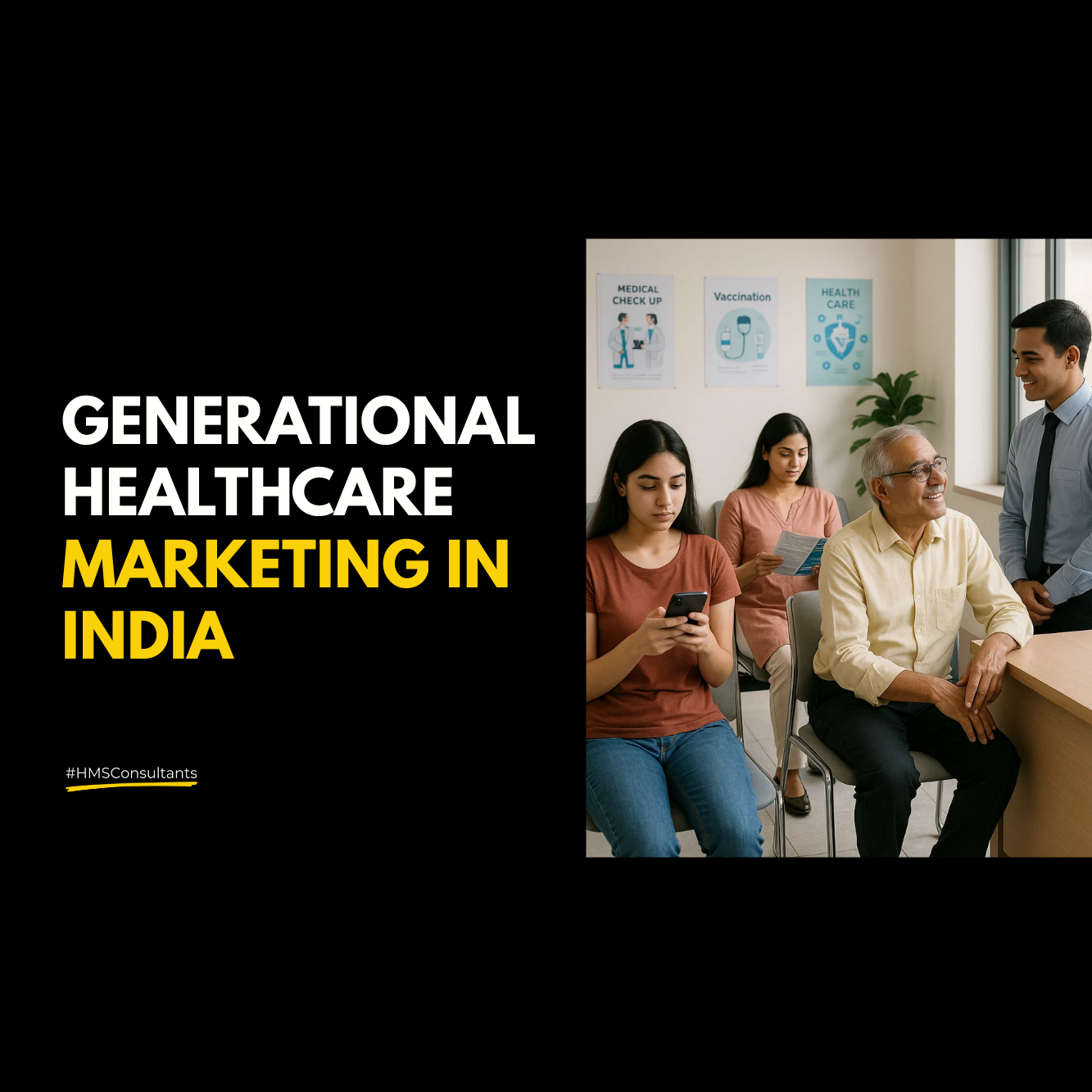
Not every patient sees your hospital the same way. Gen Z trusts digital-first communication, Millennials value convenience, and Boomers seek relationships and reassurance. Learn how to tailor hospital marketing...
Doctors digital marketing fails when it is treated as promotion instead of professional presence. In healthcare, trust is built through calm, ethical communication, not visibility.
Hospital marketing strategy fails when channels are chosen before patient decisions are understood. Growth improves when strategy reduces decision friction, not just increases visibility.
In 2025, hospital websites must do more than rank on Google they must also answer AI tools like ChatGPT. Learn how to design a site optimized for both.