


Hospital Growth with Doctor Personal Branding
In 2025, healthcare branding is about more than logos. Discover how doctor personal branding, clear messaging, and storytelling create lasting patient trust.
Patients today often search online before choosing a doctor, clinic, hospital, or treatment provider. They may check Google reviews, websites, doctor profiles, social media pages, videos, and patient education content before booking an appointment.
This means social media can influence how patients see a healthcare brand.
A strong social media presence can help healthcare businesses:
But this only works when social media is planned with purpose.
Random posting is not enough.
Many doctors and hospitals believe that if they post regularly, their marketing is being handled. But regular posting does not always mean effective healthcare social media marketing.
A page may be active but still not useful for patients.
This usually happens when content is:
For example, a clinic may post about a treatment, but the post may not explain who needs it, when to consult, what symptoms to notice, or what doubts patients usually have.
A hospital may post about a department, but may not explain why the service is important, what patients should expect, or how the hospital supports care.
This is why healthcare content strategy matters.
Healthcare decisions are emotional and sensitive. Patients are often worried, confused, or unsure. They may not understand medical terms, treatment options, risks, recovery, cost, safety, or when they should seek help.
Because of this, healthcare social media should focus on clarity before promotion.
Good healthcare content should answer questions such as:
When content answers real patient questions, it becomes useful.
Useful content builds trust.
In regular marketing, attention can be enough to create interest. But in healthcare, attention is not enough. A patient needs confidence before taking action.
Patient trust is built through:
This is why healthcare marketing social media should be handled carefully. A healthcare page should not sound like hard selling. It should sound informed, responsible, and helpful.
The goal is not only to get likes or views.
The goal is to help patients trust the healthcare provider.
A strong healthcare social media plan should include different types of content, not only promotional posts.
Useful content categories can include:
This type of content helps patients understand the healthcare provider better.
It also supports hospital marketing and clinic marketing by building long-term credibility.
Healthcare social media should be connected to a larger healthcare marketing strategy. It should not be managed as a separate activity.
Before creating content, healthcare businesses should ask:
This is where a healthcare marketing consultant can add value.
A consultant can help doctors, clinics, and hospitals understand what kind of content is needed and why.
A healthcare marketing consultant does not only suggest posts. The consultant studies the healthcare business, patient journey, digital presence, service positioning, and communication gaps.
For social media, a consultant can help with:
This helps healthcare businesses move from random posting to meaningful communication.
Many professionals know how to create content or manage social media pages, but healthcare social media requires a deeper understanding of patient behaviour, trust, ethics, and healthcare communication.
The HMS Certified Healthcare Marketing Consultant Program helps serious professionals understand this specialised side of healthcare marketing.
Participants learn how to review digital presence, understand patient communication gaps, plan healthcare content direction, study service positioning, and think from a consulting perspective.
The program is designed for professionals who want to move beyond basic posting and understand how healthcare marketing can support trust, visibility, and business growth responsibly.
HMS provides structured learning, tools, frameworks, and guidance. Growth depends on how participants learn, apply, communicate, and build their consulting practice over time.
Work with HMS Consultants
Need a clear plan to grow brand visibility, patient footfall and revenue? Explore Hospital Marketing Strategy Consulting.
See Hospital Marketing Strategy ConsultingBook a free 30-min call
Healthcare marketing social media should not be limited to regular posting. In healthcare, content must educate, guide, reassure, and build trust.
Doctors, clinics, hospitals, and healthcare businesses need social media that speaks to patient concerns, explains services clearly, and supports ethical communication.
Posting creates activity.
Strategy creates direction.
Trust creates patient confidence.
For professionals who want to grow in healthcare marketing, understanding social media as a trust-building tool is an important skill. The future of healthcare social media will belong to those who can combine content, strategy, ethics, and patient understanding.
Healthcare marketing social media means using platforms like Instagram, Facebook, LinkedIn, and YouTube to educate patients, explain services, build trust, improve visibility, and support ethical healthcare communication.
Posting alone is not enough because healthcare decisions require trust. Patients need clear information, doctor credibility, service understanding, ethical communication, and reassurance before choosing a healthcare provider.
Patient education posts, doctor explanation videos, symptom awareness, FAQs, myth-busting content, treatment information, preventive health tips, and trust-building posts work well for healthcare social media.
A healthcare marketing consultant can help with social media audits, content direction, patient communication strategy, service positioning, ethical content planning, and trust-building communication.
Yes. The program can help social media professionals understand healthcare-specific content strategy, patient communication, digital presence review, ethical marketing, and consulting thinking.
No. HMS Consultants does not guarantee clients, income, employment, or fixed earnings. The program provides structured learning, tools, frameworks, mentoring, and guidance. Success depends on the participant’s effort, communication, market development, and consulting delivery.
Share your details below and we will connect with you to discuss your growth strategy.
In 2025, healthcare branding is about more than logos. Discover how doctor personal branding, clear messaging, and storytelling create lasting patient trust.

In today’s saturated digital space, healthcare marketing is no longer about making noise—it’s about earning trust. Discover how proof-based marketing, rooted in outcomes, testimonials, and transparency, is helping clinics...

Digital marketing healthcare in 2026 is increasing visibility, but many hospitals still struggle with conversions. This blog explains how trust, clarity, AEO, GEO, and patient experience improve real healthcare...
Marketing strategy of hospital often looks strong on paper but fails in execution. This blog explores how gaps in patient communication, experience, and internal systems affect conversions and real...
Hospital marketing budgets often increase when growth slows, but higher spending rarely fixes the real problem. Without clarity in patient experience, communication, and strategy, budgets amplify inefficiencies instead of...
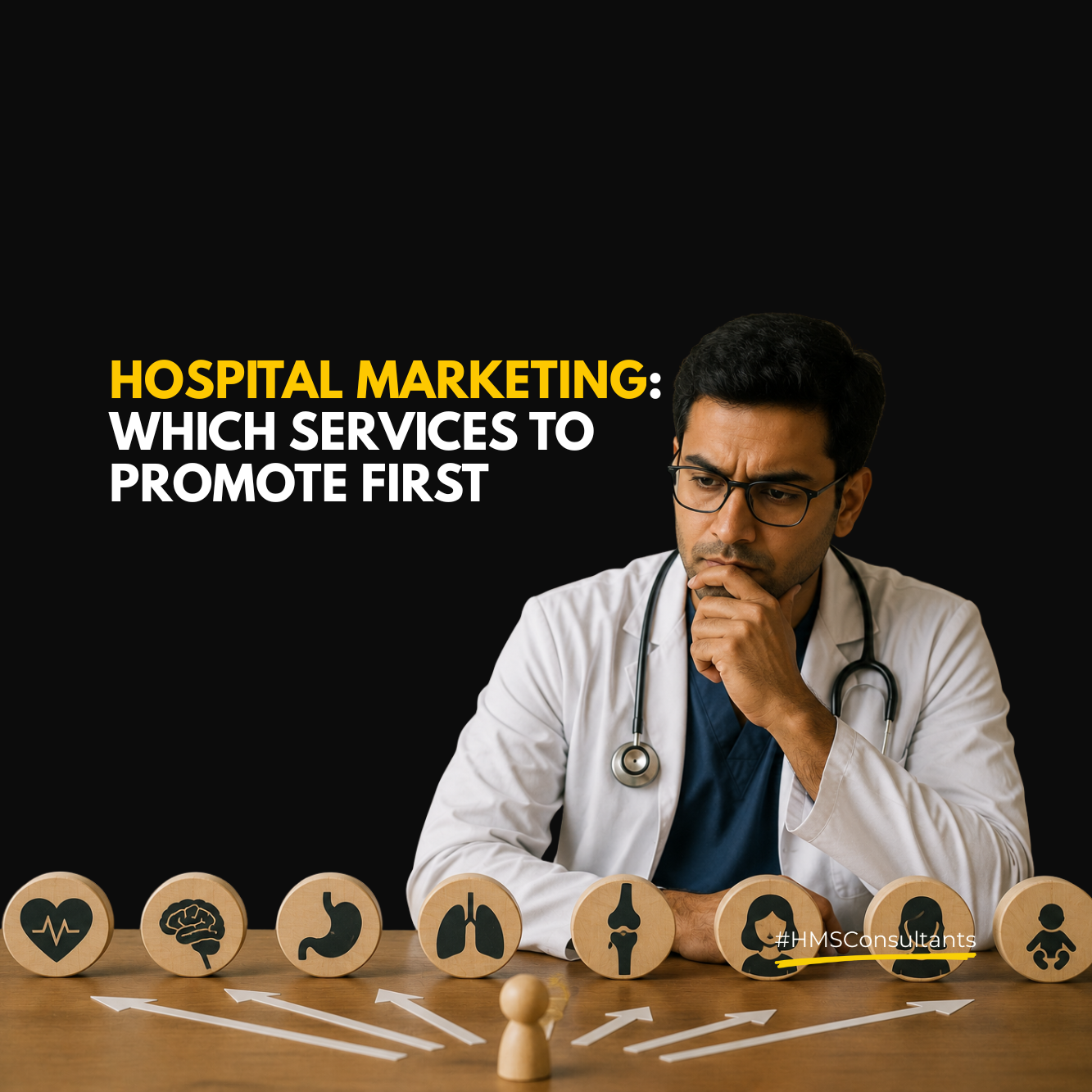
Hospital marketing is most effective when the right services are promoted at the right time. Learn how hospitals can prioritize services based on patient demand, visibility, competition, and growth...