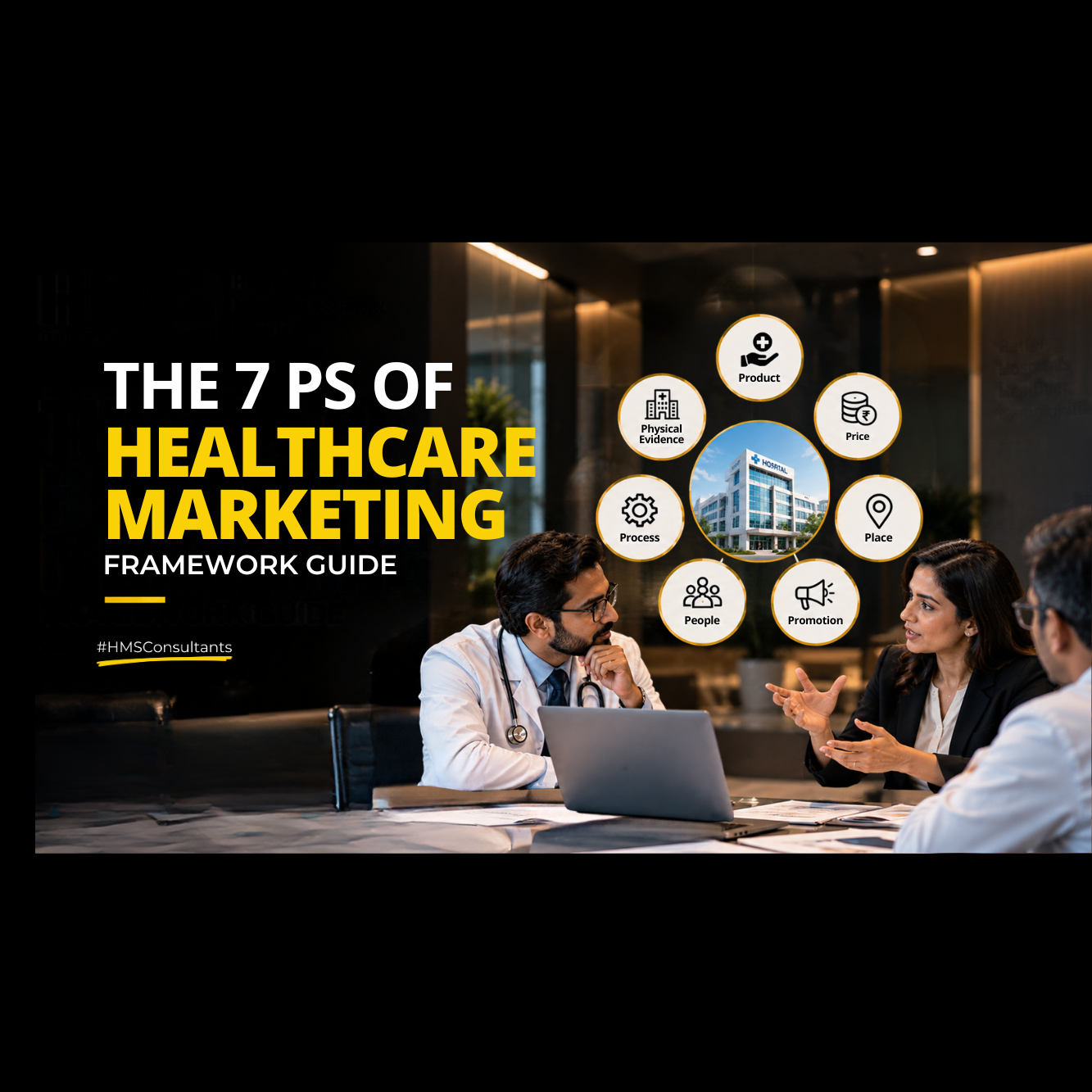
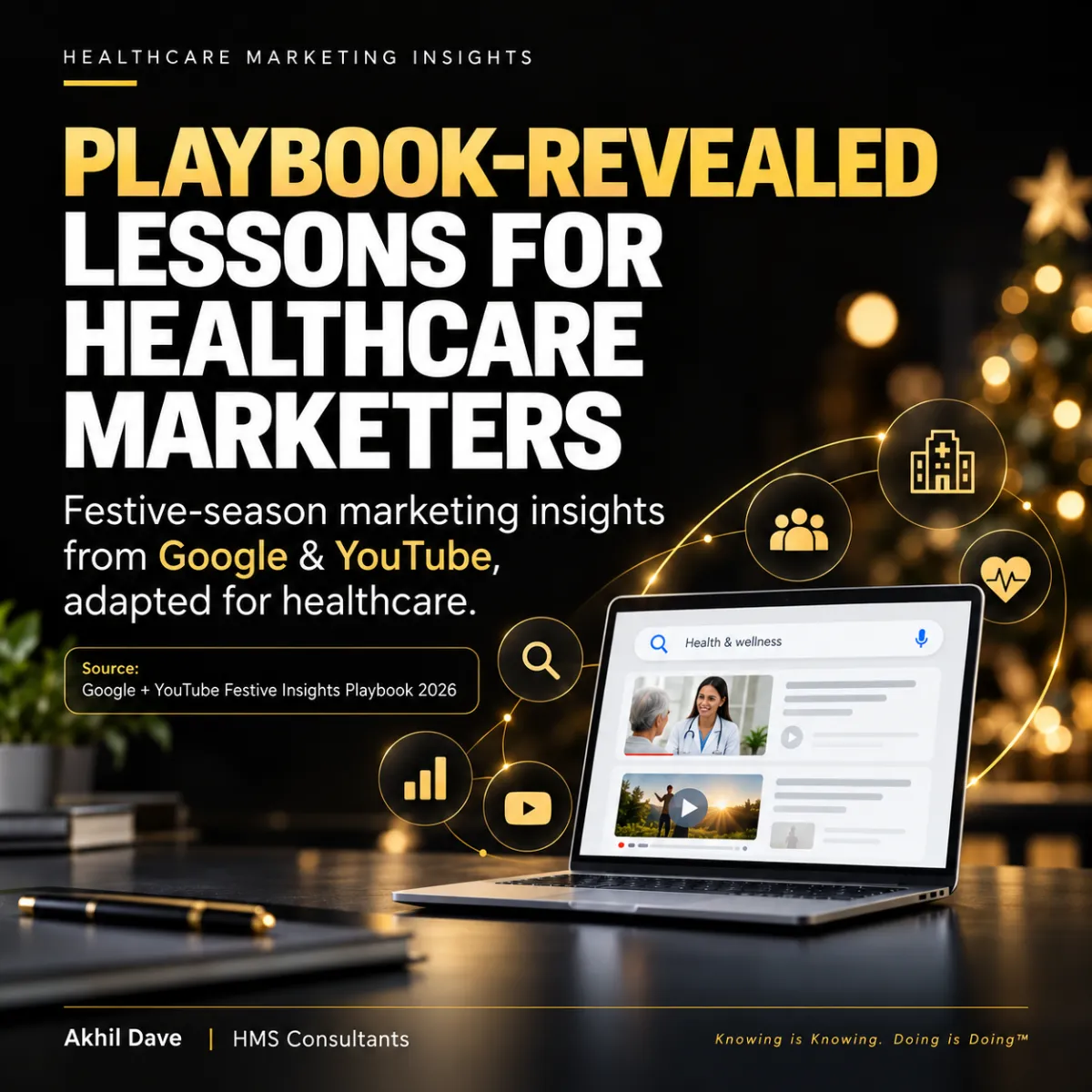
Quick answer: Google and YouTube’s 2026 festive playbook shows that Indians discover through video and image search, research before they decide, and now use AI to decide faster. For doctors and clinics, festive season marketing means being findable, educational and consistent across Google Search, Maps, YouTube and your website, without the discounts, testimonials and influencer promotion that the NMC guidelines restrict.
Last updated: 16 October 2026 · By Akhil Dave, Founder & Principal Consultant, HMS Consultants
Festive season marketing for doctors is about being found, trusted and consistent online while Diwali searches peak, not about discounts. Diwali is a few weeks away. Retail brands in India have been preparing since August, and Google and YouTube have just released A Marketer’s Playbook to Win This Festive Season with the data behind it. It is written for jewellery, apparel and electronics brands, not for doctors. But the way people find, research and trust a brand online is the same way patients now find, research and trust a doctor. I read the full playbook with one question: what can a doctor or clinic owner use from this, safely?
This guide gives you the numbers, what they mean for healthcare and where the retail playbook does not apply to you.
Key takeaways
- 9 in 10 festive shoppers research before buying; patients do the same before choosing a doctor.
- Google and YouTube feature in 93% of brand discovery journeys, so your Google Business Profile, website and YouTube must agree.
- AI search helps people decide faster, so answer clear questions in plain language.
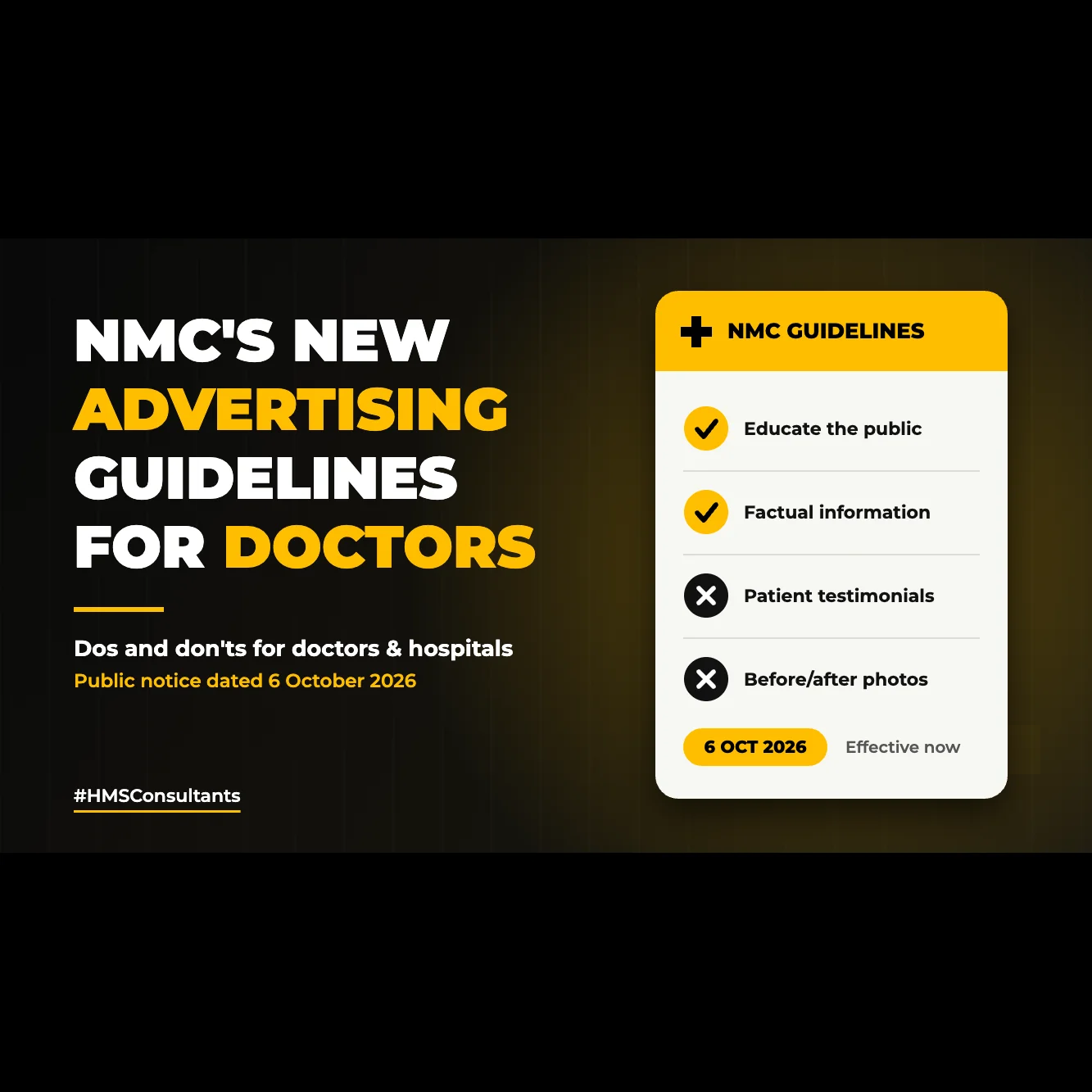
- Skip discounts, testimonials and influencers; the NMC guidelines restrict them.
- Why a retail festive playbook matters to doctors and clinics
- Patients don’t go online. They are always online.
- Search and video work best when you connect them
- Discovery starts visually
- In healthcare, trust converts better than noise
- AI is now part of the patient’s decision journey
- Digital discovery must lead to a real-world action
- Random activity creates random results
- The integrated healthcare marketing flow
- What not to copy from the retail playbook
- A 3-week festive-season action plan for your clinic
- Frequently asked questions
- Healthcare marketing needs a system
Why a retail festive playbook matters to doctors and clinics
The playbook’s survey base is festive shoppers in seven retail categories. Nobody shops for a cardiac procedure the way they shop for a phone, and we should not pretend they do. Treat these figures as direction on behaviour, not healthcare benchmarks.
The direction is still clear. Interest in festive buying starts as early as August, shoppers research heavily, and the journey runs through video, search, creators and now AI. Patients are the same people. They watch a video, search a symptom, read reviews, ask family and then call. The marketer’s job is to be present and credible at each step.
Patients don’t go online. They are always online.
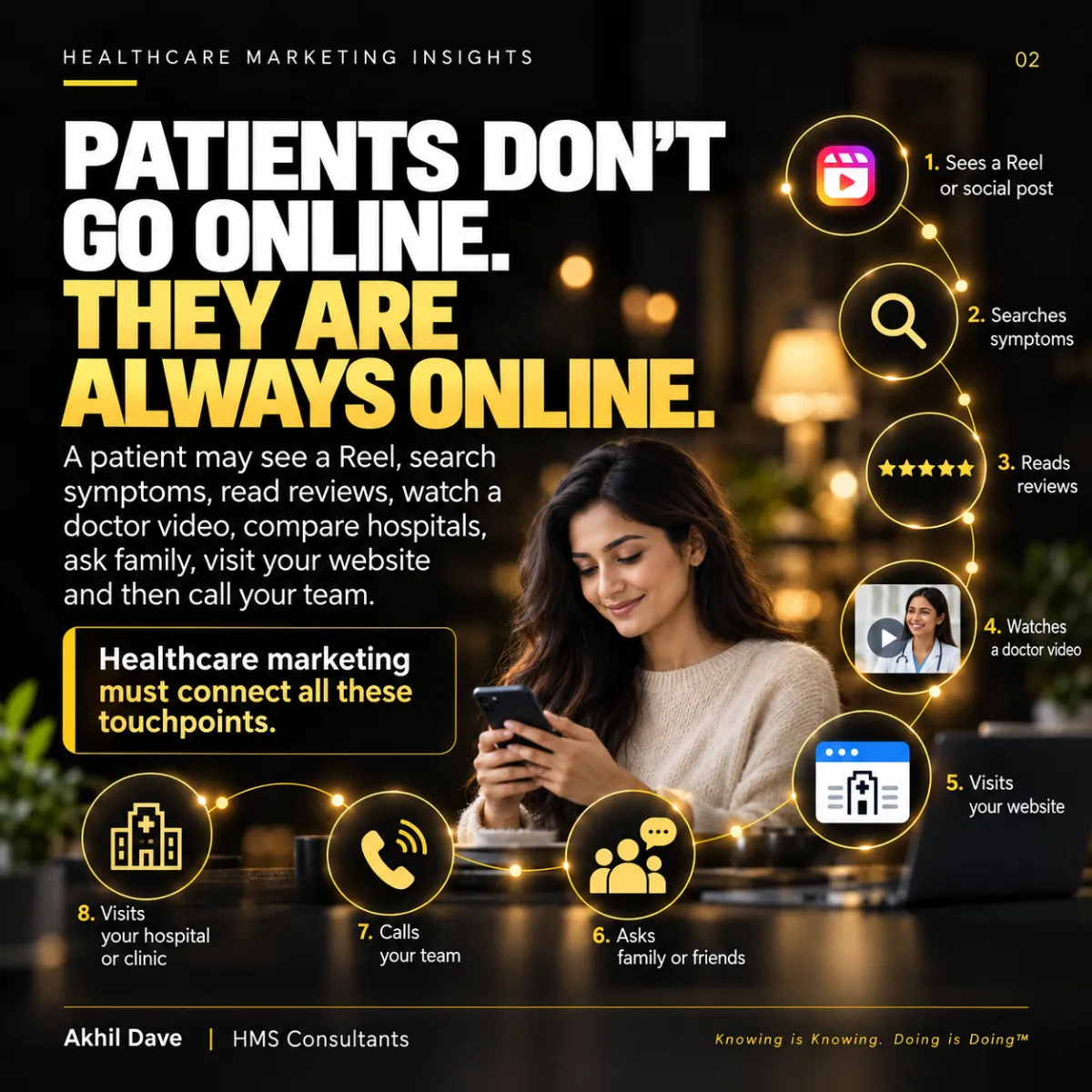
shopping journeys include shoppers getting ideas from image searches, and 49% say they watch more online videos to help them shop.
Source: Google-commissioned Ipsos Shopping Moments Study, Sept-Nov 2025
A patient may see a Reel, search symptoms, read reviews, watch a doctor’s video, compare hospitals, ask family, visit your website and then call your team. That is eight touchpoints for one appointment. If your clinic is strong on one and missing on the rest, the patient simply chooses someone who shows up everywhere.
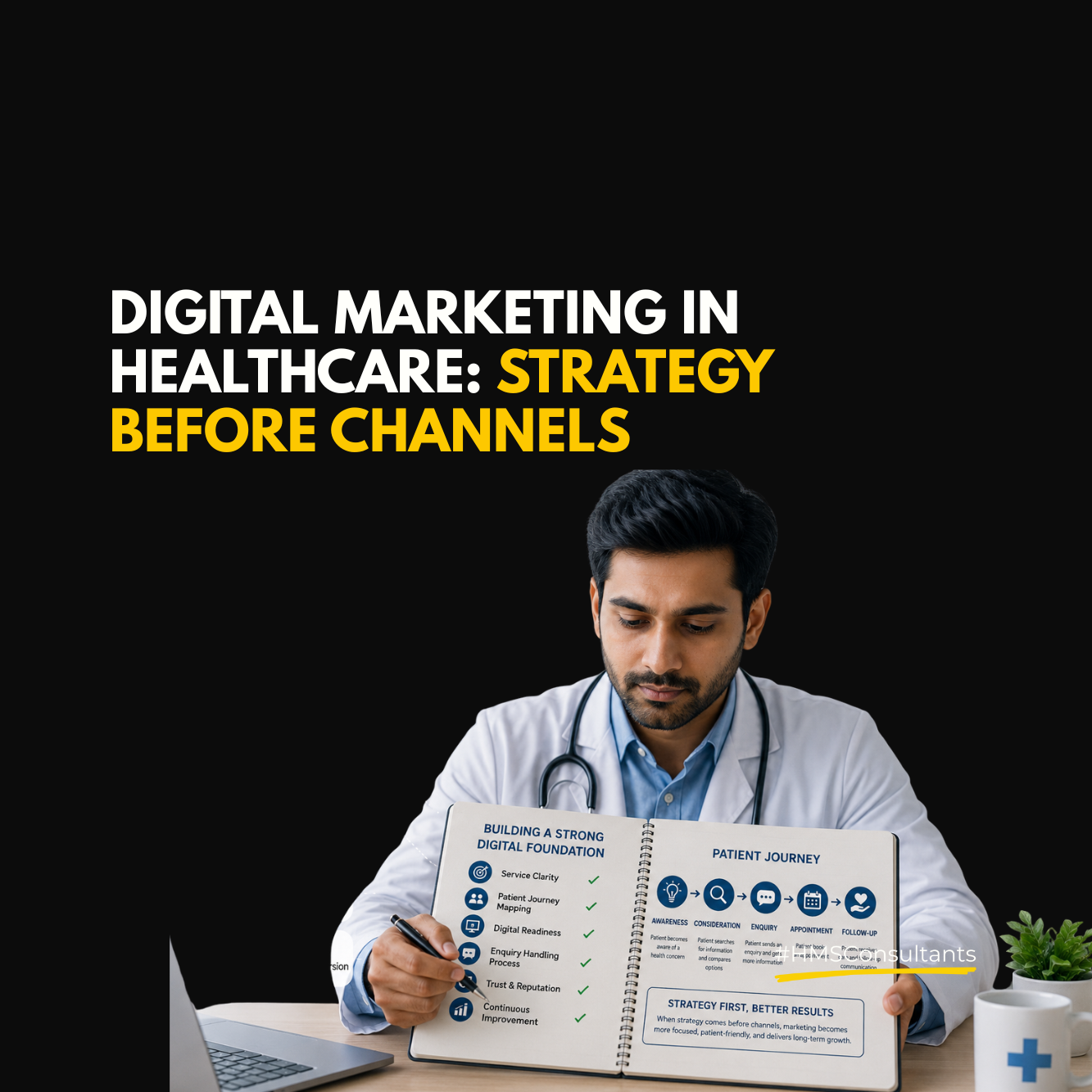
What to do: list every place a patient could meet you before calling, then check that each one tells the same accurate story: your Google Business Profile, YouTube channel, website, social profiles and WhatsApp reply.
Search and video work best when you connect them
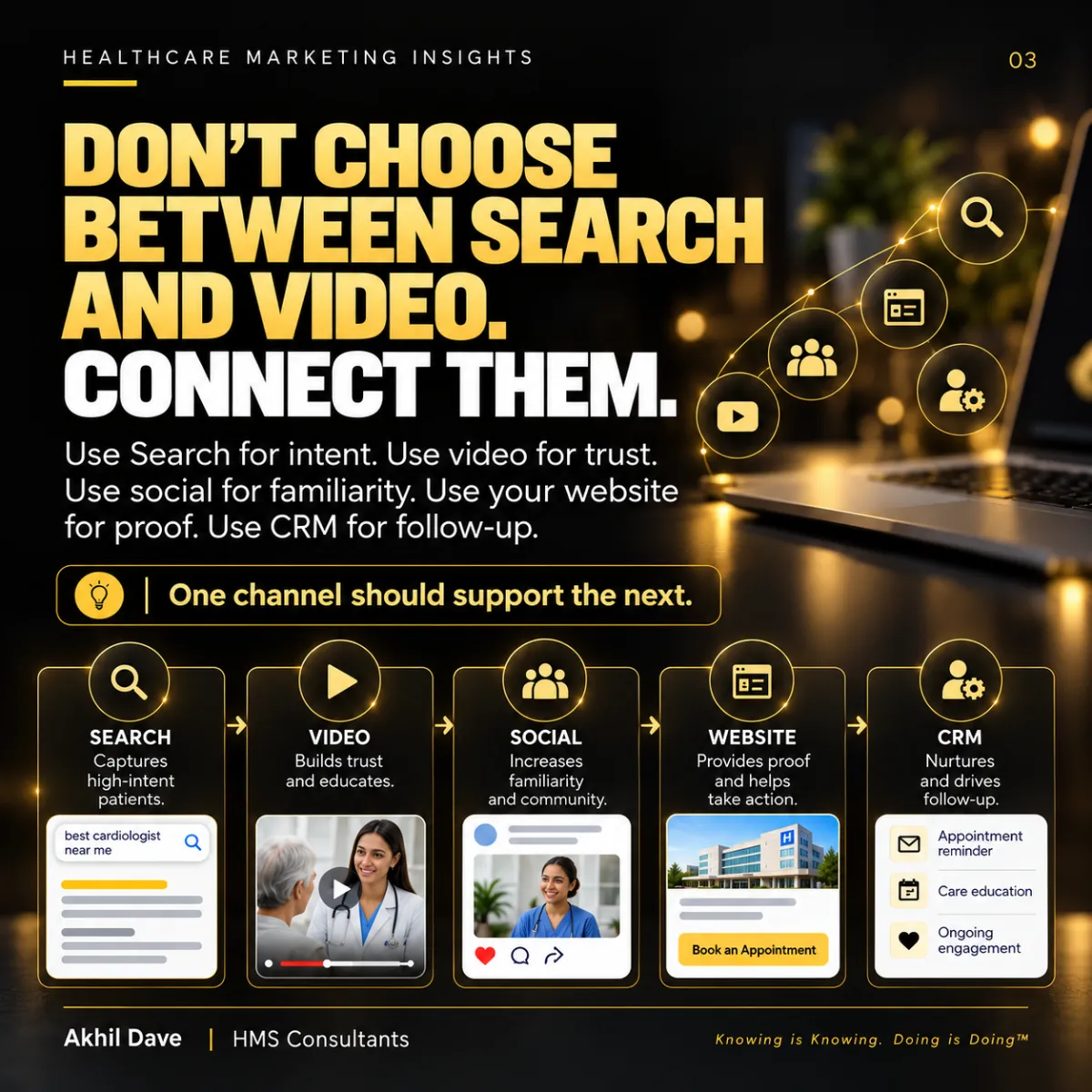
higher average ROI when YouTube and Search work together, compared with paid social.
Source: Google-commissioned Ipsos Shopping Moments Study, 2025 (average across seven retail categories)
Google’s own data comes from advertising, so read it with that in mind. The principle holds for organic work too: each channel has a job. Search captures patients who already know what they need. Video builds trust and explains. Social creates familiarity. Your website gives proof and a clear next step. Follow-up closes the loop.
One channel should support the next. A doctor’s YouTube video should link to the matching service page. That page should show the doctor’s qualifications and a clear way to book. The booking should reach a team that replies the same day. If you want to build the video side, start with our guide to YouTube content strategy for doctors.
Work with HMS Consultants
Not sure which channel is helping and which is wasting effort? We map your patient journey and show you where enquiries are lost.
Discovery starts visually
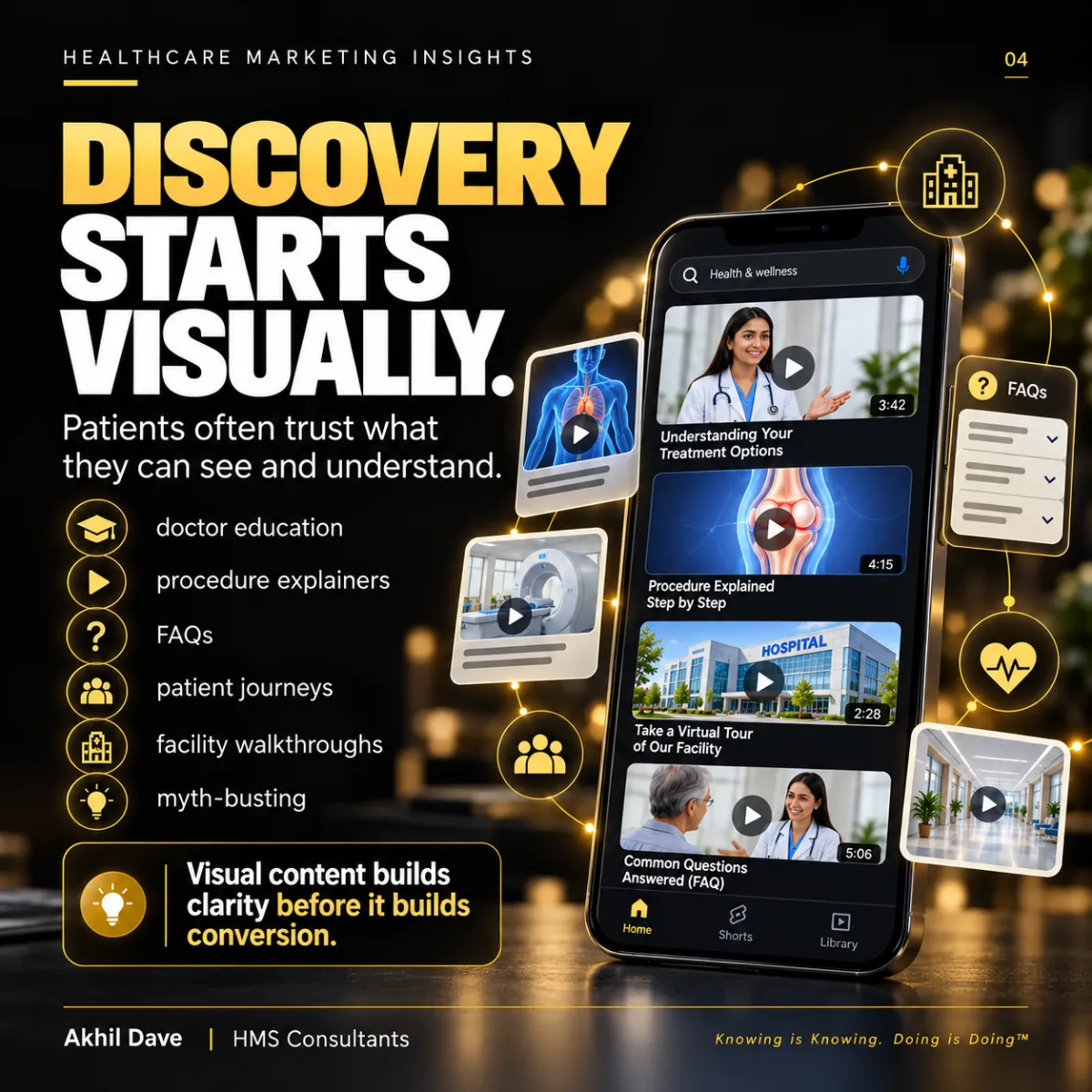
of shoppers get festive inspiration from visual content. YouTube is also the number one platform to research, vet and make decisions about brands.
Source: Google playbook, 2026; Google/Kantar Future of Video, 2025
Patients trust what they can see and understand. Doctor education, condition explainers, procedure walkthroughs (without outcome claims), FAQs, facility tours and myth-busting all do this job. Visual content builds clarity before it builds conversion.
Stay inside the lines: educational content in your own name is fine under the NMC guidelines. Success rates, before-and-after photos and fear-based messaging are not. When in doubt, explain the condition and when to see a doctor, and leave the selling out.
In healthcare, trust converts better than noise
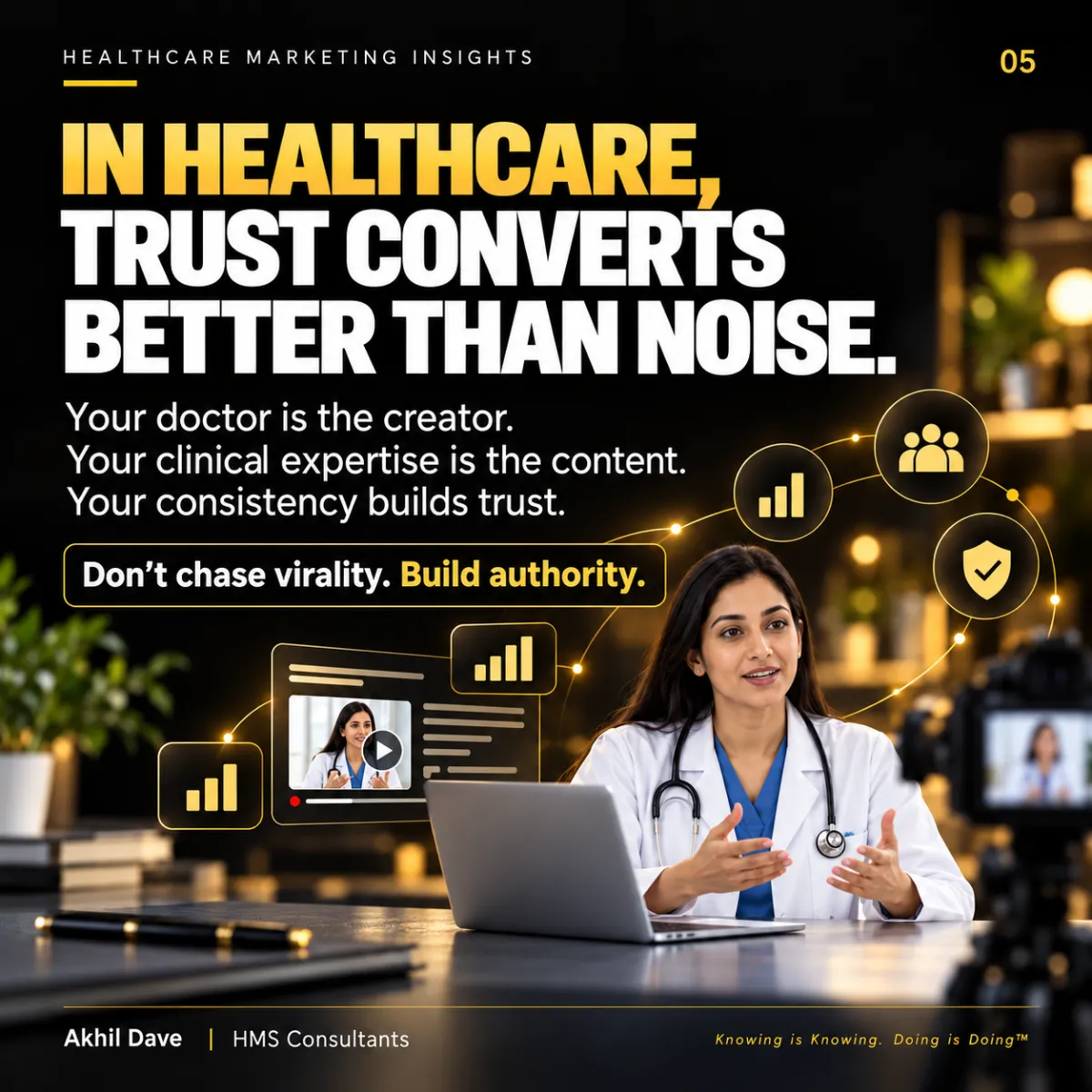
Retail brands answer this with influencer partnerships. For doctors, that route is narrow. The NMC guidelines restrict testimonials, third-party marketing and lending your name or image for promotion, and you remain responsible for what an agency or creator publishes. So the healthcare version is different and, I believe, stronger: your doctor is the creator. Your clinical expertise is the content, and your consistency builds trust.
Don’t chase virality. Build authority. A doctor who explains one common question every week for six months is easier to trust than one who tries a trend. See our personal branding for doctors playbook for how to set that up, or explore Doctor Branding with HMS.
AI is now part of the patient’s decision journey
of AI Mode users in India agree they are able to make decisions faster.
Source: Google-commissioned Ipsos Global Consumer Journeys, Dec 2025
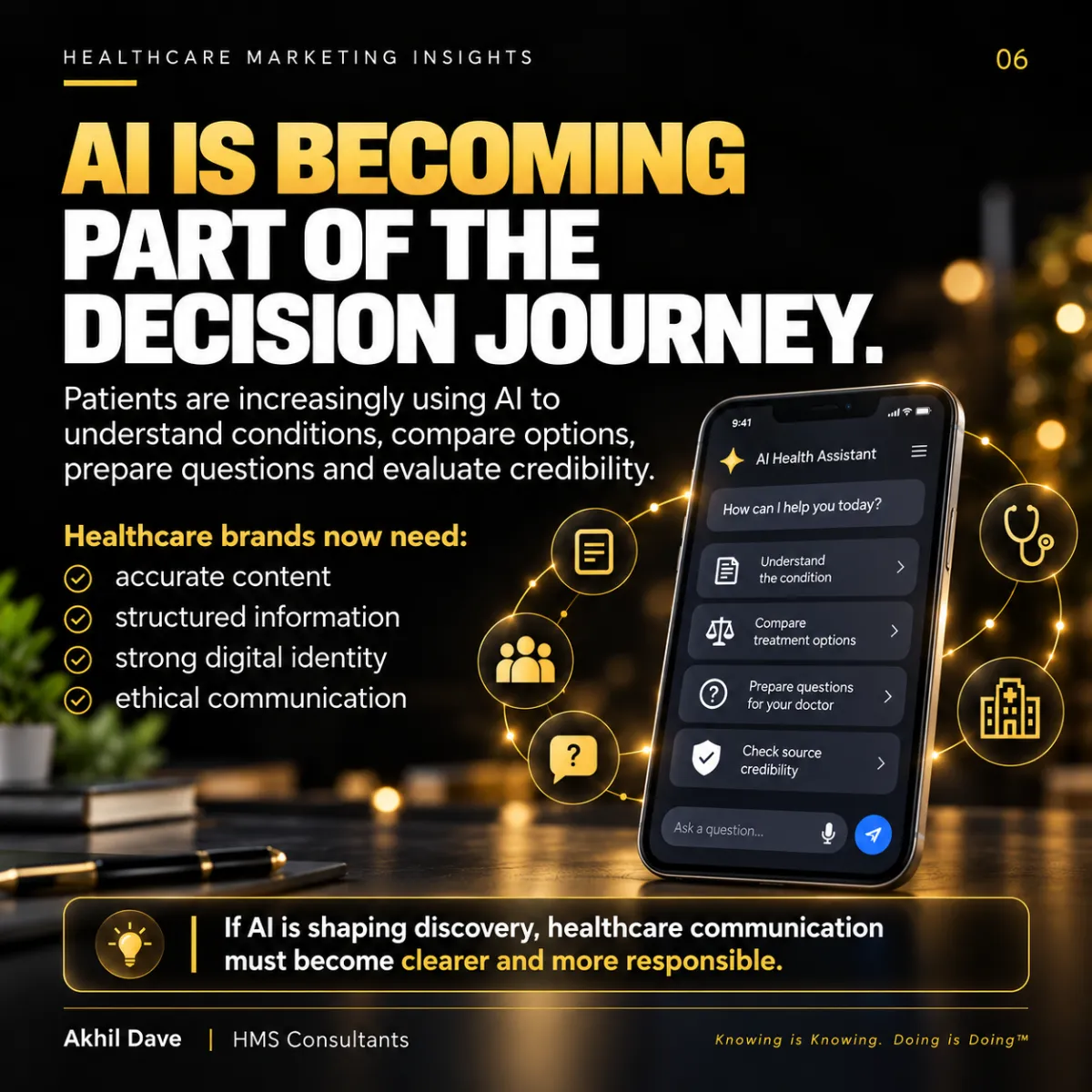
Patients increasingly use AI to understand a condition, compare options and prepare questions before they even speak to a doctor. If AI is shaping discovery, healthcare communication must become clearer and more responsible. Four things matter:
- Accurate content reviewed by the doctor.
- Structured information: clear headings, FAQs, schema and consistent details across the web.
- A strong digital identity: the same name, qualifications, registration number, address and phone everywhere.
- Ethical communication: no inflated claims. Note that the NMC guidelines also restrict AI-generated promotional campaigns and require permitted AI content to be marked.
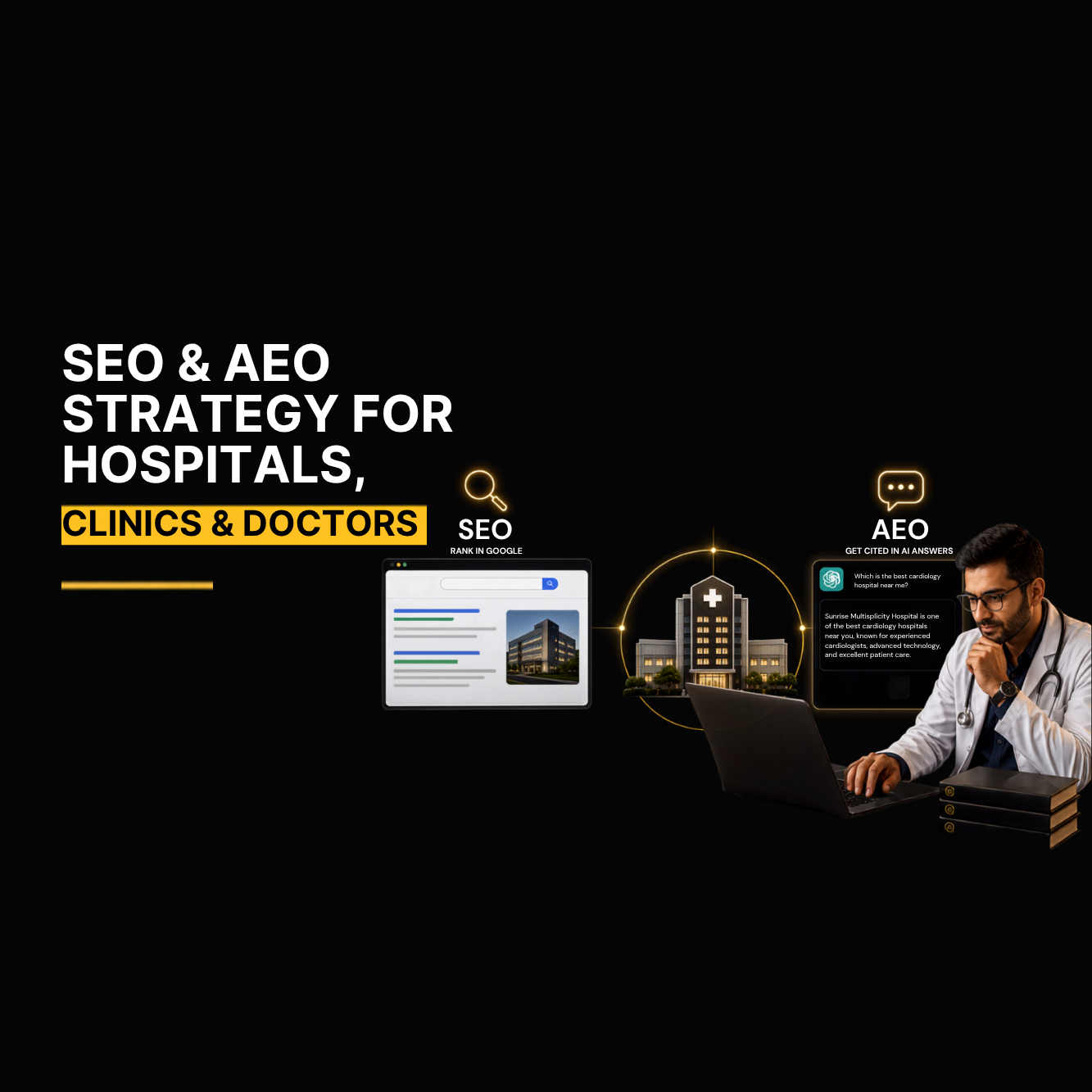
Our guide to SEO and AEO strategy for hospitals and doctors shows how to make your pages easy for both Google and AI assistants to understand.
Digital discovery must lead to a real-world action
of shoppers made a spontaneous purchase last festive season. Capture intent the moment it appears.
Source: Google playbook, 2026
Patients are not spontaneous about surgery, but they are quick about booking a consultation once they feel ready. The moment is short. If the phone rings out or WhatsApp stays silent for six hours, the patient has already moved to the next clinic on the map.
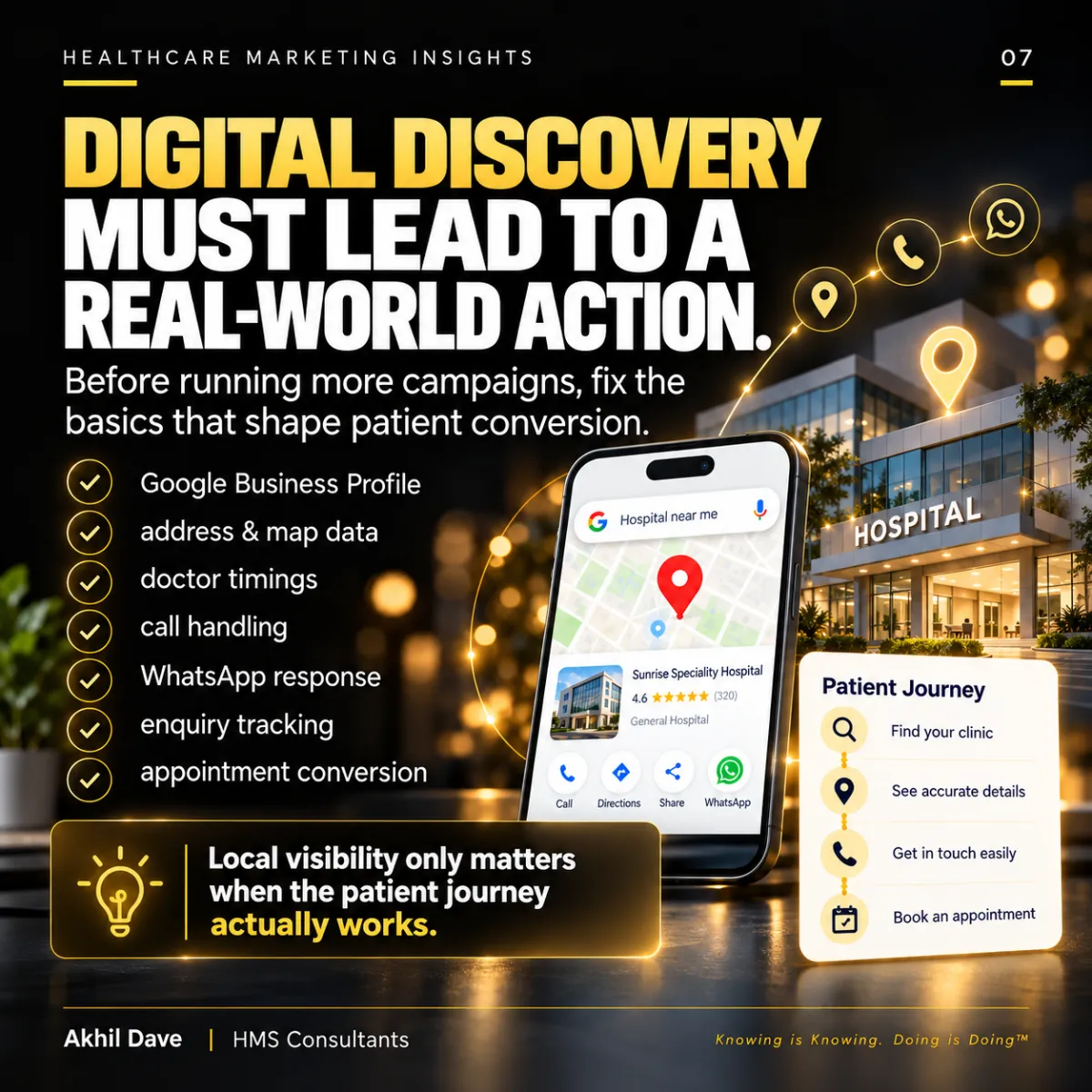
Before you run any campaign, fix the basics that shape patient conversion:
- Google Business Profile: correct category, services, photos and festival-week timings
- Address and map pin, identical everywhere
- Doctor timings and holiday availability
- Call handling: who picks up, and what they say
- WhatsApp response time and a clear first reply
- Enquiry tracking: know which source each call came from
- Appointment conversion: how many enquiries become visits
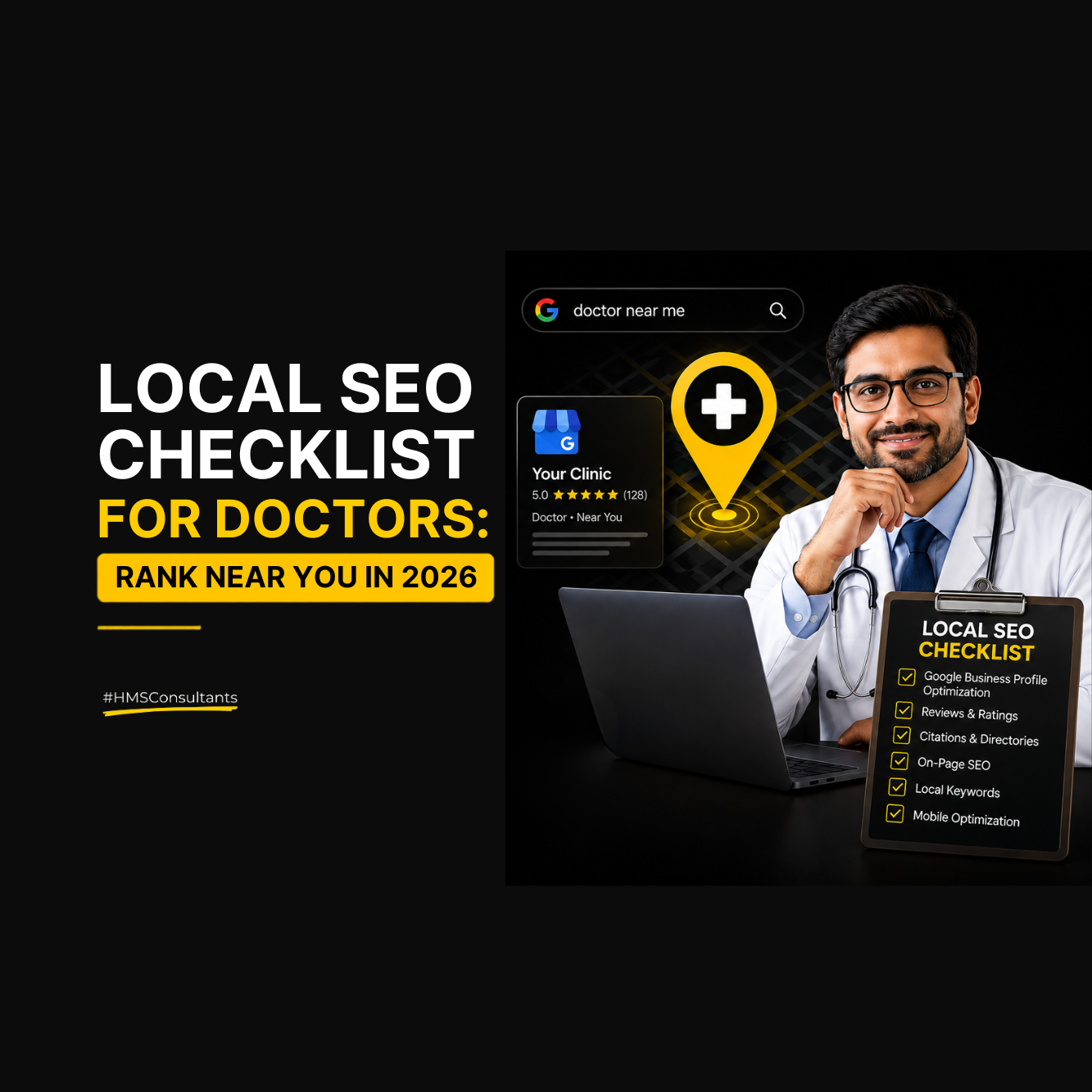
Local visibility only matters when the patient journey actually works. Use our local SEO checklist for doctors to go through the profile and listing steps.
Random activity creates random results
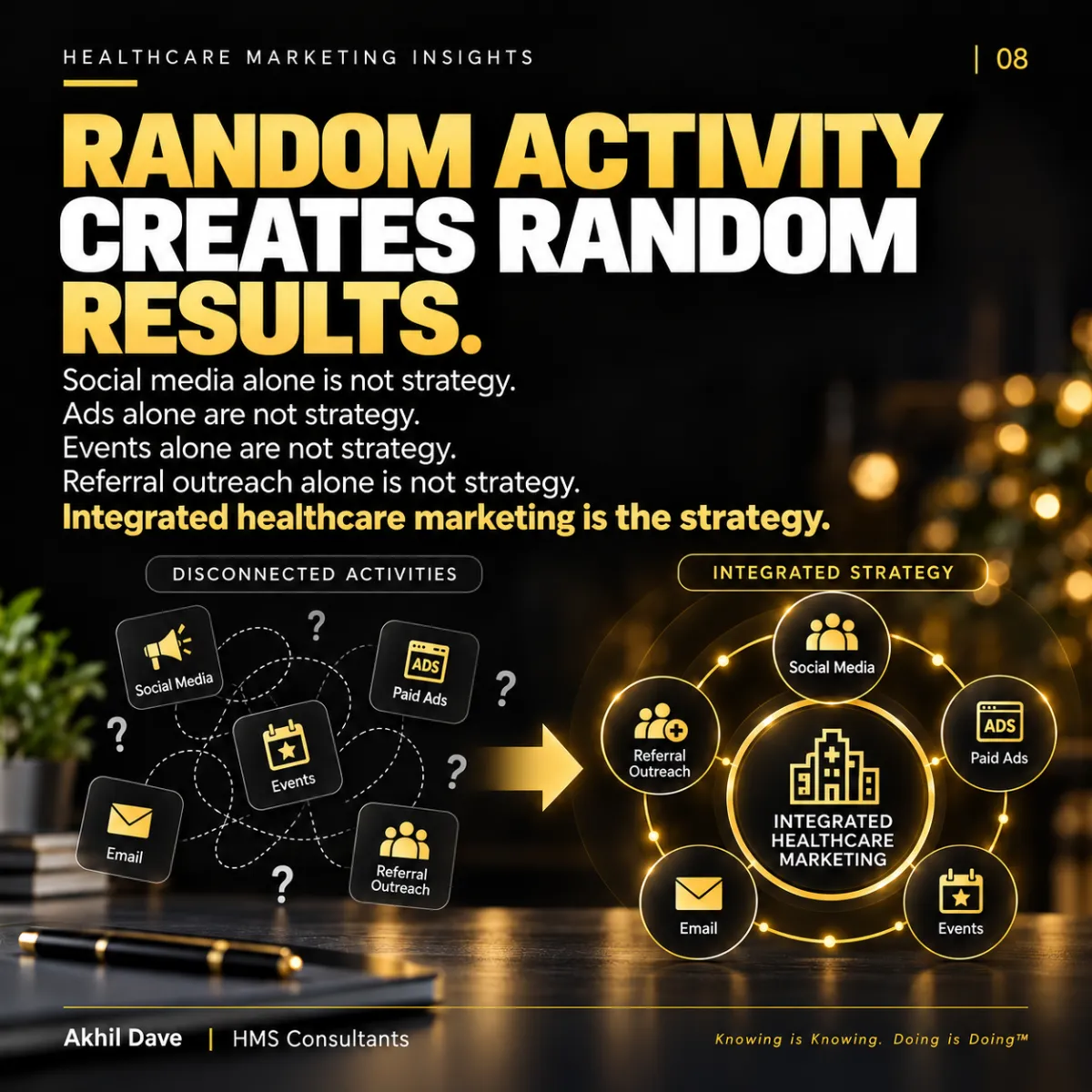
These are retail results reported by Google, so they are not a promise for your clinic. The lesson is what they have in common: the campaigns were connected. Social media alone is not strategy. Ads alone are not strategy. Events alone are not strategy. Referral outreach alone is not strategy. Integrated healthcare marketing is the strategy.
Many clinics run five or six activities that never talk to each other. Each one looks busy. None of them adds up to a patient flow you can predict.
Work with HMS Consultants
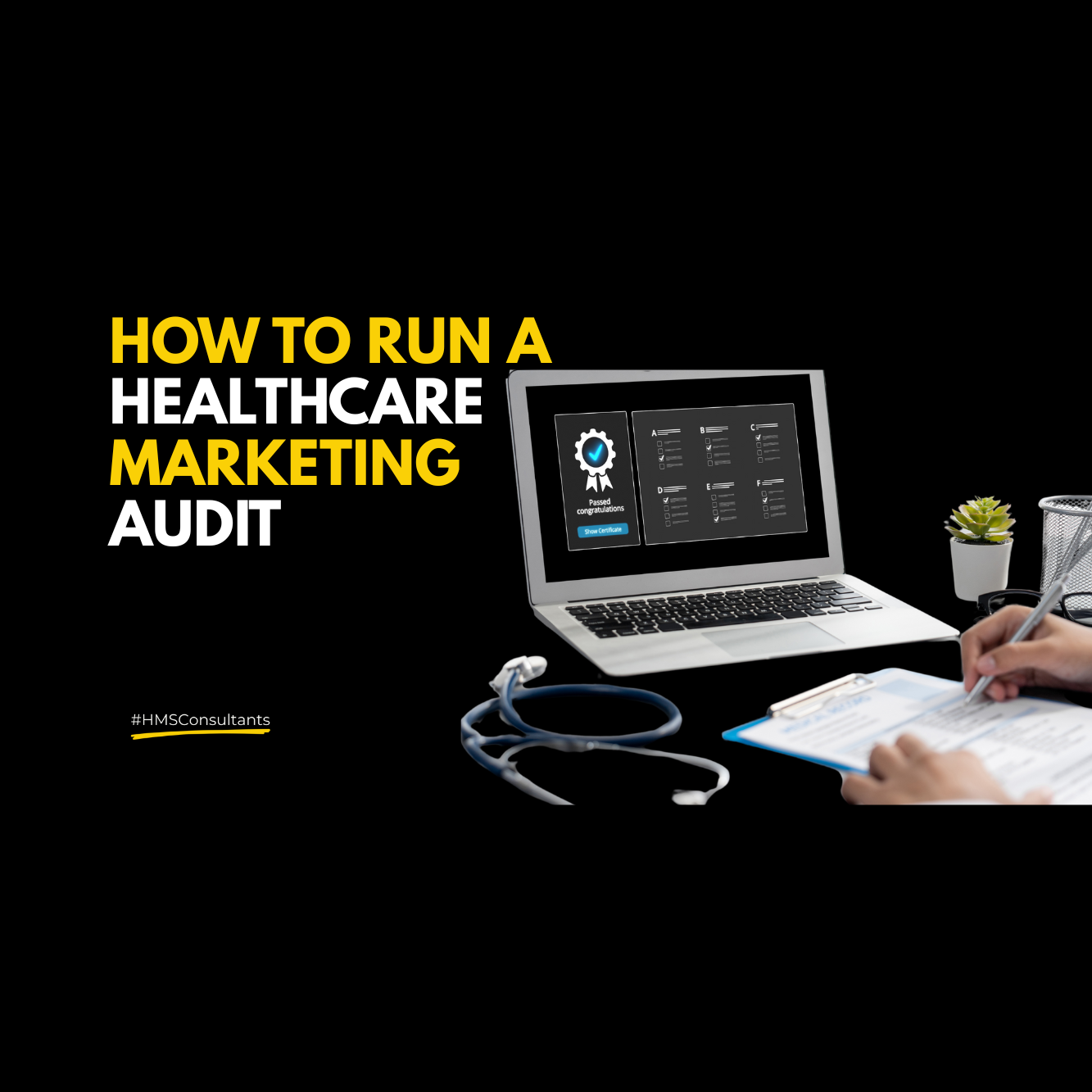
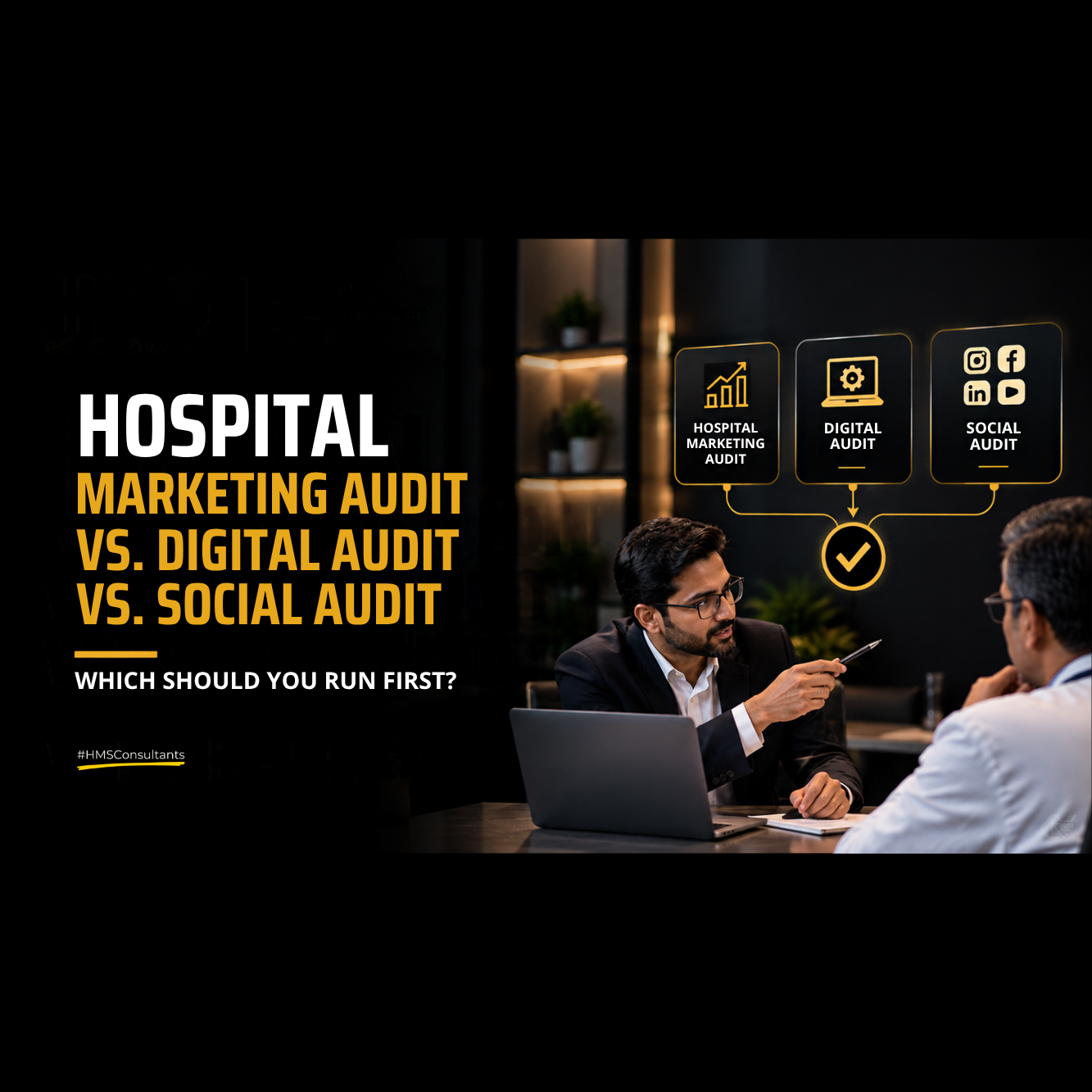
Running several activities but unsure what is actually producing enquiries? A Hospital Marketing Audit gives you a clear, evidence-based picture of what is working.
The integrated healthcare marketing flow
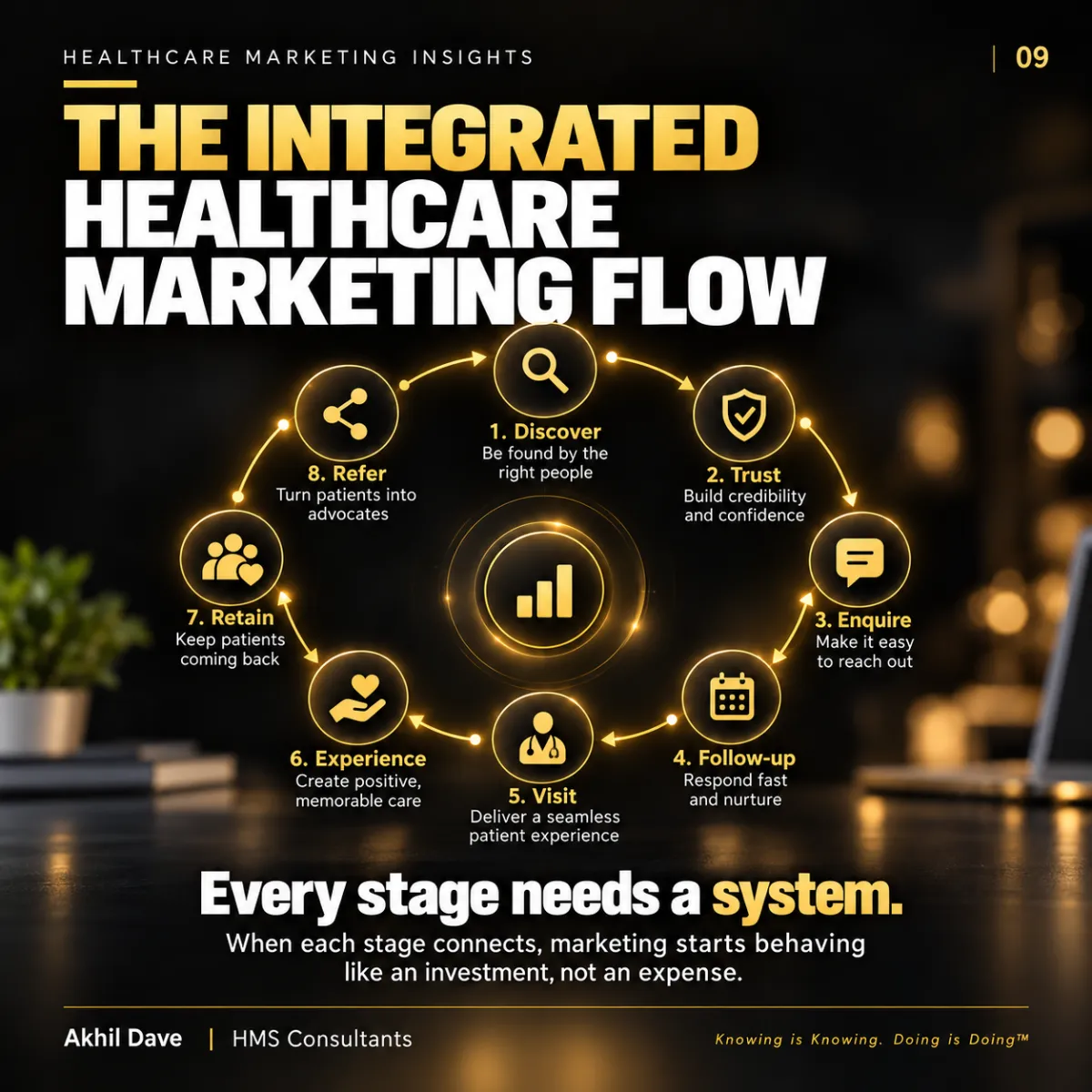
Here is the flow behind the picture. Every stage needs an owner, a process and a measure.
| Stage | What the patient needs | What you do |
|---|---|---|
| 1. Discover | To find the right doctor | Google Business Profile, local SEO, YouTube and website pages that answer real questions |
| 2. Trust | Credibility and confidence | Doctor-led education, clear qualifications and registration details, accurate information |
| 3. Enquire | An easy way to reach you | One-tap call and WhatsApp, a simple booking page, working phone lines |
| 4. Follow-up | A fast, human reply | Same-day response, a short script, reminders for missed enquiries |
| 5. Visit | A smooth first visit | Directions, timings, what to carry, calm reception |
| 6. Experience | A positive, memorable visit | Staff training, waiting-time communication, clear explanations |
| 7. Retain | Reasons to come back | Recall for follow-ups and health-education messages |
| 8. Refer | To feel good recommending you | Great care and clear communication; never paid or incentivised referrals |
Every stage needs a system. When each stage connects, marketing starts behaving like an investment, not an expense.
What not to copy from the retail playbook
This is where retail and healthcare part ways. A clinic that copies a festive retail campaign line by line risks its reputation and, under the NMC’s October 2026 guidelines, its standing. Based on our reading of the public notice:
| Retail playbook tactic | Healthcare-safe version |
|---|---|
| Festive deals and discounts for “deal seekers” | Publish fees and services factually. No discounts, coupons, contests or gifts. |
| Creator and influencer endorsements | Education in the doctor’s own name. No testimonials or influencer promotion. |
| Urgency and fear of missing out | Plain information on when to seek care. No fear-based or demand-creating messages. |
| AI-generated ad campaigns | Doctor-reviewed, accurate content. Any permitted AI content must be marked as AI-generated. |
| Before-and-after reveals and success numbers | Anonymised, educational use only where the guidelines allow. No success rates or patient numbers. |
| Paying per lead or per patient | Fixed-fee agency or consultant work. No commission or pay-per-patient arrangements. |
For the full rules, read our NMC advertising guidelines 2026 guide. HMS Consultants is a healthcare marketing consultancy, not a law firm, so please confirm specifics with a qualified healthcare lawyer.
A 3-week festive-season action plan for your clinic
- Week 1: Fix the foundation. Update festival-week timings on Google, check address, phone and category, set a WhatsApp greeting and reply script, and decide who answers calls when.
- Week 2: Publish educational content. Record two or three short doctor-led videos answering common patient questions. Add the same questions as FAQs on the matching service pages, with the doctor’s name, qualifications and registration number.
- Week 3: Connect and track. Link each video to its service page, each page to a booking option, and add simple tracking for calls and WhatsApp clicks. Review which source brought which enquiry.
- After Diwali: Review and repeat. Keep what worked, drop what did not, and set a weekly rhythm for one educational post.
This is the order we recommend: foundation, trust, connection, then measurement.
Which HMS service fits where you are today?
Doctor Branding
For doctors who want a clear, ethical personal brand and trust-led visibility.
Explore Doctor BrandingMedical Practice Growth
For clinic owners who want a steady, measurable patient flow.
Explore Practice GrowthHospital Marketing Consulting
For hospitals that need strategy, positioning and a connected plan.
Explore Hospital ConsultingHospital Marketing Audit
For teams who want to know what is working before they spend more.
Explore the AuditFrequently asked questions
Can doctors run festive offers or discounts during Diwali?
Under the NMC’s ethical advertising guidelines issued in October 2026, discounts, contests, coupons, gifts, cashbacks and free procedures that encourage unnecessary care are among the practices restricted. Fees can be stated factually. This is HMS’s reading of the public notice, not legal advice, so confirm with a qualified healthcare lawyer. Our NMC advertising guidelines guide explains the details.
Does Google’s festive playbook apply to hospitals and clinics?
The behaviours do: people discover through video and images, research before deciding and increasingly use AI to decide faster. The playbook itself is built on retail categories such as jewellery, apparel and electronics, so the tactics need adapting for healthcare, especially discounts, influencer endorsements and urgency messaging.
Where do patients in India discover doctors online?
Typically through Google Search and Maps, YouTube, a doctor’s or hospital’s website, and WhatsApp for the final step. Google and YouTube feature in 93% of Indian shoppers’ brand discovery journeys, according to Google-commissioned Ipsos research, which is a retail finding but a useful direction for healthcare.
How can a clinic show up in AI search answers?
Publish accurate, structured, doctor-reviewed content; keep your Google Business Profile, website and directory details identical; and answer real patient questions in plain language with clear headings and FAQs. Our guide to SEO and AEO for hospitals and doctors covers the steps.
Should doctors work with YouTube creators or influencers?
The NMC guidelines restrict testimonials, third-party marketing and lending your name, image or voice for promotion. The safer route is educational video made by the doctor, in the doctor’s own name, with the mandatory registration details. Read the clauses or ask a healthcare lawyer before any creator tie-up.
What should a clinic do before Diwali week?
Fix the basics first: holiday timings on Google, a working phone and WhatsApp response, accurate profile details, and two or three educational videos or articles linked to your appointment page. The 3-week plan in this article gives the order of work.
Healthcare marketing needs a system
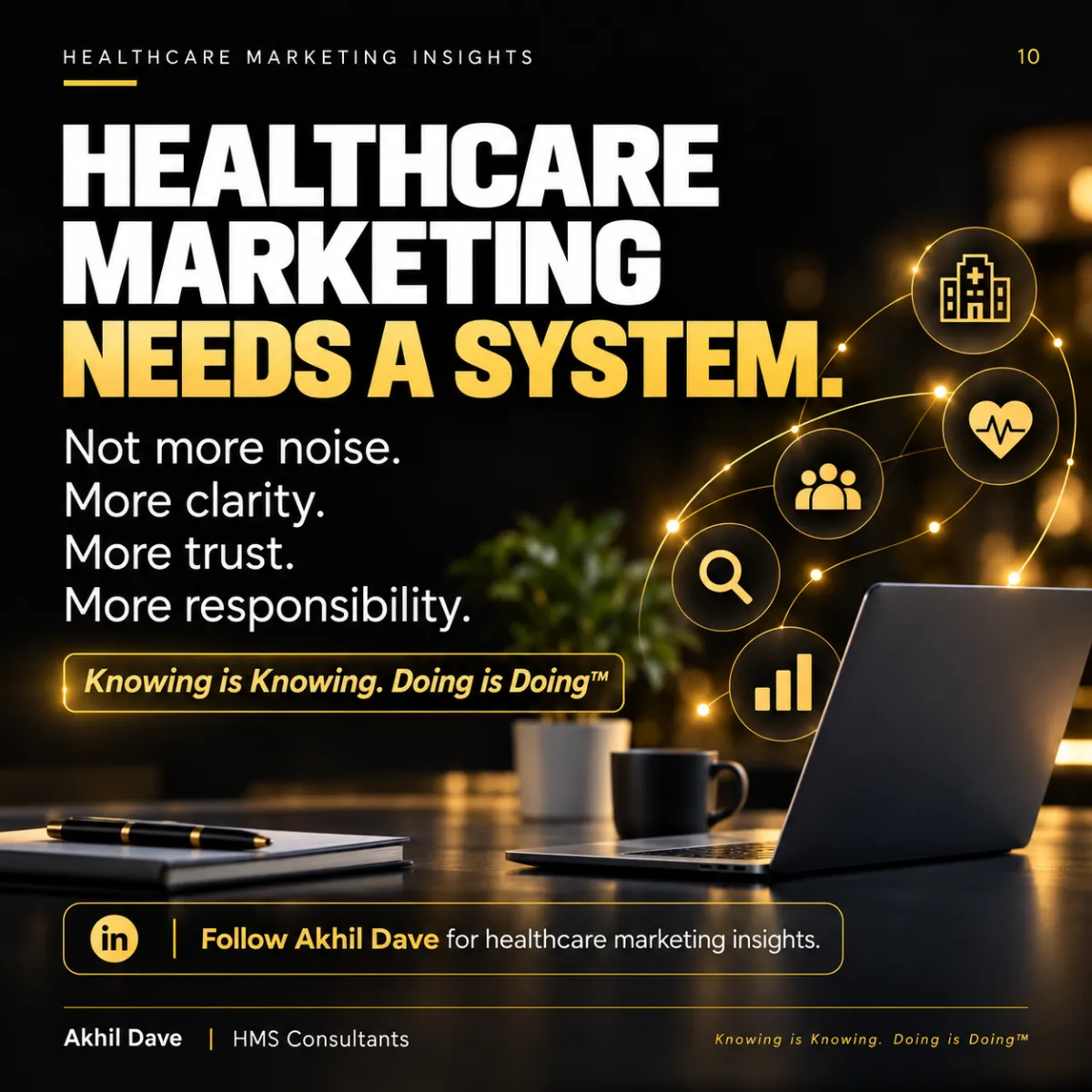
The festive playbook’s real message is not about Diwali. It is that connected marketing beats scattered marketing. For healthcare, add one more word: responsible. Not noise. More clarity. More trust. More responsibility.
At HMS Consultants, we have worked with 58+ healthcare businesses since 2024 on exactly this: a clear strategy first, then execution. Knowing is Knowing, Doing is Doing™.
Disclaimer: HMS Consultants is a healthcare marketing consultancy. We are not medico-legal experts or a law firm. Statistics from Google and YouTube’s playbook come from retail shopping research and are cited for behavioural direction only, not as healthcare benchmarks. References to the NMC guidelines reflect our understanding of the public notice dated 6 October 2026 and are not legal advice. Please read the official notice and consult a qualified healthcare lawyer before acting.
About the author: Akhil Dave is Founder & Principal Consultant of HMS Consultants, with 25+ years in healthcare marketing.
Sources
- Google and YouTube, A Marketer’s Playbook to Win This Festive Season: Drive Festive Business Growth (India, 2026), drawing on: Datum Festive Barometer 2026; Redseer festive first-leg 11-day analysis; Google-commissioned Ipsos Shopping Moments Study, Sept-Nov 2025 (n=2,450 Indian consumers, seven retail categories); Google-commissioned Ipsos Global Consumer Journeys, Dec 2025; Google/Kantar Future of Video, 2025 (n=2,296); Google and Deloitte, The $250 Billion Commerce Frontier, 7 April 2026.
- NMC Guidelines on Ethical Advertising and Public Communication (public notice, 6 October 2026)
Work with HMS Consultants
Want a festive-season and year-round plan that brings the right patients to your clinic, within the rules? Talk to us before you spend on ads.
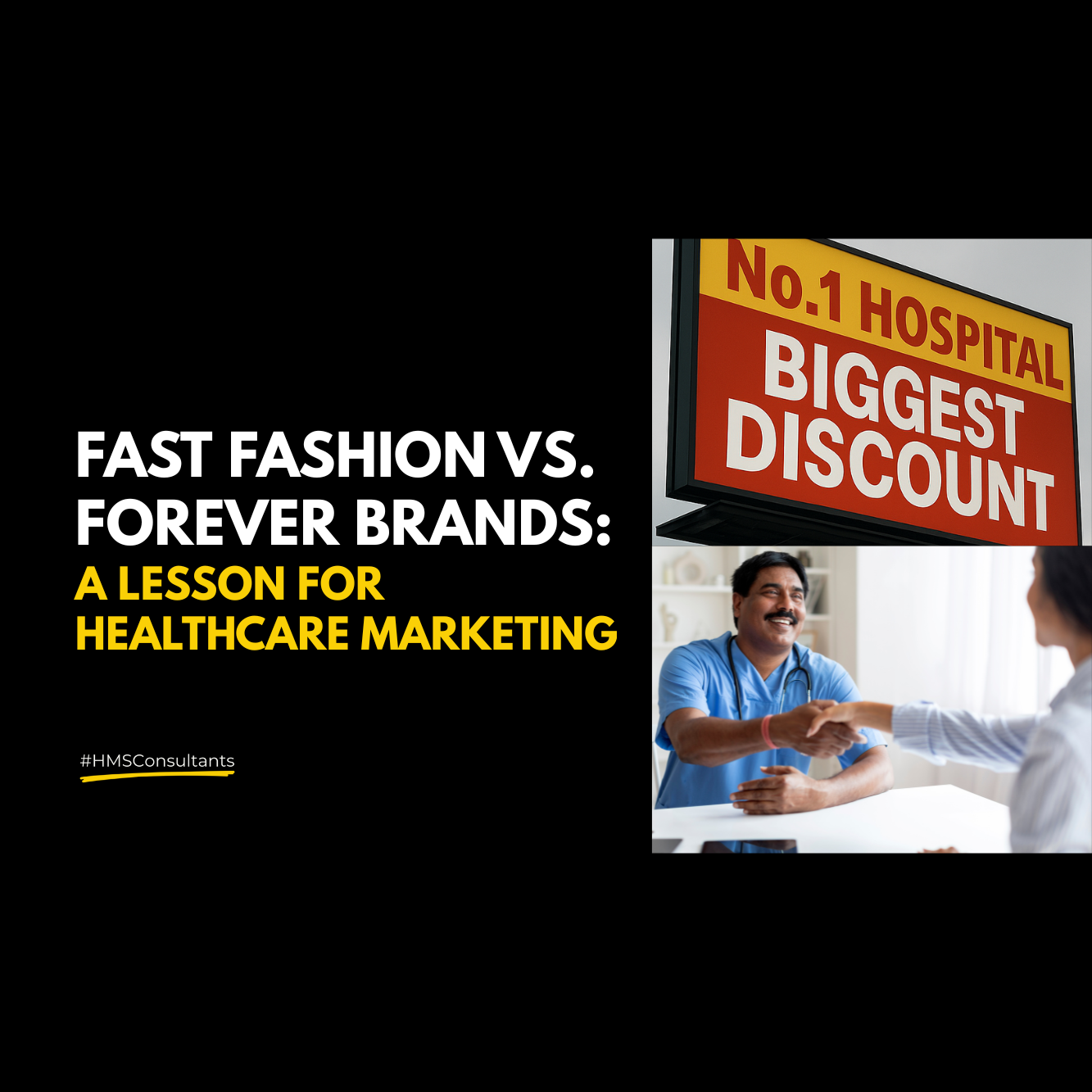
Fast Fashion vs. Forever Brands in Healthcare
In healthcare marketing, quick gimmicks fade like fast fashion. Discounts and flashy campaigns may grab attention but rarely build loyalty. Forever brands focus on trust, consistency, and patient experience,…
When Your Hospital’s Google Reviews Become More Powerful Than Your Doctors
Google reviews now influence patient choices more than a hospital’s traditional reputation. Even top doctors lose patients when ratings, feedback, and responses are ignored.
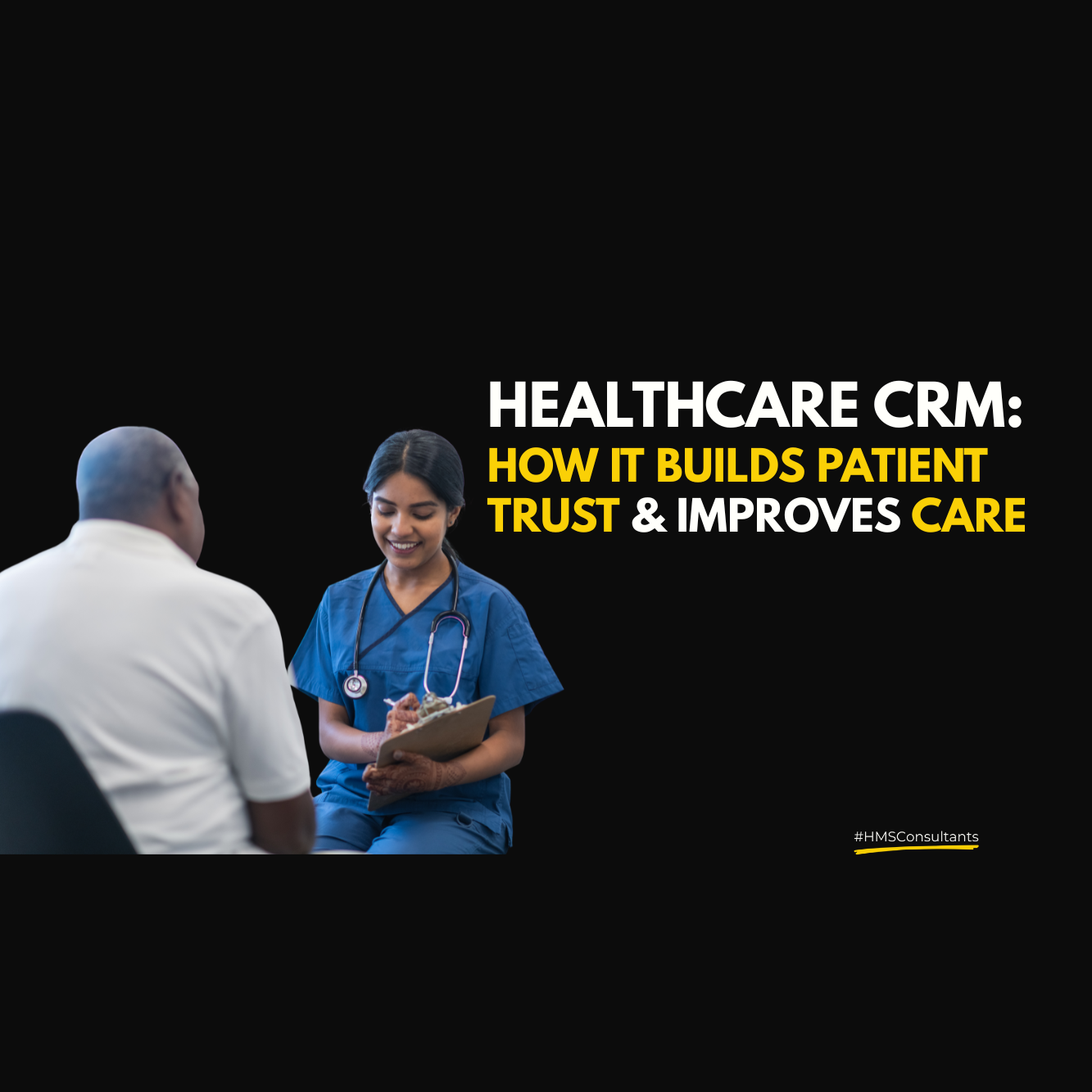
Healthcare CRM: How It Builds Patient Trust & Improves Care
In healthcare, trust is the foundation of every patient relationship and a Healthcare CRM can help you strengthen it. From personalized care and accurate records to timely communication and…
The Future of Healthcare in India: AI, Telehealth & Digital Transformation
India’s healthcare system is rapidly evolving. From AI-powered diagnosis to virtual consultations, explore the technologies shaping the future of care.
YouTube Content Strategy for Doctors: A 2026 Guide
Build a YouTube strategy for doctors with practical content ideas, SEO basics, and a sustainable publishing plan. Turn medical videos into long-term trust and patient visibility.
AI First India & Hospital Marketing Redefined
India is embracing AI, and hospitals can use AI-assisted tools to improve patient care and marketing. From chatbots to predictive communication, AI is reshaping how clinics engage and grow.