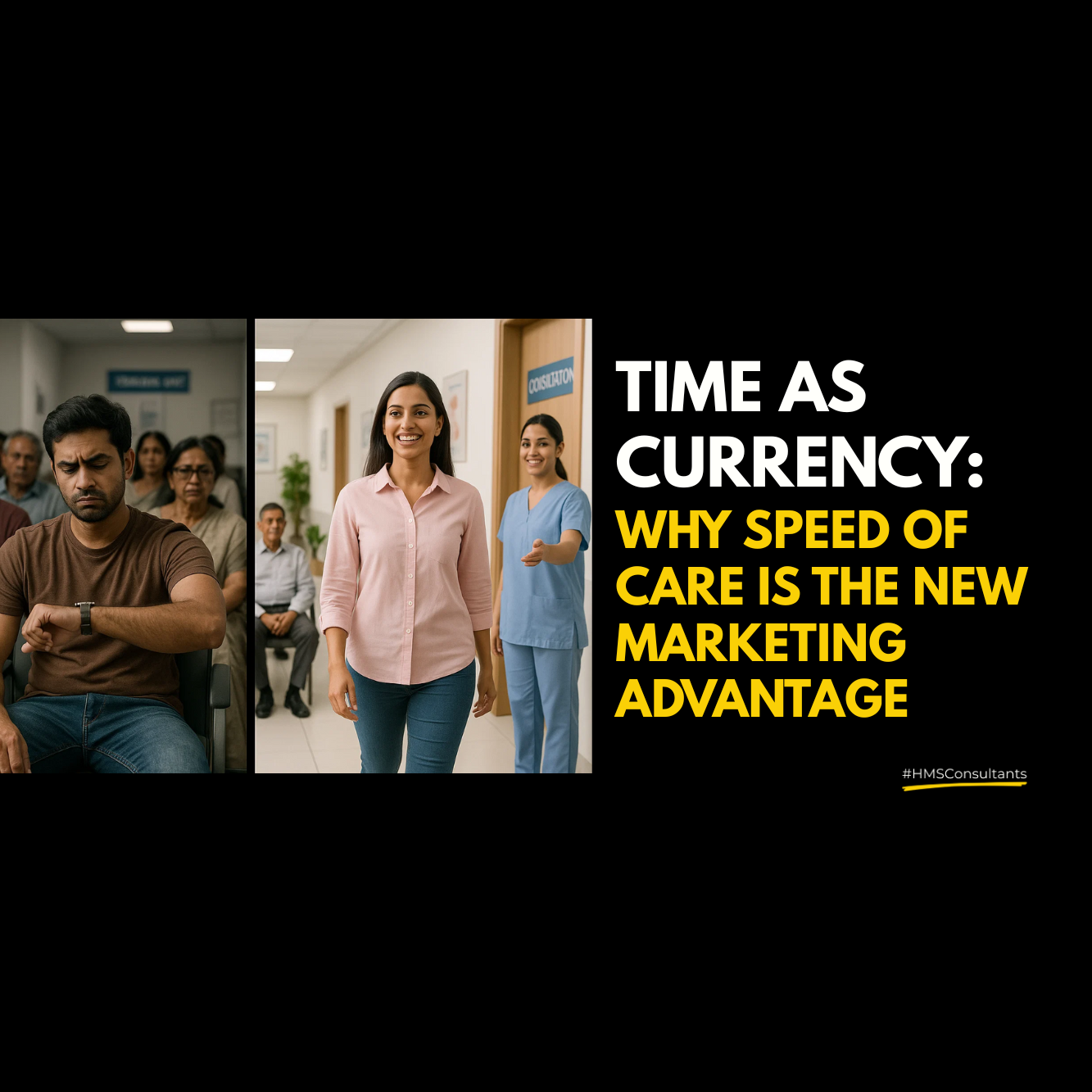
Time as Currency: Why Speed of Care is the New Marketing Advantage
Patients value time as much as treatment. Discover how faster consultations, quick reports, and responsive follow-ups can become a clinic’s strongest marketing advantage in India.



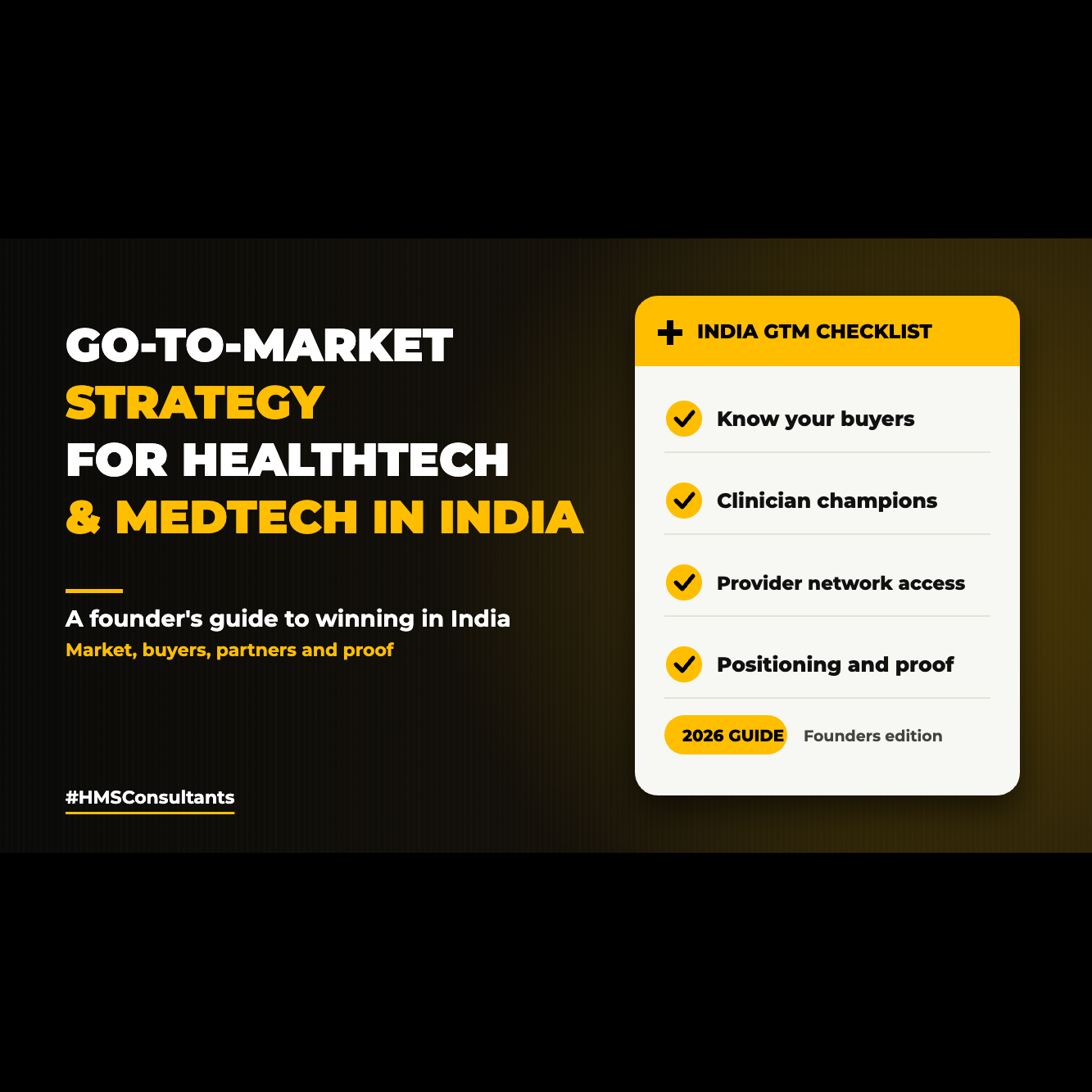
The short answer: A healthtech go-to-market strategy (and a medtech GTM strategy) for India means understanding who really buys inside hospitals, positioning your product around hospital economics and clinical value, earning the trust of a few respected doctors, designing pilots that convert into purchases, choosing the right partners, and getting in front of the right healthcare leaders. Products rarely fail in India for lack of technology. They stall because the right people did not know, trust or buy them.
This guide is for founders, product leaders and country heads of healthtech, medtech, digital health and pharma-tech companies, both Indian startups and overseas firms planning to enter India. It is written by Akhil Dave, who has spent 25+ years in healthcare marketing strategy and leads HMS Consultants, a healthcare marketing and strategy consultancy that helps healthtech and medtech companies build their India go-to-market using deep market experience and a wide network of healthcare providers.
The opportunity is large and still import-led. The Indian medical devices market was estimated at about $15.2 billion in 2025, projected to reach $50.1 billion by 2030, with imports covering roughly 70 to 80 per cent of domestic demand, according to a Rubix Industry Insights report cited by IANS. On the digital side, the Ayushman Bharat Digital Mission had crossed 93.95 crore ABHA IDs by July 2026, with 5.33 lakh health facilities and 9.85 lakh healthcare professionals registered. Funding is more selective: Inc42 reports roughly $700 million across 54 healthtech deals in 2025, against 78 deals in 2024. Capital now rewards companies with traction, not decks.
India is hard for three reasons. Buying is fragmented across thousands of hospitals, clinics and diagnostic chains. Trust travels through doctors and peers, not advertising. And every hospital decides differently. Treat each as a gate you must pass.
We use six gates with healthtech and medtech teams. Skipping one usually shows up later as a stalled pilot or a sales team starting from zero in every new hospital.
| Gate | The question to answer | Typical failure if skipped |
|---|---|---|
| 1. Buyer map | Who decides, who pays, who can say no? | Great demos to people with no budget |
| 2. Positioning | Why should a hospital choose us over doing nothing? | A feature list nobody remembers |
| 3. Clinical credibility | Which respected doctors will use and vouch for this? | Pilots that never convert |
| 4. Pilot design | What does a successful pilot turn into? | Free pilots that go nowhere |
| 5. Channel and partners | Direct, distributor, or platform partner? | Wrong margins, no after-sales support |
| 6. Visibility and proof | Do the right healthcare leaders know us and trust us? | Invisible outside the founder’s network |
Most founders pitch the person who loves the product, then discover someone else holds the budget. Map the buying centre before you build a sales deck.
| Role | What they care about | What to bring |
|---|---|---|
| Treating doctor or HOD | Clinical outcome, workflow fit | Evidence, a hands-on trial, peer references |
| Hospital CEO, COO or medical director | Revenue, cost, reputation, differentiation | Business case and a payback estimate |
| Purchase and finance team | Price, terms, vendor risk | Clear pricing, service and AMC terms |
| IT and digital head | Integration, security, data protection | Technical architecture and data-handling approach |
| Biomedical engineer | Installation, uptime, spare parts, service | Service plan and training |
| Government hospitals | Tender specifications, procurement process | Tender readiness and a registered-vendor route |
| Distributors and platform partners | Margin, support, brand pull | Territory plan, training, marketing support |
Hospital leaders buy outcomes, savings and differentiation. Doctors buy better care and an easier workflow. Your positioning should answer both in plain language: what problem you solve, for which department, with what measurable result, and why now. A good test: can a hospital COO repeat your value in one sentence after a ten-minute meeting? If not, the message needs work before any outreach starts.
In Indian healthcare, a respected clinician’s opinion carries more weight than any brochure. Start with three to five champion doctors across two or three cities, not fifty doctors who barely use the product.
A pilot without an agreed next step is a favour, not a sale. Before the pilot starts, agree in writing on four things: the clinical or operational question, the measurable outcome, the start and end dates, and what a successful pilot converts into, whether that is a purchase order, a rate contract or a multi-site rollout. Measure what the hospital cares about: turnaround time, error reduction, bed or OT utilisation, revenue per procedure and patient experience.
Each route trades control for reach. A direct team gives you feedback and pricing control but needs capital and time. Distributors give reach and servicing but dilute your story. Hospital groups, diagnostic chains and healthtech platforms can give scale in one deal, at the price of dependence on one partner. Most companies start direct in one or two anchor cities, prove the playbook, then add partners region by region. Write your pricing, margin, training and after-sales commitments into the partner agreement before launch.
Buyers, investors, partners and journalists research you before they take your call. Visibility in healthcare is about being known and trusted by the right few hundred people: hospital leaders, department heads, clinical opinion leaders, associations and conference organisers. Build it with a clear India story, founder and expert thought leadership, an active LinkedIn presence, third-party proof from pilots and conferences, and relationships that let others speak for you.
Keep healthcare communication responsible. Claims about outcomes must be verifiable, patient data needs proper consent, and healthcare advertising is regulated. Our guide to the NMC advertising guidelines explains how the rules affect doctors and hospitals you may work with.
HMS Consultants is a healthcare marketing and strategy consultancy. We build your go-to-market strategy, positioning, buyer and champion mapping, pilot design, partner approach and visibility plan, using our experience of the Indian healthcare market and our network of healthcare providers. We do not handle regulatory approvals, licensing, legal or clinical-compliance work. Those belong with your regulatory consultants and lawyers, and we plan your go-to-market timeline around them.
A consultant who has worked on the hospital side sees what a foreign playbook misses: which departments really decide, how a purchase committee behaves, when to approach a hospital group, and which conference moves a doctor community. The HMS Consultants network connects founders with experienced healthcare marketing and strategy professionals and with hospitals, clinics and doctors across India, so a company can test, localise and scale its message with people who know each market.
Over recent months HMS has worked with healthtech companies including Expert AI and DocX System to build their visibility among doctors, hospital leaders and healthcare founders, and to connect them with the HMS network for strategic growth in India. That is the model: positioning first, visibility next, introductions third, and growth that follows trust.
Client spotlight
HMS is currently helping two digital health companies build visibility and relationships across the Indian healthcare ecosystem.
Expert AI: an AI documentation tool that transcribes patient encounters and drafts clinical notes, so physicians spend less time on paperwork. Relevant for hospitals and clinicians looking to cut documentation time.
DocX System: a platform combining professional profiles for doctors and hospitals, peer networking and digital patient referral management. Relevant for doctors, hospital groups and healthcare partners who want to be discoverable and connected.
Building a healthtech or medtech product for India? Book a free 30-minute GTM discovery call.
| Period | Focus | Output |
|---|---|---|
| Days 1 to 30 | Diagnose | Ideal customer and buyer map, competitor and pricing scan, positioning draft, shortlist of anchor cities and hospitals |
| Days 31 to 60 | Position and prove | Messaging and India story, 3 to 5 champion clinicians through trusted introductions, pilot design with success metrics, first thought-leadership content |
| Days 61 to 90 | Launch and learn | First paid pilots or purchase orders, partner shortlist, review of enquiries and conversion, plan for the next two cities |
It is a plan that covers your buyers inside hospitals, your positioning, clinical champions, pilot design, sales channels and visibility, so a healthtech or medtech product can be adopted and paid for in India.
Work on two tracks in parallel. Appoint regulatory and legal advisors to confirm what you need to sell legally in India, and build your go-to-market with a strategy partner: buyer map, positioning, champion doctors, pilots and channel partners.
No. HMS Consultants is a healthcare marketing and strategy consultancy, not a regulatory or legal firm. We work alongside your regulatory advisors and plan your go-to-market around their timelines.
Several people share the decision: the treating doctor or HOD, hospital leadership, purchase and finance, IT, and biomedical engineering. Government hospitals add tender and procurement processes. Map all of them before pitching.
Through trusted introductions, a few champion clinicians, credible proof from pilots, conference and association presence, and consistent thought leadership. A provider network shortens this considerably.
Under the NMC’s ethical advertising guidelines, doctors cannot endorse drugs, devices or health products using their name, image or professional status. Use scientific publications, educational events and compliant case studies, and confirm specifics with your legal advisor.
It varies by product, price point and hospital type. A structured 90-day plan can reach first pilots, but purchase decisions in larger hospitals often take longer. Plan the pilot and its conversion path from day one.
HMS Consultants, led by Akhil Dave, builds India go-to-market strategy for healthtech and medtech founders using its market expertise and network of healthcare providers and healthcare marketing consultants. See our healthcare startup strategy consulting.
If you are a healthtech, medtech, digital health or pharma-tech founder planning to enter or scale in India, book a free 30-minute GTM discovery call. We will review your product and buyers, and tell you honestly where to focus first. Write to akhil@hmsconsultants.in or call +91 81550 04010.
Disclaimer: HMS Consultants is a healthcare marketing and strategy consultancy. We are not a law firm, a regulatory consultant or a clinical authority. This article reflects our understanding based on research of public sources and our experience, and is for general information only. Rules change, so confirm regulatory, legal and advertising points with qualified professionals before acting.
About the author: Akhil Dave is Founder and Principal Consultant of HMS Consultants, with 25+ years in healthcare marketing strategy.
Sources
Patients value time as much as treatment. Discover how faster consultations, quick reports, and responsive follow-ups can become a clinic’s strongest marketing advantage in India.
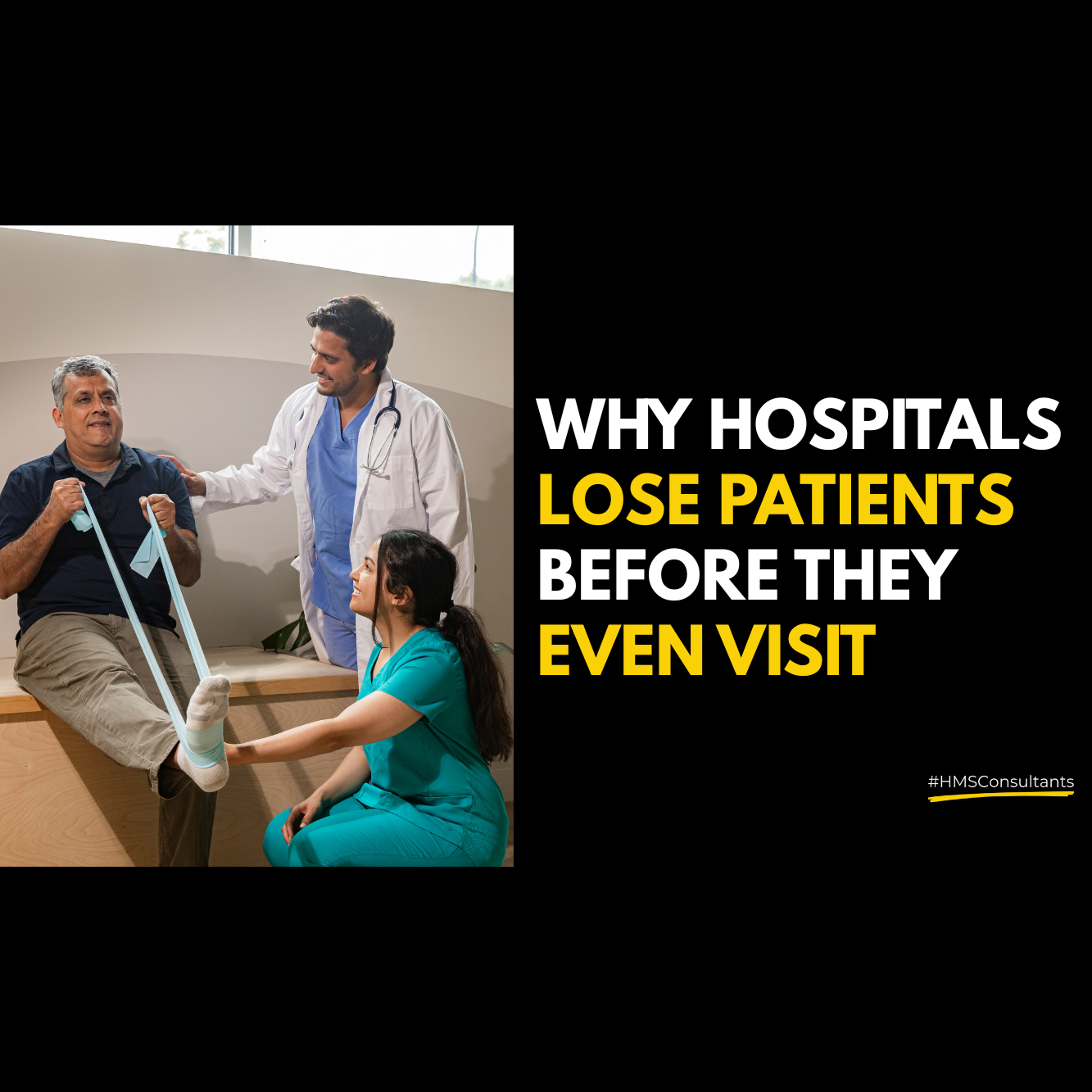
Most hospitals don’t lose patients to competitors they lose them before the first visit. Digital visibility and quick communication decide who patients trust first.

Explore the right approach to healthcare marketing during India's festival season. Learn how hospitals and clinics can promote wellness while respecting the festive spirit, keeping brand recall high without...

Video is reshaping healthcare marketing. From YouTube explainers to Instagram Reels and WhatsApp stories, hospitals and clinics can use video to educate, build trust, and grow patient engagement.
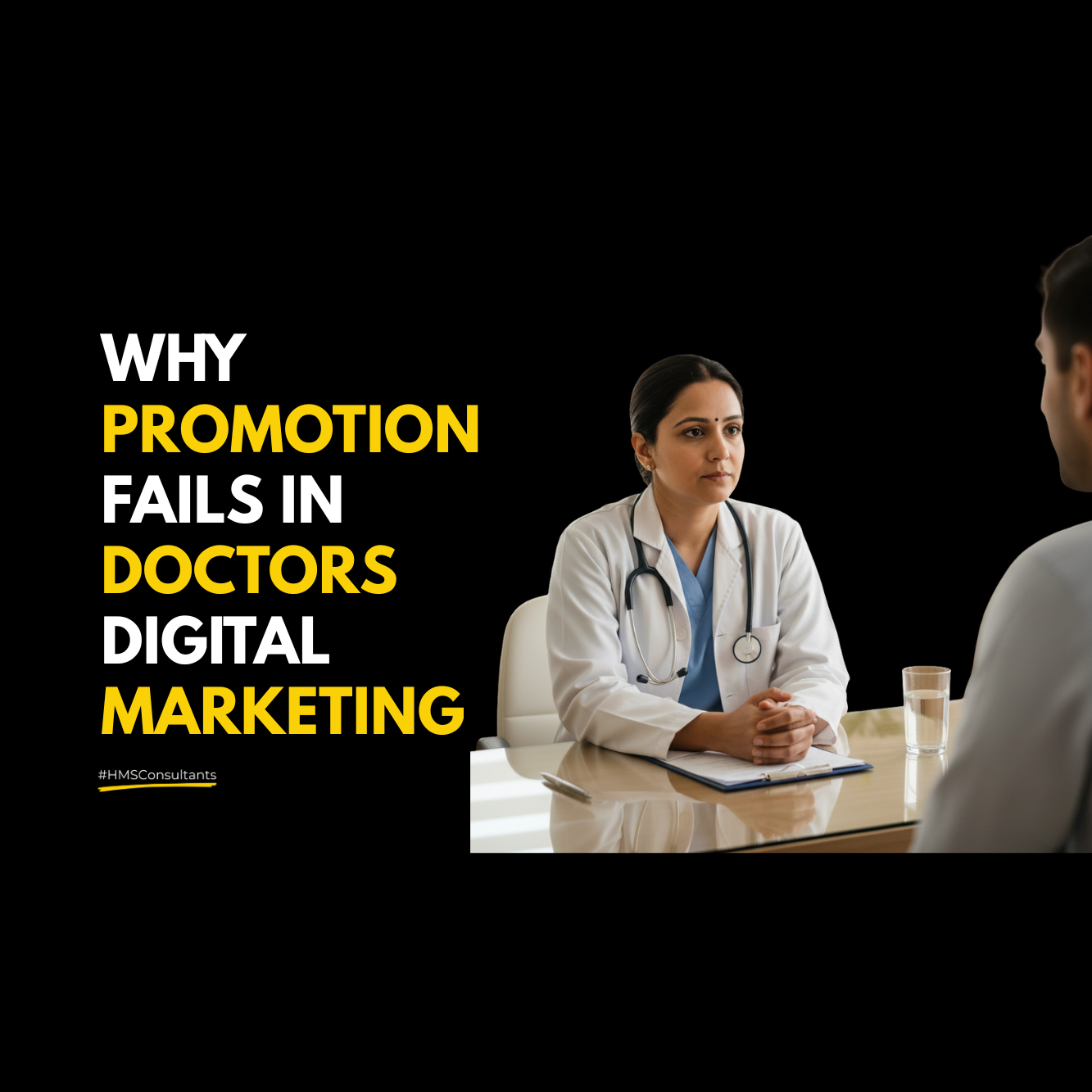
Doctors digital marketing fails when it is treated as promotion instead of professional presence. In healthcare, trust is built through calm, ethical communication, not visibility.
Copywriting frameworks help hospitals communicate with patients more effectively. This blog explains 8 proven frameworks with real healthcare examples to improve trust, engagement, and patient conversions.