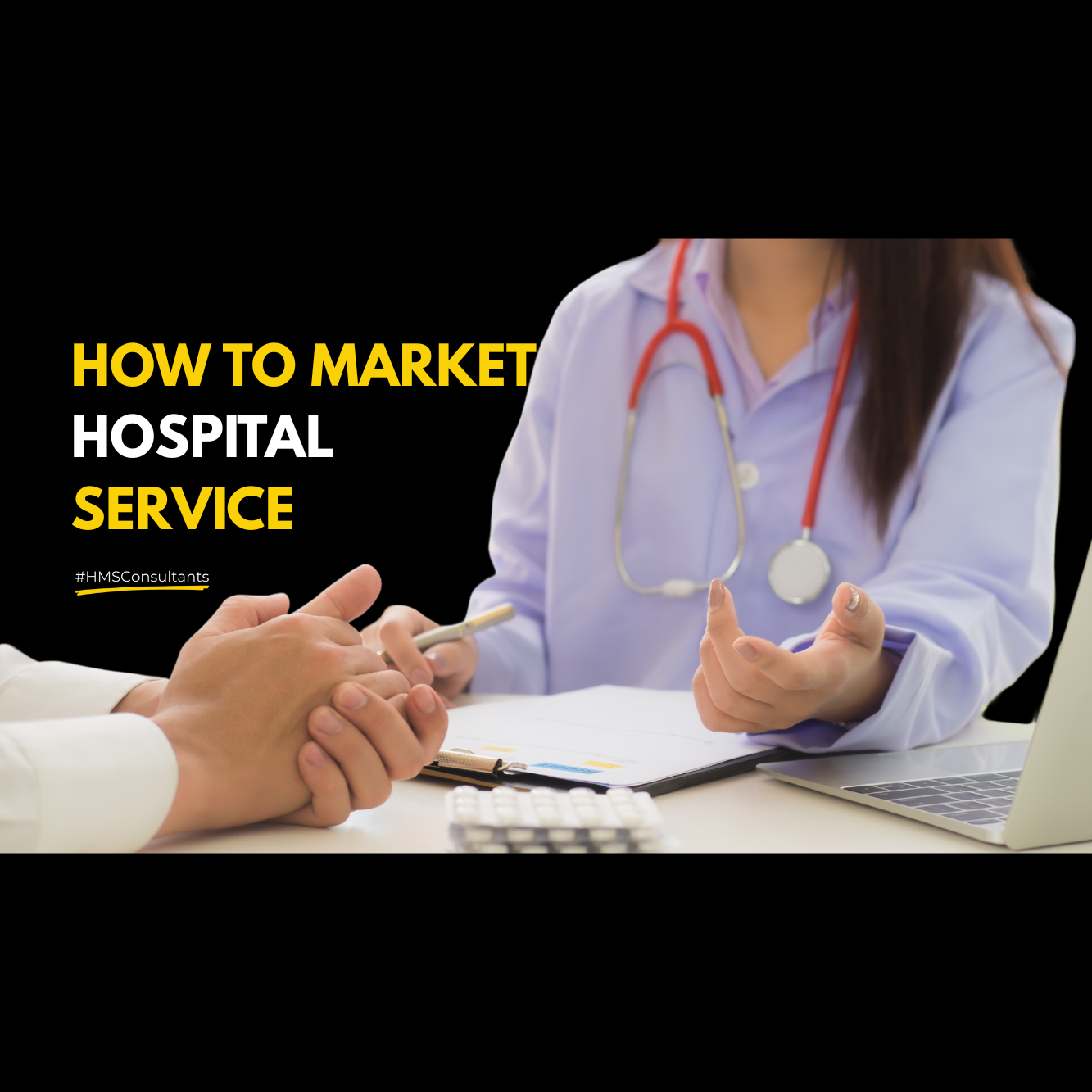
HOW TO MARKET HOSPITAL SERVICE
Hospital marketing today means meeting patients where they search. Build trust and visibility with this digital-first, human-centric approach.

The right healthcare marketing consultant combines three things a generalist rarely has together: genuine healthcare sector experience, a diagnostic process that starts with an audit rather than assumptions, and working knowledge of the compliance boundaries specific to medical marketing. Missing any one of the three tends to show up later as wasted spend, compliance risk, or a strategy that looks good on paper but doesn’t reflect how patients actually make healthcare decisions.
A consultant with strong general marketing credentials e-commerce, retail, B2B SaaS often carries instincts that don’t transfer cleanly to healthcare. Aggressive urgency-driven messaging (“book now, limited slots”) that works in retail can feel inappropriate or even unethical applied to a medical decision. Claims that would be unremarkable in another industry (“best in the city,” “guaranteed results”) can cross into compliance or ethical territory in healthcare. A consultant without direct healthcare experience may not recognize these boundaries until after a campaign has already run.
☐ Can point to specific healthcare clients or case studies (even anonymized, if confidentiality requires it)
☐ Can explain a real example of a hospital or clinic marketing problem they diagnosed and solved
☐ Has references or testimonials from healthcare clients specifically, not just general marketing clients
☐ Understands the difference between healthcare marketing and healthcare management consulting, and is clear about which one they offer
☐ Starts any engagement with an audit or diagnostic phase, not straight into execution recommendations
☐ Can describe their process for benchmarking against actual local competitors, not generic industry averages
☐ Provides a written strategy or roadmap as a deliverable, not just verbal recommendations
☐ Has a clear method for measuring results tied to enquiries or admissions, not just engagement metrics
☐ Is knowledgeable about what claims can and cannot be made in medical marketing
☐ Doesn’t promise guaranteed patient numbers or admissions no ethical consultant can guarantee outcomes influenced by many factors outside marketing
☐ Treats patient testimonials and privacy with visible care, not just as content to be used freely
☐ Can speak knowledgeably about YMYL (Your Money or Your Life) content standards if the conversation touches on SEO and content strategy this is a Google-defined content category that applies directly to healthcare content and affects search visibility
– Guarantees of specific patient or admission numbers within a set timeframe
– No willingness to run or reference a prior audit before proposing a strategy
– Pricing based entirely on ad spend percentage with no distinction between strategy and execution
– Vague answers when asked for a specific healthcare example, or examples that don’t hold up to a follow-up question
– Pressure to sign a long-term contract before any diagnostic work has been done
– Can you walk me through a real hospital or clinic marketing problem you’ve diagnosed, and what you found?
– What would your first 30 days with us actually involve?
– How do you measure success in terms we’d recognize, like enquiries or admissions, or in terms like impressions and reach?
– What’s your experience with the compliance considerations specific to healthcare marketing?
– If our current strategy turns out to be fundamentally wrong, how would you tell us that, and what would you recommend instead?
Healthcare marketing consultants typically price in one of a few ways: a fixed project fee for a defined scope like an audit and strategy roadmap, a monthly retainer for ongoing advisory work, or occasionally a hybrid combining a strategy fee with a separate execution retainer if they also offer implementation support. Be cautious of pricing structured purely around ad spend percentage for consulting work that model incentivizes spend rather than diagnosis, which is the opposite of what a consultancy engagement should optimize for.
Each option suits a different situation. An in-house hire makes sense when a hospital has enough ongoing marketing work to justify a full-time role and wants institutional knowledge to stay internal. An agency makes sense when the need is primarily execution at volume consistent content and campaign management. A consultant makes the most sense when the immediate need is diagnosis and direction figuring out what’s actually wrong and what to prioritize before committing to either of the other two paths. Many hospitals eventually use a combination: a consultant to set direction, then an in-house hire or agency to execute against it.
HMS Consultants was built specifically as a healthcare marketing strategy consultancy 25+ years of sector-specific experience, an audit-first process for every engagement, and a clear compliance-aware approach to healthcare messaging. Whether or not HMS ends up being the right fit for a specific hospital, running any prospective consultant through this checklist is the more useful first step than choosing based on a pitch alone.
Look for a demonstrated track record specifically in healthcare case studies, client names or categories they can share, and an understanding of medical compliance rather than only general marketing credentials or certifications.
An initial audit and strategy phase typically takes 3 to 6 weeks. Ongoing advisory or execution support is usually structured as a separate, longer engagement once the strategy is set.
Ask how they'd handle a specific healthcare-specific scenario a compliance-sensitive claim, a sensitive patient testimonial, a referring-doctor relationship and listen for whether their answer shows real familiarity or a generic marketing response adapted on the spot.
A solo consultant can offer more direct, senior attention, while a firm may offer broader bench strength across specialties like SEO, social, and design. The right choice depends on the scope and complexity of what's needed.
Promising guaranteed patient numbers or admissions is a significant red flag no ethical consultant can guarantee outcomes that depend on many factors outside marketing's control, and such promises often signal aggressive, non-compliant tactics.
General SEO skills transfer, but healthcare SEO has specific considerations around medical claims, YMYL (Your Money or Your Life) content standards, and compliance that a healthcare-specific service is more likely to already understand.
Share your details below and we will connect with you to discuss your growth strategy.
Hospital marketing today means meeting patients where they search. Build trust and visibility with this digital-first, human-centric approach.

Not every patient sees your hospital the same way. Gen Z trusts digital-first communication, Millennials value convenience, and Boomers seek relationships and reassurance. Learn how to tailor hospital marketing...
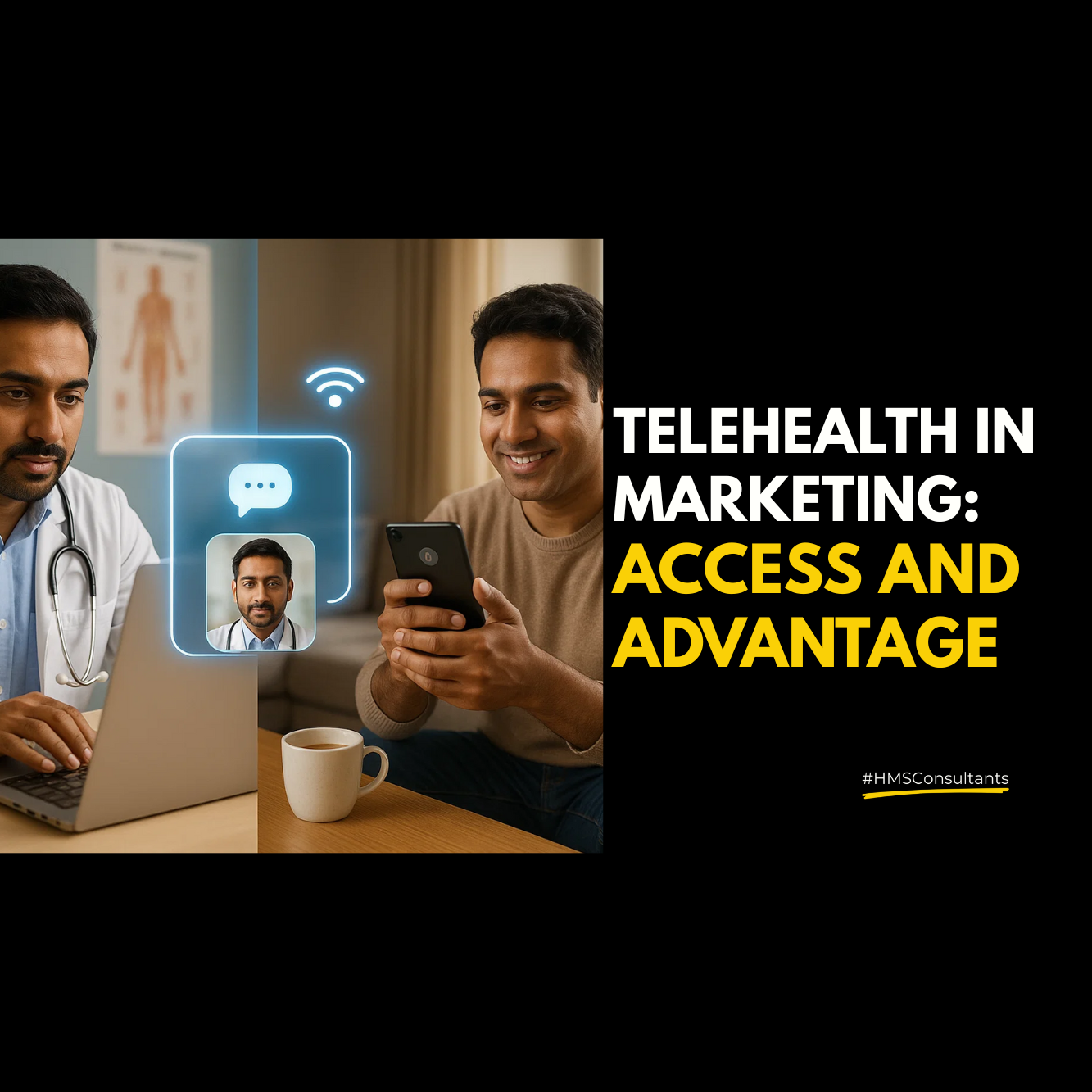
Telehealth is transforming Indian healthcare making consultations more accessible, convenient, and patient-first. For clinics, it’s both a service upgrade and a powerful branding advantage.
Hospital marketing budgets often increase when growth slows, but higher spending rarely fixes the real problem. Without clarity in patient experience, communication, and strategy, budgets amplify inefficiencies instead of...

Discover how a healthcare management consulting firm helps hospitals achieve sustainable growth by improving the use of existing assets. Learn why better utilisation of doctors, equipment, departments, staff, and...
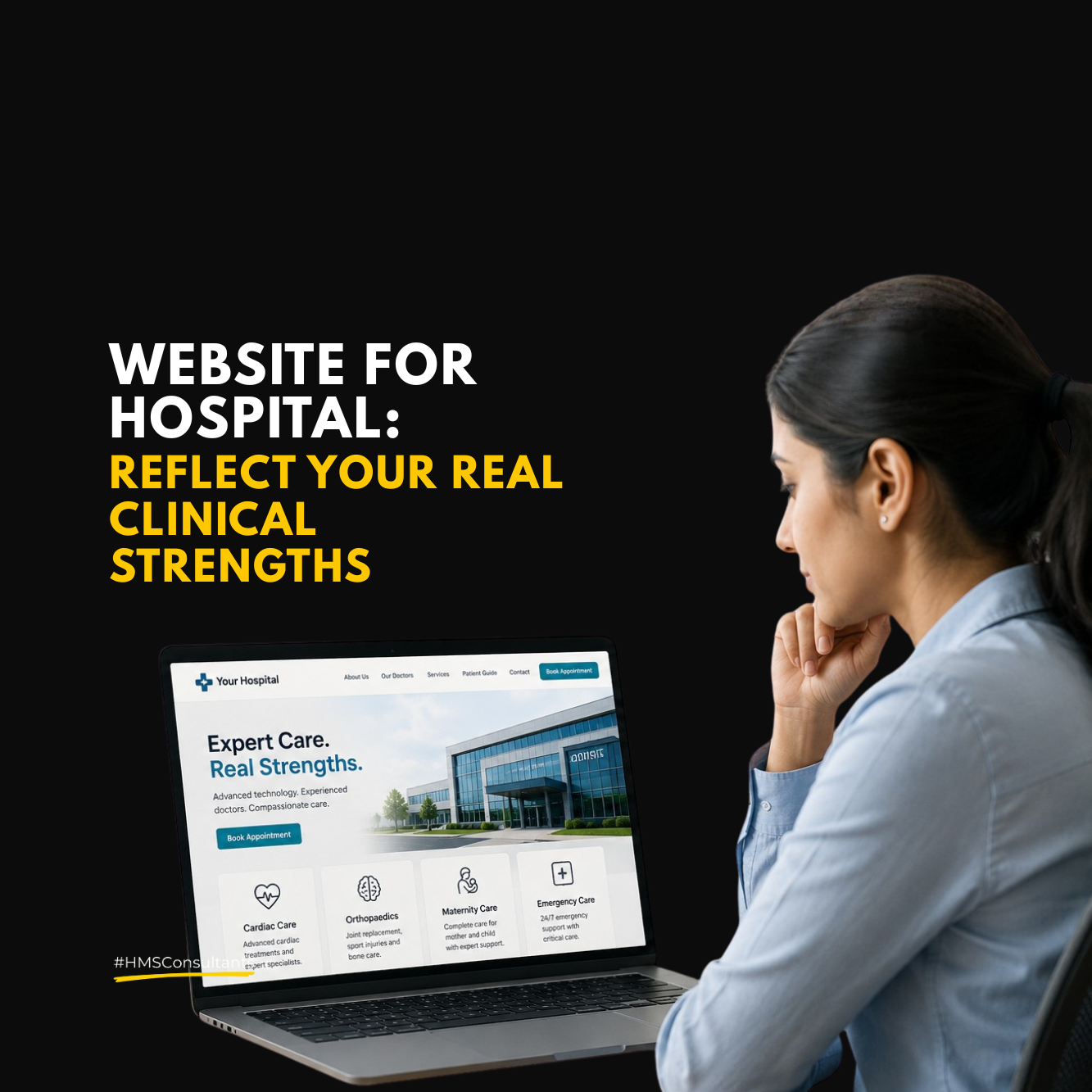
A website for hospital should do more than list departments and services. It should clearly communicate the hospital's real strengths, improve hospital positioning, strengthen patient recall, and help patients...