Search results for: “patient education”

  • What Hospitals Should Do With Their 100+ Google Reviews (Hint: Not What You Think)

    What Hospitals Should Do With Their 100+ Google Reviews (Hint: Not What You Think)

    What Hospitals Should Do With Their 100+ Google Reviews (Hint: Not What You Think)

    Written by
    Published on
    Share This

    Hospitals often celebrate reaching a milestone in Google reviews. Fifty reviews. One hundred reviews. A strong star rating. Internally, this achievement is treated as proof of credibility and digital success. Marketing teams showcase it, leadership feels reassured, and attention quickly shifts to the next campaign or platform.

    Yet for most hospitals, this is where the opportunity quietly ends.

    Google reviews are rarely used as a strategic asset. They are displayed, monitored, and occasionally responded to, but seldom analysed or integrated into broader hospital marketing and growth strategy. As a result, hospitals accumulate reviews without extracting their real value not just for reputation, but for trust-building, conversion, and long-term performance.

    The mistake lies in assuming that reviews are an outcome. In reality, reviews are data.

    Why Google Reviews Matter More Than Any Advertisement in Healthcare

    In healthcare, patients trust people more than institutions. Before contacting a hospital, patients look for lived experiences that resemble their own fears, doubts, and expectations. Google reviews serve as social proof, but, more importantly, they provide emotional validation.

    Unlike advertisements, reviews are unsolicited narratives. They reflect what patients remember, what they value, and what they choose to talk about after care is complete. This makes them far more influential than promotional messaging, especially in high-anxiety decisions, such as those in healthcare.

    From a healthcare marketing perspective, Google reviews are not just reputation signals. They are decision accelerators.

    The Common Misuse of Google Reviews by Hospitals

    Most hospitals treat reviews defensively. The focus is on maintaining ratings, replying politely, and managing negative feedback to prevent reputational damage. While this is important, it represents only a fraction of the value reviews hold.

    What hospitals rarely do is study reviews for patterns. They do not systematically analyse language, recurring themes, emotional triggers, or moments that patients consistently mention. As a result, reviews remain static testimonials instead of dynamic insight sources.

    This is why hospitals with hundreds of reviews often see no proportional improvement in conversion or patient trust. Visibility exists, but learning does not.

    What Reviews Reveal That Marketing Reports Never Will

    Marketing dashboards show clicks, impressions, and leads. Google reviews show why people felt safe, confused, reassured, or disappointed. They reveal what patients actually noticed, not what the hospital intended to communicate.

    Reviews often highlight factors that hospitals usually underestimate, such as the tone of communication, the waiting experience, explanation clarity, staff behaviour, billing transparency, and emotional support. These elements rarely appear in marketing plans, yet they dominate patient memory.

    Hospitals that ignore these insights continue refining campaigns while repeating the same experiential gaps.

    Why Star Ratings Alone Are a Weak Growth Indicator

    Star ratings offer a quick snapshot but lack depth. A high rating without context does little to reduce uncertainty. Patients read reviews not to count stars, but to understand stories.

    They look for situations similar to their own. They scan for reassurance that their fears will be handled well. They seek signals of empathy, patience, and reliability.

    Hospitals that rely solely on ratings miss the opportunity to address these deeper trust needs. Reviews should be interpreted as narratives, not scores.

    Reviews as a Window Into Patient Psychology

    Every review is written at a specific emotional moment, relief after recovery, gratitude after reassurance, frustration after confusion, or disappointment after unmet expectations. These emotions reflect how patients experience the hospital’s systems, not just its clinical outcomes.

    When hospitals analyse reviews through a psychological lens, they begin to see where trust is built and where it erodes. They identify which interactions reduce anxiety and which amplify it. This understanding is invaluable for improving both patient experience and marketing effectiveness.

    In a hospital growth strategy, such insights are far more actionable than surface-level metrics.

    Why Reviews Should Shape Content, Not Just Reputation

    One of the most overlooked uses of Google reviews is content strategy. Reviews contain the exact language patients use to describe care, outcomes, and concerns. This language is gold for SEO and clarity in communication.

    Hospitals that align website copy, blog content, and patient education material with review language speak in a voice patients already trust. This improves search relevance, reduces bounce rates, and increases engagement.

    From an SEO standpoint, reviews help hospitals match real search intent rather than assumed intent.

    How Reviews Influence Conversion Without Being Clicked

    Many patients read reviews without interacting further. They do not click links or fill forms. Instead, reviews quietly shape perception. They reduce hesitation. They validate the choice. They tip the balance toward contacting the hospital when the moment feels right.

    This influence is invisible in analytics but powerful in practice. Hospitals that underestimate this effect misjudge the true ROI of reputation management.

    Why Hospitals With Many Reviews Still Struggle to Grow

    Hospitals often assume that accumulating reviews will automatically lead to growth. When this does not happen, frustration sets in. The real issue is not the number of reviews, but their disconnection from decision-making systems.

    If reviews are not reflected in communication training, website messaging, enquiry handling, and experience design, they remain isolated signals. Growth requires integration, not accumulation.

    Turning Reviews Into a Strategic Growth Asset

    Hospitals that use reviews strategically do not treat them solely as feedback. They treat them as input. They feed insights into marketing messaging, staff training, experience redesign, and patient education.

    Over time, this alignment strengthens trust across touchpoints. Marketing feels more authentic. Patient conversations feel more aligned. Growth becomes steadier.

    This is where reputation management shifts from defence to strategy.

    Conclusion: Reviews Are Not Validation, They Are Direction

    Google reviews are not trophies to be displayed. They are mirrors reflecting how patients experience care.

    Hospitals that look into this mirror honestly gain clarity. They understand what truly matters to patients and adjust accordingly. Hospitals that glance at it briefly and move on miss one of the most valuable growth resources available to them.

    In healthcare marketing, trust is not created by what hospitals say about themselves.
    It is created by what patients say when no one asks them to.

    And those who listen carefully build institutions that grow not just in numbers, but in credibility and confidence.

    Contact Us HMS Consultants

    They build patient trust, show real experiences, and influence decisions more than ads or star ratings.

    Doctors Digital Marketing I Healthcare Marketing I Hospital Marketing Strategies I Marketing ideas for clinics I Marketing Trends 2025 I Medical Marketing I Social Media Marketing

    is something we strongly believe in, which means ‘Knowledge without application is the same as having no knowledge at all

    Akhil Dave

    Principle Consultant

    Ready to take your Personal Brand to the next level?

    Share your details below and we will connect with you to discuss your growth strategy.
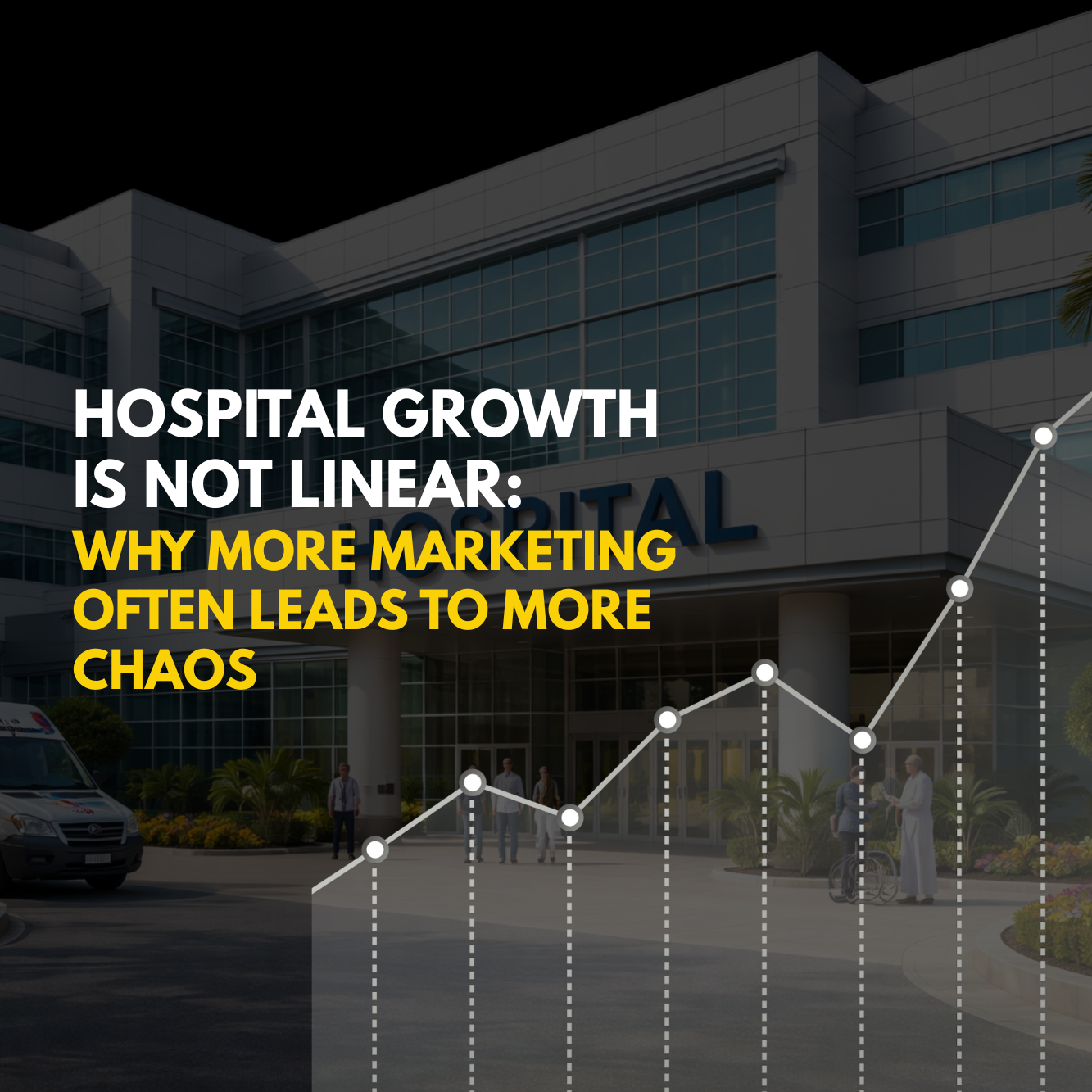
    • Hospital Growth Is Not Linear: Why More Marketing Often Leads to More Chaos

      Hospital Growth Is Not Linear: Why More Marketing Often Leads to More Chaos

      Hospital Growth Is Not Linear: Why More Marketing Often Leads to More Chaos

      Written by
      Published on
      Share This

      When Growth Feels Harder Than Before

      Many hospital owners reach a confusing phase in their growth journey. Marketing seems to be working, enquiries increase, calls rise, WhatsApp messages flood the system, OPD footfall improves, yet instead of feeling successful, the organisation feels strained. Staff appear overwhelmed, patients complain more often, doctors feel rushed, and internal coordination begins to crack.

      At this point, the instinct is to blame operations, staffing, or “growing pains.” But the deeper truth is more uncomfortable: hospital growth is not linear, and marketing does not scale outcomes in a straight line.

      In healthcare, growth amplifies reality. If systems are weak, growth exposes them. If processes are unclear, growth magnifies confusion. If communication is inconsistent, growth multiplies dissatisfaction. More marketing does not automatically mean better outcomes, it often means more chaos.

      The Myth of Linear Growth in Healthcare

      Most hospitals unconsciously believe in a simple equation: more visibility leads to more patients, which leads to more revenue, which leads to stability.

      This logic works well in theory, but healthcare does not function like a conventional consumer business. Hospitals are complex systems where clinical care, human behaviour, trust, emotions, staff coordination, infrastructure, and decision-making intersect. When marketing increases demand without strengthening the system underneath, imbalance is inevitable.

      Hospital growth is not a straight upward line. It is a series of stress tests. Each increase in patient volume tests reception capacity, doctor bandwidth, communication quality, billing transparency, and follow-up discipline. When these systems are not designed to scale, marketing becomes a pressure cooker rather than a growth lever.

      Why More Leads Often Reduce Patient Experience

      One of the most common patterns seen in Indian hospitals is this: marketing works, but patient satisfaction drops.

      As enquiries increase, response times slow down. Reception teams become transactional rather than empathetic. Doctors shorten consultations to manage volume. Waiting times stretch. Explanations become rushed. Follow-ups are missed. Patients feel processed rather than cared for.

      From the hospital’s perspective, this feels like progress, numbers are up. From the patient’s perspective, trust quietly erodes.

      This is why many hospitals see an increase in footfall but not in loyalty, referrals, or long-term brand strength. Growth without readiness damages the very experience that marketing promised.

      Marketing as an Amplifier, Not a Fix

      Marketing does not correct internal problems; it amplifies them.

      • If your appointment system is unclear, marketing will expose it faster.
      • If staff communication is inconsistent, marketing will bring more people to experience that inconsistency.
      • If pricing explanations are weak, marketing will increase objections.
      • If follow-up systems are broken, marketing will increase drop-offs.

      Hospitals often respond by pushing even harder on marketing, assuming volume will compensate for inefficiency. In reality, this creates a vicious cycle where more leads generate more pressure, more dissatisfaction, and eventually more negative word-of-mouth.

      Marketing should be used as an accelerator only after internal systems are aligned. Otherwise, it becomes a stress multiplier.

      The Capacity Mismatch Problem

      Another reason growth turns chaotic is capacity mismatch. Hospitals increase demand without recalibrating supply, not just in beds or doctors, but in attention, time, and emotional energy.

      Clinical capacity may exist on paper, but experiential capacity often does not. A doctor who can technically see 40 patients a day may not be able to meaningfully communicate with all of them. A reception team may be able to handle calls, but not anxious conversations. A billing desk may process payments, but not explain costs calmly under pressure.

      When marketing increases volume without addressing these human limits, the system stretches until it begins to fray. True growth requires designing capacity not only for treatment, but for trust delivery.

      Why Hospitals Feel “Busy” But Not Stable

      Many hospital owners describe this phase with the same words: “We are very busy, but nothing feels settled.”

      This happens when growth is activity-driven rather than system-driven. More enquiries create more tasks, but without standardisation, clarity, and delegation, leadership becomes reactive. Decisions become urgent instead of thoughtful. Teams chase daily fires instead of building long-term capability.

      Busy hospitals are not necessarily growing hospitals. Stability comes from repeatable systems, not constant motion.

      The Leadership Challenge During Growth

      Growth demands a shift in leadership style. What worked in the early stages- hands-on control, intuition-based decisions, informal coordination- begins to fail as scale increases.

      Leaders must move from solving problems themselves to designing frameworks that prevent problems. They must stop reacting to marketing spikes and start anticipating their impact. This transition is difficult, especially for founder-led hospitals where decision-making has always been personal.

      But without this shift, growth remains fragile and exhausting.

      When Growth Starts Working in Favour of the Hospital

      Hospitals that manage growth successfully do one critical thing differently: they treat marketing as the final layer, not the foundation.

      Before scaling visibility, they strengthen appointment flows, communication protocols, patient education, staff training, billing clarity, and follow-up systems. They design experiences that can handle volume without compromising care. Marketing then brings patients into a system that is ready to serve them well.

      In such environments, growth feels controlled rather than chaotic. Staff feel confident instead of overwhelmed. Patients feel supported rather than rushed. Leadership regains clarity.

      Conclusion: Sustainable Growth Feels Calm, Not Chaotic

      Chaos is not a sign of success. It is a signal of imbalance.

      When hospital growth is done right, it feels steady, predictable, and composed. Marketing supports the system instead of stressing it. Patient experience improves alongside volume. Teams grow in capability, not just workload.

      Hospitals must abandon the idea that more marketing automatically means more growth. In healthcare, growth must be earned systemically, not forced tactically.

      The question is not how fast you can grow. The real question is how well your hospital can absorb growth without losing trust.

      Contact Us HMS Consultants

      Doctors Digital Marketing I Healthcare Marketing I Hospital Marketing Strategies I Marketing ideas for clinics I Marketing Trends 2025 I Medical Marketing I Social Media Marketing

      is something we strongly believe in, which means ‘Knowledge without application is the same as having no knowledge at all

      Akhil Dave

      Principle Consultant

      Ready to take your Personal Brand to the next level?

      Share your details below and we will connect with you to discuss your growth strategy.

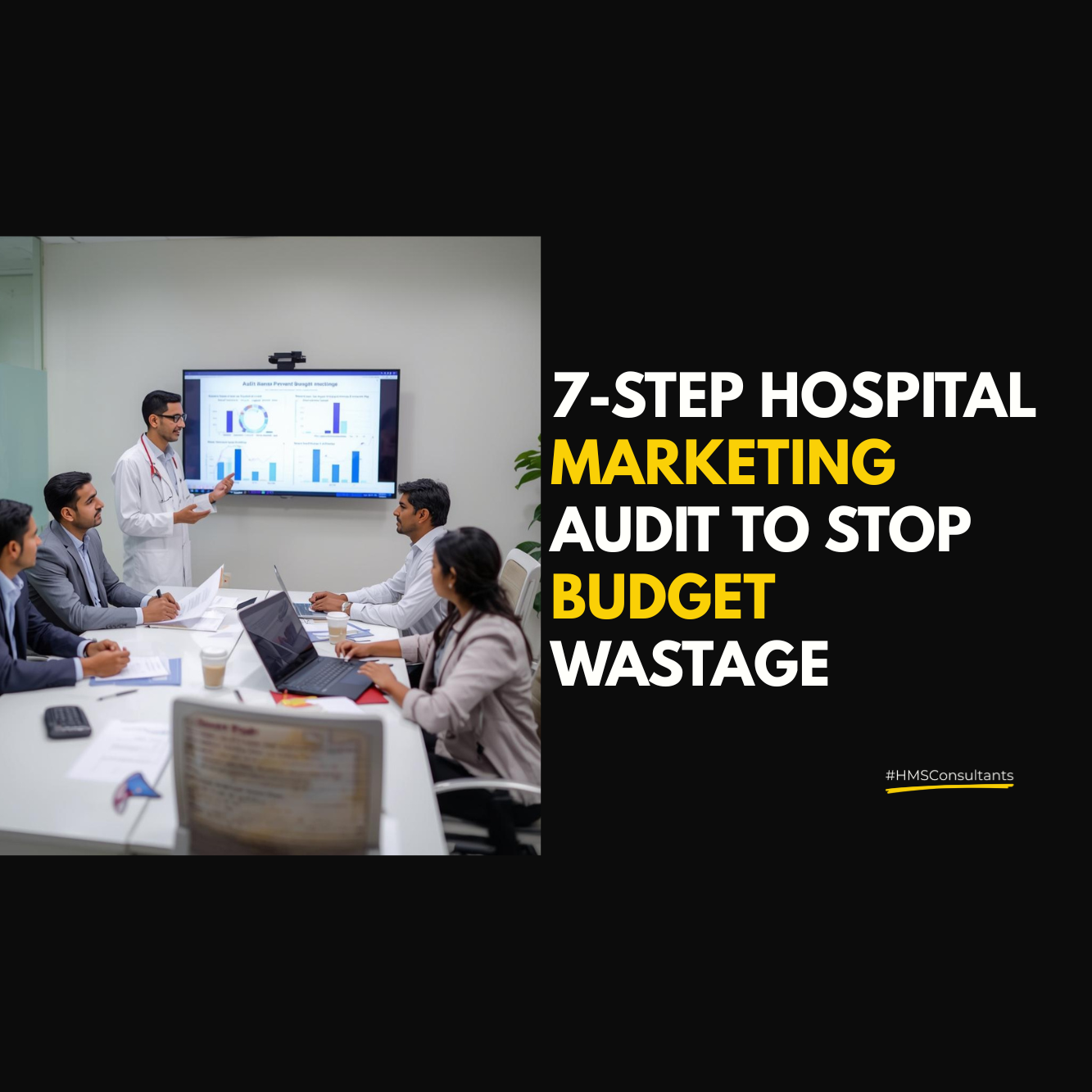
      • The Marketing Audit Your Hospital Actually Needs: Why 80% Clinics Waste Money Without This 7-Step Review

        The Marketing Audit Your Hospital Actually Needs: Why 80% Clinics Waste Money Without This 7-Step Review

        The Marketing Audit Your Hospital Actually Needs: Why 80% Clinics Waste Money Without This 7-Step Review

        Written by
        Published on
        Share This

        The Hidden Cost of “Doing Marketing” Without Direction

        Across India, clinics and hospitals are investing heavily in digital marketing social media posts, Google ads, influencer videos, website revamps, WhatsApp broadcasts, offline activities, health camps, and more. But despite all the effort and money spent, most medical facilities continue to struggle with the same problems: inconsistent patient flow, low OPD conversions, poor engagement, and a vague sense of “nothing is working.”

        Why does this happen?
        Because 80% of hospitals never conduct a proper marketing audit.

        Without an audit, marketing becomes a set of isolated activities rather than a strategic system. Money leaks from multiple points in the patient journey, often without doctors or management even realising it. A marketing audit is not a fancy term; it is a structured, evidence-based review of every pillar that impacts patient acquisition, experience, and retention.

        This blog breaks down the 7-step audit your hospital must conduct, why each step matters, and how it prevents unnecessary marketing wastage especially in a competitive healthcare environment like India.

        1. Brand Clarity: What Do Patients Really Think You Do?

        Most hospitals assume their brand is clear because they know what they offer but that is rarely how patients see it. A marketing audit begins by identifying:

        For example, a diabetes clinic might say “We treat diabetes,” but a patient searches for: “Diabetes reversal doctor,” “HbA1c specialist,” “foot clinic near me,” “insulin management,” or “weight-loss for diabetics.”

        If your brand messaging does not match patient search intent, you will lose visibility no matter how much you spend.

        Audit outcome: A clear brand positioning statement, simplified service definitions, and aligned messaging across all channels.

        2. Your Google Presence: The First Digital OPD You Didn’t Even Know Exists

        In India, more than 70% of patients check a hospital on Google before deciding to visit.
        But most hospitals never audit:

        • Google Business Profile accuracy
        • Reviews (count, quality, recency, responsiveness)
        • NAP consistency (Name, Address, Phone)
        • Photo quality
        • Keywords used in the profile
        • Appointment links
        • Maps visibility

        This is where clinics lose the highest number of potential patients silently.

        A marketing audit examines how your hospital appears on search results and maps, where the gaps are, and what optimisation is required to ensure that when someone searches “best orthopaedic doctor near me” or “child specialist open now,” you appear on top.

        Audit outcome: A fully optimised Google profile that becomes your most powerful free marketing tool.

        3. Website Structure & Patient Experience: Is Your Digital Reception Helping or Confusing?

        Most patients visit your website for one of the following reasons:

        • To check credibility
        • To understand services
        • To find the doctor list
        • To see reviews
        • To book an appointment
        • To check prices or packages

        If your website fails to answer these in 30–40 seconds, patients will drop off.

        A marketing audit reviews:

        • Website load speed
        • Mobile friendliness
        • Clarity of service pages
        • Appointment flow
        • WhatsApp/Call-to-action placement
        • Medical accuracy and ethics
        • Patient education content
        • Landing page effectiveness for ads

        A confusing website equals lost patients. A clean, simple, mobile-optimised website increases patient conversions without spending a rupee extra on marketing.

        Audit outcome: A clear list of website changes that reduce bounce rate and increase enquiry conversions.

        4. Content & Communication: Are You Speaking the Language Patients Understand?

        Indian healthcare is filled with jargon and patients rarely understand what doctors mean.
        Your marketing audit checks:

        • Whether content is patient-friendly
        • Whether your posts address patient fears & motivations
        • Whether your content is solving problems, not showcasing “features”
        • Whether your tone is trustworthy and reassuring
        • Whether you’re using multi-format content (video, reels, blogs, FAQs)

        The biggest mistake hospitals make is content that’s about them instead of being about patients’ needs.

        Example:
        Bad: “We have state-of-the-art laparoscopic equipment.”
        Good: “Get faster recovery, smaller scars, and less pain with laparoscopy.”

        Audit outcome: A content strategy that builds trust, improves clarity, and attracts the right patients.

        5. Lead Management & WhatsApp Flow: Are You Following Up or Losing Patients?

        Every clinic loses at least 20–30% of enquiries because of poor follow-up. A marketing audit examines:

        • How leads are captured
        • How many are missed
        • How quickly your front desk responds
        • Whether WhatsApp automation exists
        • Whether reminders and follow-ups are consistent
        • Whether call recordings show quality conversation
        • Whether patients drop off between enquiry → visit

        WhatsApp can increase OPD conversions 3x if used properly but only if your audit identifies the gaps.

        Audit outcome: A streamlined follow-up system that ensures no patient enquiry is wasted.

        6. Staff Behaviour & Patient Touchpoints: The Offline Experience You Cannot Ignore

        Marketing can bring patients to the door but your staff determines whether they stay.

        A holistic audit includes:

        • Reception behaviour
        • Waiting room experience
        • Phone etiquette
        • Billing clarity
        • Doctor’s communication style
        • Follow-up planning
        • Discharge experience

        This is where hospitals often lose repeat patients and referrals.
        A marketing audit reveals operational gaps that directly impact your brand and patient satisfaction.

        Audit outcome: Action steps to align staff behaviour with your core brand promise.

        7. Analytics, Tracking & UTM Review: Are Your Decisions Based on Data or Guesswork?

        No marketing is effective if you can’t track it.
        Most clinics run ads, post content, or do offline activities without knowing what truly works.

        A good marketing audit reviews:

        • Google Analytics setup
        • UTM parameters
        • Campaign tracking sheets
        • Lead source analysis
        • Cost-per-lead
        • Cost-per-OPD
        • ROI measurement
        • Monthly performance trends

        Without tracking, you are not marketing you are guessing.

        Audit outcome: A clear monthly dashboard and decision-making framework based on real data.

        Why This 7-Step Audit Saves Money Instead of Spending It

        A hospital marketing audit does not add new expenses.
        It eliminates wastage caused by:

        • Wrong targeting
        • Weak online presence
        • Poor website structure
        • Staff gaps
        • Missed leads
        • No tracking
        • Confusing content

        When the audit fixes these bottlenecks, every rupee spent starts producing results.

        Imagine running ads after the audit → now you know your website is ready, your Google listing is strong, your staff is trained, and your follow-up system is tight.
        This multiplies conversions instantly.

        Conclusion: Before You Spend on Marketing, Fix the System First

        Marketing is not posting more.
        Marketing is not boosting ads.
        Marketing is not hiring an agency and hoping for miracles.

        Marketing is a system and a system only works when all parts are aligned.

        A 7-step hospital marketing audit ensures:

        • You stop wasting money
        • You start attracting the right patients
        • You build credibility
        • You improve patient experience
        • You track what truly works
        • You make informed decisions
        • You create a sustainable growth engine

        Before your next marketing activity audit your hospital.
        It’s not an expense; it’s the foundation of everything that follows.

        Contact Us HMS Consultants

        Doctors Digital Marketing I Healthcare Marketing I Hospital Marketing Strategies I Marketing ideas for clinics I Marketing Trends 2025 I Medical Marketing I Social Media Marketing

        is something we strongly believe in, which means ‘Knowledge without application is the same as having no knowledge at all

        Akhil Dave

        Principle Consultant

        Ready to take your Personal Brand to the next level?

        Share your details below and we will connect with you to discuss your growth strategy.

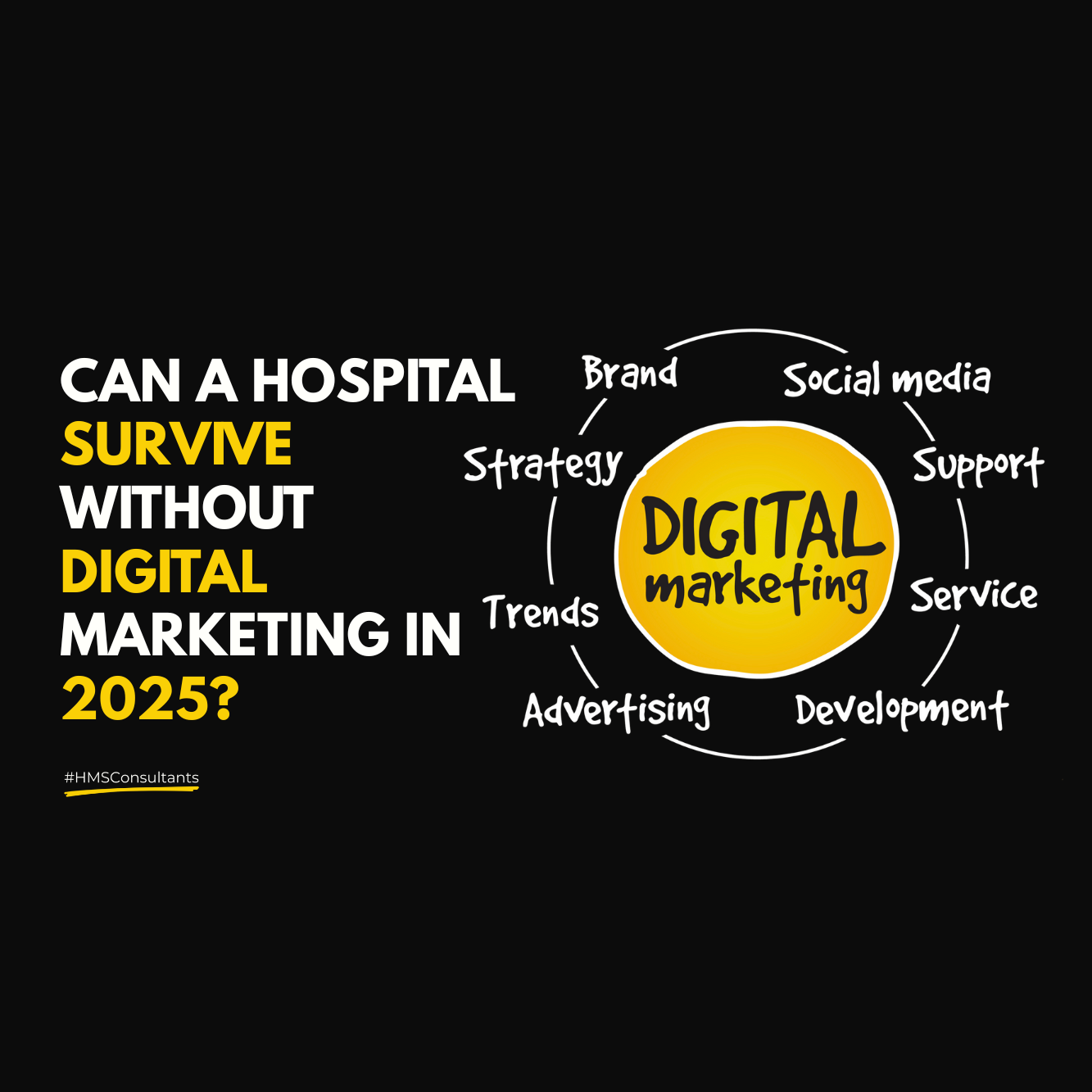
        • Can a Hospital Survive Without Digital Marketing in 2025?

          Can a Hospital Survive Without Digital Marketing in 2025?

          Can a Hospital Survive Without Digital Marketing in 2025?

          Written by
          Published on
          Share This

          For many years, hospitals in India did not need digital marketing to grow. A respected doctor, a known family physician, or an established nursing home could thrive on reputation alone.

          Patients made decisions based on personal recommendations, neighbourhood familiarity, or advice from relatives. But the way people choose healthcare in 2025 is fundamentally different. The first step of the patient journey has moved online, and this shift is reshaping how hospitals gain trust, visibility, and new patients.

          Today, whether someone in Ahmedabad is searching for a neurologist, or a family in Indore is looking for a good maternity centre, or a senior citizen in Jaipur wants cataract surgery, the starting point is no longer a phone call or a walk-in. It is a Google search. Patients compare hospitals in the same way they compare restaurants, hotels, or travel options: by reading reviews, checking ratings, browsing websites, examining doctor profiles, and verifying credentials before visiting in person. This behaviour has become universal across metros, tier-II cities, and even semi-urban regions, because information gives patients a sense of security.

          A hospital without a digital presence immediately appears uncertain. When a patient cannot find basic details such as doctor qualifications, services offered, OPD schedules, success stories, photographs, or reviews, they quietly move to the next hospital that provides clarity. The decision happens silently; the hospital never even knows it lost a potential patient. This is the biggest challenge of remaining invisible online: there is no feedback, no complaint, no enquiry, just missed opportunity.

          Digital marketing in healthcare is often misunderstood as advertising. In reality, it is simply a matter of communication. Patients want answers: how experienced the doctors are, what procedures are available, how complex surgeries are handled, what recovery looks like, whether insurance is accepted, and what others have experienced at the hospital. When this information is available online through a clean website, Google Business listing, reviews and educational content, the hospital appears transparent and trustworthy. When information is missing, the hospital seems risky.

          The shift toward digital presence accelerated during the pandemic. Families learned to search for emergency numbers online, book consultations virtually, check bed availability and read reviews before stepping out. That change did not disappear after COVID; it became a permanent part of healthcare behaviour. Even older patients, who once depended entirely on local word-of-mouth, now validate hospital credibility on Google.

          In cities like Surat, Pune, Kochi, Lucknow, Jaipur, Indore or Rajkot, hospitals that invested in digital communication saw faster recovery in OPD footfall compared to those who relied only on traditional advertising. A website works all day, every day. A Google listing receives views even when the hospital is closed. Patient education builds authority without extra cost. Digital reviews influence reputation more than brochures. Compared to hoardings and newspaper ads, digital presence is more affordable and more permanent.

          So, can a hospital survive without digital marketing in 2025? A long-established hospital may continue operating because of its existing patient base, but survival and growth are two different things. Newer generations of patients do not choose hospitals purely based on local familiarity. They compare, verify, and make informed choices. Hospitals that are digitally visible appear safer and more professional. Hospitals that are invisible find it harder to attract first-time patients, corporate clients, medical tourism inquiries, or even new doctors.

          Digital marketing has also become part of patient service. Online appointment booking reduces waiting room crowd. WhatsApp communication improves follow-up and compliance. Educational content reduces fear. Reviews help patients feel confident about their decisions. In many ways, digital presence is no longer an “extra”, it is healthcare infrastructure.

          Clinical excellence matters once a patient enters the hospital. Digital visibility matters before they walk in.

          Conclusion

          The hospitals that will grow in the coming years will be the ones that treat communication with the same seriousness as treatment. They will use digital tools to answer patient questions, simplify processes, share outcomes responsibly, and build trust long before admission. In a world where the decision begins on a screen, visibility is not marketing; it is credibility.

          A hospital without digital presence might continue operating, but it will slowly lose relevance in a system where patients expect transparency, clarity and accessible information. Digital marketing is no longer a promotional activity. It is a bridge between medical expertise and patient confidence. And in 2025, confidence decides everything.

          Contact Us HMS Consultants 

          Doctors Digital Marketing I Healthcare Marketing I Hospital Marketing Strategies I Marketing ideas for clinics I Marketing Trends 2025 I Medical Marketing I Social Media Marketing

          is something we strongly believe in, which means ‘Knowledge without application is the same as having no knowledge at all

          Akhil Dave

          Principle Consultant

          Ready to take your Personal Brand to the next level?

          Share your details below and we will connect with you to discuss your growth strategy.

          • Knowing–Doing Framework™: Turning Knowledge Into Impact (The HMS Consultants Playbook)

            Knowing–Doing Framework™: Turning Knowledge Into Impact (The HMS Consultants Playbook)

            Knowing–Doing Framework™: Turning Knowledge Into Impact (The HMS Consultants Playbook)

            Written by
            Published on
            Share This

            The Story: How Akhil Dave Arrived Here (Working & Learning)

            For 25 years, Akhil has been working and learning with hospitals, clinics, and health-tech founders across India. He noticed a repeating pattern:

            • Some teams had great knowledge but didn’t execute consistently.

            • Others were busy executing but without clarity, their actions became… noise.

            After hundreds of campaigns, brand launches, and strategy interventions, one insight crystallised:

            Knowing is Knowing. Doing is Doing™
            Knowledge inspires. Action transforms.

            From this belief came a simple, teachable, repeatable model that any healthcare organisation can apply from a single-doctor clinic to a multi-speciality network: The Knowing–Doing Framework™.

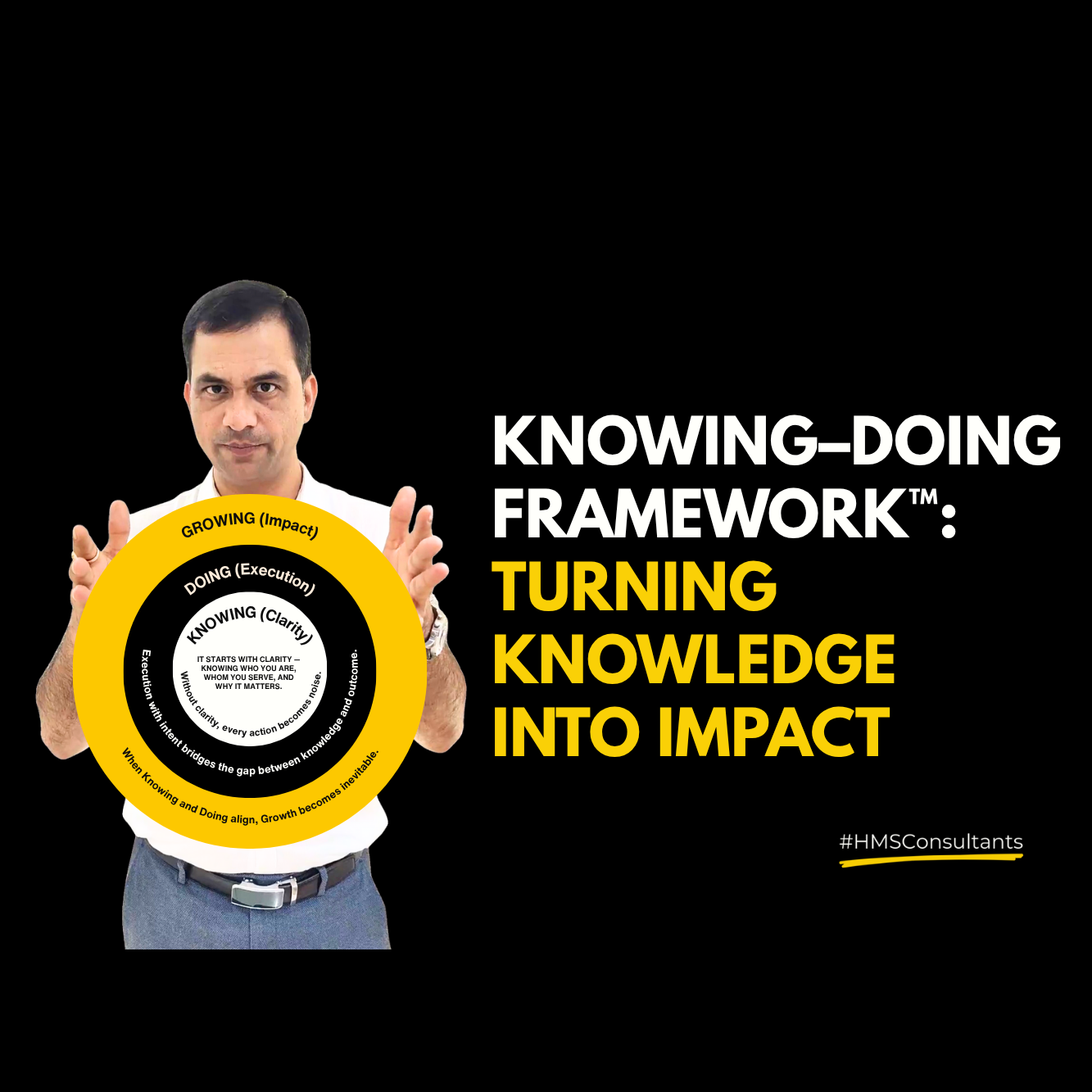
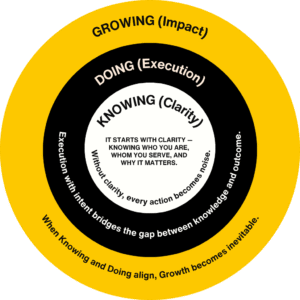
            The Knowing–Doing Framework™ diagram showing three layers: Knowing (clarity), Doing (execution), Growing (impact) for healthcare marketing.

            What is the Knowing–Doing Framework™?

            A practical, three-layer operating system for healthcare marketing:

            • Knowing (Clarity): Define who you are, whom you serve, and why it matters before you spend a rupee.
            • Doing (Execution): Run aligned activities online + offline with a clear roadmap, timelines, and owners.
            • Growing (Impact): Measure what matters, learn, and scale what works to build trust, footfall, and revenue.

            The Three Layers Explained

            A) KNOWING — Clarity Before Action

            Without clarity, activity becomes noise. In healthcare, “Knowing” means:

            • Brand Persona: Values, tone, uniqueness, visual identity, promise.
            • Doctor vs Clinic Branding: Solo practice? Lead with doctor brand. Scaling multi-center? Build a clinic brand often, do both (Indian context).
            • Customer Persona & Empathy Map: Demographics, needs, fears, motivations, “day in the life,” and decision triggers.
            Healthcare brand clarity concept showing brand persona, customer persona, competitive analysis, positioning statement, and minimal viable audience.
            Healthcare marketing execution showing website optimization, GMB updates, content creation, WhatsApp automation, review management, and front desk training.

            B) DOING — Strategy in Motion

            Execution turns clarity into momentum. In healthcare, “Doing” is an orchestrated mix of offline + online + content + systems.

            Your Core Execution Pillars

            1. Roadmap & Goals:

            • Vision → 12-month goals → quarterly OKRs → monthly activities.

            2. Channel Mix:

            • Offline (≈40% budget): Community programs, OPD camps, referral networks, PR, doctor talks.
            • Online (≈40%): Website, SEO/AEO, Google Business Profile (GMB), reviews, social/content, paid acquisition.
            • Content (≈10%): Video explainers, procedure pages, FAQs, patient education assets.
            • Tools/CRM/Admin (≈10%): CRM, WhatsApp Business, HMIS, analytics, dashboards.

            3. AEO (Answer Engine Optimisation):

            • Build “doctor-answer” pages for common questions, with FAQs, author bio, and visuals short, factual, bilingual where relevant.

            4. WhatsApp Journeys:

            • Verified profile, appointment flows, reminders, follow-ups, review nudges (with consent).

            5. Review Flywheel:

            • QR at discharge + 24 –48h WhatsApp prompt → respond to every review → showcase real stories (with consent).

            6. Front Desk Excellence:

            • Scripted greetings, tone training, response SLAs first impression = brand.

            Outcome: A prioritised 90-day activity plan, owners, timelines, and KPIs.

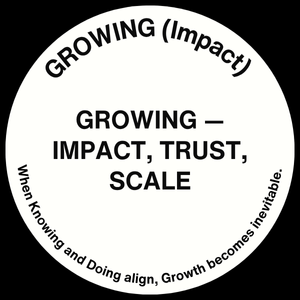
            C) GROWING — Impact, Trust, Scale

            When Knowing and Doing align, growth compounds:

            • Visibility: Higher local discovery (GMB calls, directions), organic traffic, citations.
            • Trust: Better ratings, consistent responses, patient stories.
            • Footfall & Revenue: Improved show-up rates, procedure mix, average revenue per patient.
            • Scale: From one specialty/geography to many without losing your brand promise.

            Outcome: A quarterly Scale Plan: expand services, deepen geography, or launch new formats (satellite OPDs, tele-consults, collaborations).

            Healthcare growth results showing increased visibility, patient trust, clinic footfall, and revenue driven by aligned marketing execution.

            The Healthcare-Specific Playbook (Step-by-Step)

            Step 1: Build Your Clarity Brief (Knowing)

            • Brand persona, promise, & visual basics
            • Customer personas & empathy maps (primary/secondary)
            • Competition table (services, pricing, strengths)
            • Positioning statement + Minimal Viable Audience
            • Compliance guardrails (claims, visuals, patient consent)


            Step 2: Stand-Up the Foundations (Doing)

            • Website: fast, mobile-first, structured (service pages with FAQs/How-To), clear author bios.
            • GMB: accurate categories, services, photos, weekly updates, Q&A.
            • Content Engine: 20–30 “doctor answers,” 12 short videos, 2–4 blogs/month, Hindi + local language summaries.
            • WhatsApp: opt-in flows, appointment automation, reminder templates, post-visit care nudges.
            • Review System: QR + automated prompts + response SOPs.
            • Source Tracking: HMIS/CRM tags for Google, GMB, WhatsApp, referral, walk-in, paid.


            Step 3: Run the Mix (Doing)

            • Offline: local talks, camps, referral meets, community tie-ups.
            • Online: local SEO/AEO, social posts, short videos, limited paid (focused on top 3 services).
            • Nurture: post-visit education, follow-up reminders, preventive checklists.
            • Front Desk: greeting → triage → handoff → follow-up scripts; weekly huddles.


            Step 4: Review & Scale (Growing)

            • Monthly KPI review; kill what’s not working, double-down on winners.
            • Add new service pages, expand languages, and refine WhatsApp journeys.
            • Plan quarterly “signature campaigns” (prevention month, women’s health week, etc.).

            The 90-Day Implementation Plan

            Days 0–15 (Foundation)

            • Clarity Brief finalised
            • Website audit + GMB revamp
            • WhatsApp Business setup + consent plan
            • Review QR + response SOP
            • Dashboard skeleton (source, CPL, reviews, revenue)

            Days 16–45 (Content & Journeys)

            • 10 doctor-answer pages live (+ FAQs, author bios)
            • 6–8 short videos (60–120s explainers)
            • WhatsApp flows: enquiry → appointment → reminder → review → follow-up
            • Front desk training (tone, scripts, SLAs)

            Days 46–90 (Scale & Optimise)

            • 10–15 more doctor-answers + 2 blogs/month
            • Small paid test on top 3 services (tight targeting)
            • Local outreach: 2 community events + 1 referral meet
            • Monthly KPI review → iterate

            Budgeting & Prioritization

            Stage-wise guideline (typical ranges):

            • New startup (metro): 20–25% of expected revenue
            • New startup (semi-urban/rural): 10–15%
            • Existing practice, low footfall: 8–15%
            • Established in a competitive market: 5–10%
            • Super-speciality with institutional backing: 5–7%


            Effort vs Impact Map

            • Prioritise High Impact / Low Effort (GMB cleanup, doctor-answers, review SOP)
            • Plan High Impact / High Effort (videos, referral ecosystem)
            • Defer Low Impact / High Effort (nice-to-have campaigns)

            Tech Stack & Tools (examples, not endorsements)

            • AEO/Content: ChatGPT, Claude/Gemini for drafts → human-edited; GA4, Search Console
            • Design/Video: Canva, CapCut, Runway/Pika for motion
            • WhatsApp Automation: Interakt, Gupshup, WATI (with opt-in, consent)
            • CRM/Engagement: Zoho CRM, LeadSquared, WebEngage/MoEngage
            • HMIS/EMR: Any reliable system you use ensure source tagging, reminder capability

            Measurement: Your Monthly “Marketing Vitals”

            • Demand: GMB actions (calls, directions), website sessions, WhatsApp chats started
            • Efficiency: Cost per booked appointment (not just leads), paid vs organic share
            • Conversion: show-up rate, time-to-first-response, call answer rate
            • Trust: review volume & rating, response rate, patient stories published (with consent)
            • Revenue: ARPNP (avg revenue per new patient), procedure mix, re-visits
            • AEO Footprint: number of pages that win featured/answer placements; citations earned

            Common Mistakes to Avoid

            • Random activity ≠ strategy.
            • Over-reliance on ads without owned content and reviews.
            • Ignoring front desk training tone, empathy, speed
            • No source tracking → can’t prove ROI.
            • No consent or sloppy privacy practices in patient communication.

            Conclusion

            If you want to implement the Knowing–Doing Framework™ in your hospital or clinic end-to-end from clarity brief to content engine, WhatsApp journeys, and monthly dashboards:

            Write to us: info@hmsconsultants.in
            Subject: “Knowing–Doing Framework – Implementation”
            We’ll share a short readiness checklist and a 30-minute discovery format.

            HMS Consultants 

            Doctors Digital Marketing I Healthcare Marketing I Hospital Marketing Strategies I Marketing ideas for clinics I Marketing Trends 2025 I Medical Marketing I Social Media Marketing

            is something we strongly believe in, which means ‘Knowledge without application is the same as having no knowledge at all

            Akhil Dave

            Principle Consultant

            Ready to take your Personal Brand to the next level?

            Share your details below and we will connect with you to discuss your growth strategy.

            • The Rise of Doctor-Influencers in India 2025

              The Rise of Doctor-Influencers in India 2025

              The Rise of Doctor-Influencers in India 2025

              Written by
              Published on
              Share This

              In India, the image of a doctor has traditionally been limited to the clinic, hospital, or classroom. But 2025 paints a different picture. Today, doctors are building personal brands on Instagram, YouTube, and LinkedIn, reaching audiences far beyond their patient base. This trend, known as healthcare influencer marketing, is reshaping how the public consumes medical information.

              Some call it a revolution in trust-building. Others worry it risks turning medicine into mere content. This blog explores whether doctor-influencers represent an opportunity or a case of overexposure.

              Why Doctors Are Turning Into Influencers

              Several forces are driving the rise of doctor personal branding in India:

              • Patient behavior has changed: People first look online before visiting a clinic. Videos, reels, and blogs by doctors build familiarity.
              • Information demand is growing: Lifestyle diseases, skin and hair concerns, and fertility issues have made people more curious about medical knowledge.
              • Platforms reward authority: Social media platforms amplify verified experts, making it easier for doctors to gain traction.
              • Competitive pressure: With thousands of clinics and hospitals vying for attention, personal branding offers an edge.

              The Benefits of Doctor-Influencers

              Authority and Trust

              When patients see a doctor consistently sharing knowledge online, it builds authority. A dermatologist posting acne treatment reels, or a cardiologist simplifying heart health tips, earns credibility that can translate into appointments.

              Expanding Reach Beyond Geography

              Earlier, a clinic’s influence was limited to its physical location. With Instagram or YouTube, a doctor in Jaipur can influence someone in Kochi. Healthcare marketing consultants highlight this as a low-cost visibility strategy.

              Patient Education

              Doctors can debunk myths, guide preventive care, and answer FAQs directly. This not only improves awareness but also positions the doctor as a patient-first educator rather than just a service provider.

              Building a Personal Brand for the Future

              A strong online presence supports speaking invitations, collaborations with hospitals, book launches, and even startup ventures. Personal branding is no longer just a marketing tactic it is career insurance.

              The Risks and Downsides

              Blurring the Line Between Education and Entertainment

              Short-form content often favors catchy hooks over depth. A 30-second reel on weight loss tips may oversimplify complex science, leading to misinformation.

              Overexposure and Loss of Professional Aura

              Doctors traditionally enjoy respect due to exclusivity. Too much casual posting memes, trends, dance reels can reduce seriousness in the eyes of patients.

              Ethical and Regulatory Concerns

              Healthcare advertising in India has rules under the Medical Council of India and ASCI. Doctors risk crossing boundaries if they make unverified claims, promote brands, or offer guarantees.

              Time and Consistency Challenges

              Maintaining social media requires constant effort. Many doctors struggle to balance patient care with content creation, often leading to burnout or poorly managed branding.

              Opportunity or Overexposure: Finding Balance

              The key lies in balance. Doctors do not have to become full-time content creators. Instead, they should:

              • Focus on authentic education, not entertainment for its own sake.
              • Partner with healthcare marketing consultants who can design professional strategies.
              • Set clear limits on content frequency and themes.
              • Avoid endorsements that may compromise credibility.

              This balance ensures that online presence strengthens rather than dilutes their reputation.

              Best Practices for Doctor Personal Branding

              Choose the Right Platform

              • Instagram: Visual storytelling, reels, and community engagement.
              • YouTube: In-depth procedure explainers, patient education series.
              • LinkedIn: Professional branding, thought leadership, and networking.

              Share Authentic Content

              Patients value simplicity and clarity. Doctors should use plain language, relatable examples, and real patient journeys (with consent).

              Keep Compliance in Mind

              Stick to guidelines no promises, no misleading claims, no unethical paid promotions of medicines.

              Engage, Don’t Just Broadcast

              Replying to comments, answering questions, and participating in health awareness days builds a stronger bond.

              Monitor Reputation

              A good strategy includes regular audits of comments, shares, and mentions. Negative feedback should be handled with empathy, not defensiveness.

              Case Studies: Doctor-Influencers in Action

              • Dermatologists: Popular on Instagram, using skincare myths vs facts reels.
              • Dentists: Gaining traction on YouTube with smile makeover videos.
              • Gynecologists: Building trust by openly discussing taboo topics like PCOS or infertility.
              • Fitness-linked doctors: Collaborating with lifestyle influencers for holistic health advice.

              Each case shows how healthcare influencer marketing can both educate and inspire but only when done responsibly.

              The Future of Doctor-Influencers in India

              By 2025, India will see a clear split:

              • Doctors who adapt digital branding will be seen as approachable leaders.
              • Doctors who avoid it, risk becoming invisible to the new digital-first patient.

              However, sustainability will depend on quality over quantity. A handful of thoughtful videos and blogs can create more impact than daily unplanned posts. The winning formula is authenticity + consistency + compliance.

              Conclusion

              Doctor-influencers are not a passing trend. They are a reflection of how healthcare communication is evolving in India. For clinics and individuals, doctor personal branding is both an opportunity and a responsibility. Managed well, it can expand reach, build trust, and support growth. Managed poorly, it risks overexposure and loss of credibility.

              The smartest path forward is not to choose between opportunity or overexposure, but to strike a balance where digital presence enhances the doctor’s real-world expertise.

              Written by Maitri Desai

              Doctors Digital Marketing I Healthcare Marketing I Hospital Marketing Strategies I Marketing ideas for clinics I Marketing Trends 2025 I Medical Marketing I Social Media Marketing

              is something we strongly believe in, which means ‘Knowledge without application is the same as having no knowledge at all

              Akhil Dave

              Principle Consultant

              Ready to take your Personal Brand to the next level?

              Share your details below and we will connect with you to discuss your growth strategy.

              • Building a Strong Healthcare Brand on a Budget

                Building a Strong Healthcare Brand on a Budget

                Building a Strong Healthcare Brand on a Budget

                Written by
                Published on
                Share This

                Healthcare branding often feels like a game for big players. Hospitals with massive budgets run city-wide billboards, glossy ad campaigns, and celebrity endorsements. But most clinics and smaller hospitals don’t have that kind of spending power. The good news? Building a strong healthcare brand isn’t always about the money you spend, but also about the trust you earn.

                With the right approach, clinics and hospitals can build credibility, visibility, and patient loyalty without burning through large advertising budgets. Here’s how.

                Why Big Budgets Don’t Always Win

                Advertising grabs attention, but in healthcare, attention is not the same as trust. A patient may see an ad for a hospital, but if they have a poor in-clinic experience or read negative reviews, no amount of advertising will keep them loyal.

                On the other hand, smaller clinics that focus on consistent patient experience, word-of-mouth referrals, and community presence often find that patients return and recommend them, even without major ad spend.

                This is where healthcare marketing for clinics and hospitals should shift focus from chasing visibility at all costs, to creating meaningful trust.

                Low-Cost, High-Trust Methods to Build a Healthcare Brand

                1. Patient Referrals: The Oldest, Most Reliable Marketing Tool

                Referrals are the backbone of healthcare marketing. Patients trust other patients far more than any ad.

                How to strengthen referrals:

                • Encourage satisfied patients to share their stories (with consent).
                • Create a simple thank-you system for patients who recommend your clinic.
                • Deliver consistent care, because a patient only refers if they feel valued.

                A single positive experience can lead to multiple new patients without any extra advertising spend.

                2. Patient Experience as the Core of Branding

                The most affordable healthcare marketing comes from what patients feel inside your clinic.

                Key touchpoints that shape patient experience:

                • Friendly and clear communication at reception.
                • Comfortable and clean waiting areas.
                • Transparent consultation style where doctors explain procedures simply.
                • Efficient follow-ups via SMS, WhatsApp, or calls.

                Every step in the patient journey either strengthens or weakens your brand. Clinics that get this right rarely need flashy ads, because patients become their advocates.

                3. Community Presence: Being Visible Beyond Ads

                Community engagement builds brand awareness without expensive campaigns. Patients are more likely to trust clinics that they see actively participating in their neighborhoods.

                Ideas for community presence:

                • Host small health camps in schools, offices, or local societies.
                • Partner with local organizations on awareness drives (e.g., eye check-up camps, diabetes screening, vaccination awareness).
                • Give simple educational talks at community events.

                These activities are low-cost, yet they create strong credibility. They show that your clinic isn’t only a business, but a part of the community.

                4. Digital Presence: Affordable, Effective, and Essential

                In 2025, an online presence is as important as physical infrastructure. Patients often search “clinic near me” before they visit.

                How to build an affordable digital presence:

                • Maintain an updated Google Business Profile with accurate details, reviews, and photos.
                • Use social media for patient education, not just promotion.
                • Share FAQs, explainer reels, and small behind-the-scenes glimpses of care.
                • Highlight testimonials and staff introductions to humanize your brand.

                Even without paid ads, consistent content and good SEO can bring patients to your door. A hospital marketing agency can guide clinics in setting up these systems efficiently.

                5. Collaborations with Local Stakeholders

                Not all growth comes from direct advertising. Collaborations with nearby pharmacies, fitness centre, or diagnostic labs can expand visibility.

                Examples:

                • A clinic and local fitness center run a joint awareness campaign on heart health.
                • A hospital partners with nearby pharmacies for health awareness flyers.
                • Doctors collaborate with local schools to run preventive health check-ups.

                Such partnerships are low-cost but expand reach significantly.

                Affordable Healthcare Marketing: Key Principles

                If clinics and hospitals want to stretch their marketing without heavy budgets, they should follow these principles:

                1. Be Consistent, Not Flashy
                  Patients remember a steady stream of helpful interactions more than one big ad.


                2. Focus on Trust First
                  In healthcare, credibility outweighs visibility. Trust leads to referrals, which is the most powerful form of marketing.


                3. Invest in Patient Stories
                  Real experiences resonate more than polished taglines.


                4. Leverage Affordable Tools
                  Google Business Profiles, WhatsApp reminders, and simple social media posts are free or low-cost, yet impactful.


                Audit Regularly
                Clinics should assess their branding touchpoints: digital, patient flow, community engagement to ensure every detail supports their image.

                How a Hospital Marketing Agency Can Help

                Even with a limited budget, working with a hospital marketing agency doesn’t mean spending huge sums. Agencies bring strategy, clarity, and execution support.

                What they offer:

                • Branding audits to identify weak touchpoints.
                • Guidance on affordable strategies like referral systems, local SEO, and content planning.
                • Frameworks to ensure both doctor personal branding and institutional branding are aligned.

                Instead of spending on ads without direction, a hospital or clinic can use professional advice to maximize every rupee spent.

                Key Takeaway

                Healthcare brands don’t need massive advertising budgets to succeed. They need trust, consistency, and presence where it matters most; i.e. patient experience, community, and digital platforms. Clinics and hospitals that focus on these areas can build strong, lasting brands without overspending.

                A thoughtful healthcare marketing for clinic approach, backed by affordable strategies and occasional guidance from a hospital marketing agency, can deliver better results than any billboard.

                Written by Maitri Desai

                Doctors Digital Marketing I Healthcare Marketing I Hospital Marketing Strategies I Marketing ideas for clinics I Marketing Trends 2025 I Medical Marketing I Social Media Marketing

                is something we strongly believe in, which means ‘Knowledge without application is the same as having no knowledge at all

                Akhil Dave

                Principle Consultant

                Ready to take your Personal Brand to the next level?

                Share your details below and we will connect with you to discuss your growth strategy.

                • What’s the First Marketing Step for Any New Health Brand?

                  What’s the First Marketing Step for Any New Health Brand?

                  What’s the First Marketing Step for Any New Health Brand?

                  Written by
                  Published on
                  Share This

                  When a new health brand launches, whether a hospital, clinic, healthtech product, or wellness venture; the natural urge is to sprint into execution. Teams open social media accounts, brainstorm hospital branding ideas, and search for how to promote clinic online. Some start posting on social media for hospitals from day one. Yet, without strategic clarity, execution turns into activity without traction. The first marketing step is not posting; it is deciding what the brand stands for, who it serves, and why it deserves attention.

                  Strategic clarity sits upstream of every tactic. It informs your visual identity, your messaging, your choice of channels, and even the details of how to promote clinic online. It ensures social media for hospitals feels consistent and credible. It turns scattered hospital branding ideas into a focused brand system that builds trust.
                  Below is a practical, step-by-step roadmap to create that clarity before execution, tailored for doctors, hospitals, clinics, healthtech, and wellness brands in India and beyond.

                  1) Define the business goal before the marketing goal

                  Marketing should serve the business, not the other way around. Begin with measurable business outcomes, then translate them into marketing objectives.

                  Decide what you must move first:

                  • Patient acquisition for a specialty or service line
                  • Geographic expansion and local discovery
                  • Case mix improvement (higher-complexity, higher-margin services)
                  • Re-engagement and retention for chronic care programs


                  Translate into marketing objectives:

                  • Increase qualified appointment requests by a defined percentage
                  • Improve conversion rate from calls to bookings
                  • Lift branded search and map actions by location
                  • Grow patient lifetime value through structured follow-up


                  Only after this step do you explore hospital branding ideas, social media for hospitals, and how to promote clinic online. Your tactics should map to your outcomes.

                  2) Choose a clear positioning: the promise and for whom

                  Positioning answers two questions: What promise do you make, and to whom? In healthcare, credibility is built on specificity.

                  Positioning prompts:

                  • Primary audience: first-time patients, second opinions, caregivers, corporates, referring doctors
                  • Category and edge: emergency excellence, advanced diagnostics, women’s health, affordable day-care surgery, remote monitoring
                  • Proof: outcomes data, technology stack, clinical leadership, patient experience

                  Positioning examples:

                  • “City’s most accessible cardiology day-care with 24-hour helpline”
                  • “Evidence-led women’s wellness combining gynecology and nutrition under one roof”
                  • “Specialist tele-dermatology for busy professionals with 48-hour treatment plans”

                  Clarity here will shape everything from social media for hospitals to how to promote clinic online with landing pages that reflect your promise.

                  3) Build a messaging architecture before content calendars

                  A messaging architecture is a hierarchy of what to say, in what order, with what proof. It prevents mixed signals as multiple teams create content.

                  Message stack:

                  1. Core value proposition: one sentence that states the promise and beneficiary.
                  2. Three support pillars: outcomes, access, and experience.
                  3. Proof points: accreditation, subspecialty expertise, technology, testimonials, outcomes stats.

                  Action cues: book appointment, second opinion, tele-consult, screening camp registration.

                  4) Create a minimum viable brand identity system

                  You don’t need a giant brand book to start. You do need a minimum viable brand identity that aligns what patients see across touchpoints.

                  Essentials:

                  • Logo suite: primary, stacked, and icon versions
                  • Color system: accessible, medical-appropriate palette with contrast standards
                  • Typography: clear, legible type for digital and print
                  • Imagery style: real people, local context, clean clinical settings
                  • Tone of voice: warm, factual, confident; avoid jargon
                  • Usage rules: spacing, backgrounds, photography do’s/don’ts

                  A consistent identity improves recognition and trust. It also streamlines production for social media for hospitals and speeds up how to promote clinic online with ready-to-use templates.

                  5) Map the patient journey and fix friction before advertising

                  Great campaigns fail when they land on broken journeys. Audit the path from the first impression to the first visit and beyond.

                  Journey checkpoints:

                  • Discovery: branded search, maps, directory listings, reviews
                  • Consideration: website clarity, doctor profiles, specialties, pricing transparency where feasible
                  • Conversion: appointment buttons, WhatsApp click-to-chat, call handling, response time
                  • Visit: directions, parking info, reception, triage, billing clarity
                  • Follow-up: discharge instructions, reminders, outcomes calls, feedback requests
                  • Advocacy: testimonials, referral programs, community education

                  Prioritize the fixes with the biggest impact on conversion. Then plan hospital branding ideas, social media for hospitals, and how to promote clinic online so traffic lands on a journey that works.

                  6) Channel-to-message map: where each message belongs

                  Website and landing pages

                  • Job: depth and conversion
                  • Content: clear service lines, outcomes, pricing signals, FAQs, doctor bios, booking forms
                  • Supports how to promote clinic online with credible, fast pages

                  Google Business Profile and maps

                  • Job: local discovery and proof
                  • Content: categories, services, photos, posts, Q&A, review replies
                  • Critical for social proof; complements social media for hospitals with intent traffic

                  Social media for hospitals

                  • Job: relevance and relationship
                  • Content: clinician explainers, patient education, behind-the-scenes, staff culture, outcomes stories
                  • Use platform-native formats; don’t force one design everywhere

                  Email/WhatsApp

                  • Job: continuity and conversion
                  • Content: pre-op checklists, post-op care, chronic care nudges, screening invites

                  Paid media

                  • Job: speed and scale
                  • Content: search ads for high-intent services, social/video for storytelling

                  Tie creatives to your messaging architecture, not random hospital branding ideas

                  7) Measurement plan: define success before you launch

                  Decide what you will measure and how.

                  Core measures:

                  • Qualified appointment requests per channel
                  • Call answer rate and time to first response
                  • Conversion rate from landing pages
                  • Show-up rate and no-show reduction
                  • Cost per acquired patient by service line
                  • Review volume, rating, and sentiment
                  • Lead-to-visit time and visit-to-follow-up rate

                  This frame lets you judge whether social media for hospitals is driving real outcomes and whether your approach to how to promote clinic online needs refinement.

                  8) Ethics, compliance, and trust by design

                  Health brands must embed privacy, consent, and compliance into marketing from day one.

                  Checklist:

                  • Consent for testimonials and images
                  • Secure handling of patient data and chat transcripts
                  • Balanced claims with appropriate disclaimers
                  • Transparent pricing signals, where allowed
                  • Accessibility in design and content

                  Trust is a brand asset. Many hospital branding ideas fail because they overlook this foundation.

                  9) Quick-start planning: 30-day clarity sprint before execution

                  Use this sprint to lock strategy so execution starts strong.

                  Week 1: Diagnose

                  • Stakeholder interviews with clinicians, ops, and front desk
                  • Competitor scan for positioning gaps
                  • Patient journey audit from search to follow-up

                  Week 2: Decide

                  • Positioning statement and audience priority
                  • Messaging architecture and proof points
                  • Minimum viable brand identity selections

                  Week 3: Design

                  Week 4: Deliver

                  • Launch landing pages tied to priority services
                  • Optimize Google Business Profile and directories
                  • Publish the first month of content
                  • Set up analytics, call tracking, and CRM basics
                  • Train front desk on scripts and response SLAs

                  At the end of 30 days, you will know how to promote clinic online with precision and how to deploy hospital branding ideas that feel consistent everywhere.

                  10) Content pillars: build once, reuse many times

                  Create durable themes that can be repackaged across platforms and formats.

                  Pillars to consider:

                  • Clinician clarity: plain-language explainers
                  • Proof of outcomes: method + impact; anonymized case narratives
                  • Patient experience: navigation help, cost clarity, after-care
                  • Community role: camps, talks, CSR, local partnerships
                  • Technology and safety: what it means for the patient

                  These pillars supply a steady pipeline for social media for hospitals and inform how to promote clinic online with search-friendly articles and videos.

                  11) From ideas to identity: upgrading hospital branding ideas

                  Turn ideas into systems that scale.

                  Move from:

                  • One-off campaign visuals
                  • Generic stock photography
                  • Inconsistent tone

                  To:

                  • A modular design system with defined color levels, typography, and layouts
                  • Real-world imagery featuring clinicians and context
                  • A voice that is warm, clear, and consistent across teams

                  This is where many teams benefit from expert support to align identity with the journey and the message.

                  12) Common pitfalls and how to avoid them

                  Pitfall: Starting with content calendars
                  Fix: Start with positioning; calendars come later.

                  Pitfall: Measuring only impressions and likes
                  Fix: Track calls, bookings, show-ups, and revenue per service line.

                  Pitfall: Disconnected assets
                  Fix: Use the messaging architecture so social media for hospitals, print, and web all tell one story.

                  Pitfall: Overlooking how to promote clinic online beyond posts
                  Fix: Build fast landing pages, optimize maps, add structured data, and simplify booking.

                  Pitfall: Random hospital branding ideas without patient experience upgrades
                  Fix: Improve reception, signage, wayfinding, and follow-up processes first.

                  Putting it all together

                  The first marketing step for any new health brand is strategic clarity. Define the business goal, choose a position, build a messaging architecture, create a minimum viable identity, and fix friction in the patient journey. Only then should you scale social media for hospitals, develop hospital branding ideas, and operationalize how to promote clinic online across website, maps, and campaigns. Clarity first, execution second.

                  Call to Action

                  If you’re launching a new hospital, clinic, healthtech product, or wellness brand and want marketing that works from day one – HMS Consultants can help. We turn hospital branding ideas into a usable system, plan social media for hospitals that build trust, and map exactly how to promote your brand / hospital /  clinic online for measurable growth.

                  Reach out to start with a focused clarity sprint, and execute with confidence.

                  Written by Maitri Desai

                  Doctors Digital Marketing I Healthcare Marketing I Hospital Marketing Strategies I Marketing ideas for clinics I Marketing Trends 2025 I Medical Marketing I Social Media Marketing

                  is something we strongly believe in, which means ‘Knowledge without application is the same as having no knowledge at all

                  Akhil Dave

                  Principle Consultant

                  Ready to take your Personal Brand to the next level?

                  Share your details below and we will connect with you to discuss your growth strategy.

                  • Mission-Driven Marketing in Healthcare: Why It Matters More Than Ever

                    Mission-Driven Marketing in Healthcare: Why It Matters More Than Ever

                    Mission-Driven Marketing in Healthcare: Why It Matters More Than Ever

                    Written by
                    Published on
                    Share This

                    Healthcare is more than a service, it’s a promise. Behind every consultation, procedure, and campaign lies a deeper mission: improving lives. But in today’s competitive healthcare environment, simply stating your mission isn’t enough. You need to weave it into every aspect of your marketing strategy.

                    That’s where mission-driven marketing comes in, aligning your brand communication with the core values that make your healthcare business unique.

                    What is Mission-Driven Marketing?

                    Mission-driven marketing focuses on promoting not just what you offer, but why you exist. It’s about using your brand’s purpose as the guiding force behind your campaigns, patient interactions, and community initiatives.

                    For healthcare, this means:

                    • Communicating values like compassion, transparency, and quality care
                    • Prioritizing patient well-being over aggressive sales tactics

                    Building long-term trust instead of chasing short-term gains

                    Why Mission-Driven Marketing Works in Healthcare

                    1. It Builds Trust Faster

                    When your campaigns reflect genuine values, patients sense authenticity. For example, a hospital emphasizing preventive care through free community health camps shows its mission in action and gains patient trust naturally.

                    2. It Differentiates You from Competitors

                    In cities where multiple clinics offer similar treatments, your mission becomes your unique selling point (USP).

                    • Example: A pediatric clinic whose mission is “Every child deserves joyful health” can tailor all its marketing from wall art to website  around this belief.

                    3. It Inspires Your Team

                    Mission-driven brands don’t just attract patients; they attract the right talent. Healthcare professionals feel motivated when they’re part of a purpose-led organization.

                    4. It Makes Marketing More Impactful

                    Campaigns grounded in mission are more memorable. Instead of generic “Get treated here” messages, you create stories that resonate.

                    • Example: Instead of promoting “40% off health check-ups,” a campaign could highlight “Empowering early detection for stronger, healthier futures.”

                    How to Implement Mission-Driven Marketing in Healthcare

                    1. Define Your Core Purpose

                    Go beyond “We provide medical services.” Identify why your healthcare brand exists and what long-term change you want to bring.

                    2. Communicate it Everywhere

                    Your mission should be reflected in:

                    • Website copy
                    • Social media tone
                    • Patient education materials
                    • Community events

                    3. Show Proof, Not Just Promises

                    Share real stories of your mission in action, patient success journeys, CSR initiatives, or employee volunteer programs.

                    • Train Your Staff

                     Every team member is a brand ambassador. Consistent communication and actions aligned with your mission amplify patient trust.

                    Real-Life Example

                    A cancer care center with a mission to “Fight cancer with dignity and compassion” made its mission the foundation of all marketing. From empathetic patient support videos to partnerships with palliative care NGOs, every touchpoint reinforced their purpose. Result? Higher patient satisfaction, better community reputation, and increased referrals.

                    Final Thoughts

                    In healthcare, marketing isn’t just about visibility, it’s about values. When your mission drives your marketing, you create meaningful connections that last far beyond a single appointment.

                    At HMS Consultants, we help healthcare businesses uncover and communicate their true purpose through ethical, mission-led strategies. Because when your mission is clear, your marketing becomes unstoppable.

                    Written by Tusharika Ranjan

                    Doctors Digital Marketing I Healthcare Marketing I Hospital Marketing Strategies I Marketing ideas for clinics I Marketing Trends 2025 I Medical Marketing I Social Media Marketing

                    is something we strongly believe in, which means ‘Knowledge without application is the same as having no knowledge at all

                    Akhil Dave

                    Principle Consultant

                    Ready to take your Personal Brand to the next level?

                    Share your details below and we will connect with you to discuss your growth strategy.

                    • Healthcare Marketing 2025: Why Platform Features Matter

                      Healthcare Marketing 2025: Why Platform Features Matter

                      Healthcare Marketing 2025: Why Platform Features Matter

                      Written by
                      Published on
                      Share This

                      In a world where visibility is currency, especially in healthcare marketing, platforms are not just distribution channels, they are decision-makers. Instagram’s recent push for creators to use its built-in editing app, Edits by Instagram, is just the tip of the iceberg. Behind the scenes, a quiet but significant shift is taking place across all social platforms: they’re increasingly rewarding content created and edited natively within their own ecosystems.

                      For healthcare marketers, be it hospital branding teams, clinic owners, or marketing agencies working with doctors, this is a wake-up call. If your posts, videos, or carousels aren’t leveraging platform-native tools, you might be invisibly penalized, even if your message is brilliant.
                      This blog explores why that’s happening, what broader trends it signals, and what healthcare marketers should be doing today to stay ahead.

                      Why Platforms Are Pushing Their Own Tools

                      Let’s get one thing clear: platforms want to keep you inside their ecosystems. That means:

                      • More time spent on the app
                      • More ads shown
                      • More data collected
                      • Less leakage to other platforms (like YouTube, Canva, or CapCut)

                      To do this, they now subtly (or overtly) reward native behavior. And what’s more native than using their own creation tools?

                      Take Instagram’s Edits for example:

                      • It allows in-app video editing with music, transitions, filters
                      • No watermark, which is crucial for brand content
                      • Improved integration with Reels
                      • Drafts and easy content repurposing
                      • Built-in analytics for creators

                      Instagram hasn’t officially stated that Edits content gets a boost, but creators who use it consistently see better reach. This applies to brands too. If you’re a clinic uploading Reels about diabetes tips or hospital tours, where you edit your video matters.

                      And it’s not just Instagram. Here’s how other platforms are doing it:

                      How Other Platforms Encourage Native Creation

                      A. YouTube Shorts

                      • Shorts created inside the app have higher placement in the Shorts shelf
                      • Easier tagging and music syncing
                      • Direct visibility on mobile vs. externally uploaded videos

                      For hospitals running awareness campaigns (e.g., cancer screenings), Shorts can work like TV ads- fast, visual, mobile-first.

                      B. LinkedIn

                      • Documents, carousels, and videos uploaded directly perform better than links
                      • Native posts drive engagement; external links often get deprioritized
                      • Creator Mode and Newsletter features give additional reach

                      Doctors or healthcare entrepreneurs sharing insights do it natively, not just as PDFs or links.

                      C. X (formerly Twitter)

                      • Videos uploaded to X get more algorithmic preference than YouTube embeds
                      • Threads with visuals gain traction when all content stays on the platform

                      A wellness brand using X for FAQs should embed native videos + visual threads for visibility.

                      D. Facebook

                      • Facebook Reels made using Meta’s in-app features outperform externally edited ones
                      • Facebook Live gets featured to broader audiences if streamed via its own platform

                      Consider Facebook Live Q&As with doctors instead of Zoom reposts. 

                      Across platforms, the rule is becoming clear: if you want visibility, use native tools.

                      4. Why This Matters for Healthcare Marketing

                      Most healthcare providers aren’t just competing with each other, they’re competing with short attention spans. A well edited 20 second Reel might reach 10,000 people. But a poorly formatted external video? It might not even show up.

                      For clinics and hospitals:

                      • That’s lost appointments
                      • Lost follow-ups
                      • Lost trust

                      For startups:

                      • That’s poor brand recall
                      • Inconsistent engagement
                      • Wasted marketing spend

                      In healthcare, this isn’t just about ‘reach’, it’s about trust, reliability, and being discoverable when someone needs you.

                      Real-World Examples

                      Case 1: A Wellness Clinic’s Reel Strategy
                      A Mumbai-based women’s wellness clinic started creating daily Reels using Instagram Edits. Each video included:

                      • Doctor tip of the day
                      • Visual callouts using in-app text overlays
                      • Local trending music

                      Result: Reach increased by 35% in 4 weeks. More importantly, they noticed a spike in WhatsApp inquiries from Reel viewers.

                      Case 2: A Dental Hospital on LinkedIn
                      Instead of linking to an external blog, a Bangalore-based dental network shared an educational carousel on gum health using LinkedIn Docs.

                      Result: 3x more views and 4x more shares compared to their previous post with an external blog link.

                      Case 3: A Pediatric Clinic on YouTube Shorts
                      A pediatrician created Shorts using YouTube’s in-app tools showing “Day in the Life of a Child Specialist.”

                      Result: Over 100K views in 10 days. She started receiving patient referrals from new parents who discovered her via Shorts.

                      What Should Healthcare Marketers Do?

                      Let’s turn this into an action checklist:

                      Use the platform’s own tools wherever possible
                      Don’t over-rely on Canva, CapCut, or other tools unless you’re repurposing. Create once, natively.

                      Train your team on platform shifts
                      Your digital team must stay updated on features like Instagram Edits, LinkedIn Carousels, YouTube Live changes.

                      Match content with platform purpose
                      Don’t upload long PDFs on Instagram. Don’t post funny Reels on LinkedIn. Use formats as intended.

                      Track native vs non-native performance
                      Do a 2-week test. One post made externally, one natively. Compare reach, saves, DMs, etc.

                      Always keep compliance in mind
                      Even native content should follow healthcare marketing rules, HIPAA guidelines, and patient confidentiality norms.

                      The Bigger Picture: The Algorithm is the New Gatekeeper

                      Algorithms are no longer passive. They reward behavior they want and penalize what feels “foreign.”

                      For a healthcare brand, this isn’t just about visibility. It’s about:

                      • Staying competitive
                      • Reaching patients in real time
                      • Maintaining digital hygiene
                      • Building long-term trust

                      The platforms will continue changing. The only way to keep up is to change with them.

                      Final Thoughts

                      Instagram’s Edits update is just a micro-example of a broader trend:

                      Social platforms are increasingly biased toward their own ecosystems.
                      Visibility is now tied to how you create, not just what you create.

                      For healthcare marketers, digital success is no longer just about quality, it’s also about format, context, and compatibility.

                      So before you upload your next campaign, ask: Are we playing by the platform’s rules?

                      Written by Tusharika Ranjan

                      Doctors Digital Marketing I Healthcare Marketing I Hospital Marketing Strategies I Marketing ideas for clinics I Marketing Trends 2025 I Medical Marketing I Social Media Marketing

                      is something we strongly believe in, which means ‘Knowledge without application is the same as having no knowledge at all

                      Akhil Dave

                      Principle Consultant

                      Ready to take your Personal Brand to the next level?

                      Share your details below and we will connect with you to discuss your growth strategy.