
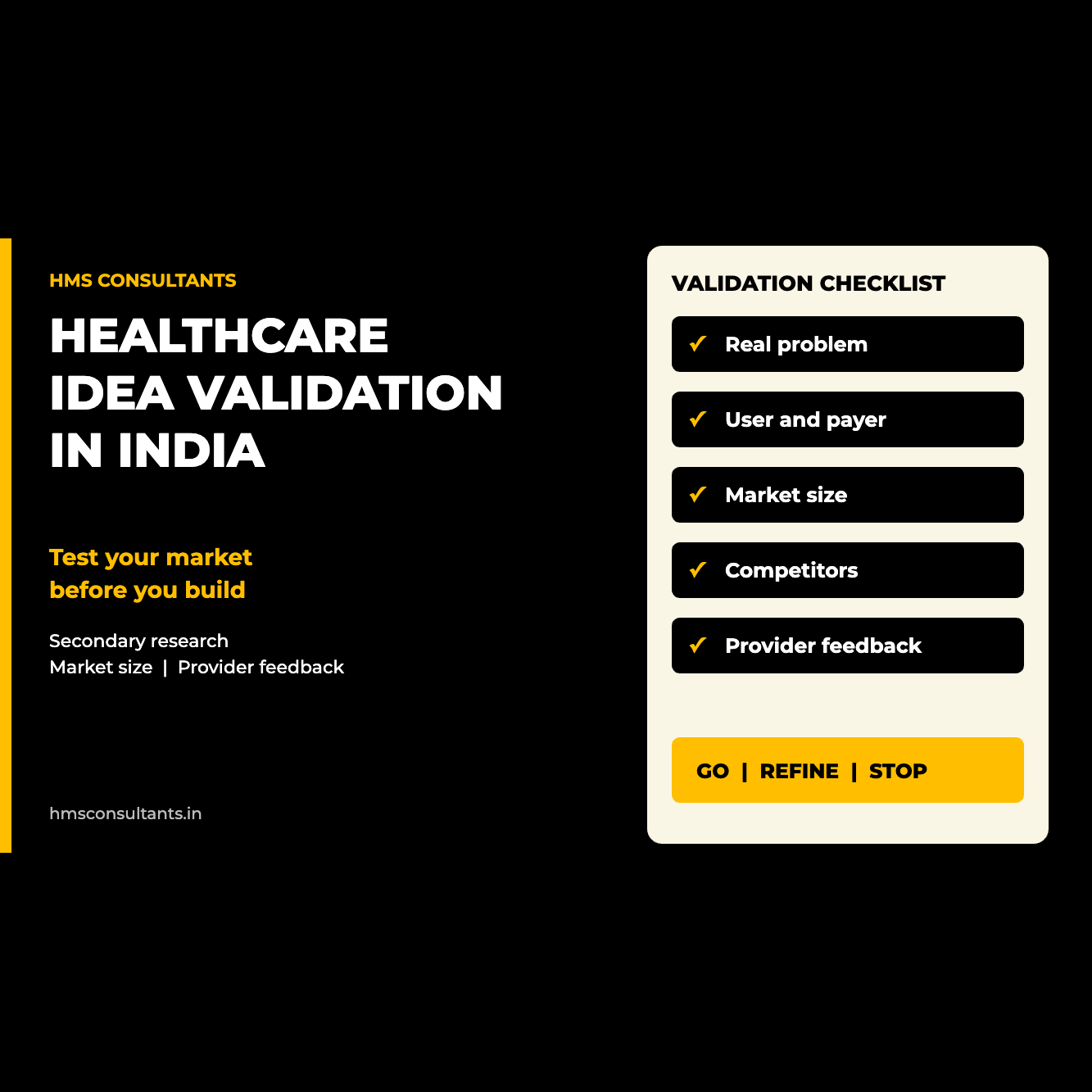
Healthcare Market Validation in India: How to Test Your Idea Before You Build (2026)
Healthcare Market Validation in India: How to Test Your Idea Before You Build (2026) Author Akhil Dave Published on October...
Table of Contents
ToggleMarketing in healthcare isn’t like marketing in other industries. It’s more sensitive, regulated, and driven by trust. Whether you’re running a multispecialty hospital, a diagnostic centre, or a chain of clinics, the need to train your marketing team is non-negotiable.
Here’s why:
By investing in a healthcare marketing training program, hospitals can reduce dependence on external vendors, cut costs, and see better ROI from their campaigns.
At HMS Consultants, we’ve audited marketing functions across dozens of hospitals. These are the most common challenges:
These gaps hurt branding, patient trust, and referral inflows — but can be corrected with the right guidance.
HMS is India’s first pure-play healthcare marketing consultancy. We don’t run campaigns. We build capacity. Here’s our typical training framework for hospitals:
We help your marketing executives create ROI-driven digital strategies while also training front office, nursing, and admin staff to support your brand presence.
Recently, HMS was approached by a Leading Hospital chain in India, one of South India’s leading hospitals, whose Learning & Development head was looking for a consultant to train their experienced marketing team.
Despite having seasoned staff, they recognised the need for external guidance in aligning digital marketing, referral outreach, and brand communication under one performance-based approach. They discovered us via organic search on Google, spent time reviewing our content, and immediately recognised the alignment.
This shows a rising trend: hospital HR and training departments are actively seeking industry-specific marketing trainers, and that’s where HMS Consultants is uniquely positioned.
Hospital HR and L&D teams are key to building a sustainable, future-ready marketing force.
While clinical and operational training is standard, marketing capability building often gets ignored. However, a skilled marketing team impacts:
By partnering with HMS Consultants, your training department can roll out a program that doesn’t just teach theory — it delivers applied strategies, custom workflows, and post-training review.
Whether a one-day strategic session or a structured 3-month initiative, the training program is designed to equip your internal marketing team with the tools, mindset, and practical strategies to elevate the Hospital’s marketing outcomes. Our approach is not limited to knowledge-sharing. We focus on creating execution capability, driving cross-functional alignment, and building a sustainable marketing culture within your hospital.
Work with HMS Consultants
Looking for healthcare marketing sessions for faculty, residents or students? See our training and workshops.
Note:
While we’ve outlined key expected outcomes in this blog, we understand that every hospital has unique goals and operational nuances. We remain fully open to discuss specific expectations. We will be happy to tailor our training modules, engagement format, and delivery approach to align closely with the evolving needs of your marketing team and overall institutional objectives.
Share your details below and we will connect with you to discuss your growth strategy.
Healthcare Market Validation in India: How to Test Your Idea Before You Build (2026) Author Akhil Dave Published on October...
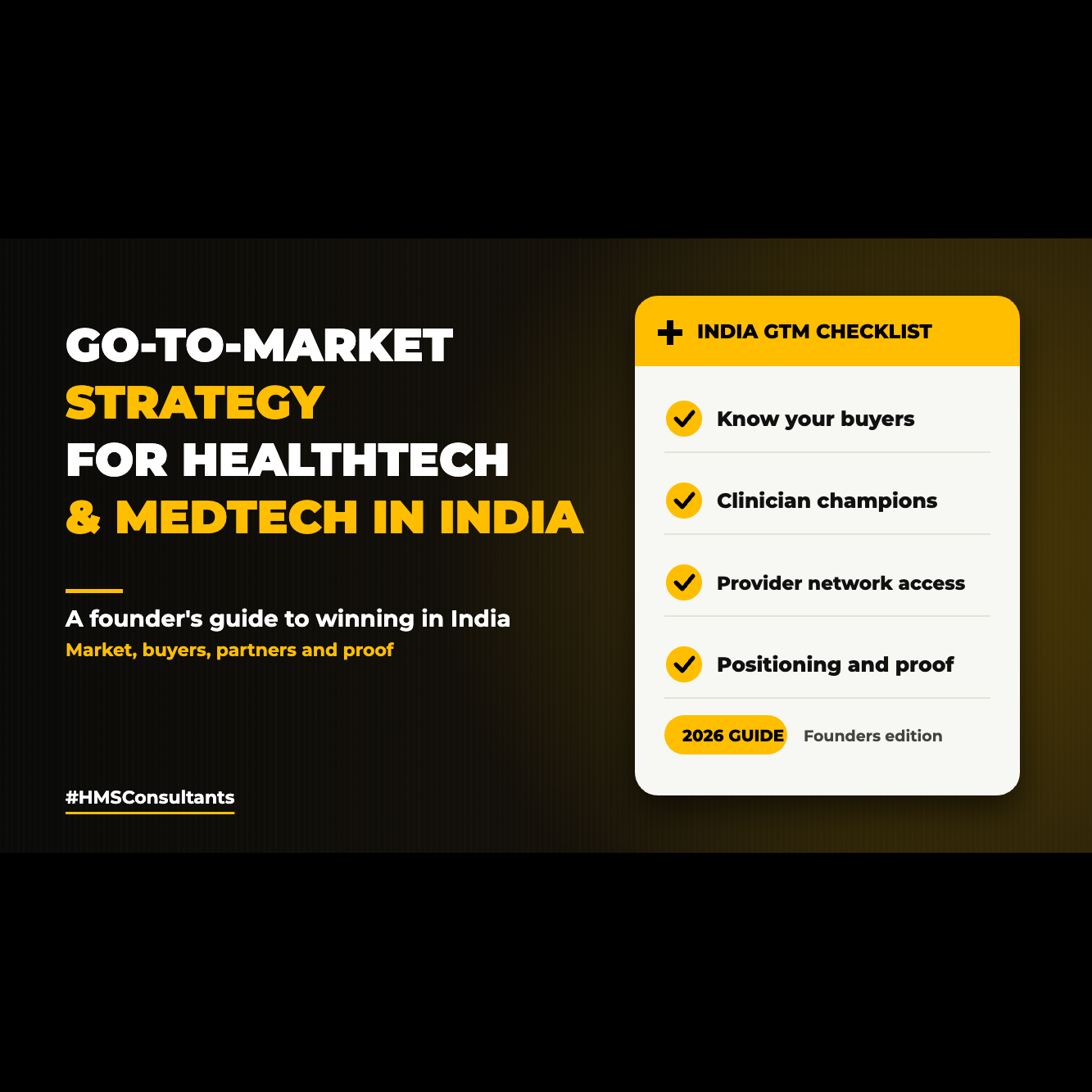
A founder guide to healthtech and medtech go-to-market strategy in India: buyers, clinician champions, pilots, partners and a 90-day plan.
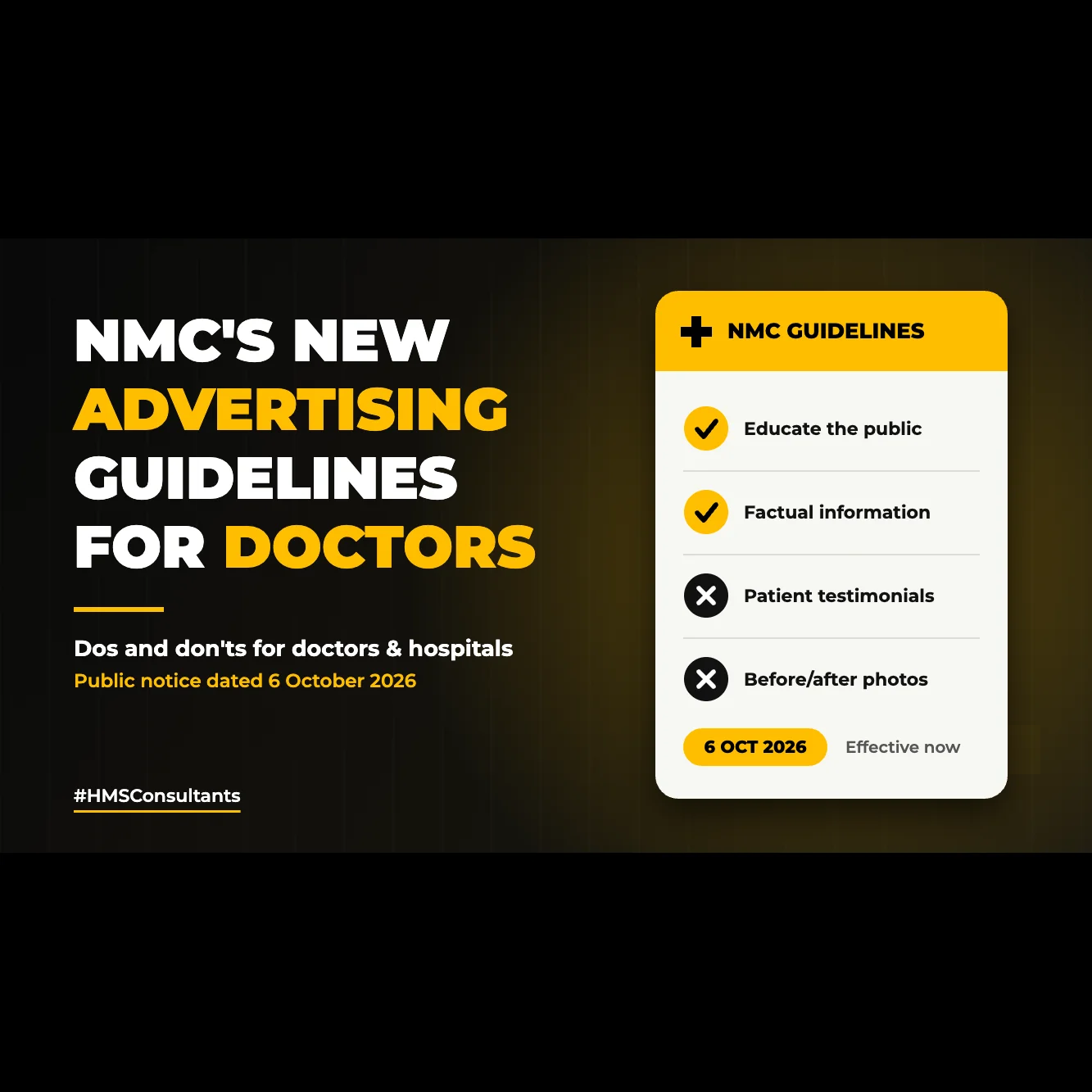
NMC Advertising Guidelines 2026: A Complete Compliance Guide for Doctors and Hospitals Author Akhil Dave Published on October 9, 2026...
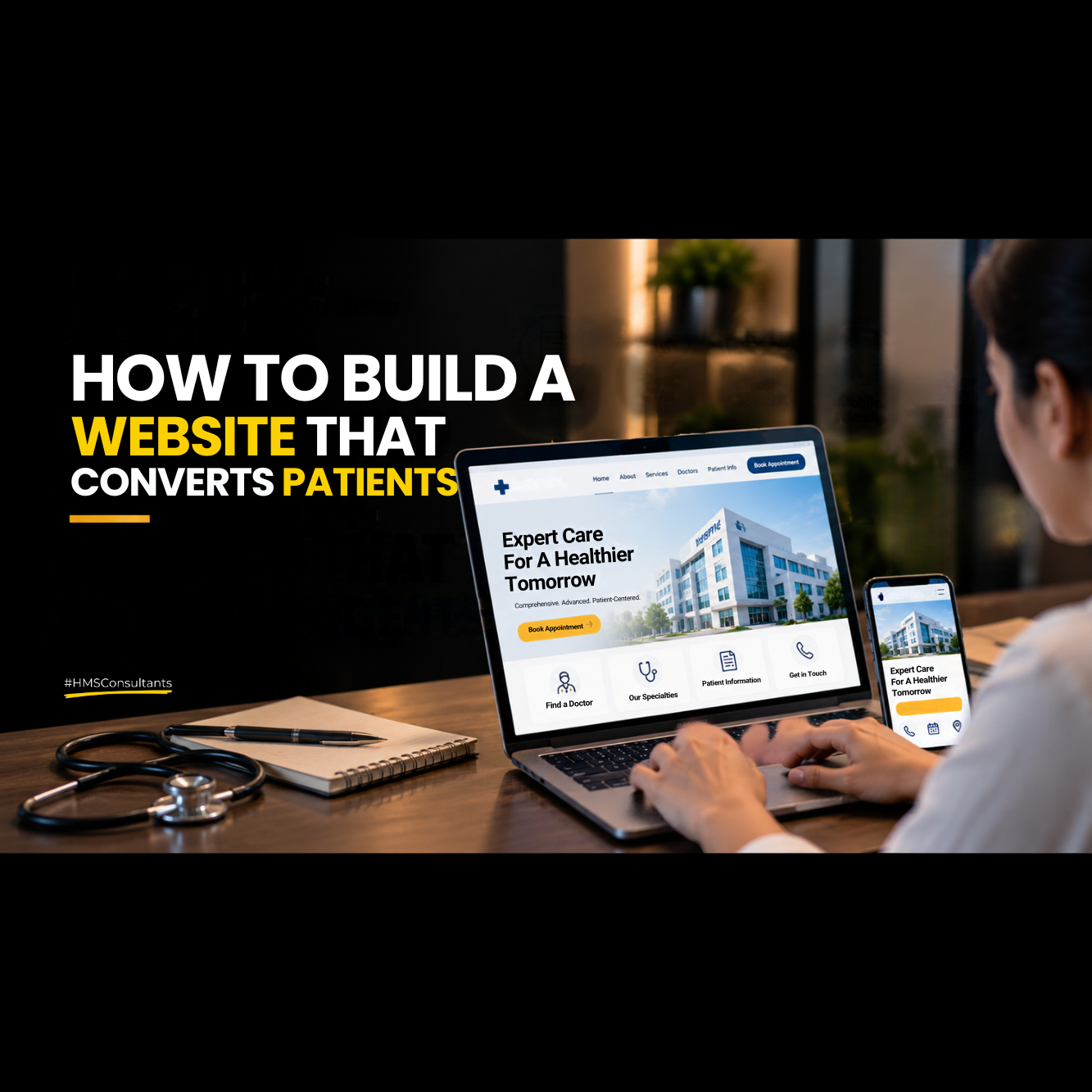
A practical guide to building a hospital website that converts visitors into patient enquiries through clear CTAs, better UX, mobile...
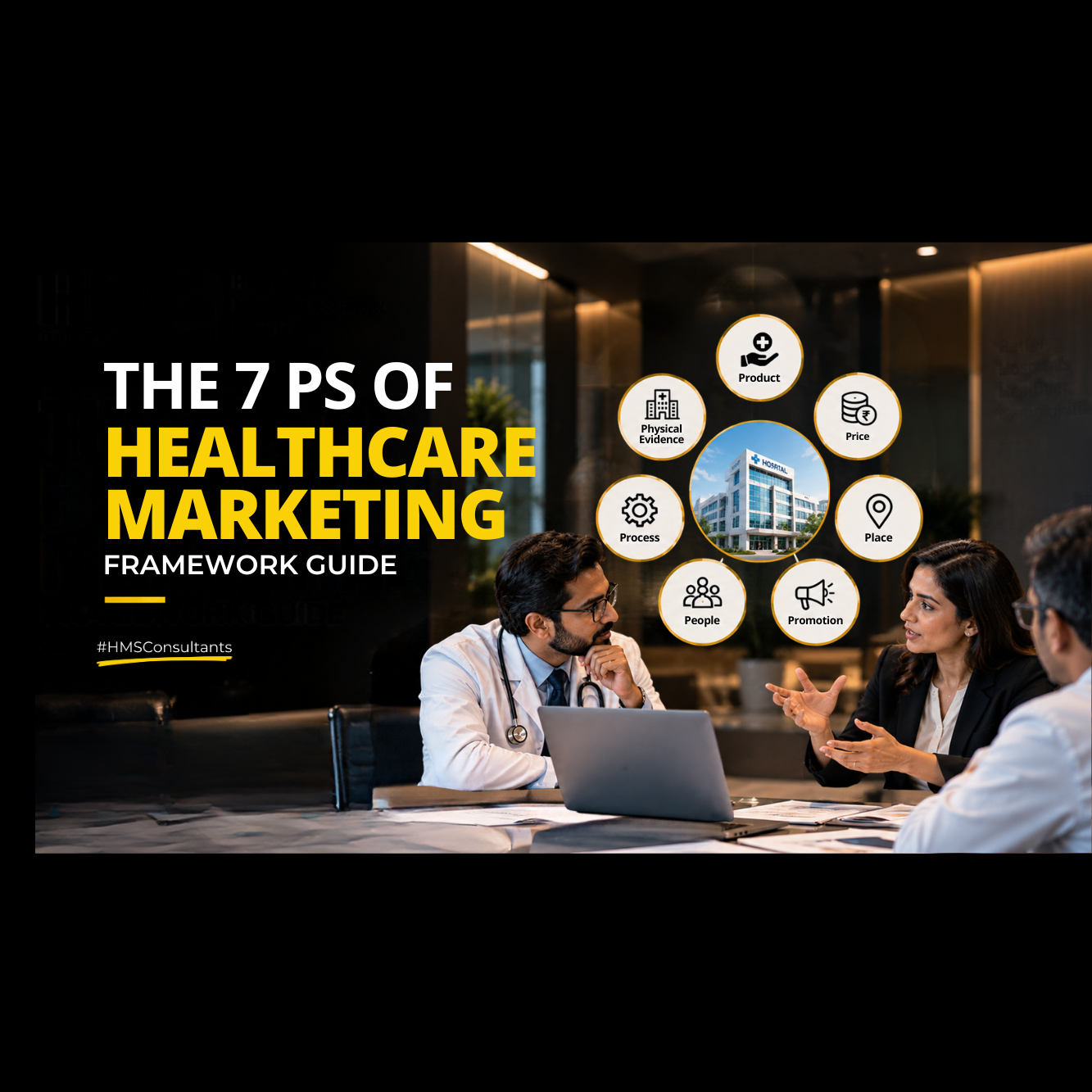
The 7 Ps of healthcare marketing Product, Price, Place, Promotion, People, Process, and Physical Evidence provide a practical framework for...
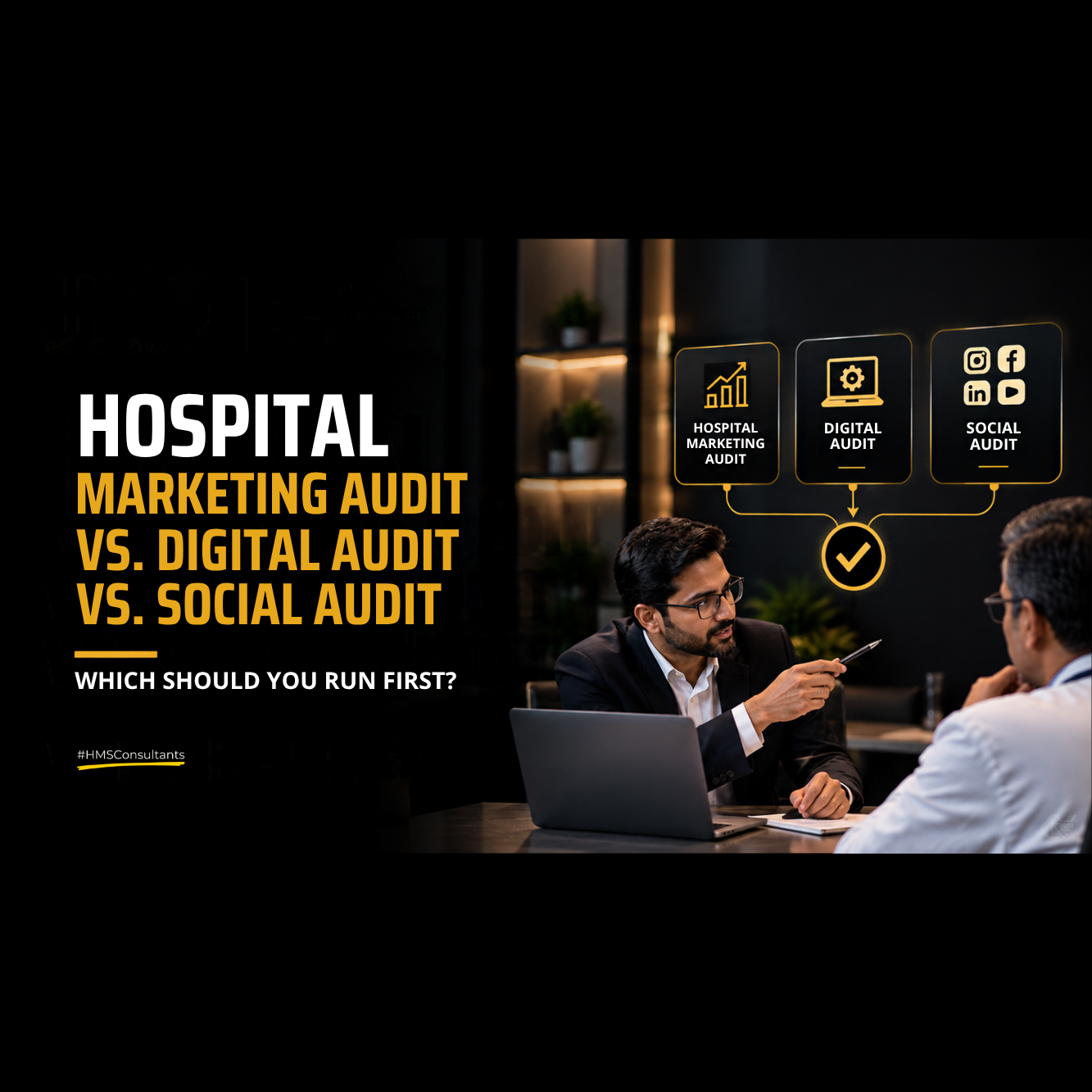
Compare hospital marketing, digital, and social media audits to understand what each audit covers and which one your hospital should...