
Search results for: “patient education”

  • The Rise of WhatsApp in Healthcare Marketing: From Appointment Reminders to Patient Education

    The Rise of WhatsApp in Healthcare Marketing: From Appointment Reminders to Patient Education

    The Rise of WhatsApp in Healthcare Marketing: From Appointment Reminders to Patient Education

    Written by
    Published on
    Share This

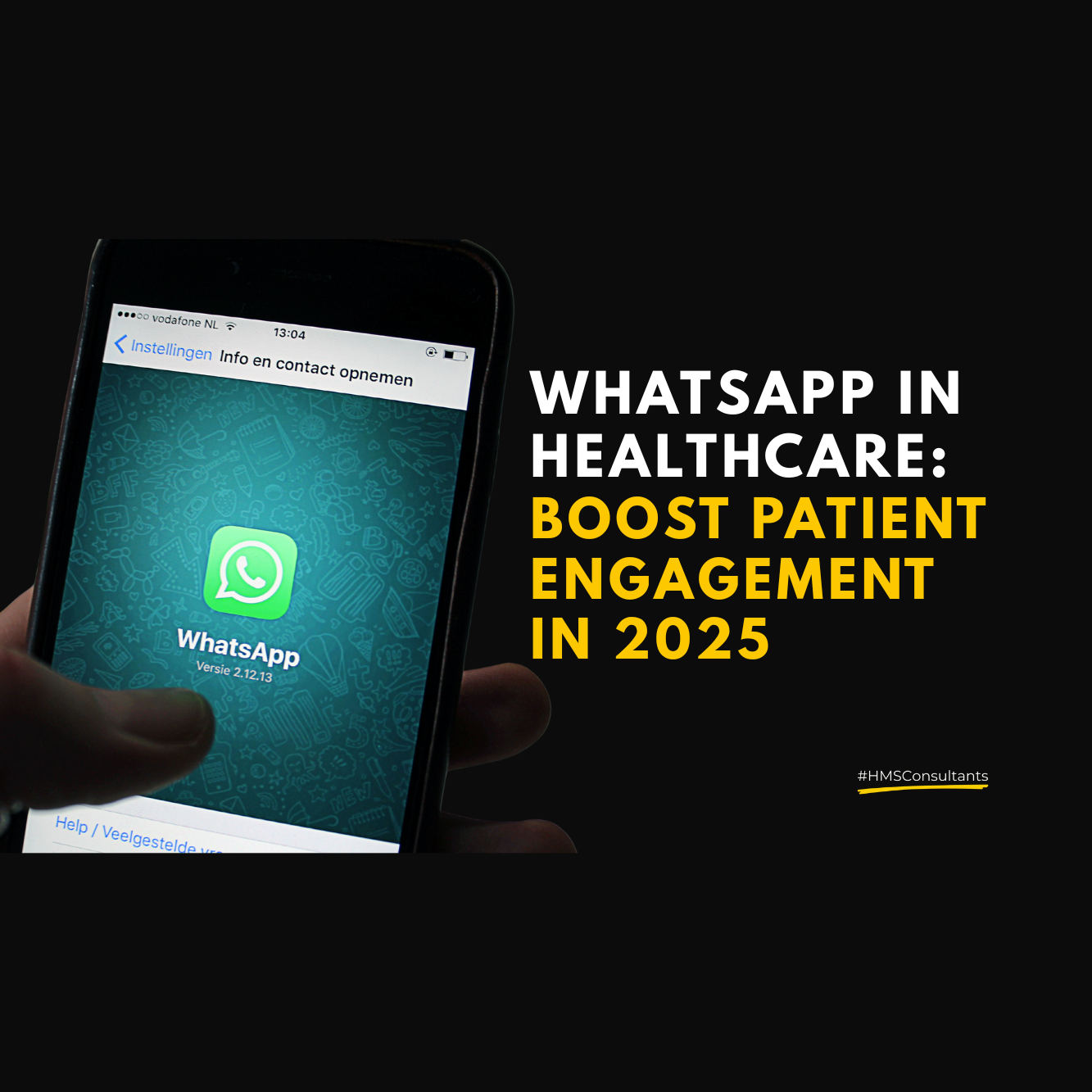
    WhatsApp is no longer just a personal messaging app. In the world of healthcare marketing, it’s quietly becoming a powerhouse. With over 500 million users in India alone, WhatsApp offers hospitals, clinics, and healthcare startups an unparalleled opportunity to connect with patients right where they already are.

    If you’re still relying only on Instagram posts or Facebook ads, you’re missing out on one of the most engaging and cost-effective healthcare marketing channels available today.

    Why WhatsApp is Perfect for Healthcare Marketing

    1. It’s where your patients are.

      Almost every smartphone user in India has WhatsApp. Whether you serve urban professionals or rural families, this is the app they open first in the morning and last at night. If you’re a hospital or clinic, marketing on WhatsApp means meeting your patients where they already spend their time.

    2. It builds direct, personal connections.

      Unlike social media, where algorithms decide what’s seen, WhatsApp creates direct, uninterrupted access to your patients. No guesswork. No ad spend. Just authentic, two-way communication.

    3. It’s cost-effective and scalable.

    WhatsApp marketing for healthcare doesn’t need massive budgets. You can start with automated reminders, broadcast messages, and a well-structured flow without running full-fledged campaigns.

    4. It allows automation, without losing the human touch.

    Using WhatsApp Business API or tools like Interakt, Tellephant, or Yellow.ai, hospitals can create automated yet friendly workflows. Think appointment reminders, payment confirmations, follow-up care advice, prescription refills, and even pre-surgery instructions.

    Real-World Use Cases of WhatsApp in Healthcare

    1. Appointment Booking and Reminders

    Instead of calling, patients can simply message “Book” to initiate a slot booking. Automated flows can remind them 24 hours before the appointment, reducing no-shows.

    2. Patient Education and FAQs

    Create a flow that answers common queries: “What tests are needed for diabetes?”, “Is LASIK safe?”, “What is postpartum care?”, keeping patients informed without needing staff to respond manually.

    3. Discharge Follow-ups and Recall

    Send a message 7 days after discharge to check recovery and recommend next steps. A great way to increase patient retention and loyalty.

    4. Test Results and Prescriptions

    Send encrypted documents or PDFs directly over WhatsApp, with patient consent. It’s faster, easier, and feels more modern.

    5. Event Promotions or Health Camps

    Running a screening camp or health talk? Share registration links and information to targeted patient groups on WhatsApp. Combine with local database outreach.

    Best Practices for WhatsApp Marketing in Healthcare

    • Always get patient consent before sending messages
    • Avoid spamming only send helpful, relevant content
    • Personalize messages using patient name and context
    • Use verified WhatsApp Business accounts to build trust

    Maintain HIPAA and GDPR standards if dealing with sensitive info

    What WhatsApp Marketing Can’t Replace (Yet)

    WhatsApp is powerful, but it’s not your entire strategy. You still need:

    • A strong brand story
    • A lead generation funnel
    • Search engine visibility (Google, GMB, website blogs)
    • A presence on Instagram, YouTube, or LinkedIn depending on your patient base

    WhatsApp is one part of your healthcare marketing mix but when used well, it can be your highest-converting channel.

    Final Thoughts

    WhatsApp marketing in healthcare isn’t just a trend. It’s a transformation.

    Patients expect faster replies, easier bookings, and convenient follow-ups. Clinics and hospitals that use WhatsApp strategically are building deeper trust, reducing staff load, and improving patient experience.

    If you’re serious about scaling your digital presence WhatsApp isn’t optional anymore.

    Written by Tusharika Ranjan

    Doctors Digital Marketing I Healthcare Marketing I Hospital Marketing Strategies I Marketing ideas for clinics I Marketing Trends 2025 I Medical Marketing I Social Media Marketing

    is something we strongly believe in, which means ‘Knowledge without application is the same as having no knowledge at all

    Akhil Dave

    Principle Consultant

    Ready to take your Personal Brand to the next level?

    Share your details below and we will connect with you to discuss your growth strategy.

    • Digital Marketing for Healthcare: Why Every Patient Touchpoint Needs a Different Message

      Digital Marketing for Healthcare: Why Every Patient Touchpoint Needs a Different Message

      Digital Marketing for Healthcare: Why Every Patient Touchpoint Needs a Different Message

      Published on
      Share This

      Digital marketing for healthcare does not work well when the same message is used everywhere. A patient searching on Google, visiting a website, reading reviews, watching a video, seeing an ad, or sending a WhatsApp inquiry is not always in the same mindset.

      Every patient touchpoint has a different purpose.

      The message should change based on where the patient is in the patient journey, what they want to understand, and what action they may take next.

      Why One Message Does Not Work Everywhere

      Many healthcare providers use the same message across all platforms. A caption becomes website content. A website paragraph becomes a WhatsApp reply. A promotional line is repeated in Google posts and ads.

      This weakens healthcare communication because each platform has a different role.

      For example:

      • Google search should answer patient intent.
      • A website should explain the service clearly.
      • Social media should educate and create recall.
      • Ads should focus on one specific action.
      • WhatsApp should guide the patient after enquiry.
      • Reviews should support confidence and reputation.
      • Videos should simplify patient concerns.

      When the same message is used everywhere, the patient may see content but may not receive the right information at the right time.

      Google Needs Search-Based Messaging

      When patients search on Google, they usually have a specific need. They may be looking for a doctor, treatment, symptom, clinic, hospital, location, or appointment details.

      At this stage, the message should be direct and useful. Patients are not looking for broad brand statements. They want quick clarity.

      Google-focused content should answer:

      • What service is available?
      • Which doctor or department handles it?
      • Where is the clinic or hospital located?
      • How can the patient book an appointment?
      • What symptoms or concerns are related?
      • What should the patient know before visiting?

      This is where digital marketing for healthcare needs search-focused content. Service pages, Google Business Profile updates, FAQs, and local SEO content should match what patients are searching for.

      If a patient searches for a specific concern and finds only a general introduction, the message may not help them move forward.

      Website Content Should Explain the Service

      A website is one of the most important patient touchpoints in healthcare digital marketing. Patients visit the website to learn more before deciding.

      Website content should not only say that a service is available. It should explain the service in a patient-friendly way.

      A useful healthcare website page should include:

      • What the service is.
      • Who may need it?
      • When to consult.
      • Which doctor or department handles it.
      • What patients can expect.
      • Basic preparation or next steps.
      • Appointment or enquiry guidance.

      The website message should be more detailed than an ad and more structured than a social media post. It should reduce confusion and help patients move from interest to enquiry.

      Social Media Should Educate First

      Social media is not always the place where patients immediately book appointments. It often works for awareness, education, recall, and patient engagement.

      The message on social media should be simple, useful, and easy to understand. It should help patients learn something, identify a concern, or remember the healthcare provider when needed.

      Social media content can include:

      • Common symptoms.
      • Preventive health tips.
      • Myths and facts.
      • Doctor awareness videos.
      • Service awareness posts.
      • Health day communication.
      • Simple FAQs.
      • Patient guidance content.

      In digital marketing for healthcare, social media should not be used only for promotion. If every post says “Book now” or “Visit us,” patients may lose interest. A better healthcare content strategy educates first and guides next.

      Ads Need One Clear Message

      Healthcare ads should not try to say everything at once. A good ad should focus on one service, one patient concern, or one clear action.

      Patients scrolling through ads do not have time to understand a broad message. The ad should quickly communicate why the service is relevant.

      An effective healthcare ad message should be:

      • Specific to one service.
      • Clear about the patient concern.
      • Simple in language.
      • Supported by a clear call-to-action.
      • Connected to a relevant landing page.
      • Ethical and not fear-based.

      For example, an ad for a preventive health package should not sound like an ad for emergency care. An ad for maternity care should not use the same tone as an ad for diagnostics. Each service has a different emotional and practical need.

      WhatsApp Should Guide After Enquiry

      Many healthcare providers use WhatsApp for patient enquiries, appointment confirmation, reminders, follow-ups, and basic communication. But WhatsApp messaging should not sound like a copied advertisement.

      When a patient sends a WhatsApp enquiry, they usually need guidance. They may want to know doctor timing, availability, location, documents required, consultation process, or follow-up steps.

      WhatsApp communication should be:

      • Clear.
      • Short.
      • Helpful.
      • Professional.
      • Easy to act on.
      • Free from unnecessary promotional language.

      A good WhatsApp message can improve patient engagement because it helps the patient take the next step without confusion.

      Instead of only sending a promotional line, the message should guide the patient with appointment details, doctor timing, location link, and basic instructions.

      Reviews Need Responsible Responses

      Reviews are also an important patient touchpoint. Patients often read them before choosing a doctor, clinic, or hospital. But the way a healthcare provider responds to reviews also matters.

      Review responses should not sound robotic, defensive, or promotional. They should show that the healthcare provider listens, respects feedback, and handles concerns responsibly.

      A good review response should:

      • Thank the patient politely.
      • Acknowledge positive feedback.
      • Respond professionally to concerns.
      • Avoid sharing private medical details.
      • Take serious concerns to a direct communication channel.
      • Maintain a calm and respectful tone.

      In healthcare digital marketing, review communication supports reputation. It also shows future patients how the healthcare provider responds when people share their experiences.

      Video Content Should Simplify One Concern

      Videos are useful because they help patients understand topics that may feel confusing in written form. But healthcare videos should not become too technical or too promotional.

      A good healthcare video should simplify one idea at a time.

      Video content can explain:

      • When to consult a doctor.
      • Common symptoms.
      • Basic treatment process.
      • Preventive care steps.
      • Myths and facts.
      • What happens during consultation.
      • Patient preparation before a test or procedure.

      The message in a video should feel natural and easy to follow. Patients should leave with better understanding, not more confusion.

      Match the Message With the Patient Journey

      The main purpose of digital marketing for healthcare is not to repeat the same content everywhere. It is to match the message with the patient journey.

      A patient may first notice a health concern, then search for information, compare options, check reviews, enquire, book, and later need follow-up communication. Each stage needs a different message.

      Awareness content cannot be the same as inquiry communication. Review response cannot be the same as the ad copy. Website content cannot be the same as a short caption.

      When healthcare communication changes according to the touchpoint, patients receive clearer guidance.

      Conclusion

      Digital marketing for healthcare should not use one message everywhere. Every patient touchpoint has a different role, and each one needs a different communication approach.

      Google should answer search intent. Websites should explain services. Social media should educate. Ads should stay focused. WhatsApp should guide. Reviews should build confidence. Videos should simplify important concerns.

      A strong healthcare marketing strategy understands how patients move from awareness to enquiry and from enquiry to appointment. When the message matches the touchpoint, healthcare communication becomes clearer, more useful, and more patient-focused.

      Better digital marketing does not always mean more content. Sometimes, it means using the right message in the right place.

      Contact Us HMS Consultants

      Healthcare digital marketing is the use of online platforms to communicate with patients at different touch points such as Google, websites, social media, ads, WhatsApp, reviews, and videos. In this blog context, it means using the right message in the right place based on the patient journey.

      Digital Marketing I Digital Marketing For Doctors I Digital Strategy I Doctor Branding I doctor digital marketing I Doctors Digital Marketing I healthcare digital marketing I healthcare Management I Healthcare Marketing I Healthcare Marketing Strategy I online presence

      is something we strongly believe in, which means ‘Knowledge without application is the same as having no knowledge at all

      Akhil Dave

      Principle Consultant

      Ready to take your Personal Brand to the next level?

      Share your details below and we will connect with you to discuss your growth strategy.

      • Doctor Digital Marketing: How Patients Evaluate Doctors Before Booking

        Doctor Digital Marketing: How Patients Evaluate Doctors Before Booking

        Doctor Digital Marketing: How Patients Evaluate Doctors Before Booking

        Published on
        Share This

        Doctor digital marketing is not only about posting health tips, running ads, or getting more followers. For doctors, digital marketing should help patients understand the doctor’s expertise, approach, availability, and credibility before booking an appointment.

        Today, even when patients receive a recommendation, they often search the doctor’s name online, read reviews, check the clinic website, visit social media pages, or look for videos before deciding.

        This means doctor digital marketing should be planned around how patients evaluate a doctor before consultation.

        Patients First Look for the Doctor’s Identity

        Before booking, patients want to know who the doctor is. They look for simple but important details that help them understand the doctor’s professional background.

        This usually includes:

        • Doctor’s full name
        • Qualification
        • Speciality
        • Years of experience
        • Clinic or hospital association
        • Consultation location
        • Available timings
        • Key areas of practice

        If this information is missing, incomplete, or different across platforms, patients may feel unsure. A weak online presence can make even an experienced doctor look less visible or less accessible.

        Digital marketing for doctors should clearly establish the doctor’s identity across Google, website pages, directories, social media, and clinic communication. Patients should not struggle to understand who the doctor is and what type of care they provide.

        Patients Check Whether the Doctor Matches Their Concern

        Patients do not evaluate a doctor only by qualification. They also check whether the doctor is relevant to their specific health concern.

        For example, a patient with knee pain may look for an orthopaedic doctor who handles joint pain, arthritis, sports injuries, or knee replacement. A patient looking for pregnancy care may check whether the gynecologist provides antenatal care, high-risk pregnancy care, delivery support, or fertility guidance.

        This is where online marketing for doctors must move beyond general statements like “experienced doctor” or “quality care.”

        The content should clearly explain:

        • What conditions the doctor treats
        • Which patient concerns are commonly handled
        • What services are available
        • When patients should consult
        • What the patient can expect during the visit
        • Which symptoms should not be ignored

        This does not mean making exaggerated claims. It means helping patients understand whether the doctor is suitable for their concern.

        Patients Read Reviews Before Booking

        Reviews play an important role in a doctor’s digital marketing. Patients often read what others have experienced before deciding to book.

        They may observe:

        • How patients describe the doctor
        • Whether the doctor listens properly
        • Whether staff members are helpful
        • Whether appointment handling is smooth
        • Whether the clinic experience feels organised
        • How the doctor or clinic responds to feedback

        Reviews are not only about star ratings. They are signals of patient trust. A doctor may have strong clinical expertise, but if online reputation is unmanaged, patients may hesitate.

        A doctor marketing strategy should include review monitoring, professional response handling, and learning from repeated patient feedback. Positive reviews can strengthen confidence, while negative reviews should be handled carefully and ethically.

        Patients Notice How the Doctor Communicates Online

        Patients also evaluate how a doctor communicates online. This includes social media posts, videos, website content, captions, blogs, and replies to patient queries.

        A doctor’s communication style can influence patient comfort before consultation.

        Patients may feel more confident when the content is:

        • Simple to understand
        • Educational
        • Responsible
        • Calm in tone
        • Free from fear-based messaging
        • Focused on patient awareness
        • Clear about when to seek consultation

        For doctors, content should not sound like aggressive selling. Healthcare communication should guide, educate, and reassure patients.

        For example, a short video explaining when back pain needs medical attention can be more useful than a generic promotional post. A simple post explaining early signs of diabetes can help patients take timely action. Medical practice marketing becomes stronger when the doctor’s communication helps patients feel informed rather than pressured.

        Patients Compare Information Across Platforms

        A patient may not rely on only one platform. They may check Google, the website, social media, YouTube, healthcare directories, and review platforms before making a decision.

        If the information is different everywhere, it creates confusion. For example, Google may show one clinic timing, the website may show another, and social media may not mention the doctor’s current availability.

        A consistent doctor online presence should include updated details such as:

        • Doctor name and speciality
        • Clinic or hospital location
        • Contact number
        • Consultation timings
        • Services offered
        • Appointment process
        • Website or profile link
        • Patient education content

        Consistency helps patients feel that the doctor’s practice is organised and reliable.

        Patients Evaluate Convenience Before Booking

        Clinical expertise matters, but patients also consider practical details before booking. If they cannot find appointment information, location details, consultation timing, or the contact process, they may delay the decision.

        A doctor in digital marketing should make the next step easy.

        Patients should be able to understand:

        • Where the doctor is available
        • How to book an appointment
        • What timings are available
        • Whether a prior appointment is needed
        • Which number to call
        • What documents or reports to carry
        • Whether follow-up is required

        These details may look basic, but they affect patient inquiries. Many potential patients drop off not because they are uninterested, but because the booking process is unclear.

        Common Mistakes in Doctor Digital Marketing

        Many doctors or clinics make digital marketing less effective by focusing only on activity instead of patient evaluation.

        Common mistakes include:

        • Posting only festival creatives
        • Running ads without clear service pages
        • Using generic captions
        • Not updating Google Business Profile
        • Ignoring reviews
        • Not explaining services properly
        • Having incomplete doctor profiles
        • Making content too technical for patients
        • Not showing clear appointment steps

        These mistakes can reduce patient confidence. A doctor may be highly skilled, but if the digital presence is unclear, patients may not understand the doctor’s value.

        Doctor digital marketing should be structured, consistent, and patient-focused.

        Conclusion

        Doctor digital marketing is not just about visibility. It is about helping patients evaluate the doctor before booking.

        Patients look for identity, expertise, relevance, reviews, communication style, convenience, and trust signals. They want to know whether the doctor is suitable for their concern and whether the consultation process feels clear and reliable.

        A strong doctor marketing strategy should focus on patient questions before focusing on platforms. It should explain the doctor’s expertise, make information easy to find, manage the doctor’s reputation responsibly, and guide patients to book without pressure.

        For doctors, digital presence is often the first point at which patients begin to build trust. The clearer the doctor’s online presence, the easier it becomes for patients to understand, trust, and choose the right care.,

        Contact Us HMS Consultants

        Yes, a doctor can do digital marketing ethically and informatively. A doctor’s digital marketing should focus on patient education, clear service information, an updated online presence, reviews, appointment guidance, and helping patients understand the doctor’s expertise before booking.

        Digital Strategy I Business I Digital Marketing I doctor digital marketing I healthcare digital marketing I healthcare Management I Healthcare Marketing I Healthcare Marketing Strategy I hospital marketing I Hospital Marketing Strategies I online presence

        is something we strongly believe in, which means ‘Knowledge without application is the same as having no knowledge at all

        Akhil Dave

        Principle Consultant

        Ready to take your Personal Brand to the next level?

        Share your details below and we will connect with you to discuss your growth strategy.

        • Hospital Public Relations: The Silent Gaps That Affect Patient Trust

          Hospital Public Relations: The Silent Gaps That Affect Patient Trust

          Hospital Public Relations: The Silent Gaps That Affect Patient Trust

          Published on
          Share This

          Hospital public relations is often noticed only when something goes wrong. A negative review, a patient complaint, a media issue, or a communication mistake suddenly brings attention to reputation. But hospital public relations does not begin during a crisis. It begins much earlier through everyday patient communication, staff behaviour, online reviews, community presence, and the way the hospital responds to people.

          Many hospitals think PR means press releases, media coverage, or public events. These are part of it, but they are not the full picture. In healthcare, public relations is closely connected with patient trust.

          This means healthcare marketing cannot depend only on random posts, occasional ads, or basic promotion.

          A hospital may have experienced doctors, good facilities, and strong services, but if patients feel confused, unheard, or unsure, trust can slowly weaken. These are silent gaps. They may not look serious at first, but over time they affect hospital reputation and patient confidence.

          Why Silent PR Gaps Matter

          Patients and families do not choose a hospital casually. They search online, read reviews, ask others, check the website, call the hospital, and observe how clearly the hospital communicates.

          A patient may not understand every clinical detail, but they can sense whether the hospital feels organised, responsive, and trustworthy. That is why hospital public relations should not be treated only as publicity. It should be seen as a trust-building system.

          A hospital’s image is shaped by small experiences such as:

          • How quickly calls are answered
          • How clearly staff explain services
          • How reviews are handled
          • How complaints are acknowledged
          • How the website explains important information
          • How patients are guided before and after consultation
          • How the hospital responds during confusion or crisis

          When these areas are ignored, PR becomes reactive. The hospital starts responding only after trust is already affected.

          Gap 1: Unclear Patient Communication

          One of the biggest gaps in hospital public relations is unclear communication. Many hospitals promote their services, but they do not always explain them in a way patients can understand.

          Patients often want simple answers:

          • Which department should I visit?
          • Which doctor handles this condition?
          • How do I book an appointment?
          • What should I expect during consultation?
          • What happens after the visit?
          • Whom should I contact for help?

          If this information is missing or confusing, the patient may delay the decision or choose another hospital. Good hospital PR is not only about speaking to the public. It is about speaking clearly and responsibly.

          Gap 2: Ignoring Patient Feedback

          Patient feedback is one of the strongest signals of reputation. But many hospitals treat feedback only as a complaint, instead of seeing it as an opportunity to improve.

          A delayed response, unclear billing explanation, rude staff interaction, long waiting time, or poor follow-up may seem like a small operational issue. But when these experiences repeat, they become reputation issues.

          Patients may share their experience through:

          • Google reviews
          • Social media comments
          • WhatsApp groups
          • Family discussions
          • Local word-of-mouth
          • Direct complaints

          Hospitals should regularly review feedback and understand what patients are saying. If the same issue appears again and again, it should not be ignored. Reputation management is not only about replying to reviews. It is also about learning from them.

          Gap 3: Inconsistent Staff Messaging

          A hospital may have one brand message, but patients experience the hospital through different people. The front desk may say one thing, the call team may say another, and the department may explain something differently.

          This creates confusion.

          In healthcare, confusion directly affects trust. Patients want to feel that the hospital team is informed, aligned, and confident. If staff members give different answers about appointments, reports, doctor availability, services, or follow-up, the hospital may appear disorganised.

          Hospitals should train patient-facing teams on:

          • Basic service information
          • Appointment guidance
          • Enquiry handling
          • Complaint escalation
          • Patient-friendly language
          • Follow-up communication
          • Sensitive conversations

          Public relations is not handled only by management or marketing teams. Every staff member who speaks to a patient contributes to the hospital’s image.

          Gap 4: Poor Online Reputation Response

          Patients often check reviews before choosing a hospital. A few unmanaged reviews can influence whether someone decides to call, visit, or avoid the hospital.

          Many hospitals either ignore reviews or respond in a very generic way. Some responses sound defensive, while others do not address the concern at all. This can make patients feel that the hospital does not listen.

          A better online reputation response should include:

          • Thanking patients for positive feedback
          • Acknowledging concerns politely
          • Avoiding arguments online
          • Not sharing patient-sensitive details publicly
          • Taking serious concerns offline
          • Tracking repeated complaints
          • Improving internal processes based on feedback

          Online reputation is now a major part of hospital public relations. It cannot be treated as an optional activity.

          Gap 5: Weak Community Presence

          Hospitals are not just treatment centres. They are part of the communities they serve. A hospital may be known for its services, but if it is not visible as a responsible healthcare voice, it may miss an important trust-building opportunity.

          Community presence can include:

          • Health awareness programs
          • Preventive care campaigns
          • Patient education sessions
          • Local health talks
          • School or corporate health awareness
          • Public health messages
          • Community outreach activities

          This does not mean every hospital needs big events. It means the hospital should be seen as active, helpful, and connected to local health needs. A strong community presence builds trust before patients need treatment.

          Gap 6: No Crisis Communication Readiness

          Hospitals often think about crisis communication only after a problem happens. This can create confusion, delay, and inconsistent responses.

          A crisis may come from a patient complaint, social media issue, negative media attention, misinformation, service disruption, or internal communication failure. If the hospital does not know who should respond and what should be communicated, the situation can become worse.

          Hospitals should prepare answers to questions like:

          • Who will respond during a crisis?
          • What information can be shared?
          • How will patient privacy be protected?
          • How will staff be informed?
          • How will online comments be handled?
          • How will leadership communicate?

          Crisis communication should be planned before it is needed. A prepared hospital appears responsible and controlled. An unprepared hospital may appear silent, defensive, or confused.

          Gap 7: Marketing Claims Not Matching Patient Experience

          A hospital may promote care, trust, advanced facilities, and patient-first service. But if the actual patient experience does not match that promise, reputation suffers.

          Patients remember what they experience more than what they see in advertisements.

          If the hospital promotes smooth appointments but patients face confusion, there is a gap. If the hospital talks about compassionate care but staff communication feels cold, there is a gap. If the hospital promises patient support but follows up weakly, trust is affected.

          Hospital public relations must connect marketing promises with real patient experience. The message outside the hospital should match what patients feel inside the hospital.

          Conclusion

          Hospital public relations should not begin after reputation damage. It should be part of everyday hospital communication.

          The silent gaps in hospital PR often appear in small places: unclear information, ignored feedback, weak review response, inconsistent staff messaging, poor crisis readiness, and marketing promises that do not match patient experience.

          These gaps may not create immediate damage, but they slowly affect how patients see the hospital.

          Hospitals that want long-term growth need more than promotion. They need communication systems that support clarity, credibility, patient confidence, and trust. A strong hospital public relations strategy helps hospitals protect their reputation before damage happens and build trust before patients walk in.

          Contact Us HMS Consultants

          PR in a hospital means public relations. It is how a hospital communicates with patients, staff, community, media, and the public to build trust, manage reputation, handle feedback, and respond responsibly during sensitive situations.

          Healthcare Marketing I Digital Strategy I healthcare Management I Hospital Branding I Hospital Marketing Strategy I public relations

          is something we strongly believe in, which means ‘Knowledge without application is the same as having no knowledge at all

          Akhil Dave

          Principle Consultant

          Ready to take your Personal Brand to the next level?

          Share your details below and we will connect with you to discuss your growth strategy.

          • Healthcare Marketing Social Media: Why Posting Alone Does Not Build Patient Trust

            Healthcare Marketing Social Media: Why Posting Alone Does Not Build Patient Trust

            Healthcare Marketing Social Media: Why Posting Alone Does Not Build Patient Trust

            Published on
            Share This

            Healthcare marketing social media has become an important part of marketing for doctors, clinics, hospitals, diagnostic centres, wellness businesses, and healthcare startups. Today, almost every healthcare business wants to be visible on Instagram, Facebook, LinkedIn, YouTube, or other digital platforms.

            But visibility alone does not build patient trust.

            Many healthcare businesses post regularly on social media, but still struggle to create meaningful patient connection. They share festival creatives, doctor photos, treatment posters, awareness day posts, offers, or generic health tips. These posts may keep the page active, but they may not always help patients make better decisions.

            In healthcare, social media should not only be about posting.

            It should be about educating, reassuring, guiding, and building trust.

            Why Social Media Matters in Healthcare

            Patients today often search online before choosing a doctor, clinic, hospital, or treatment provider. They may check Google reviews, websites, doctor profiles, social media pages, videos, and patient education content before booking an appointment.

            This means social media can influence how patients see a healthcare brand.

            A strong social media presence can help healthcare businesses:

            • Explain services clearly
            • Answer common patient doubts
            • Build doctor credibility
            • Share patient education
            • Improve brand recall
            • Support healthcare digital marketing
            • Build trust before consultation
            • Communicate with patients responsibly

            But this only works when social media is planned with purpose.

            Random posting is not enough.

            The Problem With Posting Without Strategy

            Many doctors and hospitals believe that if they post regularly, their marketing is being handled. But regular posting does not always mean effective healthcare social media marketing.

            A page may be active but still not useful for patients.

            This usually happens when content is:

            • Too promotional
            • Too generic
            • Repetitive
            • Difficult to understand
            • Not connected to patient concerns
            • Not service-focused
            • Not trust-building
            • Not aligned with the patient journey

            For example, a clinic may post about a treatment, but the post may not explain who needs it, when to consult, what symptoms to notice, or what doubts patients usually have.

            A hospital may post about a department, but may not explain why the service is important, what patients should expect, or how the hospital supports care.

            This is why healthcare content strategy matters.

            Patients Need Clarity Before Promotion

            Healthcare decisions are emotional and sensitive. Patients are often worried, confused, or unsure. They may not understand medical terms, treatment options, risks, recovery, cost, safety, or when they should seek help.

            Because of this, healthcare social media should focus on clarity before promotion.

            Good healthcare content should answer questions such as:

            • What problem does this service solve?
            • What symptoms should patients not ignore?
            • When should someone visit a doctor?
            • What can patients expect during consultation?
            • What myths should be corrected?
            • What treatment doubts are common?
            • How can patients make informed decisions?

            When content answers real patient questions, it becomes useful.

            Useful content builds trust.

            Trust Is the Real Goal of Healthcare Social Media

            In regular marketing, attention can be enough to create interest. But in healthcare, attention is not enough. A patient needs confidence before taking action.

            Patient trust is built through:

            • Simple language
            • Responsible communication
            • Consistent education
            • Clear service explanation
            • Doctor credibility
            • Patient-friendly content
            • Ethical claims
            • Helpful videos
            • Realistic information
            • Strong digital presence

            This is why healthcare marketing social media should be handled carefully. A healthcare page should not sound like hard selling. It should sound informed, responsible, and helpful.

            The goal is not only to get likes or views.

            The goal is to help patients trust the healthcare provider.

            What Good Healthcare Social Media Should Include

            A strong healthcare social media plan should include different types of content, not only promotional posts.

            Useful content categories can include:

            • Patient education posts
            • Myth vs fact content
            • Symptoms awareness
            • Doctor explanation videos
            • Treatment journey content
            • Service explanation posts
            • Preventive healthcare tips
            • Patient FAQ content
            • Trust-building posts
            • Review and reputation content
            • Behind-the-scenes care content
            • Ethical awareness campaigns

            This type of content helps patients understand the healthcare provider better.

            It also supports hospital marketing and clinic marketing by building long-term credibility.

            Why Healthcare Social Media Needs Strategy

            Healthcare social media should be connected to a larger healthcare marketing strategy. It should not be managed as a separate activity.

            Before creating content, healthcare businesses should ask:

            • Which services need visibility?
            • Who is the target patient group?
            • What doubts do patients have?
            • What information is missing online?
            • What content builds doctor credibility?
            • What content supports enquiries?
            • What content should be avoided ethically?
            • How will social media support the website, SEO, Google profile, and patient enquiries?

            This is where a healthcare marketing consultant can add value.

            A consultant can help doctors, clinics, and hospitals understand what kind of content is needed and why.

            Role of a Healthcare Marketing Consultant

            A healthcare marketing consultant does not only suggest posts. The consultant studies the healthcare business, patient journey, digital presence, service positioning, and communication gaps.

            For social media, a consultant can help with:

            • Content direction
            • Patient education planning
            • Service-based content strategy
            • Doctor credibility building
            • Ethical communication
            • Campaign planning
            • Social media audit
            • Patient trust-building
            • Integration with healthcare digital marketing
            • Enquiry-focused content planning

            This helps healthcare businesses move from random posting to meaningful communication.

            How HMS Supports This Direction

            Many professionals know how to create content or manage social media pages, but healthcare social media requires a deeper understanding of patient behaviour, trust, ethics, and healthcare communication.

            The HMS Certified Healthcare Marketing Consultant Program helps serious professionals understand this specialised side of healthcare marketing.

            Participants learn how to review digital presence, understand patient communication gaps, plan healthcare content direction, study service positioning, and think from a consulting perspective.

            The program is designed for professionals who want to move beyond basic posting and understand how healthcare marketing can support trust, visibility, and business growth responsibly.

            HMS provides structured learning, tools, frameworks, and guidance. Growth depends on how participants learn, apply, communicate, and build their consulting practice over time.

            Conclusion

            Healthcare marketing social media should not be limited to regular posting. In healthcare, content must educate, guide, reassure, and build trust.

            Doctors, clinics, hospitals, and healthcare businesses need social media that speaks to patient concerns, explains services clearly, and supports ethical communication.

            Posting creates activity.

            Strategy creates direction.

            Trust creates patient confidence.

            For professionals who want to grow in healthcare marketing, understanding social media as a trust-building tool is an important skill. The future of healthcare social media will belong to those who can combine content, strategy, ethics, and patient understanding.

            Contact Us HMS Consultants

            Healthcare marketing social media means using platforms like Instagram, Facebook, LinkedIn, and YouTube to educate patients, explain services, build trust, improve visibility, and support ethical healthcare communication.

            Healthcare Marketing I Business I Digital Marketing I Digital Strategy I Doctors Digital Marketing I healthcare careers I Healthcare Consulting I healthcare digital marketing I healthcare Management I Hospital Marketing Strategy I Social Media Marketing

            is something we strongly believe in, which means ‘Knowledge without application is the same as having no knowledge at all

            Akhil Dave

            Principle Consultant

            Ready to take your Personal Brand to the next level?

            Share your details below and we will connect with you to discuss your growth strategy.

            • Doctor Branding Is Not the Same as Your Reputation, and the Difference Is Costing You Patients

              Doctor Branding Is Not the Same as Your Reputation, and the Difference Is Costing You Patients

              Doctor Branding Is Not the Same as Your Reputation, and the Difference Is Costing You Patients

              Written by
              Published on
              Share This

              Doctor branding is one of the most misunderstood concepts in healthcare today not because doctors are unfamiliar with it, but because most doctors believe their reputation already covers it. It does not. A doctor can spend twenty years building an outstanding reputation earning patient trust, gaining peer respect, receiving consistent referrals from word of mouth and still be completely invisible to every patient who has not already heard of them. That invisibility is not a reputation problem. It is a branding problem. And in 2026, the cost of that invisibility is measured in patients who searched, found nothing convincing, and chose someone else.

              The distinction between reputation and doctor branding is not a matter of semantics. It is a practical gap that determines whether a doctor grows consistently or stays dependent on a referral chain that is narrower than it appears.

              Reputation and Doctor Branding Are Not the Same System

              Reputation is built through experience.

              Every patient treated well, every difficult case handled with clarity, every recovery supported with genuine care these accumulate over time into a professional standing that peers and patients recognise and trust. But reputation lives in the memory of people who have already encountered the doctor. It travels through conversations, a colleague’s recommendation, a family member’s advice, a general practitioner’s referral.

              Doctor branding works differently. It exists in the spaces where patients who have never met the doctor are forming their very first impression:

              • Search results and Google listings.
              • Review platforms and specialist directories.
              • AI-generated recommendations.
              • Educational content and digital profiles.
              • Speciality-specific pages and condition-based searches.

              One system works backwards from experience. The other works forwards from discovery. A doctor who only has one without the other has an incomplete patient acquisition structure regardless of how strong either element is individually.

              Why Reputation Alone No Longer Completes the Journey

              For most of medical practice history in India, reputation was sufficient. Patients found doctors through trusted human networks, family physicians, colleagues, relatives who had been treated. The decision chain was entirely relationship-based.

              That chain still operates. But it now has a step that did not exist a decade ago.

              Even a patient who receives a strong referral now almost always performs a digital verification before making the call. They search for the doctor’s name. They look for reviews. They check whether there is any content that helps them understand who this doctor is and how they approach care.

              This is where doctor branding either supports or undermines the referral.

              When a referred patient searches and finds:

              • A well-structured Google profile.
              • Genuine patient reviews.
              • Educational content that answers their specific concern.
              • A clear specialty presence.

              The referral converts. The trust transferred by the referring person is reinforced by what the patient finds digitally.

              But when a referred patient searches and finds an incomplete listing, no reviews, outdated information, or simply nothing of substance the trust weakens. The patient hesitates. In many cases they search again this time for the specialty rather than the name and find another doctor whose digital presence answers their question more confidently.

              The referring doctor never finds out. The patient is simply gone.

              What Strong Reputation Looks Like vs What Strong Doctor Branding Looks Like

              A doctor with a strong reputation typically has:

              • Years of clinical experience in their specialty.
              • Consistent patient outcomes and recovery records.
              • Peer recognition within their medical community.
              • A steady referral network built over time.
              • Patients who return and recommend others through word-of-mouth.

              A doctor with strong doctor branding typically has:

              • A complete and actively managed Google Business Profile.
              • Specialty-specific content appearing when patients search their condition.
              • A consistent review presence across Google, Practo, and relevant platforms.
              • Educational content – blogs, videos, or posts answering real patient questions.
              • A digital profile that AI tools like Google AI Overview and ChatGPT can read and recommend.
              • A visible online identity that exists independently of the institution they work at.

              Neither list is more important than the other. A doctor with strong branding but no clinical reputation will not retain patients. A doctor with a strong reputation but no doctor branding will not reach patients who are searching.

              The gap between the two is where growth either happens or stalls.

              The Moment the Gap Costs a Doctor Patients

              There is a specific moment in the patient decision journey where weak doctor branding quietly creates a loss that most doctors never trace back to its source.

              A patient is told by their family physician – You should see Dr. XYZ for this. Excellent surgeon, very experienced.”

              The patient goes home. Before calling, they search for the name. The search returns a basic listing. A few directory entries. No reviews worth reading. No content. No speciality page. Nothing that answers the question forming in the patient’s mind: “Can I trust this doctor with my specific problem?”

              The patient does not call. They search instead for the condition “best orthopaedic surgeon for knee replacement in Ahmedabad” and find a doctor whose digital presence answers exactly that question:

              • A dedicated knee replacement page.
              • Videos explaining the procedure.
              • Forty-plus Google reviews with strong ratings.
              • A clear, professional and credible profile.

              The referral is lost. The reputation did not fail. The doctor branding was not there to support it.

              This happens silently, repeatedly, and without any visible signal to the doctor that it is occurring. The phone just rings slightly less than it should.

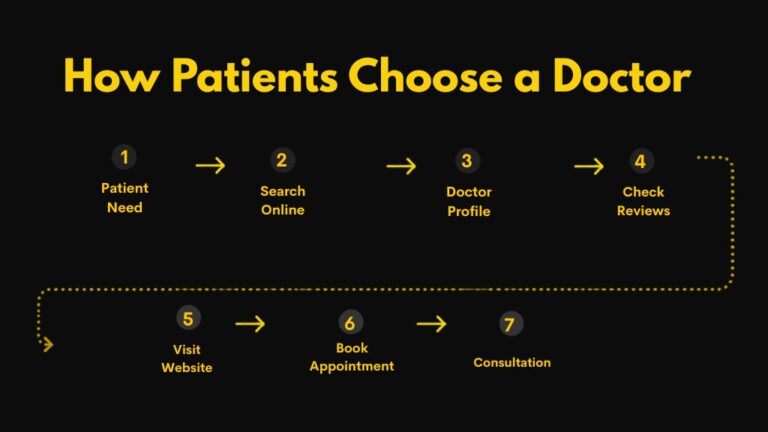
              Patient journey showing how patients choose a doctor through online search, doctor profile, reviews, website visit, appointment booking, and consultation

              What Building Doctor Branding Actually Looks Like

              Doctor branding is not about becoming a content creator or posting daily. It is about building specific digital structures that ensure the right patient finds the right doctor at the right moment.

              In practice this means:

              Owning the name search – When a patient searches the doctor’s name, the result should be clear, complete, and confidence-building. Google Business Profile, hospital profile pages, and specialty directories should present consistent, accurate, and current information.

              Building speciality-specific presence – Content that speaks directly to the condition a patient is searching for not a general list of services. A patient searching for a laparoscopic surgeon should land on content specifically about that procedure and that doctor’s approach to it.

              Review architecture – Not just having reviews but having a system that generates them consistently and responds to them professionally. Reviews are the closest digital equivalent to word-of-mouth and the most trusted signal a new patient encounters.

              Content that answers before the consultation – Educational content addressing questions patients are already asking online. Not promotional. Not credential-listing. Patient-relevant answers to real healthcare concerns that position the doctor as a credible and accessible source of guidance.

              AI discoverability – In 2026, patients ask AI tools which doctor to see. A doctor whose digital presence is structured, specific, and content-rich will appear in those responses. A doctor with a thin or generic online presence will not regardless of clinical standing.

              Conclusion

              A doctor’s reputation is the foundation of long-term patient trust. Doctor branding is the system that makes that reputation visible to patients who have not found the doctor yet.

              In 2026, a doctor with a strong reputation and weak branding is a well-kept secret. Patients who already know them trust them completely. Patients who are searching will simply not find them.

              The doctors growing consistently are not always the most experienced. They are the ones whose reputation and doctor branding work together so that every referred patient finds confirmation when they search, and every searching patient finds a reason to trust before they call.

              Reputation earns the appointment. Doctor branding earns the first search.

              Contact Us HMS Consultants

              Building a brand as a doctor starts with owning your name on Google, creating specialty-specific digital content, building a consistent review presence, and publishing educational material that answers real patient questions all working together to build patient trust before the first consultation.

              Doctor Branding I Healthcare Marketing

              is something we strongly believe in, which means ‘Knowledge without application is the same as having no knowledge at all

              Akhil Dave

              Principle Consultant

              Ready to take your Personal Brand to the next level?

              Share your details below and we will connect with you to discuss your growth strategy.

              • Why “Best Hospital Near Me” Is Decided Before a Patient Visits And What Most Doctors Miss

                Why “Best Hospital Near Me” Is Decided Before a Patient Visits And What Most Doctors Miss

                Why “Best Hospital Near Me” Is Decided Before a Patient Visits And What Most Doctors Miss

                Written by
                Published on
                Share This

                “Best hospital near me.”

                If this search is happening in your city, patients are already choosing. The uncomfortable reality is this: they may be choosing without ever evaluating your clinical outcomes, infrastructure, or experience.

                Most doctors believe patients decide after consultation. Today, that decision often happens before the first phone call.

                This is not a marketing trend. It is a behavioural shift.

                Below, we frame the real questions doctors silently ask the same questions they type into Google and the structured answers HMS provides.

                Why are patients not choosing my hospital?

                This is usually the first concern.

                You may have strong clinical outcomes, advanced equipment, and years of experience. Yet when someone searches “best hospital near me” or “best clinic near me,” your name is not part of the visible shortlist.

                The issue is rarely treatment quality.

                The issue is pre-visit perception.

                Patients do not evaluate medical competence first. They evaluate visibility, familiarity, and reassurance. If your hospital does not consistently appear where patients search, compare, and validate, you are absent from the decision stage.

                At HMS, we do not begin with advertising. We begin with understanding how patients are forming that shortlist and where your hospital is missing in that early decision ecosystem.

                Why are other hospitals always visible?

                Doctors frequently observe competitors appearing repeatedly in searches, map listings, and reviews. The assumption is usually that they are spending aggressively on ads.

                Sustained visibility, however, is rarely accidental and rarely ad-driven alone.

                Hospitals that dominate searches like “best hospital near me” typically have structural clarity. Their positioning is defined. Their communication is aligned. Their patient-facing presence is consistent. Visibility becomes the outcome of coherence.

                HMS does not treat visibility as a tactic. We treat it as a system. Before suggesting any marketing activity, we assess whether the hospital’s internal clarity, patient journey, and communication architecture are aligned enough to support sustainable visibility.

                How do patients choose a doctor today?

                Patients choose through familiarity, not technical comparison.

                • They see repeated names.
                • They read reviews.
                • They observe tone.
                • They evaluate consistency.

                They form impressions long before stepping into OPD.

                When someone types “best hospital near me,” they are seeking emotional assurance more than medical differentiation. They want to feel safe.

                HMS approaches this through decision mapping. We study how patients in your geography search, compare, and validate choices. Instead of pushing promotional tactics, we design clarity into how your hospital is encountered during those moments.

                Why is my OPD inconsistent?

                Inconsistent OPD is often attributed to seasonal variation, competition, or economic factors. While those influence flow, many inconsistencies originate from fragmented visibility and unclear patient positioning.

                If patients encounter mixed signals unclear services, inconsistent communication, weak digital footprint they hesitate.

                HMS addresses this by diagnosing the gap between clinical strength and perceived credibility. We do not start with campaigns. We start with structural diagnosis: what is unclear, what is inconsistent, and what prevents patients from confidently selecting your hospital during their search phase.

                Does marketing mean ads?

                For many doctors, marketing immediately translates to advertising. This assumption creates resistance.

                Marketing, in a healthcare context, should not begin with ads. It should begin with clarity: who you serve, how you are positioned, and how patients experience you before and after consultation.

                HMS stands firmly against random promotional execution. We operate as a strategy consultancy. Our role is to bring clarity to leadership, define patient journey structure, and align internal systems before any outward communication is considered.

                Ads amplify structure. They cannot replace it.

                Is marketing allowed for doctors?

                This question often halts progress entirely.

                Doctors worry about ethical boundaries, reputation damage, and compliance risks. These concerns are valid.

                Ethical healthcare marketing is not about exaggerated claims or promotional gimmicks. It is about transparent communication, structured visibility, and patient education.

                HMS works within regulatory sensitivity. We guide hospitals to build credibility without compromising ethics. Marketing, when structured correctly, strengthens trust rather than weakening professional image.

                Why do reviews matter so much?

                Reviews are not merely feedback. They are decision triggers.

                When a patient searches “best hospital near me,” reviews act as psychological confirmation. Even if treatment outcomes are excellent, a weak or unmanaged review ecosystem creates doubt.

                HMS does not treat reviews as reputation management alone. We examine the entire patient experience architecture that generates those reviews. Sustainable reputation is built internally before it is reflected externally.

                Should I hire a marketing agency?

                This question reflects a deeper concern: loss of control.

                Many doctors fear handing over their voice, brand, and credibility to external execution teams that may not understand clinical nuance.

                HMS does not function as an execution agency. We do not run ads, manage social media posts, or chase short-term visibility spikes. We operate as strategic advisors.

                Our work involves:

                • Diagnosing growth bottlenecks
                • Structuring patient journey systems
                • Aligning leadership and internal workflows
                • Designing long-term growth clarity

                Execution, if required, can be handled by your internal team or external partners. Strategy must precede it.

                What should I fix before starting marketing?

                Before any marketing journey, hospitals must ask:

                Is our positioning clear?
                Is our patient journey structured?
                Is our internal team aligned?
                Is our digital presence consistent with our clinical standards?

                Without clarity on these fundamentals, visibility efforts create temporary noise rather than sustainable growth.

                HMS follows a phased approach: understanding, diagnosis, clarity, alignment, and then guided action. We believe growth must be predictable, not accidental.

                Why does “Best Hospital Near Me” matter so much?

                Because it reflects the new order of decision making.

                Patients are deciding earlier. They are forming impressions quietly. They are narrowing options before consultation.

                If your hospital is not part of that digital shortlist, it does not matter how strong your clinical capability is.

                This is not about chasing rankings. It is about understanding behavioural triggers.

                At HMS, we view searches like “best hospital near me” not as SEO targets but as patient psychology signals. They reveal how modern healthcare decisions are being made.

                If This Resonates

                If these questions feel familiar and you would prefer a structured diagnostic conversation instead of random execution advice, you may connect with HMS Consultants.

                We operate as strategy advisors, not execution agencies.

                Contact Us HMS Consultants

                Doctors Digital Marketing I Healthcare Marketing I Hospital Marketing Strategies I Marketing ideas for clinics I Marketing Trends 2025 I Medical Marketing I Social Media Marketing

                is something we strongly believe in, which means ‘Knowledge without application is the same as having no knowledge at all

                Akhil Dave

                Principle Consultant

                Ready to take your Personal Brand to the next level?

                Share your details below and we will connect with you to discuss your growth strategy.

                • Healthcare Marketing Education & Capability Building

                  Healthcare Marketing Education & Capability Building

                  Healthcare Marketing Education & Capability Building

                  Building ethical, strategic, and future-ready healthcare marketing capabilities for institutions, hospitals, and healthcare professionals.

                  At HMS Consultants, Healthcare Marketing Education & Capability Building is a structured institutional service designed to strengthen how future and current healthcare professionals understand, communicate, and build healthcare brands.

                  This service focuses on developing marketing thinking, brand sensibility, ethical communication practices, digital marketing for doctors and strategic capability within medical colleges, universities, hospitals, and healthcare organizations.

                  What is Healthcare Marketing?
                  Watch the Video

                  Our objective is not to teach tactics
                  but to build long-term capability inside the healthcare ecosystem.

                  HMS Consultants

                  Why You Need This Service

                  Healthcare today is no longer defined only by clinical excellence.
                  It is shaped by trust, visibility, communication, experience, and perception.

                  Yet most healthcare professionals enter practice with:

                  • No formal exposure to healthcare marketing
                  • No understanding of ethical digital communication
                  • No clarity on brand-building in healthcare
                  • No framework for patient-centric engagement
                  • No preparation for today’s competitive, digital-first healthcare environment

                  At the same time:

                  • Patients are choosing doctors online
                  • Health information is dominated by non-medical influencers
                  • Hospitals are expected to behave like healthcare brands
                  • Doctors are expected to communicate, not just treat

                  This gap between clinical education and real-world healthcare practice is widening.

                  Healthcare Marketing Education & Capability Building exists to close this gap.

                  HMS Consultants

                  WHAT TO EXPECT FROM THIS SERVICE

                  When institutions and healthcare organizations engage HMS under this service, they can expect a structured, contextual, and healthcare-specific education approach, focused on capability not motivation.

                  Healthcare Marketing Foundations

                  Core understanding of how healthcare marketing differs from traditional marketing, including trust dynamics, ethical boundaries, patient behavior, and healthcare brand structures.

                  Brand & Communication Frameworks

                  Training around brand persona, patient personas, positioning, experience design, internal branding, and the role of healthcare professionals as brand ambassadors.

                  Ethical Digital & Marketing Practices

                  Clear frameworks on ethical content, patient communication, digital presence, and professional visibility aligned with healthcare values and regulations.

                  Strategic Thinking Development

                  Helping students and professionals move from random promotion to structured marketing thinking, planning, and long-term brand building.

                  Modern Capability Integration

                  Introduction to AI-assisted research, content planning, patient education systems, and data-informed healthcare communication.

                  Institution-Centric Customisation

                  All programs are designed based on the academic level, institutional goals, hospital environment, or professional maturity of the audience.

                  HMS Consultants

                  SERVICE DELIVERY FORMATS

                  Healthcare Marketing Education & Capability Building can be delivered through:

                  • Medical college & university guest lectures
                  • Certificate and foundation programs in assciation with AHMP India Foundation
                  • Hospital in-house capability development
                  • Faculty development workshops
                  • Leadership and management programs
                  • Young doctor and healthcare entrepreneur programs
                  • Long-term academic collaborations
                  Each engagement is custom-built, not templated.

                  HMS CONSULTANTS APPROACH

                  This service is led and curated by Akhilchandra Dave, Founder & Principal Consultant, HMS Consultants with experience spanning: 

                  • Healthcare marketing strategy
                  • Practice development consulting
                  • Brand building for doctors and hospitals
                  • Healthcare education and mentoring
                  • Institutional healthcare ecosystems
                  • Professional capability development
                  HMS brings a unique combination of:
                  • On-ground healthcare consulting
                  • Institutional education exposure
                  • Industry frameworks
                  • Ethical healthcare positioning
                  • Strategic brand architecture
                  This ensures the education remains practical, ethical, contextual, and future ready.

                  It is a structured institutional service that helps medical colleges, hospitals, and healthcare organizations build foundational and advanced understanding of healthcare marketing, branding, ethical communication, and strategic growth.

                  Help Center

                  FAQs

                  Get expert answers to common questions about healthcare marketing strategies.

                  Need More Answers?

                  Click the button below and fill up the form, our team will reach out to you related to your project’s queries.

                  “Knowing is Knowing, Doing is Doing”

                  is something we strongly believe in, which means ‘Knowledge without application is the same as having no knowledge at all

                  Akhil Dave

                  Principle Consultant

                  Ready to build healthcare marketing capability within your institution?

                  Connect with HMS Consultants to explore structured healthcare marketing education programs designed for medical colleges, hospitals, and healthcare organizations.

                    Learning by HMS Consultants

                    Stay Updated and Connected

                    Stay ahead with our expert insights and latest updates in healthcare marketing. Visit our blogs for valuable tips, industry trends, etc.

                    What more we have to offer?

                    Discover other services

                    If you’re finding some other services fit for your business, you’ll probably find it right here!

                  • The Science of Patient Trust: What Content Patients Actually Search For (Not What Hospitals Publish)

                    The Science of Patient Trust: What Content Patients Actually Search For (Not What Hospitals Publish)

                    The Science of Patient Trust: What Content Patients Actually Search For (Not What Hospitals Publish)

                    Written by
                    Published on
                    Share This

                    Healthcare marketing often assumes that patients search for hospitals the way hospitals describe themselves. This assumption is the root cause of a massive content-trust gap. Hospitals publish content on services, infrastructure, technology, achievements, and expertise, believing this information will reassure patients and inform decision-making. Patients, however, search for something very different. They are not looking to evaluate institutions; they are trying to resolve uncertainty.

                    This mismatch explains why so much healthcare content attracts traffic but fails to convert. The problem is not visibility or reach. The problem is misaligned intent. Patients do not search like marketers think they do, and until hospitals understand this difference, content will continue to underperform as a marketing asset.

                    From a healthcare marketing strategy perspective, this is not a creative issue. It is a behavioural one.

                    Why Patient Trust Is Built Before the Hospital Is Ever Contacted

                    Healthcare trust is formed long before the first call, visit, or WhatsApp message. Patients begin building or rejecting trust at the search stage itself. The questions they type into Google reveal anxiety, doubt, and the need for reassurance. They search for symptoms, risks, recovery, side effects, costs, timelines, alternatives, and real-life outcomes far more than they search for hospital names or service lists.

                    When hospitals publish content that answers institutional questions instead of patient questions, they miss the most critical trust-building window. By the time the patient reaches the hospital website, trust has either begun to form or already weakened.

                    This is why healthcare marketing consultants consistently emphasise content strategy over content volume. Publishing more does not help if the content does not meet the patient at the right psychological stage.

                    What Patients Actually Search For During Healthcare Decisions

                    Patients rarely begin with “best hospital for X.” They start with uncertainty. Their searches reflect fear of diagnosis, hesitation about treatment, concern about pain, confusion about procedures, and anxiety about outcomes. Even when they search for hospitals, they are often trying to validate safety rather than compare brands.

                    Search behaviour typically moves from understanding to reassurance to decision. Content that skips the first two stages and jumps directly to promotion fails to earn trust. Patients may read it, but they do not internalise it.

                    From an SEO perspective, this is why purely service-based pages struggle to convert even when they rank. They match keywords but not the depth of intent.

                    Why Hospital Content Often Feels “Correct” but Still Doesn’t Work

                    Hospitals usually publish content that is factually accurate, professionally written, and clinically sound. Yet patients still hesitate. The reason is not a lack of information but a lack of emotional relevance.

                    Trust is not built by telling patients what you do. It is built by showing patients that you understand what they are worried about. Content that ignores fear, uncertainty, and emotional decision-making feels distant, even if it is technically perfect.

                    This is why patient education content that explains “what happens next,” “what this means for daily life,” and “what people usually worry about” performs far better than content that simply describes procedures.

                    From a hospital marketing standpoint, trust-driven content consistently outperforms expertise-driven content in conversion, even when traffic numbers are similar.

                    The SEO Mistake Hospitals Repeatedly Make With Content

                    Many hospitals optimise content for keywords but not for search context. They insert phrases like “hospital marketing,” “best treatment,” or “advanced care” without anchoring them in real patient questions. This creates pages that rank but do not reassure.

                    Modern SEO, especially in healthcare, rewards topical authority rather than keyword repetition. Google increasingly evaluates whether a page genuinely resolves the user’s concern. Content that answers related questions, anticipates doubt, and reduces uncertainty signals higher quality than content that merely describes services.

                    This is why trust-oriented content not only converts better but also sustains rankings longer.

                    Why Content Is the First Doctor Patients Meet

                    Before patients meet a clinician, content becomes their proxy. The tone, clarity, and depth of online information shape expectations about how the hospital will communicate in person. If content feels rushed, vague, or overly promotional, patients subconsciously expect a similar experience offline.

                    Hospitals that treat content as a clinical extension rather than a marketing asset build trust faster. Their content educates calmly, explains limitations honestly, and avoids exaggeration. This consistency reassures patients that conversations inside the hospital will feel similar.

                    In healthcare marketing strategy, this alignment between content tone and authentic experience is critical for long-term growth.

                    Why Hospitals Publish What Is Easy, Not What Is Needed

                    Writing about services, infrastructure, and achievements is easy. Writing about patient fears, uncertainties, and decision dilemmas is harder. It requires empathy, restraint, and a deep understanding of patient psychology.

                    As a result, most hospitals default to content that feels safe internally but ineffective externally. They speak about themselves instead of talking to the patient.

                    Hospitals that outperform in digital trust do the opposite. They publish content that may feel less promotional but builds far greater credibility.

                    How Trust-Based Content Changes Marketing Outcomes

                    When content aligns with patient intent, several things change quietly but significantly. Patients spend more time reading. Bounce rates reduce. Follow-up searches include the hospital’s name. Enquiries become more specific and informed. Consultations feel smoother because patients arrive with realistic expectations.

                    These outcomes are often misattributed to “better leads” or “improved campaigns.” In reality, they are the result of better trust formation through content.

                    From a hospital growth perspective, this reduces friction across the entire funnel.

                    Conclusion: Patients Don’t Search for Hospitals – They Search for Clarity

                    Hospitals that want content to perform must stop thinking like institutions and start thinking like patients. People do not search for care because they want services. They search because they are uncertain and want reassurance.

                    Content that meets this need builds trust before any marketing interaction begins. Content that ignores it becomes noise, regardless of how well it is optimised.

                    The most effective healthcare content does not promote.
                    It understands.

                    And in healthcare marketing, understanding is the foundation of trust, and trust is the foundation of growth.

                    Contact Us HMS Consultants

                    Doctors Digital Marketing I Healthcare Marketing I Hospital Marketing Strategies I Marketing ideas for clinics I Marketing Trends 2025 I Medical Marketing I Social Media Marketing

                    is something we strongly believe in, which means ‘Knowledge without application is the same as having no knowledge at all

                    Akhil Dave

                    Principle Consultant

                    Ready to take your Personal Brand to the next level?

                    Share your details below and we will connect with you to discuss your growth strategy.

                    • Sustainable & Ethical Healthcare Marketing in India: Balancing Growth, Regulation & Patient Rights (2026 Guide)

                      Sustainable & Ethical Healthcare Marketing in India: Balancing Growth, Regulation & Patient Rights (2026 Guide)

                      Sustainable & Ethical Healthcare Marketing in India: Balancing Growth, Regulation & Patient Rights (2026 Guide)

                      Written by
                      Published on
                      Share This

                      Why Ethical healthcare Marketing Is No Longer Optional for Indian Healthcare

                      Healthcare in India is changing rapidly. Patients have more information, more choices, and more expectations than ever before. At the same time, hospitals are investing heavily in digital marketing, branding, social media, and advertising.
                      But with this growth comes a critical responsibility: marketing must remain ethical, transparent, and patient-centric.

                      Unlike other industries, healthcare is not just about sales it is about life, safety, trust, and long-term credibility. One misleading claim, one exaggerated promise, or one insensitive campaign can cause irreversible damage to a hospital’s reputation.

                      This is why India is moving toward a future where sustainable and ethical healthcare marketing is the only acceptable standard.

                      This guide explores how hospitals can grow responsibly while remaining in compliance with regulations and protecting patient rights.

                      1. The Shift Toward Transparency: What Today’s Patients Expect

                      The modern Indian patient is very different from the patient of 10 years ago. They:

                      • Research symptoms online
                      • Compare hospitals on Google
                      • Check prices
                      • Read reviews and complaints
                      • Watch doctor videos
                      • Verify credentials
                      • Ask for second opinions

                      In short, they do not trust fancy marketing they trust clarity.

                      Ethical marketing starts by giving patients honest, simple, and complete information so they can make confident decisions. Any content that manipulates emotions, hides risks, or overpromises outcomes violates trust.

                      Sustainable marketing = Transparent communication + Verified information + Realistic expectations.

                      2. Understanding the Regulatory Landscape (ASCI + MCI + Digital Compliance)

                      Healthcare marketing in India is governed by multiple bodies:

                      ASCI (Advertising Standards Council of India)

                      ASCI mandates:

                      • No misleading claims
                      • No guaranteed success rates
                      • No before-after images without disclaimers
                      • No fear-based messaging
                      • No celebrity endorsements implying medical superiority

                      Medical Council Regulations

                      While updated over time, the spirit remains:

                      • No self-promotion that misleads patients
                      • No false claims
                      • No unethical comparison with peers

                      Digital Marketing Standards

                      Platforms like Google and Meta also impose restrictions on medical advertising.

                      Hospitals must ensure that all digital communication websites, reels, posts, WhatsApp broadcasts, flyers follow ethical guidelines.

                      Compliance isn’t a burden; it is protection.
                      One non-compliant campaign can lead to complaints, penalties, or reputation loss.

                      3. Ethical Positioning: Growth Without Exaggeration

                      Marketing often tempts hospitals to use bold words like:

                      • “Guaranteed cure”
                      • “100% success rate”
                      • “Painless surgery”
                      • “Instant results”
                      • “Safest in the city”

                      These claims attract attention, but they damage trust. Ethical marketing focuses on value, expertise, and care, not exaggerated promises.

                      Examples of ethical positioning:
                      – “Advanced treatment designed for faster recovery.”
                      – “Experienced team with protocols for safety and comfort.”
                      – “Personalised plans based on your condition and medical history.”

                      No sensational promises, only clarity and confidence.

                      4. The Rise of Patient Rights in Digital Healthcare

                      Indian patients today care about:

                      • Privacy
                      • Consent
                      • Data security
                      • Transparency about costs
                      • Honest communication
                      • Access to information
                      • Respect and dignity

                      Hospitals must recognise that patients are not leads they are humans making vulnerable decisions.

                      Ethical marketing involves:

                      • Taking consent before sharing testimonials
                      • Protecting patient data on CRM and WhatsApp
                      • Avoiding sensationalised case stories
                      • Being honest about risks, recovery timelines, and alternatives
                      • Displaying price ranges clearly when possible

                      If your marketing respects patient rights, your brand grows sustainably.

                      5. Content Integrity: How to Create Educational, Non-Misleading Content

                      Content is the heart of healthcare marketing videos, blogs, FAQs, reels, podcasts, infographics.

                      But content must always be:

                      • Medical accurate
                      • Reviewed by experts
                      • Free from unnecessary fear
                      • Researched and updated
                      • Explained in simple language
                      • Culturally sensitive
                      • Transparent about limitations

                      Content should teach, not sell. Educate first → Build trust → Patients will choose you.

                      Examples of ethical content ideas:

                      • “5 early signs you shouldn’t ignore”
                      • “Understanding lifestyle risks”
                      • “What questions to ask before surgery”
                      • “How to choose the right specialist”
                      • “Evidence-based treatments explained simply”

                      This makes the hospital a trusted advisor, not just a service provider.

                      6. Ethical Use of Patient Stories, Reviews & Testimonials

                      Patient stories are powerful but sensitive.

                      Ethical guidelines require:

                      • Written consent
                      • Avoiding emotional exploitation
                      • No exaggerated outcomes
                      • No hiding of medical risks
                      • No paid or fake reviews
                      • Balanced storytelling

                      Example of ethical storytelling: “Mrs. R needed help managing her diabetes. After 3 months of personalised care and regular follow-ups, her HbA1c improved. Results vary for each individual.”

                      This ensures honesty and earns long-term trust.

                      7. Sustainability in Marketing: Strategies That Build Long-Term Credibility

                      Unethical marketing gives short-term growth. Ethical marketing gives sustainable growth.

                      Hospitals should invest in long-term systems rather than shortcuts. This includes:

                      • Strong patient experience
                      • Well-designed website
                      • Google review system
                      • WhatsApp automation
                      • Accurate information online
                      • Consistent branding
                      • Doctor education videos
                      • Transparent pricing
                      • Follow-up care
                      • Community engagement

                      These strategies create a brand that grows naturally through:

                      • Referrals
                      • Trust
                      • Reputation
                      • Patient loyalty

                      Sustainability is not about cost; it is about commitment.

                      8. The Intersection of Ethics & ROI: Why Responsible Marketing Converts Better

                      A common misconception is:
                      “Ethical marketing is slow, sales-focused marketing is fast.”

                      Not true.

                      In healthcare, trust drives conversions.
                      Patients choose hospitals that demonstrate:

                      • Honesty
                      • Care
                      • Competence
                      • Transparency
                      • Respect

                      Ethical marketing improves ROI because:

                      • Patients stay longer
                      • They bring family referrals
                      • They give genuine reviews
                      • They follow treatment plans
                      • They feel safe and respected

                      Long term, ethical marketing is more profitable than aggressive marketing.

                      Conclusion: The Future of Healthcare Marketing in India Is Ethical, Transparent & Human-Centric

                      As India enters 2026, the hospitals that will rise to the top are not those shouting the loudest but those building the deepest trust.

                      Ethical and sustainable healthcare marketing ensures:

                      • Compliance with regulations
                      • Respect for patient rights
                      • Protection of hospital reputation
                      • High-quality content
                      • Transparent communication
                      • Trust-driven patient acquisition
                      • Long-term brand loyalty

                      Healthcare is not an industry of transactions, it is an industry of trust.

                      If hospitals want to grow meaningfully, ethically, and sustainably, they must embrace a new mindset: Marketing with compassion, honesty, and responsibility.

                      Contact Us HMS Consultants

                      Doctors Digital Marketing I Healthcare Marketing I Hospital Marketing Strategies I Marketing ideas for clinics I Marketing Trends 2025 I Medical Marketing I Social Media Marketing

                      is something we strongly believe in, which means ‘Knowledge without application is the same as having no knowledge at all

                      Akhil Dave

                      Principle Consultant

                      Ready to take your Personal Brand to the next level?

                      Share your details below and we will connect with you to discuss your growth strategy.