Marketing Strategy of Hospital: The Gap Between Planning and Execution
Marketing strategy of hospital often looks strong on paper but fails in execution. This blog explores how gaps in patient communication, experience, and...
What began as a pandemic workaround is becoming permanent. By 2030, teleconsultations will be the default for follow-ups, routine check-ins, and preventive care. Patients will expect to meet doctors as easily on a screen as in a clinic corridor.
Clinics that integrate telehealth now; with seamless booking systems, WhatsApp reminders, and hybrid care models, will not only gain early-mover advantage but also establish themselves as accessible, patient-first brands.
AI is moving from buzzword to bedside. From diagnostic imaging to predictive analytics, AI will augment how doctors make decisions and how patients engage with care. But the bigger opportunity lies in marketing.
A healthcare marketing consultant would note: AI will enable clinics to personalize outreach, predict patient needs, and measure campaign ROI with unprecedented accuracy. In an era of information overload, data-driven personalization will cut through the noise.
By 2030, patients will act more like consumers demanding transparency, comparing options, and switching providers if trust is broken. This shift will pressure clinics to focus on experiences, not just treatments.
Key areas where consumerization will play out:
The clinics that view patients as partners, not passive recipients, will dominate this new landscape.
As insurance penetration grows, more patients will select hospitals based on network partnerships. This will reshape marketing strategies.
Clinics must prepare to:
In India, where affordability remains central, insurance will be the key bridge between care access and brand preference.
Design a patient journey that seamlessly shifts between OPD visits, teleconsultations, and follow-ups. Patients should feel the same brand promise whether online or offline.
Adopt simple tools today that will evolve into AI-driven insights tomorrow. Track patient preferences, follow-up needs, and outcomes to personalize engagement.
Discount wars will fade. What will endure is trust built through empathy, ethical storytelling, and transparency. Clinics should embed these values into every campaign.
The next decade will be less about marketing slogans and more about lived experiences. Every receptionist, nurse, and technician must embody the clinic’s brand promise.
From technology providers to insurance firms, partnerships will be a defining strength. Clinics that collaborate will scale faster than those that work in isolation.
Preparing for future is not optional. Clinics that act now will:
Healthcare marketing in India is moving from promotion to transformation. It is no longer about saying you care but about proving it, consistently, across every touchpoint.
Healthcare in the future will not look like healthcare today. Patients will expect flexibility, personalization and trust, and they will choose providers who deliver it. For Indian clinics, the next decade is not a challenge but an opportunity: to evolve into healthcare brands that inspire loyalty beyond treatment.
The clinics that prepare today will not just survive tomorrow. They will lead it.
Written by Maitri Desai
Share your details below and we will connect with you to discuss your growth strategy.
Marketing strategy of hospital often looks strong on paper but fails in execution. This blog explores how gaps in patient communication, experience, and...
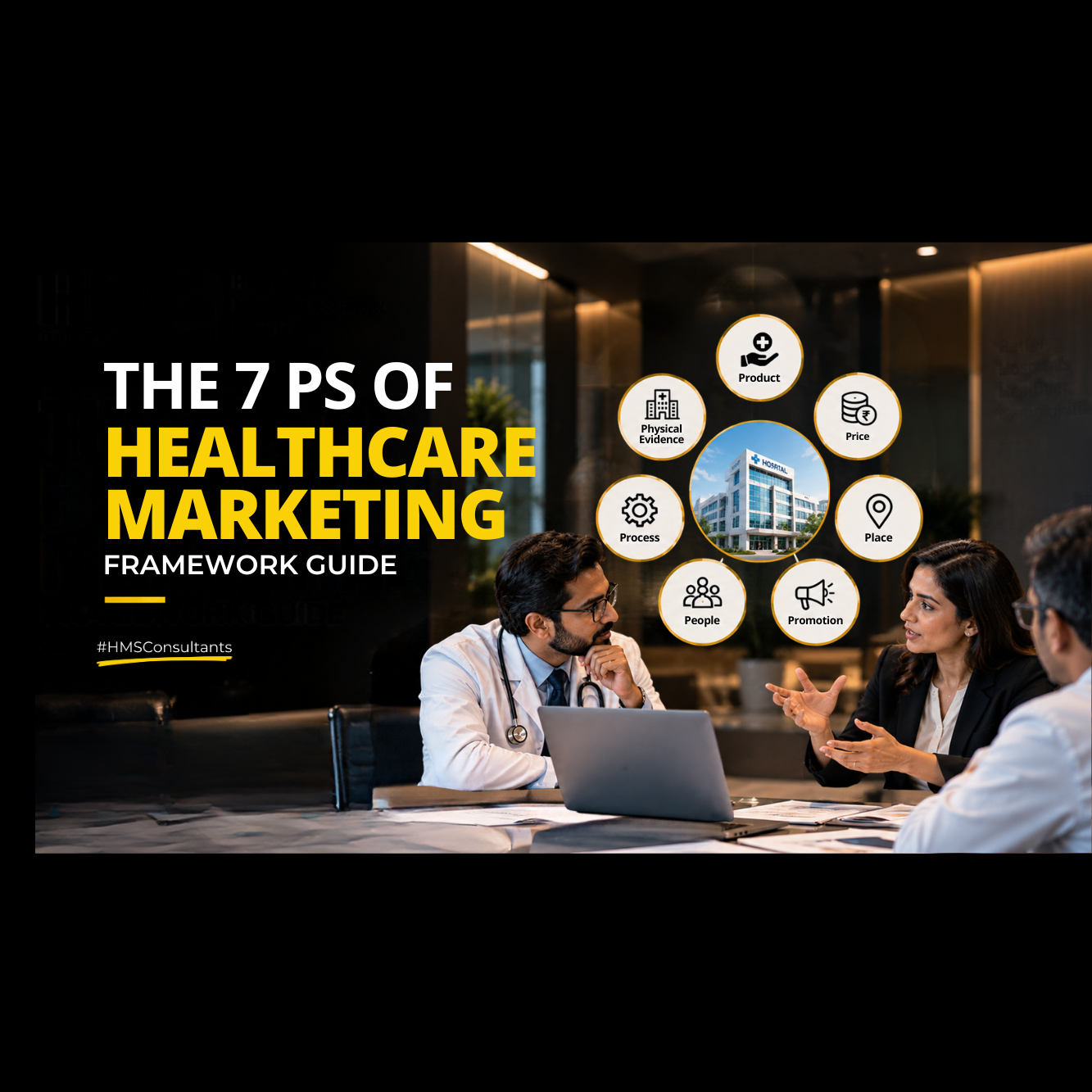
The 7 Ps of Marketing Product, Price, Place, Promotion, People, Process, and Physical Evidence now shape how customers perceive businesses in 2026. This...
Hospital marketing budgets often increase when growth slows, but higher spending rarely fixes the real problem. Without clarity in patient experience, communication, and...
A hospital marketing consultant is often hired too late when growth slows and confusion rises. This delay quietly impacts patient trust, marketing efficiency,...
Public relations in a hospital is not about media or advertising, but about building patient trust through clear communication, consistent experience, and effective...
A hospital marketing expert can identify hidden friction in the patient journey within the first 30 days. Learn how patient hesitation, messaging gaps,...