Why Most Healthcare Marketing Strategy Documents Never Translate Into Real Growth
Most healthcare marketing strategies fail not because of poor execution, but because they ignore how patients actually make decisions. Real hospital growth comes...
Marketing ethics refers to the set of principles that ensure every promotional activity is truthful, respectful, and compliant, especially when it deals with human health and emotions.
These rules don’t limit creativity; they define credibility.
Patients don’t just buy a product; they trust a life-impacting decision. A slight exaggeration or misleading ad can cost a brand far more than it gains. Here’s why ethics are central to modern hospital marketing:
Scenario | Unethical Approach | Ethical Alternative |
Cosmetic clinic ad | “Guaranteed results in one session!” | “Results may vary. Book a consultation to explore suitable options.” |
Hospital ad | “India’s No. 1 Heart Hospital” (without source) | “Recognised by patients for excellence in cardiac care since 2008.” |
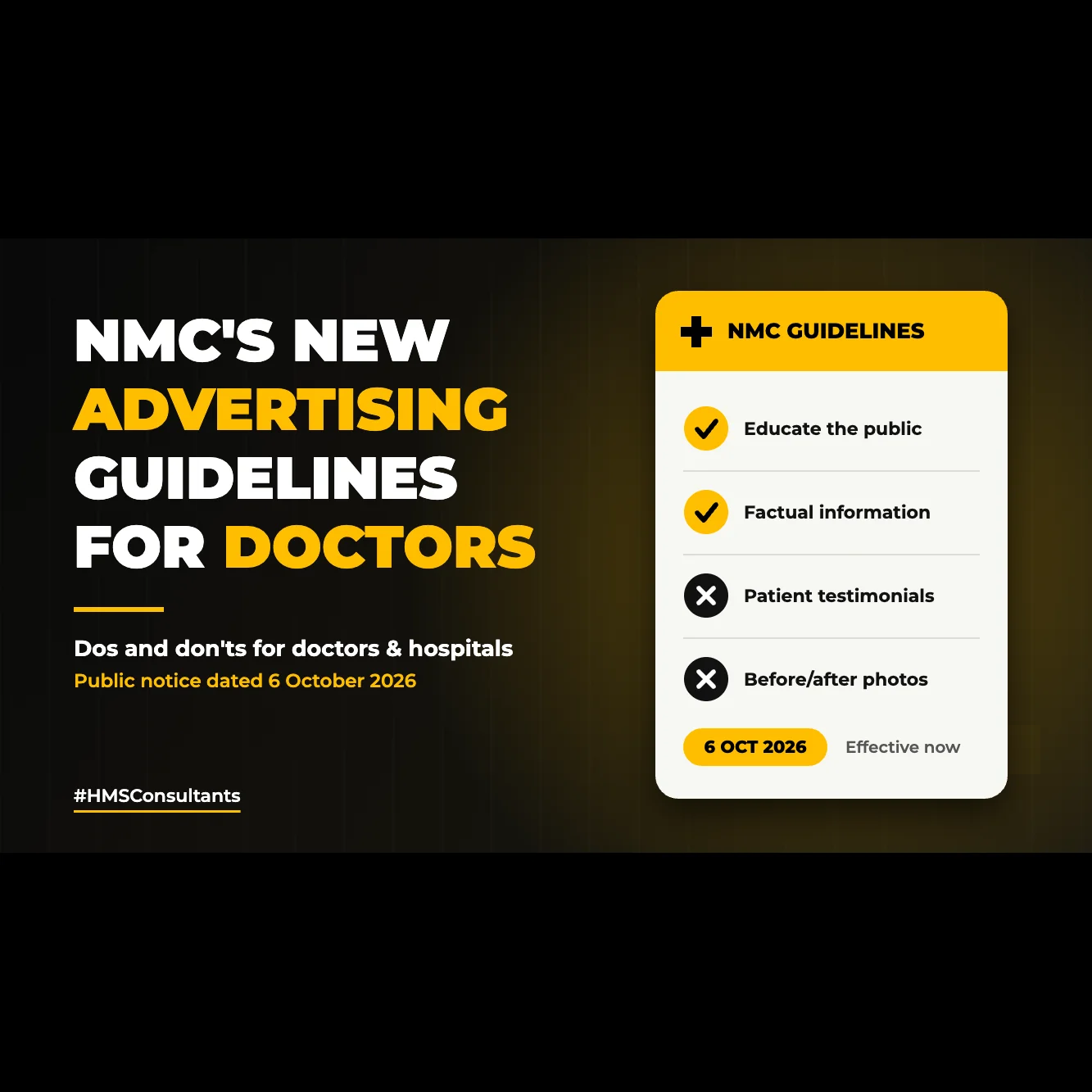
Doctor testimonial post | Using before–and–after images without consent | Sharing anonymised patient feedback with permission. |
Social media engagement | Posting fear-based messages (“Don’t die of diabetes”) | Educating with positive reinforcement (“Early detection saves lives”). |
Ethics doesn’t restrict, it refines communication.
At HMS Consultants, we help healthcare institutions adopt ethical frameworks that protect their brand’s credibility while achieving measurable growth. Here’s what that looks like:
Every claim must be supported by data, accreditation, or certification.
Example: Instead of “Best IVF Success Rate,” use “Our success rates are consistent with top NABH-accredited centres in India.”
Patient stories are powerful, but they must be accompanied by informed consent. Always use anonymised visuals or quotes unless explicit permission is granted.
Health marketing works best when it educates, not alarms.
Example: Replace “Avoid Cancer Before It’s Too Late” with “Early Screening Saves More Lives Than Treatment.”
Whether it’s a Facebook campaign or a Google Ad, every creative must include real images, correct specialisations, and disclaimers wherever necessary.
Often, the issue is not intent but awareness. Training marketing teams and front-line staff on compliance builds an ethical culture across departments.
Ethical marketing is not a compliance checklist; it’s a competitive advantage.
When a hospital’s marketing is ethical, its growth becomes sustainable.
With AI-generated content becoming increasingly common, ethics now extend to data, transparency, and the mitigation of bias. At HMS, we’re guiding healthcare businesses to use AI tools responsibly, ensuring content remains accurate, human-reviewed, and aligned with compliance norms. Generative Engine Optimisation (GEO) is the next big shift, but even AI visibility must come with authenticity.
At HMS Consultants, our philosophy is simple: “Knowing is Knowing & Doing is Doing™.”
We don’t just talk about ethical marketing; we build frameworks that hospitals can implement. From brand audits to digital strategy planning, we ensure every message aligns with:
Our clients, from single-speciality clinics to multi-city hospital chains, have seen that when marketing becomes ethical, growth follows naturally.
The future of healthcare marketing in India is not about louder ads; it’s about louder integrity. Ethical marketing doesn’t just keep you compliant; it keeps you credible. Because at the end of the day, patients remember not what you claimed, but how you made them feel.
Share your details below and we will connect with you to discuss your growth strategy.
Most healthcare marketing strategies fail not because of poor execution, but because they ignore how patients actually make decisions. Real hospital growth comes...
Most hospital growth strategies fail before marketing begins because they ignore patient trust, clarity, and decision behaviour. Sustainable hospital growth starts with confidence,...
Doctors digital marketing fails when it is treated as promotion instead of professional presence. In healthcare, trust is built through calm, ethical communication,...
Healthcare marketing ROI often feels invisible because hospitals measure activity instead of behaviour. Real ROI emerges when trust, patient confidence, and experience align...
Marketing for a hospital fails when it tries to convince patients instead of reassuring them. In healthcare, trust and emotional safety drive decisions...
A hospital marketing strategy fails when it is built around channels instead of how patients actually make decisions.