

How to Create an Effective Website for Your Hospital/clinic
Your hospital website is more than a brochure it’s your digital front door. Learn how to design a site that builds trust and drives patient bookings.
A few years ago, patients searched broadly.
They typed:
Today, that behaviour has changed. Patients search with specific intent.
They now search:
This shift from broad to specific is critical. A patient searching this specifically is not browsing. They are deciding. They are comparing. They are close to taking action.
And when they land on a hospital website that shows a generic services list one page covering all twenty departments in five lines each they do not find what they are looking for. They leave. Silently. Without enquiring.
The website for hospital that lists “Orthopaedics, Cardiology, Neurology, Gynaecology, Paediatrics” on a single services page is not speaking to a patient searching for a specific procedure. It is speaking to no one in particular.
The second shift is more recent and far less understood by most hospital marketing teams.
Patients in 2026 are not only using Google to search. They are using AI tools Google AI Overview, ChatGPT, Perplexity, and similar platforms to ask healthcare questions directly.
They ask:
These AI systems do not simply show links. They read, analyse, and summarise hospital websites before presenting recommendations. They look for structured, specific, and credible content to pull answers from.
When a hospital website is generic, unstructured, and thin on department-specific content, AI systems cannot extract meaningful information from it. The hospital effectively does not exist in AI-generated responses even if it has an excellent clinical reputation.
This is the new invisibility. A hospital can have a functional website, a Google Business listing, and active social media and still be completely absent from AI-driven patient searches because its website for hospital is not structured for how AI reads content.
Most hospital websites are built from an internal perspective. Hospitals decide what to display based on what they want to communicate their infrastructure, their achievements, their departments.
But patients and AI systems approach a website from the outside in. They arrive with a specific question. They want a specific answer.
A generic website answers no specific question well.
When a patient with a knee problem lands on a page that says “Orthopaedics Department – We offer comprehensive orthopaedic care,” they learn nothing useful. There is no doctor named. No procedure explained. No recovery timeline mentioned. No success rate referenced. No trust signal relevant to their specific concern.
That patient moves on.
And when an AI system reads the same page while answering “best knee replacement hospital in Pune,” it finds no structured, specific content to recommend. That hospital is skipped in favour of one that has a dedicated knee replacement page with detailed, patient-relevant content.
A specialty-specific page is a dedicated page for one condition, one procedure, or one department built around what a patient actually wants to know before deciding.
A well-built specialty page for orthopaedics, for example, does not just say “we treat bone and joint conditions.” It answers:
This kind of content serves two purposes simultaneously. It gives the specific patient the clarity they need to trust and enquire. And it gives AI systems the structured, specific content they need to recommend the hospital in relevant searches.
A website for a hospital with fifteen well-built specialty pages is not just a better website. It is a fundamentally more discoverable asset for patients and AI alike.
Most hospitals built their websites once and stopped. The content is the same as it was three years ago. No new doctor has been added. No new procedure has been explained. No new patient question has been answered.
Meanwhile, patient search behaviour has evolved. AI search has emerged. Competitors have built deeper, more structured content.
Every month a hospital website sits unchanged, it falls further behind in both human and AI-driven discoverability. Patients land, find nothing specific, and leave. AI reads the page, finds nothing to recommend, and skips it.
The hospital does not see this happening. There are no complaints. The phone is still ringing from patients who already know the hospital through other means. But the patients who are searching specifically, comparing actively, and deciding digitally are choosing somewhere else.
That is the cost. And it compounds every month.
A website for hospital in 2026 must do more than exist. It must be built for how patients actually search with specific intent, specific questions, and specific expectations. And it must be structured for how AI systems now read and recommend healthcare providers before patients even visit a page.
Generic websites built around departments and infrastructure are no longer sufficient. Hospitals that build specialty-specific, patient-intent-driven content will be found by patients and by AI. Hospitals that do not will remain invisible to both, regardless of how good their clinical care actually is.
The website for hospital that patients can find is the one built around their questions. The one AI will recommend is the one structured around their answers.
In 2026, those are the same website.
A website for hospital helps patients find the right doctor, understand available treatments, verify credibility, and book appointments all before visiting physically. Without one, hospitals remain invisible to patients who search online before making any healthcare decision.
A hospital website should include doctor profiles, department pages, appointment booking, location, contact details, patient testimonials, and treatment information. In 2026, specialty-specific pages and mobile responsiveness are no longer optional they directly determine whether patients enquire or leave.
A basic hospital website in India typically costs between ₹50,000 and ₹3,00,000 depending on features, number of pages, and integrations. The real question is not what it costs to build but what it costs a hospital to not have one that works.
A hospital website appears on Google through local SEO, keyword-optimised specialty pages, Google Business Profile integration, fast loading speed, and regular content updates. Generic websites with no structured content rarely rank for the specific searches patients actually use.
Yes, but only if the website has structured, specific, and credible content. AI tools like Google AI Overview and ChatGPT read hospital websites to generate recommendations. Thin or generic content is skipped entirely, regardless of the hospital's actual clinical quality.
A specialty page is a dedicated webpage built around one department, condition, or procedure. It answers specific patient questions about that specialty including doctor details, treatments, and what to expect rather than listing it briefly among all other services.
A hospital website should be reviewed at minimum every quarter. New doctors, procedures, patient FAQs, and updated specialty content must be added regularly. Outdated websites lose both search ranking and AI discoverability silently costing the hospital new patient enquiries every month.
Patients leave without booking when the website fails to answer their specific question clearly and quickly. Generic content, missing doctor details, no appointment button, and slow loading speed all create hesitation and in healthcare, hesitation almost always means the patient chose someone else.
Share your details below and we will connect with you to discuss your growth strategy.
Your hospital website is more than a brochure it’s your digital front door. Learn how to design a site that builds trust and drives patient bookings.
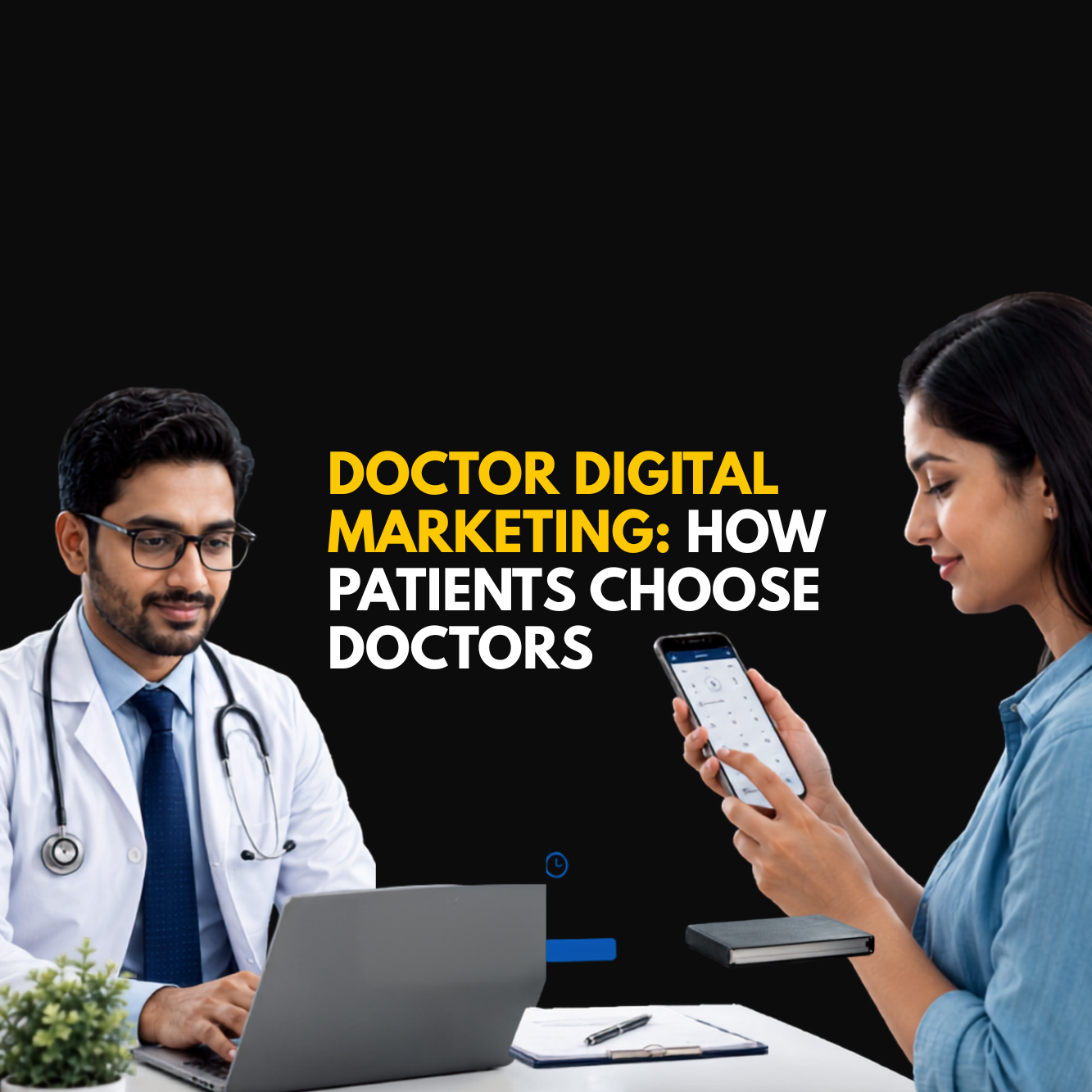
Doctor digital marketing helps patients evaluate a doctor before booking by checking their profile, expertise, reviews, communication style, online presence, and appointment process.
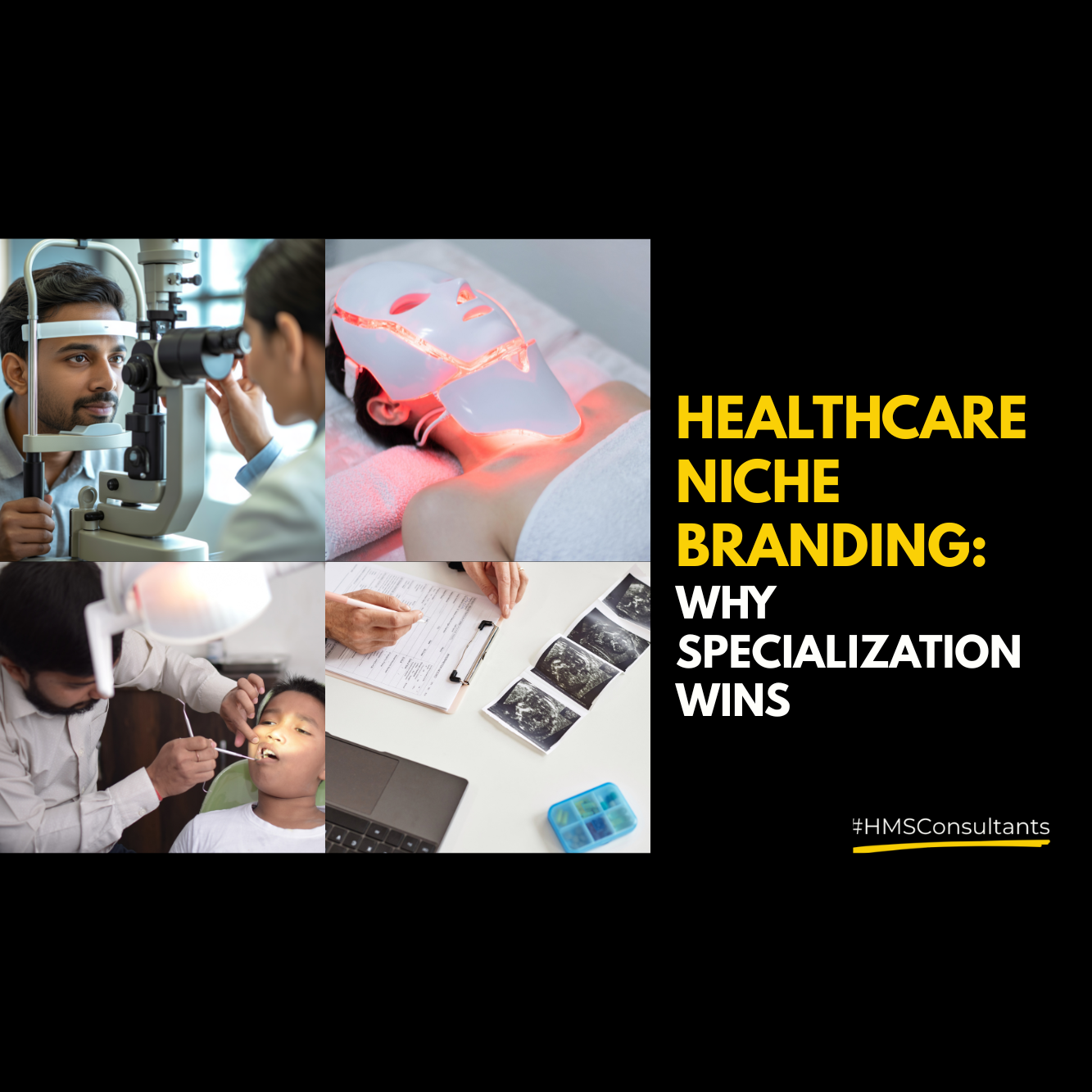
Patients now prefer specialists over general hospitals. Super-specialty clinics in eye, skin, dental, and fertility care grow faster with focused branding and trust.
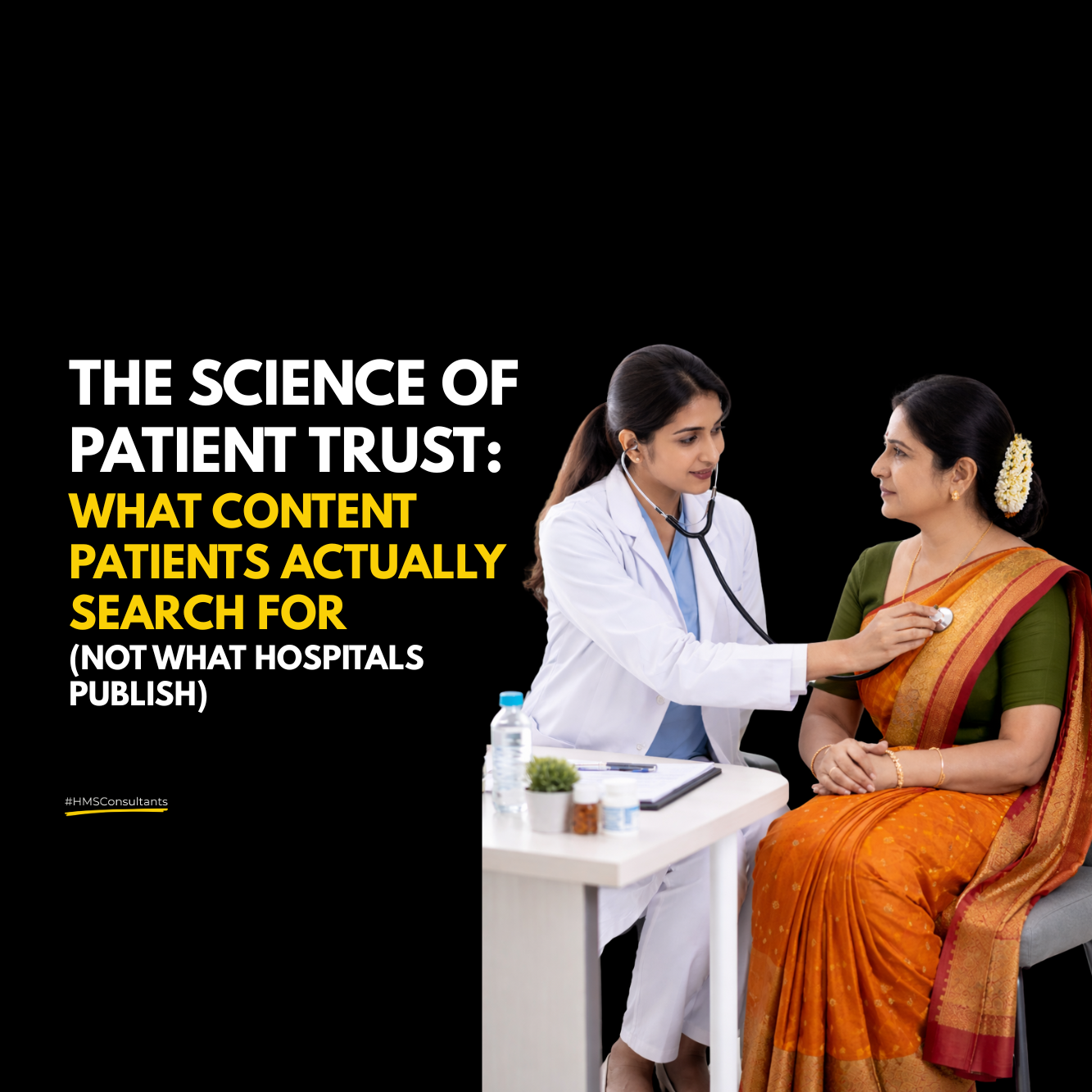
Patients don’t search for hospitals they search for clarity. Learn how trust-driven content answers patient fears, reduces uncertainty, and builds confidence even before the first consultation.
Doctors digital marketing fails when it is treated as a content volume problem. Patients do not need more information they need help making confident healthcare decisions.
Most teams track easy numbers like likes and impressions. This guide shows how to measure intent, engagement, and real booking signals in healthcare marketing.