
Search results for: “digital”

  • Digital Marketing in Healthcare: Why Strategy Should Come Before Channels

    Digital Marketing in Healthcare: Why Strategy Should Come Before Channels

    Digital Marketing in Healthcare: Why Strategy Should Come Before Channels

    Published on
    Share This

    Digital marketing in healthcare often starts from the wrong place. Many clinics, hospitals, diagnostic centres, and healthcare businesses begin by asking which platform they should use first. Should they post more on social media? Should they run Google Ads? Should they improve SEO? Should they make more videos?

    These channels are important, but they should not come before strategy. Digital marketing in healthcare should first define what needs to be communicated, which patients need to be reached, which services need visibility, and how patient inquiries will be handled.

    Without this clarity, digital marketing becomes a random activity. There may be posts, ads, videos, website updates, and WhatsApp messages, but they may not work together toward one clear direction.

    Why Starting With Channels Creates Confusion

    Many healthcare providers choose channels before understanding the purpose behind them. A clinic may post regularly on Instagram but may not explain its services clearly. A hospital may run ads without checking whether its website page answers patient questions. A diagnostic centre may promote packages without making the booking process simple.

    The problem is not always the platform. The problem is often the lack of planning behind the platform.

    Before choosing a channel, healthcare providers should ask:

    • Which service needs attention?
    • Who is the right patient audience?
    • What does the patient need to understand?
    • What action should the patient take next?
    • Is the website or Google profile ready?
    • Is the enquiry handling process clear?

    When these questions are ignored, even strong platforms may give weak results.

    Service Clarity Should Come First

    Digital marketing for healthcare should begin with service clarity. A healthcare provider may offer many services, but not every service needs the same message or the same level of promotion.

    Some services need awareness. Some need search visibility. Some need patient education. Some need reputation support. Some need a better explanation because patients may not know when to consult.

    Before running campaigns, healthcare providers should define:

    • Which services should be promoted first.
    • What patient problem each service solves.
    • Which doctor or department handles the service.
    • What patients commonly ask about the service.
    • What information patients need before enquiry.

    If the service is not explained clearly, digital marketing may bring attention but not meaningful patient response. A patient wants to know what care is available, who provides it, when to visit, and how to take the next step.

    Understand the Patient Journey

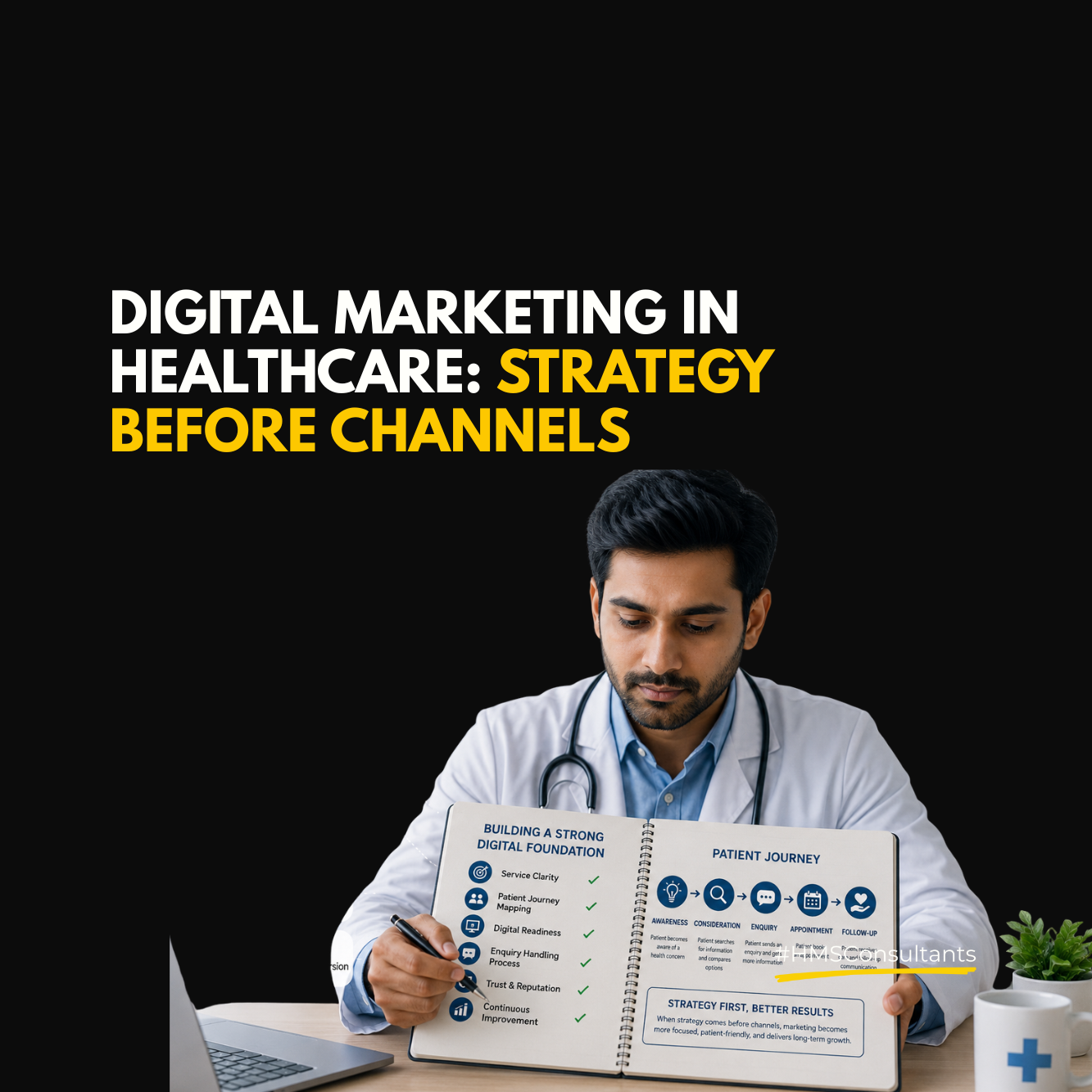
    Patients do not always take action immediately. They may first notice a symptom, then search for information, compare providers, read reviews, visit a website, send an inquiry, and only then book an appointment.

    This is why the patient journey matters in healthcare digital marketing.

    A patient who is only becoming aware of a concern needs simple educational content. A patient comparing options needs service details, doctor information, reviews, and location clarity. A patient ready to book needs appointment details, contact number, timings, and clear instructions.

    A healthcare marketing strategy should plan communication for different stages:

    • Awareness.
    • Consideration.
    • Enquiry.
    • Appointment.
    • Follow-up.

    When communication matches the patient journey, digital marketing becomes more useful and patient-focused.

    Build Digital Readiness Before Promotion

    Running ads or campaigns before the digital presence is ready can create poor results. If patients click an ad and reach an incomplete website, outdated Google profile, unclear service page, or confusing contact process, they may not continue.

    A strong healthcare online presence should include:

    • Updated website service pages.
    • Clear doctor or department information.
    • Accurate contact details.
    • Updated Google Business Profile.
    • Patient-friendly FAQs.
    • Review visibility.
    • Appointment guidance.
    • Location and timing details.

    These details may look basic, but they directly affect patient inquiries. Healthcare digital marketing works better when patients can easily understand the provider and take the next step.

    A campaign may bring attention, but the digital presence must convert that attention into trust and action.

    Match the Channel With the Purpose

    Every digital channel has a different role. A channel should be selected only after the purpose is clear.

    Healthcare SEO helps patients find services through search. Social media helps create awareness, education, and recall. Ads support focused campaigns for specific services. WhatsApp guides patients after enquiry. Videos simplify health concerns. Reviews support trust and reputation.

    The mistake happens when every channel is expected to do everything.

    For example:

    • SEO should answer search intent.
    • Social media should educate and build recall.
    • Ads should focus on one clear action.
    • WhatsApp should guide enquiries.
    • Reviews should build confidence.
    • Website pages should explain services.

    When the channel matches the purpose, digital marketing for healthcare becomes more organised and effective.

    Enquiry Handling Is Also Part of Strategy

    Many healthcare providers think digital marketing ends when a patient sends an enquiry. In reality, that is where a major part of the patient experience begins.

    If calls are missed, WhatsApp replies are unclear, staff members do not know service details, or follow-up is weak, marketing performance is affected.

    A good enquiry process should include quick response, clear service explanation, doctor availability, appointment guidance, location details, basic instructions, and proper follow-up.

    Healthcare marketing strategy should connect digital campaigns with enquiry handling. Otherwise, marketing may generate leads but not patient appointments.

    Trust and Reputation Need Planning

    In healthcare, patients do not respond only to visibility. They also look for trust signals. Reviews, doctor profiles, patient education content, website clarity, and professional communication all influence decision-making.

    Online reputation in healthcare should not be treated as a separate activity. It should be part of the digital strategy.

    Healthcare providers should regularly review patient feedback, Google reviews, social media comments, repeated questions, common complaints, and review response quality.

    Trust is built through consistent communication and patient experience. Digital marketing should support that trust, not replace it.

    Conclusion

    Digital marketing in healthcare should not begin with channels. It should begin with strategy.

    Before deciding on SEO, social media, ads, videos, or WhatsApp communication, healthcare providers should understand the service priority, patient audience, patient journey, message, digital readiness, enquiry process, and trust-building needs.

    Better healthcare digital marketing does not mean being active everywhere. It means being clear about what to communicate, where to communicate, and how each platform supports the patient journey.

    When strategy comes before channels, digital marketing becomes more focused, patient-friendly, and useful for long-term healthcare growth.

    Contact Us HMS Consultants

    The role of digital marketing in healthcare is to help patients find, understand, and connect with the right healthcare services. In this blog context, it should begin with strategy, service clarity, patient journey planning, digital readiness, enquiry handling, and trust-building before choosing channels.

    Digital Marketing I Digital Marketing For Doctors I healthcare digital marketing I healthcare Management I Healthcare Marketing I Healthcare Marketing Strategy I Medical Marketing I Social Media Marketing

    is something we strongly believe in, which means ‘Knowledge without application is the same as having no knowledge at all

    Akhil Dave

    Principle Consultant

    Ready to take your Personal Brand to the next level?

    Share your details below and we will connect with you to discuss your growth strategy.

    • Digital Marketing for Healthcare: Why Every Patient Touchpoint Needs a Different Message

      Digital Marketing for Healthcare: Why Every Patient Touchpoint Needs a Different Message

      Digital Marketing for Healthcare: Why Every Patient Touchpoint Needs a Different Message

      Published on
      Share This

      Digital marketing for healthcare does not work well when the same message is used everywhere. A patient searching on Google, visiting a website, reading reviews, watching a video, seeing an ad, or sending a WhatsApp inquiry is not always in the same mindset.

      Every patient touchpoint has a different purpose.

      The message should change based on where the patient is in the patient journey, what they want to understand, and what action they may take next.

      Why One Message Does Not Work Everywhere

      Many healthcare providers use the same message across all platforms. A caption becomes website content. A website paragraph becomes a WhatsApp reply. A promotional line is repeated in Google posts and ads.

      This weakens healthcare communication because each platform has a different role.

      For example:

      • Google search should answer patient intent.
      • A website should explain the service clearly.
      • Social media should educate and create recall.
      • Ads should focus on one specific action.
      • WhatsApp should guide the patient after enquiry.
      • Reviews should support confidence and reputation.
      • Videos should simplify patient concerns.

      When the same message is used everywhere, the patient may see content but may not receive the right information at the right time.

      Google Needs Search-Based Messaging

      When patients search on Google, they usually have a specific need. They may be looking for a doctor, treatment, symptom, clinic, hospital, location, or appointment details.

      At this stage, the message should be direct and useful. Patients are not looking for broad brand statements. They want quick clarity.

      Google-focused content should answer:

      • What service is available?
      • Which doctor or department handles it?
      • Where is the clinic or hospital located?
      • How can the patient book an appointment?
      • What symptoms or concerns are related?
      • What should the patient know before visiting?

      This is where digital marketing for healthcare needs search-focused content. Service pages, Google Business Profile updates, FAQs, and local SEO content should match what patients are searching for.

      If a patient searches for a specific concern and finds only a general introduction, the message may not help them move forward.

      Website Content Should Explain the Service

      A website is one of the most important patient touchpoints in healthcare digital marketing. Patients visit the website to learn more before deciding.

      Website content should not only say that a service is available. It should explain the service in a patient-friendly way.

      A useful healthcare website page should include:

      • What the service is.
      • Who may need it?
      • When to consult.
      • Which doctor or department handles it.
      • What patients can expect.
      • Basic preparation or next steps.
      • Appointment or enquiry guidance.

      The website message should be more detailed than an ad and more structured than a social media post. It should reduce confusion and help patients move from interest to enquiry.

      Social Media Should Educate First

      Social media is not always the place where patients immediately book appointments. It often works for awareness, education, recall, and patient engagement.

      The message on social media should be simple, useful, and easy to understand. It should help patients learn something, identify a concern, or remember the healthcare provider when needed.

      Social media content can include:

      • Common symptoms.
      • Preventive health tips.
      • Myths and facts.
      • Doctor awareness videos.
      • Service awareness posts.
      • Health day communication.
      • Simple FAQs.
      • Patient guidance content.

      In digital marketing for healthcare, social media should not be used only for promotion. If every post says “Book now” or “Visit us,” patients may lose interest. A better healthcare content strategy educates first and guides next.

      Ads Need One Clear Message

      Healthcare ads should not try to say everything at once. A good ad should focus on one service, one patient concern, or one clear action.

      Patients scrolling through ads do not have time to understand a broad message. The ad should quickly communicate why the service is relevant.

      An effective healthcare ad message should be:

      • Specific to one service.
      • Clear about the patient concern.
      • Simple in language.
      • Supported by a clear call-to-action.
      • Connected to a relevant landing page.
      • Ethical and not fear-based.

      For example, an ad for a preventive health package should not sound like an ad for emergency care. An ad for maternity care should not use the same tone as an ad for diagnostics. Each service has a different emotional and practical need.

      WhatsApp Should Guide After Enquiry

      Many healthcare providers use WhatsApp for patient enquiries, appointment confirmation, reminders, follow-ups, and basic communication. But WhatsApp messaging should not sound like a copied advertisement.

      When a patient sends a WhatsApp enquiry, they usually need guidance. They may want to know doctor timing, availability, location, documents required, consultation process, or follow-up steps.

      WhatsApp communication should be:

      • Clear.
      • Short.
      • Helpful.
      • Professional.
      • Easy to act on.
      • Free from unnecessary promotional language.

      A good WhatsApp message can improve patient engagement because it helps the patient take the next step without confusion.

      Instead of only sending a promotional line, the message should guide the patient with appointment details, doctor timing, location link, and basic instructions.

      Reviews Need Responsible Responses

      Reviews are also an important patient touchpoint. Patients often read them before choosing a doctor, clinic, or hospital. But the way a healthcare provider responds to reviews also matters.

      Review responses should not sound robotic, defensive, or promotional. They should show that the healthcare provider listens, respects feedback, and handles concerns responsibly.

      A good review response should:

      • Thank the patient politely.
      • Acknowledge positive feedback.
      • Respond professionally to concerns.
      • Avoid sharing private medical details.
      • Take serious concerns to a direct communication channel.
      • Maintain a calm and respectful tone.

      In healthcare digital marketing, review communication supports reputation. It also shows future patients how the healthcare provider responds when people share their experiences.

      Video Content Should Simplify One Concern

      Videos are useful because they help patients understand topics that may feel confusing in written form. But healthcare videos should not become too technical or too promotional.

      A good healthcare video should simplify one idea at a time.

      Video content can explain:

      • When to consult a doctor.
      • Common symptoms.
      • Basic treatment process.
      • Preventive care steps.
      • Myths and facts.
      • What happens during consultation.
      • Patient preparation before a test or procedure.

      The message in a video should feel natural and easy to follow. Patients should leave with better understanding, not more confusion.

      Match the Message With the Patient Journey

      The main purpose of digital marketing for healthcare is not to repeat the same content everywhere. It is to match the message with the patient journey.

      A patient may first notice a health concern, then search for information, compare options, check reviews, enquire, book, and later need follow-up communication. Each stage needs a different message.

      Awareness content cannot be the same as inquiry communication. Review response cannot be the same as the ad copy. Website content cannot be the same as a short caption.

      When healthcare communication changes according to the touchpoint, patients receive clearer guidance.

      Conclusion

      Digital marketing for healthcare should not use one message everywhere. Every patient touchpoint has a different role, and each one needs a different communication approach.

      Google should answer search intent. Websites should explain services. Social media should educate. Ads should stay focused. WhatsApp should guide. Reviews should build confidence. Videos should simplify important concerns.

      A strong healthcare marketing strategy understands how patients move from awareness to enquiry and from enquiry to appointment. When the message matches the touchpoint, healthcare communication becomes clearer, more useful, and more patient-focused.

      Better digital marketing does not always mean more content. Sometimes, it means using the right message in the right place.

      Contact Us HMS Consultants

      Healthcare digital marketing is the use of online platforms to communicate with patients at different touch points such as Google, websites, social media, ads, WhatsApp, reviews, and videos. In this blog context, it means using the right message in the right place based on the patient journey.

      Digital Marketing I Digital Marketing For Doctors I Digital Strategy I Doctor Branding I doctor digital marketing I Doctors Digital Marketing I healthcare digital marketing I healthcare Management I Healthcare Marketing I Healthcare Marketing Strategy I online presence

      is something we strongly believe in, which means ‘Knowledge without application is the same as having no knowledge at all

      Akhil Dave

      Principle Consultant

      Ready to take your Personal Brand to the next level?

      Share your details below and we will connect with you to discuss your growth strategy.

      • Doctor Digital Marketing: How Patients Evaluate Doctors Before Booking

        Doctor Digital Marketing: How Patients Evaluate Doctors Before Booking

        Doctor Digital Marketing: How Patients Evaluate Doctors Before Booking

        Published on
        Share This

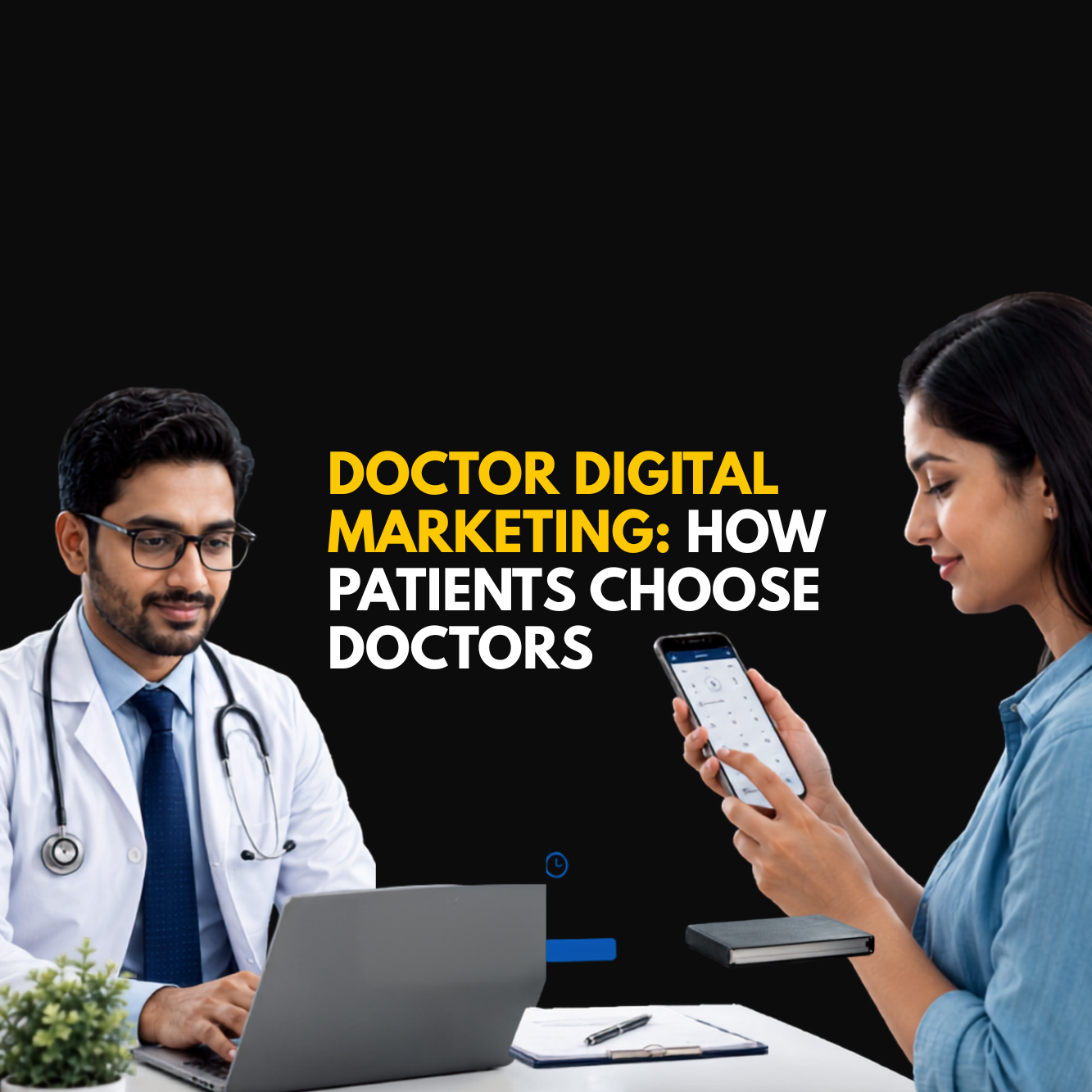
        Doctor digital marketing is not only about posting health tips, running ads, or getting more followers. For doctors, digital marketing should help patients understand the doctor’s expertise, approach, availability, and credibility before booking an appointment.

        Today, even when patients receive a recommendation, they often search the doctor’s name online, read reviews, check the clinic website, visit social media pages, or look for videos before deciding.

        This means doctor digital marketing should be planned around how patients evaluate a doctor before consultation.

        Patients First Look for the Doctor’s Identity

        Before booking, patients want to know who the doctor is. They look for simple but important details that help them understand the doctor’s professional background.

        This usually includes:

        • Doctor’s full name
        • Qualification
        • Speciality
        • Years of experience
        • Clinic or hospital association
        • Consultation location
        • Available timings
        • Key areas of practice

        If this information is missing, incomplete, or different across platforms, patients may feel unsure. A weak online presence can make even an experienced doctor look less visible or less accessible.

        Digital marketing for doctors should clearly establish the doctor’s identity across Google, website pages, directories, social media, and clinic communication. Patients should not struggle to understand who the doctor is and what type of care they provide.

        Patients Check Whether the Doctor Matches Their Concern

        Patients do not evaluate a doctor only by qualification. They also check whether the doctor is relevant to their specific health concern.

        For example, a patient with knee pain may look for an orthopaedic doctor who handles joint pain, arthritis, sports injuries, or knee replacement. A patient looking for pregnancy care may check whether the gynecologist provides antenatal care, high-risk pregnancy care, delivery support, or fertility guidance.

        This is where online marketing for doctors must move beyond general statements like “experienced doctor” or “quality care.”

        The content should clearly explain:

        • What conditions the doctor treats
        • Which patient concerns are commonly handled
        • What services are available
        • When patients should consult
        • What the patient can expect during the visit
        • Which symptoms should not be ignored

        This does not mean making exaggerated claims. It means helping patients understand whether the doctor is suitable for their concern.

        Patients Read Reviews Before Booking

        Reviews play an important role in a doctor’s digital marketing. Patients often read what others have experienced before deciding to book.

        They may observe:

        • How patients describe the doctor
        • Whether the doctor listens properly
        • Whether staff members are helpful
        • Whether appointment handling is smooth
        • Whether the clinic experience feels organised
        • How the doctor or clinic responds to feedback

        Reviews are not only about star ratings. They are signals of patient trust. A doctor may have strong clinical expertise, but if online reputation is unmanaged, patients may hesitate.

        A doctor marketing strategy should include review monitoring, professional response handling, and learning from repeated patient feedback. Positive reviews can strengthen confidence, while negative reviews should be handled carefully and ethically.

        Patients Notice How the Doctor Communicates Online

        Patients also evaluate how a doctor communicates online. This includes social media posts, videos, website content, captions, blogs, and replies to patient queries.

        A doctor’s communication style can influence patient comfort before consultation.

        Patients may feel more confident when the content is:

        • Simple to understand
        • Educational
        • Responsible
        • Calm in tone
        • Free from fear-based messaging
        • Focused on patient awareness
        • Clear about when to seek consultation

        For doctors, content should not sound like aggressive selling. Healthcare communication should guide, educate, and reassure patients.

        For example, a short video explaining when back pain needs medical attention can be more useful than a generic promotional post. A simple post explaining early signs of diabetes can help patients take timely action. Medical practice marketing becomes stronger when the doctor’s communication helps patients feel informed rather than pressured.

        Patients Compare Information Across Platforms

        A patient may not rely on only one platform. They may check Google, the website, social media, YouTube, healthcare directories, and review platforms before making a decision.

        If the information is different everywhere, it creates confusion. For example, Google may show one clinic timing, the website may show another, and social media may not mention the doctor’s current availability.

        A consistent doctor online presence should include updated details such as:

        • Doctor name and speciality
        • Clinic or hospital location
        • Contact number
        • Consultation timings
        • Services offered
        • Appointment process
        • Website or profile link
        • Patient education content

        Consistency helps patients feel that the doctor’s practice is organised and reliable.

        Patients Evaluate Convenience Before Booking

        Clinical expertise matters, but patients also consider practical details before booking. If they cannot find appointment information, location details, consultation timing, or the contact process, they may delay the decision.

        A doctor in digital marketing should make the next step easy.

        Patients should be able to understand:

        • Where the doctor is available
        • How to book an appointment
        • What timings are available
        • Whether a prior appointment is needed
        • Which number to call
        • What documents or reports to carry
        • Whether follow-up is required

        These details may look basic, but they affect patient inquiries. Many potential patients drop off not because they are uninterested, but because the booking process is unclear.

        Common Mistakes in Doctor Digital Marketing

        Many doctors or clinics make digital marketing less effective by focusing only on activity instead of patient evaluation.

        Common mistakes include:

        • Posting only festival creatives
        • Running ads without clear service pages
        • Using generic captions
        • Not updating Google Business Profile
        • Ignoring reviews
        • Not explaining services properly
        • Having incomplete doctor profiles
        • Making content too technical for patients
        • Not showing clear appointment steps

        These mistakes can reduce patient confidence. A doctor may be highly skilled, but if the digital presence is unclear, patients may not understand the doctor’s value.

        Doctor digital marketing should be structured, consistent, and patient-focused.

        Conclusion

        Doctor digital marketing is not just about visibility. It is about helping patients evaluate the doctor before booking.

        Patients look for identity, expertise, relevance, reviews, communication style, convenience, and trust signals. They want to know whether the doctor is suitable for their concern and whether the consultation process feels clear and reliable.

        A strong doctor marketing strategy should focus on patient questions before focusing on platforms. It should explain the doctor’s expertise, make information easy to find, manage the doctor’s reputation responsibly, and guide patients to book without pressure.

        For doctors, digital presence is often the first point at which patients begin to build trust. The clearer the doctor’s online presence, the easier it becomes for patients to understand, trust, and choose the right care.,

        Contact Us HMS Consultants

        Yes, a doctor can do digital marketing ethically and informatively. A doctor’s digital marketing should focus on patient education, clear service information, an updated online presence, reviews, appointment guidance, and helping patients understand the doctor’s expertise before booking.

        Digital Strategy I Business I Digital Marketing I doctor digital marketing I healthcare digital marketing I healthcare Management I Healthcare Marketing I Healthcare Marketing Strategy I hospital marketing I Hospital Marketing Strategies I online presence

        is something we strongly believe in, which means ‘Knowledge without application is the same as having no knowledge at all

        Akhil Dave

        Principle Consultant

        Ready to take your Personal Brand to the next level?

        Share your details below and we will connect with you to discuss your growth strategy.

        • Healthcare Digital Marketing Is Not About Social Media

          Healthcare Digital Marketing Is Not About Social Media

          Healthcare Digital Marketing Is Not About Social Media

          Written by
          Published on
          Share This

          Healthcare digital marketing is one of the most misunderstood functions inside hospitals today. Many hospitals believe digital marketing means posting consistently on Instagram, running Meta Ads, uploading reels, boosting posts, and staying active on social media platforms. On paper, this looks like strong digital activity. But patients do not choose hospitals simply because they saw a creative online.

          That is where the real problem begins.

          Most hospitals today are digitally visible, but they are not always digitally trusted. And this gap is becoming one of the biggest challenges in healthcare marketing in 2026.

          Many hospitals are already investing heavily in:
          • Social media management.
          • Facebook and Instagram promotions.
          • Digital advertisements.
          • Online campaigns.
          • Reels and video marketing.
          • Promotional creatives.

          The activity exists. The visibility exists. But the conversion often does not.

          Despite continuous digital activity, many hospitals still struggle with:

          • Inconsistent patient enquiries.
          • Weak appointment conversion.
          • Low patient retention.
          • Unstable digital growth.
          • Poor online trust.

          The reason is simple.

          Healthcare digital marketing is not just about being visible online. It is about becoming trustworthy when patients begin researching seriously.

          Most Hospitals Are Operating Only on the Surface Layer

          Most hospitals today focus heavily on what can be called the Digital Surface Layer. This is the visible layer of digital marketing that includes social media posts, advertisements, reels, online campaigns, and promotional communication.

          This layer helps hospitals attract attention.

          But healthcare decisions are rarely made from attention alone.

          A patient may first discover a hospital through Instagram or Facebook, but that is usually not where the decision ends. Before contacting the hospital, patients typically search deeper. They visit Google, compare hospitals, check reviews, read doctor profiles, evaluate websites, and search for reassurance.

          This deeper decision-making stage is where actual patient trust begins.

          And this is where many hospitals become weak digitally.

          They look active online, but they do not feel trustworthy online.

          That difference changes patient decisions completely.

          The Digital Trust Layer

          Beyond social media visibility exists another layer that most hospitals ignore the Digital Trust Layer.

          This is the layer where patients evaluate whether the hospital feels credible enough to choose. The Digital Trust Layer includes:

          • Google search visibility.
          • Website quality.
          • Doctor credibility.
          • Online reviews.
          • Educational content.
          • Patient testimonials.
          • Reputation consistency.
          • WhatsApp communication systems.

          Most hospitals invest heavily in visibility while investing very little in trust systems.

          That is why many hospitals struggle with healthcare digital marketing despite being active online.

          The hospital may be visible.

          But the patient is still uncertain.

          And in healthcare, uncertainty delays decisions.

          The Digital Health Gap

          The difference between how visible a hospital looks online and how trustworthy it feels during patient research creates what can be called the Digital Health Gap.

          This is one of the most important concepts in modern healthcare marketing.

          A wide Digital Health Gap means:

          • The hospital is active online.
          • Patients notice the hospital.
          • But trust remains weak.

          A narrow Digital Health Gap means:

          • Patients find the hospital.
          • Trust what they see.
          • And move closer to booking appointments confidently.

          This is why social media alone cannot drive long-term hospital growth.

          Visibility may create attention.

          But trust drives conversion.

          Many hospitals today post consistently and still fail to improve patient conversion meaningfully because patients eventually evaluate credibility, reassurance, and confidence not just activity.

          Search Presence Is the Foundation of Healthcare Digital Marketing

          Most healthcare journeys today begin on Google. Patients search for symptoms, specialists, hospitals, treatments, procedures, and healthcare advice before making decisions.

          When patients search, hospitals need to appear clearly.

          Not on page four.

          On page one.

          This is where search presence becomes critical.

          Search presence includes:

          • Google My Business optimisation.
          • Local SEO.
          • Speciality-based pages.
          • Mobile-friendly websites.
          • Accurate hospital information.
          • Service-specific visibility.

          Many hospitals have excellent infrastructure offline but extremely poor discoverability online. And in healthcare, invisibility online increasingly means invisibility to patients.

          A hospital website today is not a brochure.

          It is a 24-hour OPD reception.

          Patients judge hospitals digitally before they ever visit physically. If the website feels outdated, incomplete, confusing, or difficult to navigate, trust weakens before communication even begins.

          Reputation Architecture Is Influencing Patient Decisions

          One of the biggest shifts happening in healthcare digital marketing is the growing influence of online reputation. Patients now evaluate hospitals digitally before speaking to them.

          That means reviews are no longer simple feedback.

          They are trust signals.

          Patients notice:

          • Rating quality
          • Patient experiences
          • Review consistency
          • Complaint handling
          • Response professionalism
          • Doctor feedback

          Many hospitals collect reviews randomly. Some hospitals never respond, while others react only when negative reviews appear. That is not reputation architecture.

          Reputation architecture means creating a structured digital trust system where hospitals consistently collect genuine patient feedback, respond professionally to reviews, and maintain credibility across platforms like Google, Practo, and Justdial.

          The goal is simple.

          When patients research the hospital online, every platform should communicate the same message:

          This hospital can be trusted.

          Content Authority Matters More Than Posting

          Most hospitals use digital platforms mainly for promotion. Very few use them for authority-building.

          And this is where the biggest difference begins.

          Patients today do not only want to find hospitals. They want to:

          • Understand conditions.
          • Reduce fear.
          • Evaluate treatment options.
          • Understand recovery.
          • Feel informed before making decisions.

          This is where content authority becomes important.

          Educational content such as:

          • Specialist videos.
          • Blogs.
          • Healthcare FAQs.
          • Treatment explainers.
          • Patient-focused educational content.

          Helps hospitals build long-term credibility digitally.

          Over time, authority creates trust.

          And trust strengthens patient conversion.

          Hospitals that consistently educate patients usually create stronger digital credibility than hospitals focusing only on promotions. Because patients trust hospitals that help them understand healthcare clearly.

          Social Proof Reduces Patient Hesitation

          Patients trust patient experiences more than advertisements.

          That is why social proof plays such an important role in healthcare digital marketing.

          Social proof includes:

          • Patient testimonials.
          • Treatment stories.
          • Recovery journeys.
          • Doctor profiles.
          • Patient experiences.
          • Treatment outcomes.

          A patient testimonial often creates stronger confidence than multiple advertisements because it answers one very important question:

          “Can this hospital help someone like me?”

          Healthcare decisions are emotional decisions. Patients are not only evaluating treatment quality. They are evaluating reassurance.

          And social proof helps reduce uncertainty during that process.

          WhatsApp Retention Is Still Massively Underused

          One of the most ignored areas in hospital digital marketing is post-treatment communication.

          Most hospitals stop communicating once treatment ends.

          No reminders.

          No follow-ups.

          No healthcare education.

          No structured patient engagement.

          This creates patient drop-off, and eventually patients restart their hospital search from the beginning.

          WhatsApp retention systems help hospitals maintain communication through:

          • Appointment reminders.
          • Follow-up schedules.
          • Discharge guidance.
          • Health education.
          • Patient feedback collection.

          This improves:

          • Retention.
          • Communication consistency.
          • Repeat patient relationships.
          • Long-term engagement.

          In India especially, WhatsApp is already part of patients’ daily behaviour. Yet many hospitals still underuse it strategically.

          Healthcare Digital Marketing Is Changing in 2026

          Healthcare decisions are becoming increasingly digital. Patients now compare hospitals through:

          • Google search.
          • Websites.
          • Reviews.
          • Doctor visibility.
          • Educational content.
          • Testimonials.
          • Reputation systems.

          Before making healthcare decisions confidently.

          At the same time, patient expectations are increasing. Patients expect:

          • Accessibility.
          • Responsiveness.
          • Digital clarity.
          • Reassurance.
          • Trust signals.

          before choosing hospitals.

          This means hospitals can no longer depend only on social media visibility to grow digitally.

          The hospitals growing consistently today are usually the hospitals building:

          • Discoverability.
          • Authority.
          • Reputation.
          • Social proof.
          • Patient retention systems.

          That is the real future of healthcare digital marketing.

          Conclusion

          Healthcare digital marketing is not about social media alone.

          Social media creates visibility.

          But healthcare decisions depend on trust.

          Most hospitals are investing heavily in the Digital Surface Layer while neglecting the Digital Trust Layer where actual patient decisions happen. That creates the Digital Health Gap.

          Hospitals that improve:

          • Search presence.
          • Reputation architecture.
          • Content authority.
          • Social proof.
          • WhatsApp retention.

          Usually build stronger digital trust and stronger long-term patient growth.

          Because in healthcare, visibility may attract attention.

          But trust converts patients.

          Contact Us HMS Consultants

          Healthcare digital marketing is the process of helping hospitals improve their online visibility, patient trust, and digital communication through search presence, educational content, reviews, websites, social proof, and patient engagement systems. It focuses on helping patients discover, evaluate, and trust hospitals before making healthcare decisions.

          Digital Marketing I healthcare digital marketing

          is something we strongly believe in, which means ‘Knowledge without application is the same as having no knowledge at all

          Akhil Dave

          Principle Consultant

          Ready to take your Personal Brand to the next level?

          Share your details below and we will connect with you to discuss your growth strategy.

          • Digital Marketing Healthcare in 2026 – Why Visibility Is Increasing but Conversions Are Not

            Digital Marketing Healthcare in 2026 – Why Visibility Is Increasing but Conversions Are Not

            Digital Marketing Healthcare in 2026 – Why Visibility Is Increasing but Conversions Are Not

            Written by
            Published on
            Share This

            Over the last few years, digital marketing healthcare has become a priority for almost every hospital, clinic, and healthcare provider in India.

            • Websites have been redesigned.
            • Social media pages are active.
            • Ads are being run consistently.
            • Content is being published regularly.

            On the surface, visibility has improved.

            But a deeper question remains – Why is this visibility not consistently converting into patients?

            This is the shift that defines digital marketing in healthcare in 2026.

            It is no longer a visibility problem. It is a decision-making problem.

            What Digital Marketing Healthcare Was vs What It Has Become

            Digital marketing in healthcare was earlier seen as a set of activities:

            • Social media posting
            • Running ads
            • Creating websites
            • Improving rankings

            These activities are still relevant. But they no longer define success.

            Today, patients do not interact with these channels independently.
            They move across them as part of a single journey.

            They search.
            They compare.
            They validate.
            They decide.

            Which means digital marketing healthcare is no longer about presence.
            It is about guiding that journey clearly.

            The Modern Patient Journey – Where Digital Actually Influences Decisions

            In cities like Ahmedabad, Pune, Indore, or Jaipur, patient behaviour has become structured.

            A typical journey looks like this:

            A patient searches for symptoms or treatments.
            They explore multiple hospitals.
            They check reviews.
            They evaluate clarity of information.
            They shortlist options.

            At no point in this journey is the hospital explaining itself directly.

            The patient is interpreting signals.

            And digital marketing healthcare is responsible for shaping those signals.

            Why Many Hospital Digital Marketing Efforts Do Not Convert Enquiries into Patients

            Hospitals often assume that improving reach will improve results.

            So they focus on:

            • Increasing ad spend
            • Posting more content
            • Expanding platform presence

            But conversion does not depend only on visibility.

            It depends on clarity and consistency.

            If a patient:

            • Cannot understand the service clearly
            • Does not find answers to their concerns
            • Experiences delays in response

            they move to the next option.

            The issue is not traffic.
            It is friction.

            The Gap Between Digital Visibility and Patient Trust

            Digital marketing healthcare often creates attention, but not confidence.

            This gap appears when:

            • Content is common
            • Communication is unclear
            • Experience does not match expectation

            Patients today are not looking for promotion.
            They are looking for reassurance.

            This is why hospitals that focus on explaining rather than advertising tend to perform better in the long run.

            The Role of AEO: From Search Results to Direct Answers

            One of the biggest changes in digital marketing healthcare is how patients consume information.

            They are no longer just clicking links.
            They are getting direct answers.

            This is where AEO (Answer Engine Optimization) becomes important.

            Patients ask:

            • What is the treatment?
            • How long does recovery take?
            • Which hospital is reliable?

            Hospitals that structure their content to answer these questions clearly become more visible not just in search results, but in AI-generated responses.

            This changes positioning.

            The hospital is no longer one of many options.
            It becomes a source of clarity.

            The Role of GEO: Being Present Where Decisions Happen

            Healthcare decisions are highly location-specific.

            A patient searching for care in Vadodara or Ahmedabad is not looking for general information.
            They are looking for relevant, nearby options.

            This is where GEO (Geographic Optimization) plays a critical role.

            Local search visibility, accurate listings, and location-based content ensure that hospitals appear at the right moment.

            If a hospital is not visible locally,
            it is not considered.

            AI Is Changing How Digital Marketing Healthcare Works

            Artificial intelligence is influencing digital marketing in healthcare in two key ways.

            First, it is changing how information is delivered.
            Search engines are summarising content, reducing the need for multiple clicks.

            Second, it is helping hospitals understand patient behaviour.

            Hospitals can now identify:

            • Where users drop off
            • Which pages are unclear
            • How long patients engage

            This allows for better alignment between strategy and execution.

            AI is not replacing marketing.
            It is improving how effectively it works.

            Why Digital Marketing Healthcare Needs System Thinking

            One of the biggest limitations in current healthcare marketing is fragmentation.

            Different activities are handled separately:

            • Social media
            • Ads
            • Website
            • Enquiry handling

            But patients do not experience them separately.

            They experience one system.

            A strong digital presence with weak response handling creates a negative impression.
            Good content with poor follow-up leads to lost patients.

            This is why digital marketing healthcare must move from activity-based thinking to system-based thinking.

            What Effective Digital Marketing Healthcare Looks Like in 2026

            Effective digital marketing in healthcare is not defined by how much is being done.

            It is defined by how well everything works together.

            Patients should experience:

            • Clear information
            • Easy navigation
            • Quick response
            • Consistent communication

            From the first search to the first visit,
            everything should feel connected.

            That is what builds trust.

            Conclusion

            Digital marketing healthcare in 2026 is no longer about being present everywhere.

            It is about being clear where it matters.

            Hospitals that focus only on visibility will continue to generate attention.
            Hospitals that focus on clarity, consistency, and experience will generate trust and conversions.

            Because in healthcare, patients do not choose the most visible option.

            They choose the one that feels most reliable.

            Contact Us HMS Consultants

            Digital marketing healthcare refers to the use of digital platforms such as websites, search engines, and social media to attract, inform, and engage patients while improving visibility, communication clarity, and overall patient acquisition for hospitals and clinics.

            Digital Marketing I Healthcare Marketing

            is something we strongly believe in, which means ‘Knowledge without application is the same as having no knowledge at all

            Akhil Dave

            Principle Consultant

            Ready to take your Personal Brand to the next level?

            Share your details below and we will connect with you to discuss your growth strategy.

            • Why Doctors Digital Marketing Fails When It Is Treated as a Content Problem

              Why Doctors Digital Marketing Fails When It Is Treated as a Content Problem

              Why Doctors Digital Marketing Fails When It Is Treated as a Content Problem

              Written by
              Published on
              Share This

              Doctors digital marketing is often approached as a consistency challenge. Post more. Be visible regularly. Follow formats that work. Stay active so patients remember you. When results don’t improve, the solution usually suggested is better content planning or higher posting frequency.

              This framing is misleading.

              Doctors digital marketing rarely fails because of content volume. It fails because content is being created without a decision context. Patients consume information, but it does not move them closer to choosing a doctor.

              In healthcare, information alone does not create confidence.

              Why Patients Don’t Decide After Seeing Doctor Content

              Patients engaging with doctors online are usually not looking to be impressed. They are trying to understand seriousness, risk, and next steps. Educational posts may increase awareness, but awareness does not equal readiness.

              Doctors digital marketing struggles when it assumes that learning automatically leads to trust. Patients often understand more after consuming content, yet feel more cautious, not less. This is because information raises questions faster than it resolves them.

              Without guidance, content increases hesitation.

              The Gap Between Education and Decision-Making

              Most doctors focus their digital marketing on explaining conditions, treatments, or procedures. While this is valuable, it addresses only one part of the patient journey. Patients also need help interpreting what that information means for them.

              Doctors digital marketing becomes ineffective when it explains facts but avoids uncertainty. Patients want to know how decisions are made, what usually happens next, and how risks are handled in real life.

              Content that stops at education leaves patients informed but undecided.

              Why More Content Makes Doctors Digital Marketing Worse

              When results plateau, doctors often increase output. More reels, more carousels, more posts. This creates familiarity but not progression. Patients may recognise the doctor but still hesitate to book.

              Excess content without decision framing overwhelms patients. They see multiple messages but struggle to connect them into a clear path forward. Doctors then assume digital marketing doesn’t work, when the real issue is sequencing.

              Doctors digital marketing should simplify thinking, not multiply it.

              How Decision Framing Changes Digital Marketing Outcomes

              Decision framing means helping patients understand when to act, not just what exists. It addresses timing, seriousness, and choice criteria. When doctors integrate decision framing into their digital communication, content begins to guide rather than inform passively.

              Patients start to see themselves in the information. Questions become more specific. Conversations shift from “what is this?” to “is this right for me?”

              This shift marks effective doctors digital marketing.

              Why Doctors Avoid Decision-Oriented Content

              Many doctors hesitate to discuss decisions openly online because they fear being seen as persuasive or promotional. This leads to safe, neutral education that avoids commitment signals.

              Ironically, this restraint keeps patients stuck. Decision-oriented content does not mean pushing treatment. It means explaining how decisions are usually approached, what factors matter, and when waiting is acceptable.

              Doctors digital marketing improves when uncertainty is acknowledged, not avoided.

              The Operational Impact of Better Digital Marketing

              When doctors digital marketing is decision-led, consultations become smoother. Patients arrive with context. Time is spent on clarification rather than repetition. Treatment discussions become more balanced.

              Doctors often underestimate this operational benefit. Digital clarity reduces in-clinic friction even if online metrics look unchanged initially.

              This is where long-term value appears.

              Why Algorithms Reward Decision-Led Content

              Search engines and social platforms increasingly favour content that retains attention and satisfies intent. Decision-led content keeps users engaged because it feels relevant and complete.

              Doctors digital marketing that helps patients move mentally toward clarity performs better over time than content that only explains concepts. Engagement quality matters more than reach.

              Algorithms follow behaviour. Patients reward usefulness.

              Conclusion: Doctors Digital Marketing Works When It Helps Patients Decide, Not Just Learn

              Doctors digital marketing does not fail because doctors are inconsistent or uncreative. It fails because content is treated as an information exercise rather than a decision-support system.

              Patients do not need more facts. They need help navigating uncertainty safely.

              When doctors shift digital communication from education-only to decision-aware guidance, marketing stops feeling exhausting and starts feeling purposeful.

              In healthcare, clarity converts better than frequency.

              Doctors who understand this stop chasing content calendars and start building confidence one informed decision at a time.

              Contact Us HMS Consultants

              Doctors digital marketing refers to how doctors use digital platforms to educate patients, reduce uncertainty, and support healthcare decision-making. It focuses on clarity, guidance, and trust-building rather than frequent posting, promotion, or visibility-driven content strategies.

              Doctors Digital Marketing I Healthcare Marketing I Hospital Marketing Strategies I Marketing ideas for clinics I Marketing Trends 2025 I Medical Marketing I Social Media Marketing

              is something we strongly believe in, which means ‘Knowledge without application is the same as having no knowledge at all

              Akhil Dave

              Principle Consultant

              Ready to take your Personal Brand to the next level?

              Share your details below and we will connect with you to discuss your growth strategy.

              • Why Doctors Digital Marketing Fails When It Is Treated as Promotion Instead of Professional Presence

                Why Doctors Digital Marketing Fails When It Is Treated as Promotion Instead of Professional Presence

                Why Doctors Digital Marketing Fails When It Is Treated as Promotion Instead of Professional Presence

                Written by
                Published on
                Share This

                Doctors digital marketing has grown rapidly over the last few years. Social media platforms, search engines, and online listings have made it easier than ever for doctors to be visible. As a result, many doctors feel increasing pressure to post regularly, remain active online, and “market themselves” to stay relevant.

                Yet despite consistent activity, many doctors see little real impact. Followers grow slowly or plateau. Engagement feels shallow. Most importantly, patient trust and consultation quality do not improve meaningfully. The problem is not digital adoption. The problem is that doctors digital marketing is often treated as promotion, not professional presence.

                In healthcare, this distinction defines success or failure.

                Why Promotion Creates Resistance in Healthcare

                Promotion works when audiences are relaxed and choices feel low-risk. Healthcare decisions are the opposite. Patients approach doctors with anxiety, vulnerability, and a high sense of consequence. Promotional messaging, even when subtle, increases discomfort rather than reassurance.

                When doctors digital marketing focuses on highlighting expertise aggressively, showcasing achievements repeatedly, or pushing calls to action, patients become cautious. They may engage with content, but they hesitate to trust it fully. The digital presence feels performative rather than supportive.

                Trust in healthcare grows through calm authority, not persuasion.

                How Patients Actually Interpret Doctors Digital Presence

                Patients do not evaluate doctors online the way they evaluate brands. They are not impressed by frequency alone. They look for signs of clarity, restraint, and consistency. They observe tone closely. They notice how uncertainty is handled, how risks are explained, and whether communication feels patient-centred or self-centred.

                Doctors digital marketing that mirrors how a doctor would speak in a consultation feels reassuring. Digital presence that feels exaggerated, rushed, or trend-driven creates doubt, even if content is factually correct.

                Patients rarely articulate this discomfort, but it influences choice.

                Why Educational Content Alone Is Not Enough in Doctors Digital Marketing

                Many doctors rely heavily on educational posts, believing that information automatically builds trust. While education is essential, it does not fully address patient decision-making.

                Patients struggle less with facts and more with implications. They want to understand what a condition means for their life, how decisions are made, and what uncertainty looks like in practice. Educational content that lacks context remains incomplete.

                Doctors digital marketing becomes effective when education is paired with guidance, empathy, and realistic framing.

                The Role of Professional Presence in Long-Term Trust

                Professional presence is about how a doctor is perceived over time, not how often they appear. It is shaped by tone stability, ethical restraint, and clarity of thinking. Doctors who maintain a steady, thoughtful digital presence build familiarity without overexposure.

                This kind of presence compounds quietly. Patients may not engage immediately, but when they are ready, the doctor feels known and safe. Consultations start with trust already partially built.

                This is the real value of doctors digital marketing when done correctly.

                Why Platform Trends Undermine Doctor Credibility

                Digital platforms reward trends, formats, and virality. Doctors who chase these signals often dilute their professional voice. Messaging becomes fragmented. Tone shifts frequently. Authority weakens.

                Healthcare audiences are sensitive to inconsistency. A doctor who appears serious one day and performative the next creates confusion. Over time, credibility erodes, even if reach increases.

                Doctors digital marketing must be guided by professional identity, not platform incentives.

                How Digital Marketing Shapes Patient Expectations Before First Contact

                Digital presence sets expectations long before a patient books an appointment. It influences how patients prepare questions, how seriously they take advice, and how they interpret explanations during consultation.

                When doctors digital marketing communicates calm expertise and transparency, patients arrive more prepared and receptive. When it communicates urgency or self-promotion, patients arrive guarded or sceptical.

                This directly affects consultation efficiency and treatment acceptance.

                Why Doctors Quit Digital Marketing Too Early

                Doctors often abandon digital marketing because results feel intangible. Likes fluctuate. Growth is slow. Conversion is difficult to attribute. What is missed is that trust-building is not immediately visible.

                Doctors digital marketing compounds through repeated exposure and consistency. Its impact appears in better patient conversations, stronger referrals, and long-term loyalty rather than instant metrics.

                Doctors who expect short-term performance abandon a long-term advantage.

                The Alignment Between Doctors Digital Marketing and Ethics

                Healthcare ethics demand honesty, restraint, and patient-first communication. Digital marketing that respects these boundaries strengthens credibility rather than limiting reach.

                Doctors who embrace ethical digital communication do not appear less confident. They appear more trustworthy. Patients sense boundaries and respond positively to them.

                Ethical alignment is not a limitation in doctors digital marketing. It is a differentiator.

                Conclusion: Doctors Digital Marketing Works When It Feels Like Care, Not Promotion

                Doctors do not need louder digital marketing. They need clearer digital presence.

                Doctors digital marketing succeeds when it reflects how doctors think, communicate, and care not how brands advertise. Patients are not searching for the most visible doctor. They are searching for the one who feels safe, thoughtful, and reliable.

                In healthcare, professional presence outperforms promotion every time.

                Doctors who understand this stop chasing visibility and start building trust that lasts longer than any platform trend.

                Contact Us HMS Consultants

                Doctors digital marketing refers to how doctors use digital platforms such as websites, blogs, Google profiles, and social media to build professional presence, trust, and patient confidence. It is not about aggressive promotion, but about communicating expertise and care in a clear, ethical manner.

                Doctors Digital Marketing I Healthcare Marketing I Hospital Marketing Strategies I Marketing ideas for clinics I Marketing Trends 2025 I Medical Marketing I Social Media Marketing

                is something we strongly believe in, which means ‘Knowledge without application is the same as having no knowledge at all

                Akhil Dave

                Principle Consultant

                Ready to take your Personal Brand to the next level?

                Share your details below and we will connect with you to discuss your growth strategy.

                • Can a Hospital Survive Without Digital Marketing in 2025?

                  Can a Hospital Survive Without Digital Marketing in 2025?

                  Can a Hospital Survive Without Digital Marketing in 2025?

                  Written by
                  Published on
                  Share This

                  For many years, hospitals in India did not need digital marketing to grow. A respected doctor, a known family physician, or an established nursing home could thrive on reputation alone.

                  Patients made decisions based on personal recommendations, neighbourhood familiarity, or advice from relatives. But the way people choose healthcare in 2025 is fundamentally different. The first step of the patient journey has moved online, and this shift is reshaping how hospitals gain trust, visibility, and new patients.

                  Today, whether someone in Ahmedabad is searching for a neurologist, or a family in Indore is looking for a good maternity centre, or a senior citizen in Jaipur wants cataract surgery, the starting point is no longer a phone call or a walk-in. It is a Google search. Patients compare hospitals in the same way they compare restaurants, hotels, or travel options: by reading reviews, checking ratings, browsing websites, examining doctor profiles, and verifying credentials before visiting in person. This behaviour has become universal across metros, tier-II cities, and even semi-urban regions, because information gives patients a sense of security.

                  A hospital without a digital presence immediately appears uncertain. When a patient cannot find basic details such as doctor qualifications, services offered, OPD schedules, success stories, photographs, or reviews, they quietly move to the next hospital that provides clarity. The decision happens silently; the hospital never even knows it lost a potential patient. This is the biggest challenge of remaining invisible online: there is no feedback, no complaint, no enquiry, just missed opportunity.

                  Digital marketing in healthcare is often misunderstood as advertising. In reality, it is simply a matter of communication. Patients want answers: how experienced the doctors are, what procedures are available, how complex surgeries are handled, what recovery looks like, whether insurance is accepted, and what others have experienced at the hospital. When this information is available online through a clean website, Google Business listing, reviews and educational content, the hospital appears transparent and trustworthy. When information is missing, the hospital seems risky.

                  The shift toward digital presence accelerated during the pandemic. Families learned to search for emergency numbers online, book consultations virtually, check bed availability and read reviews before stepping out. That change did not disappear after COVID; it became a permanent part of healthcare behaviour. Even older patients, who once depended entirely on local word-of-mouth, now validate hospital credibility on Google.

                  In cities like Surat, Pune, Kochi, Lucknow, Jaipur, Indore or Rajkot, hospitals that invested in digital communication saw faster recovery in OPD footfall compared to those who relied only on traditional advertising. A website works all day, every day. A Google listing receives views even when the hospital is closed. Patient education builds authority without extra cost. Digital reviews influence reputation more than brochures. Compared to hoardings and newspaper ads, digital presence is more affordable and more permanent.

                  So, can a hospital survive without digital marketing in 2025? A long-established hospital may continue operating because of its existing patient base, but survival and growth are two different things. Newer generations of patients do not choose hospitals purely based on local familiarity. They compare, verify, and make informed choices. Hospitals that are digitally visible appear safer and more professional. Hospitals that are invisible find it harder to attract first-time patients, corporate clients, medical tourism inquiries, or even new doctors.

                  Digital marketing has also become part of patient service. Online appointment booking reduces waiting room crowd. WhatsApp communication improves follow-up and compliance. Educational content reduces fear. Reviews help patients feel confident about their decisions. In many ways, digital presence is no longer an “extra”, it is healthcare infrastructure.

                  Clinical excellence matters once a patient enters the hospital. Digital visibility matters before they walk in.

                  Conclusion

                  The hospitals that will grow in the coming years will be the ones that treat communication with the same seriousness as treatment. They will use digital tools to answer patient questions, simplify processes, share outcomes responsibly, and build trust long before admission. In a world where the decision begins on a screen, visibility is not marketing; it is credibility.

                  A hospital without digital presence might continue operating, but it will slowly lose relevance in a system where patients expect transparency, clarity and accessible information. Digital marketing is no longer a promotional activity. It is a bridge between medical expertise and patient confidence. And in 2025, confidence decides everything.

                  Contact Us HMS Consultants 

                  Doctors Digital Marketing I Healthcare Marketing I Hospital Marketing Strategies I Marketing ideas for clinics I Marketing Trends 2025 I Medical Marketing I Social Media Marketing

                  is something we strongly believe in, which means ‘Knowledge without application is the same as having no knowledge at all

                  Akhil Dave

                  Principle Consultant

                  Ready to take your Personal Brand to the next level?

                  Share your details below and we will connect with you to discuss your growth strategy.

                  • Why Healthcare Businesses in India Need a Strategic Digital Marketing Consultant

                    Why Healthcare Businesses in India Need a Strategic Digital Marketing Consultant

                    Why Healthcare Businesses in India Need a Strategic Digital Marketing Consultant

                    Written by
                    Published on
                    Share This

                    Why “Just Doing Digital” Isn’t Enough Anymore

                    Every healthcare brand today is online, but very few are visible where it matters.

                    From hospitals running social media pages to doctors experimenting with reels, digital marketing in healthcare has exploded across India. Yet, behind all the noise, many setups are struggling to turn their digital presence into real patient footfall.

                    That’s where a Digital Marketing Consultant, not just a service provider, makes all the difference. At HMS Consultants, we’ve seen this pattern across hundreds of hospitals and clinics. What’s missing isn’t effort, it’s strategy.

                    What Does a Digital Marketing Consultant Actually Do?

                    A digital marketing consultant is not an ad manager or content creator. Their job is to connect business goals to digital actions. In healthcare, this means:

                    • Translating a hospital’s specialities into searchable, patient-friendly content.
                    • Building strategies that align medical credibility with market visibility.
                    • Ensuring compliance, consistency, and ROI from every digital channel.

                    Think of them as the bridge between your doctors, your marketing team, and your patients.

                    Why Healthcare Needs Specialised Consultants, Not Generic Agencies

                    Healthcare is sensitive. You’re not selling gadgets, you’re communicating health decisions. Generic digital marketing agencies often miss this nuance.

                    Let’s compare:

                    Aspect

                    Generic Digital Agency

                    Healthcare Marketing Consultant (HMS)

                    Goal

                    Engagement, clicks, followers

                    Patient acquisition, retention, and trust

                    Approach

                    Trial-and-error ad campaigns

                    Data-driven strategy aligned to hospital goals

                    Tone

                    Promotional

                    Informative, compliant, empathetic

                    Knowledge

                    Broad digital skills

                    Deep understanding of healthcare systems, departments, and patient behaviour

                    Compliance

                    Often unaware of healthcare norms

                    Adheres to ethical and regulatory guidelines

                    A hospital that invests in consultancy doesn’t just “do marketing”, it builds a sustainable patient engagement system.

                    The Indian Healthcare Context: A Market Ready for Strategy

                    India’s healthcare industry is one of the fastest-growing in the world, yet digital maturity among hospitals and clinics remains uneven.

                    Here’s what’s happening on ground:

                    • Tier-2 and Tier-3 cities are witnessing a boom in private hospitals and diagnostics.
                    • Doctors are turning into entrepreneurs, launching niche clinics and speciality centres.
                    • Patients are researching symptoms, doctors, and reviews before every visit.
                    • Government initiatives like Ayushman Bharat have expanded awareness of healthcare access.

                    But while the market has evolved, marketing hasn’t caught up. Many hospitals still rely on outdated tactics like running ads without SEO, or managing Instagram without a clear content plan. A consultant bridges this gap with strategy and systems.

                    What a Digital Marketing Consultant Brings to Healthcare Brands

                    1. A 360° Growth Strategy

                    Before running ads or posting reels, a consultant builds clarity:

                    • Who are your target patients?
                    • What are they searching for online?
                    • Which treatments or departments generate the highest revenue?
                    • Which digital channels deliver the highest ROI?

                    For instance, at HMS, we begin every engagement with a Marketing Audit & Strategy Blueprint, mapping every service, audience, and platform into an actionable plan.

                    2. SEO + GEO Optimization

                    Patients today don’t search for “Dr. Sharma”, they search for “best diabetes doctor near me.”
                    Consultants understand these search behaviours and optimise content for both:

                    • SEO (Search Engine Optimisation) – ranking on Google.
                    • GEO (Generative Engine Optimisation) – ranking on AI tools like ChatGPT and Perplexity that are becoming part of patient discovery.

                    That means your brand isn’t just visible, it’s discoverable everywhere.

                    3. Content That Educates, Not Advertises

                    Healthcare audiences respond more effectively to knowledge than to noise. Consultants help design content calendars that balance:

                    • Educational blogs (disease awareness, prevention)
                    • Social media storytelling (patient journeys, doctor Q&As)
                    • Video content (explainers, procedure insights)
                    • WhatsApp-based patient engagement flows

                    Every piece of content becomes a part of your digital patient journey, not random posts.

                    4. Data-Driven Campaign Planning

                    Consultants bring performance frameworks:

                    • Setting the right KPIs (cost per appointment, not just impressions)
                    • Tracking referral sources (website, GMB, WhatsApp)
                    • Measuring real patient conversions through analytics

                    This helps healthcare founders see marketing as a strategic investment, not an expense.

                    5. Ethical and Compliant Marketing

                    A true healthcare marketing consultant ensures your communication aligns with:

                    • Indian Medical Council (IMC) regulations
                    • NABH standards
                    • CDSCO advertising guidelines
                    • Data protection and patient consent norms

                    In healthcare, compliance isn’t optional; it’s reputation insurance.
                    Why India Needs Strategic Healthcare Marketing Consultants Now

                    India’s healthcare competition is intensifying:

                    • Multispecialty hospitals are launching regional branches.
                    • New-age startups (like telehealth, diagnostics, femtech, wellness) are entering the space.
                    • Patients expect global-level brand experiences, and they want them to be delivered locally.

                    This shift demands strategic consultants who can merge:

                    • Healthcare domain knowledge
                    • Digital innovation
                    • Ethical communication

                    That’s exactly the sweet spot HMS Consultants operates in.

                    HMS Consultants’ Approach

                    Execution without strategy wastes effort; strategy without execution wastes time. Our consultancy bridges both by designing healthcare marketing blueprints that clients or their agencies can execute with confidence.

                    We’ve helped:

                    • Hospitals redefine their online identity
                    • Clinics scale patient footfall via WhatsApp engagement
                    • Startups validate healthcare concepts before launch
                    • Medical founders align marketing KPIs with patient outcomes

                    In short, we help you market smarter, not louder.

                    How to Choose the Right Healthcare Marketing Consultant

                    When shortlisting a consultant, look for these signs of credibility:

                    • They understand both healthcare compliance and marketing trends.
                    • They offer strategic planning, not just execution.
                    • They customise for your geography, specialities, and audience.
                    • They focus on long-term growth, not vanity metrics.

                    If you’re being promised overnight results, that’s not consultancy, that’s clickbait.

                    Conclusion: From Digital Presence to Digital Performance

                    In India’s evolving healthcare market, the question is no longer “Do we need marketing?”  It’s “Are we doing it strategically, ethically, and sustainably?”

                    A digital marketing consultant brings the clarity, structure, and accountability that every healthcare business needs to scale responsibly and effectively. Because in healthcare, trust builds brands, and strategy sustains them.

                    Doctors Digital Marketing I Healthcare Marketing I Hospital Marketing Strategies I Marketing ideas for clinics I Marketing Trends 2025 I Medical Marketing I Social Media Marketing

                    is something we strongly believe in, which means ‘Knowledge without application is the same as having no knowledge at all

                    Akhil Dave

                    Principle Consultant

                    Ready to take your Personal Brand to the next level?

                    Share your details below and we will connect with you to discuss your growth strategy.