


Why Doctors Digital Marketing Fails When It Is Treated as a Content Problem
Doctors digital marketing fails when it is treated as a content volume problem. Patients do not need more information they need help making confident healthcare decisions.
Many hospitals already do marketing. They may have a website, social media page, Google Business Profile, outdoor branding, health camps, brochures, ads, and referral activities.
But these activities may not always be connected to a clear hospital marketing plan.
A proper strategy helps answer:
When these questions are answered clearly, marketing becomes more focused and useful.
A hospital cannot market every department in the same way. Each department has a different patient need and decision journey.
For example, maternity care needs emotional trust, safety, comfort, and doctor connection. Orthopaedics may need to focus on pain relief, movement, surgery options, and recovery. Emergency care needs fast access, location clarity, and availability. Cardiology needs credibility, urgency, and expert trust.
This is why hospital marketing strategies should include department-wise planning.
A hospital marketing plan should identify priority departments, patient demand, doctor availability, local competition, service strengths, and communication gaps.
This helps hospitals avoid random promotion and build focused growth plans.
In hospital marketing, the hospital brand matters. But doctor credibility also plays a major role.
Patients often choose a hospital because of the doctor they trust. This is especially true for specialties such as gynaecology, cardiology, orthopaedics, ophthalmology, dermatology, oncology, paediatrics, and surgery.
A good hospital marketing strategy should include doctor positioning through:
Doctor positioning should not be exaggerated. It should be clear, ethical, and patient-friendly.
When patients understand a doctor’s expertise, their confidence improves.
Hospitals cannot grow only through visibility. They grow when patients trust them.
Patient trust is built through clear communication, doctor credibility, good reviews, service clarity, patient education, staff behaviour, appointment experience, and ethical marketing claims.
A hospital marketing strategy should not only ask, “How do we get more enquiries?”
It should also ask, “Why should patients trust us?”
This changes the quality of marketing.
Instead of only promoting services, hospitals start educating patients, answering doubts, explaining treatments, and improving the patient journey.
Hospital branding is not only about logos, colours, banners, or brochures. It is about what patients remember and feel about the hospital.
Is the hospital known for emergency care, women and child care, advanced surgery, eye care, multispeciality treatment, affordable care, or patient-friendly service?
A strong hospital marketing strategy should define this clearly.
Good hospital branding helps patients understand what the hospital stands for, which services it is known for, why they should consider it, and how it is different from other hospitals nearby.
Without clear branding, hospital communication becomes generic.
Hospital digital marketing is important, but hospitals also need offline trust-building. Health camps, doctor talks, community programmes, referral communication, local outreach, corporate tie-ups, and patient education events can also support growth.
The mistake many hospitals make is treating digital and offline marketing separately.
A better approach connects both.
For example, a health camp can be supported through social media, Google updates, WhatsApp communication, posters, local SEO content, and follow-up messaging.
A doctor awareness talk can become video content, blog content, FAQs, and social media posts.
This makes one activity more valuable.
Hospital patient communication plays an important role in marketing success.
Patients may contact the hospital through phone calls, WhatsApp, website forms, social media messages, Google Business Profile, or walk-ins. If communication is slow, unclear, or unhelpful, marketing efforts may fail.
Hospitals should improve call response, WhatsApp replies, appointment booking, front desk coordination, follow-up communication, and enquiry tracking.
Marketing brings attention. Communication builds trust.
A healthcare marketing consultant can help hospitals build a structured marketing direction.
The consultant studies hospital departments, doctors, services, patient audience, digital presence, local competition, enquiry flow, and communication gaps.
Instead of only suggesting campaigns, the consultant helps the hospital understand which departments need focus, what patients are searching for, what communication is missing, which channels should be used, and how branding can be improved.
This approach helps hospitals move from random marketing to planned growth.
Hospital marketing requires more than basic marketing knowledge. It needs understanding of patients, doctors, departments, trust, communication, digital visibility, and ethical healthcare promotion.
The HMS Certified Healthcare Marketing Consultant Program helps serious professionals understand this specialised field.
Participants learn how to review digital presence, study patient communication gaps, understand service positioning, plan healthcare marketing direction, and approach hospitals and clinics with structured thinking.
The program is designed for professionals who want to understand healthcare marketing from a consulting-led perspective and guide healthcare businesses responsibly.
Work with HMS Consultants
Need a clear plan to grow brand visibility, patient footfall and revenue? Explore Hospital Marketing Strategy Consulting.
See Hospital Marketing Strategy ConsultingBook a free 30-min call
A hospital marketing strategy helps hospitals move beyond random promotion and build a clear direction for patient growth.
Hospitals need more than posts, ads, brochures, or campaigns. They need department-wise planning, doctor positioning, patient trust, hospital branding, local visibility, enquiry handling, and ethical communication.
The hospitals that grow stronger will be the ones that understand what patients need, communicate clearly, and connect marketing with real hospital goals.
A hospital marketing strategy is a planned approach that helps hospitals improve visibility, build patient trust, promote departments, strengthen doctor credibility, and support patient growth.
Hospitals need a marketing strategy because they have multiple departments, doctors, services, and patient groups. Strategy helps avoid random promotion and connects marketing with hospital goals.
A hospital marketing plan should include department-wise planning, doctor positioning, branding, digital marketing, local visibility, patient communication, enquiry tracking, and ethical promotion.
A healthcare marketing consultant can review hospital services, digital presence, patient communication, branding, enquiry flow, and department visibility to create better marketing direction.
No. HMS Consultants does not guarantee clients, jobs, income, employment, or fixed earnings. The program provides structured learning, tools, frameworks, mentoring, and guidance. Success depends on the participant’s effort, communication, market development, and consulting delivery.
Share your details below and we will connect with you to discuss your growth strategy.
Doctors digital marketing fails when it is treated as a content volume problem. Patients do not need more information they need help making confident healthcare decisions.
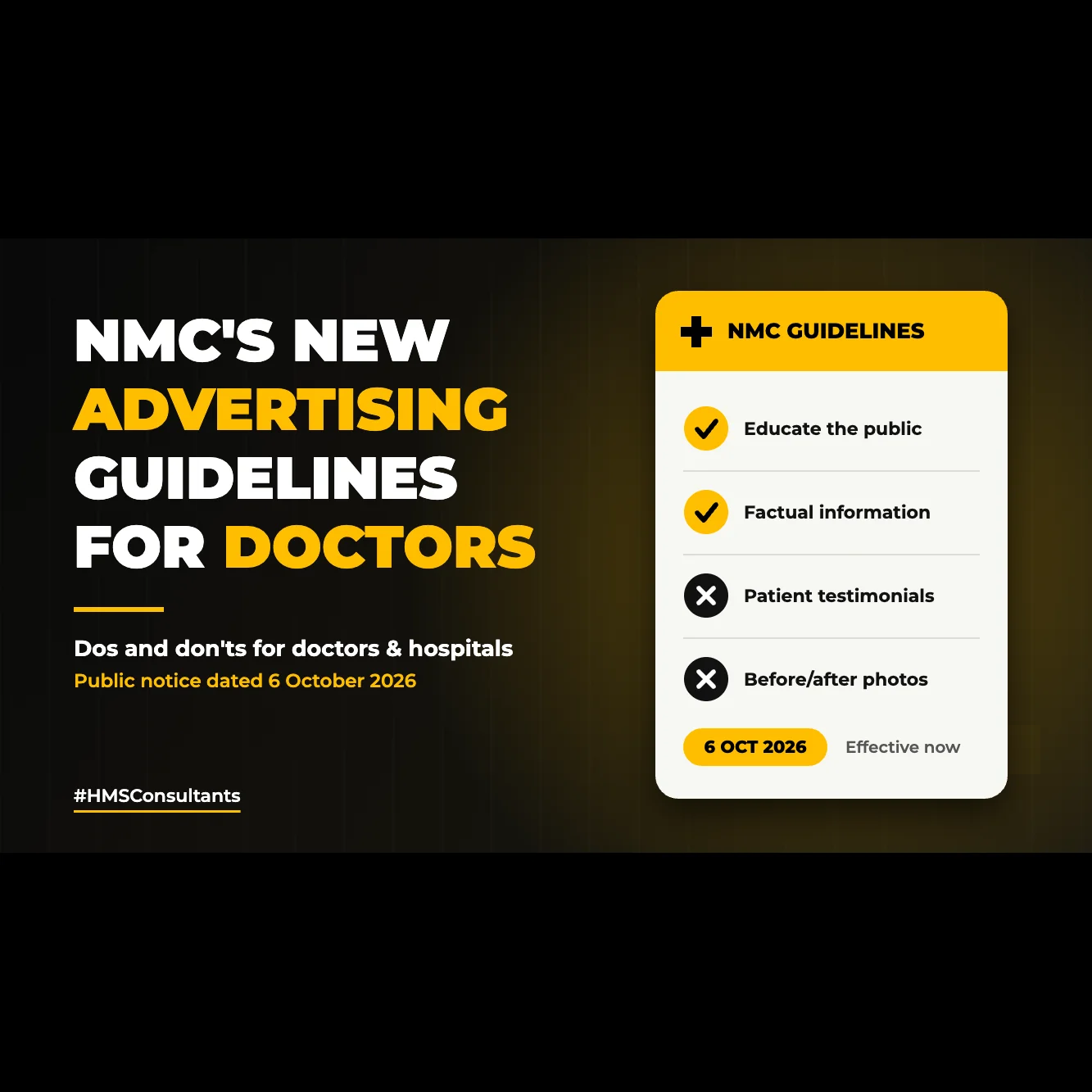
NMC Advertising Guidelines 2026: A Complete Compliance Guide for Doctors and Hospitals Author Akhil Dave Published on October 9, 2026 Share This NMC advertising guidelines now apply to every...
Building patient trust is the foundation of ethical healthcare in India. Learn strategies to boost loyalty, outcomes, and compliance in 2025.
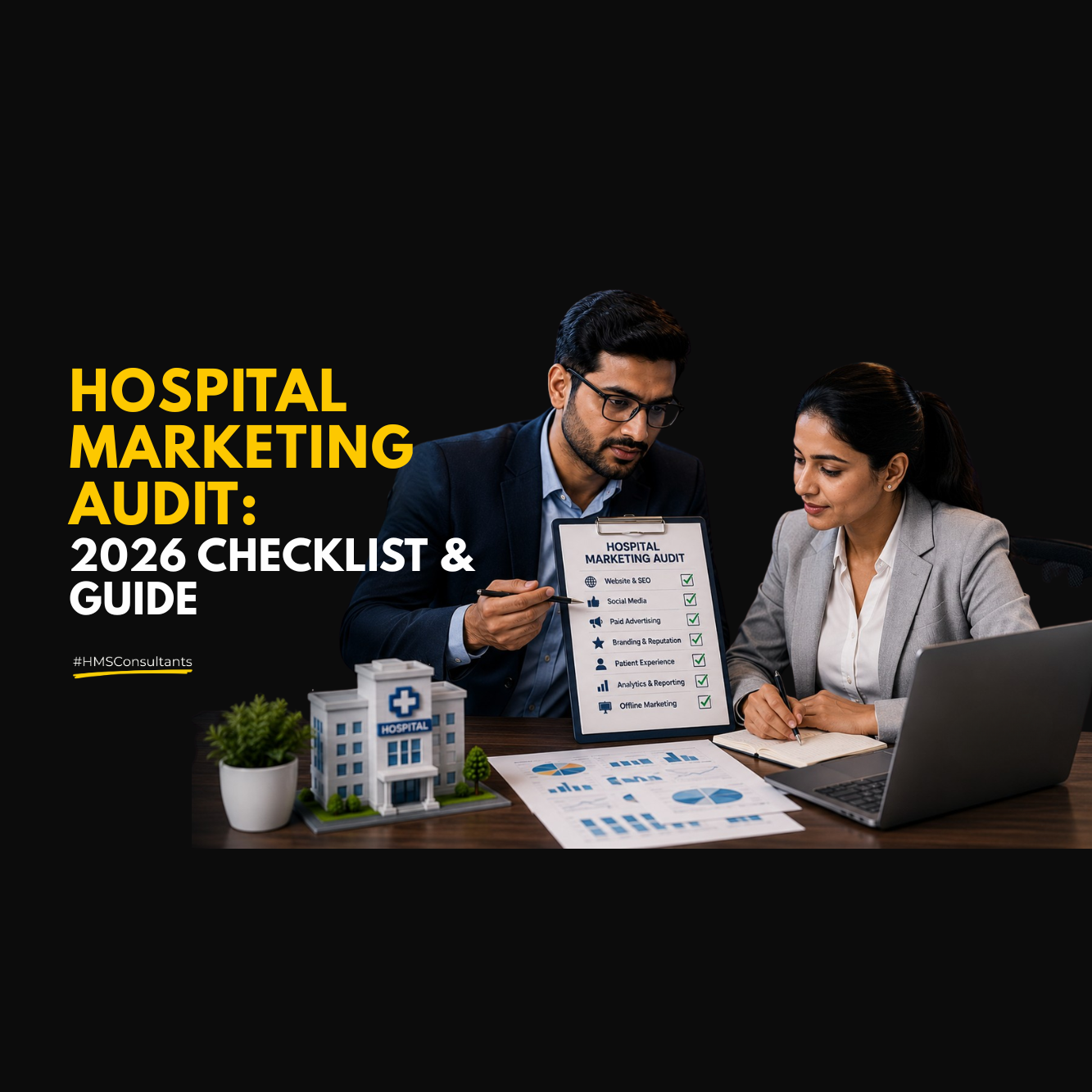
Hospital marketing audit is the first step to identifying what's helping—or hurting—your hospital's growth. This comprehensive 2026 checklist covers website performance, SEO, Google Business Profile, social media, branding, patient...
India is embracing AI, and hospitals can use AI-assisted tools to improve patient care and marketing. From chatbots to predictive communication, AI is reshaping how clinics engage and grow.

Discover the latest healthcare marketing trends shaping hospitals in India. Learn how digital marketing, SEO, branding, AI, and patient engagement strategies help healthcare organisations build trust, attract more patients,...