


The Role of Online Reputation Management in Healthcare
An illustration showing the significance of managing online reputation in healthcare, highlighting its impact on patient trust, doctor reputation, and overall healthcare marketing.
Quick answer
Copywriting frameworks give healthcare marketing a clear structure so patients understand and act. Common ones include StoryBrand (SB7) and AIDA (Attention, Interest, Desire, Action). Use them to explain the patient’s problem, your approach and the next step simply, ethically and without exaggerated claims. Patient Engagement Content
A copywriting framework is a structured formula that guides how you communicate a message in what sequence, using what emotional and logical triggers, and with what goal in mind.
In healthcare marketing, frameworks are especially important because:
Used correctly, copywriting frameworks help hospitals, clinics, and individual practitioners produce content that stops the scroll, builds credibility, and converts patient interest into appointments consistently and ethically.
India’s healthcare sector is growing faster than its marketing practices. Hospitals are opening. Specialists are multiplying. Digital platforms are democratising reach. But most healthcare content still reads like a brochure from 2005. The hospitals and clinics that are winning patient trust today are not necessarily the ones with the biggest budgets. They are the ones communicating most effectively writing content that speaks directly to the patient’s fears, hopes, and decisions. Here is what structured copywriting does that generic content cannot:
Here is what structured copywriting does that generic content cannot:
| Generic Healthcare Content | Framework-Driven Content |
| Talks about the hospital | Talks to the patient |
| Describes features | Describes transformations |
| Informs | Persuades and earns trust |
| Starts with solution | Starts with the patient’s pain |
| Generic, forgettable | Specific, memorable, shareable |
Here are the 8 most powerful copywriting frameworks, each explained with patient-facing healthcare examples showing exactly how a hospital or doctor should write to their patients.
Developed by Donald Miller, the StoryBrand framework is built on a single, powerful insight: make the patient the hero not your hospital.
Most hospitals position themselves as the hero of their own story talking about their equipment, their awards, their legacy. StoryBrand flips this entirely.
| S1 – Character | The Patient is the Hero Your story centres on the patient, their fears, and their journey not your hospital. |
| S2 – Problem | 3 Levels of Problem External: ‘I need a specialist.’ Internal: ‘I am scared.’ Philosophical: ‘I deserve good care.’ |
| S3 – Guide | Your Hospital is the Trusted Guide Not the hero the mentor. Show empathy first, then competence. |
| S4 – Plan | Give a Clear 3-Step Path Book. Consult. Heal. Simplicity creates action. Confusion creates abandonment. |
| S5 – CTA | Direct and Transitional CTA Direct: Book now. Transitional: Download free guide. Both must always be visible. |
| S6 – Failure | Show the Cost of Inaction What happens if the patient delays or chooses wrong? Make it real ethically. |
| S7 – Success | Paint the Vision of Success They heal. They trust. They return. They refer. This is your most powerful message. |
Work with HMS Consultants
Need a clear plan to grow brand visibility, patient footfall and revenue? Explore Hospital Marketing Strategy Consulting.
See Hospital Marketing Strategy ConsultingBook a free 30-min call
Patient-Facing Example:
Hospital Writing to Patient (SB7 — Problem Step) “You have been living with back pain for months. Painkillers help for a few hours. But it always comes back. You have stopped doing things you love and quietly, you wonder if it will ever get better.” |
When to Use SB7:
The SB7 insight most hospitals miss: They start every piece of content with ‘We’, we offer, we provide, we have. Start with ‘You’ instead. Every time.
AIDA is the oldest and most widely used copywriting formula in the world and most hospital marketers still do not use it correctly.
| A – Attention | Stop the Scroll Instantly You have 1.7 seconds. Your first line must hit a nerve a fear, a frustration, or a bold truth. |
| I – Interest | Make Them Lean In Build curiosity. Introduce something they do not know yet but need to. |
| D – Desire | Create the Want Use outcomes, data, and results. Make them feel the gap between where they are and where they could be. |
| A – Action | One Clear, Frictionless Ask One CTA only. Low-risk, easy to say yes to. Remove all friction from the next step. |
Patient-Facing Example:
Hospital Writing to Patient (AIDA — Full Sequence) A: “Most patients wait 6 months before seeing a cardiologist. By then, the window for prevention has often closed.”I: “Heart disease rarely announces itself. It builds silently and the first sign for many patients is the event they were trying to prevent.”D: “Patients who get a preventive cardiac screening before symptoms appear have an 85% higher chance of avoiding a major cardiac event in the next 5 years.”A: “Book your 30-minute preventive cardiac consultation today. Walk in no referral needed.” |
The #1 AIDA Mistake in Healthcare:
Most hospital ads jump from A (Attention) directly to the last A (Action) skipping Interest and Desire entirely. They grab attention then immediately demand action. That is not marketing. That is shouting into a crowd.
PAS is the most emotionally direct framework in this list. Three steps. Brutally simple. Devastatingly effective when used in healthcare content.
| P – Problem | Name the Exact Pain Precisely The more specific the problem statement, the more the right patient thinks ‘this was written for me.’ |
| A – Agitate | Make Them Feel the Full Weight of It Expand the problem. Show what it costs in daily life the missed moments, the quiet fear, the lost time. |
| S – Solve | Present the Solution with Confidence Now, and only now. Your audience is ready. The solution lands 10x harder because you earned the right. |
Patient-Facing Example:
Hospital Writing to Patient (PAS — Diabetes Management) P: “You are watching what you eat. You are taking your medication on time. But your sugar levels are still not where they should be.”A: “And the worst part you do not know what you are missing. Every week of uncontrolled blood sugar is not just a number on a report. It is nerve endings at risk. It is your kidneys working harder. It is your vision under quiet, cumulative threat.”S: “Our structured diabetes management programme combines clinical care with a personalised lifestyle plan. Patients typically see measurable improvement in HbA1c within 90 days with a care team that stays with you through every step.” |
PASTOR is PAS’s more powerful, more human older brother. It adds Story, Testimony, Offer, and Response turning a short punch into a deep trust-building narrative.
| P – Problem | Name the Pain Your Patient is Living Be specific. One patient. One pain. Not a demographic. A person. |
| A – Amplify | Show the True Cost of Staying Stuck Connect to daily life what they have stopped doing, who they cannot be, what they fear. |
| S – Story | Share a Real Patient Transformation Data convinces the mind. Story convinces the heart. Use a case that mirrors your reader exactly. |
| T – Testimony | Let Real Patients Speak for You One genuine testimonial removes more resistance than ten advertisements. |
| O – Offer | Present Your Solution Clearly Name what you do, who it is for, and the exact outcome it delivers. No jargon. |
| R – Response | One Simple, Low-Fear Next Step Make it feel easy. Walk in or call whatever feels easier. Remove every reason to hesitate. |
Patient-Facing Example (Testimony Step):
Hospital Writing to Patient (PASTOR — Testimony Step) “I wish I had come sooner. The pain I had been living with for a year gone in six weeks. I had convinced myself it would pass on its own. It did not. Coming here was the best decision I made.” Patient, Orthopaedic OPD |
PASTOR vs PAS — When to Use Which:
Use PAS for short, punchy social media posts that need to create urgency quickly. Use PASTOR for long-form LinkedIn articles, blog content, case studies, and any content where you need to build deep trust before making an offer.
The BAB framework is built on the most powerful idea in all of marketing: transformation. Not what your hospital does what changes for the patient.
| B – Before | Paint the Patient’s World Right Now Raw. Real. Relatable. The more accurately you describe their current pain, the more they trust you before meeting you. |
| A – After | Paint Their World as it Could Be Vivid. Hopeful. Specific. Make the transformation feel tangible and within reach — not distant and vague. |
| B – Bridge | Show Exactly How to Get There Your hospital, doctor, or service as the clear, credible path. Add proof. Add process. Add outcomes. |
Patient-Facing Example:
Hospital Writing to Patient (BAB — Pulmonology) Before: “You have not slept through the night in three months. The cough will not stop. You are exhausted and quietly worried it might be something serious.”After: “Imagine waking up tomorrow with clear lungs. Sleeping without interruption. Getting back to your morning walk without stopping to catch your breath.”Bridge: “Our pulmonology team has helped 2,000+ patients breathe freely again. It starts with one consultation a clear diagnosis, a clear plan, a clear path forward.” |
The BAB Insight Most Hospitals Miss:
Most hospital content starts at the Bridge jumping straight to ‘our services, our team, our expertise.’ But a patient who has not felt heard will never feel persuaded. Earn the right to present your solution by first showing you understand their problem.
H·I·C is LinkedIn’s native content formula. It is the simplest, most effective structure for daily healthcare content on social platforms and the most underused.
| H – Hook | Stop the Scroll in 2 Lines On LinkedIn, you get exactly 2 lines before ‘see more’ cuts you off. Those 2 lines decide everything. Create a gap a question the reader needs answered. |
| I – Insight | Your Unique, Earned Point of View Not generic tips. Not copy-paste facts. The specific observation only someone with your experience can make. |
| C – CTA | One Specific, Meaningful Ask Not ‘like and share.’ Something that moves the right person closer to you a question, a DM, a next step. |
4 Hook Types That Work in Healthcare Marketing:
| Hook Type | Example |
|---|---|
| Contrarian | Good doctors do not always get good patients. Here is the uncomfortable truth. |
| Bold Statistic | 47% of patients choose a hospital before ever calling them. This is why. |
| Bold Truth | Your hospital’s biggest competitor is not another hospital. It is patient inertia. |
| Direct Question | When did you last update your Google Business profile? That silence is costing you. |
The W·W·H framework solves the most common problem in healthcare content: starting with How before earning the right to say it.
| W – What | State One Clear, Specific Idea No jargon. No medical complexity. One thing a patient can repeat to a family member in 10 seconds. |
| W – Why | Connect it to Their Life Not Their Diagnosis Why does this matter to how they live, move, sleep, and feel? Not to their medical chart. |
| H – How | Give a Concrete, Simple 3-Step Path Patients freeze when the next step feels complex. Break it down. Numbered steps remove hesitation. |
Patient-Facing Example:
Hospital Writing to Patient (W·W·H — Orthopaedics) What: “A knee replacement surgery can get you walking pain-free within 6-8 weeks.”Why: “Because every month you delay, the surrounding muscles weaken. What starts as a 6-week recovery slowly becomes a 6-month one. Pain today costs more than treatment today.”How: “Step 1 — A 20-minute consultation with our orthopaedic specialist. Step 2 — A personalised recovery plan built around your lifestyle. Step 3 — Walk out of our facility stronger than you walked in.” |
The 3 Patient Questions W·W·H Answers:
The mistake 9 out of 10 hospitals make: They start with How and skip What and Why entirely. A patient who does not feel the What and Why will never act on the How, no matter how easy you make it.
Originally developed as a sales framework, SPIN is the most powerful consultative communication tool in healthcare marketing. Use it in patient education content, consultation scripts, social media, and direct communication.
| S – Situation | Mirror the Patient’s World Back to Them Accurately reflecting their current reality builds instant credibility before you have offered anything. |
| P – Problem | Surface the Hidden Problem Name the problem they feel but have not articulated. This creates a powerful moment of recognition and trust. |
| I – Implication | Show What Staying Stuck Will Cost Not fear tactics honest, specific consequences. What happens in the next 1-3 years if this is not addressed? |
| N – Need-Payoff | Let the Patient Arrive at the Answer The most powerful CTA in healthcare is a question, not a command. When a patient names why they need help, they own the decision. |
Patient-Facing Example:
Hospital Writing to Patient (SPIN — Diabetes Management) S: “You have been managing your blood sugar with medication for three years. Your HbA1c is still above 8. You are watching your diet but the numbers are not moving the way you hoped.”P: “The truth is medication alone rarely stabilises diabetes long term without a structured lifestyle intervention running alongside it. Most patients do not know this until it is too late.”I: “Uncontrolled HbA1c above 8 for three or more years significantly raises the risk of nerve damage, vision loss, and kidney complications not someday, but in the next 2-3 years.”N: “Patients who combine medication with a structured diabetes management programme see HbA1c drop 1.5-2 points within 90 days — and stay there. What would it mean for your life if your numbers finally stabilised?” |
Why SPIN Works Better in Healthcare Than Any Other Industry:
Healthcare decisions are driven by fear, hope, and trust not logic and price comparison. SPIN works with these emotions ethically. It does not manipulate it illuminates. It takes a patient from ‘I am managing fine’ to ‘I need to act now’ through clarity, not pressure.
| Framework | Best Content Type | Primary Goal |
|---|---|---|
| SB7 | Brand narrative, website, campaigns | Build patient trust through story |
| AIDA | Ads, promos, announcements | Drive appointment conversions |
| PAS | Short posts, emails, quick content | Create urgency around a problem |
| PASTOR | Long-form articles, case studies | Build deep authority and trust |
| BAB | Testimonials, transformation content | Show life-changing outcomes |
| H·I·C | Daily LinkedIn and social posts | Build personal brand consistently |
| W·W·H | Educational blogs, patient guides | Position as a knowledge authority |
| SPIN | Consultative content, scripts | Guide patients to self-convinced decisions |
You now have 8 of the most powerful copywriting frameworks in healthcare marketing each explained, each applied, each made practical with real patient-facing examples.
But here is the honest truth that every hospital marketer needs to hear:
Reading this guide is Knowing. Applying these frameworks consistently, correctly, in every piece of content your hospital produces is Doing. And in healthcare marketing, Doing is where growth lives. |
The hospitals in India that will win the next decade of patient trust are not going to be the ones with the biggest marketing budgets. They are going to be the ones that communicate best.
They will be the ones who understand that a patient is not choosing a hospital they are choosing safety, trust, and hope.
And every framework in this guide is designed to communicate exactly that.
Is Your Hospital's Marketing Using the Right Framework?
Most hospitals are not and it is costing them patient footfall and revenue every single day.
At HMS Consultants, we do not just advise we prescribe. Like a doctor diagnoses before treating, we diagnose your marketing before recommending a strategy.
Book a free 30-minute marketing strategy consultation with Akhil Dave today.
www.hmsconsultants.in | akhil@hmsconsultants.in | +91 81550 04010
The best framework depends on your goal. For building long-term patient trust and brand narrative, SB7 (StoryBrand) is highly effective. For driving immediate appointment conversions, AIDA works well. For thought leadership content on LinkedIn, H·I·C is the most practical. Most successful healthcare marketers combine multiple frameworks across different content types rather than relying on one.
Yes in fact, the right frameworks encourage more ethical communication. Frameworks like SPIN, BAB, and PASTOR are built on understanding the patient's actual situation and communicating honestly about outcomes. They move away from generic promotional language toward patient-first messaging that respects the intelligence and vulnerability of the audience.
Hospitals use PAS by first naming a specific, relatable patient pain (Problem), then expanding its real-life consequences beyond just the medical symptoms (Agitate), and finally presenting their service, consultation, or treatment as the clear solution (Solve). The key is specificity the more precisely you name the pain, the more effectively the content resonates with the right patient.
PAS is a three-step formula ideal for short, punchy content that creates quick emotional urgency. PASTOR extends this with Story (a real patient transformation), Testimony (social proof), a clear Offer, and a specific Response or CTA. Use PAS for social posts and quick emails. Use PASTOR for long-form content, blog articles, case studies, and anywhere deep trust-building is needed before an ask.
In website copy, SB7 means leading every page with the patient's problem not the hospital's credentials. The hero of your homepage should be the patient and their journey, not your hospital's founding year or number of beds. Your hospital is positioned as the trusted guide empathetic and competent with a clear plan and a visible CTA. Many Indian hospital websites currently do the opposite, and it costs them significantly in patient conversions.
AEO (Answer Engine Optimisation) refers to structuring your content so it is selected as a direct answer by search engines and AI tools like Google's featured snippets, voice search, and AI overviews. GEO (Generative Engine Optimisation) refers to optimising content so it gets cited and referenced by generative AI tools like ChatGPT, Gemini, and Perplexity when users ask healthcare-related questions. Both require comprehensive, clearly structured, authoritative content written in natural language with direct answers to specific questions exactly the kind of content these frameworks produce.
For competitive healthcare marketing topics, long-form content between 2,500 to 5,000 words consistently ranks better than shorter articles. This length allows thorough coverage of the topic, inclusion of FAQs, use of structured headings (which improve both SEO and AEO), and sufficient keyword density without stuffing. More importantly, comprehensive content earns backlinks and shares the strongest SEO signals available.
Akhil Dave
Founder & Principal Consultant — HMS Consultants (HMS Advisors Pvt Ltd)
Founder Chairman — AHMP India Foundation
Akhil Dave is India’s leading healthcare marketing strategist with 25+ years of hands-on experience working with hospitals, clinics, and healthcare organisations across India. He is the founder of HMS Consultants India’s first dedicated healthcare marketing strategy consultancy and the Founder Chairman of AHMP India Foundation, India’s first platform for healthcare marketing professionals.
His philosophy: “Knowing is Knowing. Doing is Doing.”
Connect: Akhil Dave | hms consultants | The White Shirt man
Share your details below and we will connect with you to discuss your growth strategy.
An illustration showing the significance of managing online reputation in healthcare, highlighting its impact on patient trust, doctor reputation, and overall healthcare marketing.
Most hospital growth strategies fail before marketing begins because they ignore patient trust, clarity, and decision behaviour. Sustainable hospital growth starts with confidence, not promotion.
The first marketing step for any new hospital or clinic isn’t posting online it’s building strategic clarity. Positioning, messaging, and patient journey mapping come before ads or social media.
Hospital marketing isn't just digitalit's regulated. Learn how to build trust, boost visibility, and stay compliant in 2025.
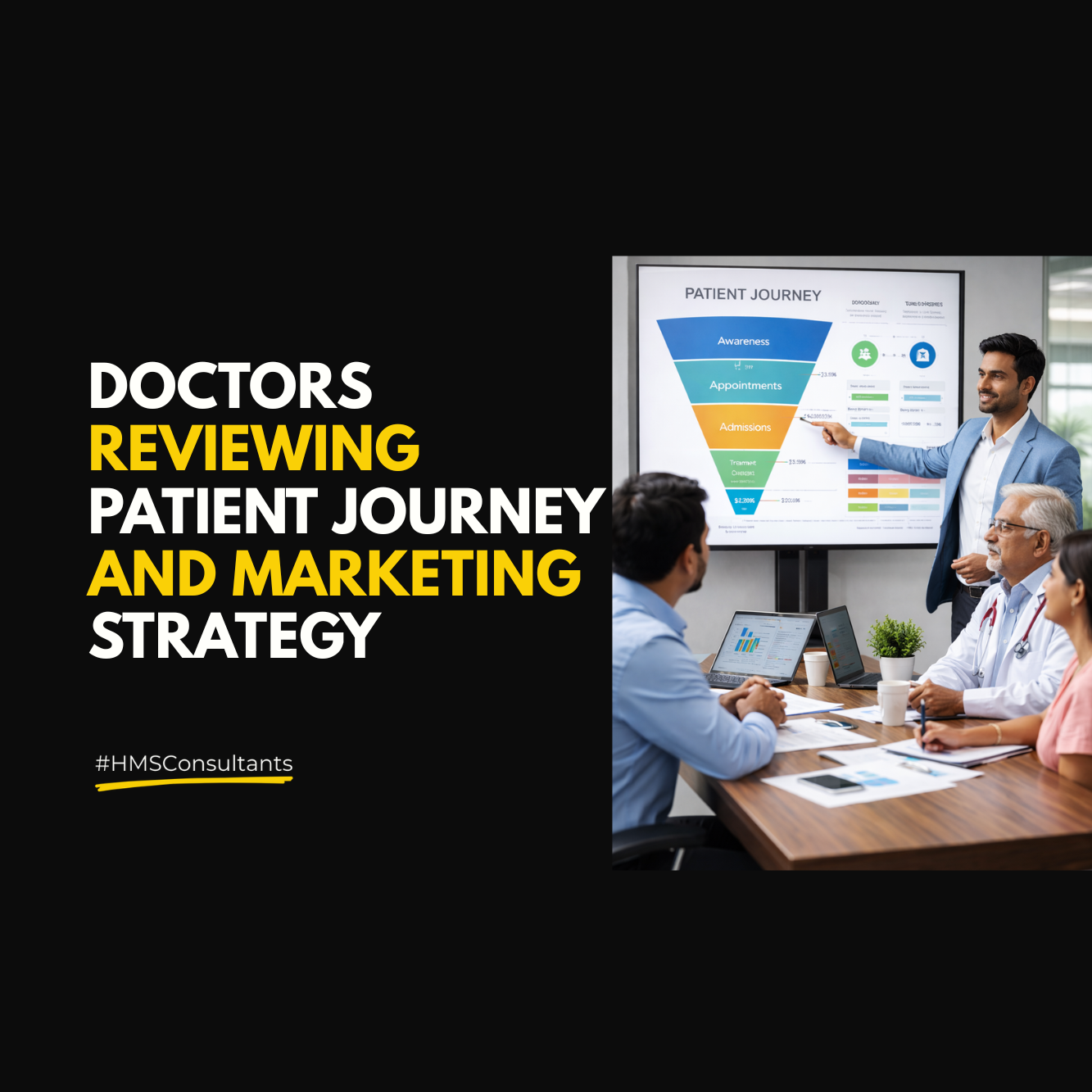
A hospital marketing expert can identify hidden friction in the patient journey within the first 30 days. Learn how patient hesitation, messaging gaps, and experience misalignment quietly affect hospital...
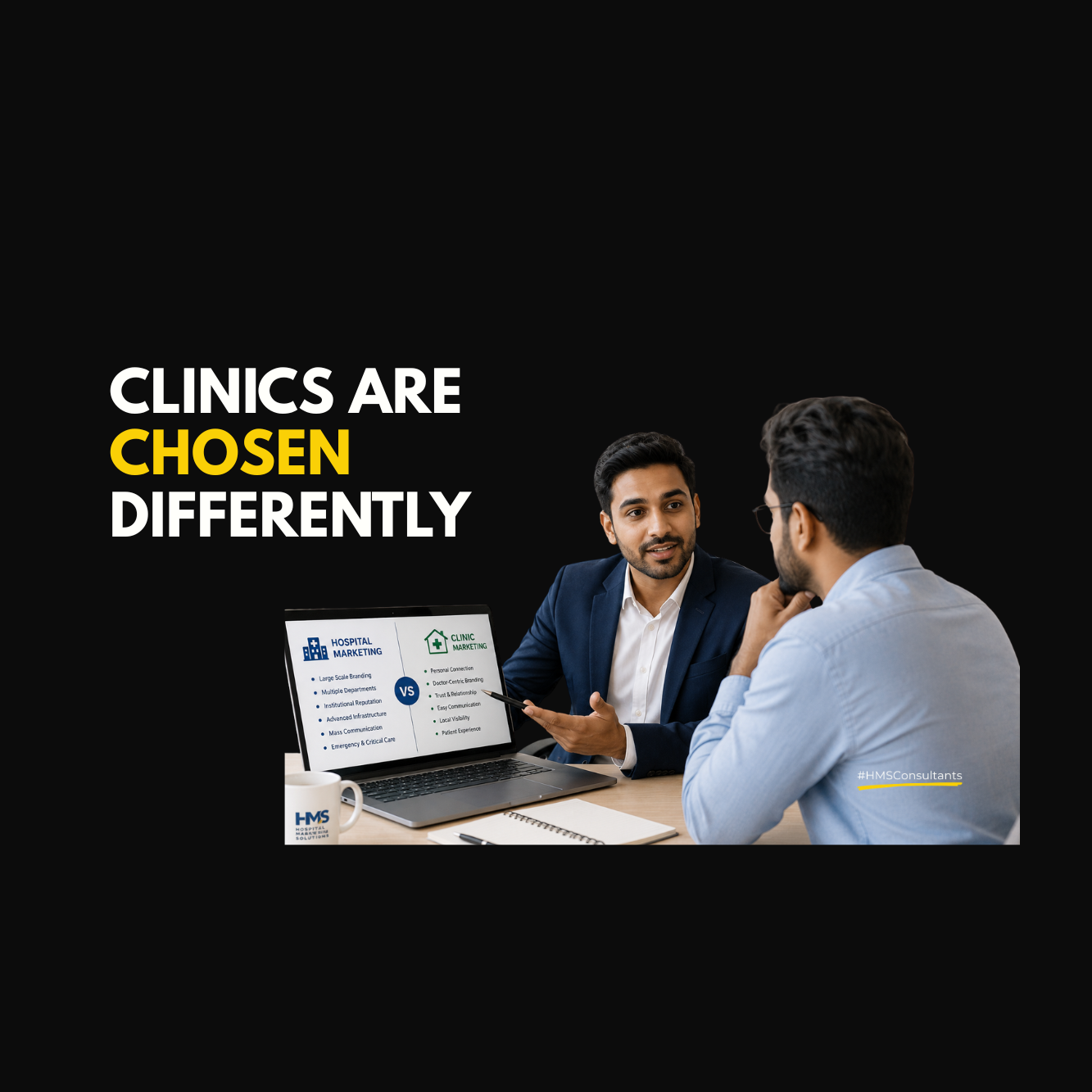
Marketing a clinic requires a different strategy from hospital marketing because patients evaluate clinics more personally. This blog explains how trust, communication, responsiveness, reviews, and patient-friendly digital experiences influence...