

The Invisible Funnel in Indian Hospitals: Where Patients Drop Off Without Complaining
Many patients quietly drop off before OPD or treatment. Understanding the invisible funnel helps hospitals improve trust, patient experience, and growth.

Hospitals often respond to slow growth by adding something new.
They may think they need:
Sometimes these things are needed. But not always.
In many cases, the hospital already has useful resources. The problem is that those resources are not being used in the right way.
For example, a hospital may have a diagnostic machine but low test volume. A specialist doctor may have available OPD slots but fewer relevant patients. An operation theatre may have unused time. A department may exist, but patients may not know about it clearly.
Adding more without improving current utilisation can increase cost without improving results.
Hospital assets are not only buildings and machines. They include everything that can support patient care, hospital operations, revenue, and growth.
Existing hospital assets may include:
A healthcare consulting firm helps hospitals look at these assets with a management perspective.
The goal is to understand what is underused, what can be improved, and what can create better outcomes with better planning.
Work with HMS Consultants
Need a clear plan to grow brand visibility, patient footfall and revenue? Explore Hospital Marketing Strategy Consulting.
See Hospital Marketing Strategy ConsultingBook a free 30-min call
Doctors are one of the most important assets of any hospital. But many hospitals do not study how doctor time is being used.
Some doctors may have high demand, while others may have low OPD utilisation. Some specialists may be available, but their services may not be communicated properly.
Hospitals should review:
This does not mean overloading doctors. It means aligning doctor availability, patient demand, and hospital communication properly.
A hospital consulting firm can help management understand where doctor utilisation can improve without affecting care quality.
Many hospitals invest in equipment and technology with the expectation that it will improve service capability. But after installation, some machines may not be used to their full potential.
This can happen because:
For example, a hospital may have advanced diagnostic equipment, but if patients and referring doctors do not understand its availability or relevance, utilisation remains low.
A healthcare management consulting firm can help hospitals review whether existing technology is supporting patient care, revenue, and service growth as expected.
Many hospitals already have useful patient data, but they do not always use it for planning.
This data may include:
This information can help hospitals understand what patients are actually looking for.
For example, if many patients enquire about a service but do not convert, the hospital may need better counselling, pricing clarity, doctor availability, or follow-up process.
A healthcare consulting firm can help convert patient data into useful management decisions.
Some hospital departments may exist, but they may not receive enough attention.
This may happen when:
In such cases, the department is not necessarily weak. It may simply be underused.
Before adding a new department, hospitals should check whether existing departments are being used properly.
A hospital management consulting approach helps identify which departments have hidden potential and what changes are needed to improve performance.
Hospital assets are not limited to doctors and machines. Space, staff, and systems also need proper utilisation.
For example:
Small improvements in these areas can create better patient experience and better hospital efficiency.
A healthcare management consulting firm can help hospitals see where existing systems can be improved before making new investments.
Better asset utilisation helps hospitals grow more efficiently.
Instead of only increasing cost, hospitals can improve value from existing resources.
This can support:
Growth does not always come from adding more. Sometimes, growth comes from using current resources with more clarity.
A healthcare management consulting firm brings a structured view to hospital resources.
It helps hospital leadership review what already exists and where improvement is possible.
This may include:
The role is not only to suggest new activities. It is also to identify what should be improved, reorganised, or used better.
A healthcare management consulting firm can help hospitals look beyond the idea of always adding more.
Many hospitals already have valuable assets such as doctors, equipment, departments, staff, space, patient data, digital platforms, and local reputation. But if these assets are not used properly, the hospital may still struggle with growth, patient flow, and revenue clarity.
Before investing in something new, hospitals should first understand what is already available and how well it is being used.
Better hospital asset utilisation can improve performance, reduce waste, support patient care, and create more focused growth.
A strong hospital management strategy is not only about expansion.
It is also about using existing resources wisely.
Healthcare consulting firms help hospitals review their operations, resources, services, patient flow, departments, and growth plans. As per this blog, they also help hospitals identify underused assets like doctors, equipment, staff, space, patient data, and existing departments.
The role of a healthcare consultant is to study hospital resources, identify gaps, and suggest practical improvements. In this blog context, a consultant helps hospitals use existing assets better before investing in new doctors, machines, departments, or campaigns.
Consulting a healthcare provider is important because hospitals may already have valuable resources but may not be using them fully. A healthcare management consulting firm helps improve asset utilisation, patient flow, department performance, staff deployment, and management decisions.
The main responsibility of a healthcare provider is to deliver safe, reliable, and patient-focused care. From a management perspective, hospitals should also use doctors, equipment, staff, departments, space, and systems properly to support better care and sustainable growth.
Share your details below and we will connect with you to discuss your growth strategy.
Many patients quietly drop off before OPD or treatment. Understanding the invisible funnel helps hospitals improve trust, patient experience, and growth.
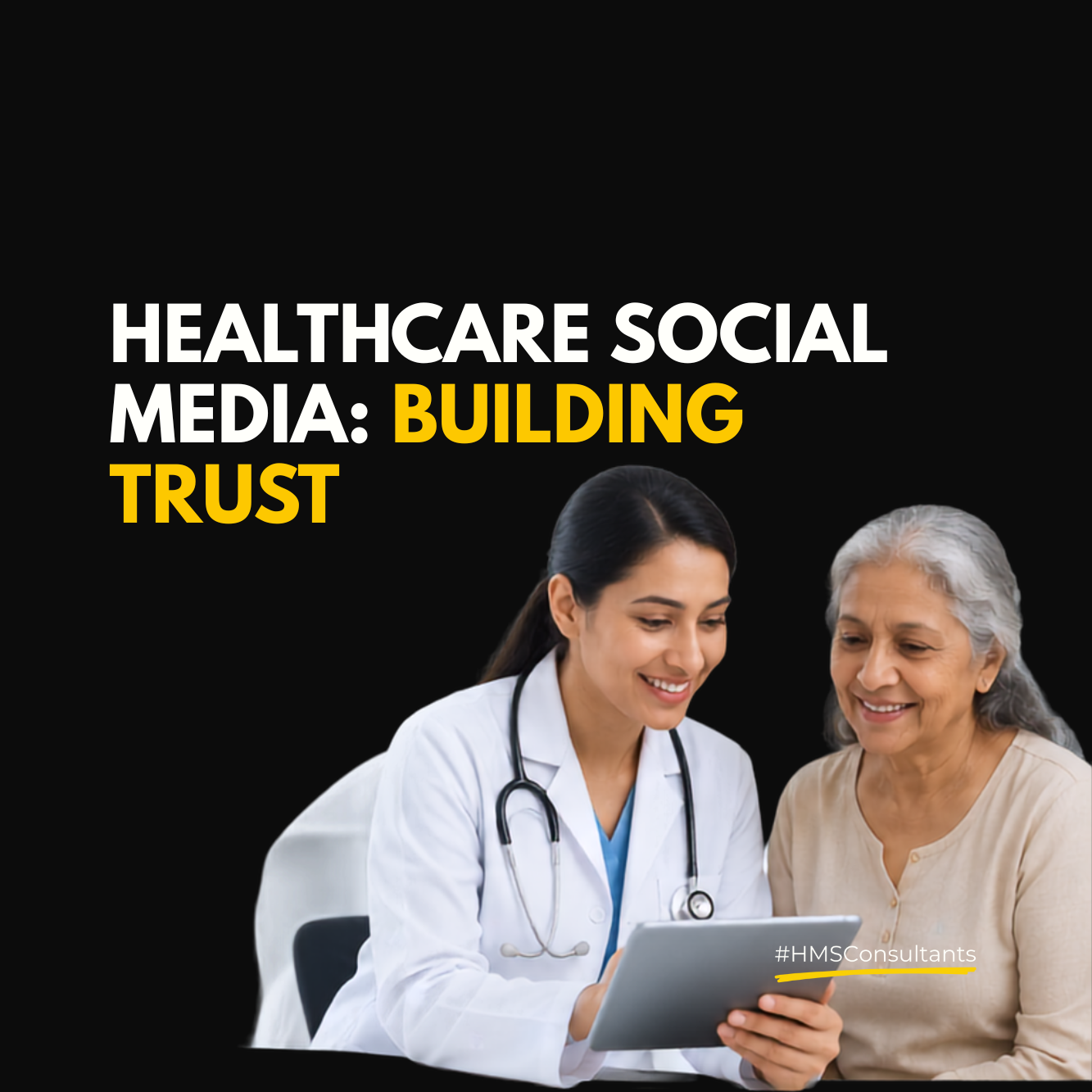
Healthcare marketing social media is more than regular posting. Learn how patient trust, healthcare content strategy, ethical communication, and patient-focused content help clinics, hospitals, and healthcare businesses build credibility,...
Learn what hospital marketing is and why it plays a vital role in building patient trust. Discover how branding, digital marketing, patient communication, and ethical strategies help hospitals improve...
Ten signs your hospital needs a marketing audit, plus answers on budget, channels, ROI, NMC rules and DPDP, and what an audit costs against wasted spend.

A practical 2026 personal branding strategy for doctors covering platform priorities, content pillars, video, consistency, and trust-building to turn online visibility into patient enquiries.
A step-by-step clinic marketing plan for doctors in India: 8 steps, a 90-day roadmap, the NMC lens, and the Masterclass that teaches it.