Category: healthcare digital marketing

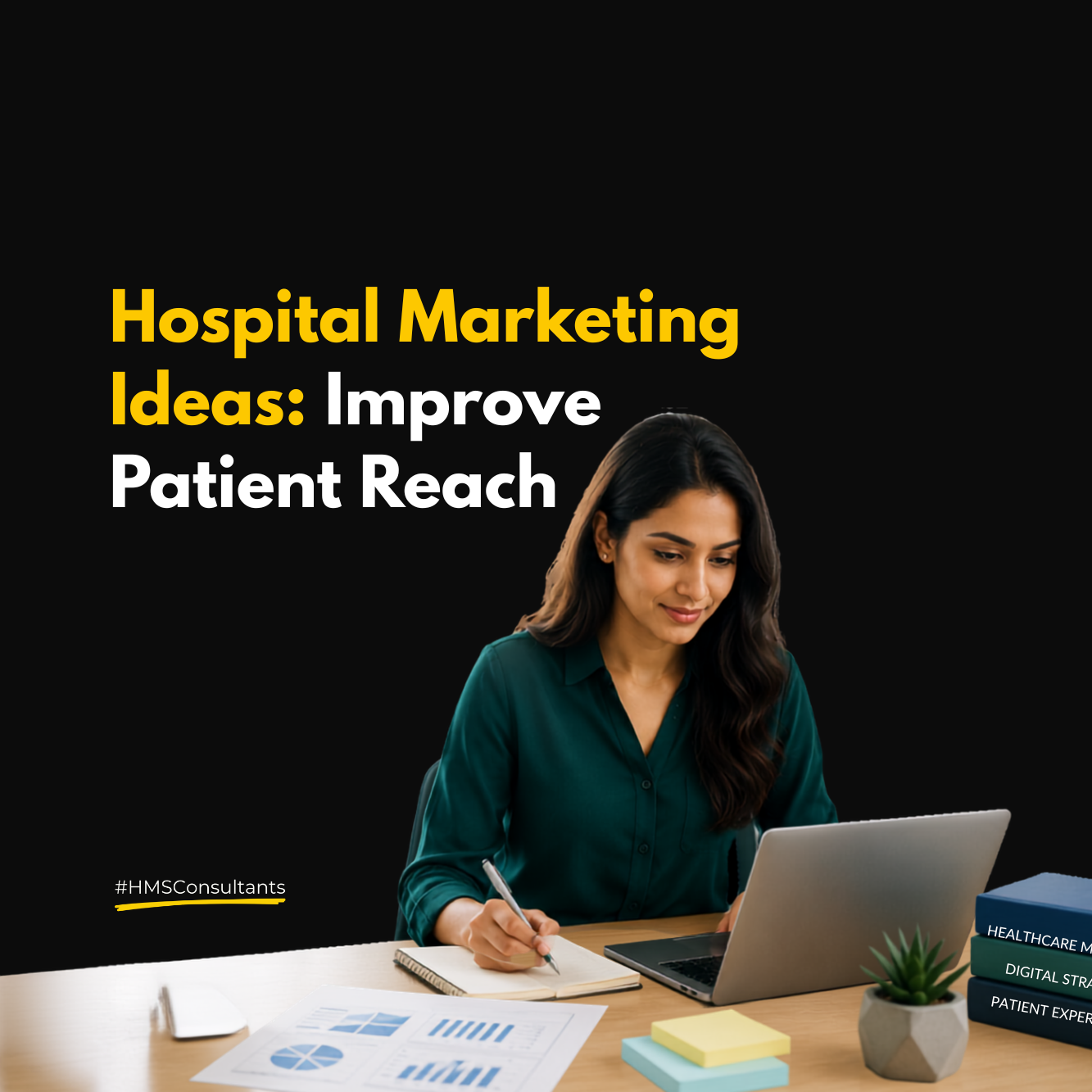
  • Hospital Marketing Ideas: Practical Ways to Improve Patient Reach

    Hospital Marketing Ideas: Practical Ways to Improve Patient Reach

    Hospital Marketing Ideas: Practical Ways to Improve Patient Reach

    Published on
    Share This

    Hospital marketing ideas should not be random activities done only to keep the hospital visible. For hospitals, marketing must help patients understand services, trust doctors, find the right department, and take the next step with confidence.

    Many hospitals already do some form of marketing. They post on social media, run ads, organise health camps, print brochures, update Google Business Profile, or share doctor photos.These activities can be useful, but only when they are connected to a clear purpose.

    The goal is not only to promote the hospital.

    The goal is to improve patient reach, build trust, and communicate healthcare services responsibly.

    Here are practical hospital marketing ideas that can help hospitals grow with better direction.

    Create Department-Wise Awareness Content

    A hospital usually has multiple departments such as cardiology, orthopaedics, gynaecology, paediatrics, ophthalmology, dermatology, surgery, emergency care, or diagnostics.

    Instead of promoting the hospital as one general brand all the time, hospitals should create department-wise awareness content.

    For example:

    • Common symptoms patients should not ignore
    • When to consult a specialist
    • Treatment options available
    • Preventive care tips
    • Myths and facts
    • Department-specific FAQs

    This helps patients understand which service they need and when they should seek help.

    Department-wise content also supports hospital digital marketing and improves service visibility.

    Use Doctor Education Videos

    Patients trust doctors when they understand their expertise and communication style. Doctor education videos can help hospitals build this trust.

    These videos do not need to be overly promotional. They can be simple and informative.

    Topics may include:

    • Common patient doubts
    • Symptoms explained by doctors
    • Treatment process
    • Recovery guidance
    • Preventive healthcare tips
    • When to visit the hospital

    Doctor videos make hospital communication more human and trustworthy.

    They also support hospital branding because patients begin to associate the hospital with expertise and guidance.

    Improve Google Business Profile Updates

    Google Business Profile is one of the most important platforms for patient discovery. Many patients search on Google or Maps before calling or visiting a hospital.

    Hospitals should regularly update their profile with:

    • Correct phone number
    • Accurate location
    • Updated timings
    • Department information
    • Hospital photos
    • Service updates
    • Health camp announcements
    • Patient-friendly posts

    A strong Google presence improves local visibility and patient reach.

    This is one of the most practical hospital marketing ideas because it directly affects how patients find and contact the hospital.

    Build a Genuine Review System

    Patient reviews influence hospital trust. Patients often check reviews before choosing a hospital, doctor, or department.

    Hospitals should create a responsible review system where satisfied patients are encouraged to share genuine feedback.

    This should be done ethically.

    Hospitals should also respond professionally to reviews, especially when patients share concerns. Reviews are not only for marketing. They are also a way to understand patient experience.

    A good review system helps improve trust, reputation, and internal service quality.

    Convert Health Camps Into Follow-Up Campaigns

    Health camps are common hospital marketing activities. But many hospitals conduct camps and stop there.

    A better approach is to connect health camps with follow-up communication.

    After a camp, hospitals can:

    • Share health reports clearly
    • Send preventive care tips
    • Guide patients for follow-up visits
    • Share doctor availability
    • Create awareness content from common findings
    • Track how many patients return for consultation

    This makes the health camp more meaningful.

    It also connects offline activity with a stronger hospital marketing plan.

    Create Patient FAQ Content

    Patients often have many questions before visiting a hospital.

    They may want to know:

    • Which doctor should I consult?
    • What symptoms are serious?
    • Is the treatment painful?
    • How long does recovery take?
    • What documents should I bring?
    • How do I book an appointment?
    • Is emergency support available?

    Hospitals can use these questions to create content for websites, social media, videos, brochures, and WhatsApp communication.

    FAQ-based content is simple, useful, and patient-friendly.

    It improves hospital patient communication and helps patients feel more informed.

    Strengthen Local SEO Content

    Many patients search for hospitals and doctors near their location.

    This is why local SEO should be part of hospital marketing strategies.

    Hospitals can create location and service-based content such as:

    • Orthopaedic hospital in the city
    • Maternity hospital near local areas
    • Emergency hospital near me
    • Best diagnostic services in the area
    • Specialist doctor pages
    • Department pages with local relevance

    Local SEO helps hospitals become visible when patients are actively searching for care.

    This is more useful than only posting generic social media content.

    Use Patient Education Campaigns

    Patient education campaigns help hospitals build trust and awareness.

    Campaigns can focus on topics such as diabetes care, heart health, eye health, women’s health, child health, cancer awareness, senior care, preventive check-ups, or emergency preparedness.

    These campaigns can run across social media, blogs, videos, Google updates, local events, and WhatsApp communication.

    The purpose should be to educate first and promote responsibly.

    When hospitals educate consistently, they build stronger patient trust.

    Improve Enquiry and Appointment Communication

    Marketing does not end when a patient calls or sends a message.

    If the enquiry response is slow, unclear, or unhelpful, patients may choose another hospital.

    Hospitals should improve:

    • Call response
    • WhatsApp replies
    • Appointment booking process
    • Front desk coordination
    • Department transfer
    • Follow-up communication
    • Missed call tracking

    This is one of the most ignored hospital marketing ideas.

    A hospital may get good visibility, but weak communication can reduce patient conversion.

    Use a Healthcare Marketing Consultant for Direction

    A healthcare marketing consultant can help hospitals understand which ideas are suitable for their goals.

    Not every hospital needs the same activities. A small hospital, multispeciality hospital, eye hospital, maternity hospital, or diagnostic centre may need different marketing priorities.

    A consultant can review the hospital’s services, digital presence, patient communication, local competition, and enquiry flow before suggesting the right direction.

    This helps hospitals avoid random marketing and follow a more structured approach.

    How HMS Supports This Direction

    Hospital marketing ideas work best when professionals understand healthcare communication, patient behaviour, ethical marketing, digital presence, and service positioning.

    The HMS Certified Healthcare Marketing Consultant Program helps serious professionals learn this consulting-led approach.

    Participants are introduced to healthcare marketing strategy, digital presence review, patient communication, service positioning, clinic and hospital marketing diagnosis, proposal planning, and business development guidance.

    The program is designed for professionals who want to understand how healthcare businesses can grow with practical, ethical, and structured marketing direction.

    Conclusion

    Hospital marketing ideas should not be limited to posts, ads, brochures, or one-time campaigns. Good hospital marketing should improve patient reach, build trust, explain services, support local visibility, and strengthen communication.

    The best ideas are not always the most expensive ones.

    They are the ones that help patients understand the hospital better and take action with confidence.

    For hospitals, marketing should be planned, patient-focused, and responsible.

    For professionals entering healthcare marketing consulting, understanding practical hospital marketing ideas is important because it connects creativity with strategy, patient trust, and real healthcare growth.

    Contact Us HMS Consultants

    Practical hospital marketing ideas include department-wise content, doctor education videos, Google Business Profile updates, genuine reviews, health camp follow-ups, patient FAQs, local SEO, and patient education campaigns.

    healthcare digital marketing I Digital Marketing I Digital Strategy I Hospital Branding I hospital marketing I Hospital Marketing Strategies

    is something we strongly believe in, which means ‘Knowledge without application is the same as having no knowledge at all

    Akhil Dave

    Principle Consultant

    Ready to take your Personal Brand to the next level?

    Share your details below and we will connect with you to discuss your growth strategy.
    • Healthcare Marketing Services: What Professionals Should Understand Before Consulting

      Healthcare Marketing Services: What Professionals Should Understand Before Consulting

      Healthcare Marketing Services: What Professionals Should Understand Before Consulting

      Published on
      Share This

      Healthcare marketing services are becoming important for doctors, clinics, hospitals, diagnostic centres, wellness businesses, and healthcare startups that want to improve visibility, patient communication, enquiries, and business growth.

      But for professionals who want to enter healthcare marketing consulting, it is not enough to only know the names of these services. They must understand what each service does, when it is needed, why it matters, and how it supports patient trust and healthcare business growth.

      This is where the difference between service execution and consulting understanding begins.

      A healthcare marketing consultant should not randomly suggest social media, SEO, ads, or website work. A consultant should first understand the healthcare business, patient journey, communication gaps, digital presence, and growth goals.

      What Are Healthcare Marketing Services?

      Healthcare marketing services are activities that help healthcare businesses communicate better, become more visible, attract relevant patients, and build trust.

      These services may include:

      • Website development and improvement
      • Search engine optimization
      • Google Business Profile management
      • Social media marketing
      • Content creation
      • Paid advertising
      • Online reputation management
      • Patient communication strategy
      • Branding and positioning
      • Video marketing
      • Local SEO
      • Enquiry tracking
      • Marketing audit and reporting

      Each service has a purpose. But not every healthcare business needs every service at the same time.

      This is why strategic understanding is important.

      Website and SEO Services

      A website is often the first serious digital touchpoint for patients. Before booking an appointment, many patients visit a clinic or hospital website to understand services, doctors, treatments, location, and credibility.

      A healthcare website should not only look good. It should help patients understand clearly.

      Important website elements include:

      • Doctor profile
      • Service pages
      • Treatment explanations
      • Symptoms and conditions
      • Patient FAQs
      • Appointment details
      • Location information
      • Trust signals
      • Mobile-friendly design

      SEO helps patients find this information when they search online. Healthcare digital marketing services often include SEO because patients search for doctors, treatments, symptoms, and location-based healthcare services.

      For a consultant, the question is not only whether SEO is being done. The question is whether the website is actually useful for patients.

      Google Business Profile Services

      For local healthcare businesses, Google Business Profile can directly influence enquiries.

      Patients often search for doctors, clinics, diagnostic centres, or hospitals near them. If the profile is incomplete, outdated, or poorly managed, the healthcare business may lose potential patients.

      Google Business Profile services may include:

      • Updating business information
      • Adding services
      • Uploading photos
      • Managing reviews
      • Posting updates
      • Tracking calls and direction requests
      • Improving local visibility

      For clinics and hospitals, this is one of the most practical clinic marketing services and hospital marketing services.

      A healthcare marketing consultant should understand how the profile affects patient discovery and trust.

      Social Media Marketing Services

      Social media is one of the most visible healthcare marketing services, but it is also one of the most misunderstood.

      Many healthcare businesses think social media means regular posting. But healthcare social media should not only create activity. It should educate, guide, and build trust.

      Strong healthcare social media can include:

      • Patient education posts
      • Doctor explanation videos
      • Service awareness content
      • Myth vs fact content
      • Preventive health tips
      • Patient FAQs
      • Trust-building content
      • Treatment information
      • Awareness campaigns

      Social media should be connected to a healthcare marketing strategy. It should not become random posting without purpose.

      Paid Advertising Services

      Paid ads can help healthcare businesses increase visibility and generate enquiries. But ads should be used carefully in healthcare.

      Running ads without proper strategy can lead to poor-quality enquiries, wasted budget, unclear messaging, or unrealistic patient expectations.

      Before suggesting ads, professionals should understand:

      • Which service is being promoted
      • Who the target patient group is
      • Whether the landing page is clear
      • Whether the enquiry team is ready
      • Whether claims are ethical
      • Whether the budget is being used correctly
      • Whether results are being tracked

      Paid advertising can support healthcare business growth, but only when the foundation is clear.

      Content Marketing Services

      Content is very important in healthcare because patients need information before they make decisions.

      Good healthcare content should answer real patient questions. It should not sound like hard selling.

      Content marketing services may include:

      • Blogs
      • Service page content
      • Doctor profile content
      • Patient education posts
      • Video scripts
      • FAQs
      • Treatment explainers
      • Email or WhatsApp communication
      • Awareness content

      Healthcare content should be simple, responsible, and patient-friendly.

      A healthcare marketing consultant should understand how content supports trust, SEO, patient education, and service positioning.

      Review and Reputation Services

      Patient reviews are powerful trust signals. Many patients check reviews before choosing a healthcare provider.

      Review and reputation services may include:

      • Encouraging genuine feedback
      • Monitoring reviews
      • Responding professionally
      • Understanding patient complaints
      • Improving communication gaps
      • Building trust through patient experience

      Reputation management should not be fake or forced. It should be ethical and connected to actual patient experience.

      For healthcare businesses, reviews are not just marketing. They reflect service quality and patient confidence.

      Branding and Positioning Services

      Healthcare branding is not only about logo, colours, or design. It is about how patients understand and remember the doctor, clinic, hospital, or healthcare business.

      Brand positioning helps answer:

      • What is this healthcare provider known for?
      • Which services should be highlighted?
      • What makes the provider trustworthy?
      • How should expertise be communicated?
      • What should patients feel when they see the brand?
      • How is this provider different from others?

      A strong healthcare marketing strategy should include clear positioning.

      Without positioning, marketing messages can become generic and forgettable.
      Why Consultants Must Understand Services Deeply

      A healthcare marketing consultant does not need to personally execute every service. But the consultant must understand how each service works and how it connects to the larger growth plan.

      For example, if a clinic is not getting enquiries, the problem may not always be ads. It may be weak Google visibility, unclear service pages, poor reviews, or delayed call response.

      If a hospital is not building trust, the issue may not be social media frequency. It may be poor communication, weak doctor positioning, unclear content, or lack of patient education.

      Consulting requires diagnosis before recommendation.

      This is why professionals must understand healthcare marketing services from a strategic point of view.

      How HMS Supports This Direction

      Many professionals learn marketing execution, but healthcare marketing consulting needs a broader understanding of services, patient behavior, business gaps, and ethical communication.

      The HMS Certified Healthcare Marketing Consultant Program helps serious professionals understand how different healthcare marketing services fit into a consulting-led growth approach.

      Participants learn to review digital presence, understand patient communication gaps, study service positioning, think through healthcare marketing strategy, and prepare practical recommendations for clinics, hospitals, and healthcare businesses.

      The program is designed for professionals who want to move beyond service names and understand how marketing decisions are made in healthcare.

      HMS provides structured learning, tools, frameworks, and guidance. Growth depends on the participant’s learning consistency, communication ability, practical application, and market development.

      Conclusion

      Healthcare marketing services are not only a list of tasks. They are connected parts of a larger growth system.

      A website supports trust. SEO supports discovery. Google Business Profile supports local visibility. Social media supports patient education. Content supports clarity. Reviews support confidence. Ads support reach. Branding supports recall.

      For professionals who want to become healthcare marketing consultants, understanding these services deeply is important.

      The real value is not in suggesting every service to every healthcare business.

      The real value is in knowing which service is needed, why it is needed, and how it can support patient trust and healthcare business growth responsibly.

      Contact Us HMS Consultants

      Healthcare marketing services include website improvement, SEO, Google Business Profile management, social media, content marketing, paid ads, reviews, branding, patient communication, and digital presence improvement for healthcare businesses.

      Healthcare Marketing I Business I Healthcare Consulting I healthcare digital marketing I healthcare Management

      is something we strongly believe in, which means ‘Knowledge without application is the same as having no knowledge at all

      Akhil Dave

      Principle Consultant

      Ready to take your Personal Brand to the next level?

      Share your details below and we will connect with you to discuss your growth strategy.

      • Digital Marketing in Healthcare: Why Strategy Should Come Before Channels

        Digital Marketing in Healthcare: Why Strategy Should Come Before Channels

        Digital Marketing in Healthcare: Why Strategy Should Come Before Channels

        Published on
        Share This

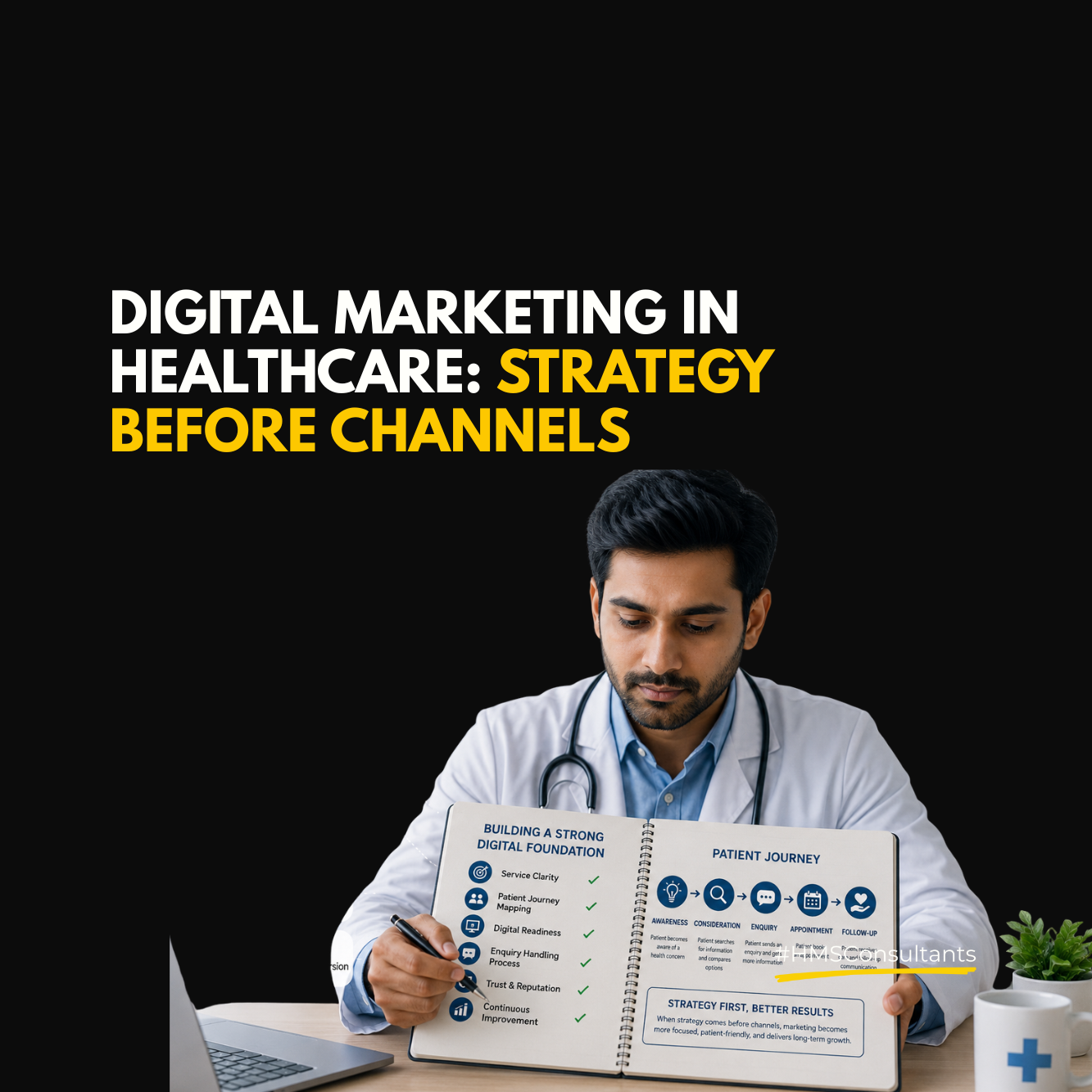
        Digital marketing in healthcare often starts from the wrong place. Many clinics, hospitals, diagnostic centres, and healthcare businesses begin by asking which platform they should use first. Should they post more on social media? Should they run Google Ads? Should they improve SEO? Should they make more videos?

        These channels are important, but they should not come before strategy. Digital marketing in healthcare should first define what needs to be communicated, which patients need to be reached, which services need visibility, and how patient inquiries will be handled.

        Without this clarity, digital marketing becomes a random activity. There may be posts, ads, videos, website updates, and WhatsApp messages, but they may not work together toward one clear direction.

        Why Starting With Channels Creates Confusion

        Many healthcare providers choose channels before understanding the purpose behind them. A clinic may post regularly on Instagram but may not explain its services clearly. A hospital may run ads without checking whether its website page answers patient questions. A diagnostic centre may promote packages without making the booking process simple.

        The problem is not always the platform. The problem is often the lack of planning behind the platform.

        Before choosing a channel, healthcare providers should ask:

        • Which service needs attention?
        • Who is the right patient audience?
        • What does the patient need to understand?
        • What action should the patient take next?
        • Is the website or Google profile ready?
        • Is the enquiry handling process clear?

        When these questions are ignored, even strong platforms may give weak results.

        Service Clarity Should Come First

        Digital marketing for healthcare should begin with service clarity. A healthcare provider may offer many services, but not every service needs the same message or the same level of promotion.

        Some services need awareness. Some need search visibility. Some need patient education. Some need reputation support. Some need a better explanation because patients may not know when to consult.

        Before running campaigns, healthcare providers should define:

        • Which services should be promoted first.
        • What patient problem each service solves.
        • Which doctor or department handles the service.
        • What patients commonly ask about the service.
        • What information patients need before enquiry.

        If the service is not explained clearly, digital marketing may bring attention but not meaningful patient response. A patient wants to know what care is available, who provides it, when to visit, and how to take the next step.

        Understand the Patient Journey

        Patients do not always take action immediately. They may first notice a symptom, then search for information, compare providers, read reviews, visit a website, send an inquiry, and only then book an appointment.

        This is why the patient journey matters in healthcare digital marketing.

        A patient who is only becoming aware of a concern needs simple educational content. A patient comparing options needs service details, doctor information, reviews, and location clarity. A patient ready to book needs appointment details, contact number, timings, and clear instructions.

        A healthcare marketing strategy should plan communication for different stages:

        • Awareness.
        • Consideration.
        • Enquiry.
        • Appointment.
        • Follow-up.

        When communication matches the patient journey, digital marketing becomes more useful and patient-focused.

        Build Digital Readiness Before Promotion

        Running ads or campaigns before the digital presence is ready can create poor results. If patients click an ad and reach an incomplete website, outdated Google profile, unclear service page, or confusing contact process, they may not continue.

        A strong healthcare online presence should include:

        • Updated website service pages.
        • Clear doctor or department information.
        • Accurate contact details.
        • Updated Google Business Profile.
        • Patient-friendly FAQs.
        • Review visibility.
        • Appointment guidance.
        • Location and timing details.

        These details may look basic, but they directly affect patient inquiries. Healthcare digital marketing works better when patients can easily understand the provider and take the next step.

        A campaign may bring attention, but the digital presence must convert that attention into trust and action.

        Match the Channel With the Purpose

        Every digital channel has a different role. A channel should be selected only after the purpose is clear.

        Healthcare SEO helps patients find services through search. Social media helps create awareness, education, and recall. Ads support focused campaigns for specific services. WhatsApp guides patients after enquiry. Videos simplify health concerns. Reviews support trust and reputation.

        The mistake happens when every channel is expected to do everything.

        For example:

        • SEO should answer search intent.
        • Social media should educate and build recall.
        • Ads should focus on one clear action.
        • WhatsApp should guide enquiries.
        • Reviews should build confidence.
        • Website pages should explain services.

        When the channel matches the purpose, digital marketing for healthcare becomes more organised and effective.

        Enquiry Handling Is Also Part of Strategy

        Many healthcare providers think digital marketing ends when a patient sends an enquiry. In reality, that is where a major part of the patient experience begins.

        If calls are missed, WhatsApp replies are unclear, staff members do not know service details, or follow-up is weak, marketing performance is affected.

        A good enquiry process should include quick response, clear service explanation, doctor availability, appointment guidance, location details, basic instructions, and proper follow-up.

        Healthcare marketing strategy should connect digital campaigns with enquiry handling. Otherwise, marketing may generate leads but not patient appointments.

        Trust and Reputation Need Planning

        In healthcare, patients do not respond only to visibility. They also look for trust signals. Reviews, doctor profiles, patient education content, website clarity, and professional communication all influence decision-making.

        Online reputation in healthcare should not be treated as a separate activity. It should be part of the digital strategy.

        Healthcare providers should regularly review patient feedback, Google reviews, social media comments, repeated questions, common complaints, and review response quality.

        Trust is built through consistent communication and patient experience. Digital marketing should support that trust, not replace it.

        Conclusion

        Digital marketing in healthcare should not begin with channels. It should begin with strategy.

        Before deciding on SEO, social media, ads, videos, or WhatsApp communication, healthcare providers should understand the service priority, patient audience, patient journey, message, digital readiness, enquiry process, and trust-building needs.

        Better healthcare digital marketing does not mean being active everywhere. It means being clear about what to communicate, where to communicate, and how each platform supports the patient journey.

        When strategy comes before channels, digital marketing becomes more focused, patient-friendly, and useful for long-term healthcare growth.

        Contact Us HMS Consultants

        The role of digital marketing in healthcare is to help patients find, understand, and connect with the right healthcare services. In this blog context, it should begin with strategy, service clarity, patient journey planning, digital readiness, enquiry handling, and trust-building before choosing channels.

        Digital Marketing I Digital Marketing For Doctors I healthcare digital marketing I healthcare Management I Healthcare Marketing I Healthcare Marketing Strategy I Medical Marketing I Social Media Marketing

        is something we strongly believe in, which means ‘Knowledge without application is the same as having no knowledge at all

        Akhil Dave

        Principle Consultant

        Ready to take your Personal Brand to the next level?

        Share your details below and we will connect with you to discuss your growth strategy.

        • Marketing Ideas for Hospital: How to Use Local Community Presence for Better Recall

          Marketing Ideas for Hospital: How to Use Local Community Presence for Better Recall

          Marketing Ideas for Hospital: How to Use Local Community Presence for Better Recall

          Published on
          Share This

          Marketing ideas for hospital should not always begin with digital campaigns, paid ads, or social media posts. For many hospitals, especially those serving a specific city or locality, stronger recall is built through regular community presence.

          A hospital may have good doctors, services, facilities, and online visibility. But if people living nearby do not remember the hospital when a healthcare need arises, marketing may still feel incomplete. Local recall matters because patients often choose hospitals they have seen, heard about, or interacted with through trusted community activities.

          This is where local hospital marketing becomes important. A hospital should not only be visible online. It should also be present in the area it serves’s health awareness, preventive care, and community conversations.

          Why Local Recall Matters

          Hospitals are not chosen casually. People may not need a hospital every day, but when a health concern comes up, they remember names that feel familiar, reliable, and accessible.

          Local recall is built when people repeatedly see the hospital in useful and responsible ways.This can happen through health awareness programs, preventive check-up drives, residential society sessions, school health talks, corporate wellness activities, seasonal health campaigns, and local partnerships.

          That is why community presence is one of the most practical marketing ideas for hospital growth, especially for hospitals that depend on patients from nearby areas.

          Community Health Awareness Programs

          Community health awareness is one of the strongest ways to build hospital recall. Hospitals can organise awareness sessions around common health concerns that people often ignore until symptoms become serious.

          These sessions should not sound promotional. They should focus on simple and useful health education.

          Hospitals can create awareness around:

          • Diabetes
          • Heart health
          • Women’s health
          • Bone and joint care
          • Child health
          • Eye care
          • Cancer screening
          • Seasonal infections
          • Mental health

          When doctors explain health concerns in simple language, people begin to see the hospital as a helpful healthcare guide, not only a place for treatment.

          Preventive Health Check-Up Drives

          Preventive check-up drives can support both public health awareness and hospital visibility. Many people delay health check-ups because they do not feel an immediate need. When hospitals take preventive care closer to the community, people become more aware of early detection and regular monitoring.

          These drives can be planned in:

          • Residential societies
          • Schools and colleges
          • Corporate offices
          • Senior citizen groups
          • Community centres
          • Local clubs
          • Industrial areas

          The purpose should not only be to collect leads. It should be to educate people about why preventive health matters and when they should consult a doctor.

          A well-planned preventive drive can improve hospital visibility while also creating useful community engagement.

          Local Partnerships for Better Reach

          Hospitals can build stronger community presence by partnering with local groups and institutions. These partnerships help hospitals reach people in places where health conversations are already relevant.

          Useful partnerships can include schools, colleges, housing societies, corporate offices, NGOs, local associations, senior citizen groups, fitness centres, women’s groups, and industrial units.

          For example, a hospital can conduct a bone health session for senior citizens, a menstrual health awareness session in a college, or a heart health talk for working professionals.

          Among different marketing ideas for hospital visibility, local partnerships are useful because they help the hospital reach targeted groups rather than speaking to a broad audience.

          Seasonal Health Campaigns

          Every local area faces seasonal health concerns. Hospitals can use these concerns to plan timely awareness campaigns that are useful for the community.

          Seasonal campaigns may include:

          • Monsoon fever awareness
          • Dengue and malaria prevention
          • Respiratory care during pollution season
          • Heatstroke awareness in summer
          • Flu prevention
          • Skin and allergy awareness
          • Child health during school reopening
          • Senior care during winter

          These campaigns work well because they connect with what people are already experiencing. When a hospital shares timely health guidance, people see the information as relevant and useful.

          Seasonal communication also helps hospitals remain visible throughout the year without depending only on promotional content.

          Residential Society and Corporate Activities

          Residential societies and corporate offices are important spaces for local hospital marketing. Families, senior citizens, working professionals, and children are part of these communities.

          Hospitals can conduct short, focused sessions on practical topics such as:

          • When to consult for chest pain
          • Early signs of diabetes
          • Joint pain and mobility care
          • Child fever warning signs
          • Women’s health after 40
          • Senior citizen fall prevention
          • Importance of regular screening
          • Stress and lifestyle health

          These sessions should be easy to understand and directly useful. The goal is not to make the activity too technical. The aim is to help people know when to take health concerns seriously and when to seek medical advice.

          Offline Presence Can Support Online Recall

          Community activities should not end after the event. Hospitals can use offline activities to support online recall as well.

          After a health camp, awareness session, or community activity, hospitals can share:

          • Event highlights
          • Doctor education clips
          • Key health tips
          • Photos from the session
          • Short awareness posts
          • Follow-up health guidance

          This helps the hospital extend the impact of offline activities to digital platforms. People who attended the event remember it, while others can still discover the hospital through online updates.

          This balance of offline and online communication makes hospital visibility stronger.

          What Hospitals Should Avoid

          Community presence should be handled responsibly. If every activity looks like direct promotion, people may lose interest.

          Hospitals should avoid:

          • Turning health talks into sales pitches
          • Using fear-based communication
          • Promising guaranteed results
          • Sharing patient-sensitive information
          • Using overly technical language
          • Conducting one-time camps without follow-up
          • Promoting services without patient education

          The purpose of community-based hospital marketing is to educate, connect, and build recall. It should feel helpful before it feels promotional.

          Conclusion

          Marketing ideas for hospital growth should include more than online campaigns and advertisements. For hospitals serving a local area, community presence can play an important role in building long-term recall.

          Health awareness programs, preventive check-up drives, local partnerships, residential society sessions, corporate wellness programs, and seasonal campaigns can help hospitals stay connected with people around them.

          Strong community presence helps people remember the hospital before a healthcare need becomes urgent. Better hospital marketing does not always mean louder promotion. Sometimes, it means being consistently present where the community needs useful health guidance.

          Contact Us HMS Consultants

          Hospital marketing can be done by building both online visibility and local community presence. Hospitals should use health awareness programs, preventive check-up drives, local partnerships, seasonal campaigns, residential society sessions, and useful digital updates to stay connected with nearby patients.

          Digital Marketing I Doctor Branding I healthcare digital marketing I Healthcare Marketing I Hospital Branding I hospital marketing I Hospital Marketing Strategies I Hospital Marketing Strategy I local community building

          is something we strongly believe in, which means ‘Knowledge without application is the same as having no knowledge at all

          Akhil Dave

          Principle Consultant

          Ready to take your Personal Brand to the next level?

          Share your details below and we will connect with you to discuss your growth strategy.

          • Digital Marketing for Healthcare: Why Every Patient Touchpoint Needs a Different Message

            Digital Marketing for Healthcare: Why Every Patient Touchpoint Needs a Different Message

            Digital Marketing for Healthcare: Why Every Patient Touchpoint Needs a Different Message

            Published on
            Share This

            Digital marketing for healthcare does not work well when the same message is used everywhere. A patient searching on Google, visiting a website, reading reviews, watching a video, seeing an ad, or sending a WhatsApp inquiry is not always in the same mindset.

            Every patient touchpoint has a different purpose.

            The message should change based on where the patient is in the patient journey, what they want to understand, and what action they may take next.

            Why One Message Does Not Work Everywhere

            Many healthcare providers use the same message across all platforms. A caption becomes website content. A website paragraph becomes a WhatsApp reply. A promotional line is repeated in Google posts and ads.

            This weakens healthcare communication because each platform has a different role.

            For example:

            • Google search should answer patient intent.
            • A website should explain the service clearly.
            • Social media should educate and create recall.
            • Ads should focus on one specific action.
            • WhatsApp should guide the patient after enquiry.
            • Reviews should support confidence and reputation.
            • Videos should simplify patient concerns.

            When the same message is used everywhere, the patient may see content but may not receive the right information at the right time.

            Google Needs Search-Based Messaging

            When patients search on Google, they usually have a specific need. They may be looking for a doctor, treatment, symptom, clinic, hospital, location, or appointment details.

            At this stage, the message should be direct and useful. Patients are not looking for broad brand statements. They want quick clarity.

            Google-focused content should answer:

            • What service is available?
            • Which doctor or department handles it?
            • Where is the clinic or hospital located?
            • How can the patient book an appointment?
            • What symptoms or concerns are related?
            • What should the patient know before visiting?

            This is where digital marketing for healthcare needs search-focused content. Service pages, Google Business Profile updates, FAQs, and local SEO content should match what patients are searching for.

            If a patient searches for a specific concern and finds only a general introduction, the message may not help them move forward.

            Website Content Should Explain the Service

            A website is one of the most important patient touchpoints in healthcare digital marketing. Patients visit the website to learn more before deciding.

            Website content should not only say that a service is available. It should explain the service in a patient-friendly way.

            A useful healthcare website page should include:

            • What the service is.
            • Who may need it?
            • When to consult.
            • Which doctor or department handles it.
            • What patients can expect.
            • Basic preparation or next steps.
            • Appointment or enquiry guidance.

            The website message should be more detailed than an ad and more structured than a social media post. It should reduce confusion and help patients move from interest to enquiry.

            Social Media Should Educate First

            Social media is not always the place where patients immediately book appointments. It often works for awareness, education, recall, and patient engagement.

            The message on social media should be simple, useful, and easy to understand. It should help patients learn something, identify a concern, or remember the healthcare provider when needed.

            Social media content can include:

            • Common symptoms.
            • Preventive health tips.
            • Myths and facts.
            • Doctor awareness videos.
            • Service awareness posts.
            • Health day communication.
            • Simple FAQs.
            • Patient guidance content.

            In digital marketing for healthcare, social media should not be used only for promotion. If every post says “Book now” or “Visit us,” patients may lose interest. A better healthcare content strategy educates first and guides next.

            Ads Need One Clear Message

            Healthcare ads should not try to say everything at once. A good ad should focus on one service, one patient concern, or one clear action.

            Patients scrolling through ads do not have time to understand a broad message. The ad should quickly communicate why the service is relevant.

            An effective healthcare ad message should be:

            • Specific to one service.
            • Clear about the patient concern.
            • Simple in language.
            • Supported by a clear call-to-action.
            • Connected to a relevant landing page.
            • Ethical and not fear-based.

            For example, an ad for a preventive health package should not sound like an ad for emergency care. An ad for maternity care should not use the same tone as an ad for diagnostics. Each service has a different emotional and practical need.

            WhatsApp Should Guide After Enquiry

            Many healthcare providers use WhatsApp for patient enquiries, appointment confirmation, reminders, follow-ups, and basic communication. But WhatsApp messaging should not sound like a copied advertisement.

            When a patient sends a WhatsApp enquiry, they usually need guidance. They may want to know doctor timing, availability, location, documents required, consultation process, or follow-up steps.

            WhatsApp communication should be:

            • Clear.
            • Short.
            • Helpful.
            • Professional.
            • Easy to act on.
            • Free from unnecessary promotional language.

            A good WhatsApp message can improve patient engagement because it helps the patient take the next step without confusion.

            Instead of only sending a promotional line, the message should guide the patient with appointment details, doctor timing, location link, and basic instructions.

            Reviews Need Responsible Responses

            Reviews are also an important patient touchpoint. Patients often read them before choosing a doctor, clinic, or hospital. But the way a healthcare provider responds to reviews also matters.

            Review responses should not sound robotic, defensive, or promotional. They should show that the healthcare provider listens, respects feedback, and handles concerns responsibly.

            A good review response should:

            • Thank the patient politely.
            • Acknowledge positive feedback.
            • Respond professionally to concerns.
            • Avoid sharing private medical details.
            • Take serious concerns to a direct communication channel.
            • Maintain a calm and respectful tone.

            In healthcare digital marketing, review communication supports reputation. It also shows future patients how the healthcare provider responds when people share their experiences.

            Video Content Should Simplify One Concern

            Videos are useful because they help patients understand topics that may feel confusing in written form. But healthcare videos should not become too technical or too promotional.

            A good healthcare video should simplify one idea at a time.

            Video content can explain:

            • When to consult a doctor.
            • Common symptoms.
            • Basic treatment process.
            • Preventive care steps.
            • Myths and facts.
            • What happens during consultation.
            • Patient preparation before a test or procedure.

            The message in a video should feel natural and easy to follow. Patients should leave with better understanding, not more confusion.

            Match the Message With the Patient Journey

            The main purpose of digital marketing for healthcare is not to repeat the same content everywhere. It is to match the message with the patient journey.

            A patient may first notice a health concern, then search for information, compare options, check reviews, enquire, book, and later need follow-up communication. Each stage needs a different message.

            Awareness content cannot be the same as inquiry communication. Review response cannot be the same as the ad copy. Website content cannot be the same as a short caption.

            When healthcare communication changes according to the touchpoint, patients receive clearer guidance.

            Conclusion

            Digital marketing for healthcare should not use one message everywhere. Every patient touchpoint has a different role, and each one needs a different communication approach.

            Google should answer search intent. Websites should explain services. Social media should educate. Ads should stay focused. WhatsApp should guide. Reviews should build confidence. Videos should simplify important concerns.

            A strong healthcare marketing strategy understands how patients move from awareness to enquiry and from enquiry to appointment. When the message matches the touchpoint, healthcare communication becomes clearer, more useful, and more patient-focused.

            Better digital marketing does not always mean more content. Sometimes, it means using the right message in the right place.

            Contact Us HMS Consultants

            Healthcare digital marketing is the use of online platforms to communicate with patients at different touch points such as Google, websites, social media, ads, WhatsApp, reviews, and videos. In this blog context, it means using the right message in the right place based on the patient journey.

            Digital Marketing I Digital Marketing For Doctors I Digital Strategy I Doctor Branding I doctor digital marketing I Doctors Digital Marketing I healthcare digital marketing I healthcare Management I Healthcare Marketing I Healthcare Marketing Strategy I online presence

            is something we strongly believe in, which means ‘Knowledge without application is the same as having no knowledge at all

            Akhil Dave

            Principle Consultant

            Ready to take your Personal Brand to the next level?

            Share your details below and we will connect with you to discuss your growth strategy.

            • Doctor Digital Marketing: How Patients Evaluate Doctors Before Booking

              Doctor Digital Marketing: How Patients Evaluate Doctors Before Booking

              Doctor Digital Marketing: How Patients Evaluate Doctors Before Booking

              Published on
              Share This

              Doctor digital marketing is not only about posting health tips, running ads, or getting more followers. For doctors, digital marketing should help patients understand the doctor’s expertise, approach, availability, and credibility before booking an appointment.

              Today, even when patients receive a recommendation, they often search the doctor’s name online, read reviews, check the clinic website, visit social media pages, or look for videos before deciding.

              This means doctor digital marketing should be planned around how patients evaluate a doctor before consultation.

              Patients First Look for the Doctor’s Identity

              Before booking, patients want to know who the doctor is. They look for simple but important details that help them understand the doctor’s professional background.

              This usually includes:

              • Doctor’s full name
              • Qualification
              • Speciality
              • Years of experience
              • Clinic or hospital association
              • Consultation location
              • Available timings
              • Key areas of practice

              If this information is missing, incomplete, or different across platforms, patients may feel unsure. A weak online presence can make even an experienced doctor look less visible or less accessible.

              Digital marketing for doctors should clearly establish the doctor’s identity across Google, website pages, directories, social media, and clinic communication. Patients should not struggle to understand who the doctor is and what type of care they provide.

              Patients Check Whether the Doctor Matches Their Concern

              Patients do not evaluate a doctor only by qualification. They also check whether the doctor is relevant to their specific health concern.

              For example, a patient with knee pain may look for an orthopaedic doctor who handles joint pain, arthritis, sports injuries, or knee replacement. A patient looking for pregnancy care may check whether the gynecologist provides antenatal care, high-risk pregnancy care, delivery support, or fertility guidance.

              This is where online marketing for doctors must move beyond general statements like “experienced doctor” or “quality care.”

              The content should clearly explain:

              • What conditions the doctor treats
              • Which patient concerns are commonly handled
              • What services are available
              • When patients should consult
              • What the patient can expect during the visit
              • Which symptoms should not be ignored

              This does not mean making exaggerated claims. It means helping patients understand whether the doctor is suitable for their concern.

              Patients Read Reviews Before Booking

              Reviews play an important role in a doctor’s digital marketing. Patients often read what others have experienced before deciding to book.

              They may observe:

              • How patients describe the doctor
              • Whether the doctor listens properly
              • Whether staff members are helpful
              • Whether appointment handling is smooth
              • Whether the clinic experience feels organised
              • How the doctor or clinic responds to feedback

              Reviews are not only about star ratings. They are signals of patient trust. A doctor may have strong clinical expertise, but if online reputation is unmanaged, patients may hesitate.

              A doctor marketing strategy should include review monitoring, professional response handling, and learning from repeated patient feedback. Positive reviews can strengthen confidence, while negative reviews should be handled carefully and ethically.

              Patients Notice How the Doctor Communicates Online

              Patients also evaluate how a doctor communicates online. This includes social media posts, videos, website content, captions, blogs, and replies to patient queries.

              A doctor’s communication style can influence patient comfort before consultation.

              Patients may feel more confident when the content is:

              • Simple to understand
              • Educational
              • Responsible
              • Calm in tone
              • Free from fear-based messaging
              • Focused on patient awareness
              • Clear about when to seek consultation

              For doctors, content should not sound like aggressive selling. Healthcare communication should guide, educate, and reassure patients.

              For example, a short video explaining when back pain needs medical attention can be more useful than a generic promotional post. A simple post explaining early signs of diabetes can help patients take timely action. Medical practice marketing becomes stronger when the doctor’s communication helps patients feel informed rather than pressured.

              Patients Compare Information Across Platforms

              A patient may not rely on only one platform. They may check Google, the website, social media, YouTube, healthcare directories, and review platforms before making a decision.

              If the information is different everywhere, it creates confusion. For example, Google may show one clinic timing, the website may show another, and social media may not mention the doctor’s current availability.

              A consistent doctor online presence should include updated details such as:

              • Doctor name and speciality
              • Clinic or hospital location
              • Contact number
              • Consultation timings
              • Services offered
              • Appointment process
              • Website or profile link
              • Patient education content

              Consistency helps patients feel that the doctor’s practice is organised and reliable.

              Patients Evaluate Convenience Before Booking

              Clinical expertise matters, but patients also consider practical details before booking. If they cannot find appointment information, location details, consultation timing, or the contact process, they may delay the decision.

              A doctor in digital marketing should make the next step easy.

              Patients should be able to understand:

              • Where the doctor is available
              • How to book an appointment
              • What timings are available
              • Whether a prior appointment is needed
              • Which number to call
              • What documents or reports to carry
              • Whether follow-up is required

              These details may look basic, but they affect patient inquiries. Many potential patients drop off not because they are uninterested, but because the booking process is unclear.

              Common Mistakes in Doctor Digital Marketing

              Many doctors or clinics make digital marketing less effective by focusing only on activity instead of patient evaluation.

              Common mistakes include:

              • Posting only festival creatives
              • Running ads without clear service pages
              • Using generic captions
              • Not updating Google Business Profile
              • Ignoring reviews
              • Not explaining services properly
              • Having incomplete doctor profiles
              • Making content too technical for patients
              • Not showing clear appointment steps

              These mistakes can reduce patient confidence. A doctor may be highly skilled, but if the digital presence is unclear, patients may not understand the doctor’s value.

              Doctor digital marketing should be structured, consistent, and patient-focused.

              Conclusion

              Doctor digital marketing is not just about visibility. It is about helping patients evaluate the doctor before booking.

              Patients look for identity, expertise, relevance, reviews, communication style, convenience, and trust signals. They want to know whether the doctor is suitable for their concern and whether the consultation process feels clear and reliable.

              A strong doctor marketing strategy should focus on patient questions before focusing on platforms. It should explain the doctor’s expertise, make information easy to find, manage the doctor’s reputation responsibly, and guide patients to book without pressure.

              For doctors, digital presence is often the first point at which patients begin to build trust. The clearer the doctor’s online presence, the easier it becomes for patients to understand, trust, and choose the right care.,

              Contact Us HMS Consultants

              Yes, a doctor can do digital marketing ethically and informatively. A doctor’s digital marketing should focus on patient education, clear service information, an updated online presence, reviews, appointment guidance, and helping patients understand the doctor’s expertise before booking.

              Digital Strategy I Business I Digital Marketing I doctor digital marketing I healthcare digital marketing I healthcare Management I Healthcare Marketing I Healthcare Marketing Strategy I hospital marketing I Hospital Marketing Strategies I online presence

              is something we strongly believe in, which means ‘Knowledge without application is the same as having no knowledge at all

              Akhil Dave

              Principle Consultant

              Ready to take your Personal Brand to the next level?

              Share your details below and we will connect with you to discuss your growth strategy.

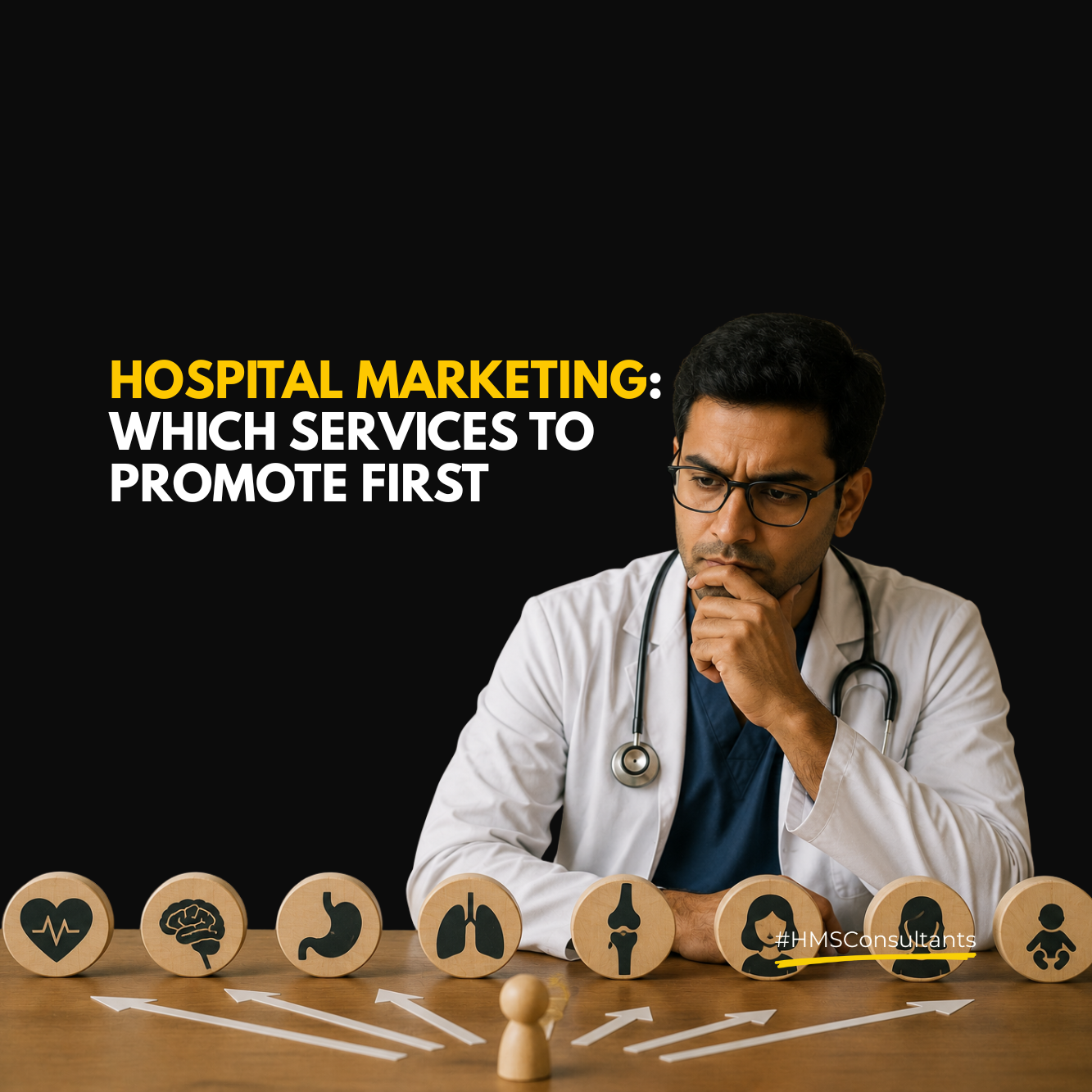
              • Hospital Marketing: How to Decide Which Services to Promote First

                Hospital Marketing: How to Decide Which Services to Promote First

                Hospital Marketing: How to Decide Which Services to Promote First

                Published on
                Share This

                Hospital marketing becomes difficult when everything is treated as equally important. Most hospitals have multiple departments, doctors, services, packages, and treatment areas. Naturally, every service needs visibility. But in practice, promoting everything at once often leads to scattered communication and weak results.

                A hospital cannot market emergency care, maternity, orthopedics, diagnostics, preventive health check-ups, surgery, and specialist consultations with the same message and the same urgency. Each service has different patient needs, decision time, trust requirements, and business value. This is why hospital marketing should not start with the question, “What should we post?” It should start with a better question: “Which service needs marketing attention first, and why?”

                A clear hospital marketing strategy helps hospitals decide which services to promote first based on patient demand, department readiness, local competition, service value, and growth potential.

                Why Service Prioritisation Matters in Hospital Marketing

                Many hospitals run campaigns without deciding which services deserve focus. As a result, marketing becomes too broad. One week the hospital promotes one department, the next week another, and then a general awareness post follows. This creates activity, but not always direction.

                Service prioritisation helps the hospital focus its effort where it can make the most meaningful impact.

                It helps answer:

                • Which services are patients actively looking for?
                • Which departments are underutilized?
                • Which services need better explanation?
                • Which doctors have availability to handle more patients?
                • Which services support long-term hospital business growth?
                • Which departments face stronger competition?
                • Which services are seasonal or time-sensitive?

                Without this clarity, hospital marketing may continue, but the results may remain unclear.

                Patient Demand Should Guide the First Decision

                The first factor to study is patient demand. Hospitals should not promote a service only because it exists. They should understand whether patients are searching for it, asking about it, or showing real need for it.

                Patient demand can be understood through enquiry patterns, appointment data, common patient questions, Google searches, local health concerns, seasonal illness trends, and competitor visibility.

                For example, if many patients are asking about knee pain, pregnancy care, diabetes management, fever treatment, diagnostic packages, or cardiac check-ups, those areas may need stronger communication.

                This does not mean only high-demand services should be promoted. But demand helps the hospital know where patient interest already exists. Marketing can then improve visibility, explain the service better, and guide patients more clearly.

                A hospital marketing strategy should always connect service promotion with real patient behaviour.

                Department Readiness Comes Before Promotion

                A common mistake in hospital marketing is promoting a service before the department is ready to handle the response.

                If marketing brings enquiries but the doctor is not available, the front desk is not informed, the appointment process is unclear, or follow-up is weak, the campaign may damage trust instead of supporting growth.

                Before promoting any service, the hospital should check:

                • Is the doctor or department available consistently?
                • Can the team handle more enquiries?
                • Is the front desk trained to explain the service?
                • Is the appointment process simple?
                • Is the website information clear?
                • Are packages, reports, or instructions ready where needed?
                • Is follow-up being handled properly?

                Hospital service promotion should not create demand that the hospital cannot manage. Good marketing works only when the patient journey behind it is prepared.

                Underused Services May Need Visibility First

                Many hospitals have strong services that patients do not know about. These may be clinically valuable, but they remain underutilised because they are not clearly visible online or offline.

                Sometimes the service exists on the hospital premises, but it is missing from the website. Sometimes it is not mentioned properly on Google Business Profile. Sometimes the doctor is available, but patients do not know that the department offers that care.

                Underused services can be identified by checking:

                • Services with low enquiries
                • Departments not clearly explained online
                • Doctors with weak digital visibility
                • Treatments not covered in content
                • Services missing from Google Business Profile
                • Low patient awareness despite strong capability

                These services may not need paid ads immediately. They may first need clear service pages, patient education content, doctor-led videos, Google updates, and better internal communication.

                In hospital marketing, visibility should begin with clarity.

                Growth Potential Should Be Considered Carefully

                Hospital marketing must remain ethical and patient-centred, but hospitals also need to understand which services support long-term sustainability. Some services may have higher demand, stronger repeat value, better department capacity, or greater positioning importance for the hospital.

                This is where hospital growth strategy becomes important.

                Hospitals should look at:

                • Patient need
                • Clinical strength
                • Revenue potential
                • Doctor availability
                • Department capacity
                • Local competition
                • Long-term brand positioning

                For example, if a hospital has strong orthopaedic expertise but patients are choosing competitors for joint pain or fracture care, that department may need focused promotion. If diagnostics are available but underused, preventive health packages may need better communication.

                Marketing should support services where the hospital has genuine capability, not only where it wants more visibility.

                Competition Can Reveal Service Opportunities

                A hospital should not copy competitor marketing, but it should understand what competitors are doing. Local competition often shows which services are being pushed heavily and where gaps may exist.

                Hospitals should observe:

                • Which services competitors promote most
                • How they explain those services
                • Which doctors or departments are visible online
                • What patients mention in competitor reviews
                • Where competitors are strong or weak
                • Which patient questions remain unanswered

                If many hospitals are promoting the same service, your hospital needs a clearer positioning angle. If competitors are weak in an area where your hospital has strength, that service may become a strong marketing opportunity.

                Hospital service promotion should be based on differentiation, not imitation.

                Timing Can Improve Marketing Response

                Some hospital services perform better when promoted at the right time. Timing can depend on seasons, awareness months, local health patterns, school calendars, corporate cycles, or disease trends.

                For example, fever and infection care may need stronger communication during monsoon. Respiratory care may become more relevant during pollution season. Preventive health packages may work well around health awareness campaigns. School health check-ups may be planned before academic sessions.

                Hospitals should build a service-wise marketing calendar instead of deciding campaigns at the last moment.

                This helps plan:

                • Awareness posts
                • Doctor videos
                • Google updates
                • Blog content
                • Local campaigns
                • Preventive health messages
                • Patient education material

                When timing is planned, hospital marketing becomes more consistent and less random.

                The Marketing Route Should Match the Service

                Not every service needs the same marketing channel. Some services need search visibility. Some need patient education. Some need doctor credibility. Some need local awareness. Some need Google Business Profile optimization. Some need paid campaigns.

                For example, high-search services may need SEO and Google visibility. Complex services may need blogs and educational videos. Doctor-led services may need profile strengthening and credibility-building content. Preventive services may need awareness campaigns. Competitive services may need stronger service positioning.

                The better question is not, “Should we run ads?”

                The better question is, “What does this service need before patients respond?”

                This is where hospital marketing becomes strategic. The channel should come after the service priority is clear.

                Conclusion

                Hospital marketing becomes stronger when hospitals stop promoting everything equally and start prioritising services strategically.

                Every service does not need the same campaign, message, platform, or budget. Some services need awareness. Some need search visibility. Some need doctor credibility. Some need better patient education. Some need operational readiness before promotion.

                A clear hospital marketing strategy helps hospitals decide which services to promote first based on patient demand, department readiness, competition, timing, and growth potential.

                For hospitals that want sustainable growth, marketing should not begin with random activity.

                It should begin with the right service priority.

                Contact Us HMS Consultants

                Hospital marketing is the process of promoting a hospital’s services, departments, doctors, and patient care in a planned way. In this blog context, it means deciding which services should be promoted first based on patient demand, department readiness, competition, and growth potential.

                Healthcare Marketing I Digital Strategy I healthcare digital marketing I healthcare Management I Healthcare Marketing Strategy I hospital marketing I Hospital Marketing Strategies I Hospital Marketing Strategy

                is something we strongly believe in, which means ‘Knowledge without application is the same as having no knowledge at all

                Akhil Dave

                Principle Consultant

                Ready to take your Personal Brand to the next level?

                Share your details below and we will connect with you to discuss your growth strategy.

                • Healthcare Marketing Strategies: What Clinics and Hospitals Really Need

                  Healthcare Marketing Strategies: What Clinics and Hospitals Really Need

                  Healthcare Marketing Strategies: What Clinics and Hospitals Really Need

                  Published on
                  Share This

                  Healthcare marketing strategies are becoming important for clinics, hospitals, diagnostic centres, wellness businesses, and healthcare startups that want to grow with clarity and trust. Today, patients do not choose a healthcare provider only because a clinic exists nearby or a hospital has a name in the city.

                  Patients search online. They compare doctors. They read reviews. They check websites. They look at social media pages. They ask others. They observe how clearly a healthcare provider communicates.

                  This means healthcare marketing cannot depend only on random posts, occasional ads, or basic promotion.

                  Clinics and hospitals need a proper healthcare marketing strategy that supports visibility, trust, patient communication, and long-term growth.

                  Why Healthcare Marketing Needs Strategy

                  Many healthcare businesses are already doing marketing. They may have an Instagram page, Facebook page, Google Business Profile, website, ads, brochures, or videos.

                  But the problem is not always the absence of marketing.

                  The problem is the absence of direction.

                  A clinic may post regularly but still not get the right enquiries. A hospital may run ads but still not improve patient trust. A doctor may have a website but still not explain services clearly. A diagnostic centre may promote packages but still struggle with local visibility.

                  This happens when marketing activities are not connected to a strategy.

                  A healthcare marketing strategy helps answer:

                  • Who are we trying to reach?
                  • What services need more visibility?
                  • What are patients searching for?
                  • What doubts do patients have?
                  • Is our digital presence trustworthy?
                  • Are we communicating clearly?
                  • Are enquiries being handled properly?
                  • Is marketing supporting healthcare business growth?

                  Without these answers, marketing becomes scattered.

                  Patients Need Trust Before Action

                  Healthcare is different from regular industries. A patient does not make decisions only based on offers, attractive creatives, or repeated posts.

                  Healthcare decisions involve fear, risk, family discussions, trust, medical credibility, and confidence.

                  Before booking an appointment, patients often want to know:

                  • Is this doctor experienced?
                  • Is this clinic reliable?
                  • Is the treatment safe?
                  • What symptoms should I not ignore?
                  • What happens during consultation?
                  • Are other patients satisfied?
                  • Can I trust this hospital for my family?
                  • Is the information clear and responsible?

                  This is why patient communication is an important part of healthcare marketing strategies.

                  Marketing should not only attract attention. It should reduce confusion, answer doubts, and build confidence.

                  Website and SEO Strategy

                  A website is often one of the first places patients visit before choosing a doctor, clinic, or hospital. But many healthcare websites only list services without properly explaining them.

                  A good healthcare website should clearly explain:

                  • Doctor profile and expertise
                  • Services and treatments
                  • Symptoms and conditions
                  • Treatment process
                  • Patient FAQs
                  • Location and contact details
                  • Appointment process
                  • Trust signals and credibility

                  SEO is also important because patients search for healthcare services online. They may search for terms related to symptoms, doctors, clinics, treatments, or location-based services.

                  A strong healthcare marketing strategy should include website improvement and SEO direction so patients can find useful information when they need it.

                  Google Business Profile Strategy

                  For clinics, doctors, hospitals, and diagnostic centres, Google Business Profile is one of the most important local visibility tools.

                  Patients often search directly on Google before calling or visiting.

                  A strong Google profile should include:

                  • Correct clinic or hospital name
                  • Updated phone number
                  • Accurate location
                  • Service categories
                  • Opening hours
                  • Photos
                  • Patient reviews
                  • Regular updates
                  • Clear appointment information

                  Many healthcare businesses ignore this area, but it can directly affect patient enquiries.

                  For local healthcare visibility, the Google Business Profile should be part of every clinic and hospital marketing strategy.

                  Review and Reputation Strategy

                  Patient reviews influence trust. A healthcare provider may have strong clinical expertise, but if online reviews are weak, outdated, or unmanaged, patients may hesitate.

                  A proper review strategy includes:

                  • Encouraging genuine patient feedback
                  • Responding professionally to reviews
                  • Understanding common patient complaints
                  • Improving patient experience
                  • Avoiding fake or unethical review practices
                  • Using feedback to improve service quality

                  Reviews are not only marketing assets. They are also a reflection of patient experience.

                  Healthcare businesses should treat reputation management as a serious part of healthcare marketing.

                  Social Media Strategy

                  Social media is useful, but only when it is planned properly. Posting festival creatives, random health tips, or repeated service promotions is not enough.

                  Healthcare social media should include:

                  • Patient education
                  • Doctor explanation videos
                  • Treatment awareness
                  • Myth-busting content
                  • Service clarity
                  • Preventive care tips
                  • Patient FAQs
                  • Trust-building content
                  • Ethical awareness posts

                  Social media should support patient understanding. It should not become hard selling.

                  A good healthcare content plan helps clinics and hospitals educate patients and build trust over time.

                  Enquiry Flow Strategy

                  Marketing does not end when a patient sends a message or calls the clinic.

                  Many healthcare businesses lose potential patients because their enquiry handling is weak.

                  Common issues include:

                  • Delayed response
                  • Poor call handling
                  • Unclear appointment process
                  • Lack of follow-up
                  • No tracking of enquiry sources
                  • Incomplete information given to patients
                  • No coordination between marketing and front desk

                  A strong healthcare marketing strategy should also review the enquiry journey.

                  If marketing brings enquiries but the system does not handle them properly, growth becomes difficult.

                  Service Positioning Strategy

                  Not every service should be promoted in the same way. A clinic or hospital may offer many services, but some require more education, some require more trust-building, and some require stronger local visibility.

                  Service positioning helps answer:

                  • Which service should be highlighted?
                  • What patient problem does it solve?
                  • What makes this service trustworthy?
                  • What should patients know before booking?
                  • How should the service be explained simply?
                  • What content is needed around this service?

                  Clear service positioning helps patients understand why they should choose a particular doctor, clinic, or hospital.

                  Role of a Healthcare Marketing Consultant

                  A healthcare marketing consultant can help clinics and hospitals bring structure to their marketing.

                  Instead of only suggesting posts or ads, a consultant studies the full picture:

                  • Digital presence
                  • Website and SEO
                  • Google Business Profile
                  • Patient communication
                  • Social media content
                  • Reviews and reputation
                  • Enquiry flow
                  • Service positioning
                  • Local visibility
                  • Ethical marketing direction

                  This helps healthcare businesses understand what needs improvement before spending more money on marketing execution.

                  A consultant brings diagnosis before action.

                  How HMS Supports This Direction

                  Many professionals understand marketing tools, but healthcare marketing requires a different level of responsibility. It needs patient sensitivity, ethical communication, service understanding, and the ability to connect marketing activities with business growth.

                  The HMS Certified Healthcare Marketing Consultant Program helps serious professionals learn this consulting-led approach.

                  Participants are introduced to practical areas such as healthcare marketing strategy, digital presence review, patient communication, service positioning, clinic and hospital marketing diagnosis, proposal planning, and business development guidance.

                  The program is designed for professionals who want to understand how healthcare businesses can grow with structure, not random marketing activities.

                  HMS provides the learning structure, tools, frameworks, and guidance. The participant’s growth depends on consistent learning, communication ability, practical application, and market development.

                  Conclusion

                  Healthcare marketing strategies are not only about posts, ads, or promotions. Clinics and hospitals need a structured approach that connects visibility, patient trust, digital presence, reputation, enquiry handling, and ethical communication.

                  A good healthcare marketing strategy helps patients understand the healthcare provider better and helps healthcare businesses grow with direction.

                  For professionals who want to build a future in healthcare marketing, a learning strategy is more valuable than only learning execution.

                  The clinics and hospitals that grow stronger will be the ones that communicate clearly, build trust responsibly, and follow a marketing strategy that supports real patient needs.

                  Contact Us HMS Consultants

                  Healthcare marketing strategies are planned approaches used by doctors, clinics, hospitals, diagnostic centres, and healthcare businesses to improve visibility, patient trust, communication, enquiries, and business growth ethically.

                  Healthcare Marketing I Business I Digital Marketing I Digital Strategy I Doctors Digital Marketing I healthcare careers I Healthcare Consulting I healthcare digital marketing I healthcare Management I Hospital Marketing Strategy I Social Media Marketing

                  is something we strongly believe in, which means ‘Knowledge without application is the same as having no knowledge at all

                  Akhil Dave

                  Principle Consultant

                  Ready to take your Personal Brand to the next level?

                  Share your details below and we will connect with you to discuss your growth strategy.

                  • Healthcare Marketing Social Media: Why Posting Alone Does Not Build Patient Trust

                    Healthcare Marketing Social Media: Why Posting Alone Does Not Build Patient Trust

                    Healthcare Marketing Social Media: Why Posting Alone Does Not Build Patient Trust

                    Published on
                    Share This

                    Healthcare marketing social media has become an important part of marketing for doctors, clinics, hospitals, diagnostic centres, wellness businesses, and healthcare startups. Today, almost every healthcare business wants to be visible on Instagram, Facebook, LinkedIn, YouTube, or other digital platforms.

                    But visibility alone does not build patient trust.

                    Many healthcare businesses post regularly on social media, but still struggle to create meaningful patient connection. They share festival creatives, doctor photos, treatment posters, awareness day posts, offers, or generic health tips. These posts may keep the page active, but they may not always help patients make better decisions.

                    In healthcare, social media should not only be about posting.

                    It should be about educating, reassuring, guiding, and building trust.

                    Why Social Media Matters in Healthcare

                    Patients today often search online before choosing a doctor, clinic, hospital, or treatment provider. They may check Google reviews, websites, doctor profiles, social media pages, videos, and patient education content before booking an appointment.

                    This means social media can influence how patients see a healthcare brand.

                    A strong social media presence can help healthcare businesses:

                    • Explain services clearly
                    • Answer common patient doubts
                    • Build doctor credibility
                    • Share patient education
                    • Improve brand recall
                    • Support healthcare digital marketing
                    • Build trust before consultation
                    • Communicate with patients responsibly

                    But this only works when social media is planned with purpose.

                    Random posting is not enough.

                    The Problem With Posting Without Strategy

                    Many doctors and hospitals believe that if they post regularly, their marketing is being handled. But regular posting does not always mean effective healthcare social media marketing.

                    A page may be active but still not useful for patients.

                    This usually happens when content is:

                    • Too promotional
                    • Too generic
                    • Repetitive
                    • Difficult to understand
                    • Not connected to patient concerns
                    • Not service-focused
                    • Not trust-building
                    • Not aligned with the patient journey

                    For example, a clinic may post about a treatment, but the post may not explain who needs it, when to consult, what symptoms to notice, or what doubts patients usually have.

                    A hospital may post about a department, but may not explain why the service is important, what patients should expect, or how the hospital supports care.

                    This is why healthcare content strategy matters.

                    Patients Need Clarity Before Promotion

                    Healthcare decisions are emotional and sensitive. Patients are often worried, confused, or unsure. They may not understand medical terms, treatment options, risks, recovery, cost, safety, or when they should seek help.

                    Because of this, healthcare social media should focus on clarity before promotion.

                    Good healthcare content should answer questions such as:

                    • What problem does this service solve?
                    • What symptoms should patients not ignore?
                    • When should someone visit a doctor?
                    • What can patients expect during consultation?
                    • What myths should be corrected?
                    • What treatment doubts are common?
                    • How can patients make informed decisions?

                    When content answers real patient questions, it becomes useful.

                    Useful content builds trust.

                    Trust Is the Real Goal of Healthcare Social Media

                    In regular marketing, attention can be enough to create interest. But in healthcare, attention is not enough. A patient needs confidence before taking action.

                    Patient trust is built through:

                    • Simple language
                    • Responsible communication
                    • Consistent education
                    • Clear service explanation
                    • Doctor credibility
                    • Patient-friendly content
                    • Ethical claims
                    • Helpful videos
                    • Realistic information
                    • Strong digital presence

                    This is why healthcare marketing social media should be handled carefully. A healthcare page should not sound like hard selling. It should sound informed, responsible, and helpful.

                    The goal is not only to get likes or views.

                    The goal is to help patients trust the healthcare provider.

                    What Good Healthcare Social Media Should Include

                    A strong healthcare social media plan should include different types of content, not only promotional posts.

                    Useful content categories can include:

                    • Patient education posts
                    • Myth vs fact content
                    • Symptoms awareness
                    • Doctor explanation videos
                    • Treatment journey content
                    • Service explanation posts
                    • Preventive healthcare tips
                    • Patient FAQ content
                    • Trust-building posts
                    • Review and reputation content
                    • Behind-the-scenes care content
                    • Ethical awareness campaigns

                    This type of content helps patients understand the healthcare provider better.

                    It also supports hospital marketing and clinic marketing by building long-term credibility.

                    Why Healthcare Social Media Needs Strategy

                    Healthcare social media should be connected to a larger healthcare marketing strategy. It should not be managed as a separate activity.

                    Before creating content, healthcare businesses should ask:

                    • Which services need visibility?
                    • Who is the target patient group?
                    • What doubts do patients have?
                    • What information is missing online?
                    • What content builds doctor credibility?
                    • What content supports enquiries?
                    • What content should be avoided ethically?
                    • How will social media support the website, SEO, Google profile, and patient enquiries?

                    This is where a healthcare marketing consultant can add value.

                    A consultant can help doctors, clinics, and hospitals understand what kind of content is needed and why.

                    Role of a Healthcare Marketing Consultant

                    A healthcare marketing consultant does not only suggest posts. The consultant studies the healthcare business, patient journey, digital presence, service positioning, and communication gaps.

                    For social media, a consultant can help with:

                    • Content direction
                    • Patient education planning
                    • Service-based content strategy
                    • Doctor credibility building
                    • Ethical communication
                    • Campaign planning
                    • Social media audit
                    • Patient trust-building
                    • Integration with healthcare digital marketing
                    • Enquiry-focused content planning

                    This helps healthcare businesses move from random posting to meaningful communication.

                    How HMS Supports This Direction

                    Many professionals know how to create content or manage social media pages, but healthcare social media requires a deeper understanding of patient behaviour, trust, ethics, and healthcare communication.

                    The HMS Certified Healthcare Marketing Consultant Program helps serious professionals understand this specialised side of healthcare marketing.

                    Participants learn how to review digital presence, understand patient communication gaps, plan healthcare content direction, study service positioning, and think from a consulting perspective.

                    The program is designed for professionals who want to move beyond basic posting and understand how healthcare marketing can support trust, visibility, and business growth responsibly.

                    HMS provides structured learning, tools, frameworks, and guidance. Growth depends on how participants learn, apply, communicate, and build their consulting practice over time.

                    Conclusion

                    Healthcare marketing social media should not be limited to regular posting. In healthcare, content must educate, guide, reassure, and build trust.

                    Doctors, clinics, hospitals, and healthcare businesses need social media that speaks to patient concerns, explains services clearly, and supports ethical communication.

                    Posting creates activity.

                    Strategy creates direction.

                    Trust creates patient confidence.

                    For professionals who want to grow in healthcare marketing, understanding social media as a trust-building tool is an important skill. The future of healthcare social media will belong to those who can combine content, strategy, ethics, and patient understanding.

                    Contact Us HMS Consultants

                    Healthcare marketing social media means using platforms like Instagram, Facebook, LinkedIn, and YouTube to educate patients, explain services, build trust, improve visibility, and support ethical healthcare communication.

                    Healthcare Marketing I Business I Digital Marketing I Digital Strategy I Doctors Digital Marketing I healthcare careers I Healthcare Consulting I healthcare digital marketing I healthcare Management I Hospital Marketing Strategy I Social Media Marketing

                    is something we strongly believe in, which means ‘Knowledge without application is the same as having no knowledge at all

                    Akhil Dave

                    Principle Consultant

                    Ready to take your Personal Brand to the next level?

                    Share your details below and we will connect with you to discuss your growth strategy.

                    • Healthcare Digital Marketing Is Not About Social Media

                      Healthcare Digital Marketing Is Not About Social Media

                      Healthcare Digital Marketing Is Not About Social Media

                      Written by
                      Published on
                      Share This

                      Healthcare digital marketing is one of the most misunderstood functions inside hospitals today. Many hospitals believe digital marketing means posting consistently on Instagram, running Meta Ads, uploading reels, boosting posts, and staying active on social media platforms. On paper, this looks like strong digital activity. But patients do not choose hospitals simply because they saw a creative online.

                      That is where the real problem begins.

                      Most hospitals today are digitally visible, but they are not always digitally trusted. And this gap is becoming one of the biggest challenges in healthcare marketing in 2026.

                      Many hospitals are already investing heavily in:
                      • Social media management.
                      • Facebook and Instagram promotions.
                      • Digital advertisements.
                      • Online campaigns.
                      • Reels and video marketing.
                      • Promotional creatives.

                      The activity exists. The visibility exists. But the conversion often does not.

                      Despite continuous digital activity, many hospitals still struggle with:

                      • Inconsistent patient enquiries.
                      • Weak appointment conversion.
                      • Low patient retention.
                      • Unstable digital growth.
                      • Poor online trust.

                      The reason is simple.

                      Healthcare digital marketing is not just about being visible online. It is about becoming trustworthy when patients begin researching seriously.

                      Most Hospitals Are Operating Only on the Surface Layer

                      Most hospitals today focus heavily on what can be called the Digital Surface Layer. This is the visible layer of digital marketing that includes social media posts, advertisements, reels, online campaigns, and promotional communication.

                      This layer helps hospitals attract attention.

                      But healthcare decisions are rarely made from attention alone.

                      A patient may first discover a hospital through Instagram or Facebook, but that is usually not where the decision ends. Before contacting the hospital, patients typically search deeper. They visit Google, compare hospitals, check reviews, read doctor profiles, evaluate websites, and search for reassurance.

                      This deeper decision-making stage is where actual patient trust begins.

                      And this is where many hospitals become weak digitally.

                      They look active online, but they do not feel trustworthy online.

                      That difference changes patient decisions completely.

                      The Digital Trust Layer

                      Beyond social media visibility exists another layer that most hospitals ignore the Digital Trust Layer.

                      This is the layer where patients evaluate whether the hospital feels credible enough to choose. The Digital Trust Layer includes:

                      • Google search visibility.
                      • Website quality.
                      • Doctor credibility.
                      • Online reviews.
                      • Educational content.
                      • Patient testimonials.
                      • Reputation consistency.
                      • WhatsApp communication systems.

                      Most hospitals invest heavily in visibility while investing very little in trust systems.

                      That is why many hospitals struggle with healthcare digital marketing despite being active online.

                      The hospital may be visible.

                      But the patient is still uncertain.

                      And in healthcare, uncertainty delays decisions.

                      The Digital Health Gap

                      The difference between how visible a hospital looks online and how trustworthy it feels during patient research creates what can be called the Digital Health Gap.

                      This is one of the most important concepts in modern healthcare marketing.

                      A wide Digital Health Gap means:

                      • The hospital is active online.
                      • Patients notice the hospital.
                      • But trust remains weak.

                      A narrow Digital Health Gap means:

                      • Patients find the hospital.
                      • Trust what they see.
                      • And move closer to booking appointments confidently.

                      This is why social media alone cannot drive long-term hospital growth.

                      Visibility may create attention.

                      But trust drives conversion.

                      Many hospitals today post consistently and still fail to improve patient conversion meaningfully because patients eventually evaluate credibility, reassurance, and confidence not just activity.

                      Search Presence Is the Foundation of Healthcare Digital Marketing

                      Most healthcare journeys today begin on Google. Patients search for symptoms, specialists, hospitals, treatments, procedures, and healthcare advice before making decisions.

                      When patients search, hospitals need to appear clearly.

                      Not on page four.

                      On page one.

                      This is where search presence becomes critical.

                      Search presence includes:

                      • Google My Business optimisation.
                      • Local SEO.
                      • Speciality-based pages.
                      • Mobile-friendly websites.
                      • Accurate hospital information.
                      • Service-specific visibility.

                      Many hospitals have excellent infrastructure offline but extremely poor discoverability online. And in healthcare, invisibility online increasingly means invisibility to patients.

                      A hospital website today is not a brochure.

                      It is a 24-hour OPD reception.

                      Patients judge hospitals digitally before they ever visit physically. If the website feels outdated, incomplete, confusing, or difficult to navigate, trust weakens before communication even begins.

                      Reputation Architecture Is Influencing Patient Decisions

                      One of the biggest shifts happening in healthcare digital marketing is the growing influence of online reputation. Patients now evaluate hospitals digitally before speaking to them.

                      That means reviews are no longer simple feedback.

                      They are trust signals.

                      Patients notice:

                      • Rating quality
                      • Patient experiences
                      • Review consistency
                      • Complaint handling
                      • Response professionalism
                      • Doctor feedback

                      Many hospitals collect reviews randomly. Some hospitals never respond, while others react only when negative reviews appear. That is not reputation architecture.

                      Reputation architecture means creating a structured digital trust system where hospitals consistently collect genuine patient feedback, respond professionally to reviews, and maintain credibility across platforms like Google, Practo, and Justdial.

                      The goal is simple.

                      When patients research the hospital online, every platform should communicate the same message:

                      This hospital can be trusted.

                      Content Authority Matters More Than Posting

                      Most hospitals use digital platforms mainly for promotion. Very few use them for authority-building.

                      And this is where the biggest difference begins.

                      Patients today do not only want to find hospitals. They want to:

                      • Understand conditions.
                      • Reduce fear.
                      • Evaluate treatment options.
                      • Understand recovery.
                      • Feel informed before making decisions.

                      This is where content authority becomes important.

                      Educational content such as:

                      • Specialist videos.
                      • Blogs.
                      • Healthcare FAQs.
                      • Treatment explainers.
                      • Patient-focused educational content.

                      Helps hospitals build long-term credibility digitally.

                      Over time, authority creates trust.

                      And trust strengthens patient conversion.

                      Hospitals that consistently educate patients usually create stronger digital credibility than hospitals focusing only on promotions. Because patients trust hospitals that help them understand healthcare clearly.

                      Social Proof Reduces Patient Hesitation

                      Patients trust patient experiences more than advertisements.

                      That is why social proof plays such an important role in healthcare digital marketing.

                      Social proof includes:

                      • Patient testimonials.
                      • Treatment stories.
                      • Recovery journeys.
                      • Doctor profiles.
                      • Patient experiences.
                      • Treatment outcomes.

                      A patient testimonial often creates stronger confidence than multiple advertisements because it answers one very important question:

                      “Can this hospital help someone like me?”

                      Healthcare decisions are emotional decisions. Patients are not only evaluating treatment quality. They are evaluating reassurance.

                      And social proof helps reduce uncertainty during that process.

                      WhatsApp Retention Is Still Massively Underused

                      One of the most ignored areas in hospital digital marketing is post-treatment communication.

                      Most hospitals stop communicating once treatment ends.

                      No reminders.

                      No follow-ups.

                      No healthcare education.

                      No structured patient engagement.

                      This creates patient drop-off, and eventually patients restart their hospital search from the beginning.

                      WhatsApp retention systems help hospitals maintain communication through:

                      • Appointment reminders.
                      • Follow-up schedules.
                      • Discharge guidance.
                      • Health education.
                      • Patient feedback collection.

                      This improves:

                      • Retention.
                      • Communication consistency.
                      • Repeat patient relationships.
                      • Long-term engagement.

                      In India especially, WhatsApp is already part of patients’ daily behaviour. Yet many hospitals still underuse it strategically.

                      Healthcare Digital Marketing Is Changing in 2026

                      Healthcare decisions are becoming increasingly digital. Patients now compare hospitals through:

                      • Google search.
                      • Websites.
                      • Reviews.
                      • Doctor visibility.
                      • Educational content.
                      • Testimonials.
                      • Reputation systems.

                      Before making healthcare decisions confidently.

                      At the same time, patient expectations are increasing. Patients expect:

                      • Accessibility.
                      • Responsiveness.
                      • Digital clarity.
                      • Reassurance.
                      • Trust signals.

                      before choosing hospitals.

                      This means hospitals can no longer depend only on social media visibility to grow digitally.

                      The hospitals growing consistently today are usually the hospitals building:

                      • Discoverability.
                      • Authority.
                      • Reputation.
                      • Social proof.
                      • Patient retention systems.

                      That is the real future of healthcare digital marketing.

                      Conclusion

                      Healthcare digital marketing is not about social media alone.

                      Social media creates visibility.

                      But healthcare decisions depend on trust.

                      Most hospitals are investing heavily in the Digital Surface Layer while neglecting the Digital Trust Layer where actual patient decisions happen. That creates the Digital Health Gap.

                      Hospitals that improve:

                      • Search presence.
                      • Reputation architecture.
                      • Content authority.
                      • Social proof.
                      • WhatsApp retention.

                      Usually build stronger digital trust and stronger long-term patient growth.

                      Because in healthcare, visibility may attract attention.

                      But trust converts patients.

                      Contact Us HMS Consultants

                      Healthcare digital marketing is the process of helping hospitals improve their online visibility, patient trust, and digital communication through search presence, educational content, reviews, websites, social proof, and patient engagement systems. It focuses on helping patients discover, evaluate, and trust hospitals before making healthcare decisions.

                      Digital Marketing I healthcare digital marketing

                      is something we strongly believe in, which means ‘Knowledge without application is the same as having no knowledge at all

                      Akhil Dave

                      Principle Consultant

                      Ready to take your Personal Brand to the next level?

                      Share your details below and we will connect with you to discuss your growth strategy.