Healthcare Marketing Social Media: Why Posting Alone Does Not Build Patient Trust

Healthcare marketing social media has become an important part of marketing for doctors, clinics, hospitals, diagnostic centres, wellness businesses, and healthcare startups. Today, almost every healthcare business wants to be visible on Instagram, Facebook, LinkedIn, YouTube, or other digital platforms.
But visibility alone does not build patient trust.
Many healthcare businesses post regularly on social media, but still struggle to create meaningful patient connection. They share festival creatives, doctor photos, treatment posters, awareness day posts, offers, or generic health tips. These posts may keep the page active, but they may not always help patients make better decisions.
In healthcare, social media should not only be about posting.
It should be about educating, reassuring, guiding, and building trust.
Why Social Media Matters in Healthcare
Patients today often search online before choosing a doctor, clinic, hospital, or treatment provider. They may check Google reviews, websites, doctor profiles, social media pages, videos, and patient education content before booking an appointment.
This means social media can influence how patients see a healthcare brand.
A strong social media presence can help healthcare businesses:
- Explain services clearly
- Answer common patient doubts
- Build doctor credibility
- Share patient education
- Improve brand recall
- Support healthcare digital marketing
- Build trust before consultation
- Communicate with patients responsibly
But this only works when social media is planned with purpose.
Random posting is not enough.
The Problem With Posting Without Strategy
Many doctors and hospitals believe that if they post regularly, their marketing is being handled. But regular posting does not always mean effective healthcare social media marketing.
A page may be active but still not useful for patients.
This usually happens when content is:
- Too promotional
- Too generic
- Repetitive
- Difficult to understand
- Not connected to patient concerns
- Not service-focused
- Not trust-building
- Not aligned with the patient journey
For example, a clinic may post about a treatment, but the post may not explain who needs it, when to consult, what symptoms to notice, or what doubts patients usually have.
A hospital may post about a department, but may not explain why the service is important, what patients should expect, or how the hospital supports care.
This is why healthcare content strategy matters.
Patients Need Clarity Before Promotion
Healthcare decisions are emotional and sensitive. Patients are often worried, confused, or unsure. They may not understand medical terms, treatment options, risks, recovery, cost, safety, or when they should seek help.
Because of this, healthcare social media should focus on clarity before promotion.
Good healthcare content should answer questions such as:
- What problem does this service solve?
- What symptoms should patients not ignore?
- When should someone visit a doctor?
- What can patients expect during consultation?
- What myths should be corrected?
- What treatment doubts are common?
- How can patients make informed decisions?
When content answers real patient questions, it becomes useful.
Useful content builds trust.
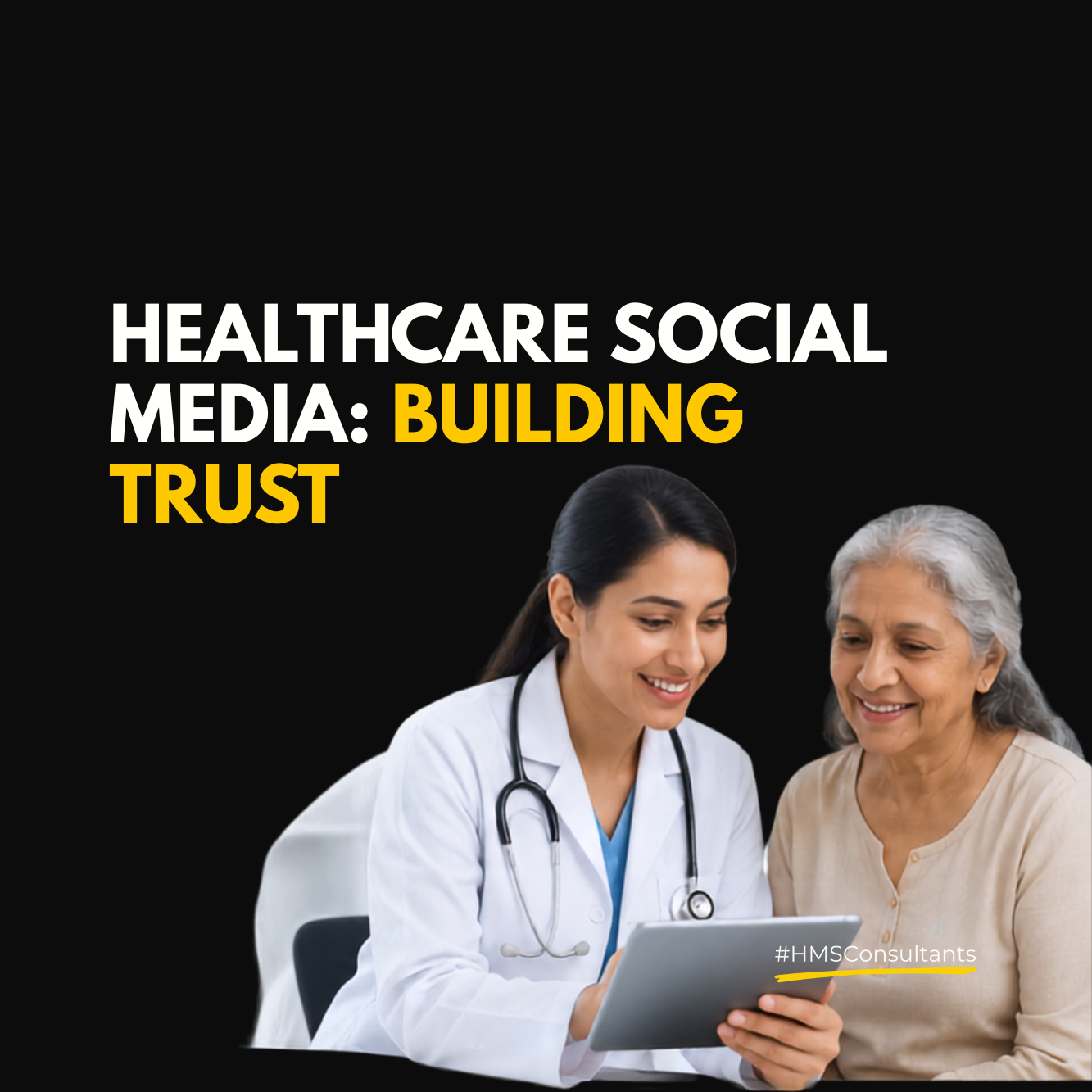
Trust Is the Real Goal of Healthcare Social Media
In regular marketing, attention can be enough to create interest. But in healthcare, attention is not enough. A patient needs confidence before taking action.
Patient trust is built through:
- Simple language
- Responsible communication
- Consistent education
- Clear service explanation
- Doctor credibility
- Patient-friendly content
- Ethical claims
- Helpful videos
- Realistic information
- Strong digital presence
This is why healthcare marketing social media should be handled carefully. A healthcare page should not sound like hard selling. It should sound informed, responsible, and helpful.
The goal is not only to get likes or views.
The goal is to help patients trust the healthcare provider.
What Good Healthcare Social Media Should Include
A strong healthcare social media plan should include different types of content, not only promotional posts.
Useful content categories can include:
- Patient education posts
- Myth vs fact content
- Symptoms awareness
- Doctor explanation videos
- Treatment journey content
- Service explanation posts
- Preventive healthcare tips
- Patient FAQ content
- Trust-building posts
- Review and reputation content
- Behind-the-scenes care content
- Ethical awareness campaigns
This type of content helps patients understand the healthcare provider better.
It also supports hospital marketing and clinic marketing by building long-term credibility.
Why Healthcare Social Media Needs Strategy
Healthcare social media should be connected to a larger healthcare marketing strategy. It should not be managed as a separate activity.
Before creating content, healthcare businesses should ask:
- Which services need visibility?
- Who is the target patient group?
- What doubts do patients have?
- What information is missing online?
- What content builds doctor credibility?
- What content supports enquiries?
- What content should be avoided ethically?
- How will social media support the website, SEO, Google profile, and patient enquiries?
This is where a healthcare marketing consultant can add value.
A consultant can help doctors, clinics, and hospitals understand what kind of content is needed and why.
Role of a Healthcare Marketing Consultant
A healthcare marketing consultant does not only suggest posts. The consultant studies the healthcare business, patient journey, digital presence, service positioning, and communication gaps.
For social media, a consultant can help with:
- Content direction
- Patient education planning
- Service-based content strategy
- Doctor credibility building
- Ethical communication
- Campaign planning
- Social media audit
- Patient trust-building
- Integration with healthcare digital marketing
- Enquiry-focused content planning
This helps healthcare businesses move from random posting to meaningful communication.
How HMS Supports This Direction
Many professionals know how to create content or manage social media pages, but healthcare social media requires a deeper understanding of patient behaviour, trust, ethics, and healthcare communication.
The HMS Certified Healthcare Marketing Consultant Program helps serious professionals understand this specialised side of healthcare marketing.
Participants learn how to review digital presence, understand patient communication gaps, plan healthcare content direction, study service positioning, and think from a consulting perspective.
The program is designed for professionals who want to move beyond basic posting and understand how healthcare marketing can support trust, visibility, and business growth responsibly.
HMS provides structured learning, tools, frameworks, and guidance. Growth depends on how participants learn, apply, communicate, and build their consulting practice over time.
Conclusion
Healthcare marketing social media should not be limited to regular posting. In healthcare, content must educate, guide, reassure, and build trust.
Doctors, clinics, hospitals, and healthcare businesses need social media that speaks to patient concerns, explains services clearly, and supports ethical communication.
Posting creates activity.
Strategy creates direction.
Trust creates patient confidence.
For professionals who want to grow in healthcare marketing, understanding social media as a trust-building tool is an important skill. The future of healthcare social media will belong to those who can combine content, strategy, ethics, and patient understanding.
Healthcare marketing social media means using platforms like Instagram, Facebook, LinkedIn, and YouTube to educate patients, explain services, build trust, improve visibility, and support ethical healthcare communication.
Posting alone is not enough because healthcare decisions require trust. Patients need clear information, doctor credibility, service understanding, ethical communication, and reassurance before choosing a healthcare provider.
Patient education posts, doctor explanation videos, symptom awareness, FAQs, myth-busting content, treatment information, preventive health tips, and trust-building posts work well for healthcare social media.
A healthcare marketing consultant can help with social media audits, content direction, patient communication strategy, service positioning, ethical content planning, and trust-building communication.
Yes. The program can help social media professionals understand healthcare-specific content strategy, patient communication, digital presence review, ethical marketing, and consulting thinking.
No. HMS Consultants does not guarantee clients, income, employment, or fixed earnings. The program provides structured learning, tools, frameworks, mentoring, and guidance. Success depends on the participant’s effort, communication, market development, and consulting delivery.
is something we strongly believe in, which means ‘Knowledge without application is the same as having no knowledge at all
Akhil Dave
Principle Consultant
Ready to take your Personal Brand to the next level?
Share your details below and we will connect with you to discuss your growth strategy.
Healthcare Marketing 2025: Why Platform Features Matter
In 2025, platform-specific features are the key to healthcare marketing success. Learn how hospitals, clinics, and health brands can boost reach and patient trust.
Digital Marketing for Doctors: How to Audit What’s Working (and What’s Not) in 2025
Is your clinic marketing actually bringing patients? This blog breaks down how doctors can run a digital marketing audit in 2025 to track performance, improve ROI, and eliminate wasteful…
Clinic Not Getting Leads? Fix These 7 Costly Mistakes
Struggling to get clinic leads despite marketing efforts? Discover 7 hidden mistakes that silently block patient bookings and how to fix them in 2025.
Hospital Marketing Executive: Why the Role Needs Strategy, Not Just Field Work
Discover why the role of a hospital marketing executive now requires more than field visits. Learn how strategy, patient communication, digital awareness, reporting, and ethical healthcare marketing help hospitals…

Healthcare Marketing Jobs: Why Strategy Skills Matter More Than Execution
Healthcare marketing jobs are evolving beyond execution. Learn why healthcare marketing strategy, patient understanding, digital awareness, and consulting skills are becoming essential for long-term career growth and healthcare business…
Hospital Growth with Doctor Personal Branding 2025
In 2025, healthcare branding is about more than logos. Discover how doctor personal branding, clear messaging, and storytelling create lasting patient trust.