Most Hospitals Still Misunderstand Medical Marketing
Medical marketing is one of the most misunderstood functions inside Indian hospitals today. Most hospitals believe medical marketing means:- Advertisements.
- Social media posts.
- Newspaper campaigns.
- Hoardings.
- Healthcare camps.
- Digital promotions.
But despite spending heavily on these activities, many hospitals still struggle with:- Low OPD growth.
- Weak patient recall.
- Poor engagement.
- Inconsistent referrals.
- Limited long-term brand preference.
This is where the real problem begins.
Most hospitals are not failing because they are doing less marketing.
They are failing because they misunderstand what medical marketing actually is.
That is becoming one of the biggest challenges in healthcare marketing in 2026.
Medical Marketing Is Not Just Advertising
One of the biggest misconceptions in hospital marketing is treating medical marketing as advertising.
Advertising is only one part of medical marketing.
It is not the entire system.
Many hospitals spend lakhs on:
- Newspaper ads.
- Meta campaigns.
- Google Ads.
- Outdoor branding.
- Social media creatives.
- Promotional activities.
But after all the spending, patient growth still remains inconsistent.
Why?
Because patients do not choose hospitals only because they saw an advertisement.
Healthcare decisions work differently.
When patients need serious healthcare support, they usually:
- Ask family members.
- Search doctor names.
- Check reviews.
- Compare trust signals.
- Speak to referred doctors.
- Evaluate credibility before choosing a hospital.
This means medical marketing is not simply about visibility.
It is about building trust before the patient even walks into the hospital.
Most Hospitals Treat Medical Marketing Like a Department
Another major problem is that many hospitals treat medical marketing as an isolated department instead of a complete patient growth system.
The marketing team runs campaigns.
The reception team works separately.
Doctors communicate differently.
Patient follow-ups are inconsistent.
Online reputation is unmanaged.
And discharge communication ends the relationship completely.
As a result, the patient experience becomes disconnected.
Effective medical marketing does not work like isolated activities.
It works like a connected system where:
- Trust.
- Communication.
- Visibility.
- Patient experience.
- Retention.
- Advocacy.
Work together continuously.
That is where most hospitals struggle.
The Biggest Medical Marketing Mistake: Selling Services Instead of Solving Problems
Most hospital communication sounds almost identical.
Hospitals repeatedly talk about:
- Advanced technology.
- Expert doctors.
- Modern infrastructure.
- Comprehensive treatment.
- Patient-first care.
The problem is that almost every hospital says the same thing.
Patients rarely choose hospitals because of generic statements.
Patients choose hospitals when they feel:
- Understood.
- Reassured.
- Guided.
- Emotionally confident.
This is one of the biggest shifts happening in healthcare marketing.
Patients respond more strongly to communication that addresses:
- Their fear.
- Their confusion.
- Their symptoms.
- Their questions.
For example:
“Advanced orthopaedic department” feels promotional.
But:
“Worried about knee pain getting worse while climbing stairs?” feels personal.
That difference changes patient attention completely.
Strong medical marketing speaks to patient problems before promoting hospital services.
Work with HMS Consultants
Need a clear plan to grow brand visibility, patient footfall and revenue? Explore Hospital Marketing Strategy Consulting.
See Hospital Marketing Strategy ConsultingBook a free 30-min call
Most Hospitals Ignore Patients After Discharge
One of the most overlooked parts of hospital marketing is patient retention.
Many hospitals focus heavily on acquiring new patients while completely ignoring existing patients after discharge.
The patient visits once.
Treatment happens.
And communication stops.
No follow-up.
No educational content.
No reminders.
No relationship-building.
Six months later, when the patient needs healthcare support again, they search again from the beginning.
Sometimes they choose another hospital entirely.
This is one of the biggest invisible losses in medical marketing today.
Existing patients already:
- Know the hospital.
- Understand the experience.
- Trust the doctors.
Yet many hospitals fail to nurture that trust consistently.
Retention marketing often creates higher long-term ROI than constantly chasing new patient acquisition.
Effective Medical Marketing Works Through Trust
One of the most important shifts happening in medical marketing is the movement from promotion-based communication toward trust-based communication.
Patients today evaluate hospitals across:
- Google reviews.
- Maps visibility.
- Doctor videos.
- Healthcare content.
- Social media.
- Referrals.
- Online reputation.
This means trust is being built continuously across multiple digital touchpoints.
Hospitals that consistently:
- Educate patients.
- Simplify communication.
- Respond professionally.
- Maintain visibility.
- Create reassuring patient experiences.
Usually build stronger long-term preference.
This is where medical marketing becomes different from advertising.
Advertising creates visibility.
Trust creates patient decisions.
The T-V-A Approach to Medical Marketing
One of the simplest ways to understand effective medical marketing is through three pillars:
These three pillars work together continuously.
Trust
Patients must trust the hospital before choosing it confidently.
Trust is built through:
- Educational content.
- Reviews.
- Referrals.
- Doctor communication.
- Patient experience.
- Reputation.
Visibility
Once trust-building starts, the hospital must remain visible where patients search.
This includes:
- Google search.
- Maps.
- Social media.
- YouTube.
- Healthcare content.
- Local SEO.
Advocacy
The strongest medical marketing happens when patients start recommending the hospital themselves.
This happens when:
- Patient experiences feel memorable.
- Communication feels human.
- Follow-ups feel personal.
- Patients feel genuinely cared for.
Advocacy turns patients into long-term growth drivers.
Why This Matters More in 2026
Healthcare decisions are becoming increasingly digital.
Patients now compare hospitals faster than ever before.
At the same time, patient attention spans are shrinking.
This means hospitals can no longer depend only on advertisements to grow consistently.
Patients expect:
- Credibility.
- Clarity.
- Reassurance.
- Accessibility.
- Trust signals.
Before making healthcare decisions.
That is why medical marketing in 2026 is becoming:
- More strategic.
- More patient-centric.
- More trust-driven.
- More system-oriented.
Hospitals that continue treating medical marketing only as promotion will struggle to build long-term patient preference.
Conclusion
Most hospitals still misunderstand medical marketing because they treat it as advertising instead of a patient trust-building system.
The problem is not lack of spending.
The problem is lack of strategic alignment.
Effective medical marketing is not built only through campaigns, promotions, or visibility.
It is built through:
- Trust.
- Communication.
- Patient experience.
- Retention.
- Visibility.
- Advocacy working together continuously.
In 2026, hospitals that understand this shift will build stronger patient relationships, stronger recall, and stronger long-term growth.
Because patients do not choose hospitals only because they see them.
They choose hospitals because they trust them.
Medical marketing is the strategic process of building trust, visibility, patient engagement, and long-term relationships for hospitals, clinics, and healthcare providers through communication, branding, patient experience, and digital presence.
The 7 main functions of marketing include promotion, selling, product management, pricing, distribution, financing, and market research. In healthcare, these functions help hospitals improve visibility, patient trust, communication, and patient engagement.
The four pillars of marketing are product, price, place, and promotion. In medical marketing, these pillars influence how hospitals position services, improve accessibility, communicate value, and attract patients effectively.
Marketing helps businesses build awareness, strengthen trust, attract customers, improve reputation, and support long-term growth. In healthcare, medical marketing also improves patient communication and hospital visibility.
A good marketing strategy is clear, consistent, patient-focused, and goal-oriented. Effective medical marketing strategies focus on trust-building, visibility, patient experience, communication, and long-term patient relationships.
Common marketing strategies include content marketing, SEO, social media marketing, referral marketing, branding, email marketing, local marketing, and digital advertising. Hospitals combine these strategies to improve patient engagement and visibility.
Marketing improves visibility, strengthens brand recognition, increases patient trust, supports business growth, improves engagement, and helps hospitals communicate their services more effectively to the right audience.
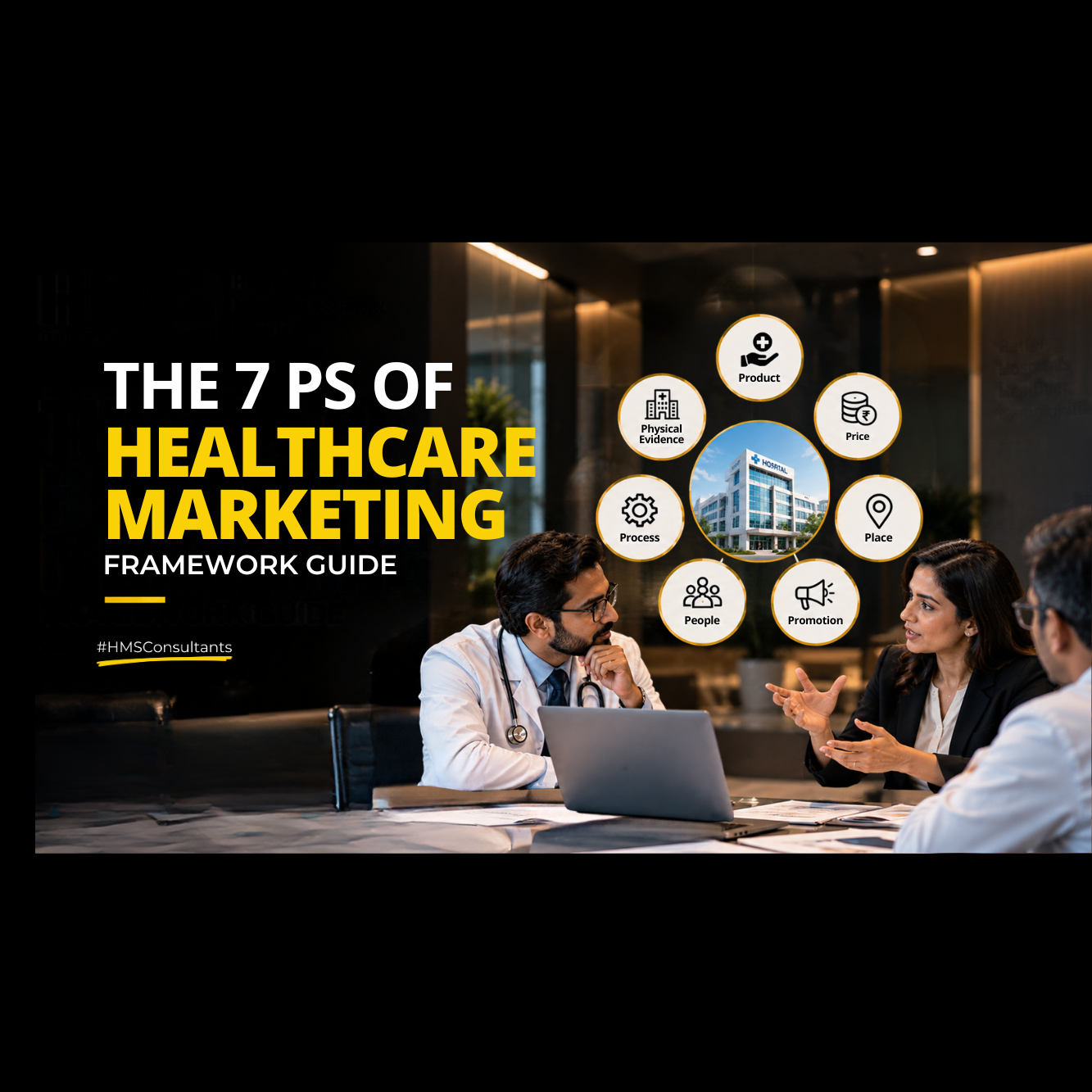
The 7 Ps of marketing mix are Product, Price, Place, Promotion, People, Process, and Physical Evidence. In healthcare marketing, these factors shape patient perception, hospital experience, and service communication.
is something we strongly believe in, which means ‘Knowledge without application is the same as having no knowledge at all
Akhil Dave
Principle Consultant
Ready to take your Personal Brand to the next level?
Share your details below and we will connect with you to discuss your growth strategy.
Digital Marketing in Indian Healthcare
Discover how digital marketing is transforming Indian healthcare by enhancing patient engagement, trust, and hospital growth in 2025.
Hospital Marketing Strategy: How Hospitals Can Build Trust and Patient Growth
Learn how a hospital marketing strategy helps hospitals build patient trust through effective branding, doctor positioning, digital marketing, patient communication, and ethical healthcare practices. Discover why a structured marketing…
Why Most Hospital Marketing Looks Exactly the Same
Most hospital marketing today looks almost identical because hospitals often use the same messaging, branding styles, and healthcare communication patterns. This blog explains why differentiation, recall, hospital branding, and…
Word of Mouth Marketing for Indian Clinics
Word-of-mouth is the most powerful and ethical growth tool in Indian healthcare. Learn how clinics and hospitals can build trust and scale referrals in 2025.

Turning Reviews Into Reputation: Building Patient Trust Online
Online reviews are today’s word-of-mouth in healthcare. Learn how hospitals can turn patient feedback into trust, transparency, and long-term reputation growth.

The Marketing Audit Your Hospital Actually Needs: Why 80% Clinics Waste Money Without This 7-Step Review
A 7-step hospital marketing audit reveals hidden gaps in branding, Google presence, website experience, leads, and tracking.