Quick answer: The ten most common NMC advertising mistakes doctors make are patient testimonials, before-and-after photos, a missing registration number, “best” or “No. 1” claims, success rates and guarantees, offers and giveaways, review requests, patients visible in reels, unlabelled AI content, and unsupervised agencies or influencers. Under the NMC notice of 6 October 2026, most of these appear to conflict with the guidelines and can be fixed in a day.
Published: 10 November 2026 · By Akhil Dave, Founder & Principal Consultant, HMS Consultants
When HMS reviews a doctor’s online presence, the same problems appear again and again. This guide lists the ten most common ones, shows what each looks like, cites the relevant clause of the notice and gives a simple fix. For more detail, see the complete NMC guide and the 100 questions answered.
Key takeaways
Seven of the ten mistakes are rated Red by HMS, so fix them first.
Testimonials, results, superlatives, offers and missing registration numbers are the most common problems.
Consent from a patient never makes a prohibited post acceptable.
You remain responsible for what agencies, influencers and staff publish for you.
Keeping patient testimonials or review screenshots
Red
8.1(xi), 3.2 Expl. V
2
Posting before-and-after photos or “results”
Red
8.1(v)
3
Leaving out your name, qualifications and registration number
Red
3.2 Expl. III
4
Using “best”, “No. 1” or “leading” anywhere
Red
8.1(ix), 8.1(xii)
5
Quoting patient numbers, success rates or “painless” and “guaranteed”
Red
8.1(iii), 8.1(vi)
6
Running offers, discounts, giveaways or referral gifts
Red
8.1(x)
7
Asking patients for Google reviews with QR codes or WhatsApp messages
Amber to Red
3.2 Expl. V
8
Showing patients in reels, photos and screenshots
Red
6.1 to 6.4, 7.4, 8.1(v)
9
Publishing AI-made content without a label
Amber
7.2
10
Letting an agency, influencer or staff post without your approval
Amber to Red
4.4, 8.1(vii), 8.1(viii), 8.1(xi)
Rating scale used by HMS: Red appears to conflict with the guidelines, Amber is borderline or untested. HMS is a marketing consultancy and does not give legal verdicts.
1. Keeping patient testimonials or review screenshots
Rating: Red · Clause: 8.1(xi), 3.2 Expl. V
What it looks like
A testimonials page, “patients say” block, video thank-you, WhatsApp chat screenshot or a row of five-star banners.
Why it is a problem
The notice bars testimonials, endorsements and recommendations from patients, celebrities, influencers, employees and other third parties in any form. Patient consent does not cure this, and doctors may not request or share patient reviews for promotion on social media.
How to fix it
Unpublish the page, remove the menu and footer links, and delete review widgets and screenshots. Replace them with educational content in your own name.
2. Posting before-and-after photos or “results”
Rating: Red · Clause: 8.1(v)
What it looks like
A results gallery, a transformation reel, a “happy patient” post or a celebrity patient mention.
Why it is a problem
The notice bars before-and-after photos, surgical results and success stories. The only narrow exception is scientific or educational use with anonymised, documented consent, for example in a journal.
How to fix it
Remove the gallery and the posts. If a case is worth teaching, publish it in a journal or in an anonymised educational format.
3. Leaving out your name, qualifications and registration number
Rating: Red · Clause: 3.2 Expl. III
What it looks like
A website footer, blog or Instagram bio with a logo and phone number but no register number.
Why it is a problem
Any doctor publishing an electronic media post must disclose name, qualifications, registration status and the SMR or NMR number. A hospital must list its doctors with the same details.
How to fix it
Add a disclosure line to the footer, every doctor profile, blog author boxes and your social bios: Dr [Name], [qualifications]. [State] Medical Council Reg. No. [number].
4. Using “best”, “No. 1” or “leading” anywhere
Rating: Red · Clause: 8.1(ix), 8.1(xii)
What it looks like
“Best orthopaedic surgeon in Vadodara” in a page title, meta description, image alt text, Google Business Profile name or Instagram bio.
Why it is a problem
Superiority claims are barred unless they are objectively verifiable, based on a transparent and independently checkable method, and lawful. Keyword-stuffed “best doctor in city” pages and names can also fall under the search-manipulation rule.
How to fix it
Search your own site and profiles for “best”, “top”, “No. 1”, “leading” and “most trusted”. Replace them with factual descriptions: your speciality, place of practice and qualifications.
5. Quoting patient numbers, success rates or “painless” and “guaranteed”
The notice bars advertising personal achievements, success rates and the number of patients treated, and statements that create unrealistic expectations or conceal risks.
How to fix it
Remove the numbers and absolute words. Say what the procedure involves, its risks and that outcomes vary by patient.
6. Running offers, discounts, giveaways or referral gifts
Rating: Red · Clause: 8.1(x)
What it looks like
“20% off this month”, “free consultation camp”, a festival contest, a referral reward.
Why it is a problem
Discounts, limited-period offers, contests, coupons, gifts, cashbacks, referral benefits and free procedures are barred where they encourage unnecessary consultation or amount to solicitation. A plain, standing fee with no inducement is Amber at most.
How to fix it
Publish fees factually and permanently. Drop time-limited offers, prizes and referral rewards.
7. Asking patients for Google reviews with QR codes or WhatsApp messages
Rating: Amber to Red · Clause: 3.2 Expl. V
What it looks like
A “Rate us on Google” QR code at reception, a review link in your WhatsApp reply, a review card at discharge.
Why it is a problem
The notice bars soliciting or procuring reviews for promotion and requesting or sharing patient reviews on social media. A Google review request is a grey area, but its purpose is promotion.
How to fix it
HMS advises stopping review requests until the NMC clarifies, removing QR codes and cards, and never quoting or embedding reviews on your site or posts.
8. Showing patients in reels, photos and screenshots
Rating: Red · Clause: 6.1 to 6.4, 7.4, 8.1(v)
What it looks like
A treatment-day reel, a patient face in the background, a report with a visible name, a tattoo or birthmark in a case photo.
Why it is a problem
Names, faces, birthmarks, tattoos and identifiers must be masked, and consent must be specific, informed, voluntary, documented and verifiable. Consent never legalises a prohibited practice such as a results post.
How to fix it
Keep patients out of promotional content entirely. For genuine education, anonymise fully and keep written consent.
9. Publishing AI-made content without a label
Rating: Amber · Clause: 7.2
What it looks like
AI-written blogs or captions with no label, AI-made “patient” images, a cloned-voice video of the doctor.
Why it is a problem
AI-generated promotional campaigns for commercial interest are prohibited. Permitted AI promotional content must carry a source mark, and AI must not create or alter a patient image, testimonial, voice or outcome, or a synthetic endorsement.
How to fix it
Review every AI draft yourself, add a line such as “This content was generated with AI assistance” where relevant, and never use AI to create patient material.
10. Letting an agency, influencer or staff post without your approval
Rating: Amber to Red · Clause: 4.4, 8.1(vii), 8.1(viii), 8.1(xi)
What it looks like
A freelancer posting patient stories, an influencer reel for your clinic, an agency paid per lead or per appointment.
Why it is a problem
You stay responsible for content you authorised, commissioned, sponsored, adopted or knowingly permitted. Payment linked to procuring or referring individual patients, including lead-generation fees, is barred.
How to fix it
Approve every post in writing, add the NMC rules to your agency contract, and avoid any per-lead or per-patient fee. Take legal advice on how the agency rule applies to your arrangement.
A 30-minute check you can run today
Open your website, Instagram, Facebook, YouTube, LinkedIn and Google Business Profile.
Use the site search or a browser find to look for: testimonial, review, before, after, best, No. 1, leading, guaranteed, painless, offer, discount, free.
Scroll your pinned posts and highlights for patient content.
Check your name, qualifications and registration number appear on every page and bio.
Ask your agency or staff for a list of everything they posted in the last three months.
What are the most common NMC advertising mistakes doctors make?
Patient testimonials and review screenshots, before-and-after photos, missing registration numbers, “best” and “No. 1” claims, success rates and patient counts, and offers or giveaways. These are the items HMS rates Red.
How do I check my own website and Instagram for these mistakes?
Open your website, Instagram, Facebook, YouTube, LinkedIn, Google Business Profile and directory listings. Search each for testimonials, reviews, before-and-after images, “best”, “No. 1”, “guaranteed”, patient counts, offers and patient identifiers, and confirm your registration number appears.
Do the guidelines apply to old posts?
The notice of 6 October 2026 is silent on earlier content. HMS suggests reviewing your bio, pinned posts, highlights and the last three months of posts, and removing anything that conflicts.
Is a patient’s own Google review a violation if I did not ask for it?
The notice does not clearly address it. HMS rates it Amber. Do not quote, embed, reshare or showcase it, and reply neutrally with no patient detail.
What happens if I do not fix these mistakes?
The State Medical Council may contemplate graded action, starting with a warning and mandatory ethics training and rising to suspension for serious or repeated violations. A show-cause notice comes first and there is a right of appeal (cl. 10.1 to 10.3, 11.1).
Can HMS Consultants check my channels for me?
Yes. The NMC Compliance Audit is a red, amber, green review of your website, social media, Google Business Profile and directory listings, with a report in 7 working days. It is a marketing compliance review and not legal advice.
NMC Compliance Audit
A red, amber, green review of your website, social media and Google profile.
Disclaimer: HMS Consultants is a healthcare marketing consultancy. We are not a law firm and this guide is not legal advice. References to the NMC notice reflect our understanding of public information as of 10 November 2026. Ratings are HMS marketing-review judgements, not legal conclusions. Please consult a qualified healthcare lawyer before acting.
About the author:Akhil Dave is Founder & Principal Consultant of HMS Consultants, with 25+ years in healthcare marketing.
Work with HMS Consultants
Not sure how many of these ten apply to your website and Instagram? Start with a review of your current position.
When clarity and execution align, healthcare marketing turns into measurable impact. The Growing layer focuses on scaling trust, patient footfall, and revenue with data-driven precision.
Positive Google reviews build credibility, but do they actually bring patients? Discover why reviews alone won’t fill your clinic and what to do instead.
Your hospital’s name, logo, and tagline are more than design they’re strategic tools to build trust, stand out, and stay legally compliant from day one.
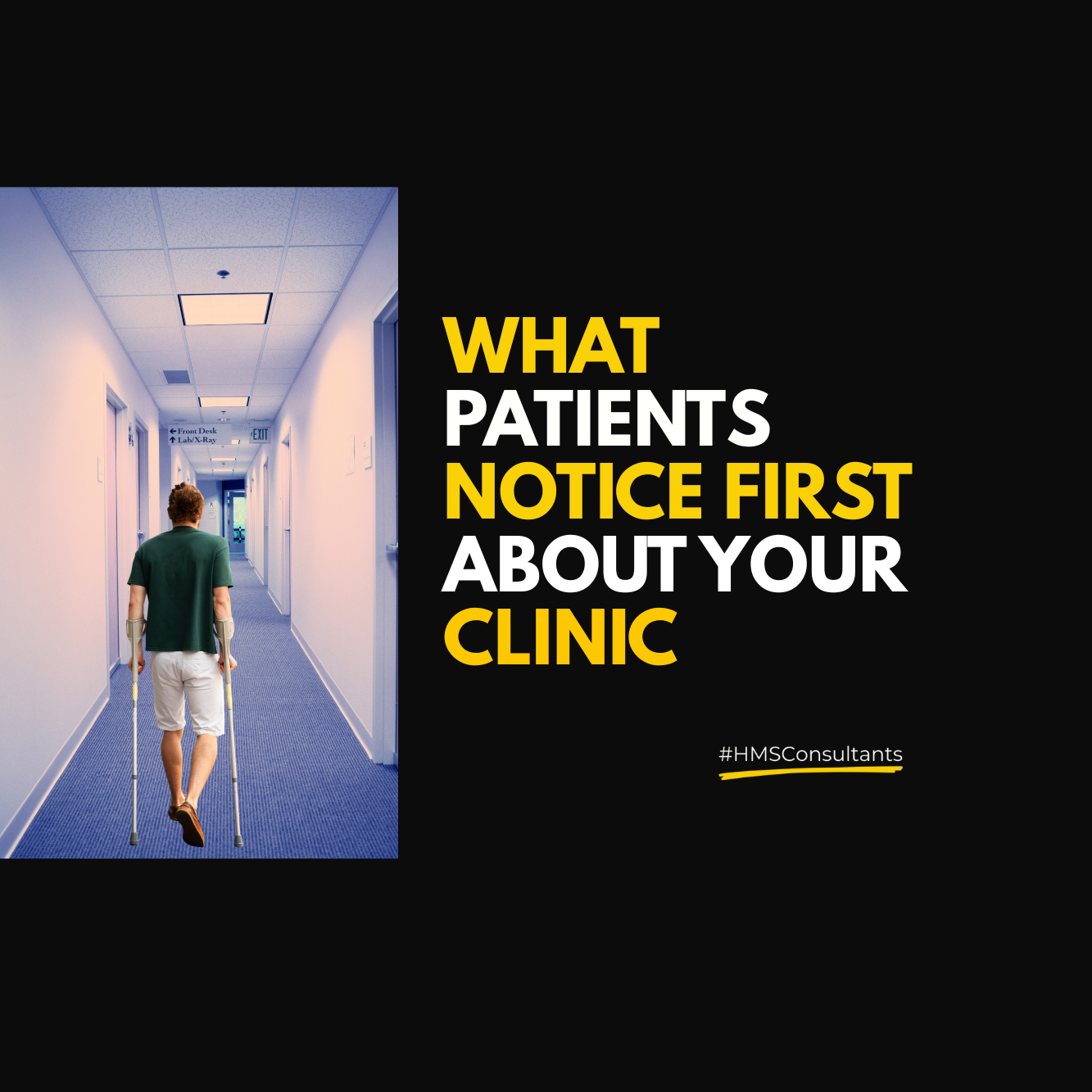
Patients notice more than treatments staff warmth, digital ease, cleanliness, and follow-ups shape trust. These invisible cues build your clinic’s brand.
In 2025, healthcare branding is about more than logos. Discover how doctor personal branding, clear messaging, and storytelling create lasting patient trust.
Patients value time as much as treatment. Discover how faster consultations, quick reports, and responsive follow-ups can become a clinic’s strongest marketing advantage in India.