Search results for: “marketing trends”

  • Inside the Mind of a Patient: What They Really Notice About Your Hospital

    Inside the Mind of a Patient: What They Really Notice About Your Hospital

    Inside the Mind of a Patient: What They Really Notice About Your Hospital

    Written by
    Published on
    Share This

    Hospitals often believe that patients judge them only by medical expertise. Administrators assume that the deciding factors are the seniority of the doctor, advanced equipment, or the success rate. But patients don’t experience hospitals the way doctors do.

    Patients don’t see the ventilator first.
    They don’t notice the microscope.
    They don’t recognise the brand of the stent or implant.

    They notice something else entirely, something most hospitals underestimate.
    They notice how the hospital feels.

    From the moment a patient or family member steps inside (or even before that, when they search you online), their mind begins to make decisions:

    “Is this hospital organised?”
    “Does this place look clean?”
    “Will they take care of us?”
    “Will anyone listen to us?”

    The hospital may be highly qualified medically, but trust is built or broken long before treatment begins.

    Let’s step inside the patient’s mind and understand what they truly see, feel, and remember.

    Before They Arrive: The First Impression Happens Online

    In cities like Ahmedabad, Surat, Jaipur, Nashik, Lucknow, Nagpur or Indore, most patients start with Google. Not with the front door.

    They search:

    • Best child specialist near me
    • Normal delivery hospital
    • Kidney stone treatment
    • Cataract surgery cost

    If they see a hospital with a modern website, updated Google reviews, doctor profiles, OPD timings, photos, and clear contact details, they immediately feel more confident.

    But if they find:

    • No website
    • No Google listing
    • No updated information
    • Only two outdated reviews

    …their mind says, “Let’s try somewhere else.”

    Doctors may trust their skill. Patients trust what they can see.

    The Parking Lot and Entrance

    It sounds trivial, but the patient journey begins even before the reception. If the parking is confusing, unorganised, or chaotic, patients start the experience stressed.
    Their first impression becomes: “This hospital doesn’t manage things properly.”

    If the entrance is clean, bright, and welcoming, patients feel safer before anyone speaks a word.

    Cleanliness is psychological medicine.

    Reception: The Real Heart of the Hospital Experience

    Every hospital believes the doctor creates trust. But for most patients, trust (or fear) begins at the reception desk.

    If the receptionist:

    • Greets politely,
    • Explains patiently,
    • Answers clearly,
    • Guides confidently…

    …the patient calms down.

    But if the receptionist:

    • Looks irritated,
    • Speaks rudely,
    • Asks questions as if doing a favour,
    • Shows confusion or lack of coordination…

    …the patient immediately feels unsafe, even if the doctor is the best in the city.

    The patient decides: “If reception is this unorganised, what will happen during treatment?”

    One rude sentence can cancel a patient’s trust.
    One kind sentence can create it.

    Cleanliness and Hygiene Everywhere

    Patients are not medical experts, but they understand the importance of cleanliness deeply.

    They notice:

    • The smell of the waiting area
    • Dust on chairs or corners
    • Dirty bathrooms
    • Random slippers or waste lying around
    • Blood stains, used cotton, syringes not disposed properly

    Doctors may not see these things. Patients see everything.

    If the hospital looks dirty, no machine or doctor can save the hospital’s image. Cleanliness equals safety.

    Waiting Time: Do You Respect Their Pain?

    Patients expect waiting. But what they hate is uncertainty.

    They don’t get angry because of delay. They get angry because nobody tells them why or for how long.

    If a hospital simply communicates:
    “The doctor is running 20 minutes late, please wait.”
    “Your report will be ready in 15 minutes.”

    …their frustration reduces immediately.

    Silence makes patients anxious. Communication makes them comfortable.

    Staff Behaviour: Compassion is More Powerful Than Technology

    Most patients don’t remember what instrument was used in surgery. They remember how the nurse spoke to them.

    Was she gentle?
    Did she explain instructions?
    Did she show patience with an old person or a scared child?

    Patients are emotionally sensitive in hospitals.
    They notice kindness like medicine.

    They also notice anger like an injury.

    A single rude staff member can destroy the reputation that doctors spent years building.

    Doctor Interaction: Humanity Matters as Much as Skill

    Patients rarely judge medical accuracy.
    They judge communication.

    A doctor who:

    • Listens,
    • Explains simply,
    • Makes eye contact,
    • Doesn’t rush,
    • Reassures the family…

    …automatically becomes “the best doctor.”

    A doctor who seems busy, dismissive, or impatient makes the patient insecure, even if the treatment is brilliant.

    Patients want to feel heard, not processed.

    Billing and Transparency

    Money is one of the biggest fears in healthcare.

    If billing feels confusing, hidden, or uncertain, patients lose trust, even with good treatment.

    But if hospitals:

    • Explain charges,
    • Tell what’s included,
    • Make estimates clear,
    • Give receipts with breakdowns, and patients feel respected.

    Transparent billing is one of the strongest trust builders in the healthcare industry.

    Discharge and Follow-Up

    The hospital journey doesn’t end when the patient leaves. In fact, the final impression is formed at discharge.

    If the staff explains medicines, diet, care instructions, follow-up dates and provides contact details for questions, the patient goes home confident.

    If the discharge feels rushed, confusing, or disorganised, the patient goes home scared.

    After reaching home, a simple WhatsApp message:
    “Hope you are recovering well. If you need anything, message us anytime.”
    …creates emotional loyalty.

    Hospitals don’t realise how powerful small gestures are.

    What Patients Remember Forever

    At the end of the journey, patients remember:

    • How they were treated as humans
    • Not how the machine sounded
    • Not which stitch was used
    • Not which OT light was installed
    • Not which brand of implant was used

    They remember:

    • Who smiled
    • Who helped
    • Who guided
    • Who made them feel safe

    People don’t remember hospitals. They remember experiences.

    Conclusion

    Hospitals spend crores on infrastructure. Patients judge the hospital by behaviour, cleanliness, communication, transparency, and organisation.

    If hospitals could see themselves through a patient’s eyes, they would never ignore:

    • Reception training
    • Clear communication
    • Quick response
    • Cleanliness
    • Transparent billing
    • Follow-ups

    Because medical excellence yields results, emotional excellence fosters trust.

    A hospital becomes great not only when it treats patients well, but when it makes them feel cared for every step of the way.

    Contact Us HMS Consultants 

    Doctors Digital Marketing I Healthcare Marketing I Hospital Marketing Strategies I Marketing ideas for clinics I Marketing Trends 2025 I Medical Marketing I Social Media Marketing

    is something we strongly believe in, which means ‘Knowledge without application is the same as having no knowledge at all

    Akhil Dave

    Principle Consultant

    Ready to take your Personal Brand to the next level?

    Share your details below and we will connect with you to discuss your growth strategy.
    • If Hospitals Marketed Like Airlines: What Healthcare Can Learn About Strategy, Systems & Patient Experience

      If Hospitals Marketed Like Airlines: What Healthcare Can Learn About Strategy, Systems & Patient Experience

      If Hospitals Marketed Like Airlines: What Healthcare Can Learn About Strategy, Systems & Patient Experience

      Written by
      Published on
      Share This

      In today’s world, every industry is using strategy and technology to create personalised, seamless customer experiences. But there is one industry that has mastered it better than most: airlines.

      Whether you fly Indigo, Vistara, Emirates or Air India, the experience is predictable, organised, responsive, and carefully designed. From booking to boarding to feedback, airlines run on well-coordinated systems, not guesswork.

      Now imagine if hospitals did the same.

      Not by treating patients like passengers, but by adopting the same structured approach to marketing, communication, and experience that airlines follow every single day.

      Because while hospitals have better expertise, deeper emotional responsibility, and far higher trust stakes, most still rely on unstructured marketing, scattered communication, and outdated enquiry handling.

      Let’s explore how hospitals could transform their growth simply by thinking like airlines.

      Booking a Flight Is Easier Than Booking an OPD

      If you open an airline website or app, you can:

      • Check timing
      • Check pricing
      • Choose a doctor, if this were a hospital example
      • See availability
      • Change timing
      • Cancel
      • Get reminder notifications
      • Receive email confirmation
      • Track your booking

      Now compare this to many hospitals in India:

      A patient asks, “Is the orthopaedic doctor available today?” The receptionist doesn’t know.

      Someone needs to “check and call back.” Sometimes no one calls back. Sometimes the patient never gets an answer.

      Hospitals lose patients before they even arrive, not because of clinical quality, but because the system wasn’t organised for them. Airlines don’t run on memory. They run on systems. Hospitals must too.

      Airlines Don’t Market to “Everyone”, They Market to the Right Passenger

      When an airline launches an offer, it does not target every Indian with internet access. It targets:

      • Frequent flyers
      • First-time travelers
      • Business travellers
      • Student discounts
      • Festival routes
      • City-specific audiences

      They know exactly who to talk to, when to speak, and how to communicate effectively.

      Hospitals, on the other hand, often market without segmentation:

      • One generic post for everyone
      • No customised communication
      • No distinct messaging for pregnant women, diabetics, senior citizens, or chronic patients

      Healthcare is diverse. A single message cannot address everyone. Airlines succeed because they understand the concept of audience segmentation. Hospitals that segment patients, by age, speciality, geography, behaviour, or need will see far better conversions and loyalty.

      Airlines Don’t Wait for Customers to Remember, They Proactively Remind

      Think about the last time you flew. You received:

      • A booking confirmation
      • Payment receipt
      • Flight reminder
      • Check-in link
      • Gate number
      • Delay alerts
      • Feedback request
      • Offers for next booking

      All without asking.

      Now imagine a hospital doing this:

      • OPD appointment confirmation
      • Rescheduling/reminder
      • Discharge instructions
      • Post-surgery precautions
      • Medicine reminders
      • Follow-up alerts
      • Check-up due messages
      • Health package offers for existing patients

      This is not “marketing.” This is responsible care.

      Most hospitals depend on patients remembering appointments themselves. Airlines don’t trust memory; they trust systems.

      Hospitals should too.

      Airlines Turn Data Into Strategy, Hospitals Rarely Do

      Airlines track everything:

      • Booking patterns
      • Travel frequency
      • Preferred timings
      • Feedback
      • Food choices
      • Cancellation behaviour

      This helps them plan flights, pricing, offers, loyalty programmes, and communication.

      Hospitals also have data, but most of it is

      • Paper-based
      • Scattered
      • Not analysed
      • Not used for strategy

      If hospitals used even simple CRM data, they would know:

      • Which specialities need marketing
      • Which patients need follow-ups
      • Why cancellations happen
      • Peak OPD times
      • Which campaigns work
      • Which enquiries are converting

      Airlines grow by analysing data. Hospitals can too.

      Branding Matters, Hospitals Ignore It

      Airlines invest heavily in branding because branding builds trust.

      • Same colour theme
      • Same tone of communication
      • Same airport experience
      • Same uniforms
      • Same service behaviour

      Even the safety announcements sound consistent.

      In healthcare, branding is not about glamour; it’s about trust and confidence. A hospital must feel:

      • Clean
      • Modern
      • Safe
      • Transparent
      • Organised
      • Patient-friendly

      But many hospitals treat branding like an occasional poster or festive greeting. Branding is strategy, not decoration.

      When branding is consistent, patients feel secure.
      When branding is neglected, patients feel uncertain.

      Airlines Collect Feedback, And Respond to It

      After every flight, airlines request feedback. More importantly, they act on it.

      In hospitals, feedback often goes uncollected or unread:

      • No structured reviews
      • No follow-up to unhappy patients
      • No data to improve staff performance
      • No online reputation management

      Some hospitals are even afraid to ask for feedback. But feedback is not a threat, it is a roadmap for improvement.

      Airlines know feedback equals loyalty. Hospitals must treat it the same way.

      Loyalty Programs: Imagine Hospitals Doing the Same

      Airlines reward loyalty with:

      • Points
      • Discounts
      • Priority service
      • Special offers

      Healthcare rarely thinks of patient loyalty.

      Imagine:

      • Free annual checkup for patients with long-term association
      • Priority appointment for chronic patients
      • Lower OPD fee for yearly follow-up
      • Small benefits for referrals

      Loyalty reduces marketing costs. Airlines know this. Hospitals often miss it.

      Airlines Never Leave Customers Without Information

      Airlines communicate everything:

      • Weather delays
      • Gate change
      • Baggage status
      • Seat change
      • Boarding announcements

      Hospitals often leave patients confused:

      • “Doctor late? No announcement.”
      • “OPD shift change? No message.”
      • “Surgery postponed? No update.”

      When information is missing, fear grows. When communication is transparent, trust grows.

      Airlines prioritise clarity. Hospitals should too, especially because anxiety in healthcare is far higher than anxiety in travel.

      Airlines Train Their Teams to Speak With Empathy

      The aviation industry trains staff to:

      • Speak softly
      • Reassure when things go wrong
      • Solve problems politely
      • Never argue publicly

      Hospitals often underestimate the power of staff behaviour. A receptionist can either build trust or destroy it.

      Doctors have clinical power. Staff have emotional power.

      Airlines invest heavily in staff training. Hospitals must treat training as part of patient care, not as optional.

      If Hospitals Thought Like Airlines, The Patient Journey Would Transform

      • Patients would book appointments as easily as flights
      • Every enquiry would get a fast response
      • Communication would be proactive
      • Everything would feel organised and predictable
      • Branding would inspire confidence
      • Feedback would improve systems
      • Loyalty would reduce marketing costs

      Hospitals don’t need bigger budgets to do this. They need better systems.

      Because the hospital that communicates better, organises better, and follows up better, wins patient trust before any treatment begins.

      Conclusion

      Airlines mastered marketing by mastering systems, data, and communication.
      Hospitals have something even bigger: purpose, compassion, and impact.
      If hospitals combine medical excellence with structured marketing systems, the patient journey becomes smoother, safer, and more reassuring.

      Patients may not expect luxuries from hospitals. But they do expect clarity, comfort, transparency, and respect.

      If hospitals marketed like airlines, healthcare would feel simpler, not because of technology, but because of better strategy, better processes, and better communication.

      Contact Us HMS Consultants 

      Doctors Digital Marketing I Healthcare Marketing I Hospital Marketing Strategies I Marketing ideas for clinics I Marketing Trends 2025 I Medical Marketing I Social Media Marketing

      is something we strongly believe in, which means ‘Knowledge without application is the same as having no knowledge at all

      Akhil Dave

      Principle Consultant

      Ready to take your Personal Brand to the next level?

      Share your details below and we will connect with you to discuss your growth strategy.

      • The Hidden Cost of Poor Enquiry Handling in Hospitals

        The Hidden Cost of Poor Enquiry Handling in Hospitals

        The Hidden Cost of Poor Enquiry Handling in Hospitals

        Written by
        Published on
        Share This

        Hospitals across India invest heavily in infrastructure, equipment, branding, and digital marketing, yet many still struggle with low patient footfall. Administrators often assume the issue is competition, pricing, or a lack of advertising. But in reality, hospitals lose a massive number of potential patients at a much simpler point: the enquiry desk.

        Whether it is a call, WhatsApp message, website query, or walk-in patient asking for details, enquiry handling is one of the most critical steps in the healthcare journey. And surprisingly, it is also one of the most neglected. Patients are not lost during surgery, treatment, or billing. They are lost before they ever meet a doctor.

        Enquiries Are Not Enquiries, They Are Potential Patients

        In a hospital, every enquiry represents a real person who is already interested. They are not “cold leads.” They are actively seeking healthcare. They have a pain, a symptom, a worry, or a family member who needs help.

        But here’s the shocking truth: many hospitals treat enquiries as casual questions, not as future patients. A typical scenario plays out every day:

        A patient sends a WhatsApp message at 10 AM asking: “Is the orthopaedic doctor available today?”

        No response for hours. They call reception, and the call rings. No answer. Or a staff member replies abruptly or without interest.

        Within minutes, the patient moves to another hospital, one that simply answers the phone.

        No doctor was consulted.
        No marketing was involved.
        No treatment was rejected.

        The hospital lost the patient in silence.

        Slow Replies = Lost Trust

        In today’s world, patients expect speed. They are used to WhatsApp responses, instant information, and clear communication. The hospital that responds fastest is often the hospital that gets the case.

        If a patient asks:

        • “What is cataract surgery cost?”
        • “Do you have pediatric OPD on Sunday?”
        • “Can I book an appointment today?”

        …and the reply comes hours later, the decision has already been made somewhere else.

        The patient doesn’t call back.
        They don’t complain.
        They simply move on.

        And because hospitals don’t see the patient walking away, they assume nothing is wrong.

        But poor enquiry handling is the silent leak in the system.

        Marketing agencies can bring 500 enquiries. If staff only handle 200 properly, 300 are silently lost. No advertisement can fix this.

        Why Enquiry Handling Matters More Than Marketing

        Doctors and hospitals often ask:
        “Should we spend more on digital marketing to increase patient flow?”

        But there is a more important question: “What happens to the patients who already contacted us?”

        If a hospital cannot convert existing enquiries, increasing marketing spend will only increase the number of patients lost.

        The issue is not visibility. The problem is responsiveness.

        A hospital with excellent enquiry handling can grow even with minimal marketing. A hospital with a poor enquiry response will struggle, regardless of how much money is spent.

        Patients Judge Your Hospital by Your Response

        Before a patient trusts a doctor, they trust the hospital’s communication. A rude receptionist, lack of clarity, or delayed reply can erase years of reputation.

        When a patient is treated poorly at the enquiry stage, they think: “If they don’t care when I’m asking for help, how will they treat me when I’m admitted?”

        The tone of voice, patience, and ability to guide the patient calmly matter as much as clinical skill. Enquiry handling is not just administrative, it is emotional.

        The Cost You Can’t See

        Let’s take a simple example.

        A hospital receives:

        • 50 calls per day
        • 30 WhatsApp messages
        • 10 website enquiries

        Total: 90 enquiries daily. If only half get responded to properly, that’s 45 lost enquiries every day.

        Even if 20% of those would have converted into paying patients, the hospital loses:

        9 patients daily → 270 patients per month → 3,240 patients a year.

        Even if the average revenue per patient is ₹2,000,
        that is ₹64+ lakh lost every year
        not from competition, but from poor enquiry handling.

        And this is a conservative estimate.

        Hospitals don’t feel this loss because patients never reach them.
        But the revenue leakage is real.

        Why Does This Happen?

        Some hospitals assume inquiry handling is just reception work. But receptionists are overloaded with:

        • phone calls
        • walk-in patients
        • paperwork
        • billing issues
        • discharge coordination
        • doctor communication

        Naturally, enquiries don’t get priority. Some hospitals believe: “If the patient is serious, they will call again.” That belief is outdated. Today’s patients have options.

        If one hospital does not answer, another one will.

        Enquiry Handling Is a Patient’s First Experience

        Just as OT hygiene matters for surgery, enquiry hygiene matters for first impressions.

        A smooth enquiry experience makes the patient feel:

        • Respected
        • Cared for
        • Safe
        • Confident

        A poor enquiry experience makes them feel:

        • Ignored
        • Unimportant
        • Confused
        • Scared

        Hospitals spend crores on machines, interiors, and advertising, but a phone call or WhatsApp reply creates the first impression. And most hospitals don’t even monitor this.

        Technology Can Support, Not Replace

        Even a simple system can improve conversion:

        • WhatsApp Business auto-replies
        • CRM tools
        • Missed-call alerts
        • Online appointment booking
        • FAQ messages
        • Call-back reminders

        But technology works only when people use it properly. A polite human response still matters most.

        The Best Hospitals Don’t Treat Enquiries as Questions

        They treat them as:

        • future patients
        • people in distress
        • families seeking help
        • opportunities to make an impact

        When enquiry handling becomes part of hospital culture, patients feel cared for before they even arrive.

        The Real Competitive Advantage

        Many hospitals believe their competitor’s big budget, fancy logo, or huge building is the reason patients choose them.

        But often the real reason is simple:

        • They answered quickly
        • They spoke respectfully
        • They explained clearly
        • They followed up

        Patients don’t remember marketing campaigns. They remember how someone made them feel when they were worried.

        Conclusion

        Hospitals believe patients are lost due to competition or a lack of advertising. But the truth is: most patients are lost before they enter the hospital.

        Not because of clinical quality. Not because of price. Not because of reputation.

        However, this is often due to slow replies, unclear information, or poor enquiry handling. Fix this, and footfall increases without spending more on marketing. In the modern era, patient trust begins with communication. The hospital that answers first, guides skillfully, and speaks with empathy, wins the patient long before admission.

        Contact Us HMS Consultants 

        Doctors Digital Marketing I Healthcare Marketing I Hospital Marketing Strategies I Marketing ideas for clinics I Marketing Trends 2025 I Medical Marketing I Social Media Marketing

        is something we strongly believe in, which means ‘Knowledge without application is the same as having no knowledge at all

        Akhil Dave

        Principle Consultant

        Ready to take your Personal Brand to the next level?

        Share your details below and we will connect with you to discuss your growth strategy.

        • Why Hospitals Lose Patients Before They Even Visit

          Why Hospitals Lose Patients Before They Even Visit

          Why Hospitals Lose Patients Before They Even Visit

          Written by
          Published on
          Share This

          In today’s digital healthcare environment, most hospitals believe they lose patients because of competition or pricing. The truth is far more surprising: in India, a large percentage of patients never reach the hospital door at all. They drop off somewhere in the journey before the first visit silently, invisibly, and without any chance for the hospital to explain its value.

          For decades, healthcare was driven by referrals, reputation, and word of mouth. If a hospital had good doctors, patients walked in with confidence. But patient behaviour has changed. Today, the first consultation happens online, not in OPD.

          Before making a decision, patients research symptoms on Google, check doctor profiles, read reviews, compare photos of facilities, and even check consultation fees. The hospital that looks more trustworthy, organised, and transparent wins the patient long before the first appointment.

          And this is where many hospitals unknowingly lose them.

          A Decision Is Made Before a Step Is Taken

          A patient searching for a doctor in Ahmedabad, Surat, Indore, Jaipur, Nagpur, or any rapidly developing Indian city does not begin with a visit. Their journey starts with a search bar.

          “Best oncology hospital near me.”
          “Normal delivery package price.”
          “Painless cataract surgery.”

          If a hospital does not appear in search results, appears with outdated or incomplete information, or has poor reviews, the decision ends right there. The patient moves on. They don’t call to verify. They don’t walk in to check. The decision is already made, silently.

          Hospitals often assume competition is taking away patients. In reality, visibility and credibility are.

          The Trust Test Happens Online

          Modern patients evaluate hospitals in much the same way they assess hotels, airlines, or even restaurants: through online presence and reviews. It may sound unfair, but it is logical from the patient’s perspective. Medical care is one of the most emotional decisions a family makes. Before trusting a doctor with their health, they seek reassurance.

          They check:

          • Are the reviews consistent or concerning?
          • Does the website look modern and updated?
          • Are there photos of real facilities, doctors, rooms, or OT?
          • Does the hospital respond politely to negative feedback?
          • Is there a WhatsApp number available for quick queries?

          If these signals are absent or poorly managed, patients assume the experience inside the hospital will be equally unorganised.

          In other words, the hospital may be clinically excellent, but digitally invisible.

          Missing the Patient Because No One Answered

          One of the biggest reasons hospitals lose patients, especially in Tier-II and Tier-III cities, is slow enquiry handling. A patient trying to call for an appointment, asking for cataract surgery cost, or enquiring about visiting hours does not wait anymore. If the call is missed or WhatsApp is seen but not replied to, the patient simply moves on to another provider.

          Hospitals believe they lost the case to competition. Reality: they lost it to silence.

          A receptionist who puts a patient on hold for too long, a coordinator who promises a call back but never does, or a WhatsApp response sent after 24 hours, all of these translate to one thing in the patient’s mind: “If they don’t communicate properly before admission, how will they treat us afterwards?”

          Minor lapses in communication create big doubts.

          Confusing or Hidden Information Drives Patients Away

          Hospitals often keep pricing or service details vague, assuming patients will call for clarification. But patients no longer want to call for clarity, they prefer transparency.

          If a hospital website or brochure says:
          “Call for details”
          “Contact reception for pricing”
          “No listed timings or doctor schedules”

          …the patient simply considers the hospital too complicated. Healthcare is already stressful. Patients prefer a hospital that makes the journey simpler, not harder.

          Transparency is not a marketing tool; it is a trust builder.

          A Website That Looks Like It Was Made 10 Years Ago

          Hospitals don’t realise how often they turn patients away with outdated websites:

          • Broken links
          • Old photos
          • No doctor profiles
          • No facility details
          • No patient testimonials
          • Poor mobile experience

          To patients, a website is a reflection of hospital management. If the digital presence appears neglected, patients fear a similar level of neglect in treatment or administration. A modern, clean, informative website can change perception instantly, even if nothing else changes.

          Lack of Follow-Up = Losing Patients You Already Earned

          Hospitals often have hundreds or thousands of past patients, yet very few maintain any relationship with them. A simple follow-up call, check-up reminder, medication reminder, or post-surgery care message could bring them back when needed.

          Instead, hospitals spend money to attract new patients while ignoring the ones already loyal to them. In India, patients deeply value care shown outside the hospital. One follow-up message can build more trust than a full-page advertisement.

          Patients Are Comparing Hospitals More Than Ever

          Patients compare everything:

          • Reviews
          • Waiting time
          • Staff behaviour
          • Cleanliness
          • Billing transparency
          • Doctors’ communication style

          Even if two hospitals have the same clinical outcomes, the one that looks more organised, responsive, and compassionate wins. Patients today are not just choosing treatment. They are choosing comfort, confidence, and experience.

          The Silent Loss That Hospitals Never Measure

          When a hospital says, “Footfall is low,” the question to ask is not:
          “How many patients visited?”

          The real question is:
          “How many patients tried to reach us but never got through?”

          Most hospitals do not track:

          • Missed calls
          • Dropped WhatsApp enquiries
          • Website form submissions with no reply
          • Patients who clicked “Directions” on Google but never arrived

          These are invisible losses. No one sees them. But every day, hospitals are losing real patients who would have come if the journey wasn’t broken.

          The Simple Fixes That Change Everything

          Hospitals don’t need huge budgets to stop losing patients early. They need:

          • Updated Google Business profile
          • Accurate service details and timings
          • Fast WhatsApp replies
          • Website with basic clarity
          • Staff trained to speak kindly and confidently
          • Transparent pricing
          • Consistent follow-ups

          These minor improvements can transform trust and foot traffic faster than any ad campaign. Because patients don’t choose hospitals based on promotions, they choose them based on confidence.

          Conclusion

          Hospitals don’t lose patients due to poor treatment quality. They lose them because patients never get far enough to see it. In the digital era, trust is built before the first visit. The more a hospital simplifies the patient journey, the more patients walk in with confidence.

          The hospital that communicates better, answers questions faster, explains things clearly, and appears trustworthy online wins the patient’s trust long before they reach the reception desk.

          Contact Us HMS Consultants 

          Doctors Digital Marketing I Healthcare Marketing I Hospital Marketing Strategies I Marketing ideas for clinics I Marketing Trends 2025 I Medical Marketing I Social Media Marketing

          is something we strongly believe in, which means ‘Knowledge without application is the same as having no knowledge at all

          Akhil Dave

          Principle Consultant

          Ready to take your Personal Brand to the next level?

          Share your details below and we will connect with you to discuss your growth strategy.

          • Turning Reviews Into Reputation: Building Patient Trust Online

            Turning Reviews Into Reputation: Building Patient Trust Online

            Turning Reviews Into Reputation: Building Patient Trust Online

            Written by
            Published on
            Share This

            In today’s healthcare market, patients rarely make decisions without checking online reviews. Whether it is a small clinic or a large hospital, digital feedback has become the new form of word-of-mouth. A single patient story can influence dozens of future choices, and a pattern of reviews can define your brand far more than ads or billboards.

            For hospitals, reviews are no longer just comments, but a platter of opportunities. By managing feedback effectively, clinics can transform online ratings into trust-building tools. With the right approach, reputation management becomes one of the most impactful marketing ideas for hospital growth.

            Why Online Reviews Matter in Healthcare

            Unlike retail or restaurants, healthcare is deeply personal. Patients share experiences that reflect not only the treatment received but also emotions like comfort, respect, and empathy. This makes reviews powerful because they:

            • Shape first impressions when patients search online.
            • Act as proof of credibility for new visitors.
            • Highlight areas of excellence and improvement.
            • Influence patient choice more than traditional advertising.

            In short, reviews are not just feedback they are the public version of your reputation.

            Responding to Negative Feedback with Care

            Every hospital will face criticism at some point. The difference lies in how feedback is handled. Instead of ignoring or deleting negative reviews, hospitals should:

            • Acknowledge promptly: A quick response shows patients you are listening.
            • Stay professional: Avoid defensive or overly emotional replies; keep tone calm and respectful.
            • Offer solutions: Invite the patient to continue the conversation privately to resolve concerns.
            • Show empathy: Patients value honesty and human understanding more than scripted replies.

            Handled well, even a negative review can turn into proof of transparency and patient-first care.

            Encouraging Positive Reviews

            Patients who leave satisfied often don’t remember to review, while unhappy patients post immediately. Clinics need to gently encourage positive stories. Effective methods include:

            • Asking for feedback after successful treatments or consultations.
            • Sending a simple WhatsApp link to the Google review page.
            • Displaying QR codes at reception for easy review submission.
            • Training staff to request reviews in a polite, non-intrusive way.

            These small steps build a steady stream of authentic, positive feedback that strengthens reputation.

            Transparency vs. Perfection

            A common mistake hospitals make is chasing only five-star ratings. But patients don’t expect perfection; they expect honesty. A mix of positive and constructive reviews feels authentic and believable.

            Reputation management should focus on:

            • Being transparent about areas of improvement.
            • Using patient suggestions to refine services.
            • Highlighting stories of care rather than only star counts.

            Authenticity builds long-term credibility and sets hospitals apart from competitors who may rely on inflated ratings.

            The Role of Staff in Reputation

            Doctors are central, but every staff interaction adds to reputation. Receptionists, nurses, and support teams shape reviews because they represent the first and last impressions.

            Simple behaviors like warm greetings, clear communication, and follow-up reminders often show up in patient stories. Training staff as brand ambassadors is just as important as advertising campaigns.

            Marketing for Hospitals Through Reviews

            Reviews are not just feedback they are marketing content. Hospitals can use them as:

            • Website testimonials: Highlighting real patient words builds authenticity.
            • Social media posts: Turning reviews into graphics or reels humanizes branding.
            • Campaign material: Using positive stories in awareness drives shows community trust.

            This approach transforms patient voices into natural marketing assets, more credible than any paid ad.

            Practical Steps for Clinics

            1. Claim and update profiles on Google, Justdial, and Practo.

            2. Assign staff responsibility for monitoring and responding to reviews.

            3. Build feedback loops through WhatsApp or email.

            4. Share positive reviews across digital platforms.

            5. Treat every review; good or bad, as an insight for growth.

            Conclusion

            In the digital age, reputation is healthcare’s most valuable currency. Online reviews are more than ratings; they are reflections of patient experience and trust.

            Hospitals that engage with feedback, encourage positive voices, and balance transparency with professionalism can turn reviews into a powerful reputation-building tool. For patients, it shows honesty and care. For clinics, it becomes a sustainable form of clinic promotion and growth.

            The role of a hospital marketing expert today is not only to run campaigns but also to help healthcare brands navigate this landscape of digital trust. Reviews, when managed well, become the bridge between patient experiences and hospital branding success.

            Contact Us HMS Consultants 

            Doctors Digital Marketing I Healthcare Marketing I Hospital Marketing Strategies I Marketing ideas for clinics I Marketing Trends 2025 I Medical Marketing I Social Media Marketing

            is something we strongly believe in, which means ‘Knowledge without application is the same as having no knowledge at all

            Akhil Dave

            Principle Consultant

            Ready to take your Personal Brand to the next level?

            Share your details below and we will connect with you to discuss your growth strategy.

            • The Power of Rebranding in Healthcare: Lessons for Clinics

              The Power of Rebranding in Healthcare: Lessons for Clinics

              The Power of Rebranding in Healthcare: Lessons for Clinics

              Written by
              Published on
              Share This

              The Why Rebranding Matters in Healthcare

              Rebranding is no longer just a corporate exercise for consumer brands. In today’s healthcare environment, hospitals and clinics are also rethinking their identities to stay relevant, connect with patients, and compete in a digital-first world. With more options available to patients, a strong, consistent brand identity builds trust and loyalty.

              In India, healthcare branding has taken on new urgency. From large hospital chains to mid-sized clinics, rebranding is becoming a way to signal growth, modernization, and renewed commitment to patients. The lessons from these journeys apply not only to big names but also to smaller clinics aiming to stand out in crowded local markets.

              What Rebranding Really Means in Healthcare

              Many people think of rebranding as just changing a logo or color palette. In healthcare, rebranding goes much deeper. It includes:

              • Updating visual identity across signage, websites, and uniforms.
              • Communicating new values and positioning to patients.
              • Aligning staff behavior and communication with the brand promise.
              • Ensuring consistency across physical and digital touchpoints.

              True rebranding means evolving how a hospital or clinic is perceived; not just how it looks, but how it feels to patients and families.

              Real-World Examples of Rebranding in Indian Healthcare

              Max Healthcare’s Refresh

              Max Healthcare went through a brand refresh that focused on modern visuals and a renewed emphasis on patient-centric care. The change was not only about logos and colors but also about how the hospital communicated trust and innovation. Patients began to associate Max with consistent quality across all its centers.

              Apollo’s Extended Brands

              Apollo Hospitals has expanded into Apollo Clinics, Apollo 24/7, and Apollo Pharmacies. Each extension carries the same parent identity while addressing different patient needs. This shows how rebranding and brand extensions can successfully coexist when there is clarity of values.

              Regional Hospitals Modernizing

              Smaller hospitals in Tier-2 cities are also updating their identities. From redesigning signage to launching bilingual websites and adopting digital-first patient booking systems, these rebranding efforts help them attract younger demographics while staying accessible to traditional patients.

              Why Hospitals Decide to Rebrand

              1. Expansion into New Locations
                When a hospital moves into new regions, it often rebrands to unify its identity across branches.
              2. Diversification of Services
                A clinic expanding from general practice into specialized care may re-brand to reflect its new expertise.
              3. Changing Patient Demographics
                With younger, tech-savvy patients relying on digital search, rebranding helps align with modern expectations.
              4. Correcting Outdated Branding
                An old logo, inconsistent design, or weak online presence can create a perception gap. Rebranding closes this gap.

              Lessons for Clinics and Mid-Sized Hospitals

              Consistency Builds Trust

              Whether you have one clinic or five, branding consistency reassures patients. Reception design, brochures, and even WhatsApp responses should align with your chosen identity.

              Rebranding Is More Than Design

              Patients don’t just see your logo. They experience your staff, your tone of communication, and your overall atmosphere. Effective healthcare branding connects all these touchpoints.

              Communication Is Key

              During a rebrand, large hospitals launch campaigns to tell their story. Clinics can follow the same principle in smaller ways.This can be done through patient newsletters, posters in waiting rooms, or simple WhatsApp updates.

              Aligning Staff With the New Identity

              Rebranding fails if staff members are unaware of the new message. Training sessions, updated communication templates, and uniform design ensure everyone represents the new brand correctly.

              Practical Steps for Clinics Considering Rebranding

              1. Audit Your Current Identity
                Look at signage, website, forms, and digital presence. Identify where the brand feels outdated or inconsistent.

              2. Define Your Core Promise
                Decide what you want to be known for compassionate care, affordability, advanced technology, or specialization.

              3. Work With Professionals
                A hospital marketing consultant can provide structure, ensuring your rebrand connects with both patients and staff.

              4. Update Visual Identity
                Refresh your logo, clinic colors, and signage to reflect your promise. Make sure updates are visible online and offline.

              5. Train Your Staff
                Explain the meaning behind the rebrand and how each team member can reinforce it in daily interactions.

              6. Communicate Clearly to Patients
                Send out messages that explain the reason for the rebrand: growth, modernization, or expansion. Patients appreciate transparency.

              Monitor and Adapt
              Collect feedback after the rebrand and fine-tune elements if needed. Patients’ perception is the ultimate measure of success.

              Challenges Clinics Should Be Aware Of

              Balancing Old and New

              Patients may have an emotional connection to your existing brand. Retain elements that carry trust while introducing modern features.

              Budget Concerns

              Rebranding need not be expensive. Focus on high-impact changes like updating signage, redesigning your website, and unifying staff communication styles.

              Maintaining Continuity

              Patients should never feel lost in the transition. Reassure them that while the look may change, the quality of care remains the same.

              Why Rebranding Matters in India’s Healthcare Context

              India’s healthcare market is expanding rapidly. Patients now research options online, compare experiences, and share feedback widely. Clinics that fail to modernize risk being overshadowed by those with strong digital-first identities.

              Rebranding helps clinics:

              • Appear relevant to younger patients.
              • Create clarity in competitive markets.
              • Reinforce trust in communities.

              Healthcare branding in India is not about chasing trends; it is about ensuring patients see you as modern, reliable, and approachable.

              Conclusion

              Rebranding in healthcare is powerful because it touches both perception and reality. For hospitals and clinics, it is not about changing colors but about communicating a promise of better care, empathy, and consistency.

              Big hospital rebrands show us that identity is a living part of patient trust. Smaller clinics can apply these lessons at their own scale, focusing on clarity, consistency, and communication. With guidance from a hospital marketing consultant, rebranding can become an investment that delivers long-term loyalty and growth.

              Contact Us HMS Consultants 

              Doctors Digital Marketing I Healthcare Marketing I Hospital Marketing Strategies I Marketing ideas for clinics I Marketing Trends 2025 I Medical Marketing I Social Media Marketing

              is something we strongly believe in, which means ‘Knowledge without application is the same as having no knowledge at all

              Akhil Dave

              Principle Consultant

              Ready to take your Personal Brand to the next level?

              Share your details below and we will connect with you to discuss your growth strategy.

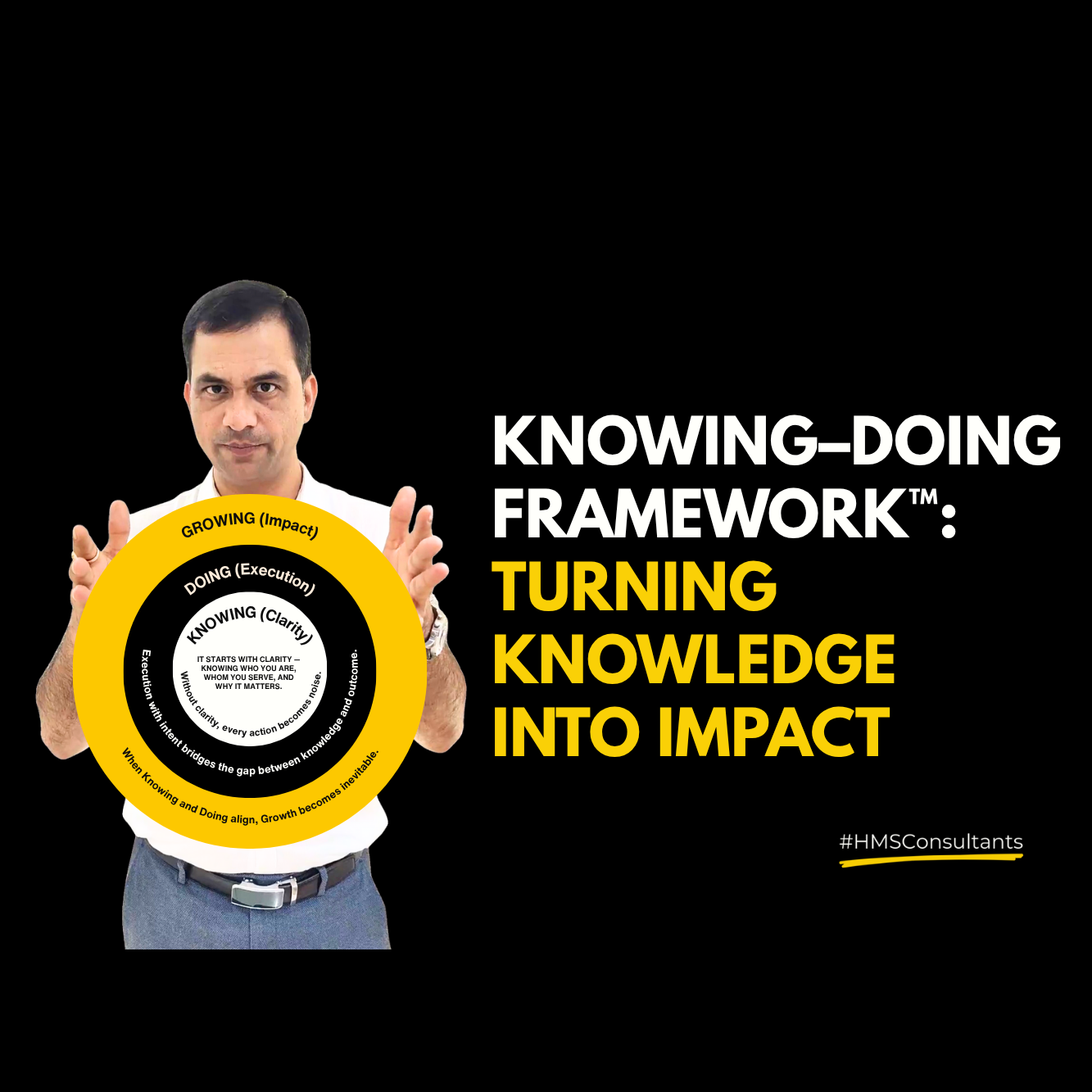
              • Knowing–Doing Framework™: Turning Knowledge Into Impact (The HMS Consultants Playbook)

                Knowing–Doing Framework™: Turning Knowledge Into Impact (The HMS Consultants Playbook)

                Knowing–Doing Framework™: Turning Knowledge Into Impact (The HMS Consultants Playbook)

                Written by
                Published on
                Share This

                The Story: How Akhil Dave Arrived Here (Working & Learning)

                For 25 years, Akhil has been working and learning with hospitals, clinics, and health-tech founders across India. He noticed a repeating pattern:

                • Some teams had great knowledge but didn’t execute consistently.

                • Others were busy executing but without clarity, their actions became… noise.

                After hundreds of campaigns, brand launches, and strategy interventions, one insight crystallised:

                Knowing is Knowing. Doing is Doing™
                Knowledge inspires. Action transforms.

                From this belief came a simple, teachable, repeatable model that any healthcare organisation can apply from a single-doctor clinic to a multi-speciality network: The Knowing–Doing Framework™.

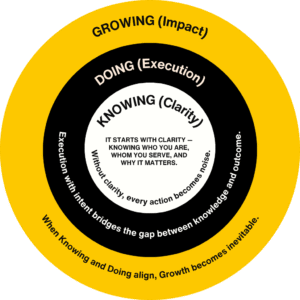
                The Knowing–Doing Framework™ diagram showing three layers: Knowing (clarity), Doing (execution), Growing (impact) for healthcare marketing.

                What is the Knowing–Doing Framework™?

                A practical, three-layer operating system for healthcare marketing:

                • Knowing (Clarity): Define who you are, whom you serve, and why it matters before you spend a rupee.
                • Doing (Execution): Run aligned activities online + offline with a clear roadmap, timelines, and owners.
                • Growing (Impact): Measure what matters, learn, and scale what works to build trust, footfall, and revenue.

                The Three Layers Explained

                A) KNOWING — Clarity Before Action

                Without clarity, activity becomes noise. In healthcare, “Knowing” means:

                • Brand Persona: Values, tone, uniqueness, visual identity, promise.
                • Doctor vs Clinic Branding: Solo practice? Lead with doctor brand. Scaling multi-center? Build a clinic brand often, do both (Indian context).
                • Customer Persona & Empathy Map: Demographics, needs, fears, motivations, “day in the life,” and decision triggers.
                Healthcare brand clarity concept showing brand persona, customer persona, competitive analysis, positioning statement, and minimal viable audience.
                Healthcare marketing execution showing website optimization, GMB updates, content creation, WhatsApp automation, review management, and front desk training.

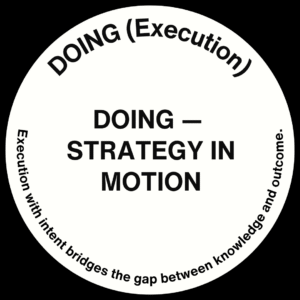
                B) DOING — Strategy in Motion

                Execution turns clarity into momentum. In healthcare, “Doing” is an orchestrated mix of offline + online + content + systems.

                Your Core Execution Pillars

                1. Roadmap & Goals:

                • Vision → 12-month goals → quarterly OKRs → monthly activities.

                2. Channel Mix:

                • Offline (≈40% budget): Community programs, OPD camps, referral networks, PR, doctor talks.
                • Online (≈40%): Website, SEO/AEO, Google Business Profile (GMB), reviews, social/content, paid acquisition.
                • Content (≈10%): Video explainers, procedure pages, FAQs, patient education assets.
                • Tools/CRM/Admin (≈10%): CRM, WhatsApp Business, HMIS, analytics, dashboards.

                3. AEO (Answer Engine Optimisation):

                • Build “doctor-answer” pages for common questions, with FAQs, author bio, and visuals short, factual, bilingual where relevant.

                4. WhatsApp Journeys:

                • Verified profile, appointment flows, reminders, follow-ups, review nudges (with consent).

                5. Review Flywheel:

                • QR at discharge + 24 –48h WhatsApp prompt → respond to every review → showcase real stories (with consent).

                6. Front Desk Excellence:

                • Scripted greetings, tone training, response SLAs first impression = brand.

                Outcome: A prioritised 90-day activity plan, owners, timelines, and KPIs.

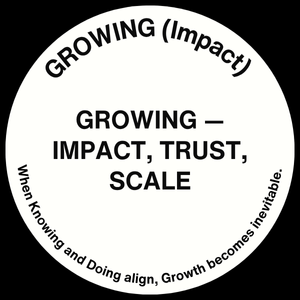
                C) GROWING — Impact, Trust, Scale

                When Knowing and Doing align, growth compounds:

                • Visibility: Higher local discovery (GMB calls, directions), organic traffic, citations.
                • Trust: Better ratings, consistent responses, patient stories.
                • Footfall & Revenue: Improved show-up rates, procedure mix, average revenue per patient.
                • Scale: From one specialty/geography to many without losing your brand promise.

                Outcome: A quarterly Scale Plan: expand services, deepen geography, or launch new formats (satellite OPDs, tele-consults, collaborations).

                Healthcare growth results showing increased visibility, patient trust, clinic footfall, and revenue driven by aligned marketing execution.

                The Healthcare-Specific Playbook (Step-by-Step)

                Step 1: Build Your Clarity Brief (Knowing)

                • Brand persona, promise, & visual basics
                • Customer personas & empathy maps (primary/secondary)
                • Competition table (services, pricing, strengths)
                • Positioning statement + Minimal Viable Audience
                • Compliance guardrails (claims, visuals, patient consent)


                Step 2: Stand-Up the Foundations (Doing)

                • Website: fast, mobile-first, structured (service pages with FAQs/How-To), clear author bios.
                • GMB: accurate categories, services, photos, weekly updates, Q&A.
                • Content Engine: 20–30 “doctor answers,” 12 short videos, 2–4 blogs/month, Hindi + local language summaries.
                • WhatsApp: opt-in flows, appointment automation, reminder templates, post-visit care nudges.
                • Review System: QR + automated prompts + response SOPs.
                • Source Tracking: HMIS/CRM tags for Google, GMB, WhatsApp, referral, walk-in, paid.


                Step 3: Run the Mix (Doing)

                • Offline: local talks, camps, referral meets, community tie-ups.
                • Online: local SEO/AEO, social posts, short videos, limited paid (focused on top 3 services).
                • Nurture: post-visit education, follow-up reminders, preventive checklists.
                • Front Desk: greeting → triage → handoff → follow-up scripts; weekly huddles.


                Step 4: Review & Scale (Growing)

                • Monthly KPI review; kill what’s not working, double-down on winners.
                • Add new service pages, expand languages, and refine WhatsApp journeys.
                • Plan quarterly “signature campaigns” (prevention month, women’s health week, etc.).

                The 90-Day Implementation Plan

                Days 0–15 (Foundation)

                • Clarity Brief finalised
                • Website audit + GMB revamp
                • WhatsApp Business setup + consent plan
                • Review QR + response SOP
                • Dashboard skeleton (source, CPL, reviews, revenue)

                Days 16–45 (Content & Journeys)

                • 10 doctor-answer pages live (+ FAQs, author bios)
                • 6–8 short videos (60–120s explainers)
                • WhatsApp flows: enquiry → appointment → reminder → review → follow-up
                • Front desk training (tone, scripts, SLAs)

                Days 46–90 (Scale & Optimise)

                • 10–15 more doctor-answers + 2 blogs/month
                • Small paid test on top 3 services (tight targeting)
                • Local outreach: 2 community events + 1 referral meet
                • Monthly KPI review → iterate

                Budgeting & Prioritization

                Stage-wise guideline (typical ranges):

                • New startup (metro): 20–25% of expected revenue
                • New startup (semi-urban/rural): 10–15%
                • Existing practice, low footfall: 8–15%
                • Established in a competitive market: 5–10%
                • Super-speciality with institutional backing: 5–7%


                Effort vs Impact Map

                • Prioritise High Impact / Low Effort (GMB cleanup, doctor-answers, review SOP)
                • Plan High Impact / High Effort (videos, referral ecosystem)
                • Defer Low Impact / High Effort (nice-to-have campaigns)

                Tech Stack & Tools (examples, not endorsements)

                • AEO/Content: ChatGPT, Claude/Gemini for drafts → human-edited; GA4, Search Console
                • Design/Video: Canva, CapCut, Runway/Pika for motion
                • WhatsApp Automation: Interakt, Gupshup, WATI (with opt-in, consent)
                • CRM/Engagement: Zoho CRM, LeadSquared, WebEngage/MoEngage
                • HMIS/EMR: Any reliable system you use ensure source tagging, reminder capability

                Measurement: Your Monthly “Marketing Vitals”

                • Demand: GMB actions (calls, directions), website sessions, WhatsApp chats started
                • Efficiency: Cost per booked appointment (not just leads), paid vs organic share
                • Conversion: show-up rate, time-to-first-response, call answer rate
                • Trust: review volume & rating, response rate, patient stories published (with consent)
                • Revenue: ARPNP (avg revenue per new patient), procedure mix, re-visits
                • AEO Footprint: number of pages that win featured/answer placements; citations earned

                Common Mistakes to Avoid

                • Random activity ≠ strategy.
                • Over-reliance on ads without owned content and reviews.
                • Ignoring front desk training tone, empathy, speed
                • No source tracking → can’t prove ROI.
                • No consent or sloppy privacy practices in patient communication.

                Conclusion

                If you want to implement the Knowing–Doing Framework™ in your hospital or clinic end-to-end from clarity brief to content engine, WhatsApp journeys, and monthly dashboards:

                Write to us: info@hmsconsultants.in
                Subject: “Knowing–Doing Framework – Implementation”
                We’ll share a short readiness checklist and a 30-minute discovery format.

                HMS Consultants 

                Doctors Digital Marketing I Healthcare Marketing I Hospital Marketing Strategies I Marketing ideas for clinics I Marketing Trends 2025 I Medical Marketing I Social Media Marketing

                is something we strongly believe in, which means ‘Knowledge without application is the same as having no knowledge at all

                Akhil Dave

                Principle Consultant

                Ready to take your Personal Brand to the next level?

                Share your details below and we will connect with you to discuss your growth strategy.

                • The Role of Local SEO in Driving Patients to Clinics and Hospitals

                  The Role of Local SEO in Driving Patients to Clinics and Hospitals

                  The Role of Local SEO in Driving Patients to Clinics and Hospitals

                  Written by
                  Published on
                  Share This

                  Most patient journeys begin on a phone. People search for a symptom, a specialty, or simply type near me. In those few seconds, your clinic or hospital either looks helpful and trustworthy or it gets skipped. Local SEO for clinics and hospitals is about winning that moment. It is not about tricks. It is about clear profiles, useful location pages, steady reviews, real photos, and fast replies. When these basics are in place, a healthcare digital marketing agency can add campaigns on top. When they are missing, even strong campaigns feel slow. This guide explains how to set up what matters for healthcare marketing in India so local search turns into calls and appointments.

                  How local search chooses what to show

                  Local search results are shaped by three simple ideas. Understanding them helps you focus effort where it counts.

                  1. Proximity
                    Search results prefer nearby options. You cannot change location, but you can make it easy for people who see you to choose you.
                  2. Relevance
                    Search engines look for a match between what someone typed and what your profiles, pages, and posts say you offer. Clear categories, services, and content improve relevance.
                  3. Prominence
                    Strong profiles, recent reviews, fresh photos, trusted links, and active pages build long term credibility. This credibility lifts you over time in healthcare marketing in India.

                  A practical plan accepts proximity and then works weekly on relevance and prominence. Local SEO for clinics grows through steady habits, not one time fixes.

                  Set up Google Business Profile like a front door

                  Your Google Business Profile is often the first brand touch a patient sees. Fill it with care so it answers the most common questions in one view.

                  1. Pick the most accurate primary category and a few precise secondary categories.
                  2. List services and treatments in simple language that patients use.
                  3. Add appointment links, tap to call, and a message option if you can reply quickly.
                  4. Keep hours and holiday hours current so no one arrives to a locked door.
                  5. Upload real photos and short clips of your entrance, reception, waiting area, and equipment.
                  6. Write a short description that explains who you help, what you do, and how to book.
                  7. Add accessibility and facility attributes where relevant.
                  8. Review insights monthly to see which actions people take from the profile.

                  When profiles are complete and human, local SEO for clinics works better because hesitation drops. This is the first win a healthcare digital marketing agency expects when planning healthcare marketing in India.

                  Build location pages that convert

                  Your website should support what the profile starts. A clear location page helps the patient move from interest to action.

                  Include these elements on every location page

                  1. A headline that states the key services at that location and a short introductory paragraph.
                  2. Full address, hours, a tap to call number, and a prominent appointment button.
                  3. An embedded map and simple text directions from known landmarks or metro stops.
                  4. A services list with links to deeper pages for major specialties.
                  5. Clean internal links between the location page, service pages, and doctor profiles.

                  Make each branch page unique. Copy pasting the same text across multiple locations harms relevance in healthcare marketing in India and confuses patients.

                  Create useful content for local intent

                  People search in simple ways. They ask about symptoms, tests, recovery, and costs. Match that intent with content that helps them decide.

                  Ideas that work well

                  1. Simple explainers for common conditions treated by your departments.
                  2. ‘What to expect’ pages that describe first visit steps, prep, and follow up.
                  3. Short doctor videos answering one clear question at a time.
                  4. Local language versions of your most visited pages.
                  5. Seasonal topics that matter in your city, such as air quality, heat, or festival food routines.

                  Every piece of content should point to a next action. Link to call, book, or read more. This is how content supports local SEO for clinics and how a healthcare digital marketing agency plans work for healthcare marketing in India.

                  Reviews that build trust without hype

                  Reviews influence ranking and human trust. They do not need to be long. They need to be real, recent, and specific.

                  A simple review routine

                  1. Ask for a review within two days of the visit through a short, polite message.
                  2. Offer the option to review in the patient’s preferred language.
                  3. Reply to every review with thanks and a note relevant to what they wrote.
                  4. Move complaints into a private conversation and update the public reply once resolved.
                  5. Track themes such as clarity, staff warmth, wait time, and fees. Fix repeating issues.

                  Do not script reviews or post fake ones. Real comments often contain natural words and local terms that help healthcare marketing in India grow in a safe way.

                  Photos and videos that feel real

                  Visuals reduce anxiety. They show what words cannot. Strong visuals are simple and up to date.

                  Plan three sets

                  1. Spaces
                    Entrance, reception, corridors, consultation rooms, signage, and equipment.
                  2. Experience
                    Check in steps, hygiene practices, waiting room comfort, privacy screens, and wayfinding.
                  3. People at work without exposing identities
                    Team moments that signal care and professionalism.

                  Refresh old images. Remove outdated posters in the background. Real visuals improve local SEO for clinics because they increase profile actions and keep people on your pages longer, which a healthcare digital marketing agency values when planning healthcare marketing in India.

                  Keep citations and listings consistent

                  Citations are mentions of your clinic or hospital name, address, and phone across directories, maps, and partner pages. Consistency builds trust with search engines and with people.

                  Good housekeeping steps

                  1. Standardize your name, address, and phone on your website, profile, and major directories.
                  2. Update partner listings whenever details change.
                  3. Avoid duplicate entries for the same location.
                  4. Check that call tracking numbers are mapped correctly to your main number.

                  Clean data prevents lost calls and mixed signals in healthcare marketing in India. It also supports local SEO for clinics across multiple branches.

                  Build local links and relationships

                  Local mentions and links from relevant organizations show you are part of the community. Search engines notice this, and so do patients.

                  Ways to earn local mentions

                  1. Work with medical associations, schools, and credible community groups.
                  2. Run health talks or screening days with clear next steps to book.
                  3. Partner with corporate wellness teams and housing societies for simple programs.
                  4. Share meaningful updates that local news or portals may feature.

                  Choose partnerships that help people and fit your services. Value first, link second. This is a sustainable path for healthcare marketing in India.

                  Make calling and chatting very easy

                  Most local decisions end with a call or a message. Speed and clarity here matter more than any keyword.

                  Practical steps

                  1. Place tap to call and WhatsApp buttons high on profiles and pages.
                  2. Route calls to people who can answer during working hours.
                  3. Use short templates for frequent questions so replies are clear and fast.
                  4. Track missed calls and return them within minutes.
                  5. Measure average time to first response and improve it weekly.

                  These habits turn visibility into visits. A healthcare digital marketing agency will often start local SEO for clinics by fixing response speed because it lifts conversion across all channels in healthcare marketing in India.

                  Measure a few signals that matter

                  You do not need complex dashboards. Watch a handful of signals that show if search visibility is turning into care.

                  From Google Business Profile

                  1. Calls from profile
                  2. Direction requests
                  3. Website clicks
                  4. Popular times and common queries

                  From your website

                  1. Calls and booking starts from location pages
                  2. Time on service pages and scroll depth to the appointment button
                  3. Paths from doctor profiles to booking
                  4. Form completion rate and common drop off fields

                  From your front desk

                  1. Missed calls during working hours
                  2. Average time to first reply on WhatsApp or web forms
                  3. Show up rate from online bookings

                  A weekly check is enough. Fix one small blocker each week. Local SEO for clinics improves through simple, repeated improvements that fit the reality of healthcare marketing in India.

                  Mistakes that hurt local performance

                  Many teams lose easy wins because of avoidable gaps. Address these and you move ahead of competitors quickly.

                  1. Incomplete profiles with missing services or no appointment link.
                  2. Inconsistent name, address, and phone across the web.
                  3. Thin location pages that repeat the same text for every branch.
                  4. Stock photos that do not match your actual facility.
                  5. Slow replies to calls and messages during working hours.
                  6. Asking for reviews only once in a while instead of as a routine.
                  7. Writing for algorithms instead of people.

                  Clear information, accurate details, and fast service beat shortcuts. This is the approach a healthcare digital marketing agency recommends for sustainable healthcare marketing in India.

                  Putting it all together

                  Local search is a daily test of clarity and trust. When someone types near me, they want a clinic or hospital that looks real, answers basic questions, and responds quickly. Complete profiles, strong location pages, useful content, honest reviews, steady visuals, clean citations, and quick replies create that feeling. These basics make local SEO for clinics work and support every campaign a healthcare digital marketing agency runs. They also form a dependable base for healthcare marketing in India across seasons and specialties. Patients do not see tactics. They see comfort in choosing you. When you make that choice easy, local search turns into booked visits and long term relationships.

                  Written by Maitri Desai

                  Doctors Digital Marketing I Healthcare Marketing I Hospital Marketing Strategies I Marketing ideas for clinics I Marketing Trends 2025 I Medical Marketing I Social Media Marketing

                  is something we strongly believe in, which means ‘Knowledge without application is the same as having no knowledge at all

                  Akhil Dave

                  Principle Consultant

                  Ready to take your Personal Brand to the next level?

                  Share your details below and we will connect with you to discuss your growth strategy.

                  • Beyond Treatment: Experience as the New Healthcare Currency

                    Beyond Treatment: Experience as the New Healthcare Currency

                    Beyond Treatment: Experience as the New Healthcare Currency

                    Written by
                    Published on
                    Share This

                    Why Patient Experience Matters More Than Ever

                    Healthcare is no longer just about accurate diagnoses or successful surgeries. In India, where patients often have multiple clinic and hospital options, the deciding factor is experience. From the moment a patient searches online to the time they walk out of the clinic, every touchpoint matters.

                    This shift has made healthcare patient experience in India a new form of currency. Clinics that focus on comfort, empathy, and small gestures are finding that loyalty, word-of-mouth referrals, and reputation flow naturally. In a market where hospitals compete for visibility, it is not the size of the building or the number of beds that wins it is the quality of experience patients take home.

                    What Patient Experience Really Means

                    Patient experience is often misunderstood as customer service. While service is a part of it, the full picture is broader. It includes:

                    • Ease of booking appointments.
                    • Transparency in communication.
                    • Comfort in the waiting area.
                    • Empathy shown by staff.
                    • Post-treatment follow-up.

                    It is about how a patient feels throughout the journey. 

                    Why Experience Is the New Healthcare Currency

                    Emotional Trust Leads to Loyalty

                    Medicine deals with vulnerability. Patients who feel heard and cared for are more likely to return for follow-ups and recommend the clinic to family. Loyalty is no longer bought by advertising alone; it is earned through experience.

                    Digital Amplification of Experiences

                    Patients share their stories online. Positive reviews on Google and heartfelt Instagram posts can reach thousands. On the other hand, a negative waiting room story can damage years of effort. This makes hospital marketing tips centered on experience essential.

                    Competition in India’s Healthcare Market

                    Urban India is witnessing a surge of private hospitals and specialty clinics. Patients are spoiled for choice. To stand out, clinics need to go beyond treatment and focus on emotional and physical comfort.

                    Elements of Memorable Patient Experience

                    First Impressions Begin Online

                    In many cases, the first patient experience happens digitally. A well-structured website, active social media presence, and quick responses on WhatsApp or email set the tone. For effective brand promotion for healthcare clinics, digital front doors matter as much as physical ones.

                    Warm and Welcoming Staff

                    Receptionists and nurses are often the face of the clinic. Politeness, empathy, and patience make a lasting difference. Training staff to treat each interaction as brand-building is a practical, high-return move.

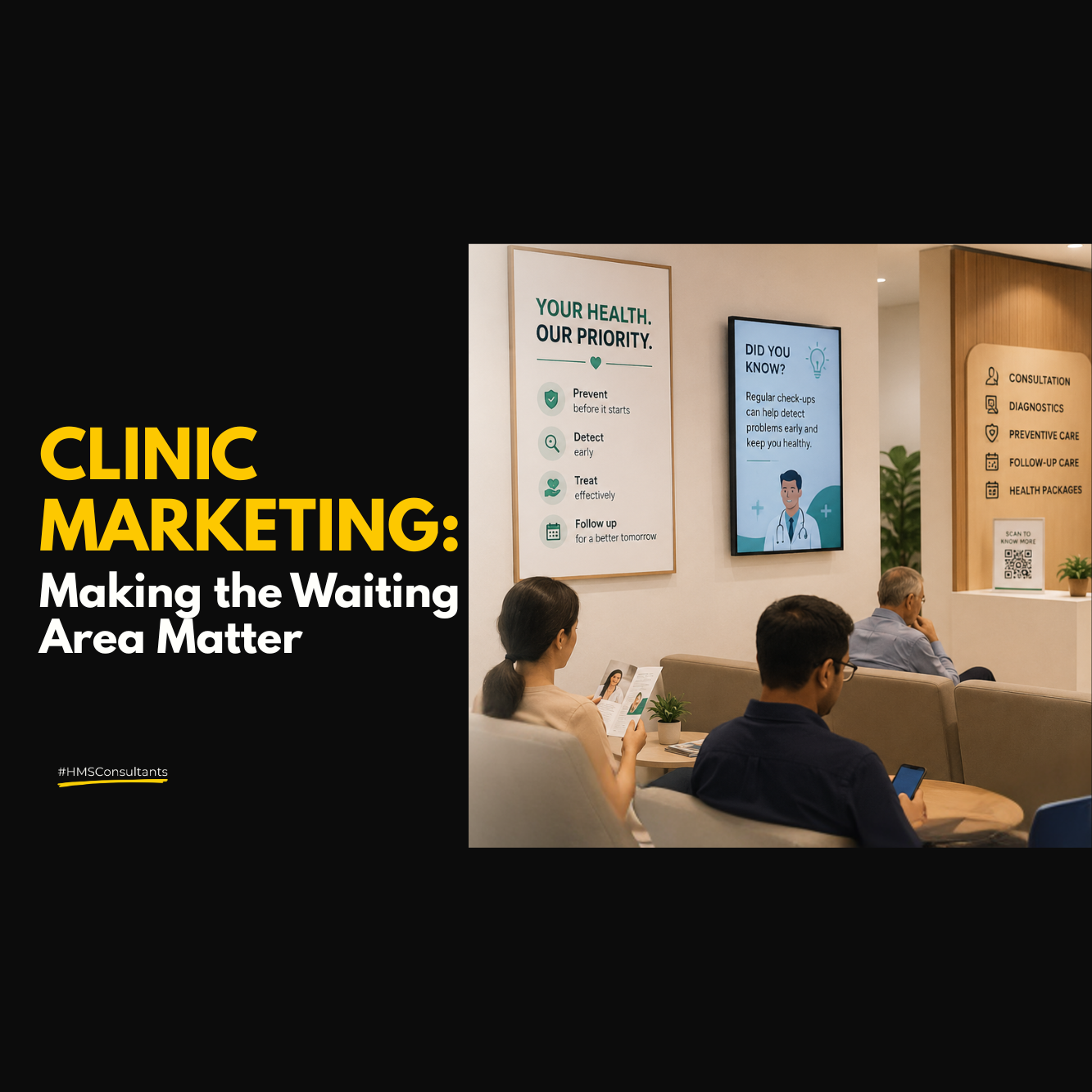
                    Waiting Room Psychology

                    Waiting areas are not just holding spaces; they are opportunities to reassure patients. Comfortable seating, soothing colors, reading material, and simple water dispensers convey care.

                    Doctor-Patient Communication

                    Clear explanations, attention to concerns, and taking time to answer questions turn routine visits into trust-building experiences. In India, where patients often feel rushed, this stands out strongly.

                    Follow-Up Care

                    A call or WhatsApp message after a procedure or consultation shows that the relationship doesn’t end when the patient walks out. Clinics that follow this practice often earn lifelong loyalty.

                    Small Gestures, Big Impact

                    Sometimes, it is the little things that shape perception. Examples include:

                    • Greeting patients with a smile and eye contact at reception.
                    • Sending a short SMS/WhatsApp message after the visit thanking them for coming.
                    • Using polite, reassuring language during interactions.
                    • Displaying clear signboards for directions so patients don’t feel lost.

                    These gestures are low-cost but signal that the clinic cares about people, not just revenue.

                    Patient Experience and Brand Promotion

                    Reviews as Modern Word-of-Mouth

                    Encouraging satisfied patients to leave reviews online is one of the most effective hospital marketing tips. Reviews are authentic brand promotion tools, especially in India where patients trust peer experiences more than ads.

                    Storytelling Through Social Media

                    Highlighting patient journeys (with consent), success stories, and educational posts builds a positive image. For clinics, this is brand promotion for healthcare clinics that feels authentic.

                    Community Engagement

                    Clinics that hold free camps, awareness sessions, or tie-ups with local organizations extend the experience beyond their walls. This reinforces the idea that the clinic is part of the community, not just a service provider.

                    Challenges in Prioritizing Patient Experience

                    Cost Pressures

                    Many clinics worry that improving experience means heavy spending on infrastructure. But in reality, most improvements like staff training, digital response systems, or small amenities are affordable.

                    Balancing Efficiency and Care

                    Doctors often feel the pressure of limited consultation time. The challenge is to maintain empathy without compromising efficiency. Structured communication helps achieve this.

                    Handling Negative Experiences

                    Not all experiences will be positive. The way a clinic responds to complaints determines whether a patient is lost or retained. Apologies, transparency, and quick action can convert dissatisfaction into respect.

                    The Indian Context: Why It Matters Even More Here

                    In India, patients often come with family members, making the experience multi-layered. The comfort of attendants, clarity of billing, and respect shown to families matter as much as medical outcomes.

                    Moreover, patients in Tier-2 and Tier-3 cities are catching up with digital expectations. Clinics that adopt WhatsApp updates, bilingual websites, and online booking systems gain trust quickly.

                    Strategies to Elevate Patient Experience

                    1. Train for Empathy: Regular workshops for staff and doctors on communication skills.
                    2. Simplify Digital Access: One-click appointment booking, transparent fee display, and online reports.
                    3. Upgrade Waiting Spaces: Comfortable, clean, and distraction-friendly areas.
                    4. Build Feedback Loops: Encourage and act upon patient suggestions.
                    5. Follow-Up Systems: Set automated reminders or personal calls for post-treatment care.

                    Future of Patient Experience in India

                    Looking at 2025 and beyond, patient experience will only grow in importance:

                    • Digital-first patients will expect seamless online + offline journeys.
                    • Hospitals and clinics that ignore comfort and empathy will face declining loyalty.
                    • Clinics that invest in experience will see natural growth through reputation and referrals.

                    Healthcare in India will no longer be measured only by outcomes. It will be judged by how patients felt during their journey.

                    Conclusion

                    The healthcare industry is evolving from treatment-centric to experience-centric. Patients remember how they were treated as much as the treatment itself. By focusing on comfort, empathy, and small gestures, clinics can create loyalty that advertising budgets cannot buy.

                    For any clinic in India, the real brand currency is not just the equipment or the infrastructure. But also the experience delivered at every step of the journey.

                    Written by Maitri Desai

                    Doctors Digital Marketing I Healthcare Marketing I Hospital Marketing Strategies I Marketing ideas for clinics I Marketing Trends 2025 I Medical Marketing I Social Media Marketing

                    is something we strongly believe in, which means ‘Knowledge without application is the same as having no knowledge at all

                    Akhil Dave

                    Principle Consultant

                    Ready to take your Personal Brand to the next level?

                    Share your details below and we will connect with you to discuss your growth strategy.

                    • Indian Budget Allocations for Health Tech: Why Government Focus on Health Tech Is an Opportunity for Small Clinics

                      Indian Budget Allocations for Health Tech: Why Government Focus on Health Tech Is an Opportunity for Small Clinics

                      Indian Budget Allocations for Health Tech: Why Government Focus on Health Tech Is an Opportunity for Small Clinics

                      Written by
                      Published on
                      Share This

                      India’s 2025-26 budget has sent clear signals: health tech, digital health, and infrastructure are priorities. For large hospitals this means advanced equipment and R&D. For smaller clinics, it means opportunity if they know how to respond. They can leverage government budget allocations to gain visibility, modernise services, and position themselves as trusted local health tech adopters in healthcare marketing in India.

                      What the Budget 2025-26 Means for Health Tech

                      Some of the relevant allocations and announcements that have direct or indirect impact on health tech include:

                      • The government has allocated ₹99,858.56 crore to the Union Health Ministry in 2025-26.
                      • Increased focus on digital health innovations, healthcare infrastructure and workforce expansion.
                      • Plans to establish 200 daycare cancer centres in district hospitals.
                      • Customs duty exemption on 36 life-saving drugs in oncology, rare and chronic diseases.
                      • Enhanced education seats: 10,000 new medical seats for FY2025-26 with a planned expansion to 75,000 seats over five years.
                      • Hospitals in India are set to raise IT innovation spending by 20-25% over the next 2-3 years. Key areas include patient experience, clinical outcomes, and data-driven decision-making.


                      These measures show that government policy is increasingly backing tech, innovation, and infrastructure in healthcare. That gives small clinics a tailwind if they align with these priorities.

                      Why Small Clinics Should See This as a Big Opportunity

                      1. Alignment With National Priority

                      With health tech, digital health, telemedicine, and infrastructure getting more government support, there’s a greater chance for subsidies, grants, or favourable regulation. Clinics can position themselves to benefit from these boons.

                      2. Increased Patient Demand for Tech-Enabled Care

                      As the government promotes digital health, patients expect clinics to also offer modern conveniences: online booking, teleconsults, digital reports, mobile payments. Clinics that adopt these early gain competitive edge.

                      3. Government Infrastructure Improvements Lower Barriers

                      With focus on broadband connectivity in rural / primary health centres and digital health initiatives, technology becomes more accessible. Clinics in smaller towns or semi-urban areas will find that costs of implementing digital tools drop, and adoption among patients rises.

                      4. Enhanced Credibility and Brand Value

                      When a clinic advertises or demonstrates that it adheres to government-supported health tech initiatives (e.g. using standard digital protocols, participating in telemedicine, compliance with digital health ID etc.), it gains trust among patients. This can be a part of hospital marketing strategies that emphasise quality, modernity, and compliance.

                      What Clinics Can Do Right Now: Strategy & Techniques

                      Here are practical actions small clinics should take to make the most of this budget shift, using healthcare marketing techniques and digital marketing for healthcare.

                      1. Audit Technology Needs

                        • Identify where patients or staff face delays: manual record keeping, slow report delivery, lack of teleconsult facility.
                        • Choose low cost but high impact tech: digital payment, online appointment scheduling, basic EMR systems.


                      2. Leverage Government Schemes / Grants

                        • Keep track of state or central grants for health infrastructure or digital health. Sometimes there are funding or tax benefits tied to adopting certain technologies.
                        • Participate in public health programmes or tenders that may require or favour clinics with digital capability.


                      3. Promote Tech-Driven Services in Marketing

                        • Include messaging like “digital report delivery,” “teleconsult follow-ups,” “online booking ready,” “AI-assisted screening” if you use those.
                        • Use local SEO / Google My Business to highlight tech services: patients often search for “clinic near me with teleconsultation,” etc.


                      4. Train Staff and Build Systemic Lean Processes

                        • Tech means change; staff must be comfortable using the tools. Smooth onboarding reduces errors.
                        • Standard operating procedures for digital tools to ensure consistency.


                      5. Focus on Patient Experience Powered by Tech

                        • Faster delivery of reports or diagnosis thanks to digital workflows.
                        • Regular reminders via SMS/WhatsApp, follow-ups via digital channels.
                        • Safe communication, easy access, less paperwork.

                      Case Scenarios & Examples

                      • A clinic in a mid-size city integrates online booking + digital report delivery. They market that patients no longer need to wait days for test results → leads to higher patient satisfaction and more referrals.
                      • Another clinic invests in teleconsult follow-ups after discharge. Even though many rural patients travel, giving a follow-up call via video makes patients feel cared for. It becomes a differentiator when patients talk locally.

                      Clinics that display compliance with government digital health IDs / digital health mission make it part of their brand identity (on their website, signage, brochures) → increases trust among patients who see that the clinic is recognised and up to date.

                      Challenges to Be Aware Of

                      • Not all clinics have resources to immediately adopt high-end tech; selection needs to be strategic.
                      • Digital literacy varies among patient populations (especially older ones, rural settings). Marketing must account for that.
                      • Maintenance, data privacy, cybersecurity are essential tech adoption without good practice can backfire.
                      • Marketing claims must be transparent avoid overstating what technology does.


                      How This Shapes Future Hospital Marketing Strategies

                      A hospital marketing expert would argue that small clinics embracing this government health tech push can create sustainable competitive advantages. Some ways it changes strategy:

                      • Moving from promotional tactics to service-led marketing. Instead of offering discounts, clinics will promote “efficiency,” “faster diagnostics,” “digital convenience.”
                      • Better online presence becomes non-optional. If many clinics in an area are digital-enabled, patients will compare based on tech experience.


                      Storytelling around tech adoption becomes a branding tool showing not just what you treat, but how modernly you treat.

                      Conclusion

                      India’s 2025-26 budget shows the government is serious about health tech, digital health, infrastructure, and innovation. For small clinics that tend to think budget-constraints limit them, this policy environment offers chances to modernise, stand out, and build trust.

                      The key is to act now: invest in selective tech, market it clearly, align with government-supported programmes, and build patient experience that shows speed, transparency, and modern care. For clinics that do this well, health tech is not just a policy topic it becomes a clinic’s USP in healthcare marketing in India.

                      Written by Maitri Desai

                      Doctors Digital Marketing I Healthcare Marketing I Hospital Marketing Strategies I Marketing ideas for clinics I Marketing Trends 2025 I Medical Marketing I Social Media Marketing

                      is something we strongly believe in, which means ‘Knowledge without application is the same as having no knowledge at all

                      Akhil Dave

                      Principle Consultant

                      Ready to take your Personal Brand to the next level?

                      Share your details below and we will connect with you to discuss your growth strategy.