Search results for: “marketing trends”

  • Why “Best Hospital Near Me” Is Decided Before a Patient Visits And What Most Doctors Miss

    Why “Best Hospital Near Me” Is Decided Before a Patient Visits And What Most Doctors Miss

    Why “Best Hospital Near Me” Is Decided Before a Patient Visits And What Most Doctors Miss

    Written by
    Published on
    Share This

    “Best hospital near me.”

    If this search is happening in your city, patients are already choosing. The uncomfortable reality is this: they may be choosing without ever evaluating your clinical outcomes, infrastructure, or experience.

    Most doctors believe patients decide after consultation. Today, that decision often happens before the first phone call.

    This is not a marketing trend. It is a behavioural shift.

    Below, we frame the real questions doctors silently ask the same questions they type into Google and the structured answers HMS provides.

    Why are patients not choosing my hospital?

    This is usually the first concern.

    You may have strong clinical outcomes, advanced equipment, and years of experience. Yet when someone searches “best hospital near me” or “best clinic near me,” your name is not part of the visible shortlist.

    The issue is rarely treatment quality.

    The issue is pre-visit perception.

    Patients do not evaluate medical competence first. They evaluate visibility, familiarity, and reassurance. If your hospital does not consistently appear where patients search, compare, and validate, you are absent from the decision stage.

    At HMS, we do not begin with advertising. We begin with understanding how patients are forming that shortlist and where your hospital is missing in that early decision ecosystem.

    Why are other hospitals always visible?

    Doctors frequently observe competitors appearing repeatedly in searches, map listings, and reviews. The assumption is usually that they are spending aggressively on ads.

    Sustained visibility, however, is rarely accidental and rarely ad-driven alone.

    Hospitals that dominate searches like “best hospital near me” typically have structural clarity. Their positioning is defined. Their communication is aligned. Their patient-facing presence is consistent. Visibility becomes the outcome of coherence.

    HMS does not treat visibility as a tactic. We treat it as a system. Before suggesting any marketing activity, we assess whether the hospital’s internal clarity, patient journey, and communication architecture are aligned enough to support sustainable visibility.

    How do patients choose a doctor today?

    Patients choose through familiarity, not technical comparison.

    • They see repeated names.
    • They read reviews.
    • They observe tone.
    • They evaluate consistency.

    They form impressions long before stepping into OPD.

    When someone types “best hospital near me,” they are seeking emotional assurance more than medical differentiation. They want to feel safe.

    HMS approaches this through decision mapping. We study how patients in your geography search, compare, and validate choices. Instead of pushing promotional tactics, we design clarity into how your hospital is encountered during those moments.

    Why is my OPD inconsistent?

    Inconsistent OPD is often attributed to seasonal variation, competition, or economic factors. While those influence flow, many inconsistencies originate from fragmented visibility and unclear patient positioning.

    If patients encounter mixed signals unclear services, inconsistent communication, weak digital footprint they hesitate.

    HMS addresses this by diagnosing the gap between clinical strength and perceived credibility. We do not start with campaigns. We start with structural diagnosis: what is unclear, what is inconsistent, and what prevents patients from confidently selecting your hospital during their search phase.

    Does marketing mean ads?

    For many doctors, marketing immediately translates to advertising. This assumption creates resistance.

    Marketing, in a healthcare context, should not begin with ads. It should begin with clarity: who you serve, how you are positioned, and how patients experience you before and after consultation.

    HMS stands firmly against random promotional execution. We operate as a strategy consultancy. Our role is to bring clarity to leadership, define patient journey structure, and align internal systems before any outward communication is considered.

    Ads amplify structure. They cannot replace it.

    Is marketing allowed for doctors?

    This question often halts progress entirely.

    Doctors worry about ethical boundaries, reputation damage, and compliance risks. These concerns are valid.

    Ethical healthcare marketing is not about exaggerated claims or promotional gimmicks. It is about transparent communication, structured visibility, and patient education.

    HMS works within regulatory sensitivity. We guide hospitals to build credibility without compromising ethics. Marketing, when structured correctly, strengthens trust rather than weakening professional image.

    Why do reviews matter so much?

    Reviews are not merely feedback. They are decision triggers.

    When a patient searches “best hospital near me,” reviews act as psychological confirmation. Even if treatment outcomes are excellent, a weak or unmanaged review ecosystem creates doubt.

    HMS does not treat reviews as reputation management alone. We examine the entire patient experience architecture that generates those reviews. Sustainable reputation is built internally before it is reflected externally.

    Should I hire a marketing agency?

    This question reflects a deeper concern: loss of control.

    Many doctors fear handing over their voice, brand, and credibility to external execution teams that may not understand clinical nuance.

    HMS does not function as an execution agency. We do not run ads, manage social media posts, or chase short-term visibility spikes. We operate as strategic advisors.

    Our work involves:

    • Diagnosing growth bottlenecks
    • Structuring patient journey systems
    • Aligning leadership and internal workflows
    • Designing long-term growth clarity

    Execution, if required, can be handled by your internal team or external partners. Strategy must precede it.

    What should I fix before starting marketing?

    Before any marketing journey, hospitals must ask:

    Is our positioning clear?
    Is our patient journey structured?
    Is our internal team aligned?
    Is our digital presence consistent with our clinical standards?

    Without clarity on these fundamentals, visibility efforts create temporary noise rather than sustainable growth.

    HMS follows a phased approach: understanding, diagnosis, clarity, alignment, and then guided action. We believe growth must be predictable, not accidental.

    Why does “Best Hospital Near Me” matter so much?

    Because it reflects the new order of decision making.

    Patients are deciding earlier. They are forming impressions quietly. They are narrowing options before consultation.

    If your hospital is not part of that digital shortlist, it does not matter how strong your clinical capability is.

    This is not about chasing rankings. It is about understanding behavioural triggers.

    At HMS, we view searches like “best hospital near me” not as SEO targets but as patient psychology signals. They reveal how modern healthcare decisions are being made.

    If This Resonates

    If these questions feel familiar and you would prefer a structured diagnostic conversation instead of random execution advice, you may connect with HMS Consultants.

    We operate as strategy advisors, not execution agencies.

    Contact Us HMS Consultants

    Doctors Digital Marketing I Healthcare Marketing I Hospital Marketing Strategies I Marketing ideas for clinics I Marketing Trends 2025 I Medical Marketing I Social Media Marketing

    is something we strongly believe in, which means ‘Knowledge without application is the same as having no knowledge at all

    Akhil Dave

    Principle Consultant

    Ready to take your Personal Brand to the next level?

    Share your details below and we will connect with you to discuss your growth strategy.

    • The Complete Clinic & Hospital Growth Guide for Doctors

      The Complete Clinic & Hospital Growth Guide for Doctors

      The Complete Clinic & Hospital Growth Guide for Doctors

      Written by
      Published on
      Share This

      Why Your OPD Is Inconsistent And What To Fix Before Spending on Marketing

      Doctors do not search “marketing trends.”

      They search:

      • Why is my OPD not growing?
      • How to increase patient footfall in clinic?
      • Why are patients not choosing my hospital?
      • How to rank clinic on Google Maps?
      • Should I hire a marketing agency?
      • What is the right marketing budget for clinic?
      • What is the right clinic marketing strategy?

        If you have searched any of these questions, you are not alone.

      Across India, clinic owners and hospital promoters are facing the same reality:

      • Clinical outcomes are strong
      • Infrastructure is adequate
      • Experience is sufficient
      • Yet patient flow feels unpredictable

      This is not a competence problem.

      It is a visibility and clarity problem.

      This guide answers the most common growth questions doctors ask and outlines what must be structurally fixed before any marketing effort begins.

      1. Why Are Patients Not Coming to My Clinic?

      This is usually the first question.

      The assumption is:

      “Maybe competition is high.”

      But in most cases, patients are not rejecting you after evaluation.

      They are excluding you before evaluation.

      Modern patient decision-making happens in three silent steps:

      1. Search
      2. Compare
      3. Validate

      If your clinic is not visible during these moments on Google Maps, reviews, website clarity, or digital consistency you never enter the shortlist.

      The issue is rarely medical competence.

      The issue is pre-visit perception.

      2. Why Is My OPD Inconsistent?

      Inconsistent OPD is often blamed on:

      • Seasonality
      • Competition
      • Economic slowdown

      While these factors matter, the deeper causes usually include:

      • Weak Google Business Profile presence
      • Poor or unmanaged reviews
      • No structured patient follow-up system
      • Inconsistent communication tone
      • Unclear positioning (what exactly are you known for?)

      When visibility and patient experience are fragmented, trust weakens and trust drives OPD.

      OPD growth strategy is not about ads.

      It is about reducing uncertainty in the patient’s mind.

      3. How Do Patients Choose a Doctor Today?

      Doctors assume patients compare clinical expertise.

      Patients compare reassurance.

      They ask:

      • Is this place reliable?
      • Do others trust them?
      • Are reviews recent?
      • Does the doctor communicate clearly?
      • Is the hospital professional?

      Search behaviour reveals this clearly.

      Queries like:

      • “best hospital near me”
      • “best clinic for diabetes”
      • “top orthopaedic doctor near me”

      are not about ranking first.

      They are about emotional safety.

      If your clinic marketing strategy ignores psychology, visibility alone will not convert.

      4. How to Increase Patient Footfall in Clinic 

      High-intent search:

      “How to increase patient footfall in clinic”

      The wrong answer:

      Run ads.

      The right sequence:

      Step 1: Clarify Positioning

      What are you known for?

      General care? Diabetes? Women’s health? Preventive care?

      If your positioning is unclear, no marketing can compensate.

      Step 2: Fix Local Discoverability

      • Optimize Google Business Profile
      • Ensure accurate NAP (Name, Address, Phone)
      • Encourage ethical reviews
      • Add updated photos and services

      Local SEO for clinics drives sustainable footfall.

      Step 3: Structure Patient Journey

      • Appointment confirmation
      • Reminder system
      • Post-visit follow-up
      • Feedback loop

      Without CRM or WhatsApp automation, patients forget, delay, or drop off.

      Step 4: Align Communication

      Your website, GMB, social media, and offline messaging must sound coherent.

      Footfall increases when clarity increases.

      5. How to Rank Clinic on Google Maps?

      Another high-intent question.

      Google Maps visibility depends on:

      • Complete Google Business Profile
      • Review volume and recency
      • Category accuracy
      • Consistent local citations
      • Proximity and engagement

      Maps ranking is not a shortcut strategy.

      It reflects consistency and reputation.

      If your Google rating is below 4.0, that alone may reduce patient conversion by 30–40%.

      6. Why Do Reviews Matter So Much?

      Doctors often ask:

      “Are reviews really that important?”

      Yes.

      Reviews are modern word-of-mouth.

      When patients search:

      • “best clinic near me”
      • “hospital for surgery near me”

      they filter based on ratings.

      But review management is not about asking aggressively.

      It begins with:

      • Reduced waiting time
      • Clear communication
      • Transparent billing
      • Polite staff behaviour

      Reputation is operational before it is digital.

      7. What Is Hospital Marketing Strategy?

      Hospital marketing strategy is not advertising.

      It is structured clarity across:

      Marketing becomes necessary only after clarity is established.

      Ads amplify structure.

      They cannot replace it.

      8. Should I Hire a Marketing Agency?

      This question reflects anxiety about control.

      Doctors fear:

      • Loss of voice
      • Over-commercialization
      • Ethical compromise

      The real question is not agency vs no agency.

      It is:

      Do you have internal clarity before execution?

      If not, external execution will create noise.

      Strategy must precede tactics.

      9. What Is the Right Marketing Budget for Clinic?

      Another common search.

      There is no universal number.

      Budget should depend on:

      • Revenue targets
      • Service mix
      • Geography
      • Existing visibility
      • Operational readiness

      If your patient experience is weak, increasing budget increases dissatisfaction.

      Budget follows clarity.

      10. How Important Is Personal Branding for Doctors?

      Personal branding for doctors is not self-promotion.

      It is professional visibility.

      Patients trust:

      • Consistent communication
      • Educational content
      • Clear positioning
      • Familiarity

      Doctors who publish educational insights ethically build long-term authority.

      Silence does not build credibility in the digital era.

      11. Can Doctors Do Digital Marketing Ethically?

      Yes — if done responsibly.

      Ethical healthcare marketing includes:

      • Educational posts
      • Awareness campaigns
      • Transparent service communication
      • Responsible review management

      It excludes:

      • Exaggerated claims
      • Before-after manipulation
      • Guarantees
      • Fear-based messaging

      Marketing done correctly strengthens professional dignity.

      12. What Role Do CRM, HMIS, and WhatsApp Play in Growth?

      Growth is not only acquisition.

      It is retention.

      Technology enables:

      • Appointment reminders
      • Follow-up scheduling
      • Chronic patient tracking
      • Feedback collection
      • Re-engagement campaigns

      WhatsApp funneling improves conversion dramatically when structured ethically.

      Patient journey mapping transforms irregular OPD into predictable growth.

      13. Why Visibility Alone Does Not Guarantee Growth

      Many clinics increase Instagram activity or run Google Ads but see no revenue shift.

      Because:

      • Positioning is unclear
      • Internal workflows are misaligned
      • Staff is untrained
      • Conversion systems are absent

      Marketing without internal alignment creates temporary spikes, not sustainable growth.

      14. The Real Diagnostic Question

      Instead of asking:

      “How to get more patients?”

      Ask:

      “What is preventing patients from confidently choosing us?”

      Growth is a clarity problem before it is a promotion problem.

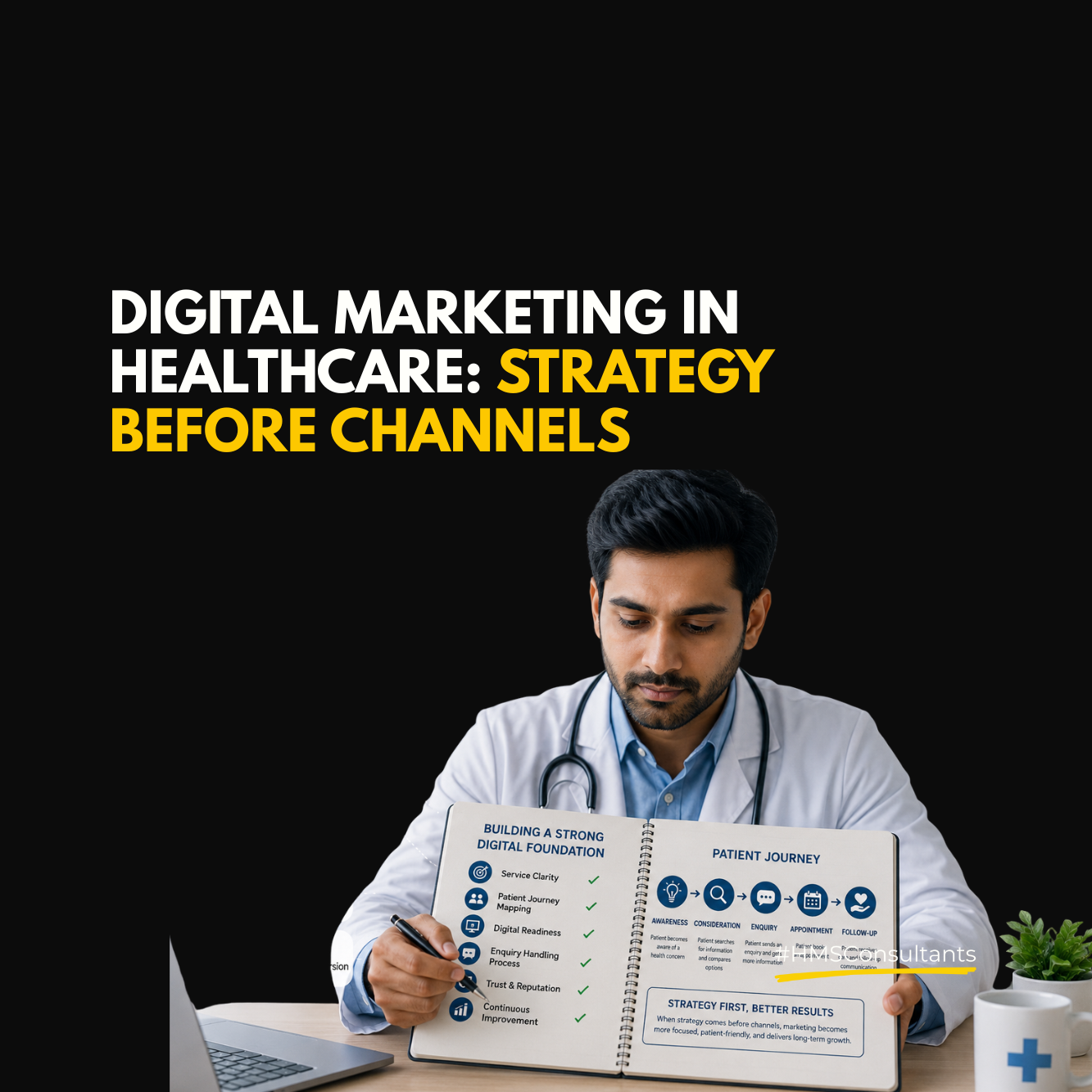
      15. The Structured Approach to Clinic & Hospital Growth

      A sustainable medical practice growth strategy requires:

      1. Diagnostic audit
      2. Positioning clarity
      3. Patient journey mapping
      4. Visibility architecture (SEO, Maps, Reviews)
      5. Ethical communication framework
      6. Technology integration (CRM, WhatsApp, EMR)
      7. Measured amplification

      When structure precedes visibility, growth becomes predictable.

      Final Thought

      If you have been searching:

      • How to increase OPD
      • How to grow hospital revenue
      • Why patients are not choosing my clinic
      • How to improve Google rating
      • How to market a new clinic in India

      You are not searching for marketing.

      You are searching for clarity.

      Marketing is not the solution to confusion.

      Clarity is.

      When clarity is designed into your positioning, patient journey, and communication system, visibility becomes a natural outcome.

      If This Resonates

      If these questions feel familiar and you would prefer a structured diagnostic conversation instead of random execution advice, you may connect with HMS Consultants.

      We operate as strategy advisors, not execution agencies.

      Contact Us HMS Consultants

      Doctors Digital Marketing I Healthcare Marketing I Hospital Marketing Strategies I Marketing ideas for clinics I Marketing Trends 2025 I Medical Marketing I Social Media Marketing

      is something we strongly believe in, which means ‘Knowledge without application is the same as having no knowledge at all

      Akhil Dave

      Principle Consultant

      Ready to take your Personal Brand to the next level?

      Share your details below and we will connect with you to discuss your growth strategy.

      • Why Hospital Patient Experience Breaks Long Before Patients Complain

        Why Hospital Patient Experience Breaks Long Before Patients Complain

        Why Hospital Patient Experience Breaks Long Before Patients Complain

        Written by
        Published on
        Share This

        Hospital patient experience is often measured using feedback forms, ratings, and complaint registers. Leadership reviews scores, teams address visible issues, and improvements are planned where dissatisfaction is clearly expressed. Yet many hospitals with acceptable ratings still struggle with repeat visits, referrals, and long-term trust.

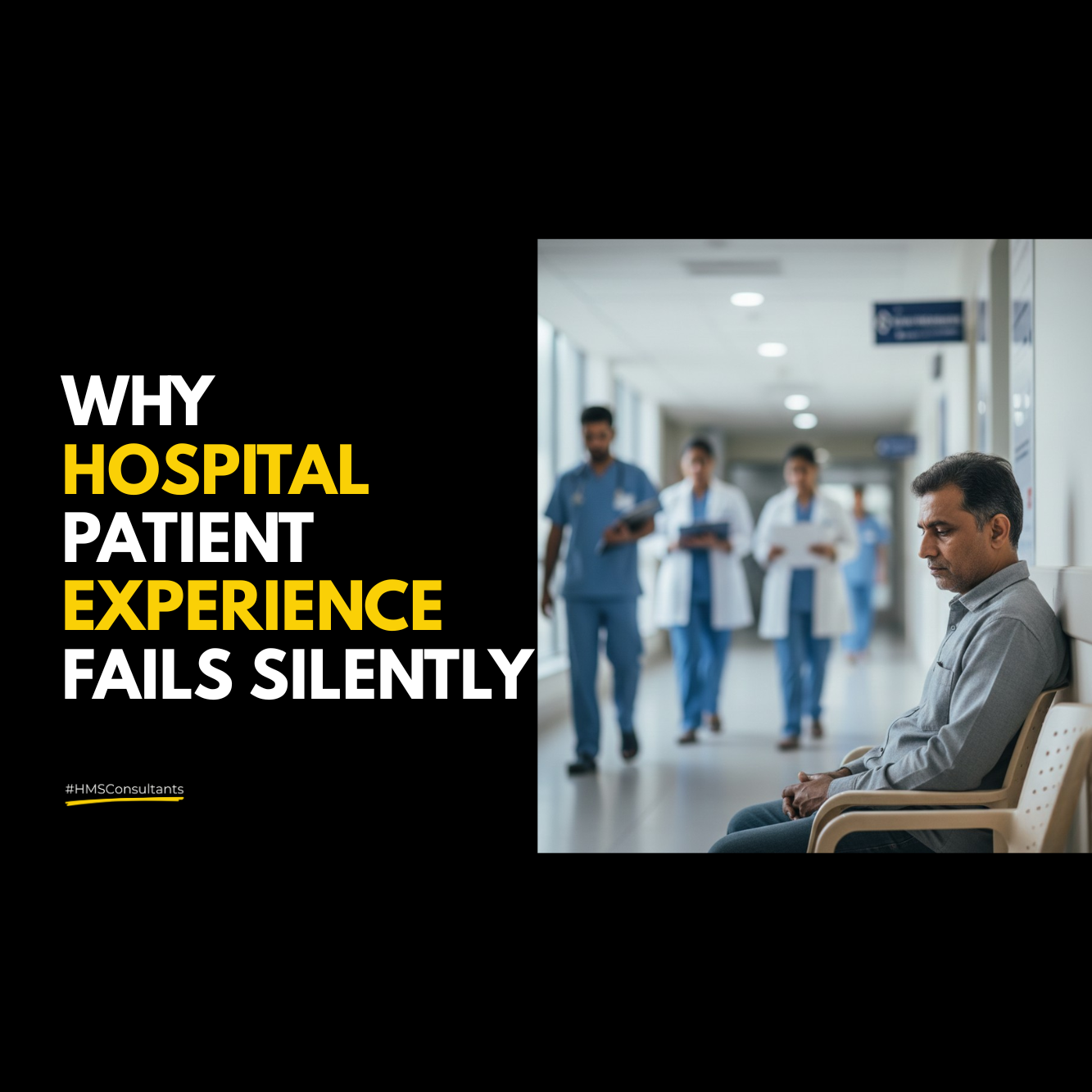
        This happens because patient experience usually breaks silently.

        Patients do not complain when experience is confusing, rushed, or emotionally unsafe. They disengage quietly. By the time complaints appear, trust has already eroded.

        Why Patients Rarely Complain About Poor Experience

        Patients enter hospitals in vulnerable states. They are anxious, dependent, and often unsure of what is acceptable to expect. When experience feels fragmented or unclear, most patients internalise the discomfort rather than voice it.

        Hospital patient experience suffers not from dramatic failures, but from small moments of confusion that accumulate. These moments rarely trigger formal complaints, but they influence future decisions powerfully.

        Silence should not be mistaken for satisfaction.

        The Gap Between Clinical Care and Patient Experience

        Hospitals often equate good clinical outcomes with good patient experience. While outcomes matter deeply, patients experience care through communication, explanation, and emotional reassurance.

        When clinical excellence is not accompanied by clarity, patient experience weakens even if treatment is successful. Patients leave healthy but uncertain, grateful yet hesitant to return or recommend.

        Hospital patient experience lives in how care is felt, not just delivered.

        Why Experience Breaks at Transitions, Not Touchpoints

        Most experience issues do not occur during consultations. They occur between them. Waiting, referrals, follow-ups, billing explanations, and handovers are where patients feel lost.

        Hospital patient experience breaks when transitions lack ownership. Patients are unsure whom to ask, what comes next, or whether they are being guided properly.

        These gaps feel minor internally but significant externally.

        How Growth Quietly Damages Patient Experience

        As hospitals grow, systems tighten. Time reduces. Standardisation increases. Efficiency improves. Unfortunately, emotional reassurance often declines.

        Hospital patient experience erodes when scale outpaces communication. Patients feel processed instead of supported. They rarely complain because nothing is “wrong” enough but something feels missing.

        Growth without experience design leads to reputation stagnation.

        Why Experience Is a Leadership Responsibility, Not a Service Issue

        Patient experience is often delegated to front desks or quality teams. In reality, it reflects leadership priorities. How much time is allowed for explanation? How flexible are processes? How much ambiguity is tolerated?

        Hospital patient experience improves when leadership designs systems around patient understanding, not just operational speed.

        Experience is created by decisions made far above the reception desk.

        The SEO Reality of Hospital Patient Experience

        Patients search for experience-related information indirectly. They look for clarity, reassurance, and credibility signals. Content grounded in real experience performs better than generic promises.

        Hospitals that understand patient experience deeply produce content that ranks because it answers unspoken concerns.

        Search engines, like patients, reward relevance over claims.

        Conclusion: Hospital Patient Experience Is Felt More Than It Is Measured

        Hospitals do not lose patients because experience fails loudly. They lose patients because experience feels incomplete.

        Hospital patient experience is shaped in moments of uncertainty, not just moments of care. When hospitals design for those moments deliberately, trust strengthens quietly.

        In healthcare, experience is not what patients complain about.
        It is what they remember or forget.

        Hospitals that understand this stop chasing feedback scores and start building confidence where it truly matters.

        Contact Us HMS Consultants

        Hospital patient experience refers to how patients feel and perceive care throughout their journey, including communication, clarity, emotional reassurance, and transitions between services. It goes beyond clinical outcomes and focuses on whether patients feel supported, informed, and confident at every step.

        Doctors Digital Marketing I Healthcare Marketing I Hospital Marketing Strategies I Marketing ideas for clinics I Marketing Trends 2025 I Medical Marketing I Social Media Marketing

        is something we strongly believe in, which means ‘Knowledge without application is the same as having no knowledge at all

        Akhil Dave

        Principle Consultant

        Ready to take your Personal Brand to the next level?

        Share your details below and we will connect with you to discuss your growth strategy.

        • Why Healthcare Branding Breaks When Hospitals Try to “Look Trusted” Instead of Building It

          Why Healthcare Branding Breaks When Hospitals Try to “Look Trusted” Instead of Building It

          Why Healthcare Branding Breaks When Hospitals Try to “Look Trusted” Instead of Building It

          Written by
          Published on
          Share This

          Healthcare branding is often misunderstood as a design exercise. Logos are refreshed, colour palettes are refined, websites are modernised, and taglines are rewritten. These changes create the appearance of progress, yet many hospitals notice that patient behaviour remains unchanged. Trust does not deepen. Decisions do not accelerate. Growth stays inconsistent.

          This happens because healthcare branding does not work through appearance.
          It works through experience consistency.

          When branding is designed to look trustworthy instead of function trustworthily, patients sense the gap immediately.

          Why Patients Do Not Experience Branding the Way Hospitals Do

          Hospitals experience branding internally as identity and positioning. Patients experience branding externally as predictability. They do not evaluate fonts, colours, or messaging frameworks. They evaluate whether the hospital behaves the way it communicates.

          If a hospital claims care and clarity but delivers confusion, speed, or inconsistency, branding collapses regardless of visual quality. Healthcare branding is not judged at first glance. It is judged at first interaction.

          This is why visual upgrades alone rarely change patient perception.

          The Difference Between Brand Signals and Trust Signals

          Brand signals are what hospitals say about themselves. Trust signals are what patients observe without being told. Clean communication, calm explanations, consistent processes, and respectful pacing are all trust signals.

          Healthcare branding fails when hospitals invest heavily in brand signals but neglect trust signals. Patients may remember the name, but they hesitate to choose.

          In healthcare, hesitation is the opposite of branding success.

          Why Healthcare Branding Is Built Inside the System, Not Outside It

          Most branding efforts are external-facing. They focus on how the hospital appears online or in advertising. However, patients form their strongest brand impressions inside the system at enquiry desks, during consultations, and while navigating processes.

          If these touchpoints are fragmented, branding effort leaks. No amount of storytelling can compensate for inconsistency in real interactions.

          Healthcare branding becomes powerful only when internal systems support external promises.

          How Branding Weakens When Growth Accelerates

          Ironically, healthcare branding often breaks during growth phases. As patient volume increases, processes tighten, communication shortens, and personalisation declines. What once felt caring begins to feel transactional.

          Patients rarely complain about this shift. They simply stop recommending. Over time, reputation plateaus despite increased visibility.

          This silent erosion is why branding must be designed to withstand scale, not just launch campaigns.

          Why Consistency Matters More Than Creativity in Healthcare Branding

          Creativity attracts attention. Consistency builds confidence.

          Hospitals that change messaging frequently in pursuit of novelty weaken recognition and trust. Patients prefer familiarity over freshness in healthcare. They want to know what to expect, not be surprised.

          Healthcare branding that stays consistent in tone, explanation, and behaviour builds reassurance even when communication volume is low.

          The Leadership Role in Healthcare Branding Success

          Healthcare branding is shaped by leadership behaviour more than marketing output. Leaders decide how much time doctors get with patients, how much autonomy staff have in communication, and how processes prioritise clarity over speed.

          When leadership choices contradict branding claims, marketing becomes performative. When leadership aligns systems with brand intent, branding becomes self-reinforcing.

          This is why healthcare branding cannot be delegated entirely to marketing teams.

          The SEO Reality of Healthcare Branding Content

          Search engines increasingly reward content that demonstrates real-world alignment. Hospitals that publish branding content grounded in patient experience perform better than those publishing abstract positioning language.

          Healthcare branding content ranks when it reflects how care is actually delivered, not how it is aspirationally described. Authenticity improves engagement signals, which strengthens long-term visibility.

          SEO, like patients, responds to consistency.

          Conclusion: Healthcare Branding Is Experienced, Not Announced

          Hospitals do not lose branding impact because they lack creativity or design. They lose it because experience contradicts communication.

          Healthcare branding works when patients feel calm, informed, and respected at every interaction. When this happens, branding does not need to persuade. It reassures automatically.

          In healthcare, branding is not something you say once and repeat.
          It is something patients recognise over time.

          Hospitals that understand this stop chasing better branding and start building better systems.
          That is when healthcare branding finally holds.

          Contact Us HMS Consultants

          Healthcare branding is the way patients experience and interpret a hospital’s reliability, clarity, and consistency over time. It is built through behaviour, communication, and patient experience not just logos, colours, or visual identity.

          Doctors Digital Marketing I Healthcare Marketing I Hospital Marketing Strategies I Marketing ideas for clinics I Marketing Trends 2025 I Medical Marketing I Social Media Marketing

          is something we strongly believe in, which means ‘Knowledge without application is the same as having no knowledge at all

          Akhil Dave

          Principle Consultant

          Ready to take your Personal Brand to the next level?

          Share your details below and we will connect with you to discuss your growth strategy.

          • Why Healthcare Branding Is Not About Logos, Colours, or Taglines

            Why Healthcare Branding Is Not About Logos, Colours, or Taglines

            Why Healthcare Branding Is Not About Logos, Colours, or Taglines

            Written by
            Published on
            Share This

            Healthcare branding is often misunderstood at its core. When hospitals talk about branding, conversations usually revolve around visual identity logos, colour palettes, typography, taglines, and design consistency. While these elements are visible and necessary, they represent only the surface of branding, not its substance.

            This misunderstanding explains why many hospitals invest in rebranding exercises yet see little change in patient trust, loyalty, or long-term growth. The problem is not poor design. The problem is that healthcare branding is treated as an aesthetic exercise instead of a behavioural one.

            In healthcare, branding is not what a hospital looks like. It is what patients experience, remember, and believe.

            Why Healthcare Branding Is Formed in Moments, Not Materials

            Patients do not build opinions about hospitals while looking at logos. They build opinions while waiting, asking questions, receiving explanations, facing uncertainty, and making decisions under stress. These moments shape perception far more powerfully than any visual asset.

            Healthcare branding is formed when a patient feels heard instead of rushed, when clarity replaces confusion, and when reassurance is offered at the right time. These experiences become stories patients share consciously or subconsciously with family, friends, and online communities.

            Hospitals that focus only on visual branding often miss this deeper layer. They look polished but feel inconsistent. Patients notice this gap immediately, even if they cannot articulate it.


            The Difference Between Corporate Branding and Healthcare Branding

            Corporate branding relies heavily on differentiation, recall, and emotional association. Healthcare branding operates under a different psychological contract. Patients are not looking for novelty or personality they are looking for safety, predictability, and trust.

            This is why branding strategies borrowed from consumer industries often fail in healthcare. They prioritise attention over reassurance and uniqueness over reliability. In healthcare, excessive differentiation can actually increase anxiety.

            Effective healthcare branding reduces uncertainty. It makes outcomes feel predictable, processes feel understandable, and decisions feel supported. This is why the strongest hospital brands often feel calm rather than exciting.

            Why Healthcare Branding Breaks When It Is Owned by One Department

            Many hospitals assign branding responsibility to marketing or design teams. This creates a structural problem. Branding in healthcare is expressed through clinical communication, front-desk behaviour, billing conversations, follow-ups, and discharge processes areas marketing teams do not fully control.

            When branding is isolated within one department, inconsistency is inevitable. Visual messaging may promise care and clarity, while operational reality delivers confusion or urgency. Patients experience this as misalignment, not marketing failure.

            Healthcare branding succeeds only when it is owned institution-wide and reinforced at every patient touchpoint.

            How Patient Experience Becomes the Real Brand

            Patients remember how they were treated far more clearly than what was promised. Over time, these memories form the hospital’s brand reputation.

            A hospital may position itself as patient-centric, but if appointment systems feel chaotic or explanations feel rushed, the brand collapses at the point of experience. Conversely, hospitals with modest visibility but consistent experience often develop stronger reputations organically.

            This is why healthcare branding cannot be separated from patient experience. Experience is not a support function; it is the brand delivery mechanism.

            Why Healthcare Branding Directly Impacts Growth

            Strong healthcare branding reduces friction across the entire patient journey. Patients hesitate less, ask fewer repetitive questions, and feel more confident in decisions. Referrals increase because recommending the hospital feels safe. Staff perform better because expectations are clearer.

            From a hospital growth perspective, branding that is rooted in experience lowers acquisition costs, improves conversion, and stabilises demand. Growth becomes less dependent on constant promotion and more dependent on reputation.

            This is the compounding power of effective healthcare branding.

            The Long-Term Cost of Superficial Branding

            Hospitals that focus only on visual rebranding often find themselves repeating the exercise every few years. Each cycle promises renewed growth but delivers diminishing returns. Patients notice the polish but still experience inconsistency.

            Over time, trust weakens. Marketing must work harder to compensate. Branding becomes an expense instead of an asset.

            Superficial branding does not fail immediately. It fails gradually by not compounding.

            What Strong Healthcare Branding Actually Looks Like

            Strong healthcare branding feels consistent across time, people, and situations. Patients encounter the same clarity online as they do in person. Communication feels aligned across departments. Expectations are set honestly and met reliably.

            This consistency reassures patients at every stage. It also empowers teams, because behaviour aligns naturally with brand values instead of being forced through guidelines.

            In such hospitals, branding stops being discussed frequently because it simply works.

            Why Healthcare Branding Is a Leadership Responsibility

            Healthcare branding cannot be delegated entirely to marketing agencies or design teams. It requires leadership commitment to consistency, clarity, and patient-centred thinking.

            Leaders shape how decisions are made, how staff are supported, and how trade-offs are handled. These decisions directly influence patient experience, and therefore brand perception.

            Hospitals with strong brands are rarely accidental. They are intentionally designed from the top down and reinforced from the inside out.

            Conclusion: Healthcare Branding Is What Patients Trust When No One Is Explaining

            In healthcare, branding is not what hospitals say about themselves. It is what patients believe after experiencing care.

            Logos, colours, and taglines may attract attention, but they do not sustain trust. Trust is sustained through consistency, clarity, and behaviour.

            Hospitals that understand healthcare branding stop chasing perception and start designing experience. Over time, this approach creates institutions that patients recognise, trust, and return to not because of how they look, but because of how they feel.

            That is the only kind of healthcare branding that truly lasts.


            Contact Us HMS Consultants

            Healthcare branding is the process of shaping how patients perceive, trust, and experience a hospital or healthcare provider. It goes beyond logos and visuals and is formed through patient interactions, communication clarity, staff behaviour, and overall care experience across the patient journey.

            Doctors Digital Marketing I Healthcare Marketing I Hospital Marketing Strategies I Marketing ideas for clinics I Marketing Trends 2025 I Medical Marketing I Social Media Marketing

            is something we strongly believe in, which means ‘Knowledge without application is the same as having no knowledge at all

            Akhil Dave

            Principle Consultant

            Ready to take your Personal Brand to the next level?

            Share your details below and we will connect with you to discuss your growth strategy.

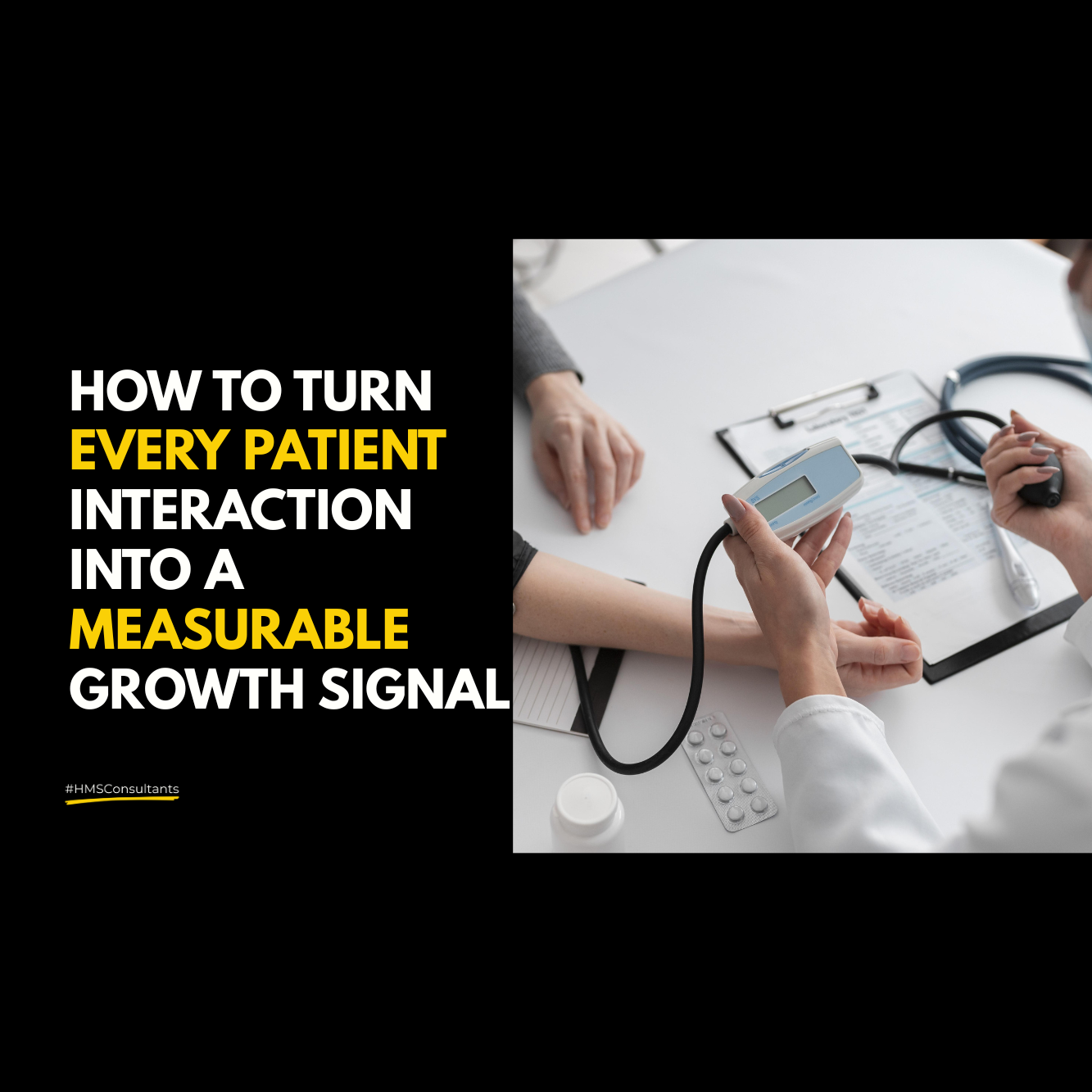
            • How to Turn Every Patient Interaction Into a Measurable Growth Signal

              How to Turn Every Patient Interaction Into a Measurable Growth Signal

              How to Turn Every Patient Interaction Into a Measurable Growth Signal

              Written by
              Published on
              Share This

              Hospitals interact with patients hundreds of times every day. Phone calls, WhatsApp messages, OPD registrations, consultations, billing conversations, discharge instructions, follow-ups, and review requests form an ongoing stream of interactions. Most hospitals treat these moments as operational necessities, tasks to be completed and moved past. Once the interaction ends, it disappears into routine.

              This is one of the most significant missed opportunities in hospital growth.

              Every patient interaction carries information about trust, clarity, hesitation, satisfaction, and intent. When hospitals fail to observe and interpret these signals, marketing decisions are made in isolation, experience gaps remain invisible, and growth becomes unpredictable. Hospitals that scale sustainably do not create growth by adding more interactions they grow by learning from every interaction that already exists.

              Why Hospitals Struggle to Measure What Actually Drives Growth

              Hospitals are excellent at measuring outputs. OPD numbers, admissions, revenue, bed occupancy, and conversion ratios are reviewed regularly. What is rarely measured is why those numbers move.

              Patient interactions are treated as transient events rather than data points. A call is answered, a consultation is completed, a discharge is done, and the system moves on. No insight is captured about what confused the patient, what reassured them, what delayed their decision, or what increased their confidence.

              As a result, hospital marketing strategy relies heavily on assumptions. Campaigns are adjusted without understanding patient hesitation. Experience changes are made without knowing which interactions caused friction. Growth decisions are reactive instead of evidence-led.

              Patient Interactions Are Behavioural Data, Not Just Conversations

              From a healthcare marketing perspective, patient interactions reveal behavioural truth. The questions patients ask, the pauses they take, the clarifications they seek, and the objections they raise indicate exactly where trust is forming or breaking.

              When multiple patients ask similar questions before booking, it signals unclear communication earlier in the journey. When patients hesitate after diagnosis, it reflects unaddressed fear or financial ambiguity. When follow-ups drop off, it points to experience gaps rather than marketing failure.

              Hospitals that listen to these patterns gain insight no dashboard can provide.

              Why Growth Signals Are Often Hidden in Plain Sight

              Most growth signals do not appear dramatic. They show up quietly in tone changes, repeated doubts, delayed responses, or softened enthusiasm. Because these signals do not directly impact daily operations, they are ignored.

              Hospitals often assume that if patients do not complain, everything is fine. In reality, patients rarely complain. They adapt, disengage, or choose another provider. These silent exits are the costliest form of loss because they leave no visible trail.

              By the time declining growth is noticed, the underlying signals have been present for months.

              The Link Between Patient Interactions and Hospital Marketing Performance

              Hospital marketing does not fail at the point of promotion. It fails at the translation stage. Marketing may generate interest, but patient interactions determine whether that interest becomes confidence.

              If enquiry handling feels rushed, marketing performance drops. If explanations are unclear, conversion weakens. If follow-ups feel inconsistent, repeat visits are reduced. These outcomes are often attributed to marketing inefficiency when they are actually interaction failures.

              This is why experienced healthcare marketing consultants focus as much on patient communication systems as on campaigns and channels.

              Why Counting Interactions Is Not the Same as Measuring Them

              Many hospitals track interaction volume. Number of calls handled. Messages responded to. Appointments booked. These numbers indicate workload, not insight.

              Measuring interactions requires attention to quality. How long did patients take to decide? What questions delayed commitment? Where did confusion repeat? Which interactions consistently led to reassurance?

              Hospitals that fail to distinguish between quantity and quality continue to optimise staffing and marketing budgets without improving decision flow.

              Turning Interactions Into Strategic Feedback Loops

              When hospitals begin treating interactions as feedback loops, decision-making changes, and marketing messages are refined based on real patient language. Website content improves because it reflects actual doubts. Staff training becomes targeted rather than generic. Experience redesign focuses on moments that matter most.

              This creates alignment between hospital marketing and patient experience. Growth becomes easier due to natural friction.

              Such systems do not require complex technology. They require intentional observation and disciplined review.

              Why This Approach Strengthens SEO and Digital Trust

              Search engines increasingly reward content that reflects real user intent. Hospitals that understand patient interactions publish content that mirrors genuine questions, concerns, and language. This improves search relevance, dwell time, and topical authority.

              From an SEO standpoint, interaction-driven insights help hospitals rank not just for keywords, but for trust-based queries. Patients recognise clarity when they see it. They stay longer. They return. They convert.

              Growth becomes both digital and experiential.

              The Leadership Shift Required to Capture Growth Signals

              Turning interactions into growth signals requires leadership commitment. It demands moving beyond outcome reviews and into behaviour reviews. Leaders must ask not just what happened, but why it happened.

              Hospitals that make this shift stop guessing. They stop chasing tactics. Marketing decisions become grounded. Experience improvements become targeted. Teams feel supported because feedback is constructive rather than reactive.

              This is where hospital growth strategy matures from execution to intelligence.

              Why Hospitals That Ignore Interaction Signals Eventually Plateau

              Hospitals that rely only on high-level metrics eventually hit a ceiling. Growth slows, marketing costs rise, and patient loyalty weakens. Leaders sense stagnation but struggle to diagnose its cause.

              The missing piece is almost always hidden in everyday interactions that were never studied. Hospitals that revisit these signals regain clarity. Those who ignore them remain stuck optimising the surface.

              Conclusion: Growth Is Already Talking, Hospitals Need to Listen

              Hospitals do not need more data to grow. They need to listen better to the data they already generate.

              Every patient interaction contains information about trust, readiness, and decision-making. When hospitals learn to capture and interpret these signals, marketing becomes smarter, experience becomes smoother, and growth becomes sustainable.

              In healthcare marketing, growth does not begin with louder promotion.
              It begins with quieter observation.

              Hospitals that listen carefully build systems that grow not by force, but by understanding, and that is the most durable growth strategy of all.

              Contact Us HMS Consultants

              Patient interactions include every touchpoint such as phone calls, WhatsApp chats, OPD registration, consultations, billing discussions, discharge instructions, follow-ups, and review requests.

              Doctors Digital Marketing I Healthcare Marketing I Hospital Marketing Strategies I Marketing ideas for clinics I Marketing Trends 2025 I Medical Marketing I Social Media Marketing

              is something we strongly believe in, which means ‘Knowledge without application is the same as having no knowledge at all

              Akhil Dave

              Principle Consultant

              Ready to take your Personal Brand to the next level?

              Share your details below and we will connect with you to discuss your growth strategy.

              • What Hospitals Should Do With Their 100+ Google Reviews (Hint: Not What You Think)

                What Hospitals Should Do With Their 100+ Google Reviews (Hint: Not What You Think)

                What Hospitals Should Do With Their 100+ Google Reviews (Hint: Not What You Think)

                Written by
                Published on
                Share This

                Hospitals often celebrate reaching a milestone in Google reviews. Fifty reviews. One hundred reviews. A strong star rating. Internally, this achievement is treated as proof of credibility and digital success. Marketing teams showcase it, leadership feels reassured, and attention quickly shifts to the next campaign or platform.

                Yet for most hospitals, this is where the opportunity quietly ends.

                Google reviews are rarely used as a strategic asset. They are displayed, monitored, and occasionally responded to, but seldom analysed or integrated into broader hospital marketing and growth strategy. As a result, hospitals accumulate reviews without extracting their real value not just for reputation, but for trust-building, conversion, and long-term performance.

                The mistake lies in assuming that reviews are an outcome. In reality, reviews are data.

                Why Google Reviews Matter More Than Any Advertisement in Healthcare

                In healthcare, patients trust people more than institutions. Before contacting a hospital, patients look for lived experiences that resemble their own fears, doubts, and expectations. Google reviews serve as social proof, but, more importantly, they provide emotional validation.

                Unlike advertisements, reviews are unsolicited narratives. They reflect what patients remember, what they value, and what they choose to talk about after care is complete. This makes them far more influential than promotional messaging, especially in high-anxiety decisions, such as those in healthcare.

                From a healthcare marketing perspective, Google reviews are not just reputation signals. They are decision accelerators.

                The Common Misuse of Google Reviews by Hospitals

                Most hospitals treat reviews defensively. The focus is on maintaining ratings, replying politely, and managing negative feedback to prevent reputational damage. While this is important, it represents only a fraction of the value reviews hold.

                What hospitals rarely do is study reviews for patterns. They do not systematically analyse language, recurring themes, emotional triggers, or moments that patients consistently mention. As a result, reviews remain static testimonials instead of dynamic insight sources.

                This is why hospitals with hundreds of reviews often see no proportional improvement in conversion or patient trust. Visibility exists, but learning does not.

                What Reviews Reveal That Marketing Reports Never Will

                Marketing dashboards show clicks, impressions, and leads. Google reviews show why people felt safe, confused, reassured, or disappointed. They reveal what patients actually noticed, not what the hospital intended to communicate.

                Reviews often highlight factors that hospitals usually underestimate, such as the tone of communication, the waiting experience, explanation clarity, staff behaviour, billing transparency, and emotional support. These elements rarely appear in marketing plans, yet they dominate patient memory.

                Hospitals that ignore these insights continue refining campaigns while repeating the same experiential gaps.

                Why Star Ratings Alone Are a Weak Growth Indicator

                Star ratings offer a quick snapshot but lack depth. A high rating without context does little to reduce uncertainty. Patients read reviews not to count stars, but to understand stories.

                They look for situations similar to their own. They scan for reassurance that their fears will be handled well. They seek signals of empathy, patience, and reliability.

                Hospitals that rely solely on ratings miss the opportunity to address these deeper trust needs. Reviews should be interpreted as narratives, not scores.

                Reviews as a Window Into Patient Psychology

                Every review is written at a specific emotional moment, relief after recovery, gratitude after reassurance, frustration after confusion, or disappointment after unmet expectations. These emotions reflect how patients experience the hospital’s systems, not just its clinical outcomes.

                When hospitals analyse reviews through a psychological lens, they begin to see where trust is built and where it erodes. They identify which interactions reduce anxiety and which amplify it. This understanding is invaluable for improving both patient experience and marketing effectiveness.

                In a hospital growth strategy, such insights are far more actionable than surface-level metrics.

                Why Reviews Should Shape Content, Not Just Reputation

                One of the most overlooked uses of Google reviews is content strategy. Reviews contain the exact language patients use to describe care, outcomes, and concerns. This language is gold for SEO and clarity in communication.

                Hospitals that align website copy, blog content, and patient education material with review language speak in a voice patients already trust. This improves search relevance, reduces bounce rates, and increases engagement.

                From an SEO standpoint, reviews help hospitals match real search intent rather than assumed intent.

                How Reviews Influence Conversion Without Being Clicked

                Many patients read reviews without interacting further. They do not click links or fill forms. Instead, reviews quietly shape perception. They reduce hesitation. They validate the choice. They tip the balance toward contacting the hospital when the moment feels right.

                This influence is invisible in analytics but powerful in practice. Hospitals that underestimate this effect misjudge the true ROI of reputation management.

                Why Hospitals With Many Reviews Still Struggle to Grow

                Hospitals often assume that accumulating reviews will automatically lead to growth. When this does not happen, frustration sets in. The real issue is not the number of reviews, but their disconnection from decision-making systems.

                If reviews are not reflected in communication training, website messaging, enquiry handling, and experience design, they remain isolated signals. Growth requires integration, not accumulation.

                Turning Reviews Into a Strategic Growth Asset

                Hospitals that use reviews strategically do not treat them solely as feedback. They treat them as input. They feed insights into marketing messaging, staff training, experience redesign, and patient education.

                Over time, this alignment strengthens trust across touchpoints. Marketing feels more authentic. Patient conversations feel more aligned. Growth becomes steadier.

                This is where reputation management shifts from defence to strategy.

                Conclusion: Reviews Are Not Validation, They Are Direction

                Google reviews are not trophies to be displayed. They are mirrors reflecting how patients experience care.

                Hospitals that look into this mirror honestly gain clarity. They understand what truly matters to patients and adjust accordingly. Hospitals that glance at it briefly and move on miss one of the most valuable growth resources available to them.

                In healthcare marketing, trust is not created by what hospitals say about themselves.
                It is created by what patients say when no one asks them to.

                And those who listen carefully build institutions that grow not just in numbers, but in credibility and confidence.

                Contact Us HMS Consultants

                They build patient trust, show real experiences, and influence decisions more than ads or star ratings.

                Doctors Digital Marketing I Healthcare Marketing I Hospital Marketing Strategies I Marketing ideas for clinics I Marketing Trends 2025 I Medical Marketing I Social Media Marketing

                is something we strongly believe in, which means ‘Knowledge without application is the same as having no knowledge at all

                Akhil Dave

                Principle Consultant

                Ready to take your Personal Brand to the next level?

                Share your details below and we will connect with you to discuss your growth strategy.

                • Why Hospital Social Media Metrics Lie, And What Metrics Actually Tell You Growth Is Real

                  Why Hospital Social Media Metrics Lie, And What Metrics Actually Tell You Growth Is Real

                  Why Hospital Social Media Metrics Lie, And What Metrics Actually Tell You Growth Is Real

                  Written by
                  Published on
                  Share This

                  Hospitals today are surrounded by numbers. Likes, views, reach, impressions, engagement rates, follower counts, dashboards are full, reports look impressive, and activity appears consistent. Social media metrics have become the most visible proof of “marketing happening.” Yet despite this apparent success, many hospitals still struggle with unpredictable OPD, weak conversions, and inconsistent growth.

                  This disconnect is not accidental. Most hospital social media metrics lie, not because they are false, but because they are incomplete and often misinterpreted. When hospitals rely on surface-level metrics to judge marketing performance, they optimise for visibility rather than viability, attention rather than trust, and activity rather than growth.

                  The Comfort of Vanity Metrics in Healthcare Marketing

                  Social media metrics are comforting because they are immediate and easily measurable. A post performs well, engagement rises, reach expands, and the team feels reassured. For leadership, these numbers offer a sense of control and progress in an otherwise complex healthcare marketing environment.

                  The problem is that visibility metrics measure reaction, not decision-making. In healthcare, reactions are cheap. Decisions are expensive. A patient may like a post without trusting the hospital. They may watch a reel without intending to seek care. They may follow a page out of curiosity, not conviction.

                  When hospitals confuse attention with intent, they overestimate marketing performance and lose strategic clarity.

                  Why Engagement Does Not Equal Trust in Healthcare

                  In consumer brands, engagement often correlates with purchase behaviour. In healthcare, this relationship breaks down. Patients engage with content for many reasons, such as fear, curiosity, anxiety, or general awareness, none of which guarantee readiness to act.

                  A highly engaged post about symptoms may attract people who are worried but not prepared to visit a hospital. A viral reel may bring followers from outside the hospital’s service area. Educational content may be saved and shared without ever translating into OPD.

                  From a healthcare marketing strategy perspective, engagement measures interest, not confidence. Growth depends on confidence.

                  The Algorithm Problem Hospitals Rarely Account For

                  Social media platforms are designed to reward content that keeps users scrolling, not content that drives healthcare decisions. Algorithms prioritise emotion, novelty, relatability, and frequency. Content that performs well algorithmically is not always content that builds medical credibility.

                  Hospitals that chase algorithm-friendly metrics often dilute their messaging. Simplified soundbites replace educational depth. Clinical nuance is sacrificed for engagement. Over time, this creates a brand that is visible but shallow.

                  This is why many hospitals experience high social media activity with slight improvement in patient quality or conversion. The platform’s goals are misaligned with the hospital’s goals.

                  Why Hospitals Keep Optimising the Wrong Metrics

                  Hospitals optimise what they are shown. Most social media reports emphasise reach, engagement, and follower growth because those are the easiest to display. Metrics that reflect real healthcare marketing performance,  such as enquiry quality, patient readiness, consultation efficiency, and repeat visits, sit outside social dashboards.

                  As a result, teams spend months improving metrics that look good internally but do not influence external growth outcomes. Leadership reviews numbers that look positive while underlying performance remains unchanged.

                  This creates a false sense of progress and delays necessary strategic correction.

                  What Metrics Actually Indicate Real Hospital Growth

                  Real growth indicators in healthcare marketing are quieter and slower to show, but far more reliable. They reflect changes in patient behaviour, not platform behaviour.

                  When marketing is effective, hospitals notice that enquiries become more specific and informed. Patients arrive with clearer expectations. Consultation time is used more productively. Treatment acceptance improves. Follow-ups become easier. Referrals increase without prompting.

                  These outcomes are rarely captured in social media reports, yet they are the actual signals of marketing maturity.

                  Why Social Media Should Support, Not Define, Hospital Marketing Strategy

                  Social media is a powerful awareness and education channel, but it is a poor primary success metric. Hospitals that treat social platforms as the centre of their marketing strategy often end up optimising for noise rather than outcomes.

                  In a mature healthcare marketing system, social media supports larger objectives. It reinforces trust built elsewhere. It prepares patients for conversations. It aligns expectations with reality. It complements websites, enquiry handling, patient experience, and referral systems.

                  When social media is isolated from this system, it becomes performative rather than productive.

                  The Long-Term Cost of Chasing the Wrong Numbers

                  Optimising for vanity metrics has long-term consequences. Content strategies drift away from patient needs. Teams become reactive to algorithm changes. Leadership loses visibility into what is actually driving growth. Marketing decisions become increasingly disconnected from operational reality.

                  Eventually, hospitals are forced to spend more for the same outcomes because trust was never built in the first place.

                  From a hospital growth perspective, this is one of the most expensive mistakes organisations make, not because social media is ineffective, but because it is misunderstood.

                  How High-Performing Hospitals Use Social Metrics Correctly

                  Hospitals that use social media effectively treat metrics as directional signals, not success indicators. They observe trends without being governed by them. They correlate social activity with downstream outcomes rather than evaluating it in isolation.

                  Most importantly, they understand that social media is a means of pre-conditioning trust, not closing decisions. When used with this clarity, social platforms contribute meaningfully to growth without distorting strategy.

                  Conclusion: Growth Is Quiet, Metrics Are Loud

                  The loudest numbers in hospital marketing are often the least important. Likes, views, and reach create the illusion of success without guaranteeing impact. Real growth shows up in calmer ways in patient confidence, operational ease, referral consistency, and long-term trust.

                  Hospitals that want sustainable growth must learn to look beyond social media dashboards and ask harder questions about behaviour, readiness, and experience.

                  In healthcare marketing, what feels measurable is not always what matters.
                  And what truly matters often takes longer to show, but lasts far longer when it does.

                  Contact Us HMS Consultants

                  Doctors Digital Marketing I Healthcare Marketing I Hospital Marketing Strategies I Marketing ideas for clinics I Marketing Trends 2025 I Medical Marketing I Social Media Marketing

                  is something we strongly believe in, which means ‘Knowledge without application is the same as having no knowledge at all

                  Akhil Dave

                  Principle Consultant

                  Ready to take your Personal Brand to the next level?

                  Share your details below and we will connect with you to discuss your growth strategy.

                  • The Science of Patient Trust: What Content Patients Actually Search For (Not What Hospitals Publish)

                    The Science of Patient Trust: What Content Patients Actually Search For (Not What Hospitals Publish)

                    The Science of Patient Trust: What Content Patients Actually Search For (Not What Hospitals Publish)

                    Written by
                    Published on
                    Share This

                    Healthcare marketing often assumes that patients search for hospitals the way hospitals describe themselves. This assumption is the root cause of a massive content-trust gap. Hospitals publish content on services, infrastructure, technology, achievements, and expertise, believing this information will reassure patients and inform decision-making. Patients, however, search for something very different. They are not looking to evaluate institutions; they are trying to resolve uncertainty.

                    This mismatch explains why so much healthcare content attracts traffic but fails to convert. The problem is not visibility or reach. The problem is misaligned intent. Patients do not search like marketers think they do, and until hospitals understand this difference, content will continue to underperform as a marketing asset.

                    From a healthcare marketing strategy perspective, this is not a creative issue. It is a behavioural one.

                    Why Patient Trust Is Built Before the Hospital Is Ever Contacted

                    Healthcare trust is formed long before the first call, visit, or WhatsApp message. Patients begin building or rejecting trust at the search stage itself. The questions they type into Google reveal anxiety, doubt, and the need for reassurance. They search for symptoms, risks, recovery, side effects, costs, timelines, alternatives, and real-life outcomes far more than they search for hospital names or service lists.

                    When hospitals publish content that answers institutional questions instead of patient questions, they miss the most critical trust-building window. By the time the patient reaches the hospital website, trust has either begun to form or already weakened.

                    This is why healthcare marketing consultants consistently emphasise content strategy over content volume. Publishing more does not help if the content does not meet the patient at the right psychological stage.

                    What Patients Actually Search For During Healthcare Decisions

                    Patients rarely begin with “best hospital for X.” They start with uncertainty. Their searches reflect fear of diagnosis, hesitation about treatment, concern about pain, confusion about procedures, and anxiety about outcomes. Even when they search for hospitals, they are often trying to validate safety rather than compare brands.

                    Search behaviour typically moves from understanding to reassurance to decision. Content that skips the first two stages and jumps directly to promotion fails to earn trust. Patients may read it, but they do not internalise it.

                    From an SEO perspective, this is why purely service-based pages struggle to convert even when they rank. They match keywords but not the depth of intent.

                    Why Hospital Content Often Feels “Correct” but Still Doesn’t Work

                    Hospitals usually publish content that is factually accurate, professionally written, and clinically sound. Yet patients still hesitate. The reason is not a lack of information but a lack of emotional relevance.

                    Trust is not built by telling patients what you do. It is built by showing patients that you understand what they are worried about. Content that ignores fear, uncertainty, and emotional decision-making feels distant, even if it is technically perfect.

                    This is why patient education content that explains “what happens next,” “what this means for daily life,” and “what people usually worry about” performs far better than content that simply describes procedures.

                    From a hospital marketing standpoint, trust-driven content consistently outperforms expertise-driven content in conversion, even when traffic numbers are similar.

                    The SEO Mistake Hospitals Repeatedly Make With Content

                    Many hospitals optimise content for keywords but not for search context. They insert phrases like “hospital marketing,” “best treatment,” or “advanced care” without anchoring them in real patient questions. This creates pages that rank but do not reassure.

                    Modern SEO, especially in healthcare, rewards topical authority rather than keyword repetition. Google increasingly evaluates whether a page genuinely resolves the user’s concern. Content that answers related questions, anticipates doubt, and reduces uncertainty signals higher quality than content that merely describes services.

                    This is why trust-oriented content not only converts better but also sustains rankings longer.

                    Why Content Is the First Doctor Patients Meet

                    Before patients meet a clinician, content becomes their proxy. The tone, clarity, and depth of online information shape expectations about how the hospital will communicate in person. If content feels rushed, vague, or overly promotional, patients subconsciously expect a similar experience offline.

                    Hospitals that treat content as a clinical extension rather than a marketing asset build trust faster. Their content educates calmly, explains limitations honestly, and avoids exaggeration. This consistency reassures patients that conversations inside the hospital will feel similar.

                    In healthcare marketing strategy, this alignment between content tone and authentic experience is critical for long-term growth.

                    Why Hospitals Publish What Is Easy, Not What Is Needed

                    Writing about services, infrastructure, and achievements is easy. Writing about patient fears, uncertainties, and decision dilemmas is harder. It requires empathy, restraint, and a deep understanding of patient psychology.

                    As a result, most hospitals default to content that feels safe internally but ineffective externally. They speak about themselves instead of talking to the patient.

                    Hospitals that outperform in digital trust do the opposite. They publish content that may feel less promotional but builds far greater credibility.

                    How Trust-Based Content Changes Marketing Outcomes

                    When content aligns with patient intent, several things change quietly but significantly. Patients spend more time reading. Bounce rates reduce. Follow-up searches include the hospital’s name. Enquiries become more specific and informed. Consultations feel smoother because patients arrive with realistic expectations.

                    These outcomes are often misattributed to “better leads” or “improved campaigns.” In reality, they are the result of better trust formation through content.

                    From a hospital growth perspective, this reduces friction across the entire funnel.

                    Conclusion: Patients Don’t Search for Hospitals – They Search for Clarity

                    Hospitals that want content to perform must stop thinking like institutions and start thinking like patients. People do not search for care because they want services. They search because they are uncertain and want reassurance.

                    Content that meets this need builds trust before any marketing interaction begins. Content that ignores it becomes noise, regardless of how well it is optimised.

                    The most effective healthcare content does not promote.
                    It understands.

                    And in healthcare marketing, understanding is the foundation of trust, and trust is the foundation of growth.

                    Contact Us HMS Consultants

                    Doctors Digital Marketing I Healthcare Marketing I Hospital Marketing Strategies I Marketing ideas for clinics I Marketing Trends 2025 I Medical Marketing I Social Media Marketing

                    is something we strongly believe in, which means ‘Knowledge without application is the same as having no knowledge at all

                    Akhil Dave

                    Principle Consultant

                    Ready to take your Personal Brand to the next level?

                    Share your details below and we will connect with you to discuss your growth strategy.

                    • Why Most Hospital Websites Fail Before Patients Ever Click “Book Appointment”

                      Why Most Hospital Websites Fail Before Patients Ever Click “Book Appointment”

                      Why Most Hospital Websites Fail Before Patients Ever Click “Book Appointment”

                      Written by
                      Published on
                      Share This

                      When Traffic Exists but Patients Still Don’t Convert

                      Many hospitals invest heavily in building or redesigning their websites. The design looks modern, pages load reasonably fast, services are listed, doctors are showcased, and contact details are visible. From the hospital’s perspective, the website appears “complete.”

                      Yet despite traffic coming in through Google, ads, or referrals, appointment bookings remain inconsistent. Patients visit, browse briefly, and leave. No enquiry. No call. No WhatsApp message. No appointment.

                      At this point, hospitals often assume the problem lies in marketing, not enough traffic, the wrong audience, or weak promotions. In reality, most hospital websites fail much earlier in the decision journey, long before a patient reaches the “Book Appointment” button.

                      The Core Misunderstanding About Hospital Websites

                      Hospitals typically think of their website as a digital brochure. It is expected to display services, infrastructure, credentials, and achievements. While this information is essential, it is not what drives patient action.

                      Patients do not visit hospital websites to admire design or read institutional descriptions. They visit because they are uncertain, anxious, or seeking clarity. They want reassurance before taking the emotional step of contacting a healthcare provider.

                      When websites are built to inform rather than guide, patients feel lost instead of supported.

                      Why Patients Leave Without Taking Action

                      Patients rarely leave hospital websites because something is missing. More often, they leave because something is unclear.

                      They are unsure whether the hospital is right for their specific problem. They cannot easily understand what will happen next. They are uncertain about costs, timelines, or whom they will meet. The language feels generic, technical, or institution-centric rather than patient-centric.

                      This uncertainty does not trigger complaints. It triggers hesitation. And hesitation, in healthcare, almost always leads to exit.

                      The Emotional Gap Websites Fail to Address

                      Healthcare decisions are emotional long before they are logical. Fear, doubt, embarrassment, and family pressure shape behaviour far more than credentials or technology.

                      Most hospital websites speak confidently about services but remain silent about emotions. They explain what is offered but rarely address how patients might feel or what support they will receive.

                      When websites ignore the emotional context of healthcare decisions, patients do not feel safe enough to proceed. They may intend to return later, but often choose another option that feels more reassuring.

                      Why “Book Appointment” Is Often Too Early in the Journey

                      Hospitals place appointment buttons prominently, assuming patients are ready to act. In many cases, they are not.

                      Patients arrive at hospital websites at different stages of readiness. Some are just researching symptoms. Others are comparing options. Many are trying to understand whether they should even seek treatment now.

                      When websites push appointments without first resolving doubt, patients feel pressured rather than guided. Instead of clicking, they pause and then leave.

                      Conversion fails not because the button is poorly placed, but because trust has not yet been earned.

                      The Information Overload Problem

                      In an attempt to be thorough, hospital websites often overload visitors with information. Multiple services, long lists of treatments, detailed descriptions, and institutional messaging dominate the pages.

                      Ironically, more information does not always lead to greater clarity. For patients already anxious, too much technical detail increases cognitive load. Instead of helping them decide, it overwhelms them.

                      Effective hospital websites simplify complexity. They prioritise relevance over completeness and clarity over volume.

                      Why Design Alone Cannot Fix Conversion

                      Hospitals often respond to poor website performance by redesigning the site. Colours change, layouts improve, animations are added, and visuals are refreshed.

                      While design matters, it cannot compensate for strategic gaps. A visually appealing website that lacks patient journey logic will still underperform. Understanding, not aesthetics drives conversion.

                      Without aligning website structure to how patients think and decide, redesigns only change appearance not outcomes.

                      The Missing Link Between Website and Patient Journey

                      Hospital websites frequently exist in isolation from real patient behaviour. They are built based on internal assumptions rather than observed decision patterns.

                      Patients move through stages- awareness, concern, comparison, reassurance, and finally action. Websites that do not reflect this progression quickly lose relevance.

                      When content, navigation, and calls to action are not aligned with these stages, patients feel disconnected. They may trust the hospital clinically, but still hesitate digitally.

                      Why Website Conversion Is a Marketing Problem, Not a Technical One

                      Website performance is often handed over to designers or developers, but conversion is fundamentally a healthcare marketing strategy issue.

                      It requires understanding patient psychology, clear communication, trust signals, and effective expectation setting. It demands alignment between what marketing promises and what the hospital delivers.

                      Hospitals that treat websites as strategic assets rather than technical projects see significantly better outcomes. Their websites do not just in form they reassure, guide, and prepare patients for the next step.

                      When Hospital Websites Finally Start Working

                      Hospitals that address these gaps notice subtle but powerful changes. Bounce rates reduce. Time on site increases. Enquiries feel more relevant. Conversations start with greater clarity. Patients arrive better prepared for consultations.

                      Most importantly, appointment bookings begin to feel natural rather than forced.

                      The website stops being a passive presence and becomes an active contributor to hospital growth.

                      Conclusion: Conversion Fails When Clarity Is Missing

                      Most hospital websites do not fail because patients are uninterested. They fail because patients are unconvinced.

                      Before a patient clicks “Book Appointment,” they need reassurance, clarity, and confidence. Without these, no amount of traffic or promotion will produce sustainable results.

                      Hospitals that want their websites to perform must stop asking how to make patients click faster and start asking how to help patients make confident decisions.

                      When a hospital website is built around the patient’s real decision journey, conversion stops being a mystery and growth becomes predictable.

                      Contact Us HMS Consultants

                      Doctors Digital Marketing I Healthcare Marketing I Hospital Marketing Strategies I Marketing ideas for clinics I Marketing Trends 2025 I Medical Marketing I Social Media Marketing

                      is something we strongly believe in, which means ‘Knowledge without application is the same as having no knowledge at all

                      Akhil Dave

                      Principle Consultant

                      Ready to take your Personal Brand to the next level?

                      Share your details below and we will connect with you to discuss your growth strategy.