Search results for: “marketing trends”

  • The Rise of Doctor-Influencers in India 2025

    The Rise of Doctor-Influencers in India 2025

    The Rise of Doctor-Influencers in India 2025

    Written by
    Published on
    Share This

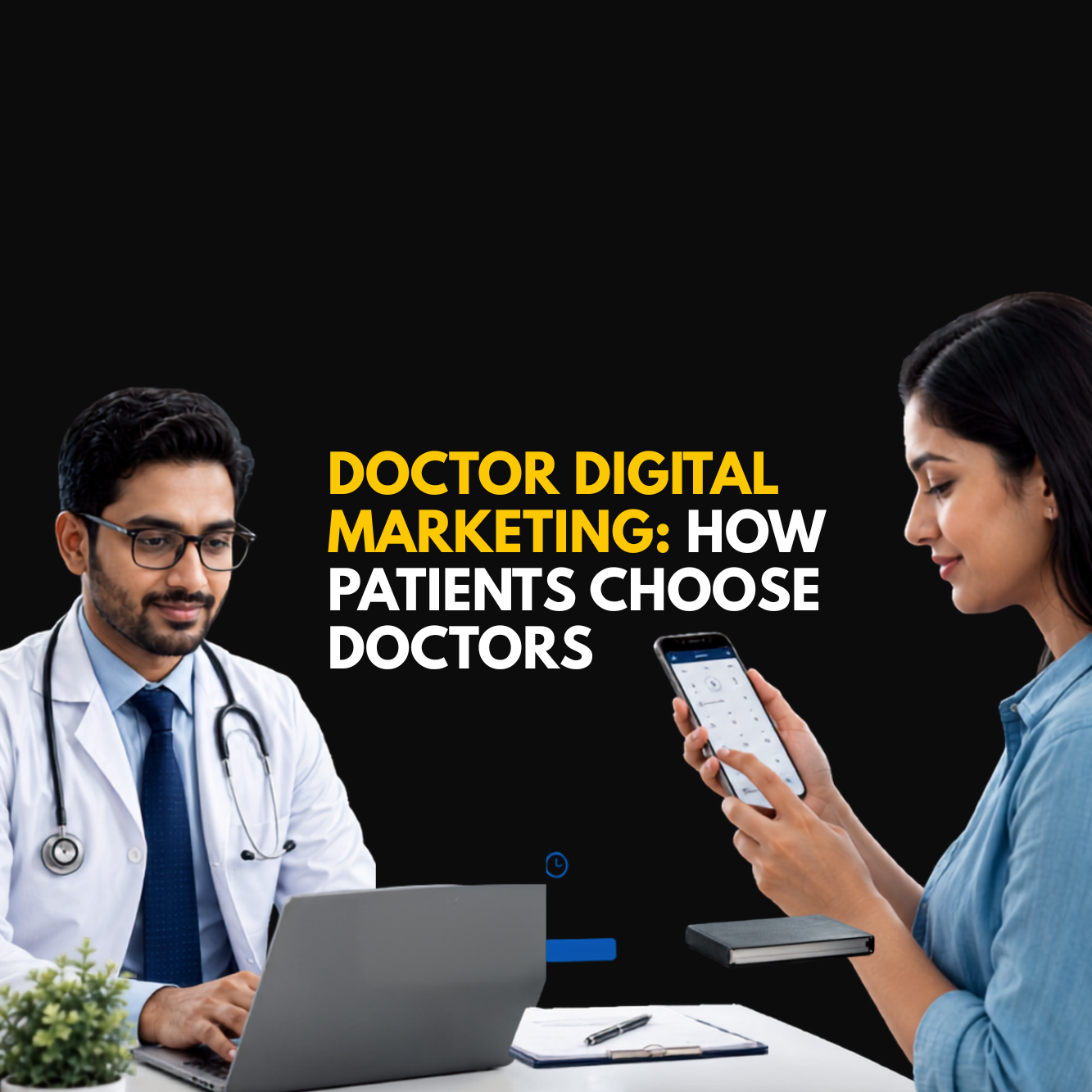
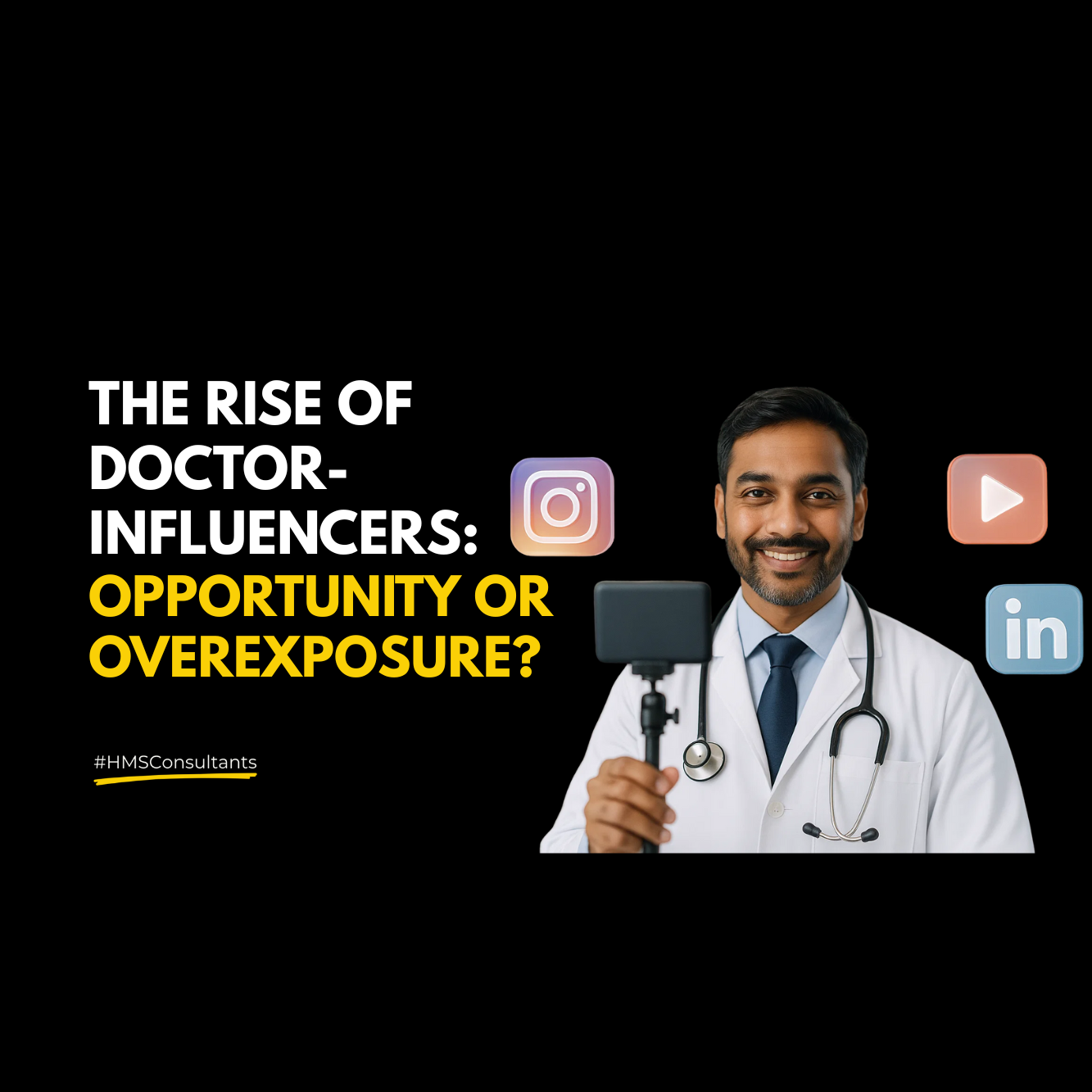
    In India, the image of a doctor has traditionally been limited to the clinic, hospital, or classroom. But 2025 paints a different picture. Today, doctors are building personal brands on Instagram, YouTube, and LinkedIn, reaching audiences far beyond their patient base. This trend, known as healthcare influencer marketing, is reshaping how the public consumes medical information.

    Some call it a revolution in trust-building. Others worry it risks turning medicine into mere content. This blog explores whether doctor-influencers represent an opportunity or a case of overexposure.

    Why Doctors Are Turning Into Influencers

    Several forces are driving the rise of doctor personal branding in India:

    • Patient behavior has changed: People first look online before visiting a clinic. Videos, reels, and blogs by doctors build familiarity.
    • Information demand is growing: Lifestyle diseases, skin and hair concerns, and fertility issues have made people more curious about medical knowledge.
    • Platforms reward authority: Social media platforms amplify verified experts, making it easier for doctors to gain traction.
    • Competitive pressure: With thousands of clinics and hospitals vying for attention, personal branding offers an edge.

    The Benefits of Doctor-Influencers

    Authority and Trust

    When patients see a doctor consistently sharing knowledge online, it builds authority. A dermatologist posting acne treatment reels, or a cardiologist simplifying heart health tips, earns credibility that can translate into appointments.

    Expanding Reach Beyond Geography

    Earlier, a clinic’s influence was limited to its physical location. With Instagram or YouTube, a doctor in Jaipur can influence someone in Kochi. Healthcare marketing consultants highlight this as a low-cost visibility strategy.

    Patient Education

    Doctors can debunk myths, guide preventive care, and answer FAQs directly. This not only improves awareness but also positions the doctor as a patient-first educator rather than just a service provider.

    Building a Personal Brand for the Future

    A strong online presence supports speaking invitations, collaborations with hospitals, book launches, and even startup ventures. Personal branding is no longer just a marketing tactic it is career insurance.

    The Risks and Downsides

    Blurring the Line Between Education and Entertainment

    Short-form content often favors catchy hooks over depth. A 30-second reel on weight loss tips may oversimplify complex science, leading to misinformation.

    Overexposure and Loss of Professional Aura

    Doctors traditionally enjoy respect due to exclusivity. Too much casual posting memes, trends, dance reels can reduce seriousness in the eyes of patients.

    Ethical and Regulatory Concerns

    Healthcare advertising in India has rules under the Medical Council of India and ASCI. Doctors risk crossing boundaries if they make unverified claims, promote brands, or offer guarantees.

    Time and Consistency Challenges

    Maintaining social media requires constant effort. Many doctors struggle to balance patient care with content creation, often leading to burnout or poorly managed branding.

    Opportunity or Overexposure: Finding Balance

    The key lies in balance. Doctors do not have to become full-time content creators. Instead, they should:

    • Focus on authentic education, not entertainment for its own sake.
    • Partner with healthcare marketing consultants who can design professional strategies.
    • Set clear limits on content frequency and themes.
    • Avoid endorsements that may compromise credibility.

    This balance ensures that online presence strengthens rather than dilutes their reputation.

    Best Practices for Doctor Personal Branding

    Choose the Right Platform

    • Instagram: Visual storytelling, reels, and community engagement.
    • YouTube: In-depth procedure explainers, patient education series.
    • LinkedIn: Professional branding, thought leadership, and networking.

    Share Authentic Content

    Patients value simplicity and clarity. Doctors should use plain language, relatable examples, and real patient journeys (with consent).

    Keep Compliance in Mind

    Stick to guidelines no promises, no misleading claims, no unethical paid promotions of medicines.

    Engage, Don’t Just Broadcast

    Replying to comments, answering questions, and participating in health awareness days builds a stronger bond.

    Monitor Reputation

    A good strategy includes regular audits of comments, shares, and mentions. Negative feedback should be handled with empathy, not defensiveness.

    Case Studies: Doctor-Influencers in Action

    • Dermatologists: Popular on Instagram, using skincare myths vs facts reels.
    • Dentists: Gaining traction on YouTube with smile makeover videos.
    • Gynecologists: Building trust by openly discussing taboo topics like PCOS or infertility.
    • Fitness-linked doctors: Collaborating with lifestyle influencers for holistic health advice.

    Each case shows how healthcare influencer marketing can both educate and inspire but only when done responsibly.

    The Future of Doctor-Influencers in India

    By 2025, India will see a clear split:

    • Doctors who adapt digital branding will be seen as approachable leaders.
    • Doctors who avoid it, risk becoming invisible to the new digital-first patient.

    However, sustainability will depend on quality over quantity. A handful of thoughtful videos and blogs can create more impact than daily unplanned posts. The winning formula is authenticity + consistency + compliance.

    Conclusion

    Doctor-influencers are not a passing trend. They are a reflection of how healthcare communication is evolving in India. For clinics and individuals, doctor personal branding is both an opportunity and a responsibility. Managed well, it can expand reach, build trust, and support growth. Managed poorly, it risks overexposure and loss of credibility.

    The smartest path forward is not to choose between opportunity or overexposure, but to strike a balance where digital presence enhances the doctor’s real-world expertise.

    Written by Maitri Desai

    Doctors Digital Marketing I Healthcare Marketing I Hospital Marketing Strategies I Marketing ideas for clinics I Marketing Trends 2025 I Medical Marketing I Social Media Marketing

    is something we strongly believe in, which means ‘Knowledge without application is the same as having no knowledge at all

    Akhil Dave

    Principle Consultant

    Ready to take your Personal Brand to the next level?

    Share your details below and we will connect with you to discuss your growth strategy.

    • Fast Fashion vs. Forever Brands in Healthcare

      Fast Fashion vs. Forever Brands in Healthcare

      Fast Fashion vs. Forever Brands in Healthcare

      Written by
      Published on
      Share This

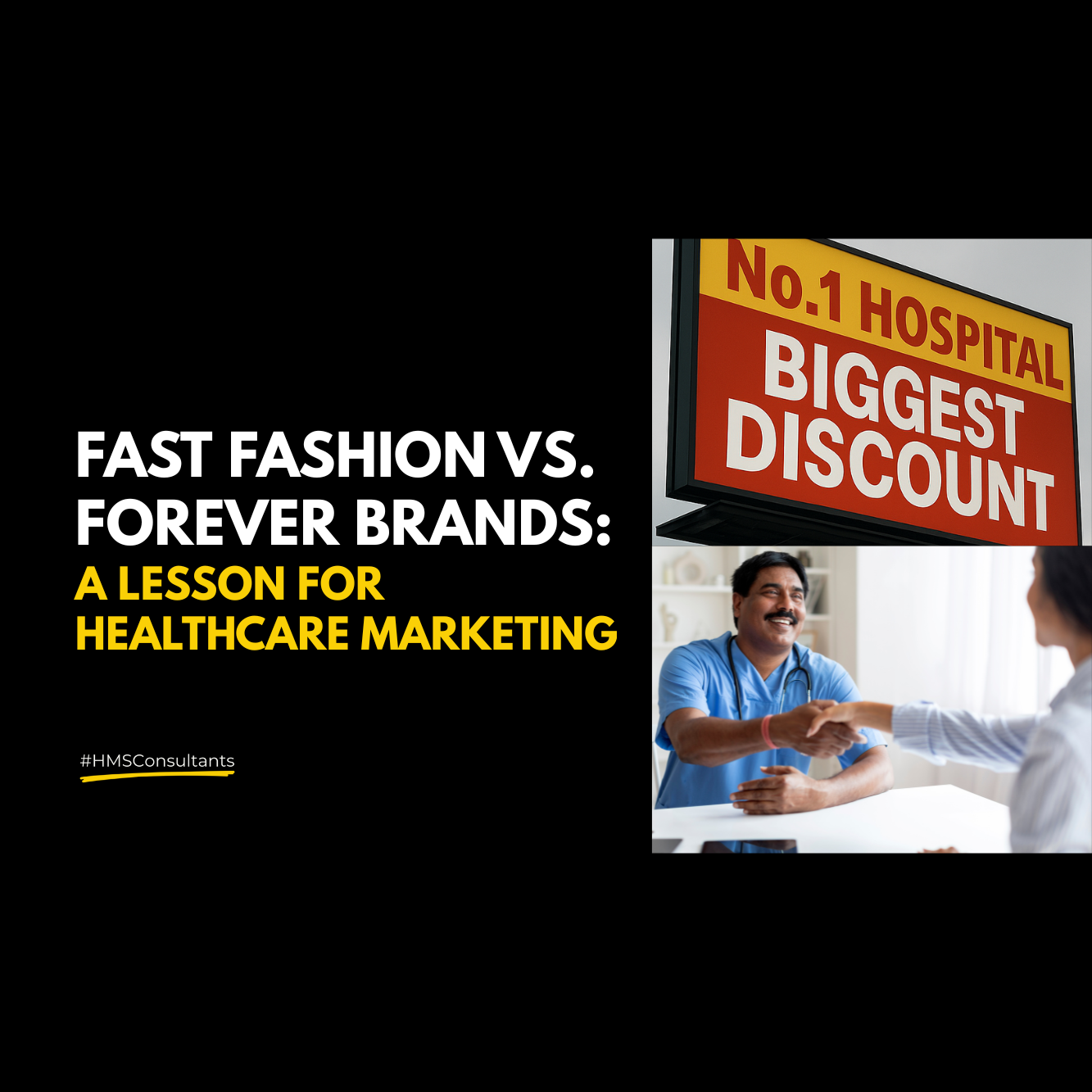
      Healthcare, like fashion, has trends. Clinics launch seasonal offers, roll out flashy campaigns, and chase the “next big thing” in marketing. For a while, it works, but just like fast fashion, these quick wins rarely last. Patients move on, trust erodes, and the brand is left chasing yet another gimmick.

      On the other hand, there are hospitals that behave like “forever brands.” They don’t fight for attention with discounts or overhyped campaigns. Instead, they invest in culture, patient experience, and consistent storytelling. Over time, they become synonymous with trust the way Rolex means timeless quality or Tata means reliability.

      The question for clinics and hospitals today: are you building a fast fashion brand or a forever brand?

      The Lure of Fast Fashion in Healthcare

      Fast fashion thrives on immediacy. In healthcare marketing, this looks like:

      • Deep consultation discounts to pull in patients.
      • Paid ad blitzes that promise more than they deliver.
      • One-time celebrity/influencer tie-ups for instant visibility.
      • Gimmicky campaigns that look great online but fade offline.

      These tactics create quick spikes but come with hidden risks:

      • Eroded trust when patients discover the gap between promises and delivery.
      • High costs of constantly refreshing campaigns.
      • Weak loyalty, as patients attracted by discounts rarely return without them.

      Short-term appeal creates long-term fragility.

      What Forever Brands Do Differently

      Forever brands are not louder; they are clearer. They:

      • Deliver consistent experiences across every touchpoint.
      • Tell authentic stories of patient journeys instead of scripted promotions.
      • Invest in staff culture; knowing that a receptionist’s warmth is as powerful as a billboard.
      • Maintain visual and verbal consistency, from signage to social media.
      • Resist the temptation to chase trends that don’t align with their identity.

      The outcome: they become symbols of trust, not transactions.

      Why Trust Outlasts Trends

      Patients don’t return because of last month’s discount. They return because of how they were treated. In a world where word-of-mouth spreads faster than any campaign, trust is compounding interest.

      A forever brand in healthcare recognizes that:

      • Trust is invisible infrastructure. You can’t advertise it into existence; you have to earn it.
      • Consistency compounds. The hundredth experience matters as much as the first.
      • Stories matter more than slogans. Patients remember how you made them feel.

      This is why clinics that play the long game by focusing on loyalty and not gimmicks, outperform those chasing instant attention.

      Building a Forever Brand: Practical Lessons for Clinics

      1. Define Your Identity Beyond Services

      Instead of saying “we treat X,” articulate why you exist. Are you the empathetic family clinic, the innovation-driven eye hospital, the women-first dermatology center? Patients buy into purpose, not price.

      2. Design Culture as Your Core Marketing Tool

      Train every staff member to embody your brand. A polite phone call, a smile at the desk, a thoughtful follow-up; all these are the brushstrokes of a forever brand.

      3. Tell Stories, Don’t Run Campaigns

      Feature real patients (with consent), community initiatives, and staff narratives. Stories create memory. Campaigns create noise.

      4. Resist the Discount Trap

      If you must run promotions, link them to education (free awareness camp, preventive check-ups) rather than price-slashing. Discounts sell transactions; value builds loyalty.

      5. Invest in Consistency

      From your logo colors to the way your reports look, ensure coherence. Patients equate consistency with credibility.

      Case-in-Point: Indian Context

      • A Delhi-based maternity hospital positioned itself around “care like family.” Instead of constant offers, it invested in mother-support groups and storytelling around journeys. Today, its reputation fills beds without discounts.
      • A multispecialty hospital tried the fast fashion route with seasonal campaigns and flashy ad spend. The OPD saw temporary spikes, but patients didn’t stay. The hospital eventually rebranded to focus on consistency and trust;  shifting towards a forever brand model.

      These examples show what Indian clinics must remember: patients are not consumers of fashion. They are seekers of trust.

      The Consulting View: Why This Matters Now

      A healthcare marketing consultant would argue that the 2025–2030 landscape won’t reward gimmicks. Rising patient literacy, digital transparency, and competition mean clinics can’t rely on quick fixes. The only sustainable advantage is trust, and trust is built by behaving like a forever brand.

      Fast fashion fades. Forever brands endure. The choice is strategic, not seasonal.

      Conclusion

      In fashion, trends come and go, but timeless brands stay in wardrobes for decades. In healthcare, the stakes are higher: this is not about style, but about lives. Clinics that chase short-term gimmicks may win attention today, but they will struggle tomorrow.

      The clinics that will thrive are those that reject the fast fashion trap and embrace the discipline of a forever brand. They will be remembered not for their discounts, but for their consistency, values, and trust.

      In the end, healthcare branding is not about what’s trending, but about what’s lasting.

      Written by Maitri Desai

      Doctors Digital Marketing I Healthcare Marketing I Hospital Marketing Strategies I Marketing ideas for clinics I Marketing Trends 2025 I Medical Marketing I Social Media Marketing

      is something we strongly believe in, which means ‘Knowledge without application is the same as having no knowledge at all

      Akhil Dave

      Principle Consultant

      Ready to take your Personal Brand to the next level?

      Share your details below and we will connect with you to discuss your growth strategy.

      • MedTech & Robot Surgeons: Future of Clinics in India

        MedTech & Robot Surgeons: Future of Clinics in India

        MedTech & Robot Surgeons: Future of Clinics in India

        Written by
        Published on
        Share This

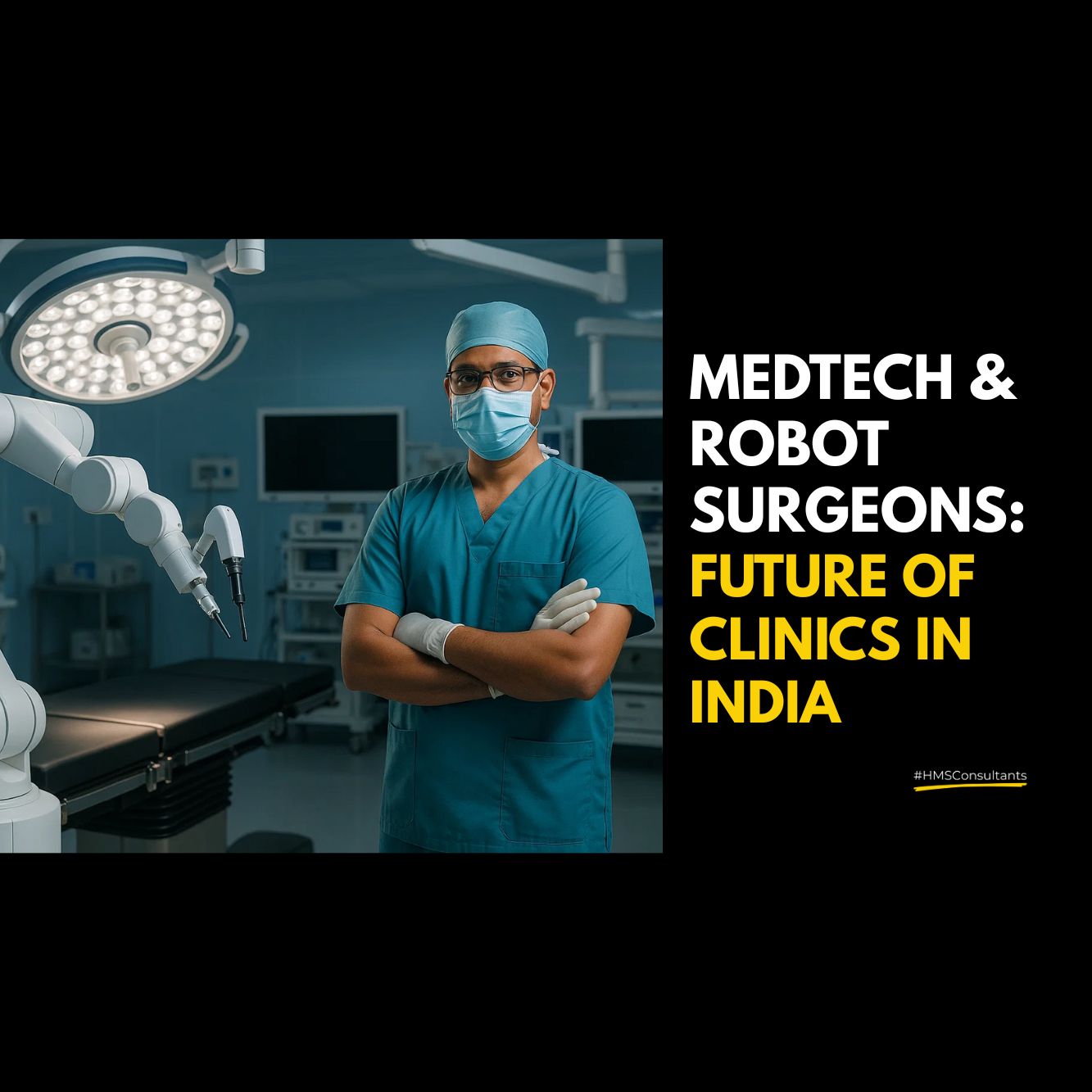
        When Indian company Meril unveiled the MIZZO Endo 4000, an advanced soft-tissue surgical robot, it made headlines across the healthcare industry. For patients, the idea of “robot surgeons” sounds futuristic, exciting, and a little intimidating. For clinics and hospitals, it signals a new era where technology is not just a tool, but a core part of patient expectations.

        A hospital marketing expert would point out that MedTech innovations like robotics, AI diagnostics, and digital health platforms are not just about operations inside the OT. They are powerful drivers of brand positioning, patient trust, and reputation. The question is: are Indian clinics ready to market themselves in a MedTech world?

        Why MedTech is Rewriting Patient Expectations

        • Precision & Safety Perception: Patients associate robots with accuracy, fewer errors, and minimally invasive procedures.
        • Global Standards: As more patients travel for medical tourism, they expect Indian hospitals to match international technology benchmarks.
        • Transparency Demand: Patients want to know what technologies will be used on them and why it matters for their outcome.

        For healthcare marketing in India, this means hospitals must shift focus from just “treatments offered” to “technology-enabled experiences”.

        How Clinics Should Prepare

        1. Translate Technology Into Simple Patient Language

        Robotics, AI, digital workflows — these terms can sound overwhelming. Clinics must use clear storytelling:

        • “Smaller cuts, faster recovery” instead of “robot-assisted minimally invasive surgery.”
        • “Quicker diagnosis with AI support” instead of “machine learning radiology solution.”

        Healthcare marketing techniques must simplify technology into benefits patients understand.

        2. Build Trust Through Demonstrations & Education

        Patients often fear what they don’t understand. Hospitals can:

        • Host demo days where communities see the robotic system in action.
        • Share explainer reels: “How a surgical robot assists your doctor.”
        • Create patient-friendly brochures comparing traditional vs robotic outcomes.

        This builds confidence and positions the clinic as transparent.

        3. Humanise the Technology

        Even with robots, patients want human reassurance. Marketing should highlight:

        • Surgeons who are trained in robotics.
        • Nurses and counselors who explain procedures.
        • Stories of patients who benefited from robotic surgeries.

        This balance of high-tech plus high-touch, is what wins trust.

        4. Use Digital Platforms to Amplify Visibility

        Digital marketing for healthcare gives clinics a cost-effective way to showcase their MedTech edge:

        • Short videos of robotic surgeries (with consent).
        • Blog posts explaining “5 Myths About Robot Surgeons.”
        • Google Ads highlighting “robot-assisted care in [city].”
        • LinkedIn campaigns to build credibility with peers and investors.

        Digital storytelling ensures patients discover your innovation before they walk in.

        5. Align Staff & Internal Branding

        A robotic system is only as strong as the people behind it. Staff must be trained not only to use the tech but to communicate its value clearly. Internal branding workshops can help align everyone’s language so the message is consistent across reception, OPD, website, and marketing materials.

        The Consultant’s Lens: Why Marketing Must Keep Up

        Technology adoption without marketing is a missed opportunity. Patients won’t automatically know your hospital has invested in robotics or AI — they must be told in a way that connects emotionally.

        • Awareness: “We use next-gen robotics for safer, faster recovery.”
        • Education: “Here’s what robotic surgery means for you.”
        • Trust: “Meet the doctors trained in robotic systems.”

        For healthcare marketing in India, this storytelling is what turns investment in machines into patient loyalty and market differentiation.

        Conclusion

        The arrival of robot surgeons in India isn’t just about surgical precision. It represents a shift in how patients view hospitals. Technology is now a trust signal. Clinics that adopt MedTech without marketing it risk being seen as outdated, even if they have the best doctors.

        The future of hospital marketing strategies lies in making technology relatable, human, and trustworthy. As surgical robotics grows, the clinics that succeed will be those that present themselves not just as places of treatment, but as hubs of innovation and care.

        Written by Maitri Desai

        Doctors Digital Marketing I Healthcare Marketing I Hospital Marketing Strategies I Marketing ideas for clinics I Marketing Trends 2025 I Medical Marketing I Social Media Marketing

        is something we strongly believe in, which means ‘Knowledge without application is the same as having no knowledge at all

        Akhil Dave

        Principle Consultant

        Ready to take your Personal Brand to the next level?

        Share your details below and we will connect with you to discuss your growth strategy.

        • The Festival Economy of Healthcare in India

          The Festival Economy of Healthcare in India

          The Festival Economy of Healthcare in India

          Written by
          Published on
          Share This

          In India, festivals are more than holidays. They are collective pauses, moments of trust, and community celebrations. From Diwali and Eid to Pongal and Baisakhi, festivals shape how people spend, connect, and make decisions. Businesses have long tapped into this “festival economy.” Healthcare, however, has often limited itself to simple health awareness posts on World Health Days.

          But here’s the opportunity: when clinics and hospitals align with cultural calendars, they do more than post greetings. They become part of the local fabric, earning trust that lasts long after the lights, prayers, or feasts fade.

          Why Festivals Matter for Healthcare Marketing in India

          • Shared Emotion: Festivals bring families together, and healthcare decisions are often family-led.
          • Timing of Decisions: Post-harvest or post-bonus seasons often see higher healthcare spending (check-ups, surgeries long postponed).
          • Trust Anchor: Associating your clinic with festivals signals familiarity and belonging, not just medical authority.

          A healthcare marketing consultant would call this context marketing at its finest using what matters most to people to connect deeply.

          Moving Beyond Awareness Days

          Most clinics know about World Heart Day or World Diabetes Day. While these are important, they feel generic. Festivals, by contrast, are rooted in local life. Imagine:

          • A dental clinic offering free “Diwali Smile” check-ups before the festival.
          • An eye hospital in Punjab linking Baisakhi harvest season to eye-safety campaigns for farmers.
          • A women’s health center in Kerala celebrating Onam with wellness workshops tied to tradition and nutrition.

          These aren’t gimmicks. They are authentic, cultural touchpoints.

          How Clinics Can Leverage the Festival Economy

          1. Align Services With Cultural Rhythms

          Certain treatments naturally fit festival timings:

          • Cosmetic / LASIK surgeries: Before wedding-heavy seasons.
          • Health check-ups: Post-harvest when rural incomes rise.
          • Wellness packages: Around New Year, when people pledge lifestyle changes.


          2. Create Festival-Specific Campaigns

          Instead of “Happy Diwali” banners, imagine:

          • “Gift a Health Check-up” Diwali package.
          • “Safe Colours, Safe Eyes” Holi awareness drive.
          • “Fasting Smartly” campaigns during Ramadan.

          These campaigns show empathy and relevance.

          3. Build Community Engagement

          Festivals are community-driven. Clinics can:

          • Host free blood pressure or sugar screenings at local pandals or gurdwaras.
          • Partner with schools during festivals to teach children about preventive care.
          • Support community kitchens or charity drives under the hospital’s name.

          This builds visibility while reinforcing that the hospital cares about more than transactions.

          4. Use Digital Marketing for Reach

          Digital marketing for healthcare allows clinics to amplify cultural connection:

          • Short reels linking festive traditions with health tips.
          • Blogs blending medical advice with festival relevance (“How to Enjoy Sweets Safely This Diwali”).
          • WhatsApp greetings with subtle clinic branding.
          • Targeted ads just before and during festival periods.


          5. Train Staff in Cultural Sensitivity

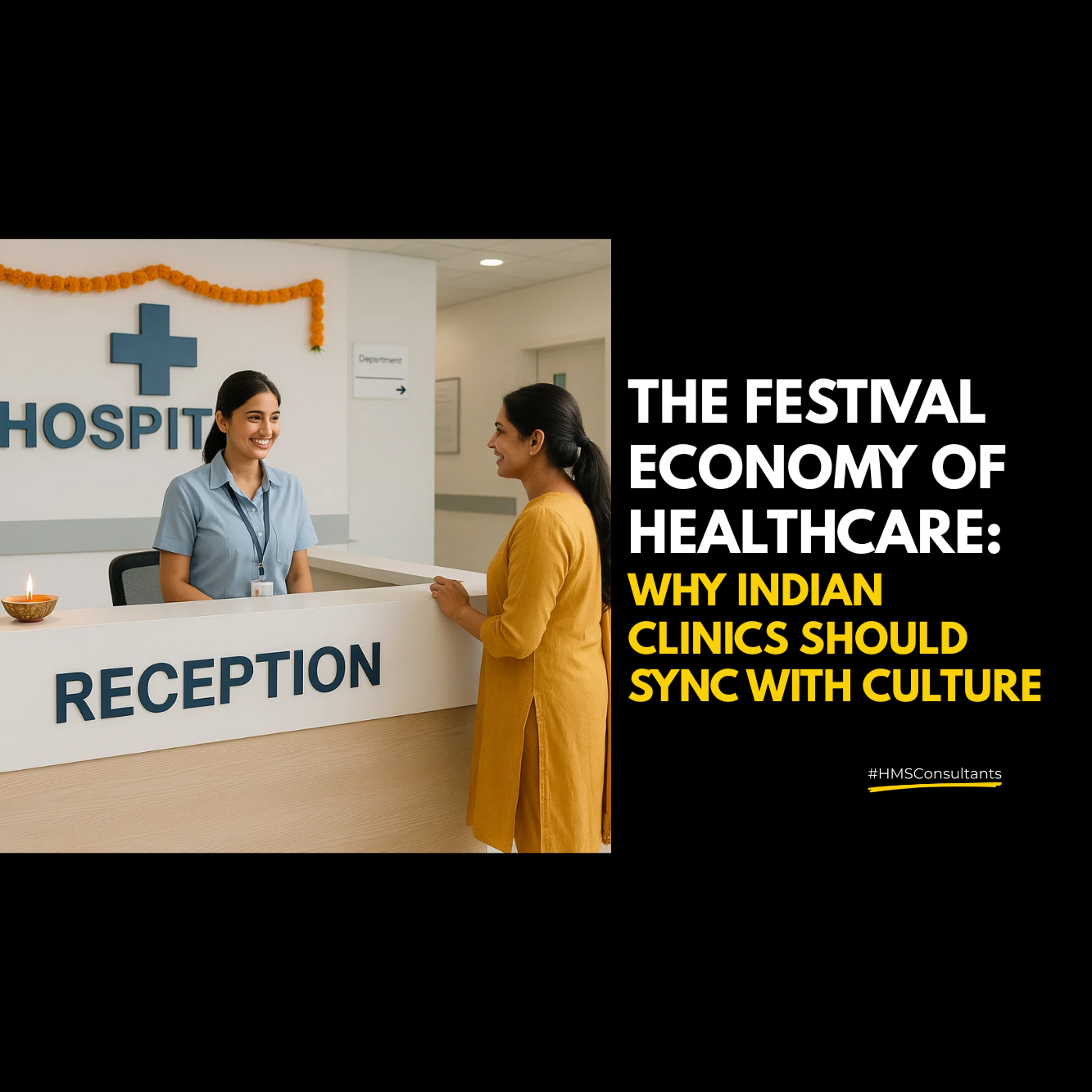
          Even small gestures count. A receptionist offering traditional greetings during festivals or staff wearing small festive badges makes patients feel at home. This human touch strengthens loyalty.

          Case Examples

          • Regional eye clinics in Gujarat use kite festivals (Uttarayan) to run eye-safety drives, which has directly led to higher OPD visits.
          • Smaller clinics in tier-2 cities tie Ayurveda-based wellness talks to Navratri fasting, positioning themselves as trusted, culturally aligned advisors.

          These examples prove one thing: when healthcare blends with cultural context, it stops being a service and becomes part of life.

          Why This Works: The Consultant’s View

          A hospital marketing consultant would say: clinics that weave themselves into cultural moments achieve three big wins:

          1. Visibility at Scale: Festivals naturally draw attention; aligning with them multiplies reach.
          2. Emotional Bonding: Patients see the clinic as part of their community, not just a business.
          3. Long-Term Loyalty: Patients remember those small gestures far longer than discounts or ad campaigns.

          Conclusion

          The festival economy in India is massive but healthcare has barely scratched the surface. Clinics that move beyond generic awareness posts and instead align authentically with cultural calendars will gain something priceless: deep-rooted trust.

          In a crowded healthcare market, this is what sets a clinic apart. Technology, expertise, and branding matter, but culture is the invisible bridge that makes patients feel you belong to them, and they belong to you. 

          Written by Maitri Desai

          Doctors Digital Marketing I Healthcare Marketing I Hospital Marketing Strategies I Marketing ideas for clinics I Marketing Trends 2025 I Medical Marketing I Social Media Marketing

          is something we strongly believe in, which means ‘Knowledge without application is the same as having no knowledge at all

          Akhil Dave

          Principle Consultant

          Ready to take your Personal Brand to the next level?

          Share your details below and we will connect with you to discuss your growth strategy.

          • Healthcare Niche Branding: Why Specialization Wins

            Healthcare Niche Branding: Why Specialization Wins

            Healthcare Niche Branding: Why Specialization Wins

            Written by
            Published on
            Share This

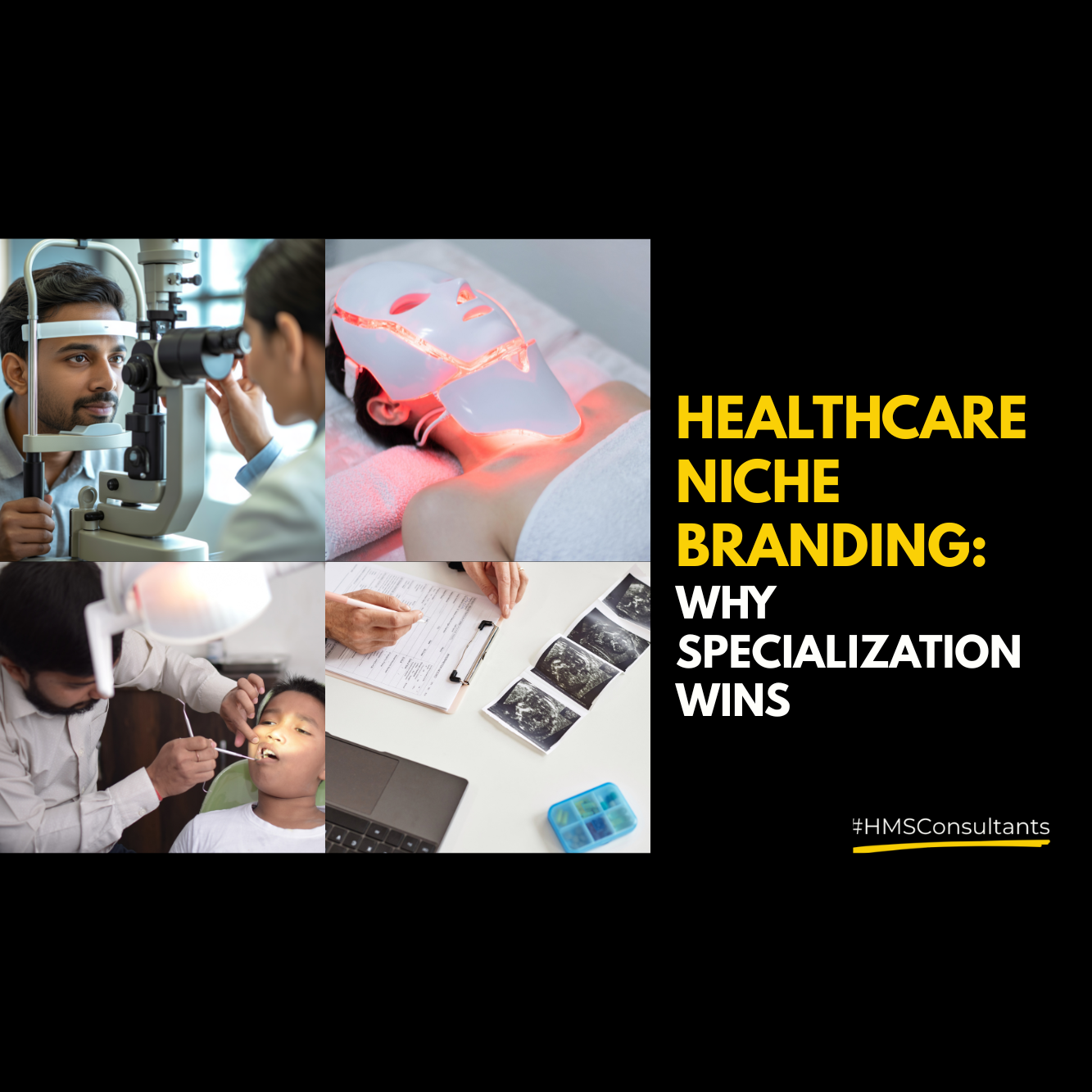
            The Indian healthcare landscape is changing rapidly. Patients are no longer just looking for “a good doctor” they are searching for experts who can solve very specific problems. A person with vision correction needs will search for an eye specialist clinic near me, while someone struggling with fertility will want the best IVF center. This shift has created a new reality: niche branding is now a powerful growth engine for clinics.

            In 2025, generalized hospital branding will struggle against the sharp positioning of super-specialty centers. Whether it’s eye care, dermatology, dental, fertility, or cosmetic surgery, patients expect depth, trust, and authority in one chosen field. This is where healthcare niche branding steps in.

            What is Healthcare Niche Branding?

            Healthcare niche branding means building a clinic’s entire identity around a focused specialty. Instead of presenting yourself as a “multi-service” provider, you highlight deep expertise in one field.

            • A skin clinic that positions itself as the go-to for acne and pigmentation.
            • A fertility center that owns the narrative of “hope, science, and care for couples.”
            • An eye hospital branding itself around touchless LASIK or other technological advanced eye surgeries.

            This clarity can make marketing messages sharper and patient trust stronger.

            Why Niche Branding Works in 2025

            1. Patients Prefer Specialists Over Generalists

            With rising health awareness and easy online research, patients no longer settle for generic options. Someone with cataracts would rather trust an eye hospital that talks only about ophthalmology than a multi-specialty hospital advertising everything from bones to heart to eye.

            2. Google Rewards Specialization

            Local SEO shows us that “near me” searches combined with specialties (like “LASIK eye surgery near me”) are among the fastest-growing queries. Clinics that build content around ‘clinic marketing for specific conditions’ rank higher and capture intent-driven patients.

            3. Social Media Loves Specific Stories

            When you do healthcare marketing on social media, niche clinics can share relatable, precise stories. For example:

            • A skin clinic showing before-after acne treatment journeys.
            • A dental clinic sharing smile transformations.
            • An IVF clinic posting awareness reels about fertility myths.

            These stories perform better than broad hospital posts because they are focused, emotional, and solution-oriented.

            4. Trust is Easier to Build

            When a clinic markets itself as an “all-rounder,” patients may feel skeptical. But if you are the clinic for skin care in a particular city or the fertility center for couples, you become the trusted choice in that space.

            Case for Super-Specialty Clinics: Real-World Examples

            • Eye Clinics: Positioning around bladeless LASIK, pediatric eye care, or cataract technology creates authority.
            • Skin Clinics: Branding around acne solutions, cosmetic dermatology, or anti-aging builds loyalty.
            • Dental Clinics: Marketing “painless dentistry” or “affordable smile makeovers” attracts young professionals.
            • Fertility Clinics: Storytelling built on “science + empathy” resonates with couples seeking emotional assurance.

            Each specialty has a narrative. Strong niche branding means owning that narrative consistently across all marketing channels.

            How to Build a Niche Branding Strategy

            1. Define Your Core Identity

            Ask: What is the one thing we want to be known for?

            • Eye hospital → “Touchless LASIK experts”
            • Dental clinic → “Painless root canal care”
            • Fertility center → “High success, high empathy”


            2. Design Content Around the Niche

            • Blogs and website content using healthcare niche branding keywords.
            • Patient guides, FAQs, and procedure explainers targeting specific needs.
            • Case studies and success stories to create emotional pull.


            3. Leverage Local SEO

            • Optimize Google My Business with keywords like “skin clinic near me”.
            • Encourage patients to leave reviews mentioning the specialty.
            • Build backlinks from local health sites and directories.


            4. Use Social Media Smartly

            For healthcare marketing on social media, focus on visual, shareable content:

            • Short reels explaining one procedure.
            • Infographics with “Do’s & Don’ts” for a specific condition.
            • Patient testimonials turned into carousel posts.


            5. Community & Offline Branding

            • Participate in local health camps but with niche-specific offerings.
            • Sponsor awareness events (e.g., free skin screening day, fertility awareness seminar).
            • Distribute niche-focused brochures in pharmacies and gyms or community meet-ups.

            Niche Branding vs General Branding: A Quick Comparison

            Aspect

            General Branding

            Niche Branding

            Positioning

            Broad, less memorable

            Sharp, expert-driven

            SEO Impact

            Hard to rank for many terms

            Easy to rank for focused terms

            Patient Trust

            Moderate

            Higher due to specialization

            Content Marketing

            Scattered

            Consistent, targeted

            Social Media Engagement

            Average

            High (because of relatability)

            Challenges in Niche Branding (and How to Overcome Them)

            1. Fear of Missing Patients:
              Many clinics think focusing on one specialty will reduce patient numbers. In reality, it attracts more of the right patients.


            2. Need for Constant Content:
              Patients expect ongoing proof of expertise. Solution: create a content calendar with weekly posts, blogs, and video explainers.


            3. Competition in Popular Niches:
              Specialities like skin and dental niches are crowded. Solution: carve micro-niches like “teen acne clinic” or “cosmetic dentistry for professionals.”

            The Future of Healthcare Niche Branding in India

            In 2025, Indian patients are increasingly relying on digital-first discovery. Google, WhatsApp, and Instagram will guide healthcare choices before a patient even visits a clinic.

            • Clinics that master healthcare marketing strategy India with niche branding will outperform generic competitors.
            • Social media algorithms will continue rewarding focused, high-engagement content.
            • Patients will expect authority-driven communication that addresses their specific condition.

            Conclusion: Why Specialization Wins

            In an era of information overload, clarity is power. Healthcare niche branding gives clinics that clarity. By focusing on one specialty, aligning digital + offline marketing, and positioning as the authority, clinics can win patient trust, dominate search rankings, and grow sustainably.

            Written by Maitri Desai

            Doctors Digital Marketing I Healthcare Marketing I Hospital Marketing Strategies I Marketing ideas for clinics I Marketing Trends 2025 I Medical Marketing I Social Media Marketing

            is something we strongly believe in, which means ‘Knowledge without application is the same as having no knowledge at all

            Akhil Dave

            Principle Consultant

            Ready to take your Personal Brand to the next level?

            Share your details below and we will connect with you to discuss your growth strategy.

            • Building a Strong Healthcare Brand on a Budget

              Building a Strong Healthcare Brand on a Budget

              Building a Strong Healthcare Brand on a Budget

              Written by
              Published on
              Share This

              Healthcare branding often feels like a game for big players. Hospitals with massive budgets run city-wide billboards, glossy ad campaigns, and celebrity endorsements. But most clinics and smaller hospitals don’t have that kind of spending power. The good news? Building a strong healthcare brand isn’t always about the money you spend, but also about the trust you earn.

              With the right approach, clinics and hospitals can build credibility, visibility, and patient loyalty without burning through large advertising budgets. Here’s how.

              Why Big Budgets Don’t Always Win

              Advertising grabs attention, but in healthcare, attention is not the same as trust. A patient may see an ad for a hospital, but if they have a poor in-clinic experience or read negative reviews, no amount of advertising will keep them loyal.

              On the other hand, smaller clinics that focus on consistent patient experience, word-of-mouth referrals, and community presence often find that patients return and recommend them, even without major ad spend.

              This is where healthcare marketing for clinics and hospitals should shift focus from chasing visibility at all costs, to creating meaningful trust.

              Low-Cost, High-Trust Methods to Build a Healthcare Brand

              1. Patient Referrals: The Oldest, Most Reliable Marketing Tool

              Referrals are the backbone of healthcare marketing. Patients trust other patients far more than any ad.

              How to strengthen referrals:

              • Encourage satisfied patients to share their stories (with consent).
              • Create a simple thank-you system for patients who recommend your clinic.
              • Deliver consistent care, because a patient only refers if they feel valued.

              A single positive experience can lead to multiple new patients without any extra advertising spend.

              2. Patient Experience as the Core of Branding

              The most affordable healthcare marketing comes from what patients feel inside your clinic.

              Key touchpoints that shape patient experience:

              • Friendly and clear communication at reception.
              • Comfortable and clean waiting areas.
              • Transparent consultation style where doctors explain procedures simply.
              • Efficient follow-ups via SMS, WhatsApp, or calls.

              Every step in the patient journey either strengthens or weakens your brand. Clinics that get this right rarely need flashy ads, because patients become their advocates.

              3. Community Presence: Being Visible Beyond Ads

              Community engagement builds brand awareness without expensive campaigns. Patients are more likely to trust clinics that they see actively participating in their neighborhoods.

              Ideas for community presence:

              • Host small health camps in schools, offices, or local societies.
              • Partner with local organizations on awareness drives (e.g., eye check-up camps, diabetes screening, vaccination awareness).
              • Give simple educational talks at community events.

              These activities are low-cost, yet they create strong credibility. They show that your clinic isn’t only a business, but a part of the community.

              4. Digital Presence: Affordable, Effective, and Essential

              In 2025, an online presence is as important as physical infrastructure. Patients often search “clinic near me” before they visit.

              How to build an affordable digital presence:

              • Maintain an updated Google Business Profile with accurate details, reviews, and photos.
              • Use social media for patient education, not just promotion.
              • Share FAQs, explainer reels, and small behind-the-scenes glimpses of care.
              • Highlight testimonials and staff introductions to humanize your brand.

              Even without paid ads, consistent content and good SEO can bring patients to your door. A hospital marketing agency can guide clinics in setting up these systems efficiently.

              5. Collaborations with Local Stakeholders

              Not all growth comes from direct advertising. Collaborations with nearby pharmacies, fitness centre, or diagnostic labs can expand visibility.

              Examples:

              • A clinic and local fitness center run a joint awareness campaign on heart health.
              • A hospital partners with nearby pharmacies for health awareness flyers.
              • Doctors collaborate with local schools to run preventive health check-ups.

              Such partnerships are low-cost but expand reach significantly.

              Affordable Healthcare Marketing: Key Principles

              If clinics and hospitals want to stretch their marketing without heavy budgets, they should follow these principles:

              1. Be Consistent, Not Flashy
                Patients remember a steady stream of helpful interactions more than one big ad.


              2. Focus on Trust First
                In healthcare, credibility outweighs visibility. Trust leads to referrals, which is the most powerful form of marketing.


              3. Invest in Patient Stories
                Real experiences resonate more than polished taglines.


              4. Leverage Affordable Tools
                Google Business Profiles, WhatsApp reminders, and simple social media posts are free or low-cost, yet impactful.


              Audit Regularly
              Clinics should assess their branding touchpoints: digital, patient flow, community engagement to ensure every detail supports their image.

              How a Hospital Marketing Agency Can Help

              Even with a limited budget, working with a hospital marketing agency doesn’t mean spending huge sums. Agencies bring strategy, clarity, and execution support.

              What they offer:

              • Branding audits to identify weak touchpoints.
              • Guidance on affordable strategies like referral systems, local SEO, and content planning.
              • Frameworks to ensure both doctor personal branding and institutional branding are aligned.

              Instead of spending on ads without direction, a hospital or clinic can use professional advice to maximize every rupee spent.

              Key Takeaway

              Healthcare brands don’t need massive advertising budgets to succeed. They need trust, consistency, and presence where it matters most; i.e. patient experience, community, and digital platforms. Clinics and hospitals that focus on these areas can build strong, lasting brands without overspending.

              A thoughtful healthcare marketing for clinic approach, backed by affordable strategies and occasional guidance from a hospital marketing agency, can deliver better results than any billboard.

              Written by Maitri Desai

              Doctors Digital Marketing I Healthcare Marketing I Hospital Marketing Strategies I Marketing ideas for clinics I Marketing Trends 2025 I Medical Marketing I Social Media Marketing

              is something we strongly believe in, which means ‘Knowledge without application is the same as having no knowledge at all

              Akhil Dave

              Principle Consultant

              Ready to take your Personal Brand to the next level?

              Share your details below and we will connect with you to discuss your growth strategy.

              • How Personalized Engagement Improves Patient Care

                How Personalized Engagement Improves Patient Care

                How Personalized Engagement Improves Patient Care

                Written by
                Published on
                Share This

                Every patient is unique in their health journey, lifestyle, and expectations. Yet, many hospitals and clinics still communicate with patients in the same way, regardless of age, background, or digital habits. In today’s world, personalization is no longer a luxury; it is a key patient engagement strategy.

                For clinics looking to build loyalty, personalization transforms marketing ideas for hospitals into meaningful patient relationships. From tailored follow-ups to communication channels that match patient preferences, personalization ensures care feels relevant beyond the OPD.

                Why Personalization Matters in Healthcare

                Generic communication risks making patients feel like just another number. Personalized engagement, on the other hand:

                • Shows patients they are understood and valued.
                • Improves trust and long-term loyalty.
                • Encourages adherence to treatments and follow-ups.
                • Builds brand distinction in competitive markets.

                A healthcare marketing consultant often highlights that personalization is the missing link between visibility and lasting patient trust.

                Using Demographics for Better Engagement

                Demographics remain the first step to personalization.

                • Age: Younger patients may prefer Instagram updates or WhatsApp marketing, while older patients respond better to phone calls or printed material.
                • Location: Patients in metro cities expect digital booking options, while those in Tier-2 or Tier-3 towns may rely on local awareness drives.
                • Family roles: Campaigns for mothers, seniors, or working professionals resonate more when the message acknowledges their daily realities.

                By segmenting patient groups, clinics can deliver communication that feels personal, not generic.

                Lifestyle-Based Personalization

                Personalization should go beyond age and location to consider lifestyle.

                • Profession: A software engineer may appreciate SMS reminders for eye strain prevention, while a farmer may value seasonal health camps.
                • Habits: Fitness-conscious patients might respond well to wellness newsletters, while those managing chronic conditions need regular check-in reminders.
                • Cultural context: Festivals, local traditions, and language preferences can shape how patients engage with a hospital’s brand.

                This approach transforms marketing ideas for hospitals into everyday relevance.

                Technology Adoption as a Key Factor

                Patients differ in how comfortable they are with technology.

                • High adoption: Young professionals and urban patients often use apps, online consultations, and digital health records.
                • Moderate adoption: Middle-aged patients may rely on WhatsApp groups or SMS updates.
                • Low adoption: Seniors may prefer phone calls or printed handouts.

                A balanced strategy ensures no patient feels left out. Healthcare marketing techniques should meet patients where they are, not force them into unfamiliar tools.

                Examples of Personalization in Action

                • WhatsApp reminders for urban patients with busy schedules.
                • Printed diet charts for older patients managing diabetes.
                • Festival-specific wellness tips shared in local languages.
                • Online forums for younger, tech-savvy groups dealing with lifestyle issues like stress or sleep.

                These small steps make patients feel that the clinic recognizes their personal needs.

                Benefits of Personalized Engagement

                When personalization is done consistently:

                • Patient satisfaction improves, leading to stronger loyalty.
                • Word-of-mouth referrals increase because patients share positive experiences.
                • Clinics save time and resources by focusing on targeted communication.
                • The hospital brand evolves from being just a care provider to a trusted community partner.

                Challenges in Implementing Personalization

                While powerful, personalization requires structure:

                • Data management: Clinics need systems to track patient preferences.
                • Consistency: Sporadic personalization feels insincere.
                • Privacy: Patients must trust that their information is secure.

                A healthcare marketing consultant can help clinics design strategies that balance personalization with privacy and scalability.

                Practical Steps for Clinics

                1. Start with segmentation: Group patients by age, lifestyle, and tech comfort.
                2. Pick the right channel: Match communication style to patient preference.
                3. Train staff: Ensure every team member knows how to personalize interactions.
                4. Use simple tools: WhatsApp marketing, SMS platforms, or management systems can simplify personalization.

                Evaluate impact: Track patient responses, repeat visits, and referrals.

                Conclusion

                Personalization is not about adding complexity to healthcare marketing. It’s about making every patient feel recognized and respected. By aligning communication with demographics, lifestyle, and technology, clinics can build deeper patient connections.

                In the long run, personalization transforms everyday marketing ideas for hospitals into strategies that foster trust, loyalty, and growth. It is the human side of modern healthcare marketing techniques.

                Doctors Digital Marketing I Healthcare Marketing I Hospital Marketing Strategies I Marketing ideas for clinics I Marketing Trends 2025 I Medical Marketing I Social Media Marketing

                is something we strongly believe in, which means ‘Knowledge without application is the same as having no knowledge at all

                Akhil Dave

                Principle Consultant

                Ready to take your Personal Brand to the next level?

                Share your details below and we will connect with you to discuss your growth strategy.

                • Healthcare 2030: Preparing Clinics for the Future

                  Healthcare 2030: Preparing Clinics for the Future

                  Healthcare 2030: Preparing Clinics for the Future

                  Written by
                  Published on
                  Share This

                  The next decade will redefine Indian healthcare. By 2030, the nation will be home to one of the world’s largest patient populations, shaped by rising life expectancy, chronic diseases, urban pressures, and digital-first consumers. Clinics that thrive will not be those that simply expand their facilities, but those that anticipate change, embrace innovation, and reimagine how care is delivered.

                  For hospitals, this is not just about survival. It’s about shaping healthcare marketing in India in ways that inspire trust, attract patients, and redefine relevance. The question is simple: how can today’s clinics prepare for tomorrow’s patient?

                  The Four Mega-Trends Shaping Healthcare 2030

                  1. Telehealth as Standard, Not Supplement

                  What began as a pandemic workaround is becoming permanent. By 2030, teleconsultations will be the default for follow-ups, routine check-ins, and preventive care. Patients will expect to meet doctors as easily on a screen as in a clinic corridor.

                  Clinics that integrate telehealth now; with seamless booking systems, WhatsApp reminders, and hybrid care models,  will not only gain early-mover advantage but also establish themselves as accessible, patient-first brands.

                  2. Artificial Intelligence and Data-Driven Care

                  AI is moving from buzzword to bedside. From diagnostic imaging to predictive analytics, AI will augment how doctors make decisions and how patients engage with care. But the bigger opportunity lies in marketing.

                  A healthcare marketing consultant would note: AI will enable clinics to personalize outreach, predict patient needs, and measure campaign ROI with unprecedented accuracy. In an era of information overload, data-driven personalization will cut through the noise.

                  3. The Rise of Healthcare Consumerization

                  By 2030, patients will act more like consumers demanding transparency, comparing options, and switching providers if trust is broken. This shift will pressure clinics to focus on experiences, not just treatments.

                  Key areas where consumerization will play out:

                  • Transparent pricing instead of hidden costs.
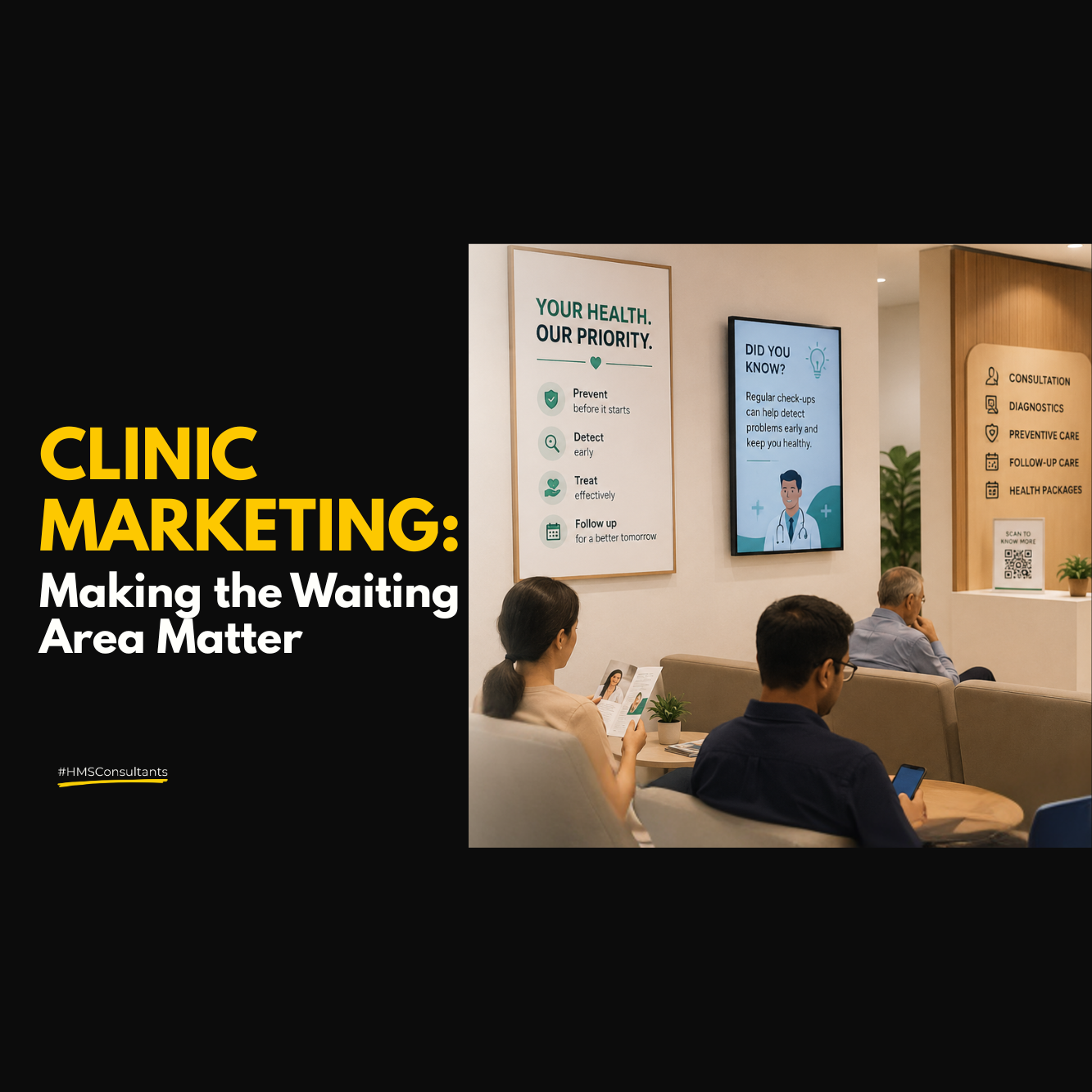
                  • Experience-driven branding where waiting room design matters as much as equipment.
                  • Digital-first discovery with patients forming impressions long before the first visit.


                  The clinics that view patients as partners, not passive recipients, will dominate this new landscape.

                  4. Insurance and the Economics of Care

                  As insurance penetration grows, more patients will select hospitals based on network partnerships. This will reshape marketing strategies.

                  Clinics must prepare to:

                  • Build strong insurer partnerships.
                  • Position themselves as value-driven providers with transparent outcomes.
                  • Integrate financial counseling into the patient journey.


                  In India, where affordability remains central, insurance will be the key bridge between care access and brand preference.

                  Preparing Indian Clinics for the Future

                  Invest in Hybrid Models

                  Design a patient journey that seamlessly shifts between OPD visits, teleconsultations, and follow-ups. Patients should feel the same brand promise whether online or offline.

                  Build a Data Culture

                  Adopt simple tools today that will evolve into AI-driven insights tomorrow. Track patient preferences, follow-up needs, and outcomes to personalize engagement.

                  Prioritize Trust Over Transactions

                  Discount wars will fade. What will endure is trust built through empathy, ethical storytelling, and transparency. Clinics should embed these values into every campaign.

                  Train Staff as Brand Custodians

                  The next decade will be less about marketing slogans and more about lived experiences. Every receptionist, nurse, and technician must embody the clinic’s brand promise.

                  Partner Smartly

                  From technology providers to insurance firms, partnerships will be a defining strength. Clinics that collaborate will scale faster than those that work in isolation.

                  The Business Case for Preparedness

                  Preparing for future is not optional. Clinics that act now will:

                  • Expand reach through hybrid models.
                  • Attract loyalty by personalizing patient journeys.
                  • Command premium positioning without discounts.
                  • Future-proof themselves against shifting patient expectations.


                  Healthcare marketing in India is moving from promotion to transformation. It is no longer about saying you care but about proving it, consistently, across every touchpoint.

                  Conclusion

                  Healthcare in the future will not look like healthcare today. Patients will expect flexibility, personalization and trust, and they will choose providers who deliver it. For Indian clinics, the next decade is not a challenge but an opportunity: to evolve into healthcare brands that inspire loyalty beyond treatment.

                  The clinics that prepare today will not just survive tomorrow. They will lead it.

                  Doctors Digital Marketing I Healthcare Marketing I Hospital Marketing Strategies I Marketing ideas for clinics I Marketing Trends 2025 I Medical Marketing I Social Media Marketing

                  is something we strongly believe in, which means ‘Knowledge without application is the same as having no knowledge at all

                  Akhil Dave

                  Principle Consultant

                  Ready to take your Personal Brand to the next level?

                  Share your details below and we will connect with you to discuss your growth strategy.

                  • India’s Silent Epidemic: Why Defeating Diabetes Requires a Movement, Not Just Medicine

                    India’s Silent Epidemic: Why Defeating Diabetes Requires a Movement, Not Just Medicine

                    India’s Silent Epidemic: Why Defeating Diabetes Requires a Movement, Not Just Medicine

                    Written by
                    Published on
                    Share This

                    The Alarming Numbers We Can’t Ignore

                    Every few minutes in India, someone is diagnosed with diabetes. Some experts now call India the “Diabetes Capital of the World”, a title no nation wants. The numbers are staggering:


                    • India currently has over 90 million adults living with diabetes, and another 38 million remain undiagnosed (International Diabetes Federation, 2025).
                    • By 2045, the number is projected to cross 150 million if urgent steps are not taken.
                    • Nearly 50% of patients do not know they are diabetic until severe complications like kidney failure, vision loss, or cardiovascular disease force them into hospitals.
                    • According to the World Health Organization, diabetes and its complications contribute to over 1.5 million deaths annually worldwide, with India bearing one of the heaviest burdens.

                    This is not just a health crisis, it is an economic and social one. A recent Lancet study estimated that the average Indian household spends 15–25% of its monthly income on diabetes management when complications set in. In rural areas, this burden often pushes families into debt. Clearly, diabetes is more than a medical condition. It is a public health emergency that requires awareness, access, and sustained action.

                    The Problem: What Do Diabetic Patients Really Face?

                    Managing diabetes in India is not simply about taking medicines. Patients face challenges at every step of their journey:

                    1. Late Diagnosis

                    In India, more than half of people with diabetes remain undiagnosed until advanced stages. By then, lifestyle changes or early medical interventions are less effective.

                    2. Limited Access in Rural Areas

                    Urban India has specialist diabetologists and diagnostic facilities, but rural and semi-urban India still struggles with limited healthcare infrastructure. For millions, consulting a diabetologist means traveling several hours and spending heavily on transport.

                    3. High Costs of Medicines & Tests

                    While generic medicines are available, most patients prefer branded drugs but these come with a high price tag. Add to this the cost of regular blood tests and monitoring, and managing diabetes becomes unaffordable for many middle-class families.

                    4. Poor Lifestyle Support

                    Managing diabetes is not just about medication. It requires consistent lifestyle changes dietary adjustments, exercise, stress management. Yet, most patients have no structured support to make these changes sustainable.

                    5. Missed Follow-Ups & Self-Medication

                    Due to work, stigma, or cost pressures, many patients skip follow-ups. Some even self-medicate, leading to poorly controlled blood sugar and severe long-term complications.

                    6. Mental & Emotional Stress

                    Diabetes often brings anxiety, depression, and guilt, which go unaddressed. The lack of integrated mental health support worsens patient outcomes.

                    Put simply: the system is fragmented, and patients fall through the cracks. This is where innovation becomes not just helpful, but necessary.

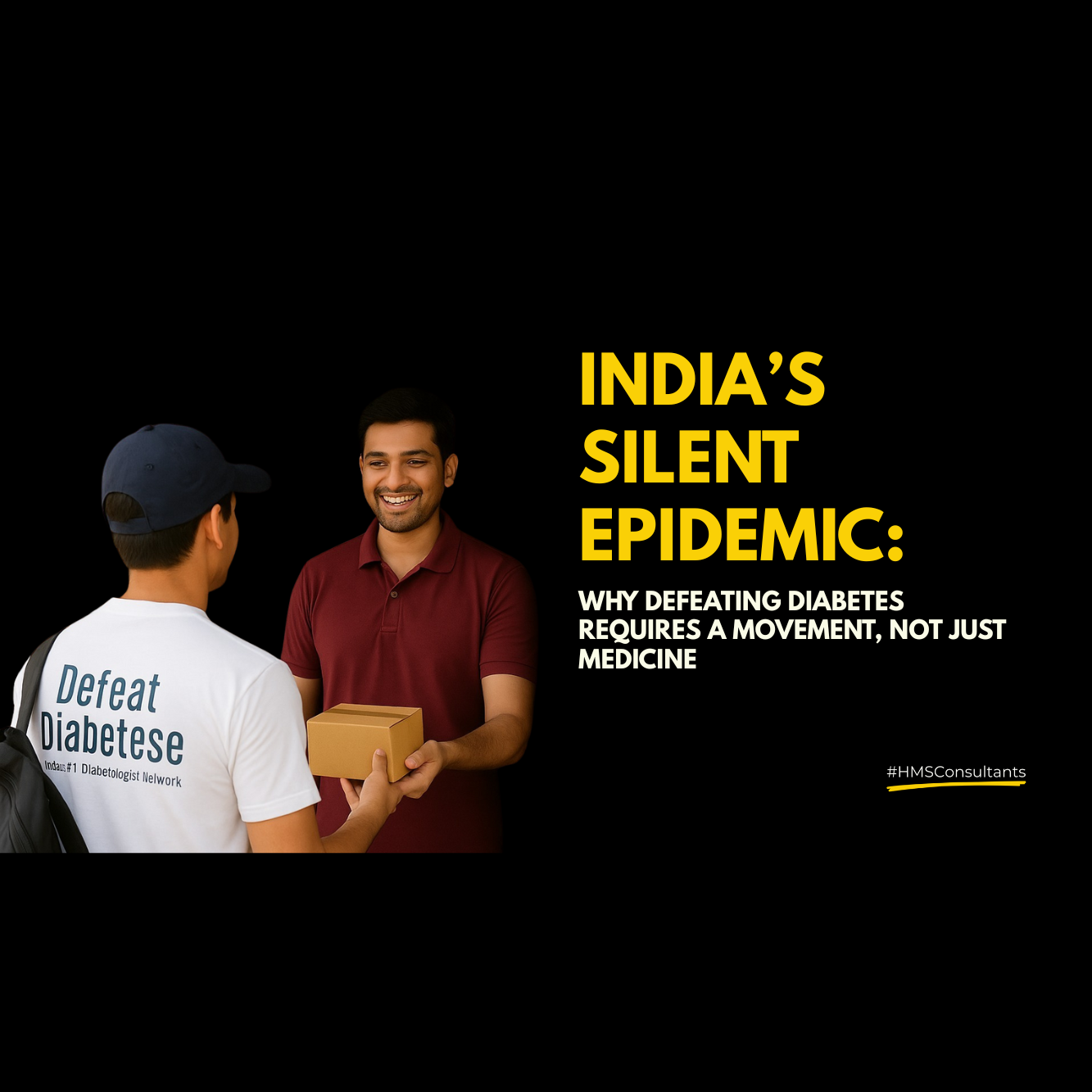
                    The Solution: Defeat Diabetese and Its Vision

                    Meet Dr. Prakash Kurmi – The Visionary Behind Defeat Diabetese

                    After decades of treating thousands of diabetic patients at Shivam Hospital, Ahmedabad, Dr. Prakash Kurmi saw one recurring problem: patients were not failing treatment, the system was failing patients.

                    Defeat Diabetese

                    He noticed that awareness was low, access to specialists was unequal, and lifestyle support was practically missing. Rural patients in particular had almost no chance of receiving quality, continuous care.

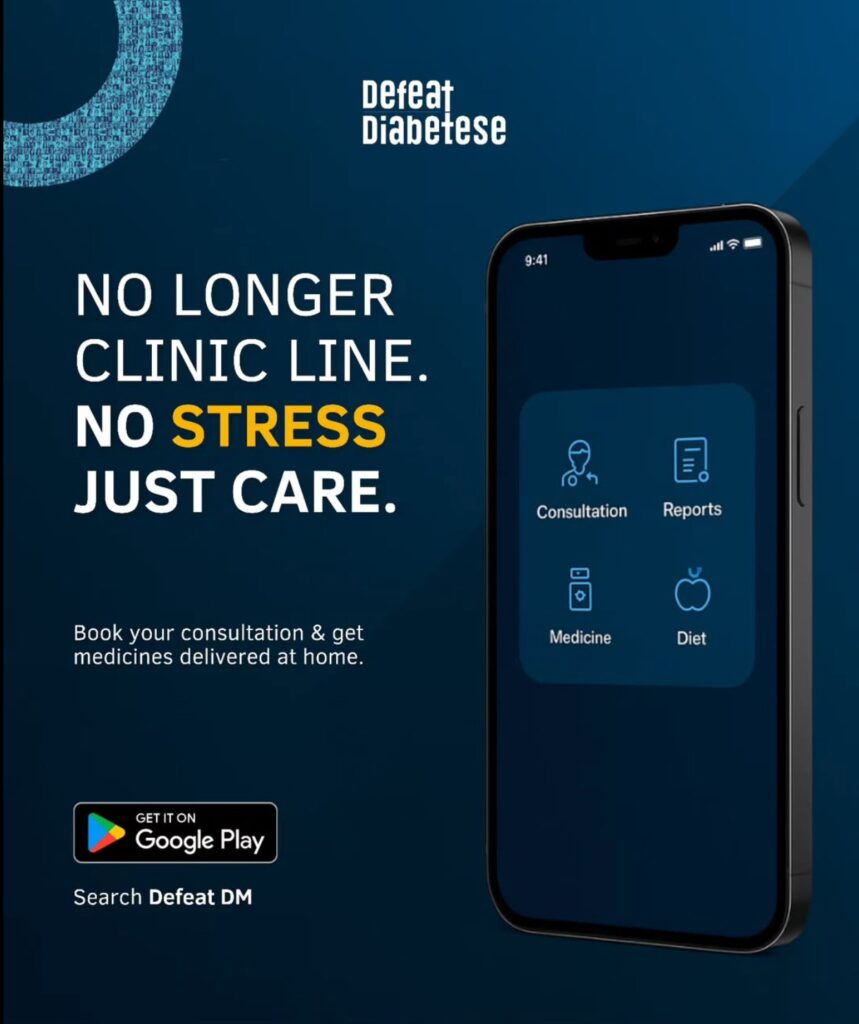
                    This drove him to launch Defeat Diabetese India’s first comprehensive hybrid diabetes care ecosystem with a bold mission: to make expert, affordable, and holistic diabetes care available to every Indian, anytime, anywhere.

                    What Does the Defeat Diabetese App Offer?

                    The Defeat Diabetese platform is more than just an app it’s an integrated ecosystem:

                    • Expert Consultations – Online and offline access to top diabetologists without long waiting times.
                    • Affordable Medicines – Branded medications at up to 30% savings, delivered at patients’ doorsteps.
                    • Diagnostics & Lab Tests – Home sample collection services for convenience and accessibility.
                    • Personalized Nutrition & Fitness – Structured diet and activity plans designed by experts.
                    • Mental Health Support – Counseling and behavioral guidance for long-term motivation.
                    • 24/7 Digital Access – A patient-friendly app to log sugar levels, track medications, receive reminders, and access educational tips.

                    This hybrid model, where technology powers access but human experts remain at the core has the potential to transform how India manages diabetes.

                    The Impact: Small Steps, Big Vision

                    Though Defeat Diabetese is still in its early years, its vision is ambitious and inspiring.

                    • 100,000+ patients already impacted through Dr. Kurmi’s practice and the platform.
                    • A goal to reach 10 million people by 2030.
                    • Plans to cut patient costs by 40%, while improving long-term health outcomes.
                    • A growing network of affiliate doctors and centres, enabling rural penetration.

                    Impact today is not just about numbers, it is about building the foundations of a sustainable care model that will expand nationwide. Every new registration, every camp, every affiliated doctor adds to this momentum.

                    The Role of HMS Consultants in This Journey

                    At HMS Consultants, we strongly believe in supporting healthcare innovations that have the power to transform lives. When we first engaged with Defeat Diabetese, we were struck by its clarity of purpose and inclusivity of vision.
                    We see Defeat Diabetese not just as a client, but as a movement worth amplifying.

                    A Call to Action: Join the Movement Against Diabetes

                    Diabetes doesn’t just affect individuals, it affects families, workplaces, and communities. Defeat Diabetese is building a national network of awareness, access, and care. But no movement succeeds alone.

                    Here’s how you can be part of it:

                    • For Individuals & Families: Download the Defeat Diabetese App today, book your consultation, and take control of your health journey.
                    • For Doctors & Healthcare Professionals: Join as an affiliate partner and extend these benefits to your patients and community. Register Here
                    • For Corporates & Institutions: Host an awareness lecture or screening camp at your organization, and empower your employees with preventive care.
                    • For Everyone: Share this blog. Awareness is the first step towards change.
                    Defeat Diabetese

                    Together, we can ensure that India doesn’t just live longer but lives healthier.

                    Diabetes is a race where being late has consequences. The earlier we act, the stronger the future we build. At HMS, we are proud to mentor and support Defeat Diabetese in its mission to Catch Diabetes Before It Wins.

                    Because in the fight against diabetes, every patient gained is a life saved.

                    Doctors Digital Marketing I Healthcare Marketing I Hospital Marketing Strategies I Marketing ideas for clinics I Marketing Trends 2025 I Medical Marketing I Social Media Marketing

                    is something we strongly believe in, which means ‘Knowledge without application is the same as having no knowledge at all

                    Akhil Dave

                    Principle Consultant

                    Ready to take your Personal Brand to the next level?

                    Share your details below and we will connect with you to discuss your growth strategy.

                    • Everyone Knows. Yet No One Checks.

                      Everyone Knows. Yet No One Checks.

                      Everyone Knows. Yet No One Checks.

                      Written by
                      Published on
                      Share This

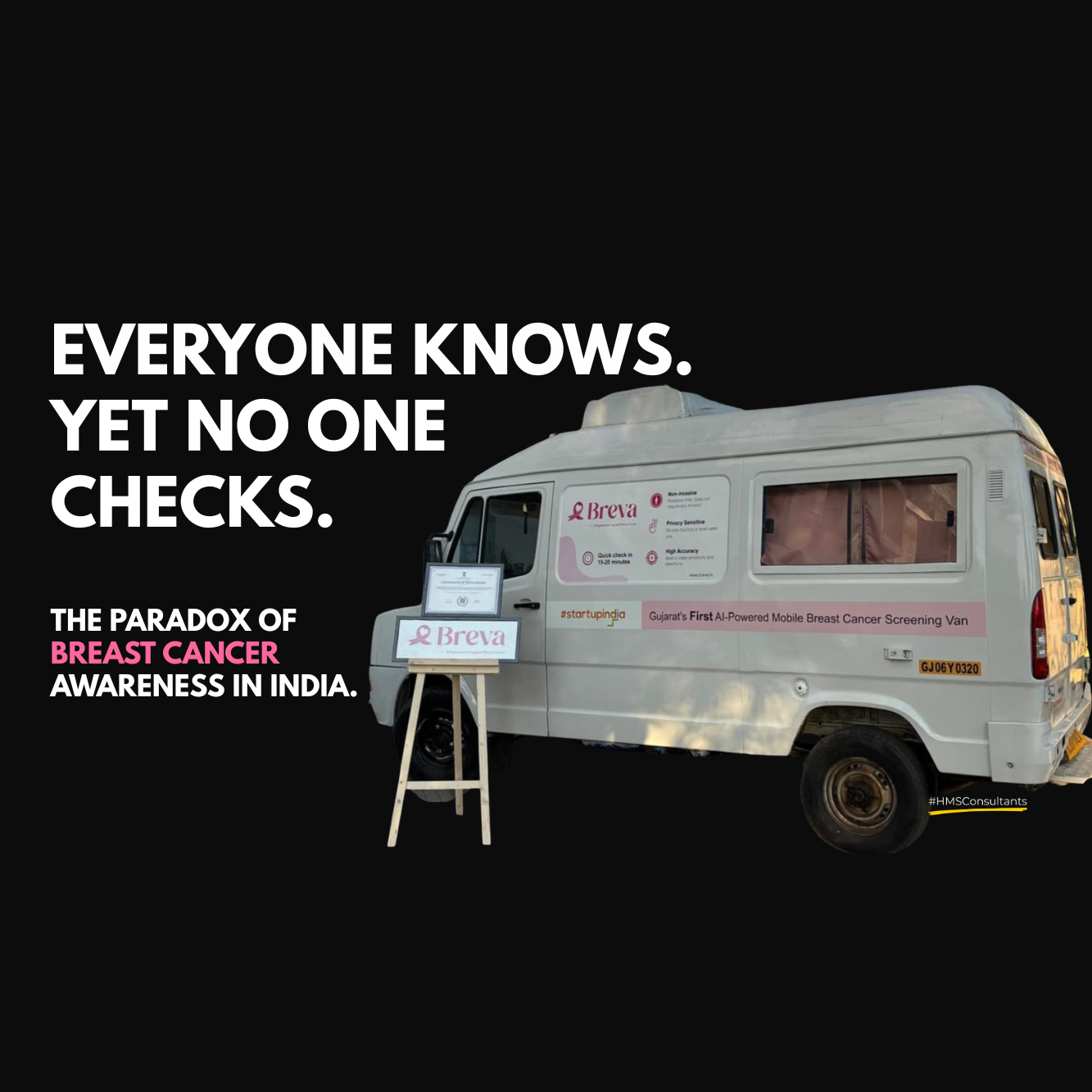
                      The paradox of breast cancer awareness in India.

                      Still Aware. Yet Unaware. Why Breast Cancer Awareness Needs a New Direction.

                      Despite increasing awareness drives and pink campaigns every year, India is witnessing a silent surge in breast cancer cases. The numbers are alarming and they demand more than just talk. One woman is diagnosed with breast cancer every 4 minutes in India, and one woman dies from it every 8 minutes (National Cancer Registry Programme, ICMR 2020). By 2025, India is projected to witness 2,32,832 new breast cancer cases, with a rising incidence in both urban and rural regions (ICMR). What’s even more concerning is that nearly 50% of these cases are diagnosed in Stage III or IV, when treatment becomes more difficult and more expensive (WHO South-East Asia, 2021). The survival rate drops drastically when diagnosis is delayed, even though early-stage breast cancer is one of the most treatable forms of cancer.
                      So why is early detection still such a challenge? Because awareness is not accessible. Because screening is still out of reach for most women, due to fear, privacy concerns, lack of knowledge, or simply no nearby facility.


                      So why is early detection still such a challenge? Because awareness is not accessible. Because screening is still out of reach for most women, due to fear, privacy concerns, lack of knowledge, or simply no nearby facility.

                      Why Women Still Miss the Bus on Breast Cancer Screening

                      Despite growing awareness campaigns, there are persistent barriers that prevent women, especially in rural and underserved regions, from getting screened for breast cancer. The issue isn’t just ignorance; it’s a combination of fear, stigma, discomfort, and inaccessibility.

                      1. Privacy Concerns

                      Many women hesitate to undergo screenings because of the physical exposure it may involve. The idea of being examined by strangers, especially male technicians or in mixed-gender clinical settings creates anxiety and shame. This sense of vulnerability becomes a major deterrent.

                      2. Fear of Pain

                      Traditional mammograms are known to be physically uncomfortable or even painful. This fear amplified by stories or misinformation often leads women to postpone or completely avoid screening.

                      3. Lack of Access

                      Screening centres are often located in urban hospitals, out of reach for those in small towns or remote villages. For a woman managing household duties, travel time, costs, and unfamiliarity with hospital systems can make screening feel like an unachievable luxury.

                      4. Social Conditioning

                      There’s a deep-rooted tendency among Indian women to put their families’ health and needs before their own. Self-checks or preventive healthcare simply don’t feel like a priority even when they should be.

                      5. Low Perceived Risk

                      Younger women or those without a family history often assume “this can’t happen to me.” Breast cancer awareness campaigns may exist, but the call to action is still weak.

                      A Founder’s Wake-Up Call: The Birth of Breva

                      Kashyap Raval didn’t set out to build a breast cancer screening van. He wasn’t a doctor, nor a cancer specialist. But sometimes, a personal crisis pushes you into action even when the system doesn’t.

                      It began at home. In a well-educated, urban household with access to healthcare, his own mother was diagnosed with breast cancer late. Despite years of awareness campaigns and access to doctors, she hadn’t known what to look for. By the time the family discovered it, the condition had progressed. And with it came the emotional, physical, and financial toll that so many Indian families silently carry.

                      That moment lit a spark.

                      Kashyap began digging deeper, talking to doctors, survivors, radiologists, health workers. What he found was both alarming and clear: awareness isn’t the problem anymore, access is. Women may have seen the pink ribbons, but they had no way to act on them. Hospitals were far. Mammography was expensive. And most importantly  it felt invasive, uncomfortable, even intimidating.

                      This is where Breva was born a startup with one single goal:
                      To bridge the last mile between breast cancer awareness and actual screening.

                      WhatsApp Image 2025 09 05 at 16.11.52 e40a45a0

                      What Is Breva?

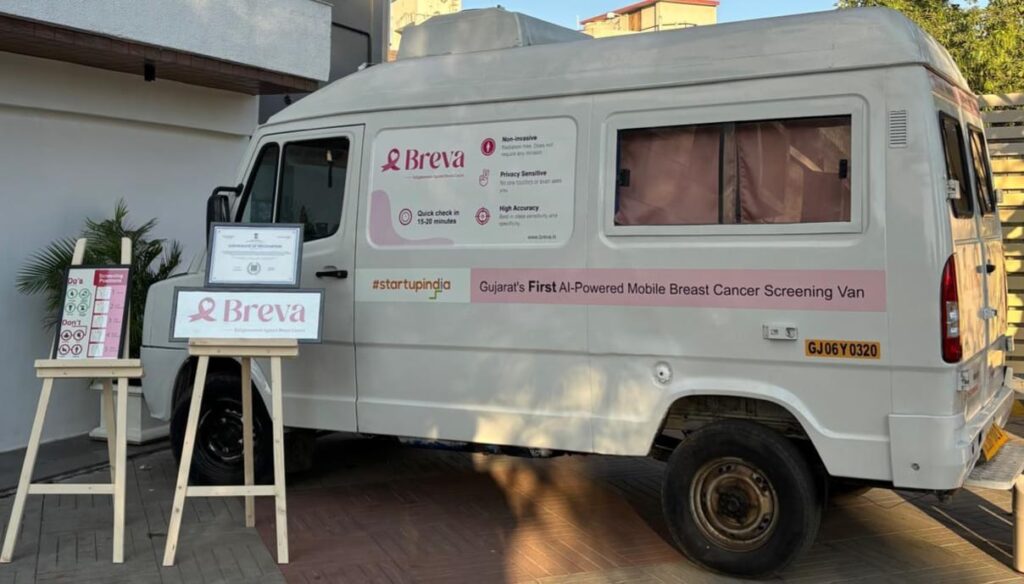
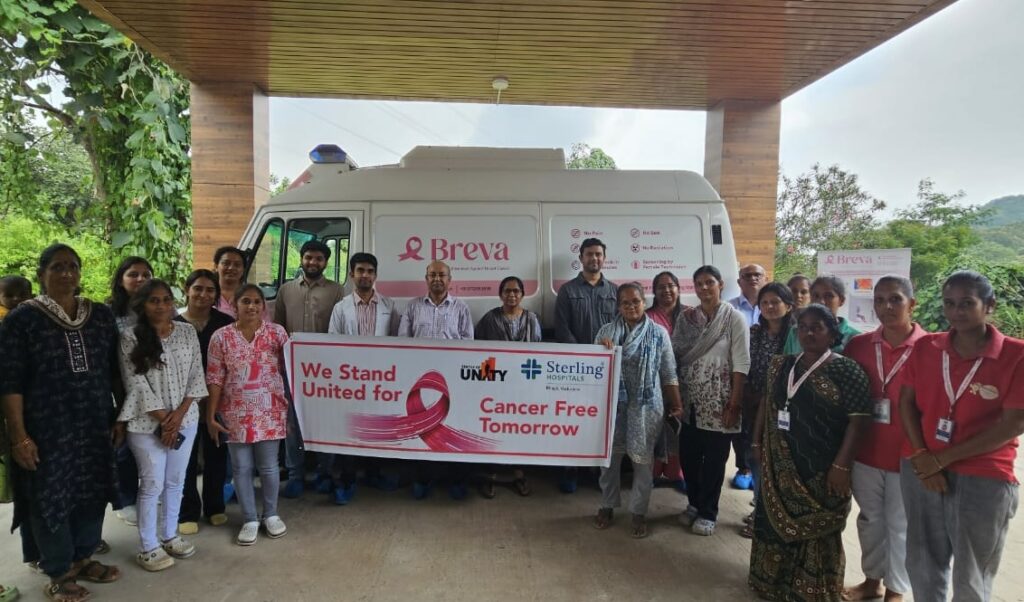
                      Breva is India’s first privacy-first, portable, AI-powered breast screening solution, delivered through a mobile van that goes to the women, not the other way around. It reaches tribal belts, college campuses, factories, offices, even forest department staff quarters ensuring that no woman is left behind when it comes to early detection.

                      But what truly sets Breva apart isn’t just the mobility it’s the experience inside the van:

                      • No physical touch
                      • No pain
                      • No awkward exposure
                      • No doctor needed at the site
                      • Just 15 minutes per woman


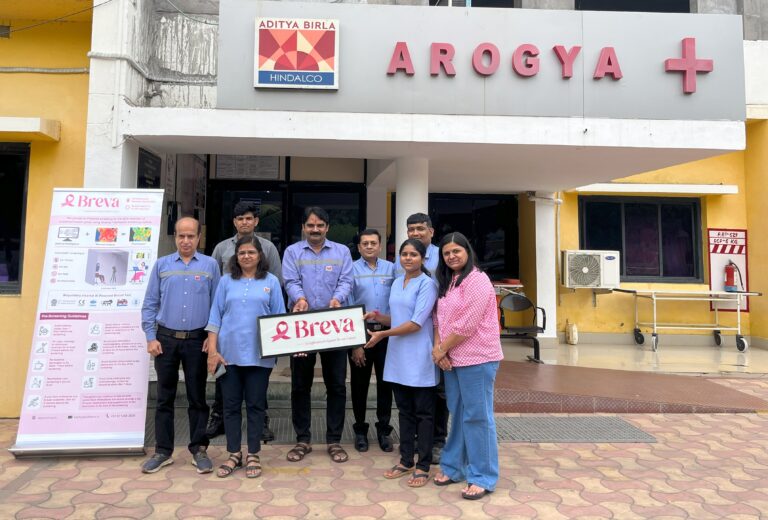
                      Breva uses thermal imaging combined with AI-based analysis, powered by NIRAMAI’s proprietary technology  already trusted by hospitals like Sterling and SSG. Women enter the van alone, are guided by female staff, and the screening is done without any contact. Reports are securely shared later, with clinical interpretation when needed.

                      At every step Breva is powered on-ground by an all-female team. This isn’t just a token feature, it’s a powerful reason why women, especially in rural or conservative areas, feel safe and willing to step forward for screening. No embarrassment. No judgment. No pressure.

                      The Experience, In 3 Words: Private. Painless. Portable. This is not just a slogan. It’s what 15,000+ women across Gujarat and beyond have already experienced and it’s why Breva is turning awareness into action.

                      Impact: From Idea to Access – One Camp, One Woman at a Time

                      In just over a year, Breva has gone from a seed of an idea to a high-impact movement creating real-world change in the space of breast cancer awareness and screening. What started as a response to a personal tragedy has now become a scalable healthcare solution with measurable results.

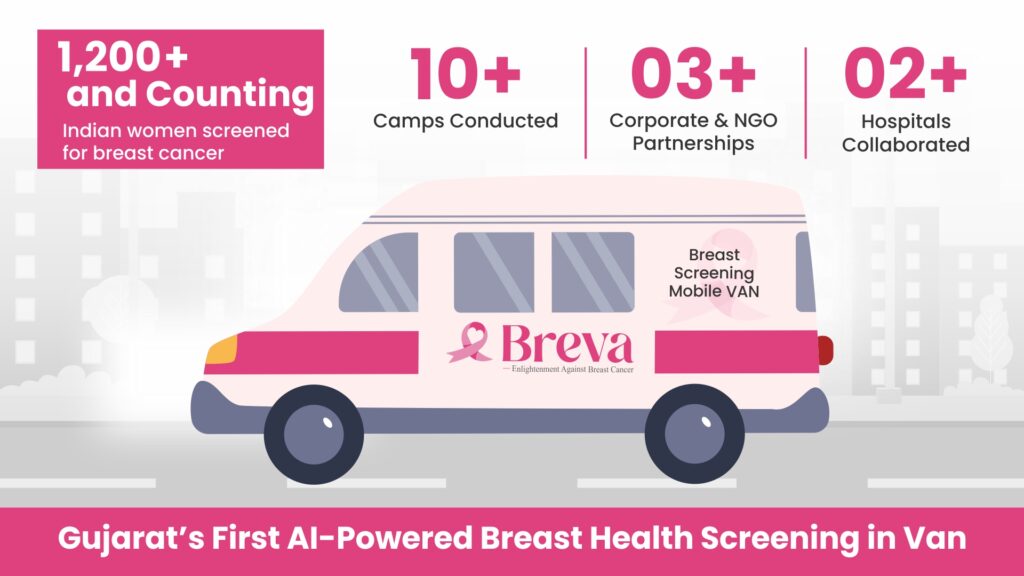
                      • 15,000+ women screened across India
                      • 10+ screening camps conducted in diverse environments, from tribal interiors and urban slums to government institutions, corporate townships, and zoological parks
                      • Powered by an all-women team, ensuring trust, comfort, and cultural sensitivity
                      • First-time screening for a large majority of participants, who had never accessed breast screening services before
                      • Partnerships with leading medical institutions like Sterling Hospital and SSG Hospital Vadodara for clinical alignment and post-screening support

                      But these numbers only tell half the story.

                      At every camp, women walk in hesitant and walk out empowered. One participant shared how she felt relieved that “nobody touches and nobody sees you” describing the process inside Breva’s AI-powered mobile van as “safe, private, and judgment-free.” Another said this was the first time in her life she felt she had control over her breast health.

                      Most participants shared that they would never have gone to a hospital or clinic for this. Whether due to distance, fear, hesitation, or lack of awareness screening was not even a consideration until Breva brought it to their doorstep.

                      This consistent feedback reveals an urgent truth:
                      Lack of access, not awareness, is the bigger barrier.
                      And Breva is changing that: one van, one village, one life at a time.

                      More than a campaign, Breva is a solution on wheels with the power to reach, screen, and empower women before it’s too late.

                      Breva Facebook event cover photo is 1920 x 1080 pixels

                      How HMS Consultants Came Into the Picture

                      While Breva was founded with an extraordinary vision, scaling that vision requires more than passion. It needs strategy, structure, and a brand story that resonates across the nation. That’s where HMS Consultants stepped in.

                      At HMS, we don’t just guide healthcare brands we champion causes that have the power to reshape the landscape of preventive care in India. From the very beginning, we saw in Breva a rare combination of purpose, potential, and proof. A 100% women-led, tech-driven solution that wasn’t just talking about change, it was delivering it, screening after screening, camp after camp.

                      From early brand-building and trust-building collaterals to strategic planning for October’s Breast Cancer Awareness Month, our goal has always been simple, make sure the right institutions hear about Breva, believe in it, and come forward to support it.

                      At HMS, we believe this solution deserves national visibility, and we’re committed to helping Breva reach there.

                      IMG 1604 1

                      This October, Be the Reason Someone Gets Screened Early

                      Every October, social media feeds turn pink. Awareness walks are organized. Posters go up. But how many women actually get screened?

                      This Breast Cancer Awareness Month, let’s move from talking to doing.

                      If you’re part of a corporate, educational institution, bank, community organization, or NGO you can bring breast screening directly to the women who need it most. Whether it’s your employees, your students, your community members, or the women in the villages you serve. This October, give them not just awareness, but access.

                      Partner with Breva. Bring our private, painless, proven screening van to your campus, office, or outreach zone. Help the women around you take a simple step that could change or even save their lives.

                      IMG 8828

                      A few hours. A quiet parking spot. A life-saving opportunity.

                      We invite institutions, CSR leaders, women’s cell coordinators, HR managers, program directors, and NGO teams to come forward. Let’s join hands to create an October that’s truly impactful.

                      To book a screening or collaborate: 

                      Write to us at kashyap@breva.in or Call +91 9712683838 or visit our website: breva.in 

                      Doctors Digital Marketing I Healthcare Marketing I Hospital Marketing Strategies I Marketing ideas for clinics I Marketing Trends 2025 I Medical Marketing I Social Media Marketing

                      is something we strongly believe in, which means ‘Knowledge without application is the same as having no knowledge at all

                      Akhil Dave

                      Principle Consultant

                      Ready to take your Personal Brand to the next level?

                      Share your details below and we will connect with you to discuss your growth strategy.