Search results for: “digital”

  • Marketing Strategy of Hospital: The Gap Between Planning and Execution

    Marketing Strategy of Hospital: The Gap Between Planning and Execution

    Marketing Strategy of Hospital: The Gap Between Planning and Execution

    Written by
    Published on
    Share This

    A well-defined marketing strategy of hospital is something almost every healthcare organisation claims to have. Documents are prepared, budgets are allocated, agencies are onboarded, and campaigns are launched. On paper, everything appears structured.

    Yet, the outcome often tells a different story.

    Patient footfall does not increase as expected. Enquiries do not convert. Digital presence improves, but trust does not. Over time, the strategy is questioned not because it was wrong, but because it did not translate into results.

    The real issue lies not in planning, but in execution.
    It is something customers interpret.

    The Illusion of Having a Strategy

    Most hospitals approach marketing strategy as a planning exercise. It begins with identifying target audiences, defining services, and selecting channels such as social media, Google Ads, or local outreach.

    At this stage, everything seems aligned. The hospital believes it knows:

    • What it offers
    • Who it is targeting
    • How it will communicate

    However, what is often missing is a deeper question:

    Can this strategy actually be executed in the current system?

    A strategy is not just what is written.
    It is what the hospital is capable of consistently delivering.

    Where Execution Begins to Break Down

    The gap between planning and execution rarely appears immediately. It surfaces gradually, across multiple touchpoints.

    A campaign may generate enquiries, but calls go unanswered.
    A patient may visit the website, but cannot find clear information.
    A consultation may happen, but follow-up is inconsistent.

    Individually, these seem like operational issues.
    Collectively, they define whether the marketing strategy of hospital works or fails.

    Execution is not a single action. It is the alignment of multiple small systems that shape patient experience.

    Strategy Is Built at the Top. Execution Happens at the Edges

    One of the most common disconnects in hospital marketing is where strategy is created and where it is experienced.

    Strategy is often designed at the leadership level, sometimes with external inputs. Execution, however, depends on front-desk staff, call handlers, coordinators, and internal processes.

    This creates a structural gap.

    The strategy may emphasise patient experience, but if the first interaction feels rushed or unclear, the perception changes instantly. A hospital may invest in visibility, but if response time is slow, the effort does not convert.

    This is why execution is not about activity. It is about consistency across every patient interaction.

    Why More Marketing Does Not Solve the Problem

    When results do not meet expectations, the natural response is to increase marketing efforts. More campaigns are launched. Budgets are increased. New platforms are explored.

    But this rarely fixes the issue.

    Because the problem is not always visibility.
    It is often conversion and experience.

    If the underlying system cannot handle enquiries efficiently, more visibility only increases the gap. Patients who might have converted instead move to another option, often without any feedback.

    This is where many hospitals misinterpret performance.
    They measure activity instead of outcomes.

    The Role of Clarity in Execution

    In 2026, patient behaviour has become more structured. People search, compare, and decide before visiting. This means that a hospital’s marketing strategy of hospital is experienced digitally first.

    Patients expect clarity at every stage:

    • What the hospital offers
    • What the process looks like
    • What they can expect next

    If this clarity is missing, hesitation increases.

    Execution, therefore, is not just operational efficiency.
    It is the ability to make every step understandable.

    Hospitals that simplify communication often see better outcomes, even without increasing marketing spend.

    Where Modern Strategy Is Evolving: The Role of AI, AEO and GEO

    One of the significant shifts in recent years is how technology is helping reduce the gap between planning and execution.

    Artificial intelligence is no longer limited to analytics. It is being used to understand patient behaviour, track interactions, and identify drop-off points in the journey. This allows hospitals to move from assumption-based strategy to insight-driven execution.

    At the same time, AEO (Answer Engine Optimization) is changing how hospitals appear in search. Patients are no longer just clicking on links they are getting direct answers. Hospitals that structure their content clearly are more likely to be seen as reliable sources.

    Similarly, GEO (Geographic Optimization) ensures that hospitals are visible in local decision-making moments. A patient searching for care in a specific city expects relevant, location-based results. If a hospital is not optimised for this, it may not even enter the consideration set.

    These are not separate marketing tactics.
    They are tools that strengthen execution.

    They help ensure that what is planned is actually experienced by the patient in the intended way.

    The Real Gap: Alignment, Not Effort

    When we look closely, the gap between planning and execution is not caused by lack of effort. It is caused by lack of alignment.

    The strategy may say one thing, but the system delivers another. Communication may promise clarity, but the process creates confusion. Visibility may increase, but experience does not support it.

    Patients do not evaluate these elements separately.
    They experience them together.

    A single inconsistency can outweigh multiple positive signals.

    What Hospitals Need to Rethink

    Improving execution does not always require a new strategy. It often requires re-evaluating how the existing strategy is implemented.

    Hospitals need to ask:

    • Are enquiries being handled consistently?
    • Is information easy to access and understand?
    • Are internal teams aligned with the strategy?
    • Is the patient journey clearly defined?

    These questions are simple, but their impact is significant.

    Because in most cases, the difference between a working and a failing strategy is not the idea it is the execution behind it.

    Conclusion

    The marketing strategy of hospital is not defined by documents, campaigns, or platforms. It is defined by what patients actually experience.

    In 2026, patients are making decisions earlier, faster, and with more information. They are not waiting to be convinced. They are evaluating signals clarity, responsiveness, consistency, and trust.

    Hospitals that focus only on planning will continue to see gaps in results.
    Hospitals that focus on execution will begin to see alignment.

    Because ultimately, a strategy does not fail when it is wrong.
    It fails when it is not lived through every interaction.

    Contact Us HMS Consultants

    A marketing strategy of hospital is a structured plan to attract, engage, and convert patients through clear communication, efficient systems, and consistent patient experience across all touchpoints.

    Hospital Marketing Strategy I Healthcare Marketing

    is something we strongly believe in, which means ‘Knowledge without application is the same as having no knowledge at all

    Akhil Dave

    Principle Consultant

    Ready to take your Personal Brand to the next level?

    Share your details below and we will connect with you to discuss your growth strategy.

    • 7 Ps of Marketing in 2026: What Customers Actually Experience

      7 Ps of Marketing in 2026: What Customers Actually Experience

      7 Ps of Marketing in 2026: What Customers Actually Experience

      Written by
      Published on
      Share This

      The 7 Ps of Marketing Product, Price, Place, Promotion, People, Process, and Physical Evidence have been used for decades to design marketing strategies. The framework itself hasn’t changed. What has changed is how people experience it.

      In 2026, customers do not interact with these elements separately. They don’t think, “This hospital has good promotion but weak process.” They experience everything at once, in a single, continuous decision.

      This shift is subtle but important.

      Marketing is no longer something businesses do.
      It is something customers interpret.

      And that is where the 7 Ps of Marketing need to be understood differently.

      The Framework Has Not Changed. The Visibility Has.

      The 7 Ps were originally created to help businesses structure their strategy internally. Over time, they became especially relevant for service industries because services are intangible and depend heavily on experience.

      In 2026, this framework has moved outside the organisation.

      Every P is now:

      • visible online
      • compared instantly
      • validated through reviews
      • interpreted without explanation

      Customers don’t wait for your brochure.
      They build perception before you even know they exist.

      Product Is No Longer What You Offer. It Is What Gets Understood First

      Most businesses still define their product internally:
      “We offer this service, this specialty, this treatment.”

      But customers don’t evaluate offerings.
      They evaluate understanding.

      If someone cannot quickly understand:

      • what you do
      • who it is for
      • what outcome to expect

      they move on.

      Search engines, AI summaries, and content platforms now prioritise clarity. The businesses that win are not those with the best product alone, but those whose product is easiest to understand.

      So the real shift is:
      The product hasn’t changed.
      The threshold for understanding it has.

      Price Is Now About Predictability, Not Positioning

      Pricing used to be a strategic positioning decision premium, affordable, or competitive.

      In 2026, pricing is evaluated as a confidence signal.

      Customers ask:

      • Will this cost suddenly increase?
      • Are there hidden charges?
      • Is this transparent enough to trust?

      The 7 Ps framework always included price as a core element influencing decision-making.
      But today, its role has expanded beyond cost.

      A clear price reduces hesitation.
      An unclear price delays decisions.

      And in most cases, delayed decisions mean lost customers.

      Place Is No Longer Location. It Is Presence at the Moment of Search

      A business can exist physically but still be absent digitally.

      And in 2026, absence at the moment of search means exclusion from decision-making.

      Customers discover options through:

      • Google
      • maps
      • AI-generated answers
      • voice search

      This is why “place” is no longer geography.
      It is discoverability.

      If you are not present when the question is asked,
      you are not part of the answer.

      Promotion Has Shifted from Messaging to Meaning

      Promotion used to be about visibility ads, campaigns, creatives.

      Now it is about interpretation.

      Customers don’t consume ads the way they used to.
      They scan, compare, and validate.

      They trust:

      • explanations over slogans
      • clarity over creativity
      • structure over noise

      The purpose of promotion is no longer to convince.
      It is to reduce confusion.

      This is why content, FAQs, and structured information now outperform traditional campaigns in many industries.

      People Are No Longer Internal. They Are Public

      In the traditional 7 Ps, “People” referred to employees staff, teams, service providers.

      In 2026, people include:

      • reviewers
      • past customers
      • public feedback
      • shared experiences

      Customer experience is no longer private.
      It is documented, searchable, and visible.

      A single interaction can influence hundreds of future decisions.

      Which means:
      People are no longer part of delivery.
      They are part of marketing itself.

      Process Is No Longer Efficiency. It Is Friction

      Businesses evaluate process based on efficiency.

      Customers evaluate process based on effort.

      They notice:

      • how easy it is to enquire
      • how quickly they get a response
      • how clearly they are guided

      They don’t see your system.
      They feel its friction.

      And friction is where most decisions drop.

      The 7 Ps framework has always emphasised process as a key component of service delivery.
      In 2026, it has become one of the strongest differentiators.

      Physical Evidence Is No Longer Physical

      Physical evidence once meant infrastructure, environment, and tangible cues.

      Today, it includes:

      • website
      • reviews
      • digital presence
      • visual perception

      Customers form opinions before visiting.

      They don’t walk in to evaluate.
      They evaluate before walking in.

      This is why perception now starts online, not offline.

      The Real Shift: The 7 Ps Now Work as One System

      Earlier, businesses could optimise each P separately.

      Today, everything is connected.

      A weak process affects reviews.
      Reviews affect perception.
      Perception affects price acceptance.
      Price affects conversion.

      The 7 Ps are no longer independent variables.
      They are interdependent signals.

      Conclusion

      The 7 Ps of Marketing are still relevant in 2026, not because they define strategy, but because they define how customers experience it.

      The framework has not evolved.
      Customer behaviour has.

      Businesses that still treat the 7 Ps as internal checklists will struggle to stay consistent.
      Those that treat them as a customer decision system will grow naturally.

      Because today, marketing does not begin when you communicate.
      It begins when someone tries to understand you.

      Contact Us HMS Consultants

      The 7 Ps of marketing are Product, Price, Place, Promotion, People, Process, and Physical Evidence. These elements form a complete framework used to design and evaluate marketing strategies across industries, including healthcare.

      Hospital Marketing Strategy I Healthcare Marketing

      is something we strongly believe in, which means ‘Knowledge without application is the same as having no knowledge at all

      Akhil Dave

      Principle Consultant

      Ready to take your Personal Brand to the next level?

      Share your details below and we will connect with you to discuss your growth strategy.

      • Why Hospital Marketing Budgets Don’t Fix Growth

        Why Hospital Marketing Budgets Don’t Fix Growth

        Why Hospital Marketing Budgets Don’t Fix Growth

        Written by
        Published on
        Share This

        Hospital marketing budget discussions usually begin with a familiar assumption: if growth slows, spending must increase. More ads, more platforms, more agencies. Budget becomes the default solution. Yet many hospitals see a different reality. Visibility increases. Campaign activity expands. But patient flow remains inconsistent.

        The issue is rarely the size of the hospital marketing budget. It is how that budget is being used to compensate for deeper gaps in strategy, communication, and patient experience.

        Why Hospital Marketing Budgets Expand When Clarity Shrinks

        Hospitals often increase their marketing budget during periods of uncertainty. Enquiries fluctuate, conversions feel unstable, and leadership looks for control through scale.

        However, budget expansion often masks unclear positioning, weak sequencing, or gaps in patient communication. Instead of improving outcomes, marketing spend begins to reassure internal teams rather than guide patient decisions.

        This creates a dangerous pattern. As clarity decreases, spending increases. And as spending increases without clarity, inefficiencies multiply.

        A hospital marketing budget grows fastest when strategic clarity is lowest.

        The False Comfort of More Spend

        Increasing the hospital marketing budget creates visible activity. Campaigns increase. Dashboards look stronger. Teams feel productive.

        But visibility is not the same as effectiveness.

        If patients remain uncertain, additional spend amplifies confusion rather than resolving it. Enquiries may increase, but confidence does not. This leads to higher lead volumes but unstable conversions.

        Money increases noise. It does not automatically build trust.

        Hospitals often mistake activity for progress. In reality, progress comes from improving how patients understand and evaluate the hospital, not from increasing how often they see it.

        Where Budget Efficiency Breaks: Marketing vs Operations

        A hospital marketing budget is often planned without considering operational readiness.

        Marketing generates interest, but systems such as OPD flow, front desk communication, appointment handling, and follow-ups may not be prepared to convert that interest.

        This creates leakage:

        • Patients drop off after first contact
        • Follow-ups increase without closure
        • Conversion stability declines

        The problem is not marketing effort. It is experience mismatch.

        When patient experience does not align with marketing promises, trust weakens. And when trust weakens, no amount of additional spend can compensate for it.

        Budget Size vs Budget Intelligence

        A larger hospital marketing budget does not guarantee better results.

        A smaller, well-structured budget focused on patient decision points often performs better than a larger, unfocused one.

        Effective budgets:

        • Invest in moments of patient hesitation
        • Prioritize clarity over channel expansion
        • Reduce duplication instead of increasing presence
        • Focus on conversion stability rather than visibility

        Budget size is visible. Budget intelligence is decisive.

        Hospitals that understand this shift move from spending more to spending better.

        Why Leadership Often Misreads Budget Performance

        Hospital leadership often evaluates marketing budgets through short-term metrics such as:

        • Cost per lead
        • Monthly conversions
        • Immediate ROI

        These metrics reward urgency-driven tactics and overlook long-term trust building.

        This leads to:

        • Short-term gains
        • Long-term instability
        • Reduced patient confidence

        When teams are pressured to deliver quick results, they prioritise tactics that generate immediate activity rather than strategies that build sustained trust.

        Sustainable growth requires patience, not pressure.
        A hospital marketing budget performs best when leadership values consistency over urgency.

        How to Plan a Smarter Hospital Marketing Budget

        A hospital marketing budget should be planned based on patient hesitation, not channels.

        Instead of asking where to spend, hospitals should ask:

        • Where do patients delay decisions?
        • What information is missing?
        • What creates confusion or doubt?

        Budgets aligned with these questions:

        • Reduce unnecessary spend
        • Improve predictability of outcomes
        • Increase conversion quality
        • Strengthen patient confidence

        Marketing should guide decisions, not compensate for confusion.

        When clarity improves, the need for excessive spending reduces naturally.

        Conclusion

        Hospitals do not struggle because their marketing budgets are too small.
        They struggle because budgets are used to solve problems they were never meant to fix.

        A hospital marketing budget performs best when it:

        • Supports patient clarity
        • Aligns with real experience
        • Reduces hesitation

        Growth in healthcare does not respond to louder spending.
        It responds to better alignment between communication, experience, and trust.

        Hospitals that understand this stop increasing budgets reactively and start improving systems proactively.
        And when that happens, growth becomes calmer, more predictable, and more sustainable.

        Contact Us HMS Consultants

        A hospital marketing budget is the planned allocation of resources used to support patient awareness, trust-building, and decision-making. It includes spending on communication, digital presence, and patient engagement, but should primarily focus on improving clarity and patient experience rather than just increasing promotional activity.

        Doctors Digital Marketing I Healthcare Marketing I Hospital Marketing Strategies I Marketing ideas for clinics I Marketing Trends 2025 I Medical Marketing I Social Media Marketing

        is something we strongly believe in, which means ‘Knowledge without application is the same as having no knowledge at all

        Akhil Dave

        Principle Consultant

        Ready to take your Personal Brand to the next level?

        Share your details below and we will connect with you to discuss your growth strategy.

        • Why a Hospital Marketing Consultant Is Brought In Too Late and What That Delay Actually Costs

          Why a Hospital Marketing Consultant Is Brought In Too Late and What That Delay Actually Costs

          Why a Hospital Marketing Consultant Is Brought In Too Late and What That Delay Actually Costs

          Written by
          Published on
          Share This

          A hospital marketing consultant is usually engaged when frustration peaks and hospital growth and patient footfall are not meeting expectations. Marketing feels expensive. Growth feels inconsistent. Teams feel busy but unsure. Leadership senses something is wrong, yet no single campaign or channel explains the problem.

          By the time a marketing consultant is called in, the hospital has often spent months, sometimes years, compensating for structural gaps with more activity. This delay is not just costly in budget terms. It quietly erodes trust, efficiency, and strategic clarity.

          Why Hospitals Delay Calling a Marketing Consultant

          Hospitals often believe marketing problems can be solved internally, or by working with an outsourced social media or advertising agency for better execution. New hires are made. Agencies are changed. Tools are added. Reporting becomes more detailed.

          These steps feel proactive, but they avoid a harder question: Is the problem execution, or is it alignment?

          A hospital marketing consultant is usually delayed because leadership hopes that effort will fix clarity. In healthcare, effort without alignment amplifies confusion.

          What a Hospital Marketing Consultant Looks for First

          Contrary to expectation, a hospital marketing consultant does not begin with campaigns or platforms. They look for decision friction. Where do patients hesitate? Where do teams compensate manually? Where does communication repeat itself unnecessarily? What is working and what is not working? Which source brings more patients to the existing practice? What exactly is our target audience? 

          These patterns reveal misalignment between marketing promises, patient expectations, and operational reality. Once identified, many “marketing problems” disappear without adding activity.

          Consulting starts with audit & diagnosis, not delivery.

          The Hidden Cost of Waiting Too Long

          Delaying consulting support creates invisible costs. Marketing teams burn out. Patient conversations become repetitive. Conversion rates fluctuate unpredictably. Leadership loses confidence in marketing as a function.

          These costs rarely appear in financial statements. They appear in decision fatigue, reactive planning, and constant optimisation cycles.

          A hospital marketing consultant reduces these costs by restoring coherence early.

          Why Agencies Cannot Replace Consultants

          Agencies execute within a brief. Consultants question the brief itself. When hospitals rely solely on agencies, execution improves but misalignment remains.

          A hospital marketing consultant works upstream of execution. They redefine priorities, sequencing, and success criteria so agencies can perform effectively.

          Without this layer, hospitals often rotate agencies without fixing the root issue.

          How Marketing Consultants Change the Nature of Marketing Conversations

          Once a consultant is involved, conversations shift. Instead of asking “what should we run next,” teams ask “what is blocking patient confidence.” Metrics are discussed in context. Funnels are evaluated behaviourally, not mechanically.

          This shift reduces noise and increases focus. Marketing becomes calmer, not louder.

          That calm is a sign of strategic health.

          The Long-Term Impact of Early Consulting

          Hospitals that engage a marketing consultant early experience fewer resets. Growth becomes steadier. Marketing spend becomes more predictable. Teams spend more time improving experience and less time firefighting performance issues.

          Most importantly, leadership gains a clearer lens to evaluate marketing decisions without relying solely on dashboards.

          Clarity compounds faster than campaigns.

          A Hospital Marketing Consultant Is Most Valuable Before Things Feel Broken

          Hospitals do not need consultants because marketing fails. They need consultants because marketing works harder than it should.

          A hospital marketing consultant identifies friction before it becomes frustration. They align decisions before effort escalates. They help hospitals stop compensating and start structuring growth.

          In healthcare, the costliest delay is not slow marketing.
          It is waiting too long to fix what quietly blocks trust.

          Hospitals that understand this bring consultants in early and grow with far less noise.

          Contact Us HMS Consultants

          A hospital marketing consultant is a strategic advisor who diagnoses alignment gaps between marketing, patient behaviour, and hospital operations. Unlike agencies, consultants focus on fixing structural issues that prevent marketing from delivering stable, long-term growth.

          Doctors Digital Marketing I Healthcare Marketing I Hospital Marketing Strategies I Marketing ideas for clinics I Marketing Trends 2025 I Medical Marketing I Social Media Marketing

          is something we strongly believe in, which means ‘Knowledge without application is the same as having no knowledge at all

          Akhil Dave

          Principle Consultant

          Ready to take your Personal Brand to the next level?

          Share your details below and we will connect with you to discuss your growth strategy.

          • Public Relations in a Hospital: What It Actually Does and Why Most Hospitals Underestimate It

            Public Relations in a Hospital: What It Actually Does and Why Most Hospitals Underestimate It

            Public Relations in a Hospital: What It Actually Does and Why Most Hospitals Underestimate It

            Written by
            Published on
            Share This

            Public relations in a hospital is not only about press releases, media handling, or public announcements. It is the way a hospital communicates with patients, families, staff, media, and the community to build credibility, manage reputation, and respond responsibly during sensitive situations.

            In India’s rapidly evolving healthcare landscape, where patients make decisions based on trust and reputation long before they step into an OPD, effective public relations in a hospital is not a communications luxury. It is a clinical-trust infrastructure.

            What public relations in a hospital covers at a glance:

            •       Patient and community communication before, during, and after care
            •       Media relations, press coverage, and crisis communication
            •       Internal staff communications that shape patient-facing behaviour
            •       Reputation management across digital and offline touchpoints
            •       Community outreach, health awareness programmes, and public trust building
            •       Liaison with government bodies, accreditation agencies, and health media

            What Is Public Relations in a Hospital?

            Public relations in a hospital is the strategic management of how a hospital communicates with every group it depends on  patients, families, staff, media, the local community, government bodies, and referring doctors. It shapes perception, builds credibility, and protects institutional reputation when challenges arise.

            Unlike advertising, which pays for placement and controls the message entirely, hospital PR earns trust through consistency, transparency, and genuine community presence. It is the difference between a hospital patients choose because they saw an ad and a hospital patients trust because they have heard and felt its reputation.

            “Advertising tells people what a hospital wants them to believe. Public relations is what people believe when the hospital is not saying anything.”

            Why Hospital PR Should Not Be Only Reactive

            Hospitals often notice PR only when there is a complaint, negative review, media issue, or public concern. But public relations in a hospital should not begin only after something goes wrong.

            A strong hospital PR approach works before problems become public. It helps hospitals create clear systems for patient communication, staff responses, review handling, media queries, public clarification, and crisis readiness.

            When PR is treated only as a reaction, hospitals may respond late or inconsistently. But when PR is planned, the hospital can communicate more clearly, reduce confusion, and protect its reputation before issues become larger.

            Why Public Relations in a Hospital Is Different From Advertising

            Hospitals often conflate PR with advertising, or treat both as interchangeable parts of marketing. They are fundamentally different tools with very different effects on patient decision-making.

            Advertising vs. PR in a hospital:

            •       Advertising: paid, controlled, immediate but short-lived in trust impact
            •       PR: earned, credible, slower to build but far more durable
            •       Advertising builds awareness. PR builds trust.
            •       Advertising reaches new patients. PR retains existing ones and generates referrals.
            •       Advertising can be ignored. Trusted PR shapes behaviour before any contact with the hospital.

            For Indian hospitals, word-of-mouth and community reputation remain the most powerful patient acquisition channels. Public relations in a hospital directly feeds these channels advertising cannot replicate this effect regardless of budget.

            The 6 Core Functions of Public Relations in a Hospital

            1. Patient and community communication

            Effective hospital PR ensures patients are never left in an information vacuum. Clear, consistent, and compassionate communication before, during, and after treatment reduces anxiety, builds confidence, and increases follow-through on care plans. When patients feel informed, they feel respected  and they talk about it.

            2. Media relations and press coverage

            Hospitals that manage media relationships proactively control their narrative far better than those who only engage during crises. Sharing clinical milestones, health campaigns, and community health data with journalists builds goodwill that pays dividends when difficult stories arise.

            3. Crisis communication

            Every hospital will face a crisis a medical error, a public complaint, a staff incident, or a regulatory issue. Public relations in a hospital determines whether these moments damage trust permanently or are managed with transparency. Hospitals without a crisis communication protocol are always caught unprepared.

            “A crisis does not create a hospital’s PR problem. It reveals whether the hospital had a PR strategy at all.”

            4. Internal communications

            PR is not only external. How leadership communicates with doctors, nurses, and staff directly shapes the culture patients experience. Hospitals with strong internal communication have staff who visibly embody institutional values and patients notice.

            5. Community outreach and health awareness

            Health camps, awareness drives, school visits, and community initiatives are structured PR investments. They build visibility in communities the hospital serves, establish clinical authority, and create trust long before a patient needs to book an appointment.

            6. Digital reputation management

            Online reviews, Google ratings, and social media presence are now primary inputs in patient decision-making across India. Managing these consistently is a core function of modern public relations in a hospital not a task to be delegated casually.

            How Hospital PR Affects Patient Trust Before the First Visit

            Most hospital administrators think of patient trust as something built during or after care. In reality, a patient’s trust is largely formed before they arrive  shaped by what they have read, heard, and been told by others in their community.

            Public relations in a hospital manages this pre-visit trust systematically. A hospital that is spoken of respectfully in the community, has transparent online communication, and is visibly present in local health initiatives is one patients approach with confidence rather than apprehension.

            This pre-visit confidence shortens time from awareness to booking, reduces OPD drop-off, and improves consultation quality  because patients arrive prepared rather than anxious.

            Crisis Communication: The Part of Hospital PR Most Hospitals Ignore Until It Is Too Late

            No hospital wants to think about crisis communication until it needs it. This is one of the most expensive mistakes in hospital management. A well-prepared PR function includes a documented crisis protocol, a designated spokesperson, clear escalation paths, and a media response framework.

            When a crisis arises and in any hospital of meaningful size, it will the first 24 to 48 hours are decisive. Hospitals that respond with transparency limit damage significantly. Hospitals that go silent or issue contradictory statements find the communication failure becomes larger than the original incident.

            Principles of effective hospital crisis communication:

            1.     Respond early with facts, even if incomplete. Silence is interpreted as guilt.
            2.     Designate a single spokesperson. Contradictory voices amplify damage.
            3.     Acknowledge impact on patients and families before defending the institution.
            4.     Communicate internally before news breaks externally.
            5.     Follow up consistently one statement is never enough in a fast-moving situation.

            Public Relations in a Hospital vs. Marketing: How They Work Together

            Hospital PR and hospital marketing are not the same function, but they must work together to be effective. Marketing drives awareness and patient acquisition. PR builds the credibility and trust that makes marketing believable.

            A hospital that spends heavily on marketing without a functioning PR foundation is building on unstable ground. When hospital PR and marketing are aligned when every campaign builds on a credible, community-trusted reputation both functions perform significantly better. Conversion improves. Referrals increase without incentives.

            Why Public Relations in a Hospital Is Especially Important in India

            India’s healthcare environment has specific characteristics that make hospital PR particularly high-stakes. Patient literacy varies enormously across demographics. Medical decision-making is deeply family-influenced. Trust in institutional healthcare coexists with significant scepticism about commercial motives. And social media has given patient voices unprecedented reach.

            A single patient’s negative experience shared on WhatsApp or Google Maps can reach thousands of prospective patients within hours. At the same time, a hospital that is genuinely trusted in its community with visible, consistent, and honest relationships with the people it serves has a resilience that advertising alone cannot create.

            How to Build a Hospital PR Strategy: Where to Start

            Building an effective hospital PR function does not require a large department or significant budget at the outset. It requires clarity, consistency, and commitment from hospital leadership.

            Hospital PR Readiness Checklist

            A hospital can begin improving PR by checking whether basic communication systems are already in place.

            1. Is one person responsible for hospital communication?
            2. Are patient complaints acknowledged on time?
            3. Does the front desk know how to communicate delays?
            4. Are review responses handled professionally?
            5. Is there a basic crisis response protocol?
            6. Are media queries handled by one authorised person?
            7. Are doctors and staff informed before public communication?
            8. Are community activities documented and communicated clearly?

            Conclusion: Public Relations in a Hospital Is Not a Department. It Is a Culture.

            The most effective hospital PR is not produced by a communications team in isolation. It is the natural output of a hospital where patients are genuinely respected, staff are well-informed, and leadership communicates with honesty and consistency.

            Public relations in a hospital builds the trust that makes everything else in healthcare marketing work better. It reduces patient acquisition cost, increases campaign durability, and creates the community standing that no advertising budget can buy.

            In India’s healthcare market where trust is the primary currency and reputation travels faster than any campaign hospitals that invest in PR as a strategic function rather than a reactive one will find that growth becomes steadier, quieter, and far more sustainable.

            Looking to work with a hospital marketing expert? Explore HMS Consultants’ healthcare marketing services 

            Contact Us HMS Consultants

            The role of PR in a hospital is to manage clear communication between the hospital, patients, families, staff, media, and the public. It helps protect reputation, respond during sensitive situations, handle public concerns, support patient trust, and keep hospital communication responsible and consistent.

            Doctors Digital Marketing I Healthcare Marketing I Hospital Marketing Strategies I Marketing ideas for clinics I Marketing Trends 2025 I Medical Marketing I Social Media Marketing

            is something we strongly believe in, which means ‘Knowledge without application is the same as having no knowledge at all

            Akhil Dave

            Principle Consultant

            Ready to take your Personal Brand to the next level?

            Share your details below and we will connect with you to discuss your growth strategy.

            • What a Hospital Marketing Expert Sees in the First 30 Days That Others Miss for Years

              What a Hospital Marketing Expert Sees in the First 30 Days That Others Miss for Years

              What a Hospital Marketing Expert Sees in the First 30 Days That Others Miss for Years

              Written by
              Published on
              Share This

              A hospital marketing expert is often called in when leadership feels something is wrong but cannot clearly articulate what it is. Marketing is active. Visibility exists. Teams are busy. Reports look acceptable. Yet growth feels inconsistent, fragile, and effort-heavy.

              Within the first 30 days, an experienced hospital marketing expert usually sees the problem clearly. Not because of superior tools or data access but because patterns repeat across hospitals, and they rarely sit where hospitals expect them to.

              5 things a hospital marketing expert typically identifies in the first 30 days:

              • Recurring patient questions that indicate unresolved hesitation
              • Misalignment between marketing messaging and actual patient readiness
              • Experience gaps that marketing quietly compensates for
              • Unnecessary friction in the decision-making or booking journey
              • Metrics that measure activity rather than outcomes

              Why Experts Look for Friction, Not Campaigns

              Most hospitals expect a hospital marketing expert to evaluate ads, content, or platforms first. In reality, experts look for friction. Where do patients hesitate? Where does clarity break? Where does effort increase without proportional outcome?

              Campaigns rarely explain growth problems in healthcare. Friction does. A hospital marketing expert understands that performance issues are usually behavioural, not creative. Visibility is seldom the root cause. Unresolved hesitation is.

              “The problem is almost never that patients haven’t heard of the hospital. It’s that something in the experience stops them from acting on what they’ve heard.”

              What Experts Notice Immediately About Patient Behaviour

              Within weeks, patterns emerge. Patients ask the same questions repeatedly. They delay decisions after consultations. They seek reassurance that should have been addressed earlier in the patient journey.

              These behaviours indicate that marketing communication is not aligned with patient readiness a core concept in any sound healthcare marketing strategy. A hospital marketing expert notices this misalignment quickly because it shows up consistently across touchpoints.

              Hospitals often normalise this behaviour. Experts do not. This difference in perspective is what makes early diagnosis possible.

              Why Internal Teams Stop Seeing the Real Problem

              Internal teams adapt to systems over time. Workarounds become routine. Confusion becomes expected. Marketing quietly compensates for experience gaps without anyone deliberately deciding this is acceptable.

              A hospital marketing expert brings distance. They are not emotionally invested in existing processes. This allows them to question what insiders accept as just how things work.

              This external perspective is often uncomfortable and extremely valuable. It is one reason why hospitals that engage a healthcare marketing consultant India-based or otherwise, see faster clarity than those relying solely on internal review.

              The Difference Between What Experts Change and What Hospitals Expect Them to Change

              Hospitals often expect new campaigns, new messaging, or new platforms. Experts focus elsewhere. They change sequencing. They simplify communication. They remove unnecessary steps. They slow down decisions where patients feel rushed.

              These changes rarely look dramatic. But they reduce resistance significantly and in healthcare, reduced resistance directly improves patient acquisition rates.

              A hospital marketing expert optimises systems, not surface activity. This is the distinction between sustainable growth and the exhausting cycle of campaign-dependent results.

              What a hospital marketing expert changes vs. what hospitals expect:

              • Hospitals expect: new ad campaigns, new platforms, new creative
              • Experts focus on: decision sequencing, communication clarity, friction removal
              • Hospitals expect: more volume, more content, more follow-ups
              • Experts focus on: alignment between message and patient readiness

              Why Experts Ask Fewer Questions but Better Ones

              Experienced experts do not ask for endless data. They ask precise questions. Where do patients hesitate most? What do they misunderstand? When do they disengage quietly?

              The answers to these questions reveal more than dashboards ever could. This is why a hospital growth consultant often identifies core issues faster than teams with deeper access and years of context.

              Clarity comes from focus, not volume.

              “The most revealing question is never about numbers. It is: what do patients say just before they decide not to proceed?”

              How Expert Insight Reduces Marketing Pressure

              Once friction points are identified and corrected, marketing effort reduces naturally. Fewer reminders are needed. Follow-ups shorten. Conversion stabilises.

              Hospitals often assume growth requires more effort more campaigns, more spend, more team hours. A hospital marketing expert demonstrates that growth in healthcare often requires less noise and more alignment.

              This is when marketing stops feeling exhausting. And it is when leadership begins to trust data again because the data starts reflecting reality instead of compensating for hidden friction.

              Why Hospitals Delay Calling in Experts

              Many hospitals delay engaging a hospital marketing expert because they believe issues can be solved internally with more effort or new execution. By the time an expert is brought in, inefficiencies have compounded and teams are fatigued.

              Experts are most valuable before frustration peaks. Early clarity prevents expensive resets later. This timing difference often determines the return on consulting and the speed of recovery.

              What Happens After the First 30 Days

              After the first month, the hospital marketing expert’s role shifts. From observation to refinement. From diagnosis to structure. From insight to alignment.

              The hospital begins to see marketing differently not as a set of activities, but as a system influencing patient confidence. Budget decisions change. Measurement changes. The team stops chasing vanity metrics and starts tracking signals of trust.

              This shift is subtle. But it changes how decisions are made long-term.

              Conclusion: A Hospital Marketing Expert Sees What Noise Hides

              Hospitals do not struggle because they lack activity or intent. They struggle because noise hides friction.

              A hospital marketing expert cuts through this noise quickly not by doing more, but by seeing clearly. They notice hesitation patterns, misalignment, and unnecessary complexity that others have learned to ignore.

              In healthcare, growth does not come from louder marketing. It comes from removing what quietly blocks trust.

              Hospitals that understand this stop chasing performance and start building systems that work even when no one is watching.

              Looking to work with a hospital marketing expert? Explore HMS Consultants’ healthcare marketing services 

              Contact Us HMS Consultants

              A hospital marketing expert is a strategic advisor who evaluates how marketing, patient behaviour, and internal systems align. Their role is not to run campaigns, but to identify friction points, clarify decision flow, and improve trust-led growth across the patient journey.

              Doctors Digital Marketing I Healthcare Marketing I Hospital Marketing Strategies I Marketing ideas for clinics I Marketing Trends 2025 I Medical Marketing I Social Media Marketing

              is something we strongly believe in, which means ‘Knowledge without application is the same as having no knowledge at all

              Akhil Dave

              Principle Consultant

              Ready to take your Personal Brand to the next level?

              Share your details below and we will connect with you to discuss your growth strategy.

              • Why “Best Hospital Near Me” Is Decided Before a Patient Visits And What Most Doctors Miss

                Why “Best Hospital Near Me” Is Decided Before a Patient Visits And What Most Doctors Miss

                Why “Best Hospital Near Me” Is Decided Before a Patient Visits And What Most Doctors Miss

                Written by
                Published on
                Share This

                “Best hospital near me.”

                If this search is happening in your city, patients are already choosing. The uncomfortable reality is this: they may be choosing without ever evaluating your clinical outcomes, infrastructure, or experience.

                Most doctors believe patients decide after consultation. Today, that decision often happens before the first phone call.

                This is not a marketing trend. It is a behavioural shift.

                Below, we frame the real questions doctors silently ask the same questions they type into Google and the structured answers HMS provides.

                Why are patients not choosing my hospital?

                This is usually the first concern.

                You may have strong clinical outcomes, advanced equipment, and years of experience. Yet when someone searches “best hospital near me” or “best clinic near me,” your name is not part of the visible shortlist.

                The issue is rarely treatment quality.

                The issue is pre-visit perception.

                Patients do not evaluate medical competence first. They evaluate visibility, familiarity, and reassurance. If your hospital does not consistently appear where patients search, compare, and validate, you are absent from the decision stage.

                At HMS, we do not begin with advertising. We begin with understanding how patients are forming that shortlist and where your hospital is missing in that early decision ecosystem.

                Why are other hospitals always visible?

                Doctors frequently observe competitors appearing repeatedly in searches, map listings, and reviews. The assumption is usually that they are spending aggressively on ads.

                Sustained visibility, however, is rarely accidental and rarely ad-driven alone.

                Hospitals that dominate searches like “best hospital near me” typically have structural clarity. Their positioning is defined. Their communication is aligned. Their patient-facing presence is consistent. Visibility becomes the outcome of coherence.

                HMS does not treat visibility as a tactic. We treat it as a system. Before suggesting any marketing activity, we assess whether the hospital’s internal clarity, patient journey, and communication architecture are aligned enough to support sustainable visibility.

                How do patients choose a doctor today?

                Patients choose through familiarity, not technical comparison.

                • They see repeated names.
                • They read reviews.
                • They observe tone.
                • They evaluate consistency.

                They form impressions long before stepping into OPD.

                When someone types “best hospital near me,” they are seeking emotional assurance more than medical differentiation. They want to feel safe.

                HMS approaches this through decision mapping. We study how patients in your geography search, compare, and validate choices. Instead of pushing promotional tactics, we design clarity into how your hospital is encountered during those moments.

                Why is my OPD inconsistent?

                Inconsistent OPD is often attributed to seasonal variation, competition, or economic factors. While those influence flow, many inconsistencies originate from fragmented visibility and unclear patient positioning.

                If patients encounter mixed signals unclear services, inconsistent communication, weak digital footprint they hesitate.

                HMS addresses this by diagnosing the gap between clinical strength and perceived credibility. We do not start with campaigns. We start with structural diagnosis: what is unclear, what is inconsistent, and what prevents patients from confidently selecting your hospital during their search phase.

                Does marketing mean ads?

                For many doctors, marketing immediately translates to advertising. This assumption creates resistance.

                Marketing, in a healthcare context, should not begin with ads. It should begin with clarity: who you serve, how you are positioned, and how patients experience you before and after consultation.

                HMS stands firmly against random promotional execution. We operate as a strategy consultancy. Our role is to bring clarity to leadership, define patient journey structure, and align internal systems before any outward communication is considered.

                Ads amplify structure. They cannot replace it.

                Is marketing allowed for doctors?

                This question often halts progress entirely.

                Doctors worry about ethical boundaries, reputation damage, and compliance risks. These concerns are valid.

                Ethical healthcare marketing is not about exaggerated claims or promotional gimmicks. It is about transparent communication, structured visibility, and patient education.

                HMS works within regulatory sensitivity. We guide hospitals to build credibility without compromising ethics. Marketing, when structured correctly, strengthens trust rather than weakening professional image.

                Why do reviews matter so much?

                Reviews are not merely feedback. They are decision triggers.

                When a patient searches “best hospital near me,” reviews act as psychological confirmation. Even if treatment outcomes are excellent, a weak or unmanaged review ecosystem creates doubt.

                HMS does not treat reviews as reputation management alone. We examine the entire patient experience architecture that generates those reviews. Sustainable reputation is built internally before it is reflected externally.

                Should I hire a marketing agency?

                This question reflects a deeper concern: loss of control.

                Many doctors fear handing over their voice, brand, and credibility to external execution teams that may not understand clinical nuance.

                HMS does not function as an execution agency. We do not run ads, manage social media posts, or chase short-term visibility spikes. We operate as strategic advisors.

                Our work involves:

                • Diagnosing growth bottlenecks
                • Structuring patient journey systems
                • Aligning leadership and internal workflows
                • Designing long-term growth clarity

                Execution, if required, can be handled by your internal team or external partners. Strategy must precede it.

                What should I fix before starting marketing?

                Before any marketing journey, hospitals must ask:

                Is our positioning clear?
                Is our patient journey structured?
                Is our internal team aligned?
                Is our digital presence consistent with our clinical standards?

                Without clarity on these fundamentals, visibility efforts create temporary noise rather than sustainable growth.

                HMS follows a phased approach: understanding, diagnosis, clarity, alignment, and then guided action. We believe growth must be predictable, not accidental.

                Why does “Best Hospital Near Me” matter so much?

                Because it reflects the new order of decision making.

                Patients are deciding earlier. They are forming impressions quietly. They are narrowing options before consultation.

                If your hospital is not part of that digital shortlist, it does not matter how strong your clinical capability is.

                This is not about chasing rankings. It is about understanding behavioural triggers.

                At HMS, we view searches like “best hospital near me” not as SEO targets but as patient psychology signals. They reveal how modern healthcare decisions are being made.

                If This Resonates

                If these questions feel familiar and you would prefer a structured diagnostic conversation instead of random execution advice, you may connect with HMS Consultants.

                We operate as strategy advisors, not execution agencies.

                Contact Us HMS Consultants

                Doctors Digital Marketing I Healthcare Marketing I Hospital Marketing Strategies I Marketing ideas for clinics I Marketing Trends 2025 I Medical Marketing I Social Media Marketing

                is something we strongly believe in, which means ‘Knowledge without application is the same as having no knowledge at all

                Akhil Dave

                Principle Consultant

                Ready to take your Personal Brand to the next level?

                Share your details below and we will connect with you to discuss your growth strategy.

                • AI Discovery Optimisation Strategy for Healthcare

                  AI Discovery Optimisation Strategy for Healthcare

                  AI Discovery Optimisation Strategy for Healthcare

                  Strategic Consulting for AI Search Visibility (AEO & GEO)

                  Healthcare discovery is evolving rapidly.

                  Patients are no longer relying only on Google searches. Increasingly they are asking questions directly to AI assistants such as ChatGPT, Google Gemini, Microsoft Copilot, and Perplexity.

                  Instead of browsing multiple websites, patients now ask:

                  • Best hospital near me

                  • Best cataract surgeon in Punjab

                  • Best diabetes treatment program in India

                  AI platforms analyse available information and recommend doctors, hospitals, and treatments.

                  The critical question for healthcare organisations is:

                  Will AI systems recommend your hospital or your competitors?

                  At HMS Consultants, we help healthcare businesses understand and prepare for this shift through AI Discovery Optimisation Strategy.

                  What is Healthcare Marketing?
                  Watch the Video

                  HMS Consultants

                  What is AI Discovery Optimisation?

                  AI Discovery Optimisation is a strategic approach that ensures your healthcare brand is structured, positioned, and communicated in a way that AI systems can understand, trust, and recommend.

                  This includes optimisation for emerging AI discovery platforms such as:

                  • ChatGPT

                  • Google Gemini

                  • Microsoft Copilot

                  • Perplexity AI

                  • Future AI-driven healthcare search systems

                  The discipline is commonly known as:

                  • AEO – Answer Engine Optimisation

                  • GEO – Generative Engine Optimisation

                    It focuses on how AI systems discover, interpret, and recommend healthcare providers.

                  HMS Consultants

                  Important Note About Our Role

                  HMS Consultants is a healthcare marketing strategy consulting firm.

                  Our role is to:

                  • analyse your current digital presence
                  • identify opportunities in AI discovery
                  • design a clear strategic roadmap

                  The implementation of recommendations can be executed by:

                  • your internal marketing team
                  • your digital marketing agency
                  • your website development team
                  • freelancers or external vendors

                  This ensures you receive independent strategic guidance rather than agency-driven execution.

                  HMS Consultants

                  Why AI Discovery Matters for Healthcare

                  Patient behaviour has changed significantly.

                  Today patients:

                  • search symptoms online
                  • compare treatment options
                  • evaluate hospitals digitally before visiting

                  AI assistants are increasingly becoming a trusted source of healthcare information and recommendations.

                  Hospitals and clinics that build structured digital authority and credible medical knowledge online will have higher chances of being recommended by AI platforms.

                  Organizations that start preparing today will gain a significant long-term advantage in patient discovery and digital trust.

                  HMS Consultants

                  Our AI Discovery Strategy Framework

                  Our consultancy approach helps healthcare organisations understand how AI platforms perceive their brand and what strategic actions are required to improve visibility.

                  1. AI Discovery Audit

                  We analyse how AI platforms currently identify and reference your hospital or clinic.

                  This includes:

                  • testing queries across multiple AI platforms
                  • identifying whether your brand appears in AI responses
                  • benchmarking against competing hospitals
                  • mapping digital authority signals

                  2. AI Search Behaviour Analysis

                  Understanding how patients search for treatments through AI systems is critical.

                  We study:

                  • common patient queries
                  • treatment-specific questions
                  • specialty-based search behaviour
                  • regional healthcare discovery patterns

                  3. Healthcare Entity Structuring

                  AI platforms rely heavily on entity-based understanding.

                  We help structure how your hospital, doctors, specialties, and treatments are presented digitally so that AI systems clearly understand your expertise and relevance.

                  4. AI-Friendly Website Strategy

                  Your website plays a central role in how AI systems understand your organization.

                  We provide strategic guidance for:

                  • website architecture
                  • treatment knowledge pages
                  • structured medical content
                  • FAQ knowledge bases
                  • schema and structured data planning

                  5. Digital Authority & Trust Signals

                  AI systems rely on signals from across the internet.

                  We evaluate and provide strategic recommendations for:

                  • online reviews and reputation
                  • authoritative mentions
                  • directory listings
                  • knowledge sources referenced by AI platforms

                  6. AI Visibility Roadmap

                  Based on our analysis, we prepared a clear strategic roadmap outlining:

                  • priority improvements
                  • content strategy
                  • authority-building actions
                  • digital presence optimisation

                  This roadmap can then be executed by your internal or external marketing partners.

                  Who Should Use This Service?

                  This strategic consulting service is ideal for:

                  • multi-specialty hospitals

                  • specialty clinics

                  • doctor-led healthcare brands

                  • healthcare startups

                  • healthcare programs and initiatives

                  Organizations looking to build long-term digital authority and AI discoverability will benefit significantly from this strategy.

                  HMS Consultants

                  Why HMS Consultants

                  HMS Consultants is one of India’s first dedicated healthcare marketing consultancy firms focused exclusively on doctors, clinics, and hospitals.

                  With more than two decades of healthcare marketing expertise, our consulting approach focuses on strategic clarity before execution.

                  We help healthcare organisations:

                  • understand emerging digital trends

                  • develop structured marketing strategies

                  • build sustainable patient acquisition systems

                  Our philosophy remains simple:

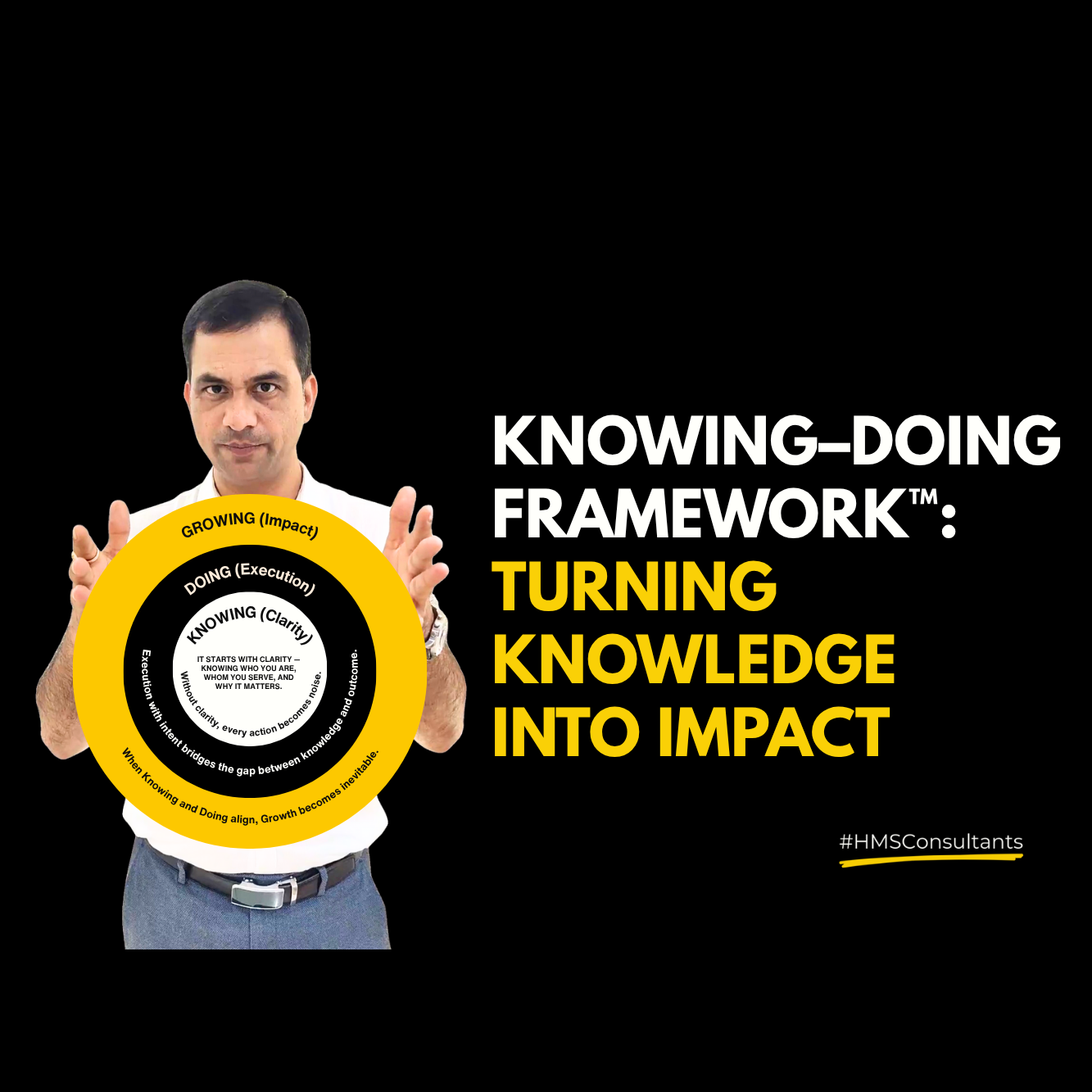
                  Knowing is Knowing and Doing is Doing™

                  Understanding the future of healthcare discovery is important.

                  But implementing the right strategy is what creates real growth.

                  Start Preparing for the Future of Healthcare Discovery

                  AI assistants are rapidly becoming a new layer of patient discovery.

                  Healthcare organizations that start building AI visibility today will be better positioned for the next era of digital healthcare search.

                  HMS Consultants helps healthcare organisations understand this shift and build a strategic roadmap for the future.

                  AI Discovery Optimisation is a strategic approach that helps hospitals, clinics, and healthcare brands structure their digital presence so that AI platforms such as ChatGPT, Google Gemini, Microsoft Copilot, and Perplexity can easily understand, trust, and recommend them. It focuses on improving how AI systems discover, interpret, and present healthcare providers when patients search for medical information or treatment options.

                  Help Center

                  FAQs

                  Get expert answers to common questions about healthcare marketing strategies.

                  Need More Answers?

                  Click the button below and fill up the form, our team will reach out to you related to your project’s queries.

                  “Knowing is Knowing, Doing is Doing”

                  is something we strongly believe in, which means ‘Knowledge without application is the same as having no knowledge at all

                  Akhil Dave

                  Principle Consultant

                  Ready to build healthcare marketing capability within your institution?

                  Connect with HMS Consultants to explore structured healthcare marketing education programs designed for medical colleges, hospitals, and healthcare organizations.

                    Learning by HMS Consultants

                    Stay Updated and Connected

                    Stay ahead with our expert insights and latest updates in healthcare marketing. Visit our blogs for valuable tips, industry trends, etc.

                    What more we have to offer?

                    Discover other services

                    If you’re finding some other services fit for your business, you’ll probably find it right here!

                  • The Complete Clinic & Hospital Growth Guide for Doctors

                    The Complete Clinic & Hospital Growth Guide for Doctors

                    The Complete Clinic & Hospital Growth Guide for Doctors

                    Written by
                    Published on
                    Share This

                    Why Your OPD Is Inconsistent And What To Fix Before Spending on Marketing

                    Doctors do not search “marketing trends.”

                    They search:

                    • Why is my OPD not growing?
                    • How to increase patient footfall in clinic?
                    • Why are patients not choosing my hospital?
                    • How to rank clinic on Google Maps?
                    • Should I hire a marketing agency?
                    • What is the right marketing budget for clinic?
                    • What is the right clinic marketing strategy?

                      If you have searched any of these questions, you are not alone.

                    Across India, clinic owners and hospital promoters are facing the same reality:

                    • Clinical outcomes are strong
                    • Infrastructure is adequate
                    • Experience is sufficient
                    • Yet patient flow feels unpredictable

                    This is not a competence problem.

                    It is a visibility and clarity problem.

                    This guide answers the most common growth questions doctors ask and outlines what must be structurally fixed before any marketing effort begins.

                    1. Why Are Patients Not Coming to My Clinic?

                    This is usually the first question.

                    The assumption is:

                    “Maybe competition is high.”

                    But in most cases, patients are not rejecting you after evaluation.

                    They are excluding you before evaluation.

                    Modern patient decision-making happens in three silent steps:

                    1. Search
                    2. Compare
                    3. Validate

                    If your clinic is not visible during these moments on Google Maps, reviews, website clarity, or digital consistency you never enter the shortlist.

                    The issue is rarely medical competence.

                    The issue is pre-visit perception.

                    2. Why Is My OPD Inconsistent?

                    Inconsistent OPD is often blamed on:

                    • Seasonality
                    • Competition
                    • Economic slowdown

                    While these factors matter, the deeper causes usually include:

                    • Weak Google Business Profile presence
                    • Poor or unmanaged reviews
                    • No structured patient follow-up system
                    • Inconsistent communication tone
                    • Unclear positioning (what exactly are you known for?)

                    When visibility and patient experience are fragmented, trust weakens and trust drives OPD.

                    OPD growth strategy is not about ads.

                    It is about reducing uncertainty in the patient’s mind.

                    3. How Do Patients Choose a Doctor Today?

                    Doctors assume patients compare clinical expertise.

                    Patients compare reassurance.

                    They ask:

                    • Is this place reliable?
                    • Do others trust them?
                    • Are reviews recent?
                    • Does the doctor communicate clearly?
                    • Is the hospital professional?

                    Search behaviour reveals this clearly.

                    Queries like:

                    • “best hospital near me”
                    • “best clinic for diabetes”
                    • “top orthopaedic doctor near me”

                    are not about ranking first.

                    They are about emotional safety.

                    If your clinic marketing strategy ignores psychology, visibility alone will not convert.

                    4. How to Increase Patient Footfall in Clinic 

                    High-intent search:

                    “How to increase patient footfall in clinic”

                    The wrong answer:

                    Run ads.

                    The right sequence:

                    Step 1: Clarify Positioning

                    What are you known for?

                    General care? Diabetes? Women’s health? Preventive care?

                    If your positioning is unclear, no marketing can compensate.

                    Step 2: Fix Local Discoverability

                    • Optimize Google Business Profile
                    • Ensure accurate NAP (Name, Address, Phone)
                    • Encourage ethical reviews
                    • Add updated photos and services

                    Local SEO for clinics drives sustainable footfall.

                    Step 3: Structure Patient Journey

                    • Appointment confirmation
                    • Reminder system
                    • Post-visit follow-up
                    • Feedback loop

                    Without CRM or WhatsApp automation, patients forget, delay, or drop off.

                    Step 4: Align Communication

                    Your website, GMB, social media, and offline messaging must sound coherent.

                    Footfall increases when clarity increases.

                    5. How to Rank Clinic on Google Maps?

                    Another high-intent question.

                    Google Maps visibility depends on:

                    • Complete Google Business Profile
                    • Review volume and recency
                    • Category accuracy
                    • Consistent local citations
                    • Proximity and engagement

                    Maps ranking is not a shortcut strategy.

                    It reflects consistency and reputation.

                    If your Google rating is below 4.0, that alone may reduce patient conversion by 30–40%.

                    6. Why Do Reviews Matter So Much?

                    Doctors often ask:

                    “Are reviews really that important?”

                    Yes.

                    Reviews are modern word-of-mouth.

                    When patients search:

                    • “best clinic near me”
                    • “hospital for surgery near me”

                    they filter based on ratings.

                    But review management is not about asking aggressively.

                    It begins with:

                    • Reduced waiting time
                    • Clear communication
                    • Transparent billing
                    • Polite staff behaviour

                    Reputation is operational before it is digital.

                    7. What Is Hospital Marketing Strategy?

                    Hospital marketing strategy is not advertising.

                    It is structured clarity across:

                    Marketing becomes necessary only after clarity is established.

                    Ads amplify structure.

                    They cannot replace it.

                    8. Should I Hire a Marketing Agency?

                    This question reflects anxiety about control.

                    Doctors fear:

                    • Loss of voice
                    • Over-commercialization
                    • Ethical compromise

                    The real question is not agency vs no agency.

                    It is:

                    Do you have internal clarity before execution?

                    If not, external execution will create noise.

                    Strategy must precede tactics.

                    9. What Is the Right Marketing Budget for Clinic?

                    Another common search.

                    There is no universal number.

                    Budget should depend on:

                    • Revenue targets
                    • Service mix
                    • Geography
                    • Existing visibility
                    • Operational readiness

                    If your patient experience is weak, increasing budget increases dissatisfaction.

                    Budget follows clarity.

                    10. How Important Is Personal Branding for Doctors?

                    Personal branding for doctors is not self-promotion.

                    It is professional visibility.

                    Patients trust:

                    • Consistent communication
                    • Educational content
                    • Clear positioning
                    • Familiarity

                    Doctors who publish educational insights ethically build long-term authority.

                    Silence does not build credibility in the digital era.

                    11. Can Doctors Do Digital Marketing Ethically?

                    Yes — if done responsibly.

                    Ethical healthcare marketing includes:

                    • Educational posts
                    • Awareness campaigns
                    • Transparent service communication
                    • Responsible review management

                    It excludes:

                    • Exaggerated claims
                    • Before-after manipulation
                    • Guarantees
                    • Fear-based messaging

                    Marketing done correctly strengthens professional dignity.

                    12. What Role Do CRM, HMIS, and WhatsApp Play in Growth?

                    Growth is not only acquisition.

                    It is retention.

                    Technology enables:

                    • Appointment reminders
                    • Follow-up scheduling
                    • Chronic patient tracking
                    • Feedback collection
                    • Re-engagement campaigns

                    WhatsApp funneling improves conversion dramatically when structured ethically.

                    Patient journey mapping transforms irregular OPD into predictable growth.

                    13. Why Visibility Alone Does Not Guarantee Growth

                    Many clinics increase Instagram activity or run Google Ads but see no revenue shift.

                    Because:

                    • Positioning is unclear
                    • Internal workflows are misaligned
                    • Staff is untrained
                    • Conversion systems are absent

                    Marketing without internal alignment creates temporary spikes, not sustainable growth.

                    14. The Real Diagnostic Question

                    Instead of asking:

                    “How to get more patients?”

                    Ask:

                    “What is preventing patients from confidently choosing us?”

                    Growth is a clarity problem before it is a promotion problem.

                    15. The Structured Approach to Clinic & Hospital Growth

                    A sustainable medical practice growth strategy requires:

                    1. Diagnostic audit
                    2. Positioning clarity
                    3. Patient journey mapping
                    4. Visibility architecture (SEO, Maps, Reviews)
                    5. Ethical communication framework
                    6. Technology integration (CRM, WhatsApp, EMR)
                    7. Measured amplification

                    When structure precedes visibility, growth becomes predictable.

                    Final Thought

                    If you have been searching:

                    • How to increase OPD
                    • How to grow hospital revenue
                    • Why patients are not choosing my clinic
                    • How to improve Google rating
                    • How to market a new clinic in India

                    You are not searching for marketing.

                    You are searching for clarity.

                    Marketing is not the solution to confusion.

                    Clarity is.

                    When clarity is designed into your positioning, patient journey, and communication system, visibility becomes a natural outcome.

                    If This Resonates

                    If these questions feel familiar and you would prefer a structured diagnostic conversation instead of random execution advice, you may connect with HMS Consultants.

                    We operate as strategy advisors, not execution agencies.

                    Contact Us HMS Consultants

                    Doctors Digital Marketing I Healthcare Marketing I Hospital Marketing Strategies I Marketing ideas for clinics I Marketing Trends 2025 I Medical Marketing I Social Media Marketing

                    is something we strongly believe in, which means ‘Knowledge without application is the same as having no knowledge at all

                    Akhil Dave

                    Principle Consultant

                    Ready to take your Personal Brand to the next level?

                    Share your details below and we will connect with you to discuss your growth strategy.

                    • Why Hospital Patient Experience Breaks Long Before Patients Complain

                      Why Hospital Patient Experience Breaks Long Before Patients Complain

                      Why Hospital Patient Experience Breaks Long Before Patients Complain

                      Written by
                      Published on
                      Share This

                      Hospital patient experience is often measured using feedback forms, ratings, and complaint registers. Leadership reviews scores, teams address visible issues, and improvements are planned where dissatisfaction is clearly expressed. Yet many hospitals with acceptable ratings still struggle with repeat visits, referrals, and long-term trust.

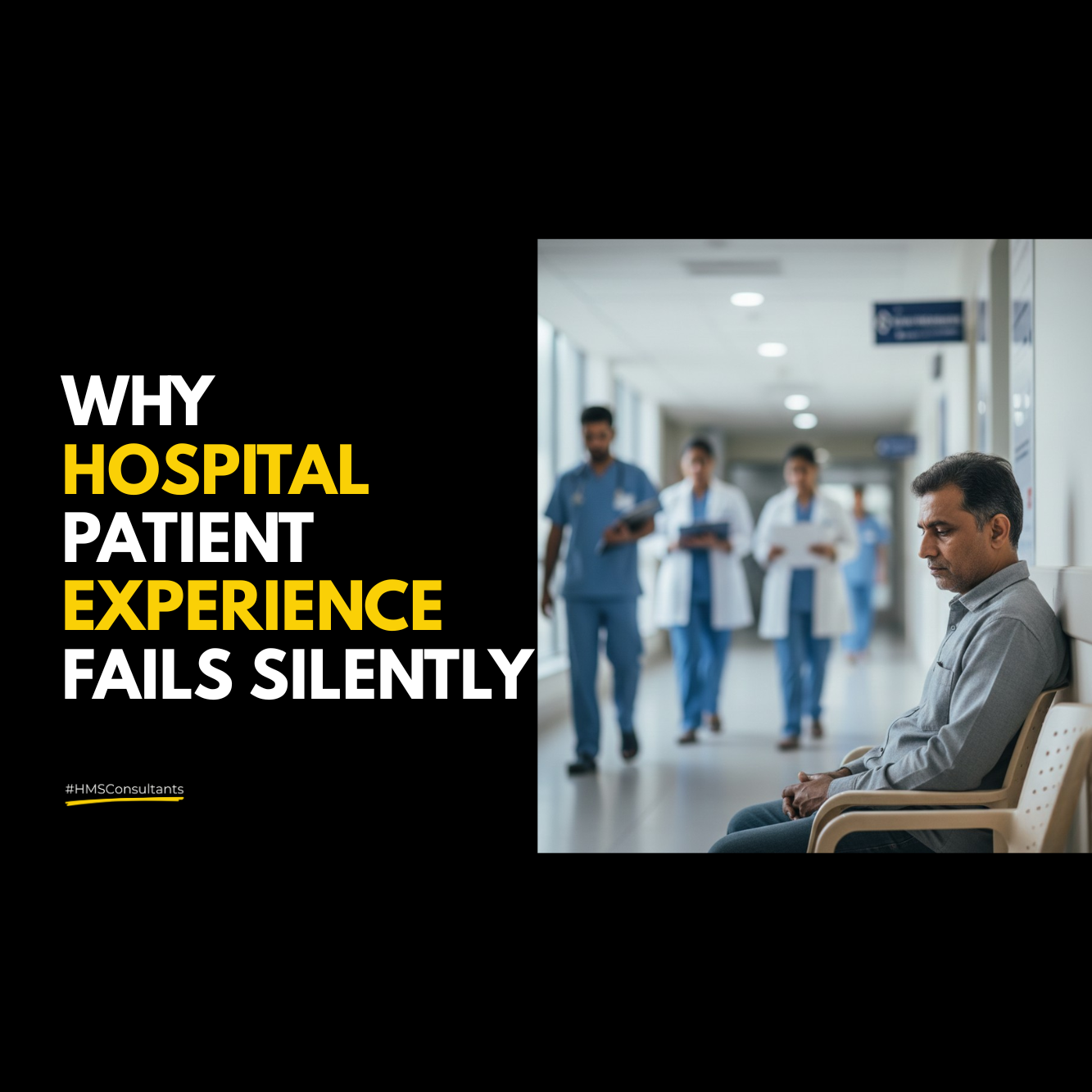
                      This happens because patient experience usually breaks silently.

                      Patients do not complain when experience is confusing, rushed, or emotionally unsafe. They disengage quietly. By the time complaints appear, trust has already eroded.

                      Why Patients Rarely Complain About Poor Experience

                      Patients enter hospitals in vulnerable states. They are anxious, dependent, and often unsure of what is acceptable to expect. When experience feels fragmented or unclear, most patients internalise the discomfort rather than voice it.

                      Hospital patient experience suffers not from dramatic failures, but from small moments of confusion that accumulate. These moments rarely trigger formal complaints, but they influence future decisions powerfully.

                      Silence should not be mistaken for satisfaction.

                      The Gap Between Clinical Care and Patient Experience

                      Hospitals often equate good clinical outcomes with good patient experience. While outcomes matter deeply, patients experience care through communication, explanation, and emotional reassurance.

                      When clinical excellence is not accompanied by clarity, patient experience weakens even if treatment is successful. Patients leave healthy but uncertain, grateful yet hesitant to return or recommend.

                      Hospital patient experience lives in how care is felt, not just delivered.

                      Why Experience Breaks at Transitions, Not Touchpoints

                      Most experience issues do not occur during consultations. They occur between them. Waiting, referrals, follow-ups, billing explanations, and handovers are where patients feel lost.

                      Hospital patient experience breaks when transitions lack ownership. Patients are unsure whom to ask, what comes next, or whether they are being guided properly.

                      These gaps feel minor internally but significant externally.

                      How Growth Quietly Damages Patient Experience

                      As hospitals grow, systems tighten. Time reduces. Standardisation increases. Efficiency improves. Unfortunately, emotional reassurance often declines.

                      Hospital patient experience erodes when scale outpaces communication. Patients feel processed instead of supported. They rarely complain because nothing is “wrong” enough but something feels missing.

                      Growth without experience design leads to reputation stagnation.

                      Why Experience Is a Leadership Responsibility, Not a Service Issue

                      Patient experience is often delegated to front desks or quality teams. In reality, it reflects leadership priorities. How much time is allowed for explanation? How flexible are processes? How much ambiguity is tolerated?

                      Hospital patient experience improves when leadership designs systems around patient understanding, not just operational speed.

                      Experience is created by decisions made far above the reception desk.

                      The SEO Reality of Hospital Patient Experience

                      Patients search for experience-related information indirectly. They look for clarity, reassurance, and credibility signals. Content grounded in real experience performs better than generic promises.

                      Hospitals that understand patient experience deeply produce content that ranks because it answers unspoken concerns.

                      Search engines, like patients, reward relevance over claims.

                      Conclusion: Hospital Patient Experience Is Felt More Than It Is Measured

                      Hospitals do not lose patients because experience fails loudly. They lose patients because experience feels incomplete.

                      Hospital patient experience is shaped in moments of uncertainty, not just moments of care. When hospitals design for those moments deliberately, trust strengthens quietly.

                      In healthcare, experience is not what patients complain about.
                      It is what they remember or forget.

                      Hospitals that understand this stop chasing feedback scores and start building confidence where it truly matters.

                      Contact Us HMS Consultants

                      Hospital patient experience refers to how patients feel and perceive care throughout their journey, including communication, clarity, emotional reassurance, and transitions between services. It goes beyond clinical outcomes and focuses on whether patients feel supported, informed, and confident at every step.

                      Doctors Digital Marketing I Healthcare Marketing I Hospital Marketing Strategies I Marketing ideas for clinics I Marketing Trends 2025 I Medical Marketing I Social Media Marketing

                      is something we strongly believe in, which means ‘Knowledge without application is the same as having no knowledge at all

                      Akhil Dave

                      Principle Consultant

                      Ready to take your Personal Brand to the next level?

                      Share your details below and we will connect with you to discuss your growth strategy.