Search results for: “digital”

  • The Website for Hospital That AI Won’t Recommend and Patients Can’t Find

    The Website for Hospital That AI Won’t Recommend and Patients Can’t Find

    The Website for Hospital That AI Won’t Recommend and Patients Can’t Find

    Written by
    Published on
    Share This

    A website for hospital in 2026 is no longer just a digital presence. It is a discovery asset. And most hospital websites in India today are failing at discovery not because they are absent, but because they are built the wrong way for how patients and AI systems now search for healthcare. The problem is no longer about having a website. The problem is about whether that website can be found, understood, and recommended by both patients and the AI systems that now influence healthcare decisions before a human ever clicks.

    Two significant shifts have happened in patient search behaviour simultaneously. Understanding both is now essential for any hospital that wants its website to generate consistent enquiries.

    How Patients Search for Hospitals Has Changed Completely

    A few years ago, patients searched broadly.

    They typed:

    • “Hospital near me”
    • “Best hospital in Ahmedabad”
    • “Multi-specialty hospital”

    Today, that behaviour has changed. Patients search with specific intent.

    They now search:

    • “Laparoscopic surgeon for hernia in Surat”
    • “Best hospital for knee replacement in Pune”
    • “Paediatric neurologist in Vadodara”
    • “Normal delivery hospital with NICU facility”
    • “Cardiologist for heart valve surgery in Nagpur”

    This shift from broad to specific is critical. A patient searching this specifically is not browsing. They are deciding. They are comparing. They are close to taking action.

    And when they land on a hospital website that shows a generic services list one page covering all twenty departments in five lines each they do not find what they are looking for. They leave. Silently. Without enquiring.

    The website for hospital that lists “Orthopaedics, Cardiology, Neurology, Gynaecology, Paediatrics” on a single services page is not speaking to a patient searching for a specific procedure. It is speaking to no one in particular.

    What AI Search Is Doing to Hospital Discoverability

    The second shift is more recent and far less understood by most hospital marketing teams.

    Patients in 2026 are not only using Google to search. They are using AI tools Google AI Overview, ChatGPT, Perplexity, and similar platforms to ask healthcare questions directly.

    They ask:

    • “Which hospital in Jaipur is best for ACL surgery?”
    • “What should I look for in a hospital for a difficult pregnancy?”
    • “Is robotic surgery available at hospitals in Indore?”

    These AI systems do not simply show links. They read, analyse, and summarise hospital websites before presenting recommendations. They look for structured, specific, and credible content to pull answers from.

    When a hospital website is generic, unstructured, and thin on department-specific content, AI systems cannot extract meaningful information from it. The hospital effectively does not exist in AI-generated responses even if it has an excellent clinical reputation.

    This is the new invisibility. A hospital can have a functional website, a Google Business listing, and active social media and still be completely absent from AI-driven patient searches because its website for hospital is not structured for how AI reads content.

    Why Generic Websites Fail Both Patients and AI

    Most hospital websites are built from an internal perspective. Hospitals decide what to display based on what they want to communicate their infrastructure, their achievements, their departments.

    But patients and AI systems approach a website from the outside in. They arrive with a specific question. They want a specific answer.

    A generic website answers no specific question well.

    When a patient with a knee problem lands on a page that says “Orthopaedics Department – We offer comprehensive orthopaedic care,” they learn nothing useful. There is no doctor named. No procedure explained. No recovery timeline mentioned. No success rate referenced. No trust signal relevant to their specific concern.

    That patient moves on.

    And when an AI system reads the same page while answering “best knee replacement hospital in Pune,” it finds no structured, specific content to recommend. That hospital is skipped in favour of one that has a dedicated knee replacement page with detailed, patient-relevant content.

    What Specialty-Specific Pages Do for a Hospital Website

    A specialty-specific page is a dedicated page for one condition, one procedure, or one department built around what a patient actually wants to know before deciding.

    A well-built specialty page for orthopaedics, for example, does not just say “we treat bone and joint conditions.” It answers:

    • What conditions are treated and by which doctors.
    • What procedures are performed and how they are done.
    • What patients can expect before, during, and after treatment.
    • What the recovery process looks like.
    • What makes this hospital’s approach different?
    • How to book a consultation.

    This kind of content serves two purposes simultaneously. It gives the specific patient the clarity they need to trust and enquire. And it gives AI systems the structured, specific content they need to recommend the hospital in relevant searches.

    A website for a hospital with fifteen well-built specialty pages is not just a better website. It is a fundamentally more discoverable asset for patients and AI alike.

    The Silent Cost of Not Updating the Website

    Most hospitals built their websites once and stopped. The content is the same as it was three years ago. No new doctor has been added. No new procedure has been explained. No new patient question has been answered.

    Meanwhile, patient search behaviour has evolved. AI search has emerged. Competitors have built deeper, more structured content.

    Every month a hospital website sits unchanged, it falls further behind in both human and AI-driven discoverability. Patients land, find nothing specific, and leave. AI reads the page, finds nothing to recommend, and skips it.

    The hospital does not see this happening. There are no complaints. The phone is still ringing from patients who already know the hospital through other means. But the patients who are searching specifically, comparing actively, and deciding digitally are choosing somewhere else.

    That is the cost. And it compounds every month.

    Conclusion

    A website for hospital in 2026 must do more than exist. It must be built for how patients actually search with specific intent, specific questions, and specific expectations. And it must be structured for how AI systems now read and recommend healthcare providers before patients even visit a page.

    Generic websites built around departments and infrastructure are no longer sufficient. Hospitals that build specialty-specific, patient-intent-driven content will be found by patients and by AI. Hospitals that do not will remain invisible to both, regardless of how good their clinical care actually is.

    The website for hospital that patients can find is the one built around their questions. The one AI will recommend is the one structured around their answers.

    In 2026, those are the same website.

    Contact Us HMS Consultants

    A website for hospital helps patients find the right doctor, understand available treatments, verify credibility, and book appointments all before visiting physically. Without one, hospitals remain invisible to patients who search online before making any healthcare decision.

    hospital marketing I Digital Marketing

    is something we strongly believe in, which means ‘Knowledge without application is the same as having no knowledge at all

    Akhil Dave

    Principle Consultant

    Ready to take your Personal Brand to the next level?

    Share your details below and we will connect with you to discuss your growth strategy.
    • The 7 Ps of Marketing in Healthcare: Why Knowing the Framework Is Not Enough.

      The 7 Ps of Marketing in Healthcare: Why Knowing the Framework Is Not Enough.

      The 7 Ps of Marketing in Healthcare: Why Knowing the Framework Is Not Enough.

      Written by
      Published on
      Share This

      The 7 Ps of marketing – Product, Price, Place, Promotion, People, Process, and Physical Evidence are widely discussed in healthcare boardrooms, marketing meetings, and strategy presentations across India. Most hospital marketing teams are already familiar with the framework. Many have even presented it in internal reviews. Yet most hospitals continue to grow inconsistently, lose patients they already attracted, and struggle with conversion despite active marketing. The reason is not that hospitals do not know the 7 Ps of marketing. The reason is that most hospitals act on only one of them.

      That one P is almost always Promotion.
      Budgets go toward ads, creatives, social media management, and campaigns. The other six Ps remain unaddressed. And quietly, that imbalance becomes the real reason marketing does not deliver the results it should.

      When Promotion Becomes the Only P That Gets Attention.

      Most hospital marketing conversations begin and end with promotion.

      How many ads should we run? Which platform should we use? Should we increase the budget?

      These are valid questions. But promotion is only one part of a seven-part system.

      When a hospital focuses only on:

      • Meta campaigns.
      • Social media posts.
      • Google Ads.
      • Newspaper promotions.
      • Hoardings and outdoor branding.

      Without addressing the remaining six Ps, it creates a very specific problem.

      Patients are attracted. But once they arrive digitally or physically the experience does not match the promise.That gap between the promoted image and the actual experience is where patient trust breaks down.

      And broken trust is far harder to rebuild than it is to build from the beginning.

      Hand lifting a yellow “Promotion” card above stacked healthcare marketing elements, representing the 7 P’s of marketing and the importance of promotion within healthcare strategy.

      Product: What Are You Actually Offering the Patient?

      In the 7 Ps of marketing framework, Product in healthcare is not about equipment or departments.

      It is about what the patient actually receives the total experience of seeking, receiving, and recovering from care.

      Most hospitals define their product internally:

      • “We have 200 beds.”
      • “We offer 12 specialities.”
      • “We have the latest diagnostics.”

      But patients do not experience infrastructure. They experience:

      • How the first phone enquiry was handled.
      • Whether the doctor explained things clearly.
      • Whether they felt heard or processed.
      • Whether the recovery guidance made sense.

      When the Product P is weak, no amount of promotion brings consistent growth. Because the patient experience does not justify the patient’s decision to return or refer.

      Price: It Is Not Just the Fee on the Receipt.

      Price in healthcare is misunderstood in two directions.

      Some hospitals believe lower prices attract more patients. Others believe premium pricing automatically signals quality.

      Both assumptions miss the real role of Price in the 7 Ps of marketing.

      What patients actually evaluate is not the number. It is the confidence that the number creates.

      Patients lose confidence when:

      • Estimates change without explanation.
      • Billing feels confusing or incomplete.
      • The cost does not match the perceived experience quality.
      • There is no transparency during the treatment journey.

      Clear, predictable pricing reduces hesitation. Unclear pricing delays decisions. And in healthcare, a delayed decision often means the patient chose another provider entirely.

      Place: More Than a Pin on Google Maps.

      Place in the 7 Ps of marketing has expanded completely beyond physical location.

      Patients today experience a hospital’s “place” across multiple digital touchpoints before they ever visit physically:

      • Google search results.
      • Maps listing accuracy and reviews.
      • Website clarity and speed.
      • WhatsApp responsiveness.
      • Practo or Justdial presence.

      A hospital with excellent infrastructure but poor digital discoverability is still invisible to patients who are actively searching.

      This is why the Place P cannot be treated as solved simply because the hospital exists in a visible location.

      The hospital must also exist clearly and consistently in the spaces where patients make their first decisions which are almost always digital in 2026.

      People: The P That Either Builds or Destroys Everything Else.

      Of all the 7 Ps of marketing, People is the one that has the most direct impact on trust and the one most hospitals invest in the least from a marketing perspective.

      People in this context means every individual a patient interacts with:

      • Front desk staff.
      • Patient coordinators.
      • Ward attendants.
      • Billing executives.
      • Doctors during follow-up.

      A single dismissive interaction at the front desk can undo everything a ₹2 lakh ad campaign built.

      Patients do not experience brands. They experience people.

      And how those people speak, listen, respond, and communicate becomes the hospital’s real brand regardless of what the creative agency produces.

      Process: The Silent Reason Patients Don’t Return.

      Most hospitals lose existing patients not to competitors, but to friction.

      Process refers to how smoothly a patient moves through every stage of their healthcare journey:

      • Appointment booking.
      • Waiting time management.
      • Consultation flow.
      • Post-treatment follow-up.
      • Discharge communication.
      • Billing clarity.

      When any part of this flow feels confusing, delayed, or disorganised, the patient’s confidence weakens.

      They may not complain loudly. But they do not return quietly.

      In the 7 Ps of marketing, Process is the operational backbone of trust. Hospitals that simplify their patient journey internally usually see stronger reviews, better retention, and more organic referrals without spending more on promotion.

      Physical Evidence: What Patients See Before They Decide.

      Physical Evidence is the P most hospitals confuse with aesthetics.

      It is not only about a clean lobby or matching uniforms. It is about every visible cue that communicates: this hospital can be trusted.

      In 2026, physical evidence begins online:

      • Is the website current and professional?
      • Do the Google reviews reflect the experience being promised?
      • Are doctor profiles complete and credible?
      • Does the social media presence feel consistent or abandoned?

      When physical evidence is weak or inconsistent, patients experience doubt even if the actual healthcare quality is excellent.

      That doubt is often enough to make them choose a competitor who looks more credible, even if they are clinically equivalent.

      Why the 7 Ps of Marketing Work Only as a System.

      The framework was never designed to be used partially.

      Each of the 7 Ps of marketing connects to the others. A strong promotion strategy that drives patients to a poor process creates frustrated patients. Strong people working within a confusing process still lose patients. Excellent physical evidence online that contradicts the physical experience on the ground destroys trust permanently.

      Hospitals that treat the 7 P’s as a checklist to present in a board meeting and then ignore do not see results from their marketing investment.

      Hospitals that treat the 7 P’s as an operational audit continuously improving each element usually build the kind of growth that does not depend on constant ad spending.

      Conclusion

      The 7 Ps of marketing are not a theoretical framework meant for textbooks. They are a diagnostic tool. When marketing is not delivering results, the answer is almost always found somewhere in the six P’s that are being ignored.

      Promotion can create awareness. But it cannot fix a weak product, unclear pricing, poor digital presence, undertrained people, broken processes, or inconsistent physical evidence.

      Hospitals that are growing consistently in 2026 are not necessarily spending more. They are usually the hospitals that have aligned all seven elements and built a patient experience that marketing can finally support rather than compensate for.

      Because when all 7 P’s work together, patients do not need to be convinced. They choose on their own.

      Contact Us HMS Consultants

      The 7 P’s of marketing are Product, Price, Place, Promotion, People, Process, and Physical Evidence. In healthcare, these seven elements together shape how patients discover, evaluate, trust, and choose a hospital or clinic.

      Healthcare Marketing I hospital marketing

      is something we strongly believe in, which means ‘Knowledge without application is the same as having no knowledge at all

      Akhil Dave

      Principle Consultant

      Ready to take your Personal Brand to the next level?

      Share your details below and we will connect with you to discuss your growth strategy.

      • Hospital Marketing Techniques That Actually Work in 2026

        Hospital Marketing Techniques That Actually Work in 2026

        Hospital Marketing Techniques That Actually Work in 2026

        Written by
        Published on
        Share This

        Hospital marketing techniques are changing rapidly in 2026. Many hospitals are still investing heavily in traditional promotions, social media activity, newspaper advertisements, and random campaigns, expecting consistent patient growth. But patient behaviour has changed completely.

        Today, patients do not choose hospitals the same way they did a few years ago.

        Before booking appointments, most patients now:
        • Search hospitals on Google.
        • Compare reviews.
        • Evaluate doctor’s credibility.
        • Visit hospital websites.
        • Check social proof.
        • Look for reassurance before making decisions.

        This means hospital marketing today is no longer only about visibility.
        It is about building systems that help patients trust the hospital during their decision-making journey.
        That is where most traditional hospital marketing techniques begin to fail.

        Many hospitals still focus heavily on:

        • Generic advertisements.
        • Social media posting.
        • Offline promotions.
        • Hoardings.
        • Awareness campaigns.

        The activity may create attention temporarily. But long-term hospital growth now depends on discoverability, conversion systems, patient retention, reputation management, and healthcare trust infrastructure.

        This is why hospitals that are consistently growing in 2026 are not always the ones spending the most on marketing.

        Search Visibility Has Become One of the Most Important Hospital Marketing Techniques

        One of the biggest changes in healthcare marketing is the shift toward search-first patient behaviour.

        Most healthcare journeys now begin online.

        Patients search for:

        • Symptoms.
        • Specialists.
        • Hospitals.
        • Procedures.
        • Treatments.
        • Healthcare advice.

        Before making decisions.

        This is why search visibility has become one of the most powerful hospital marketing techniques in 2026.

        Hospitals that appear prominently in patient searches usually create stronger enquiry opportunities than hospitals that rely solely on advertisements.

        Search visibility includes:

        • Local SEO.
        • Google Business optimisation.
        • Speciality-based pages.
        • Mobile-friendly websites.
        • Service-focused content.
        • Location-based discoverability.

        Patients rarely search only:

        “Hospital”

        They search:

        • “Best orthopaedic hospital near me”
        • “Cardiologist in Ahmedabad”
        • “Eye hospital for cataract surgery”
        • “Best hospital for knee replacement”

        This means hospitals now need department-level discoverability rather than only brand-level visibility.

        The hospitals winning digitally today are usually the hospitals that understand local search intent deeply.

        Google Reviews Have Become a Core Hospital Marketing Technique

        Most patients today read reviews before contacting hospitals.

        That makes online reputation one of the most influential hospital marketing techniques currently working in healthcare.

        Patients notice:

        • Review quality.
        • Patient experiences.
        • Complaint handling.
        • Response professionalism.
        • Consistency of feedback.

        Reviews are no longer passive feedback.

        They directly influence patient confidence.

        Many hospitals still treat reviews casually. Some ask randomly. Others ignore negative reviews entirely.

        But hospitals growing consistently online usually build structured review systems.

        This includes:

        • Ethical review collection.
        • Post-treatment feedback systems.
        • Response management.
        • Reputation monitoring.

        When patients compare hospitals online, reviews often become one of the strongest trust signals influencing final decisions.

        Because patients trust patient experiences more than advertisements.

        Educational Content Is Replacing Promotional Marketing

        One of the biggest shifts happening in healthcare marketing is the rise of educational authority.

        Patients today do not only want to find hospitals.

        They want to:

        • Understand conditions.
        • Reduce fear.
        • Evaluate treatment options.
        • Feel informed before consultations.

        This is why educational healthcare content has become one of the strongest hospital marketing techniques in 2026.

        Hospitals using:

        • Blogs.
        • Specialist videos.
        • Healthcare FAQs.
        • Treatment explainers.
        • Patient education content.

        Usually build stronger long-term digital trust.

        Educational content helps hospitals become more discoverable while also improving patient confidence.

        Over time, this creates:

        • Authority.
        • Reassurance.
        • Stronger engagement.
        • Better conversion quality.

        Promotional marketing attracts attention temporarily.

        Educational authority builds long-term trust.

        That difference is becoming extremely important in modern healthcare marketing.

        Doctor Visibility Is Becoming a Growth Driver for Hospitals

        Patients often choose hospitals because of doctors.

        This means doctor visibility is becoming one of the most important hospital marketing techniques today. Individual doctors should focus more on their Personal Branding, which drives patients towards their clinics and hospitals.

        Modern hospital marketing is no longer only hospital-centric.

        It is increasingly doctor-led digitally.

        Hospital Websites Must Work Like Conversion Systems

        Many hospitals still treat websites like brochures. But patient expectations have changed.

        A hospital website today acts like a 24-hour patient acquisition and trust-building system.

        Patients evaluate:

        • Professionalism.
        • Credibility.
        • Accessibility.
        • Reassurance.

        Through the website before making contact.

        Poor hospital websites usually create:

        • Patient confusion.
        • Drop-offs.
        • Weak enquiry conversion.

        Modern hospital websites should include:

        • Speciality-focused pages.
        • Fast loading speed.
        • Mobile responsiveness.
        • Clear appointment systems.
        • Doctor profiles.
        • Patient reviews.
        • Healthcare education.

        Because patients judge hospitals digitally before visiting physically.

        WhatsApp Retention Systems Are Becoming Essential

        One of the most underused hospital marketing techniques is patient retention communication.

        Many hospitals focus heavily on new patient acquisition while neglecting post-treatment engagement completely.

        This creates a patient drop-off.

        WhatsApp systems now help hospitals improve:

        • Follow-up communication.
        • Appointment reminders.
        • Discharge guidance.
        • Patient education.
        • Long-term engagement.

        In India, especially, WhatsApp has already become part of daily patient communication behaviour.

        Hospitals that integrate communication systems strategically usually achieve stronger patient continuity than hospitals that rely solely on campaigns.

        Why Most Hospitals Still Struggle Despite Marketing

        Many hospitals still struggle with marketing because their systems remain disconnected internally.

        Common problems include:

        • Weak enquiry handling.
        • Delayed responses.
        • Inconsistent communication.
        • Poor patient coordination.
        • Fragmented departments.
        • Lack of follow-up systems.

        Marketing may attract enquiries initially.

        But operational gaps reduce actual conversion.

        This is why hospital marketing today must work together with:

        • Reception teams.
        • Patient coordinators.
        • CRM systems.
        • Enquiry management.
        • Patient experience processes.

        Hospitals no longer grow only through campaigns.

        They grow through connected systems.

        The Future of Hospital Marketing Techniques

        Healthcare marketing is shifting rapidly toward:

        • AI-assisted discovery.
        • Search-driven patient behaviour
        • Local intent marketing.
        • Trust-based conversion.
        • Predictive engagement.
        • Patient experience systems.

        Patients today expect:

        • Accessibility.
        • Speed.
        • Reassurance.
        • Digital clarity.
        • Convenience.

        This means hospital marketing techniques in 2026 must become more integrated, measurable, and patient-focused than ever before.

        The hospitals growing consistently today are usually building:

        • Discoverability systems.
        • Educational authority.
        • Reputation architecture.
        • Retention workflows.
        • Patient trust infrastructure.

        That is becoming the real future of healthcare growth.

        Conclusion

        Hospital marketing techniques in 2026 are no longer only about promotions, advertisements, or social media visibility.

        Modern patient behaviour has changed completely.

        Patients now research hospitals deeply before making healthcare decisions. They compare reviews, evaluate doctors, analyse websites, and search for reassurance before booking appointments.

        This means hospitals must move beyond awareness-based marketing and focus on:

        • Discoverability.
        • Reputation.
        • Educational authority.
        • Retention.
        • Patient trust systems.

        Because hospitals no longer grow simply by marketing more.

        They grow by building systems patients trust.

        Contact Us HMS Consultants

        Hospital Marketing Strategies I Digital Marketing

        is something we strongly believe in, which means ‘Knowledge without application is the same as having no knowledge at all

        Akhil Dave

        Principle Consultant

        Ready to take your Personal Brand to the next level?

        Share your details below and we will connect with you to discuss your growth strategy.

        • Personal Branding for Doctors: Build Your Brand, Build Your Practice

          Personal Branding for Doctors: Build Your Brand, Build Your Practice

          Personal Branding for Doctors: Build Your Brand, Build Your Practice

          Written by
          Published on
          Share This

          Personal branding for doctors is becoming one of the biggest growth drivers in healthcare today. Not because doctors need to become influencers. Not because healthcare is becoming entertainment. But because patient behaviour has changed completely in 2026.

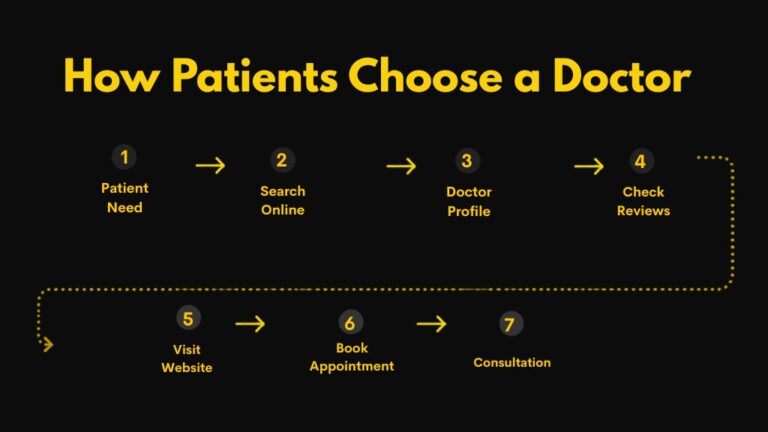
          Today, when patients need a specialist, they usually do not make decisions immediately after receiving a referral. Before booking an appointment, they search online. They Google the doctor’s name, read reviews, compare profiles, check clinic information, and try to understand whether the doctor feels trustworthy before making the first call.

          This is where many experienced doctors are struggling silently.

          Two doctors may have the same qualifications, similar years of experience, excellent patient outcomes, and practice in the same city. But one doctor consistently receives patient enquiries while the other struggles with low visibility and inconsistent patient flow.

          The difference is often not clinical.
          The difference is discoverability.
          And this is exactly why personal branding for doctors is becoming essential in modern healthcare marketing.

          The Invisible Doctor Problem.

          This happens when highly experienced doctors remain digitally invisible despite years of successful medical practice and strong offline reputation.

          Many doctors today already have:

          • Years of patient trust.
          • Strong treatment outcomes.
          • Long-standing referrals.
          • Excellent clinical expertise.

          But when patients search their name online, they often find incomplete information or weak digital presence.

          In many cases, patients find:

          • Incomplete profiles.
          • Outdated clinic details.
          • Weak Google visibility.
          • Missing reviews.
          • No educational content at all.

          At the same time, another doctor with stronger digital visibility appears consistently across platforms. Patients see:

          • Google search results.
          • LinkedIn profiles.
          • Instagram education.
          • Reviews.
          • Healthcare videos.
          • Patient engagement.

          Patients trust what they can find online.

          This does not always mean the digitally visible doctor is clinically superior. It simply means the digitally visible doctor becomes easier for patients to trust.

          And that is changing healthcare decision-making completely.

          Why Patients Search Doctors Online Before Booking

          Healthcare decisions today are deeply digital. Patients no longer depend only on offline referrals or family recommendations before choosing a doctor.

          Before booking consultations, patients usually:

          • Google the doctor’s name.
          • Read reviews.
          • Compare ratings.
          • Check educational content.
          • Evaluate clinic presence.
          • Search patient experiences online.

          This behaviour is growing rapidly across specialties such as cardiology, orthopaedics, dermatology, ophthalmology, dental, cosmetic medicine, neurology, fertility, and general practice.

          Patients today are not only evaluating qualifications.

          They are evaluating trust digitally.

          This is one of the biggest reasons why personal branding for doctors matters more than ever before.

          Personal Branding for Doctors Is Not About Fame

          One of the biggest misconceptions in healthcare marketing is that personal branding means becoming famous online.

          Many doctors assume personal branding requires:

          • Viral reels.
          • Daily content.
          • Entertainment-based videos.
          • Influencer-style visibility.

          But real personal branding for doctors works very differently.

          It focuses on:

          • Trust.
          • Authority.
          • Discoverability.
          • Visibility.
          • Patient confidence.

          The goal is not internet fame.

          The goal is to ensure that when patients search for healthcare answers online, they find the right doctor with confidence.

          This is why strong doctor branding today depends more on educational communication and trust-building than aggressive promotion.

          Personal branding in healthcare is not vanity.

          It is authority with visibility.

          Owning your name on Google.

          When patients search:
          “Dr. [Doctor Name] + City”

          They should ideally find:

          • Google Business Profile.
          • Clinic information.
          • Hospital profile pages.
          • Practo or JustDial listings.
          • Patient reviews.
          • Educational content.
          • Professional visibility.

          But many doctors still have poor digital discoverability because their online presence is incomplete or inconsistent.

          Some doctors still have:

          • Incorrect clinic information.
          • Weak search visibility.
          • Outdated contact details.
          • Incomplete listings.
          • No meaningful content online.

          This creates a trust gap immediately.

          Patients often interpret weak digital visibility as weak credibility.

          Strong personal branding for doctors begins with:

          • Discoverability.
          • Accurate information.
          • Professional visibility.
          • Digital trust-building.

          This is not advanced marketing.

          This is basic digital hygiene in modern healthcare.

          Choose One Platform and Stay Consistent

          Another major mistake doctors make is trying to stay active everywhere at the same time.

          Many doctors believe they need:

          • Instagram.
          • LinkedIn.
          • YouTube.
          • Facebook.
          • Multiple platforms together.

          But the Digital Doctor Framework focuses more on consistency than frequency.

          For many doctors, one platform is enough initially.

          LinkedIn usually works better when:

          • Patients are professionals.
          • Referral networks matter.
          • Corporate visibility is important.

          Instagram often works better when:

          • The specialty is visually driven.
          • Patients search visually.
          • Healthcare education performs better through visual communication.

          This is especially relevant for:

          • Dermatologists.
          • Dentists.
          • Ophthalmologists.
          • Cosmetic specialists.
          • Orthopaedic surgeons.

          The goal is not posting every day.

          The goal is long-term consistency.

          Even one educational post every week can gradually build visibility, authority, and patient trust.

          Answer the Question Your Patients Are Already Asking.

          Every doctor repeatedly hears patient questions such as:

          • Is LASIK safe?
          • Is angioplasty painful?
          • How long does recovery after knee replacement take?
          • When should surgery become necessary?
          • Is this procedure risky?
          • What happens after treatment?

          Patients are already searching these questions online every day.

          When doctors answer these questions through:

          • Blogs.
          • Videos.
          • FAQs.
          • Educational posts.
          • Healthcare explainers.

          Content Authority.

          This changes patient behaviour completely.

          The patient may begin trusting the doctor before the first consultation itself.

          That is the power of educational healthcare communication.

          This is also why personal branding for doctors is becoming one of the strongest patient acquisition systems in healthcare today.

          Not because content becomes viral.

          But because it creates:

          • Reassurance.
          • Trust.
          • Familiarity.
          • Authority.
          • Confidence.

          Reviews Have Become the New Word-of-Mouth

          Another major part of personal branding for doctors is review management.

          Most patients today read reviews before booking appointments. In many cases, reviews work as modern digital referrals.

          Patients often trust:

          • Ratings.
          • Patient testimonials.
          • Healthcare experiences.

          More than advertisements.

          Doctors who actively:

          • Collect reviews ethically.
          • Maintain professional responses.
          • Engage respectfully.

          Usually build stronger trust online.

          Patients are not only asking:

          “Is this doctor qualified?”

          They are also asking:

          “Can I trust this doctor with my healthcare problem?”

          This is why reviews influence healthcare decisions so strongly today.

          Let Patients Become the Brand.

          The strongest doctor brands today are often built through patient advocacy.

          Patient testimonials, recovery journeys, and healthcare experiences create emotional reassurance for future patients. Because the biggest question most patients silently ask is:

          “Did this treatment work for someone like me?”

          When recovered patients share their experiences authentically, trust transfers instantly.

          This is why patient advocacy is becoming one of the strongest pillars of healthcare marketing today.

          Strong doctor brands are built through:

          • Educational authority.
          • Discoverability.
          • Patient trust.
          • Reviews.
          • Real healthcare experiences.

          Why Younger Doctors Sometimes Grow Faster Online

          One uncomfortable reality in healthcare today is this:

          Many younger doctors become digitally discoverable faster than highly experienced doctors.

          This does not mean they are clinically superior.

          It means they are easier to find online.

          Patients today often trust:

          • Visible doctors.
          • Educational content.
          • Strong reviews.
          • Active online presence.

          A doctor with years of excellent experience and strong clinical expertise may still struggle digitally if visibility remains weak.

          At the same time, another doctor with:

          • Educational content.
          • Stronger search visibility.
          • Patient reviews.
          • Better discoverability.

          May become the first choice online.

          This is not about popularity.

          It is about accessibility and trust.

          Personal Branding for Doctors Is Becoming Essential

          The Digital Doctor Framework discussed here connects directly with the TVA Framework:

          • Trust
          • Visibility
          • Advocacy

          Personal branding for doctors becomes the strongest form of Advocacy in healthcare.

          Because when doctors become:

          • Trusted.
          • Visible.
          • Discoverable.
          • Authoritative.

          Patients:

          • Find them.
          • Choose them.
          • Refer others to them.

          Without aggressive advertising.

          Traditional word-of-mouth still exists in healthcare.

          But today, that word-of-mouth is happening digitally through:

          • Google reviews.
          • YouTube videos.
          • LinkedIn content.
          • Instagram education.
          • Healthcare blogs.
          • Patient testimonials.

          This is why personal branding for doctors is no longer optional.

          It is becoming essential for long-term practice growth.

          Conclusion

          Personal branding for doctors is not about social media fame.

          It is about becoming discoverable, building authority, strengthening patient trust, and helping patients feel confident before consultations.

          Patients are already searching online.

          The real question is:

          What are they finding when they search your name?

          Doctors who build:

          • Educational authority.
          • Digital trust.
          • Patient advocacy.
          • Consistent visibility.
          • Meaningful healthcare communication.

          Usually creates stronger long-term practice growth.

          Because in modern healthcare, clinical excellence alone is no longer enough if patients cannot find it online.

          And in 2026, the doctors patients remember digitally are often the doctors patients choose first.

          Contact Us HMS Consultants

          Branding a doctor today is not about becoming famous online. It is about becoming discoverable, trustworthy, and professionally visible to the right patients. Patients now search online before booking consultations, which means doctors need a strong digital presence across Google, reviews, healthcare profiles, and educational content. A doctor brand is built through patient trust, consistent communication, educational healthcare content, reviews, and professional visibility rather than aggressive promotion.

          Doctor Branding I Doctors Digital Marketing

          is something we strongly believe in, which means ‘Knowledge without application is the same as having no knowledge at all

          Akhil Dave

          Principle Consultant

          Ready to take your Personal Brand to the next level?

          Share your details below and we will connect with you to discuss your growth strategy.

          • Most Hospitals Still Misunderstand Medical Marketing

            Most Hospitals Still Misunderstand Medical Marketing

            Most Hospitals Still Misunderstand Medical Marketing

            Written by
            Published on
            Share This

            Medical marketing is one of the most misunderstood functions inside Indian hospitals today. Most hospitals believe medical marketing means:
            • Advertisements.
            • Social media posts.
            • Newspaper campaigns.
            • Hoardings.
            • Healthcare camps.
            • Digital promotions.
            But despite spending heavily on these activities, many hospitals still struggle with:
            • Low OPD growth.
            • Weak patient recall.
            • Poor engagement.
            • Inconsistent referrals.
            • Limited long-term brand preference.

            This is where the real problem begins.
            Most hospitals are not failing because they are doing less marketing.
            They are failing because they misunderstand what medical marketing actually is.
            That is becoming one of the biggest challenges in healthcare marketing in 2026.

            Medical Marketing Is Not Just Advertising

            One of the biggest misconceptions in hospital marketing is treating medical marketing as advertising.

            Advertising is only one part of medical marketing.

            It is not the entire system.

            Many hospitals spend lakhs on:

            • Newspaper ads.
            • Meta campaigns.
            • Google Ads.
            • Outdoor branding.
            • Social media creatives.
            • Promotional activities.

            But after all the spending, patient growth still remains inconsistent.

            Why?

            Because patients do not choose hospitals only because they saw an advertisement.

            Healthcare decisions work differently.

            When patients need serious healthcare support, they usually:

            • Ask family members.
            • Search doctor names.
            • Check reviews.
            • Compare trust signals.
            • Speak to referred doctors.
            • Evaluate credibility before choosing a hospital.

            This means medical marketing is not simply about visibility.

            It is about building trust before the patient even walks into the hospital.

            Most Hospitals Treat Medical Marketing Like a Department

            Another major problem is that many hospitals treat medical marketing as an isolated department instead of a complete patient growth system.

            The marketing team runs campaigns.

            The reception team works separately.

            Doctors communicate differently.

            Patient follow-ups are inconsistent.

            Online reputation is unmanaged.

            And discharge communication ends the relationship completely.

            As a result, the patient experience becomes disconnected.

            Effective medical marketing does not work like isolated activities.

            It works like a connected system where:

            • Trust.
            • Communication.
            • Visibility.
            • Patient experience.
            • Retention.
            • Advocacy.

            Work together continuously.

            That is where most hospitals struggle.

            The Biggest Medical Marketing Mistake: Selling Services Instead of Solving Problems

            Most hospital communication sounds almost identical.

            Hospitals repeatedly talk about:

            • Advanced technology.
            • Expert doctors.
            • Modern infrastructure.
            • Comprehensive treatment.
            • Patient-first care.

            The problem is that almost every hospital says the same thing.

            Patients rarely choose hospitals because of generic statements.

            Patients choose hospitals when they feel:

            • Understood.
            • Reassured.
            • Guided.
            • Emotionally confident.

            This is one of the biggest shifts happening in healthcare marketing.

            Patients respond more strongly to communication that addresses:

            • Their fear.
            • Their confusion.
            • Their symptoms.
            • Their questions.

            For example:

            “Advanced orthopaedic department” feels promotional.

            But:

            “Worried about knee pain getting worse while climbing stairs?” feels personal.

            That difference changes patient attention completely.

            Strong medical marketing speaks to patient problems before promoting hospital services.

            Most Hospitals Ignore Patients After Discharge

            One of the most overlooked parts of hospital marketing is patient retention.

            Many hospitals focus heavily on acquiring new patients while completely ignoring existing patients after discharge.

            The patient visits once.

            Treatment happens.

            And communication stops.

            No follow-up.
            No educational content.
            No reminders.
            No relationship-building.

            Six months later, when the patient needs healthcare support again, they search again from the beginning.

            Sometimes they choose another hospital entirely.

            This is one of the biggest invisible losses in medical marketing today.

            Existing patients already:

            • Know the hospital.
            • Understand the experience.
            • Trust the doctors.

            Yet many hospitals fail to nurture that trust consistently.

            Retention marketing often creates higher long-term ROI than constantly chasing new patient acquisition.

            Effective Medical Marketing Works Through Trust

            One of the most important shifts happening in medical marketing is the movement from promotion-based communication toward trust-based communication.

            Patients today evaluate hospitals across:

            • Google reviews.
            • Maps visibility.
            • Doctor videos.
            • Healthcare content.
            • Social media.
            • Referrals.
            • Online reputation.

            This means trust is being built continuously across multiple digital touchpoints.

            Hospitals that consistently:

            • Educate patients.
            • Simplify communication.
            • Respond professionally.
            • Maintain visibility.
            • Create reassuring patient experiences.

            Usually build stronger long-term preference.

            This is where medical marketing becomes different from advertising.

            Advertising creates visibility.

            Trust creates patient decisions.

            The T-V-A Approach to Medical Marketing

            One of the simplest ways to understand effective medical marketing is through three pillars:

            These three pillars work together continuously.

            Trust

            Patients must trust the hospital before choosing it confidently.

            Trust is built through:

            • Educational content.
            • Reviews.
            • Referrals.
            • Doctor communication.
            • Patient experience.
            • Reputation.

            Visibility

            Once trust-building starts, the hospital must remain visible where patients search.

            This includes:

            • Google search.
            • Maps.
            • Social media.
            • YouTube.
            • Healthcare content.
            • Local SEO.

            Advocacy

            The strongest medical marketing happens when patients start recommending the hospital themselves.

            This happens when:

            • Patient experiences feel memorable.
            • Communication feels human.
            • Follow-ups feel personal.
            • Patients feel genuinely cared for.

            Advocacy turns patients into long-term growth drivers.

            Why This Matters More in 2026

            Healthcare decisions are becoming increasingly digital.

            Patients now compare hospitals faster than ever before.

            At the same time, patient attention spans are shrinking.

            This means hospitals can no longer depend only on advertisements to grow consistently.

            Patients expect:

            • Credibility.
            • Clarity.
            • Reassurance.
            • Accessibility.
            • Trust signals.

            Before making healthcare decisions.

            That is why medical marketing in 2026 is becoming:

            • More strategic.
            • More patient-centric.
            • More trust-driven.
            • More system-oriented.

            Hospitals that continue treating medical marketing only as promotion will struggle to build long-term patient preference.

            Conclusion

            Most hospitals still misunderstand medical marketing because they treat it as advertising instead of a patient trust-building system.

            The problem is not lack of spending.

            The problem is lack of strategic alignment.

            Effective medical marketing is not built only through campaigns, promotions, or visibility.

            It is built through:

            • Trust.
            • Communication.
            • Patient experience.
            • Retention.
            • Visibility.
            • Advocacy working together continuously.

            In 2026, hospitals that understand this shift will build stronger patient relationships, stronger recall, and stronger long-term growth.

            Because patients do not choose hospitals only because they see them.

            They choose hospitals because they trust them.

            Contact Us HMS Consultants

            Medical marketing is the strategic process of building trust, visibility, patient engagement, and long-term relationships for hospitals, clinics, and healthcare providers through communication, branding, patient experience, and digital presence.

            hospital marketing I Digital Marketing I Healthcare Marketing Strategy I Medical Marketing

            is something we strongly believe in, which means ‘Knowledge without application is the same as having no knowledge at all

            Akhil Dave

            Principle Consultant

            Ready to take your Personal Brand to the next level?

            Share your details below and we will connect with you to discuss your growth strategy.

            • Why Most Hospital Marketing Looks Exactly the Same

              Why Most Hospital Marketing Looks Exactly the Same

              Why Most Hospital Marketing Looks Exactly the Same

              Written by
              Published on
              Share This

              Most hospital marketing today looks almost identical.

              The websites feel similar. The advertisements use the same language. Social media posts follow the same patterns. Almost every hospital talks about “patient-first care,” “advanced technology,” “expert doctors,” and “world-class treatment.” Even visually, many hospitals use the same colours, layouts, and communication styles.

              Over time, this creates a major problem in hospital marketing: Patients stop noticing the difference.

              This is becoming one of the biggest challenges in healthcare marketing in 2026. The issue is no longer only about visibility or advertising budgets. Most hospitals are already active online. They are running campaigns, posting content, managing websites, and investing in digital marketing for hospitals.

              The real problem is that much of the communication feels interchangeable.

              When every hospital sounds the same, patients struggle to remember what makes one hospital different from another. And when patients cannot clearly recall the difference, they usually make decisions based on convenience, location, reviews, or familiarity rather than strong brand preference.

              That is where hospital marketing slowly begins to lose its impact.

              The Problem Is Not Lack of Marketing

              Most hospitals are already investing in healthcare marketing.

              They are running advertisements. Posting on social media. Improving websites. Creating videos. Managing Google profiles. Publishing healthcare content. Running awareness campaigns.

              The activity exists.

              But most of the communication sounds so similar that patients mentally group hospitals together instead of remembering them individually.

              This happens because many hospitals are marketing categories instead of positioning.

              They talk about:

              • Quality care.
              • Advanced infrastructure.
              • Experienced doctors.
              • Patient satisfaction.
              • Modern technology.
              • Comprehensive treatment.

              The problem is that almost every hospital says the same thing.

              As a result, patients rarely remember a hospital because of its messaging alone.

              Why Patients Forget Most Hospital Marketing

              Patients are exposed to hundreds of healthcare messages every month.

              Most of them disappear quickly because the communication feels generic.

              A patient scrolling through Instagram may see:

              • Another doctor awareness video.
              • Another hospital achievement post.
              • Another health tip graphic.
              • Another “best care” advertisement.

              None of these automatically creates memory.

              This is one of the least discussed realities in hospital marketing.

              Visibility does not always create recall.

              A hospital may appear regularly online and still remain forgettable because the communication lacks distinction.

              Patients usually remember hospitals that communicate something specific, consistent, and emotionally recognisable.

              Not hospitals that simply repeat industry language.

              The “Patient-First Care” Problem

              Almost every hospital today claims to provide patient-first care.

              But from a patient’s perspective, this statement has become expected rather than differentiating.

              Patients assume every hospital should care about patients.

              The same applies to phrases like:

              • World-class treatment.
              • Advanced healthcare.
              • Expert team.
              • Trusted care.
              • Comprehensive services.

              These phrases are so widely used in healthcare marketing that they no longer help patients understand why one hospital is different from another.

              This creates a major branding problem.

              If every hospital sounds the same, patients stop building strong mental associations with any particular hospital brand.

              And in healthcare, memory strongly influences patient decisions.

              Hospital Branding Is Becoming a Memory Challenge

              One of the biggest changes happening in hospital branding is that patients now make decisions across multiple digital touchpoints.

              They may:

              • See a hospital on Instagram.
              • Read Google reviews.
              • Search Maps.
              • Visit the website,
              • Watch a doctor’s video.
              • Discuss options with family members.

              All of these interactions shape perception.

              But unless the hospital communicates a clear and consistent identity across these touchpoints, patients struggle to remember it in a meaningful way.

              This is why hospital marketing is increasingly becoming a memory and positioning challenge rather than simply an advertising challenge.

              The hospitals patients remember are usually the hospitals that:

              • Communicate consistently.
              • Simplify their messaging.
              • Focus on recognisable strengths.
              • Create a clear emotional impression.

              What Patients Actually Remember

              Patients rarely remember hospitals because of slogans.

              They usually remember:

              • How clearly the hospital communicated.
              • How approachable the doctors felt.
              • How easy the process seemed.
              • How responsive the staff were.
              • How reassuring the experience felt.
              • Whether the hospital seemed relevant to their specific concern.

              This is where effective hospital marketing becomes different from repetitive hospital promotion.

              The goal is not simply to say more.

              The goal is to create recognition.

              Hospitals that build recognisable communication patterns are easier for patients to remember during important healthcare decisions.

              Why Hospitals Start Looking Interchangeable

              Many hospitals unintentionally create similarity by following the same industry trends.

              They use:

              • Similar website layouts.
              • Similar healthcare visuals.
              • Similar social media formats.
              • Similar campaign styles.
              • Similar branding language.

              Over time, the hospital loses distinctiveness.

              Patients no longer feel they are looking at a unique healthcare brand. They feel they are looking at another version of the same hospital communication they have already seen elsewhere.

              This is especially common in digital marketing for hospitals.

              Many hospitals focus heavily on content frequency but not enough on communication identity.

              Posting regularly is important.

              But if the messaging feels generic, the hospital becomes visible without becoming memorable.

              Why This Matters More in 2026

              Healthcare decisions are becoming increasingly digital.

              Patients now compare hospitals across:

              • Google reviews.
              • AI search results.
              • Maps listings.
              • Social media.
              • Healthcare content.
              • Doctor visibility.
              • Online reputation.

              This means patients are exposed to more hospital communication than ever before.

              At the same time, attention spans are shrinking.

              If a hospital does not communicate something distinct quickly, patients move on.

              This is why healthcare marketing is shifting from volume-based communication toward recognisable communication.

              Hospitals no longer need to communicate more than everyone else.

              They need to communicate more clearly than everyone else.

              What Strong Hospital Marketing Actually Looks Like

              Strong hospital marketing is not necessarily louder marketing.

              It is clearer marketing.

              The hospitals that build stronger long-term visibility are usually the hospitals that:

              • Communicate consistently.
              • Focus on recognisable positioning.
              • Simplify messaging.
              • Maintain clarity across platforms.
              • Avoid generic healthcare language.

              Patients should quickly understand:

              • What the hospital is known for.
              • What kind of experience it provides.
              • Why it feels different from competitors.

              That clarity creates memory.

              And memory strongly influences patient preference.

              Conclusion

              Most hospital marketing looks exactly the same because many hospitals are communicating identical messages in identical ways.

              The problem is not lack of effort. It is a lack of distinction.

              When hospitals repeat the same healthcare language, patients stop noticing meaningful differences between brands. And when patients cannot clearly remember a hospital, marketing loses much of its influence.

              In 2026, successful hospital marketing will depend less on how frequently hospitals communicate and more on how clearly patients remember them.

              Because in healthcare, the hospital patients remember is often the hospital they eventually choose.

              Contact Us HMS Consultants

              Hospital marketing is the process of building patient awareness, trust, and recall through branding, communication, digital presence, and patient experience. In 2026, hospital marketing is increasingly focused on helping patients clearly remember what makes a hospital different from competitors.

              hospital marketing I Digital Marketing

              is something we strongly believe in, which means ‘Knowledge without application is the same as having no knowledge at all

              Akhil Dave

              Principle Consultant

              Ready to take your Personal Brand to the next level?

              Share your details below and we will connect with you to discuss your growth strategy.

              • Marketing a Clinic Is Different From Marketing a Hospital

                Marketing a Clinic Is Different From Marketing a Hospital

                Marketing a Clinic Is Different From Marketing a Hospital

                Written by
                Published on
                Share This

                Most clinics approach marketing a clinic the same way hospitals do. They focus on looking larger, more corporate, and more technologically advanced online. But patients do not choose clinics the same way they choose hospitals.

                This is where many clinics make a major mistake.

                Marketing a clinic works differently because patient expectations from a clinic are different from their expectations from a hospital. When patients search for a hospital, they usually evaluate infrastructure, departments, emergency care, technology, and institutional reputation.

                But when patients search for a clinic, the decision becomes far more personal.

                Patients want to know:

                • Will the doctor listen properly?
                • Is the clinic approachable?
                • Will communication be easy?
                • Can I get clarity quickly?
                • Will the process feel simple and comfortable?

                This difference is important because the same healthcare marketing strategy cannot work equally well for both.

                That is why marketing a clinic requires a completely different approach from marketing a hospital.

                Why Clinics Naturally Build Trust Faster

                Many clinics underestimate one of their biggest advantages: patients often trust them more quickly than large hospitals.

                A clinic usually feels more accessible and more personal. Patients expect shorter waiting times, easier communication, direct interaction with the doctor, and a more familiar healthcare experience.

                This emotional comfort matters more than many clinic owners realise.

                But instead of strengthening this advantage, many clinics try to copy hospital-style branding.

                Their websites become overly corporate. Their communication becomes too formal. Their digital presence starts looking institutional rather than approachable.

                As a result, the clinic slowly loses the very quality that made patients feel comfortable in the first place.

                This is where marketing for a clinic starts to become ineffective.

                The goal of clinic marketing should not be to make a clinic look like a hospital. The goal should be to make patients feel confident, comfortable, and reassured before they even book an appointment.

                Patients Evaluate Clinics Differently From Hospitals

                When patients choose a hospital, they often compare scale, infrastructure, technology, ICU facilities, departments, and reputation.

                But clinic decisions are usually influenced by different factors.

                Patients pay attention to:

                • Doctor communication.
                • Clinic accessibility.
                • Ease of appointment booking.
                • Online reviews.
                • Response speed.
                • Consultation clarity.
                • Overall comfort.

                In 2026, these decisions are increasingly happening online before a patient ever visits the clinic.

                Patients now evaluate clinics through:

                • Google reviews.
                • Maps visibility.
                • WhatsApp responsiveness.
                • Doctor profiles.
                • Website tone.
                • Online patient feedback.

                This is why healthcare digital marketing for clinics has changed significantly over the last few years.

                Visibility alone is no longer enough.

                Patients now compare how trustworthy and approachable a clinic feels before making contact.

                Why Many Clinics Lose Patients Online

                Most clinics already provide good medical care. But many lose potential patients because their digital experience creates uncertainty.

                A clinic website may look outdated. Appointment information may be unclear. WhatsApp replies may be delayed. Google reviews may be old or inconsistent. Doctor profiles may feel too technical.

                None of these issues seems serious individually.

                But together, they create hesitation.

                And hesitation is one of the biggest reasons patients leave a clinic website without enquiring.

                Today, marketing a clinic is not only about attracting attention. It is about making patients feel comfortable enough to take the next step.

                The clinics that grow consistently are usually the ones that reduce patient confusion and simplify communication.

                The Clinic Experience Starts Before the Visit

                Most patients now experience a clinic digitally before they experience it physically.

                The patient journey often starts with:

                • A Google search.
                • A Maps listing.
                • An online review.
                • A WhatsApp enquiry.
                • A doctor profile.

                This means patient experience now begins long before someone enters the clinic.

                If the clinic feels responsive, approachable, and clear online, patients are far more likely to enquire.

                This is why marketing a clinic is now closely connected to patient experience.

                A clinic that communicates clearly online immediately feels easier to trust.

                And in healthcare, trust directly influences patient decisions.

                Why Hospital-Style Branding Does Not Always Work for Clinics

                Many clinics believe that looking highly corporate automatically creates credibility.

                But patients usually choose clinics because they expect a more personal and approachable experience compared to large hospitals.

                When clinics start sounding overly institutional online, patients subconsciously compare them to hospitals.

                That comparison rarely benefits the clinic.

                A clinic cannot compete with a hospital in terms of scale.

                But it can strongly outperform hospitals in:

                • Responsiveness.
                • Communication.
                • Familiarity.
                • Accessibility.
                • Continuity of patient interaction.

                That is where clinics naturally build stronger patient relationships.

                What Actually Works in Marketing a Clinic in 2026

                The clinics that are growing consistently today are not always the ones spending the most on advertising.

                They are usually the clinics that make patient decision-making easier.

                That includes:

                • Clear Google Business Profiles.
                • Updated patient reviews.
                • Fast WhatsApp responses.
                • Approachable doctor introductions.
                • Simple educational content.
                • Transparent consultation information.
                • Easy appointment processes.

                This is also why local SEO and healthcare digital marketing are changing.

                Patients are not only evaluating who appears first on Google.

                They are evaluating who feels easiest to trust.

                That is why marketing a clinic today depends heavily on clarity of communication, responsiveness, and reassurance.

                The Clinics That Will Grow Faster Over the Next Few Years

                Patients today are becoming more selective about healthcare decisions.

                They want healthcare experiences that feel:

                • Simple.
                • Accessible.
                • Trustworthy.
                •  Human.

                Clinics already have many of these advantages naturally.

                But the clinics that will grow consistently are the ones that communicate these strengths clearly online.

                Not by trying to look like hospitals.

                But by becoming exceptionally good at looking approachable, trustworthy, and patient-friendly.

                That is what effective marketing a clinic looks like in 2026.

                Conclusion

                Marketing a clinic is fundamentally different from marketing a hospital because patients evaluate clinics differently from the very beginning.

                Hospitals are often chosen for scale and systems. Clinics are often chosen for familiarity, communication, accessibility, and personal trust.

                The mistake many clinics make is trying to imitate hospital branding instead of strengthening the qualities that already make clinics appealing to patients.

                In 2026, successful clinic marketing will depend less on looking bigger and more on reducing hesitation before the first consultation.

                Because patients do not choose clinics only based on visibility.

                They choose clinics that feel easier to trust.

                Contact Us HMS Consultants

                Marketing a clinic requires building patient trust through clear communication, Google visibility, WhatsApp accessibility, positive reviews, educational content, and an approachable digital presence. Patients usually choose clinics that feel trustworthy, responsive, and easy to contact before they even visit.


                Digital Marketing I Healthcare Marketing

                is something we strongly believe in, which means ‘Knowledge without application is the same as having no knowledge at all

                Akhil Dave

                Principle Consultant

                Ready to take your Personal Brand to the next level?

                Share your details below and we will connect with you to discuss your growth strategy.

                • Marketing Ideas for Hospitals That Target the 3AM Patient

                  Marketing Ideas for Hospitals That Target the 3AM Patient

                  Marketing Ideas for Hospitals That Target the 3AM Patient

                  Written by
                  Published on
                  Share This

                  How patients searching for reassurance late at night often make their most important hospital decisions before morning.

                  It is 11:47 PM. Someone is lying awake, staring at the ceiling. Maybe their chest feels tight. Maybe a knee has been hurting for weeks. Maybe they are worried about a family member whose health has slowly changed over time. Sleep feels impossible, so they reach for their phone.

                  At that moment, most traditional marketing ideas for hospitals stop working because the patient is not looking for advertisements. They are looking for reassurance. They search. They compare. They read reviews. They save a number. They close the phone.
                  And the next morning, they call the hospital that made them feel safest the night before. This is the 3 AM patient. And very few hospitals in India are truly prepared for them.

                  This is the 3AM patient. And almost no hospital in India has a marketing idea designed for them.

                  Every hospital marketing idea that exists is built around office hours. Ads run during the day. Content is scheduled for mornings. Social media peaks around lunch. The assumption is that patients make decisions when the hospital is open.

                  But health anxiety does not keep business hours.

                  The real decision often happens in silence, at night, when the patient is alone with their fear and their phone. And the hospital that shows up clearly in that moment does not just get seen. It gets chosen.

                  This blog is about marketing ideas for hospitals that are built around that moment.

                  Why the 3AM Window Is the Most Valuable and Most Ignored Moment in Hospital Marketing

                  Most hospital marketing is built on a linear assumption: a patient feels unwell, searches during the day, calls the hospital, and books an appointment. Clean, logical, visible.

                  Reality is messier. And far more interesting.

                  Patients rarely make healthcare decisions immediately. Most begin researching privately usually late at night, often alone, and often while feeling anxious or uncertain. They are not ready to call yet. They are evaluating. They are shortlisting. They are building a mental list of hospitals they would consider calling when they are ready.

                  In many cases, the patient has already mentally shortlisted a hospital before speaking to anyone.It is formed based entirely on what they find and how it makes them feel during their late-night search.

                  The “Save Behaviour”: The Most Overlooked Micro-Conversion in Hospital Marketing

                  In traditional hospital marketing, success is usually measured through enquiries, appointments, and patient footfall. These metrics are visible, trackable, and easy to report.

                  But there is another type of conversion that happens much earlier, one that most dashboards never capture.

                  It happens when a patient screenshots your hospital number, bookmarks your website, saves your WhatsApp contact, or adds your hospital’s name to a note on their phone during a late-night search.

                  That small action is what we call “save behaviour.”

                  And in many cases, it is the most valuable micro-conversion in hospital marketing because it signals something important:
                  the patient has already started trusting your hospital before making contact. The challenge is that this save behaviour is almost invisible to most hospital marketing teams. As a result, very few marketing ideas for hospitals are designed specifically to encourage it.

                  So what makes a patient save a hospital at midnight?

                  • A website that loads quickly and answers the patient’s question clearly.
                  • Content that explains a condition or treatment in simple, human language.
                  • A visible WhatsApp button that makes communication feel easy and pressure-free.
                  • A chatbot that responds helpfully instead of giving robotic replies.
                  • A doctor profile that feels reassuring and personal, not just a list of qualifications.

                  None of these requires massive budgets. What they require is intention.

                  The real marketing idea is not to spend more money. It is to understand what a worried patient needs at 11 PM and design your hospital’s digital experience around that moment.

                  Five Hospital Marketing Ideas Built for the Off-Hours Patient

                  These are not generic ideas. Each one is designed specifically for the late-night decision window where most hospital marketing is completely absent.

                  1. The Always-On Chatbot That Feels Human

                  Most hospital chatbots today are either missing completely or create a frustrating experience for patients offering repetitive menu options without answering the real concern behind the query.

                  A well-designed hospital chatbot can become one of the most effective marketing ideas for hospitals because it continues supporting patients even when the hospital team is unavailable. It can answer condition-related questions, explain the consultation process, share doctor information, collect callback requests, and guide patients toward the next step calmly and clearly.

                  More importantly, it provides reassurance during moments of uncertainty.

                  When a patient receives a helpful and human response from a hospital chatbot late at night, it does not feel like a technical interaction. It feels like the hospital was available when they needed guidance the most.

                  And in healthcare, that sense of availability and reassurance often creates more trust than even the most expensive daytime advertising campaign.

                  2. AEO-Structured Content That Answers the Exact Question Being Asked

                  When patients search for health information late at night, they are no longer just seeing a list of website links. Increasingly, they receive direct answers through Google AI Overviews, voice assistants, and AI-powered search tools that are designed to respond instantly to questions.

                  This shift is exactly why AEO Answer Engine Optimisation is becoming one of the most important marketing ideas for hospitals in 2026.

                  Hospitals now need content that is structured around the real questions patients ask during moments of uncertainty. Not generic “About Us” pages or long service descriptions, but clear and useful question-and-answer content such as:

                  • “What are the early signs of a cardiac event?”
                  • “How long does recovery take after knee replacement surgery?”
                  • “When should chest pain become a medical emergency?”

                  When this content is written in simple, trustworthy language, AI-driven search platforms are more likely to recognise and cite it as a reliable answer.

                  And in healthcare, the hospital that becomes the answer does more than gain visibility; it earns trust before the patient ever makes contact.

                  3. Pre-Scheduled WhatsApp Content for the Evening Hours

                  WhatsApp continues to be the most widely used communication platform in Indian households. Yet many hospitals still use it only as a reactive tool replying to patient messages during working hours instead of using it as an ongoing engagement channel.

                  One of the most underutilised marketing ideas for hospitals is a structured WhatsApp content strategy designed specifically for evening engagement. Between 8 PM and 10 PM, most people are relaxed, browsing their phones, and more receptive to healthcare-related information.

                  This does not mean sending constant promotional broadcasts. It means sharing thoughtful, opt-in content such as:

                  • Simple health tips.
                  • Seasonal health awareness updates.
                  • Department highlights.
                  • Preventive care reminders.
                  • Patient success stories.

                  The purpose is not immediate conversion. It is familiarity and trust.

                  When patients repeatedly see useful and reassuring communication from a hospital during their evening routine, the hospital becomes mentally familiar before a medical need becomes urgent. So when they later search for answers late at night, your hospital is already one they recognise and feel more comfortable considering.

                  4. An After-Hours Page Designed for the Anxious Patient

                  Most hospital websites include a standard “Contact Us” page. But very few are designed for a patient who is anxious, awake late at night, and searching for reassurance before making a healthcare decision.

                  Creating a dedicated after-hours support page or even a clearly visible section on the homepage for late-night visitors is one of the simplest yet most effective marketing ideas for hospitals. It requires very little investment, but it can create a significant sense of trust and comfort for patients during vulnerable moments.

                  The page should answer practical questions clearly and calmly:

                  • What should a patient do if they need immediate help?
                  • When does the OPD open?
                  • How can they book an appointment without calling?
                  • What can they expect during their first visit?

                  Most importantly, the experience should feel reassuring and human not like a generic corporate information page.

                  Patients may forget advertisements, but they remember how a hospital made them feel during moments of uncertainty. And in healthcare, that emotional reassurance often becomes one of the strongest long-term trust signals a hospital can build.

                  5. Doctor Profiles That Answer the Question Behind the Question

                  When patients search for a doctor late at night, they are not just evaluating qualifications or years of experience. In reality, they are asking themselves a much deeper question:
                  “Is this someone I can trust with my health?”

                  Most hospital doctor profiles focus only on credentials, degrees, certifications, and experience timelines. While these details are important, they often fail to create reassurance for a patient who is anxious, uncertain, and searching alone at 11 PM.

                  One of the most effective marketing ideas for hospitals is to redesign doctor profiles so they feel more human, relatable, and trust-oriented rather than purely informational.

                  This can include:

                  • A short introduction written in simple language about the doctor’s area of expertise.
                  • The type of patients they commonly treat.
                  • A brief video introduction.
                  • A genuine patient experience (with consent).
                  • A clear explanation of what patients can expect during their first consultation.

                  These small additions help patients feel more comfortable before they ever make contact.

                  And in many cases, this is exactly the kind of doctor profile a patient saves during a late-night search because it feels reassuring, personal, and trustworthy.

                  What GEO Has to Do With the 3AM Patient

                  GEO (Generative Engine Optimisation) – focuses on structuring a hospital’s digital content in a way that allows AI-driven search platforms to recognise and cite it as a trusted source. While AEO helps your content appear as an answer, GEO helps ensure that your hospital’s name is associated with that answer.

                  For the 3 AM patient using voice search, AI chatbots, or Google AI Overviews to understand symptoms or treatment options, GEO can influence whether your hospital is mentioned as a trusted recommendation or whether a competitor appears instead.

                  Importantly, this is not only a technical SEO strategy. It is also a content and positioning strategy.

                  Hospitals need to create content that is:

                  • Clear.
                  • Specific.
                  • Well-structured.
                  • Genuinely useful for patients.

                  This includes publishing trustworthy information about symptoms, treatments, procedures, recovery expectations, and patient concerns in language that is easy for both patients and AI systems to understand.

                  When content is structured properly, AI platforms are far more likely to treat the hospital as a credible source worth referencing.

                  In 2026, GEO is becoming one of the most important marketing ideas for hospitals yet very few healthcare organisations in India have started building content with this shift in mind.

                  Conclusion

                  For years, hospital marketing has focused mainly on visible activity daytime campaigns, trackable enquiries, ad clicks, and measurable engagement during business hours.

                  But real patient decision-making rarely follows a fixed schedule.

                  Many healthcare decisions happen quietly and privately, often late at night, when a patient or family member is searching for reassurance on their phone before ever speaking to a hospital. These moments are emotional, uncertain, and deeply personal.

                  The hospitals that will grow consistently in the coming years will not simply be the ones with the biggest advertising budgets or the most active social media presence. They will be the hospitals that understand when patient trust is actually formed and build marketing ideas around that reality.

                  Because the 3 AM patient is not searching for aggressive promotion. They are searching for clarity, confidence, and reassurance.

                  And when a hospital is able to provide that reassurance calmly, clearly, and at the right moment, it does more than generate an enquiry the next morning. It begins building a long-term patient relationship based on trust.

                  Contact Us HMS Consultants

                  The 3AM patient refers to someone who searches for symptoms, reads health content, or mentally shortlists hospitals during late-night health anxiety episodes. This behaviour is one of the most overlooked patient decision windows in hospital marketing, because most hospitals are digitally inactive after office hours.

                  Digital Marketing I Healthcare Marketing

                  is something we strongly believe in, which means ‘Knowledge without application is the same as having no knowledge at all

                  Akhil Dave

                  Principle Consultant

                  Ready to take your Personal Brand to the next level?

                  Share your details below and we will connect with you to discuss your growth strategy.

                  • Marketing a Hospital in 2026: The Rise of Zero-Click Patient Decisions

                    Marketing a Hospital in 2026: The Rise of Zero-Click Patient Decisions

                    Marketing a Hospital in 2026: The Rise of Zero-Click Patient Decisions

                    Written by
                    Published on
                    Share This

                    For years, many healthcare organisations believed the patient journey began on their website. A person would search online, click a hospital page, compare services, read about doctors, and then decide whether to enquire.

                    That journey is changing quickly.

                    In 2026, many patient decisions are being shaped before the website visit ever happens. Search results, map listings, reviews, snippets, and AI-generated summaries are influencing choices earlier than most hospitals realise. This shift is redefining marketing a hospital. Today, success is not only about bringing people to a website. It is about winning trust in the moments before the click.

                    What Is a Zero-Click Patient Decision?

                    A zero-click patient decision happens when someone forms a preference, shortlists a provider, or takes action without opening the hospital website.

                    For example:

                    A patient searches:

                    “Best eye hospital near me”

                    They see:

                    • Ratings
                    • Distance
                    • Opening hours
                    • Review highlights
                    • Call button
                    • Photos

                    They call directly.

                    No website visit.

                    Another patient searching for maternity care or orthopaedic treatment may compare visible trust signals and shortlist hospitals instantly.

                    This means traditional assumptions around marketing a hospital need to evolve. Website traffic alone no longer tells the full story.

                    Why Hospital Marketing Has Changed in 2026

                    Older growth strategies often focused on:

                    • Website redesign
                    • Paid campaigns
                    • Social media reach
                    • Landing pages
                    • Promotional visibility

                    These still matter, but they no longer control the first impression.

                    Today, hospitals are judged in seconds through search behaviour.

                    Patients silently ask:

                    • Does this place feel trustworthy?
                    • Is it nearby and convenient?
                    • Are the reviews recent and credible?
                    • Can I contact them quickly?
                    • Does the hospital look active and organised?

                    If confidence is low, they move on.

                    That is why marketing a hospital now depends as much on discoverability and trust as on promotion.

                    The Real Homepage Is No Longer the Website

                    Many hospitals still treat their website as the main front door.

                    But for many users, the first homepage is now:

                    • Google Business Profile
                    • Google Maps
                    • Search result previews
                    • Reviews platforms
                    • AI-generated answers

                    That is where first impressions are formed.

                    A hospital may have an excellent website, but if its search presence is weak, many patients may never reach it.

                    Modern hospital growth begins where patients actually search.

                    Five Signals Driving Patient Choice Today

                    1. Review Quality and Recency

                    Patients no longer look only at star ratings.

                    They examine:

                    • How recent reviews are
                    • Whether feedback feels genuine
                    • Repeated praise patterns
                    • Complaint responses
                    • Mentions of service quality

                    Strong reviews reduce hesitation and improve enquiry intent.

                    2. Location Confidence

                    Convenience strongly influences healthcare decisions.

                    Patients evaluate:

                    • Travel time
                    • Landmark familiarity
                    • Parking ease
                    • Emergency accessibility
                    • Neighbourhood trust

                    This is where GEO (Geographic Optimization) matters. Strong local visibility helps hospitals appear in the right searches at the right time.

                    3. Information Completeness

                    Missing or outdated information creates doubt quickly.

                    Patients expect:

                    • Correct phone numbers
                    • Timings
                    • Specialty details
                    • Accurate address
                    • Useful photos
                    • Current information

                    In healthcare, incomplete profiles feel risky.

                    4. Easy Next Steps

                    Modern users prefer simple actions:

                    • Click to call
                    • WhatsApp enquiry
                    • Directions
                    • Appointment request

                    If the next step feels effortless, conversions improve.

                    If contact feels confusing, interest drops.

                    5. Search Summary Perception

                    AI summaries and search snippets increasingly shape early impressions.

                    If a hospital repeatedly appears associated with:

                    • Trusted maternity care
                    • Advanced eye treatment
                    • Emergency readiness
                    • Strong patient feedback

                    it enters the shortlist faster.

                    This is now a major layer of marketing a hospital in 2026.

                    How AEO Is Reshaping Discovery

                    AEO (Answer Engine Optimisation) means structuring information so search systems can answer patient questions directly.

                    Examples:

                    • Which hospital is open now nearby?
                    • Best cataract surgery hospital in Bathinda
                    • Trusted skin clinic near me
                    • Emergency hospital with ICU in Ahmedabad

                    Hospitals that publish clear, structured answers become easier to discover and trust.

                    Patients increasingly ask questions instead of browsing multiple pages.

                    How AI Is Becoming a Silent Referral Source

                    Historically, hospitals grew through:

                    • Doctor referrals
                    • Family recommendations
                    • Word of mouth

                    Now AI-assisted search is influencing early consideration.

                    When users ask healthcare questions, AI tools may summarise visible options using signals such as:

                    • Reputation
                    • Local relevance
                    • Consistency
                    • Content clarity
                    • Review strength

                    This means marketing a hospital now includes preparing for AI-led discovery.

                    Why Many Hospitals Misread Performance

                    A hospital may say:

                    “Our website traffic is low.”

                    But that may not reflect reality.

                    Patients may be:

                    • Calling from Maps
                    • Saving listings
                    • Checking reviews
                    • Comparing profiles
                    • Navigating directly
                    • Deciding from snippets

                    So some hospitals underestimate performance, while others fail to see where interest is leaking away.

                    Modern measurement must go beyond sessions and clicks.

                    What Smart Hospitals Are Doing Differently

                    Hospitals adapting fastest are focusing on:

                    • Google profile optimisation
                    • Review systems
                    • Accurate listings
                    • Specialty discoverability
                    • Local SEO strength
                    • Answer-led content
                    • Faster enquiry handling
                    • Trust-focused visibility

                    They understand that growth is no longer one campaign. It is an ecosystem.

                    The Future of Hospital Growth and Discovery

                    The future belongs to hospitals that are:

                    • Easy to find
                    • Easy to trust
                    • Easy to understand
                    • Easy to contact

                    Patients want confidence quickly.

                    Hospitals that reduce friction across search, reviews, and first contact will continue to grow steadily.

                    Those relying only on advertising may remain visible but not always chosen.

                    Conclusion

                    Marketing a hospital in 2026 is no longer only about attracting visitors to a website.

                    It is about influencing zero-click decisions made through maps, reviews, search snippets, and AI-generated answers before the visit ever begins.

                    Hospitals that recognise this shift can build stronger patient pipelines with less wasted effort.

                    Because today, many decisions happen before the click.

                    Contact Us HMS Consultants

                    Zero-click behaviour in marketing a hospital means patients choose, call, or shortlist a hospital directly through maps, ratings, reviews, or search snippets without first visiting the hospital website or landing page.

                    Healthcare Marketing I Digital Marketing

                    is something we strongly believe in, which means ‘Knowledge without application is the same as having no knowledge at all

                    Akhil Dave

                    Principle Consultant

                    Ready to take your Personal Brand to the next level?

                    Share your details below and we will connect with you to discuss your growth strategy.

                    • The 5 Pillars of Hospital Branding That Drive Patient Trust – Not Just Footfall

                      The 5 Pillars of Hospital Branding That Drive Patient Trust – Not Just Footfall

                      The 5 Pillars of Hospital Branding That Drive Patient Trust – Not Just Footfall

                      Written by
                      Published on
                      Share This

                      What most hospital leadership teams do not realise is this:
                      • Most hospitals in India are not suffering from a visibility problem.
                      • They are suffering from a trust problem.

                      Here is what is already happening:
                      • They are running ads.
                      • They are posting on social media.
                      • They are showing up on Google.
                      • Patients are finding them.

                      But the real issue is patients are not choosing them, and when you ask hospital leadership why the answer is almost always the same:

                      “Our marketing is not working.”

                      But here is the uncomfortable truth – The marketing is working. The brand is not.

                      There is a fundamental difference between a hospital that is visible and a hospital that is trusted. Visibility brings patients to the door. Brand is what makes them walk in and come back.

                      Hospital branding is not a logo. It is not your hospital’s colours, your tagline, or your website design. Those are the surface. Branding is what lives underneath what patients feel before they arrive, during their visit, and long after they leave.

                      This piece is about the five pillars that hold that brand together. Without even one of them, the structure weakens. And most Indian hospitals, right now, are missing at least two.

                      What Hospital Branding Really Means

                      Walk into the marketing department of most mid-size hospitals in India, and you will find a mood board. Colours. Fonts. A logo concept. A tagline that someone spent three weeks arguing about.

                      That is brand design. It is not hospital branding.

                      Hospital branding is the total perception a patient carries about your institution formed through every search result, every phone call, every waiting room experience, every conversation with a doctor, every follow-up message they did or did not receive.

                      Patients do not evaluate these moments separately. They experience them together. And the cumulative impression of those moments that is your brand. Not what you designed in a boardroom. What you delivered at every touchpoint.

                      The 5 Pillars of Hospital Branding That Drive Patient Trust

                      Here is what holds a hospital brand together and what breaks it when even one of these is absent.

                      PillarWhat It MeansWhat Happens Without It
                      1. Brand Promise The specific transformation your hospital commits to delivering not a tagline, but a lived standard. Patients have no reason to choose you over any other hospital in your city or speciality.
                      2. Brand Personality The consistent voice, tone, and human character of your hospital how you speak, respond, and behave across every touchpoint. Your hospital feels corporate, cold, or inconsistent trust never forms.
                      3. Patient Experience Every physical and emotional interaction from the first search to post-discharge your brand is only as strong as its weakest touchpoint. Strong visibility, weak conversion patients enquire but do not choose.
                      4. Proof & Credibility Real outcomes, real patient stories, real clinical data, the evidence that makes your brand promise believable. You say it. Patients do not believe it. And the competitor with better proof wins.
                      5. Presence & Consistency Showing up in the same way, same message, same values, same quality across digital, physical, and human channels. Patients see a different hospital every time they interact. Confusion replaces trust.

                      Pillar 1: Brand Promise – The Standard You Set Before the Patient Arrives

                      Every hospital communicates something to patients before a single consultation happens. It is in the way you respond to an enquiry. The language on your website. The tone of your social media. The speed of your callbacks.

                      That communication is your brand promise whether you intentionally set it or not.

                      Hospitals that build strong brands define this promise consciously. Not as a tagline, but as a standard. Not “We care about patients” but “Every patient who calls us will receive a callback within 15 minutes, a clear diagnosis, and a follow-up within 72 hours.”

                      That kind of specificity is what turns a promise into a brand.

                      Pillar 2: Brand Personality – How Your Hospital Speaks When No One Is Watching

                      Patients do not just choose hospitals for their equipment or their specialist list. They choose hospitals they feel something about.

                      Brand personality is the human character of your hospital: its warmth, its authority, its communication style. It shows up in how your front desk answers the phone. How your discharge summary is worded. How your social media responds to a comment.

                      A hospital with a clear brand personality feels consistent. A hospital without one feels different every time a patient interacts with it and inconsistency is the opposite of trust.

                      Pillar 3: Patient Experience – Where Brand Promises Are Either Kept or Broken

                      This is where most hospital brands collapse.

                      A hospital invests in a beautiful website, strong ads, and compelling social content. The patient enquires. Then they call  and the phone rings twelve times before someone answers. Or they visit, and the waiting time is three hours with no communication. Or they are discharged without a single follow-up.

                      That is not a patient experience failure. That is a brand failure.

                      In hospital branding, every interaction is a brand touchpoint. The receptionist is brand. The signage is brand. The cleanliness of the corridor is brand. Patients are not separating these from your marketing. They are adding them all up  and forming a verdict.

                      Pillar 4: Proof and Credibility – Because Trust Cannot Be Claimed. It Can Only Be Earned.

                      You can say your hospital is the best. Every hospital in your city says the same thing.

                      Proof is what separates a brand from a claim. Real patient outcomes. Genuine testimonials. Clinical data. Doctor credentials that go beyond a list of degrees. Case studies that show what changed for a real person.

                      In 2026, patients in India are more informed than ever before. They research before they visit. They compare. They read reviews. They watch doctor reels. A hospital brand without visible, verifiable proof is a brand asking for trust it has not yet earned.

                      Proof does not have to be complex. A patient who says  in their own words, with their own face  “I can walk again” does more for your hospital brand than a full-page newspaper ad.

                      Pillar 5: Presence and Consistency – The Pillar That Holds All the Others Together

                      The most common reason hospital brands fail is not one dramatic mistake. It is slow, quiet inconsistency.

                      The hospital that posts on Instagram for three months and then goes silent. The one that promises compassionate care on its website but delivers rushed consultations. The one that has a strong Google presence but a homepage that has not been updated in two years.

                      Brand presence is not about being everywhere. It is about being the same reliably, recognisably  wherever you are.

                      Patients are pattern-recognition machines. They trust what they can predict. A hospital brand that shows up consistently same values, same quality, same voice becomes predictable. And in healthcare, predictability is a form of safety.

                      The Hospital Branding Mistake That Is Costing Indian Hospitals the Most

                      Most hospitals in India are investing in marketing without first investing in brand.

                      They are spending on ads that bring patients in and losing them to an experience that does not match what was promised. They are building visibility without building trust. And the result is enquiries that do not convert, patients who do not return, and referrals that never happen.

                      The hospitals that will lead Indian healthcare in the next decade are not going to be the ones with the biggest buildings or the most expensive equipment.

                      They are going to be the ones patients remember. The ones patients return to. The ones patients tell their families about without being asked.

                       That is what hospital branding  one right, built on all five pillars delivers.

                      Not just footfall. Trust.

                      Conclusion

                      Most hospitals in India are not losing patients to better hospitals.

                      They are losing them to better brands.

                      Not bigger. Not more expensive. Not more equipped. Just clearer. More consistent. More trustworthy at every single touchpoint a patient encounters before they ever walk through the door.

                      That is the gap the five pillars close.

                      And the hospitals that close it first in their city, in their speciality, in their market do not just grow their footfall.

                      They become the hospital patients think of first. Return to always. And recommend without being asked.

                      That is not marketing.

                      That is what hospital branding, done right, actually delivers.

                      Contact Us HMS Consultants

                      Hospital branding is the structured identity a hospital builds through its promise, personality, patient experience, clinical proof, and consistent presence. It matters because patients in 2026 choose hospitals they trust not just the ones they find.

                      Hospital Marketing Strategy I Hospital Branding

                      is something we strongly believe in, which means ‘Knowledge without application is the same as having no knowledge at all

                      Akhil Dave

                      Principle Consultant

                      Ready to take your Personal Brand to the next level?

                      Share your details below and we will connect with you to discuss your growth strategy.