Search results for: “marketing trends”

  • Why Your Hospital Needs a Marketing Department, Not Just an Agency

    Why Your Hospital Needs a Marketing Department, Not Just an Agency

    Why Your Hospital Needs a Marketing Department, Not Just an Agency

    Written by
    Published on
    Share This

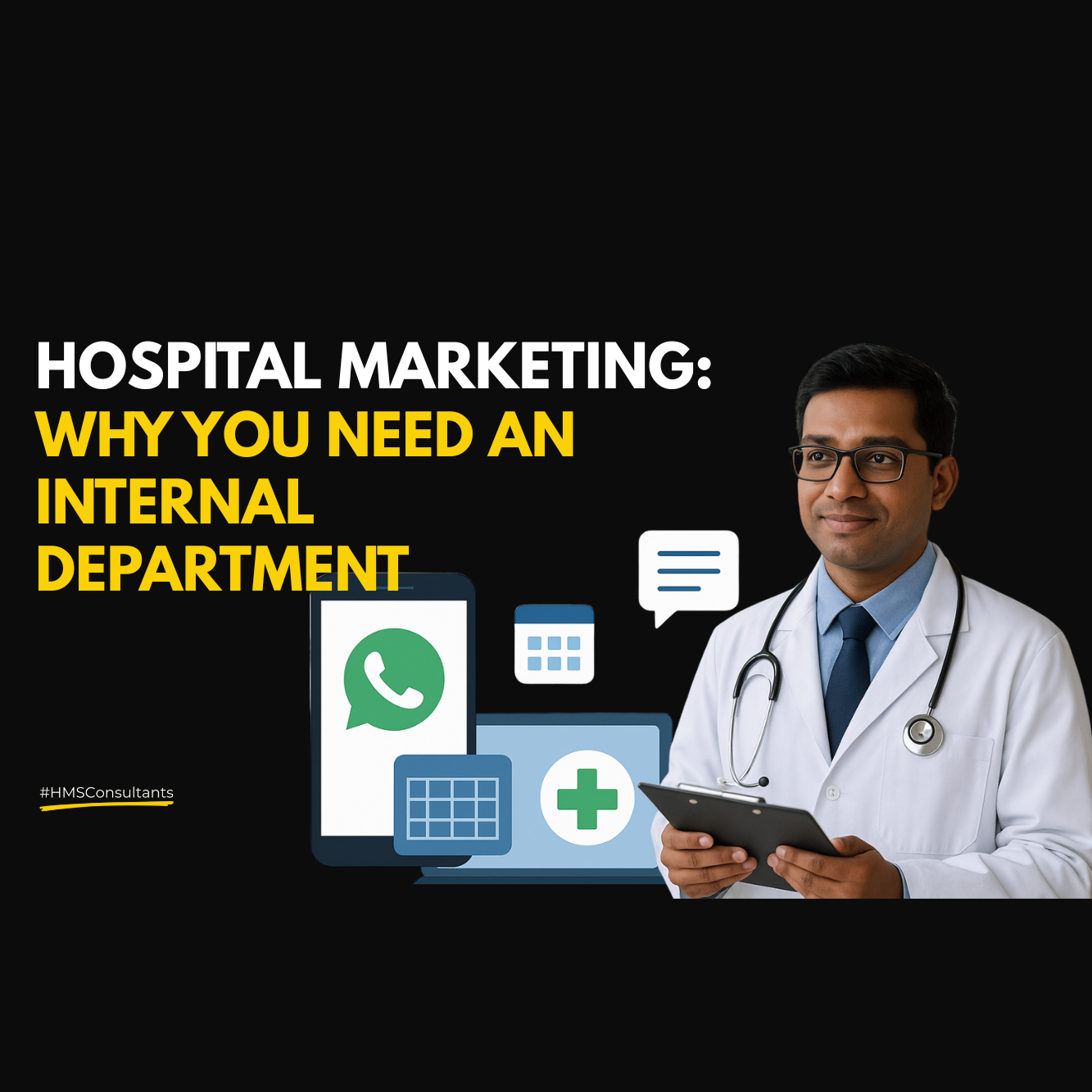
    Hospital marketing plays a crucial role in how patients choose and trust a hospital. For many hospitals in India, digital marketing begins with a simple decision: hire an agency. The expectation is clear: someone will make posts, run ads, manage the website, and patients will start coming in. But almost every hospital eventually reaches the same frustration:
    “We are spending money, but nothing is changing.”

    It isn’t because the agency is bad. It’s because hospitals assume that marketing is only about promotion. In reality, healthcare marketing begins much deeper, inside the hospital, not outside it.

    Agencies can amplify a message, but someone has to define that message. Someone has to understand why patients are not converting, why enquiries are dropping, why reviews are negative, and why the hospital next door is taking your patients. That responsibility does not lie with a creative team sitting in another city. It belongs to the hospital’s own marketing department.

    Agencies Execute. Marketing Departments Understand.

    A hospital is not a retail showroom where advertising alone drives business. A hospital is an ecosystem consisting of various components, including reception, nurses, doctors, a website, reports, billing, emergency response, discharge, follow-up, and more. One weak link can break the entire chain. An agency may be excellent at designing posts, but it cannot walk to the OPD and observe how many calls are missed every day.
    It cannot sit at the reception and notice how patients are spoken to.
    It cannot correct misinformation given on the phone.
    It cannot sense whether the hospital feels warm or mechanical.

    Marketing inside a hospital is not graphic design, it is patient psychology.

    Healthcare Communication Requires Sensitivity

    In real estate or retail, a flashy offer may work. In healthcare, the same style looks unprofessional, even unethical. Patients don’t want glamour. They want reassurance, clarity, and trust.

    A marketing department understands this because it resides within the hospital, absorbs the culture, knows the doctors, listens to patient queries, and faces real challenges every day.

    An agency may know how to promote. A hospital team knows what is worth promoting.

    Strategy Does Not Come From an Agency Brief

    When footfall is low, most hospitals ask the agency to “boost ads.” But lower footfall may not be a marketing problem at all.

    It could be:

    • Reception staff answering calls poorly
    • Enquiries are not being tracked
    • No follow-up system for previous patients
    • Negative reviews being ignored
    • Confusing website information
    • Delayed WhatsApp replies

    An agency cannot fix these. Only an internal marketing team can. Good marketing begins the moment a patient thinks of visiting, not at the moment a post is published.

    Content Cannot Be Outsourced Blindly

    This is where almost every hospital struggles.

    Agencies constantly request:

    • Doctor photos
    • Treatment details
    • Before-after cases
    • Patient stories
    • Surgery updates
    • Testimonials

    But inside the hospital, nobody collects them. There is no system, no coordinator, no content owner. So content becomes theoretical, repetitive, or copied.

    A marketing department solves this. They attend procedures (where allowed), capture stories, speak with doctors, collect testimonials, and ensure the content is authentic, not recycled from Google.

    Authentic content builds trust. Stock content doesn’t.

    When Agencies Stop, Everything Stops

    A hospital pays the agency monthly. The moment payments stop, marketing disappears:
    No posts, no campaigns, no progress. But a hospital with its own marketing department does not go dark. The systems continue, the communication continues, the patient engagement continues.
    Agencies are support.
    Departments are structure.

    Hospitals need both, but one cannot replace the other.

    The Most Successful Hospitals in India Have One Thing in Common

    Not bigger buildings.
    Not bigger budgets.
    Not more equipment.

    They have organised communication.

    Patients receive appointment reminders.
    Reviews are answered.
    Follow-ups are done.
    Websites are clear.
    Reception is trained.
    Reports are communicated.
    The hospital feels human.

    Agencies cannot manufacture these things.
    They can only amplify them.
    The foundation must come from inside.

    So, Do Agencies Become Useless?

    Not at all.

    Agencies bring creativity.
    They bring speed.
    They bring design, ads, websites, campaigns, SEO, and things a hospital cannot do internally without a large team.

    But agencies need direction. They need someone on the hospital side who understands the brand, the patients, the bottlenecks, and the priorities.

    That someone is the hospital marketing department.

    Agencies execute. Departments lead.

    Conclusion

    A marketing agency can be a powerful partner.
    But a hospital cannot depend on an outside team to understand internal gaps, reception behaviour, enquiry failures, patient emotions, or the experience inside the building.

    Healthcare requires sensitivity.
    It requires clarity.
    It requires trust.

    Trust is built through communication, not only online, but also within hospital walls.

    A hospital with an internal marketing department does not simply promote itself; it also fosters a culture of internal marketing. It learns, improves, engages, responds, listens, and grows.

    In healthcare, marketing is not just decoration. It is a responsibility.

    Contact Us HMS Consultants 

    Doctors Digital Marketing I Healthcare Marketing I Hospital Marketing Strategies I Marketing ideas for clinics I Marketing Trends 2025 I Medical Marketing I Social Media Marketing

    is something we strongly believe in, which means ‘Knowledge without application is the same as having no knowledge at all

    Akhil Dave

    Principle Consultant

    Ready to take your Personal Brand to the next level?

    Share your details below and we will connect with you to discuss your growth strategy.
    • Why Patients Don’t Trust Hospital Marketing, And How to Fix It

      Why Patients Don’t Trust Hospital Marketing, And How to Fix It

      Why Patients Don’t Trust Hospital Marketing, And How to Fix It

      Written by
      Published on
      Share This

      In every major Indian city, from Ahmedabad to Surat, Jaipur, Indore, Kochi, and Lucknow, hospitals are investing in digital marketing, branding, and social media. Yet, most patients still rely on recommendations, neighbours, relatives, or Google reviews before trusting a hospital.

      Why?
      Because patients don’t trust hospital marketing. Not fully. Not yet.
      This isn’t because healthcare advertising is bad. It’s because healthcare is different. Marketing a hospital is not like selling shoes, smartphones, or salon services. When a patient chooses a hospital, they are not buying a product; they are choosing a place where they believe their life, or their loved one’s life, will be safe.

      So when hospitals use promotional messaging, aggressive sales tactics, or generic content, patients feel uncomfortable, even suspicious.
      If hospitals want marketing to work, they must first understand why patients don’t trust it.
      Let’s break it down.

      Reason 1: Patients Have Been Misled Before

      Healthcare marketing in India is still young, and unfortunately, many early examples created distrust.

      • Big promises with poor service
      • Lowest-price campaigns that hide final billing
      • “World-class” claims in hospitals that lack basic infrastructure
      • Offers that sound commercial instead of clinical
      • Ads with exaggerated results

      Patients have seen:

      • Free checkups that become expensive tests
      • Discounts that disappear at billing
      • Promotions that don’t match reality

      So when patients see marketing, the first question that comes to their mind is:
      “Is this real, or is this a trap?”

      Trust is lost when marketing over-promises and the experience under-delivers.

      Reason 2: Healthcare Is Emotional, Not Commercial

      Patients don’t go to hospitals for something they want. They go because something is wrong, urgent, stressful, or scary.

      In that emotional moment:

      • Loud offers feel insensitive
      • Pushy ads feel unethical
      • “Limited time discount” sounds manipulative
      • Paid ads feel less trustworthy than genuine reviews

      Marketing cannot feel like selling. It must feel like helping. When hospitals communicate like retailers, patients feel uncomfortable.

      Reason 3: Lack of Transparency Creates Doubt

      One of the primary reasons patients lack trust in hospitals is the presence of information gaps.

      When a website says:

      • “Call us for pricing”
      • “Packages available”
      • “Affordable care”

      Patients think: “Why are they hiding details?”

      A patient is already anxious. They don’t want to negotiate for clarity.

      If hospitals simply explained:

      • Pricing ranges
      • What is included
      • Doctor timings
      • Expected waiting time
      • Process and documentation

      Trust would increase instantly. Transparency does not scare patients. Confusion does.

      Reason 4: Inconsistent Digital Presence Looks Suspicious

      Patients do not trust hospitals with:

      • No website
      • Old website
      • No doctor profiles
      • No reviews
      • No photos
      • No details about services
      • No Google Business listing

      When digital presence looks incomplete, patients feel the hospital is either:

      • Not serious
      • Too new
      • Unprofessional
      • Hiding something

      A clean, updated, and informative online presence is no longer optional; it is a testament to credibility.

      Reason 5: Reviews and Reputation Matter More Than Advertisements

      Most patients now check reviews before choosing a hospital. Even one negative review without a proper response creates doubt.

      A hospital might be clinically excellent, but if patients see:

      • Angry reviews
      • Complaints about staff behaviour
      • No response from management
      • Arguments in comment sections

      They assume the worst. Patients trust real experiences more than social media posts or advertisements.

      Marketing brings attention. Reputation brings trust.

      Reason 6: Medical Language Confuses People

      If a hospital’s communication sounds technical, complicated, or filled with medical jargon, patients mentally disconnect.

      For example:

      • “Phacoemulsification with PCIOL”
        vs.
      • “Painless cataract surgery with a foldable lens”

      Patients trust what they understand. Marketing is not for doctors; it is for patients. When hospitals speak clearly, simply, and patiently, trust grows.

      How to Fix Patient Distrust: The Trust-Building Approach

      Hospitals don’t need dramatic rebranding or aggressive campaigns. They need authenticity, transparency, clarity, and consistency.

      Here’s how trust is built.

      1. Stop Selling. Start Guiding.

      Hospitals earn trust when they help patients make informed decisions:

      • Explain symptoms
      • Share treatment options
      • Provide preventive advice
      • Use social media to educate, not advertise

      When patients learn from you, they trust you. The most trusted hospitals are educators, not promoters.

      1. Show Real People, Real Expertise

      Patients trust hospitals with:

      • Real doctor faces
      • Real credentials
      • Real photos of facilities
      • Real patient testimonials
      • Real success stories (shared ethically)

      Stock images, generic templates, and fake promises destroy trust. Authenticity wins.

      1. Fix Website and Google Presence

      A hospital website should answer every basic question:

      • Who are the doctors?
      • What treatments are available?
      • How much will it cost (at least approximate range)?
      • What are OPD timings?
      • How to book?
      • Parking availability?

      A complete Google Business Profile with updated photos, reviews, and doctor timings increases walk-ins overnight.

      1. Respond Fast. Respond Politely.

      Slow replies are the fastest way to lose trust. A patient asking for help is already anxious. A quick, kind response builds emotional confidence.

      Communication is as important as treatment.

      1. Collect Reviews, And Answer Them

      Don’t fear feedback.

      When hospitals reply to negative reviews calmly and professionally:

      • Public trust goes up
      • Patients feel heard
      • Future patients see responsibility

      Silence shows negligence. Response shows leadership.

      1. Communicate in Simple, Human Language

      Patients trust hospitals that speak like people, not textbooks. Explain procedures in plain words.
      Share instructions clearly. Remove fear, don’t add confusion.

      Healthcare is emotional. Language must be compassionate.

         Marketing Is Not About Making Hospitals Look Bigger, It’s About Making Patients Feel Safer

      When patients trust a hospital, they don’t need advertisements to convince them. When they don’t trust a hospital, no advertisement can save them.

      Trust is built through:

      • Clarity
      • Transparency
      • Responsiveness
      • Ethics
      • Respect

      Most hospitals try to improve marketing. Very few try to improve trust-building. The ones who do, never struggle with footfall.

      Conclusion

      Patients don’t distrust hospitals. They distrust the feeling of being misled, confused, ignored, or oversold.

      The good news? This can be fixed.

      Hospitals that communicate honestly, educate patients, demonstrate transparency, respond promptly, and maintain a clean digital presence naturally build trust without resorting to aggressive marketing.

      Because patients don’t choose hospitals based on ads. They choose hospitals based on confidence.

      Contact Us HMS Consultants 

      Doctors Digital Marketing I Healthcare Marketing I Hospital Marketing Strategies I Marketing ideas for clinics I Marketing Trends 2025 I Medical Marketing I Social Media Marketing

      is something we strongly believe in, which means ‘Knowledge without application is the same as having no knowledge at all

      Akhil Dave

      Principle Consultant

      Ready to take your Personal Brand to the next level?

      Share your details below and we will connect with you to discuss your growth strategy.

      • What India Is Secretly Asking About Healthcare Marketing (And What It Reveals About 2025)

        What India Is Secretly Asking About Healthcare Marketing (And What It Reveals About 2025)

        What India Is Secretly Asking About Healthcare Marketing (And What It Reveals About 2025)

        Written by
        Published on
        Share This

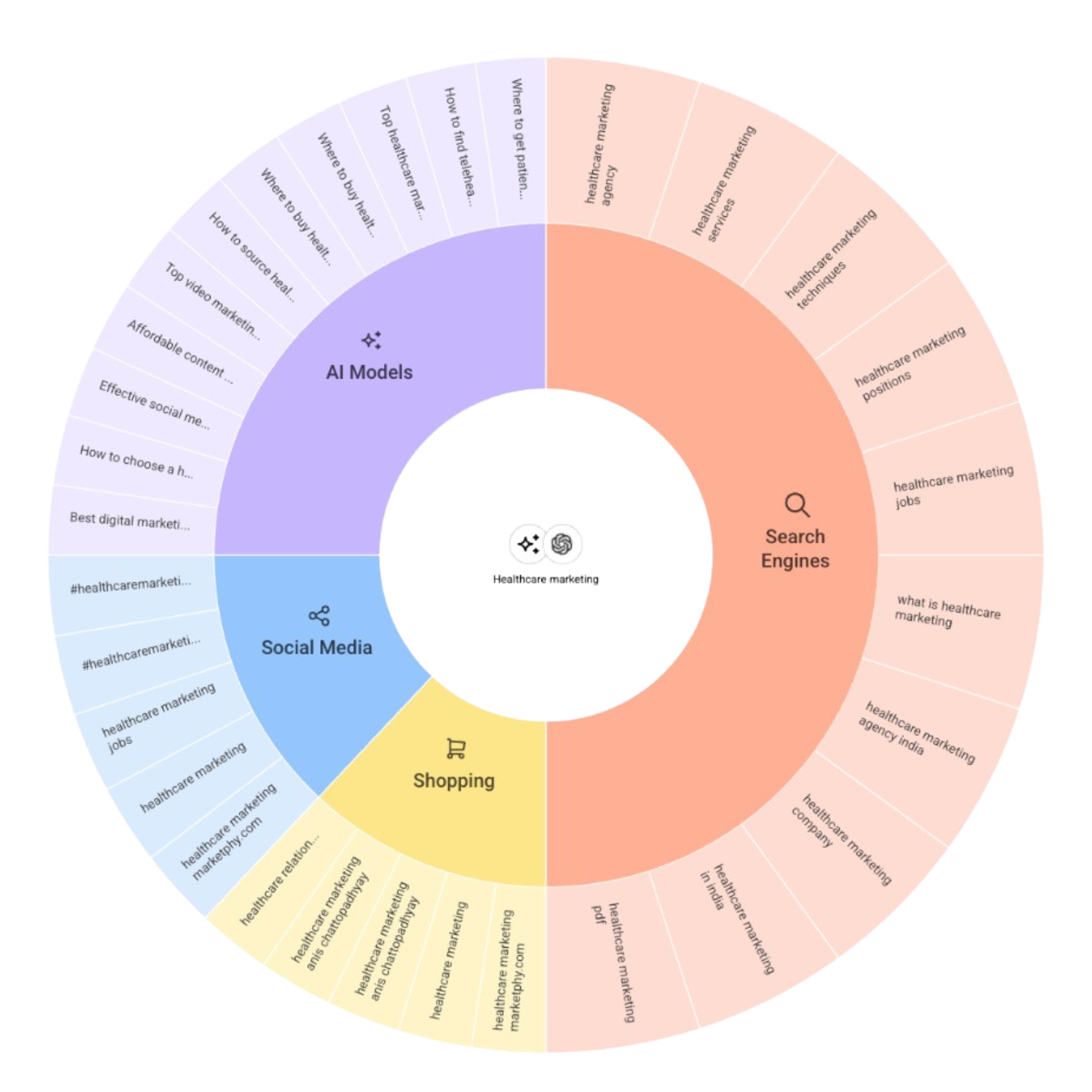
        When we recently analyzed what people across India are asking about “healthcare marketing” using AI-powered research tools like AnswerThePublic, the results were both fascinating and revealing.
        It wasn’t just about social media tips or Google Ads.

        Doctors, hospital owners, healthcare entrepreneurs, and startups are asking very different kinds of questions. Questions that reveal how the healthcare industry is maturing digitally, but still searching for clarity on how to connect business goals with meaningful marketing.

        At HMS Consultants, we always say marketing in healthcare isn’t about visibility alone; it’s about clarity before action.
        And this research proved exactly that.

        1. The Shift from Guesswork to Systems

        Across dozens of search queries, one theme was loud and clear people are looking for tools and systems, not shortcuts.

        Searches like:

        • “Best digital marketing platforms for healthcare providers in India”
        • “CRM software for healthcare marketing teams”
        • “Marketing automation tools for healthcare providers”

        show that hospitals and clinics are moving from one-off campaigns to structured marketing ecosystems.

        website 1
        IMAGE From AnswerThePublic

        Insight: 

        The next phase of healthcare marketing in India is process-driven, not personality-driven.
        Doctors no longer just want “someone to handle social media.” They want dashboards, ROI tracking, CRM-linked engagement data, and measurable growth.

        At HMS Consultants, we see this as a healthy sign an evolution from Doing without Knowing to Knowing before Doing.

        2. The Anxiety of Choosing the Right Partner

        Another strong pattern: the repeated search for the “best healthcare marketing agency,” “affordable marketing services for startups,” or “how to choose a healthcare marketing company.”

        Insight: 

        • There’s trust fatigue.
          Every clinic or hospital has likely worked with an agency at some point, but many are still unsure whether the partner truly understands the healthcare ecosystem.
        • The problem isn’t creativity it’s context.
          Healthcare requires a deeper understanding of ethics, compliance, and patient psychology. The challenge is not “who can run ads,” but “who understands patients, doctors, and the decision cycle.”

        That’s precisely where the consulting-first approach matters helping healthcare businesses make marketing decisions that are strategically sound, not just visually appealing.

        3. The New SEO: From Keywords to Credibility

        One of the most common clusters revolved around SEO and digital visibility:

        • “Where to buy healthcare SEO services”
        • “Effective social media strategies for healthcare businesses”
        • “Reviews of email marketing tools for healthcare professionals”

        Insight: 

        • Healthcare leaders know they need visibility but they’re equally aware that visibility without trust means little.
        • In today’s search algorithms (including AI-driven ones), Google and Bing don’t just track keywords they evaluate credibility signals: content quality, consistency, and empathy.

        So, while agencies chase algorithms, smart healthcare brands are now focusing on authority and authenticity the true foundations of SEO.

        As we tell our clients: “Search engines are learning to sense empathy.”

        4. The ROI Mindset: What Gets Measured, Gets Improved

        Queries like:

        • “How to measure ROI of healthcare marketing”
        • “Best analytics tools to track healthcare campaigns”
        • “Where to get patient engagement software”

        suggest a major shift healthcare businesses now expect marketing accountability.

        Insight: 

        • Indian healthcare marketing is entering a performance era.
        • Instead of vanity metrics like likes or followers, clinics and hospitals are focusing on patient inflow, appointment conversions, and referral networks.

        This is where clarity frameworks like HMS’s Knowing–Doing Framework™ make a measurable difference: aligning digital strategies with tangible business outcomes.

        5. The Rise of Healthcare Marketing as a Profession

        A surprising number of searches were about learning, certification, and skill development:

        • “Healthcare marketing webinars and workshops”
        • “Marketing certifications for healthcare professionals”
        • “Case studies on successful healthcare marketing in India”

        Insight: 

        • Healthcare marketing is no longer a side responsibility; it’s becoming a recognized career path.
        • Doctors, administrators, and even MBA professionals are looking to specialize not just in marketing, but in healthcare-specific marketing.

        This professionalization will be a major growth driver in the coming years and HMS Consultants is proud to be contributing to this transformation through our advisory work and educational collaborations.

        Key Takeaways for Healthcare Leaders

        InsightWhat It Means for You
        Tools over talentBuild a structured, measurable marketing system  not just social media presence.
        Partner with contextChoose advisors who understand healthcare, not just advertising.
        Credibility is the new SEOAuthenticity and authority drive visibility.
        ROI is not optionalTrack what truly matters awareness to appointments.
        Marketing is evolvingUpskill your internal teams to build a culture of growth.

        Conclusion: What India’s Questions Really Tell Us

        If you look closely, the questions themselves tell a story.
        India’s healthcare professionals aren’t confused they’re curious.
        They’re not looking for quick fixes they’re seeking direction.

        At HMS Consultants, we believe this is the right kind of curiosity.
        Because when curiosity meets clarity, healthcare brands evolve into trusted names.

        And that’s exactly what healthcare marketing in 2025 and beyond will be about.

        Email ID :- info@hmsconsultants.in

        Doctors Digital Marketing I Healthcare Marketing I Hospital Marketing Strategies I Marketing ideas for clinics I Marketing Trends 2025 I Medical Marketing I Social Media Marketing

        is something we strongly believe in, which means ‘Knowledge without application is the same as having no knowledge at all

        Akhil Dave

        Principle Consultant

        Ready to take your Personal Brand to the next level?

        Share your details below and we will connect with you to discuss your growth strategy.

        • Why Healthcare Businesses in India Need a Strategic Digital Marketing Consultant

          Why Healthcare Businesses in India Need a Strategic Digital Marketing Consultant

          Why Healthcare Businesses in India Need a Strategic Digital Marketing Consultant

          Written by
          Published on
          Share This

          Why “Just Doing Digital” Isn’t Enough Anymore

          Every healthcare brand today is online, but very few are visible where it matters.

          From hospitals running social media pages to doctors experimenting with reels, digital marketing in healthcare has exploded across India. Yet, behind all the noise, many setups are struggling to turn their digital presence into real patient footfall.

          That’s where a Digital Marketing Consultant, not just a service provider, makes all the difference. At HMS Consultants, we’ve seen this pattern across hundreds of hospitals and clinics. What’s missing isn’t effort, it’s strategy.

          What Does a Digital Marketing Consultant Actually Do?

          A digital marketing consultant is not an ad manager or content creator. Their job is to connect business goals to digital actions. In healthcare, this means:

          • Translating a hospital’s specialities into searchable, patient-friendly content.
          • Building strategies that align medical credibility with market visibility.
          • Ensuring compliance, consistency, and ROI from every digital channel.

          Think of them as the bridge between your doctors, your marketing team, and your patients.

          Why Healthcare Needs Specialised Consultants, Not Generic Agencies

          Healthcare is sensitive. You’re not selling gadgets, you’re communicating health decisions. Generic digital marketing agencies often miss this nuance.

          Let’s compare:

          Aspect

          Generic Digital Agency

          Healthcare Marketing Consultant (HMS)

          Goal

          Engagement, clicks, followers

          Patient acquisition, retention, and trust

          Approach

          Trial-and-error ad campaigns

          Data-driven strategy aligned to hospital goals

          Tone

          Promotional

          Informative, compliant, empathetic

          Knowledge

          Broad digital skills

          Deep understanding of healthcare systems, departments, and patient behaviour

          Compliance

          Often unaware of healthcare norms

          Adheres to ethical and regulatory guidelines

          A hospital that invests in consultancy doesn’t just “do marketing”, it builds a sustainable patient engagement system.

          The Indian Healthcare Context: A Market Ready for Strategy

          India’s healthcare industry is one of the fastest-growing in the world, yet digital maturity among hospitals and clinics remains uneven.

          Here’s what’s happening on ground:

          • Tier-2 and Tier-3 cities are witnessing a boom in private hospitals and diagnostics.
          • Doctors are turning into entrepreneurs, launching niche clinics and speciality centres.
          • Patients are researching symptoms, doctors, and reviews before every visit.
          • Government initiatives like Ayushman Bharat have expanded awareness of healthcare access.

          But while the market has evolved, marketing hasn’t caught up. Many hospitals still rely on outdated tactics like running ads without SEO, or managing Instagram without a clear content plan. A consultant bridges this gap with strategy and systems.

          What a Digital Marketing Consultant Brings to Healthcare Brands

          1. A 360° Growth Strategy

          Before running ads or posting reels, a consultant builds clarity:

          • Who are your target patients?
          • What are they searching for online?
          • Which treatments or departments generate the highest revenue?
          • Which digital channels deliver the highest ROI?

          For instance, at HMS, we begin every engagement with a Marketing Audit & Strategy Blueprint, mapping every service, audience, and platform into an actionable plan.

          2. SEO + GEO Optimization

          Patients today don’t search for “Dr. Sharma”, they search for “best diabetes doctor near me.”
          Consultants understand these search behaviours and optimise content for both:

          • SEO (Search Engine Optimisation) – ranking on Google.
          • GEO (Generative Engine Optimisation) – ranking on AI tools like ChatGPT and Perplexity that are becoming part of patient discovery.

          That means your brand isn’t just visible, it’s discoverable everywhere.

          3. Content That Educates, Not Advertises

          Healthcare audiences respond more effectively to knowledge than to noise. Consultants help design content calendars that balance:

          • Educational blogs (disease awareness, prevention)
          • Social media storytelling (patient journeys, doctor Q&As)
          • Video content (explainers, procedure insights)
          • WhatsApp-based patient engagement flows

          Every piece of content becomes a part of your digital patient journey, not random posts.

          4. Data-Driven Campaign Planning

          Consultants bring performance frameworks:

          • Setting the right KPIs (cost per appointment, not just impressions)
          • Tracking referral sources (website, GMB, WhatsApp)
          • Measuring real patient conversions through analytics

          This helps healthcare founders see marketing as a strategic investment, not an expense.

          5. Ethical and Compliant Marketing

          A true healthcare marketing consultant ensures your communication aligns with:

          • Indian Medical Council (IMC) regulations
          • NABH standards
          • CDSCO advertising guidelines
          • Data protection and patient consent norms

          In healthcare, compliance isn’t optional; it’s reputation insurance.

          Why India Needs Strategic Healthcare Marketing Consultants Now

          India’s healthcare competition is intensifying:

          • Multispecialty hospitals are launching regional branches.
          • New-age startups (like telehealth, diagnostics, femtech, wellness) are entering the space.
          • Patients expect global-level brand experiences, and they want them to be delivered locally.

          This shift demands strategic consultants who can merge:

          • Healthcare domain knowledge
          • Digital innovation
          • Ethical communication

          That’s exactly the sweet spot HMS Consultants operates in.

          HMS Consultants’ Approach

          Execution without strategy wastes effort; strategy without execution wastes time. Our consultancy bridges both by designing healthcare marketing blueprints that clients or their agencies can execute with confidence.

          We’ve helped:

          • Hospitals redefine their online identity
          • Clinics scale patient footfall via WhatsApp engagement
          • Startups validate healthcare concepts before launch
          • Medical founders align marketing KPIs with patient outcomes

          In short, we help you market smarter, not louder.

          How to Choose the Right Healthcare Marketing Consultant

          When shortlisting a consultant, look for these signs of credibility:

          • They understand both healthcare compliance and marketing trends.
          • They offer strategic planning, not just execution.
          • They customise for your geography, specialities, and audience.
          • They focus on long-term growth, not vanity metrics.

          If you’re being promised overnight results, that’s not consultancy, that’s clickbait.

          Conclusion: From Digital Presence to Digital Performance

          In India’s evolving healthcare market, the question is no longer “Do we need marketing?”  It’s “Are we doing it strategically, ethically, and sustainably?”

          A digital marketing consultant brings the clarity, structure, and accountability that every healthcare business needs to scale responsibly and effectively. Because in healthcare, trust builds brands, and strategy sustains them.

          Doctors Digital Marketing I Healthcare Marketing I Hospital Marketing Strategies I Marketing ideas for clinics I Marketing Trends 2025 I Medical Marketing I Social Media Marketing

          is something we strongly believe in, which means ‘Knowledge without application is the same as having no knowledge at all

          Akhil Dave

          Principle Consultant

          Ready to take your Personal Brand to the next level?

          Share your details below and we will connect with you to discuss your growth strategy.

          • Marketing Ethics in Healthcare: Balancing Growth and Patient Trust

            Marketing Ethics in Healthcare: Balancing Growth and Patient Trust

            Marketing Ethics in Healthcare: Balancing Growth and Patient Trust

            Written by
            Published on
            Share This

            When Marketing Meets Medicine

            Healthcare is not like any other industry.

            A restaurant can run a flashy “Buy 1 Get 1” ad, but when a hospital does something similar, it immediately feels uncomfortable. Why? Because healthcare communication touches something deeper, human trust.

            As hospitals and clinics across India increasingly adopt digital marketing, marketing ethics have become the invisible force that defines whether your brand earns credibility or criticism. At HMS Consultants, we often say: growth is good, but integrity is non-negotiable.

            What Do We Mean by “Marketing Ethics” in Healthcare?

            Marketing ethics refers to the set of principles that ensure every promotional activity is truthful, respectful, and compliant, especially when it deals with human health and emotions.

            In healthcare, this means:

            • Never promising medical outcomes.
            • Avoiding exaggerated claims like “100% cure” or “zero side effects.”
            • Using real images, data, and testimonials responsibly.
            • Ensuring patient consent before using their stories.
            • Staying compliant with local and national regulatory bodies.

            These rules don’t limit creativity; they define credibility.

            Why Marketing Ethics Matter More in Healthcare

            Patients don’t just buy a product; they trust a life-impacting decision. A slight exaggeration or misleading ad can cost a brand far more than it gains. Here’s why ethics are central to modern hospital marketing:

            1. Patients Are Smarter and More Connected

              • With digital search and reviews, misinformation spreads instantly.
              • Ethical marketing builds long-term trust and organic growth.
            2. Regulatory Scrutiny Is Rising

              • Advertising in healthcare is being closely monitored under the Indian Medical Council guidelines, CDSCO norms, and state health regulations.
              • Unethical claims can result in penalties, license issues, or reputational damage.
            3. Reputation Is the New ROI

              • In healthcare, a patient’s confidence is the currency.
              • Ethical content, transparency, and empathy drive both retention and referrals.


            Examples of Unethical vs Ethical Healthcare Marketing

            Scenario

            Unethical Approach

            Ethical Alternative

            Cosmetic clinic ad

            “Guaranteed results in one session!”

            “Results may vary. Book a consultation to explore suitable options.”

            Hospital ad

            “India’s No. 1 Heart Hospital” (without source)

            “Recognised by patients for excellence in cardiac care since 2008.”

            Doctor testimonial post

            Using before–and–after images without consent

            Sharing anonymised patient feedback with permission.

            Social media engagement

            Posting fear-based messages (“Don’t die of diabetes”)

            Educating with positive reinforcement (“Early detection saves lives”).

            Ethics doesn’t restrict, it refines communication.

            Building Ethical Marketing Frameworks: How Hospitals Can Get It Right

            At HMS Consultants, we help healthcare institutions adopt ethical frameworks that protect their brand’s credibility while achieving measurable growth. Here’s what that looks like:

            1. Fact-Based Messaging

            Every claim must be supported by data, accreditation, or certification.
            Example: Instead of “Best IVF Success Rate,” use “Our success rates are consistent with top NABH-accredited centres in India.”

            2. Responsible Storytelling

            Patient stories are powerful, but they must be accompanied by informed consent. Always use anonymised visuals or quotes unless explicit permission is granted.

            3. Empathy Over Exaggeration

            Health marketing works best when it educates, not alarms.
            Example: Replace “Avoid Cancer Before It’s Too Late” with “Early Screening Saves More Lives Than Treatment.”

            4. Transparent Digital Advertising

            Whether it’s a Facebook campaign or a Google Ad, every creative must include real images, correct specialisations, and disclaimers wherever necessary.

            5. Staff Training

            Often, the issue is not intent but awareness. Training marketing teams and front-line staff on compliance builds an ethical culture across departments.

            How Ethical Marketing Strengthens Hospital Brands

            Ethical marketing is not a compliance checklist; it’s a competitive advantage.

            • Improves Online Reputation: Genuine communication gets shared, rated, and remembered.
            • Builds Patient Loyalty: Patients trust brands that speak honestly and care beyond conversions.
            • Drives Better Word-of-Mouth: Ethical hospitals are recommended more, both online and offline.
            • Attracts Collaborations: CSR partners, government projects, and NGOs prefer working with value-driven brands.

            When a hospital’s marketing is ethical, its growth becomes sustainable.

            A Word of Caution: AI and the New Ethical Frontier

            With AI-generated content becoming increasingly common, ethics now extend to data, transparency, and the mitigation of bias. At HMS, we’re guiding healthcare businesses to use AI tools responsibly, ensuring content remains accurate, human-reviewed, and aligned with compliance norms. Generative Engine Optimisation (GEO) is the next big shift, but even AI visibility must come with authenticity.

            HMS Consultants’ Perspective

            At HMS Consultants, our philosophy is simple: “Knowing is Knowing & Doing is Doing™.”

            We don’t just talk about ethical marketing; we build frameworks that hospitals can implement. From brand audits to digital strategy planning, we ensure every message aligns with:

            • Regulatory compliance
            • Patient sensitivity
            • Data integrity
            • Strategic storytelling

            Our clients, from single-speciality clinics to multi-city hospital chains, have seen that when marketing becomes ethical, growth follows naturally.

            Conclusion: Growth Without Guilt

            The future of healthcare marketing in India is not about louder ads; it’s about louder integrity. Ethical marketing doesn’t just keep you compliant; it keeps you credible. Because at the end of the day, patients remember not what you claimed, but how you made them feel.

            Doctors Digital Marketing I Healthcare Marketing I Hospital Marketing Strategies I Marketing ideas for clinics I Marketing Trends 2025 I Medical Marketing I Social Media Marketing

            is something we strongly believe in, which means ‘Knowledge without application is the same as having no knowledge at all

            Akhil Dave

            Principle Consultant

            Ready to take your Personal Brand to the next level?

            Share your details below and we will connect with you to discuss your growth strategy.

            • The Rise of Hospital Marketing: Why Every Healthcare Setup Needs a Dedicated Team

              The Rise of Hospital Marketing: Why Every Healthcare Setup Needs a Dedicated Team

              The Rise of Hospital Marketing: Why Every Healthcare Setup Needs a Dedicated Team

              Written by
              Published on
              Share This

              From Word-of-Mouth to Workflows

              Not long ago, hospitals relied entirely on word-of-mouth referrals and a reputation built over years. But healthcare in India has transformed. Patients now make decisions after researching online, reading reviews, comparing facilities, and evaluating brand credibility. This shift has quietly given birth to a new and essential function inside hospitals, the hospital marketing department. What was once seen as a luxury is now a strategic necessity. As the ecosystem evolves, so too does the career and structure of hospital marketing itself.

              The New Reality: Marketing Is Now a Healthcare Function

              In today’s competitive healthcare landscape, marketing isn’t about flashy ads or celebrity endorsements; it’s about trust, information, and patient experience.

              Hospitals are realising that just being good at medicine isn’t enough; they also need to communicate that goodness effectively. That’s why even mid-sized and regional hospitals in India are now hiring:

              This signals a structural shift; marketing is no longer outsourced, it’s institutionalised.

              What’s Driving This Change

              1. Digital Patient Journeys

              Patients today search for symptoms, book appointments online, and review hospitals afterwards. Marketing teams now manage this whole cycle, from discovery to experience to recall.

              2. Rising Competition

              With every city seeing multiple new hospitals and diagnostic chains, differentiation through brand experience has become critical.

              3. Information Transparency

              Patients expect authenticity. A marketing team ensures the correct information, from doctor profiles to facility updates, is always accurate and accessible.

              4. Evolving Compliance

              Regulations surrounding medical advertising require marketing teams to be well-trained in ethical communication. That awareness often comes from specialised consultancy guidance.

              Inside a Modern Hospital Marketing Department

              A well-structured hospital marketing team today blends strategy, communication, and data. Here’s how most successful hospitals in India are structuring theirs:

              Function

              Core Responsibility

              Example Activities

              Strategy & Planning

              Aligns marketing with hospital growth goals

              Annual campaigns, department-wise promotion plans

              Digital Marketing

              Builds and manages online visibility

              SEO, social media, Google Business, paid ads

              Patient Engagement

              Improves satisfaction and recall

              WhatsApp campaigns, newsletters, and patient feedback loops

              Reputation Management

              Monitors and enhances public image

              Online review systems, media mentions, and crisis handling

              Analytics & Reporting

              Tracks ROI and patient acquisition trends

              Campaign reports, GMB insights, lead conversions

              In large setups, these departments operate almost like mini-agencies but aligned tightly with the hospital’s ethics, brand tone, and leadership.

              The Human Side of Hospital Marketing

              A common misconception is that marketing is “commercialising healthcare.” In reality, ethical hospital marketing is about communication, not commercialisation. Here’s what separates effective hospital marketers:

              • They understand clinical sensitivity, never exaggerating claims.
              • They communicate in simple patient language, not medical jargon.
              • They balance promotion with education, ensuring patients make informed decisions.
              • They collaborate closely with doctors and departments, not just designers or agencies.

              These roles require empathy as much as expertise, and that’s what makes this function so unique within healthcare.

              What This Means for Hospital Leaders

              For administrators, this shift changes how growth is planned. Instead of asking, “Should we hire an agency?” the question now becomes, “Do we have the right internal system to manage our marketing sustainably?”

              Hospitals that establish internal marketing systems see:

              • Consistent brand voice across all platforms.
              • Better collaboration between clinical and non-clinical teams.
              • Increased efficiency in patient acquisition.
              • Improved retention and recall rates through structured engagement.

              Strategic consultants can play a vital role in helping set up this foundation, defining roles, workflows, and performance metrics.

              Challenges Hospitals Face While Building Marketing Teams

              Even though the idea sounds progressive, the execution can be tricky. Here are the most common challenges we see while working with healthcare institutions:

              1. Undefined Roles – Teams often overlap between PR, admin, and marketing.
              2. Lack of Data Flow – Marketing rarely gets patient insights from CRM or the front desk.
              3. Inconsistent Branding – Multiple vendors or departments communicate differently.
              4. Compliance Confusion – Staff may not fully understand ethical and regulatory guidelines.
              5. Dependency on Outsiders – Without internal clarity, hospitals rely too heavily on agencies.

              Each of these challenges can be solved with structured systems and clear accountability.

              How Consultants Support This Transformation (Briefly)

              Specialised healthcare consultants like HMS guide hospitals in building marketing systems from the ground up:

              • Conducting marketing auditsa
              • Designing department workflows
              • Defining KPIs and patient communication protocols
              • Training in-house teams for ethical, data-backed marketing

              It’s not about doing the marketing for hospitals it’s about helping them do it better, strategically, and compliantly.

              The Future: Strategy Meets Empathy

              As healthcare evolves, so will marketing departments. Tomorrow’s hospital marketing professional will be:

              • Fluent in data and digital,
              • Sensitive to ethics and patient emotions, and
              • Grounded in strategy, not just execution.

              In essence, the marketing department will become the voice of the hospital’s purpose, the bridge between care delivery and community connection.

              Conclusion: The Age of the Informed Hospital

              India’s healthcare industry is no longer driven only by infrastructure; it’s driven by information and experience. Hospitals that invest in structured, ethical marketing teams will not only grow faster but also build deeper patient trust.

              Marketing is not just a healthcare career anymore, it’s becoming a core function that defines how healthcare is delivered, perceived, and remembered.

              Doctors Digital Marketing I Healthcare Marketing I Hospital Marketing Strategies I Marketing ideas for clinics I Marketing Trends 2025 I Medical Marketing I Social Media Marketing

              is something we strongly believe in, which means ‘Knowledge without application is the same as having no knowledge at all

              Akhil Dave

              Principle Consultant

              Ready to take your Personal Brand to the next level?

              Share your details below and we will connect with you to discuss your growth strategy.

              • Why HMS Consultants Is Not Just Another Marketing Agency

                Why HMS Consultants Is Not Just Another Marketing Agency

                Why HMS Consultants Is Not Just Another Marketing Agency

                Written by
                Published on
                Share This

                A Different Kind of Beginning

                In an era crowded with marketing agencies promising instant visibility, HMS Consultants was founded to create something far more meaningful: clarity.

                It is not a marketing agency. It is India’s first result-oriented healthcare marketing consultancy, built exclusively for doctors, hospitals, and healthcare entrepreneurs who seek sustainable and ethical growth, not superficial visibility or viral campaigns. The idea emerged from a simple realisation that most healthcare brands do not need more marketing; they need better direction.

                Why HMS Consultants Exists

                Healthcare in India is undergoing a rapid transformation. Patients today research symptoms, compare hospitals, and evaluate credibility before stepping through the door. Most healthcare providers, however, still struggle to communicate their true strengths effectively.

                HMS Consultants exists to bridge that gap between medical excellence and market expression. Its mission is to help hospitals, clinics, and healthcare startups articulate their value through strategy, not gimmicks.

                The consultancy’s approach blends:

                • Deep domain expertise drawn from decades in healthcare marketing,
                • AI-ready strategies built for a new era of discovery, and
                • Ethical frameworks that preserve patient trust.

                The goal is straightforward: to enable healthcare providers to grow strategically, compliantly, and with confidence.

                The Genesis of HMS Consultants

                The firm was founded by Akhil Dave, a healthcare marketing leader with over 25 years of experience in building hospital brands across India.

                After serving as marketing head for several renowned institutions and later co-founding Trizone Healthcare Consultants with Niraj Upadhyay of Trizone Communications Pvt. Ltd., Dave identified a crucial gap in the industry.

                Large hospitals could afford full-service agencies; smaller hospitals, speciality clinics, and rural healthcare setups could not. They often engaged digital agencies or internal teams without strategic guidance, resulting in fragmented messaging and wasted potential.

                To solve this, he established HMS Consultants with a clear purpose: to make professional healthcare marketing strategies accessible to every healthcare provider, not just the large networks.

                Empowering, Not Executing

                Traditional agencies focus on execution, posting, designing, and advertising. HMS Consultants focuses on empowerment.

                It:

                • Does not post content but defines what to post and why,
                • Does not run ads but ensures the right message reaches the right audience,
                • Does not chase trends but builds systems that outlast them.

                Every engagement begins with a marketing and internal audit, a detailed study of brand presence, enquiry handling, and patient journey gaps. The result is insight, not assumptions. Often, what needs fixing is not the campaign but the approach.

                What Makes HMS Consultants Different

                1. A Consultancy, Not an Agency

                Its role is to strategise, structure, and supervise marketing not execute it. HMS Consultants guides in-house teams or partner agencies through defined frameworks aligned with business objectives.

                1. Focused Exclusively on Healthcare

                Unlike generalist agencies, HMS Consultants specialises in healthcare. Every recommendation is rooted in medical compliance, patient psychology, and institutional ethics.

                1. Ethics Before Algorithms

                The organisation rejects exaggerated or fear-based messaging. Every piece of communication is transparent, responsible, and compliant with Indian healthcare advertising norms.

                1. Data Meets Empathy

                HMS Consultants balances analytics with empathy. Growth strategies are driven by data but communicated with sensitivity and clarity.

                Core Pillars: Brand | Footfall | Revenue

                Every assignment revolves around three measurable outcomes:

                1. Brand Recognition — helping hospitals and clinics become known for their authentic strengths.
                2. Patient Footfall Increase — turning digital visibility into real-world engagement.
                3. Revenue Growth — ensuring every marketing effort supports financial sustainability.

                Behind these pillars lie custom strategies informed by geography, speciality, competition, and patient behaviour.

                The SPARK Values

                The consultancy’s philosophy is built around SPARK – five guiding principles that shape its culture and client relationships.

                Value

                Essence

                Strategic Integrity

                Upholding ethics and aligning growth with transparency.

                Professional Nurturing

                Mentoring young professionals and client teams alike.

                Advanced Innovation

                Embracing AI, automation, and analytics responsibly.

                Responsive Transparency

                Practising openness and clarity in every process.

                Knowledge Excellence

                Delivering informed, high-quality solutions through continuous learning.

                These principles ensure that every project remains ethical, intelligent, and human-centred.

                Leadership Vision

                Akhil Dave envisions a future where healthcare marketing in India transitions from fragmented execution to consultative partnerships.

                As the Founding Chairman of the AHMP India Foundation, he also leads a nationwide network that promotes ethical and innovative healthcare marketing. The synergy between HMS Consultants and AHMP reflects a shared purpose: to raise industry standards and inspire collaboration across the healthcare ecosystem.

                Who HMS Consultants Works With

                The consultancy partners with:

                • Multi-speciality and mid-sized hospitals,
                • Speciality clinics and polyclinics,
                • Diagnostic chains, startups, and
                • Rural or semi-urban healthcare facilities.

                Each engagement begins with understanding the local reality, including patient demographics, competition, and operational challenges, before crafting a tailored strategy. The objective is to make healthcare marketing systematic, measurable, and meaningful.

                A Brief Look at How HMS Consultants Works

                Without functioning as an agency, HMS Consultants typically follows a structured process:

                1. Marketing Audit — to identify gaps and opportunities.
                2. Strategic Framework Development — to align goals, teams, and budgets.
                3. Implementation Guidance — to support internal or external teams.
                4. Performance Review — to refine and sustain long-term growth.

                The intent is not to create dependence but to build self-sufficient marketing systems within healthcare institutions.

                The Vision for the Future

                The future of healthcare marketing will not be defined by louder advertising but by smarter alignment. Hospitals of tomorrow will not ask, “Who manages our social media?”
                They will ask, “Who guides our marketing strategy?”

                HMS Consultants is helping build that future where every healthcare brand in India operates with strategic clarity, ethical grounding, and AI-enabled adaptability.

                Conclusion: Redefining Healthcare Marketing

                HMS Consultants began with one question: Can healthcare marketing be both ethical and effective?  Its journey proves that it can.

                By combining strategic insight, ethical communication, and a deep understanding of patient behaviour, HMS Consultants has become a trusted partner for hospitals and clinics seeking structure, sustainability, and integrity in their marketing efforts.

                It is not another agency. It is a consulting partner reshaping how healthcare marketing is understood and practised in India, brighter, cleaner, and future-ready.

                Doctors Digital Marketing I Healthcare Marketing I Hospital Marketing Strategies I Marketing ideas for clinics I Marketing Trends 2025 I Medical Marketing I Social Media Marketing

                is something we strongly believe in, which means ‘Knowledge without application is the same as having no knowledge at all

                Akhil Dave

                Principle Consultant

                Ready to take your Personal Brand to the next level?

                Share your details below and we will connect with you to discuss your growth strategy.

                • AI in Healthcare Marketing: Lessons from the KPMG FICCI Report 2025

                  AI in Healthcare Marketing: Lessons from the KPMG FICCI Report 2025

                  AI in Healthcare Marketing: Lessons from the KPMG FICCI Report 2025

                  Written by
                  Published on
                  Share This

                  From Ads to Intelligence: The Shift in Healthcare Marketing

                  Healthcare marketing has come a long way from billboards and newspaper ads. Today, hospitals and clinics are moving toward intelligent, data-driven systems that don’t just attract patients; they understand them.

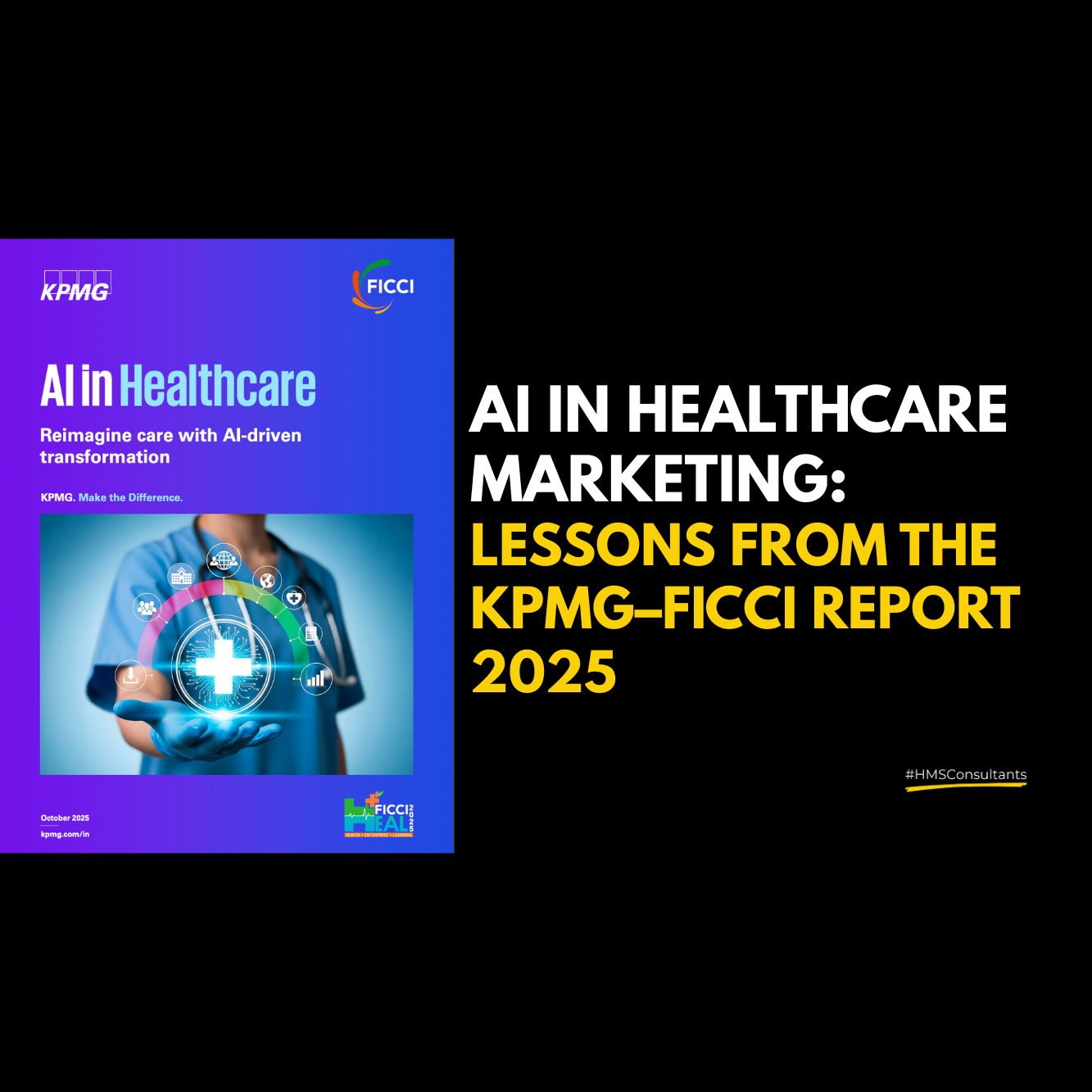
                  Artificial Intelligence (AI) is becoming the invisible hand behind this shift. As highlighted in the KPMG FICCI 2025 report, “Reimagine Care with AI-Driven Transformation,” AI is quietly reshaping how patients discover, evaluate, and stay connected with healthcare providers.

                  But AI isn’t just about technology; it’s about turning information into insight, and interaction into trust.

                  Why Marketing in Healthcare Is Different

                  Marketing in healthcare is unlike any other sector. It deals not with products or entertainment but with human well-being, privacy, and emotion. Traditional digital marketing models, focused on volume and visibility, often fail in this space because healthcare decisions are deeply personal.

                  That’s where AI adds context:

                  • Understanding what patients are searching for before they visit a hospital.
                  • Personalising communication without crossing ethical boundaries.
                  • Predicting what kind of follow-up or health reminder will improve compliance.

                  In other words, AI makes healthcare marketing less about selling and more about serving.

                  1. AI and the New Age of Patient Acquisition

                  For decades, patient acquisition relied on referrals, outdoor ads, and reputation.  Now, the journey begins online, on search engines, health portals, and even voice assistants.

                  AI helps healthcare providers understand where their next patient comes from and what triggers a decision to choose a particular hospital or doctor.

                  a. Smarter Search Visibility

                  Search algorithms now reward relevance and expertise. AI tools can analyse keywords, content trends, and patient intent, identifying what people are really looking for when they type “best diabetes care near me” or “painless cataract options.”

                  For hospitals, this means content and communication can be crafted intelligently:

                  • Blogs and pages that answer fundamental questions.
                  • Conversational chatbots that guide visitors.
                  • Ad campaigns that adapt to patient needs, not just demographics.

                  b. Predictive Patient Targeting

                  AI-based CRM systems can use past data, appointment patterns, demographics, and treatment preferences to predict when a patient might need follow-up care or when similar audiences are likely to convert.

                  Instead of blanket advertising, hospitals can focus on micro-segments such as:

                  • “Working professionals aged 35–50 at risk for diabetes.”
                  • “New parents in a 5-km radius searching for paediatric consultation.”

                  This level of precision not only reduces marketing costs but also improves conversion rates and customer satisfaction.

                  c. Reputation and Review Management

                  AI-driven sentiment analysis can scan hundreds of online reviews, comments, and patient feedback to identify service gaps and perception trends.

                  Hospitals can act on real insights:

                  “Patients appreciate our doctors but often complain about waiting time.”
                  “Follow-up communication after discharge is inconsistent.”

                  Such insights, when integrated into strategy, transform reputation management into experience improvement.

                  2. AI in Patient Engagement: Beyond First Impressions

                  Acquiring a patient is only half the journey. Retaining them and building trust that leads to referrals is where long-term growth lies. The FICCI–KPMG report emphasises that AI is becoming central to post-care engagement, helping hospitals stay connected with patients in meaningful ways.

                  a. Conversational AI for Ongoing Communication

                  Chatbots and WhatsApp-based assistants are becoming extensions of hospital front desks.
                  They can:

                  • Remind patients about follow-ups or lab results.
                  • Answer FAQs instantly.
                  • Share health education content in regional languages.

                  When designed ethically, these tools improve accessibility without feeling intrusive.
                  For smaller hospitals, this can be the simplest first step into AI adoption.

                  b. Predictive Health Reminders

                  Imagine a hospital system that knows a diabetic patient hasn’t booked their quarterly test and sends a friendly reminder at the right time.

                  AI-enabled CRMs can analyse visit frequency, medication adherence, and symptom logs to send timely, personalised nudges. This isn’t just marketing, it’s proactive care.

                  c. Personalised Health Education

                  AI can help tailor communication from newsletters to WhatsApp messages based on conditions, age, or health goals. For example:

                  • New mothers receive content about postpartum care.
                  • Senior citizens get fall-prevention tips.
                  • Fitness-minded patients receive guidance on preventive checkups.

                  Such micro-segmented education builds both engagement and trust, turning hospitals into knowledge partners.

                  3. The Ethical Edge: AI With Empathy

                  As AI becomes more integrated into marketing, one question must always guide its use: “Are we helping patients make better decisions, or just influencing them?” Healthcare marketing must remain rooted in ethics, transparency, respect, and responsibility. AI can assist without overstepping if hospitals:

                  • Obtain explicit consent for data collection.
                  • Use anonymised insights rather than personal identifiers.
                  • Prioritise accuracy and authenticity in all automated messages.

                  This approach aligns perfectly with the ethical marketing principles that HMS Consultants advocates and helps healthcare brands build long-term credibility.

                  4. How AI Strengthens Marketing Teams

                  AI doesn’t replace marketers, it augments them. With automation handling repetitive tasks, teams can focus on creativity, strategy, and human connection.

                  Here’s what AI can handle effectively:

                  • Routine enquiry responses.
                  • Report generation (campaign performance, patient trends).
                  • Scheduling and follow-ups.
                  • Audience segmentation and ad targeting.

                  And here’s where humans must still lead:

                  • Brand tone and storytelling.
                  • Cultural sensitivity and empathy.
                  • Crisis communication and patient reassurance.

                  The strongest hospitals will combine both AI for efficiency and humans for emotion.

                  5. Building a Patient Acquisition & Engagement Framework

                  Hospitals ready to implement AI-assisted marketing should start with a simple, structured plan:

                  Stage

                  Objective

                  Tools & Methods

                  1. Audit

                  Identify current digital and CRM gaps

                  Marketing audit, patient journey mapping

                  2. Integrate Data

                  Connect appointment, CRM, and website data

                  Unified patient database

                  3. Automate Responsibly

                  Introduce AI chatbots or campaign triggers

                  WhatsApp automation, CRM workflows

                  4. Personalise Communication

                  Send targeted content

                  AI-driven segmentation

                  5. Measure & Improve

                  Track engagement & conversion metrics

                  Dashboard analytics, review mining

                  Small, ethical automation steps today can lay the foundation for sustainable AI-powered marketing tomorrow.

                  The HMS Perspective

                  HMS Consultants views AI not as a trend, but as a tool for strategic clarity. The consultancy helps healthcare providers:

                  • Structure their patient acquisition and retention journeys.
                  • Identify where AI can support communication, not replace it.
                  • Build marketing systems aligned with ethical and operational integrity.

                  The focus remains on strategy, not software, ensuring every technology adopted genuinely enhances the patient experience.

                  Conclusion: Where Intelligence Meets Intention

                  AI is transforming how hospitals connect with people, but success lies not in automation, but in alignment. When strategy, empathy, and technology meet, patient acquisition becomes easier, and engagement becomes enduring.

                  The future of healthcare marketing will not be decided by who has the most data, but by who uses it most responsibly.

                  Written by Tusharika Ranjan

                  Doctors Digital Marketing I Healthcare Marketing I Hospital Marketing Strategies I Marketing ideas for clinics I Marketing Trends 2025 I Medical Marketing I Social Media Marketing

                  is something we strongly believe in, which means ‘Knowledge without application is the same as having no knowledge at all

                  Akhil Dave

                  Principle Consultant

                  Ready to take your Personal Brand to the next level?

                  Share your details below and we will connect with you to discuss your growth strategy.

                  • Time as Currency: Why Speed of Care is the New Marketing Advantage

                    Time as Currency: Why Speed of Care is the New Marketing Advantage

                    Time as Currency: Why Speed of Care is the New Marketing Advantage

                    Written by
                    Published on
                    Share This

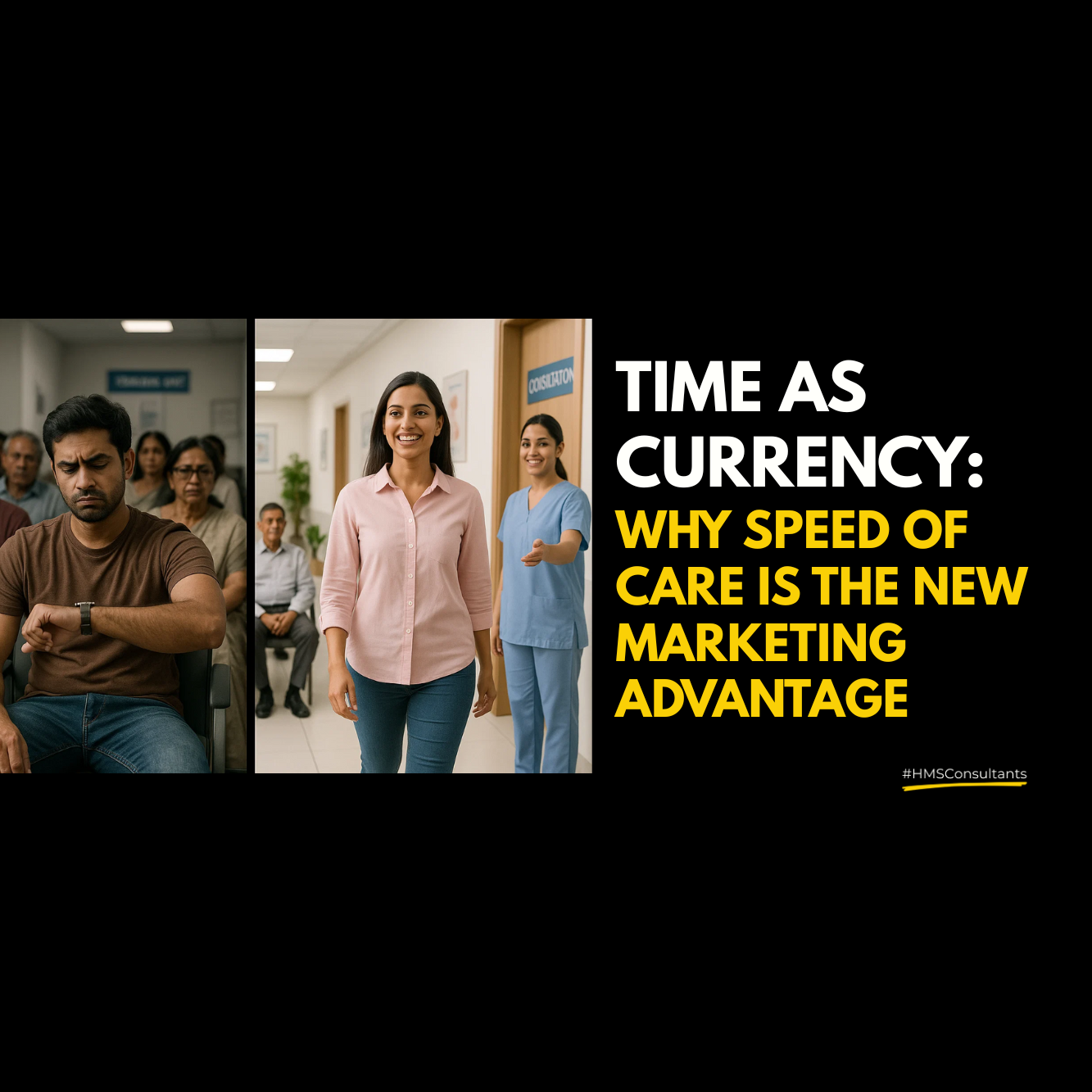
                    In today’s world, time is the one thing patients value as much as good treatment. A clinic that makes patients wait an hour before a consultation risks losing them to a competitor who respects their schedule. From the waiting room to test reports, speed has become one of the most powerful hospital marketing strategies.

                    A healthcare marketing consultant will tell you this: faster care does not just improve efficiency, it creates trust. Patients associate speed with professionalism, reliability, and respect. For clinics and hospitals in India, learning to treat time as currency is a game-changing healthcare marketing technique.

                    Why Time Matters in Healthcare Marketing

                    Patients no longer compare clinics only on the quality of doctors. They also compare experiences. One of the strongest drivers of satisfaction is speed.

                    • Shorter waiting times show that you respect a patient’s time.
                    • Faster report delivery reassures patients that you value their health.
                    • Quick follow-ups signal reliability and care beyond the visit.

                    In healthcare marketing in India, word of mouth spreads quickly. A clinic known for “never making patients wait too long” can outshine a larger hospital that overlooks this simple factor.

                    Key Areas Where Speed Builds Trust

                    1. Waiting Room Experience

                    Patients often decide how they feel about a clinic before meeting the doctor. If the wait feels endless, frustration builds. On the other hand, a system that moves smoothly leaves a lasting impression.

                    • Use digital token systems.
                    • Offer SMS updates when it’s close to their turn.
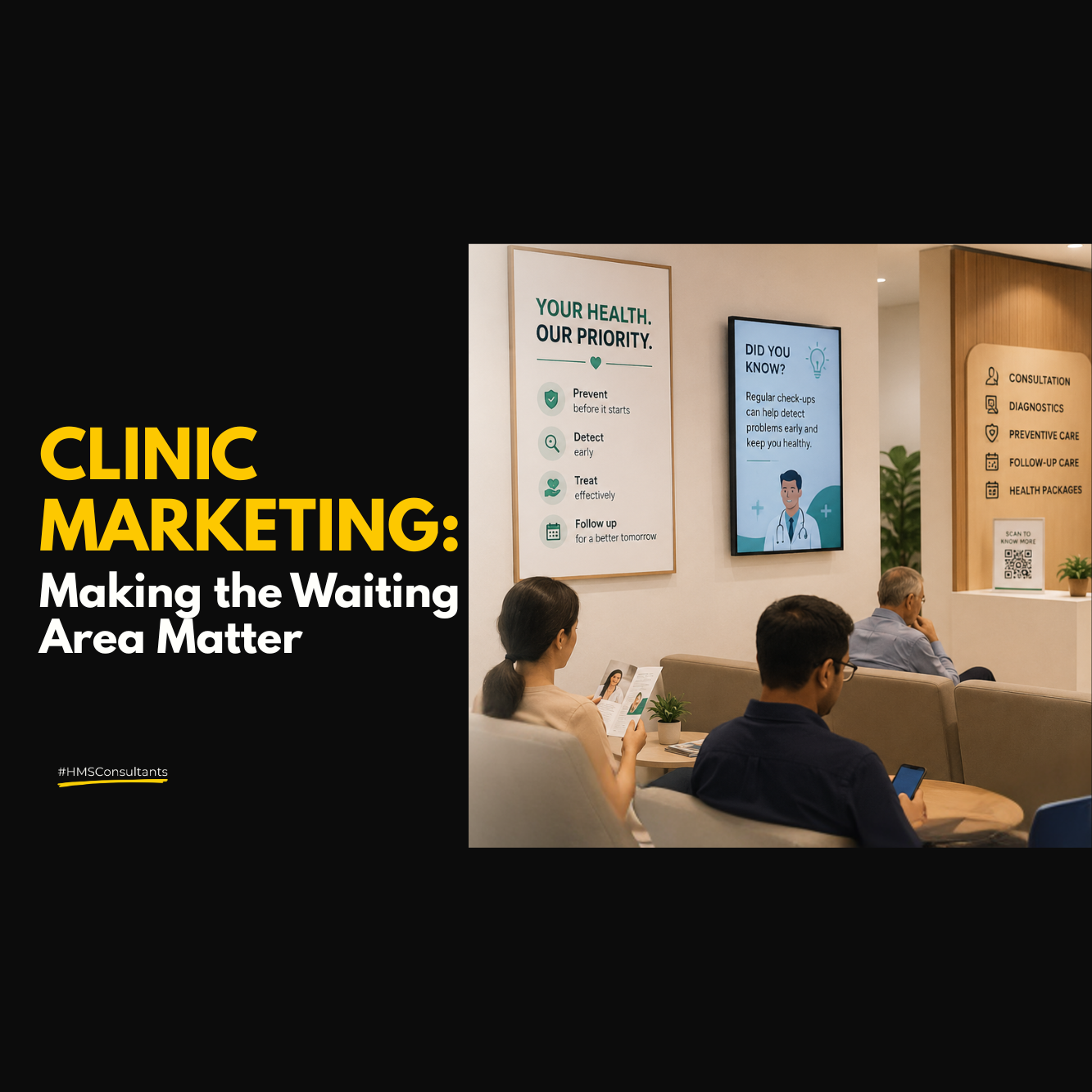
                    • Keep waiting areas engaging with health tips, not just empty time.


                    2. Appointment Booking

                    Ease of booking is as important as the consultation itself.

                    • Enable WhatsApp or website bookings.
                    • Allow rescheduling without hassle.
                    • Respond quickly to calls and inquiries.


                    3. Report Delivery

                    A big pain point in Indian healthcare is the delay in test results. Clinics that provide quicker report delivery instantly win loyalty.

                    • Offer digital reports via email or app.
                    • Send SMS alerts when results are ready.
                    • Keep realistic timelines and stick to them.


                    4. Follow-Ups and Feedback

                    The patient journey does not end at discharge.

                    • A next-day call asking “How are you feeling?” shows speed and care.
                    • Quick responses to online queries strengthen your digital reputation.

                    Takeaway: Every small time-saving touchpoint becomes a marketing advantage.

                    The Digital Angle: How Technology Reduces Delays

                    Digital marketing for healthcare is not just about social media. Technology can directly reduce delays and market your clinic at the same time.

                    • Online payment systems cut billing queues.
                    • Teleconsults save travel time for patients.
                    • Automated reminders reduce no-shows and keep schedules on track.
                    • Chatbots handle basic queries instantly, giving staff more time for care.

                    When patients see that your systems respect their time, they associate your clinic with professionalism. That is branding without an ad budget.

                    Case Example: Fast Beats Big

                    A mid-sized diagnostic lab in Bengaluru reduced report delivery times by 30 percent by switching to digital reporting and WhatsApp notifications. Within six months, their Google reviews highlighted “fast results” more often than “low cost.”

                    Meanwhile, a larger competitor continued to rely on paper-based reports. Despite bigger marketing budgets, patients shifted preference because speed built trust.

                    Consulting Lens: Time as a Strategic Differentiator

                    For a healthcare marketing consultant, speed is no longer just an operational goal. It is a hospital marketing strategy. In competitive Indian cities where patients have many options, reducing wait times and ensuring faster service can be more powerful than discounts or ads.

                    It also impacts online reputation, since most reviews mention time: “waited too long” or “quick and efficient.” Addressing this makes every other marketing effort stronger.

                    Practical Techniques for Clinics

                    1. Audit Your Delays: Track where patients wait longest and fix those steps.
                    2. Invest in Small Tech: Even simple appointment apps reduce waiting.
                    3. Set Clear Expectations: If reports take 24 hours, deliver in 20, not 48.
                    4. Train Staff for Responsiveness: A quick answer at the desk builds confidence.
                    5. Promote Your Speed: Highlight “same-day reports” or “10-minute booking” in your campaigns.

                    Conclusion

                    In healthcare, patients expect quality. But what truly surprises them is speed. Clinics that treat time as currency do more than reduce queues. They show respect, build trust, and create experiences patients remember.

                    In a competitive Indian market, hospital marketing strategies that focus on saving time can be the difference between a one-time visitor and a lifelong patient. Faster care is not just good service. It is smart marketing.

                    Written by Maitri Desai

                    Doctors Digital Marketing I Healthcare Marketing I Hospital Marketing Strategies I Marketing ideas for clinics I Marketing Trends 2025 I Medical Marketing I Social Media Marketing

                    is something we strongly believe in, which means ‘Knowledge without application is the same as having no knowledge at all

                    Akhil Dave

                    Principle Consultant

                    Ready to take your Personal Brand to the next level?

                    Share your details below and we will connect with you to discuss your growth strategy.

                    • The Role of Telehealth in Marketing: From Access to Advantage

                      The Role of Telehealth in Marketing: From Access to Advantage

                      The Role of Telehealth in Marketing: From Access to Advantage

                      Written by
                      Published on
                      Share This

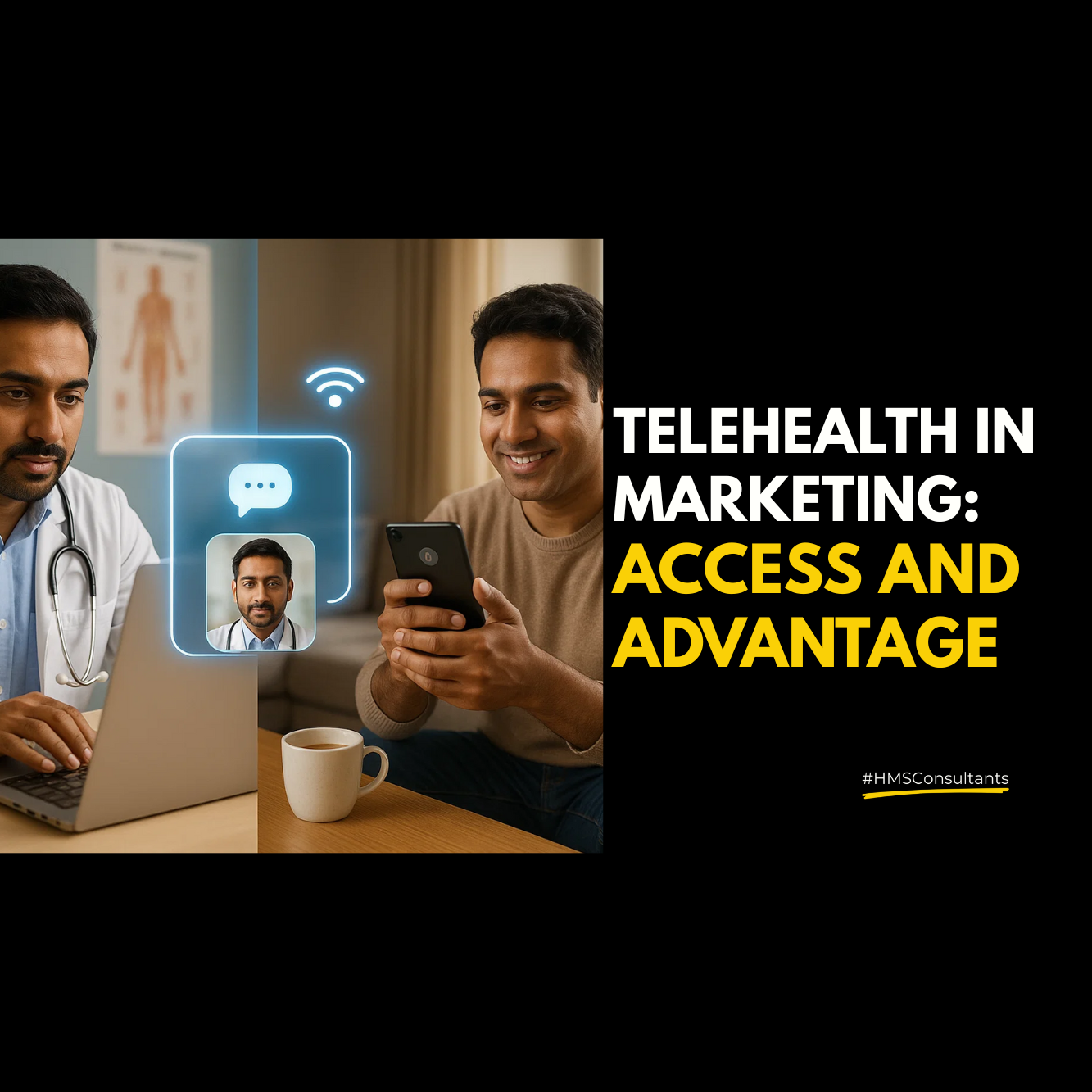
                      Telehealth is the delivery of healthcare through digital platforms allowing patients to consult doctors remotely through video, phone, or online apps. Once seen as an emergency fix during the pandemic, it has now become a permanent part of patient care.

                      In India, telehealth bridges the gap between patients and providers, especially where distance, time, and access create barriers. But beyond being a convenient service, online consultation has quickly evolved into a powerful tool for healthcare branding. For hospitals and clinics, telehealth marketing in India is not just about showcasing technology; it is about signaling accessibility, trust, and innovation.

                      Telehealth as a Service

                      For patients, telehealth represents care that adapts to their circumstances. It offers:

                      • Access to specialists: Patients in Tier-2 and Tier-3 towns can connect with urban doctors without travel.
                      • Convenience for busy lives: Working professionals and families save time on routine consultations.
                      • Continuity of care: Chronic care and post-surgery consultation follow-ups can be managed from home.
                      • Lower costs: Reduced travel and shorter visits help both patients and providers save resources.

                      By making healthcare simpler and more accessible, telehealth proves itself as more than just a digital add-on it becomes a patient-first service.

                      Telehealth as a Marketing Advantage

                      What began as a necessity is now a brand strength. Clinics that promote telehealth signal:

                      • Accessibility: Care goes beyond the walls of the hospital.
                      • Innovation: Adoption of new tools shows adaptability.
                      • Patient-first identity: Services are shaped around patients’ needs.

                      In crowded healthcare markets, telehealth becomes a differentiator. It positions the clinic as forward-looking and builds credibility with patients who value modern, flexible options.

                      Online Consultation as a Branding USP

                      Healthcare branding is no longer defined only by equipment or infrastructure. Patients increasingly weigh convenience and communication. Online consultation becomes a branding USP because it conveys:

                      • Modernity: The clinic adapts to digital expectations.
                      • Reliability: Availability online signals commitment to care.
                      • Inclusivity: Patients from distant or underserved areas feel connected to the hospital.

                      When a hospital highlights “Teleconsultation Available” on its website or campaigns, it communicates innovation and care in one clear message.

                      Marketing Ideas for Telehealth in India

                      Clinics can weave telehealth into their marketing in practical ways:

                      1. Website integration: Prominent “Book Online Consultation” buttons on homepages.
                      2. Social media campaigns: Reels or carousels showing ease of use.
                      3. Health days & events: Tie telehealth offers to World Heart Day, Diabetes Day, or awareness campaigns.
                      4. WhatsApp communication: Share links for direct booking and reminders.
                      5. Doctor branding: Doctors sharing their online consultation slots in personal branding efforts.

                      These steps combine service delivery with visibility, making telehealth part of everyday healthcare marketing techniques.

                      Patient Stories as Marketing Proof

                      Nothing builds credibility like real experiences. Showcasing how telehealth impacts lives can strengthen trust:

                      • A rural patient consulting a specialist in another city.
                      • A young professional saving hours with a video follow-up.
                      • An elderly patient accessing care without stressful travel.

                      When shared through blogs, videos, or testimonials, these stories humanize the service and make online consultation feel trustworthy and approachable.

                      Challenges in Telehealth Adoption

                      Telehealth also faces barriers that clinics must acknowledge:

                      • Digital literacy gaps: Not all patients are comfortable with apps or video tools.
                      • Connectivity issues: Poor internet in rural regions can disrupt consultations.
                      • Trust concerns: Some patients feel virtual care cannot equal in-person visits.

                      Addressing these challenges through simple instructions, clear reassurance, and hybrid models (online + offline care) ensures smoother adoption.

                      Practical Steps for Clinics

                      1. Train staff: Reception and support teams must guide patients step by step.
                      2. Promote clearly: Emphasize convenience and safety in campaigns.
                      3. Blend with offline: Position telehealth as an extension of in-person care.
                      4. Track usage: Monitor adoption rates and feedback for improvement.
                      5. Embed in branding: Make online consultation part of the hospital’s identity.

                      Conclusion

                      Telehealth in India has evolved into more than just a digital tool. It is both a service that removes barriers and a marketing advantage that shapes brand perception.

                      For patients, online consultation means convenience, continuity, and choice. For clinics, it means differentiation, visibility, and loyalty. Telehealth marketing in India shows that the future of healthcare branding lies not only in advanced treatments but also in how accessible and patient-first a hospital feels.

                      Written by Maitri Desai

                      Doctors Digital Marketing I Healthcare Marketing I Hospital Marketing Strategies I Marketing ideas for clinics I Marketing Trends 2025 I Medical Marketing I Social Media Marketing

                      is something we strongly believe in, which means ‘Knowledge without application is the same as having no knowledge at all

                      Akhil Dave

                      Principle Consultant

                      Ready to take your Personal Brand to the next level?

                      Share your details below and we will connect with you to discuss your growth strategy.