Search results for: “marketing trends”

  • How to Create an Effective Website for Your Hospital/clinic

    How to Create an Effective Website for Your Hospital/clinic

    How to Create an Effective Website for Your Hospital/clinic

    Written by
    Published on
    Share This

    If you’re a hospital owner, medical director, or healthcare entrepreneur searching “website for hospital,” you’re not alone. In today’s digital-first world, your hospital’s website is no longer just a brochure, it’s your first impression, your digital reception desk, and often your main source of patient acquisition. Yet, so many hospitals continue to operate with outdated, confusing, or poorly structured websites that drive patients away.

    In this blog, we’ll break down what truly makes a hospital website effective and why getting it wrong can silently cost you patients every single day.

    Why Your Hospital Website Matters More Than Ever

    Before we get into features and structure, let’s be clear: your website isn’t just a design asset. It’s a business tool.

    • Patients are Googling symptoms and nearby hospitals before making a call.
    • Referrals check your digital presence before they recommend you.
    • Insurance companies, corporate clients, and new doctors judge credibility from your website.

    In short, if your website doesn’t inspire trust and provide clarity, you’re losing patients.

    Top Reasons Hospital Websites Fail (And How to Fix Them)

    1. Cluttered or Confusing Homepage

    If a patient can’t figure out what you offer within 5 seconds, you’ve lost them. A good homepage should immediately show:

    • What kind of care you offer
    • Where you’re located
    • How to get in touch or book

    Fix: Use clear headers like “24×7 Emergency Care in Ahmedabad” or “Book Your Appointment in 3 Clicks”.

    2. No Mobile Optimization

    More than 70% of patients browse on their phones. A site that doesn’t load well or navigate easily on mobile is instantly frustrating.

    Fix: Ensure your website is mobile responsive and loads in under 3 seconds.

    3. Missing Key Information

    Too many hospital websites forget to list:

    • Doctor profiles
    • Visiting hours
    • Departments & services
    • WhatsApp/Call buttons

    Fix: Include a well-structured “About Us” and “Doctors” section, plus a visible contact bar across all pages.

    4. No Clear Call to Action (CTA)

    If there’s no button or link telling patients what to do next, they’ll leave. A CTA could be:

    • “Book Appointment”
    • “Consult Now on WhatsApp”
    • “Call Emergency Room”

    Fix: Every page should guide the patient toward the next step.

    5. Poor SEO & Metadata

    You may have a beautiful website, but if it’s not optimized for search, nobody will find it.

     Fix: Use targeted keywords like:

    • “Best hospital in [City]”
    • “Emergency care near me”
    • “24×7 ICU in [Location]”

    Include meta titles, alt text for images, and structured content with H1-H3 tags.

    Must-Have Features for a Great Hospital Website

    Here’s a checklist to guide your web development team:

    • Fast loading speed (under 3 seconds)
    • Clear services overview
    • Searchable doctor directory
    • Mobile-first design
    • WhatsApp or instant call button
    • Appointment form or booking integration
    • Patient testimonials or Google Reviews
    • Integrated Google Maps & address
    • Chatbot or enquiry form
    • Basic accessibility features (font size, color contrast)

    Content That Converts Patients

    A good hospital website doesn’t just list services it educates and reassures.

    Instead of just writing “Orthopaedics,” explain: “From fractures to joint replacements, our ortho team brings 20+ years of surgical experience. Book a consultation today.”

    Instead of listing doctor names only, write: “Dr. Meena Gupta, MD Pediatrics ith 15 years of experience in newborn and child care.” Well-written, human-centered content increases trust and conversions.

    Final Thoughts : Your Website is Your Digital Hospital

    Just like you wouldn’t leave your OPD messy or your reception unstaffed, don’t leave your website unclear or outdated.

    Patients are visiting your digital front door before they ever walk in physically.

    Invest in it wisely. Review it regularly. Optimize it continuously.

    Want to check if your website is doing the job? Just open it on your phone and ask: “If I were a new patient, would I book?”

    Written by Tusharika Ranjan

    Doctors Digital Marketing I Healthcare Marketing I Hospital Marketing Strategies I Marketing ideas for clinics I Marketing Trends 2025 I Medical Marketing I Social Media Marketing

    is something we strongly believe in, which means ‘Knowledge without application is the same as having no knowledge at all

    Akhil Dave

    Principle Consultant

    Ready to take your Personal Brand to the next level?

    Share your details below and we will connect with you to discuss your growth strategy.

    • How Digipin will Revolutionize Healthcare Access in India

      How Digipin will Revolutionize Healthcare Access in India

      How Digipin will Revolutionize Healthcare Access in India

      Written by
      Published on
      Share This

      In the middle of India’s rapid digital evolution, a silent yet powerful shift has arrived: Digipin. Launched by India Post, this new 11-character digital address system is more than a tech upgrade. It’s a chance to reimagine how patients find care, how emergency services respond, and how small healthcare businesses become visible in an overcrowded market.

      While Digipin has been introduced for all types of address simplification, its potential impact on healthcare delivery, emergency care, and medical logistics deserves special attention.

      What is Digipin?

      Digipin is India’s AI-powered geolocation-based digital address, developed by India Post under the Ministry of Communications. Each Digipin is an 11-character code that maps to your precise location, usable on any map app. No more directions like “next to the blue gate” or “behind XYZ building.” Just a code that leads exactly where you are. Visit digipin to generate yours.

      Why Digipin Matters for Healthcare

      1. Emergency Care: Time Lost is Life Lost

      Think of an ambulance navigating small lanes in a congested city. Or a first responder trying to reach a home for a cardiac arrest case. In emergency care, location clarity can literally save lives.

      With Digipin:

      • Hospitals can share their precise location in seconds
      • Ambulances can reach exact entry gates, not just the road outside
      • Patients in need can guide responders even from unfamiliar areas

      This is not just about convenience, it’s about eliminating critical delays in response time.

      2. Reducing Missed Appointments

      Many patients skip appointments simply because they can’t find the clinic. Especially in tier 2 and 3 cities, or in dense urban neighborhoods where addresses are unclear, location confusion equals patient loss. Sharing a Digipin in appointment reminders, websites, and WhatsApp replies can cut through that confusion instantly.

      3. Making Small Clinics and Startups Discoverable

      If you’re a new clinic, wellness center, or diagnostic lab, you’re probably not showing up where it matters. Patients won’t drive 30 minutes to search for a new name unless they know exactly how to reach you.

      Digipin can:

      • Improve your Google Maps accuracy
      • Strengthen your SEO by linking to verified digital addresses
      • Help you stand out in hyperlocal searches

      4. Home Healthcare, Reinvented

      From physiotherapy sessions to sample collections, home healthcare is growing fast but it’s also logistically challenging. When staff can rely on one fixed Digipin instead of vague WhatsApp pins or back-and-forth calls, it reduces time, confusion, and the risk of missing or delaying visits.

      5. A Marker of Digital Trust

      Today’s patients are more digitally informed than ever. When they see that a provider has a Digipin, a verified GMB listing, and seamless digital communication, it builds trust before they even step in. Early adoption of Digipin isn’t just smart it signals that your practice is future-ready, accessible, and aligned with modern patient expectations.

      How to Make Digipin Work for You

      • Add it to your Google My Business and digital directory listings
      • Include it in all SMS and WhatsApp appointment reminders
      • Print it on prescriptions, signboards, and visiting cards
      • Share it on your website contact page and social media bios

      Final Thoughts

      Healthcare in India has always struggled with one thing: being accessible in the moments that matter most.

      Digipin, while simple on the surface, could dramatically improve how patients find care, how emergencies are handled, and how small providers compete with big hospitals in discoverability.

      In a world where healthcare is shifting toward decentralized, doorstep, and digitally navigated models, Digipin is the kind of infrastructure innovation that could quietly change everything.

      The question isn’t should you get your Digipin?

      It’s how quickly can you integrate it into your patient experience?

      At HMS Consultants, we’re constantly tracking such digital innovations that can transform healthcare accessibility and if you’re in the business of care, so should you.

      Written by Tusharika Ranjan

      Doctors Digital Marketing I Healthcare Marketing I Hospital Marketing Strategies I Marketing ideas for clinics I Marketing Trends 2025 I Medical Marketing I Social Media Marketing

      is something we strongly believe in, which means ‘Knowledge without application is the same as having no knowledge at all

      Akhil Dave

      Principle Consultant

      Ready to take your Personal Brand to the next level?

      Share your details below and we will connect with you to discuss your growth strategy.

      • How to Plan a Health Awareness Camp That Converts

        How to Plan a Health Awareness Camp That Converts

        How to Plan a Health Awareness Camp That Converts

        Written by
        Published on
        Share This

        Every clinic posts about World Health Day. Many doctors share Breast Cancer Awareness content in October. Hospitals share infographics on Diabetes Day.

        But here’s the problem: Most awareness campaigns are invisible. Or worse, forgettable.

        If you want your clinic or healthcare brand to stand out and more importantly, if you want these campaigns to convert into patients, referrals, or goodwill you need more than a Canva post. This blog breaks down how to plan health awareness campaigns that are not only educational but also strategically aligned with your clinic’s goals.

        Why Most Health Awareness Campaigns Fail

        Let’s start with what usually happens:

        • Clinics post a generic visual with “Wishing you a healthy World Heart Day”
        • There’s no message, no call-to-action, no local relevance
        • It disappears into the sea of sameness

        And then? Nothing changes. No new patients. No increased engagement. No brand lift. That’s because awareness without action doesn’t move people.

        Awareness Days Are Opportunities! If You Use Them Right

        Each health awareness day is a strategic moment to:

        • Educate your audience about a key condition or service
        • Reinforce your clinic’s credibility
        • Reach specific patient groups
        • Trigger appointments, check-ups, or screenings

        But to do this, you need a campaign, not just a post.

        5 Steps to Plan a High-Impact Awareness Campaign

        1. Pick the Right Days (That Fit Your Services)

        Don’t post for every day. Be selective.

        Examples:

        • A fertility clinic: PCOS Awareness, IVF Awareness, Women’s Health Day
        • An eye hospital: World Sight Day, Diabetic Retinopathy Week
        • A general clinic: World Health Day, Hypertension Day, Anti-Tobacco Week

        Choose days that:

        • Align with your core services
        • Resonate with your patient base
        • Offer a clear educational or promotional angle

        2. Decide the Objective: What Do You Want to Happen?

        Awareness should lead to something.

        Pick 1 goal:

        • More footfall for a free screening camp
        • Appointment bookings for a specific check-up
        • Newsletter sign-ups or lead collection
        • Brand reinforcement in your community

        Having one clear goal helps guide your messaging.

        3. Go Beyond Social Media: Make It Multi-Channel

        Don’t stop at Instagram or Facebook. Combine channels like:

        • WhatsApp broadcasts to existing patients
        • Posters or standees in clinic
        • Local radio or RWA group mentions
        • Collaborations with nearby gyms, schools, or chemists

        The more real-world relevance, the better the traction.

        4. Create Clear, Action-Oriented Content

        Generic messaging doesn’t work. Be specific. Examples:

        • “PCOS is underdiagnosed in urban women. Join our free screening this weekend.”
        • “Your eyes might be silently damaged by diabetes. Book a retina check on World Sight Day.”
        • “This week only: Free blood pressure checks for first 50 walk-ins. No appointment needed.”

        Use urgency, empathy, and clarity.

        5. Track Engagement and Patient Response

        Every campaign should be followed by a simple performance review:

        • How many appointments were booked?
        • How many inquiries came via WhatsApp or phone?
        • Did footfall increase?
        • What content got the most shares/saves?

        Tracking helps you learn what to improve next time.

        Bonus: 6 Upcoming Awareness Days Clinics Can Prepare For

        Month

        Awareness Day

        Who Should Use It

        August

        World Breastfeeding Week

        Pediatricians, Maternity Clinics

        September

        World Heart Day (29th)

        Cardiology Clinics, General Physicians

        October

        Breast Cancer Awareness Month

        Gynecologists, Diagnostic Centres

        November

        World Diabetes Day (14th)

        General Clinics, Eye Hospitals

        December

        AIDS Awareness

        Public Health Clinics, Counselors

        Start 2–3 weeks in advance. Build momentum instead of last-minute posts.

        Final Thoughts

        Don’t post because everyone else is posting. Post because it fits your brand, helps your patients, and moves your message forward. The right awareness campaign won’t just educate. It will convert.

        Written by Tusharika Ranjan

        Doctors Digital Marketing I Healthcare Marketing I Hospital Marketing Strategies I Marketing ideas for clinics I Marketing Trends 2025 I Medical Marketing I Social Media Marketing

        is something we strongly believe in, which means ‘Knowledge without application is the same as having no knowledge at all

        Akhil Dave

        Principle Consultant

        Ready to take your Personal Brand to the next level?

        Share your details below and we will connect with you to discuss your growth strategy.

        • Strategic Brand Partnerships in Healthcare: Why They Matter More Than Ever in 2025

          Strategic Brand Partnerships in Healthcare: Why They Matter More Than Ever in 2025

          Strategic Brand Partnerships in Healthcare: Why They Matter More Than Ever in 2025

          Written by
          Published on
          Share This

          In today’s hyper-connected healthcare landscape, no brand grows in isolation. Whether you’re a specialty clinic, a hospital chain, or a healthtech startup, one thing is clear: strategic partnerships can make or break your growth trajectory.

          With the rise of patient-centered care, cross-industry collaborations are not just desirable, they’re becoming essential. At HMS Consultants, we’ve witnessed firsthand how healthcare ventures unlock exponential value when they partner with the right organizations, platforms, or people.

          In this blog, we break down:

          • Why healthcare brand partnerships are trending in 2025

          • The benefits of building smart alliances

          • Examples of partnerships that work

          • A 5-step framework to evaluate and execute them

          Why Strategic Partnerships Matter in Healthcare

          1. Patients Expect Integrated Experiences

          Today’s patients aren’t just looking for treatment. They want convenience, continuity and confidence. A standalone clinic or healthtech solution can only go so far. Patients now expect their wellness journey to span across consultation, diagnostics, therapy, recovery, and lifestyle guidance seamlessly. Strategic partnerships help healthcare brands offer more  without building everything themselves.

          2. Cost-Efficiency and Speed to Market

          Collaborating with complementary brands allows you to:

          • Share marketing budgets
          • Access new patient pools
          • Reduce technology or infrastructure investment
          • Launch faster with fewer internal dependencies

          Especially for healthcare startups or mid-sized clinics, this can be the difference between surviving and scaling.

          3. Trust is Transferred

          One of the most powerful marketing assets in healthcare is trust. When your brand partners with a known, credible player their trust rubs off on you. This is particularly valuable in:

          • New geographies
          • New product/service launches

          Sensitive specialties like fertility, psychiatry, or women’s wellness

          Examples of Partnerships That Work

          Let’s look at some real-world healthcare brand partnerships (global and India-based) that offer insights:

          Apollo Hospitals + Microsoft

          A tech-healthcare alliance that uses AI to deliver predictive analytics and improve clinical outcomes is a leap in combining care with technology.

          Cloudnine + Mothercare India

          A maternity hospital and a retail brand for moms and babies a natural overlap in audiences, offering joint promotional events and exclusive packages.

          Tata 1mg + Local Pathology Labs

          While 1mg provides digital prescription and consultation infrastructure, local partners help fulfill last-mile diagnostic services.

          Ayurveda Clinics + Wellness Retreats

          Across Kerala and Goa, we’ve seen partnerships between Ayurvedic therapy providers and boutique resorts creating high-value “wellness tourism” packages.

          Types of Strategic Partnerships Healthcare Brands Can Explore

          Type of Partnership

          Who to Partner With

          Benefits

          Co-Marketing

          Clinics, pharmacies, wellness brands

          Reach new audiences, split costs

          Tech Integrations

          Healthtech apps, AI tools, EMR platforms

          Streamline operations, add new capabilities

          Service Bundling

          Diagnostic labs, therapy providers

          Offer full-circle care

          Location-Based Tie-Ups

          Hotels, fitness centres, coworking spaces

          Improve convenience and accessibility

          Referral Ecosystems

          NGOs, RWA groups, corporates

          Generate steady patient flow

          What Makes a Healthcare Partnership Work?

          Not every collaboration creates value. Here are five principles to keep your partnerships aligned and impactful:

          1. Aligned Purpose

          Ask: Do we believe in solving the same problem from different angles?

          Example: A diabetes-focused startup and a foot-care clinic have different offerings  but the same end goal: improving chronic care outcomes.

          2. Complementary Strengths

          Avoid partnering with “me-too” brands. Instead, look for:

          • A different skill set
          • A new audience segment
          • An expanded service offering

          If you’re strong on care delivery, partner with someone strong on tech, engagement, or logistics.

          3. Shared Value Proposition

          What is the joint message you’re communicating to patients? A good test can be: Can both brands fit into the same tagline without losing clarity?

          E.g., “Together, we make wellness accessible at your doorstep.”

          4. Defined Roles & Metrics

          Set clear expectations:

          • Who handles what?
          • What does success look like? (Referrals, signups, co-branded leads?)
          • Who owns the patient experience?

          Avoid vague “we’ll figure it out” partnerships.

          5. Cultural Compatibility

          Even the most strategic partnership can fall apart if team values, work pace, or communication styles clash. Start small. Test with one pilot campaign or bundled package and scale based on outcomes.

          5-Step Framework to Launch Your First Strategic Partnership

          1. Identify the Value Gap:
            What can’t you currently offer that patients want?
          2. Map the Ecosystem:
            Who already serves your audience at other touchpoints?
          3. Reach Out with Purpose:
            Craft a 2-line pitch: Here’s what we do. Here’s how we can win together.
          4. Pilot with Metrics:
            Start with 1 campaign, 1 offering, and 1 set of KPIs.

          Refine & Scale:
          Measure success, refine workflows, and expand across more locations or segments.

          Final Thoughts

          In 2025, collaboration is the new competition. Partnerships are not a shortcut to growth, they are an accelerator when rooted in clarity and purpose. Patients are not loyal to silos. They seek seamless, trusted care experiences. Strategic partnerships when built right  help you deliver that without overextending your internal capabilities.

          Whether you’re a clinic, diagnostic lab, wellness brand, or healthtech startup, your next growth breakthrough may not come from doing more but from doing it together with the right partner.

          Written by Tusharika Ranjan

          Doctors Digital Marketing I Healthcare Marketing I Hospital Marketing Strategies I Marketing ideas for clinics I Marketing Trends 2025 I Medical Marketing I Social Media Marketing

          is something we strongly believe in, which means ‘Knowledge without application is the same as having no knowledge at all

          Akhil Dave

          Principle Consultant

          Ready to take your Personal Brand to the next level?

          Share your details below and we will connect with you to discuss your growth strategy.

          • The Hidden Cost of Inconsistent Healthcare Branding

            The Hidden Cost of Inconsistent Healthcare Branding

            The Hidden Cost of Inconsistent Healthcare Branding

            Written by
            Published on
            Share This

            Why clinics, hospitals, and healthcare startups lose patient trust (and growth) without even realizing it

            Branding in healthcare isn’t just about logos and color palettes, it’s about trust, clarity, and perception. Yet many doctors, clinics, and healthcare business owners treat branding as a one-time design project, rather than a long-term strategy.

            The result? An inconsistent brand experience that quietly damages credibility, patient loyalty, and growth, without showing up clearly on the books.

            At HMS Consultants, we’ve worked with hospitals, clinics, and healthcare startups across India. And we’ve seen firsthand how inconsistent branding creates confusion, weakens referrals, and stalls momentum, even when the service quality is excellent.

            In this article, we break down the true cost of poor branding in healthcare and how to fix it.

            What Is Healthcare Branding (Really)?

            Healthcare branding is not just your logo or website, it’s the perception patients carry about your care, even before they meet you.

            A strong healthcare brand answers these questions clearly:

            • Who are you?
            • What do you stand for?
            • Who are you best suited to serve?
            • What should patients expect clinically and emotionally?

            Your branding is built through visual identity (logo, colors, design), tone of communication, patient experience, and consistency across platforms, from reception desk to WhatsApp reply to website.

            What Does Inconsistent Branding Look Like?

            Here are a few real-life signs we’ve seen during our brand audits:

            • A premium eye hospital using outdated brochures with pixelated photos
            • A wellness clinic posting empathetic content on Instagram, but having an aggressive pricing banner on its homepage
            • A doctor-led startup using different taglines on every platform
            • A clinic staff answering WhatsApp queries in shorthand while the website promotes “high-touch care”

            In each of these, the intended brand promise breaks, making patients question whether the service is as credible or compassionate as claimed.

            5 Hidden Costs of Inconsistent Branding

            1. Loss of Patient Trust

            Patients come to healthcare providers with vulnerability. They look for signals of professionalism, stability, and care. When your brand feels chaotic or misaligned, they doubt your competence even if your treatment is world-class.

            “If they can’t keep their website updated, how are they managing operations?”
            “They say they’re warm and patient-first but the WhatsApp reply was cold.”

            Inconsistent branding erodes trust silently long before the patient even enters the consultation room.

            1. Drop in Conversions from Digital Channels

            You might be running ads, boosting posts, or getting visits to your website  but if your messaging, design, or CTAs are all over the place, people click but don’t convert.

            Confusion leads to drop-offs. In healthcare, where decisions are emotional and urgent, clarity converts. A strong brand experience removes doubt. A weak one introduces it.

            1. Decreased Word-of-Mouth Referrals

            Patients don’t just refer based on results, they refer when the overall experience feels shareable and trustworthy. If a friend asks: “Is that place good?” your past patient should feel confident describing you in 1 sentence.

            But if your brand is inconsistent, patients may hesitate:

            “The doctor was nice but everything else was confusing…”
            “Their Instagram looks fancy but it’s not like that in real life.”

            Referrals drop not because of care quality, but because the brand lacks coherence.

            1. Internal Confusion and Misalignment

            Brand inconsistency doesn’t just affect patients, it affects your own staff.

            • Reception may say one thing.
            • Marketing may post something else.
            • Billing may use a third tone.
            • The doctor may use a completely different pitch.

            This leads to a disjointed experience for patients and frustration within the team. A strong brand helps every touchpoint say the same thing in their own way. That’s when a clinic or startup feels “tight” and intentional.

            1. Wasted Marketing Budget

            If your brand isn’t clear and consistent, your marketing efforts become expensive experiments. You may be spending on:

            • Ads that bring the wrong audience
            • Designers who keep reinventing the wheel
            • Content that doesn’t align with your promise
            • Agency pitches that don’t convert

            Without a strong brand foundation, marketing feels like pushing a car with a flat tire. It moves, but slowly, and with effort.

            The Branding Gap: What Patients Actually Experience

            Here’s what happens when a healthcare business doesn’t take branding seriously:

            Area

            Intent

            Reality

            Impact

            Website

            Show premium care

            Outdated layout, slow load

            Trust drops instantly

            Logo

            Inspire trust

            Overused medical symbol

            Feels generic, forgettable

            Reception

            Friendly welcome

            Disengaged tone

            First impression ruined

            Instagram

            Empathy-led posts

            Random promotions

            Messaging conflict

            Ads

            Attract working professionals

            Generic copy, no clear CTA

            Low click-through rate

            Branding isn’t about perfection it’s about alignment.
            How to Fix Inconsistent Branding

            1. Conduct a Brand Audit
            Review all materials, digital, print, internal with fresh eyes. Are your visuals, messaging, and tone aligned?

            2.Define Your Core Brand Strategy

                  Answer:

            • What do we stand for?
            • Who do we serve best?
            • How do we want to be remembered?

            3. Build a Unified Brand Toolkit

            • Fonts, colors, logo use
            • Tagline and tone of voice
            • Sample responses for common patient touchpoints

            4. Train Your Team

            A strong brand only works when everyone from front desk to founder speaks the same language. Regular brand onboarding is essential.

            5. Partner with Strategic Experts

            Agencies can help execute, but a strategy-first branding partner ensures your identity reflects your real strength, not just trends.

            Final Thoughts

            Inconsistent branding is like static in a phone call. The message may still go through, but it’s harder to hear and easier to misinterpret. If your healthcare brand is sending mixed signals, patients won’t take the time to decode it. They’ll move on to the next provider who feels clear, confident, and aligned. Branding isn’t about being fancy. It’s about being consistent, credible, and connected to your purpose.

            Doctors Digital Marketing I Healthcare Marketing I Hospital Marketing Strategies I Marketing ideas for clinics I Marketing Trends 2025 I Medical Marketing I Social Media Marketing

            is something we strongly believe in, which means ‘Knowledge without application is the same as having no knowledge at all

            Akhil Dave

            Principle Consultant

            Ready to take your Personal Brand to the next level?

            Share your details below and we will connect with you to discuss your growth strategy.

            • Doctor Collaboration Strategies for Better Patient Care

              Doctor Collaboration Strategies for Better Patient Care

              Doctor Collaboration Strategies for Better Patient Care

              Written by
              Published on
              Share This

              Building Trust-Based, Patient-Centric Networks for Better Outcomes

              In today’s dynamic healthcare ecosystem, especially in India’s rapidly evolving tier 2 and tier 3 cities, patients are no longer satisfied with fragmented care. They seek continuity, coordination, and compassion. And the cornerstone of achieving this lies in doctor-to-doctor collaboration.

              Whether you’re a general physician referring to a specialist, or a specialist requiring multi-disciplinary intervention, how you collaborate with your peers directly impacts patient outcomes, trust, and your professional reputation

              This blog outlines the strategic steps a doctor should follow to collaborate effectively with other doctors, for the patient’s benefit and their own sustainable growth.

              Why Doctor Collaboration Matters More Than Ever

              • Rise of multi-morbidity: More patients today suffer from chronic conditions like diabetes, hypertension, and arthritis, requiring multi-specialty input.
              • Informed patients: Modern patients cross-check diagnoses and often seek second opinions.
              • Medical reputation is network-driven: Referrals now account for a significant share of new patients, especially in close-knit communities.
              • Tier 2/3 city ecosystem: These areas thrive on trust, community, and shared reputation, making collaborative care a key success strategy.

              I. Build a Trusted Referral Network: Start With Relationship, Not Just Results

              “Don’t just wait to be referred. Earn it.”

              • Identify Complementary Specialties: If you’re a general physician, find specialists who have a strong track record with common patient needs, like diabetologists, orthopedists, gynecologists, and pediatricians.
              • Meet Them Personally: Arrange brief one-on-one meetings over coffee or at medical events. Discuss clinical alignment and values.
              • Collaborate on Difficult Cases: Jointly manage complex patients and document outcomes (while maintaining confidentiality).
              • Trust Is Currency: In a community-based healthcare system, trust travels faster than technology. Be honest, humble, and clinically competent.

              II. Communicate Clearly, Consistently & Compassionately

              • Use Secure Communication Channels: WhatsApp is popular but not ideal for clinical data. Consider secure EHR platforms or encrypted messaging apps.
              • Write Structured Referral Notes: Include your observations, differential diagnosis, treatment given, and what you expect from the specialist.
              • Send Follow-Up Reports: When a patient returns after seeing the referred doctor, update the other doctor on the progress.

              Avoid the Blame Game: Never criticize or undermine another doctor in front of the patient. Respect builds respect.

              III. Create a Feedback Loop Between Referring & Referred Doctor

              “Information flow must be two-way, not one-way.”

              • Share clinical feedback, not just patient status.
              • Discuss follow-up needs and shared accountability.
              • If there are differing clinical opinions, resolve them respectfully in private communication.

              This fosters long-term mutual respect and professional growth

              IV. Make the Patient Feel Cared for, Not Tossed Around

              • Introduce the referred doctor to the patient before sending them.
              • Guide the patient’s expectations: what the referral is for, what tests might be done, etc.
              • Coordinate appointments if possible.
              • Ask for the patient’s feedback after referral.

              A seamless handover makes the patient feel important and respected, not like a case being passed on.

              V. Collaborate in Group Practice or Co-branded Models

              In HMS’s experience working with multiple individual doctors and clinics, one key trend has emerged: multi-doctor setups outperform single-specialty clinics in trust, reviews, and growth.

              • Co-locate your practice with another doctor to share resources and cross-refer patients.
              • Run joint OPDs for complex chronic diseases.
              • Launch co-branded campaigns on child health, women’s wellness, or geriatric care.

              VI. Document and Measure Collaborative Success

              If you’ve referred 10 patients last month, how many came back?
              If another doctor referred patients to you, how many reported good outcomes?

              Keep records. Run numbers. Refine.

              Even in tier-2 towns, patients are becoming data-aware. The more intentional and transparent you are with your referrals, the more you’ll grow.

              VII. Know That Your Results Affect Their Reputation

              A doctor who refers patients to you is putting their own professional credibility on the line. Respect that trust.

              • Prioritize referred patients.
              • Communicate proactively with the referring doctor.
              • Deliver excellent care with empathy and follow-through.

              This not only sustains but multiplies your referral network over time.

              VIII. Formalize a Patient Referral Program

              To go from passive referrals to structured collaboration, develop a referral program that includes:

              • Clear referral guidelines
              • Regular case discussions
              • Referral slips or digital forms
              • Performance tracking
              • Feedback collection from patients and referring doctors

              IX. Promote Collaborative Success in Your Online Presence

              Don’t hesitate to:

              • Share success stories (with patient consent) of co-managed cases
              • Highlight your specialist network on your website
              • List your collaborating doctors on your Google Business Profile
              • Co-author articles or social media posts on health awareness

              This improves SEO, boosts patient trust, and reflects your commitment to holistic care.

              X. Keep Learning, Keep Expanding

              Attend joint CMEs, conferences, and inter-specialty workshops.
              Collaboration is not a one-time tactic, it’s a continuous mindset of growth.

              Final Thoughts : A Strong Medical Network Is the Doctor’s Lifeline

              “If you want to go fast, go alone. If you want to go far, go together.”

              In the Indian healthcare landscape, especially in growing towns and cities, a doctor’s network is not optional, it is existential.

              Collaboration creates a ripple effect: better care, higher trust, more referrals, and ultimately, sustained growth for your clinic.

              When doctors collaborate, everyone wins, especially the patient.

              Doctors Digital Marketing I Healthcare Marketing I Hospital Marketing Strategies I Marketing ideas for clinics I Marketing Trends 2025 I Medical Marketing I Social Media Marketing

              is something we strongly believe in, which means ‘Knowledge without application is the same as having no knowledge at all

              Akhil Dave

              Principle Consultant

              Ready to take your Personal Brand to the next level?

              Share your details below and we will connect with you to discuss your growth strategy.

              • How to Build a Google & AI Optimized Hospital Site

                How to Build a Google & AI Optimized Hospital Site

                How to Build a Google & AI Optimized Hospital Site

                Written by
                Published on
                Share This

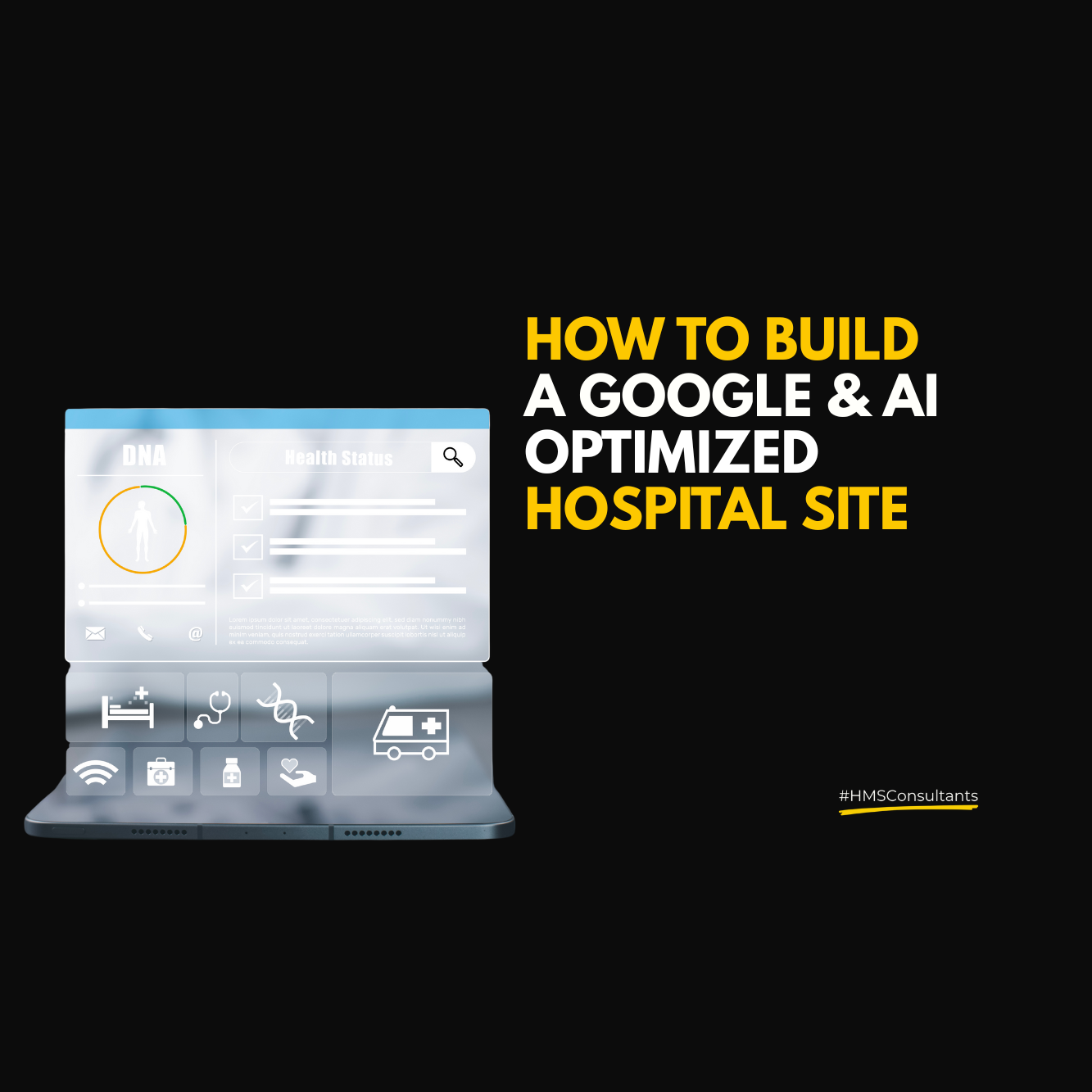
                In today’s fast-evolving digital world, having a website isn’t enough, it must be discoverable, engaging, and trusted by both humans and machines. As traditional search engines like Google evolve and new AI-driven search assistants like ChatGPT, Gemini, and others rise, hospitals, clinics, and healthcare businesses need a future-proof approach to web design.

                Most clinics and hospitals in India (and globally) focus heavily on Google SEO but ignore AI optimization. However, with generative AI assistants shaping patient search behavior, where people ask detailed, conversational questions and expect immediate, summarized answers, it’s crucial to build a dual-optimized website.

                Why Optimize for Both Google and AI?

                • Traditional SEO Isn’t Enough Anymore

                Google remains India’s dominant search engine, but the way patients search is changing. People increasingly use voice and conversational queries (“Which hospital in Jaipur offers painless delivery?” or “Which pediatrician is best for first-time moms?”). AI assistants provide quick, curated summaries rather than just a list of links.

                • AI Assistants Influence Decisions

                ChatGPT, Gemini, and similar models are being used to summarize reviews, compare services, and even suggest doctors. They pull content directly from websites and knowledge graphs, making it essential that your website is authoritative, structured, and easy for AI to understand.

                Step-by-Step Guide to Building a Dual-Optimized Healthcare Website

                Step 1: Strengthen Technical and On-Page SEO

                (A). Master the Basics

                • Mobile-first design: Over 70% of healthcare searches in India happen on mobile.
                • Fast load speeds: Aim for page load under 3 seconds.
                • Secure site (HTTPS): Crucial for patient trust and rankings.
                • Schema markup: Add healthcare-specific structured data (like medical specialty, location, ratings) to help Google and AI models interpret your services accurately.

                (B). Prioritize E-E-A-T

                Google emphasizes Experience, Expertise, Authoritativeness, and Trustworthiness (E-E-A-T), critical for health-related sites. Ensure:

                • Authored or medically reviewed content, with visible credentials.
                • Consistent NAP (Name, Address, Phone Number) across all platforms.
                • Visible privacy policy, disclaimers, and compliance with Indian regulations (like NMC, UCPMP 2024, DPDPA 2023).

                Step 2: Optimize for Conversational Queries and Voice Search

                • Use natural, patient-friendly language, think “How can I prevent knee pain in old age?” rather than technical jargon alone.
                • Include FAQ sections on each service page, answering real patient questions. AI platforms often scrape these for direct answers.
                • Integrate long-tail keywords: Instead of just “orthopedic surgeon Jaipur,” also include “Which orthopedic surgeon offers minimally invasive knee replacement in Jaipur in 2025?”

                Step 3: Create AI-Ready Structured Content

                AI models read and summarize content based on how it’s structured.

                (A). Use Clear, Logical Formatting

                • Headings (H1, H2, H3) that mirror common patient questions.
                • Bullet points and numbered lists for easy summarization.
                • Short paragraphs, 3-4 lines max, to improve readability and “chunking” for AI outputs.

                (B). Provide Summaries and Key Takeaways

                End each major section with a concise summary. This helps AI assistants extract accurate, context-rich responses.

                Step 4: Strengthen Internal and External Linking

                • Use descriptive anchor texts that reflect real queries (e.g., “read about our pain-free childbirth options here”).
                • Link to credible external medical sources, which boosts authority signals.
                • Encourage other credible healthcare sites to link to you (earned backlinks), reinforcing your site’s trustworthiness to both Google and AI.

                Step 5: Optimize for Local and Hyperlocal SEO

                • Register and optimize your Google Business Profile and local directories.
                • Add local keywords (“OB-GYN near Civil Lines Jaipur”) and integrate neighborhood references naturally into your content.
                • Encourage reviews on Google and healthcare directories, while ensuring compliance with NMC guidelines (avoid patient testimonials that imply guaranteed results).

                Step 6: Enable AI Assistant Integration

                • Install chatbots or virtual assistants on your site for instant Q&A, appointment booking, or navigation support.
                • Develop structured knowledge bases that AI bots can use to answer complex questions reliably.

                Step 7: Address Data Privacy and Compliance

                • Explicitly outline how patient data is collected and used, crucial under India’s DPDPA 2023.
                • Implement opt-in mechanisms for newsletters, appointment reminders, or chat services.
                • Keep disclaimers clear that content does not replace professional medical advice.

                Beyond the Website: Supporting Channels

                Social Media Signals

                • Regularly update your social media (Instagram, LinkedIn, Facebook), ensuring content matches website messaging.
                • Social signals strengthen overall digital authority and improve AI content context.

                Content Diversification

                • Include blogs, explainer videos, infographics, and podcasts.
                • AI platforms prefer multimodal data, and rich content keeps patients engaged and boosts your SEO.

                Common Pitfalls to Avoid

                • Avoid using heavy medical jargon without patient-friendly translations.
                • Do not Ignore compliance: Never share patient images, testimonials, or success claims that violate NMC rules.
                • Avoid publishing infrequently: Stale websites rank lower and offer less value to AI models.
                • Avoid overusing stock imagery: Reduces perceived authenticity

                Patient-First Perspective

                A website is not just a marketing asset, it is an educational and ethical extension of your clinic or hospital. By prioritizing transparent, patient-centered content and integrating modern AI-readiness alongside classic SEO, hospitals can earn trust, improve accessibility, and thrive in India’s increasingly digital healthcare ecosystem.

                Conclusion

                Designing a website optimized for both traditional search engines like Google and modern AI tools like ChatGPT and Gemini is no longer optional, it’s a strategic imperative. By focusing on robust SEO, conversational and structured content, local and voice search, and strict compliance, hospitals and clinics can achieve stronger digital visibility, patient trust, and sustainable growth.

                Written by Dr. Omang Gupta 

                Contact Us HMS Consultants 

                Doctors Digital Marketing I Healthcare Marketing I Hospital Marketing Strategies I Marketing ideas for clinics I Marketing Trends 2025 I Medical Marketing I Social Media Marketing

                is something we strongly believe in, which means ‘Knowledge without application is the same as having no knowledge at all

                Akhil Dave

                Principle Consultant

                Ready to take your Personal Brand to the next level?

                Share your details below and we will connect with you to discuss your growth strategy.

                • Patient Trust: The Cornerstone of Modern Healthcare

                  Patient Trust: The Cornerstone of Modern Healthcare

                  Patient Trust: The Cornerstone of Modern Healthcare

                  Written by
                  Published on
                  Share This

                  Trust as the Foundation of Healing

                  In India and across the world  trust has always been the bedrock of the doctor-patient relationship. No technology, marketing innovation, or new facility can replace the value of a patient’s deep confidence in their doctor or clinic.

                  However, in 2025, as healthcare becomes more digitized and choices multiply, building and maintaining patient trust has become both more challenging and more critical than ever.

                  Why Is Patient Trust So Important?

                  Better Health Outcomes

                  Studies consistently show that patients who trust their doctors have better health outcomes, adhere more strictly to treatment plans, and report higher levels of satisfaction.

                  Reduced Litigation and Complaints

                  Trust significantly reduces legal conflicts and complaints. Patients who feel heard and respected are less likely to file malpractice complaints, regardless of treatment outcomes.

                  Higher Retention and Loyalty

                  Patients are more likely to return for follow-ups and recommend trusted doctors to friends and family. This strengthens community goodwill and long-term growth for clinics and hospitals.

                  Current Challenges to Trust in 2025

                  Information Overload

                  With health information now easily accessible online (sometimes inaccurate or sensationalized), patients often arrive with pre-formed opinions, making the role of the physician as a guide and educator even more essential.

                  Rise of AI and Telemedicine

                  While telehealth and AI-driven diagnostics improve access and efficiency, they can also create a perception of impersonality if not carefully integrated with human touch.

                  Social Media Influence

                  Online reviews, influencer recommendations, and patient forums can rapidly shape or damage a clinic’s reputation, even before a patient steps through the door.

                  Regulatory Transparency

                  Stricter regulations like NMC guidelines, UCPMP guidelines, and the DPDPA guidelines require clear, honest communication and careful data handling, further emphasizing the importance of trust.

                  How Clinics and Doctors Can Build and Maintain Patient Trust

                  1. Prioritize Communication

                  • Active Listening: Spend time understanding the patient’s perspective without interruption.
                  • Clear Explanations: Avoid jargon. Explain diagnoses, procedures, and treatment options simply and transparently.
                  • Expectation Setting: Outline realistic outcomes to prevent disappointment or misunderstanding.

                  2. Embrace Transparency

                  • Service Clarity: Be upfront about pricing, potential risks, and alternative treatment options.
                  • Regulatory Compliance: Follow NMC prohibitions on patient testimonials and direct solicitations, ensuring all marketing and informational material remains ethical and factual. Perhaps the best alternative to this is transparent operational SOPs, quality certifications.
                  • Privacy Assurance: Implement explicit consent processes, especially as per DPDPA 2023, to protect patient data.

                  3. Consistent Patient Experience

                  A patient’s trust depends on consistency at every touchpoint from the first phone call to follow-up visits.

                  • Train all staff (front desk, nurses, support staff) in empathetic, patient-centered care.
                  • Maintain high hygiene and safety standards, visibly and consistently.
                  • Use technology (e.g., appointment reminders, digital health records) to improve but not replace human connections.

                  4. Show Empathy and Cultural Sensitivity

                  In India’s diverse landscape, understanding cultural nuances is crucial.

                  • Respect familial decision-making structures.
                  • Provide language support where possible.
                  • Recognize religious and social customs that may impact healthcare decisions.

                  5. Leverage Technology Thoughtfully

                  While AI, wearables, and telehealth offer great advantages, they must complement not substitute human judgment.

                  • Use AI tools to augment diagnosis and monitoring but emphasize that final decisions are always reviewed by an experienced clinician.
                  • Offer teleconsultations with an option for in-person discussions when needed.

                  6. Demonstrate Expertise and Continuous Learning

                  Patients trust doctors who stay updated and continuously improve.

                  • Highlight academic achievements, ongoing training, and certifications (without overpromising or advertising beyond factual statements, per NMC rules).
                  • Share evidence-based health tips on blogs and social media to demonstrate a commitment to patient education.

                  Regulatory and Ethical Considerations

                  NMC

                  Strictly prohibit using patient testimonials, before/after images, and direct inducements. Always ensure compliance to avoid penalties and protect patient dignity.

                  UCPMP & DPDPA

                  Adhere to fair marketing practices, avoid unverified claims, and safeguard patient data. Establish clear privacy policies and processes for consent, particularly for children’s data.

                  Real World Examples

                  Narayana Health

                  Emphasizes affordable care and builds trust through low-cost transparent models.

                  Pristyn Care

                  Focuses on patient coordinators to enhance trust.

                  Dr. Devi Shetty’s approach

                  Highlights patient-centric communication, widely regarded as building trust.

                  Conclusion

                  Trust Is Your Greatest Asset

                  As healthcare continues to evolve, the human connection remains irreplaceable. Trust is not a line item in your marketing budget it is the foundation of every consultation, every treatment, and every future referral.

                  By prioritizing patient-centric communication, ethical transparency, and cultural sensitivity, clinics and doctors can not only strengthen relationships but also future-proof their practice in an increasingly digital world.

                  Written by Dr. Omang Gupta 

                  contact Us HMS Consultants 

                  Doctors Digital Marketing I Healthcare Marketing I Hospital Marketing Strategies I Marketing ideas for clinics I Marketing Trends 2025 I Medical Marketing I Social Media Marketing

                  is something we strongly believe in, which means ‘Knowledge without application is the same as having no knowledge at all

                  Akhil Dave

                  Principle Consultant

                  Ready to take your Personal Brand to the next level?

                  Share your details below and we will connect with you to discuss your growth strategy.

                  • Market Feasibility Study for New Clinic India 2025 Guide

                    Market Feasibility Study for New Clinic India 2025 Guide

                    Market Feasibility Study for New Clinic India 2025 Guide

                    Written by
                    Published on
                    Share This

                    Opening a new clinic is a strategic commitment to serve a community’s health needs sustainably and responsibly. A market feasibility study for a new clinic in India in 2025 acts as your diagnostic foundation confirming the viability of your idea before major investments are made.

                    Successful clinics don’t just open; they are strategically planned, deeply researched, and community-aligned. This updated guide combines fresh regulatory updates, cutting-edge technology integrations, and culturally sensitive approaches to help you build a resilient healthcare business in India.

                    1: Define Your Vision and Service Scope

                    Begin by defining your clinic’s core identity:

                    • Specialty type: Single specialty (e.g., dermatology, pediatrics) or multi-specialty.
                    • Key services: Consultations, preventive care, telehealth, day-care procedures, wellness services.
                    • Target audience: Urban working professionals, young families, elderly patients, or rural populations.

                    This clarity allows you to align operational, regulatory, and branding strategies from day one.

                    2: Demographic, Epidemiological & Cultural Analysis

                    Understand your patient community

                    • Population profile: Age, gender ratio, income levels, insurance coverage, urban vs. rural split.
                    • Disease burden: Use latest state and district-level health surveys to understand trends of NCDs and CDs (e.g., diabetes, hypertension, maternal health).
                    • Cultural factors: Consider family decision-making patterns, gender preferences for certain specialties, and local attitudes toward preventive vs. curative care.

                    In 2025, India’s push towards preventive healthcare and wellness is rising rapidly. Initiatives like Ayushman Bharat (Health & Wellness Centers) and National Health Mission (NHM) have reshaped patient expectations. Including these in your feasibility plan signals cultural alignment and readiness.

                    3: Regulatory Landscape and Compliance

                    Key updates for 2025

                    • CDSCO’s reclassification: Your clinic’s equipment procurement strategy must comply.
                    • SUGAM portal relaunch: This recent relaunch marked the full automation of licensing and approvals; all old applications nullified, requiring immediate resubmission.
                    • BIS certification: Fast-tracking for critical devices by 2025.
                    • New Drugs, Medical Devices & Cosmetics Bill: Introducing stricter oversight on devices and clinical establishments.
                    • Personal Data Protection Act (DPDPA): Penalties for breaches now reach up to a significant level, necessitating robust patient data governance.
                    • National Medical Device Policy: Emphasizes Make in India, pushing for self-reliant supply chains.

                    For clinics, this means stringent scrutiny on equipment, clinical protocols, and data privacy practices. 

                    CONSULT with legal and compliance experts early for this.

                    4: Financial Feasibility Analysis

                    Revenue projections

                    • Expected monthly footfall, segmented by service lines.
                    • Average revenue per patient (consult, diagnostics, therapies).
                    • Cross-selling potential (wellness packages, annual memberships).

                    Cost analysis

                    • Real estate (lease/purchase), design and build, licensing.
                    • Staffing and training, especially for tech-driven services.
                    • Marketing and community outreach budget.

                    Break-even and sustainability

                    Model conservative, moderate, and optimistic scenarios to gauge risk appetite. With rising inflation and tech adoption costs, conservative planning is crucial in 2025.

                    5: Competitive Analysis

                    Map existing players

                    • Identify clinics, hospitals, diagnostics centers within a 5 km radius.
                    • Evaluate service gaps using Google reviews, Practo ratings, and patient forums.

                    Assess pricing and brand perception

                    • Are competitors known for affordability or premium care?
                    • What are their unique value propositions?

                    6: Technology and Innovation Readiness

                    Embrace advanced technologies

                    • AI and ML: Predictive analytics for appointment optimization, patient churn prediction, and synthetic data generation for training staff.
                    • Wearables & RPM: Offer chronic disease monitoring services to increase patient loyalty and add new revenue streams.
                    • Blockchain: Strengthen data security, improve consent management, and enhance audit trails for patient privacy.
                    • Generative AI: Automate clinical notes and create personalized educational content for patients.

                    Technology is not an add-on; it is core to future-ready clinic models.

                    7: Community Engagement & Government Collaboration

                    Engage grassroots networks

                    • Partner with Community Health Workers (CHWs) under NHM.
                    • Leverage Ayushman Bharat Health & Wellness Centres for preventive screening drives.

                    Understand cultural nuances

                    • Design service offerings that respect gender sensitivities.
                    • Create family-friendly outreach programs.

                    8: Primary Research & Local Sentiment

                    Conduct community surveys

                    • What services are lacking locally?
                    • How far are people willing to travel for premium care?
                    • What frustrates them about existing providers?

                    Focus group discussions

                    Test pricing sensitivity and potential acceptance of advanced services (e.g., teleconsultations, wellness packages).

                    9: SWOT Analysis

                    Performing a SWOT analysis for a new clinic establishment is a crucial self-assessment for owners. 

                    To do this, start by listing Strengths (S) unique to your clinic, such as specialized services, experienced staff, advanced technology you plan to implement (like AI-driven diagnostics), or a strong initial capital. 

                    Next, identify Weaknesses (W), which might include a lack of brand recognition, limited initial patient base, high startup costs, or a less-than-ideal location. 

                    For Opportunities(O), consider external factors like underserved patient demographics in your target area, emerging healthcare trends (e.g., increased demand for telemedicine or preventive care), government incentives for new healthcare facilities, or potential partnerships with local businesses. 

                    Finally, pinpoint Threats (T) – these could be strong competition from established clinics, unfavorable regulatory changes, economic downturns affecting patient spending, or unexpected challenges in talent acquisition. 

                    By objectively evaluating these internal (S, W) and external (O, T) factors, new clinic owners can gain a clearer understanding of their position, strategize effectively, and proactively mitigate potential risks.

                    Step 10: SEO and Digital Readiness Check

                    SEO enhancements for 2025

                    • Integrate “India” and “2025” throughout for freshness and context.
                    • Use long-tail, conversational keywords.
                    • Mobile-first optimization: With 70% of health searches via smartphones by patients, mobile optimization of the website becomes a priority. 
                    • Local SEO focus: Optimize Google Business Profile and location-based keywords to the local physical location of the said clinic. 

                    Leverage multimedia

                    • Create explainer videos, short Instagram reels, or LinkedIn infographics to complement the blog.

                    Conclusion

                    A market feasibility study for a new clinic in India in 2025 is more than an analysis — it is your risk shield, brand compass, and patient trust foundation.

                    By blending the latest regulatory requirements, advanced technology integrations, and culturally resonant community strategies, clinics can create offerings that are not only viable but future-proof.

                    Believe in building healthcare brands that last, grounded in rigorous data, deep empathy, and a strategic long-term view.

                    Written by Dr. Omang Gupta 

                    contact Us HMS Consultants 

                    Doctors Digital Marketing I Healthcare Marketing I Hospital Marketing Strategies I Marketing ideas for clinics I Marketing Trends 2025 I Medical Marketing I Social Media Marketing

                    is something we strongly believe in, which means ‘Knowledge without application is the same as having no knowledge at all

                    Akhil Dave

                    Principle Consultant

                    Ready to take your Personal Brand to the next level?

                    Share your details below and we will connect with you to discuss your growth strategy.

                    • How to Use Data to Improve the Patient Experience in Indian Healthcare

                      How to Use Data to Improve the Patient Experience in Indian Healthcare

                      How to Use Data to Improve the Patient Experience in Indian Healthcare

                      Written by
                      Published on
                      Share This

                      In today’s world, patients expect more than just good treatment they also want a smooth, stress-free experience. But many times, patients face small issues that can leave them feeling frustrated or confused. These issues are called friction points

                      At HMS Consultancy, we help hospitals, clinics, and wellness centers understand where these friction points happen and how to fix them using data. When used the right way, data can help improve the overall patient journey and make healthcare better for everyone. 

                      What Are Friction Points? 

                      Friction points are moments during a patient’s journey where something goes wrong or doesn’t feel right. These can happen at different stages, such as: 

                      • Booking an appointment 
                      • Waiting for the doctor 
                      • Talking to hospital staff 
                      • Receiving bills or reports 
                      • Following up after treatment 

                      Even small problems like unclear directions, delays, or confusing bills can make patients unhappy. 

                      Example: A patient books an appointment online but never gets a confirmation message. They arrive confused and unsure. This small mistake creates frustration, and that’s a friction point. 

                      How Can Data Help? 

                      Data helps us understand what is going wrong, where it’s going wrong, and why. Here are a few ways hospitals can use data to find friction points:

                      1. Patient Feedback and Surveys

                      After visiting a hospital, patients often fill out surveys or leave online reviews. This feedback is very useful. 

                      Example: If many people say, “The waiting time was too long,” then long waits are clearly a problem. 

                      What to Do: Collect this feedback regularly. Read comments carefully to find common issues. Tools like Google Forms, SurveyMonkey, or even Google Reviews can help. 

                      2. Website and App Data

                      Many patients visit a hospital’s website or use an app to book appointments or check information. By looking at how they use these tools, you can find where they get stuck. 

                      Example: If most users leave the appointment page without booking, maybe it’s too hard to use or has errors. 

                      What to Do: Use tools like Google Analytics or Hotjar to see how people move around your website or app. Find out which pages they leave quickly or which buttons they don’t click. 

                      3. Call Center and Chatbot Records

                      When patients call your hospital or use a chatbot, they often ask questions or report problems. These calls and chats can show what’s unclear or not working. 

                      Example: If many people ask, “Where is the hospital located?” maybe your website doesn’t clearly show directions. 

                      What to Do: Review call logs or chatbot conversations. Look for repeated questions. That’s where patients are confused. 

                      4. Hospital Records and Timings

                      Inside the hospital, a lot of data is already being recorded. This includes: 

                      • How long do patients wait 
                      • How much time does each appointment take 
                      • How many appointments are missed or canceled 
                      • How long patients stay in the hospital 

                      Example: If patients are waiting 45 minutes to see a doctor, even with an appointment, that’s a sign of a system problem. 

                      What to Do: Use this data to compare different departments. Find areas where time or processes can be improved. 

                      5. Social Media and Online Reviews

                      Patients often post their experiences on social media platforms like Instagram, Facebook, Google, or Practo. These reviews can tell you what patients love or hate about your services. 

                      Example: If several patients complain online about rude staff or unclear bills, those are friction points. 

                      What to Do: Regularly check reviews and comments. Use free tools like Google Alerts or social listening tools to track your mentions. 

                      How to Fix the Problems You Find 

                      Once you know where the problems are, you can start fixing them. Here are some examples: 

                      Problem 

                      What Data Showed 

                      What to Do 

                      Long Waiting Times 

                      Hospital logs show long delays 

                      Adjust doctor schedules, add reminders, or reduce overbooking 

                      Booking is Hard 

                      Website data shows users leave the page 

                      Make booking simpler and mobile-friendly 

                      Many Missed Appointments 

                      Data shows high no-shows 

                      Send reminders by SMS or WhatsApp 

                      Confusing Bills 

                      Feedback says billing is unclear 

                      Explain charges better and show sample bills online 

                      Poor Staff Behavior 

                      Reviews mention rude behavior 

                      Train staff for better communication and empathy 

                      Can We Predict Problems Before They Happen? 

                      Yes! Once you collect enough data, you can start predicting when and where problems may happen. This is called predictive analytics

                      Example: 

                      • If you know Mondays are always crowded, you can assign more staff that day. 
                      • If older patients miss follow-ups more often, you can send them extra reminders. 

                      This way, you don’t just fix problems you prevent them. 

                      Final Thoughts

                      In healthcare, every small issue matters. A long wait, a confusing form, or a rude reply can make patients feel uncomfortable or lose trust. 

                      By using data, hospitals and wellness centers can find out what patients are struggling with, and take steps to improve those areas. At HMS Consultancy, we help you make data driven decisions to create a smoother, friendlier, and more caring patient experience. 

                      Let’s use data to make healthcare simpler, smarter, and more human

                      Written by Jay Wandile

                      contact Us HMS Consultants 

                      Doctors Digital Marketing I Healthcare Marketing I Hospital Marketing Strategies I Marketing ideas for clinics I Marketing Trends 2025 I Medical Marketing I Social Media Marketing

                      is something we strongly believe in, which means ‘Knowledge without application is the same as having no knowledge at all

                      Akhil Dave

                      Principle Consultant

                      Ready to take your Personal Brand to the next level?

                      Share your details below and we will connect with you to discuss your growth strategy.