Search results for: “Health camps”

  • How to Choose a Healthcare Marketing Agency in 2025

    How to Choose a Healthcare Marketing Agency in 2025

    Digital Marketing I Doctors Digital Marketing I Healthcare Marketing I Healthcare Marketing Strategy I Hospital Marketing Strategies I Marketing ideas for clinics I Marketing Trends 2025 I Medical Marketing I Social Media Marketing

    How to Choose a Healthcare Marketing Agency in 2025

    Written by
    Published on
    Share This

    Marketing isn’t an expense. It’s a strategic investment in your healthcare business.

    In today’s competitive healthcare space, even the best clinical talent can be overlooked if the brand behind it isn’t visible, credible, or discoverable. Whether you run a standalone clinic, a speciality centre, or a mid-sized hospital, the question isn’t Do I need marketing?” it’s “Who can I trust to do it right?”

    This blog helps you answer that.

    We’ll walk you through:

    • How to choose the right marketing partner

    • How to evaluate if your marketing is working

    • What the standard costs / standard rates are

    • A breakdown of freelancer vs. agency vs. healthcare specialist marketing agency rates

    • Key learnings around performance marketing

    • A sample 90-day marketing roadmap you can follow.

    Marketing Is NOT a Cost It’s a Strategic Growth Engine

    Most healthcare professionals, Doctors and hospital owners hesitate to invest in marketing due to fear of wastage, ethical concerns, or lack of know-how. But here’s the truth:

    • A well-crafted marketing strategy leads to patient trust
    • Visibility builds reputation, not just recall
    • Strong digital presence = business growth

    If you treat marketing like an expense, you’ll always cut it.
    If you treat marketing like an investment, you’ll learn how to multiply it.

    5 Signs Your Clinic Needs a Marketing Audit This Month

    In-House Team vs. Freelancer vs. Marketing Agency: What Should You Choose?

    Choosing how to execute your healthcare marketing efforts depends on your goals, budget, and internal bandwidth. Here’s a clear comparison between the three most common models used by clinics, hospitals, and individual doctors:

    Criteria
    In-House Team
    Freelancer
    Marketing Agency
    CostHigh
    (monthly salaries, tools, training)
    Low
    (per-task or monthly)
    Medium to High
    (retainer + execution)
    Expertise RangeLimited
    (1–2 generalists)
    Varies greatly (depends on the individual)Wide
    (strategist, designer, ad expert, SEO)
    Healthcare KnowledgeRareUsually not specialisedAvailable in healthcare-specific agencies
    ConsistencyHigh
    (daily availability)
    May vary
    (depends on commitment)
    Structured, process-driven delivery
    Creative DirectionDepends on internal leadershipRequires clear input & briefIncludes strategy, branding alignment
    ScalabilityHard to scale quicklyLimited to one person’s timeEasy to scale campaigns, channels, and formats
    Data & ReportingRequires separate analytics expertiseRarely offeredTypically part of monthly deliverables
    Compliance Awareness (NMC, PBI, ASCI)Depends on leadershipUsually unawareOften well-versed
    (in healthcare-specialised firms)

    Quick Summary:

    • In-house team is best if you already have high patient volumes and want full control over day-to-day content.
    • Freelancers are great for basic content or design needs when the budget is tight, but you’ll need to guide and monitor them closely.
    • Agencies, especially those experienced in healthcare marketing, bring structured strategy, execution, analytics, and domain knowledge, making them a smart choice for growth-focused hospitals and clinics.

    Many HMS Consultants clients start with freelancers and then shift to a consulting + agency hybrid when they realise they need structure, speed, and healthcare-specific insights.

    How to Choose the Right Marketing Agency (or Branding Agency)

    If you’re a clinic, hospital, or medical practitioner, ask these:

    Must-Ask Questions:

    • Have they worked with doctors, clinics, or hospitals before?
    • Can they showcase case studies with measurable growth?
    • Do they understand healthcare ethics and MCI/IMA marketing norms?
    • What is their process for strategy, not just posting?
    • How do they track leads and ROI?

     Red Flags to Watch:

    • “We give 30 posts per month” (but no strategy!)
    • No access to analytics or ad dashboards
    • Every client gets the same templated creatives
    • No performance or consultation call after onboarding

    Marketing Cost Comparison: Freelancer vs. Generalist vs. Healthcare Specialist

    Here’s a breakdown of typical charges in India:

    Service
    Freelancer
    General Agency
    Healthcare Specialist

    Logo Design for a clinic/hospital

    ₹2,000–4,000

    ₹5,000–10,000

    ₹15,000–50,000

    Standard Stationery

    [Visiting Card, Letter Head, Prescription Pad, Envelope, File]

    ₹2000–4,000

    ₹5,000–10,000

    ₹15,000–25,000

    Social Media Post

    ₹250–400

    ₹300–600

    ₹500–1000

    Brochure (2 pages)

    ₹1,200–2,500

    ₹3,000–5,000

    ₹10,000–15,000

    Monthly Social Media for a clinic / Hospital

    ₹4,000–10,000

    ₹10,000–25,000

    ₹35,000–75,000

    Meta Ads Setup & Mgmt

    ₹2,000–5,000

    ₹4,000–10,000

    ₹10,000–25,000

    Google Ads Management for a clinic/hospital

    ₹3,000–6,000

    ₹5,000–10,000

    ₹10,000–20,000

    Landing Page for Hospital / Clinic

    ₹1,500–3,000

    ₹3,000–6,000

    ₹6,000–10,000

    Content / Blog / Article

    ₹500–1,500

    ₹1,000–3,000

    ₹2,000–10,000

    SEO Services for Healthcare

    ₹5,000–10,000

    ₹10,000–20,000

    ₹20,000–70,000

    Hoarding Design

    ₹2000–4,000

    ₹5,000–10,000

    ₹15,000–25,000

    Advertisement Design

    ₹2000–4,000

    ₹5,000–10,000

    ₹15,000–25,000

    Internal Branding

    ₹4,000–10,000

    ₹10,000–25,000

    ₹35,000–75,000

    Website for doctor

    ₹4,000–10,000

    ₹20,000–45,000

    ₹35,000–75,000

    Hospital Website

    ₹10,000–20,000

    ₹30,000–50,000

    ₹40,000–1,50,000

    Video Editing for Reel, YouTube Shorts

    ₹350–700

    ₹500–1000

    ₹1000–3000

    Long video for YouTube editing cost

    ₹1,200–2,500

    ₹3,000–5,000

    ₹5,000–10,000

    Note: These prices exclude ad budgets, licensing fees, and photo/video shoots

    Is Your Marketing Working? Here’s How to Know

    Whether online or offline, tracking performance is essential to ensure your marketing budget is driving real results. Use this diagnostic checklist:

    Metric
    Interpretation

     Patient Enquiries

    More online leads or appointment calls (from social, website, GMB)

     GMB Insights

    High map views, calls, direction requests—shows local discoverability

     DMs/Comments

    Are people engaging with your content and asking for consultations?

     Brand Awareness

    Do patients mention your social media, blogs, or online presence?

     Cost per Lead (CPL)

    Key metric if you run ads on Google or Meta—tracks lead quality

     Monthly Marketing Report

    Consolidated metrics across platforms shared by your team/agency

     Direct Calls/WhatsApp

    No. of outbound calls, message reads, responses, and follow-ups

     On-Ground Activation Leads

    No. of people reached, leads collected at camps, health events, branding stalls

     Conversion Tracking

    Form fills, call clicks, and offline leads turning into patients

     Campaign ROI

    Measures effectiveness of ad spend, footfall from offline efforts

    Your First 90-Day Marketing Plan (Sample)

    Month
    Focus
    Activities

    Month 1

    Setup & Strategy

    Website review, GMB optimisation, SEO audit, social media calendar, ad planning

    Month 2

    Launch & Execute

    Meta & Google ads go live, content posting begins, local SEO boosted

    Month 3

    Analyze & Optimize

    Campaign reviews, lead quality checks, retargeting, testimonial collection

     You should expect your first visible ROI in Month 2 or 3, depending on consistency and investment.

    HMS Consultants: We’re Not an Agency—We’re Your Strategy Partner

    At HMS, we don’t just “manage your page.”

    We strategise, audit, train, and guide your in-house or outsourced marketing team for:

    ✅ Long-term brand building
    ✅ Patient growth & revenue uplift
    ✅ Ethical, compliant digital presence
    ✅ Performance monitoring that actually works

    Founded in 2024, we’re India’s first dedicated healthcare marketing consulting firm—built for doctors, by healthcare marketers.

    Let’s schedule your 20-min discovery call

    FAQs 

    Q: What is the average cost of social media marketing for doctors?
    A: ₹6,000–₹25,000/month for freelance or basic agencies, and ₹25,000–₹75,000/month with strategy-first healthcare specialists.

    Q: How do I know if my digital marketing agency is performing well?
    A: Track KPIs like leads, cost per lead, GMB insights, and ask for monthly performance reports.

    Q: Should I choose a freelancer or a healthcare-focused agency?
    A: Freelancers are affordable but often lack healthcare expertise. Healthcare-focused consultants bring strategic alignment and better ROI.

    Q: Are Meta and Google Ads useful for hospitals?
    A: Yes. Meta Ads drive awareness and lead generation, while Google Ads capture high-intent searches like “Doctor near me.”

    Conclusion

    Choosing a marketing partner for your hospital or clinic isn’t just about saving money. It’s about investing in trust, visibility, and patient connection.

    The right partner will help you tell your story, attract the right patients, and grow sustainably.

    And if you’re unsure where to begin—HMS Consultants is here to guide you.

    ✅ Ready for the next step?

    🔗 Get Your Marketing Audit Started

    is something we strongly believe in, which means ‘Knowledge without application is the same as having no knowledge at all

    Akhil Dave

    Principle Consultant

    Ready to take your Personal Brand to the next level?

    Share your details below and we will connect with you to discuss your growth strategy.

    • The Shift in Healthcare Marketing: From Promotion to Proof

      The Shift in Healthcare Marketing: From Promotion to Proof

      Digital Marketing I Doctors Digital Marketing I Healthcare Marketing I Healthcare Marketing Strategy I Hospital Marketing Strategies I Marketing Trends 2025 I Medical Marketing

      The Shift in Healthcare Marketing: From Promotion to Proof

      Written by
      Published on
      Share This

      In an era where information is abundant and patient skepticism is at an all-time high, traditional promotional tactics are no longer enough to win patient trust. The healthcare sector is undergoing a massive transformation—from a focus on loud promotions to strategies rooted in credibility, authenticity, and results. This shift from promotion-based marketing to proof-based marketing is not just a trend; it’s the future.

      At HMS Consultants, we believe that proof-driven, patient-centric marketing strategies are the only sustainable way forward. In this blog, we’ll explore what this shift means for hospitals, clinics, and doctors, and how embracing evidence-based healthcare marketing can lead to higher engagement, better patient outcomes, and long-term growth.

      What is Proof-Based Marketing in Healthcare?

      Proof-based marketing is the strategic use of real results, data, and outcomes to promote healthcare services. Instead of flashy promotions or generic claims like “best in town,” proof-based marketing communicates:

      • Actual patient testimonials

      • Clinical results and outcome statistics

      • Case studies and recovery stories

      • Doctor credentials and patient feedback

      • Community impact and trust-building efforts

      In short, proof-based marketing answers the patient question: “Why should I trust you with my health?”

      Why the Shift from Promotion to Proof is Inevitable

      Patients today are more informed than ever. A simple Google search can provide hundreds of hospital options, treatment alternatives, and online reviews. This transparency demands authenticity over appearance.

      Key Reasons for the Shift:

      1. Patient Empowerment: Patients want to be involved in healthcare decisions. They rely on reviews, social proof, and outcomes, not ads.

      2. Digital Transformation: Search engines and platforms prioritize content that is valuable, original, and trustworthy.

      3. Healthcare is Personal: When life and health are at stake, emotional decisions are influenced by logic and real experiences.

      4. Overexposure to Marketing: Audiences are tuning out promotional noise. Authentic storytelling cuts through the clutter.

      Impact of Proof-Based Marketing on Patient Trust & Conversions

      Trust is the new currency in healthcare marketing. When you present evidence instead of advertisements, patients are more likely to engage.

      Benefits of Proof-Driven Healthcare Marketing:

      • Increased patient inquiries and appointments

      • Higher conversion rates from digital platforms

      • Enhanced Google ranking through authentic content

      • Stronger doctor-patient relationships

      • Better word-of-mouth and online reviews

      Google loves proof. Blogs with testimonials, case studies, and factual content perform better on search engines.

      Examples of Proof-Based Marketing Tactics

      Let’s explore practical, SEO- and AEO-friendly ways to apply proof-based strategies in your healthcare business:

      1. Patient Testimonials & Video Stories

      Record short, genuine videos of patients sharing their recovery journeys. Place them on your website, YouTube, and social channels.

      2. Before & After Treatment Cases

      Visual case transformations in aesthetics, ortho, ENT, or dentistry speak volumes.

      3. Doctor Spotlights & Credentials

      Build trust by highlighting your doctors’ academic background, experience, and special interests.

      4. GMB & Online Reviews Optimization

      Encourage patients to review you on Google. Showcase 5-star reviews on landing pages.

      5. Outcome Statistics & Success Rates

      Share data about surgery success rates, infection control, recovery timelines (ensure they’re ethically presented).

      6. Community Engagement Initiatives

      Blood donation drives, health camps, wellness talks: all proof of your real-world impact.

      7. Blogging on Real Patient Concerns

      Answer questions patients are Googling: “How long does knee replacement recovery take?” “What is the cost of IVF in Ahmedabad?”

      For inspiration: Check our blog on Signs Your Clinic Needs a Marketing Audit

      Final Thoughts: Trust Over Tactics

      The future of healthcare marketing is not about doing more campaigns. It’s about doing what builds credibility.

      Stop promoting. Start proving.

      Because when patients believe in you, they choose you.

      How HMS Consultants Helps You Build Proof-Based Strategies

      At HMS Consultants, we specialize in developing strategic healthcare marketing frameworks that focus on authenticity, storytelling, and measurable results.

      We help:

      • Doctors build personal brands that inspire trust

      • Clinics identify proof-points that differentiate them

      • Hospitals structure marketing around real outcomes

      • Teams understand what today’s patients actually care about

      Our consulting-first model ensures that your existing marketing agency or internal team implements strategies aligned with patient expectations and digital growth trends.

      Want to transition your clinic or hospital to a proof-based marketing model?

      Let’s talk: Contact HMS Consultants

      #HealthcareMarketing #PatientCentricStrategy #DigitalMarketingForDoctors #ProofBasedMarketing #ClinicGrowth #PatientTrust #AkhilDave

      is something we strongly believe in, which means ‘Knowledge without application is the same as having no knowledge at all

      Akhil Dave

      Principle Consultant

      Ready to take your Personal Brand to the next level?

      Share your details below and we will connect with you to discuss your growth strategy.

      • Medical Marketing: Effective Strategies to Boost Your Healthcare Practice

        Medical Marketing: Effective Strategies to Boost Your Healthcare Practice

        Digital Marketing For Doctors I Doctors Digital Marketing I Healthcare Marketing I Healthcare Marketing Strategy I Marketing ideas for clinics I Marketing Trends 2025 I Medical Marketing

        Medical Marketing: Effective Strategies to Boost Your Healthcare Practice

        Written by
        Published on
        Share This

        Medical Marketing: Strategies and Ideas for Clinics, Doctors, and Healthcare Providers

        In today’s digital era, healthcare providers, clinics, and doctors are increasingly recognising the importance of having a strong healthcare marketing strategy. With the competition in the healthcare industry intensifying, a well-executed medical marketing plan not only increases visibility but also improves patient engagement, brand trust, and overall growth. As one of India’s premier healthcare marketing companies, HMS Consultants brings a wealth of experience in crafting successful marketing strategies tailored to healthcare.

        This article explores effective marketing ideas for clinics, strategies for the marketing of healthcare services, and insights into how healthcare marketing company like HMS Consultants help doctors and healthcare providers elevate their practice.

        The Importance of Medical Marketing

        Medical marketing goes beyond traditional advertising; it involves a blend of digital, local, and patient-centric strategies to attract and retain patients. A strong healthcare marketing strategy enhances patient acquisition, builds brand loyalty, and ultimately boosts the reputation and profitability of the healthcare provider. Let’s dive into effective ways to master the marketing of healthcare services.

        Key Components of a Successful Healthcare Marketing Strategy

        A holistic marketing strategy for healthcare should encompass various approaches tailored to both digital and in-person patient engagement. Here are essential pillars to consider:

        Building a Patient-Centric Website

        A user-friendly, responsive website is the cornerstone of any successful healthcare marketing strategy. Patients increasingly rely on online searches to find medical providers, so it’s critical to ensure that your website provides easy access to information about services, doctor profiles, appointment scheduling, and patient testimonials. Optimising for local search (SEO) helps attract nearby patients, especially those searching for medical services on mobile devices.

        Search Engine Optimisation (SEO) for Healthcare Providers

        Leveraging SEO is essential for clinics and doctors aiming to rank highly on search engines. By optimising website content with your focus keywords. For example for HMS Consultants website promotion we are using keywords like “medical marketing,” “healthcare marketing strategy,” “marketing ideas for clinics,” and “marketing for doctors,” you can increase visibility. Implement both on-page SEO (focusing on keywords, meta tags, and internal linking) and off-page SEO (backlinks from credible healthcare sites) to improve rankings.

        Content Marketing and Patient Education

        Patients value healthcare providers who educate them. Regularly posting insightful blog articles, FAQs, and patient success stories positions your practice as a thought leader. HMS Consultants, for example, assists healthcare providers in creating content that resonates with patients’ needs while improving SEO rankings. Content that addresses common health concerns, preventive care, and treatment options can attract a steady flow of organic traffic.

        Social Media Engagement

        Social media platforms like Facebook, Instagram, and LinkedIn allow clinics and doctors to engage with patients beyond the clinical setting. Sharing health tips, hosting Q&A sessions, and showcasing patient testimonials help build trust and improve patient loyalty. Additionally, doctors can use platforms like LinkedIn to build personal branding and credibility among peers and potential patients.

        Online Reputation Management

        In the age of online reviews, managing your reputation is critical. Encourage satisfied patients to leave reviews on platforms like Google My Business and healthcare directories. Address negative reviews professionally and empathetically to show potential patients that you prioritise patient satisfaction.

        Email Marketing and Patient Retention

        Email marketing is a cost-effective way to stay connected with patients. Sending newsletters, appointment reminders, and educational materials keeps your practice top-of-mind for patients and can help with retention. Personalised emails also make patients feel valued and are likely to enhance loyalty.

        Local SEO and Google My Business Optimisation

        For clinics and doctors, optimising for local search is crucial. A Google My Business profile with updated information, photos, and patient reviews can boost local SEO efforts. Local SEO strategies help capture patients in your vicinity who are actively searching for healthcare services.

        Innovative Marketing Ideas for Clinics

        For clinics and doctors looking to differentiate themselves, here are some innovative ideas:

        Offer Virtual Consultations

        Telemedicine is booming, and offering virtual consultations can attract patients who prefer remote services. Promoting telemedicine options on your website and social media channels can broaden your reach and improve patient convenience.

        Host Health Webinars or Live Q&A Sessions

        Hosting webinars on health-related topics relevant to your clinic’s specialty can attract patients who are looking to learn more about managing their health. It also establishes the doctor as a credible source of information.

        Leverage WhatsApp for Patient Engagement

        WhatsApp can be a powerful tool for clinics and doctors to keep patients engaged. Send reminders, follow-ups, and share health tips. It’s a direct line to patients and can significantly enhance patient experience.

        Personalise Patient Follow-Ups

        Personalised follow-up messages after consultations show patients that you care about their well-being. This personal touch improves patient satisfaction and encourages referrals.

        Participate in Local Community Events

        By engaging with the community, clinics can boost their visibility and reputation. Health camps, free screenings, and community sponsorships showcase the clinic’s commitment to community health and increase brand awareness.

        Develop Patient-Centric Video Content

        Video content is more engaging and helps humanise your practice. Short videos explaining common procedures, patient testimonials, and doctor introductions can be posted on YouTube and shared on social media for greater reach.

        Utilise Influencer Marketing and Patient Testimonials

        Influencer marketing, especially with local influencers, can help clinics reach a wider audience. Positive patient testimonials are equally effective; they build credibility and encourage word-of-mouth referrals.

        Why Choose HMS Consultants for Your Healthcare Marketing Needs?

        As one of the leading healthcare marketing companies in India, HMS Consultants is uniquely positioned to help clinics, doctors, and healthcare providers navigate the complexities of medical marketing. Here’s why we’re trusted by healthcare professionals:

        • Data-Driven Strategies: We develop customized healthcare marketing strategies using data and analytics to ensure high ROI.
        • Specialisation in Healthcare: Unlike general marketing firms, we focus exclusively on healthcare, making us experts in the nuances and regulations of this industry.
        • Proven Track Record: Our expertise spans over two decades, with a track record of success in enhancing brand visibility, patient engagement, and profitability for our clients.
        • Comprehensive Services: From SEO and content marketing to social media management and reputation management, we offer end-to-end solutions for all your marketing needs.

        Measuring Success: Key Metrics for Healthcare Marketing

        It’s essential to track and analyze the success of your healthcare marketing strategy. Some key performance indicators (KPIs) to monitor include:

        • Website Traffic: Track visits to your website and analyse where traffic is coming from to adjust strategies as needed.
        • Conversion Rates: Measure how many website visitors book appointments or make inquiries.
        • Patient Acquisition Costs: Calculate the cost per new patient to understand the effectiveness of your campaigns.
        • Patient Retention Rates: Track repeat visits or follow-up appointments to measure patient loyalty.
        • Engagement on Social Media: Monitor likes, shares, and comments to gauge patient interest and interaction with your content.
        • Review Ratings: Keep an eye on online reviews to ensure a positive online reputation.


        By regularly assessing these metrics, clinics and doctors can make informed decisions to optimise their marketing strategies further.

        “Knowing is Knowing, Doing is Doing”

        is something we strongly believe in, which means ‘Knowledge without application is the same as having no knowledge at all

        Akhil Dave

        Principle Consultant

        Ready to take your Medical Practice to the next level?

        Share your details below and we will connect with you to discuss your growth strategy.

        • Healthcare Marketing During Festivals: Right Approach

          Healthcare Marketing During Festivals: Right Approach

          Digital Marketing I Digital Marketing For Doctors I Doctors Digital Marketing I Healthcare Marketing I Healthcare Marketing Strategy I Marketing Trends 2025 I Social Media Marketing

          Healthcare Marketing During Festivals: Right Approach

          Written by
          Published on
          Share This

          As the festive season in India sweeps through the months of October to January, with celebrations like Navratri, Dussehra, Diwali, Christmas, New Year, and Makar Sankranti, it’s a time when everyone is deeply absorbed in a spirit of joy, family gatherings, and cultural events. This period is also marked by a significant increase in consumer spending across industries. But for healthcare marketing professionals, it brings a unique challenge: How do we engage with our target audience without disrupting the festive spirit?

          In this article, we’ll explore the importance of healthcare marketing during the festival season while questioning whether current approaches align with the true essence of healthcare and community well-being. Are healthcare marketers focusing on the correct messaging? Are we creating a positive brand association without invoking anxiety about health issues? Let’s take a closer look.

          Why Healthcare Marketing During the Festival Season Matters

          Increased consumer engagement and awareness during the festive season can be a valuable opportunity for healthcare providers. This is a time when families gather, communities engage, and people reflect on their lives. For many, it’s also a time to consider health, even subtly. From preventive care check-ups to wellness packages, hospitals and clinics can strategically position themselves as a part of the holistic well-being that festivals celebrate.

          However, the real question arises: Are we approaching this period with the right messaging?

          Are Healthcare Marketers Taking the Right Approach During Festivities?

          During the festival season, we see a surge in marketing efforts across the healthcare sector. Hospitals and clinics offer discounts on services, free health camps, and even promotions on specific procedures. But is this approach resonating with audiences who are currently immersed in festive vibes, family celebrations, and happiness?

          Festivals are traditionally a time of joy and positivity. Constant reminders about illnesses, diseases, or health complications can feel out of place. While good health is a blessing worth celebrating, healthcare marketers may need to think carefully about how they approach audiences during this period. Instead of reminding people about health concerns, could we focus more on wellness and preventive care or even subtly position our brand as the go-to provider in case of unforeseen health needs?

          The Digital Marketing Approach: Are Wishes Enough?

          As digital marketing gains traction, many healthcare businesses and professionals are quick to post festive greetings on social media platforms, extending best wishes on behalf of their hospitals or clinics. While this gesture is warm and festive, it lacks the depth and connection that thoughtful, value-driven marketing content could provide.

          Simply wishing “Happy Diwali” or “Merry Christmas” may not be enough to leave a lasting impact. Instead, consider crafting messages that align healthcare with wellness, prevention, and community. For instance, a well-placed message on managing stress during the holidays or a reminder about safety in festivities can create an authentic connection without overshadowing the celebration.

          The goal should be to gently remind people of the healthcare provider’s presence in a way that aligns with the festive theme but doesn’t evoke negative emotions.

          Free Health Camps and Discounts: Are They Always Appropriate?

          Many healthcare providers conduct free health camps, screenings, and discounted services during festivals. While the intent is to encourage people to take charge of their health, this approach can feel intrusive, especially when people are not in a mindset to worry about medical issues.

          As a healthcare marketer, it’s essential to ask: Do we want our patients to associate the joy of festivals with health concerns?

          Instead of focusing on illnesses, healthcare marketers could pivot the messaging to encourage a healthy, vibrant lifestyle in a festive context. Rather than free check-ups, why not offer wellness packages or stress management workshops? The message here should be supportive, not suggestive of looming health risks. It’s about positioning healthcare providers as promoters of holistic wellness, without dampening the festive spirit.

          Responsible Healthcare Marketing: Balancing Festival Vibes and Brand Recall

          As responsible healthcare marketers, it’s our duty to ensure that our messaging during the festival season is subtle, supportive, and celebratory. Content should be crafted thoughtfully to promote brand recall without creating anxiety or overshadowing the festive cheer.

          Consider wellness tips, safety reminders, or simple advice on managing festival season indulgences. For example:

          • A reminder to stay hydrated during Diwali celebrations
          • Tips for managing sugar intake during Christmas and New Year
          • Suggestions on taking preventive measures to avoid seasonal flu during winter vacations

          Such content not only engages the audience but also keeps the healthcare provider’s brand in the background as a supportive presence. This way, when someone thinks of healthcare, your brand is already top of mind, without disrupting their celebration.

          Enhancing Brand Recall in a Festival-Friendly Manner

          The festive season does not have to be a time to ignore healthcare marketing. Instead, it’s an opportunity to create content that:

          • Builds Trust: By offering genuine tips for safe celebrations, you position the healthcare provider as a caring and community-focused brand.
          • Encourages Preventive Care: Highlight general wellness tips that don’t necessarily focus on illness but rather on preventive measures.
          • Promotes Emergency Readiness: Let people know that your clinic or hospital is ready to handle emergencies, making them feel secure during the festivities.
          • Resonates with the Festive Spirit: Use festive motifs in visuals and themes in your content, aligning your brand with the celebratory spirit of the season.

          Time to Rethink and Realign

          Festivals are a time of joy, and healthcare marketing during this period should respect and align with this sentiment. Instead of focusing on illness or health problems, we should aim to build a positive, supportive presence. Thoughtfully crafted messages that align with well-being, safety, and holistic health can connect deeply with audiences during the festive season.

          As healthcare marketers, it’s time to rethink our approach. Let’s move away from hard-sell tactics and focus on creating value-based connections that keep healthcare brands top of mind, not as a reminder of potential illnesses, but as pillars of support, wellness, and care.

          This approach to healthcare marketing can create a unique impact, fostering trust and positivity around your brand. With careful planning and thoughtful execution, we can ensure that healthcare marketing during festival seasons respects the festive atmosphere while keeping your services relevant in a supportive, positive way. Let’s make the festival season a time of celebration, not just of festivals but of holistic health and well-being.

          “Knowing is Knowing, Doing is Doing”

          is something we strongly believe in, which means ‘Knowledge without application is the same as having no knowledge at all

          Akhil Dave

          Principle Consultant

          Ready to take your healthcare marketing to the next level?

          Fill out the form below, and our consultant will contact you for a detailed, personalised consultation.

          • Marketing Ideas for Hospital: How to Use Local Community Presence for Better Recall

            Marketing Ideas for Hospital: How to Use Local Community Presence for Better Recall

            Marketing Ideas for Hospital: How to Use Local Community Presence for Better Recall

            Published on
            Share This

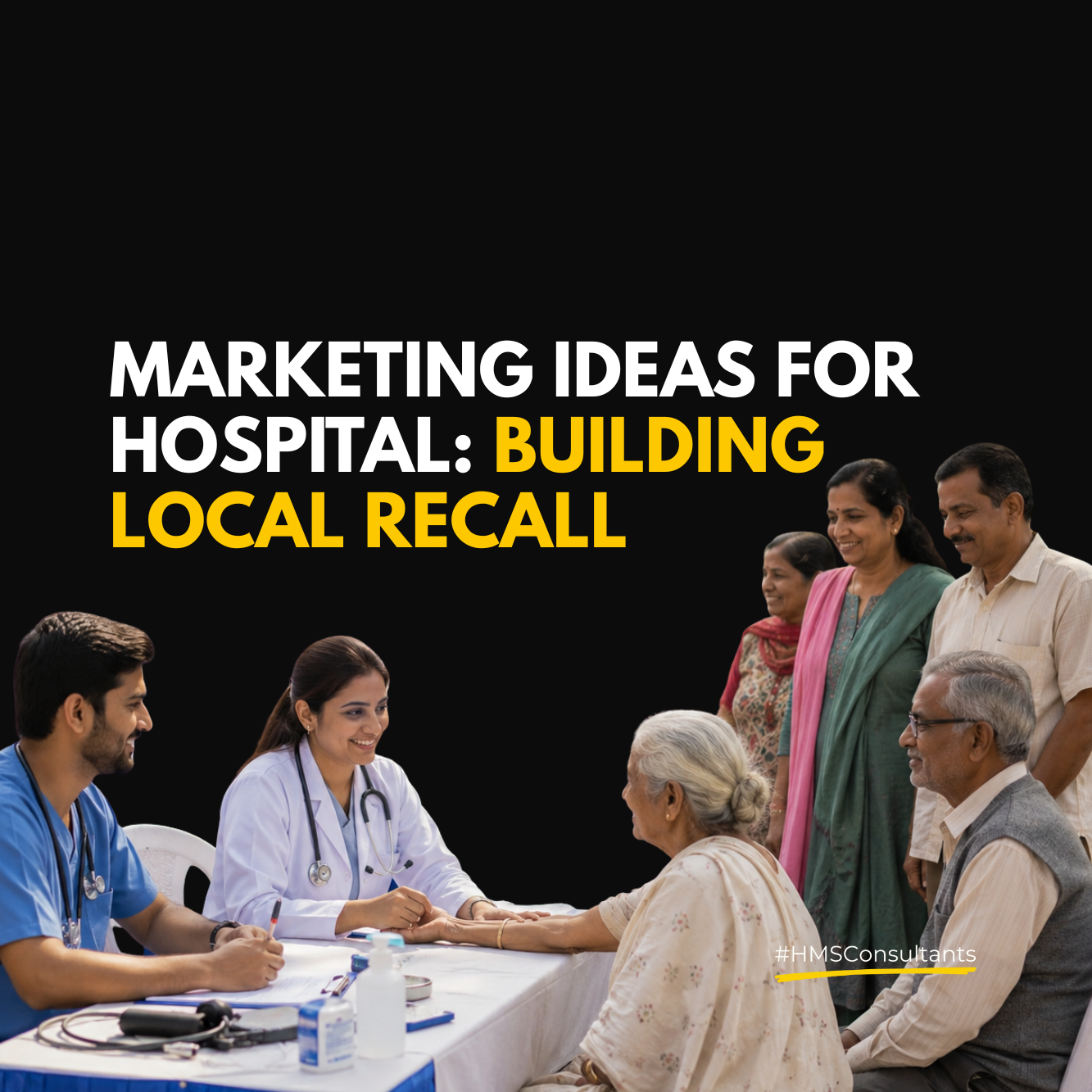
            Marketing ideas for hospital should not always begin with digital campaigns, paid ads, or social media posts. For many hospitals, especially those serving a specific city or locality, stronger recall is built through regular community presence.

            A hospital may have good doctors, services, facilities, and online visibility. But if people living nearby do not remember the hospital when a healthcare need arises, marketing may still feel incomplete. Local recall matters because patients often choose hospitals they have seen, heard about, or interacted with through trusted community activities.

            This is where local hospital marketing becomes important. A hospital should not only be visible online. It should also be present in the area it serves’s health awareness, preventive care, and community conversations.

            Why Local Recall Matters

            Hospitals are not chosen casually. People may not need a hospital every day, but when a health concern comes up, they remember names that feel familiar, reliable, and accessible.

            Local recall is built when people repeatedly see the hospital in useful and responsible ways.This can happen through health awareness programs, preventive check-up drives, residential society sessions, school health talks, corporate wellness activities, seasonal health campaigns, and local partnerships.

            That is why community presence is one of the most practical marketing ideas for hospital growth, especially for hospitals that depend on patients from nearby areas.

            Community Health Awareness Programs

            Community health awareness is one of the strongest ways to build hospital recall. Hospitals can organise awareness sessions around common health concerns that people often ignore until symptoms become serious.

            These sessions should not sound promotional. They should focus on simple and useful health education.

            Hospitals can create awareness around:

            • Diabetes
            • Heart health
            • Women’s health
            • Bone and joint care
            • Child health
            • Eye care
            • Cancer screening
            • Seasonal infections
            • Mental health

            When doctors explain health concerns in simple language, people begin to see the hospital as a helpful healthcare guide, not only a place for treatment.

            Preventive Health Check-Up Drives

            Preventive check-up drives can support both public health awareness and hospital visibility. Many people delay health check-ups because they do not feel an immediate need. When hospitals take preventive care closer to the community, people become more aware of early detection and regular monitoring.

            These drives can be planned in:

            • Residential societies
            • Schools and colleges
            • Corporate offices
            • Senior citizen groups
            • Community centres
            • Local clubs
            • Industrial areas

            The purpose should not only be to collect leads. It should be to educate people about why preventive health matters and when they should consult a doctor.

            A well-planned preventive drive can improve hospital visibility while also creating useful community engagement.

            Local Partnerships for Better Reach

            Hospitals can build stronger community presence by partnering with local groups and institutions. These partnerships help hospitals reach people in places where health conversations are already relevant.

            Useful partnerships can include schools, colleges, housing societies, corporate offices, NGOs, local associations, senior citizen groups, fitness centres, women’s groups, and industrial units.

            For example, a hospital can conduct a bone health session for senior citizens, a menstrual health awareness session in a college, or a heart health talk for working professionals.

            Among different marketing ideas for hospital visibility, local partnerships are useful because they help the hospital reach targeted groups rather than speaking to a broad audience.

            Seasonal Health Campaigns

            Every local area faces seasonal health concerns. Hospitals can use these concerns to plan timely awareness campaigns that are useful for the community.

            Seasonal campaigns may include:

            • Monsoon fever awareness
            • Dengue and malaria prevention
            • Respiratory care during pollution season
            • Heatstroke awareness in summer
            • Flu prevention
            • Skin and allergy awareness
            • Child health during school reopening
            • Senior care during winter

            These campaigns work well because they connect with what people are already experiencing. When a hospital shares timely health guidance, people see the information as relevant and useful.

            Seasonal communication also helps hospitals remain visible throughout the year without depending only on promotional content.

            Residential Society and Corporate Activities

            Residential societies and corporate offices are important spaces for local hospital marketing. Families, senior citizens, working professionals, and children are part of these communities.

            Hospitals can conduct short, focused sessions on practical topics such as:

            • When to consult for chest pain
            • Early signs of diabetes
            • Joint pain and mobility care
            • Child fever warning signs
            • Women’s health after 40
            • Senior citizen fall prevention
            • Importance of regular screening
            • Stress and lifestyle health

            These sessions should be easy to understand and directly useful. The goal is not to make the activity too technical. The aim is to help people know when to take health concerns seriously and when to seek medical advice.

            Offline Presence Can Support Online Recall

            Community activities should not end after the event. Hospitals can use offline activities to support online recall as well.

            After a health camp, awareness session, or community activity, hospitals can share:

            • Event highlights
            • Doctor education clips
            • Key health tips
            • Photos from the session
            • Short awareness posts
            • Follow-up health guidance

            This helps the hospital extend the impact of offline activities to digital platforms. People who attended the event remember it, while others can still discover the hospital through online updates.

            This balance of offline and online communication makes hospital visibility stronger.

            What Hospitals Should Avoid

            Community presence should be handled responsibly. If every activity looks like direct promotion, people may lose interest.

            Hospitals should avoid:

            • Turning health talks into sales pitches
            • Using fear-based communication
            • Promising guaranteed results
            • Sharing patient-sensitive information
            • Using overly technical language
            • Conducting one-time camps without follow-up
            • Promoting services without patient education

            The purpose of community-based hospital marketing is to educate, connect, and build recall. It should feel helpful before it feels promotional.

            Conclusion

            Marketing ideas for hospital growth should include more than online campaigns and advertisements. For hospitals serving a local area, community presence can play an important role in building long-term recall.

            Health awareness programs, preventive check-up drives, local partnerships, residential society sessions, corporate wellness programs, and seasonal campaigns can help hospitals stay connected with people around them.

            Strong community presence helps people remember the hospital before a healthcare need becomes urgent. Better hospital marketing does not always mean louder promotion. Sometimes, it means being consistently present where the community needs useful health guidance.

            Contact Us HMS Consultants

            Hospital marketing can be done by building both online visibility and local community presence. Hospitals should use health awareness programs, preventive check-up drives, local partnerships, seasonal campaigns, residential society sessions, and useful digital updates to stay connected with nearby patients.

            Digital Marketing I Doctor Branding I healthcare digital marketing I Healthcare Marketing I Hospital Branding I hospital marketing I Hospital Marketing Strategies I Hospital Marketing Strategy I local community building

            is something we strongly believe in, which means ‘Knowledge without application is the same as having no knowledge at all

            Akhil Dave

            Principle Consultant

            Ready to take your Personal Brand to the next level?

            Share your details below and we will connect with you to discuss your growth strategy.

            • Public Relations in a Hospital: What It Actually Does and Why Most Hospitals Underestimate It

              Public Relations in a Hospital: What It Actually Does and Why Most Hospitals Underestimate It

              Public Relations in a Hospital: What It Actually Does and Why Most Hospitals Underestimate It

              Written by
              Published on
              Share This

              Public relations in a hospital is not only about press releases, media handling, or public announcements. It is the way a hospital communicates with patients, families, staff, media, and the community to build credibility, manage reputation, and respond responsibly during sensitive situations.

              In India’s rapidly evolving healthcare landscape, where patients make decisions based on trust and reputation long before they step into an OPD, effective public relations in a hospital is not a communications luxury. It is a clinical-trust infrastructure.

              What public relations in a hospital covers at a glance:

              •       Patient and community communication before, during, and after care
              •       Media relations, press coverage, and crisis communication
              •       Internal staff communications that shape patient-facing behaviour
              •       Reputation management across digital and offline touchpoints
              •       Community outreach, health awareness programmes, and public trust building
              •       Liaison with government bodies, accreditation agencies, and health media

              What Is Public Relations in a Hospital?

              Public relations in a hospital is the strategic management of how a hospital communicates with every group it depends on  patients, families, staff, media, the local community, government bodies, and referring doctors. It shapes perception, builds credibility, and protects institutional reputation when challenges arise.

              Unlike advertising, which pays for placement and controls the message entirely, hospital PR earns trust through consistency, transparency, and genuine community presence. It is the difference between a hospital patients choose because they saw an ad and a hospital patients trust because they have heard and felt its reputation.

              “Advertising tells people what a hospital wants them to believe. Public relations is what people believe when the hospital is not saying anything.”

              Why Hospital PR Should Not Be Only Reactive

              Hospitals often notice PR only when there is a complaint, negative review, media issue, or public concern. But public relations in a hospital should not begin only after something goes wrong.

              A strong hospital PR approach works before problems become public. It helps hospitals create clear systems for patient communication, staff responses, review handling, media queries, public clarification, and crisis readiness.

              When PR is treated only as a reaction, hospitals may respond late or inconsistently. But when PR is planned, the hospital can communicate more clearly, reduce confusion, and protect its reputation before issues become larger.

              Why Public Relations in a Hospital Is Different From Advertising

              Hospitals often conflate PR with advertising, or treat both as interchangeable parts of marketing. They are fundamentally different tools with very different effects on patient decision-making.

              Advertising vs. PR in a hospital:

              •       Advertising: paid, controlled, immediate but short-lived in trust impact
              •       PR: earned, credible, slower to build but far more durable
              •       Advertising builds awareness. PR builds trust.
              •       Advertising reaches new patients. PR retains existing ones and generates referrals.
              •       Advertising can be ignored. Trusted PR shapes behaviour before any contact with the hospital.

              For Indian hospitals, word-of-mouth and community reputation remain the most powerful patient acquisition channels. Public relations in a hospital directly feeds these channels advertising cannot replicate this effect regardless of budget.

              The 6 Core Functions of Public Relations in a Hospital

              1. Patient and community communication

              Effective hospital PR ensures patients are never left in an information vacuum. Clear, consistent, and compassionate communication before, during, and after treatment reduces anxiety, builds confidence, and increases follow-through on care plans. When patients feel informed, they feel respected  and they talk about it.

              2. Media relations and press coverage

              Hospitals that manage media relationships proactively control their narrative far better than those who only engage during crises. Sharing clinical milestones, health campaigns, and community health data with journalists builds goodwill that pays dividends when difficult stories arise.

              3. Crisis communication

              Every hospital will face a crisis a medical error, a public complaint, a staff incident, or a regulatory issue. Public relations in a hospital determines whether these moments damage trust permanently or are managed with transparency. Hospitals without a crisis communication protocol are always caught unprepared.

              “A crisis does not create a hospital’s PR problem. It reveals whether the hospital had a PR strategy at all.”

              4. Internal communications

              PR is not only external. How leadership communicates with doctors, nurses, and staff directly shapes the culture patients experience. Hospitals with strong internal communication have staff who visibly embody institutional values and patients notice.

              5. Community outreach and health awareness

              Health camps, awareness drives, school visits, and community initiatives are structured PR investments. They build visibility in communities the hospital serves, establish clinical authority, and create trust long before a patient needs to book an appointment.

              6. Digital reputation management

              Online reviews, Google ratings, and social media presence are now primary inputs in patient decision-making across India. Managing these consistently is a core function of modern public relations in a hospital not a task to be delegated casually.

              How Hospital PR Affects Patient Trust Before the First Visit

              Most hospital administrators think of patient trust as something built during or after care. In reality, a patient’s trust is largely formed before they arrive  shaped by what they have read, heard, and been told by others in their community.

              Public relations in a hospital manages this pre-visit trust systematically. A hospital that is spoken of respectfully in the community, has transparent online communication, and is visibly present in local health initiatives is one patients approach with confidence rather than apprehension.

              This pre-visit confidence shortens time from awareness to booking, reduces OPD drop-off, and improves consultation quality  because patients arrive prepared rather than anxious.

              Crisis Communication: The Part of Hospital PR Most Hospitals Ignore Until It Is Too Late

              No hospital wants to think about crisis communication until it needs it. This is one of the most expensive mistakes in hospital management. A well-prepared PR function includes a documented crisis protocol, a designated spokesperson, clear escalation paths, and a media response framework.

              When a crisis arises and in any hospital of meaningful size, it will the first 24 to 48 hours are decisive. Hospitals that respond with transparency limit damage significantly. Hospitals that go silent or issue contradictory statements find the communication failure becomes larger than the original incident.

              Principles of effective hospital crisis communication:

              1.     Respond early with facts, even if incomplete. Silence is interpreted as guilt.
              2.     Designate a single spokesperson. Contradictory voices amplify damage.
              3.     Acknowledge impact on patients and families before defending the institution.
              4.     Communicate internally before news breaks externally.
              5.     Follow up consistently one statement is never enough in a fast-moving situation.

              Public Relations in a Hospital vs. Marketing: How They Work Together

              Hospital PR and hospital marketing are not the same function, but they must work together to be effective. Marketing drives awareness and patient acquisition. PR builds the credibility and trust that makes marketing believable.

              A hospital that spends heavily on marketing without a functioning PR foundation is building on unstable ground. When hospital PR and marketing are aligned when every campaign builds on a credible, community-trusted reputation both functions perform significantly better. Conversion improves. Referrals increase without incentives.

              Why Public Relations in a Hospital Is Especially Important in India

              India’s healthcare environment has specific characteristics that make hospital PR particularly high-stakes. Patient literacy varies enormously across demographics. Medical decision-making is deeply family-influenced. Trust in institutional healthcare coexists with significant scepticism about commercial motives. And social media has given patient voices unprecedented reach.

              A single patient’s negative experience shared on WhatsApp or Google Maps can reach thousands of prospective patients within hours. At the same time, a hospital that is genuinely trusted in its community with visible, consistent, and honest relationships with the people it serves has a resilience that advertising alone cannot create.

              How to Build a Hospital PR Strategy: Where to Start

              Building an effective hospital PR function does not require a large department or significant budget at the outset. It requires clarity, consistency, and commitment from hospital leadership.

              Hospital PR Readiness Checklist

              A hospital can begin improving PR by checking whether basic communication systems are already in place.

              1. Is one person responsible for hospital communication?
              2. Are patient complaints acknowledged on time?
              3. Does the front desk know how to communicate delays?
              4. Are review responses handled professionally?
              5. Is there a basic crisis response protocol?
              6. Are media queries handled by one authorised person?
              7. Are doctors and staff informed before public communication?
              8. Are community activities documented and communicated clearly?

              Conclusion: Public Relations in a Hospital Is Not a Department. It Is a Culture.

              The most effective hospital PR is not produced by a communications team in isolation. It is the natural output of a hospital where patients are genuinely respected, staff are well-informed, and leadership communicates with honesty and consistency.

              Public relations in a hospital builds the trust that makes everything else in healthcare marketing work better. It reduces patient acquisition cost, increases campaign durability, and creates the community standing that no advertising budget can buy.

              In India’s healthcare market where trust is the primary currency and reputation travels faster than any campaign hospitals that invest in PR as a strategic function rather than a reactive one will find that growth becomes steadier, quieter, and far more sustainable.

              Looking to work with a hospital marketing expert? Explore HMS Consultants’ healthcare marketing services 

              Contact Us HMS Consultants

              The role of PR in a hospital is to manage clear communication between the hospital, patients, families, staff, media, and the public. It helps protect reputation, respond during sensitive situations, handle public concerns, support patient trust, and keep hospital communication responsible and consistent.

              Doctors Digital Marketing I Healthcare Marketing I Hospital Marketing Strategies I Marketing ideas for clinics I Marketing Trends 2025 I Medical Marketing I Social Media Marketing

              is something we strongly believe in, which means ‘Knowledge without application is the same as having no knowledge at all

              Akhil Dave

              Principle Consultant

              Ready to take your Personal Brand to the next level?

              Share your details below and we will connect with you to discuss your growth strategy.

              • The Marketing Audit Your Hospital Actually Needs: Why 80% Clinics Waste Money Without This 7-Step Review

                The Marketing Audit Your Hospital Actually Needs: Why 80% Clinics Waste Money Without This 7-Step Review

                The Marketing Audit Your Hospital Actually Needs: Why 80% Clinics Waste Money Without This 7-Step Review

                Written by
                Published on
                Share This

                The Hidden Cost of “Doing Marketing” Without Direction

                Across India, clinics and hospitals are investing heavily in digital marketing social media posts, Google ads, influencer videos, website revamps, WhatsApp broadcasts, offline activities, health camps, and more. But despite all the effort and money spent, most medical facilities continue to struggle with the same problems: inconsistent patient flow, low OPD conversions, poor engagement, and a vague sense of “nothing is working.”

                Why does this happen?
                Because 80% of hospitals never conduct a proper marketing audit.

                Without an audit, marketing becomes a set of isolated activities rather than a strategic system. Money leaks from multiple points in the patient journey, often without doctors or management even realising it. A marketing audit is not a fancy term; it is a structured, evidence-based review of every pillar that impacts patient acquisition, experience, and retention.

                This blog breaks down the 7-step audit your hospital must conduct, why each step matters, and how it prevents unnecessary marketing wastage especially in a competitive healthcare environment like India.

                1. Brand Clarity: What Do Patients Really Think You Do?

                Most hospitals assume their brand is clear because they know what they offer but that is rarely how patients see it. A marketing audit begins by identifying:

                For example, a diabetes clinic might say “We treat diabetes,” but a patient searches for: “Diabetes reversal doctor,” “HbA1c specialist,” “foot clinic near me,” “insulin management,” or “weight-loss for diabetics.”

                If your brand messaging does not match patient search intent, you will lose visibility no matter how much you spend.

                Audit outcome: A clear brand positioning statement, simplified service definitions, and aligned messaging across all channels.

                2. Your Google Presence: The First Digital OPD You Didn’t Even Know Exists

                In India, more than 70% of patients check a hospital on Google before deciding to visit.
                But most hospitals never audit:

                • Google Business Profile accuracy
                • Reviews (count, quality, recency, responsiveness)
                • NAP consistency (Name, Address, Phone)
                • Photo quality
                • Keywords used in the profile
                • Appointment links
                • Maps visibility

                This is where clinics lose the highest number of potential patients silently.

                A marketing audit examines how your hospital appears on search results and maps, where the gaps are, and what optimisation is required to ensure that when someone searches “best orthopaedic doctor near me” or “child specialist open now,” you appear on top.

                Audit outcome: A fully optimised Google profile that becomes your most powerful free marketing tool.

                3. Website Structure & Patient Experience: Is Your Digital Reception Helping or Confusing?

                Most patients visit your website for one of the following reasons:

                • To check credibility
                • To understand services
                • To find the doctor list
                • To see reviews
                • To book an appointment
                • To check prices or packages

                If your website fails to answer these in 30–40 seconds, patients will drop off.

                A marketing audit reviews:

                • Website load speed
                • Mobile friendliness
                • Clarity of service pages
                • Appointment flow
                • WhatsApp/Call-to-action placement
                • Medical accuracy and ethics
                • Patient education content
                • Landing page effectiveness for ads

                A confusing website equals lost patients. A clean, simple, mobile-optimised website increases patient conversions without spending a rupee extra on marketing.

                Audit outcome: A clear list of website changes that reduce bounce rate and increase enquiry conversions.

                4. Content & Communication: Are You Speaking the Language Patients Understand?

                Indian healthcare is filled with jargon and patients rarely understand what doctors mean.
                Your marketing audit checks:

                • Whether content is patient-friendly
                • Whether your posts address patient fears & motivations
                • Whether your content is solving problems, not showcasing “features”
                • Whether your tone is trustworthy and reassuring
                • Whether you’re using multi-format content (video, reels, blogs, FAQs)

                The biggest mistake hospitals make is content that’s about them instead of being about patients’ needs.

                Example:
                Bad: “We have state-of-the-art laparoscopic equipment.”
                Good: “Get faster recovery, smaller scars, and less pain with laparoscopy.”

                Audit outcome: A content strategy that builds trust, improves clarity, and attracts the right patients.

                5. Lead Management & WhatsApp Flow: Are You Following Up or Losing Patients?

                Every clinic loses at least 20–30% of enquiries because of poor follow-up. A marketing audit examines:

                • How leads are captured
                • How many are missed
                • How quickly your front desk responds
                • Whether WhatsApp automation exists
                • Whether reminders and follow-ups are consistent
                • Whether call recordings show quality conversation
                • Whether patients drop off between enquiry → visit

                WhatsApp can increase OPD conversions 3x if used properly but only if your audit identifies the gaps.

                Audit outcome: A streamlined follow-up system that ensures no patient enquiry is wasted.

                6. Staff Behaviour & Patient Touchpoints: The Offline Experience You Cannot Ignore

                Marketing can bring patients to the door but your staff determines whether they stay.

                A holistic audit includes:

                • Reception behaviour
                • Waiting room experience
                • Phone etiquette
                • Billing clarity
                • Doctor’s communication style
                • Follow-up planning
                • Discharge experience

                This is where hospitals often lose repeat patients and referrals.
                A marketing audit reveals operational gaps that directly impact your brand and patient satisfaction.

                Audit outcome: Action steps to align staff behaviour with your core brand promise.

                7. Analytics, Tracking & UTM Review: Are Your Decisions Based on Data or Guesswork?

                No marketing is effective if you can’t track it.
                Most clinics run ads, post content, or do offline activities without knowing what truly works.

                A good marketing audit reviews:

                • Google Analytics setup
                • UTM parameters
                • Campaign tracking sheets
                • Lead source analysis
                • Cost-per-lead
                • Cost-per-OPD
                • ROI measurement
                • Monthly performance trends

                Without tracking, you are not marketing you are guessing.

                Audit outcome: A clear monthly dashboard and decision-making framework based on real data.

                Why This 7-Step Audit Saves Money Instead of Spending It

                A hospital marketing audit does not add new expenses.
                It eliminates wastage caused by:

                • Wrong targeting
                • Weak online presence
                • Poor website structure
                • Staff gaps
                • Missed leads
                • No tracking
                • Confusing content

                When the audit fixes these bottlenecks, every rupee spent starts producing results.

                Imagine running ads after the audit → now you know your website is ready, your Google listing is strong, your staff is trained, and your follow-up system is tight.
                This multiplies conversions instantly.

                Conclusion: Before You Spend on Marketing, Fix the System First

                Marketing is not posting more.
                Marketing is not boosting ads.
                Marketing is not hiring an agency and hoping for miracles.

                Marketing is a system and a system only works when all parts are aligned.

                A 7-step hospital marketing audit ensures:

                • You stop wasting money
                • You start attracting the right patients
                • You build credibility
                • You improve patient experience
                • You track what truly works
                • You make informed decisions
                • You create a sustainable growth engine

                Before your next marketing activity audit your hospital.
                It’s not an expense; it’s the foundation of everything that follows.

                Contact Us HMS Consultants

                Doctors Digital Marketing I Healthcare Marketing I Hospital Marketing Strategies I Marketing ideas for clinics I Marketing Trends 2025 I Medical Marketing I Social Media Marketing

                is something we strongly believe in, which means ‘Knowledge without application is the same as having no knowledge at all

                Akhil Dave

                Principle Consultant

                Ready to take your Personal Brand to the next level?

                Share your details below and we will connect with you to discuss your growth strategy.

                • How Personalized Engagement Improves Patient Care

                  How Personalized Engagement Improves Patient Care

                  How Personalized Engagement Improves Patient Care

                  Written by
                  Published on
                  Share This

                  Every patient is unique in their health journey, lifestyle, and expectations. Yet, many hospitals and clinics still communicate with patients in the same way, regardless of age, background, or digital habits. In today’s world, personalization is no longer a luxury; it is a key patient engagement strategy.

                  For clinics looking to build loyalty, personalization transforms marketing ideas for hospitals into meaningful patient relationships. From tailored follow-ups to communication channels that match patient preferences, personalization ensures care feels relevant beyond the OPD.

                  Why Personalization Matters in Healthcare

                  Generic communication risks making patients feel like just another number. Personalized engagement, on the other hand:

                  • Shows patients they are understood and valued.
                  • Improves trust and long-term loyalty.
                  • Encourages adherence to treatments and follow-ups.
                  • Builds brand distinction in competitive markets.

                  A healthcare marketing consultant often highlights that personalization is the missing link between visibility and lasting patient trust.

                  Using Demographics for Better Engagement

                  Demographics remain the first step to personalization.

                  • Age: Younger patients may prefer Instagram updates or WhatsApp marketing, while older patients respond better to phone calls or printed material.
                  • Location: Patients in metro cities expect digital booking options, while those in Tier-2 or Tier-3 towns may rely on local awareness drives.
                  • Family roles: Campaigns for mothers, seniors, or working professionals resonate more when the message acknowledges their daily realities.

                  By segmenting patient groups, clinics can deliver communication that feels personal, not generic.

                  Lifestyle-Based Personalization

                  Personalization should go beyond age and location to consider lifestyle.

                  • Profession: A software engineer may appreciate SMS reminders for eye strain prevention, while a farmer may value seasonal health camps.
                  • Habits: Fitness-conscious patients might respond well to wellness newsletters, while those managing chronic conditions need regular check-in reminders.
                  • Cultural context: Festivals, local traditions, and language preferences can shape how patients engage with a hospital’s brand.

                  This approach transforms marketing ideas for hospitals into everyday relevance.

                  Technology Adoption as a Key Factor

                  Patients differ in how comfortable they are with technology.

                  • High adoption: Young professionals and urban patients often use apps, online consultations, and digital health records.
                  • Moderate adoption: Middle-aged patients may rely on WhatsApp groups or SMS updates.
                  • Low adoption: Seniors may prefer phone calls or printed handouts.

                  A balanced strategy ensures no patient feels left out. Healthcare marketing techniques should meet patients where they are, not force them into unfamiliar tools.

                  Examples of Personalization in Action

                  • WhatsApp reminders for urban patients with busy schedules.
                  • Printed diet charts for older patients managing diabetes.
                  • Festival-specific wellness tips shared in local languages.
                  • Online forums for younger, tech-savvy groups dealing with lifestyle issues like stress or sleep.

                  These small steps make patients feel that the clinic recognizes their personal needs.

                  Benefits of Personalized Engagement

                  When personalization is done consistently:

                  • Patient satisfaction improves, leading to stronger loyalty.
                  • Word-of-mouth referrals increase because patients share positive experiences.
                  • Clinics save time and resources by focusing on targeted communication.
                  • The hospital brand evolves from being just a care provider to a trusted community partner.

                  Challenges in Implementing Personalization

                  While powerful, personalization requires structure:

                  • Data management: Clinics need systems to track patient preferences.
                  • Consistency: Sporadic personalization feels insincere.
                  • Privacy: Patients must trust that their information is secure.

                  A healthcare marketing consultant can help clinics design strategies that balance personalization with privacy and scalability.

                  Practical Steps for Clinics

                  1. Start with segmentation: Group patients by age, lifestyle, and tech comfort.
                  2. Pick the right channel: Match communication style to patient preference.
                  3. Train staff: Ensure every team member knows how to personalize interactions.
                  4. Use simple tools: WhatsApp marketing, SMS platforms, or management systems can simplify personalization.

                  Evaluate impact: Track patient responses, repeat visits, and referrals.

                  Conclusion

                  Personalization is not about adding complexity to healthcare marketing. It’s about making every patient feel recognized and respected. By aligning communication with demographics, lifestyle, and technology, clinics can build deeper patient connections.

                  In the long run, personalization transforms everyday marketing ideas for hospitals into strategies that foster trust, loyalty, and growth. It is the human side of modern healthcare marketing techniques.

                  Doctors Digital Marketing I Healthcare Marketing I Hospital Marketing Strategies I Marketing ideas for clinics I Marketing Trends 2025 I Medical Marketing I Social Media Marketing

                  is something we strongly believe in, which means ‘Knowledge without application is the same as having no knowledge at all

                  Akhil Dave

                  Principle Consultant

                  Ready to take your Personal Brand to the next level?

                  Share your details below and we will connect with you to discuss your growth strategy.

                  • Best Marketing Channels for Clinics & Hospitals

                    Best Marketing Channels for Clinics & Hospitals

                    Best Marketing Channels for Clinics & Hospitals

                    Written by
                    Published on
                    Share This

                    In today’s competitive healthcare landscape, being a great doctor isn’t enough. To attract and retain patients, you need the right marketing strategy and at the heart of that lies one critical decision: which channels will actually work for your practice?

                    Too often, healthcare providers jump onto trends: Facebook ads, influencer marketing, expensive SEO campaigns, without clarity on what fits their goals, audience, or budget.

                    This blog will walk you through how to choose the right marketing channels for your clinic or hospital, with real considerations that go beyond generic advice.

                    1. Know Your Audience First (Not the Channels)

                    Before you even think about platforms, ask:

                    • Who are my ideal patients?
                    • What are their habits? (Online or offline? Instagram or newspapers?)
                    • Where do they go for health information or recommendations?

                    A pediatric clinic in a metro city may thrive on Instagram and mom groups. A rural eye hospital may find success through WhatsApp forwards and community events. The channel must match the patient.

                    Action Step: Create a simple patient persona. Age, income, tech savviness, preferred languages, and info sources.

                    2. Understand the Role of Each Channel

                    Each marketing channel plays a different role in the patient journey. Here’s a quick breakdown:

                    Channel

                    Best For

                    Google Business Profile

                    Discoverability + Credibility

                    WhatsApp Broadcast

                    Retention + Direct Engagement

                    Instagram

                    Brand Awareness + Soft Trust Building

                    YouTube Shorts

                    Thought Leadership + SEO Value

                    Facebook Groups

                    Community Building + Targeted Ads

                    Local Newspaper Ads

                    Regional Trust + Offline Awareness

                    Posters/Leaflets

                    Nearby Visibility + Low-Cost Recall

                    Doctor Directories (Practo, etc.)

                    Lead Generation + Reviews

                    No channel works in isolation. The best results come from mixing awareness, engagement, and conversion-focused tools in a planned sequence.

                    3. Prioritize Based on Your Stage

                    Are you a newly launched clinic, or an established hospital? Your channel mix should reflect your growth stage.

                    For new clinics/startups:

                    • Focus on local SEO and Google Business listing
                    • Start small with WhatsApp engagement
                    • Use Instagram to showcase work environment, doctor profiles, behind-the-scenes
                    • Join local Facebook groups (RWAs, community circles)

                    For growing practices:

                    • Start content marketing via blogs or YouTube Shorts
                    • Use paid ads (Google/Facebook) with retargeting
                    • Host offline health camps or webinars for lead gen

                    For established hospitals:

                    • Focus on brand reinforcement and trust
                    • Create specialty-specific funnels (e.g., cataract, IVF, ortho)
                    • Invest in patient experience marketing (feedback loops, CRM)

                    Action Step: Map your growth stage and choose 2–3 primary channels to focus on. Avoid scattergun marketing.

                    4. Track Effort vs Impact

                    A marketing channel is only as good as the results it brings relative to the effort/cost. Many founders waste energy on time-consuming platforms (like Reels or blogs) without consistency or returns.

                    Create a simple table:

                    Channel

                    Time/Cost Spent

                    Patients Reached/Leads

                    Is it Working?

                    Instagram

                    5 hrs/week

                    5–10 DMs, low conversions

                    No

                    GMB

                    1 hr/week

                    8 new calls/month

                    Yes

                    WhatsApp

                    2 hrs/month

                    15 repeat appointments

                    Yes

                    Let data, not peer pressure decide your next move.

                    5. Don’t Confuse Presence with Strategy

                    Just having a profile on Facebook or an Instagram page with occasional posts is not a strategy. A real marketing strategy answers:

                    • Why are we using this platform?
                    • What content will we post, and for whom?
                    • How will we measure success?

                    And most importantly: how will we guide a patient from seeing us to trusting us to booking an appointment?

                    Pro Tip: Treat your channels like departments. Each must serve a role (awareness, education, engagement, or conversion).

                    6. Watch What Your Patients Respond To

                    Look at the comments, messages, and feedback you’re already receiving:

                    • Do patients ask for directions? Highlight your GMB link.
                    • Do they want to know who’s treating them? Introduce your staff online.
                    • Are they engaging with reels but not converting? Shift to WhatsApp follow-ups.

                    Patient behaviour is your best strategist.

                    7. Review + Adjust Every 3 Months

                    Marketing isn’t set-and-forget. Every 90 days:

                    • Audit each channel’s performance
                    • Cut what’s not working
                    • Double down on high-ROI tactics
                    • Realign based on business goals (e.g., launch of a new service)

                    Don’t let dead platforms drain your time.

                    Final Thoughts : Marketing Channels Should Serve You, Not Confuse You

                    Choosing the right marketing channels isn’t about being everywhere. It’s about being visible where it matters, and building trust step by step.

                    As a healthcare founder, your time is limited. Focus on clarity, consistency, and conversion, and the right patients will follow.

                    If this sparked some questions or made you rethink your current channel mix, it might be time to take a step back and audit your strategy. You’re not alone in this, it’s something many growing practices struggle with.

                    Written by Tusharika Ranjan

                    Doctors Digital Marketing I Healthcare Marketing I Hospital Marketing Strategies I Marketing ideas for clinics I Marketing Trends 2025 I Medical Marketing I Social Media Marketing

                    is something we strongly believe in, which means ‘Knowledge without application is the same as having no knowledge at all

                    Akhil Dave

                    Principle Consultant

                    Ready to take your Personal Brand to the next level?

                    Share your details below and we will connect with you to discuss your growth strategy.


                    • Local Marketing for Clinics & Hospitals in India 2025

                      Local Marketing for Clinics & Hospitals in India 2025

                      Local Marketing for Clinics & Hospitals in India 2025

                      Written by
                      Published on
                      Share This

                      In today’s rapidly evolving healthcare landscape, local marketing has moved from being an optional strategy to an absolute necessity for clinics and hospitals aiming to build trust, grow their practice, and deeply engage their community. While large hospitals often focus on broad, national-level campaigns, local clinics and hospitals have a unique advantage, they can truly connect with their immediate community in a more personal, authentic, and culturally sensitive way.

                      Why Local Marketing Matters

                      Local marketing is about more than just visibility it’s about becoming a trusted neighborhood partner in health. As patients increasingly turn to online platforms for reviews, directions, and doctor recommendations, a strong local presence ensures that your services appear at the top when they search for “best pediatrician near me” or “trusted orthopedic clinic in [city].”

                      Moreover, with India’s diverse and highly localized culture, patients often choose doctors based on word-of-mouth, community trust, and local reputation, far beyond just clinical skills. This makes local marketing not just about attracting new patients but about nurturing relationships and becoming the “go-to” healthcare provider.

                      Talk to Them in Their Language: Reaching Hearts, Not Just Minds

                      One of the most powerful elements of local marketing is language localization. Speaking to patients in their own language goes beyond words; it touches their emotions and builds a deeper connection.

                      Whether you’re in Chennai, Surat, or Jaipur, creating website content, social media posts, and offline materials in the local language fosters trust. Patients feel understood and valued. Incorporating regional idioms, local festivals, and community references shows that your clinic is a true part of the neighborhood fabric, not just a service provider.

                      Understand Who Needs You Most, Be the Go-To Doctor

                      Successful local marketing starts with understanding exactly which patients need you, from where, and why. Analyze your existing patient data:

                      • Which zip codes or neighborhoods bring you the most patients?
                      • Which age groups or demographics seek your services?
                      • What are their most common concerns or health anxieties?

                      Once identified, tailor your outreach to these specific groups. For instance, if a pediatric clinic notices many young working mothers from a nearby IT hub, designing targeted evening wellness talks or weekend vaccination drives can strengthen relationships and establish your clinic as the default choice.

                      Choose the Right Method for Your Area

                      A one-size-fits-all marketing approach rarely works in healthcare. Knowing which methods work best in your locality is critical. In urban centers, digital ads, Google Business Profile optimization, and Instagram reels may drive strong engagement. In contrast, semi-urban and rural areas might respond better to community camps, radio ads, local WhatsApp groups, and partnerships with community health workers.

                      Choosing the correct mix of methods, whether it is Facebook Live sessions, neighborhood newspaper ads, or tie-ups with local schools, depends on your community’s habits and expectations. This thoughtful alignment ensures your message not only reaches your audience but resonates with them.

                      Strengthen Your Google Business Profile (GBP)

                      For any local clinic or hospital, a well-optimized Google Business Profile is non-negotiable. Patients rely heavily on Google reviews, photos, and service listings. Key steps include:

                      • Keeping your hours, services, and contact details updated.
                      • Regularly uploading genuine images of your facility and staff.
                      • Encouraging satisfied patients to leave honest reviews.
                      • Quickly responding to all reviews, positive and negative, to show attentiveness and care.

                      GBP directly influences local SEO, helping your clinic appear in the coveted “3-pack” at the top of search results.

                      Integrate Online and Offline Marketing

                      A successful local strategy seamlessly integrates digital and on-ground efforts. Offline events such as free health camps, school workshops, and local sponsorships can generate excellent content for your online channels. Sharing real community stories, event photos, or educational snippets on Facebook and Instagram helps build authenticity.

                      Meanwhile, online efforts like geo-targeted ads can promote upcoming camps or free consultation days, driving more participation and strengthening local goodwill.

                      Focus on Patient Experience as Your Core Strategy

                      In local healthcare, word-of-mouth is still king. Every interaction, from the first website visit to the front-desk greeting and follow-up calls, shapes a patient’s perception. Train your staff to treat every patient with respect, patience, and empathy. Small touches like personalized appointment reminders or festive greetings make patients feel special and valued.

                      By prioritizing patient experience, you naturally create brand ambassadors who will recommend your clinic to friends, family, and colleagues, creating a self-sustaining growth loop.

                      Embrace Regional Language and Culture in All Content

                      To truly “talk to them in their language,” embed local cultural elements in your website, waiting room posters, and health education materials. Celebrate local festivals, discuss region-specific health issues (like seasonal illnesses), and share local success stories.

                      This cultural alignment positions your clinic as a neighborhood partner rather than a transactional service, nurturing lifelong loyalty.

                      Measure, Adapt, and Innovate

                      Like any marketing strategy, local marketing is a cycle, not a one-time campaign. Continuously measure which methods yield the best results: track footfall after a local event, monitor ad engagement rates, and gather patient feedback regularly.

                      • Is there an increase in appointments from a particular area after a health camp?
                      • Are WhatsApp broadcasts getting high response rates?
                      • Which social media posts receive the most engagement?

                      Adapt your strategy based on these insights. Innovate with new community events, content formats, or partnerships. Reinvent as your community evolves, always keeping patient needs at the center.

                      Conclusion

                      Build Trust, Not Just Numbers

                      Local marketing is ultimately about building trust and relationships, not just driving footfall. By truly understanding your patients, speaking their language, respecting their culture, and providing exceptional experiences, you will create a strong, sustainable foundation for long-term growth.

                      As healthcare becomes more digital and competitive, clinics and hospitals that focus on meaningful local connections will stand out as pillars of trust.

                      Written by Dr. Omang Gupta 

                      Contact Us HMS Consultants 

                      Doctors Digital Marketing I Healthcare Marketing I Hospital Marketing Strategies I Marketing ideas for clinics I Marketing Trends 2025 I Medical Marketing I Social Media Marketing

                      is something we strongly believe in, which means ‘Knowledge without application is the same as having no knowledge at all

                      Akhil Dave

                      Principle Consultant

                      Ready to take your Personal Brand to the next level?

                      Share your details below and we will connect with you to discuss your growth strategy.