Category: Digital Strategy

  • Doctor Digital Marketing: How Patients Evaluate Doctors Before Booking

    Doctor Digital Marketing: How Patients Evaluate Doctors Before Booking

    Doctor Digital Marketing: How Patients Evaluate Doctors Before Booking

    Published on
    Share This

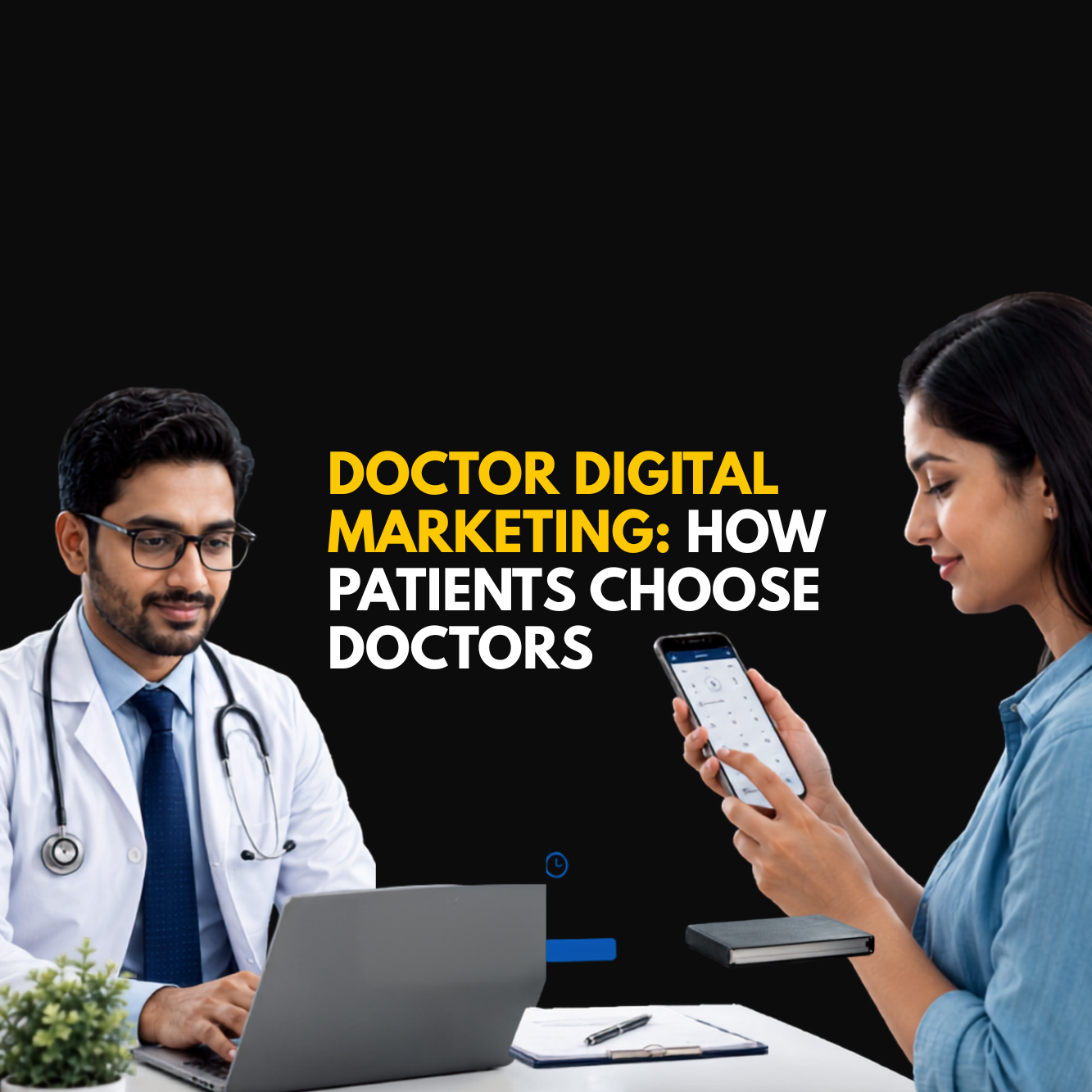
    Doctor digital marketing is not only about posting health tips, running ads, or getting more followers. For doctors, digital marketing should help patients understand the doctor’s expertise, approach, availability, and credibility before booking an appointment.

    Today, even when patients receive a recommendation, they often search the doctor’s name online, read reviews, check the clinic website, visit social media pages, or look for videos before deciding.

    This means doctor digital marketing should be planned around how patients evaluate a doctor before consultation.

    Patients First Look for the Doctor’s Identity

    Before booking, patients want to know who the doctor is. They look for simple but important details that help them understand the doctor’s professional background.

    This usually includes:

    • Doctor’s full name
    • Qualification
    • Speciality
    • Years of experience
    • Clinic or hospital association
    • Consultation location
    • Available timings
    • Key areas of practice

    If this information is missing, incomplete, or different across platforms, patients may feel unsure. A weak online presence can make even an experienced doctor look less visible or less accessible.

    Digital marketing for doctors should clearly establish the doctor’s identity across Google, website pages, directories, social media, and clinic communication. Patients should not struggle to understand who the doctor is and what type of care they provide.

    Patients Check Whether the Doctor Matches Their Concern

    Patients do not evaluate a doctor only by qualification. They also check whether the doctor is relevant to their specific health concern.

    For example, a patient with knee pain may look for an orthopaedic doctor who handles joint pain, arthritis, sports injuries, or knee replacement. A patient looking for pregnancy care may check whether the gynecologist provides antenatal care, high-risk pregnancy care, delivery support, or fertility guidance.

    This is where online marketing for doctors must move beyond general statements like “experienced doctor” or “quality care.”

    The content should clearly explain:

    • What conditions the doctor treats
    • Which patient concerns are commonly handled
    • What services are available
    • When patients should consult
    • What the patient can expect during the visit
    • Which symptoms should not be ignored

    This does not mean making exaggerated claims. It means helping patients understand whether the doctor is suitable for their concern.

    Patients Read Reviews Before Booking

    Reviews play an important role in a doctor’s digital marketing. Patients often read what others have experienced before deciding to book.

    They may observe:

    • How patients describe the doctor
    • Whether the doctor listens properly
    • Whether staff members are helpful
    • Whether appointment handling is smooth
    • Whether the clinic experience feels organised
    • How the doctor or clinic responds to feedback

    Reviews are not only about star ratings. They are signals of patient trust. A doctor may have strong clinical expertise, but if online reputation is unmanaged, patients may hesitate.

    A doctor marketing strategy should include review monitoring, professional response handling, and learning from repeated patient feedback. Positive reviews can strengthen confidence, while negative reviews should be handled carefully and ethically.

    Patients Notice How the Doctor Communicates Online

    Patients also evaluate how a doctor communicates online. This includes social media posts, videos, website content, captions, blogs, and replies to patient queries.

    A doctor’s communication style can influence patient comfort before consultation.

    Patients may feel more confident when the content is:

    • Simple to understand
    • Educational
    • Responsible
    • Calm in tone
    • Free from fear-based messaging
    • Focused on patient awareness
    • Clear about when to seek consultation

    For doctors, content should not sound like aggressive selling. Healthcare communication should guide, educate, and reassure patients.

    For example, a short video explaining when back pain needs medical attention can be more useful than a generic promotional post. A simple post explaining early signs of diabetes can help patients take timely action. Medical practice marketing becomes stronger when the doctor’s communication helps patients feel informed rather than pressured.

    Patients Compare Information Across Platforms

    A patient may not rely on only one platform. They may check Google, the website, social media, YouTube, healthcare directories, and review platforms before making a decision.

    If the information is different everywhere, it creates confusion. For example, Google may show one clinic timing, the website may show another, and social media may not mention the doctor’s current availability.

    A consistent doctor online presence should include updated details such as:

    • Doctor name and speciality
    • Clinic or hospital location
    • Contact number
    • Consultation timings
    • Services offered
    • Appointment process
    • Website or profile link
    • Patient education content

    Consistency helps patients feel that the doctor’s practice is organised and reliable.

    Patients Evaluate Convenience Before Booking

    Clinical expertise matters, but patients also consider practical details before booking. If they cannot find appointment information, location details, consultation timing, or the contact process, they may delay the decision.

    A doctor in digital marketing should make the next step easy.

    Patients should be able to understand:

    • Where the doctor is available
    • How to book an appointment
    • What timings are available
    • Whether a prior appointment is needed
    • Which number to call
    • What documents or reports to carry
    • Whether follow-up is required

    These details may look basic, but they affect patient inquiries. Many potential patients drop off not because they are uninterested, but because the booking process is unclear.

    Common Mistakes in Doctor Digital Marketing

    Many doctors or clinics make digital marketing less effective by focusing only on activity instead of patient evaluation.

    Common mistakes include:

    • Posting only festival creatives
    • Running ads without clear service pages
    • Using generic captions
    • Not updating Google Business Profile
    • Ignoring reviews
    • Not explaining services properly
    • Having incomplete doctor profiles
    • Making content too technical for patients
    • Not showing clear appointment steps

    These mistakes can reduce patient confidence. A doctor may be highly skilled, but if the digital presence is unclear, patients may not understand the doctor’s value.

    Doctor digital marketing should be structured, consistent, and patient-focused.

    Conclusion

    Doctor digital marketing is not just about visibility. It is about helping patients evaluate the doctor before booking.

    Patients look for identity, expertise, relevance, reviews, communication style, convenience, and trust signals. They want to know whether the doctor is suitable for their concern and whether the consultation process feels clear and reliable.

    A strong doctor marketing strategy should focus on patient questions before focusing on platforms. It should explain the doctor’s expertise, make information easy to find, manage the doctor’s reputation responsibly, and guide patients to book without pressure.

    For doctors, digital presence is often the first point at which patients begin to build trust. The clearer the doctor’s online presence, the easier it becomes for patients to understand, trust, and choose the right care.,

    Contact Us HMS Consultants

    Yes, a doctor can do digital marketing ethically and informatively. A doctor’s digital marketing should focus on patient education, clear service information, an updated online presence, reviews, appointment guidance, and helping patients understand the doctor’s expertise before booking.

    Digital Strategy I Business I Digital Marketing I doctor digital marketing I healthcare digital marketing I healthcare Management I Healthcare Marketing I Healthcare Marketing Strategy I hospital marketing I Hospital Marketing Strategies I online presence

    is something we strongly believe in, which means ‘Knowledge without application is the same as having no knowledge at all

    Akhil Dave

    Principle Consultant

    Ready to take your Personal Brand to the next level?

    Share your details below and we will connect with you to discuss your growth strategy.
    • Hospital Marketing: How to Decide Which Services to Promote First

      Hospital Marketing: How to Decide Which Services to Promote First

      Hospital Marketing: How to Decide Which Services to Promote First

      Published on
      Share This

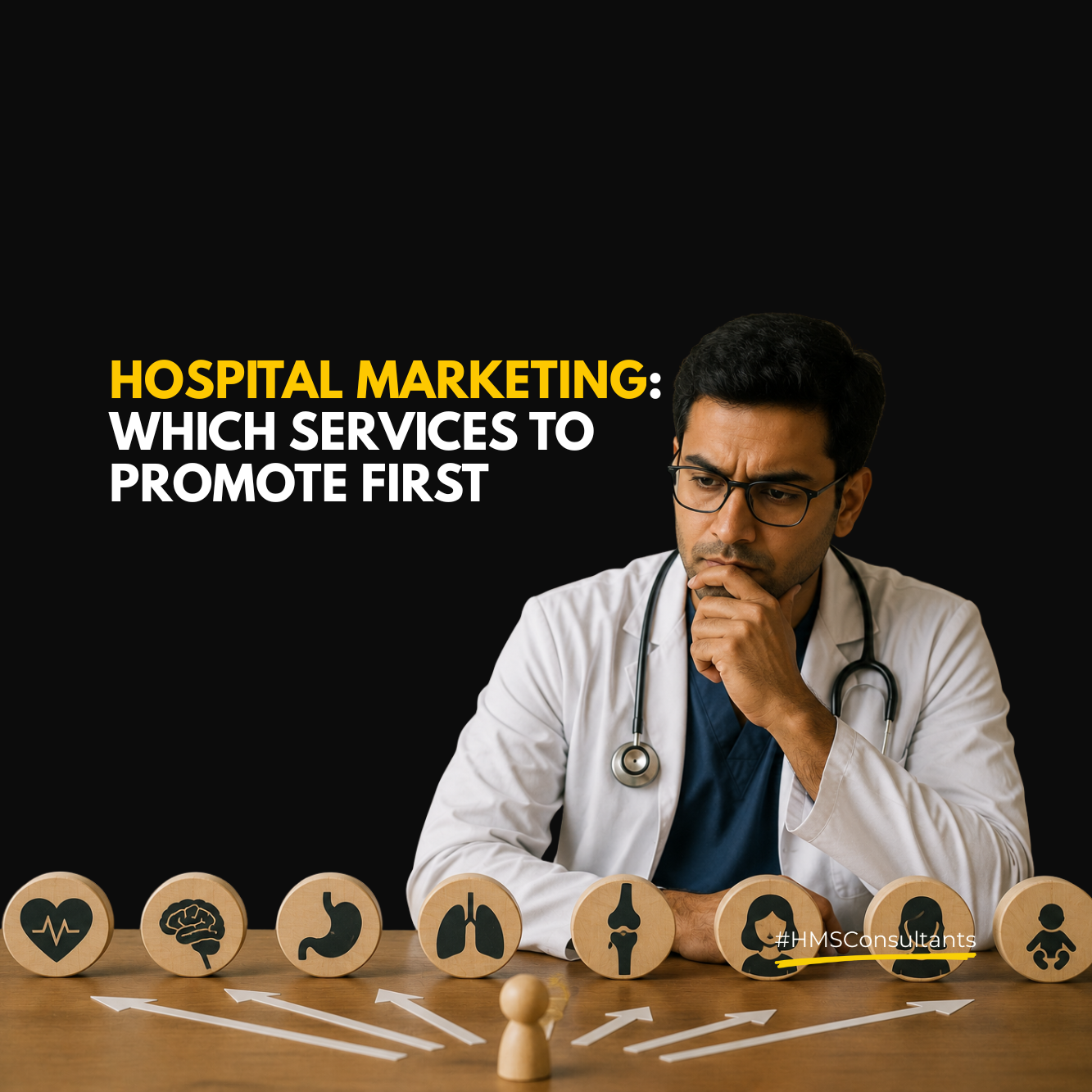
      Hospital marketing becomes difficult when everything is treated as equally important. Most hospitals have multiple departments, doctors, services, packages, and treatment areas. Naturally, every service needs visibility. But in practice, promoting everything at once often leads to scattered communication and weak results.

      A hospital cannot market emergency care, maternity, orthopedics, diagnostics, preventive health check-ups, surgery, and specialist consultations with the same message and the same urgency. Each service has different patient needs, decision time, trust requirements, and business value. This is why hospital marketing should not start with the question, “What should we post?” It should start with a better question: “Which service needs marketing attention first, and why?”

      A clear hospital marketing strategy helps hospitals decide which services to promote first based on patient demand, department readiness, local competition, service value, and growth potential.

      Why Service Prioritisation Matters in Hospital Marketing

      Many hospitals run campaigns without deciding which services deserve focus. As a result, marketing becomes too broad. One week the hospital promotes one department, the next week another, and then a general awareness post follows. This creates activity, but not always direction.

      Service prioritisation helps the hospital focus its effort where it can make the most meaningful impact.

      It helps answer:

      • Which services are patients actively looking for?
      • Which departments are underutilized?
      • Which services need better explanation?
      • Which doctors have availability to handle more patients?
      • Which services support long-term hospital business growth?
      • Which departments face stronger competition?
      • Which services are seasonal or time-sensitive?

      Without this clarity, hospital marketing may continue, but the results may remain unclear.

      Patient Demand Should Guide the First Decision

      The first factor to study is patient demand. Hospitals should not promote a service only because it exists. They should understand whether patients are searching for it, asking about it, or showing real need for it.

      Patient demand can be understood through enquiry patterns, appointment data, common patient questions, Google searches, local health concerns, seasonal illness trends, and competitor visibility.

      For example, if many patients are asking about knee pain, pregnancy care, diabetes management, fever treatment, diagnostic packages, or cardiac check-ups, those areas may need stronger communication.

      This does not mean only high-demand services should be promoted. But demand helps the hospital know where patient interest already exists. Marketing can then improve visibility, explain the service better, and guide patients more clearly.

      A hospital marketing strategy should always connect service promotion with real patient behaviour.

      Department Readiness Comes Before Promotion

      A common mistake in hospital marketing is promoting a service before the department is ready to handle the response.

      If marketing brings enquiries but the doctor is not available, the front desk is not informed, the appointment process is unclear, or follow-up is weak, the campaign may damage trust instead of supporting growth.

      Before promoting any service, the hospital should check:

      • Is the doctor or department available consistently?
      • Can the team handle more enquiries?
      • Is the front desk trained to explain the service?
      • Is the appointment process simple?
      • Is the website information clear?
      • Are packages, reports, or instructions ready where needed?
      • Is follow-up being handled properly?

      Hospital service promotion should not create demand that the hospital cannot manage. Good marketing works only when the patient journey behind it is prepared.

      Underused Services May Need Visibility First

      Many hospitals have strong services that patients do not know about. These may be clinically valuable, but they remain underutilised because they are not clearly visible online or offline.

      Sometimes the service exists on the hospital premises, but it is missing from the website. Sometimes it is not mentioned properly on Google Business Profile. Sometimes the doctor is available, but patients do not know that the department offers that care.

      Underused services can be identified by checking:

      • Services with low enquiries
      • Departments not clearly explained online
      • Doctors with weak digital visibility
      • Treatments not covered in content
      • Services missing from Google Business Profile
      • Low patient awareness despite strong capability

      These services may not need paid ads immediately. They may first need clear service pages, patient education content, doctor-led videos, Google updates, and better internal communication.

      In hospital marketing, visibility should begin with clarity.

      Growth Potential Should Be Considered Carefully

      Hospital marketing must remain ethical and patient-centred, but hospitals also need to understand which services support long-term sustainability. Some services may have higher demand, stronger repeat value, better department capacity, or greater positioning importance for the hospital.

      This is where hospital growth strategy becomes important.

      Hospitals should look at:

      • Patient need
      • Clinical strength
      • Revenue potential
      • Doctor availability
      • Department capacity
      • Local competition
      • Long-term brand positioning

      For example, if a hospital has strong orthopaedic expertise but patients are choosing competitors for joint pain or fracture care, that department may need focused promotion. If diagnostics are available but underused, preventive health packages may need better communication.

      Marketing should support services where the hospital has genuine capability, not only where it wants more visibility.

      Competition Can Reveal Service Opportunities

      A hospital should not copy competitor marketing, but it should understand what competitors are doing. Local competition often shows which services are being pushed heavily and where gaps may exist.

      Hospitals should observe:

      • Which services competitors promote most
      • How they explain those services
      • Which doctors or departments are visible online
      • What patients mention in competitor reviews
      • Where competitors are strong or weak
      • Which patient questions remain unanswered

      If many hospitals are promoting the same service, your hospital needs a clearer positioning angle. If competitors are weak in an area where your hospital has strength, that service may become a strong marketing opportunity.

      Hospital service promotion should be based on differentiation, not imitation.

      Timing Can Improve Marketing Response

      Some hospital services perform better when promoted at the right time. Timing can depend on seasons, awareness months, local health patterns, school calendars, corporate cycles, or disease trends.

      For example, fever and infection care may need stronger communication during monsoon. Respiratory care may become more relevant during pollution season. Preventive health packages may work well around health awareness campaigns. School health check-ups may be planned before academic sessions.

      Hospitals should build a service-wise marketing calendar instead of deciding campaigns at the last moment.

      This helps plan:

      • Awareness posts
      • Doctor videos
      • Google updates
      • Blog content
      • Local campaigns
      • Preventive health messages
      • Patient education material

      When timing is planned, hospital marketing becomes more consistent and less random.

      The Marketing Route Should Match the Service

      Not every service needs the same marketing channel. Some services need search visibility. Some need patient education. Some need doctor credibility. Some need local awareness. Some need Google Business Profile optimization. Some need paid campaigns.

      For example, high-search services may need SEO and Google visibility. Complex services may need blogs and educational videos. Doctor-led services may need profile strengthening and credibility-building content. Preventive services may need awareness campaigns. Competitive services may need stronger service positioning.

      The better question is not, “Should we run ads?”

      The better question is, “What does this service need before patients respond?”

      This is where hospital marketing becomes strategic. The channel should come after the service priority is clear.

      Conclusion

      Hospital marketing becomes stronger when hospitals stop promoting everything equally and start prioritising services strategically.

      Every service does not need the same campaign, message, platform, or budget. Some services need awareness. Some need search visibility. Some need doctor credibility. Some need better patient education. Some need operational readiness before promotion.

      A clear hospital marketing strategy helps hospitals decide which services to promote first based on patient demand, department readiness, competition, timing, and growth potential.

      For hospitals that want sustainable growth, marketing should not begin with random activity.

      It should begin with the right service priority.

      Contact Us HMS Consultants

      Hospital marketing is the process of promoting a hospital’s services, departments, doctors, and patient care in a planned way. In this blog context, it means deciding which services should be promoted first based on patient demand, department readiness, competition, and growth potential.

      Healthcare Marketing I Digital Strategy I healthcare digital marketing I healthcare Management I Healthcare Marketing Strategy I hospital marketing I Hospital Marketing Strategies I Hospital Marketing Strategy

      is something we strongly believe in, which means ‘Knowledge without application is the same as having no knowledge at all

      Akhil Dave

      Principle Consultant

      Ready to take your Personal Brand to the next level?

      Share your details below and we will connect with you to discuss your growth strategy.

      • Hospital Public Relations: The Silent Gaps That Affect Patient Trust

        Hospital Public Relations: The Silent Gaps That Affect Patient Trust

        Hospital Public Relations: The Silent Gaps That Affect Patient Trust

        Published on
        Share This

        Hospital public relations is often noticed only when something goes wrong. A negative review, a patient complaint, a media issue, or a communication mistake suddenly brings attention to reputation. But hospital public relations does not begin during a crisis. It begins much earlier through everyday patient communication, staff behaviour, online reviews, community presence, and the way the hospital responds to people.

        Many hospitals think PR means press releases, media coverage, or public events. These are part of it, but they are not the full picture. In healthcare, public relations is closely connected with patient trust.

        This means healthcare marketing cannot depend only on random posts, occasional ads, or basic promotion.

        A hospital may have experienced doctors, good facilities, and strong services, but if patients feel confused, unheard, or unsure, trust can slowly weaken. These are silent gaps. They may not look serious at first, but over time they affect hospital reputation and patient confidence.

        Why Silent PR Gaps Matter

        Patients and families do not choose a hospital casually. They search online, read reviews, ask others, check the website, call the hospital, and observe how clearly the hospital communicates.

        A patient may not understand every clinical detail, but they can sense whether the hospital feels organised, responsive, and trustworthy. That is why hospital public relations should not be treated only as publicity. It should be seen as a trust-building system.

        A hospital’s image is shaped by small experiences such as:

        • How quickly calls are answered
        • How clearly staff explain services
        • How reviews are handled
        • How complaints are acknowledged
        • How the website explains important information
        • How patients are guided before and after consultation
        • How the hospital responds during confusion or crisis

        When these areas are ignored, PR becomes reactive. The hospital starts responding only after trust is already affected.

        Gap 1: Unclear Patient Communication

        One of the biggest gaps in hospital public relations is unclear communication. Many hospitals promote their services, but they do not always explain them in a way patients can understand.

        Patients often want simple answers:

        • Which department should I visit?
        • Which doctor handles this condition?
        • How do I book an appointment?
        • What should I expect during consultation?
        • What happens after the visit?
        • Whom should I contact for help?

        If this information is missing or confusing, the patient may delay the decision or choose another hospital. Good hospital PR is not only about speaking to the public. It is about speaking clearly and responsibly.

        Gap 2: Ignoring Patient Feedback

        Patient feedback is one of the strongest signals of reputation. But many hospitals treat feedback only as a complaint, instead of seeing it as an opportunity to improve.

        A delayed response, unclear billing explanation, rude staff interaction, long waiting time, or poor follow-up may seem like a small operational issue. But when these experiences repeat, they become reputation issues.

        Patients may share their experience through:

        • Google reviews
        • Social media comments
        • WhatsApp groups
        • Family discussions
        • Local word-of-mouth
        • Direct complaints

        Hospitals should regularly review feedback and understand what patients are saying. If the same issue appears again and again, it should not be ignored. Reputation management is not only about replying to reviews. It is also about learning from them.

        Gap 3: Inconsistent Staff Messaging

        A hospital may have one brand message, but patients experience the hospital through different people. The front desk may say one thing, the call team may say another, and the department may explain something differently.

        This creates confusion.

        In healthcare, confusion directly affects trust. Patients want to feel that the hospital team is informed, aligned, and confident. If staff members give different answers about appointments, reports, doctor availability, services, or follow-up, the hospital may appear disorganised.

        Hospitals should train patient-facing teams on:

        • Basic service information
        • Appointment guidance
        • Enquiry handling
        • Complaint escalation
        • Patient-friendly language
        • Follow-up communication
        • Sensitive conversations

        Public relations is not handled only by management or marketing teams. Every staff member who speaks to a patient contributes to the hospital’s image.

        Gap 4: Poor Online Reputation Response

        Patients often check reviews before choosing a hospital. A few unmanaged reviews can influence whether someone decides to call, visit, or avoid the hospital.

        Many hospitals either ignore reviews or respond in a very generic way. Some responses sound defensive, while others do not address the concern at all. This can make patients feel that the hospital does not listen.

        A better online reputation response should include:

        • Thanking patients for positive feedback
        • Acknowledging concerns politely
        • Avoiding arguments online
        • Not sharing patient-sensitive details publicly
        • Taking serious concerns offline
        • Tracking repeated complaints
        • Improving internal processes based on feedback

        Online reputation is now a major part of hospital public relations. It cannot be treated as an optional activity.

        Gap 5: Weak Community Presence

        Hospitals are not just treatment centres. They are part of the communities they serve. A hospital may be known for its services, but if it is not visible as a responsible healthcare voice, it may miss an important trust-building opportunity.

        Community presence can include:

        • Health awareness programs
        • Preventive care campaigns
        • Patient education sessions
        • Local health talks
        • School or corporate health awareness
        • Public health messages
        • Community outreach activities

        This does not mean every hospital needs big events. It means the hospital should be seen as active, helpful, and connected to local health needs. A strong community presence builds trust before patients need treatment.

        Gap 6: No Crisis Communication Readiness

        Hospitals often think about crisis communication only after a problem happens. This can create confusion, delay, and inconsistent responses.

        A crisis may come from a patient complaint, social media issue, negative media attention, misinformation, service disruption, or internal communication failure. If the hospital does not know who should respond and what should be communicated, the situation can become worse.

        Hospitals should prepare answers to questions like:

        • Who will respond during a crisis?
        • What information can be shared?
        • How will patient privacy be protected?
        • How will staff be informed?
        • How will online comments be handled?
        • How will leadership communicate?

        Crisis communication should be planned before it is needed. A prepared hospital appears responsible and controlled. An unprepared hospital may appear silent, defensive, or confused.

        Gap 7: Marketing Claims Not Matching Patient Experience

        A hospital may promote care, trust, advanced facilities, and patient-first service. But if the actual patient experience does not match that promise, reputation suffers.

        Patients remember what they experience more than what they see in advertisements.

        If the hospital promotes smooth appointments but patients face confusion, there is a gap. If the hospital talks about compassionate care but staff communication feels cold, there is a gap. If the hospital promises patient support but follows up weakly, trust is affected.

        Hospital public relations must connect marketing promises with real patient experience. The message outside the hospital should match what patients feel inside the hospital.

        Conclusion

        Hospital public relations should not begin after reputation damage. It should be part of everyday hospital communication.

        The silent gaps in hospital PR often appear in small places: unclear information, ignored feedback, weak review response, inconsistent staff messaging, poor crisis readiness, and marketing promises that do not match patient experience.

        These gaps may not create immediate damage, but they slowly affect how patients see the hospital.

        Hospitals that want long-term growth need more than promotion. They need communication systems that support clarity, credibility, patient confidence, and trust. A strong hospital public relations strategy helps hospitals protect their reputation before damage happens and build trust before patients walk in.

        Contact Us HMS Consultants

        PR in a hospital means public relations. It is how a hospital communicates with patients, staff, community, media, and the public to build trust, manage reputation, handle feedback, and respond responsibly during sensitive situations.

        Healthcare Marketing I Digital Strategy I healthcare Management I Hospital Branding I Hospital Marketing Strategy I public relations

        is something we strongly believe in, which means ‘Knowledge without application is the same as having no knowledge at all

        Akhil Dave

        Principle Consultant

        Ready to take your Personal Brand to the next level?

        Share your details below and we will connect with you to discuss your growth strategy.

        • Healthcare Marketing Strategies: What Clinics and Hospitals Really Need

          Healthcare Marketing Strategies: What Clinics and Hospitals Really Need

          Healthcare Marketing Strategies: What Clinics and Hospitals Really Need

          Published on
          Share This

          Healthcare marketing strategies are becoming important for clinics, hospitals, diagnostic centres, wellness businesses, and healthcare startups that want to grow with clarity and trust. Today, patients do not choose a healthcare provider only because a clinic exists nearby or a hospital has a name in the city.

          Patients search online. They compare doctors. They read reviews. They check websites. They look at social media pages. They ask others. They observe how clearly a healthcare provider communicates.

          This means healthcare marketing cannot depend only on random posts, occasional ads, or basic promotion.

          Clinics and hospitals need a proper healthcare marketing strategy that supports visibility, trust, patient communication, and long-term growth.

          Why Healthcare Marketing Needs Strategy

          Many healthcare businesses are already doing marketing. They may have an Instagram page, Facebook page, Google Business Profile, website, ads, brochures, or videos.

          But the problem is not always the absence of marketing.

          The problem is the absence of direction.

          A clinic may post regularly but still not get the right enquiries. A hospital may run ads but still not improve patient trust. A doctor may have a website but still not explain services clearly. A diagnostic centre may promote packages but still struggle with local visibility.

          This happens when marketing activities are not connected to a strategy.

          A healthcare marketing strategy helps answer:

          • Who are we trying to reach?
          • What services need more visibility?
          • What are patients searching for?
          • What doubts do patients have?
          • Is our digital presence trustworthy?
          • Are we communicating clearly?
          • Are enquiries being handled properly?
          • Is marketing supporting healthcare business growth?

          Without these answers, marketing becomes scattered.

          Patients Need Trust Before Action

          Healthcare is different from regular industries. A patient does not make decisions only based on offers, attractive creatives, or repeated posts.

          Healthcare decisions involve fear, risk, family discussions, trust, medical credibility, and confidence.

          Before booking an appointment, patients often want to know:

          • Is this doctor experienced?
          • Is this clinic reliable?
          • Is the treatment safe?
          • What symptoms should I not ignore?
          • What happens during consultation?
          • Are other patients satisfied?
          • Can I trust this hospital for my family?
          • Is the information clear and responsible?

          This is why patient communication is an important part of healthcare marketing strategies.

          Marketing should not only attract attention. It should reduce confusion, answer doubts, and build confidence.

          Website and SEO Strategy

          A website is often one of the first places patients visit before choosing a doctor, clinic, or hospital. But many healthcare websites only list services without properly explaining them.

          A good healthcare website should clearly explain:

          • Doctor profile and expertise
          • Services and treatments
          • Symptoms and conditions
          • Treatment process
          • Patient FAQs
          • Location and contact details
          • Appointment process
          • Trust signals and credibility

          SEO is also important because patients search for healthcare services online. They may search for terms related to symptoms, doctors, clinics, treatments, or location-based services.

          A strong healthcare marketing strategy should include website improvement and SEO direction so patients can find useful information when they need it.

          Google Business Profile Strategy

          For clinics, doctors, hospitals, and diagnostic centres, Google Business Profile is one of the most important local visibility tools.

          Patients often search directly on Google before calling or visiting.

          A strong Google profile should include:

          • Correct clinic or hospital name
          • Updated phone number
          • Accurate location
          • Service categories
          • Opening hours
          • Photos
          • Patient reviews
          • Regular updates
          • Clear appointment information

          Many healthcare businesses ignore this area, but it can directly affect patient enquiries.

          For local healthcare visibility, the Google Business Profile should be part of every clinic and hospital marketing strategy.

          Review and Reputation Strategy

          Patient reviews influence trust. A healthcare provider may have strong clinical expertise, but if online reviews are weak, outdated, or unmanaged, patients may hesitate.

          A proper review strategy includes:

          • Encouraging genuine patient feedback
          • Responding professionally to reviews
          • Understanding common patient complaints
          • Improving patient experience
          • Avoiding fake or unethical review practices
          • Using feedback to improve service quality

          Reviews are not only marketing assets. They are also a reflection of patient experience.

          Healthcare businesses should treat reputation management as a serious part of healthcare marketing.

          Social Media Strategy

          Social media is useful, but only when it is planned properly. Posting festival creatives, random health tips, or repeated service promotions is not enough.

          Healthcare social media should include:

          • Patient education
          • Doctor explanation videos
          • Treatment awareness
          • Myth-busting content
          • Service clarity
          • Preventive care tips
          • Patient FAQs
          • Trust-building content
          • Ethical awareness posts

          Social media should support patient understanding. It should not become hard selling.

          A good healthcare content plan helps clinics and hospitals educate patients and build trust over time.

          Enquiry Flow Strategy

          Marketing does not end when a patient sends a message or calls the clinic.

          Many healthcare businesses lose potential patients because their enquiry handling is weak.

          Common issues include:

          • Delayed response
          • Poor call handling
          • Unclear appointment process
          • Lack of follow-up
          • No tracking of enquiry sources
          • Incomplete information given to patients
          • No coordination between marketing and front desk

          A strong healthcare marketing strategy should also review the enquiry journey.

          If marketing brings enquiries but the system does not handle them properly, growth becomes difficult.

          Service Positioning Strategy

          Not every service should be promoted in the same way. A clinic or hospital may offer many services, but some require more education, some require more trust-building, and some require stronger local visibility.

          Service positioning helps answer:

          • Which service should be highlighted?
          • What patient problem does it solve?
          • What makes this service trustworthy?
          • What should patients know before booking?
          • How should the service be explained simply?
          • What content is needed around this service?

          Clear service positioning helps patients understand why they should choose a particular doctor, clinic, or hospital.

          Role of a Healthcare Marketing Consultant

          A healthcare marketing consultant can help clinics and hospitals bring structure to their marketing.

          Instead of only suggesting posts or ads, a consultant studies the full picture:

          • Digital presence
          • Website and SEO
          • Google Business Profile
          • Patient communication
          • Social media content
          • Reviews and reputation
          • Enquiry flow
          • Service positioning
          • Local visibility
          • Ethical marketing direction

          This helps healthcare businesses understand what needs improvement before spending more money on marketing execution.

          A consultant brings diagnosis before action.

          How HMS Supports This Direction

          Many professionals understand marketing tools, but healthcare marketing requires a different level of responsibility. It needs patient sensitivity, ethical communication, service understanding, and the ability to connect marketing activities with business growth.

          The HMS Certified Healthcare Marketing Consultant Program helps serious professionals learn this consulting-led approach.

          Participants are introduced to practical areas such as healthcare marketing strategy, digital presence review, patient communication, service positioning, clinic and hospital marketing diagnosis, proposal planning, and business development guidance.

          The program is designed for professionals who want to understand how healthcare businesses can grow with structure, not random marketing activities.

          HMS provides the learning structure, tools, frameworks, and guidance. The participant’s growth depends on consistent learning, communication ability, practical application, and market development.

          Conclusion

          Healthcare marketing strategies are not only about posts, ads, or promotions. Clinics and hospitals need a structured approach that connects visibility, patient trust, digital presence, reputation, enquiry handling, and ethical communication.

          A good healthcare marketing strategy helps patients understand the healthcare provider better and helps healthcare businesses grow with direction.

          For professionals who want to build a future in healthcare marketing, a learning strategy is more valuable than only learning execution.

          The clinics and hospitals that grow stronger will be the ones that communicate clearly, build trust responsibly, and follow a marketing strategy that supports real patient needs.

          Contact Us HMS Consultants

          Healthcare marketing strategies are planned approaches used by doctors, clinics, hospitals, diagnostic centres, and healthcare businesses to improve visibility, patient trust, communication, enquiries, and business growth ethically.

          Healthcare Marketing I Business I Digital Marketing I Digital Strategy I Doctors Digital Marketing I healthcare careers I Healthcare Consulting I healthcare digital marketing I healthcare Management I Hospital Marketing Strategy I Social Media Marketing

          is something we strongly believe in, which means ‘Knowledge without application is the same as having no knowledge at all

          Akhil Dave

          Principle Consultant

          Ready to take your Personal Brand to the next level?

          Share your details below and we will connect with you to discuss your growth strategy.

          • Healthcare Marketing Social Media: Why Posting Alone Does Not Build Patient Trust

            Healthcare Marketing Social Media: Why Posting Alone Does Not Build Patient Trust

            Healthcare Marketing Social Media: Why Posting Alone Does Not Build Patient Trust

            Published on
            Share This

            Healthcare marketing social media has become an important part of marketing for doctors, clinics, hospitals, diagnostic centres, wellness businesses, and healthcare startups. Today, almost every healthcare business wants to be visible on Instagram, Facebook, LinkedIn, YouTube, or other digital platforms.

            But visibility alone does not build patient trust.

            Many healthcare businesses post regularly on social media, but still struggle to create meaningful patient connection. They share festival creatives, doctor photos, treatment posters, awareness day posts, offers, or generic health tips. These posts may keep the page active, but they may not always help patients make better decisions.

            In healthcare, social media should not only be about posting.

            It should be about educating, reassuring, guiding, and building trust.

            Why Social Media Matters in Healthcare

            Patients today often search online before choosing a doctor, clinic, hospital, or treatment provider. They may check Google reviews, websites, doctor profiles, social media pages, videos, and patient education content before booking an appointment.

            This means social media can influence how patients see a healthcare brand.

            A strong social media presence can help healthcare businesses:

            • Explain services clearly
            • Answer common patient doubts
            • Build doctor credibility
            • Share patient education
            • Improve brand recall
            • Support healthcare digital marketing
            • Build trust before consultation
            • Communicate with patients responsibly

            But this only works when social media is planned with purpose.

            Random posting is not enough.

            The Problem With Posting Without Strategy

            Many doctors and hospitals believe that if they post regularly, their marketing is being handled. But regular posting does not always mean effective healthcare social media marketing.

            A page may be active but still not useful for patients.

            This usually happens when content is:

            • Too promotional
            • Too generic
            • Repetitive
            • Difficult to understand
            • Not connected to patient concerns
            • Not service-focused
            • Not trust-building
            • Not aligned with the patient journey

            For example, a clinic may post about a treatment, but the post may not explain who needs it, when to consult, what symptoms to notice, or what doubts patients usually have.

            A hospital may post about a department, but may not explain why the service is important, what patients should expect, or how the hospital supports care.

            This is why healthcare content strategy matters.

            Patients Need Clarity Before Promotion

            Healthcare decisions are emotional and sensitive. Patients are often worried, confused, or unsure. They may not understand medical terms, treatment options, risks, recovery, cost, safety, or when they should seek help.

            Because of this, healthcare social media should focus on clarity before promotion.

            Good healthcare content should answer questions such as:

            • What problem does this service solve?
            • What symptoms should patients not ignore?
            • When should someone visit a doctor?
            • What can patients expect during consultation?
            • What myths should be corrected?
            • What treatment doubts are common?
            • How can patients make informed decisions?

            When content answers real patient questions, it becomes useful.

            Useful content builds trust.

            Trust Is the Real Goal of Healthcare Social Media

            In regular marketing, attention can be enough to create interest. But in healthcare, attention is not enough. A patient needs confidence before taking action.

            Patient trust is built through:

            • Simple language
            • Responsible communication
            • Consistent education
            • Clear service explanation
            • Doctor credibility
            • Patient-friendly content
            • Ethical claims
            • Helpful videos
            • Realistic information
            • Strong digital presence

            This is why healthcare marketing social media should be handled carefully. A healthcare page should not sound like hard selling. It should sound informed, responsible, and helpful.

            The goal is not only to get likes or views.

            The goal is to help patients trust the healthcare provider.

            What Good Healthcare Social Media Should Include

            A strong healthcare social media plan should include different types of content, not only promotional posts.

            Useful content categories can include:

            • Patient education posts
            • Myth vs fact content
            • Symptoms awareness
            • Doctor explanation videos
            • Treatment journey content
            • Service explanation posts
            • Preventive healthcare tips
            • Patient FAQ content
            • Trust-building posts
            • Review and reputation content
            • Behind-the-scenes care content
            • Ethical awareness campaigns

            This type of content helps patients understand the healthcare provider better.

            It also supports hospital marketing and clinic marketing by building long-term credibility.

            Why Healthcare Social Media Needs Strategy

            Healthcare social media should be connected to a larger healthcare marketing strategy. It should not be managed as a separate activity.

            Before creating content, healthcare businesses should ask:

            • Which services need visibility?
            • Who is the target patient group?
            • What doubts do patients have?
            • What information is missing online?
            • What content builds doctor credibility?
            • What content supports enquiries?
            • What content should be avoided ethically?
            • How will social media support the website, SEO, Google profile, and patient enquiries?

            This is where a healthcare marketing consultant can add value.

            A consultant can help doctors, clinics, and hospitals understand what kind of content is needed and why.

            Role of a Healthcare Marketing Consultant

            A healthcare marketing consultant does not only suggest posts. The consultant studies the healthcare business, patient journey, digital presence, service positioning, and communication gaps.

            For social media, a consultant can help with:

            • Content direction
            • Patient education planning
            • Service-based content strategy
            • Doctor credibility building
            • Ethical communication
            • Campaign planning
            • Social media audit
            • Patient trust-building
            • Integration with healthcare digital marketing
            • Enquiry-focused content planning

            This helps healthcare businesses move from random posting to meaningful communication.

            How HMS Supports This Direction

            Many professionals know how to create content or manage social media pages, but healthcare social media requires a deeper understanding of patient behaviour, trust, ethics, and healthcare communication.

            The HMS Certified Healthcare Marketing Consultant Program helps serious professionals understand this specialised side of healthcare marketing.

            Participants learn how to review digital presence, understand patient communication gaps, plan healthcare content direction, study service positioning, and think from a consulting perspective.

            The program is designed for professionals who want to move beyond basic posting and understand how healthcare marketing can support trust, visibility, and business growth responsibly.

            HMS provides structured learning, tools, frameworks, and guidance. Growth depends on how participants learn, apply, communicate, and build their consulting practice over time.

            Conclusion

            Healthcare marketing social media should not be limited to regular posting. In healthcare, content must educate, guide, reassure, and build trust.

            Doctors, clinics, hospitals, and healthcare businesses need social media that speaks to patient concerns, explains services clearly, and supports ethical communication.

            Posting creates activity.

            Strategy creates direction.

            Trust creates patient confidence.

            For professionals who want to grow in healthcare marketing, understanding social media as a trust-building tool is an important skill. The future of healthcare social media will belong to those who can combine content, strategy, ethics, and patient understanding.

            Contact Us HMS Consultants

            Healthcare marketing social media means using platforms like Instagram, Facebook, LinkedIn, and YouTube to educate patients, explain services, build trust, improve visibility, and support ethical healthcare communication.

            Healthcare Marketing I Business I Digital Marketing I Digital Strategy I Doctors Digital Marketing I healthcare careers I Healthcare Consulting I healthcare digital marketing I healthcare Management I Hospital Marketing Strategy I Social Media Marketing

            is something we strongly believe in, which means ‘Knowledge without application is the same as having no knowledge at all

            Akhil Dave

            Principle Consultant

            Ready to take your Personal Brand to the next level?

            Share your details below and we will connect with you to discuss your growth strategy.

            • Healthcare Marketing Jobs: Why Strategy Skills Matter More Than Execution

              Healthcare Marketing Jobs: Why Strategy Skills Matter More Than Execution

              Healthcare Marketing Jobs: Why Strategy Skills Matter More Than Execution

              Published on
              Share This

              Healthcare marketing jobs are changing. Earlier, many healthcare marketing roles were mainly about execution. Professionals were expected to coordinate campaigns, create social media posts, manage creatives, support events, handle advertising tasks, or work with agencies.

              These responsibilities are still important.

              But today, healthcare businesses need more than execution.

              Doctors, clinics, hospitals, diagnostic centres, wellness businesses, and healthcare startups need professionals who can understand patient behaviour, digital visibility, trust-building, service positioning, communication gaps, and healthcare business growth.

              This is why strategy skills are becoming important in healthcare marketing jobs.

              The future of healthcare marketing will not only depend on people who can complete tasks. It will depend on professionals who can understand why those tasks matter. .

              Healthcare Marketing Is Not Just Promotion

              Many people still think healthcare marketing means social media posts, ads, banners, videos, campaigns, or offers.

              But healthcare marketing is much deeper than that.

              It deals with patients, trust, medical decisions, fear, confusion, credibility, and care. A patient does not choose a doctor or hospital the same way they choose a fashion product or restaurant.

              Before making a healthcare decision, patients often look at:

              • Doctor credibility
              • Hospital or clinic reputation
              • Patient reviews
              • Treatment information
              • Website quality
              • Social media presence
              • Google visibility
              • Communication clarity
              • Trust signals
              • Past patient experience

              This means healthcare marketing professionals need to understand the patient journey, not just marketing tools.

              Why Execution Alone Is Not Enough

              Execution is necessary. A healthcare business needs content, SEO, Google Business Profile updates, social media, campaigns, websites, ads, and patient communication material.

              But execution without strategy can become random.

              A clinic may post regularly but still fail to build trust.

              A hospital may run ads but still attract poor-quality enquiries.

              A doctor may have a website but still not communicate services clearly.

              A diagnostic centre may invest in marketing but still not know which service line needs focus.

              This is where healthcare marketing strategy becomes important.

              Strategy helps answer important questions such as:

              • What should be promoted?
              • Who is the right patient audience?
              • Which service needs more visibility?
              • Is the communication clear and ethical?
              • Are patients getting enough information?
              • Is the digital presence building trust?
              • Are enquiries being handled properly?
              • Is the marketing activity supporting real growth?

              Without these answers, marketing becomes only activity. With strategy, marketing becomes direction.

              What Healthcare Businesses Expect Today

              Healthcare businesses are becoming more competitive. Patients now compare options before choosing a doctor, clinic, or hospital.

              Because of this, healthcare businesses expect marketing professionals to bring more than basic execution ability.

              They need professionals who can:

              • Understand healthcare services
              • Analyse patient communication
              • Review digital presence
              • Improve brand positioning
              • Coordinate healthcare digital marketing
              • Understand local visibility
              • Track enquiries and patient response
              • Communicate with doctors and management
              • Think ethically before promoting services
              • Support long-term healthcare business growth

              These expectations are changing the meaning of a healthcare marketing career.

              Important Healthcare Marketing Skills

              Professionals who want to grow in healthcare marketing jobs should start building practical skills that go beyond task completion.

              Important healthcare marketing skills include:

              • Patient journey understanding
              • Healthcare communication
              • Digital marketing basics
              • Website and SEO awareness
              • Google Business Profile understanding
              • Review and reputation management
              • Social media planning
              • Service positioning
              • Content strategy
              • Enquiry flow understanding
              • Reporting and analysis
              • Ethical healthcare marketing
              • Consulting thinking

              These skills help professionals move from execution-based roles to strategy-led roles.

              Why Strategy Skills Create More Value

              A person who only executes may wait for instructions.

              A person with strategy skills can identify gaps, ask the right questions, and suggest better directions.

              For example, instead of only creating a social media post, a strategic healthcare marketer will ask:

              • Is this topic useful for patients?
              • Does it answer a common patient doubt?
              • Does it build trust?
              • Is the language simple and responsible?
              • Does it support the clinic or hospital’s larger goal?
              • Is it connected to the right service line?

              This is the difference between doing marketing work and understanding healthcare marketing.

              Professionals who can think this way become more valuable to healthcare businesses.

              Healthcare Marketing Consultant as a Future Direction

              As professionals build stronger strategy skills, some may also explore the role of a healthcare marketing consultant.

              A healthcare marketing consultant does not only execute marketing tasks. A consultant helps doctors, clinics, hospitals, and healthcare businesses understand what is missing, what needs improvement, and how marketing can support growth responsibly.

              This role may include:

              • Digital presence review
              • Patient communication audit
              • Website and SEO direction
              • Social media strategy
              • Service positioning
              • Enquiry flow improvement
              • Local visibility guidance
              • Ethical healthcare marketing planning

              For people already working in healthcare marketing jobs, consulting skills can help them grow beyond routine execution and build a stronger professional identity.

              How HMS Supports This Direction

              Many professionals working in healthcare marketing understand tools and platforms, but they may not always receive structured exposure to consulting thinking, audit methods, patient communication, proposal planning, or healthcare business growth strategy.

              The HMS Certified Healthcare Marketing Consultant Program is designed to help serious professionals build this specialized capability.

              The program focuses on practical learning areas such as healthcare marketing strategy, digital presence review, patient communication, service positioning, consulting frameworks, proposal preparation, personal branding, and business development guidance.

              It is meant for professionals who want to move from basic execution thinking to a more strategic and consulting-led approach in healthcare marketing.

              HMS provides the structure, tools, frameworks, and guidance. The participant’s growth depends on learning consistency, communication ability, market effort, and practical application.

              Conclusion

              Healthcare marketing jobs are no longer limited to execution. The industry now needs professionals who can understand patients, communicate responsibly, analyse digital presence, think strategically, and support healthcare business growth.

              Execution will always matter. But execution without strategy may not create strong results.

              For professionals who want to grow in healthcare marketing careers in India, the next step is to build stronger healthcare marketing skills and learn how to think beyond tasks.

              The future of healthcare marketing will belong to professionals who can combine execution with strategy, ethics, patient understanding, and consulting thinking.

              Contact Us HMS Consultants

              The HMS Certified Healthcare Marketing Consultant Program is a structured professional development and consulting enablement program for people who want to build healthcare marketing consulting skills with HMS training, tools, frameworks, mentoring, and guidance.

              Healthcare Marketing I Business I Digital Marketing I Digital Strategy I healthcare careers I Healthcare Consulting I healthcare Management

              is something we strongly believe in, which means ‘Knowledge without application is the same as having no knowledge at all

              Akhil Dave

              Principle Consultant

              Ready to take your Personal Brand to the next level?

              Share your details below and we will connect with you to discuss your growth strategy.