Search results for: “marketing trends”

  • How to Run a Healthcare Marketing Audit

    How to Run a Healthcare Marketing Audit

    How to Run a Healthcare Marketing Audit

    Written by
    Published on
    Share This

    In today’s fast-moving healthcare landscape, clinics and hospitals are more visible than ever yet also more misunderstood. Many spend heavily on ads, hire digital agencies, or create social media pages, but still struggle with poor engagement, weak referrals, and inconsistent patient growth.

    The problem? Most skip the essential first step: a Healthcare Marketing Audit.

    Think of it as your clinic’s “health check-up” before you prescribe anything, you must diagnose what’s working, what’s not, and where the gaps lie.

    In this guide, we’ll walk you through what a healthcare marketing audit is, why it matters, and how to run one effectively even if you’ve never done it before.

    What is a Healthcare Marketing Audit?

    A healthcare marketing audit is a structured evaluation of your clinic or hospital’s overall marketing efforts across branding, digital presence, patient communication, internal experience, and competitive positioning.

    It helps you answer questions like:

    • Is my online presence aligned with how I want to be perceived?
    • Are my patients engaged and referring?
    • Am I spending on the right channels?
    • Why is my growth not matching my service quality?

    Unlike a campaign review (which looks at performance metrics like clicks or likes), a marketing audit zooms out and looks at your entire ecosystem. It reveals not just how you’re performing but whether you’re even playing the right game.

    Why Clinics Often Skip It (and Why You Shouldn’t)

    Many clinics jump straight into action: Google Ads, hiring an agency, printing leaflets and then wonder why results feel inconsistent or disappointing.

    Here’s why most skip the audit:

    • “We’re too small for this.”
      → Truth: Smaller clinics benefit even more from clarity, because they can’t afford wasted effort.
    • “We already know what we need, just more patients.”
      → Truth: More patients isn’t a strategy. The right patients coming through the right channels is.
    • “We can’t afford strategy, we need execution now.”
      → Truth: Without strategy, execution becomes expensive trial-and-error.


    At HMS Consultants, nearly every client we’ve worked with has had unseen blind spots — and uncovering them through a simple audit has helped redirect energy, budget, and focus.

    5 Key Areas to Audit in Your Practice

    Here’s a breakdown of the most critical components your healthcare marketing audit should cover:

    1. Digital Presence Audit

    Ask yourself:

    • Do I show up on Google when someone searches for my specialty?
    • Is my website mobile-friendly, easy to navigate, and updated?
    • Are my patient reviews recent and consistently positive?
    • Is my Google My Business profile optimized with services, photos, and accurate info?

    Why it matters:
    Your digital presence is your first impression — often before a patient ever calls you.

    2. Branding & Identity Audit

    Checklist:

    • Is your logo, tagline, and color scheme consistent?
    • Does your brand communicate trust, expertise, and empathy?
    • Do all your touchpoints (website, brochures, social media) feel aligned?
    • Are you positioned clearly (e.g., premium vs. accessible, specialist vs. generalist)?

    Why it matters:
    A confused brand leads to confused patients and confusion never converts.

    3. Patient Journey & Experience Audit

    Evaluate:

    • How easy is it to book an appointment?
    • Do your front-desk staff communicate well?
    • Are follow-ups timely and meaningful?
    • Is feedback taken and acted on?

    Why it matters:
    Your marketing doesn’t stop when the patient walks in. It continues through the entire experience and determines if they’ll refer others.

    4. Channel Effectiveness Audit

    Track:

    • Which channels are you using? (e.g., Instagram, WhatsApp, SEO, events)
    • What is the ROI of each?
    • Are you measuring or just “doing”?

    Why it matters:
    Effort ≠ impact. If you’re on five platforms but only one works, it’s time to focus.

    5. Competitor Benchmarking

    Compare:

    • What are similar clinics in your area doing differently?
    • How do their digital profiles, reviews, and content compare?
    • What can you learn or adapt?

    Why it matters:
    Benchmarking helps you identify gaps, ideas, and missed opportunities.

    How to Run the Audit (Step-by-Step)

    You don’t need a full-time marketing team to do this. Here’s how to start:

    Step 1: Create an Audit Template

    Make a simple table with columns: Area | Observation | What’s Working | What’s Missing | Action Needed


    Step 2: Review Each Touchpoint

    Spend time reviewing:

    • Your website on mobile and desktop
    • Your Google listing
    • All social media platforms
    • Your physical brochures, signage, waiting room experience
    • How your staff answers calls or DMs

    Step 3: Interview Key Stakeholders

    Ask front-desk staff, doctors, patients, and even family:

    • What do you think our clinic is known for?
    • What would make our communication better?

    Step 4: Measure What You Can

    Use free tools:

    • Google Analytics for website traffic
    • Google My Business insights for search visibility
    • Instagram insights for engagement
    • Patient feedback forms (offline or Google Forms)


    Step 5: Prioritize & Plan

    Don’t try to fix everything at once. Pick:

    • 2 immediate improvements
    • 2 medium-term changes

    2 things to delegate or outsource

    Turning Audit into Action: What Comes Next?

    An audit without follow-up is just a report. Use the insights to:

    • Refine your brand messaging
    • Rework or redesign your website
    • Focus on the highest-performing channels
    • Train staff on patient experience best practices
    • Build a strategic communication calendar

    At HMS, our audit work doesn’t stop at diagnosis we help clients convert insights into patient-first growth strategies.

    Benefits of a Successful Marketing Audit

    ✅ Save money on unnecessary channels
    ✅ Improve consistency across all platforms
    ✅ Sharpen patient perception and trust
    ✅ Strengthen internal alignment
    ✅ Increase referrals and retention through better experience

    Real Insights, Real Results 

    Here’s what we’ve seen with our own clients:

    • A wellness-focused startup realized patients were confused about their identity. After a branding and journey audit, they repositioned their messaging — leading to stronger engagement and 40% more interest in their sessions.
    • A healthtech startup was spending on multiple ads with low ROI. Post-audit, they dropped underperforming channels and tripled their website conversion rate.
    • A mid-sized clinic had outdated listings and low visibility. After fixing digital presence issues, their patient inquiries jumped by 60% in 3 months.

    Final Thoughts

    You wouldn’t begin treatment without a proper diagnosis. So why market without a strategy?

    A marketing audit helps you slow down, reflect, and rebuild your patient journey from the inside out. It’s not about doing more. It’s about doing what matters with clarity and purpose.

    And that’s what we do at HMS Consultants.

    Written by Tusharika Ranjan

    Doctors Digital Marketing I Healthcare Marketing I Hospital Marketing Strategies I Marketing ideas for clinics I Marketing Trends 2025 I Medical Marketing I Social Media Marketing

    is something we strongly believe in, which means ‘Knowledge without application is the same as having no knowledge at all

    Akhil Dave

    Principle Consultant

    Ready to take your Personal Brand to the next level?

    Share your details below and we will connect with you to discuss your growth strategy.

    • Word of Mouth Marketing for Indian Clinics 2025

      Word of Mouth Marketing for Indian Clinics 2025

      Word of Mouth Marketing for Indian Clinics 2025

      Written by
      Published on
      Share This

      In India’s trust-driven healthcare landscape, especially in Tier 2 and Tier 3 cities, nothing drives sustainable growth better than one simple truth: Your network is your net-worth.

      More than any paid ad or flashy campaign, it’s the quiet confidence of a neighbor’s recommendation, a general physician’s referral, or a happy patient’s testimonial that fills hospital beds and clinic waiting rooms.

      In 2025, word-of-mouth marketing (WOMM) is not just relevant, it’s irreplaceable. But to make it work, it must be done ethically, strategically, and locally optimized. This blog explores how doctors and hospitals can unlock their referral potential, while staying compliant with regulations, building long-term trust, and optimizing for both offline and digital-first outreach.

      I. The Power and Relevance of Word-of-Mouth in Indian Healthcare

      Word-of-mouth is the most authentic and scalable marketing channel available. When a patient speaks highly of a doctor, or when one physician refers to another, that recommendation carries weight no marketing copy can match.

      What Makes WOMM So Powerful in 2025?

      • Trust-building: The majority of patients in India still trust personal recommendations over online reviews or ads.


      • Low-cost, high-impact: Referrals generate some of the highest-quality leads without media spends.


      • Compound effect: One satisfied patient can lead to 5–10 future patients over time.


      • Cultural fit: In India, family, community, and professional networks remain the most influential sources of health decisions.


      Example: A general physician refers a cardiac patient to a local cardiologist. The cardiologist offers transparent treatment, good follow-up, and updates the GP. Over time, the GP refers 10+ more patients, and the cardiologist becomes the “go-to” name in that locality.

      II. The Types of Word-of-Mouth Networks You Must Activate

      To scale WOMM, understand and nurture the following referral sources:

      1. Patient-to-Patient Referrals

      • WhatsApp groups, building societies, religious communities
      • Tools: Thank-you cards, follow-up messages, referral cards with QR codes

      2. Doctor-to-Doctor Referrals

      • General physicians to specialists; dentists to oral surgeons; gynecologists to neonatologists
      • Mutual clinical respect, smooth communication, and prompt updates make this model thrive

      3. Doctor-to-Patient Referrals

      • Explaining your network clearly to patients shows you care beyond just one ailment
      • Builds your credibility as a connected, holistic healer

      4. Internal Team Referrals

      • Receptionists, nurses, and pharmacists are hidden brand ambassadors
      • Empower them with training and incentives for suggesting relevant services

      III. Ethical Referral Practices: Stay Trusted, Stay Legal

       Important Compliance Note

      Financial incentives for patient referrals are unethical and potentially illegal under the NMC and UCPMP guidelines in India.

      What You Can Do Instead:

      • Offer non-financial recognition (e.g., certificates, shout-outs, co-marketing)
      • Build professional rapport with colleagues for mutual clinical success
      • Maintain transparency and patient-first ethics at all times
      • Avoid conflict of interest by clearly disclosing collaboration terms to patients

      Referrals must be rooted in outcomes and trust, not transactions.

      IV. Unleash Your Network by Unleashing Yourself

      Your network is dormant unless you make yourself visible, relevant, and reliable.

       Activate your network through:

      • Hosting inter-doctor meets every quarter
      • Sharing clinical tips via WhatsApp in local language
      • Attending or organizing community health sessions
      • Making house visits or providing teleconsults to increase visibility
      • Joining local influencers like school principals, sarpanches, or religious leaders

      Make it easy for people to talk about you  and make sure they talk with clarity and pride.

      V. Give Each Referrer a Clear Reason to Refer You

      Nobody refers out of obligation. They refer when they’re confident their reputation is safe with you.

      How to become referrable:

      • Deliver consistent, transparent outcomes
      • Offer clear updates to the referrer about the patient journey
      • Respect the doctor-patient dynamic, never poach
      • Ensure post-treatment support that enhances satisfaction

      Your service quality reflects back on your referral partners. If you win, they win.

      VI. Build a Structured, Sustainable Referral Program

      To scale WOMM, systematize it like any other growth strategy.

      Elements of a good referral system:

      • Identify and segment referral sources (patients, doctors, staff, NGOs)
      • Keep a referral database (Excel or CRM)
      • Offer vernacular referral guides, especially in Tier 2/3 cities
      • Train front-desk to ask, “How did you hear about us?”
      • Automate review and feedback collection

      VII. Evaluate Your Referral Program Like a Business Metric

      What’s not measured doesn’t grow.

      Metrics to Monitor:

      • Referrals per month
      • Conversion rate from referred to visiting patients
      • Net Promoter Score (NPS) from patients and doctors
      • Repeat referrals from same sources

      Use tools like Google Forms, WhatsApp surveys, or Zoho CRM for tracking.

      VIII. Expand Strategically Once You’ve Stabilized

      Once your WOMM program is running smoothly:

      • Expand to nearby localities with GMB optimization and hyperlocal content
      • Offer vernacular health awareness sessions in schools, SHGs, and local events
      • Partner with local labs, diagnostics, and pharmacies for co-promotion
      • Run “Refer a Friend” campaigns for patients with non-financial incentives (e.g., free checkup, health tips booklet)
      • Encourage patient testimonials in Gujarati, Marathi, Tamil, etc., to build local credibility

      IX. Optimizing for Local SEO & Digital Word-of-Mouth

      In 2025, online reputation = offline patient trust. Make sure your online presence reflects your local impact.

      Local SEO Checklist:

      • Google Business Profile (GBP): Add doctor names, services, high-quality photos
      • Respond to every review, especially in regional languages
      • Use schema markup to boost visibility in local searches
      • Include hyperlocal keywords: e.g., “best gynecologist in Satellite Ahmedabad”
      • Optimize for voice search and mobile use
      • Run WhatsApp Business broadcasts in the patient’s local language

      X. Medical and Legal Disclaimer

      Disclaimer: This blog is for informational purposes only. It does not constitute medical advice, and all referral strategies mentioned must be executed in compliance with Indian medical ethics guidelines (NMC, UCPMP, and DPDPA). Please consult your legal advisor before implementing referral frameworks.

      Conclusion

      Trust is Earned, Growth is Shared

      Word-of-mouth marketing remains the gold standard for healthcare providers in India, not because it’s easy, but because it’s deeply human.

      By delivering outcomes, respecting relationships, engaging your community, and digitally amplifying your message, you can turn every satisfied patient, colleague, or well-wisher into a trusted growth channel.

      Be consistent. Be ethical. Be community-rooted. And watch your network become your net-worth.

      Written by Dr. Omang Gupta 

      Contact Us HMS Consultants 

      Doctors Digital Marketing I Healthcare Marketing I Hospital Marketing Strategies I Marketing ideas for clinics I Marketing Trends 2025 I Medical Marketing I Social Media Marketing

      is something we strongly believe in, which means ‘Knowledge without application is the same as having no knowledge at all

      Akhil Dave

      Principle Consultant

      Ready to take your Personal Brand to the next level?

      Share your details below and we will connect with you to discuss your growth strategy.

      • Local Marketing for Clinics & Hospitals in India 2025

        Local Marketing for Clinics & Hospitals in India 2025

        Local Marketing for Clinics & Hospitals in India 2025

        Written by
        Published on
        Share This

        In today’s rapidly evolving healthcare landscape, local marketing has moved from being an optional strategy to an absolute necessity for clinics and hospitals aiming to build trust, grow their practice, and deeply engage their community. While large hospitals often focus on broad, national-level campaigns, local clinics and hospitals have a unique advantage, they can truly connect with their immediate community in a more personal, authentic, and culturally sensitive way.

        Why Local Marketing Matters

        Local marketing is about more than just visibility it’s about becoming a trusted neighborhood partner in health. As patients increasingly turn to online platforms for reviews, directions, and doctor recommendations, a strong local presence ensures that your services appear at the top when they search for “best pediatrician near me” or “trusted orthopedic clinic in [city].”

        Moreover, with India’s diverse and highly localized culture, patients often choose doctors based on word-of-mouth, community trust, and local reputation, far beyond just clinical skills. This makes local marketing not just about attracting new patients but about nurturing relationships and becoming the “go-to” healthcare provider.

        Talk to Them in Their Language: Reaching Hearts, Not Just Minds

        One of the most powerful elements of local marketing is language localization. Speaking to patients in their own language goes beyond words; it touches their emotions and builds a deeper connection.

        Whether you’re in Chennai, Surat, or Jaipur, creating website content, social media posts, and offline materials in the local language fosters trust. Patients feel understood and valued. Incorporating regional idioms, local festivals, and community references shows that your clinic is a true part of the neighborhood fabric, not just a service provider.

        Understand Who Needs You Most, Be the Go-To Doctor

        Successful local marketing starts with understanding exactly which patients need you, from where, and why. Analyze your existing patient data:

        • Which zip codes or neighborhoods bring you the most patients?
        • Which age groups or demographics seek your services?
        • What are their most common concerns or health anxieties?

        Once identified, tailor your outreach to these specific groups. For instance, if a pediatric clinic notices many young working mothers from a nearby IT hub, designing targeted evening wellness talks or weekend vaccination drives can strengthen relationships and establish your clinic as the default choice.

        Choose the Right Method for Your Area

        A one-size-fits-all marketing approach rarely works in healthcare. Knowing which methods work best in your locality is critical. In urban centers, digital ads, Google Business Profile optimization, and Instagram reels may drive strong engagement. In contrast, semi-urban and rural areas might respond better to community camps, radio ads, local WhatsApp groups, and partnerships with community health workers.

        Choosing the correct mix of methods, whether it is Facebook Live sessions, neighborhood newspaper ads, or tie-ups with local schools, depends on your community’s habits and expectations. This thoughtful alignment ensures your message not only reaches your audience but resonates with them.

        Strengthen Your Google Business Profile (GBP)

        For any local clinic or hospital, a well-optimized Google Business Profile is non-negotiable. Patients rely heavily on Google reviews, photos, and service listings. Key steps include:

        • Keeping your hours, services, and contact details updated.
        • Regularly uploading genuine images of your facility and staff.
        • Encouraging satisfied patients to leave honest reviews.
        • Quickly responding to all reviews, positive and negative, to show attentiveness and care.

        GBP directly influences local SEO, helping your clinic appear in the coveted “3-pack” at the top of search results.

        Integrate Online and Offline Marketing

        A successful local strategy seamlessly integrates digital and on-ground efforts. Offline events such as free health camps, school workshops, and local sponsorships can generate excellent content for your online channels. Sharing real community stories, event photos, or educational snippets on Facebook and Instagram helps build authenticity.

        Meanwhile, online efforts like geo-targeted ads can promote upcoming camps or free consultation days, driving more participation and strengthening local goodwill.

        Focus on Patient Experience as Your Core Strategy

        In local healthcare, word-of-mouth is still king. Every interaction, from the first website visit to the front-desk greeting and follow-up calls, shapes a patient’s perception. Train your staff to treat every patient with respect, patience, and empathy. Small touches like personalized appointment reminders or festive greetings make patients feel special and valued.

        By prioritizing patient experience, you naturally create brand ambassadors who will recommend your clinic to friends, family, and colleagues, creating a self-sustaining growth loop.

        Embrace Regional Language and Culture in All Content

        To truly “talk to them in their language,” embed local cultural elements in your website, waiting room posters, and health education materials. Celebrate local festivals, discuss region-specific health issues (like seasonal illnesses), and share local success stories.

        This cultural alignment positions your clinic as a neighborhood partner rather than a transactional service, nurturing lifelong loyalty.

        Measure, Adapt, and Innovate

        Like any marketing strategy, local marketing is a cycle, not a one-time campaign. Continuously measure which methods yield the best results: track footfall after a local event, monitor ad engagement rates, and gather patient feedback regularly.

        • Is there an increase in appointments from a particular area after a health camp?
        • Are WhatsApp broadcasts getting high response rates?
        • Which social media posts receive the most engagement?

        Adapt your strategy based on these insights. Innovate with new community events, content formats, or partnerships. Reinvent as your community evolves, always keeping patient needs at the center.

        Conclusion

        Build Trust, Not Just Numbers

        Local marketing is ultimately about building trust and relationships, not just driving footfall. By truly understanding your patients, speaking their language, respecting their culture, and providing exceptional experiences, you will create a strong, sustainable foundation for long-term growth.

        As healthcare becomes more digital and competitive, clinics and hospitals that focus on meaningful local connections will stand out as pillars of trust.

        Written by Dr. Omang Gupta 

        Contact Us HMS Consultants 

        Doctors Digital Marketing I Healthcare Marketing I Hospital Marketing Strategies I Marketing ideas for clinics I Marketing Trends 2025 I Medical Marketing I Social Media Marketing

        is something we strongly believe in, which means ‘Knowledge without application is the same as having no knowledge at all

        Akhil Dave

        Principle Consultant

        Ready to take your Personal Brand to the next level?

        Share your details below and we will connect with you to discuss your growth strategy.

        • Why Transparency Matters in Healthcare Marketing 2025

          Why Transparency Matters in Healthcare Marketing 2025

          Why Transparency Matters in Healthcare Marketing 2025

          Written by
          Published on
          Share This

          Trust Is the Foundation of Healthcare

          In healthcare, trust is everything. Unlike other industries where a customer can change brands after a bad experience, patients place their health and often their lives in the hands of healthcare providers. This sacred responsibility makes transparency not just a marketing tactic but an ethical and moral imperative.

          As we move into 2025, the importance of transparency in healthcare marketing has grown dramatically. Between evolving patient expectations, stricter regulations like the National Medical Commission (NMC) guidelines, the Uniform Code for Pharmaceutical Marketing Practices (UCPMP) 2024, and the Digital Personal Data Protection Act (DPDPA) 2023, transparency is no longer optional it is non-negotiable.

          What Does Transparency Mean in Healthcare Marketing?

          Transparency in healthcare marketing refers to clear, honest, and open communication about:

          • The services provided
          • Treatment costs and expected outcomes
          • The qualifications and experience of healthcare professionals
          • Data privacy practices
          • Potential risks and limitations
          • It involves moving away from exaggerated claims, hidden charges, and manipulative messaging towards truthful, evidence-based, and patient-first communication.

          Why Transparency Is More Important Than Ever in 2025

          1. Rising Patient Awareness and Digital Literacy

          • Patients today are highly informed. With access to medical information online, they can easily research symptoms, treatment options, and doctor credentials. Social media and online review platforms give them a voice and a powerful channel to share experiences.
          • A transparent healthcare provider who clearly outlines treatment plans, pricing, and post-care support is far more likely to earn and retain patient trust than one relying on vague or misleading information.

          2. Strict Regulatory Compliance

          Indian healthcare marketing is governed by multiple regulations:

          • NMC Guidelines strictly prohibit patient testimonials and promotional claims that exaggerate results.
          • UCPMP disallows any unethical inducements or misleading promotions by pharmaceutical companies and indirectly affects how hospitals and clinics promote drug-related services.
          • DPDPA places heavy emphasis on data privacy, requiring explicit patient consent and transparency in data usage.

          Non-compliance can result in hefty fines, suspension of licenses, and severe reputational damage.

          3. Growing Importance of Data Privacy

          As digital health services, telemedicine, and electronic health records become mainstream, patient data security is a growing concern. Transparent privacy policies and clear data handling practices reassure patients that their sensitive information is protected and used ethically.

          Healthcare providers who openly communicate how data is collected, stored, and shared can stand out as trustworthy leaders.

          4. Increased Competition and Market Saturation

          With an explosion of private hospitals, specialty clinics, and healthcare startups in India, patients have more options than ever. In this competitive landscape, transparency becomes a unique differentiator.

          Patients are more likely to choose a provider who openly shares pricing, expected recovery timelines, treatment risks, and practitioner credentials over a flashy but opaque competitor.

          Benefits of Transparent Healthcare Marketing

          • Builds Long-Term Trust

          Transparent marketing fosters strong, enduring relationships. Patients who feel respected and well-informed are more likely to return for follow-ups, recommend the provider to family and friends, and leave positive reviews.

          • Enhances Brand Reputation

          A reputation for honesty and openness directly enhances brand image. Hospitals and clinics known for ethical communication attract partnerships, collaborations, and top-tier talent.

          • Improves Patient Outcomes

          When patients understand their treatment plans and risks clearly, they are more compliant and engaged, leading to better health outcomes and lower rates of litigation or complaints.

          • Supports Ethical and Sustainable Growth

          By focusing on truthful messaging, providers avoid short-term gains from misleading promotions and instead invest in sustainable brand growth rooted in trust and integrity.

          Practical Steps to Build Transparency in Healthcare Marketing

          1. Clear, Accurate Website Content

          Your website should clearly list:

          • Services offered

          • Doctor profiles with verified qualifications

          • Approximate costs (where possible)

          • Patient education resources (e.g., FAQs, blogs)

          • Make sure content is regularly updated and free from exaggerated claims.

          2. Ethical Use of Social Media

          Avoid sharing patient testimonials or before-after treatment images, as per NMC regulations. Instead, focus on health awareness posts, general wellness tips, and staff highlights.

          Interactive Q&A sessions (without individual medical advice) can also build trust and engage audiences.

          3. Transparent Pricing Models

          Provide estimated price ranges upfront. Where costs vary, explain why (e.g., individual patient conditions, additional tests). This avoids shock at the billing stage and strengthens patient confidence.

          4. Clear Data Privacy Disclosures

          Clearly explain what data is collected, why it is needed, how it is stored, and how patients can access or request deletion of their data.

          Ensure all marketing activities adhere strictly to DPDPA guidelines.

          5. Open Communication Channels

          Encourage patients to ask questions and voice concerns. Implement feedback loops through surveys, suggestion boxes, or online forms, and make it clear that feedback is genuinely valued and acted upon.

          Common Pitfalls to Avoid

          • Avoid overpromising results (e.g., “Guaranteed recovery”)

          • Avoid using misleading language or unverified claims

          • Avoid hiding critical costs or treatment side effects

          • Avoid sharing patient photos or stories without explicit and fully informed consent (and even then, often prohibited)

          • Avoid using vague terms like “best,” “top,” or “number one” without evidence

          Future of Transparent Healthcare Marketing in India

          Looking forward, transparency will continue to be central to healthcare marketing success. With further digitalization, AI-driven patient interfaces, and stricter privacy laws on the horizon, providers who embrace transparency early will be better positioned to navigate this evolving landscape.

          Moreover, patients increasingly demand not just treatment but holistic experiences honesty, empathy, and clear communication will become critical markers of quality care.

          Conclusion

          Transparency as the New Standard

          Transparency in healthcare marketing is not a trend it is a new standard of care. It reflects respect for patient autonomy, strengthens compliance, improves outcomes, and builds enduring brand loyalty.


          Written by Dr. Omang Gupta 

          Contact Us HMS Consultants 

          Doctors Digital Marketing I Healthcare Marketing I Hospital Marketing Strategies I Marketing ideas for clinics I Marketing Trends 2025 I Medical Marketing I Social Media Marketing

          is something we strongly believe in, which means ‘Knowledge without application is the same as having no knowledge at all

          Akhil Dave

          Principle Consultant

          Ready to take your Personal Brand to the next level?

          Share your details below and we will connect with you to discuss your growth strategy.

          • Clinic Growth Made Easy with Online Marketing

            Clinic Growth Made Easy with Online Marketing

            Clinic Growth Made Easy with Online Marketing

            Written by
            Published on
            Share This

            In 2025, Indian healthcare providers face fierce competition and increasingly informed patients who value convenience and transparency. Whether you run a single-doctor clinic or a large multispecialty facility, traditional marketing alone can’t sustain growth.

            Online marketing, when implemented strategically, offers a powerful way to generate revenue, boost patient footfall, and establish strong brand recognition, all while staying compliant with the National Medical Commission (NMC) and the Uniform Code for Pharmaceutical Marketing Practices (UCPMP).

            This comprehensive guide outlines exactly how you can achieve these goals using only online strategies.

            Why Online Marketing is No Longer Optional

            The majority of patients in India search online before booking appointments.

            Patients demand personalized experiences, transparent service details, and convenient online access.

            Online marketing is measurable, cost-effective, and scalable, making it ideal for even small healthcare setups.

            1. Building a Solid Digital Foundation

            • Website: Your Virtual Front Door: Ensure your website is mobile-first, fast, and easy to navigate. Provide clear information on services, specialties, doctors’ profiles, treatment costs (if feasible), and booking options. Use SEO-optimized service pages with keywords like “best dental clinic in Jaipur” or “affordable physiotherapy in Ahmedabad.”
            • Local SEO: Be Seen First
            • Optimize your Google Business Profile with updated hours, address, service categories, photos, and FAQs.
            • Collect and respond to genuine patient reviews to build trust.
            • Add location-specific keywords to your website and blog content.

            2. Content Marketing: Educate to Engage

            • Blogging for Authority: Write in-depth, patient-friendly blogs answering common questions like “How to manage diabetes naturally?” or “What is the cost of IVF in India in 2025?”
            • Use tools like Ubersuggest and AnswerThePublic to find high-traffic patient questions.
            • Regularly update old content to reflect the latest medical guidelines and practices.
            • Video Content: Short educational videos (explaining procedures, care tips, or lifestyle advice) can significantly improve reach, especially on Instagram and YouTube.
            • Consider live Q&A sessions to engage directly with potential patients.

            3. Paid Online Ads: Quick Boost for Revenue and Footfall

            • Google Ads: Use location-targeted search ads with strong call-to-actions like “Book your consultation today” or “Same day appointments available.”

            Focus on high-intent keywords such as “pediatrician near me” or “emergency dental care Jaipur.”

            • Social Media Ads: Run ads on Facebook and Instagram showcasing new services, seasonal health packages, or free check-up camps.
            • Highlight your USPs: short wait times, specialized expertise, or a women-friendly atmosphere.
            • Remarketing Campaigns: Use retargeting ads to reach website visitors who did not book or call on their first visit, nudging them back to your services.

            4. Patient Engagement: The Key to Repeat Visits and Word-of-Mouth

            • Email and WhatsApp Marketing: Send personalized appointment reminders, wellness tips, and festival greetings.

            Share educational newsletters that reinforce your expertise and care.

            • Feedback and Reviews: Actively collect feedback post-consultation via online forms or WhatsApp surveys. 

            Address negative feedback promptly and publicly demonstrate your commitment to improvement.

            5. Build Brand Recognition Through Social Proof and Trust

            • Highlight Ethical, NMC-Compliant Stories: Share stories about community health camps, health awareness drives, or doctor achievements, without using patient testimonials or procedure success images, per NMC guidelines.
            • Consistent Branding: Use consistent colors, fonts, and messaging across your website, social media, and ads to build a recognizable brand.
            • Focus on brand promises like “Patient-first care” or “Accessible quality healthcare.

            6. Analytics: Continuously Measure and Optimize

            • Google Analytics: Track where your patients are coming from (search, ads, social media), which pages they visit most, and where they drop off.
            • Call and Appointment Tracking: Use call tracking numbers or online booking metrics to directly attribute new patients to specific campaigns.
            • Adjust Based on Data: Double down on channels that generate the highest conversions and improve or pause underperforming campaigns.

            7. Staying Compliant and Ethical

            • Do not publish patient testimonials, before-after images, or procedure success videos that conflict with NMC &/or UCPMP rules.
            • Always obtain explicit, documented consent before using any patient-related information or photos.
            • Update privacy policies to comply with India’s DPDPA for all online data collection.

            The Result: Sustainable Growth

            • When implemented correctly, online marketing is not just a cost, it becomes an investment that drives revenue, improves patient footfall, and positions your brand as a trustworthy healthcare provider.

            Conclusion

            The future of healthcare in India is digital-first and patient-centric. With strategic online marketing, individual doctors and small-to-medium clinics can build credibility, attract new patients, and retain them long-term, all while maintaining compliance and ethical standards.

            One should believe in empowering healthcare providers with actionable strategies that blend traditional values with modern tools. Investing in online marketing today is the best prescription for a thriving practice tomorrow.

            Written by Dr. Omang Gupta 

            Contact Us HMS Consultants 

            Doctors Digital Marketing I Healthcare Marketing I Hospital Marketing Strategies I Marketing ideas for clinics I Marketing Trends 2025 I Medical Marketing I Social Media Marketing

            is something we strongly believe in, which means ‘Knowledge without application is the same as having no knowledge at all

            Akhil Dave

            Principle Consultant

            Ready to take your Personal Brand to the next level?

            Share your details below and we will connect with you to discuss your growth strategy.

            • Healthcare Startup Marketing Guide India 2025

              Healthcare Startup Marketing Guide India 2025

              Healthcare Startup Marketing Guide India 2025

              Written by
              Published on
              Share This

              In today’s rapidly evolving health-tech landscape, starting a healthcare venture is more than just a business decision it’s a mission to improve lives. But while innovation drives healthcare startups forward, many founders underestimate one crucial aspect: marketing. Without a clear, evidence-based, and ethical marketing strategy, even the most revolutionary solution risks going unnoticed.

              In this guide, we’ll unpack how to market a healthcare startup (not clinics or hospitals) effectively in 2025.

              Why Marketing Matters for Healthcare Startups

              Healthcare startups operate in a highly regulated, trust-sensitive environment. Unlike other sectors where marketing is often viewed purely as a sales tool, here, it must be treated as a long-term investment in credibility and community impact.

              This booming market demands clear, ethical, and strategic messaging to differentiate startups.

              Key Pillars of Healthcare Startup Marketing

              1. Build Trust as the Foundation

              • Highlight credentials and evidence: Showcase appropriate certifications, key partnerships, and clinical trial data (if applicable).
              • Transparent messaging: Clearly state what your solution can and cannot do. Avoid exaggerated claims that can violate NMC or DPDPA standards.
              • Founder story: Personal stories humanize the brand and make the mission relatable.

              2. Craft a Patient/User-Centric Brand Narrative

              People don’t just buy a product they connect with a story. Develop a narrative that emphasizes patient empowerment, accessibility, and real-world impact. For example: Instead of saying AI diagnostics reduce errors by 20%”, say “Our AI solution ensures faster, more accurate results so patients spend less time worrying and more time recovering.”

              3. Develop a Data-Driven Digital Presence

              (A) Website

              • SEO-optimized content (long-tail keywords, local terms, voice search phrases).
              • Mobile-first, fast-loading design 70% of health-tech searches in India are mobile.
              • Transparent privacy and data protection statements (aligned with DPDPA).

              (B) Blog and Thought Leadership

              • Write expert articles on emerging trends (e.g., “How AI is transforming chronic disease management in India in 2025”).
              • Share insights on policy changes like the New Drugs, Medical Devices and Cosmetics Bill or National Digital Health Mission updates.
              • Highlight your product’s unique approach with use-case stories (without testimonials that imply guaranteed outcomes).

              (C) Social Media

              • Platforms: LinkedIn (for B2B credibility), Instagram and Facebook (for community engagement), and YouTube (for education and demos).
              • Short videos (explainer reels, founder interviews).
              • Compliance-friendly educational content avoid patient images or testimonial promises.

              4. Implement Account-Based Marketing (ABM) for B2B Startups

              If targeting hospitals, insurance companies, or corporates, adopt ABM:

              • Identify key accounts and stakeholders.
              • Personalize outreach with tailored problem-solving content.
              • Use white papers, policy briefs, or private webinars to position yourself as an expert partner, not just a vendor.

              5. Leverage Events and Industry Conferences

              • Participate in events like India Health & Wellness Summit, BioAsia, or regional MedTech expos.
              • Host workshops and webinars on niche topics  e.g., digital pathology advancements or health data interoperability.
              • Partner with medical colleges and academic institutions to strengthen credibility.

              6. Build Community and Engage Continuously

              • Start or support online communities focused on your domain (e.g., diabetes tech support groups, mental health wellness circles).
              • Facilitate Q&A sessions, or expert roundtables.
              • Use polls and surveys to understand user needs and adjust offerings accordingly.

              Compliance and Ethics: Non-Negotiable

              1. NMC Guidelines: Prohibit any advertising that directly or indirectly induces patients to use a service avoid patient testimonials or cured patient photos.
              2. UCPMP: While focused on pharmaceuticals, principles of transparency and non-inducement are relevant to any healthcare product or service.
              3. DPDPA: Explicitly outline data collection, consent mechanisms, and how patient/user data will be used and stored.

              Future-Ready Tactics for 2025 and Beyond

              1. AI and Predictive Analytics

              • Use AI to tailor user experiences, suggest personalized care pathways, or proactively address user concerns through smart support.

              2. Voice and Vernacular Search Optimization

              • Optimize content for voice queries, which are rapidly growing in India’s regional language markets.
              • Develop multilingual content in Hindi, Gujarati, Tamil, and other regional languages to improve inclusivity.


              3. Public-Private Partnerships (PPP)

              • Engage with government health initiatives (Ayushman Bharat Digital Mission) to scale reach and gain trust.
              • Collaborate with NGOs or public health agencies to support underserved populations.


              4. Sustainability and Social Impact

              • Highlight eco-friendly practices, data privacy ethics, and social equity contributions as core brand values.

              Common Mistakes to Avoid

              • Avoid overpromising outcomes or results.
              • Avoid ignoring compliance frameworks, even for purely digital products.
              • Avoid underestimating the value of patient/user education.
              • Avoid relying only on traditional channels like ignoring AI and voice search opportunities.

              Conclusion

              In the crowded healthcare startup space, marketing isn’t merely an expense, it’s an investment in credibility and growth. A thoughtful, evidence-based, patient-centric strategy is essential for gaining traction, ensuring compliance, and making a real impact.

              By following these principles, grounded in transparency, local relevance, digital readiness, and continuous patient engagement, your healthcare startup can truly stand out and transform lives.

              Written by Dr. Omang Gupta 

              Contact Us HMS Consultants 

              Doctors Digital Marketing I Healthcare Marketing I Hospital Marketing Strategies I Marketing ideas for clinics I Marketing Trends 2025 I Medical Marketing I Social Media Marketing

              is something we strongly believe in, which means ‘Knowledge without application is the same as having no knowledge at all

              Akhil Dave

              Principle Consultant

              Ready to take your Personal Brand to the next level?

              Share your details below and we will connect with you to discuss your growth strategy.

              • The Role of Marketing in Healthcare: Investment, Not Expense.

                The Role of Marketing in Healthcare: Investment, Not Expense.

                The Role of Marketing in Healthcare: Investment, Not Expense.

                Written by
                Published on
                Share This

                For decades, marketing in healthcare has been misunderstood, often viewed as a questionable expense rather than a critical investment. Many clinicians and hospital leaders in India have hesitated to embrace it, fearing ethical pitfalls and reputational risks. But as patient expectations evolve, regulatory frameworks mature, and digital behaviors shift dramatically, it is no longer optional.

                Marketing is an essential strategic investment, one that strengthens patient trust, sustains growth, and reinforces a hospital’s mission of care.

                The True Role of Marketing in Healthcare

                Building Visibility and Accessibility

                Patients today rely on digital channels to find and evaluate healthcare providers. The majority of patients in India begin their journey online, often through voice search or Google Business Profiles.

                A strong marketing strategy ensures that your services are visible when and where patients are searching, enabling immediate access to care.

                Empowering and Educating Patients

                Effective marketing should prioritize patient education over promotion. By providing clear, evidence-based information on preventive care, procedures, and health management, hospitals position themselves as trustworthy advisors rather than mere service providers.

                This educational approach aligns closely with NMC guidelines and helps fulfill a core part of the doctor’s oath: empowering patients to make informed decisions about their health.

                Building Trust and Loyalty

                A well-executed marketing strategy fosters long-term relationships. Transparent communication, educational content, and responsive engagement on social channels build patient loyalty and confidence, all while staying compliant with NMC prohibitions on testimonials and solicitations.

                In times of crisis, such as during pandemics or local health emergencies, this trust serves as a strong foundation for resilience.

                Why the Taboo? Understanding Historical Resistance

                The Ethical Confusion

                Many hospitals avoid marketing due to concerns about ethical conflicts. The NMC and UCPMP guidelines emphasize non-solicitation, prohibiting patient testimonials and misleading claims. While caution is warranted, these guidelines do not ban marketing outright,  they mandate truthful, educational, and non-exploitative communication.

                Expense Versus Investment Mindset

                Marketing is often viewed through a short-term, transactional lens, “How many patients did this ad bring today?” In reality, marketing enhances long-term brand equity, patient trust, and future revenue.

                Focusing only on immediate ROI is akin to skipping preventive check-ups: it ignores larger, long-term benefits for short-term savings.

                Marketing as a Strategic Investment

                Growing Patient Lifetime Value

                A well-planned marketing strategy nurtures relationships, thereby increasing Patient Lifetime Value (PLV). Instead of single-visit interactions, patients return for follow-up care, preventive services, and referrals.

                Community Health Impact

                Educational campaigns (like maternal health awareness, vaccination drives, or lifestyle modification seminars) improve public health outcomes and build community goodwill.

                Enhancing Crisis Preparedness

                Hospitals with strong brand equity can navigate crises more effectively. Transparent, proactive communication during emergencies not only manages immediate reputational risks but also builds long-term credibility.

                Data-Driven Operational Efficiency

                Modern marketing analytics provide real-time insights into patient behavior, service demand, and brand sentiment. This intelligence supports better operational decisions, improved resource allocation, and tailored service offerings.

                Practical Steps to Reframe Marketing as an Investment

                Prioritize Education and Value

                Shift from promotional messaging to educational, patient-centered content:

                • Health blogs demystifying complex procedures.
                • FAQs addressing common concerns.
                • Webinars and community workshops to engage patients meaningfully.

                Integrate AI and Digital Trends

                Leverage AI tools for patient segmentation, predictive analytics, and 24/7 chat support. Integrating with telehealth, wearables, and ABHA-linked records builds a seamless digital experience.

                Ensure your strategy accommodates voice search and local SEO, as majority of new healthcare searches in India are voice-based in 2025.

                Embrace Omnichannel Consistency

                Marketing should be seamlessly integrated across physical touchpoints, websites, social media, and mobile platforms. This holistic approach ensures consistent messaging and patient experiences at every interaction point.

                Commit to Regulatory and Ethical Compliance

                • Avoid direct patient testimonials and outcome-based procedure videos.
                • Maintain explicit consent for data collection in line with DPDPA regulations, especially for children’s data and sensitive health records.
                • Conduct periodic audits to ensure content remains compliant with the latest NMC and UCPMP guidelines.

                SEO and Digital Strategy Enhancements

                Optimize for Voice and Local Search

                Adapt content to answer conversational queries (e.g., “Which clinic near me offers preventive cardiac screening?”). Use location-specific keywords and ensure Google Business Profiles are updated, allowing direct booking and immediate navigation.

                Consider Vernacular Expansion

                Explore creating content in major Indian languages, considering that vernacular searches are growing rapidly. This enhances accessibility and broadens audience reach.

                Strengthen AI Integration

                Guide patients from content directly to AI chatbots or live assistance for faster resolution and smoother appointment workflows.

                Conclusion

                The Future Demands a Mindset Shift

                The old mindset of seeing marketing as an “expense” is no longer tenable in modern healthcare. As patients become savvier and digital ecosystems expand, marketing stands as a vital investment in trust, accessibility, and long-term success.

                Marketing humanizes healthcare, bringing patients closer, strengthening community ties, and future-proofing your brand.

                Written by Dr. Omang Gupta 

                contact Us HMS Consultants 

                Doctors Digital Marketing I Healthcare Marketing I Hospital Marketing Strategies I Marketing ideas for clinics I Marketing Trends 2025 I Medical Marketing I Social Media Marketing

                is something we strongly believe in, which means ‘Knowledge without application is the same as having no knowledge at all

                Akhil Dave

                Principle Consultant

                Ready to take your Personal Brand to the next level?

                Share your details below and we will connect with you to discuss your growth strategy.

                • Clinic Marketing in 2025: Proven Strategies for Growth

                  Clinic Marketing in 2025: Proven Strategies for Growth

                  Clinic Marketing in 2025: Proven Strategies for Growth

                  Written by
                  Published on
                  Share This

                  Why Marketing Matters & Foundational Strategy

                  The Rising Need for Marketing in Clinics

                  In today’s digital-first healthcare landscape, a well-rounded clinic marketing strategy ensures you’re visible, trusted, and approachable. With the majority of patients using online channels before choosing a provider, marketing is no longer optional it’s essential.

                  It’s not about sales it’s about diagnosing needs (audience research), prescribing solutions (marketing initiatives), and monitoring outcomes (KPIs). Every activity should echo the clinic’s core values transparency, empathy, and ethical care.

                  Key Tactic 1: Local SEO & Online Presencew

                  • Google Business Optimization (GBP): Ensure NAP (Name, Address, Phone) consistency. Add real photos, service details, working hours, and FAQ posts.
                  • Local Keywords SEO: Include phrases like “clinic in [City]” or “best skin specialist near me” in website metadata.
                  • Directory Listings: Maintain accurate presence on Practo, JustDial, Healthgrades, etc.

                  Key Tactic 2: Engaging Content & Thought Leadership

                  • Blogging & FAQs: Answer local patient concerns “How to manage seasonal allergies?” or “What to expect in a pediatric check-up?” 
                  • Infographics: Visual explainers on prevention, wellness, or treatment processes.
                  • Short-Form Video Series: Use 30–60 second Reels or Shorts for trusted health tips.

                  Community Trust & Digital Innovation

                  Key Tactic 3: Patient Referral Programs

                  Build structured referral schemes with thank-you incentives or priority booking to organically expand reach through satisfied patient networks

                  Key Tactic 4: Online Reputation Management

                  With the majority of patients reading online reviews:

                  • Encourage reviews gently at point-of-care.
                  • Respond promptly with empathy.
                  • Resolve any negative feedback with follow-up care and transparency.

                  Key Tactic 5: Social Media Engagement

                  • Micro-Learning Reels & Carousels: Bite-sized content on seasonal health or clinic FAQs.
                  • Live Q&A & Staff Spotlights: Humanise interactions with professional, warm videos.
                  • Geo-Targeted Ads: Promote local events or teleconsults with targeted Facebook/Instagram campaigns.

                  Key Tactic 6: AI Chatbots & Telehealth Promotion

                  • Use AI-powered chatbots for 24/7 FAQs, appointment scheduling, and follow-up support.

                  • Promote telehealth prominently through ads and organic content, particularly for appointment convenience .

                  Community Outreach & Data-Driven Refinement

                  Key Tactic 7: Workshops & Community Events

                  Organize free or low-cost health workshops nutrition, maternal care, preventive screenings with branded collateral and engaging social follow-up to reinforce local trust .

                  Key Tactic 8: Email & SMS Marketing Sequences

                  Implement structured messaging such as:

                  • Appointment reminders
                  • Monthly newsletters with condition-specific content
                  • Preventive health tips segments.

                  Key Tactic 9: Video & Virtual Tour Experiences

                  Clinics can benefit from showcasing staff routines, facility tours, or procedure primers these formats drive connection and patient confidence.

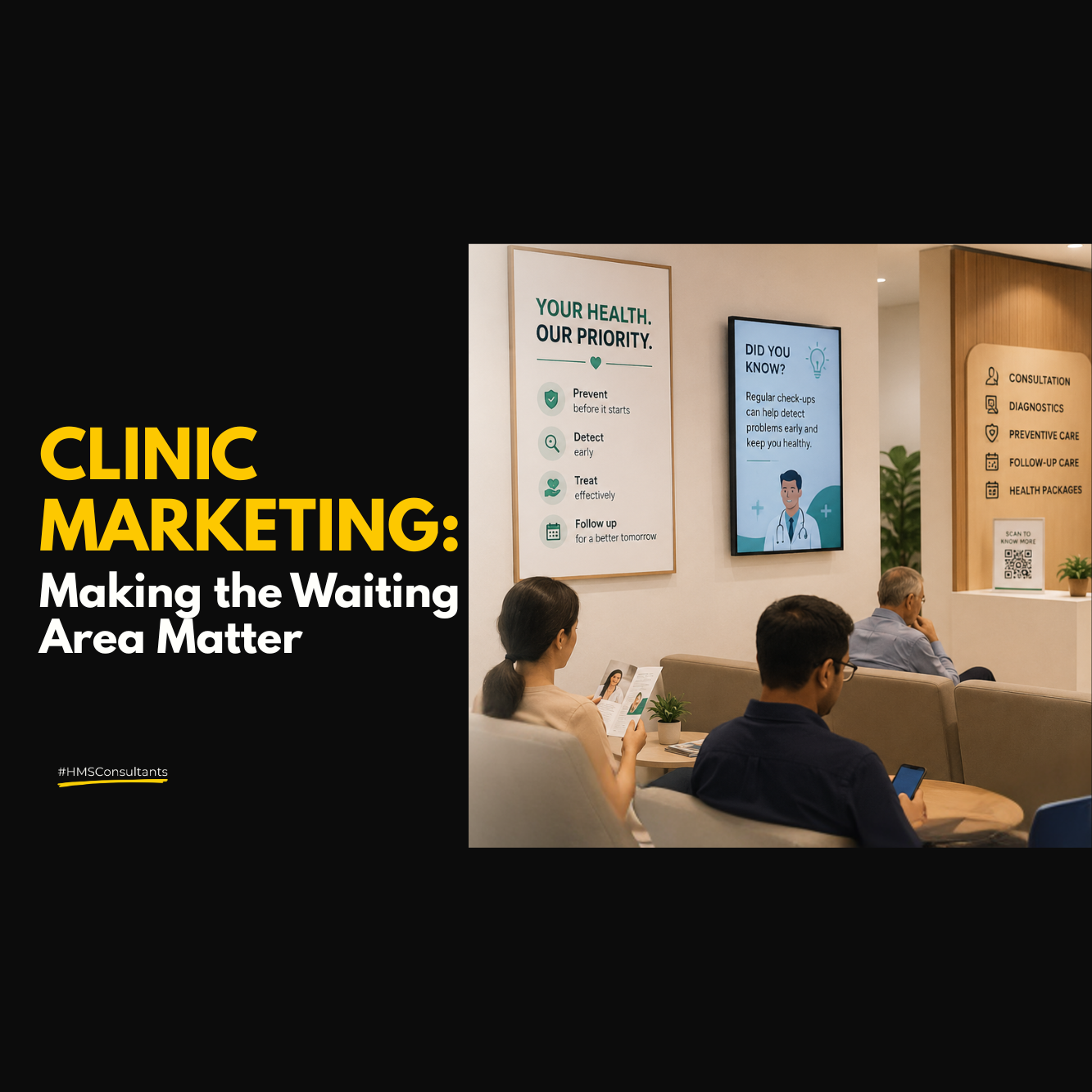
                  Key Tactic 10: Digital Signage & Onsite Experience

                  • Use digital displays in waiting rooms to share health tips and staff spotlights.
                  • Enhance patient experience with calming visuals, wayfinding screens, and consistency with your digital brand.

                  Measurement, Compliance & Innovation

                  Track & Evaluate

                  Metric

                  Tool / Approach

                  Search Visibility

                  GBP views/clicks

                  Online Reputation

                  Average ratings, sentiment analysis

                  Engagement

                  Reach, comments, shares

                  Conversion

                  Appointment bookings, chatbot starts

                  Community Impact

                  Event attendance, sign-ups

                  Perform monthly reviews for campaign updates and quarterly audits to identify gaps and optimization needs.

                  Ensure Compliance & Ethical Integrity

                  • Abide by NMC/UCPMP rules and regulations.
                  • Store patient response data per DPDPA, including opt-in logs and clear data usage guidelines .

                  Future Fixes & AI Advancements

                  • Predictive Analytics: Use data to anticipate patient needs e.g., seasonal flu messaging to high-risk segments .
                  • Voice Search Preparedness: Optimize FAQs for queries like “Do clinics near me offer telehealth?”
                  • AR Filters & Interactive Tools: Use browser-based quizzes or mindset tools to increase engagement and perception of trust.

                  Conclusion: Your Strategic Blueprints

                  These Clinic Marketing Ideas form an integrated, patient-first ecosystem:

                  • Strong local SEO
                  • Trust-building content and social strategies
                  • Community & referral loops
                  • Seamless digital integration
                  • Metrics-based improvement
                  • Ethical, compliant execution

                  If you’re a solo doctor or multi-specialty clinic, these strategies offer a balanced, sustainable way to grow GP viewership, build trust, and drive patient loyalty.

                  Written by Dr. Omang Gupta 

                  contact Us HMS Consultants 

                  Doctors Digital Marketing I Healthcare Marketing I Hospital Marketing Strategies I Marketing ideas for clinics I Marketing Trends 2025 I Medical Marketing I Social Media Marketing

                  is something we strongly believe in, which means ‘Knowledge without application is the same as having no knowledge at all

                  Akhil Dave

                  Principle Consultant

                  Ready to take your Personal Brand to the next level?

                  Share your details below and we will connect with you to discuss your growth strategy.

                  • Marketing Health Services for Hospitals | Build Trust & Grow

                    Marketing Health Services for Hospitals | Build Trust & Grow

                    Marketing Health Services for Hospitals | Build Trust & Grow

                    Written by
                    Published on
                    Share This

                    Marketing health services in today’s digitally connected world is no longer optional it’s essential. Patients are no longer passive recipients of care; they are informed decision-makers who research doctors, read online reviews, engage on social media, and evaluate healthcare providers based on digital touchpoints before stepping into a hospital.

                    1. Digital Presence is the New Front Door

                    Before stepping into a hospital, most patients search online. Whether it’s looking for the best pediatrician, reading reviews, or comparing treatments, the journey starts with Google. 

                    Every healthcare provider today must have: 

                    • A responsive, mobile-friendly website with detailed services, doctor profiles, and appointment options. 
                    • Health blogs that answer common patient queries using simple, empathetic language. 
                    • A strong Google My Business profile and active online review management. 

                    2. Targeted Campaigns for Real Patient Personas

                    Effective healthcare marketing starts with understanding your audience. Not all patients have the same needs, which is why persona based marketing is crucial. 

                    For example: 

                    • A first time mother might be looking for prenatal yoga, lactation support, and postpartum counseling. 
                    • A working professional may need preventive checkups and stress relief packages. 
                    • A teenager might be searching for mental health support or skin treatments. 

                    By creating patient personas, we design highly focused campaigns on platforms like Instagram, Facebook, and Google Ads, ensuring better engagement and conversion. 

                    3. Social Media Builds Trust and Connection

                    Social media isn’t just for branding; it’s a tool to educate, engage, and build trust. 

                    Content that works: 

                    • Doctor Q&A Reels (“Ask the Pediatrician”) 
                    • Behind-the-scenes videos (NICU walkthrough, day in the life of an OB-GYN) 
                    • Real patient stories (with consent) 
                    • Infographics on common issues (e.g., breastfeeding tips, postpartum mental health) 

                    What to avoid: medical jargon, impersonal content, or exaggerated claims. 

                    4. Integrated & Consistent Communication

                    An effective healthcare marketing strategy should be omnichannel and consistent, whether it’s online ads, emails, SMS, or physical brochures. 

                    Marketing touchpoints include: 

                    • Email nurturing campaigns for appointment reminders, health tips, or follow-up care. 
                    • WhatsApp or SMS updates for health check promotions or patient engagement. 
                    • Offline + Online integration — like promoting a wellness camp across social, SMS, and your website simultaneously. 

                    5. Ethical Marketing is Non-Negotiable

                    In healthcare, trust is everything. Marketing must always remain honest, respectful, and ethical. 

                    Avoid: 

                    • Fear-based or guilt-inducing messaging 
                    • Unrealistic guarantees (“100% Cure”) 
                    • Misleading or unverified health claims 

                    6. Thought Leadership as a Growth Driver

                    Establishing your doctors and brand as authorities in healthcare builds immense trust. 

                    How? 

                    • Host free webinars on child wellness, maternal health, or mental wellness. 
                    • Publish case studies or treatment success stories. 
                    • Share doctor led videos explaining procedures or health tips. 

                    7. Track, Adapt, Repeat

                    Modern marketing is about measurable results. Track what’s working and what’s not. 

                    Key metrics: 

                    • Website traffic and lead conversion 
                    • Social media engagement 
                    • ROI on ad spend 
                    • Patient satisfaction and feedback 

                    Final Thought

                    In today’s healthcare landscape, growth isn’t just about more patients it’s about building trust, delivering value, and creating meaningful connections. A patient-first marketing approach focuses on digital visibility, personalized communication, ethical messaging, and measurable outcomes. By combining empathy with strategy and staying true to medical integrity, hospitals and clinics can strengthen their reputation, engage patients more deeply, and drive sustainable growth in 2025 and beyond.

                    Written by Jay Wandile

                    contact Us HMS Consultants 


                    Doctors Digital Marketing I Healthcare Marketing I Hospital Marketing Strategies I Marketing ideas for clinics I Marketing Trends 2025 I Medical Marketing I Social Media Marketing

                    is something we strongly believe in, which means ‘Knowledge without application is the same as having no knowledge at all

                    Akhil Dave

                    Principle Consultant

                    Ready to take your Personal Brand to the next level?

                    Share your details below and we will connect with you to discuss your growth strategy.

                    • Hospital Marketing Techniques 2025 | Ethical, SEO & Digital Growth Strategies

                      Hospital Marketing Techniques 2025 | Ethical, SEO & Digital Growth Strategies

                      Hospital Marketing Techniques 2025 | Ethical, SEO & Digital Growth Strategies

                      Written by
                      Published on
                      Share This

                      Foundation & Core Digital Strategies

                      Why Marketing Hospital Services Requires Careful Strategy

                      In 2025, patient journeys begin online.  Over 80% of Indian patients search Google before stepping into a hospital . Hospital marketing isn’t about flashy ads but it’s about being  found, trusted, and chosen

                      However, recent regulations including NMC guidelines, mean that compliance is now as critical as visibility. Inadvertent breaches could trigger financial penalties .

                      Technique 1: Build a Trustworthy Digital Presence

                      • Website = Digital OPD: Ensure fast-loading, mobile‑optimized pages featuring clinical credibility, clear CTAs (“Book Teleconsult,” “Find OPD Slots”), and optimized metadata .
                      • Local & Voice‑Friendly SEO: Optimize for “cardiology Jaipur” or “best ENT near me” and conversational voice commands. Keep Google Business Profile updated with correct hours, images, and service categories .


                      Technique 2: Content with Authority & Compliance

                      • Educational Content + Videos: Create condition guides, myth-busting blogs, and clinician explainers that adhere to E-E-A-T. Use structured headings, FAQs, bullets for AI snippet optimisation .


                      • Live Q&As & Webinars: Host expert sessions that humanise specialists and enrich reputation.


                      • Compliance Checklist: Apply a systematic NMC checklist for all content. Include legal reviews where content touches patient data.


                      Personalization, Reputation & Omnichannel Alignment

                      Technique 3: AI‑Enhanced Personalisation with Human Oversight

                      • Use AI chatbots and predictive analytics to streamline appointment scheduling, symptom triage, and follow-up nudges .
                      • All AI-generated drafts or automation must undergo manual review for clinical validity, empathetic tone, and regulatory alignment.
                      • Internally document AI usage for transparency.


                      Technique 4: Reputation and Micro‑Influencer Advocacy

                      • Online Reviews: Patients trust reviews (84%) as much as personal referrals . Encourage and respond to reviews respectfully.
                      • Micro‑Influencers: Collaborate with trusted local doctors or health professionals to co-author compliant educational posts, ensuring no testimonials or guarantees, per NMC .

                      Technique 5: Omnichannel & Telehealth Integration

                      • Telehealth: Market teleconsults as safe, convenient care. Offer guides and virtual demo walkthroughs, positioned as accessible yet professional .
                      • Integrated Channels: All communication like email, SMS, social, GMB, website, should share aligned messaging to preserve trust and compliance.
                      • MarTech Use: Employ Customer Data Platforms (CDPs) and automation tools for seamless cross-channel delivery ensuring consent aligns with the appropriate regulations and guidelines.

                      Community, Metrics & Future-proofing

                       Technique 6: Local Engagement & Offline Reinforcement

                      • Pair health camps and screenings with digital follow-up content .
                      • Secure regional press coverage to boost citations, backlinks, and local authority.

                      Technique 7: Data‑Driven Optimization & Reporting

                      • Use analytics tools (Search Console, social insights, telehealth metrics) to measure click-to-consult ratios and campaign performance .
                      • Identify high-impact pages for content refreshing consolidate underperformers.
                      • Hold quarterly content and compliance audits to test for regulation shifts.

                      Technique 8: Ethics‑Led Marketing

                      • Strictly avoid unverified claims, misleading statements, or hyped offers as per NMC regulations .
                      • Fully respect patient privacy in methods like opt-in consent, opt-out across all channels, appropriate guidelines approved mechanisms.
                      • Clearly disclose anything promotional, especially in influencer content.

                      Future Focus: Voice SEO, AR Tours, & AI Insights

                      • Voice SEO Optimization: Enhance visibility in voice assistants like Siri and Alexa via conversational content .
                      • AR/Virtual Tours: Consider immersive facility walkthroughs as trust-building tools .
                      • Predictive Content: Leverage AI analytics to anticipate emerging health needs and personalize outreach.

                      Conclusion & Recommendations

                      Strategy + Compliance = Sustainable Impact

                      1. Content Compliance Framework:
                        • Mandatory checklist and expert reviews before publish.
                        • Regular training for content teams on regulations.
                      2. Human-Governed AI Use:
                        • AI for idea generation and personalization humans ensure accuracy and tone.
                      3. Omnichannel Cohesion:
                        • Centralised content planning consistent messaging across channels.
                      4. Qualified Influencer Partnerships:
                        • Work with vetted clinical experts under strict compliance norms.
                      5. Telehealth-Centric Content:
                        • Develop patient-first guides and highlight virtual care options.
                      6. SEO & AI‑Ready Content Practices:
                        • Optimize for voice, structure for AI snippets, refresh relevant content.
                      7. Measurement-Centric Iteration:
                        • Monthly audits and quarterly adjustments, tune technical, creative, or compliance elements as needed.

                      By combining strategic digital techniques, human oversight, compliance rigor, and measurable optimization, hospitals can build an enduring, trusted brand presence and convert online interest into real-world care.

                      Written by Dr. Omang Gupta 

                      contact Us HMS Consultants 

                      Doctors Digital Marketing I Healthcare Marketing I Hospital Marketing Strategies I Marketing ideas for clinics I Marketing Trends 2025 I Medical Marketing I Social Media Marketing

                      is something we strongly believe in, which means ‘Knowledge without application is the same as having no knowledge at all

                      Akhil Dave

                      Principle Consultant

                      Ready to take your Personal Brand to the next level?

                      Share your details below and we will connect with you to discuss your growth strategy.