Search results for: “experience”

  • The Hospital With No Website: Why Patients Will Never Find You

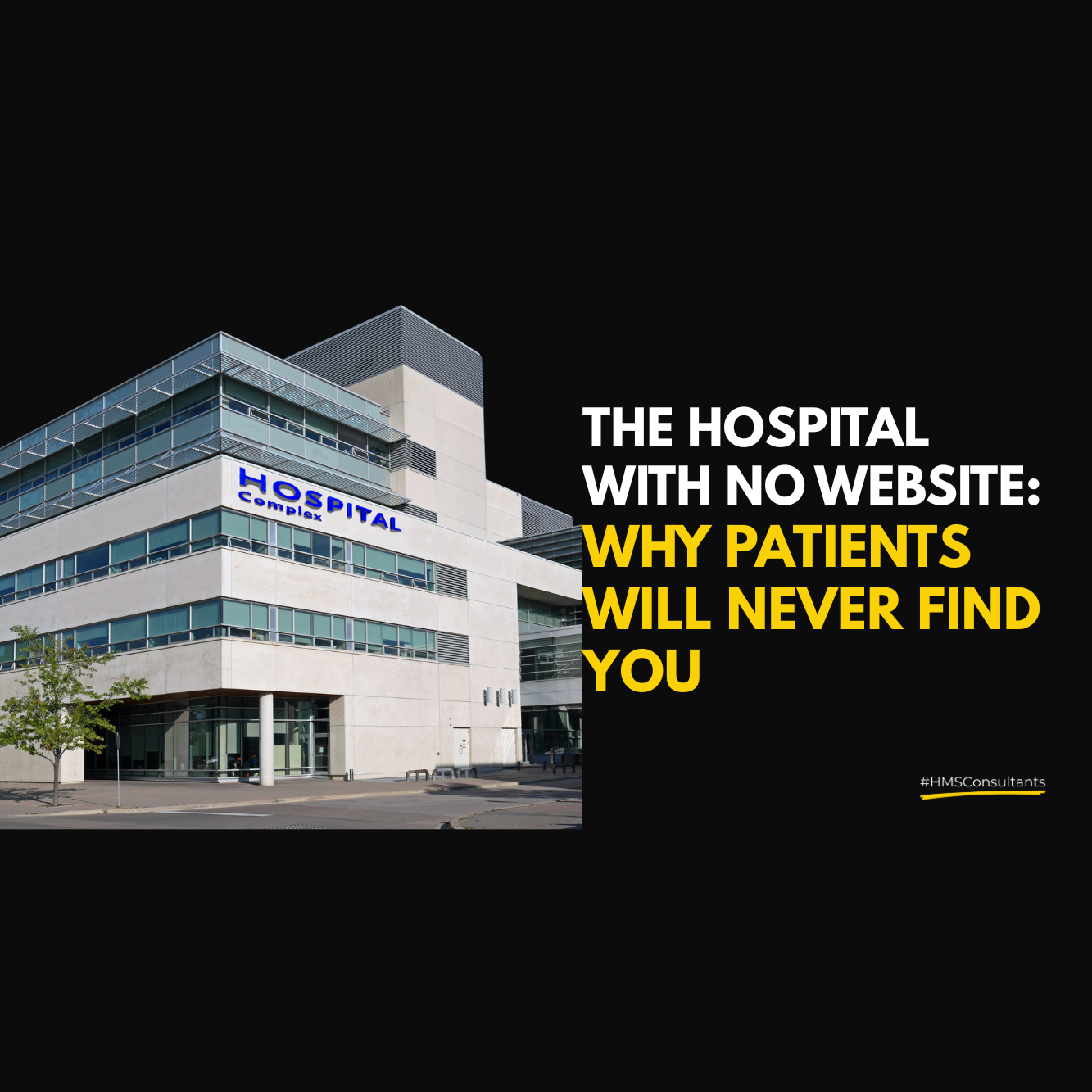
    The Hospital With No Website: Why Patients Will Never Find You

    The Hospital With No Website: Why Patients Will Never Find You

    Written by
    Published on
    Share This

    There was a time when hospitals grew purely through reputation and referrals. A family doctor recommended a specialist. A neighbour suggested a clinic. Word of mouth was enough.

    But healthcare has changed. Patients have changed. The way people search for doctors has undergone significant changes.

    Today, even when someone gets a referral, the first thing they do is Google the hospital name.

    And this is where many hospitals silently lose patients before they ever make an appointment because they don’t have a website, or they have one that looks outdated, incomplete, slow, or unprofessional.

    In a world where every business lives online, a hospital without a website looks invisible.
    And in healthcare, invisibility is a loss of trust.

    Patients Don’t Start Their Journey at the Reception Desk; It Starts Online

    In cities like Ahmedabad, Surat, Pune, Jaipur, Kochi, Nagpur, Lucknow, Bhopal, or Indore, when someone experiences pain, symptoms, pregnancy concerns, or a sudden emergency, they don’t leave the house to look for hospitals.

    They search:

    • “Best orthopedic doctor near me”
    • “Normal delivery hospital”
    • “Child vaccination clinic”
    • “Laser eye surgery cost”
    • “Pediatric dentist timing”
    • “Who is the best neurologist in Ahmedabad?”

    If your hospital does not appear online, you are not even an option.

    Even if you are the best hospital in the city, if the patient cannot find you online, someone else will get the case.

    But We Are Famous Through Word-of-Mouth, We Don’t Need a Website

    Many hospitals believe this. But here is how modern behaviour works: Even if a friend recommends your hospital, the patient still Googles it.

    When they search your name and see:

    • No website
    • No information
    • No doctor profiles
    • No photos
    • No timings
    • No phone number
    • No address

    They immediately lose confidence. A patient who cannot verify you online does not trust you offline.

    A Website Is Not for Show. It Is for Trust.

    Patients don’t judge hospitals by medical equipment, because they don’t understand it.

    They judge by what they can see online.

    A website tells patients:
    – Who are the doctors
    – What treatments are available
    – What it costs
    – Where the hospital is
    – How to book appointments
    – Why they should choose you

    Patients feel safe when they see clarity. Patients feel scared when information is missing.

    Google Searches Are Now Healthcare Gateways

    Let’s say two hospitals are in the same city: Hospital A has a clean website and Hospital B has no website

    A patient searches for “knee replacement Ahmedabad.”

    Hospital A appears with:

    • Doctor profiles
    • Success stories
    • Procedure explained
    • Contact button

    Hospital B: no result.

    Hospital A gets the enquiry. Hospital B loses a patient silently.

    No doctor got a chance to consult.
    No receptionist got a chance to speak.
    No marketing was done wrong.

    Simply, the hospital did not exist online.

    Even Small Hospitals Need Websites. Actually, They Need Them More

    Large coorporates have brand recall. Small and mid-sized hospitals depend on discovery.

    When a small hospital doesn’t have a website, patients assume:

    • It is new
    • It is unorganised
    • It is not trustworthy
    • It might be expensive
    • It might be unsafe

    Patients will not take risks with their health. A simple website can change this perception overnight.

    Patients Don’t Call for Basic Information Anymore

    Old mindset: “If they want information, they will call us.”

    New reality: “If the information is not online, patients won’t call at all.”

    Patients want:

    • Transparency of cost
    • Doctor timing
    • Location
    • Facilities
    • Insurance acceptance
    • Procedures
    • FAQs

    If they cannot find it in one click, they move to another hospital that explains it clearly. Healthcare can be stressful; patients prefer hospitals that minimise confusion.

    An Outdated Website Is Almost as Bad as No Website

    Some hospitals have websites that appear to have been created 10 years ago.

    • Old colours
    • Small blurry photos
    • No doctor details
    • Broken links
    • No online appointment button
    • Not mobile-friendly

    Patients think the same thing every time:

    “If the website is this outdated, how modern is the hospital inside?”

    A website does not have to be fancy. It just has to be clean, clear, updated, and mobile responsive.

    Patients Check Websites for One More Reason: Safety

    Before choosing a hospital, patients want to know:

    • What are the facilities?
    • How clean does the hospital look?
    • Are the doctors qualified?
    • Are there reviews or testimonials?
    • Is there emergency support?
    • What is the experience like?

    A website answers all of this without a phone call. A patient who feels safe online will walk in confidently offline.

    A Website Works 24/7, Even When Staff Cannot

    A receptionist can answer one call at a time. A phone cannot handle hundreds of enquiries simultaneously.

    A website can:

    • Explain everything
    • Collect appointments
    • Give directions
    • Share reports
    • Provide FAQ
    • Show doctor timings
    • Reduce waiting room chaos

    While the hospital is sleeping, the website is convincing patients to choose you.

    The Hospital Without a Website Misses These Opportunities Daily

    • Corporate clients searching for tie-ups
    • Students searching for internships
    • Doctors searching for job openings
    • Patients searching late at night
    • Relatives searching from outside the city
    • NRI families searching for parents’ care

    A hospital without a website is like a shop with a locked door. People who want to enter cannot.

    The Biggest Misconception: “Websites Are Expensive”

    They are not.

    A basic, clean, professional hospital website can cost less than:

    • One billboard
    • One hoarding
    • One month of newspaper ads

    And unlike ads, a website works permanently.

    It is not a cost. It is an investment in credibility.

    Conclusion

    Hospitals lose patients silently, not because of the quality of their treatment, but because patients cannot find or trust them online.

    A website is no longer optional. It is the digital front door of healthcare.

    Without it, patients choose someone else.
    Not because they are better, but because they are visible.

    A hospital that communicates clearly, transparently and professionally online will always remain the first choice offline.

    In today’s world, if you are not online, you don’t exist. If patients cannot find you, they cannot trust you.

    The hospital with the best doctors may win cases inside the building. But the hospital with the best communication wins them before the door.

    Contact Us HMS Consultants 

    Doctors Digital Marketing I Healthcare Marketing I Hospital Marketing Strategies I Marketing ideas for clinics I Marketing Trends 2025 I Medical Marketing I Social Media Marketing

    is something we strongly believe in, which means ‘Knowledge without application is the same as having no knowledge at all

    Akhil Dave

    Principle Consultant

    Ready to take your Personal Brand to the next level?

    Share your details below and we will connect with you to discuss your growth strategy.
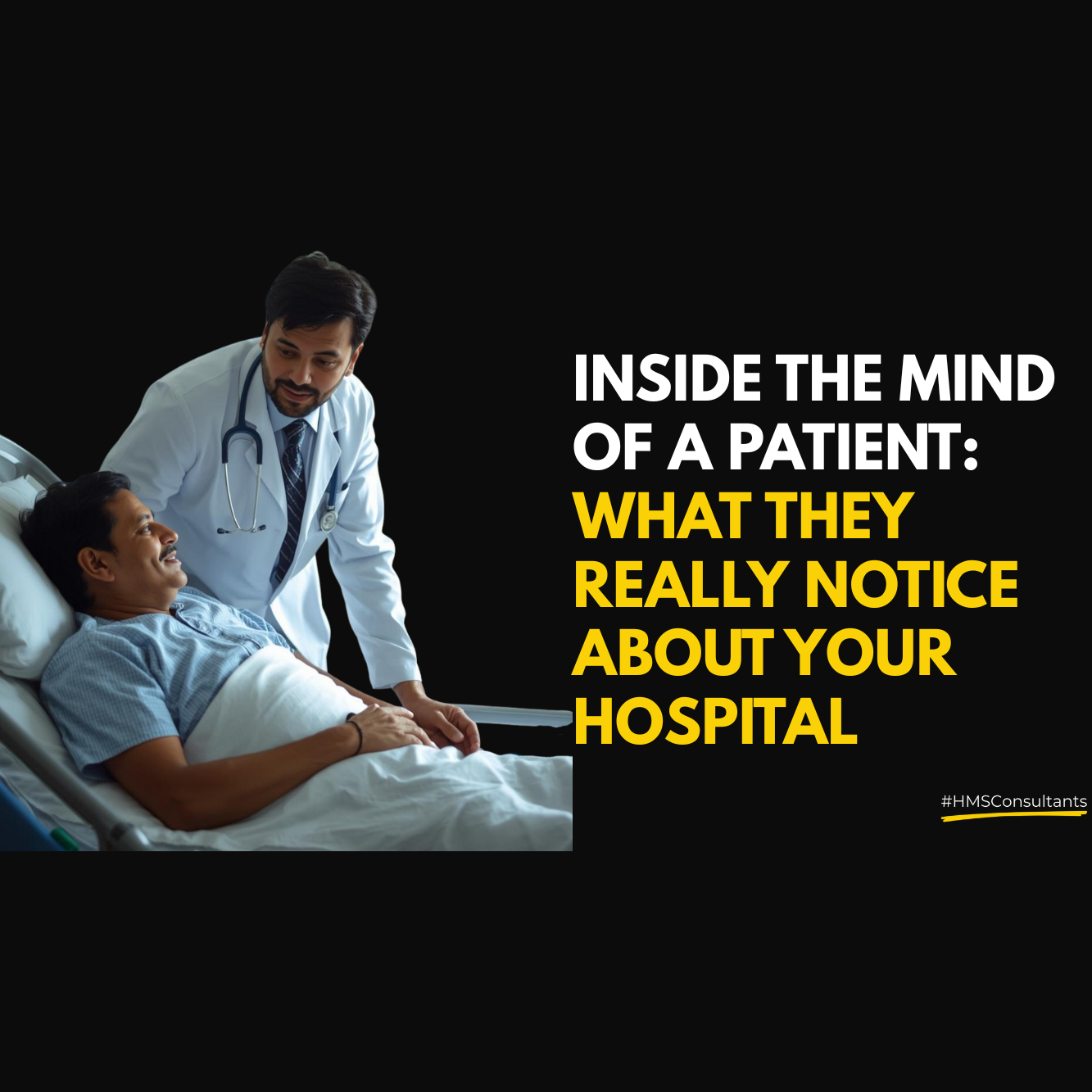
    • Inside the Mind of a Patient: What They Really Notice About Your Hospital

      Inside the Mind of a Patient: What They Really Notice About Your Hospital

      Inside the Mind of a Patient: What They Really Notice About Your Hospital

      Written by
      Published on
      Share This

      Hospitals often believe that patients judge them only by medical expertise. Administrators assume that the deciding factors are the seniority of the doctor, advanced equipment, or the success rate. But patients don’t experience hospitals the way doctors do.

      Patients don’t see the ventilator first.
      They don’t notice the microscope.
      They don’t recognise the brand of the stent or implant.

      They notice something else entirely, something most hospitals underestimate.
      They notice how the hospital feels.

      From the moment a patient or family member steps inside (or even before that, when they search you online), their mind begins to make decisions:

      “Is this hospital organised?”
      “Does this place look clean?”
      “Will they take care of us?”
      “Will anyone listen to us?”

      The hospital may be highly qualified medically, but trust is built or broken long before treatment begins.

      Let’s step inside the patient’s mind and understand what they truly see, feel, and remember.

      Before They Arrive: The First Impression Happens Online

      In cities like Ahmedabad, Surat, Jaipur, Nashik, Lucknow, Nagpur or Indore, most patients start with Google. Not with the front door.

      They search:

      • Best child specialist near me
      • Normal delivery hospital
      • Kidney stone treatment
      • Cataract surgery cost

      If they see a hospital with a modern website, updated Google reviews, doctor profiles, OPD timings, photos, and clear contact details, they immediately feel more confident.

      But if they find:

      • No website
      • No Google listing
      • No updated information
      • Only two outdated reviews

      …their mind says, “Let’s try somewhere else.”

      Doctors may trust their skill. Patients trust what they can see.

      The Parking Lot and Entrance

      It sounds trivial, but the patient journey begins even before the reception. If the parking is confusing, unorganised, or chaotic, patients start the experience stressed.
      Their first impression becomes: “This hospital doesn’t manage things properly.”

      If the entrance is clean, bright, and welcoming, patients feel safer before anyone speaks a word.

      Cleanliness is psychological medicine.

      Reception: The Real Heart of the Hospital Experience

      Every hospital believes the doctor creates trust. But for most patients, trust (or fear) begins at the reception desk.

      If the receptionist:

      • Greets politely,
      • Explains patiently,
      • Answers clearly,
      • Guides confidently…

      …the patient calms down.

      But if the receptionist:

      • Looks irritated,
      • Speaks rudely,
      • Asks questions as if doing a favour,
      • Shows confusion or lack of coordination…

      …the patient immediately feels unsafe, even if the doctor is the best in the city.

      The patient decides: “If reception is this unorganised, what will happen during treatment?”

      One rude sentence can cancel a patient’s trust.
      One kind sentence can create it.

      Cleanliness and Hygiene Everywhere

      Patients are not medical experts, but they understand the importance of cleanliness deeply.

      They notice:

      • The smell of the waiting area
      • Dust on chairs or corners
      • Dirty bathrooms
      • Random slippers or waste lying around
      • Blood stains, used cotton, syringes not disposed properly

      Doctors may not see these things. Patients see everything.

      If the hospital looks dirty, no machine or doctor can save the hospital’s image. Cleanliness equals safety.

      Waiting Time: Do You Respect Their Pain?

      Patients expect waiting. But what they hate is uncertainty.

      They don’t get angry because of delay. They get angry because nobody tells them why or for how long.

      If a hospital simply communicates:
      “The doctor is running 20 minutes late, please wait.”
      “Your report will be ready in 15 minutes.”

      …their frustration reduces immediately.

      Silence makes patients anxious. Communication makes them comfortable.

      Staff Behaviour: Compassion is More Powerful Than Technology

      Most patients don’t remember what instrument was used in surgery. They remember how the nurse spoke to them.

      Was she gentle?
      Did she explain instructions?
      Did she show patience with an old person or a scared child?

      Patients are emotionally sensitive in hospitals.
      They notice kindness like medicine.

      They also notice anger like an injury.

      A single rude staff member can destroy the reputation that doctors spent years building.

      Doctor Interaction: Humanity Matters as Much as Skill

      Patients rarely judge medical accuracy.
      They judge communication.

      A doctor who:

      • Listens,
      • Explains simply,
      • Makes eye contact,
      • Doesn’t rush,
      • Reassures the family…

      …automatically becomes “the best doctor.”

      A doctor who seems busy, dismissive, or impatient makes the patient insecure, even if the treatment is brilliant.

      Patients want to feel heard, not processed.

      Billing and Transparency

      Money is one of the biggest fears in healthcare.

      If billing feels confusing, hidden, or uncertain, patients lose trust, even with good treatment.

      But if hospitals:

      • Explain charges,
      • Tell what’s included,
      • Make estimates clear,
      • Give receipts with breakdowns, and patients feel respected.

      Transparent billing is one of the strongest trust builders in the healthcare industry.

      Discharge and Follow-Up

      The hospital journey doesn’t end when the patient leaves. In fact, the final impression is formed at discharge.

      If the staff explains medicines, diet, care instructions, follow-up dates and provides contact details for questions, the patient goes home confident.

      If the discharge feels rushed, confusing, or disorganised, the patient goes home scared.

      After reaching home, a simple WhatsApp message:
      “Hope you are recovering well. If you need anything, message us anytime.”
      …creates emotional loyalty.

      Hospitals don’t realise how powerful small gestures are.

      What Patients Remember Forever

      At the end of the journey, patients remember:

      • How they were treated as humans
      • Not how the machine sounded
      • Not which stitch was used
      • Not which OT light was installed
      • Not which brand of implant was used

      They remember:

      • Who smiled
      • Who helped
      • Who guided
      • Who made them feel safe

      People don’t remember hospitals. They remember experiences.

      Conclusion

      Hospitals spend crores on infrastructure. Patients judge the hospital by behaviour, cleanliness, communication, transparency, and organisation.

      If hospitals could see themselves through a patient’s eyes, they would never ignore:

      • Reception training
      • Clear communication
      • Quick response
      • Cleanliness
      • Transparent billing
      • Follow-ups

      Because medical excellence yields results, emotional excellence fosters trust.

      A hospital becomes great not only when it treats patients well, but when it makes them feel cared for every step of the way.

      Contact Us HMS Consultants 

      Doctors Digital Marketing I Healthcare Marketing I Hospital Marketing Strategies I Marketing ideas for clinics I Marketing Trends 2025 I Medical Marketing I Social Media Marketing

      is something we strongly believe in, which means ‘Knowledge without application is the same as having no knowledge at all

      Akhil Dave

      Principle Consultant

      Ready to take your Personal Brand to the next level?

      Share your details below and we will connect with you to discuss your growth strategy.

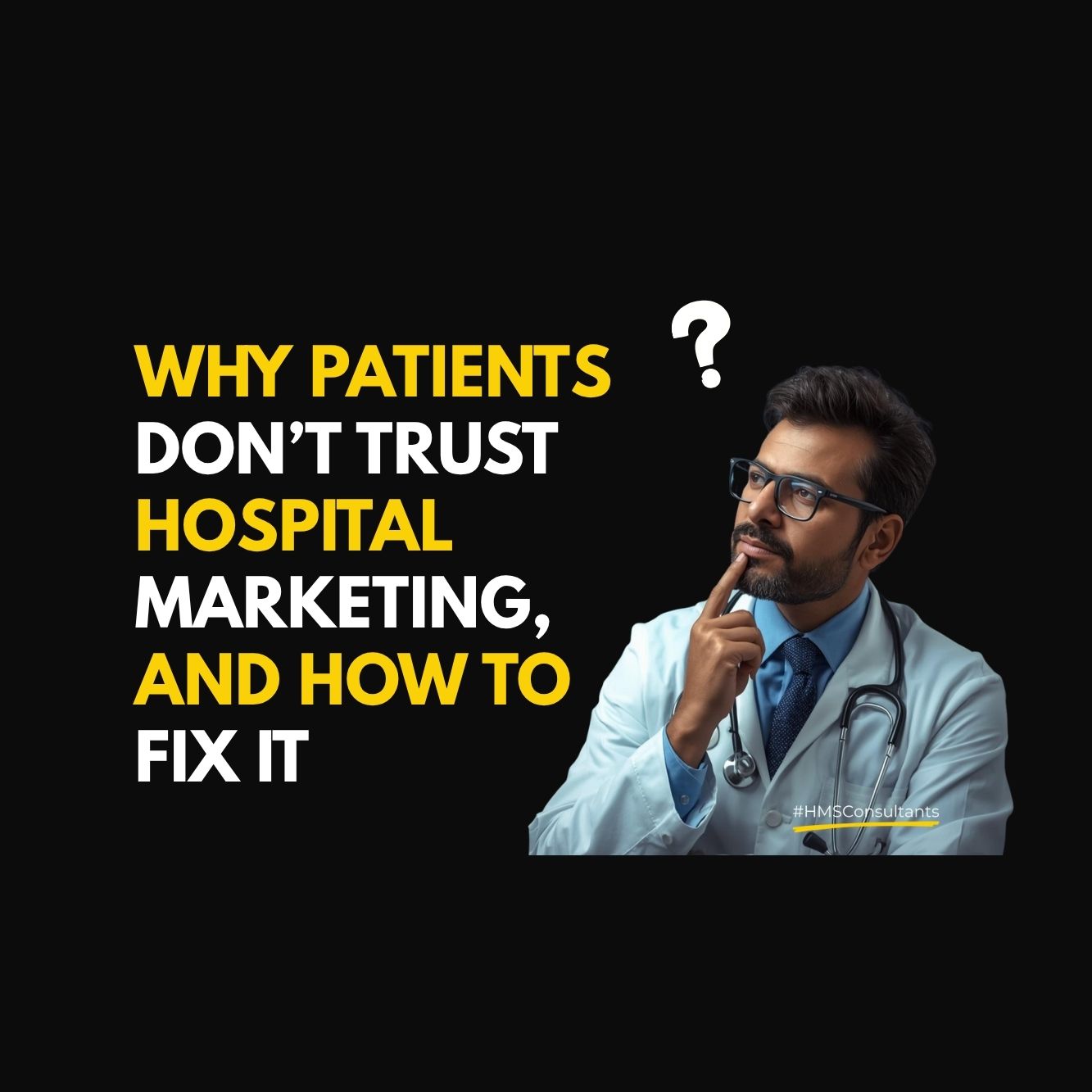
      • Why Patients Don’t Trust Hospital Marketing, And How to Fix It

        Why Patients Don’t Trust Hospital Marketing, And How to Fix It

        Why Patients Don’t Trust Hospital Marketing, And How to Fix It

        Written by
        Published on
        Share This

        In every major Indian city, from Ahmedabad to Surat, Jaipur, Indore, Kochi, and Lucknow, hospitals are investing in digital marketing, branding, and social media. Yet, most patients still rely on recommendations, neighbours, relatives, or Google reviews before trusting a hospital.

        Why?
        Because patients don’t trust hospital marketing. Not fully. Not yet.
        This isn’t because healthcare advertising is bad. It’s because healthcare is different. Marketing a hospital is not like selling shoes, smartphones, or salon services. When a patient chooses a hospital, they are not buying a product; they are choosing a place where they believe their life, or their loved one’s life, will be safe.

        So when hospitals use promotional messaging, aggressive sales tactics, or generic content, patients feel uncomfortable, even suspicious.
        If hospitals want marketing to work, they must first understand why patients don’t trust it.
        Let’s break it down.

        Reason 1: Patients Have Been Misled Before

        Healthcare marketing in India is still young, and unfortunately, many early examples created distrust.

        • Big promises with poor service
        • Lowest-price campaigns that hide final billing
        • “World-class” claims in hospitals that lack basic infrastructure
        • Offers that sound commercial instead of clinical
        • Ads with exaggerated results

        Patients have seen:

        • Free checkups that become expensive tests
        • Discounts that disappear at billing
        • Promotions that don’t match reality

        So when patients see marketing, the first question that comes to their mind is:
        “Is this real, or is this a trap?”

        Trust is lost when marketing over-promises and the experience under-delivers.

        Reason 2: Healthcare Is Emotional, Not Commercial

        Patients don’t go to hospitals for something they want. They go because something is wrong, urgent, stressful, or scary.

        In that emotional moment:

        • Loud offers feel insensitive
        • Pushy ads feel unethical
        • “Limited time discount” sounds manipulative
        • Paid ads feel less trustworthy than genuine reviews

        Marketing cannot feel like selling. It must feel like helping. When hospitals communicate like retailers, patients feel uncomfortable.

        Reason 3: Lack of Transparency Creates Doubt

        One of the primary reasons patients lack trust in hospitals is the presence of information gaps.

        When a website says:

        • “Call us for pricing”
        • “Packages available”
        • “Affordable care”

        Patients think: “Why are they hiding details?”

        A patient is already anxious. They don’t want to negotiate for clarity.

        If hospitals simply explained:

        • Pricing ranges
        • What is included
        • Doctor timings
        • Expected waiting time
        • Process and documentation

        Trust would increase instantly. Transparency does not scare patients. Confusion does.

        Reason 4: Inconsistent Digital Presence Looks Suspicious

        Patients do not trust hospitals with:

        • No website
        • Old website
        • No doctor profiles
        • No reviews
        • No photos
        • No details about services
        • No Google Business listing

        When digital presence looks incomplete, patients feel the hospital is either:

        • Not serious
        • Too new
        • Unprofessional
        • Hiding something

        A clean, updated, and informative online presence is no longer optional; it is a testament to credibility.

        Reason 5: Reviews and Reputation Matter More Than Advertisements

        Most patients now check reviews before choosing a hospital. Even one negative review without a proper response creates doubt.

        A hospital might be clinically excellent, but if patients see:

        • Angry reviews
        • Complaints about staff behaviour
        • No response from management
        • Arguments in comment sections

        They assume the worst. Patients trust real experiences more than social media posts or advertisements.

        Marketing brings attention. Reputation brings trust.

        Reason 6: Medical Language Confuses People

        If a hospital’s communication sounds technical, complicated, or filled with medical jargon, patients mentally disconnect.

        For example:

        • “Phacoemulsification with PCIOL”
          vs.
        • “Painless cataract surgery with a foldable lens”

        Patients trust what they understand. Marketing is not for doctors; it is for patients. When hospitals speak clearly, simply, and patiently, trust grows.

        How to Fix Patient Distrust: The Trust-Building Approach

        Hospitals don’t need dramatic rebranding or aggressive campaigns. They need authenticity, transparency, clarity, and consistency.

        Here’s how trust is built.

        1. Stop Selling. Start Guiding.

        Hospitals earn trust when they help patients make informed decisions:

        • Explain symptoms
        • Share treatment options
        • Provide preventive advice
        • Use social media to educate, not advertise

        When patients learn from you, they trust you. The most trusted hospitals are educators, not promoters.

        1. Show Real People, Real Expertise

        Patients trust hospitals with:

        • Real doctor faces
        • Real credentials
        • Real photos of facilities
        • Real patient testimonials
        • Real success stories (shared ethically)

        Stock images, generic templates, and fake promises destroy trust. Authenticity wins.

        1. Fix Website and Google Presence

        A hospital website should answer every basic question:

        • Who are the doctors?
        • What treatments are available?
        • How much will it cost (at least approximate range)?
        • What are OPD timings?
        • How to book?
        • Parking availability?

        A complete Google Business Profile with updated photos, reviews, and doctor timings increases walk-ins overnight.

        1. Respond Fast. Respond Politely.

        Slow replies are the fastest way to lose trust. A patient asking for help is already anxious. A quick, kind response builds emotional confidence.

        Communication is as important as treatment.

        1. Collect Reviews, And Answer Them

        Don’t fear feedback.

        When hospitals reply to negative reviews calmly and professionally:

        • Public trust goes up
        • Patients feel heard
        • Future patients see responsibility

        Silence shows negligence. Response shows leadership.

        1. Communicate in Simple, Human Language

        Patients trust hospitals that speak like people, not textbooks. Explain procedures in plain words.
        Share instructions clearly. Remove fear, don’t add confusion.

        Healthcare is emotional. Language must be compassionate.

           Marketing Is Not About Making Hospitals Look Bigger, It’s About Making Patients Feel Safer

        When patients trust a hospital, they don’t need advertisements to convince them. When they don’t trust a hospital, no advertisement can save them.

        Trust is built through:

        • Clarity
        • Transparency
        • Responsiveness
        • Ethics
        • Respect

        Most hospitals try to improve marketing. Very few try to improve trust-building. The ones who do, never struggle with footfall.

        Conclusion

        Patients don’t distrust hospitals. They distrust the feeling of being misled, confused, ignored, or oversold.

        The good news? This can be fixed.

        Hospitals that communicate honestly, educate patients, demonstrate transparency, respond promptly, and maintain a clean digital presence naturally build trust without resorting to aggressive marketing.

        Because patients don’t choose hospitals based on ads. They choose hospitals based on confidence.

        Contact Us HMS Consultants 

        Doctors Digital Marketing I Healthcare Marketing I Hospital Marketing Strategies I Marketing ideas for clinics I Marketing Trends 2025 I Medical Marketing I Social Media Marketing

        is something we strongly believe in, which means ‘Knowledge without application is the same as having no knowledge at all

        Akhil Dave

        Principle Consultant

        Ready to take your Personal Brand to the next level?

        Share your details below and we will connect with you to discuss your growth strategy.

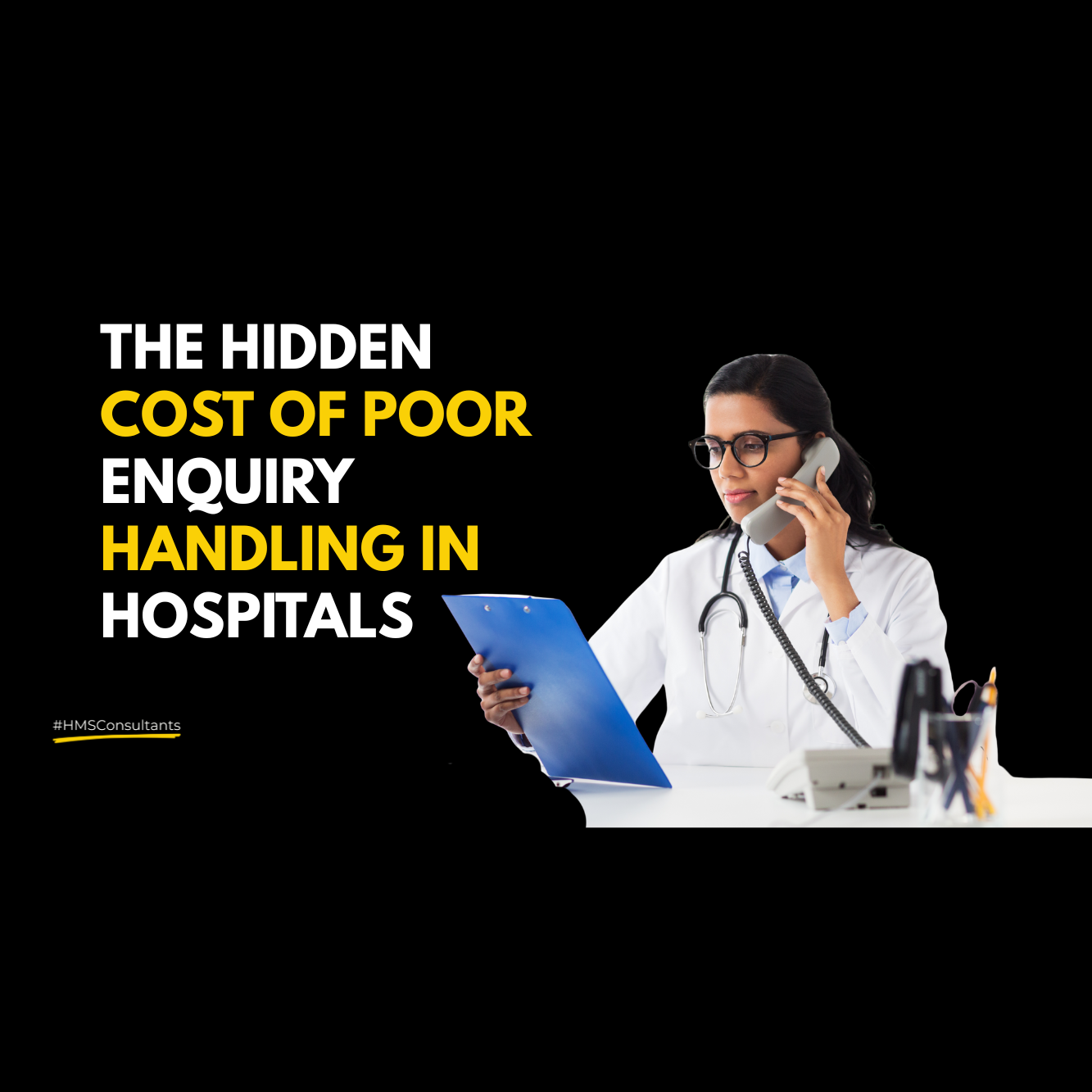
        • The Hidden Cost of Poor Enquiry Handling in Hospitals

          The Hidden Cost of Poor Enquiry Handling in Hospitals

          The Hidden Cost of Poor Enquiry Handling in Hospitals

          Written by
          Published on
          Share This

          Hospitals across India invest heavily in infrastructure, equipment, branding, and digital marketing, yet many still struggle with low patient footfall. Administrators often assume the issue is competition, pricing, or a lack of advertising. But in reality, hospitals lose a massive number of potential patients at a much simpler point: the enquiry desk.

          Whether it is a call, WhatsApp message, website query, or walk-in patient asking for details, enquiry handling is one of the most critical steps in the healthcare journey. And surprisingly, it is also one of the most neglected. Patients are not lost during surgery, treatment, or billing. They are lost before they ever meet a doctor.

          Enquiries Are Not Enquiries, They Are Potential Patients

          In a hospital, every enquiry represents a real person who is already interested. They are not “cold leads.” They are actively seeking healthcare. They have a pain, a symptom, a worry, or a family member who needs help.

          But here’s the shocking truth: many hospitals treat enquiries as casual questions, not as future patients. A typical scenario plays out every day:

          A patient sends a WhatsApp message at 10 AM asking: “Is the orthopaedic doctor available today?”

          No response for hours. They call reception, and the call rings. No answer. Or a staff member replies abruptly or without interest.

          Within minutes, the patient moves to another hospital, one that simply answers the phone.

          No doctor was consulted.
          No marketing was involved.
          No treatment was rejected.

          The hospital lost the patient in silence.

          Slow Replies = Lost Trust

          In today’s world, patients expect speed. They are used to WhatsApp responses, instant information, and clear communication. The hospital that responds fastest is often the hospital that gets the case.

          If a patient asks:

          • “What is cataract surgery cost?”
          • “Do you have pediatric OPD on Sunday?”
          • “Can I book an appointment today?”

          …and the reply comes hours later, the decision has already been made somewhere else.

          The patient doesn’t call back.
          They don’t complain.
          They simply move on.

          And because hospitals don’t see the patient walking away, they assume nothing is wrong.

          But poor enquiry handling is the silent leak in the system.

          Marketing agencies can bring 500 enquiries. If staff only handle 200 properly, 300 are silently lost. No advertisement can fix this.

          Why Enquiry Handling Matters More Than Marketing

          Doctors and hospitals often ask:
          “Should we spend more on digital marketing to increase patient flow?”

          But there is a more important question: “What happens to the patients who already contacted us?”

          If a hospital cannot convert existing enquiries, increasing marketing spend will only increase the number of patients lost.

          The issue is not visibility. The problem is responsiveness.

          A hospital with excellent enquiry handling can grow even with minimal marketing. A hospital with a poor enquiry response will struggle, regardless of how much money is spent.

          Patients Judge Your Hospital by Your Response

          Before a patient trusts a doctor, they trust the hospital’s communication. A rude receptionist, lack of clarity, or delayed reply can erase years of reputation.

          When a patient is treated poorly at the enquiry stage, they think: “If they don’t care when I’m asking for help, how will they treat me when I’m admitted?”

          The tone of voice, patience, and ability to guide the patient calmly matter as much as clinical skill. Enquiry handling is not just administrative, it is emotional.

          The Cost You Can’t See

          Let’s take a simple example.

          A hospital receives:

          • 50 calls per day
          • 30 WhatsApp messages
          • 10 website enquiries

          Total: 90 enquiries daily. If only half get responded to properly, that’s 45 lost enquiries every day.

          Even if 20% of those would have converted into paying patients, the hospital loses:

          9 patients daily → 270 patients per month → 3,240 patients a year.

          Even if the average revenue per patient is ₹2,000,
          that is ₹64+ lakh lost every year
          not from competition, but from poor enquiry handling.

          And this is a conservative estimate.

          Hospitals don’t feel this loss because patients never reach them.
          But the revenue leakage is real.

          Why Does This Happen?

          Some hospitals assume inquiry handling is just reception work. But receptionists are overloaded with:

          • phone calls
          • walk-in patients
          • paperwork
          • billing issues
          • discharge coordination
          • doctor communication

          Naturally, enquiries don’t get priority. Some hospitals believe: “If the patient is serious, they will call again.” That belief is outdated. Today’s patients have options.

          If one hospital does not answer, another one will.

          Enquiry Handling Is a Patient’s First Experience

          Just as OT hygiene matters for surgery, enquiry hygiene matters for first impressions.

          A smooth enquiry experience makes the patient feel:

          • Respected
          • Cared for
          • Safe
          • Confident

          A poor enquiry experience makes them feel:

          • Ignored
          • Unimportant
          • Confused
          • Scared

          Hospitals spend crores on machines, interiors, and advertising, but a phone call or WhatsApp reply creates the first impression. And most hospitals don’t even monitor this.

          Technology Can Support, Not Replace

          Even a simple system can improve conversion:

          • WhatsApp Business auto-replies
          • CRM tools
          • Missed-call alerts
          • Online appointment booking
          • FAQ messages
          • Call-back reminders

          But technology works only when people use it properly. A polite human response still matters most.

          The Best Hospitals Don’t Treat Enquiries as Questions

          They treat them as:

          • future patients
          • people in distress
          • families seeking help
          • opportunities to make an impact

          When enquiry handling becomes part of hospital culture, patients feel cared for before they even arrive.

          The Real Competitive Advantage

          Many hospitals believe their competitor’s big budget, fancy logo, or huge building is the reason patients choose them.

          But often the real reason is simple:

          • They answered quickly
          • They spoke respectfully
          • They explained clearly
          • They followed up

          Patients don’t remember marketing campaigns. They remember how someone made them feel when they were worried.

          Conclusion

          Hospitals believe patients are lost due to competition or a lack of advertising. But the truth is: most patients are lost before they enter the hospital.

          Not because of clinical quality. Not because of price. Not because of reputation.

          However, this is often due to slow replies, unclear information, or poor enquiry handling. Fix this, and footfall increases without spending more on marketing. In the modern era, patient trust begins with communication. The hospital that answers first, guides skillfully, and speaks with empathy, wins the patient long before admission.

          Contact Us HMS Consultants 

          Doctors Digital Marketing I Healthcare Marketing I Hospital Marketing Strategies I Marketing ideas for clinics I Marketing Trends 2025 I Medical Marketing I Social Media Marketing

          is something we strongly believe in, which means ‘Knowledge without application is the same as having no knowledge at all

          Akhil Dave

          Principle Consultant

          Ready to take your Personal Brand to the next level?

          Share your details below and we will connect with you to discuss your growth strategy.

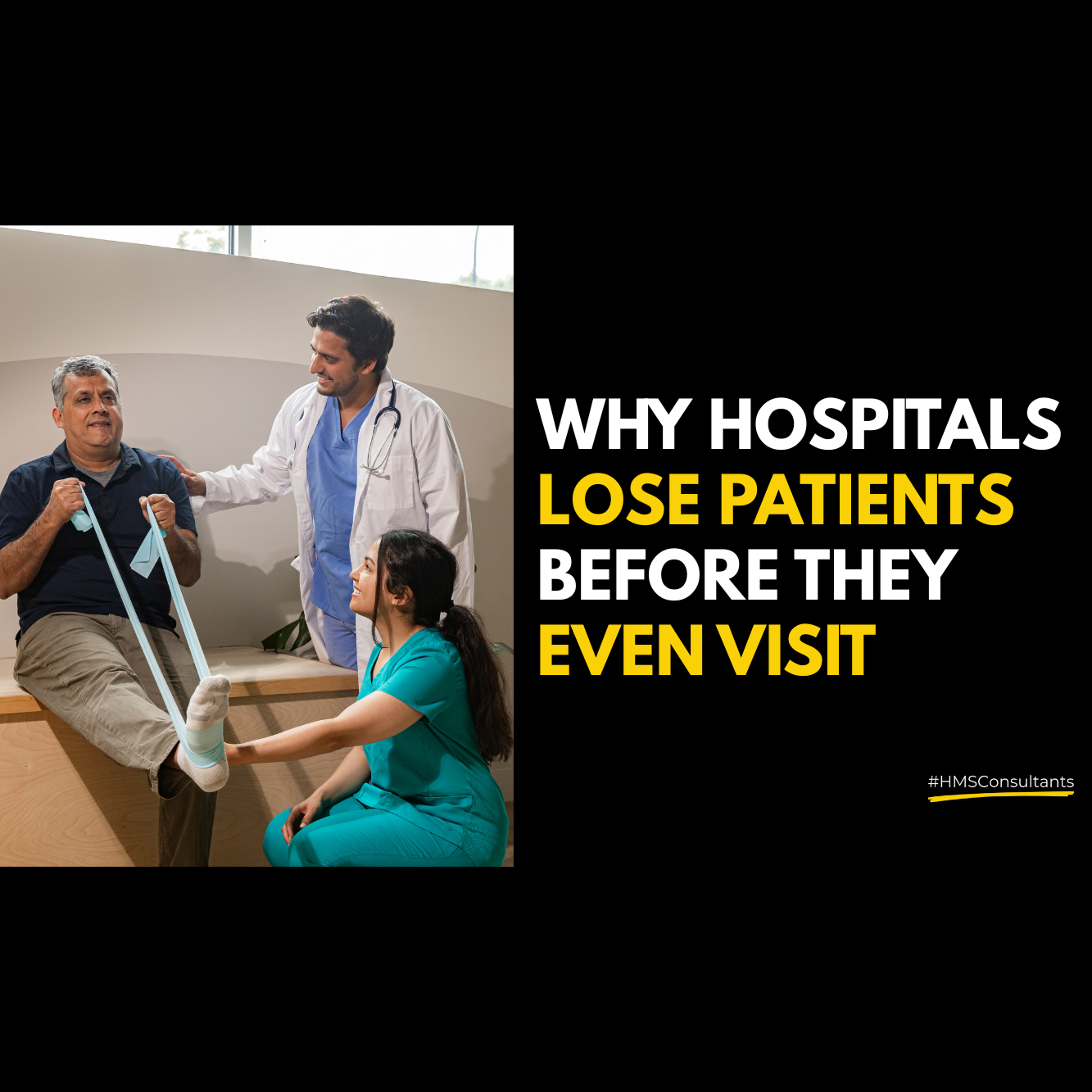
          • Why Hospitals Lose Patients Before They Even Visit

            Why Hospitals Lose Patients Before They Even Visit

            Why Hospitals Lose Patients Before They Even Visit

            Written by
            Published on
            Share This

            In today’s digital healthcare environment, most hospitals believe they lose patients because of competition or pricing. The truth is far more surprising: in India, a large percentage of patients never reach the hospital door at all. They drop off somewhere in the journey before the first visit silently, invisibly, and without any chance for the hospital to explain its value.

            For decades, healthcare was driven by referrals, reputation, and word of mouth. If a hospital had good doctors, patients walked in with confidence. But patient behaviour has changed. Today, the first consultation happens online, not in OPD.

            Before making a decision, patients research symptoms on Google, check doctor profiles, read reviews, compare photos of facilities, and even check consultation fees. The hospital that looks more trustworthy, organised, and transparent wins the patient long before the first appointment.

            And this is where many hospitals unknowingly lose them.

            A Decision Is Made Before a Step Is Taken

            A patient searching for a doctor in Ahmedabad, Surat, Indore, Jaipur, Nagpur, or any rapidly developing Indian city does not begin with a visit. Their journey starts with a search bar.

            “Best oncology hospital near me.”
            “Normal delivery package price.”
            “Painless cataract surgery.”

            If a hospital does not appear in search results, appears with outdated or incomplete information, or has poor reviews, the decision ends right there. The patient moves on. They don’t call to verify. They don’t walk in to check. The decision is already made, silently.

            Hospitals often assume competition is taking away patients. In reality, visibility and credibility are.

            The Trust Test Happens Online

            Modern patients evaluate hospitals in much the same way they assess hotels, airlines, or even restaurants: through online presence and reviews. It may sound unfair, but it is logical from the patient’s perspective. Medical care is one of the most emotional decisions a family makes. Before trusting a doctor with their health, they seek reassurance.

            They check:

            • Are the reviews consistent or concerning?
            • Does the website look modern and updated?
            • Are there photos of real facilities, doctors, rooms, or OT?
            • Does the hospital respond politely to negative feedback?
            • Is there a WhatsApp number available for quick queries?

            If these signals are absent or poorly managed, patients assume the experience inside the hospital will be equally unorganised.

            In other words, the hospital may be clinically excellent, but digitally invisible.

            Missing the Patient Because No One Answered

            One of the biggest reasons hospitals lose patients, especially in Tier-II and Tier-III cities, is slow enquiry handling. A patient trying to call for an appointment, asking for cataract surgery cost, or enquiring about visiting hours does not wait anymore. If the call is missed or WhatsApp is seen but not replied to, the patient simply moves on to another provider.

            Hospitals believe they lost the case to competition. Reality: they lost it to silence.

            A receptionist who puts a patient on hold for too long, a coordinator who promises a call back but never does, or a WhatsApp response sent after 24 hours, all of these translate to one thing in the patient’s mind: “If they don’t communicate properly before admission, how will they treat us afterwards?”

            Minor lapses in communication create big doubts.

            Confusing or Hidden Information Drives Patients Away

            Hospitals often keep pricing or service details vague, assuming patients will call for clarification. But patients no longer want to call for clarity, they prefer transparency.

            If a hospital website or brochure says:
            “Call for details”
            “Contact reception for pricing”
            “No listed timings or doctor schedules”

            …the patient simply considers the hospital too complicated. Healthcare is already stressful. Patients prefer a hospital that makes the journey simpler, not harder.

            Transparency is not a marketing tool; it is a trust builder.

            A Website That Looks Like It Was Made 10 Years Ago

            Hospitals don’t realise how often they turn patients away with outdated websites:

            • Broken links
            • Old photos
            • No doctor profiles
            • No facility details
            • No patient testimonials
            • Poor mobile experience

            To patients, a website is a reflection of hospital management. If the digital presence appears neglected, patients fear a similar level of neglect in treatment or administration. A modern, clean, informative website can change perception instantly, even if nothing else changes.

            Lack of Follow-Up = Losing Patients You Already Earned

            Hospitals often have hundreds or thousands of past patients, yet very few maintain any relationship with them. A simple follow-up call, check-up reminder, medication reminder, or post-surgery care message could bring them back when needed.

            Instead, hospitals spend money to attract new patients while ignoring the ones already loyal to them. In India, patients deeply value care shown outside the hospital. One follow-up message can build more trust than a full-page advertisement.

            Patients Are Comparing Hospitals More Than Ever

            Patients compare everything:

            • Reviews
            • Waiting time
            • Staff behaviour
            • Cleanliness
            • Billing transparency
            • Doctors’ communication style

            Even if two hospitals have the same clinical outcomes, the one that looks more organised, responsive, and compassionate wins. Patients today are not just choosing treatment. They are choosing comfort, confidence, and experience.

            The Silent Loss That Hospitals Never Measure

            When a hospital says, “Footfall is low,” the question to ask is not:
            “How many patients visited?”

            The real question is:
            “How many patients tried to reach us but never got through?”

            Most hospitals do not track:

            • Missed calls
            • Dropped WhatsApp enquiries
            • Website form submissions with no reply
            • Patients who clicked “Directions” on Google but never arrived

            These are invisible losses. No one sees them. But every day, hospitals are losing real patients who would have come if the journey wasn’t broken.

            The Simple Fixes That Change Everything

            Hospitals don’t need huge budgets to stop losing patients early. They need:

            • Updated Google Business profile
            • Accurate service details and timings
            • Fast WhatsApp replies
            • Website with basic clarity
            • Staff trained to speak kindly and confidently
            • Transparent pricing
            • Consistent follow-ups

            These minor improvements can transform trust and foot traffic faster than any ad campaign. Because patients don’t choose hospitals based on promotions, they choose them based on confidence.

            Conclusion

            Hospitals don’t lose patients due to poor treatment quality. They lose them because patients never get far enough to see it. In the digital era, trust is built before the first visit. The more a hospital simplifies the patient journey, the more patients walk in with confidence.

            The hospital that communicates better, answers questions faster, explains things clearly, and appears trustworthy online wins the patient’s trust long before they reach the reception desk.

            Contact Us HMS Consultants 

            Doctors Digital Marketing I Healthcare Marketing I Hospital Marketing Strategies I Marketing ideas for clinics I Marketing Trends 2025 I Medical Marketing I Social Media Marketing

            is something we strongly believe in, which means ‘Knowledge without application is the same as having no knowledge at all

            Akhil Dave

            Principle Consultant

            Ready to take your Personal Brand to the next level?

            Share your details below and we will connect with you to discuss your growth strategy.

            • Turning Reviews Into Reputation: Building Patient Trust Online

              Turning Reviews Into Reputation: Building Patient Trust Online

              Turning Reviews Into Reputation: Building Patient Trust Online

              Written by
              Published on
              Share This

              In today’s healthcare market, patients rarely make decisions without checking online reviews. Whether it is a small clinic or a large hospital, digital feedback has become the new form of word-of-mouth. A single patient story can influence dozens of future choices, and a pattern of reviews can define your brand far more than ads or billboards.

              For hospitals, reviews are no longer just comments, but a platter of opportunities. By managing feedback effectively, clinics can transform online ratings into trust-building tools. With the right approach, reputation management becomes one of the most impactful marketing ideas for hospital growth.

              Why Online Reviews Matter in Healthcare

              Unlike retail or restaurants, healthcare is deeply personal. Patients share experiences that reflect not only the treatment received but also emotions like comfort, respect, and empathy. This makes reviews powerful because they:

              • Shape first impressions when patients search online.
              • Act as proof of credibility for new visitors.
              • Highlight areas of excellence and improvement.
              • Influence patient choice more than traditional advertising.

              In short, reviews are not just feedback they are the public version of your reputation.

              Responding to Negative Feedback with Care

              Every hospital will face criticism at some point. The difference lies in how feedback is handled. Instead of ignoring or deleting negative reviews, hospitals should:

              • Acknowledge promptly: A quick response shows patients you are listening.
              • Stay professional: Avoid defensive or overly emotional replies; keep tone calm and respectful.
              • Offer solutions: Invite the patient to continue the conversation privately to resolve concerns.
              • Show empathy: Patients value honesty and human understanding more than scripted replies.

              Handled well, even a negative review can turn into proof of transparency and patient-first care.

              Encouraging Positive Reviews

              Patients who leave satisfied often don’t remember to review, while unhappy patients post immediately. Clinics need to gently encourage positive stories. Effective methods include:

              • Asking for feedback after successful treatments or consultations.
              • Sending a simple WhatsApp link to the Google review page.
              • Displaying QR codes at reception for easy review submission.
              • Training staff to request reviews in a polite, non-intrusive way.

              These small steps build a steady stream of authentic, positive feedback that strengthens reputation.

              Transparency vs. Perfection

              A common mistake hospitals make is chasing only five-star ratings. But patients don’t expect perfection; they expect honesty. A mix of positive and constructive reviews feels authentic and believable.

              Reputation management should focus on:

              • Being transparent about areas of improvement.
              • Using patient suggestions to refine services.
              • Highlighting stories of care rather than only star counts.

              Authenticity builds long-term credibility and sets hospitals apart from competitors who may rely on inflated ratings.

              The Role of Staff in Reputation

              Doctors are central, but every staff interaction adds to reputation. Receptionists, nurses, and support teams shape reviews because they represent the first and last impressions.

              Simple behaviors like warm greetings, clear communication, and follow-up reminders often show up in patient stories. Training staff as brand ambassadors is just as important as advertising campaigns.

              Marketing for Hospitals Through Reviews

              Reviews are not just feedback they are marketing content. Hospitals can use them as:

              • Website testimonials: Highlighting real patient words builds authenticity.
              • Social media posts: Turning reviews into graphics or reels humanizes branding.
              • Campaign material: Using positive stories in awareness drives shows community trust.

              This approach transforms patient voices into natural marketing assets, more credible than any paid ad.

              Practical Steps for Clinics

              1. Claim and update profiles on Google, Justdial, and Practo.

              2. Assign staff responsibility for monitoring and responding to reviews.

              3. Build feedback loops through WhatsApp or email.

              4. Share positive reviews across digital platforms.

              5. Treat every review; good or bad, as an insight for growth.

              Conclusion

              In the digital age, reputation is healthcare’s most valuable currency. Online reviews are more than ratings; they are reflections of patient experience and trust.

              Hospitals that engage with feedback, encourage positive voices, and balance transparency with professionalism can turn reviews into a powerful reputation-building tool. For patients, it shows honesty and care. For clinics, it becomes a sustainable form of clinic promotion and growth.

              The role of a hospital marketing expert today is not only to run campaigns but also to help healthcare brands navigate this landscape of digital trust. Reviews, when managed well, become the bridge between patient experiences and hospital branding success.

              Contact Us HMS Consultants 

              Doctors Digital Marketing I Healthcare Marketing I Hospital Marketing Strategies I Marketing ideas for clinics I Marketing Trends 2025 I Medical Marketing I Social Media Marketing

              is something we strongly believe in, which means ‘Knowledge without application is the same as having no knowledge at all

              Akhil Dave

              Principle Consultant

              Ready to take your Personal Brand to the next level?

              Share your details below and we will connect with you to discuss your growth strategy.

              • The Power of Rebranding in Healthcare: Lessons for Clinics

                The Power of Rebranding in Healthcare: Lessons for Clinics

                The Power of Rebranding in Healthcare: Lessons for Clinics

                Written by
                Published on
                Share This

                The Why Rebranding Matters in Healthcare

                Rebranding is no longer just a corporate exercise for consumer brands. In today’s healthcare environment, hospitals and clinics are also rethinking their identities to stay relevant, connect with patients, and compete in a digital-first world. With more options available to patients, a strong, consistent brand identity builds trust and loyalty.

                In India, healthcare branding has taken on new urgency. From large hospital chains to mid-sized clinics, rebranding is becoming a way to signal growth, modernization, and renewed commitment to patients. The lessons from these journeys apply not only to big names but also to smaller clinics aiming to stand out in crowded local markets.

                What Rebranding Really Means in Healthcare

                Many people think of rebranding as just changing a logo or color palette. In healthcare, rebranding goes much deeper. It includes:

                • Updating visual identity across signage, websites, and uniforms.
                • Communicating new values and positioning to patients.
                • Aligning staff behavior and communication with the brand promise.
                • Ensuring consistency across physical and digital touchpoints.

                True rebranding means evolving how a hospital or clinic is perceived; not just how it looks, but how it feels to patients and families.

                Real-World Examples of Rebranding in Indian Healthcare

                Max Healthcare’s Refresh

                Max Healthcare went through a brand refresh that focused on modern visuals and a renewed emphasis on patient-centric care. The change was not only about logos and colors but also about how the hospital communicated trust and innovation. Patients began to associate Max with consistent quality across all its centers.

                Apollo’s Extended Brands

                Apollo Hospitals has expanded into Apollo Clinics, Apollo 24/7, and Apollo Pharmacies. Each extension carries the same parent identity while addressing different patient needs. This shows how rebranding and brand extensions can successfully coexist when there is clarity of values.

                Regional Hospitals Modernizing

                Smaller hospitals in Tier-2 cities are also updating their identities. From redesigning signage to launching bilingual websites and adopting digital-first patient booking systems, these rebranding efforts help them attract younger demographics while staying accessible to traditional patients.

                Why Hospitals Decide to Rebrand

                1. Expansion into New Locations
                  When a hospital moves into new regions, it often rebrands to unify its identity across branches.
                2. Diversification of Services
                  A clinic expanding from general practice into specialized care may re-brand to reflect its new expertise.
                3. Changing Patient Demographics
                  With younger, tech-savvy patients relying on digital search, rebranding helps align with modern expectations.
                4. Correcting Outdated Branding
                  An old logo, inconsistent design, or weak online presence can create a perception gap. Rebranding closes this gap.

                Lessons for Clinics and Mid-Sized Hospitals

                Consistency Builds Trust

                Whether you have one clinic or five, branding consistency reassures patients. Reception design, brochures, and even WhatsApp responses should align with your chosen identity.

                Rebranding Is More Than Design

                Patients don’t just see your logo. They experience your staff, your tone of communication, and your overall atmosphere. Effective healthcare branding connects all these touchpoints.

                Communication Is Key

                During a rebrand, large hospitals launch campaigns to tell their story. Clinics can follow the same principle in smaller ways.This can be done through patient newsletters, posters in waiting rooms, or simple WhatsApp updates.

                Aligning Staff With the New Identity

                Rebranding fails if staff members are unaware of the new message. Training sessions, updated communication templates, and uniform design ensure everyone represents the new brand correctly.

                Practical Steps for Clinics Considering Rebranding

                1. Audit Your Current Identity
                  Look at signage, website, forms, and digital presence. Identify where the brand feels outdated or inconsistent.

                2. Define Your Core Promise
                  Decide what you want to be known for compassionate care, affordability, advanced technology, or specialization.

                3. Work With Professionals
                  A hospital marketing consultant can provide structure, ensuring your rebrand connects with both patients and staff.

                4. Update Visual Identity
                  Refresh your logo, clinic colors, and signage to reflect your promise. Make sure updates are visible online and offline.

                5. Train Your Staff
                  Explain the meaning behind the rebrand and how each team member can reinforce it in daily interactions.

                6. Communicate Clearly to Patients
                  Send out messages that explain the reason for the rebrand: growth, modernization, or expansion. Patients appreciate transparency.

                Monitor and Adapt
                Collect feedback after the rebrand and fine-tune elements if needed. Patients’ perception is the ultimate measure of success.

                Challenges Clinics Should Be Aware Of

                Balancing Old and New

                Patients may have an emotional connection to your existing brand. Retain elements that carry trust while introducing modern features.

                Budget Concerns

                Rebranding need not be expensive. Focus on high-impact changes like updating signage, redesigning your website, and unifying staff communication styles.

                Maintaining Continuity

                Patients should never feel lost in the transition. Reassure them that while the look may change, the quality of care remains the same.

                Why Rebranding Matters in India’s Healthcare Context

                India’s healthcare market is expanding rapidly. Patients now research options online, compare experiences, and share feedback widely. Clinics that fail to modernize risk being overshadowed by those with strong digital-first identities.

                Rebranding helps clinics:

                • Appear relevant to younger patients.
                • Create clarity in competitive markets.
                • Reinforce trust in communities.

                Healthcare branding in India is not about chasing trends; it is about ensuring patients see you as modern, reliable, and approachable.

                Conclusion

                Rebranding in healthcare is powerful because it touches both perception and reality. For hospitals and clinics, it is not about changing colors but about communicating a promise of better care, empathy, and consistency.

                Big hospital rebrands show us that identity is a living part of patient trust. Smaller clinics can apply these lessons at their own scale, focusing on clarity, consistency, and communication. With guidance from a hospital marketing consultant, rebranding can become an investment that delivers long-term loyalty and growth.

                Contact Us HMS Consultants 

                Doctors Digital Marketing I Healthcare Marketing I Hospital Marketing Strategies I Marketing ideas for clinics I Marketing Trends 2025 I Medical Marketing I Social Media Marketing

                is something we strongly believe in, which means ‘Knowledge without application is the same as having no knowledge at all

                Akhil Dave

                Principle Consultant

                Ready to take your Personal Brand to the next level?

                Share your details below and we will connect with you to discuss your growth strategy.

                • Why Healthcare Businesses in India Need a Strategic Digital Marketing Consultant

                  Why Healthcare Businesses in India Need a Strategic Digital Marketing Consultant

                  Why Healthcare Businesses in India Need a Strategic Digital Marketing Consultant

                  Written by
                  Published on
                  Share This

                  Why “Just Doing Digital” Isn’t Enough Anymore

                  Every healthcare brand today is online, but very few are visible where it matters.

                  From hospitals running social media pages to doctors experimenting with reels, digital marketing in healthcare has exploded across India. Yet, behind all the noise, many setups are struggling to turn their digital presence into real patient footfall.

                  That’s where a Digital Marketing Consultant, not just a service provider, makes all the difference. At HMS Consultants, we’ve seen this pattern across hundreds of hospitals and clinics. What’s missing isn’t effort, it’s strategy.

                  What Does a Digital Marketing Consultant Actually Do?

                  A digital marketing consultant is not an ad manager or content creator. Their job is to connect business goals to digital actions. In healthcare, this means:

                  • Translating a hospital’s specialities into searchable, patient-friendly content.
                  • Building strategies that align medical credibility with market visibility.
                  • Ensuring compliance, consistency, and ROI from every digital channel.

                  Think of them as the bridge between your doctors, your marketing team, and your patients.

                  Why Healthcare Needs Specialised Consultants, Not Generic Agencies

                  Healthcare is sensitive. You’re not selling gadgets, you’re communicating health decisions. Generic digital marketing agencies often miss this nuance.

                  Let’s compare:

                  Aspect

                  Generic Digital Agency

                  Healthcare Marketing Consultant (HMS)

                  Goal

                  Engagement, clicks, followers

                  Patient acquisition, retention, and trust

                  Approach

                  Trial-and-error ad campaigns

                  Data-driven strategy aligned to hospital goals

                  Tone

                  Promotional

                  Informative, compliant, empathetic

                  Knowledge

                  Broad digital skills

                  Deep understanding of healthcare systems, departments, and patient behaviour

                  Compliance

                  Often unaware of healthcare norms

                  Adheres to ethical and regulatory guidelines

                  A hospital that invests in consultancy doesn’t just “do marketing”, it builds a sustainable patient engagement system.

                  The Indian Healthcare Context: A Market Ready for Strategy

                  India’s healthcare industry is one of the fastest-growing in the world, yet digital maturity among hospitals and clinics remains uneven.

                  Here’s what’s happening on ground:

                  • Tier-2 and Tier-3 cities are witnessing a boom in private hospitals and diagnostics.
                  • Doctors are turning into entrepreneurs, launching niche clinics and speciality centres.
                  • Patients are researching symptoms, doctors, and reviews before every visit.
                  • Government initiatives like Ayushman Bharat have expanded awareness of healthcare access.

                  But while the market has evolved, marketing hasn’t caught up. Many hospitals still rely on outdated tactics like running ads without SEO, or managing Instagram without a clear content plan. A consultant bridges this gap with strategy and systems.

                  What a Digital Marketing Consultant Brings to Healthcare Brands

                  1. A 360° Growth Strategy

                  Before running ads or posting reels, a consultant builds clarity:

                  • Who are your target patients?
                  • What are they searching for online?
                  • Which treatments or departments generate the highest revenue?
                  • Which digital channels deliver the highest ROI?

                  For instance, at HMS, we begin every engagement with a Marketing Audit & Strategy Blueprint, mapping every service, audience, and platform into an actionable plan.

                  2. SEO + GEO Optimization

                  Patients today don’t search for “Dr. Sharma”, they search for “best diabetes doctor near me.”
                  Consultants understand these search behaviours and optimise content for both:

                  • SEO (Search Engine Optimisation) – ranking on Google.
                  • GEO (Generative Engine Optimisation) – ranking on AI tools like ChatGPT and Perplexity that are becoming part of patient discovery.

                  That means your brand isn’t just visible, it’s discoverable everywhere.

                  3. Content That Educates, Not Advertises

                  Healthcare audiences respond more effectively to knowledge than to noise. Consultants help design content calendars that balance:

                  • Educational blogs (disease awareness, prevention)
                  • Social media storytelling (patient journeys, doctor Q&As)
                  • Video content (explainers, procedure insights)
                  • WhatsApp-based patient engagement flows

                  Every piece of content becomes a part of your digital patient journey, not random posts.

                  4. Data-Driven Campaign Planning

                  Consultants bring performance frameworks:

                  • Setting the right KPIs (cost per appointment, not just impressions)
                  • Tracking referral sources (website, GMB, WhatsApp)
                  • Measuring real patient conversions through analytics

                  This helps healthcare founders see marketing as a strategic investment, not an expense.

                  5. Ethical and Compliant Marketing

                  A true healthcare marketing consultant ensures your communication aligns with:

                  • Indian Medical Council (IMC) regulations
                  • NABH standards
                  • CDSCO advertising guidelines
                  • Data protection and patient consent norms

                  In healthcare, compliance isn’t optional; it’s reputation insurance.

                  Why India Needs Strategic Healthcare Marketing Consultants Now

                  India’s healthcare competition is intensifying:

                  • Multispecialty hospitals are launching regional branches.
                  • New-age startups (like telehealth, diagnostics, femtech, wellness) are entering the space.
                  • Patients expect global-level brand experiences, and they want them to be delivered locally.

                  This shift demands strategic consultants who can merge:

                  • Healthcare domain knowledge
                  • Digital innovation
                  • Ethical communication

                  That’s exactly the sweet spot HMS Consultants operates in.

                  HMS Consultants’ Approach

                  Execution without strategy wastes effort; strategy without execution wastes time. Our consultancy bridges both by designing healthcare marketing blueprints that clients or their agencies can execute with confidence.

                  We’ve helped:

                  • Hospitals redefine their online identity
                  • Clinics scale patient footfall via WhatsApp engagement
                  • Startups validate healthcare concepts before launch
                  • Medical founders align marketing KPIs with patient outcomes

                  In short, we help you market smarter, not louder.

                  How to Choose the Right Healthcare Marketing Consultant

                  When shortlisting a consultant, look for these signs of credibility:

                  • They understand both healthcare compliance and marketing trends.
                  • They offer strategic planning, not just execution.
                  • They customise for your geography, specialities, and audience.
                  • They focus on long-term growth, not vanity metrics.

                  If you’re being promised overnight results, that’s not consultancy, that’s clickbait.

                  Conclusion: From Digital Presence to Digital Performance

                  In India’s evolving healthcare market, the question is no longer “Do we need marketing?”  It’s “Are we doing it strategically, ethically, and sustainably?”

                  A digital marketing consultant brings the clarity, structure, and accountability that every healthcare business needs to scale responsibly and effectively. Because in healthcare, trust builds brands, and strategy sustains them.

                  Doctors Digital Marketing I Healthcare Marketing I Hospital Marketing Strategies I Marketing ideas for clinics I Marketing Trends 2025 I Medical Marketing I Social Media Marketing

                  is something we strongly believe in, which means ‘Knowledge without application is the same as having no knowledge at all

                  Akhil Dave

                  Principle Consultant

                  Ready to take your Personal Brand to the next level?

                  Share your details below and we will connect with you to discuss your growth strategy.

                  • Marketing Ethics in Healthcare: Balancing Growth and Patient Trust

                    Marketing Ethics in Healthcare: Balancing Growth and Patient Trust

                    Marketing Ethics in Healthcare: Balancing Growth and Patient Trust

                    Written by
                    Published on
                    Share This

                    When Marketing Meets Medicine

                    Healthcare is not like any other industry.

                    A restaurant can run a flashy “Buy 1 Get 1” ad, but when a hospital does something similar, it immediately feels uncomfortable. Why? Because healthcare communication touches something deeper, human trust.

                    As hospitals and clinics across India increasingly adopt digital marketing, marketing ethics have become the invisible force that defines whether your brand earns credibility or criticism. At HMS Consultants, we often say: growth is good, but integrity is non-negotiable.

                    What Do We Mean by “Marketing Ethics” in Healthcare?

                    Marketing ethics refers to the set of principles that ensure every promotional activity is truthful, respectful, and compliant, especially when it deals with human health and emotions.

                    In healthcare, this means:

                    • Never promising medical outcomes.
                    • Avoiding exaggerated claims like “100% cure” or “zero side effects.”
                    • Using real images, data, and testimonials responsibly.
                    • Ensuring patient consent before using their stories.
                    • Staying compliant with local and national regulatory bodies.

                    These rules don’t limit creativity; they define credibility.

                    Why Marketing Ethics Matter More in Healthcare

                    Patients don’t just buy a product; they trust a life-impacting decision. A slight exaggeration or misleading ad can cost a brand far more than it gains. Here’s why ethics are central to modern hospital marketing:

                    1. Patients Are Smarter and More Connected

                      • With digital search and reviews, misinformation spreads instantly.
                      • Ethical marketing builds long-term trust and organic growth.
                    2. Regulatory Scrutiny Is Rising

                      • Advertising in healthcare is being closely monitored under the Indian Medical Council guidelines, CDSCO norms, and state health regulations.
                      • Unethical claims can result in penalties, license issues, or reputational damage.
                    3. Reputation Is the New ROI

                      • In healthcare, a patient’s confidence is the currency.
                      • Ethical content, transparency, and empathy drive both retention and referrals.


                    Examples of Unethical vs Ethical Healthcare Marketing

                    Scenario

                    Unethical Approach

                    Ethical Alternative

                    Cosmetic clinic ad

                    “Guaranteed results in one session!”

                    “Results may vary. Book a consultation to explore suitable options.”

                    Hospital ad

                    “India’s No. 1 Heart Hospital” (without source)

                    “Recognised by patients for excellence in cardiac care since 2008.”

                    Doctor testimonial post

                    Using before–and–after images without consent

                    Sharing anonymised patient feedback with permission.

                    Social media engagement

                    Posting fear-based messages (“Don’t die of diabetes”)

                    Educating with positive reinforcement (“Early detection saves lives”).

                    Ethics doesn’t restrict, it refines communication.

                    Building Ethical Marketing Frameworks: How Hospitals Can Get It Right

                    At HMS Consultants, we help healthcare institutions adopt ethical frameworks that protect their brand’s credibility while achieving measurable growth. Here’s what that looks like:

                    1. Fact-Based Messaging

                    Every claim must be supported by data, accreditation, or certification.
                    Example: Instead of “Best IVF Success Rate,” use “Our success rates are consistent with top NABH-accredited centres in India.”

                    2. Responsible Storytelling

                    Patient stories are powerful, but they must be accompanied by informed consent. Always use anonymised visuals or quotes unless explicit permission is granted.

                    3. Empathy Over Exaggeration

                    Health marketing works best when it educates, not alarms.
                    Example: Replace “Avoid Cancer Before It’s Too Late” with “Early Screening Saves More Lives Than Treatment.”

                    4. Transparent Digital Advertising

                    Whether it’s a Facebook campaign or a Google Ad, every creative must include real images, correct specialisations, and disclaimers wherever necessary.

                    5. Staff Training

                    Often, the issue is not intent but awareness. Training marketing teams and front-line staff on compliance builds an ethical culture across departments.

                    How Ethical Marketing Strengthens Hospital Brands

                    Ethical marketing is not a compliance checklist; it’s a competitive advantage.

                    • Improves Online Reputation: Genuine communication gets shared, rated, and remembered.
                    • Builds Patient Loyalty: Patients trust brands that speak honestly and care beyond conversions.
                    • Drives Better Word-of-Mouth: Ethical hospitals are recommended more, both online and offline.
                    • Attracts Collaborations: CSR partners, government projects, and NGOs prefer working with value-driven brands.

                    When a hospital’s marketing is ethical, its growth becomes sustainable.

                    A Word of Caution: AI and the New Ethical Frontier

                    With AI-generated content becoming increasingly common, ethics now extend to data, transparency, and the mitigation of bias. At HMS, we’re guiding healthcare businesses to use AI tools responsibly, ensuring content remains accurate, human-reviewed, and aligned with compliance norms. Generative Engine Optimisation (GEO) is the next big shift, but even AI visibility must come with authenticity.

                    HMS Consultants’ Perspective

                    At HMS Consultants, our philosophy is simple: “Knowing is Knowing & Doing is Doing™.”

                    We don’t just talk about ethical marketing; we build frameworks that hospitals can implement. From brand audits to digital strategy planning, we ensure every message aligns with:

                    • Regulatory compliance
                    • Patient sensitivity
                    • Data integrity
                    • Strategic storytelling

                    Our clients, from single-speciality clinics to multi-city hospital chains, have seen that when marketing becomes ethical, growth follows naturally.

                    Conclusion: Growth Without Guilt

                    The future of healthcare marketing in India is not about louder ads; it’s about louder integrity. Ethical marketing doesn’t just keep you compliant; it keeps you credible. Because at the end of the day, patients remember not what you claimed, but how you made them feel.

                    Doctors Digital Marketing I Healthcare Marketing I Hospital Marketing Strategies I Marketing ideas for clinics I Marketing Trends 2025 I Medical Marketing I Social Media Marketing

                    is something we strongly believe in, which means ‘Knowledge without application is the same as having no knowledge at all

                    Akhil Dave

                    Principle Consultant

                    Ready to take your Personal Brand to the next level?

                    Share your details below and we will connect with you to discuss your growth strategy.

                    • The Rise of Hospital Marketing: Why Every Healthcare Setup Needs a Dedicated Team

                      The Rise of Hospital Marketing: Why Every Healthcare Setup Needs a Dedicated Team

                      The Rise of Hospital Marketing: Why Every Healthcare Setup Needs a Dedicated Team

                      Written by
                      Published on
                      Share This

                      From Word-of-Mouth to Workflows

                      Not long ago, hospitals relied entirely on word-of-mouth referrals and a reputation built over years. But healthcare in India has transformed. Patients now make decisions after researching online, reading reviews, comparing facilities, and evaluating brand credibility. This shift has quietly given birth to a new and essential function inside hospitals, the hospital marketing department. What was once seen as a luxury is now a strategic necessity. As the ecosystem evolves, so too does the career and structure of hospital marketing itself.

                      The New Reality: Marketing Is Now a Healthcare Function

                      In today’s competitive healthcare landscape, marketing isn’t about flashy ads or celebrity endorsements; it’s about trust, information, and patient experience.

                      Hospitals are realising that just being good at medicine isn’t enough; they also need to communicate that goodness effectively. That’s why even mid-sized and regional hospitals in India are now hiring:

                      This signals a structural shift; marketing is no longer outsourced, it’s institutionalised.

                      What’s Driving This Change

                      1. Digital Patient Journeys

                      Patients today search for symptoms, book appointments online, and review hospitals afterwards. Marketing teams now manage this whole cycle, from discovery to experience to recall.

                      2. Rising Competition

                      With every city seeing multiple new hospitals and diagnostic chains, differentiation through brand experience has become critical.

                      3. Information Transparency

                      Patients expect authenticity. A marketing team ensures the correct information, from doctor profiles to facility updates, is always accurate and accessible.

                      4. Evolving Compliance

                      Regulations surrounding medical advertising require marketing teams to be well-trained in ethical communication. That awareness often comes from specialised consultancy guidance.

                      Inside a Modern Hospital Marketing Department

                      A well-structured hospital marketing team today blends strategy, communication, and data. Here’s how most successful hospitals in India are structuring theirs:

                      Function

                      Core Responsibility

                      Example Activities

                      Strategy & Planning

                      Aligns marketing with hospital growth goals

                      Annual campaigns, department-wise promotion plans

                      Digital Marketing

                      Builds and manages online visibility

                      SEO, social media, Google Business, paid ads

                      Patient Engagement

                      Improves satisfaction and recall

                      WhatsApp campaigns, newsletters, and patient feedback loops

                      Reputation Management

                      Monitors and enhances public image

                      Online review systems, media mentions, and crisis handling

                      Analytics & Reporting

                      Tracks ROI and patient acquisition trends

                      Campaign reports, GMB insights, lead conversions

                      In large setups, these departments operate almost like mini-agencies but aligned tightly with the hospital’s ethics, brand tone, and leadership.

                      The Human Side of Hospital Marketing

                      A common misconception is that marketing is “commercialising healthcare.” In reality, ethical hospital marketing is about communication, not commercialisation. Here’s what separates effective hospital marketers:

                      • They understand clinical sensitivity, never exaggerating claims.
                      • They communicate in simple patient language, not medical jargon.
                      • They balance promotion with education, ensuring patients make informed decisions.
                      • They collaborate closely with doctors and departments, not just designers or agencies.

                      These roles require empathy as much as expertise, and that’s what makes this function so unique within healthcare.

                      What This Means for Hospital Leaders

                      For administrators, this shift changes how growth is planned. Instead of asking, “Should we hire an agency?” the question now becomes, “Do we have the right internal system to manage our marketing sustainably?”

                      Hospitals that establish internal marketing systems see:

                      • Consistent brand voice across all platforms.
                      • Better collaboration between clinical and non-clinical teams.
                      • Increased efficiency in patient acquisition.
                      • Improved retention and recall rates through structured engagement.

                      Strategic consultants can play a vital role in helping set up this foundation, defining roles, workflows, and performance metrics.

                      Challenges Hospitals Face While Building Marketing Teams

                      Even though the idea sounds progressive, the execution can be tricky. Here are the most common challenges we see while working with healthcare institutions:

                      1. Undefined Roles – Teams often overlap between PR, admin, and marketing.
                      2. Lack of Data Flow – Marketing rarely gets patient insights from CRM or the front desk.
                      3. Inconsistent Branding – Multiple vendors or departments communicate differently.
                      4. Compliance Confusion – Staff may not fully understand ethical and regulatory guidelines.
                      5. Dependency on Outsiders – Without internal clarity, hospitals rely too heavily on agencies.

                      Each of these challenges can be solved with structured systems and clear accountability.

                      How Consultants Support This Transformation (Briefly)

                      Specialised healthcare consultants like HMS guide hospitals in building marketing systems from the ground up:

                      • Conducting marketing auditsa
                      • Designing department workflows
                      • Defining KPIs and patient communication protocols
                      • Training in-house teams for ethical, data-backed marketing

                      It’s not about doing the marketing for hospitals it’s about helping them do it better, strategically, and compliantly.

                      The Future: Strategy Meets Empathy

                      As healthcare evolves, so will marketing departments. Tomorrow’s hospital marketing professional will be:

                      • Fluent in data and digital,
                      • Sensitive to ethics and patient emotions, and
                      • Grounded in strategy, not just execution.

                      In essence, the marketing department will become the voice of the hospital’s purpose, the bridge between care delivery and community connection.

                      Conclusion: The Age of the Informed Hospital

                      India’s healthcare industry is no longer driven only by infrastructure; it’s driven by information and experience. Hospitals that invest in structured, ethical marketing teams will not only grow faster but also build deeper patient trust.

                      Marketing is not just a healthcare career anymore, it’s becoming a core function that defines how healthcare is delivered, perceived, and remembered.

                      Doctors Digital Marketing I Healthcare Marketing I Hospital Marketing Strategies I Marketing ideas for clinics I Marketing Trends 2025 I Medical Marketing I Social Media Marketing

                      is something we strongly believe in, which means ‘Knowledge without application is the same as having no knowledge at all

                      Akhil Dave

                      Principle Consultant

                      Ready to take your Personal Brand to the next level?

                      Share your details below and we will connect with you to discuss your growth strategy.