Why Healthcare Branding Breaks When Hospitals Try to “Look Trusted” Instead of Building It
Healthcare branding is often misunderstood as a design exercise. Logos are refreshed, colour palettes are refined, websites are modernised, and taglines are rewritten. These changes create the appearance of progress, yet many hospitals notice that patient behaviour remains unchanged. Trust does not deepen. Decisions do not accelerate. Growth stays inconsistent.
This happens because healthcare branding does not work through appearance.
It works through experience consistency.
When branding is designed to look trustworthy instead of function trustworthily, patients sense the gap immediately.
Why Patients Do Not Experience Branding the Way Hospitals Do
Hospitals experience branding internally as identity and positioning. Patients experience branding externally as predictability. They do not evaluate fonts, colours, or messaging frameworks. They evaluate whether the hospital behaves the way it communicates.
If a hospital claims care and clarity but delivers confusion, speed, or inconsistency, branding collapses regardless of visual quality. Healthcare branding is not judged at first glance. It is judged at first interaction.
This is why visual upgrades alone rarely change patient perception.
The Difference Between Brand Signals and Trust Signals
Brand signals are what hospitals say about themselves. Trust signals are what patients observe without being told. Clean communication, calm explanations, consistent processes, and respectful pacing are all trust signals.
Healthcare branding fails when hospitals invest heavily in brand signals but neglect trust signals. Patients may remember the name, but they hesitate to choose.
In healthcare, hesitation is the opposite of branding success.
Why Healthcare Branding Is Built Inside the System, Not Outside It
Most branding efforts are external-facing. They focus on how the hospital appears online or in advertising. However, patients form their strongest brand impressions inside the system at enquiry desks, during consultations, and while navigating processes.
If these touchpoints are fragmented, branding effort leaks. No amount of storytelling can compensate for inconsistency in real interactions.
Healthcare branding becomes powerful only when internal systems support external promises.
How Branding Weakens When Growth Accelerates
Ironically, healthcare branding often breaks during growth phases. As patient volume increases, processes tighten, communication shortens, and personalisation declines. What once felt caring begins to feel transactional.
Patients rarely complain about this shift. They simply stop recommending. Over time, reputation plateaus despite increased visibility.
This silent erosion is why branding must be designed to withstand scale, not just launch campaigns.
Why Consistency Matters More Than Creativity in Healthcare Branding
Creativity attracts attention. Consistency builds confidence.
Hospitals that change messaging frequently in pursuit of novelty weaken recognition and trust. Patients prefer familiarity over freshness in healthcare. They want to know what to expect, not be surprised.
Healthcare branding that stays consistent in tone, explanation, and behaviour builds reassurance even when communication volume is low.
The Leadership Role in Healthcare Branding Success
Healthcare branding is shaped by leadership behaviour more than marketing output. Leaders decide how much time doctors get with patients, how much autonomy staff have in communication, and how processes prioritise clarity over speed.
When leadership choices contradict branding claims, marketing becomes performative. When leadership aligns systems with brand intent, branding becomes self-reinforcing.
This is why healthcare branding cannot be delegated entirely to marketing teams.
The SEO Reality of Healthcare Branding Content
Search engines increasingly reward content that demonstrates real-world alignment. Hospitals that publish branding content grounded in patient experience perform better than those publishing abstract positioning language.
Healthcare branding content ranks when it reflects how care is actually delivered, not how it is aspirationally described. Authenticity improves engagement signals, which strengthens long-term visibility.
SEO, like patients, responds to consistency.
Conclusion: Healthcare Branding Is Experienced, Not Announced
Hospitals do not lose branding impact because they lack creativity or design. They lose it because experience contradicts communication.
Healthcare branding works when patients feel calm, informed, and respected at every interaction. When this happens, branding does not need to persuade. It reassures automatically.
In healthcare, branding is not something you say once and repeat.
It is something patients recognise over time.
Hospitals that understand this stop chasing better branding and start building better systems.
That is when healthcare branding finally holds.
Healthcare branding is the way patients experience and interpret a hospital’s reliability, clarity, and consistency over time. It is built through behaviour, communication, and patient experience not just logos, colours, or visual identity.
Healthcare branding fails when hospitals focus on looking trustworthy rather than functioning in a trustworthy way. When communication and real patient experience do not align, branding loses credibility regardless of visual quality.
No. Healthcare branding goes far beyond logos and design. Patients form brand perception through interactions such as enquiry handling, consultation clarity, staff behaviour, and process transparency.
Patients experience healthcare branding through predictability and reassurance. They evaluate whether the hospital behaves consistently with what it promises, especially during moments of uncertainty or stress.
Healthcare branding often weakens during growth because systems become strained. Communication shortens, processes become rigid, and personal attention reduces. Patients may not complain, but trust and referrals decline quietly.
Brand signals are what hospitals say about themselves, while trust signals are what patients observe through experience. Healthcare branding succeeds only when trust signals consistently reinforce brand claims.
Leadership directly shapes healthcare branding by influencing how time, attention, and clarity are prioritised in patient interactions. Branding breaks when leadership decisions contradict the hospital’s stated values.
Yes. Healthcare branding often improves faster by fixing experience gaps, communication flow, and internal consistency than by redesigning visuals. Patients respond more to behaviour than appearance.
Healthcare branding impacts patient trust by creating familiarity and reducing uncertainty. When patients know what to expect and feel respected throughout the journey, trust builds naturally.
Yes. Healthcare branding affects SEO indirectly by improving engagement signals such as time on page, repeat visits, and content relevance. Search engines reward content that reflects authentic, experience-based branding.
is something we strongly believe in, which means ‘Knowledge without application is the same as having no knowledge at all
Akhil Dave
Principle Consultant
Ready to take your Personal Brand to the next level?
Share your details below and we will connect with you to discuss your growth strategy.

HOW TO MARKET HOSPITAL SERVICE
Hospital marketing today means meeting patients where they search. Build trust and visibility…

The Role of Marketing in Healthcare: Investment, Not Expense.
Marketing in healthcare is no longer optional it’s a strategic investment. Discover how…
The Hidden Cost of Inconsistent Healthcare Branding
Branding missteps cost you trust, referrals, and conversions. Discover how to audit and…

Clinic Marketing in 2025: Proven Strategies for Growth
Market your clinic smarter in 2025 with strategies tailored for Indian healthcare. From…
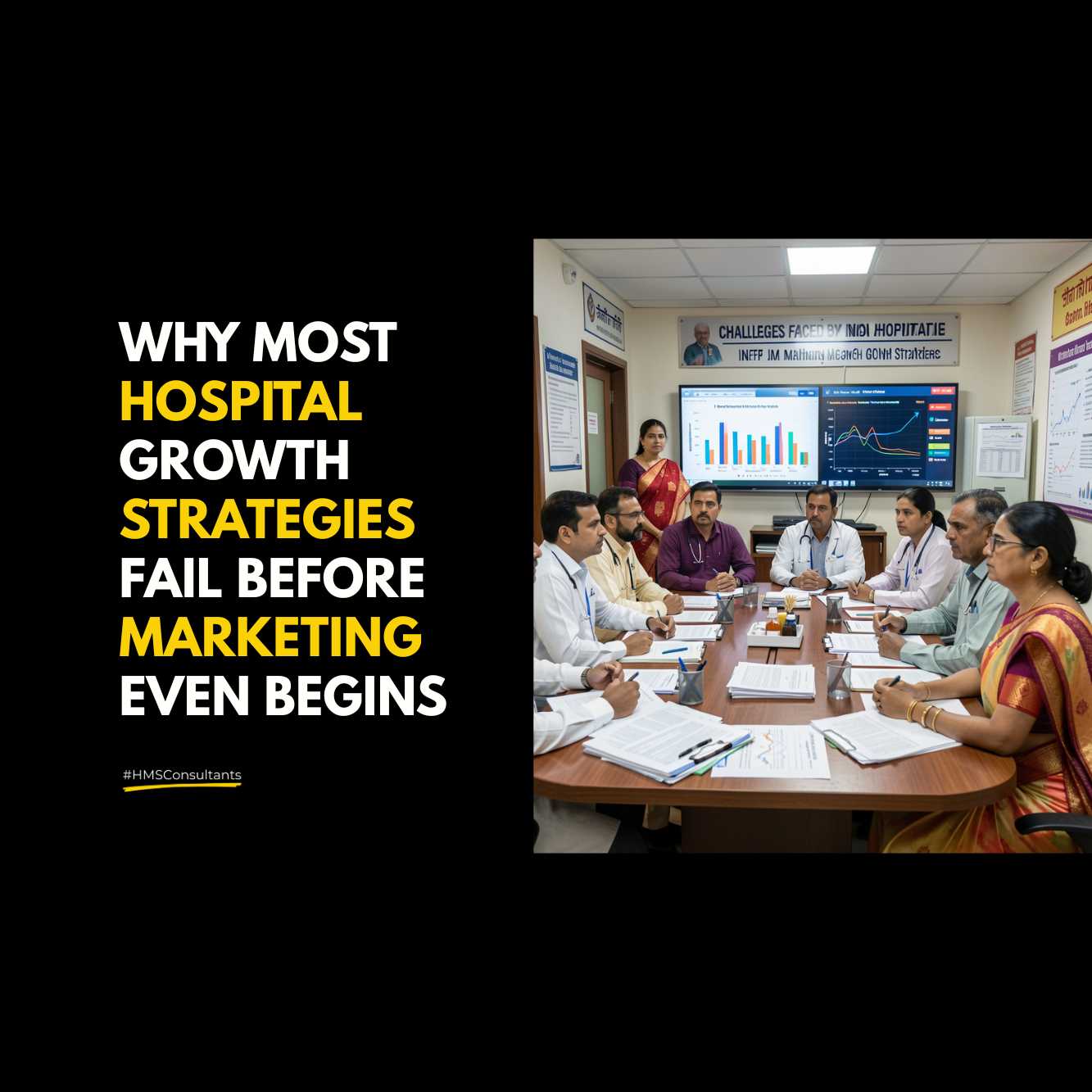
Why Most Hospital Growth Strategies Fail Before Marketing Even Begins
Most hospital growth strategies fail before marketing begins because they ignore patient trust,…

Marketing a Hospital in 2026: The Rise of Zero-Click Patient Decisions
Marketing a hospital in 2026 is shifting beyond websites as patients make zero-click…