Digital Marketing in Healthcare: Why Strategy Should Come Before Channels

Digital marketing in healthcare often starts from the wrong place. Many clinics, hospitals, diagnostic centres, and healthcare businesses begin by asking which platform they should use first. Should they post more on social media? Should they run Google Ads? Should they improve SEO? Should they make more videos?
These channels are important, but they should not come before strategy. Digital marketing in healthcare should first define what needs to be communicated, which patients need to be reached, which services need visibility, and how patient inquiries will be handled.Without this clarity, digital marketing becomes a random activity. There may be posts, ads, videos, website updates, and WhatsApp messages, but they may not work together toward one clear direction.
Why Starting With Channels Creates Confusion
Many healthcare providers choose channels before understanding the purpose behind them. A clinic may post regularly on Instagram but may not explain its services clearly. A hospital may run ads without checking whether its website page answers patient questions. A diagnostic centre may promote packages without making the booking process simple.
The problem is not always the platform. The problem is often the lack of planning behind the platform.
Before choosing a channel, healthcare providers should ask:
- Which service needs attention?
- Who is the right patient audience?
- What does the patient need to understand?
- What action should the patient take next?
- Is the website or Google profile ready?
- Is the enquiry handling process clear?
When these questions are ignored, even strong platforms may give weak results.
Service Clarity Should Come First
Digital marketing for healthcare should begin with service clarity. A healthcare provider may offer many services, but not every service needs the same message or the same level of promotion.
Some services need awareness. Some need search visibility. Some need patient education. Some need reputation support. Some need a better explanation because patients may not know when to consult.
Before running campaigns, healthcare providers should define:
- Which services should be promoted first.
- What patient problem each service solves.
- Which doctor or department handles the service.
- What patients commonly ask about the service.
- What information patients need before enquiry.
If the service is not explained clearly, digital marketing may bring attention but not meaningful patient response. A patient wants to know what care is available, who provides it, when to visit, and how to take the next step.
Understand the Patient Journey
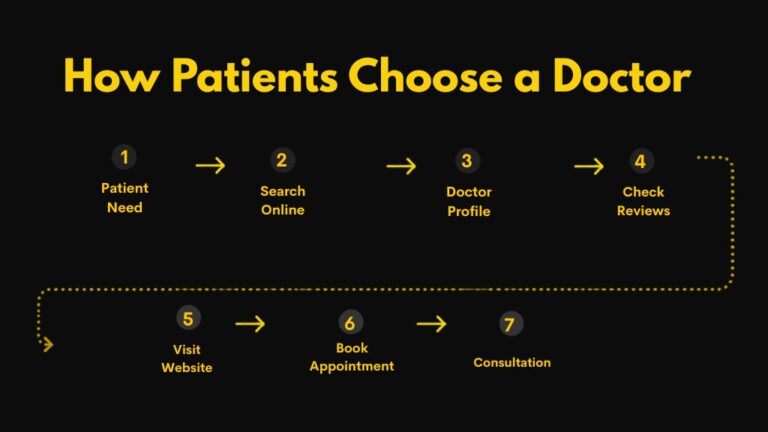
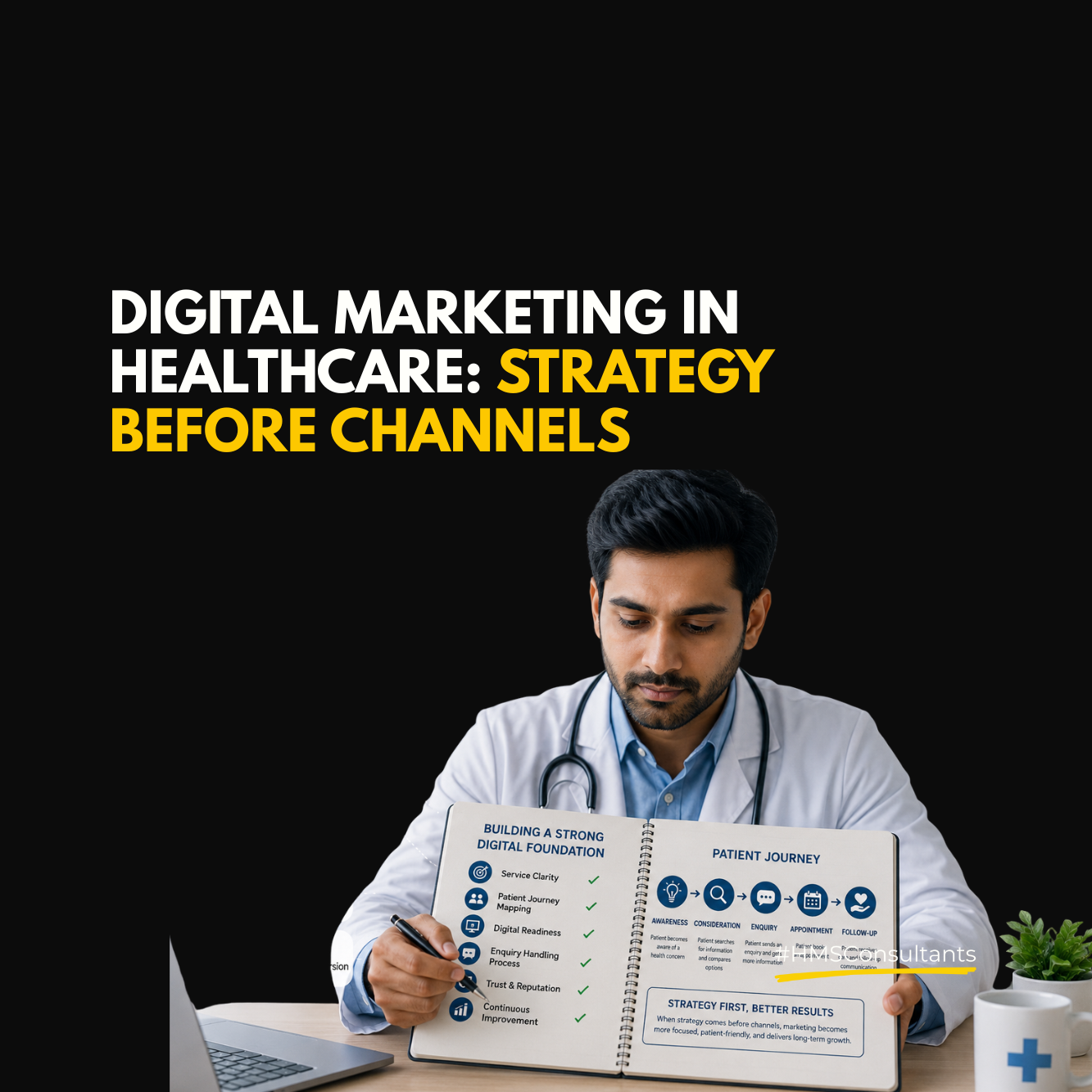
Patients do not always take action immediately. They may first notice a symptom, then search for information, compare providers, read reviews, visit a website, send an inquiry, and only then book an appointment.
This is why the patient journey matters in healthcare digital marketing.
A patient who is only becoming aware of a concern needs simple educational content. A patient comparing options needs service details, doctor information, reviews, and location clarity. A patient ready to book needs appointment details, contact number, timings, and clear instructions.
A healthcare marketing strategy should plan communication for different stages:
- Awareness.
- Consideration.
- Enquiry.
- Appointment.
- Follow-up.
When communication matches the patient journey, digital marketing becomes more useful and patient-focused.
Build Digital Readiness Before Promotion
Running ads or campaigns before the digital presence is ready can create poor results. If patients click an ad and reach an incomplete website, outdated Google profile, unclear service page, or confusing contact process, they may not continue.
A strong healthcare online presence should include:
- Updated website service pages.
- Clear doctor or department information.
- Accurate contact details.
- Updated Google Business Profile.
- Patient-friendly FAQs.
- Review visibility.
- Appointment guidance.
- Location and timing details.
These details may look basic, but they directly affect patient inquiries. Healthcare digital marketing works better when patients can easily understand the provider and take the next step.
A campaign may bring attention, but the digital presence must convert that attention into trust and action.
Match the Channel With the Purpose
Every digital channel has a different role. A channel should be selected only after the purpose is clear.
Healthcare SEO helps patients find services through search. Social media helps create awareness, education, and recall. Ads support focused campaigns for specific services. WhatsApp guides patients after enquiry. Videos simplify health concerns. Reviews support trust and reputation.
The mistake happens when every channel is expected to do everything.
For example:
- SEO should answer search intent.
- Social media should educate and build recall.
- Ads should focus on one clear action.
- WhatsApp should guide enquiries.
- Reviews should build confidence.
- Website pages should explain services.
When the channel matches the purpose, digital marketing for healthcare becomes more organised and effective.
Enquiry Handling Is Also Part of Strategy
Many healthcare providers think digital marketing ends when a patient sends an enquiry. In reality, that is where a major part of the patient experience begins.
If calls are missed, WhatsApp replies are unclear, staff members do not know service details, or follow-up is weak, marketing performance is affected.
A good enquiry process should include quick response, clear service explanation, doctor availability, appointment guidance, location details, basic instructions, and proper follow-up.
Healthcare marketing strategy should connect digital campaigns with enquiry handling. Otherwise, marketing may generate leads but not patient appointments.
Trust and Reputation Need Planning
In healthcare, patients do not respond only to visibility. They also look for trust signals. Reviews, doctor profiles, patient education content, website clarity, and professional communication all influence decision-making.
Online reputation in healthcare should not be treated as a separate activity. It should be part of the digital strategy.
Healthcare providers should regularly review patient feedback, Google reviews, social media comments, repeated questions, common complaints, and review response quality.
Trust is built through consistent communication and patient experience. Digital marketing should support that trust, not replace it.
Conclusion
Digital marketing in healthcare should not begin with channels. It should begin with strategy.
Before deciding on SEO, social media, ads, videos, or WhatsApp communication, healthcare providers should understand the service priority, patient audience, patient journey, message, digital readiness, enquiry process, and trust-building needs.
Better healthcare digital marketing does not mean being active everywhere. It means being clear about what to communicate, where to communicate, and how each platform supports the patient journey.
When strategy comes before channels, digital marketing becomes more focused, patient-friendly, and useful for long-term healthcare growth.
The role of digital marketing in healthcare is to help patients find, understand, and connect with the right healthcare services. In this blog context, it should begin with strategy, service clarity, patient journey planning, digital readiness, enquiry handling, and trust-building before choosing channels.
The 7 types of digital marketing services include SEO, social media marketing, paid ads, website content, video marketing, WhatsApp communication, and online reputation management. In healthcare, each channel should have a clear purpose and should support the patient journey.
Healthcare digital marketing uses tools such as websites, Google Business Profile, SEO, social media platforms, Google Ads, WhatsApp, review platforms, blogs, videos, and analytics tools. These tools work better when they are connected to a clear healthcare marketing strategy.
Doctors need digital marketing because patients often search online before booking a consultation. A clear digital strategy helps patients understand the doctor’s expertise, services, availability, reviews, location, and appointment process before taking the next step.
To do digital marketing for hospitals, start with strategy before selecting channels. Identify priority services, patient audience, patient journey, website readiness, Google profile accuracy, enquiry handling process, reviews, and trust signals. Then choose the right channels such as SEO, ads, social media, videos, and WhatsApp.
The 5 benefits of digital marketing in healthcare are better service visibility, patient education, improved enquiry generation, stronger online trust, and clearer appointment guidance. When strategy comes before channels, digital marketing becomes more focused, patient-friendly, and useful for long-term growth.
is something we strongly believe in, which means ‘Knowledge without application is the same as having no knowledge at all
Akhil Dave
Principle Consultant
Ready to take your Personal Brand to the next level?
Share your details below and we will connect with you to discuss your growth strategy.

The Complete Clinic & Hospital Growth Guide for Doctors
Clinic marketing strategy guide for doctors explaining why OPD becomes inconsistent, why patients are not choosing your clinic, and what must be fixed before spending on marketing.

Sustainable & Ethical Healthcare Marketing in India: Balancing Growth, Regulation & Patient Rights (2026 Guide)
Ethical healthcare marketing is now essential in India as patients demand transparency, trust, and honest communication. This guide explains how hospitals can grow responsibly with ASCI/MCI compliance, patient rights,…
Medical Marketing: Why Patient Questions Should Shape Your Content
medical marketing, healthcare marketing, medical content marketing, patient questions, healthcare content strategy, patient education, medical practice marketing

Inside the Mind of a Patient: What They Really Notice About Your Hospital
Hospital marketing is not about machines it’s about moments. This insight reveals what patients truly notice: empathy, cleanliness, communication, and trust that last beyond treatment.
Most Hospitals Still Misunderstand Medical Marketing
Medical marketing is often misunderstood as advertising alone. This blog explains why hospitals struggle with patient growth despite heavy spending and how trust, visibility, retention, and patient experience shape…
What Hospitals Should Do With Their 100+ Google Reviews (Hint: Not What You Think)
Google reviews are not just ratings for hospitals they are powerful insights into patient trust, emotions, and decision-making. This blog explains how hospitals can turn reviews into a strategic…