
What Healthcare Startups Must Fix Before Scaling
Most healthcare startups don’t fail due to bad products but due to weak foundations unclear branding, broken funnels, and lack of trust. Fix these early to scale.



Quick answer: If you spend on marketing but do not get patients, the problem is usually not the budget. It is the gaps between the spend and the appointment: no strategy, enquiries that leak, an agency measured on reach instead of patients, weak trust signals on Google, and nobody who owns the result. A marketing audit shows which gap is costing you most, and what to fix first.
Published: 28 November 2026 · By Akhil Dave, Founder & Principal Consultant, HMS Consultants
I have sat in many versions of the same meeting. A hospital owner or a doctor opens a monthly report and says: “We are paying for ads, social media and an agency. The numbers look good. But the OPD is not filling.”
That sentence is the pain you can see. After 25+ years in healthcare marketing, including senior hospital leadership, I can tell you the pain you can see is rarely the real one. This guide is about the pain behind the pain, and how to find it before you spend another rupee.
Most hospital and clinic owners describe the problem in one of three ways.
These are real, and they hurt. But treating them one by one, with a new agency, a bigger ad budget or a new website, is how most organisations lose another year.
Each visible pain sits on top of a deeper one. Here is how I map it with leadership teams.
| The pain you describe | The pain behind it | What it costs you |
|---|---|---|
| Ads are running, calls are not coming | No tracking from click to appointment, so nobody knows which channel works | Budget decided by guesswork |
| The agency says results are good | The agency is measured on posts, reach and followers, not on patients | You pay for activity, not outcomes |
| A rival ranks above us on Google | Thin profile, few recent reviews, weak pages, not visible in AI answers | Patients choose someone else before they reach you |
| Enquiries come but few book | Calls and WhatsApp go unanswered, replies are slow, there is no script | Enquiries you paid for are wasted |
| The team is busy but nothing improves | No owner, no KPIs, no monthly review | The same problems repeat every month |
Notice what is common: in every row, the missing piece is visibility inside your own organisation. You cannot fix what you cannot see.
Ads and posts are tactics. A hospital marketing strategy decides who you want to serve, which services to push, what you will say and how you will measure it. Without that, every channel is guessing. If you need help building it, see our healthcare marketing strategy service.
Check: can you state your top three target services and your target patient in one sentence each?
An enquiry is a fragile thing. A missed call, a WhatsApp message left unread for two hours, or a front desk that does not know the offer can end it. Our guide to patient enquiry handling explains where it usually breaks.
Check: how many calls and messages went unanswered last week, and how fast was the first reply?
An agency does what the brief asks. If the brief says “12 posts and 2 reels a week”, you will get 12 posts and 2 reels. Whether you get patients depends on strategy and follow-up that sit outside that brief. Read agency versus consultancy and how to choose a healthcare marketing consultant before you renew or switch.
Check: does your monthly report show enquiries and appointments, or only reach and followers?
Most patients check your Google profile and reviews before they call. A thin profile, old photos and no recent reviews push them to the next name. Build reviews ethically, as explained in our Google reviews guide for hospitals and our reputation management service. Never buy reviews: the NMC notice of 6 October 2026 restricts testimonials and fake reviews.
Check: how many new Google reviews did you get in the last 90 days?
A good-looking website that hides the phone number, loads slowly on mobile or offers no clear next step turns visitors away. For doctors, our digital marketing for doctors guide shows what a patient-ready page needs.
Check: on your phone, can a new visitor find the call or WhatsApp button within five seconds?
Google, social media, WhatsApp, signage and the doctor’s own profile should say one thing. When they do not, patients lose confidence. This is the idea behind IMC and omnichannel marketing, and it also depends on the people your patients meet, as I explained in brand ambassadors in healthcare.
Check: do your website, Google profile and social pages describe the same services, doctors and promises?
Marketing that belongs to everyone belongs to no one. When there is no named owner, no monthly review and no patient-linked KPI, problems repeat. Even good referral and word-of-mouth channels fade without an owner.
Check: who is accountable for enquiries and appointments, and when did you last review them?
| Hospital | Clinic or individual doctor | |
|---|---|---|
| Typical symptom | Large spend, flat footfall, several vendors | Small spend, inconsistent enquiries, owner does everything |
| Where it leaks most | Enquiry handling, vendor ROI, department-level messages | Google profile, reviews, website, follow-up |
| First fix | One enquiry tracker and one owner for marketing results | Complete the Google profile and set a simple review process |
| Where to read next | Hospital marketing strategy | Clinic marketing plan and doctor branding |
An audit replaces opinions with a picture. At HMS Consultants, a hospital marketing audit is a 360 degree review of:
You receive a scorecard and a prioritised 30/60/90-day roadmap, presented to your leadership team. Starting prices, in INR excluding GST: focused audit Rs 25,000 onwards, full 360 degree audit Rs 40,000 onwards, audit plus strategy sprint Rs 75,000 onwards. For a clinic or individual doctor, the Clinic Marketing Audit for Doctors is Rs 25,000 onwards.
One distinction matters: a digital marketing audit reviews online activity only. A marketing audit also covers offline channels, patient journey and return on spend, which is where most leaks hide. Read the full scope on our hospital marketing audit page. We are a strategy and training consultancy. We do not run ads or execution, so the advice stays independent.
Take 30 minutes with your marketing head or front desk and answer these without guessing.
If you cannot answer three or more, you have found your hidden gap. Our free Hospital Marketing Audit Checklist goes deeper.
Work with HMS Consultants
Not sure where your enquiries are leaking? Start with a structured review of your marketing, enquiry handling and spend.
Usually because of gaps between the spend and the appointment, not because the spend is too low. Common causes are no strategy, untracked calls and WhatsApp enquiries, an agency reporting reach instead of patients, weak Google reviews and profile, and no one owning the result. A marketing audit finds which of these applies to you.
A hospital marketing audit is a 360 degree review of your digital channels, offline branding, enquiry handling, patient journey, competitors and marketing spend. It ends with a scorecard and a prioritised 30/60/90-day roadmap so your team knows what to fix first.
At HMS Consultants a focused audit is Rs 25,000 onwards, a full 360 degree audit is Rs 40,000 onwards and an audit plus strategy sprint is Rs 75,000 onwards, all excluding GST. Multi-location groups are quoted after a free discovery call.
The method is the same but the scope is smaller. For a clinic or an individual doctor the audit looks at the Google profile, reviews, website, enquiry handling, referrals and personal brand. HMS offers a Clinic Marketing Audit for Doctors at Rs 25,000 onwards excluding GST.
A digital marketing audit covers only online activity such as the website, search, social media and ads. A marketing audit also covers offline branding, referrals, enquiry handling, the patient journey, competitors and the return on spend.
It depends on the channel. Paid campaigns can produce enquiries within weeks if the landing page and follow-up work. Google reviews, search visibility and reputation build over months. An audit helps set realistic expectations for each channel. No honest consultant can guarantee patient numbers.
Not before you check the brief. Many agencies are measured on posts, reach and followers because that is what the contract asks for. Audit first, define patient-linked targets, then decide whether to renew, change or add a vendor. See our guide on agency versus consultancy.
No. HMS is a strategy and training consultancy. We diagnose, plan and train your team or brief your vendors. We do not run ads or execution, so our advice stays independent of any agency or media seller.
A 360 degree review of how your hospital attracts, converts and retains patients.
Explore Marketing AuditDisclaimer: HMS Consultants is a healthcare marketing consultancy. We are not a law firm and this guide is not legal advice. References to the NMC notice of 6 October 2026 reflect our understanding of public information as of 28 November 2026. Results depend on many factors and no outcome is guaranteed. Please consult a qualified healthcare lawyer before acting.
About the author: Akhil Dave is Founder & Principal Consultant of HMS Consultants, with 25+ years in healthcare marketing.
Most healthcare startups don’t fail due to bad products but due to weak foundations unclear branding, broken funnels, and lack of trust. Fix these early to scale.

Digital marketing for healthcare works best when every patient touchpoint delivers the right message. Learn how Google, websites, social media, ads, WhatsApp, reviews, and videos support the patient journey...

A healthcare marketing agency can support execution, but healthcare businesses also need strategic direction. Learn how healthcare marketing consultants guide patient communication, digital presence, ethical marketing, and healthcare business...
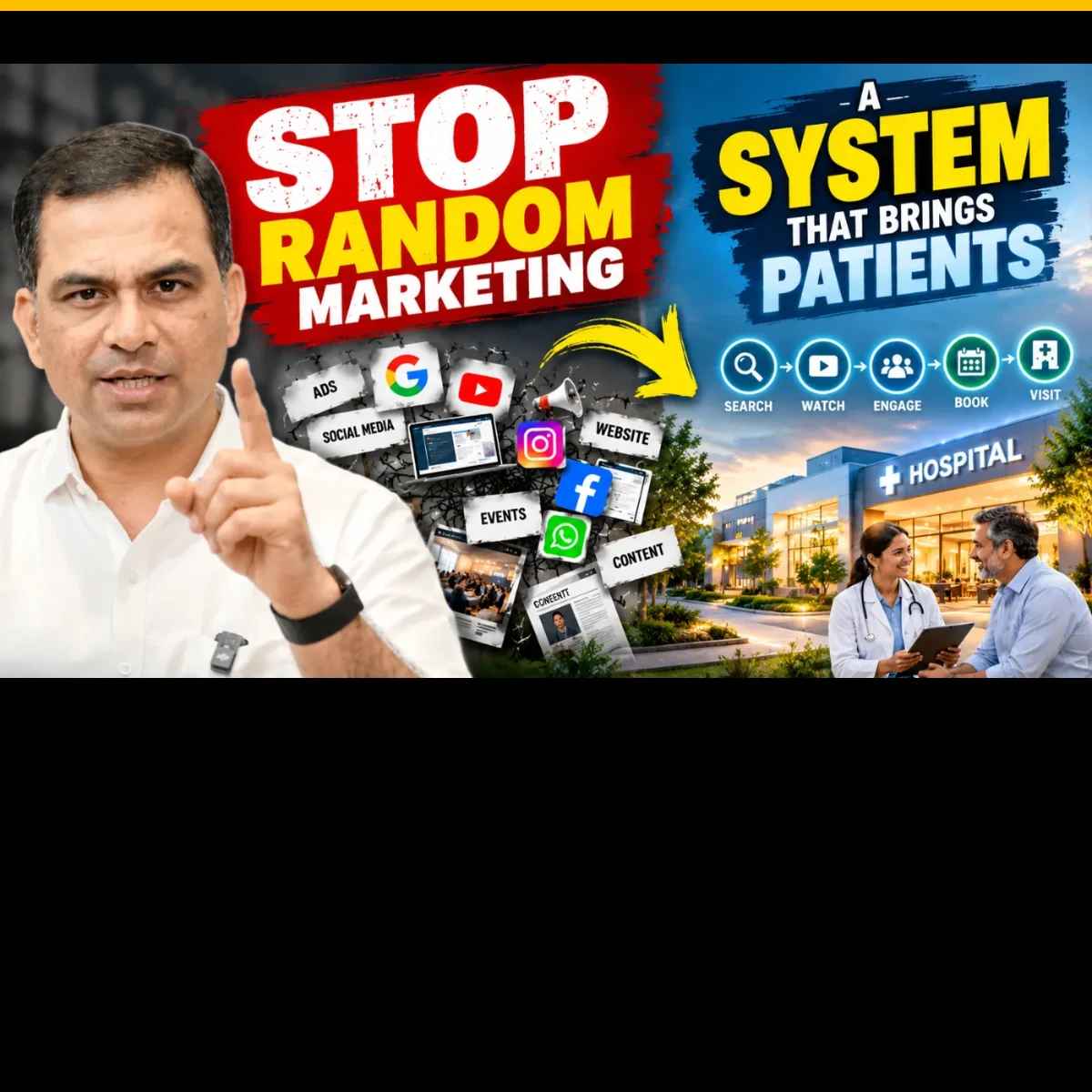
Most hospitals and clinics do plenty of marketing but lack a system. Learn the 8 parts of an integrated healthcare marketing strategy, the 7-number scorecard and a 30-day plan.

Hospital branding is what builds patient trust beyond ads and visibility. This blog explains the 5 pillars that strengthen reputation, improve patient experience, increase footfall, and create long-term hospital...
Hospital public relations is more than media coverage. This blog explores the silent communication, reputation, feedback, and trust gaps that often affect patient confidence. Learn how hospitals can strengthen...