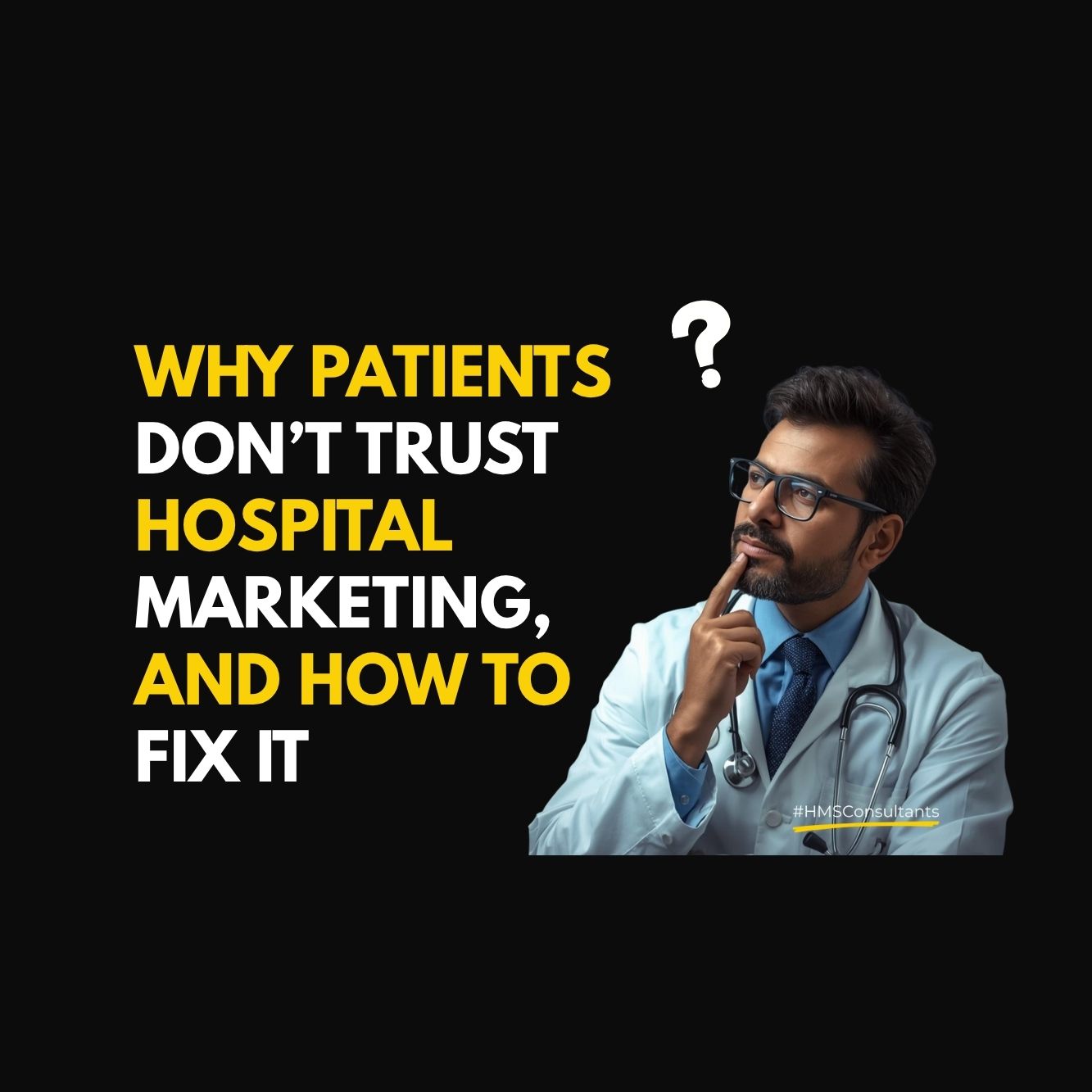
Why Patients Don’t Trust Hospital Marketing, And How to Fix It
In every major Indian city, from Ahmedabad to Surat, Jaipur, Indore, Kochi, and Lucknow, hospitals are investing in digital marketing, branding, and social media. Yet, most patients still rely on recommendations, neighbours, relatives, or Google reviews before trusting a hospital.
Why?
Because patients don’t trust hospital marketing. Not fully. Not yet.
This isn’t because healthcare advertising is bad. It’s because healthcare is different. Marketing a hospital is not like selling shoes, smartphones, or salon services. When a patient chooses a hospital, they are not buying a product; they are choosing a place where they believe their life, or their loved one’s life, will be safe.
So when hospitals use promotional messaging, aggressive sales tactics, or generic content, patients feel uncomfortable, even suspicious.
If hospitals want marketing to work, they must first understand why patients don’t trust it.
Let’s break it down.
Reason 1: Patients Have Been Misled Before
Healthcare marketing in India is still young, and unfortunately, many early examples created distrust.
- Big promises with poor service
- Lowest-price campaigns that hide final billing
- “World-class” claims in hospitals that lack basic infrastructure
- Offers that sound commercial instead of clinical
- Ads with exaggerated results
Patients have seen:
- Free checkups that become expensive tests
- Discounts that disappear at billing
- Promotions that don’t match reality
So when patients see marketing, the first question that comes to their mind is:
“Is this real, or is this a trap?”
Trust is lost when marketing over-promises and the experience under-delivers.
Reason 2: Healthcare Is Emotional, Not Commercial
Patients don’t go to hospitals for something they want. They go because something is wrong, urgent, stressful, or scary.
In that emotional moment:
- Loud offers feel insensitive
- Pushy ads feel unethical
- “Limited time discount” sounds manipulative
- Paid ads feel less trustworthy than genuine reviews
Marketing cannot feel like selling. It must feel like helping. When hospitals communicate like retailers, patients feel uncomfortable.
Reason 3: Lack of Transparency Creates Doubt
One of the primary reasons patients lack trust in hospitals is the presence of information gaps.
When a website says:
- “Call us for pricing”
- “Packages available”
- “Affordable care”
Patients think: “Why are they hiding details?”
A patient is already anxious. They don’t want to negotiate for clarity.
If hospitals simply explained:
- Pricing ranges
- What is included
- Doctor timings
- Expected waiting time
- Process and documentation
Trust would increase instantly. Transparency does not scare patients. Confusion does.
Reason 4: Inconsistent Digital Presence Looks Suspicious
Patients do not trust hospitals with:
- No website
- Old website
- No doctor profiles
- No reviews
- No photos
- No details about services
- No Google Business listing
When digital presence looks incomplete, patients feel the hospital is either:
- Not serious
- Too new
- Unprofessional
- Hiding something
A clean, updated, and informative online presence is no longer optional; it is a testament to credibility.
Reason 5: Reviews and Reputation Matter More Than Advertisements
Most patients now check reviews before choosing a hospital. Even one negative review without a proper response creates doubt.
A hospital might be clinically excellent, but if patients see:
- Angry reviews
- Complaints about staff behaviour
- No response from management
- Arguments in comment sections
They assume the worst. Patients trust real experiences more than social media posts or advertisements.
Marketing brings attention. Reputation brings trust.
Reason 6: Medical Language Confuses People
If a hospital’s communication sounds technical, complicated, or filled with medical jargon, patients mentally disconnect.
For example:
- “Phacoemulsification with PCIOL”
vs. - “Painless cataract surgery with a foldable lens”
Patients trust what they understand. Marketing is not for doctors; it is for patients. When hospitals speak clearly, simply, and patiently, trust grows.
How to Fix Patient Distrust: The Trust-Building Approach
Hospitals don’t need dramatic rebranding or aggressive campaigns. They need authenticity, transparency, clarity, and consistency.
Here’s how trust is built.
Stop Selling. Start Guiding.
Hospitals earn trust when they help patients make informed decisions:
- Explain symptoms
- Share treatment options
- Provide preventive advice
- Use social media to educate, not advertise
When patients learn from you, they trust you. The most trusted hospitals are educators, not promoters.
Show Real People, Real Expertise
Patients trust hospitals with:
- Real doctor faces
- Real credentials
- Real photos of facilities
- Real patient testimonials
- Real success stories (shared ethically)
Stock images, generic templates, and fake promises destroy trust. Authenticity wins.
Fix Website and Google Presence
A hospital website should answer every basic question:
- Who are the doctors?
- What treatments are available?
- How much will it cost (at least approximate range)?
- What are OPD timings?
- How to book?
- Parking availability?
A complete Google Business Profile with updated photos, reviews, and doctor timings increases walk-ins overnight.
Respond Fast. Respond Politely.
Slow replies are the fastest way to lose trust. A patient asking for help is already anxious. A quick, kind response builds emotional confidence.
Communication is as important as treatment.
Collect Reviews, And Answer Them
Don’t fear feedback.
When hospitals reply to negative reviews calmly and professionally:
- Public trust goes up
- Patients feel heard
- Future patients see responsibility
Silence shows negligence. Response shows leadership.
Communicate in Simple, Human Language
Patients trust hospitals that speak like people, not textbooks. Explain procedures in plain words.
Share instructions clearly. Remove fear, don’t add confusion.
Healthcare is emotional. Language must be compassionate.
Marketing Is Not About Making Hospitals Look Bigger, It’s About Making Patients Feel Safer
When patients trust a hospital, they don’t need advertisements to convince them. When they don’t trust a hospital, no advertisement can save them.
Trust is built through:
- Clarity
- Transparency
- Responsiveness
- Ethics
- Respect
Most hospitals try to improve marketing. Very few try to improve trust-building. The ones who do, never struggle with footfall.
Conclusion
Patients don’t distrust hospitals. They distrust the feeling of being misled, confused, ignored, or oversold.
The good news? This can be fixed.
Hospitals that communicate honestly, educate patients, demonstrate transparency, respond promptly, and maintain a clean digital presence naturally build trust without resorting to aggressive marketing.
Because patients don’t choose hospitals based on ads. They choose hospitals based on confidence.
is something we strongly believe in, which means ‘Knowledge without application is the same as having no knowledge at all
Akhil Dave
Principle Consultant
Ready to take your Personal Brand to the next level?
Share your details below and we will connect with you to discuss your growth strategy.

Social Media Content Strategy for Doctors: A 2026 Guide
A practical 2026 social media content strategy for doctors focused on building patient…

Local SEO Checklist for Doctors: Rank Near You in 2026
Local SEO helps doctors appear in Google Maps and “near me” searches when…

Personal Branding for Doctors: The 2026 Playbook
A practical 2026 personal branding strategy for doctors covering platform priorities, content pillars,…
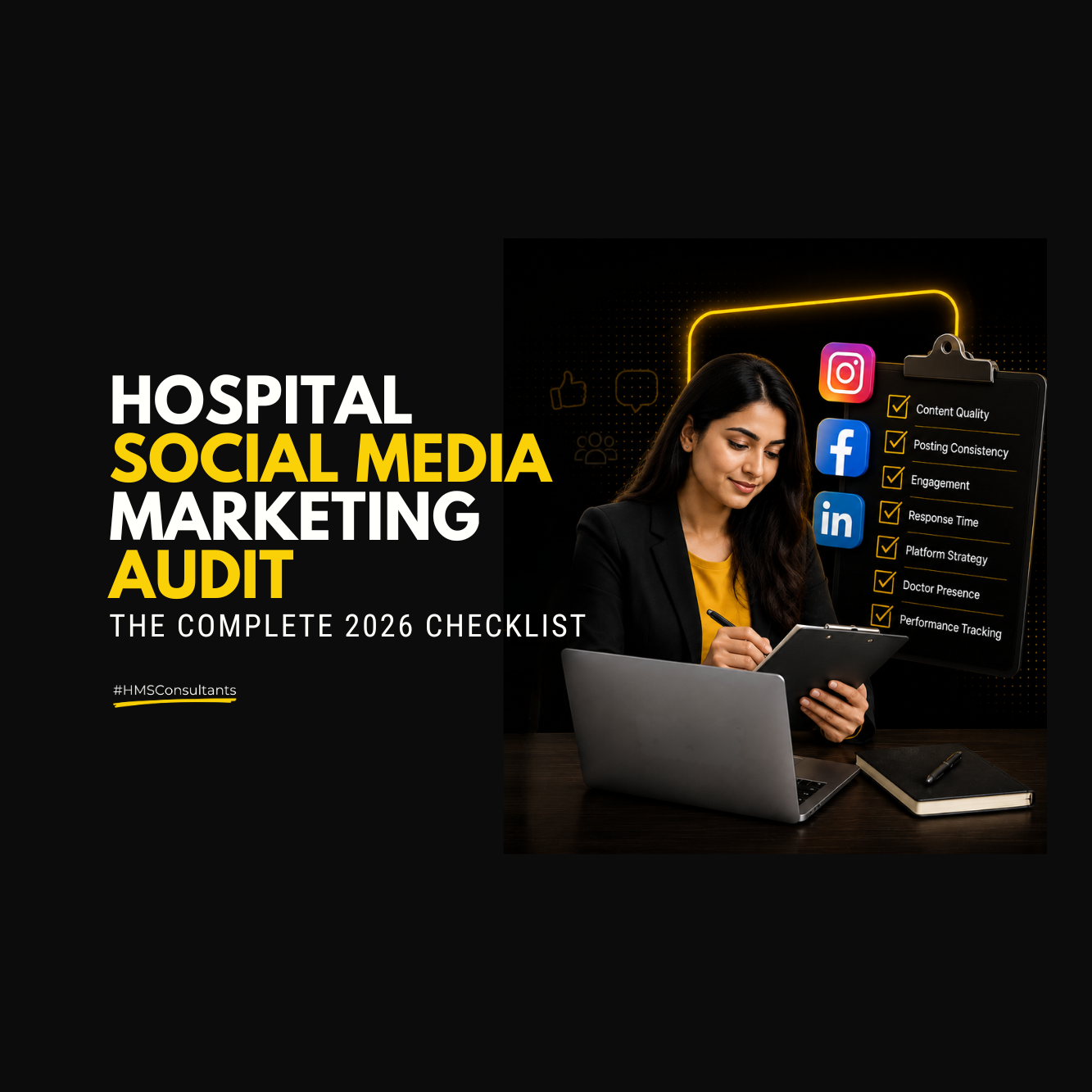
Hospital Social Media Marketing Audit: The Complete 2026 Checklist
A practical social media audit for hospitals covering content, engagement, response time, platform…

Hospital Digital Marketing Audit: The Complete 2026 Checklist
Hospital marketing audit is the first step to identifying what’s helping—or hurting—your hospital’s…

Hospital Marketing Audit: The Complete Checklist for 2026
Hospital marketing audit is the first step to identifying what’s helping—or hurting—your hospital’s…