Author: Akhil Dave

  • Healthcare Consulting Jobs: Why Skills Matter More Than Ever

    Healthcare Consulting Jobs: Why Skills Matter More Than Ever

    Healthcare Consulting Jobs: Why Skills Matter More Than Ever

    Written by
    Published on
    Share This

    Healthcare consulting jobs are changing as consulting firms, healthcare businesses, and digital-first organisations expect professionals to bring more than a degree or basic industry knowledge. Today, healthcare professionals need domain understanding, digital awareness, consulting thinking, communication skills, and the ability to solve real business problems. But healthcare has changed.

    For many MBA, MHA, hospital administration, and healthcare management professionals, consulting has always been an attractive career path. But the consulting industry is evolving. The question is no longer only, “Can I get a consulting job?” The better question is, “Do I have the skills needed for future healthcare consulting roles?”

    Healthcare Consulting Is Becoming More Skill-Driven

    Earlier, many professionals looked at healthcare consulting as a job role inside a large firm. Today, healthcare consulting India is becoming broader. It now includes hospitals, clinics, health-tech companies, insurance organisations, healthcare marketing agencies, and independent consulting opportunities.

    Common healthcare consulting roles include:

    • Operations consulting
    • Quality consulting
    • Accreditation consulting
    • Patient experience consulting
    • Digital transformation consulting
    • Healthcare marketing consulting
    • Business growth consulting

    These roles require more than theoretical knowledge. They need practical understanding, problem-solving ability, communication, and business thinking. This is why healthcare consulting skills are becoming more important than ever.

    Consulting Expectations Are Changing

    The consulting industry is not the same as it was a few years ago. Digital tools, AI, automation, data, and outcome-driven work are changing how consulting is delivered.

    This does not mean healthcare consulting jobs are disappearing. It means expectations are changing.

    Consulting firms and healthcare businesses now prefer professionals who can:

    • Understand healthcare business problems
    • Analyse data and digital presence
    • Communicate clearly with clients
    • Use tools and technology smartly
    • Think strategically
    • Build practical solutions
    • Understand patient behaviour
    • Support measurable business growth

    For anyone planning a healthcare consulting career, this shift is important. Degrees and experience matter, but they are not enough alone.

    Why Healthcare Professionals Should Pay Attention

    Healthcare careers in India are becoming more competitive. Many professionals are entering hospital management, healthcare administration, healthcare marketing, insurance, pharma, and consulting.

    But not everyone is building specialised capability.

    Healthcare businesses need professionals who can connect healthcare knowledge with strategy, patient communication, digital visibility, and growth direction. That is where healthcare consulting roles become more meaningful.

    A good consultant does not only give advice. A good consultant understands the business, identifies the problem, studies the patient journey, and helps the healthcare organisation move in the right direction.

    Healthcare Marketing Consulting as a Growing Niche

    One area that is becoming increasingly relevant is healthcare marketing consulting.

    Many doctors, clinics, hospitals, diagnostic centres, and healthcare businesses are investing in marketing. But many of them still struggle with clarity. They may have a website, social media page, Google Business Profile, or paid ads. But they may not know whether these efforts are building trust, attracting the right patients, or improving enquiries.

    A healthcare marketing consultant can help healthcare businesses with:

    • Digital presence review
    • Patient communication
    • Website and SEO direction
    • Google Business Profile improvement
    • Social media strategy
    • Brand positioning
    • Enquiry flow improvement
    • Ethical healthcare marketing
    • Clinic and hospital growth direction

    Healthcare marketing consulting is not generic marketing. It needs healthcare understanding, patient sensitivity, ethical communication, and consulting thinking.

    Skills Needed for Future Healthcare Consulting Jobs

    Professionals who want to build a healthcare consulting career should start developing practical and specialised skills.

    Important healthcare consulting skills include:

    • Healthcare industry understanding
    • Patient journey knowledge
    • Strategic thinking
    • Digital marketing awareness
    • Communication skills
    • Problem diagnosis
    • Business development
    • Proposal writing
    • Client handling
    • Ethical healthcare communication
    • AI and digital tool awareness

    These skills can help professionals stand out in healthcare consulting jobs and prepare for future healthcare consulting roles.

    How HMS Supports This Direction

    The HMS Certified Healthcare Marketing Consultant Program is designed for serious professionals who want to build specialised capability in healthcare marketing consulting.

    The program focuses on healthcare marketing strategy, patient communication, digital presence audit, consulting frameworks, client discovery, proposal formats, personal branding, business development, and mentoring.

    This is not a job opportunity. It is not just another certificate.

    It is a structured professional development and consulting enablement program for people who want to build their path as healthcare marketing consultants.

    Conclusion

    Healthcare consulting jobs are becoming more skill-driven, specialised, and outcome-focused. The future of consulting will belong to professionals who can combine healthcare knowledge with strategy, communication, digital awareness, and practical problem-solving.

    Healthcare consulting roles will continue to exist, but competition and expectations will keep increasing.

    For professionals who want to grow in healthcare consulting India, the right approach is to build strong healthcare consulting skills early.

    The future is not only about getting into consulting. It is about becoming capable enough to create value as a consultant.

    Contact Us HMS Consultants

    The HMS Certified Healthcare Marketing Consultant Program is a structured professional development and consulting enablement program for people who want to build healthcare marketing consulting skills with HMS training, frameworks, tools, mentoring, and guidance.

    Healthcare Marketing I Healthcare Consulting

    is something we strongly believe in, which means ‘Knowledge without application is the same as having no knowledge at all

    Akhil Dave

    Principle Consultant

    Ready to take your Personal Brand to the next level?

    Share your details below and we will connect with you to discuss your growth strategy.

    • MBA in Healthcare Management: Why Students Should Look Beyond Hospital Jobs

      MBA in Healthcare Management: Why Students Should Look Beyond Hospital Jobs

      MBA in Healthcare Management: Why Students Should Look Beyond Hospital Jobs

      Written by
      Published on
      Share This

      MBA in Healthcare Management has become a popular choice for students who want to build careers in hospitals, healthcare companies, consulting firms, insurance, pharma, and other healthcare businesses. For years, the common career path was simple: Complete the degree, get a hospital job, gain experience, and grow slowly through the system.

      This path is still valuable. Hospital jobs provide real exposure to healthcare operations, patients, doctors, processes, quality standards, and administration. But healthcare has changed.

      Today, healthcare is no longer limited to hospitals. It includes clinics, diagnostic centres, health-tech startups, telemedicine platforms, medical tourism, insurance, healthcare consulting, healthcare marketing, and patient experience-led businesses.

      So, students should not only ask: “What hospital job can I get?” They should also ask: “What role can I build for myself in the future healthcare ecosystem?”

      Traditional Career Options After MBA and MHA

      Many students explore healthcare management jobs in India after completing an MBA or MHA. These roles help build a strong foundation in the healthcare industry.

      Common career options include:

      • Hospital Operations Executive.
      • Healthcare Administrator.
      • Quality Executive.
      • NABH Coordinator.
      • Patient Experience Manager.
      • Insurance and TPA Executive.
      • Business Development Executive.
      • Healthcare Consulting Associate.

      These are important healthcare management career options because they help students understand how healthcare organizations function.

      For MHA students, MHA career opportunities often begin in hospitals, quality departments, administration, insurance, operations, or patient experience roles.

      But as competition increases, students need to think beyond only entry-level jobs.

      The Challenge Students Face Today

      The number of students entering healthcare management is increasing. This means many graduates apply for similar roles with similar qualifications.

      Some common challenges include:

      • High competition for entry-level roles.
      • Limited differentiation among students.
      • Slow career progression in some organisations.
      • Salary growth is linked mainly to promotions.
      • Dependence on organisational hierarchy.
      • Relocation and location limitations.
      • Limited exposure to strategy and business growth.

      This does not mean hospital jobs are bad.

      It means students should also build skills that make them more valuable beyond their degree.

      A career after MBA healthcare management should not depend only on job openings. It should also depend on the specialised capability a student develops.

      Healthcare Is Bigger Than Hospitals Now

      Healthcare careers in India are expanding because the industry itself is expanding.

      Today, healthcare includes:

      • Multi-speciality hospitals.
      • Clinics and diagnostic centres.
      • Health-tech startups.
      • Telemedicine platforms.
      • Insurance and TPA organisations.
      • Healthcare consulting firms.
      • Healthcare marketing agencies.
      • Medical tourism companies.
      • Wellness and preventive healthcare brands.

      As healthcare businesses grow, they need professionals who can understand both healthcare and business.

      This creates new healthcare management career options for students who are willing to build skills in strategy, marketing, consulting, communication, and digital growth.

      The Rise of Healthcare Consulting

      Healthcare consulting is becoming an important career direction for students who want to solve business problems in healthcare.

      A healthcare consulting career in India can include different areas such as:

      • Operations consulting.
      • Quality consulting.
      • Accreditation consulting.
      • Patient experience consulting.
      • Digital transformation consulting.
      • Healthcare marketing consulting.

      Consultants help healthcare organizations identify problems, improve systems, strengthen the patient experience, and grow through better strategy.

      This is why a healthcare consulting career in India is becoming more relevant for students who want to move beyond routine roles.

      Why Healthcare Marketing Consulting Is Emerging

      Many doctors, clinics, hospitals, diagnostic centres, and healthcare businesses are excellent at clinical care. But many of them struggle with visibility, branding, digital presence, patient communication, and enquiry generation.

      This is where a healthcare marketing consultant can create value.

      A healthcare marketing consultant helps healthcare businesses with:

      • Patient communication.
      • Digital presence.
      • Website and SEO direction.
      • Social media strategy.
      • Brand positioning.
      • Patient trust building.
      • Enquiry flow improvement.
      • Ethical healthcare marketing.

      Healthcare marketing consulting is not generic marketing. It requires healthcare understanding, patient sensitivity, ethical communication, and business growth thinking.

      For students pursuing MBA in Healthcare Management or exploring MHA career opportunities, this can become a specialised career path.

      Skills Students Should Start Building

      Students who want better healthcare careers in India should start building practical skills early.

      Important skills include:

      • Healthcare industry understanding.
      • Communication skills.
      • Strategic thinking.
      • Digital marketing fundamentals.
      • Patient journey understanding.
      • Healthcare branding knowledge.
      • Consulting and problem-solving skills.
      • Business development skills.
      • Ethical healthcare marketing awareness.

      These skills can help students stand out in healthcare management jobs in India and also prepare them for consulting-led roles.

      How HMS Supports This Direction

      The HMS Certified Healthcare Marketing Consulting Program is designed for serious students and professionals who want to build specialised capability in healthcare marketing consulting.

      The program helps participants understand healthcare marketing, patient communication, digital presence audits, consulting frameworks, client communication, proposal creation, personal branding, business development, and ethical healthcare growth strategy.

      This is not a hospital job opportunity.

      It is a structured professional development and consulting enablement program for people who want to build their own path as healthcare marketing consultants.

      Conclusion

      Hospital jobs will always remain important for MBA and MHA students. They provide exposure, discipline, and industry knowledge.

      But today’s healthcare industry offers opportunities beyond traditional hospital employment.
      For students pursuing MBA in Healthcare Management, the future may not only be about working inside healthcare organisations. It may also be about helping healthcare organisations grow through consulting, strategy, branding, patient communication, and business development.
      The most successful professionals of tomorrow may be those who combine healthcare knowledge with business thinking, consulting skills, and market-ready capability.

      Contact Us HMS Consultants

      The HMS Certified Healthcare Marketing Consultant Program is a structured professional development and consulting enablement program for people who want to build healthcare marketing consulting skills with HMS training, tools, frameworks, mentoring, and guidance.

      Healthcare Marketing I Business I Healthcare Consulting

      is something we strongly believe in, which means ‘Knowledge without application is the same as having no knowledge at all

      Akhil Dave

      Principle Consultant

      Ready to take your Personal Brand to the next level?

      Share your details below and we will connect with you to discuss your growth strategy.

      • Healthcare Career Opportunities in India: Are Careers Growing With Healthcare?

        Healthcare Career Opportunities in India: Are Careers Growing With Healthcare?

        Healthcare Career Opportunities in India: Are Careers Growing With Healthcare?

        Written by
        Published on
        Share This

        Healthcare career opportunities in India are growing as hospitals, clinics, diagnostic centres, wellness brands, healthcare startups, and digital healthcare platforms continue to expand. But one important question remains: Are healthcare careers growing at the same pace as the healthcare industry?

        Healthcare is becoming more competitive and patient-focused. New hospitals are opening, clinics are investing in branding, and patients are using digital platforms to search, compare, and choose healthcare services.

        But industry growth does not automatically create strong career growth for every professional.

        Many MBA healthcare management students, MHA graduates, hospital administration professionals, healthcare marketers, and early-career professionals still depend mainly on traditional job roles in:

        • Hospital operations.
        • Administration.
        • Quality management.
        • Insurance.
        • Pharma sales.
        • Healthcare marketing.
        • Consulting firms.

        These career paths are important, but competition is increasing. Today, a degree may help you enter the healthcare sector. Long-term growth depends on the specialised skills you build after that.

        Healthcare Careers Need New Skills

        The healthcare industry now needs professionals who can do more than routine work. Healthcare businesses need people who can understand patients, improve communication, review digital presence, support ethical marketing, and guide growth with clarity.

        This means career growth is no longer only about qualification or years of experience. It is also about capability.

        Professionals should ask themselves:

        • Can I understand healthcare business problems?
        • Can I guide doctors, clinics, or hospitals with clarity?
        • Can I analyse patient communication and digital presence?
        • Can I think beyond routine operations?
        • Can I build a specialised professional identity?

        These questions matter because healthcare careers are moving toward skill-driven and consulting-led opportunities.

        Why Traditional Jobs May Not Be Enough

        Traditional healthcare jobs will always remain valuable. Hospitals need administrators, healthcare companies need managers, and consulting firms need analysts.

        But depending only on regular employment may create limitations such as:

        • Fixed salary structure.
        • Slow promotions.
        • Limited strategic exposure.
        • Increasing competition.
        • Location dependency.
        • Dependency on job openings.
        • Less personal brand identity.

        This does not mean jobs are not useful. Jobs provide learning and stability. But ambitious professionals should also think about what specialised skill can make them more valuable in the healthcare market.

        Healthcare Marketing Consulting as an Emerging Career Path

        One important emerging area is healthcare marketing consulting.

        Healthcare marketing consulting is not just about promotion or social media. It is about helping doctors, clinics, hospitals, diagnostic centres, wellness businesses, and healthcare startups grow with strategy, ethics, patient communication, and digital direction.

        Many healthcare businesses are investing in marketing, but they still need guidance on:

        • Website and SEO improvement.
        • Google Business Profile visibility.
        • Social media direction.
        • Patient communication.
        • Brand positioning.
        • Enquiry flow improvement.
        • Marketing performance review.
        • Ethical healthcare promotion.
        • Clinic and hospital growth strategy.

        This creates an opportunity for professionals who understand healthcare and are willing to learn consulting skills.

        Why Healthcare Marketing Consulting Matters

        Healthcare marketing is different from regular marketing. It deals with trust, patient decisions, medical credibility, and ethical communication.

        A Healthcare Marketing Consultant helps healthcare businesses understand what is working, what is missing, and what needs improvement.

        This role requires a mix of:

        • Healthcare understanding.
        • Marketing strategy.
        • Patient behaviour knowledge.
        • Digital awareness.
        • Communication clarity.
        • Ethical thinking.
        • Consulting approach.
        • Business development skills.

        For professionals who want to grow beyond routine roles, this can become a meaningful career direction.

        Who Can Explore This Career Path?

        Healthcare marketing consulting may be suitable for:

        • MBA healthcare management students.
        • MHA graduates.
        • Hospital administration professionals.
        • Healthcare marketing professionals.
        • Digital marketers who want healthcare specialisation.
        • Medical representatives seeking career transition.
        • Clinic or hospital operations professionals.
        • Healthcare entrepreneurs.
        • Branding and communication professionals.
        • Business development professionals.

        The key requirement is not only background. It is seriousness, discipline, communication ability, and willingness to build consulting capability.

        How HMS Supports This Direction

        The HMS Certified Healthcare Marketing Consultanting Program is designed for serious professionals who want to build themselves as Healthcare Marketing Consultants.

        The program focuses on:

        • Structured training.
        • HMS consulting frameworks.
        • Healthcare marketing audit tools.
        • Client discovery formats.
        • Proposal and reporting templates.
        • Personal branding guidance.
        • Business development support.
        • Mentoring for initial client conversations.

        This is not a job opportunity. It is not just another certificate.

        It is a structured professional development and consulting enablement program for people who want to build their own path in healthcare marketing consulting.

        Conclusion

        Healthcare career opportunities in India are growing, but career success will depend on how professionals prepare for the changing needs of the industry.

        Traditional jobs will continue to exist. But specialised consulting skills can open new possibilities for professionals who want stronger growth, better identity, and future-ready capability.

        Healthcare is growing. Professionals must also grow with new skills, better thinking, and specialised consulting capability.

        Contact Us HMS Consultants

        The HMS Certified Healthcare Marketing Consultant Program is a structured professional development and consulting enablement program for people who want to build their own healthcare marketing consulting practice with HMS training, tools, frameworks, mentoring, and guidance.

        Healthcare Marketing I Healthcare Consulting

        is something we strongly believe in, which means ‘Knowledge without application is the same as having no knowledge at all

        Akhil Dave

        Principle Consultant

        Ready to take your Personal Brand to the next level?

        Share your details below and we will connect with you to discuss your growth strategy.

        • 8 Copywriting Frameworks for Healthcare Marketing That Actually Work

          8 Copywriting Frameworks for Healthcare Marketing That Actually Work

          8 Copywriting Frameworks for Healthcare Marketing That Actually Work

          Written by
          Published on
          Share This

          Most hospitals in India have something in common.
          Good doctors. Decent infrastructure. Genuine commitment to patient care.
          And yet their marketing does not work.

          Not because they lack budget. Not because they lack creativity.
          But because nobody taught them how to communicate.
          They write content about their hospital. When they should be writing content for their patient.
          They talk about what they have. When they should be talking about what changes.
          They describe procedures. When they should be describing transformations.

          This is the gap that copywriting frameworks close. And in healthcare where trust is everything and the decision is deeply personal the right framework does not just improve your content. It changes how patients see, feel, and respond to your hospital.

          In this comprehensive guide, I am sharing 8 copywriting frameworks specifically applied to healthcare marketing. Each one comes with real-world patient-facing examples, a breakdown of when to use it, and the exact insight most hospital marketers miss.

          Whether you are a hospital owner, a clinic marketing head, a doctor building your personal brand, or a healthcare marketing professional this guide is your strategic toolkit.

          What Are Copywriting Frameworks in Healthcare Marketing?

          A copywriting framework is a structured formula that guides how you communicate a message in what sequence, using what emotional and logical triggers, and with what goal in mind.

          In healthcare marketing, frameworks are especially important because:

          • Patients make decisions based on emotion, then justify with logic
          • Trust is the primary currency and it must be earned, not assumed
          • The stakes are high a patient choosing a hospital is not buying a product, they are placing their health in your hands
          • Ethical communication is non-negotiable frameworks help maintain that standard

          Used correctly, copywriting frameworks help hospitals, clinics, and individual practitioners produce content that stops the scroll, builds credibility, and converts patient interest into appointments consistently and ethically.

          Why Healthcare Marketing Needs Structured Copywriting

          India’s healthcare sector is growing faster than its marketing practices. Hospitals are opening. Specialists are multiplying. Digital platforms are democratising reach. But most healthcare content still reads like a brochure from 2005. The hospitals and clinics that are winning patient trust today are not necessarily the ones with the biggest budgets. They are the ones communicating most effectively writing content that speaks directly to the patient’s fears, hopes, and decisions. Here is what structured copywriting does that generic content cannot:

          Here is what structured copywriting does that generic content cannot:

          Generic Healthcare ContentFramework-Driven Content
          Talks about the hospitalTalks to the patient
          Describes featuresDescribes transformations
          InformsPersuades and earns trust
          Starts with solutionStarts with the patient’s pain
          Generic, forgettableSpecific, memorable, shareable

          The 8 Copywriting Frameworks for Healthcare Marketing

          Here are the 8 most powerful copywriting frameworks, each explained with patient-facing healthcare examples showing exactly how a hospital or doctor should write to their patients.

          1. SB7 — The StoryBrand Framework

          Developed by Donald Miller, the StoryBrand framework is built on a single, powerful insight: make the patient the hero not your hospital.

          Most hospitals position themselves as the hero of their own story talking about their equipment, their awards, their legacy. StoryBrand flips this entirely.

          S1 – CharacterThe Patient is the Hero
          Your story centres on the patient, their fears, and their journey not your hospital.
          S2 – Problem3 Levels of Problem
          External: ‘I need a specialist.’ Internal: ‘I am scared.’ Philosophical: ‘I deserve good care.’
          S3 – GuideYour Hospital is the Trusted Guide
          Not the hero the mentor. Show empathy first, then competence.
          S4 – PlanGive a Clear 3-Step Path
          Book. Consult. Heal. Simplicity creates action. Confusion creates abandonment.
          S5 – CTADirect and Transitional CTA
          Direct: Book now. Transitional: Download free guide. Both must always be visible.
          S6 – FailureShow the Cost of Inaction
          What happens if the patient delays or chooses wrong? Make it real ethically.
          S7 – SuccessPaint the Vision of Success
          They heal. They trust. They return. They refer. This is your most powerful message.

           Patient-Facing Example:

          Hospital Writing to Patient (SB7 — Problem Step)

          “You have been living with back pain for months. Painkillers help for a few hours. But it always comes back. You have stopped doing things you love and quietly, you wonder if it will ever get better.”

          When to Use SB7:

          • Hospital brand storytelling and website copy
          • Patient testimonial campaigns
          • Long-form social media posts and LinkedIn articles
          • Doctor profile pages and specialist landing pages

          The SB7 insight most hospitals miss: They start every piece of content with ‘We’, we offer, we provide, we have. Start with ‘You’ instead. Every time.

          2. AIDA — Attention, Interest, Desire, Action

          AIDA is the oldest and most widely used copywriting formula in the world and most hospital marketers still do not use it correctly.

          A – AttentionStop the Scroll Instantly
          You have 1.7 seconds. Your first line must hit a nerve a fear, a frustration, or a bold truth.
          I – InterestMake Them Lean In
          Build curiosity. Introduce something they do not know yet but need to.
          D – DesireCreate the Want
          Use outcomes, data, and results. Make them feel the gap between where they are and where they could be.
          A – ActionOne Clear, Frictionless Ask
          One CTA only. Low-risk, easy to say yes to. Remove all friction from the next step.

          Patient-Facing Example:

          Hospital Writing to Patient (AIDA — Full Sequence)

          A: “Most patients wait 6 months before seeing a cardiologist. By then, the window for prevention has often closed.”I: “Heart disease rarely announces itself. It builds silently and the first sign for many patients is the event they were trying to prevent.”D: “Patients who get a preventive cardiac screening before symptoms appear have an 85% higher chance of avoiding a major cardiac event in the next 5 years.”A: “Book your 30-minute preventive cardiac consultation today. Walk in no referral needed.”


          The #1 AIDA Mistake in Healthcare:

          Most hospital ads jump from A (Attention) directly to the last A (Action) skipping Interest and Desire entirely. They grab attention then immediately demand action. That is not marketing. That is shouting into a crowd.

          3. PAS — Problem, Agitate, Solve

          PAS is the most emotionally direct framework in this list. Three steps. Brutally simple. Devastatingly effective when used in healthcare content.

          P – ProblemName the Exact Pain Precisely
          The more specific the problem statement, the more the right patient thinks ‘this was written for me.’
          A – AgitateMake Them Feel the Full Weight of It
          Expand the problem. Show what it costs in daily life the missed moments, the quiet fear, the lost time.
          S – SolvePresent the Solution with Confidence
          Now, and only now. Your audience is ready. The solution lands 10x harder because you earned the right.

          Patient-Facing Example:

          Hospital Writing to Patient (PAS — Diabetes Management)

          P: “You are watching what you eat. You are taking your medication on time. But your sugar levels are still not where they should be.”A: “And the worst part you do not know what you are missing. Every week of uncontrolled blood sugar is not just a number on a report. It is nerve endings at risk. It is your kidneys working harder. It is your vision under quiet, cumulative threat.”S: “Our structured diabetes management programme combines clinical care with a personalised lifestyle plan. Patients typically see measurable improvement in HbA1c within 90 days with a care team that stays with you through every step.”

          4. PASTOR — The Extended Storytelling Framework

          PASTOR is PAS’s more powerful, more human older brother. It adds Story, Testimony, Offer, and Response turning a short punch into a deep trust-building narrative.

          P – ProblemName the Pain Your Patient is Living
          Be specific. One patient. One pain. Not a demographic. A person.
          A – AmplifyShow the True Cost of Staying Stuck
          Connect to daily life what they have stopped doing, who they cannot be, what they fear.
          S – StoryShare a Real Patient Transformation
          Data convinces the mind. Story convinces the heart. Use a case that mirrors your reader exactly.
          T – TestimonyLet Real Patients Speak for You
          One genuine testimonial removes more resistance than ten advertisements.
          O – OfferPresent Your Solution Clearly
          Name what you do, who it is for, and the exact outcome it delivers. No jargon.
          R – ResponseOne Simple, Low-Fear Next Step
          Make it feel easy. Walk in or call whatever feels easier. Remove every reason to hesitate.

          Patient-Facing Example (Testimony Step):

          Hospital Writing to Patient (PASTOR — Testimony Step)

          “I wish I had come sooner. The pain I had been living with for a year gone in six weeks. I had convinced myself it would pass on its own. It did not. Coming here was the best decision I made.” Patient, Orthopaedic OPD

          PASTOR vs PAS — When to Use Which:

          Use PAS for short, punchy social media posts that need to create urgency quickly. Use PASTOR for long-form LinkedIn articles, blog content, case studies, and any content where you need to build deep trust before making an offer.

          5. BAB — Before, After, Bridge

          The BAB framework is built on the most powerful idea in all of marketing: transformation. Not what your hospital does what changes for the patient.

          B – BeforePaint the Patient’s World Right Now
          Raw. Real. Relatable. The more accurately you describe their current pain, the more they trust you before meeting you.
          A – AfterPaint Their World as it Could Be
          Vivid. Hopeful. Specific. Make the transformation feel tangible and within reach — not distant and vague.
          B – BridgeShow Exactly How to Get There
          Your hospital, doctor, or service as the clear, credible path. Add proof. Add process. Add outcomes.

          Patient-Facing Example:

          Hospital Writing to Patient (BAB — Pulmonology)

          Before: “You have not slept through the night in three months. The cough will not stop. You are exhausted and quietly worried it might be something serious.”After: “Imagine waking up tomorrow with clear lungs. Sleeping without interruption. Getting back to your morning walk  without stopping to catch your breath.”Bridge: “Our pulmonology team has helped 2,000+ patients breathe freely again. It starts with one consultation a clear diagnosis, a clear plan, a clear path forward.”

          The BAB Insight Most Hospitals Miss:

          Most hospital content starts at the Bridge jumping straight to ‘our services, our team, our expertise.’ But a patient who has not felt heard will never feel persuaded. Earn the right to present your solution by first showing you understand their problem.

          6. H·I·C — Hook, Insight, CTA

          H·I·C is LinkedIn’s native content formula. It is the simplest, most effective structure for daily healthcare content on social platforms and the most underused.

          H – HookStop the Scroll in 2 Lines
          On LinkedIn, you get exactly 2 lines before ‘see more’ cuts you off. Those 2 lines decide everything. Create a gap a question the reader needs answered.
          I – InsightYour Unique, Earned Point of View
          Not generic tips. Not copy-paste facts. The specific observation only someone with your experience can make.
          C – CTAOne Specific, Meaningful Ask
          Not ‘like and share.’ Something that moves the right person closer to you a question, a DM, a next step.

          4 Hook Types That Work in Healthcare Marketing:

          Hook TypeExample
          ContrarianGood doctors do not always get good patients. Here is the uncomfortable truth.
          Bold Statistic47% of patients choose a hospital before ever calling them. This is why.
          Bold TruthYour hospital’s biggest competitor is not another hospital. It is patient inertia.
          Direct QuestionWhen did you last update your Google Business profile? That silence is costing you.

          7. W·W·H — What, Why, How

          The W·W·H framework solves the most common problem in healthcare content: starting with How before earning the right to say it.

          W – WhatState One Clear, Specific Idea
          No jargon. No medical complexity. One thing a patient can repeat to a family member in 10 seconds.
          W – WhyConnect it to Their Life Not Their Diagnosis
          Why does this matter to how they live, move, sleep, and feel? Not to their medical chart.
          H – HowGive a Concrete, Simple 3-Step Path
          Patients freeze when the next step feels complex. Break it down. Numbered steps remove hesitation.

           Patient-Facing Example:

          Hospital Writing to Patient (W·W·H — Orthopaedics)

          What: “A knee replacement surgery can get you walking pain-free within 6-8 weeks.”Why: “Because every month you delay, the surrounding muscles weaken. What starts as a 6-week recovery slowly becomes a 6-month one. Pain today costs more than treatment today.”How: “Step 1 — A 20-minute consultation with our orthopaedic specialist.  Step 2 — A personalised recovery plan built around your lifestyle. Step 3 — Walk out of our facility stronger than you walked in.”

          The 3 Patient Questions W·W·H Answers:

          • What answers: ‘Does this apply to me and my situation right now?’
          • Why answers: ‘Does this actually matter enough for me to act on?’
          • How answers: ‘Can I actually do this is it easy enough to start?’

          The mistake 9 out of 10 hospitals make: They start with How and skip What and Why entirely. A patient who does not feel the What and Why will never act on the How, no matter how easy you make it.

          8. SPIN — Situation, Problem, Implication, Need-Payoff

          Originally developed as a sales framework, SPIN is the most powerful consultative communication tool in healthcare marketing. Use it in patient education content, consultation scripts, social media, and direct communication.

          S – SituationMirror the Patient’s World Back to Them
          Accurately reflecting their current reality builds instant credibility before you have offered anything.
          P – ProblemSurface the Hidden Problem
          Name the problem they feel but have not articulated. This creates a powerful moment of recognition and trust.
          I – ImplicationShow What Staying Stuck Will Cost
          Not fear tactics honest, specific consequences. What happens in the next 1-3 years if this is not addressed?
          N – Need-PayoffLet the Patient Arrive at the Answer
          The most powerful CTA in healthcare is a question, not a command. When a patient names why they need help, they own the decision.

          Patient-Facing Example:

          Hospital Writing to Patient (SPIN — Diabetes Management)

          S: “You have been managing your blood sugar with medication for three years. Your HbA1c is still above 8. You are watching your diet but the numbers are not moving the way you hoped.”P: “The truth is medication alone rarely stabilises diabetes long term without a structured lifestyle intervention running alongside it. Most patients do not know this until it is too late.”I: “Uncontrolled HbA1c above 8 for three or more years significantly raises the risk of nerve damage, vision loss, and kidney complications not someday, but in the next 2-3 years.”N: “Patients who combine medication with a structured diabetes management programme see HbA1c drop 1.5-2 points within 90 days — and stay there. What would it mean for your life if your numbers finally stabilised?”

          Why SPIN Works Better in Healthcare Than Any Other Industry:

          Healthcare decisions are driven by fear, hope, and trust not logic and price comparison. SPIN works with these emotions ethically. It does not manipulate  it illuminates. It takes a patient from ‘I am managing fine’ to ‘I need to act now’ through clarity, not pressure.

          Quick Reference: Which Framework to Use When

          FrameworkBest Content TypePrimary Goal
          SB7Brand narrative, website, campaignsBuild patient trust through story
          AIDAAds, promos, announcementsDrive appointment conversions
          PASShort posts, emails, quick contentCreate urgency around a problem
          PASTORLong-form articles, case studiesBuild deep authority and trust
          BABTestimonials, transformation contentShow life-changing outcomes
          H·I·CDaily LinkedIn and social postsBuild personal brand consistently
          W·W·HEducational blogs, patient guidesPosition as a knowledge authority
          SPINConsultative content, scriptsGuide patients to self-convinced decisions

          Conclusion

          You now have 8 of the most powerful copywriting frameworks in healthcare marketing each explained, each applied, each made practical with real patient-facing examples.

          But here is the honest truth that every hospital marketer needs to hear:

          Reading this guide is Knowing. Applying these frameworks consistently, correctly, in every piece of content your hospital produces is Doing. And in healthcare marketing, Doing is where growth lives.

          The hospitals in India that will win the next decade of patient trust are not going to be the ones with the biggest marketing budgets. They are going to be the ones that communicate best.

          They will be the ones who understand that a patient is not choosing a hospital they are choosing safety, trust, and hope.

          And every framework in this guide is designed to communicate exactly that.

          Is Your Hospital’s Marketing Using the Right Framework?

          Most hospitals are not and it is costing them patient footfall and revenue every single day.

          At HMS Consultants, we do not just advise we prescribe. Like a doctor diagnoses before treating, we diagnose your marketing before recommending a strategy.

          Book a free 30-minute marketing strategy consultation with Akhil Dave today.

          www.hmsconsultants.in  |  akhil@hmsconsultants.in  |  +91 81550 04010

          Contact Us HMS Consultants

          The best framework depends on your goal. For building long-term patient trust and brand narrative, SB7 (StoryBrand) is highly effective. For driving immediate appointment conversions, AIDA works well. For thought leadership content on LinkedIn, H·I·C is the most practical. Most successful healthcare marketers combine multiple frameworks across different content types rather than relying on one.

          Hospital Marketing Strategy I Healthcare Marketing

          Akhil Dave

          Founder & Principal Consultant — HMS Consultants (HMS Advisors Pvt Ltd)

          Founder Chairman — AHMP India Foundation

          Akhil Dave is India’s leading healthcare marketing strategist with 25+ years of hands-on experience working with hospitals, clinics, and healthcare organisations across India. He is the founder of HMS Consultants India’s first dedicated healthcare marketing strategy consultancy and the Founder Chairman of AHMP India Foundation, India’s first platform for healthcare marketing professionals.

          His philosophy: “Knowing is Knowing. Doing is Doing.”

          Connect: Akhil Dave hms consultants  |  The White Shirt man

          is something we strongly believe in, which means ‘Knowledge without application is the same as having no knowledge at all

          Akhil Dave

          Principle Consultant

          Ready to take your Personal Brand to the next level?

          Share your details below and we will connect with you to discuss your growth strategy.

          • The Complete Clinic & Hospital Growth Guide for Doctors

            The Complete Clinic & Hospital Growth Guide for Doctors

            The Complete Clinic & Hospital Growth Guide for Doctors

            Written by
            Published on
            Share This

            Why Your OPD Is Inconsistent And What To Fix Before Spending on Marketing

            Doctors do not search “marketing trends.”

            They search:

            • Why is my OPD not growing?
            • How to increase patient footfall in clinic?
            • Why are patients not choosing my hospital?
            • How to rank clinic on Google Maps?
            • Should I hire a marketing agency?
            • What is the right marketing budget for clinic?
            • What is the right clinic marketing strategy?

              If you have searched any of these questions, you are not alone.

            Across India, clinic owners and hospital promoters are facing the same reality:

            • Clinical outcomes are strong
            • Infrastructure is adequate
            • Experience is sufficient
            • Yet patient flow feels unpredictable

            This is not a competence problem.

            It is a visibility and clarity problem.

            This guide answers the most common growth questions doctors ask and outlines what must be structurally fixed before any marketing effort begins.

            1. Why Are Patients Not Coming to My Clinic?

            This is usually the first question.

            The assumption is:

            “Maybe competition is high.”

            But in most cases, patients are not rejecting you after evaluation.

            They are excluding you before evaluation.

            Modern patient decision-making happens in three silent steps:

            1. Search
            2. Compare
            3. Validate

            If your clinic is not visible during these moments on Google Maps, reviews, website clarity, or digital consistency you never enter the shortlist.

            The issue is rarely medical competence.

            The issue is pre-visit perception.

            2. Why Is My OPD Inconsistent?

            Inconsistent OPD is often blamed on:

            • Seasonality
            • Competition
            • Economic slowdown

            While these factors matter, the deeper causes usually include:

            • Weak Google Business Profile presence
            • Poor or unmanaged reviews
            • No structured patient follow-up system
            • Inconsistent communication tone
            • Unclear positioning (what exactly are you known for?)

            When visibility and patient experience are fragmented, trust weakens and trust drives OPD.

            OPD growth strategy is not about ads.

            It is about reducing uncertainty in the patient’s mind.

            3. How Do Patients Choose a Doctor Today?

            Doctors assume patients compare clinical expertise.

            Patients compare reassurance.

            They ask:

            • Is this place reliable?
            • Do others trust them?
            • Are reviews recent?
            • Does the doctor communicate clearly?
            • Is the hospital professional?

            Search behaviour reveals this clearly.

            Queries like:

            • “best hospital near me”
            • “best clinic for diabetes”
            • “top orthopaedic doctor near me”

            are not about ranking first.

            They are about emotional safety.

            If your clinic marketing strategy ignores psychology, visibility alone will not convert.

            4. How to Increase Patient Footfall in Clinic 

            High-intent search:

            “How to increase patient footfall in clinic”

            The wrong answer:

            Run ads.

            The right sequence:

            Step 1: Clarify Positioning

            What are you known for?

            General care? Diabetes? Women’s health? Preventive care?

            If your positioning is unclear, no marketing can compensate.

            Step 2: Fix Local Discoverability

            • Optimize Google Business Profile
            • Ensure accurate NAP (Name, Address, Phone)
            • Encourage ethical reviews
            • Add updated photos and services

            Local SEO for clinics drives sustainable footfall.

            Step 3: Structure Patient Journey

            • Appointment confirmation
            • Reminder system
            • Post-visit follow-up
            • Feedback loop

            Without CRM or WhatsApp automation, patients forget, delay, or drop off.

            Step 4: Align Communication

            Your website, GMB, social media, and offline messaging must sound coherent.

            Footfall increases when clarity increases.

            5. How to Rank Clinic on Google Maps?

            Another high-intent question.

            Google Maps visibility depends on:

            • Complete Google Business Profile
            • Review volume and recency
            • Category accuracy
            • Consistent local citations
            • Proximity and engagement

            Maps ranking is not a shortcut strategy.

            It reflects consistency and reputation.

            If your Google rating is below 4.0, that alone may reduce patient conversion by 30–40%.

            6. Why Do Reviews Matter So Much?

            Doctors often ask:

            “Are reviews really that important?”

            Yes.

            Reviews are modern word-of-mouth.

            When patients search:

            • “best clinic near me”
            • “hospital for surgery near me”

            they filter based on ratings.

            But review management is not about asking aggressively.

            It begins with:

            • Reduced waiting time
            • Clear communication
            • Transparent billing
            • Polite staff behaviour

            Reputation is operational before it is digital.

            7. What Is Hospital Marketing Strategy?

            Hospital marketing strategy is not advertising.

            It is structured clarity across:

            Marketing becomes necessary only after clarity is established.

            Ads amplify structure.

            They cannot replace it.

            8. Should I Hire a Marketing Agency?

            This question reflects anxiety about control.

            Doctors fear:

            • Loss of voice
            • Over-commercialization
            • Ethical compromise

            The real question is not agency vs no agency.

            It is:

            Do you have internal clarity before execution?

            If not, external execution will create noise.

            Strategy must precede tactics.

            9. What Is the Right Marketing Budget for Clinic?

            Another common search.

            There is no universal number.

            Budget should depend on:

            • Revenue targets
            • Service mix
            • Geography
            • Existing visibility
            • Operational readiness

            If your patient experience is weak, increasing budget increases dissatisfaction.

            Budget follows clarity.

            10. How Important Is Personal Branding for Doctors?

            Personal branding for doctors is not self-promotion.

            It is professional visibility.

            Patients trust:

            • Consistent communication
            • Educational content
            • Clear positioning
            • Familiarity

            Doctors who publish educational insights ethically build long-term authority.

            Silence does not build credibility in the digital era.

            11. Can Doctors Do Digital Marketing Ethically?

            Yes — if done responsibly.

            Ethical healthcare marketing includes:

            • Educational posts
            • Awareness campaigns
            • Transparent service communication
            • Responsible review management

            It excludes:

            • Exaggerated claims
            • Before-after manipulation
            • Guarantees
            • Fear-based messaging

            Marketing done correctly strengthens professional dignity.

            12. What Role Do CRM, HMIS, and WhatsApp Play in Growth?

            Growth is not only acquisition.

            It is retention.

            Technology enables:

            • Appointment reminders
            • Follow-up scheduling
            • Chronic patient tracking
            • Feedback collection
            • Re-engagement campaigns

            WhatsApp funneling improves conversion dramatically when structured ethically.

            Patient journey mapping transforms irregular OPD into predictable growth.

            13. Why Visibility Alone Does Not Guarantee Growth

            Many clinics increase Instagram activity or run Google Ads but see no revenue shift.

            Because:

            • Positioning is unclear
            • Internal workflows are misaligned
            • Staff is untrained
            • Conversion systems are absent

            Marketing without internal alignment creates temporary spikes, not sustainable growth.

            14. The Real Diagnostic Question

            Instead of asking:

            “How to get more patients?”

            Ask:

            “What is preventing patients from confidently choosing us?”

            Growth is a clarity problem before it is a promotion problem.

            15. The Structured Approach to Clinic & Hospital Growth

            A sustainable medical practice growth strategy requires:

            1. Diagnostic audit
            2. Positioning clarity
            3. Patient journey mapping
            4. Visibility architecture (SEO, Maps, Reviews)
            5. Ethical communication framework
            6. Technology integration (CRM, WhatsApp, EMR)
            7. Measured amplification

            When structure precedes visibility, growth becomes predictable.

            Final Thought

            If you have been searching:

            • How to increase OPD
            • How to grow hospital revenue
            • Why patients are not choosing my clinic
            • How to improve Google rating
            • How to market a new clinic in India

            You are not searching for marketing.

            You are searching for clarity.

            Marketing is not the solution to confusion.

            Clarity is.

            When clarity is designed into your positioning, patient journey, and communication system, visibility becomes a natural outcome.

            If This Resonates

            If these questions feel familiar and you would prefer a structured diagnostic conversation instead of random execution advice, you may connect with HMS Consultants.

            We operate as strategy advisors, not execution agencies.

            Contact Us HMS Consultants

            Doctors Digital Marketing I Healthcare Marketing I Hospital Marketing Strategies I Marketing ideas for clinics I Marketing Trends 2025 I Medical Marketing I Social Media Marketing

            is something we strongly believe in, which means ‘Knowledge without application is the same as having no knowledge at all

            Akhil Dave

            Principle Consultant

            Ready to take your Personal Brand to the next level?

            Share your details below and we will connect with you to discuss your growth strategy.

            • Why Healthcare Marketing Must Be Taught in Medical Colleges in India

              Why Healthcare Marketing Must Be Taught in Medical Colleges in India

              Why Healthcare Marketing Must Be Taught in Medical Colleges in India

              Written by
              Published on
              Share This

              Healthcare marketing is rapidly becoming an essential skill for doctors, hospitals, and healthcare institutions in India. Patients today search online before choosing a doctor, trust digital platforms for health information, and increasingly rely on social media, YouTube, and AI tools to understand medical conditions. Yet, despite this shift, healthcare marketing and ethical digital communication are still not taught in most medical colleges in India. Medical students graduate with strong clinical knowledge, but without structured education on healthcare branding, patient communication, digital responsibility, or practice development. This growing gap between medical education and real-world healthcare communication is now impacting both patient trust and the professional readiness of future doctors.

              This is why the need for healthcare marketing education in medical colleges has become critical. Introducing healthcare marketing and branding concepts during MBBS and medical training can prepare future doctors to communicate ethically, counter misinformation, build credible digital identities, and develop patient-centric healthcare practices. As healthcare becomes increasingly digital, marketing education is no longer about promotion it is about responsible public health communication.

              The digital health conversation is exploding.

              But healthcare education around it is still silent.

              Scroll through any social platform today and you’ll see an ocean of health-related content reels on immunity, podcasts on hormones, influencers talking about gut health, entrepreneurs selling wellness programs, and creators offering medical advice.

              Some of it is helpful.
              Much of it is unverified.
              And a growing portion is dangerously misleading.

              At the same time, India is producing thousands of highly qualified doctors every year experts in diagnosis, treatment, and patient care.

              Yet, when these doctors step into the real world, they are rarely prepared for one reality:

              Healthcare today is not only practiced in clinics and hospitals. It is practiced on digital platforms.

              Patients are no longer passive recipients of care.
              They research.
              They compare.
              They follow.
              They judge credibility online before they ever step into a consultation room.

              And this raises a serious question for our education system:

              Why isn’t Healthcare Marketing and Ethical Health Communication taught in medical colleges?

              The Reality Young Doctors Face After Graduation

              In my years of working closely with hospitals, doctors, and healthcare institutions across India, one pattern repeats itself.

              Doctors leave medical college extremely strong in clinical knowledge but almost completely unprepared for:

              • Building their professional identity
              • Communicating medical knowledge to the public
              • Managing their digital presence
              • Educating patients ethically at scale
              • Creating trust in competitive healthcare markets
              • Developing their own practice or institutional brand

              Most learn marketing accidentally.

              Through:

              •  trial and error
              • wrong agency guidance
              • trend-based posting
              • copying influencers
              • promotional confusion
              • and sometimes reputational damage

              They were trained to save lives.
              But not trained to communicate health responsibly in a digital world.

              Why Healthcare Marketing Is Not Like Any Other Industry

              Healthcare is not FMCG.
              It is not real estate.
              It is not education.
              It is not entertainment.

              Healthcare deals with:

              • vulnerability
              • fear
              • trust
              • ethics
              • long-term reputation
              • irreversible impact

              In healthcare, marketing is not about visibility.
              It is about credibility.

              It is not about persuasion.
              It is about education.

              It is not about selling.
              It is about serving responsibly.

              This is why healthcare marketing cannot be learned from generic marketing courses or YouTube tutorials.

              It requires:
              • ethical grounding
              • patient psychology understanding
              • regulatory awareness
              • clinical sensitivity
              • long-term brand thinking

              Which is exactly why it belongs inside medical education not outside it.

              The Shift in Patient Behaviour Doctors Cannot Ignore

              The Gujarat, Delhi, Mumbai, and Bangalore patient of today and the Indian patient of tomorrow is:

              • digitally active
                • information-hungry
                • experience-driven
                • comparison-oriented
                • review-dependent
                • influenced before consultation

              Doctors are now being chosen before they are met.

              Hospitals are being evaluated before they are visited.

              Reputation is being built or broken daily on:

              • Google
              • YouTube
              • Instagram
              • LinkedIn
              • health platforms
              • AI search tools

              Healthcare communication has become part of healthcare delivery itself.

              And yet, our future doctors are learning none of it structurally.

              Why Medical Colleges Must Act Now

              Medical institutions do not only create clinicians.
              They shape the voices of healthcare in society.

              If medical colleges integrate healthcare marketing and ethical health communication education, they will:

              • empower doctors to counter misinformation
              • build responsible digital medical leaders
              • protect public health narratives
              • support entrepreneurial doctors
              • strengthen hospital ecosystems
              • reduce unethical promotional practices
              • elevate India’s healthcare credibility globally

              This is no longer optional knowledge.
              It is professional survival skill.

              What a Healthcare Marketing Education Module Should Include

              If healthcare marketing is to be taught in medical colleges, it must go far beyond “social media tips.”

              A meaningful curriculum should cover:

              1. Foundations of Healthcare Marketing

              • What healthcare marketing really means
              • Difference between commercial marketing and healthcare marketing
              • Ethics, guidelines, and responsible communication
              • The doctor’s role as an educator in society

              2. Strategic Brand Foundations

              • Doctor brand persona
              • Hospital brand identity
              • Trust-building frameworks
              • Patient psychology
              • Reputation management
              • Internal branding in healthcare
              • Staff as brand ambassadors

              3. Patient & Market Understanding

              • Patient persona creation
              • Target segment selection
              • Community needs analysis
              • Referral ecosystem
              • Local healthcare positioning

              4. Integrated Healthcare Communication (IMC)

              • Online + offline alignment
              • Content ecosystems
              • Educational campaigns
              • Community outreach models
              • Experience-driven communication

              5. Digital Platforms for Doctors

              • Social media for healthcare education
              • YouTube & long-form patient education
              • Crisis communication
              • Doctor personal branding
              • Hospital storytelling
              • Patient engagement design

              6. Practice Development Fundamentals

              • Building ethical visibility
              • Sustainable growth models
              • Patient experience mapping
              • Word-of-mouth acceleration
              • Trust-based marketing systems

              7. AI & Modern Tools for Healthcare Marketing

              • AI for patient insight research
              • Content ideation & validation
              • Communication planning
              • Workflow productivity
              • Data-driven decisions
              • Ethical use of automation

              This kind of curriculum does not make doctors “marketers.”

              It makes them responsible communicators, strategic thinkers, and future-ready healthcare leaders.

              The Opportunity for Medical Institutions

              Medical colleges today have the opportunity to lead India into a new era of healthcare professionalism.

              Through:
              • credit-based modules
              • guest lecture series
              • certificate programs
              • healthcare communication labs
              • industry immersion programs
              • ethics-based digital training

              They can ensure that future doctors are not only clinically competent but also socially responsible, digitally prepared, and strategically aware.

              A Personal Perspective

              For over a decade, I have worked exclusively in healthcare marketing and practice development.

              I have had the privilege of collaborating with:

              • hospitals and healthcare groups
              • individual doctors and specialists
              • medical universities and management institutions
              • healthcare leadership forums
              • practice development conclaves
              • student communities

              Across these interactions, one insight has become extremely clear:

              Doctors do not lack intent.
              They lack structured exposure.

              They want to educate.
              They want to build trust.
              They want to communicate responsibly.

              But no one formally prepares them for it.

              My core belief has always been simple:

              Knowing is knowing. Doing is doing.™

              If we want ethical healthcare communication in society, we must start doing something about it inside our education systems.

              Why HMS Consultants Is Building This Education Ecosystem

              At HMS Consultants, we work as a strategy-first healthcare marketing consultancy.

              But alongside hospital growth and practice development, we are deeply invested in:

              • healthcare education
              • institutional collaborations
              • student mentorship
              • doctor training
              • leadership development
              • ethical marketing frameworks

              Our work with healthcare professionals, universities, and industry bodies has consistently shown us that education is the strongest long-term intervention.

              We believe healthcare marketing must be taught not as promotion but as responsibility.

              An Open Invitation

              If you represent a:

              • medical college
              • healthcare university
              • hospital group
              • academic institution
              • student body
              • healthcare leadership forum

              and wish to explore structured healthcare marketing and ethical communication education programs, we would be happy to collaborate.

              Because the future of healthcare will not be shaped only by treatments.

              It will be shaped by how responsibly we communicate health.

              Contact Us HMS Consultants

              Healthcare marketing refers to the strategic and ethical communication of healthcare services, doctors, hospitals, and public health information to patients and communities. Unlike commercial marketing, healthcare marketing focuses on trust-building, patient education, reputation management, and responsible communication rather than promotion or sales.

              Doctors Digital Marketing I Healthcare Marketing I Hospital Marketing Strategies I Marketing ideas for clinics I Marketing Trends 2025 I Medical Marketing I Social Media Marketing

              is something we strongly believe in, which means ‘Knowledge without application is the same as having no knowledge at all

              Akhil Dave

              Principle Consultant

              Ready to take your Personal Brand to the next level?

              Share your details below and we will connect with you to discuss your growth strategy.

              • The Hidden Blind Spots in Healthcare Marketing Attribution And How to Fix Them

                The Hidden Blind Spots in Healthcare Marketing Attribution And How to Fix Them

                The Hidden Blind Spots in Healthcare Marketing Attribution And How to Fix Them

                Written by
                Published on
                Share This

                In today’s multi-channel, multi-device world, marketing attribution has become more complex than ever. Doctors, hospitals, and healthcare businesses follow unpredictable journeys before making decisions. They discover your brand on social media, search for you on Google, get recommendations from peers, watch your videos, attend offline events, and finally take action through a call, WhatsApp message, or website form.

                This complexity creates blind spots: gaps in understanding where your leads and conversions truly come from. And when these blind spots grow, your ROI suffers because budget and strategy decisions are based on incomplete data.

                This blog highlights the four biggest attribution blind spots and provides practical solutions for doctors, clinic owners, hospitals, and healthcare entrepreneurs.

                Blind Spot 1: The Non-Linear Patient Journey

                A healthcare consumer rarely follows a straight line like:

                Instagram Ad → Website → Booking.

                Instead, their path looks more like:

                Reel → Friend Recommendation → Google Search → WhatsApp Inquiry → Walk-In Visit.

                This “zig-zag” journey goes across devices, platforms, and offline interactions. Traditional attribution models like first-click or last-click fail to capture this complexity.

                What to Do

                • Map out your multi-touch patient journey.
                • Track engagement across channels using UTMs, analytics, call tracking.
                • Use time-decay or linear attribution models instead of last-click.
                • Capture “How did you hear about us?” at the call centre and reception.

                Blind Spot 2: Zero-Click Search & Invisible Digital Touchpoints

                Increasingly, patients get their answers directly on search engines without clicking anything. Voice assistants and AI search responses also reduce “trackable clicks.”

                Example:
                “Best LASIK hospital near me”
                The user sees the answer directly on Google’s SERP no click.

                This results in invisible influence you cannot track but that still affects decisions.

                What to Do

                • Optimise for AI search and voice queries.
                • Strengthen your SEO + AEO (Answer Engine Optimization).
                • Track micro-metrics like: impressions, views, SERP visibility.
                • Create content that earns featured snippets, FAQs, and authority.

                Blind Spot 3: Walled Gardens & Limited Data Sharing

                Platforms like Meta, Google Ads, YouTube, and Amazon are “walled gardens.”
                They share only partial data due to privacy laws and tracking limitations. This means your campaigns may be performing well, but the platform won’t always show you the full journey.

                What to Do

                • Use server-side tracking where applicable.
                • Always combine platform analytics with Google Analytics 4.
                • Standardise all campaign links with UTM parameters.
                • Use dashboards that connect multiple data sources for a unified view.

                Blind Spot 4: Offline Interactions & “Dark” Channels

                This is the most prominent blind spot in healthcare.

                Most patient conversions happen offline:

                • Call centre
                • OPD desk
                • Referral from another doctor
                • Word-of-mouth
                • WhatsApp group messages
                • Offline events or CMEs

                These channels rarely get tracked in digital analytics and this is where attribution breaks down for hospitals and clinics.

                What to Do

                • Add attribution fields in EMR/CRM: What brought you here today?”
                • Maintain call logs with campaign source tagging.
                • Train reception & PRO staff to capture lead source.
                • Use WhatsApp Business API to track inquiry flows.
                • Bridge offline + online data through simple reporting.

                The Real Lesson: You Don’t Need Perfect Attribution, You Need Useful Attribution

                The goal is not “perfect tracking.” The goal is clarity for better decisions.

                A practical, flexible attribution system will help you:

                • Allocate budget to the right channels
                • Identify content that builds trust
                • Understand offline impact
                • Reduce waste in marketing spends
                • Improve patient acquisition ROI

                Even if some parts of the journey remain invisible, structured measurement gives you enough insight to guide your strategy confidently.

                Key Takeaways for Healthcare Businesses

                Here is the HMS Consultants 8-step Attribution Checklist:

                1. Map your complete patient journey (online + offline).
                2. Track all touchpoints using UTMs, website analytics, and call tracking.
                3. Capture offline conversions at reception, OPD, and call centre.
                4. Measure influence, not just last clicks.
                5. Standardise campaign links for all digital activities.
                6. Use blended reporting dashboards for a holistic view.
                7. Collect patient feedback on discovery channels.
                8. Review attribution quarterly and refine continuously.

                Attribution is not a one-time task, it is an ongoing strategic capability.

                Final Words

                Healthcare marketing is evolving. Patient journeys are getting longer, more complex, and harder to track. If you rely only on surface-level data, you’ll end up with blind spots that misguide your decisions.

                But by identifying these blind spots and building a realistic, multi-touch attribution framework, healthcare organisations can unlock accurate insights, optimise budgets, and accelerate growth with confidence.

                Doctors Digital Marketing I Healthcare Marketing I Hospital Marketing Strategies I Marketing ideas for clinics I Marketing Trends 2025 I Medical Marketing I Social Media Marketing

                is something we strongly believe in, which means ‘Knowledge without application is the same as having no knowledge at all

                Akhil Dave

                Principle Consultant

                Ready to take your Personal Brand to the next level?

                Share your details below and we will connect with you to discuss your growth strategy.

                • What India Is Secretly Asking About Healthcare Marketing (And What It Reveals About 2025)

                  What India Is Secretly Asking About Healthcare Marketing (And What It Reveals About 2025)

                  What India Is Secretly Asking About Healthcare Marketing (And What It Reveals About 2025)

                  Written by
                  Published on
                  Share This

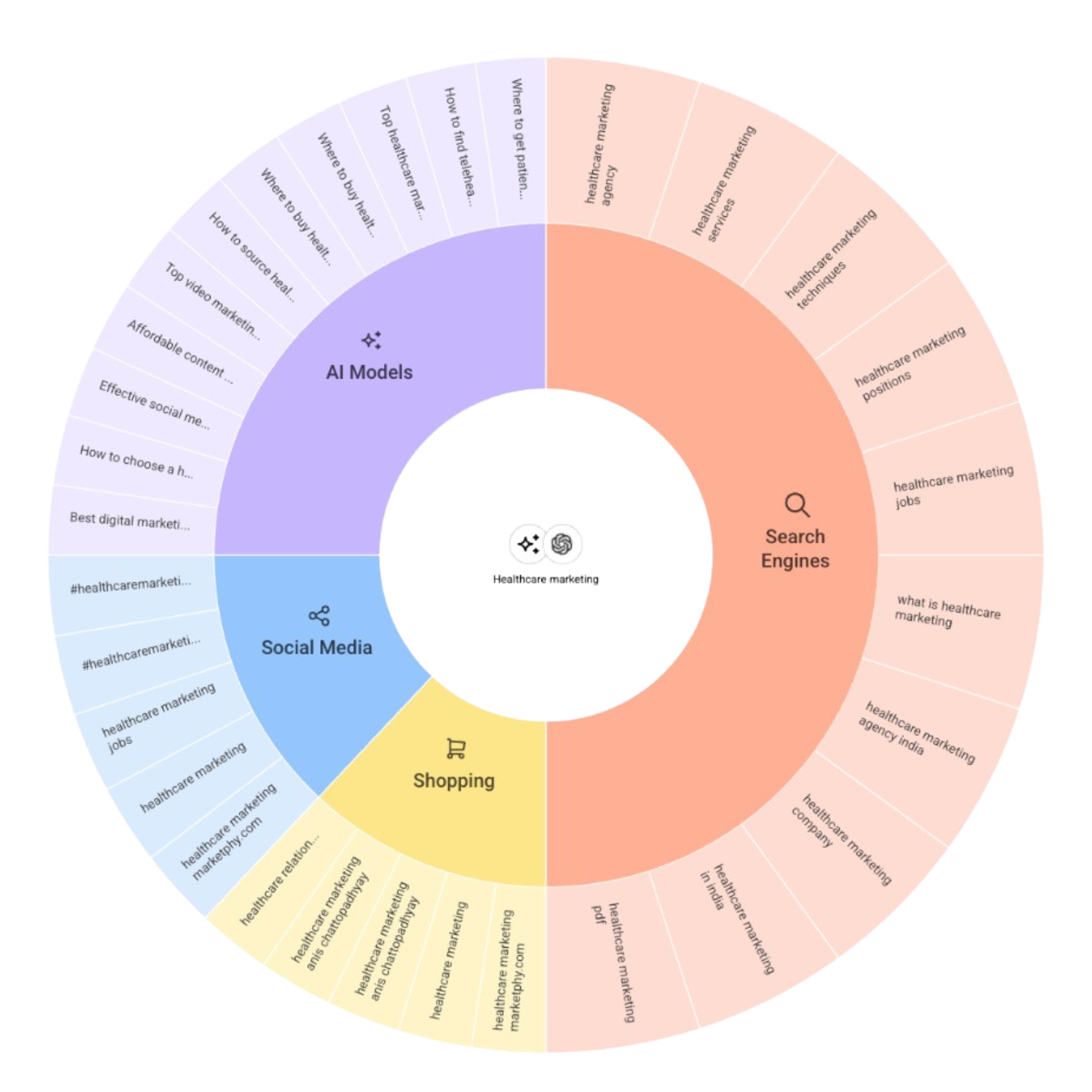
                  When we recently analyzed what people across India are asking about “healthcare marketing” using AI-powered research tools like AnswerThePublic, the results were both fascinating and revealing.
                  It wasn’t just about social media tips or Google Ads.

                  Doctors, hospital owners, healthcare entrepreneurs, and startups are asking very different kinds of questions. Questions that reveal how the healthcare industry is maturing digitally, but still searching for clarity on how to connect business goals with meaningful marketing.

                  At HMS Consultants, we always say marketing in healthcare isn’t about visibility alone; it’s about clarity before action.
                  And this research proved exactly that.

                  1. The Shift from Guesswork to Systems

                  Across dozens of search queries, one theme was loud and clear people are looking for tools and systems, not shortcuts.

                  Searches like:

                  • “Best digital marketing platforms for healthcare providers in India”
                  • “CRM software for healthcare marketing teams”
                  • “Marketing automation tools for healthcare providers”

                  show that hospitals and clinics are moving from one-off campaigns to structured marketing ecosystems.

                  website 1
                  IMAGE From AnswerThePublic

                  Insight: 

                  The next phase of healthcare marketing in India is process-driven, not personality-driven.
                  Doctors no longer just want “someone to handle social media.” They want dashboards, ROI tracking, CRM-linked engagement data, and measurable growth.

                  At HMS Consultants, we see this as a healthy sign an evolution from Doing without Knowing to Knowing before Doing.

                  2. The Anxiety of Choosing the Right Partner

                  Another strong pattern: the repeated search for the “best healthcare marketing agency,” “affordable marketing services for startups,” or “how to choose a healthcare marketing company.”

                  Insight: 

                  • There’s trust fatigue.
                    Every clinic or hospital has likely worked with an agency at some point, but many are still unsure whether the partner truly understands the healthcare ecosystem.
                  • The problem isn’t creativity it’s context.
                    Healthcare requires a deeper understanding of ethics, compliance, and patient psychology. The challenge is not “who can run ads,” but “who understands patients, doctors, and the decision cycle.”

                  That’s precisely where the consulting-first approach matters helping healthcare businesses make marketing decisions that are strategically sound, not just visually appealing.

                  3. The New SEO: From Keywords to Credibility

                  One of the most common clusters revolved around SEO and digital visibility:

                  • “Where to buy healthcare SEO services”
                  • “Effective social media strategies for healthcare businesses”
                  • “Reviews of email marketing tools for healthcare professionals”

                  Insight: 

                  • Healthcare leaders know they need visibility but they’re equally aware that visibility without trust means little.
                  • In today’s search algorithms (including AI-driven ones), Google and Bing don’t just track keywords they evaluate credibility signals: content quality, consistency, and empathy.

                  So, while agencies chase algorithms, smart healthcare brands are now focusing on authority and authenticity the true foundations of SEO.

                  As we tell our clients: “Search engines are learning to sense empathy.”

                  4. The ROI Mindset: What Gets Measured, Gets Improved

                  Queries like:

                  • “How to measure ROI of healthcare marketing”
                  • “Best analytics tools to track healthcare campaigns”
                  • “Where to get patient engagement software”

                  suggest a major shift healthcare businesses now expect marketing accountability.

                  Insight: 

                  • Indian healthcare marketing is entering a performance era.
                  • Instead of vanity metrics like likes or followers, clinics and hospitals are focusing on patient inflow, appointment conversions, and referral networks.

                  This is where clarity frameworks like HMS’s Knowing–Doing Framework™ make a measurable difference: aligning digital strategies with tangible business outcomes.

                  5. The Rise of Healthcare Marketing as a Profession

                  A surprising number of searches were about learning, certification, and skill development:

                  • “Healthcare marketing webinars and workshops”
                  • “Marketing certifications for healthcare professionals”
                  • “Case studies on successful healthcare marketing in India”

                  Insight: 

                  • Healthcare marketing is no longer a side responsibility; it’s becoming a recognized career path.
                  • Doctors, administrators, and even MBA professionals are looking to specialize not just in marketing, but in healthcare-specific marketing.

                  This professionalization will be a major growth driver in the coming years and HMS Consultants is proud to be contributing to this transformation through our advisory work and educational collaborations.

                  Key Takeaways for Healthcare Leaders

                  InsightWhat It Means for You
                  Tools over talentBuild a structured, measurable marketing system  not just social media presence.
                  Partner with contextChoose advisors who understand healthcare, not just advertising.
                  Credibility is the new SEOAuthenticity and authority drive visibility.
                  ROI is not optionalTrack what truly matters awareness to appointments.
                  Marketing is evolvingUpskill your internal teams to build a culture of growth.

                  Conclusion: What India’s Questions Really Tell Us

                  If you look closely, the questions themselves tell a story.
                  India’s healthcare professionals aren’t confused they’re curious.
                  They’re not looking for quick fixes they’re seeking direction.

                  At HMS Consultants, we believe this is the right kind of curiosity.
                  Because when curiosity meets clarity, healthcare brands evolve into trusted names.

                  And that’s exactly what healthcare marketing in 2025 and beyond will be about.

                  Email ID :- info@hmsconsultants.in

                  Doctors Digital Marketing I Healthcare Marketing I Hospital Marketing Strategies I Marketing ideas for clinics I Marketing Trends 2025 I Medical Marketing I Social Media Marketing

                  is something we strongly believe in, which means ‘Knowledge without application is the same as having no knowledge at all

                  Akhil Dave

                  Principle Consultant

                  Ready to take your Personal Brand to the next level?

                  Share your details below and we will connect with you to discuss your growth strategy.

                  • Knowing–Doing Framework™: Turning Knowledge Into Impact (The HMS Consultants Playbook)

                    Knowing–Doing Framework™: Turning Knowledge Into Impact (The HMS Consultants Playbook)

                    Knowing–Doing Framework™: Turning Knowledge Into Impact (The HMS Consultants Playbook)

                    Written by
                    Published on
                    Share This

                    The Story: How Akhil Dave Arrived Here (Working & Learning)

                    For 25 years, Akhil has been working and learning with hospitals, clinics, and health-tech founders across India. He noticed a repeating pattern:

                    • Some teams had great knowledge but didn’t execute consistently.

                    • Others were busy executing but without clarity, their actions became… noise.

                    After hundreds of campaigns, brand launches, and strategy interventions, one insight crystallised:

                    Knowing is Knowing. Doing is Doing™
                    Knowledge inspires. Action transforms.

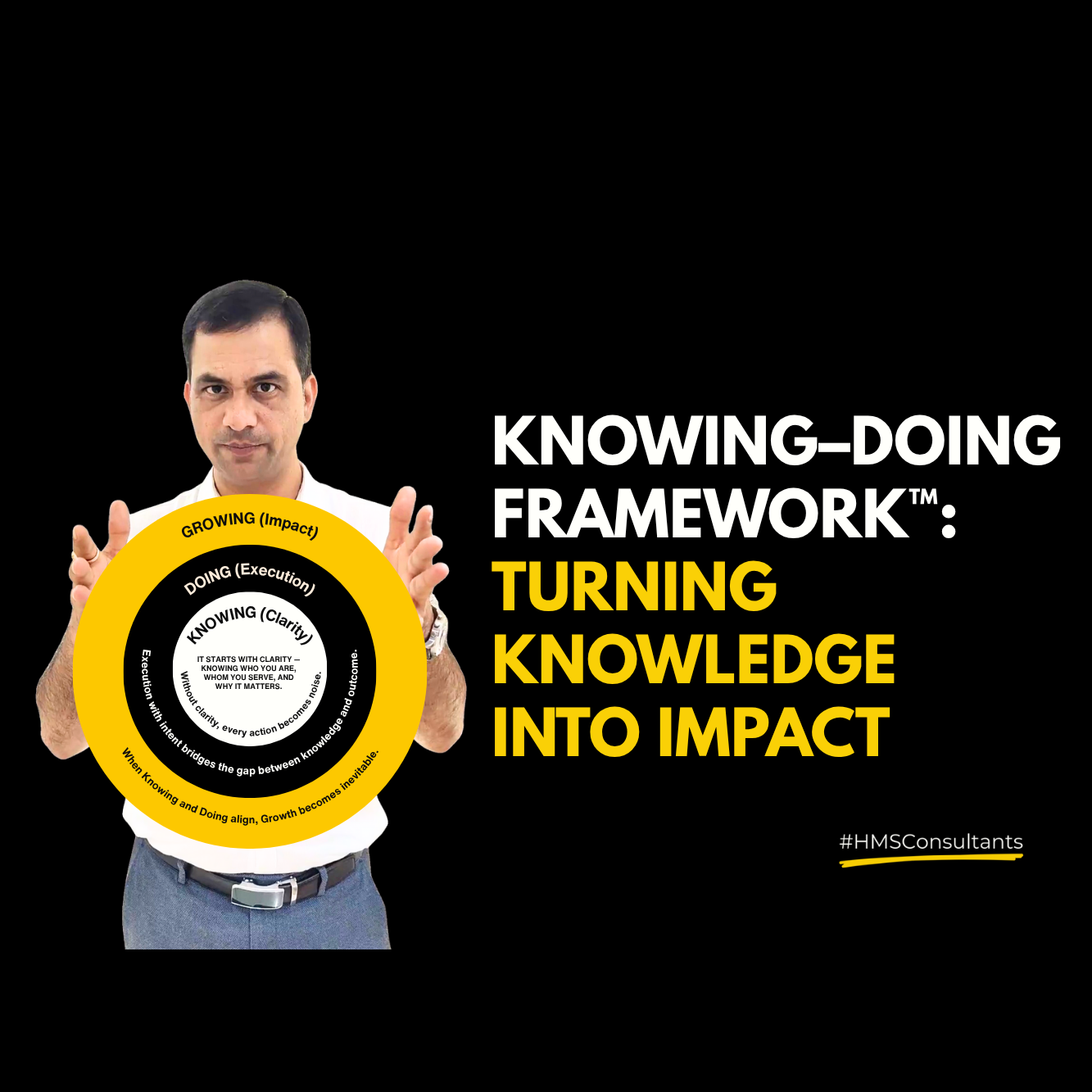
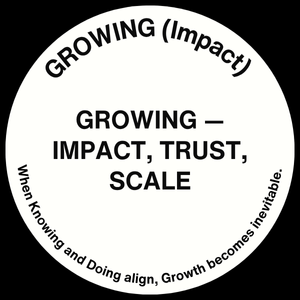
                    From this belief came a simple, teachable, repeatable model that any healthcare organisation can apply from a single-doctor clinic to a multi-speciality network: The Knowing–Doing Framework™.

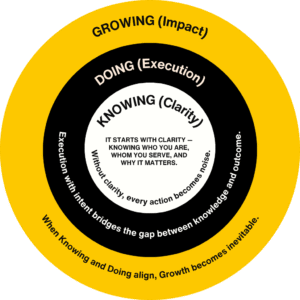
                    The Knowing–Doing Framework™ diagram showing three layers: Knowing (clarity), Doing (execution), Growing (impact) for healthcare marketing.

                    What is the Knowing–Doing Framework™?

                    A practical, three-layer operating system for healthcare marketing:

                    • Knowing (Clarity): Define who you are, whom you serve, and why it matters before you spend a rupee.
                    • Doing (Execution): Run aligned activities online + offline with a clear roadmap, timelines, and owners.
                    • Growing (Impact): Measure what matters, learn, and scale what works to build trust, footfall, and revenue.

                    The Three Layers Explained

                    A) KNOWING — Clarity Before Action

                    Without clarity, activity becomes noise. In healthcare, “Knowing” means:

                    • Brand Persona: Values, tone, uniqueness, visual identity, promise.
                    • Doctor vs Clinic Branding: Solo practice? Lead with doctor brand. Scaling multi-center? Build a clinic brand often, do both (Indian context).
                    • Customer Persona & Empathy Map: Demographics, needs, fears, motivations, “day in the life,” and decision triggers.
                    Healthcare brand clarity concept showing brand persona, customer persona, competitive analysis, positioning statement, and minimal viable audience.
                    Healthcare marketing execution showing website optimization, GMB updates, content creation, WhatsApp automation, review management, and front desk training.

                    B) DOING — Strategy in Motion

                    Execution turns clarity into momentum. In healthcare, “Doing” is an orchestrated mix of offline + online + content + systems.

                    Your Core Execution Pillars

                    1. Roadmap & Goals:

                    • Vision → 12-month goals → quarterly OKRs → monthly activities.

                    2. Channel Mix:

                    • Offline (≈40% budget): Community programs, OPD camps, referral networks, PR, doctor talks.
                    • Online (≈40%): Website, SEO/AEO, Google Business Profile (GMB), reviews, social/content, paid acquisition.
                    • Content (≈10%): Video explainers, procedure pages, FAQs, patient education assets.
                    • Tools/CRM/Admin (≈10%): CRM, WhatsApp Business, HMIS, analytics, dashboards.

                    3. AEO (Answer Engine Optimisation):

                    • Build “doctor-answer” pages for common questions, with FAQs, author bio, and visuals short, factual, bilingual where relevant.

                    4. WhatsApp Journeys:

                    • Verified profile, appointment flows, reminders, follow-ups, review nudges (with consent).

                    5. Review Flywheel:

                    • QR at discharge + 24 –48h WhatsApp prompt → respond to every review → showcase real stories (with consent).

                    6. Front Desk Excellence:

                    • Scripted greetings, tone training, response SLAs first impression = brand.

                    Outcome: A prioritised 90-day activity plan, owners, timelines, and KPIs.

                    C) GROWING — Impact, Trust, Scale

                    When Knowing and Doing align, growth compounds:

                    • Visibility: Higher local discovery (GMB calls, directions), organic traffic, citations.
                    • Trust: Better ratings, consistent responses, patient stories.
                    • Footfall & Revenue: Improved show-up rates, procedure mix, average revenue per patient.
                    • Scale: From one specialty/geography to many without losing your brand promise.

                    Outcome: A quarterly Scale Plan: expand services, deepen geography, or launch new formats (satellite OPDs, tele-consults, collaborations).

                    Healthcare growth results showing increased visibility, patient trust, clinic footfall, and revenue driven by aligned marketing execution.

                    The Healthcare-Specific Playbook (Step-by-Step)

                    Step 1: Build Your Clarity Brief (Knowing)

                    • Brand persona, promise, & visual basics
                    • Customer personas & empathy maps (primary/secondary)
                    • Competition table (services, pricing, strengths)
                    • Positioning statement + Minimal Viable Audience
                    • Compliance guardrails (claims, visuals, patient consent)


                    Step 2: Stand-Up the Foundations (Doing)

                    • Website: fast, mobile-first, structured (service pages with FAQs/How-To), clear author bios.
                    • GMB: accurate categories, services, photos, weekly updates, Q&A.
                    • Content Engine: 20–30 “doctor answers,” 12 short videos, 2–4 blogs/month, Hindi + local language summaries.
                    • WhatsApp: opt-in flows, appointment automation, reminder templates, post-visit care nudges.
                    • Review System: QR + automated prompts + response SOPs.
                    • Source Tracking: HMIS/CRM tags for Google, GMB, WhatsApp, referral, walk-in, paid.


                    Step 3: Run the Mix (Doing)

                    • Offline: local talks, camps, referral meets, community tie-ups.
                    • Online: local SEO/AEO, social posts, short videos, limited paid (focused on top 3 services).
                    • Nurture: post-visit education, follow-up reminders, preventive checklists.
                    • Front Desk: greeting → triage → handoff → follow-up scripts; weekly huddles.


                    Step 4: Review & Scale (Growing)

                    • Monthly KPI review; kill what’s not working, double-down on winners.
                    • Add new service pages, expand languages, and refine WhatsApp journeys.
                    • Plan quarterly “signature campaigns” (prevention month, women’s health week, etc.).

                    The 90-Day Implementation Plan

                    Days 0–15 (Foundation)

                    • Clarity Brief finalised
                    • Website audit + GMB revamp
                    • WhatsApp Business setup + consent plan
                    • Review QR + response SOP
                    • Dashboard skeleton (source, CPL, reviews, revenue)

                    Days 16–45 (Content & Journeys)

                    • 10 doctor-answer pages live (+ FAQs, author bios)
                    • 6–8 short videos (60–120s explainers)
                    • WhatsApp flows: enquiry → appointment → reminder → review → follow-up
                    • Front desk training (tone, scripts, SLAs)

                    Days 46–90 (Scale & Optimise)

                    • 10–15 more doctor-answers + 2 blogs/month
                    • Small paid test on top 3 services (tight targeting)
                    • Local outreach: 2 community events + 1 referral meet
                    • Monthly KPI review → iterate

                    Budgeting & Prioritization

                    Stage-wise guideline (typical ranges):

                    • New startup (metro): 20–25% of expected revenue
                    • New startup (semi-urban/rural): 10–15%
                    • Existing practice, low footfall: 8–15%
                    • Established in a competitive market: 5–10%
                    • Super-speciality with institutional backing: 5–7%


                    Effort vs Impact Map

                    • Prioritise High Impact / Low Effort (GMB cleanup, doctor-answers, review SOP)
                    • Plan High Impact / High Effort (videos, referral ecosystem)
                    • Defer Low Impact / High Effort (nice-to-have campaigns)

                    Tech Stack & Tools (examples, not endorsements)

                    • AEO/Content: ChatGPT, Claude/Gemini for drafts → human-edited; GA4, Search Console
                    • Design/Video: Canva, CapCut, Runway/Pika for motion
                    • WhatsApp Automation: Interakt, Gupshup, WATI (with opt-in, consent)
                    • CRM/Engagement: Zoho CRM, LeadSquared, WebEngage/MoEngage
                    • HMIS/EMR: Any reliable system you use ensure source tagging, reminder capability

                    Measurement: Your Monthly “Marketing Vitals”

                    • Demand: GMB actions (calls, directions), website sessions, WhatsApp chats started
                    • Efficiency: Cost per booked appointment (not just leads), paid vs organic share
                    • Conversion: show-up rate, time-to-first-response, call answer rate
                    • Trust: review volume & rating, response rate, patient stories published (with consent)
                    • Revenue: ARPNP (avg revenue per new patient), procedure mix, re-visits
                    • AEO Footprint: number of pages that win featured/answer placements; citations earned

                    Common Mistakes to Avoid

                    • Random activity ≠ strategy.
                    • Over-reliance on ads without owned content and reviews.
                    • Ignoring front desk training tone, empathy, speed
                    • No source tracking → can’t prove ROI.
                    • No consent or sloppy privacy practices in patient communication.

                    Conclusion

                    If you want to implement the Knowing–Doing Framework™ in your hospital or clinic end-to-end from clarity brief to content engine, WhatsApp journeys, and monthly dashboards:

                    Write to us: info@hmsconsultants.in
                    Subject: “Knowing–Doing Framework – Implementation”
                    We’ll share a short readiness checklist and a 30-minute discovery format.

                    HMS Consultants 

                    Doctors Digital Marketing I Healthcare Marketing I Hospital Marketing Strategies I Marketing ideas for clinics I Marketing Trends 2025 I Medical Marketing I Social Media Marketing

                    is something we strongly believe in, which means ‘Knowledge without application is the same as having no knowledge at all

                    Akhil Dave

                    Principle Consultant

                    Ready to take your Personal Brand to the next level?

                    Share your details below and we will connect with you to discuss your growth strategy.

                    • Grow Smarter with AI | Healthcare Marketing Toolkit

                      Grow Smarter with AI | Healthcare Marketing Toolkit

                      Grow Smarter with AI | Healthcare Marketing Toolkit

                      Written by
                      Published on
                      Share This

                      Healthcare has always been people first. But in today’s digital-first world, marketing, branding, and patient engagement require the same care and precision as medical treatment itself. Doctors and clinics are no longer just competing on medical expertise, they’re competing on visibility, reputation, and patient trust.

                      This is where Artificial Intelligence (AI) comes in. Once limited to tech companies, AI is now a powerful everyday companion for healthcare businesses. From writing personalized emails to analyzing complex data, AI is helping doctors save time, reduce costs, and focus on what matters most, patient care. At HMS Consultants, we recently attended a workshop that introduced us to an exciting range of AI tools. In this blog, we share a complete AI toolkit for healthcare marketing, with practical examples of how clinics and healthcare professionals can use these tools to grow smarter and faster.

                      1. Smarter Outreach with AI-Powered Emails

                      Cold emailing is often considered “impersonal.” But with AI, it doesn’t have to be. Tools like Microsoft Co-pilot and Claude can help craft super-personalized emails that feel authentic and relevant.

                      Instead of a generic “Hello, we provide healthcare services,” AI can automatically include:

                      • The recipient’s name and designation
                      • A recent LinkedIn post or company update
                      • A relevant connection point (e.g., their hospital just launched a new wing)

                      Example: A clinic proposing a health camp to a corporate HR can highlight the company’s latest CSR activity in the email, instantly making the message relevant.

                      Why it matters in healthcare: Personalized emails show patients, corporates, and partners that you understand them. This builds trust and increases response rates.

                      2. Everyday Assistance with AI Co-Pilots

                      • Co-pilot , chatGPT ,(Internet): Helps you summarize regulations, patient care guidelines, or the latest news in minutes. Perfect for doctors who need concise updates without reading endless PDFs.
                      • Claude (Writing + Dashboards): Converts raw dashboards into easy-to-read summaries and even drafts patient communication or SOPs.

                      Healthcare use case:

                      A clinic manager looking at a complicated dashboard of patient visits doesn’t need to spend hours decoding numbers. Claude can turn it into:

                      “This month saw a 12% increase in walk-ins, mostly for dermatology. Peak time is Saturdays between 11 AM – 2 PM.”

                      That’s instantly actionable.

                      3. AI for Research & Model Selection

                      • Open Router: Lists and ranks AI models, helping you choose the right one for specific tasks.
                      • Yupp AI: Combines all major AI models in one place.

                      Healthcare use case:

                      Marketing teams can quickly decide which model to use for drafting ads, analyzing competition, or running patient sentiment research, without wasting hours testing.

                      4. Deep Thinking with Reasoning Models

                      Traditional AI gives quick answers. Reasoning models (like DeepSeek) go further, they think through problems step by step.

                      Healthcare use case:

                      If a hospital is considering expanding to a new city, a reasoning model can evaluate:

                      • Market demand
                      • Competition
                      • Patient demographics
                      • Regulatory complexity

                      Instead of a surface-level “yes/no,” it provides a detailed, thought-out recommendation.

                      5. AI for Productivity & Workflow

                      Doctors juggle busy schedules. These tools cut down repetitive tasks:

                      • Flow: Creates speech-based shortcuts. Imagine saying, “Schedule a patient follow-up for next Monday,” and it’s done.
                      • Emily: Summarizes videos, gives meeting takeaways, and even drafts LinkedIn replies.
                      • Fireflies: Records meetings and generates searchable transcripts.

                      Healthcare use case:

                      After a strategy meeting, Fireflies creates notes and action items. Emily helps draft follow-up messages to collaborators, saving admin teams hours of work.

                      6. Creative & Branding Tools

                      • Phot.AI: Turns ordinary pictures into professional-quality visuals. Clinics can create campaign-ready images without hiring photographers every time.
                      • Supergrow: Optimizes LinkedIn posts with hashtags, post timings, and engagement strategies.

                      Healthcare use case:

                      A cosmetic clinic can use Phot.AI to create professional images for Instagram campaigns, while Supergrow helps the doctor’s LinkedIn post reach a wider audience of patients and peers.

                      7. Research & SEO Optimization

                      • Perplexity: Provides lightning-fast, cited research. Perfect for doctors writing patient blogs.
                      • Writesonic: Runs SEO audits on clinic websites and blogs to improve Google ranking.

                      Healthcare use case:

                      A diabetologist writing an awareness blog can use Perplexity to gather the latest statistics. Writesonic ensures the blog ranks for terms like “diabetes care in [city]”.

                      8. Learning & Data Management

                      • Notebook LM: Lets you upload clinic documents and policies so AI “learns” them and answers contextually.
                      • NumerousAI: Works inside Excel/Sheets to automate calculations and insights.
                      • Kaggle: Accesses datasets for research and benchmarking.

                      Healthcare use case:

                      Hospitals can upload staff SOPs into Notebook LM so new employees can instantly ask, “What’s the discharge process?” and get accurate steps.

                      9. Data Analysis & Dashboarding

                      • Claude (Data Analysis): Simplifies big datasets into human-readable summaries.
                      • Genspark: Creates custom dashboards that visualize trends.

                      Healthcare use case:

                      A chain of clinics can track patient inflow across locations. Instead of staring at raw numbers, they get a dashboard that shows:

                      • Which branch sees maximum growth
                      • Which service is underperforming
                      • ROI from campaigns

                      10. Going Beyond Marketing

                      • Suno: Composes music. While not directly healthcare-related, clinics can use it create brand music or music for awareness campaigns. 

                      Category

                      AI Tools

                      Healthcare Use Case

                      Personalized Outreach

                      Microsoft Co-pilot, Claude

                      Send tailored cold emails to corporates, partners, or patients with personalization.

                      Everyday Assistance

                      Co-pilot (Internet), Claude

                      Summarize policies, explain dashboards, draft SOPs & patient communication.

                      Research & Models

                      Open Router, Yupp AI

                      Compare AI models, benchmark strategies, and select the right tool.

                      Reasoning

                      DeepSeek (Reasoning Model)

                      Make thought-out decisions on expansion, compliance, or investments.

                      Productivity

                      Flow, Emily, Fireflies

                      Meeting notes, LinkedIn replies, speech shortcuts to save doctors’ time.

                      Creative & Branding

                      Phot.AI, Supergrow

                      Create visuals, optimize LinkedIn branding for doctors.

                      Research & SEO

                      Perplexity, Writesonic

                      Quick research with citations, SEO audits for clinic websites/blogs.

                      Learning & Data

                      Notebook LM, NumerousAI, Kaggle

                      Train AI with SOPs, automate Excel, access datasets for healthcare research.

                      Data Analysis

                      Claude (Analysis), Genspark

                      Simplify data insights, build dashboards to track clinic growth.

                      Beyond Marketing

                      Suno

                      Create a waiting room ambience or music for awareness campaigns.

                      Conclusion – The AI-Ready Clinic

                      AI is no longer an “extra.” It’s the new toolkit for growth. From emails that feel personal to dashboards that speak human, from quick SEO audits to futuristic patient engagement, AI tools give clinics an unfair advantage in today’s competitive landscape.

                      At HMS Consultants, we help doctors and healthcare setups navigate this evolving space with strategic consulting powered by smart AI insights.

                      The future belongs to clinics that combine medical excellence with digital intelligence.
                      The question is: Are you ready to add AI to your healthcare toolkit?

                      Written by Tusharika Ranjan

                      Doctors Digital Marketing I Healthcare Marketing I Hospital Marketing Strategies I Marketing ideas for clinics I Marketing Trends 2025 I Medical Marketing I Social Media Marketing

                      is something we strongly believe in, which means ‘Knowledge without application is the same as having no knowledge at all

                      Akhil Dave

                      Principle Consultant

                      Ready to take your Personal Brand to the next level?

                      Share your details below and we will connect with you to discuss your growth strategy.