
How to Get More Patient Reviews (and Handle Bad Ones)
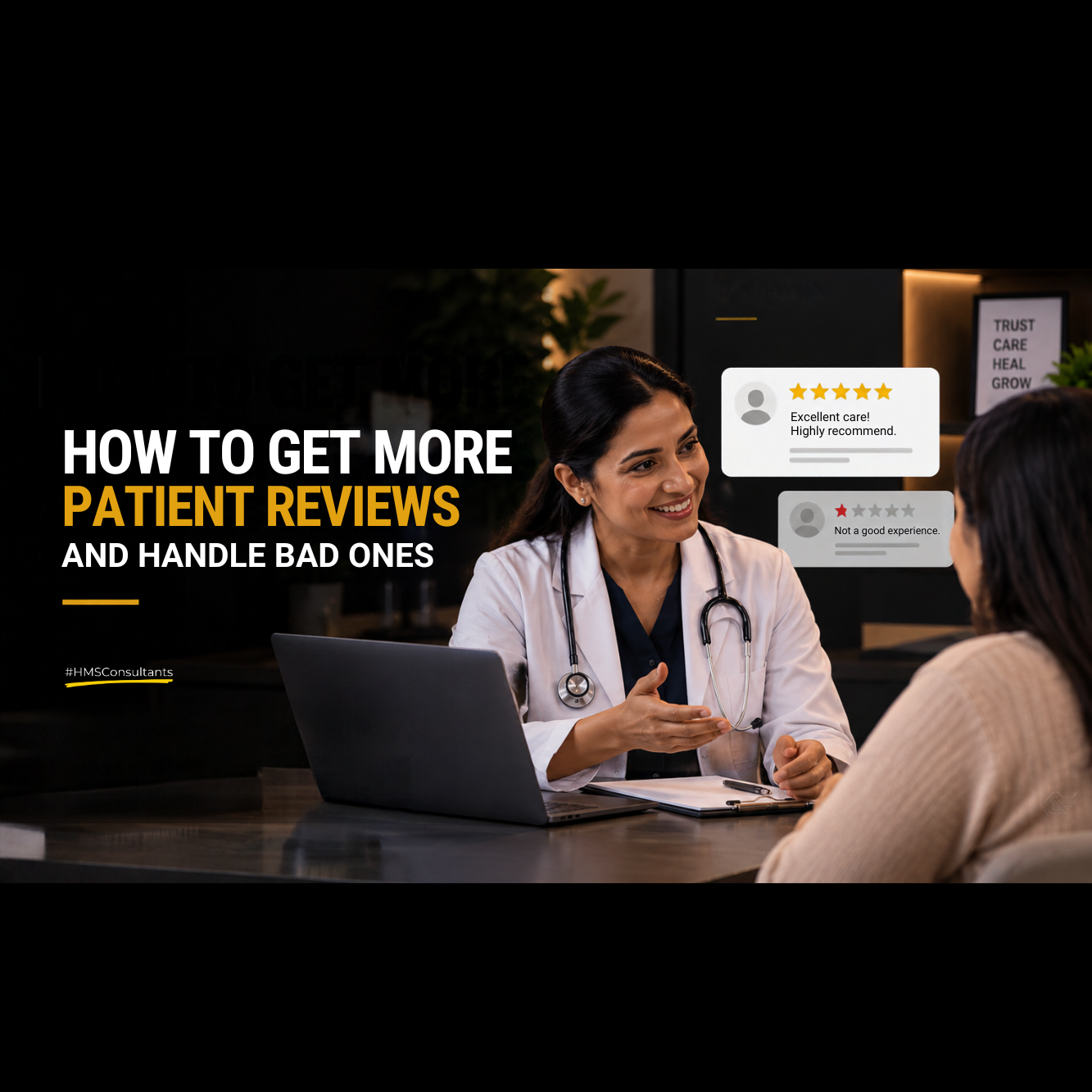
Getting more patient reviews starts with a simple, consistent system for asking at the right moment not a one-time push. Handling bad reviews well matters just as much: a calm, professional response to a negative review often builds more trust with prospective patients than the review itself takes away.
1. Why Patient Reviews Matter More Than Ever
Patients researching a doctor or hospital increasingly treat online reviews the way they’d treat a personal recommendation and in the absence of a trusted referral, reviews often become the deciding factor. Review volume, rating, and recency also directly affect local search ranking (see our local SEO checklist for doctors), meaning reviews serve a dual purpose: they build trust with prospective patients and they influence whether those patients find the practice in the first place.
2. What Makes Healthcare Reviews Different
Healthcare reviews carry more emotional weight than reviews in most other categories a patient reviewing a restaurant is evaluating a meal; a patient reviewing a doctor is often reflecting on a moment involving real anxiety, vulnerability, or relief. This means healthcare reviews tend to be read more carefully by prospective patients, and a thoughtful response to any review positive or negative carries more weight than a generic one would in a lower-stakes category.
3. How to Ask for Reviews Without Being Pushy
The best moment to ask is right after a positive interaction, while satisfaction is high and the experience is fresh not weeks later through a generic mass email. Keep the ask simple and specific: a direct link to leave a Google review, with a brief, genuine note asking for honest feedback. Avoid asking every patient identically or turning the request into a scripted, impersonal moment a request that feels genuine gets a better response than one that feels like a sales tactic.
4. Building a Simple Review-Generation System
– Identify the natural moment in the patient journey when satisfaction peaks (often right after a successful appointment or procedure)
– Train front-desk or relevant staff to make the ask consistently at that moment
– Provide an easy, one-click way to leave a review (a QR code or direct link works well)
– Track review volume monthly as part of regular marketing reporting, not as an afterthought
– Never offer payment, discounts, or other incentives in exchange for reviews this violates platform policies and creates compliance risk
5. Where to Focus: Google vs. Practo/Justdial vs. Others
Google reviews carry the most weight for both local search ranking and general prospective-patient research, and should be the primary focus. Healthcare-specific platforms like Practo carry additional weight for patients specifically comparing doctors within that platform’s ecosystem. Justdial and similar general directories matter less for trust-building but still contribute to overall online presence consistency. Prioritizing Google first, then healthcare-specific platforms, is a reasonable sequencing for most practices with limited time to manage multiple platforms actively.
6. How to Respond to Positive Reviews
A brief, genuine, specific response thanking the patient and referencing something specific from their review where appropriate reinforces goodwill and shows prospective patients that the practice is attentive. Avoid generic, copy-pasted responses across every review; even a short, specific reply reads as more genuine than a templated one repeated verbatim.
7. How to Respond to Negative Reviews
This is the part most doctors and hospital staff find hardest, and it’s also where the most trust can be won or lost. The right approach:
– Respond calmly and professionally, never defensively, regardless of how unfair the review feels
– Acknowledge the patient’s concern without violating their privacy or confirming any specific clinical details publicly
– Offer to address the issue directly, offline, through a specific contact method
– Keep the response brief a long, defensive rebuttal reads worse to other readers than a short, professional one
A well-handled negative review, visible alongside the professional response, often reassures prospective patients more than its absence would it shows the practice takes concerns seriously rather than ignoring them.
8. What NOT to Do When Handling Bad Reviews
– Don’t argue publicly or get defensive in the response
– Don’t reveal any patient information or clinical details in a public reply, even to correct a factual claim
– Don’t ignore the review entirely, hoping it will be overlooked
– Don’t ask staff or friends to post fake positive reviews to offset a negative one this is against platform policy and easily detected
– Don’t delay the response for more than a day or two timely responses matter for how the situation is perceived
9. Turning Reviews into Marketing Content
With explicit patient consent, strong reviews can be repurposed thoughtfully into marketing materials a testimonial on a service page, a quote in social content, or part of a patient-experience section on the website. This should always be done with clear, documented consent, and never simply lifted from a public review platform without direct permission from the patient involved.
10. How HMS Consultants Helps with Review & Reputation Management
HMS Consultants builds a practical, sustainable review-generation system tailored to each practice’s actual patient flow, and provides response guidance and training so staff can handle both positive and negative reviews professionally and consistently.
Frequently Asked Questions
Ask at the moment satisfaction is highest right after a positive interaction with a simple, direct request and an easy link, rather than a generic mass request sent later with no context.
Yes — responding to positive reviews reinforces goodwill and shows attentiveness, while responding to negative reviews professionally shows prospective patients how concerns are handled, which matters even more than the review itself in many cases.
Respond calmly and professionally without being defensive, acknowledge the concern without violating patient privacy in the response, and offer to address it offline through a direct contact method.
No — incentivizing reviews violates most platforms’ policies, including Google’s, and carries additional compliance risk in a healthcare context. Ask for honest feedback without conditioning it on any reward.
There’s no fixed number, but steady, ongoing review growth matters more than reaching any specific total a profile with recent, regular reviews signals an active, trustworthy practice better than a large but stagnant review count.
Google and other platforms allow flagging reviews that violate their policies (fake, unrelated, or abusive content), though removal isn’t guaranteed a professional public response is still worthwhile while any removal request is pending.
is something we strongly believe in, which means ‘Knowledge without application is the same as having no knowledge at all
Akhil Dave
Principle Consultant
Ready to take your Personal Brand to the next level?
Share your details below and we will connect with you to discuss your growth strategy.
How Personalized Engagement Improves Patient Care
Personalized engagement helps clinics move beyond generic care by tailoring communication to each patient’s needs. It builds trust, loyalty, and lasting connections.
Why Marketing for Hospitals Should Slow Patients Down Before Asking Them to Decide
Marketing for hospitals works when patients feel guided, not rushed. Clear communication and patience build trust, helping decisions happen naturally.
Healthcare Marketing Social Media: Why Posting Alone Does Not Build Patient Trust
Healthcare marketing social media is more than regular posting. Learn how patient trust, healthcare content strategy, ethical communication, and patient-focused content help clinics, hospitals, and healthcare businesses build credibility,…
Ethical Storytelling in Healthcare Marketing
Stories build trust in healthcare, but they must protect dignity. Discover how hospitals in India can use ethical storytelling to balance privacy and impact.
Why Hospital Social Media Metrics Lie, And What Metrics Actually Tell You Growth Is Real
Hospitals often mistake likes and reach for growth. This blog explains why social media metrics mislead healthcare marketing and what truly signals patient trust and real growth.
How Digital Marketing for Healthcare Can Increase Your Patient Count
In today’s competitive healthcare landscape, digital marketing has become essential for attracting new patients and retaining existing ones. A well-executed digital marketing strategy can enhance patient engagement, improve online…