Category: Doctors Digital Marketing

  • Why Hospitals Lose Patients Before They Even Visit

    Why Hospitals Lose Patients Before They Even Visit

    Why Hospitals Lose Patients Before They Even Visit

    Written by
    Published on
    Share This

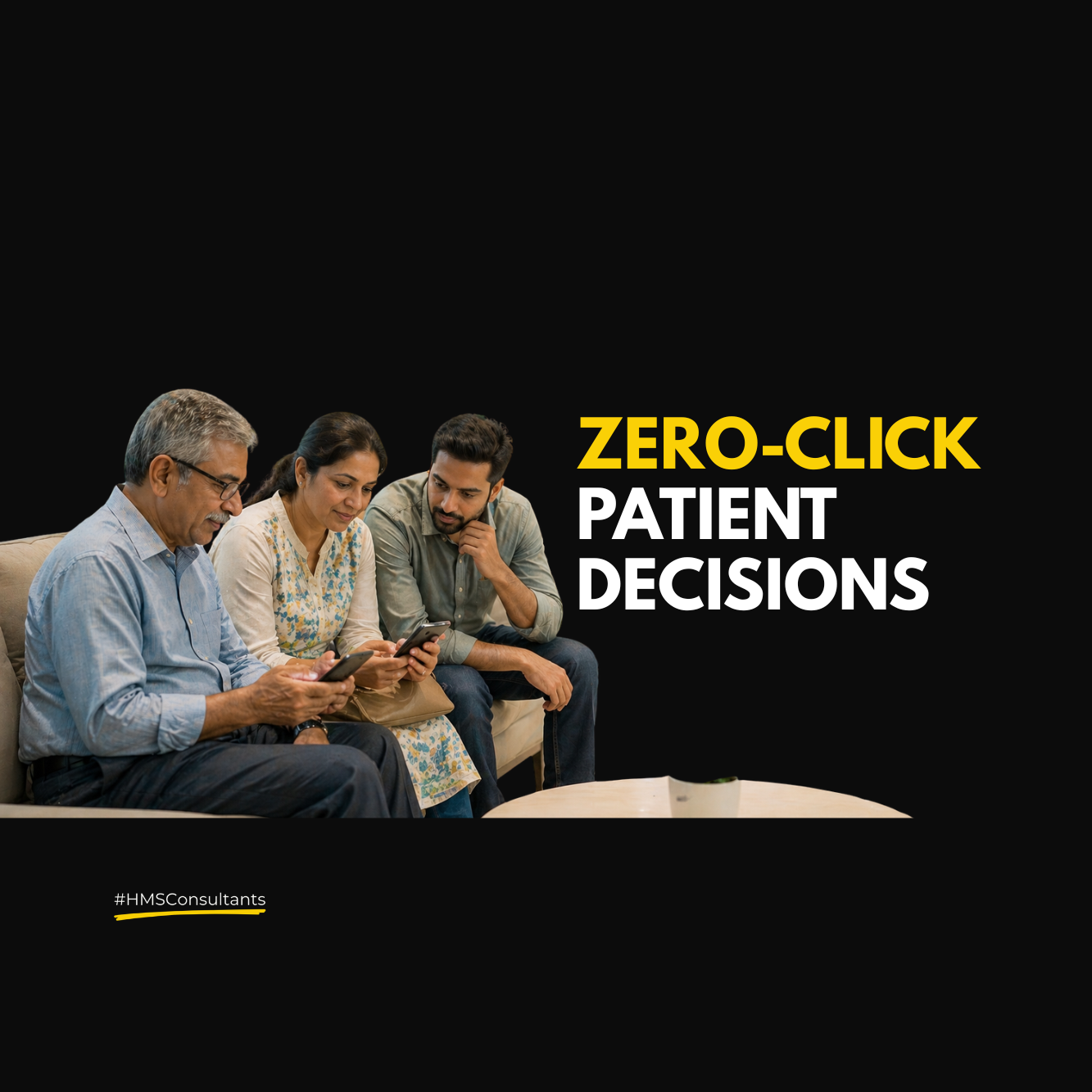
    In today’s digital healthcare environment, most hospitals believe they lose patients because of competition or pricing. The truth is far more surprising: in India, a large percentage of patients never reach the hospital door at all. They drop off somewhere in the journey before the first visit silently, invisibly, and without any chance for the hospital to explain its value.

    For decades, healthcare was driven by referrals, reputation, and word of mouth. If a hospital had good doctors, patients walked in with confidence. But patient behaviour has changed. Today, the first consultation happens online, not in OPD.

    Before making a decision, patients research symptoms on Google, check doctor profiles, read reviews, compare photos of facilities, and even check consultation fees. The hospital that looks more trustworthy, organised, and transparent wins the patient long before the first appointment.

    And this is where many hospitals unknowingly lose them.

    A Decision Is Made Before a Step Is Taken

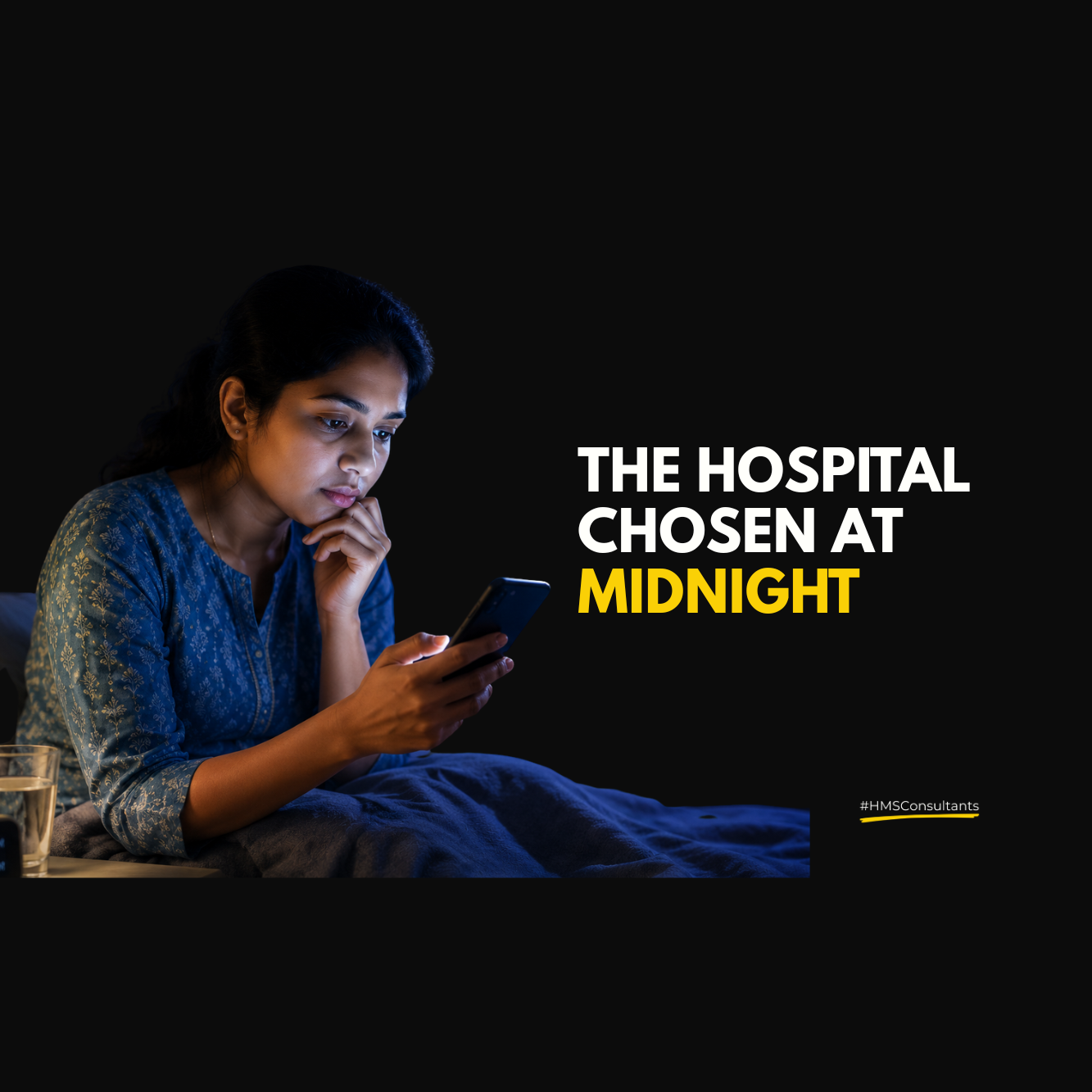
    A patient searching for a doctor in Ahmedabad, Surat, Indore, Jaipur, Nagpur, or any rapidly developing Indian city does not begin with a visit. Their journey starts with a search bar.

    “Best oncology hospital near me.”
    “Normal delivery package price.”
    “Painless cataract surgery.”

    If a hospital does not appear in search results, appears with outdated or incomplete information, or has poor reviews, the decision ends right there. The patient moves on. They don’t call to verify. They don’t walk in to check. The decision is already made, silently.

    Hospitals often assume competition is taking away patients. In reality, visibility and credibility are.

    The Trust Test Happens Online

    Modern patients evaluate hospitals in much the same way they assess hotels, airlines, or even restaurants: through online presence and reviews. It may sound unfair, but it is logical from the patient’s perspective. Medical care is one of the most emotional decisions a family makes. Before trusting a doctor with their health, they seek reassurance.

    They check:

    • Are the reviews consistent or concerning?
    • Does the website look modern and updated?
    • Are there photos of real facilities, doctors, rooms, or OT?
    • Does the hospital respond politely to negative feedback?
    • Is there a WhatsApp number available for quick queries?

    If these signals are absent or poorly managed, patients assume the experience inside the hospital will be equally unorganised.

    In other words, the hospital may be clinically excellent, but digitally invisible.

    Missing the Patient Because No One Answered

    One of the biggest reasons hospitals lose patients, especially in Tier-II and Tier-III cities, is slow enquiry handling. A patient trying to call for an appointment, asking for cataract surgery cost, or enquiring about visiting hours does not wait anymore. If the call is missed or WhatsApp is seen but not replied to, the patient simply moves on to another provider.

    Hospitals believe they lost the case to competition. Reality: they lost it to silence.

    A receptionist who puts a patient on hold for too long, a coordinator who promises a call back but never does, or a WhatsApp response sent after 24 hours, all of these translate to one thing in the patient’s mind: “If they don’t communicate properly before admission, how will they treat us afterwards?”

    Minor lapses in communication create big doubts.

    Confusing or Hidden Information Drives Patients Away

    Hospitals often keep pricing or service details vague, assuming patients will call for clarification. But patients no longer want to call for clarity, they prefer transparency.

    If a hospital website or brochure says:
    “Call for details”
    “Contact reception for pricing”
    “No listed timings or doctor schedules”

    …the patient simply considers the hospital too complicated. Healthcare is already stressful. Patients prefer a hospital that makes the journey simpler, not harder.

    Transparency is not a marketing tool; it is a trust builder.

    A Website That Looks Like It Was Made 10 Years Ago

    Hospitals don’t realise how often they turn patients away with outdated websites:

    • Broken links
    • Old photos
    • No doctor profiles
    • No facility details
    • No patient testimonials
    • Poor mobile experience

    To patients, a website is a reflection of hospital management. If the digital presence appears neglected, patients fear a similar level of neglect in treatment or administration. A modern, clean, informative website can change perception instantly, even if nothing else changes.

    Lack of Follow-Up = Losing Patients You Already Earned

    Hospitals often have hundreds or thousands of past patients, yet very few maintain any relationship with them. A simple follow-up call, check-up reminder, medication reminder, or post-surgery care message could bring them back when needed.

    Instead, hospitals spend money to attract new patients while ignoring the ones already loyal to them. In India, patients deeply value care shown outside the hospital. One follow-up message can build more trust than a full-page advertisement.

    Patients Are Comparing Hospitals More Than Ever

    Patients compare everything:

    • Reviews
    • Waiting time
    • Staff behaviour
    • Cleanliness
    • Billing transparency
    • Doctors’ communication style

    Even if two hospitals have the same clinical outcomes, the one that looks more organised, responsive, and compassionate wins. Patients today are not just choosing treatment. They are choosing comfort, confidence, and experience.

    The Silent Loss That Hospitals Never Measure

    When a hospital says, “Footfall is low,” the question to ask is not:
    “How many patients visited?”

    The real question is:
    “How many patients tried to reach us but never got through?”

    Most hospitals do not track:

    • Missed calls
    • Dropped WhatsApp enquiries
    • Website form submissions with no reply
    • Patients who clicked “Directions” on Google but never arrived

    These are invisible losses. No one sees them. But every day, hospitals are losing real patients who would have come if the journey wasn’t broken.

    The Simple Fixes That Change Everything

    Hospitals don’t need huge budgets to stop losing patients early. They need:

    • Updated Google Business profile
    • Accurate service details and timings
    • Fast WhatsApp replies
    • Website with basic clarity
    • Staff trained to speak kindly and confidently
    • Transparent pricing
    • Consistent follow-ups

    These minor improvements can transform trust and foot traffic faster than any ad campaign. Because patients don’t choose hospitals based on promotions, they choose them based on confidence.

    Conclusion

    Hospitals don’t lose patients due to poor treatment quality. They lose them because patients never get far enough to see it. In the digital era, trust is built before the first visit. The more a hospital simplifies the patient journey, the more patients walk in with confidence.

    The hospital that communicates better, answers questions faster, explains things clearly, and appears trustworthy online wins the patient’s trust long before they reach the reception desk.

    Contact Us HMS Consultants 

    Doctors Digital Marketing I Healthcare Marketing I Hospital Marketing Strategies I Marketing ideas for clinics I Marketing Trends 2025 I Medical Marketing I Social Media Marketing

    is something we strongly believe in, which means ‘Knowledge without application is the same as having no knowledge at all

    Akhil Dave

    Principle Consultant

    Ready to take your Personal Brand to the next level?

    Share your details below and we will connect with you to discuss your growth strategy.
    • Turning Reviews Into Reputation: Building Patient Trust Online

      Turning Reviews Into Reputation: Building Patient Trust Online

      Turning Reviews Into Reputation: Building Patient Trust Online

      Written by
      Published on
      Share This

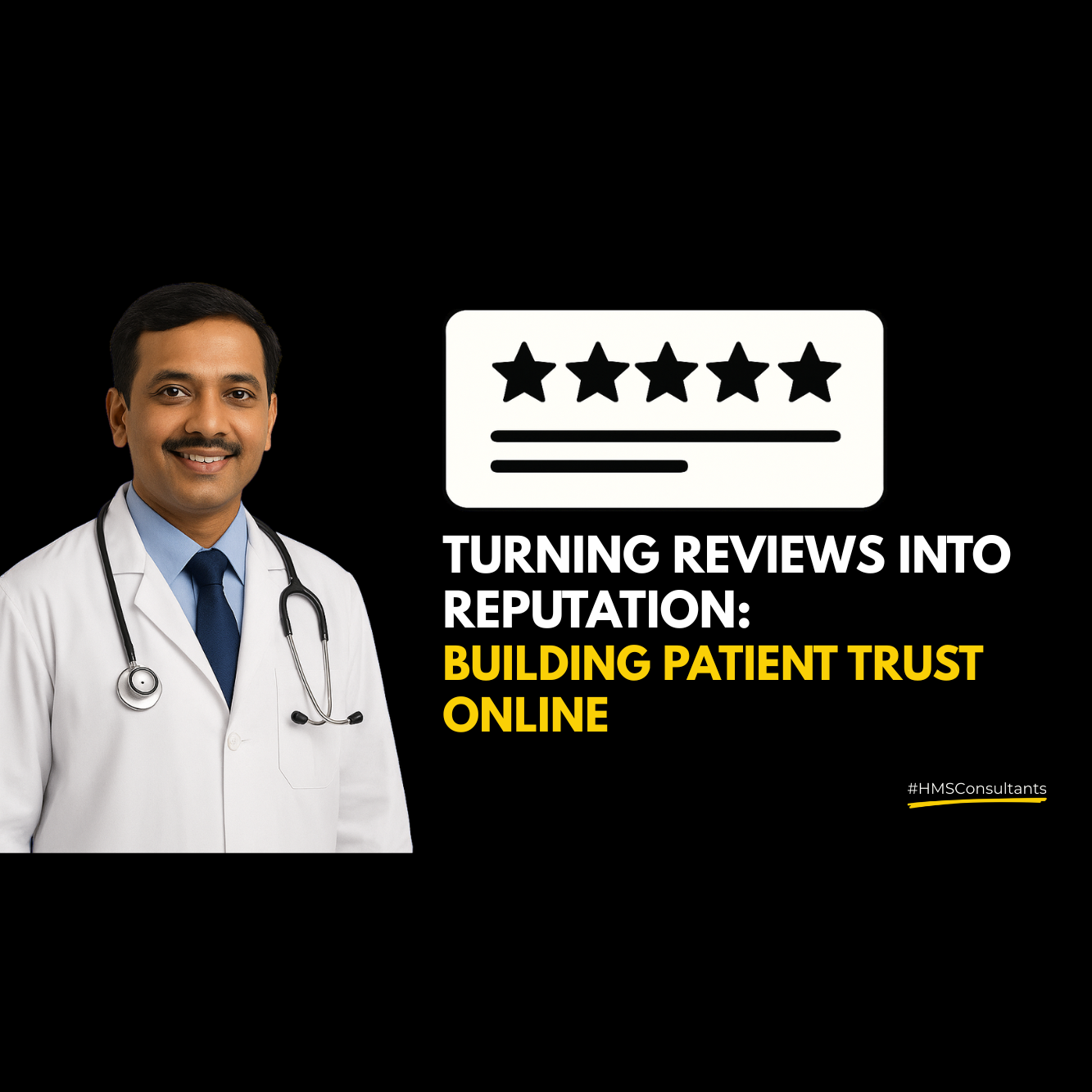
      In today’s healthcare market, patients rarely make decisions without checking online reviews. Whether it is a small clinic or a large hospital, digital feedback has become the new form of word-of-mouth. A single patient story can influence dozens of future choices, and a pattern of reviews can define your brand far more than ads or billboards.

      For hospitals, reviews are no longer just comments, but a platter of opportunities. By managing feedback effectively, clinics can transform online ratings into trust-building tools. With the right approach, reputation management becomes one of the most impactful marketing ideas for hospital growth.

      Why Online Reviews Matter in Healthcare

      Unlike retail or restaurants, healthcare is deeply personal. Patients share experiences that reflect not only the treatment received but also emotions like comfort, respect, and empathy. This makes reviews powerful because they:

      • Shape first impressions when patients search online.
      • Act as proof of credibility for new visitors.
      • Highlight areas of excellence and improvement.
      • Influence patient choice more than traditional advertising.

      In short, reviews are not just feedback they are the public version of your reputation.

      Responding to Negative Feedback with Care

      Every hospital will face criticism at some point. The difference lies in how feedback is handled. Instead of ignoring or deleting negative reviews, hospitals should:

      • Acknowledge promptly: A quick response shows patients you are listening.
      • Stay professional: Avoid defensive or overly emotional replies; keep tone calm and respectful.
      • Offer solutions: Invite the patient to continue the conversation privately to resolve concerns.
      • Show empathy: Patients value honesty and human understanding more than scripted replies.

      Handled well, even a negative review can turn into proof of transparency and patient-first care.

      Encouraging Positive Reviews

      Patients who leave satisfied often don’t remember to review, while unhappy patients post immediately. Clinics need to gently encourage positive stories. Effective methods include:

      • Asking for feedback after successful treatments or consultations.
      • Sending a simple WhatsApp link to the Google review page.
      • Displaying QR codes at reception for easy review submission.
      • Training staff to request reviews in a polite, non-intrusive way.

      These small steps build a steady stream of authentic, positive feedback that strengthens reputation.

      Transparency vs. Perfection

      A common mistake hospitals make is chasing only five-star ratings. But patients don’t expect perfection; they expect honesty. A mix of positive and constructive reviews feels authentic and believable.

      Reputation management should focus on:

      • Being transparent about areas of improvement.
      • Using patient suggestions to refine services.
      • Highlighting stories of care rather than only star counts.

      Authenticity builds long-term credibility and sets hospitals apart from competitors who may rely on inflated ratings.

      The Role of Staff in Reputation

      Doctors are central, but every staff interaction adds to reputation. Receptionists, nurses, and support teams shape reviews because they represent the first and last impressions.

      Simple behaviors like warm greetings, clear communication, and follow-up reminders often show up in patient stories. Training staff as brand ambassadors is just as important as advertising campaigns.

      Marketing for Hospitals Through Reviews

      Reviews are not just feedback they are marketing content. Hospitals can use them as:

      • Website testimonials: Highlighting real patient words builds authenticity.
      • Social media posts: Turning reviews into graphics or reels humanizes branding.
      • Campaign material: Using positive stories in awareness drives shows community trust.

      This approach transforms patient voices into natural marketing assets, more credible than any paid ad.

      Practical Steps for Clinics

      1. Claim and update profiles on Google, Justdial, and Practo.

      2. Assign staff responsibility for monitoring and responding to reviews.

      3. Build feedback loops through WhatsApp or email.

      4. Share positive reviews across digital platforms.

      5. Treat every review; good or bad, as an insight for growth.

      Conclusion

      In the digital age, reputation is healthcare’s most valuable currency. Online reviews are more than ratings; they are reflections of patient experience and trust.

      Hospitals that engage with feedback, encourage positive voices, and balance transparency with professionalism can turn reviews into a powerful reputation-building tool. For patients, it shows honesty and care. For clinics, it becomes a sustainable form of clinic promotion and growth.

      The role of a hospital marketing expert today is not only to run campaigns but also to help healthcare brands navigate this landscape of digital trust. Reviews, when managed well, become the bridge between patient experiences and hospital branding success.

      Contact Us HMS Consultants 

      Doctors Digital Marketing I Healthcare Marketing I Hospital Marketing Strategies I Marketing ideas for clinics I Marketing Trends 2025 I Medical Marketing I Social Media Marketing

      is something we strongly believe in, which means ‘Knowledge without application is the same as having no knowledge at all

      Akhil Dave

      Principle Consultant

      Ready to take your Personal Brand to the next level?

      Share your details below and we will connect with you to discuss your growth strategy.

      • The Power of Rebranding in Healthcare: Lessons for Clinics

        The Power of Rebranding in Healthcare: Lessons for Clinics

        The Power of Rebranding in Healthcare: Lessons for Clinics

        Written by
        Published on
        Share This

        The Why Rebranding Matters in Healthcare

        Rebranding is no longer just a corporate exercise for consumer brands. In today’s healthcare environment, hospitals and clinics are also rethinking their identities to stay relevant, connect with patients, and compete in a digital-first world. With more options available to patients, a strong, consistent brand identity builds trust and loyalty.

        In India, healthcare branding has taken on new urgency. From large hospital chains to mid-sized clinics, rebranding is becoming a way to signal growth, modernization, and renewed commitment to patients. The lessons from these journeys apply not only to big names but also to smaller clinics aiming to stand out in crowded local markets.

        What Rebranding Really Means in Healthcare

        Many people think of rebranding as just changing a logo or color palette. In healthcare, rebranding goes much deeper. It includes:

        • Updating visual identity across signage, websites, and uniforms.
        • Communicating new values and positioning to patients.
        • Aligning staff behavior and communication with the brand promise.
        • Ensuring consistency across physical and digital touchpoints.

        True rebranding means evolving how a hospital or clinic is perceived; not just how it looks, but how it feels to patients and families.

        Real-World Examples of Rebranding in Indian Healthcare

        Max Healthcare’s Refresh

        Max Healthcare went through a brand refresh that focused on modern visuals and a renewed emphasis on patient-centric care. The change was not only about logos and colors but also about how the hospital communicated trust and innovation. Patients began to associate Max with consistent quality across all its centers.

        Apollo’s Extended Brands

        Apollo Hospitals has expanded into Apollo Clinics, Apollo 24/7, and Apollo Pharmacies. Each extension carries the same parent identity while addressing different patient needs. This shows how rebranding and brand extensions can successfully coexist when there is clarity of values.

        Regional Hospitals Modernizing

        Smaller hospitals in Tier-2 cities are also updating their identities. From redesigning signage to launching bilingual websites and adopting digital-first patient booking systems, these rebranding efforts help them attract younger demographics while staying accessible to traditional patients.

        Why Hospitals Decide to Rebrand

        1. Expansion into New Locations
          When a hospital moves into new regions, it often rebrands to unify its identity across branches.
        2. Diversification of Services
          A clinic expanding from general practice into specialized care may re-brand to reflect its new expertise.
        3. Changing Patient Demographics
          With younger, tech-savvy patients relying on digital search, rebranding helps align with modern expectations.
        4. Correcting Outdated Branding
          An old logo, inconsistent design, or weak online presence can create a perception gap. Rebranding closes this gap.

        Lessons for Clinics and Mid-Sized Hospitals

        Consistency Builds Trust

        Whether you have one clinic or five, branding consistency reassures patients. Reception design, brochures, and even WhatsApp responses should align with your chosen identity.

        Rebranding Is More Than Design

        Patients don’t just see your logo. They experience your staff, your tone of communication, and your overall atmosphere. Effective healthcare branding connects all these touchpoints.

        Communication Is Key

        During a rebrand, large hospitals launch campaigns to tell their story. Clinics can follow the same principle in smaller ways.This can be done through patient newsletters, posters in waiting rooms, or simple WhatsApp updates.

        Aligning Staff With the New Identity

        Rebranding fails if staff members are unaware of the new message. Training sessions, updated communication templates, and uniform design ensure everyone represents the new brand correctly.

        Practical Steps for Clinics Considering Rebranding

        1. Audit Your Current Identity
          Look at signage, website, forms, and digital presence. Identify where the brand feels outdated or inconsistent.

        2. Define Your Core Promise
          Decide what you want to be known for compassionate care, affordability, advanced technology, or specialization.

        3. Work With Professionals
          A hospital marketing consultant can provide structure, ensuring your rebrand connects with both patients and staff.

        4. Update Visual Identity
          Refresh your logo, clinic colors, and signage to reflect your promise. Make sure updates are visible online and offline.

        5. Train Your Staff
          Explain the meaning behind the rebrand and how each team member can reinforce it in daily interactions.

        6. Communicate Clearly to Patients
          Send out messages that explain the reason for the rebrand: growth, modernization, or expansion. Patients appreciate transparency.

        Monitor and Adapt
        Collect feedback after the rebrand and fine-tune elements if needed. Patients’ perception is the ultimate measure of success.

        Challenges Clinics Should Be Aware Of

        Balancing Old and New

        Patients may have an emotional connection to your existing brand. Retain elements that carry trust while introducing modern features.

        Budget Concerns

        Rebranding need not be expensive. Focus on high-impact changes like updating signage, redesigning your website, and unifying staff communication styles.

        Maintaining Continuity

        Patients should never feel lost in the transition. Reassure them that while the look may change, the quality of care remains the same.

        Why Rebranding Matters in India’s Healthcare Context

        India’s healthcare market is expanding rapidly. Patients now research options online, compare experiences, and share feedback widely. Clinics that fail to modernize risk being overshadowed by those with strong digital-first identities.

        Rebranding helps clinics:

        • Appear relevant to younger patients.
        • Create clarity in competitive markets.
        • Reinforce trust in communities.

        Healthcare branding in India is not about chasing trends; it is about ensuring patients see you as modern, reliable, and approachable.

        Conclusion

        Rebranding in healthcare is powerful because it touches both perception and reality. For hospitals and clinics, it is not about changing colors but about communicating a promise of better care, empathy, and consistency.

        Big hospital rebrands show us that identity is a living part of patient trust. Smaller clinics can apply these lessons at their own scale, focusing on clarity, consistency, and communication. With guidance from a hospital marketing consultant, rebranding can become an investment that delivers long-term loyalty and growth.

        Contact Us HMS Consultants 

        Doctors Digital Marketing I Healthcare Marketing I Hospital Marketing Strategies I Marketing ideas for clinics I Marketing Trends 2025 I Medical Marketing I Social Media Marketing

        is something we strongly believe in, which means ‘Knowledge without application is the same as having no knowledge at all

        Akhil Dave

        Principle Consultant

        Ready to take your Personal Brand to the next level?

        Share your details below and we will connect with you to discuss your growth strategy.

        • Why Healthcare Businesses in India Need a Strategic Digital Marketing Consultant

          Why Healthcare Businesses in India Need a Strategic Digital Marketing Consultant

          Why Healthcare Businesses in India Need a Strategic Digital Marketing Consultant

          Written by
          Published on
          Share This

          Why “Just Doing Digital” Isn’t Enough Anymore

          Every healthcare brand today is online, but very few are visible where it matters.

          From hospitals running social media pages to doctors experimenting with reels, digital marketing in healthcare has exploded across India. Yet, behind all the noise, many setups are struggling to turn their digital presence into real patient footfall.

          That’s where a Digital Marketing Consultant, not just a service provider, makes all the difference. At HMS Consultants, we’ve seen this pattern across hundreds of hospitals and clinics. What’s missing isn’t effort, it’s strategy.

          What Does a Digital Marketing Consultant Actually Do?

          A digital marketing consultant is not an ad manager or content creator. Their job is to connect business goals to digital actions. In healthcare, this means:

          • Translating a hospital’s specialities into searchable, patient-friendly content.
          • Building strategies that align medical credibility with market visibility.
          • Ensuring compliance, consistency, and ROI from every digital channel.

          Think of them as the bridge between your doctors, your marketing team, and your patients.

          Why Healthcare Needs Specialised Consultants, Not Generic Agencies

          Healthcare is sensitive. You’re not selling gadgets, you’re communicating health decisions. Generic digital marketing agencies often miss this nuance.

          Let’s compare:

          Aspect

          Generic Digital Agency

          Healthcare Marketing Consultant (HMS)

          Goal

          Engagement, clicks, followers

          Patient acquisition, retention, and trust

          Approach

          Trial-and-error ad campaigns

          Data-driven strategy aligned to hospital goals

          Tone

          Promotional

          Informative, compliant, empathetic

          Knowledge

          Broad digital skills

          Deep understanding of healthcare systems, departments, and patient behaviour

          Compliance

          Often unaware of healthcare norms

          Adheres to ethical and regulatory guidelines

          A hospital that invests in consultancy doesn’t just “do marketing”, it builds a sustainable patient engagement system.

          The Indian Healthcare Context: A Market Ready for Strategy

          India’s healthcare industry is one of the fastest-growing in the world, yet digital maturity among hospitals and clinics remains uneven.

          Here’s what’s happening on ground:

          • Tier-2 and Tier-3 cities are witnessing a boom in private hospitals and diagnostics.
          • Doctors are turning into entrepreneurs, launching niche clinics and speciality centres.
          • Patients are researching symptoms, doctors, and reviews before every visit.
          • Government initiatives like Ayushman Bharat have expanded awareness of healthcare access.

          But while the market has evolved, marketing hasn’t caught up. Many hospitals still rely on outdated tactics like running ads without SEO, or managing Instagram without a clear content plan. A consultant bridges this gap with strategy and systems.

          What a Digital Marketing Consultant Brings to Healthcare Brands

          1. A 360° Growth Strategy

          Before running ads or posting reels, a consultant builds clarity:

          • Who are your target patients?
          • What are they searching for online?
          • Which treatments or departments generate the highest revenue?
          • Which digital channels deliver the highest ROI?

          For instance, at HMS, we begin every engagement with a Marketing Audit & Strategy Blueprint, mapping every service, audience, and platform into an actionable plan.

          2. SEO + GEO Optimization

          Patients today don’t search for “Dr. Sharma”, they search for “best diabetes doctor near me.”
          Consultants understand these search behaviours and optimise content for both:

          • SEO (Search Engine Optimisation) – ranking on Google.
          • GEO (Generative Engine Optimisation) – ranking on AI tools like ChatGPT and Perplexity that are becoming part of patient discovery.

          That means your brand isn’t just visible, it’s discoverable everywhere.

          3. Content That Educates, Not Advertises

          Healthcare audiences respond more effectively to knowledge than to noise. Consultants help design content calendars that balance:

          • Educational blogs (disease awareness, prevention)
          • Social media storytelling (patient journeys, doctor Q&As)
          • Video content (explainers, procedure insights)
          • WhatsApp-based patient engagement flows

          Every piece of content becomes a part of your digital patient journey, not random posts.

          4. Data-Driven Campaign Planning

          Consultants bring performance frameworks:

          • Setting the right KPIs (cost per appointment, not just impressions)
          • Tracking referral sources (website, GMB, WhatsApp)
          • Measuring real patient conversions through analytics

          This helps healthcare founders see marketing as a strategic investment, not an expense.

          5. Ethical and Compliant Marketing

          A true healthcare marketing consultant ensures your communication aligns with:

          • Indian Medical Council (IMC) regulations
          • NABH standards
          • CDSCO advertising guidelines
          • Data protection and patient consent norms

          In healthcare, compliance isn’t optional; it’s reputation insurance.

          Why India Needs Strategic Healthcare Marketing Consultants Now

          India’s healthcare competition is intensifying:

          • Multispecialty hospitals are launching regional branches.
          • New-age startups (like telehealth, diagnostics, femtech, wellness) are entering the space.
          • Patients expect global-level brand experiences, and they want them to be delivered locally.

          This shift demands strategic consultants who can merge:

          • Healthcare domain knowledge
          • Digital innovation
          • Ethical communication

          That’s exactly the sweet spot HMS Consultants operates in.

          HMS Consultants’ Approach

          Execution without strategy wastes effort; strategy without execution wastes time. Our consultancy bridges both by designing healthcare marketing blueprints that clients or their agencies can execute with confidence.

          We’ve helped:

          • Hospitals redefine their online identity
          • Clinics scale patient footfall via WhatsApp engagement
          • Startups validate healthcare concepts before launch
          • Medical founders align marketing KPIs with patient outcomes

          In short, we help you market smarter, not louder.

          How to Choose the Right Healthcare Marketing Consultant

          When shortlisting a consultant, look for these signs of credibility:

          • They understand both healthcare compliance and marketing trends.
          • They offer strategic planning, not just execution.
          • They customise for your geography, specialities, and audience.
          • They focus on long-term growth, not vanity metrics.

          If you’re being promised overnight results, that’s not consultancy, that’s clickbait.

          Conclusion: From Digital Presence to Digital Performance

          In India’s evolving healthcare market, the question is no longer “Do we need marketing?”  It’s “Are we doing it strategically, ethically, and sustainably?”

          A digital marketing consultant brings the clarity, structure, and accountability that every healthcare business needs to scale responsibly and effectively. Because in healthcare, trust builds brands, and strategy sustains them.

          Doctors Digital Marketing I Healthcare Marketing I Hospital Marketing Strategies I Marketing ideas for clinics I Marketing Trends 2025 I Medical Marketing I Social Media Marketing

          is something we strongly believe in, which means ‘Knowledge without application is the same as having no knowledge at all

          Akhil Dave

          Principle Consultant

          Ready to take your Personal Brand to the next level?

          Share your details below and we will connect with you to discuss your growth strategy.

          • Marketing Ethics in Healthcare: Balancing Growth and Patient Trust

            Marketing Ethics in Healthcare: Balancing Growth and Patient Trust

            Marketing Ethics in Healthcare: Balancing Growth and Patient Trust

            Written by
            Published on
            Share This

            When Marketing Meets Medicine

            Healthcare is not like any other industry.

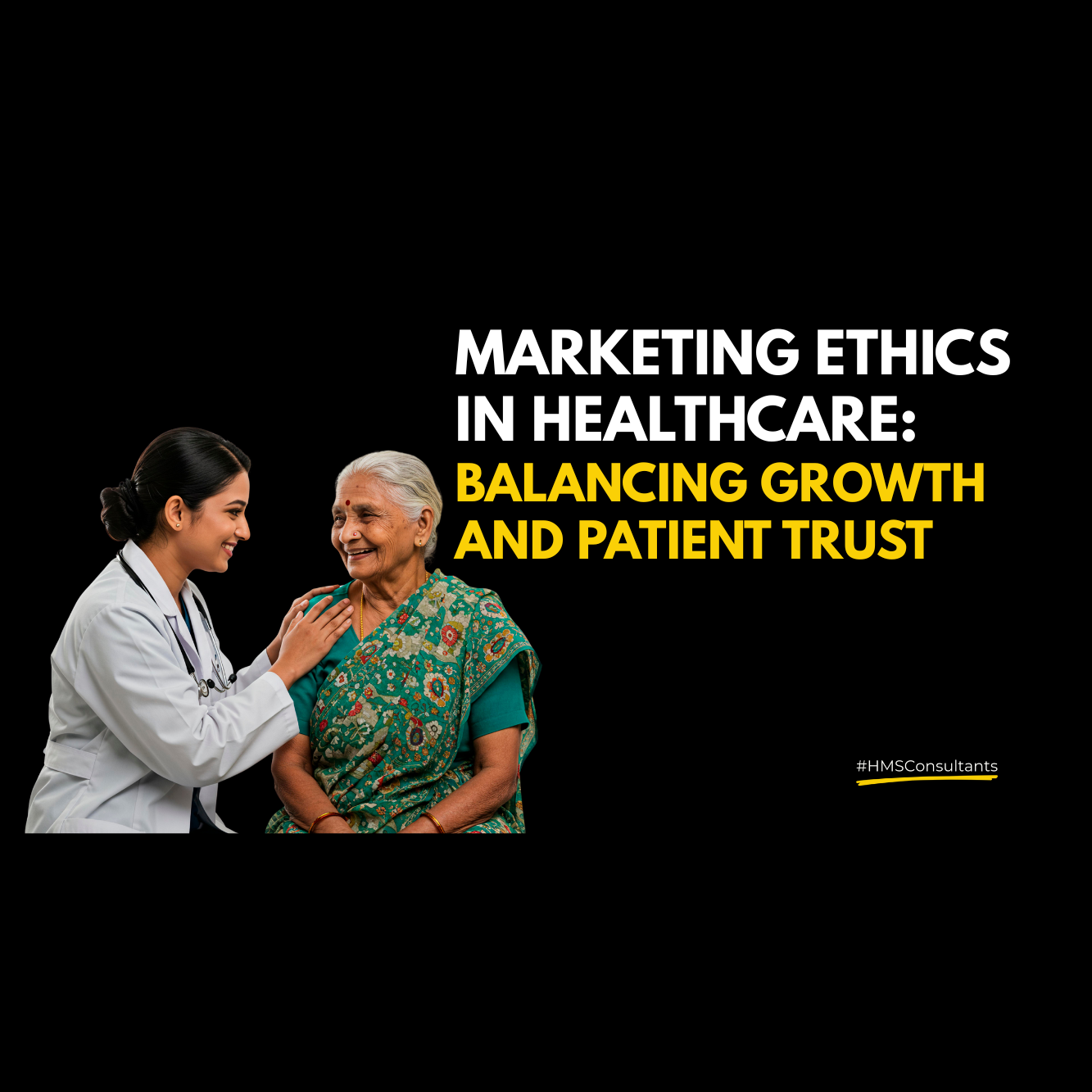
            A restaurant can run a flashy “Buy 1 Get 1” ad, but when a hospital does something similar, it immediately feels uncomfortable. Why? Because healthcare communication touches something deeper, human trust.

            As hospitals and clinics across India increasingly adopt digital marketing, marketing ethics have become the invisible force that defines whether your brand earns credibility or criticism. At HMS Consultants, we often say: growth is good, but integrity is non-negotiable.

            What Do We Mean by “Marketing Ethics” in Healthcare?

            Marketing ethics refers to the set of principles that ensure every promotional activity is truthful, respectful, and compliant, especially when it deals with human health and emotions.

            In healthcare, this means:

            • Never promising medical outcomes.
            • Avoiding exaggerated claims like “100% cure” or “zero side effects.”
            • Using real images, data, and testimonials responsibly.
            • Ensuring patient consent before using their stories.
            • Staying compliant with local and national regulatory bodies.

            These rules don’t limit creativity; they define credibility.

            Why Marketing Ethics Matter More in Healthcare

            Patients don’t just buy a product; they trust a life-impacting decision. A slight exaggeration or misleading ad can cost a brand far more than it gains. Here’s why ethics are central to modern hospital marketing:

            1. Patients Are Smarter and More Connected

              • With digital search and reviews, misinformation spreads instantly.
              • Ethical marketing builds long-term trust and organic growth.
            2. Regulatory Scrutiny Is Rising

              • Advertising in healthcare is being closely monitored under the Indian Medical Council guidelines, CDSCO norms, and state health regulations.
              • Unethical claims can result in penalties, license issues, or reputational damage.
            3. Reputation Is the New ROI

              • In healthcare, a patient’s confidence is the currency.
              • Ethical content, transparency, and empathy drive both retention and referrals.


            Examples of Unethical vs Ethical Healthcare Marketing

            Scenario

            Unethical Approach

            Ethical Alternative

            Cosmetic clinic ad

            “Guaranteed results in one session!”

            “Results may vary. Book a consultation to explore suitable options.”

            Hospital ad

            “India’s No. 1 Heart Hospital” (without source)

            “Recognised by patients for excellence in cardiac care since 2008.”

            Doctor testimonial post

            Using before–and–after images without consent

            Sharing anonymised patient feedback with permission.

            Social media engagement

            Posting fear-based messages (“Don’t die of diabetes”)

            Educating with positive reinforcement (“Early detection saves lives”).

            Ethics doesn’t restrict, it refines communication.

            Building Ethical Marketing Frameworks: How Hospitals Can Get It Right

            At HMS Consultants, we help healthcare institutions adopt ethical frameworks that protect their brand’s credibility while achieving measurable growth. Here’s what that looks like:

            1. Fact-Based Messaging

            Every claim must be supported by data, accreditation, or certification.
            Example: Instead of “Best IVF Success Rate,” use “Our success rates are consistent with top NABH-accredited centres in India.”

            2. Responsible Storytelling

            Patient stories are powerful, but they must be accompanied by informed consent. Always use anonymised visuals or quotes unless explicit permission is granted.

            3. Empathy Over Exaggeration

            Health marketing works best when it educates, not alarms.
            Example: Replace “Avoid Cancer Before It’s Too Late” with “Early Screening Saves More Lives Than Treatment.”

            4. Transparent Digital Advertising

            Whether it’s a Facebook campaign or a Google Ad, every creative must include real images, correct specialisations, and disclaimers wherever necessary.

            5. Staff Training

            Often, the issue is not intent but awareness. Training marketing teams and front-line staff on compliance builds an ethical culture across departments.

            How Ethical Marketing Strengthens Hospital Brands

            Ethical marketing is not a compliance checklist; it’s a competitive advantage.

            • Improves Online Reputation: Genuine communication gets shared, rated, and remembered.
            • Builds Patient Loyalty: Patients trust brands that speak honestly and care beyond conversions.
            • Drives Better Word-of-Mouth: Ethical hospitals are recommended more, both online and offline.
            • Attracts Collaborations: CSR partners, government projects, and NGOs prefer working with value-driven brands.

            When a hospital’s marketing is ethical, its growth becomes sustainable.

            A Word of Caution: AI and the New Ethical Frontier

            With AI-generated content becoming increasingly common, ethics now extend to data, transparency, and the mitigation of bias. At HMS, we’re guiding healthcare businesses to use AI tools responsibly, ensuring content remains accurate, human-reviewed, and aligned with compliance norms. Generative Engine Optimisation (GEO) is the next big shift, but even AI visibility must come with authenticity.

            HMS Consultants’ Perspective

            At HMS Consultants, our philosophy is simple: “Knowing is Knowing & Doing is Doing™.”

            We don’t just talk about ethical marketing; we build frameworks that hospitals can implement. From brand audits to digital strategy planning, we ensure every message aligns with:

            • Regulatory compliance
            • Patient sensitivity
            • Data integrity
            • Strategic storytelling

            Our clients, from single-speciality clinics to multi-city hospital chains, have seen that when marketing becomes ethical, growth follows naturally.

            Conclusion: Growth Without Guilt

            The future of healthcare marketing in India is not about louder ads; it’s about louder integrity. Ethical marketing doesn’t just keep you compliant; it keeps you credible. Because at the end of the day, patients remember not what you claimed, but how you made them feel.

            Doctors Digital Marketing I Healthcare Marketing I Hospital Marketing Strategies I Marketing ideas for clinics I Marketing Trends 2025 I Medical Marketing I Social Media Marketing

            is something we strongly believe in, which means ‘Knowledge without application is the same as having no knowledge at all

            Akhil Dave

            Principle Consultant

            Ready to take your Personal Brand to the next level?

            Share your details below and we will connect with you to discuss your growth strategy.

            • The Rise of Hospital Marketing: Why Every Healthcare Setup Needs a Dedicated Team

              The Rise of Hospital Marketing: Why Every Healthcare Setup Needs a Dedicated Team

              The Rise of Hospital Marketing: Why Every Healthcare Setup Needs a Dedicated Team

              Written by
              Published on
              Share This

              From Word-of-Mouth to Workflows

              Not long ago, hospitals relied entirely on word-of-mouth referrals and a reputation built over years. But healthcare in India has transformed. Patients now make decisions after researching online, reading reviews, comparing facilities, and evaluating brand credibility. This shift has quietly given birth to a new and essential function inside hospitals, the hospital marketing department. What was once seen as a luxury is now a strategic necessity. As the ecosystem evolves, so too does the career and structure of hospital marketing itself.

              The New Reality: Marketing Is Now a Healthcare Function

              In today’s competitive healthcare landscape, marketing isn’t about flashy ads or celebrity endorsements; it’s about trust, information, and patient experience.

              Hospitals are realising that just being good at medicine isn’t enough; they also need to communicate that goodness effectively. That’s why even mid-sized and regional hospitals in India are now hiring:

              This signals a structural shift; marketing is no longer outsourced, it’s institutionalised.

              What’s Driving This Change

              1. Digital Patient Journeys

              Patients today search for symptoms, book appointments online, and review hospitals afterwards. Marketing teams now manage this whole cycle, from discovery to experience to recall.

              2. Rising Competition

              With every city seeing multiple new hospitals and diagnostic chains, differentiation through brand experience has become critical.

              3. Information Transparency

              Patients expect authenticity. A marketing team ensures the correct information, from doctor profiles to facility updates, is always accurate and accessible.

              4. Evolving Compliance

              Regulations surrounding medical advertising require marketing teams to be well-trained in ethical communication. That awareness often comes from specialised consultancy guidance.

              Inside a Modern Hospital Marketing Department

              A well-structured hospital marketing team today blends strategy, communication, and data. Here’s how most successful hospitals in India are structuring theirs:

              Function

              Core Responsibility

              Example Activities

              Strategy & Planning

              Aligns marketing with hospital growth goals

              Annual campaigns, department-wise promotion plans

              Digital Marketing

              Builds and manages online visibility

              SEO, social media, Google Business, paid ads

              Patient Engagement

              Improves satisfaction and recall

              WhatsApp campaigns, newsletters, and patient feedback loops

              Reputation Management

              Monitors and enhances public image

              Online review systems, media mentions, and crisis handling

              Analytics & Reporting

              Tracks ROI and patient acquisition trends

              Campaign reports, GMB insights, lead conversions

              In large setups, these departments operate almost like mini-agencies but aligned tightly with the hospital’s ethics, brand tone, and leadership.

              The Human Side of Hospital Marketing

              A common misconception is that marketing is “commercialising healthcare.” In reality, ethical hospital marketing is about communication, not commercialisation. Here’s what separates effective hospital marketers:

              • They understand clinical sensitivity, never exaggerating claims.
              • They communicate in simple patient language, not medical jargon.
              • They balance promotion with education, ensuring patients make informed decisions.
              • They collaborate closely with doctors and departments, not just designers or agencies.

              These roles require empathy as much as expertise, and that’s what makes this function so unique within healthcare.

              What This Means for Hospital Leaders

              For administrators, this shift changes how growth is planned. Instead of asking, “Should we hire an agency?” the question now becomes, “Do we have the right internal system to manage our marketing sustainably?”

              Hospitals that establish internal marketing systems see:

              • Consistent brand voice across all platforms.
              • Better collaboration between clinical and non-clinical teams.
              • Increased efficiency in patient acquisition.
              • Improved retention and recall rates through structured engagement.

              Strategic consultants can play a vital role in helping set up this foundation, defining roles, workflows, and performance metrics.

              Challenges Hospitals Face While Building Marketing Teams

              Even though the idea sounds progressive, the execution can be tricky. Here are the most common challenges we see while working with healthcare institutions:

              1. Undefined Roles – Teams often overlap between PR, admin, and marketing.
              2. Lack of Data Flow – Marketing rarely gets patient insights from CRM or the front desk.
              3. Inconsistent Branding – Multiple vendors or departments communicate differently.
              4. Compliance Confusion – Staff may not fully understand ethical and regulatory guidelines.
              5. Dependency on Outsiders – Without internal clarity, hospitals rely too heavily on agencies.

              Each of these challenges can be solved with structured systems and clear accountability.

              How Consultants Support This Transformation (Briefly)

              Specialised healthcare consultants like HMS guide hospitals in building marketing systems from the ground up:

              • Conducting marketing auditsa
              • Designing department workflows
              • Defining KPIs and patient communication protocols
              • Training in-house teams for ethical, data-backed marketing

              It’s not about doing the marketing for hospitals it’s about helping them do it better, strategically, and compliantly.

              The Future: Strategy Meets Empathy

              As healthcare evolves, so will marketing departments. Tomorrow’s hospital marketing professional will be:

              • Fluent in data and digital,
              • Sensitive to ethics and patient emotions, and
              • Grounded in strategy, not just execution.

              In essence, the marketing department will become the voice of the hospital’s purpose, the bridge between care delivery and community connection.

              Conclusion: The Age of the Informed Hospital

              India’s healthcare industry is no longer driven only by infrastructure; it’s driven by information and experience. Hospitals that invest in structured, ethical marketing teams will not only grow faster but also build deeper patient trust.

              Marketing is not just a healthcare career anymore, it’s becoming a core function that defines how healthcare is delivered, perceived, and remembered.

              Doctors Digital Marketing I Healthcare Marketing I Hospital Marketing Strategies I Marketing ideas for clinics I Marketing Trends 2025 I Medical Marketing I Social Media Marketing

              is something we strongly believe in, which means ‘Knowledge without application is the same as having no knowledge at all

              Akhil Dave

              Principle Consultant

              Ready to take your Personal Brand to the next level?

              Share your details below and we will connect with you to discuss your growth strategy.

              • Why HMS Consultants Is Not Just Another Marketing Agency

                Why HMS Consultants Is Not Just Another Marketing Agency

                Why HMS Consultants Is Not Just Another Marketing Agency

                Written by
                Published on
                Share This

                A Different Kind of Beginning

                In an era crowded with marketing agencies promising instant visibility, HMS Consultants was founded to create something far more meaningful: clarity.

                It is not a marketing agency. It is India’s first result-oriented healthcare marketing consultancy, built exclusively for doctors, hospitals, and healthcare entrepreneurs who seek sustainable and ethical growth, not superficial visibility or viral campaigns. The idea emerged from a simple realisation that most healthcare brands do not need more marketing; they need better direction.

                Why HMS Consultants Exists

                Healthcare in India is undergoing a rapid transformation. Patients today research symptoms, compare hospitals, and evaluate credibility before stepping through the door. Most healthcare providers, however, still struggle to communicate their true strengths effectively.

                HMS Consultants exists to bridge that gap between medical excellence and market expression. Its mission is to help hospitals, clinics, and healthcare startups articulate their value through strategy, not gimmicks.

                The consultancy’s approach blends:

                • Deep domain expertise drawn from decades in healthcare marketing,
                • AI-ready strategies built for a new era of discovery, and
                • Ethical frameworks that preserve patient trust.

                The goal is straightforward: to enable healthcare providers to grow strategically, compliantly, and with confidence.

                The Genesis of HMS Consultants

                The firm was founded by Akhil Dave, a healthcare marketing leader with over 25 years of experience in building hospital brands across India.

                After serving as marketing head for several renowned institutions and later co-founding Trizone Healthcare Consultants with Niraj Upadhyay of Trizone Communications Pvt. Ltd., Dave identified a crucial gap in the industry.

                Large hospitals could afford full-service agencies; smaller hospitals, speciality clinics, and rural healthcare setups could not. They often engaged digital agencies or internal teams without strategic guidance, resulting in fragmented messaging and wasted potential.

                To solve this, he established HMS Consultants with a clear purpose: to make professional healthcare marketing strategies accessible to every healthcare provider, not just the large networks.

                Empowering, Not Executing

                Traditional agencies focus on execution, posting, designing, and advertising. HMS Consultants focuses on empowerment.

                It:

                • Does not post content but defines what to post and why,
                • Does not run ads but ensures the right message reaches the right audience,
                • Does not chase trends but builds systems that outlast them.

                Every engagement begins with a marketing and internal audit, a detailed study of brand presence, enquiry handling, and patient journey gaps. The result is insight, not assumptions. Often, what needs fixing is not the campaign but the approach.

                What Makes HMS Consultants Different

                1. A Consultancy, Not an Agency

                Its role is to strategise, structure, and supervise marketing not execute it. HMS Consultants guides in-house teams or partner agencies through defined frameworks aligned with business objectives.

                1. Focused Exclusively on Healthcare

                Unlike generalist agencies, HMS Consultants specialises in healthcare. Every recommendation is rooted in medical compliance, patient psychology, and institutional ethics.

                1. Ethics Before Algorithms

                The organisation rejects exaggerated or fear-based messaging. Every piece of communication is transparent, responsible, and compliant with Indian healthcare advertising norms.

                1. Data Meets Empathy

                HMS Consultants balances analytics with empathy. Growth strategies are driven by data but communicated with sensitivity and clarity.

                Core Pillars: Brand | Footfall | Revenue

                Every assignment revolves around three measurable outcomes:

                1. Brand Recognition — helping hospitals and clinics become known for their authentic strengths.
                2. Patient Footfall Increase — turning digital visibility into real-world engagement.
                3. Revenue Growth — ensuring every marketing effort supports financial sustainability.

                Behind these pillars lie custom strategies informed by geography, speciality, competition, and patient behaviour.

                The SPARK Values

                The consultancy’s philosophy is built around SPARK – five guiding principles that shape its culture and client relationships.

                Value

                Essence

                Strategic Integrity

                Upholding ethics and aligning growth with transparency.

                Professional Nurturing

                Mentoring young professionals and client teams alike.

                Advanced Innovation

                Embracing AI, automation, and analytics responsibly.

                Responsive Transparency

                Practising openness and clarity in every process.

                Knowledge Excellence

                Delivering informed, high-quality solutions through continuous learning.

                These principles ensure that every project remains ethical, intelligent, and human-centred.

                Leadership Vision

                Akhil Dave envisions a future where healthcare marketing in India transitions from fragmented execution to consultative partnerships.

                As the Founding Chairman of the AHMP India Foundation, he also leads a nationwide network that promotes ethical and innovative healthcare marketing. The synergy between HMS Consultants and AHMP reflects a shared purpose: to raise industry standards and inspire collaboration across the healthcare ecosystem.

                Who HMS Consultants Works With

                The consultancy partners with:

                • Multi-speciality and mid-sized hospitals,
                • Speciality clinics and polyclinics,
                • Diagnostic chains, startups, and
                • Rural or semi-urban healthcare facilities.

                Each engagement begins with understanding the local reality, including patient demographics, competition, and operational challenges, before crafting a tailored strategy. The objective is to make healthcare marketing systematic, measurable, and meaningful.

                A Brief Look at How HMS Consultants Works

                Without functioning as an agency, HMS Consultants typically follows a structured process:

                1. Marketing Audit — to identify gaps and opportunities.
                2. Strategic Framework Development — to align goals, teams, and budgets.
                3. Implementation Guidance — to support internal or external teams.
                4. Performance Review — to refine and sustain long-term growth.

                The intent is not to create dependence but to build self-sufficient marketing systems within healthcare institutions.

                The Vision for the Future

                The future of healthcare marketing will not be defined by louder advertising but by smarter alignment. Hospitals of tomorrow will not ask, “Who manages our social media?”
                They will ask, “Who guides our marketing strategy?”

                HMS Consultants is helping build that future where every healthcare brand in India operates with strategic clarity, ethical grounding, and AI-enabled adaptability.

                Conclusion: Redefining Healthcare Marketing

                HMS Consultants began with one question: Can healthcare marketing be both ethical and effective?  Its journey proves that it can.

                By combining strategic insight, ethical communication, and a deep understanding of patient behaviour, HMS Consultants has become a trusted partner for hospitals and clinics seeking structure, sustainability, and integrity in their marketing efforts.

                It is not another agency. It is a consulting partner reshaping how healthcare marketing is understood and practised in India, brighter, cleaner, and future-ready.

                Doctors Digital Marketing I Healthcare Marketing I Hospital Marketing Strategies I Marketing ideas for clinics I Marketing Trends 2025 I Medical Marketing I Social Media Marketing

                is something we strongly believe in, which means ‘Knowledge without application is the same as having no knowledge at all

                Akhil Dave

                Principle Consultant

                Ready to take your Personal Brand to the next level?

                Share your details below and we will connect with you to discuss your growth strategy.

                • AI in Healthcare Marketing: Lessons from the KPMG FICCI Report 2025

                  AI in Healthcare Marketing: Lessons from the KPMG FICCI Report 2025

                  AI in Healthcare Marketing: Lessons from the KPMG FICCI Report 2025

                  Written by
                  Published on
                  Share This

                  From Ads to Intelligence: The Shift in Healthcare Marketing

                  Healthcare marketing has come a long way from billboards and newspaper ads. Today, hospitals and clinics are moving toward intelligent, data-driven systems that don’t just attract patients; they understand them.

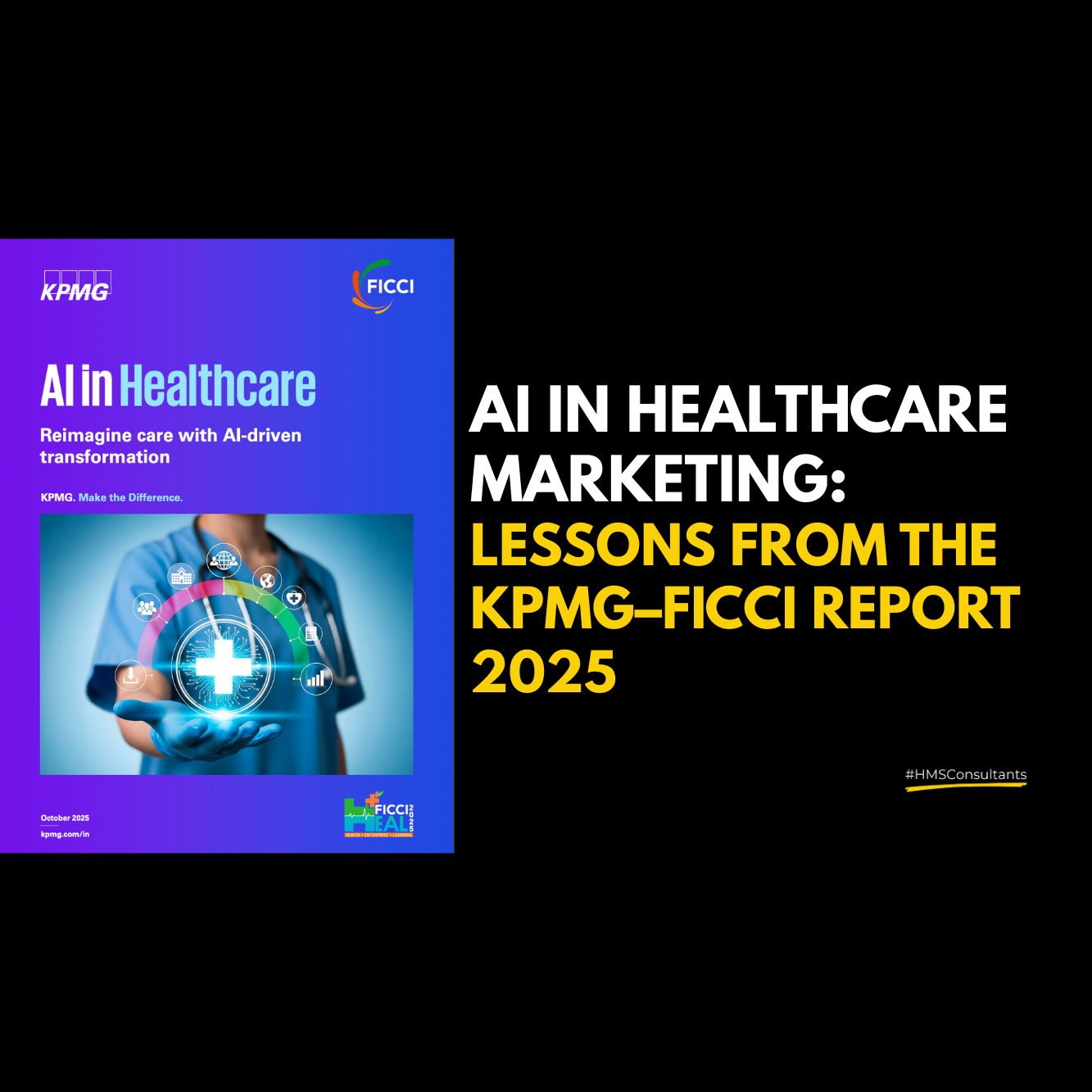
                  Artificial Intelligence (AI) is becoming the invisible hand behind this shift. As highlighted in the KPMG FICCI 2025 report, “Reimagine Care with AI-Driven Transformation,” AI is quietly reshaping how patients discover, evaluate, and stay connected with healthcare providers.

                  But AI isn’t just about technology; it’s about turning information into insight, and interaction into trust.

                  Why Marketing in Healthcare Is Different

                  Marketing in healthcare is unlike any other sector. It deals not with products or entertainment but with human well-being, privacy, and emotion. Traditional digital marketing models, focused on volume and visibility, often fail in this space because healthcare decisions are deeply personal.

                  That’s where AI adds context:

                  • Understanding what patients are searching for before they visit a hospital.
                  • Personalising communication without crossing ethical boundaries.
                  • Predicting what kind of follow-up or health reminder will improve compliance.

                  In other words, AI makes healthcare marketing less about selling and more about serving.

                  1. AI and the New Age of Patient Acquisition

                  For decades, patient acquisition relied on referrals, outdoor ads, and reputation.  Now, the journey begins online, on search engines, health portals, and even voice assistants.

                  AI helps healthcare providers understand where their next patient comes from and what triggers a decision to choose a particular hospital or doctor.

                  a. Smarter Search Visibility

                  Search algorithms now reward relevance and expertise. AI tools can analyse keywords, content trends, and patient intent, identifying what people are really looking for when they type “best diabetes care near me” or “painless cataract options.”

                  For hospitals, this means content and communication can be crafted intelligently:

                  • Blogs and pages that answer fundamental questions.
                  • Conversational chatbots that guide visitors.
                  • Ad campaigns that adapt to patient needs, not just demographics.

                  b. Predictive Patient Targeting

                  AI-based CRM systems can use past data, appointment patterns, demographics, and treatment preferences to predict when a patient might need follow-up care or when similar audiences are likely to convert.

                  Instead of blanket advertising, hospitals can focus on micro-segments such as:

                  • “Working professionals aged 35–50 at risk for diabetes.”
                  • “New parents in a 5-km radius searching for paediatric consultation.”

                  This level of precision not only reduces marketing costs but also improves conversion rates and customer satisfaction.

                  c. Reputation and Review Management

                  AI-driven sentiment analysis can scan hundreds of online reviews, comments, and patient feedback to identify service gaps and perception trends.

                  Hospitals can act on real insights:

                  “Patients appreciate our doctors but often complain about waiting time.”
                  “Follow-up communication after discharge is inconsistent.”

                  Such insights, when integrated into strategy, transform reputation management into experience improvement.

                  2. AI in Patient Engagement: Beyond First Impressions

                  Acquiring a patient is only half the journey. Retaining them and building trust that leads to referrals is where long-term growth lies. The FICCI–KPMG report emphasises that AI is becoming central to post-care engagement, helping hospitals stay connected with patients in meaningful ways.

                  a. Conversational AI for Ongoing Communication

                  Chatbots and WhatsApp-based assistants are becoming extensions of hospital front desks.
                  They can:

                  • Remind patients about follow-ups or lab results.
                  • Answer FAQs instantly.
                  • Share health education content in regional languages.

                  When designed ethically, these tools improve accessibility without feeling intrusive.
                  For smaller hospitals, this can be the simplest first step into AI adoption.

                  b. Predictive Health Reminders

                  Imagine a hospital system that knows a diabetic patient hasn’t booked their quarterly test and sends a friendly reminder at the right time.

                  AI-enabled CRMs can analyse visit frequency, medication adherence, and symptom logs to send timely, personalised nudges. This isn’t just marketing, it’s proactive care.

                  c. Personalised Health Education

                  AI can help tailor communication from newsletters to WhatsApp messages based on conditions, age, or health goals. For example:

                  • New mothers receive content about postpartum care.
                  • Senior citizens get fall-prevention tips.
                  • Fitness-minded patients receive guidance on preventive checkups.

                  Such micro-segmented education builds both engagement and trust, turning hospitals into knowledge partners.

                  3. The Ethical Edge: AI With Empathy

                  As AI becomes more integrated into marketing, one question must always guide its use: “Are we helping patients make better decisions, or just influencing them?” Healthcare marketing must remain rooted in ethics, transparency, respect, and responsibility. AI can assist without overstepping if hospitals:

                  • Obtain explicit consent for data collection.
                  • Use anonymised insights rather than personal identifiers.
                  • Prioritise accuracy and authenticity in all automated messages.

                  This approach aligns perfectly with the ethical marketing principles that HMS Consultants advocates and helps healthcare brands build long-term credibility.

                  4. How AI Strengthens Marketing Teams

                  AI doesn’t replace marketers, it augments them. With automation handling repetitive tasks, teams can focus on creativity, strategy, and human connection.

                  Here’s what AI can handle effectively:

                  • Routine enquiry responses.
                  • Report generation (campaign performance, patient trends).
                  • Scheduling and follow-ups.
                  • Audience segmentation and ad targeting.

                  And here’s where humans must still lead:

                  • Brand tone and storytelling.
                  • Cultural sensitivity and empathy.
                  • Crisis communication and patient reassurance.

                  The strongest hospitals will combine both AI for efficiency and humans for emotion.

                  5. Building a Patient Acquisition & Engagement Framework

                  Hospitals ready to implement AI-assisted marketing should start with a simple, structured plan:

                  Stage

                  Objective

                  Tools & Methods

                  1. Audit

                  Identify current digital and CRM gaps

                  Marketing audit, patient journey mapping

                  2. Integrate Data

                  Connect appointment, CRM, and website data

                  Unified patient database

                  3. Automate Responsibly

                  Introduce AI chatbots or campaign triggers

                  WhatsApp automation, CRM workflows

                  4. Personalise Communication

                  Send targeted content

                  AI-driven segmentation

                  5. Measure & Improve

                  Track engagement & conversion metrics

                  Dashboard analytics, review mining

                  Small, ethical automation steps today can lay the foundation for sustainable AI-powered marketing tomorrow.

                  The HMS Perspective

                  HMS Consultants views AI not as a trend, but as a tool for strategic clarity. The consultancy helps healthcare providers:

                  • Structure their patient acquisition and retention journeys.
                  • Identify where AI can support communication, not replace it.
                  • Build marketing systems aligned with ethical and operational integrity.

                  The focus remains on strategy, not software, ensuring every technology adopted genuinely enhances the patient experience.

                  Conclusion: Where Intelligence Meets Intention

                  AI is transforming how hospitals connect with people, but success lies not in automation, but in alignment. When strategy, empathy, and technology meet, patient acquisition becomes easier, and engagement becomes enduring.

                  The future of healthcare marketing will not be decided by who has the most data, but by who uses it most responsibly.

                  Written by Tusharika Ranjan

                  Doctors Digital Marketing I Healthcare Marketing I Hospital Marketing Strategies I Marketing ideas for clinics I Marketing Trends 2025 I Medical Marketing I Social Media Marketing

                  is something we strongly believe in, which means ‘Knowledge without application is the same as having no knowledge at all

                  Akhil Dave

                  Principle Consultant

                  Ready to take your Personal Brand to the next level?

                  Share your details below and we will connect with you to discuss your growth strategy.

                  • Knowing–Doing Framework™: Turning Knowledge Into Impact (The HMS Consultants Playbook)

                    Knowing–Doing Framework™: Turning Knowledge Into Impact (The HMS Consultants Playbook)

                    Knowing–Doing Framework™: Turning Knowledge Into Impact (The HMS Consultants Playbook)

                    Written by
                    Published on
                    Share This

                    The Story: How Akhil Dave Arrived Here (Working & Learning)

                    For 25 years, Akhil has been working and learning with hospitals, clinics, and health-tech founders across India. He noticed a repeating pattern:

                    • Some teams had great knowledge but didn’t execute consistently.

                    • Others were busy executing but without clarity, their actions became… noise.

                    After hundreds of campaigns, brand launches, and strategy interventions, one insight crystallised:

                    Knowing is Knowing. Doing is Doing™
                    Knowledge inspires. Action transforms.

                    From this belief came a simple, teachable, repeatable model that any healthcare organisation can apply from a single-doctor clinic to a multi-speciality network: The Knowing–Doing Framework™.

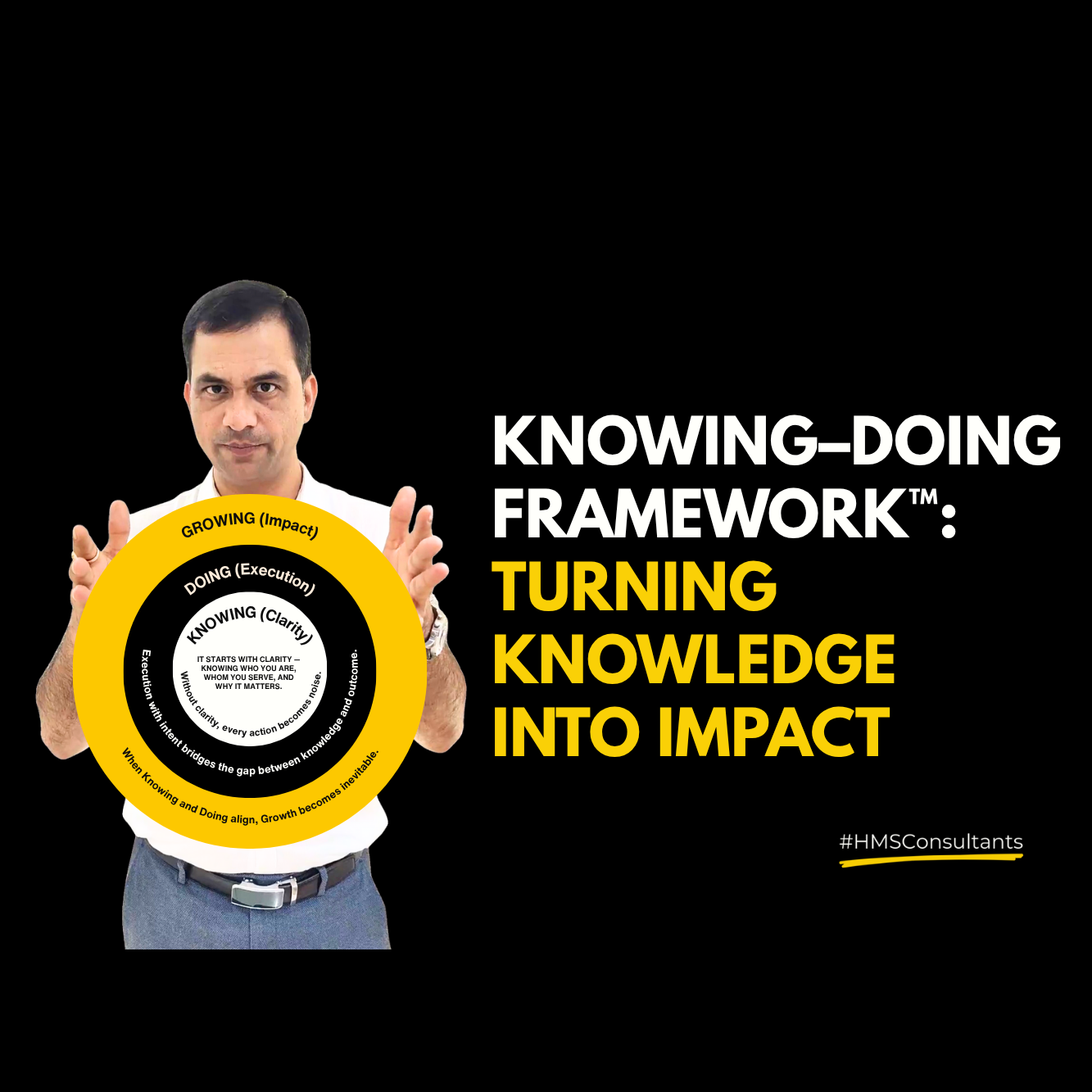
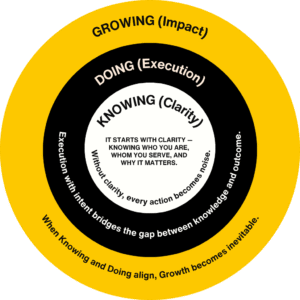
                    The Knowing–Doing Framework™ diagram showing three layers: Knowing (clarity), Doing (execution), Growing (impact) for healthcare marketing.

                    What is the Knowing–Doing Framework™?

                    A practical, three-layer operating system for healthcare marketing:

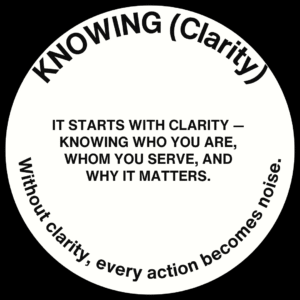
                    • Knowing (Clarity): Define who you are, whom you serve, and why it matters before you spend a rupee.
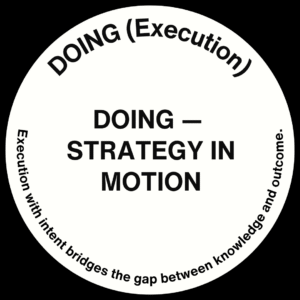
                    • Doing (Execution): Run aligned activities online + offline with a clear roadmap, timelines, and owners.
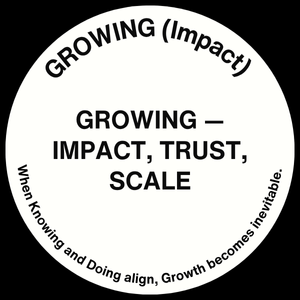
                    • Growing (Impact): Measure what matters, learn, and scale what works to build trust, footfall, and revenue.

                    The Three Layers Explained

                    A) KNOWING — Clarity Before Action

                    Without clarity, activity becomes noise. In healthcare, “Knowing” means:

                    • Brand Persona: Values, tone, uniqueness, visual identity, promise.
                    • Doctor vs Clinic Branding: Solo practice? Lead with doctor brand. Scaling multi-center? Build a clinic brand often, do both (Indian context).
                    • Customer Persona & Empathy Map: Demographics, needs, fears, motivations, “day in the life,” and decision triggers.
                    Healthcare brand clarity concept showing brand persona, customer persona, competitive analysis, positioning statement, and minimal viable audience.
                    Healthcare marketing execution showing website optimization, GMB updates, content creation, WhatsApp automation, review management, and front desk training.

                    B) DOING — Strategy in Motion

                    Execution turns clarity into momentum. In healthcare, “Doing” is an orchestrated mix of offline + online + content + systems.

                    Your Core Execution Pillars

                    1. Roadmap & Goals:

                    • Vision → 12-month goals → quarterly OKRs → monthly activities.

                    2. Channel Mix:

                    • Offline (≈40% budget): Community programs, OPD camps, referral networks, PR, doctor talks.
                    • Online (≈40%): Website, SEO/AEO, Google Business Profile (GMB), reviews, social/content, paid acquisition.
                    • Content (≈10%): Video explainers, procedure pages, FAQs, patient education assets.
                    • Tools/CRM/Admin (≈10%): CRM, WhatsApp Business, HMIS, analytics, dashboards.

                    3. AEO (Answer Engine Optimisation):

                    • Build “doctor-answer” pages for common questions, with FAQs, author bio, and visuals short, factual, bilingual where relevant.

                    4. WhatsApp Journeys:

                    • Verified profile, appointment flows, reminders, follow-ups, review nudges (with consent).

                    5. Review Flywheel:

                    • QR at discharge + 24 –48h WhatsApp prompt → respond to every review → showcase real stories (with consent).

                    6. Front Desk Excellence:

                    • Scripted greetings, tone training, response SLAs first impression = brand.

                    Outcome: A prioritised 90-day activity plan, owners, timelines, and KPIs.

                    C) GROWING — Impact, Trust, Scale

                    When Knowing and Doing align, growth compounds:

                    • Visibility: Higher local discovery (GMB calls, directions), organic traffic, citations.
                    • Trust: Better ratings, consistent responses, patient stories.
                    • Footfall & Revenue: Improved show-up rates, procedure mix, average revenue per patient.
                    • Scale: From one specialty/geography to many without losing your brand promise.

                    Outcome: A quarterly Scale Plan: expand services, deepen geography, or launch new formats (satellite OPDs, tele-consults, collaborations).

                    Healthcare growth results showing increased visibility, patient trust, clinic footfall, and revenue driven by aligned marketing execution.

                    The Healthcare-Specific Playbook (Step-by-Step)

                    Step 1: Build Your Clarity Brief (Knowing)

                    • Brand persona, promise, & visual basics
                    • Customer personas & empathy maps (primary/secondary)
                    • Competition table (services, pricing, strengths)
                    • Positioning statement + Minimal Viable Audience
                    • Compliance guardrails (claims, visuals, patient consent)


                    Step 2: Stand-Up the Foundations (Doing)

                    • Website: fast, mobile-first, structured (service pages with FAQs/How-To), clear author bios.
                    • GMB: accurate categories, services, photos, weekly updates, Q&A.
                    • Content Engine: 20–30 “doctor answers,” 12 short videos, 2–4 blogs/month, Hindi + local language summaries.
                    • WhatsApp: opt-in flows, appointment automation, reminder templates, post-visit care nudges.
                    • Review System: QR + automated prompts + response SOPs.
                    • Source Tracking: HMIS/CRM tags for Google, GMB, WhatsApp, referral, walk-in, paid.


                    Step 3: Run the Mix (Doing)

                    • Offline: local talks, camps, referral meets, community tie-ups.
                    • Online: local SEO/AEO, social posts, short videos, limited paid (focused on top 3 services).
                    • Nurture: post-visit education, follow-up reminders, preventive checklists.
                    • Front Desk: greeting → triage → handoff → follow-up scripts; weekly huddles.


                    Step 4: Review & Scale (Growing)

                    • Monthly KPI review; kill what’s not working, double-down on winners.
                    • Add new service pages, expand languages, and refine WhatsApp journeys.
                    • Plan quarterly “signature campaigns” (prevention month, women’s health week, etc.).

                    The 90-Day Implementation Plan

                    Days 0–15 (Foundation)

                    • Clarity Brief finalised
                    • Website audit + GMB revamp
                    • WhatsApp Business setup + consent plan
                    • Review QR + response SOP
                    • Dashboard skeleton (source, CPL, reviews, revenue)

                    Days 16–45 (Content & Journeys)

                    • 10 doctor-answer pages live (+ FAQs, author bios)
                    • 6–8 short videos (60–120s explainers)
                    • WhatsApp flows: enquiry → appointment → reminder → review → follow-up
                    • Front desk training (tone, scripts, SLAs)

                    Days 46–90 (Scale & Optimise)

                    • 10–15 more doctor-answers + 2 blogs/month
                    • Small paid test on top 3 services (tight targeting)
                    • Local outreach: 2 community events + 1 referral meet
                    • Monthly KPI review → iterate

                    Budgeting & Prioritization

                    Stage-wise guideline (typical ranges):

                    • New startup (metro): 20–25% of expected revenue
                    • New startup (semi-urban/rural): 10–15%
                    • Existing practice, low footfall: 8–15%
                    • Established in a competitive market: 5–10%
                    • Super-speciality with institutional backing: 5–7%


                    Effort vs Impact Map

                    • Prioritise High Impact / Low Effort (GMB cleanup, doctor-answers, review SOP)
                    • Plan High Impact / High Effort (videos, referral ecosystem)
                    • Defer Low Impact / High Effort (nice-to-have campaigns)

                    Tech Stack & Tools (examples, not endorsements)

                    • AEO/Content: ChatGPT, Claude/Gemini for drafts → human-edited; GA4, Search Console
                    • Design/Video: Canva, CapCut, Runway/Pika for motion
                    • WhatsApp Automation: Interakt, Gupshup, WATI (with opt-in, consent)
                    • CRM/Engagement: Zoho CRM, LeadSquared, WebEngage/MoEngage
                    • HMIS/EMR: Any reliable system you use ensure source tagging, reminder capability

                    Measurement: Your Monthly “Marketing Vitals”

                    • Demand: GMB actions (calls, directions), website sessions, WhatsApp chats started
                    • Efficiency: Cost per booked appointment (not just leads), paid vs organic share
                    • Conversion: show-up rate, time-to-first-response, call answer rate
                    • Trust: review volume & rating, response rate, patient stories published (with consent)
                    • Revenue: ARPNP (avg revenue per new patient), procedure mix, re-visits
                    • AEO Footprint: number of pages that win featured/answer placements; citations earned

                    Common Mistakes to Avoid

                    • Random activity ≠ strategy.
                    • Over-reliance on ads without owned content and reviews.
                    • Ignoring front desk training tone, empathy, speed
                    • No source tracking → can’t prove ROI.
                    • No consent or sloppy privacy practices in patient communication.

                    Conclusion

                    If you want to implement the Knowing–Doing Framework™ in your hospital or clinic end-to-end from clarity brief to content engine, WhatsApp journeys, and monthly dashboards:

                    Write to us: info@hmsconsultants.in
                    Subject: “Knowing–Doing Framework – Implementation”
                    We’ll share a short readiness checklist and a 30-minute discovery format.

                    HMS Consultants 

                    Doctors Digital Marketing I Healthcare Marketing I Hospital Marketing Strategies I Marketing ideas for clinics I Marketing Trends 2025 I Medical Marketing I Social Media Marketing

                    is something we strongly believe in, which means ‘Knowledge without application is the same as having no knowledge at all

                    Akhil Dave

                    Principle Consultant

                    Ready to take your Personal Brand to the next level?

                    Share your details below and we will connect with you to discuss your growth strategy.

                    • Time as Currency: Why Speed of Care is the New Marketing Advantage

                      Time as Currency: Why Speed of Care is the New Marketing Advantage

                      Time as Currency: Why Speed of Care is the New Marketing Advantage

                      Written by
                      Published on
                      Share This

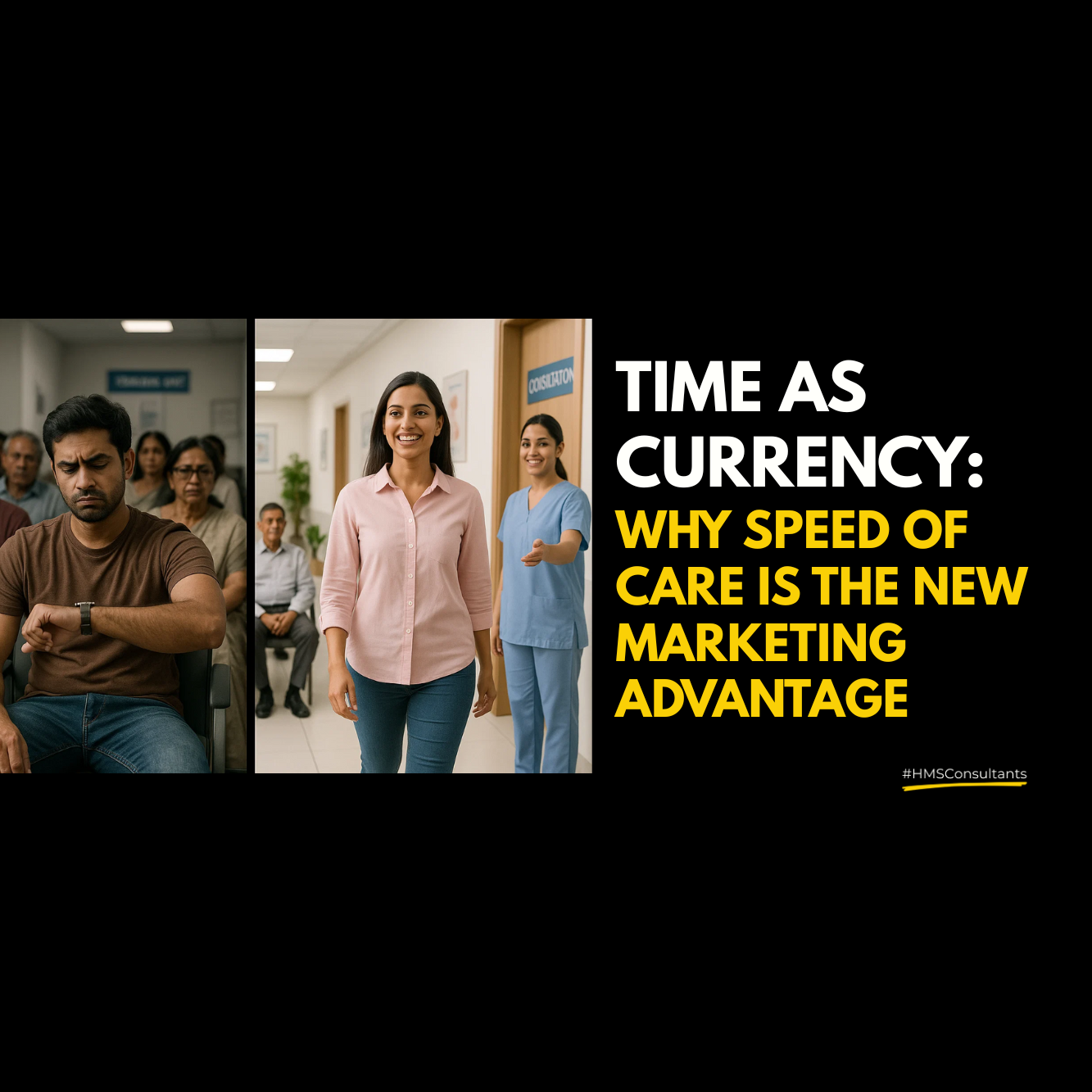
                      In today’s world, time is the one thing patients value as much as good treatment. A clinic that makes patients wait an hour before a consultation risks losing them to a competitor who respects their schedule. From the waiting room to test reports, speed has become one of the most powerful hospital marketing strategies.

                      A healthcare marketing consultant will tell you this: faster care does not just improve efficiency, it creates trust. Patients associate speed with professionalism, reliability, and respect. For clinics and hospitals in India, learning to treat time as currency is a game-changing healthcare marketing technique.

                      Why Time Matters in Healthcare Marketing

                      Patients no longer compare clinics only on the quality of doctors. They also compare experiences. One of the strongest drivers of satisfaction is speed.

                      • Shorter waiting times show that you respect a patient’s time.
                      • Faster report delivery reassures patients that you value their health.
                      • Quick follow-ups signal reliability and care beyond the visit.

                      In healthcare marketing in India, word of mouth spreads quickly. A clinic known for “never making patients wait too long” can outshine a larger hospital that overlooks this simple factor.

                      Key Areas Where Speed Builds Trust

                      1. Waiting Room Experience

                      Patients often decide how they feel about a clinic before meeting the doctor. If the wait feels endless, frustration builds. On the other hand, a system that moves smoothly leaves a lasting impression.

                      • Use digital token systems.
                      • Offer SMS updates when it’s close to their turn.
                      • Keep waiting areas engaging with health tips, not just empty time.


                      2. Appointment Booking

                      Ease of booking is as important as the consultation itself.

                      • Enable WhatsApp or website bookings.
                      • Allow rescheduling without hassle.
                      • Respond quickly to calls and inquiries.


                      3. Report Delivery

                      A big pain point in Indian healthcare is the delay in test results. Clinics that provide quicker report delivery instantly win loyalty.

                      • Offer digital reports via email or app.
                      • Send SMS alerts when results are ready.
                      • Keep realistic timelines and stick to them.


                      4. Follow-Ups and Feedback

                      The patient journey does not end at discharge.

                      • A next-day call asking “How are you feeling?” shows speed and care.
                      • Quick responses to online queries strengthen your digital reputation.

                      Takeaway: Every small time-saving touchpoint becomes a marketing advantage.

                      The Digital Angle: How Technology Reduces Delays

                      Digital marketing for healthcare is not just about social media. Technology can directly reduce delays and market your clinic at the same time.

                      • Online payment systems cut billing queues.
                      • Teleconsults save travel time for patients.
                      • Automated reminders reduce no-shows and keep schedules on track.
                      • Chatbots handle basic queries instantly, giving staff more time for care.

                      When patients see that your systems respect their time, they associate your clinic with professionalism. That is branding without an ad budget.

                      Case Example: Fast Beats Big

                      A mid-sized diagnostic lab in Bengaluru reduced report delivery times by 30 percent by switching to digital reporting and WhatsApp notifications. Within six months, their Google reviews highlighted “fast results” more often than “low cost.”

                      Meanwhile, a larger competitor continued to rely on paper-based reports. Despite bigger marketing budgets, patients shifted preference because speed built trust.

                      Consulting Lens: Time as a Strategic Differentiator

                      For a healthcare marketing consultant, speed is no longer just an operational goal. It is a hospital marketing strategy. In competitive Indian cities where patients have many options, reducing wait times and ensuring faster service can be more powerful than discounts or ads.

                      It also impacts online reputation, since most reviews mention time: “waited too long” or “quick and efficient.” Addressing this makes every other marketing effort stronger.

                      Practical Techniques for Clinics

                      1. Audit Your Delays: Track where patients wait longest and fix those steps.
                      2. Invest in Small Tech: Even simple appointment apps reduce waiting.
                      3. Set Clear Expectations: If reports take 24 hours, deliver in 20, not 48.
                      4. Train Staff for Responsiveness: A quick answer at the desk builds confidence.
                      5. Promote Your Speed: Highlight “same-day reports” or “10-minute booking” in your campaigns.

                      Conclusion

                      In healthcare, patients expect quality. But what truly surprises them is speed. Clinics that treat time as currency do more than reduce queues. They show respect, build trust, and create experiences patients remember.

                      In a competitive Indian market, hospital marketing strategies that focus on saving time can be the difference between a one-time visitor and a lifelong patient. Faster care is not just good service. It is smart marketing.

                      Written by Maitri Desai

                      Doctors Digital Marketing I Healthcare Marketing I Hospital Marketing Strategies I Marketing ideas for clinics I Marketing Trends 2025 I Medical Marketing I Social Media Marketing

                      is something we strongly believe in, which means ‘Knowledge without application is the same as having no knowledge at all

                      Akhil Dave

                      Principle Consultant

                      Ready to take your Personal Brand to the next level?

                      Share your details below and we will connect with you to discuss your growth strategy.