Tag: Healthcare Marketing

  • Healthcare Marketing Agency vs Consultant: Where the Real Opportunity Lies

    Healthcare Marketing Agency vs Consultant: Where the Real Opportunity Lies

    Healthcare Marketing Agency vs Consultant: Where the Real Opportunity Lies

    Published on
    Share This

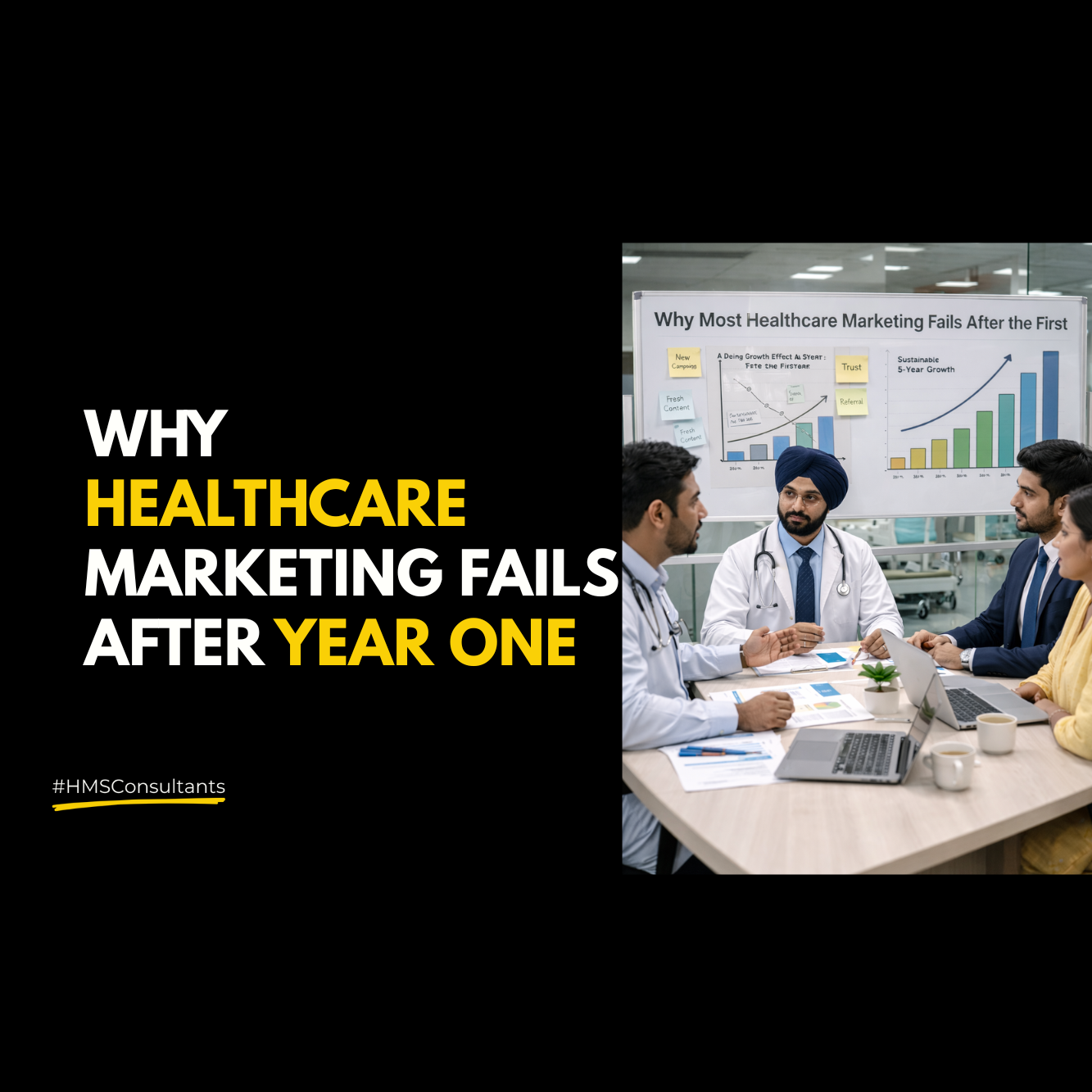
    A healthcare marketing agency can help doctors, clinics, hospitals, diagnostic centres, and wellness businesses with marketing activities like social media, ads, website updates, SEO, and creatives. But in many cases, healthcare businesses need more than execution. They need clarity, strategy, and someone who can guide their marketing direction with responsibility.

    This is where the real opportunity begins.

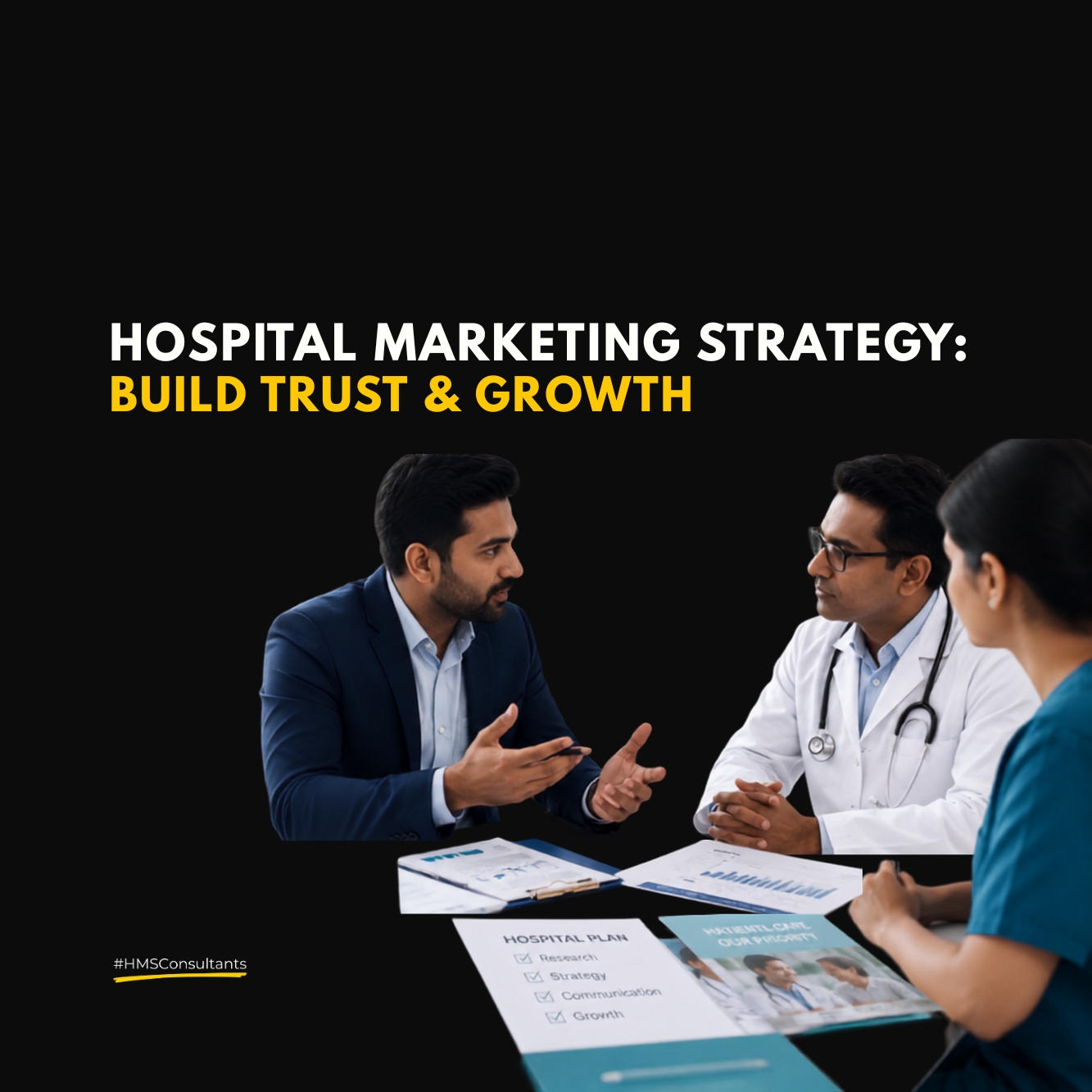
    Healthcare marketing is not only about posting content, running ads, or designing campaigns. It is about patient trust, communication, positioning, digital presence, enquiry flow, and long-term healthcare business growth.

    Why Healthcare Businesses Invest in Marketing

    Today, doctors, clinics, hospitals, diagnostic centres, and healthcare startups are investing in marketing because competition is increasing.

    Patients are searching online before choosing a doctor, clinic, hospital, or treatment provider. They check Google reviews, websites, social media pages, doctor profiles, patient communication, and overall trust signals.

    Healthcare businesses usually want support with:

    • Better visibility
    • More patient enquiries
    • Stronger digital presence
    • Clear communication
    • Better brand positioning
    • Improved patient trust
    • Healthcare business growth

    This is why healthcare digital marketing and healthcare marketing services have become important for the industry.

    Why Marketing Execution Alone May Not Be Enough

    A healthcare marketing agency can help with execution. It can create posts, run ads, manage social media, improve websites, and support SEO.

    But many healthcare businesses still struggle with questions like:

    • What should we promote?
    • Which service should we focus on?
    • Is our communication ethical?
    • Are we attracting the right patients?
    • Is our website helping patients understand us?
    • Are enquiries being handled properly?
    • Is our marketing budget being used in the right direction?

    These questions need consulting thinking.

    Execution answers “how to do it.”

    Consulting answers “what should be done and why.”

    This is why the role of a healthcare marketing consultant is becoming important.

    Healthcare Marketing Agency vs Healthcare Marketing Consultant

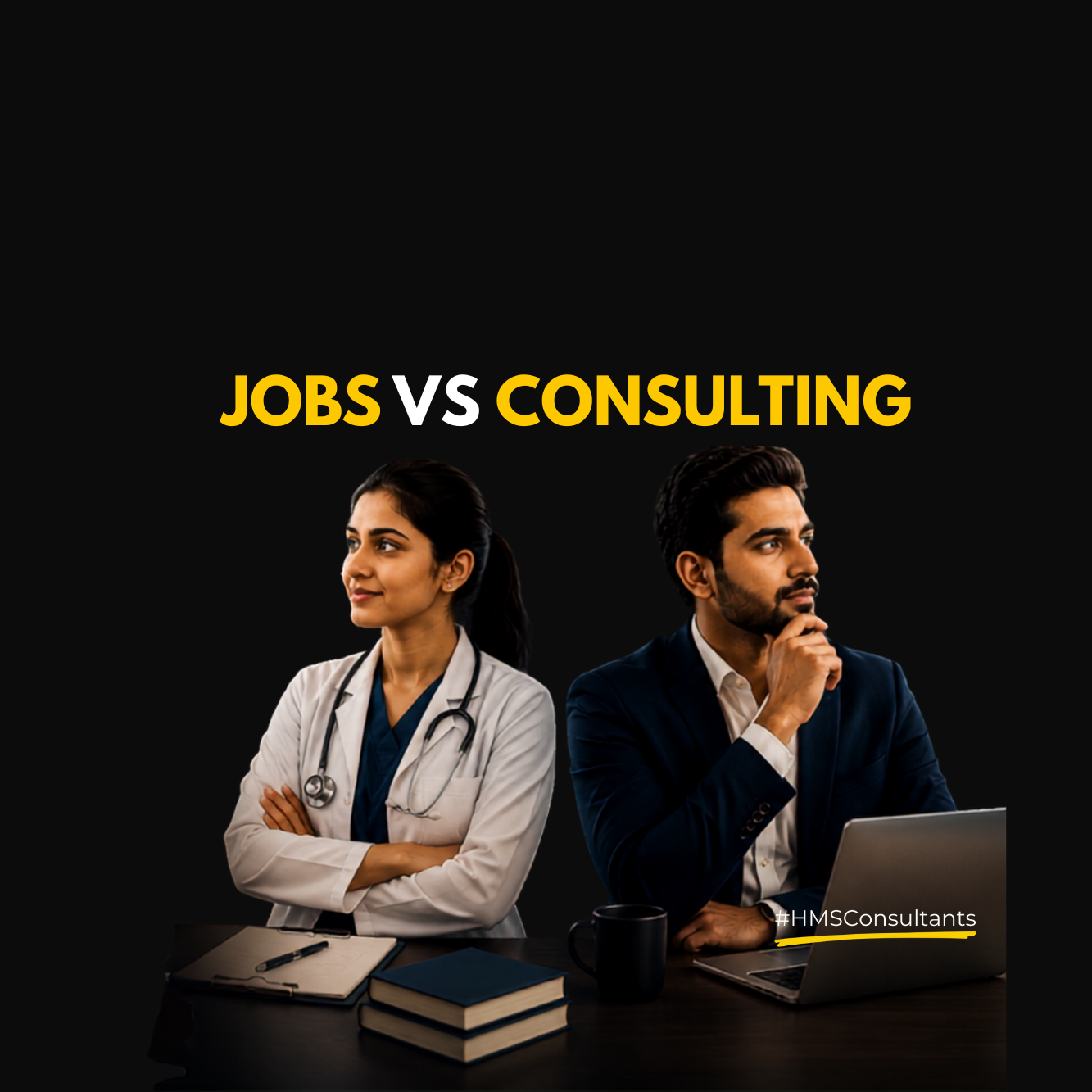
    A healthcare marketing agency and a healthcare marketing consultant are not the same. Both can be useful, but their roles are different.

    A healthcare marketing agency usually supports execution.

    A healthcare marketing consultant focuses on diagnosis, strategy, and direction.

    A consultant helps healthcare businesses understand:

    • What is missing in their current marketing
    • Where the patient journey is weak
    • How their digital presence can improve
    • Whether their communication is clear and ethical
    • How they should position their services
    • What kind of healthcare marketing services they actually need
    • How marketing should support healthcare business growth

    This is why healthcare marketing consulting can become a serious opportunity for trained professionals.

    Why Healthcare Marketing Consulting Is Emerging

    Healthcare is different from other industries. Marketing in healthcare needs care, responsibility, and patient-first communication.

    A clinic cannot market like a fashion brand.
    A hospital cannot communicate like a regular retail business.
    A doctor’s visibility must be built with trust, not noise.

    This is where a healthcare marketing consultant can guide businesses better.

    A trained consultant can help with:

    • Digital presence audit
    • Patient communication review
    • Website and SEO direction
    • Google Business Profile improvement
    • Social media strategy
    • Brand positioning
    • Enquiry flow improvement
    • Ethical healthcare marketing
    • Clinic and hospital growth strategy

    This makes healthcare marketing consulting different from generic marketing.

    Opportunity for Professionals

    Many professionals today understand healthcare, marketing, business development, hospital operations, or digital platforms. But very few know how to combine these skills into a consulting approach.

    This creates an opportunity.

    A person who becomes a healthcare marketing consultant can guide doctors, clinics, hospitals, diagnostic centres, and healthcare businesses with structured thinking.

    A hospital marketing consultant can help hospitals improve patient communication, service-line visibility, digital presence, and growth planning.

    A clinic marketing consultant can help clinics understand local visibility, patient enquiries, online reputation, and service positioning.

    The opportunity is not only in doing marketing work.

    The opportunity is in helping healthcare businesses make better marketing decisions.

    Skills Needed to Become a Healthcare Marketing Consultant

    To build a career in this space, professionals need practical and specialised skills.

    Important skills include:

    • Healthcare industry understanding
    • Patient behaviour knowledge
    • Healthcare digital marketing basics
    • Marketing audit ability
    • Communication skills
    • Consulting thinking
    • Business development
    • Proposal creation
    • Ethical healthcare marketing understanding
    • Personal branding

    These skills help professionals move from execution to advisory thinking.

    How HMS Supports This Direction

    The HMS Certified Healthcare Marketing Consultant Program is designed for serious professionals who want to build specialised capability in healthcare marketing consulting.

    The program focuses on healthcare marketing strategy, digital presence audit, patient communication, consulting frameworks, proposal formats, personal branding, business development support, and mentoring.

    This is not a job opportunity.

    It is not just another certificate.

    It is a structured professional development and consulting enablement program for people who want to build themselves as healthcare marketing consultants.

    Conclusion

    A healthcare marketing agency can help with execution, but healthcare businesses also need direction, strategy, and responsible guidance.

    That is where healthcare marketing consulting becomes important.

    Doctors, clinics, hospitals, and healthcare businesses need professionals who can understand healthcare, think strategically, communicate ethically, and guide marketing decisions with clarity.

    For serious professionals, this can become a meaningful opportunity.

    The future of healthcare marketing will not only need people who execute campaigns.

    It will need consultants who can guide growth.

    Contact Us HMS Consultants

    The HMS Certified Healthcare Marketing Consultant Program is a structured professional development and consulting enablement program for people who want to build healthcare marketing consulting skills with HMS training, tools, frameworks, mentoring, and guidance.

    Healthcare Marketing I Healthcare Consulting

    is something we strongly believe in, which means ‘Knowledge without application is the same as having no knowledge at all

    Akhil Dave

    Principle Consultant

    Ready to take your Personal Brand to the next level?

    Share your details below and we will connect with you to discuss your growth strategy.
    • Healthcare Career Opportunities in India: Are Careers Growing With Healthcare?

      Healthcare Career Opportunities in India: Are Careers Growing With Healthcare?

      Healthcare Career Opportunities in India: Are Careers Growing With Healthcare?

      Written by
      Published on
      Share This

      Healthcare career opportunities in India are growing as hospitals, clinics, diagnostic centres, wellness brands, healthcare startups, and digital healthcare platforms continue to expand. But one important question remains: Are healthcare careers growing at the same pace as the healthcare industry?

      Healthcare is becoming more competitive and patient-focused. New hospitals are opening, clinics are investing in branding, and patients are using digital platforms to search, compare, and choose healthcare services.

      But industry growth does not automatically create strong career growth for every professional.

      Many MBA healthcare management students, MHA graduates, hospital administration professionals, healthcare marketers, and early-career professionals still depend mainly on traditional job roles in:

      • Hospital operations.
      • Administration.
      • Quality management.
      • Insurance.
      • Pharma sales.
      • Healthcare marketing.
      • Consulting firms.

      These career paths are important, but competition is increasing. Today, a degree may help you enter the healthcare sector. Long-term growth depends on the specialised skills you build after that.

      Healthcare Careers Need New Skills

      The healthcare industry now needs professionals who can do more than routine work. Healthcare businesses need people who can understand patients, improve communication, review digital presence, support ethical marketing, and guide growth with clarity.

      This means career growth is no longer only about qualification or years of experience. It is also about capability.

      Professionals should ask themselves:

      • Can I understand healthcare business problems?
      • Can I guide doctors, clinics, or hospitals with clarity?
      • Can I analyse patient communication and digital presence?
      • Can I think beyond routine operations?
      • Can I build a specialised professional identity?

      These questions matter because healthcare careers are moving toward skill-driven and consulting-led opportunities.

      Why Traditional Jobs May Not Be Enough

      Traditional healthcare jobs will always remain valuable. Hospitals need administrators, healthcare companies need managers, and consulting firms need analysts.

      But depending only on regular employment may create limitations such as:

      • Fixed salary structure.
      • Slow promotions.
      • Limited strategic exposure.
      • Increasing competition.
      • Location dependency.
      • Dependency on job openings.
      • Less personal brand identity.

      This does not mean jobs are not useful. Jobs provide learning and stability. But ambitious professionals should also think about what specialised skill can make them more valuable in the healthcare market.

      Healthcare Marketing Consulting as an Emerging Career Path

      One important emerging area is healthcare marketing consulting.

      Healthcare marketing consulting is not just about promotion or social media. It is about helping doctors, clinics, hospitals, diagnostic centres, wellness businesses, and healthcare startups grow with strategy, ethics, patient communication, and digital direction.

      Many healthcare businesses are investing in marketing, but they still need guidance on:

      • Website and SEO improvement.
      • Google Business Profile visibility.
      • Social media direction.
      • Patient communication.
      • Brand positioning.
      • Enquiry flow improvement.
      • Marketing performance review.
      • Ethical healthcare promotion.
      • Clinic and hospital growth strategy.

      This creates an opportunity for professionals who understand healthcare and are willing to learn consulting skills.

      Why Healthcare Marketing Consulting Matters

      Healthcare marketing is different from regular marketing. It deals with trust, patient decisions, medical credibility, and ethical communication.

      A Healthcare Marketing Consultant helps healthcare businesses understand what is working, what is missing, and what needs improvement.

      This role requires a mix of:

      • Healthcare understanding.
      • Marketing strategy.
      • Patient behaviour knowledge.
      • Digital awareness.
      • Communication clarity.
      • Ethical thinking.
      • Consulting approach.
      • Business development skills.

      For professionals who want to grow beyond routine roles, this can become a meaningful career direction.

      Who Can Explore This Career Path?

      Healthcare marketing consulting may be suitable for:

      • MBA healthcare management students.
      • MHA graduates.
      • Hospital administration professionals.
      • Healthcare marketing professionals.
      • Digital marketers who want healthcare specialisation.
      • Medical representatives seeking career transition.
      • Clinic or hospital operations professionals.
      • Healthcare entrepreneurs.
      • Branding and communication professionals.
      • Business development professionals.

      The key requirement is not only background. It is seriousness, discipline, communication ability, and willingness to build consulting capability.

      How HMS Supports This Direction

      The HMS Certified Healthcare Marketing Consultanting Program is designed for serious professionals who want to build themselves as Healthcare Marketing Consultants.

      The program focuses on:

      • Structured training.
      • HMS consulting frameworks.
      • Healthcare marketing audit tools.
      • Client discovery formats.
      • Proposal and reporting templates.
      • Personal branding guidance.
      • Business development support.
      • Mentoring for initial client conversations.

      This is not a job opportunity. It is not just another certificate.

      It is a structured professional development and consulting enablement program for people who want to build their own path in healthcare marketing consulting.

      Conclusion

      Healthcare career opportunities in India are growing, but career success will depend on how professionals prepare for the changing needs of the industry.

      Traditional jobs will continue to exist. But specialised consulting skills can open new possibilities for professionals who want stronger growth, better identity, and future-ready capability.

      Healthcare is growing. Professionals must also grow with new skills, better thinking, and specialised consulting capability.

      Contact Us HMS Consultants

      The HMS Certified Healthcare Marketing Consultant Program is a structured professional development and consulting enablement program for people who want to build their own healthcare marketing consulting practice with HMS training, tools, frameworks, mentoring, and guidance.

      Healthcare Marketing I Healthcare Consulting

      is something we strongly believe in, which means ‘Knowledge without application is the same as having no knowledge at all

      Akhil Dave

      Principle Consultant

      Ready to take your Personal Brand to the next level?

      Share your details below and we will connect with you to discuss your growth strategy.

      • Doctor Branding Is Not the Same as Your Reputation, and the Difference Is Costing You Patients

        Doctor Branding Is Not the Same as Your Reputation, and the Difference Is Costing You Patients

        Doctor Branding Is Not the Same as Your Reputation, and the Difference Is Costing You Patients

        Written by
        Published on
        Share This

        Doctor branding is one of the most misunderstood concepts in healthcare today not because doctors are unfamiliar with it, but because most doctors believe their reputation already covers it. It does not. A doctor can spend twenty years building an outstanding reputation earning patient trust, gaining peer respect, receiving consistent referrals from word of mouth and still be completely invisible to every patient who has not already heard of them. That invisibility is not a reputation problem. It is a branding problem. And in 2026, the cost of that invisibility is measured in patients who searched, found nothing convincing, and chose someone else.

        The distinction between reputation and doctor branding is not a matter of semantics. It is a practical gap that determines whether a doctor grows consistently or stays dependent on a referral chain that is narrower than it appears.

        Reputation and Doctor Branding Are Not the Same System

        Reputation is built through experience.

        Every patient treated well, every difficult case handled with clarity, every recovery supported with genuine care these accumulate over time into a professional standing that peers and patients recognise and trust. But reputation lives in the memory of people who have already encountered the doctor. It travels through conversations, a colleague’s recommendation, a family member’s advice, a general practitioner’s referral.

        Doctor branding works differently. It exists in the spaces where patients who have never met the doctor are forming their very first impression:

        • Search results and Google listings.
        • Review platforms and specialist directories.
        • AI-generated recommendations.
        • Educational content and digital profiles.
        • Speciality-specific pages and condition-based searches.

        One system works backwards from experience. The other works forwards from discovery. A doctor who only has one without the other has an incomplete patient acquisition structure regardless of how strong either element is individually.

        Why Reputation Alone No Longer Completes the Journey

        For most of medical practice history in India, reputation was sufficient. Patients found doctors through trusted human networks, family physicians, colleagues, relatives who had been treated. The decision chain was entirely relationship-based.

        That chain still operates. But it now has a step that did not exist a decade ago.

        Even a patient who receives a strong referral now almost always performs a digital verification before making the call. They search for the doctor’s name. They look for reviews. They check whether there is any content that helps them understand who this doctor is and how they approach care.

        This is where doctor branding either supports or undermines the referral.

        When a referred patient searches and finds:

        • A well-structured Google profile.
        • Genuine patient reviews.
        • Educational content that answers their specific concern.
        • A clear specialty presence.

        The referral converts. The trust transferred by the referring person is reinforced by what the patient finds digitally.

        But when a referred patient searches and finds an incomplete listing, no reviews, outdated information, or simply nothing of substance the trust weakens. The patient hesitates. In many cases they search again this time for the specialty rather than the name and find another doctor whose digital presence answers their question more confidently.

        The referring doctor never finds out. The patient is simply gone.

        What Strong Reputation Looks Like vs What Strong Doctor Branding Looks Like

        A doctor with a strong reputation typically has:

        • Years of clinical experience in their specialty.
        • Consistent patient outcomes and recovery records.
        • Peer recognition within their medical community.
        • A steady referral network built over time.
        • Patients who return and recommend others through word-of-mouth.

        A doctor with strong doctor branding typically has:

        • A complete and actively managed Google Business Profile.
        • Specialty-specific content appearing when patients search their condition.
        • A consistent review presence across Google, Practo, and relevant platforms.
        • Educational content – blogs, videos, or posts answering real patient questions.
        • A digital profile that AI tools like Google AI Overview and ChatGPT can read and recommend.
        • A visible online identity that exists independently of the institution they work at.

        Neither list is more important than the other. A doctor with strong branding but no clinical reputation will not retain patients. A doctor with a strong reputation but no doctor branding will not reach patients who are searching.

        The gap between the two is where growth either happens or stalls.

        The Moment the Gap Costs a Doctor Patients

        There is a specific moment in the patient decision journey where weak doctor branding quietly creates a loss that most doctors never trace back to its source.

        A patient is told by their family physician – You should see Dr. XYZ for this. Excellent surgeon, very experienced.”

        The patient goes home. Before calling, they search for the name. The search returns a basic listing. A few directory entries. No reviews worth reading. No content. No speciality page. Nothing that answers the question forming in the patient’s mind: “Can I trust this doctor with my specific problem?”

        The patient does not call. They search instead for the condition “best orthopaedic surgeon for knee replacement in Ahmedabad” and find a doctor whose digital presence answers exactly that question:

        • A dedicated knee replacement page.
        • Videos explaining the procedure.
        • Forty-plus Google reviews with strong ratings.
        • A clear, professional and credible profile.

        The referral is lost. The reputation did not fail. The doctor branding was not there to support it.

        This happens silently, repeatedly, and without any visible signal to the doctor that it is occurring. The phone just rings slightly less than it should.

        Patient journey showing how patients choose a doctor through online search, doctor profile, reviews, website visit, appointment booking, and consultation

        What Building Doctor Branding Actually Looks Like

        Doctor branding is not about becoming a content creator or posting daily. It is about building specific digital structures that ensure the right patient finds the right doctor at the right moment.

        In practice this means:

        Owning the name search – When a patient searches the doctor’s name, the result should be clear, complete, and confidence-building. Google Business Profile, hospital profile pages, and specialty directories should present consistent, accurate, and current information.

        Building speciality-specific presence – Content that speaks directly to the condition a patient is searching for not a general list of services. A patient searching for a laparoscopic surgeon should land on content specifically about that procedure and that doctor’s approach to it.

        Review architecture – Not just having reviews but having a system that generates them consistently and responds to them professionally. Reviews are the closest digital equivalent to word-of-mouth and the most trusted signal a new patient encounters.

        Content that answers before the consultation – Educational content addressing questions patients are already asking online. Not promotional. Not credential-listing. Patient-relevant answers to real healthcare concerns that position the doctor as a credible and accessible source of guidance.

        AI discoverability – In 2026, patients ask AI tools which doctor to see. A doctor whose digital presence is structured, specific, and content-rich will appear in those responses. A doctor with a thin or generic online presence will not regardless of clinical standing.

        Conclusion

        A doctor’s reputation is the foundation of long-term patient trust. Doctor branding is the system that makes that reputation visible to patients who have not found the doctor yet.

        In 2026, a doctor with a strong reputation and weak branding is a well-kept secret. Patients who already know them trust them completely. Patients who are searching will simply not find them.

        The doctors growing consistently are not always the most experienced. They are the ones whose reputation and doctor branding work together so that every referred patient finds confirmation when they search, and every searching patient finds a reason to trust before they call.

        Reputation earns the appointment. Doctor branding earns the first search.

        Contact Us HMS Consultants

        Building a brand as a doctor starts with owning your name on Google, creating specialty-specific digital content, building a consistent review presence, and publishing educational material that answers real patient questions all working together to build patient trust before the first consultation.

        Doctor Branding I Healthcare Marketing

        is something we strongly believe in, which means ‘Knowledge without application is the same as having no knowledge at all

        Akhil Dave

        Principle Consultant

        Ready to take your Personal Brand to the next level?

        Share your details below and we will connect with you to discuss your growth strategy.

        • The Website for Hospital That AI Won’t Recommend and Patients Can’t Find

          The Website for Hospital That AI Won’t Recommend and Patients Can’t Find

          The Website for Hospital That AI Won’t Recommend and Patients Can’t Find

          Written by
          Published on
          Share This

          A website for hospital in 2026 is no longer just a digital presence. It is a discovery asset. And most hospital websites in India today are failing at discovery not because they are absent, but because they are built the wrong way for how patients and AI systems now search for healthcare. The problem is no longer about having a website. The problem is about whether that website can be found, understood, and recommended by both patients and the AI systems that now influence healthcare decisions before a human ever clicks.

          Two significant shifts have happened in patient search behaviour simultaneously. Understanding both is now essential for any hospital that wants its website to generate consistent enquiries.

          How Patients Search for Hospitals Has Changed Completely

          A few years ago, patients searched broadly.

          They typed:

          • “Hospital near me”
          • “Best hospital in Ahmedabad”
          • “Multi-specialty hospital”

          Today, that behaviour has changed. Patients search with specific intent.

          They now search:

          • “Laparoscopic surgeon for hernia in Surat”
          • “Best hospital for knee replacement in Pune”
          • “Paediatric neurologist in Vadodara”
          • “Normal delivery hospital with NICU facility”
          • “Cardiologist for heart valve surgery in Nagpur”

          This shift from broad to specific is critical. A patient searching this specifically is not browsing. They are deciding. They are comparing. They are close to taking action.

          And when they land on a hospital website that shows a generic services list one page covering all twenty departments in five lines each they do not find what they are looking for. They leave. Silently. Without enquiring.

          The website for hospital that lists “Orthopaedics, Cardiology, Neurology, Gynaecology, Paediatrics” on a single services page is not speaking to a patient searching for a specific procedure. It is speaking to no one in particular.

          What AI Search Is Doing to Hospital Discoverability

          The second shift is more recent and far less understood by most hospital marketing teams.

          Patients in 2026 are not only using Google to search. They are using AI tools Google AI Overview, ChatGPT, Perplexity, and similar platforms to ask healthcare questions directly.

          They ask:

          • “Which hospital in Jaipur is best for ACL surgery?”
          • “What should I look for in a hospital for a difficult pregnancy?”
          • “Is robotic surgery available at hospitals in Indore?”

          These AI systems do not simply show links. They read, analyse, and summarise hospital websites before presenting recommendations. They look for structured, specific, and credible content to pull answers from.

          When a hospital website is generic, unstructured, and thin on department-specific content, AI systems cannot extract meaningful information from it. The hospital effectively does not exist in AI-generated responses even if it has an excellent clinical reputation.

          This is the new invisibility. A hospital can have a functional website, a Google Business listing, and active social media and still be completely absent from AI-driven patient searches because its website for hospital is not structured for how AI reads content.

          Why Generic Websites Fail Both Patients and AI

          Most hospital websites are built from an internal perspective. Hospitals decide what to display based on what they want to communicate their infrastructure, their achievements, their departments.

          But patients and AI systems approach a website from the outside in. They arrive with a specific question. They want a specific answer.

          A generic website answers no specific question well.

          When a patient with a knee problem lands on a page that says “Orthopaedics Department – We offer comprehensive orthopaedic care,” they learn nothing useful. There is no doctor named. No procedure explained. No recovery timeline mentioned. No success rate referenced. No trust signal relevant to their specific concern.

          That patient moves on.

          And when an AI system reads the same page while answering “best knee replacement hospital in Pune,” it finds no structured, specific content to recommend. That hospital is skipped in favour of one that has a dedicated knee replacement page with detailed, patient-relevant content.

          What Specialty-Specific Pages Do for a Hospital Website

          A specialty-specific page is a dedicated page for one condition, one procedure, or one department built around what a patient actually wants to know before deciding.

          A well-built specialty page for orthopaedics, for example, does not just say “we treat bone and joint conditions.” It answers:

          • What conditions are treated and by which doctors.
          • What procedures are performed and how they are done.
          • What patients can expect before, during, and after treatment.
          • What the recovery process looks like.
          • What makes this hospital’s approach different?
          • How to book a consultation.

          This kind of content serves two purposes simultaneously. It gives the specific patient the clarity they need to trust and enquire. And it gives AI systems the structured, specific content they need to recommend the hospital in relevant searches.

          A website for a hospital with fifteen well-built specialty pages is not just a better website. It is a fundamentally more discoverable asset for patients and AI alike.

          The Silent Cost of Not Updating the Website

          Most hospitals built their websites once and stopped. The content is the same as it was three years ago. No new doctor has been added. No new procedure has been explained. No new patient question has been answered.

          Meanwhile, patient search behaviour has evolved. AI search has emerged. Competitors have built deeper, more structured content.

          Every month a hospital website sits unchanged, it falls further behind in both human and AI-driven discoverability. Patients land, find nothing specific, and leave. AI reads the page, finds nothing to recommend, and skips it.

          The hospital does not see this happening. There are no complaints. The phone is still ringing from patients who already know the hospital through other means. But the patients who are searching specifically, comparing actively, and deciding digitally are choosing somewhere else.

          That is the cost. And it compounds every month.

          Conclusion

          A website for hospital in 2026 must do more than exist. It must be built for how patients actually search with specific intent, specific questions, and specific expectations. And it must be structured for how AI systems now read and recommend healthcare providers before patients even visit a page.

          Generic websites built around departments and infrastructure are no longer sufficient. Hospitals that build specialty-specific, patient-intent-driven content will be found by patients and by AI. Hospitals that do not will remain invisible to both, regardless of how good their clinical care actually is.

          The website for hospital that patients can find is the one built around their questions. The one AI will recommend is the one structured around their answers.

          In 2026, those are the same website.

          Contact Us HMS Consultants

          A website for hospital helps patients find the right doctor, understand available treatments, verify credibility, and book appointments all before visiting physically. Without one, hospitals remain invisible to patients who search online before making any healthcare decision.

          hospital marketing I Digital Marketing

          is something we strongly believe in, which means ‘Knowledge without application is the same as having no knowledge at all

          Akhil Dave

          Principle Consultant

          Ready to take your Personal Brand to the next level?

          Share your details below and we will connect with you to discuss your growth strategy.

          • The 7 Ps of Marketing in Healthcare: Why Knowing the Framework Is Not Enough.

            The 7 Ps of Marketing in Healthcare: Why Knowing the Framework Is Not Enough.

            The 7 Ps of Marketing in Healthcare: Why Knowing the Framework Is Not Enough.

            Written by
            Published on
            Share This

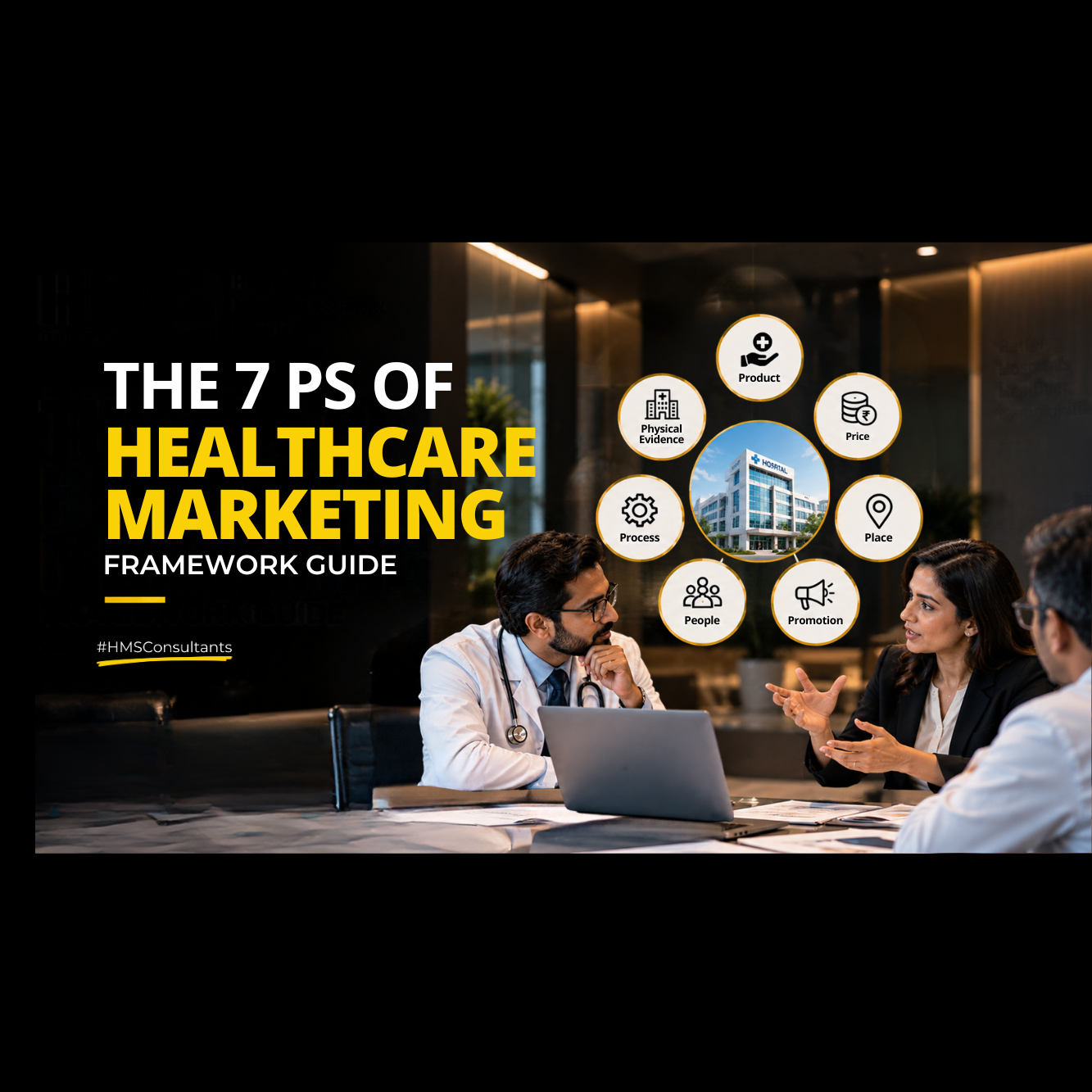
            The 7 Ps of marketing – Product, Price, Place, Promotion, People, Process, and Physical Evidence are widely discussed in healthcare boardrooms, marketing meetings, and strategy presentations across India. Most hospital marketing teams are already familiar with the framework. Many have even presented it in internal reviews. Yet most hospitals continue to grow inconsistently, lose patients they already attracted, and struggle with conversion despite active marketing. The reason is not that hospitals do not know the 7 Ps of marketing. The reason is that most hospitals act on only one of them.

            That one P is almost always Promotion.
            Budgets go toward ads, creatives, social media management, and campaigns. The other six Ps remain unaddressed. And quietly, that imbalance becomes the real reason marketing does not deliver the results it should.

            When Promotion Becomes the Only P That Gets Attention.

            Most hospital marketing conversations begin and end with promotion.

            How many ads should we run? Which platform should we use? Should we increase the budget?

            These are valid questions. But promotion is only one part of a seven-part system.

            When a hospital focuses only on:

            • Meta campaigns.
            • Social media posts.
            • Google Ads.
            • Newspaper promotions.
            • Hoardings and outdoor branding.

            Without addressing the remaining six Ps, it creates a very specific problem.

            Patients are attracted. But once they arrive digitally or physically the experience does not match the promise.That gap between the promoted image and the actual experience is where patient trust breaks down.

            And broken trust is far harder to rebuild than it is to build from the beginning.

            Hand lifting a yellow “Promotion” card above stacked healthcare marketing elements, representing the 7 P’s of marketing and the importance of promotion within healthcare strategy.

            Product: What Are You Actually Offering the Patient?

            In the 7 Ps of marketing framework, Product in healthcare is not about equipment or departments.

            It is about what the patient actually receives the total experience of seeking, receiving, and recovering from care.

            Most hospitals define their product internally:

            • “We have 200 beds.”
            • “We offer 12 specialities.”
            • “We have the latest diagnostics.”

            But patients do not experience infrastructure. They experience:

            • How the first phone enquiry was handled.
            • Whether the doctor explained things clearly.
            • Whether they felt heard or processed.
            • Whether the recovery guidance made sense.

            When the Product P is weak, no amount of promotion brings consistent growth. Because the patient experience does not justify the patient’s decision to return or refer.

            Price: It Is Not Just the Fee on the Receipt.

            Price in healthcare is misunderstood in two directions.

            Some hospitals believe lower prices attract more patients. Others believe premium pricing automatically signals quality.

            Both assumptions miss the real role of Price in the 7 Ps of marketing.

            What patients actually evaluate is not the number. It is the confidence that the number creates.

            Patients lose confidence when:

            • Estimates change without explanation.
            • Billing feels confusing or incomplete.
            • The cost does not match the perceived experience quality.
            • There is no transparency during the treatment journey.

            Clear, predictable pricing reduces hesitation. Unclear pricing delays decisions. And in healthcare, a delayed decision often means the patient chose another provider entirely.

            Place: More Than a Pin on Google Maps.

            Place in the 7 Ps of marketing has expanded completely beyond physical location.

            Patients today experience a hospital’s “place” across multiple digital touchpoints before they ever visit physically:

            • Google search results.
            • Maps listing accuracy and reviews.
            • Website clarity and speed.
            • WhatsApp responsiveness.
            • Practo or Justdial presence.

            A hospital with excellent infrastructure but poor digital discoverability is still invisible to patients who are actively searching.

            This is why the Place P cannot be treated as solved simply because the hospital exists in a visible location.

            The hospital must also exist clearly and consistently in the spaces where patients make their first decisions which are almost always digital in 2026.

            People: The P That Either Builds or Destroys Everything Else.

            Of all the 7 Ps of marketing, People is the one that has the most direct impact on trust and the one most hospitals invest in the least from a marketing perspective.

            People in this context means every individual a patient interacts with:

            • Front desk staff.
            • Patient coordinators.
            • Ward attendants.
            • Billing executives.
            • Doctors during follow-up.

            A single dismissive interaction at the front desk can undo everything a ₹2 lakh ad campaign built.

            Patients do not experience brands. They experience people.

            And how those people speak, listen, respond, and communicate becomes the hospital’s real brand regardless of what the creative agency produces.

            Process: The Silent Reason Patients Don’t Return.

            Most hospitals lose existing patients not to competitors, but to friction.

            Process refers to how smoothly a patient moves through every stage of their healthcare journey:

            • Appointment booking.
            • Waiting time management.
            • Consultation flow.
            • Post-treatment follow-up.
            • Discharge communication.
            • Billing clarity.

            When any part of this flow feels confusing, delayed, or disorganised, the patient’s confidence weakens.

            They may not complain loudly. But they do not return quietly.

            In the 7 Ps of marketing, Process is the operational backbone of trust. Hospitals that simplify their patient journey internally usually see stronger reviews, better retention, and more organic referrals without spending more on promotion.

            Physical Evidence: What Patients See Before They Decide.

            Physical Evidence is the P most hospitals confuse with aesthetics.

            It is not only about a clean lobby or matching uniforms. It is about every visible cue that communicates: this hospital can be trusted.

            In 2026, physical evidence begins online:

            • Is the website current and professional?
            • Do the Google reviews reflect the experience being promised?
            • Are doctor profiles complete and credible?
            • Does the social media presence feel consistent or abandoned?

            When physical evidence is weak or inconsistent, patients experience doubt even if the actual healthcare quality is excellent.

            That doubt is often enough to make them choose a competitor who looks more credible, even if they are clinically equivalent.

            Why the 7 Ps of Marketing Work Only as a System.

            The framework was never designed to be used partially.

            Each of the 7 Ps of marketing connects to the others. A strong promotion strategy that drives patients to a poor process creates frustrated patients. Strong people working within a confusing process still lose patients. Excellent physical evidence online that contradicts the physical experience on the ground destroys trust permanently.

            Hospitals that treat the 7 P’s as a checklist to present in a board meeting and then ignore do not see results from their marketing investment.

            Hospitals that treat the 7 P’s as an operational audit continuously improving each element usually build the kind of growth that does not depend on constant ad spending.

            Conclusion

            The 7 Ps of marketing are not a theoretical framework meant for textbooks. They are a diagnostic tool. When marketing is not delivering results, the answer is almost always found somewhere in the six P’s that are being ignored.

            Promotion can create awareness. But it cannot fix a weak product, unclear pricing, poor digital presence, undertrained people, broken processes, or inconsistent physical evidence.

            Hospitals that are growing consistently in 2026 are not necessarily spending more. They are usually the hospitals that have aligned all seven elements and built a patient experience that marketing can finally support rather than compensate for.

            Because when all 7 P’s work together, patients do not need to be convinced. They choose on their own.

            Contact Us HMS Consultants

            The 7 P’s of marketing are Product, Price, Place, Promotion, People, Process, and Physical Evidence. In healthcare, these seven elements together shape how patients discover, evaluate, trust, and choose a hospital or clinic.

            Healthcare Marketing I hospital marketing

            is something we strongly believe in, which means ‘Knowledge without application is the same as having no knowledge at all

            Akhil Dave

            Principle Consultant

            Ready to take your Personal Brand to the next level?

            Share your details below and we will connect with you to discuss your growth strategy.

            • Hospital Marketing Techniques That Actually Work in 2026

              Hospital Marketing Techniques That Actually Work in 2026

              Hospital Marketing Techniques That Actually Work in 2026

              Written by
              Published on
              Share This

              Hospital marketing techniques are changing rapidly in 2026. Many hospitals are still investing heavily in traditional promotions, social media activity, newspaper advertisements, and random campaigns, expecting consistent patient growth. But patient behaviour has changed completely.

              Today, patients do not choose hospitals the same way they did a few years ago.

              Before booking appointments, most patients now:
              • Search hospitals on Google.
              • Compare reviews.
              • Evaluate doctor’s credibility.
              • Visit hospital websites.
              • Check social proof.
              • Look for reassurance before making decisions.

              This means hospital marketing today is no longer only about visibility.
              It is about building systems that help patients trust the hospital during their decision-making journey.
              That is where most traditional hospital marketing techniques begin to fail.

              Many hospitals still focus heavily on:

              • Generic advertisements.
              • Social media posting.
              • Offline promotions.
              • Hoardings.
              • Awareness campaigns.

              The activity may create attention temporarily. But long-term hospital growth now depends on discoverability, conversion systems, patient retention, reputation management, and healthcare trust infrastructure.

              This is why hospitals that are consistently growing in 2026 are not always the ones spending the most on marketing.

              Search Visibility Has Become One of the Most Important Hospital Marketing Techniques

              One of the biggest changes in healthcare marketing is the shift toward search-first patient behaviour.

              Most healthcare journeys now begin online.

              Patients search for:

              • Symptoms.
              • Specialists.
              • Hospitals.
              • Procedures.
              • Treatments.
              • Healthcare advice.

              Before making decisions.

              This is why search visibility has become one of the most powerful hospital marketing techniques in 2026.

              Hospitals that appear prominently in patient searches usually create stronger enquiry opportunities than hospitals that rely solely on advertisements.

              Search visibility includes:

              • Local SEO.
              • Google Business optimisation.
              • Speciality-based pages.
              • Mobile-friendly websites.
              • Service-focused content.
              • Location-based discoverability.

              Patients rarely search only:

              “Hospital”

              They search:

              • “Best orthopaedic hospital near me”
              • “Cardiologist in Ahmedabad”
              • “Eye hospital for cataract surgery”
              • “Best hospital for knee replacement”

              This means hospitals now need department-level discoverability rather than only brand-level visibility.

              The hospitals winning digitally today are usually the hospitals that understand local search intent deeply.

              Google Reviews Have Become a Core Hospital Marketing Technique

              Most patients today read reviews before contacting hospitals.

              That makes online reputation one of the most influential hospital marketing techniques currently working in healthcare.

              Patients notice:

              • Review quality.
              • Patient experiences.
              • Complaint handling.
              • Response professionalism.
              • Consistency of feedback.

              Reviews are no longer passive feedback.

              They directly influence patient confidence.

              Many hospitals still treat reviews casually. Some ask randomly. Others ignore negative reviews entirely.

              But hospitals growing consistently online usually build structured review systems.

              This includes:

              • Ethical review collection.
              • Post-treatment feedback systems.
              • Response management.
              • Reputation monitoring.

              When patients compare hospitals online, reviews often become one of the strongest trust signals influencing final decisions.

              Because patients trust patient experiences more than advertisements.

              Educational Content Is Replacing Promotional Marketing

              One of the biggest shifts happening in healthcare marketing is the rise of educational authority.

              Patients today do not only want to find hospitals.

              They want to:

              • Understand conditions.
              • Reduce fear.
              • Evaluate treatment options.
              • Feel informed before consultations.

              This is why educational healthcare content has become one of the strongest hospital marketing techniques in 2026.

              Hospitals using:

              • Blogs.
              • Specialist videos.
              • Healthcare FAQs.
              • Treatment explainers.
              • Patient education content.

              Usually build stronger long-term digital trust.

              Educational content helps hospitals become more discoverable while also improving patient confidence.

              Over time, this creates:

              • Authority.
              • Reassurance.
              • Stronger engagement.
              • Better conversion quality.

              Promotional marketing attracts attention temporarily.

              Educational authority builds long-term trust.

              That difference is becoming extremely important in modern healthcare marketing.

              Doctor Visibility Is Becoming a Growth Driver for Hospitals

              Patients often choose hospitals because of doctors.

              This means doctor visibility is becoming one of the most important hospital marketing techniques today. Individual doctors should focus more on their Personal Branding, which drives patients towards their clinics and hospitals.

              Modern hospital marketing is no longer only hospital-centric.

              It is increasingly doctor-led digitally.

              Hospital Websites Must Work Like Conversion Systems

              Many hospitals still treat websites like brochures. But patient expectations have changed.

              A hospital website today acts like a 24-hour patient acquisition and trust-building system.

              Patients evaluate:

              • Professionalism.
              • Credibility.
              • Accessibility.
              • Reassurance.

              Through the website before making contact.

              Poor hospital websites usually create:

              • Patient confusion.
              • Drop-offs.
              • Weak enquiry conversion.

              Modern hospital websites should include:

              • Speciality-focused pages.
              • Fast loading speed.
              • Mobile responsiveness.
              • Clear appointment systems.
              • Doctor profiles.
              • Patient reviews.
              • Healthcare education.

              Because patients judge hospitals digitally before visiting physically.

              WhatsApp Retention Systems Are Becoming Essential

              One of the most underused hospital marketing techniques is patient retention communication.

              Many hospitals focus heavily on new patient acquisition while neglecting post-treatment engagement completely.

              This creates a patient drop-off.

              WhatsApp systems now help hospitals improve:

              • Follow-up communication.
              • Appointment reminders.
              • Discharge guidance.
              • Patient education.
              • Long-term engagement.

              In India, especially, WhatsApp has already become part of daily patient communication behaviour.

              Hospitals that integrate communication systems strategically usually achieve stronger patient continuity than hospitals that rely solely on campaigns.

              Why Most Hospitals Still Struggle Despite Marketing

              Many hospitals still struggle with marketing because their systems remain disconnected internally.

              Common problems include:

              • Weak enquiry handling.
              • Delayed responses.
              • Inconsistent communication.
              • Poor patient coordination.
              • Fragmented departments.
              • Lack of follow-up systems.

              Marketing may attract enquiries initially.

              But operational gaps reduce actual conversion.

              This is why hospital marketing today must work together with:

              • Reception teams.
              • Patient coordinators.
              • CRM systems.
              • Enquiry management.
              • Patient experience processes.

              Hospitals no longer grow only through campaigns.

              They grow through connected systems.

              The Future of Hospital Marketing Techniques

              Healthcare marketing is shifting rapidly toward:

              • AI-assisted discovery.
              • Search-driven patient behaviour
              • Local intent marketing.
              • Trust-based conversion.
              • Predictive engagement.
              • Patient experience systems.

              Patients today expect:

              • Accessibility.
              • Speed.
              • Reassurance.
              • Digital clarity.
              • Convenience.

              This means hospital marketing techniques in 2026 must become more integrated, measurable, and patient-focused than ever before.

              The hospitals growing consistently today are usually building:

              • Discoverability systems.
              • Educational authority.
              • Reputation architecture.
              • Retention workflows.
              • Patient trust infrastructure.

              That is becoming the real future of healthcare growth.

              Conclusion

              Hospital marketing techniques in 2026 are no longer only about promotions, advertisements, or social media visibility.

              Modern patient behaviour has changed completely.

              Patients now research hospitals deeply before making healthcare decisions. They compare reviews, evaluate doctors, analyse websites, and search for reassurance before booking appointments.

              This means hospitals must move beyond awareness-based marketing and focus on:

              • Discoverability.
              • Reputation.
              • Educational authority.
              • Retention.
              • Patient trust systems.

              Because hospitals no longer grow simply by marketing more.

              They grow by building systems patients trust.

              Contact Us HMS Consultants

              Hospital Marketing Strategies I Digital Marketing

              is something we strongly believe in, which means ‘Knowledge without application is the same as having no knowledge at all

              Akhil Dave

              Principle Consultant

              Ready to take your Personal Brand to the next level?

              Share your details below and we will connect with you to discuss your growth strategy.

              • Personal Branding for Doctors: Build Your Brand, Build Your Practice

                Personal Branding for Doctors: Build Your Brand, Build Your Practice

                Personal Branding for Doctors: Build Your Brand, Build Your Practice

                Written by
                Published on
                Share This

                Personal branding for doctors is becoming one of the biggest growth drivers in healthcare today. Not because doctors need to become influencers. Not because healthcare is becoming entertainment. But because patient behaviour has changed completely in 2026.

                Today, when patients need a specialist, they usually do not make decisions immediately after receiving a referral. Before booking an appointment, they search online. They Google the doctor’s name, read reviews, compare profiles, check clinic information, and try to understand whether the doctor feels trustworthy before making the first call.

                This is where many experienced doctors are struggling silently.

                Two doctors may have the same qualifications, similar years of experience, excellent patient outcomes, and practice in the same city. But one doctor consistently receives patient enquiries while the other struggles with low visibility and inconsistent patient flow.

                The difference is often not clinical.
                The difference is discoverability.
                And this is exactly why personal branding for doctors is becoming essential in modern healthcare marketing.

                The Invisible Doctor Problem.

                This happens when highly experienced doctors remain digitally invisible despite years of successful medical practice and strong offline reputation.

                Many doctors today already have:

                • Years of patient trust.
                • Strong treatment outcomes.
                • Long-standing referrals.
                • Excellent clinical expertise.

                But when patients search their name online, they often find incomplete information or weak digital presence.

                In many cases, patients find:

                • Incomplete profiles.
                • Outdated clinic details.
                • Weak Google visibility.
                • Missing reviews.
                • No educational content at all.

                At the same time, another doctor with stronger digital visibility appears consistently across platforms. Patients see:

                • Google search results.
                • LinkedIn profiles.
                • Instagram education.
                • Reviews.
                • Healthcare videos.
                • Patient engagement.

                Patients trust what they can find online.

                This does not always mean the digitally visible doctor is clinically superior. It simply means the digitally visible doctor becomes easier for patients to trust.

                And that is changing healthcare decision-making completely.

                Why Patients Search Doctors Online Before Booking

                Healthcare decisions today are deeply digital. Patients no longer depend only on offline referrals or family recommendations before choosing a doctor.

                Before booking consultations, patients usually:

                • Google the doctor’s name.
                • Read reviews.
                • Compare ratings.
                • Check educational content.
                • Evaluate clinic presence.
                • Search patient experiences online.

                This behaviour is growing rapidly across specialties such as cardiology, orthopaedics, dermatology, ophthalmology, dental, cosmetic medicine, neurology, fertility, and general practice.

                Patients today are not only evaluating qualifications.

                They are evaluating trust digitally.

                This is one of the biggest reasons why personal branding for doctors matters more than ever before.

                Personal Branding for Doctors Is Not About Fame

                One of the biggest misconceptions in healthcare marketing is that personal branding means becoming famous online.

                Many doctors assume personal branding requires:

                • Viral reels.
                • Daily content.
                • Entertainment-based videos.
                • Influencer-style visibility.

                But real personal branding for doctors works very differently.

                It focuses on:

                • Trust.
                • Authority.
                • Discoverability.
                • Visibility.
                • Patient confidence.

                The goal is not internet fame.

                The goal is to ensure that when patients search for healthcare answers online, they find the right doctor with confidence.

                This is why strong doctor branding today depends more on educational communication and trust-building than aggressive promotion.

                Personal branding in healthcare is not vanity.

                It is authority with visibility.

                Owning your name on Google.

                When patients search:
                “Dr. [Doctor Name] + City”

                They should ideally find:

                • Google Business Profile.
                • Clinic information.
                • Hospital profile pages.
                • Practo or JustDial listings.
                • Patient reviews.
                • Educational content.
                • Professional visibility.

                But many doctors still have poor digital discoverability because their online presence is incomplete or inconsistent.

                Some doctors still have:

                • Incorrect clinic information.
                • Weak search visibility.
                • Outdated contact details.
                • Incomplete listings.
                • No meaningful content online.

                This creates a trust gap immediately.

                Patients often interpret weak digital visibility as weak credibility.

                Strong personal branding for doctors begins with:

                • Discoverability.
                • Accurate information.
                • Professional visibility.
                • Digital trust-building.

                This is not advanced marketing.

                This is basic digital hygiene in modern healthcare.

                Choose One Platform and Stay Consistent

                Another major mistake doctors make is trying to stay active everywhere at the same time.

                Many doctors believe they need:

                • Instagram.
                • LinkedIn.
                • YouTube.
                • Facebook.
                • Multiple platforms together.

                But the Digital Doctor Framework focuses more on consistency than frequency.

                For many doctors, one platform is enough initially.

                LinkedIn usually works better when:

                • Patients are professionals.
                • Referral networks matter.
                • Corporate visibility is important.

                Instagram often works better when:

                • The specialty is visually driven.
                • Patients search visually.
                • Healthcare education performs better through visual communication.

                This is especially relevant for:

                • Dermatologists.
                • Dentists.
                • Ophthalmologists.
                • Cosmetic specialists.
                • Orthopaedic surgeons.

                The goal is not posting every day.

                The goal is long-term consistency.

                Even one educational post every week can gradually build visibility, authority, and patient trust.

                Answer the Question Your Patients Are Already Asking.

                Every doctor repeatedly hears patient questions such as:

                • Is LASIK safe?
                • Is angioplasty painful?
                • How long does recovery after knee replacement take?
                • When should surgery become necessary?
                • Is this procedure risky?
                • What happens after treatment?

                Patients are already searching these questions online every day.

                When doctors answer these questions through:

                • Blogs.
                • Videos.
                • FAQs.
                • Educational posts.
                • Healthcare explainers.

                Content Authority.

                This changes patient behaviour completely.

                The patient may begin trusting the doctor before the first consultation itself.

                That is the power of educational healthcare communication.

                This is also why personal branding for doctors is becoming one of the strongest patient acquisition systems in healthcare today.

                Not because content becomes viral.

                But because it creates:

                • Reassurance.
                • Trust.
                • Familiarity.
                • Authority.
                • Confidence.

                Reviews Have Become the New Word-of-Mouth

                Another major part of personal branding for doctors is review management.

                Most patients today read reviews before booking appointments. In many cases, reviews work as modern digital referrals.

                Patients often trust:

                • Ratings.
                • Patient testimonials.
                • Healthcare experiences.

                More than advertisements.

                Doctors who actively:

                • Collect reviews ethically.
                • Maintain professional responses.
                • Engage respectfully.

                Usually build stronger trust online.

                Patients are not only asking:

                “Is this doctor qualified?”

                They are also asking:

                “Can I trust this doctor with my healthcare problem?”

                This is why reviews influence healthcare decisions so strongly today.

                Let Patients Become the Brand.

                The strongest doctor brands today are often built through patient advocacy.

                Patient testimonials, recovery journeys, and healthcare experiences create emotional reassurance for future patients. Because the biggest question most patients silently ask is:

                “Did this treatment work for someone like me?”

                When recovered patients share their experiences authentically, trust transfers instantly.

                This is why patient advocacy is becoming one of the strongest pillars of healthcare marketing today.

                Strong doctor brands are built through:

                • Educational authority.
                • Discoverability.
                • Patient trust.
                • Reviews.
                • Real healthcare experiences.

                Why Younger Doctors Sometimes Grow Faster Online

                One uncomfortable reality in healthcare today is this:

                Many younger doctors become digitally discoverable faster than highly experienced doctors.

                This does not mean they are clinically superior.

                It means they are easier to find online.

                Patients today often trust:

                • Visible doctors.
                • Educational content.
                • Strong reviews.
                • Active online presence.

                A doctor with years of excellent experience and strong clinical expertise may still struggle digitally if visibility remains weak.

                At the same time, another doctor with:

                • Educational content.
                • Stronger search visibility.
                • Patient reviews.
                • Better discoverability.

                May become the first choice online.

                This is not about popularity.

                It is about accessibility and trust.

                Personal Branding for Doctors Is Becoming Essential

                The Digital Doctor Framework discussed here connects directly with the TVA Framework:

                • Trust
                • Visibility
                • Advocacy

                Personal branding for doctors becomes the strongest form of Advocacy in healthcare.

                Because when doctors become:

                • Trusted.
                • Visible.
                • Discoverable.
                • Authoritative.

                Patients:

                • Find them.
                • Choose them.
                • Refer others to them.

                Without aggressive advertising.

                Traditional word-of-mouth still exists in healthcare.

                But today, that word-of-mouth is happening digitally through:

                • Google reviews.
                • YouTube videos.
                • LinkedIn content.
                • Instagram education.
                • Healthcare blogs.
                • Patient testimonials.

                This is why personal branding for doctors is no longer optional.

                It is becoming essential for long-term practice growth.

                Conclusion

                Personal branding for doctors is not about social media fame.

                It is about becoming discoverable, building authority, strengthening patient trust, and helping patients feel confident before consultations.

                Patients are already searching online.

                The real question is:

                What are they finding when they search your name?

                Doctors who build:

                • Educational authority.
                • Digital trust.
                • Patient advocacy.
                • Consistent visibility.
                • Meaningful healthcare communication.

                Usually creates stronger long-term practice growth.

                Because in modern healthcare, clinical excellence alone is no longer enough if patients cannot find it online.

                And in 2026, the doctors patients remember digitally are often the doctors patients choose first.

                Contact Us HMS Consultants

                Branding a doctor today is not about becoming famous online. It is about becoming discoverable, trustworthy, and professionally visible to the right patients. Patients now search online before booking consultations, which means doctors need a strong digital presence across Google, reviews, healthcare profiles, and educational content. A doctor brand is built through patient trust, consistent communication, educational healthcare content, reviews, and professional visibility rather than aggressive promotion.

                Doctor Branding I Doctors Digital Marketing

                is something we strongly believe in, which means ‘Knowledge without application is the same as having no knowledge at all

                Akhil Dave

                Principle Consultant

                Ready to take your Personal Brand to the next level?

                Share your details below and we will connect with you to discuss your growth strategy.

                • Healthcare Digital Marketing Is Not About Social Media

                  Healthcare Digital Marketing Is Not About Social Media

                  Healthcare Digital Marketing Is Not About Social Media

                  Written by
                  Published on
                  Share This

                  Healthcare digital marketing is one of the most misunderstood functions inside hospitals today. Many hospitals believe digital marketing means posting consistently on Instagram, running Meta Ads, uploading reels, boosting posts, and staying active on social media platforms. On paper, this looks like strong digital activity. But patients do not choose hospitals simply because they saw a creative online.

                  That is where the real problem begins.

                  Most hospitals today are digitally visible, but they are not always digitally trusted. And this gap is becoming one of the biggest challenges in healthcare marketing in 2026.

                  Many hospitals are already investing heavily in:
                  • Social media management.
                  • Facebook and Instagram promotions.
                  • Digital advertisements.
                  • Online campaigns.
                  • Reels and video marketing.
                  • Promotional creatives.

                  The activity exists. The visibility exists. But the conversion often does not.

                  Despite continuous digital activity, many hospitals still struggle with:

                  • Inconsistent patient enquiries.
                  • Weak appointment conversion.
                  • Low patient retention.
                  • Unstable digital growth.
                  • Poor online trust.

                  The reason is simple.

                  Healthcare digital marketing is not just about being visible online. It is about becoming trustworthy when patients begin researching seriously.

                  Most Hospitals Are Operating Only on the Surface Layer

                  Most hospitals today focus heavily on what can be called the Digital Surface Layer. This is the visible layer of digital marketing that includes social media posts, advertisements, reels, online campaigns, and promotional communication.

                  This layer helps hospitals attract attention.

                  But healthcare decisions are rarely made from attention alone.

                  A patient may first discover a hospital through Instagram or Facebook, but that is usually not where the decision ends. Before contacting the hospital, patients typically search deeper. They visit Google, compare hospitals, check reviews, read doctor profiles, evaluate websites, and search for reassurance.

                  This deeper decision-making stage is where actual patient trust begins.

                  And this is where many hospitals become weak digitally.

                  They look active online, but they do not feel trustworthy online.

                  That difference changes patient decisions completely.

                  The Digital Trust Layer

                  Beyond social media visibility exists another layer that most hospitals ignore the Digital Trust Layer.

                  This is the layer where patients evaluate whether the hospital feels credible enough to choose. The Digital Trust Layer includes:

                  • Google search visibility.
                  • Website quality.
                  • Doctor credibility.
                  • Online reviews.
                  • Educational content.
                  • Patient testimonials.
                  • Reputation consistency.
                  • WhatsApp communication systems.

                  Most hospitals invest heavily in visibility while investing very little in trust systems.

                  That is why many hospitals struggle with healthcare digital marketing despite being active online.

                  The hospital may be visible.

                  But the patient is still uncertain.

                  And in healthcare, uncertainty delays decisions.

                  The Digital Health Gap

                  The difference between how visible a hospital looks online and how trustworthy it feels during patient research creates what can be called the Digital Health Gap.

                  This is one of the most important concepts in modern healthcare marketing.

                  A wide Digital Health Gap means:

                  • The hospital is active online.
                  • Patients notice the hospital.
                  • But trust remains weak.

                  A narrow Digital Health Gap means:

                  • Patients find the hospital.
                  • Trust what they see.
                  • And move closer to booking appointments confidently.

                  This is why social media alone cannot drive long-term hospital growth.

                  Visibility may create attention.

                  But trust drives conversion.

                  Many hospitals today post consistently and still fail to improve patient conversion meaningfully because patients eventually evaluate credibility, reassurance, and confidence not just activity.

                  Search Presence Is the Foundation of Healthcare Digital Marketing

                  Most healthcare journeys today begin on Google. Patients search for symptoms, specialists, hospitals, treatments, procedures, and healthcare advice before making decisions.

                  When patients search, hospitals need to appear clearly.

                  Not on page four.

                  On page one.

                  This is where search presence becomes critical.

                  Search presence includes:

                  • Google My Business optimisation.
                  • Local SEO.
                  • Speciality-based pages.
                  • Mobile-friendly websites.
                  • Accurate hospital information.
                  • Service-specific visibility.

                  Many hospitals have excellent infrastructure offline but extremely poor discoverability online. And in healthcare, invisibility online increasingly means invisibility to patients.

                  A hospital website today is not a brochure.

                  It is a 24-hour OPD reception.

                  Patients judge hospitals digitally before they ever visit physically. If the website feels outdated, incomplete, confusing, or difficult to navigate, trust weakens before communication even begins.

                  Reputation Architecture Is Influencing Patient Decisions

                  One of the biggest shifts happening in healthcare digital marketing is the growing influence of online reputation. Patients now evaluate hospitals digitally before speaking to them.

                  That means reviews are no longer simple feedback.

                  They are trust signals.

                  Patients notice:

                  • Rating quality
                  • Patient experiences
                  • Review consistency
                  • Complaint handling
                  • Response professionalism
                  • Doctor feedback

                  Many hospitals collect reviews randomly. Some hospitals never respond, while others react only when negative reviews appear. That is not reputation architecture.

                  Reputation architecture means creating a structured digital trust system where hospitals consistently collect genuine patient feedback, respond professionally to reviews, and maintain credibility across platforms like Google, Practo, and Justdial.

                  The goal is simple.

                  When patients research the hospital online, every platform should communicate the same message:

                  This hospital can be trusted.

                  Content Authority Matters More Than Posting

                  Most hospitals use digital platforms mainly for promotion. Very few use them for authority-building.

                  And this is where the biggest difference begins.

                  Patients today do not only want to find hospitals. They want to:

                  • Understand conditions.
                  • Reduce fear.
                  • Evaluate treatment options.
                  • Understand recovery.
                  • Feel informed before making decisions.

                  This is where content authority becomes important.

                  Educational content such as:

                  • Specialist videos.
                  • Blogs.
                  • Healthcare FAQs.
                  • Treatment explainers.
                  • Patient-focused educational content.

                  Helps hospitals build long-term credibility digitally.

                  Over time, authority creates trust.

                  And trust strengthens patient conversion.

                  Hospitals that consistently educate patients usually create stronger digital credibility than hospitals focusing only on promotions. Because patients trust hospitals that help them understand healthcare clearly.

                  Social Proof Reduces Patient Hesitation

                  Patients trust patient experiences more than advertisements.

                  That is why social proof plays such an important role in healthcare digital marketing.

                  Social proof includes:

                  • Patient testimonials.
                  • Treatment stories.
                  • Recovery journeys.
                  • Doctor profiles.
                  • Patient experiences.
                  • Treatment outcomes.

                  A patient testimonial often creates stronger confidence than multiple advertisements because it answers one very important question:

                  “Can this hospital help someone like me?”

                  Healthcare decisions are emotional decisions. Patients are not only evaluating treatment quality. They are evaluating reassurance.

                  And social proof helps reduce uncertainty during that process.

                  WhatsApp Retention Is Still Massively Underused

                  One of the most ignored areas in hospital digital marketing is post-treatment communication.

                  Most hospitals stop communicating once treatment ends.

                  No reminders.

                  No follow-ups.

                  No healthcare education.

                  No structured patient engagement.

                  This creates patient drop-off, and eventually patients restart their hospital search from the beginning.

                  WhatsApp retention systems help hospitals maintain communication through:

                  • Appointment reminders.
                  • Follow-up schedules.
                  • Discharge guidance.
                  • Health education.
                  • Patient feedback collection.

                  This improves:

                  • Retention.
                  • Communication consistency.
                  • Repeat patient relationships.
                  • Long-term engagement.

                  In India especially, WhatsApp is already part of patients’ daily behaviour. Yet many hospitals still underuse it strategically.

                  Healthcare Digital Marketing Is Changing in 2026

                  Healthcare decisions are becoming increasingly digital. Patients now compare hospitals through:

                  • Google search.
                  • Websites.
                  • Reviews.
                  • Doctor visibility.
                  • Educational content.
                  • Testimonials.
                  • Reputation systems.

                  Before making healthcare decisions confidently.

                  At the same time, patient expectations are increasing. Patients expect:

                  • Accessibility.
                  • Responsiveness.
                  • Digital clarity.
                  • Reassurance.
                  • Trust signals.

                  before choosing hospitals.

                  This means hospitals can no longer depend only on social media visibility to grow digitally.

                  The hospitals growing consistently today are usually the hospitals building:

                  • Discoverability.
                  • Authority.
                  • Reputation.
                  • Social proof.
                  • Patient retention systems.

                  That is the real future of healthcare digital marketing.

                  Conclusion

                  Healthcare digital marketing is not about social media alone.

                  Social media creates visibility.

                  But healthcare decisions depend on trust.

                  Most hospitals are investing heavily in the Digital Surface Layer while neglecting the Digital Trust Layer where actual patient decisions happen. That creates the Digital Health Gap.

                  Hospitals that improve:

                  • Search presence.
                  • Reputation architecture.
                  • Content authority.
                  • Social proof.
                  • WhatsApp retention.

                  Usually build stronger digital trust and stronger long-term patient growth.

                  Because in healthcare, visibility may attract attention.

                  But trust converts patients.

                  Contact Us HMS Consultants

                  Healthcare digital marketing is the process of helping hospitals improve their online visibility, patient trust, and digital communication through search presence, educational content, reviews, websites, social proof, and patient engagement systems. It focuses on helping patients discover, evaluate, and trust hospitals before making healthcare decisions.

                  Digital Marketing I healthcare digital marketing

                  is something we strongly believe in, which means ‘Knowledge without application is the same as having no knowledge at all

                  Akhil Dave

                  Principle Consultant

                  Ready to take your Personal Brand to the next level?

                  Share your details below and we will connect with you to discuss your growth strategy.

                  • Most Hospitals Still Misunderstand Medical Marketing

                    Most Hospitals Still Misunderstand Medical Marketing

                    Most Hospitals Still Misunderstand Medical Marketing

                    Written by
                    Published on
                    Share This

                    Medical marketing is one of the most misunderstood functions inside Indian hospitals today. Most hospitals believe medical marketing means:
                    • Advertisements.
                    • Social media posts.
                    • Newspaper campaigns.
                    • Hoardings.
                    • Healthcare camps.
                    • Digital promotions.
                    But despite spending heavily on these activities, many hospitals still struggle with:
                    • Low OPD growth.
                    • Weak patient recall.
                    • Poor engagement.
                    • Inconsistent referrals.
                    • Limited long-term brand preference.

                    This is where the real problem begins.
                    Most hospitals are not failing because they are doing less marketing.
                    They are failing because they misunderstand what medical marketing actually is.
                    That is becoming one of the biggest challenges in healthcare marketing in 2026.

                    Medical Marketing Is Not Just Advertising

                    One of the biggest misconceptions in hospital marketing is treating medical marketing as advertising.

                    Advertising is only one part of medical marketing.

                    It is not the entire system.

                    Many hospitals spend lakhs on:

                    • Newspaper ads.
                    • Meta campaigns.
                    • Google Ads.
                    • Outdoor branding.
                    • Social media creatives.
                    • Promotional activities.

                    But after all the spending, patient growth still remains inconsistent.

                    Why?

                    Because patients do not choose hospitals only because they saw an advertisement.

                    Healthcare decisions work differently.

                    When patients need serious healthcare support, they usually:

                    • Ask family members.
                    • Search doctor names.
                    • Check reviews.
                    • Compare trust signals.
                    • Speak to referred doctors.
                    • Evaluate credibility before choosing a hospital.

                    This means medical marketing is not simply about visibility.

                    It is about building trust before the patient even walks into the hospital.

                    Most Hospitals Treat Medical Marketing Like a Department

                    Another major problem is that many hospitals treat medical marketing as an isolated department instead of a complete patient growth system.

                    The marketing team runs campaigns.

                    The reception team works separately.

                    Doctors communicate differently.

                    Patient follow-ups are inconsistent.

                    Online reputation is unmanaged.

                    And discharge communication ends the relationship completely.

                    As a result, the patient experience becomes disconnected.

                    Effective medical marketing does not work like isolated activities.

                    It works like a connected system where:

                    • Trust.
                    • Communication.
                    • Visibility.
                    • Patient experience.
                    • Retention.
                    • Advocacy.

                    Work together continuously.

                    That is where most hospitals struggle.

                    The Biggest Medical Marketing Mistake: Selling Services Instead of Solving Problems

                    Most hospital communication sounds almost identical.

                    Hospitals repeatedly talk about:

                    • Advanced technology.
                    • Expert doctors.
                    • Modern infrastructure.
                    • Comprehensive treatment.
                    • Patient-first care.

                    The problem is that almost every hospital says the same thing.

                    Patients rarely choose hospitals because of generic statements.

                    Patients choose hospitals when they feel:

                    • Understood.
                    • Reassured.
                    • Guided.
                    • Emotionally confident.

                    This is one of the biggest shifts happening in healthcare marketing.

                    Patients respond more strongly to communication that addresses:

                    • Their fear.
                    • Their confusion.
                    • Their symptoms.
                    • Their questions.

                    For example:

                    “Advanced orthopaedic department” feels promotional.

                    But:

                    “Worried about knee pain getting worse while climbing stairs?” feels personal.

                    That difference changes patient attention completely.

                    Strong medical marketing speaks to patient problems before promoting hospital services.

                    Most Hospitals Ignore Patients After Discharge

                    One of the most overlooked parts of hospital marketing is patient retention.

                    Many hospitals focus heavily on acquiring new patients while completely ignoring existing patients after discharge.

                    The patient visits once.

                    Treatment happens.

                    And communication stops.

                    No follow-up.
                    No educational content.
                    No reminders.
                    No relationship-building.

                    Six months later, when the patient needs healthcare support again, they search again from the beginning.

                    Sometimes they choose another hospital entirely.

                    This is one of the biggest invisible losses in medical marketing today.

                    Existing patients already:

                    • Know the hospital.
                    • Understand the experience.
                    • Trust the doctors.

                    Yet many hospitals fail to nurture that trust consistently.

                    Retention marketing often creates higher long-term ROI than constantly chasing new patient acquisition.

                    Effective Medical Marketing Works Through Trust

                    One of the most important shifts happening in medical marketing is the movement from promotion-based communication toward trust-based communication.

                    Patients today evaluate hospitals across:

                    • Google reviews.
                    • Maps visibility.
                    • Doctor videos.
                    • Healthcare content.
                    • Social media.
                    • Referrals.
                    • Online reputation.

                    This means trust is being built continuously across multiple digital touchpoints.

                    Hospitals that consistently:

                    • Educate patients.
                    • Simplify communication.
                    • Respond professionally.
                    • Maintain visibility.
                    • Create reassuring patient experiences.

                    Usually build stronger long-term preference.

                    This is where medical marketing becomes different from advertising.

                    Advertising creates visibility.

                    Trust creates patient decisions.

                    The T-V-A Approach to Medical Marketing

                    One of the simplest ways to understand effective medical marketing is through three pillars:

                    These three pillars work together continuously.

                    Trust

                    Patients must trust the hospital before choosing it confidently.

                    Trust is built through:

                    • Educational content.
                    • Reviews.
                    • Referrals.
                    • Doctor communication.
                    • Patient experience.
                    • Reputation.

                    Visibility

                    Once trust-building starts, the hospital must remain visible where patients search.

                    This includes:

                    • Google search.
                    • Maps.
                    • Social media.
                    • YouTube.
                    • Healthcare content.
                    • Local SEO.

                    Advocacy

                    The strongest medical marketing happens when patients start recommending the hospital themselves.

                    This happens when:

                    • Patient experiences feel memorable.
                    • Communication feels human.
                    • Follow-ups feel personal.
                    • Patients feel genuinely cared for.

                    Advocacy turns patients into long-term growth drivers.

                    Why This Matters More in 2026

                    Healthcare decisions are becoming increasingly digital.

                    Patients now compare hospitals faster than ever before.

                    At the same time, patient attention spans are shrinking.

                    This means hospitals can no longer depend only on advertisements to grow consistently.

                    Patients expect:

                    • Credibility.
                    • Clarity.
                    • Reassurance.
                    • Accessibility.
                    • Trust signals.

                    Before making healthcare decisions.

                    That is why medical marketing in 2026 is becoming:

                    • More strategic.
                    • More patient-centric.
                    • More trust-driven.
                    • More system-oriented.

                    Hospitals that continue treating medical marketing only as promotion will struggle to build long-term patient preference.

                    Conclusion

                    Most hospitals still misunderstand medical marketing because they treat it as advertising instead of a patient trust-building system.

                    The problem is not lack of spending.

                    The problem is lack of strategic alignment.

                    Effective medical marketing is not built only through campaigns, promotions, or visibility.

                    It is built through:

                    • Trust.
                    • Communication.
                    • Patient experience.
                    • Retention.
                    • Visibility.
                    • Advocacy working together continuously.

                    In 2026, hospitals that understand this shift will build stronger patient relationships, stronger recall, and stronger long-term growth.

                    Because patients do not choose hospitals only because they see them.

                    They choose hospitals because they trust them.

                    Contact Us HMS Consultants

                    Medical marketing is the strategic process of building trust, visibility, patient engagement, and long-term relationships for hospitals, clinics, and healthcare providers through communication, branding, patient experience, and digital presence.

                    hospital marketing I Digital Marketing I Healthcare Marketing Strategy I Medical Marketing

                    is something we strongly believe in, which means ‘Knowledge without application is the same as having no knowledge at all

                    Akhil Dave

                    Principle Consultant

                    Ready to take your Personal Brand to the next level?

                    Share your details below and we will connect with you to discuss your growth strategy.

                    • Why Most Hospital Marketing Looks Exactly the Same

                      Why Most Hospital Marketing Looks Exactly the Same

                      Why Most Hospital Marketing Looks Exactly the Same

                      Written by
                      Published on
                      Share This

                      Most hospital marketing today looks almost identical.

                      The websites feel similar. The advertisements use the same language. Social media posts follow the same patterns. Almost every hospital talks about “patient-first care,” “advanced technology,” “expert doctors,” and “world-class treatment.” Even visually, many hospitals use the same colours, layouts, and communication styles.

                      Over time, this creates a major problem in hospital marketing: Patients stop noticing the difference.

                      This is becoming one of the biggest challenges in healthcare marketing in 2026. The issue is no longer only about visibility or advertising budgets. Most hospitals are already active online. They are running campaigns, posting content, managing websites, and investing in digital marketing for hospitals.

                      The real problem is that much of the communication feels interchangeable.

                      When every hospital sounds the same, patients struggle to remember what makes one hospital different from another. And when patients cannot clearly recall the difference, they usually make decisions based on convenience, location, reviews, or familiarity rather than strong brand preference.

                      That is where hospital marketing slowly begins to lose its impact.

                      The Problem Is Not Lack of Marketing

                      Most hospitals are already investing in healthcare marketing.

                      They are running advertisements. Posting on social media. Improving websites. Creating videos. Managing Google profiles. Publishing healthcare content. Running awareness campaigns.

                      The activity exists.

                      But most of the communication sounds so similar that patients mentally group hospitals together instead of remembering them individually.

                      This happens because many hospitals are marketing categories instead of positioning.

                      They talk about:

                      • Quality care.
                      • Advanced infrastructure.
                      • Experienced doctors.
                      • Patient satisfaction.
                      • Modern technology.
                      • Comprehensive treatment.

                      The problem is that almost every hospital says the same thing.

                      As a result, patients rarely remember a hospital because of its messaging alone.

                      Why Patients Forget Most Hospital Marketing

                      Patients are exposed to hundreds of healthcare messages every month.

                      Most of them disappear quickly because the communication feels generic.

                      A patient scrolling through Instagram may see:

                      • Another doctor awareness video.
                      • Another hospital achievement post.
                      • Another health tip graphic.
                      • Another “best care” advertisement.

                      None of these automatically creates memory.

                      This is one of the least discussed realities in hospital marketing.

                      Visibility does not always create recall.

                      A hospital may appear regularly online and still remain forgettable because the communication lacks distinction.

                      Patients usually remember hospitals that communicate something specific, consistent, and emotionally recognisable.

                      Not hospitals that simply repeat industry language.

                      The “Patient-First Care” Problem

                      Almost every hospital today claims to provide patient-first care.

                      But from a patient’s perspective, this statement has become expected rather than differentiating.

                      Patients assume every hospital should care about patients.

                      The same applies to phrases like:

                      • World-class treatment.
                      • Advanced healthcare.
                      • Expert team.
                      • Trusted care.
                      • Comprehensive services.

                      These phrases are so widely used in healthcare marketing that they no longer help patients understand why one hospital is different from another.

                      This creates a major branding problem.

                      If every hospital sounds the same, patients stop building strong mental associations with any particular hospital brand.

                      And in healthcare, memory strongly influences patient decisions.

                      Hospital Branding Is Becoming a Memory Challenge

                      One of the biggest changes happening in hospital branding is that patients now make decisions across multiple digital touchpoints.

                      They may:

                      • See a hospital on Instagram.
                      • Read Google reviews.
                      • Search Maps.
                      • Visit the website,
                      • Watch a doctor’s video.
                      • Discuss options with family members.

                      All of these interactions shape perception.

                      But unless the hospital communicates a clear and consistent identity across these touchpoints, patients struggle to remember it in a meaningful way.

                      This is why hospital marketing is increasingly becoming a memory and positioning challenge rather than simply an advertising challenge.

                      The hospitals patients remember are usually the hospitals that:

                      • Communicate consistently.
                      • Simplify their messaging.
                      • Focus on recognisable strengths.
                      • Create a clear emotional impression.

                      What Patients Actually Remember

                      Patients rarely remember hospitals because of slogans.

                      They usually remember:

                      • How clearly the hospital communicated.
                      • How approachable the doctors felt.
                      • How easy the process seemed.
                      • How responsive the staff were.
                      • How reassuring the experience felt.
                      • Whether the hospital seemed relevant to their specific concern.

                      This is where effective hospital marketing becomes different from repetitive hospital promotion.

                      The goal is not simply to say more.

                      The goal is to create recognition.

                      Hospitals that build recognisable communication patterns are easier for patients to remember during important healthcare decisions.

                      Why Hospitals Start Looking Interchangeable

                      Many hospitals unintentionally create similarity by following the same industry trends.

                      They use:

                      • Similar website layouts.
                      • Similar healthcare visuals.
                      • Similar social media formats.
                      • Similar campaign styles.
                      • Similar branding language.

                      Over time, the hospital loses distinctiveness.

                      Patients no longer feel they are looking at a unique healthcare brand. They feel they are looking at another version of the same hospital communication they have already seen elsewhere.

                      This is especially common in digital marketing for hospitals.

                      Many hospitals focus heavily on content frequency but not enough on communication identity.

                      Posting regularly is important.

                      But if the messaging feels generic, the hospital becomes visible without becoming memorable.

                      Why This Matters More in 2026

                      Healthcare decisions are becoming increasingly digital.

                      Patients now compare hospitals across:

                      • Google reviews.
                      • AI search results.
                      • Maps listings.
                      • Social media.
                      • Healthcare content.
                      • Doctor visibility.
                      • Online reputation.

                      This means patients are exposed to more hospital communication than ever before.

                      At the same time, attention spans are shrinking.

                      If a hospital does not communicate something distinct quickly, patients move on.

                      This is why healthcare marketing is shifting from volume-based communication toward recognisable communication.

                      Hospitals no longer need to communicate more than everyone else.

                      They need to communicate more clearly than everyone else.

                      What Strong Hospital Marketing Actually Looks Like

                      Strong hospital marketing is not necessarily louder marketing.

                      It is clearer marketing.

                      The hospitals that build stronger long-term visibility are usually the hospitals that:

                      • Communicate consistently.
                      • Focus on recognisable positioning.
                      • Simplify messaging.
                      • Maintain clarity across platforms.
                      • Avoid generic healthcare language.

                      Patients should quickly understand:

                      • What the hospital is known for.
                      • What kind of experience it provides.
                      • Why it feels different from competitors.

                      That clarity creates memory.

                      And memory strongly influences patient preference.

                      Conclusion

                      Most hospital marketing looks exactly the same because many hospitals are communicating identical messages in identical ways.

                      The problem is not lack of effort. It is a lack of distinction.

                      When hospitals repeat the same healthcare language, patients stop noticing meaningful differences between brands. And when patients cannot clearly remember a hospital, marketing loses much of its influence.

                      In 2026, successful hospital marketing will depend less on how frequently hospitals communicate and more on how clearly patients remember them.

                      Because in healthcare, the hospital patients remember is often the hospital they eventually choose.

                      Contact Us HMS Consultants

                      Hospital marketing is the process of building patient awareness, trust, and recall through branding, communication, digital presence, and patient experience. In 2026, hospital marketing is increasingly focused on helping patients clearly remember what makes a hospital different from competitors.

                      hospital marketing I Digital Marketing

                      is something we strongly believe in, which means ‘Knowledge without application is the same as having no knowledge at all

                      Akhil Dave

                      Principle Consultant

                      Ready to take your Personal Brand to the next level?

                      Share your details below and we will connect with you to discuss your growth strategy.