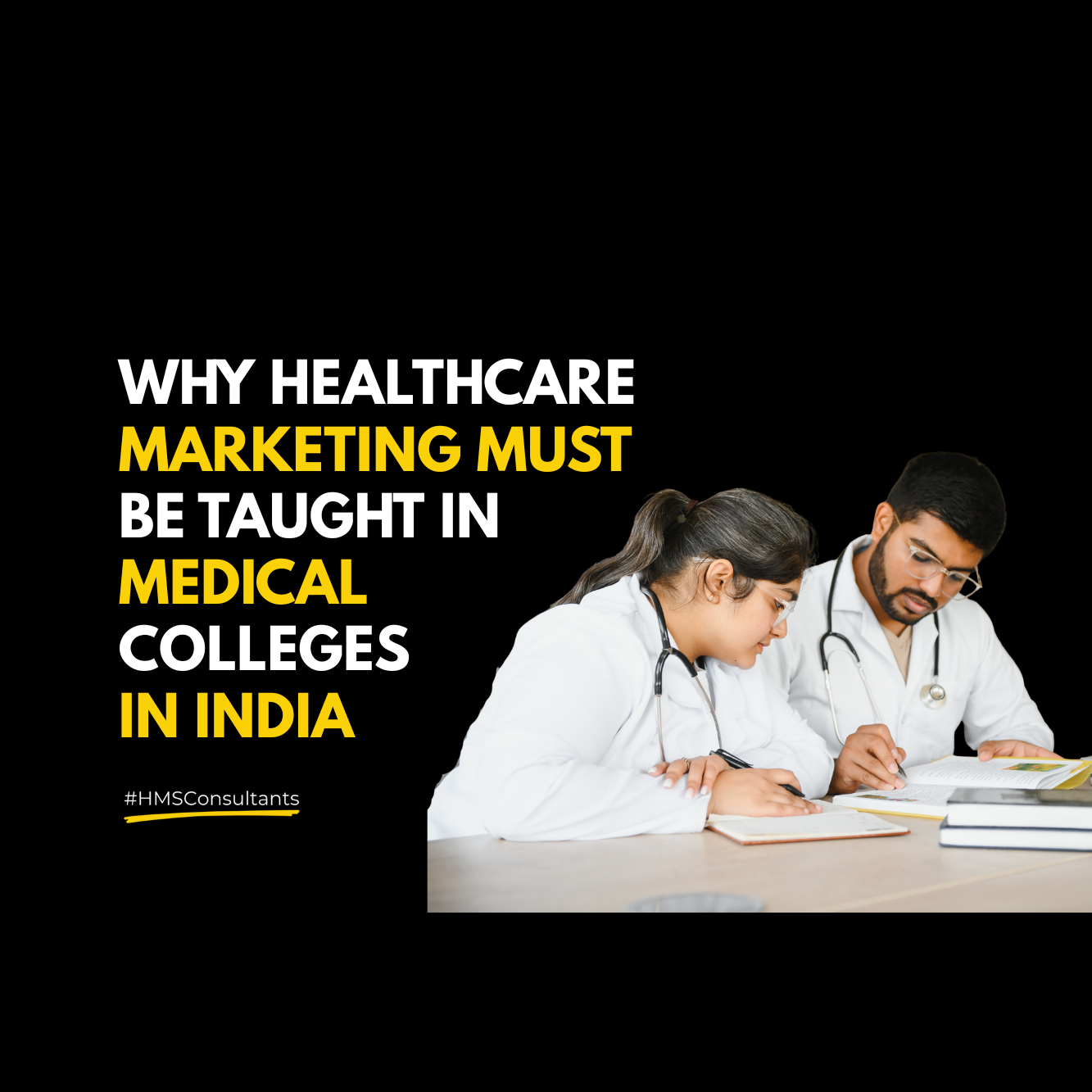
Why Healthcare Marketing Must Be Taught in Medical Colleges in India
Healthcare marketing is rapidly becoming an essential skill for doctors, hospitals, and healthcare institutions in India. Patients today search online before choosing a doctor, trust digital platforms for health information, and increasingly rely on social media, YouTube, and AI tools to understand medical conditions. Yet, despite this shift, healthcare marketing and ethical digital communication are still not taught in most medical colleges in India. Medical students graduate with strong clinical knowledge, but without structured education on healthcare branding, patient communication, digital responsibility, or practice development. This growing gap between medical education and real-world healthcare communication is now impacting both patient trust and the professional readiness of future doctors.
This is why the need for healthcare marketing education in medical colleges has become critical. Introducing healthcare marketing and branding concepts during MBBS and medical training can prepare future doctors to communicate ethically, counter misinformation, build credible digital identities, and develop patient-centric healthcare practices. As healthcare becomes increasingly digital, marketing education is no longer about promotion it is about responsible public health communication.
The digital health conversation is exploding.
But healthcare education around it is still silent.
Scroll through any social platform today and you’ll see an ocean of health-related content reels on immunity, podcasts on hormones, influencers talking about gut health, entrepreneurs selling wellness programs, and creators offering medical advice.
Some of it is helpful.
Much of it is unverified.
And a growing portion is dangerously misleading.
At the same time, India is producing thousands of highly qualified doctors every year experts in diagnosis, treatment, and patient care.
Yet, when these doctors step into the real world, they are rarely prepared for one reality:
Healthcare today is not only practiced in clinics and hospitals. It is practiced on digital platforms.
Patients are no longer passive recipients of care.
They research.
They compare.
They follow.
They judge credibility online before they ever step into a consultation room.
And this raises a serious question for our education system:
Why isn’t Healthcare Marketing and Ethical Health Communication taught in medical colleges?
The Reality Young Doctors Face After Graduation
In my years of working closely with hospitals, doctors, and healthcare institutions across India, one pattern repeats itself.
Doctors leave medical college extremely strong in clinical knowledge but almost completely unprepared for:
- Building their professional identity
- Communicating medical knowledge to the public
- Managing their digital presence
- Educating patients ethically at scale
- Creating trust in competitive healthcare markets
- Developing their own practice or institutional brand
Most learn marketing accidentally.
Through:
- trial and error
- wrong agency guidance
- trend-based posting
- copying influencers
- promotional confusion
- and sometimes reputational damage
They were trained to save lives.
But not trained to communicate health responsibly in a digital world.
Why Healthcare Marketing Is Not Like Any Other Industry
Healthcare is not FMCG.
It is not real estate.
It is not education.
It is not entertainment.
Healthcare deals with:
- vulnerability
- fear
- trust
- ethics
- long-term reputation
- irreversible impact
In healthcare, marketing is not about visibility.
It is about credibility.
It is not about persuasion.
It is about education.
It is not about selling.
It is about serving responsibly.
This is why healthcare marketing cannot be learned from generic marketing courses or YouTube tutorials.
It requires:
• ethical grounding
• patient psychology understanding
• regulatory awareness
• clinical sensitivity
• long-term brand thinking
Which is exactly why it belongs inside medical education not outside it.
The Shift in Patient Behaviour Doctors Cannot Ignore
The Gujarat, Delhi, Mumbai, and Bangalore patient of today and the Indian patient of tomorrow is:
- digitally active
• information-hungry
• experience-driven
• comparison-oriented
• review-dependent
• influenced before consultation
Doctors are now being chosen before they are met.
Hospitals are being evaluated before they are visited.
Reputation is being built or broken daily on:
• Google
• YouTube
• Instagram
• LinkedIn
• health platforms
• AI search tools
Healthcare communication has become part of healthcare delivery itself.
And yet, our future doctors are learning none of it structurally.
Why Medical Colleges Must Act Now
Medical institutions do not only create clinicians.
They shape the voices of healthcare in society.
If medical colleges integrate healthcare marketing and ethical health communication education, they will:
- empower doctors to counter misinformation
- build responsible digital medical leaders
- protect public health narratives
- support entrepreneurial doctors
- strengthen hospital ecosystems
- reduce unethical promotional practices
- elevate India’s healthcare credibility globally
This is no longer optional knowledge.
It is professional survival skill.
What a Healthcare Marketing Education Module Should Include
If healthcare marketing is to be taught in medical colleges, it must go far beyond “social media tips.”
A meaningful curriculum should cover:
1. Foundations of Healthcare Marketing
- What healthcare marketing really means
- Difference between commercial marketing and healthcare marketing
- Ethics, guidelines, and responsible communication
- The doctor’s role as an educator in society
2. Strategic Brand Foundations
- Doctor brand persona
- Hospital brand identity
- Trust-building frameworks
- Patient psychology
- Reputation management
- Internal branding in healthcare
- Staff as brand ambassadors
3. Patient & Market Understanding
- Patient persona creation
- Target segment selection
- Community needs analysis
- Referral ecosystem
- Local healthcare positioning
4. Integrated Healthcare Communication (IMC)
- Online + offline alignment
- Content ecosystems
- Educational campaigns
- Community outreach models
- Experience-driven communication
5. Digital Platforms for Doctors
- Social media for healthcare education
- YouTube & long-form patient education
- Crisis communication
- Doctor personal branding
- Hospital storytelling
- Patient engagement design
6. Practice Development Fundamentals
- Building ethical visibility
- Sustainable growth models
- Patient experience mapping
- Word-of-mouth acceleration
- Trust-based marketing systems
7. AI & Modern Tools for Healthcare Marketing
- AI for patient insight research
- Content ideation & validation
- Communication planning
- Workflow productivity
- Data-driven decisions
- Ethical use of automation
This kind of curriculum does not make doctors “marketers.”
It makes them responsible communicators, strategic thinkers, and future-ready healthcare leaders.
The Opportunity for Medical Institutions
Medical colleges today have the opportunity to lead India into a new era of healthcare professionalism.
Through:
• credit-based modules
• guest lecture series
• certificate programs
• healthcare communication labs
• industry immersion programs
• ethics-based digital training
They can ensure that future doctors are not only clinically competent but also socially responsible, digitally prepared, and strategically aware.
A Personal Perspective
For over a decade, I have worked exclusively in healthcare marketing and practice development.
I have had the privilege of collaborating with:
- hospitals and healthcare groups
- individual doctors and specialists
- medical universities and management institutions
- healthcare leadership forums
- practice development conclaves
- student communities
Across these interactions, one insight has become extremely clear:
Doctors do not lack intent.
They lack structured exposure.
They want to educate.
They want to build trust.
They want to communicate responsibly.
But no one formally prepares them for it.
My core belief has always been simple:
Knowing is knowing. Doing is doing.™
If we want ethical healthcare communication in society, we must start doing something about it inside our education systems.
Why HMS Consultants Is Building This Education Ecosystem
At HMS Consultants, we work as a strategy-first healthcare marketing consultancy.
But alongside hospital growth and practice development, we are deeply invested in:
- healthcare education
- institutional collaborations
- student mentorship
- doctor training
- leadership development
- ethical marketing frameworks
Our work with healthcare professionals, universities, and industry bodies has consistently shown us that education is the strongest long-term intervention.
We believe healthcare marketing must be taught not as promotion but as responsibility.
An Open Invitation
If you represent a:
- medical college
- healthcare university
- hospital group
- academic institution
- student body
- healthcare leadership forum
and wish to explore structured healthcare marketing and ethical communication education programs, we would be happy to collaborate.
Because the future of healthcare will not be shaped only by treatments.
It will be shaped by how responsibly we communicate health.
Healthcare marketing refers to the strategic and ethical communication of healthcare services, doctors, hospitals, and public health information to patients and communities. Unlike commercial marketing, healthcare marketing focuses on trust-building, patient education, reputation management, and responsible communication rather than promotion or sales.
Healthcare marketing should be taught in medical colleges because doctors today practice medicine in a highly digital and information-driven environment. Medical students must learn how to communicate ethically online, counter misinformation, build professional credibility, educate patients responsibly, and understand how healthcare brands and practices are developed. This prepares future doctors for real-world professional challenges beyond clinical work.
Yes. Healthcare marketing is fundamentally different from regular marketing. It operates within ethical, regulatory, emotional, and life-impact boundaries. Decisions in healthcare involve trust, vulnerability, and long-term reputation. Therefore, healthcare marketing focuses on credibility, patient experience, education, and ethical influence rather than persuasion, advertising, or short-term campaigns.
Healthcare marketing education helps medical students:
- Understand patient psychology
- Build ethical digital presence
- Communicate medical knowledge clearly
- Prepare for private practice and hospital careers
- Manage professional reputation
- Become responsible public health educators
- Adapt to digital and AI-driven healthcare environments
This makes them future-ready clinicians and leaders.
A structured healthcare marketing curriculum should include:
- Foundations of healthcare marketing
- Ethics and responsible communication
- Brand and patient persona development
- Segmentation and healthcare positioning
- Integrated marketing communication (IMC)
- Internal branding and staff engagement
- Doctor personal branding
- Practice development fundamentals
- Digital platforms for healthcare education
- AI tools for healthcare research and content
When doctors are trained in ethical healthcare communication, patients receive clearer, science-backed, and more responsible health information. This reduces misinformation, improves public health awareness, strengthens patient trust, and elevates the overall quality of healthcare conversations across digital platforms.
Yes. Healthcare marketing education is not about selling healthcare. It is about teaching responsible public health communication, patient education, trust-building, and professional positioning. When taught correctly, it strengthens medical ethics rather than commercialising them.
AI is increasingly used in healthcare marketing for:
- patient insight research
- health trend analysis
- content planning and validation
- workflow efficiency
- communication optimisation
- ethical automation support
Medical students should understand how to use AI tools responsibly to support healthcare education and patient engagement.
Medical colleges can introduce healthcare marketing through:
- guest lecture series
- certificate programs
- elective modules
- healthcare communication labs
- interdisciplinary collaborations
- industry immersion workshops
- ethics-based digital health training
Healthcare marketing education programs should be designed by professionals who work exclusively in healthcare, understand hospital ecosystems, medical ethics, patient behaviour, and real-world practice development. Collaborating with specialised healthcare marketing consultants ensures the curriculum remains ethical, practical, and industry-relevant.
Because health information now spreads faster than ever. Without ethical training, digital platforms become vulnerable to misinformation, fear-based marketing, and unqualified influence. Ethical healthcare communication protects public trust, strengthens professional credibility, and supports long-term healthcare outcomes.
is something we strongly believe in, which means ‘Knowledge without application is the same as having no knowledge at all
Akhil Dave
Principle Consultant
Ready to take your Personal Brand to the next level?
Share your details below and we will connect with you to discuss your growth strategy.
Doctor Collaboration Strategies for Better Patient Care
Strong doctor-to-doctor collaboration builds trust and improves patient outcomes. Learn how Indian clinics…
Why Healthcare Branding Breaks When Hospitals Try to “Look Trusted” Instead of Building It
Healthcare branding breaks when hospitals focus on appearance instead of experience. Trust is…
Sustainable & Ethical Healthcare Marketing in India: Balancing Growth, Regulation & Patient Rights (2026 Guide)
Ethical healthcare marketing is now essential in India as patients demand transparency, trust,…
Public Relations in a Hospital: What It Actually Does and Why Most Hospitals Underestimate It
Public relations in a hospital is not about media or advertising, but about…
Why Marketing for Hospitals Should Slow Patients Down Before Asking Them to Decide
Marketing for hospitals works when patients feel guided, not rushed. Clear communication and…

How Digital Marketing for Healthcare Can Increase Your Patient Count
In today’s competitive healthcare landscape, digital marketing has become essential for attracting new…