Category: Social Media Marketing

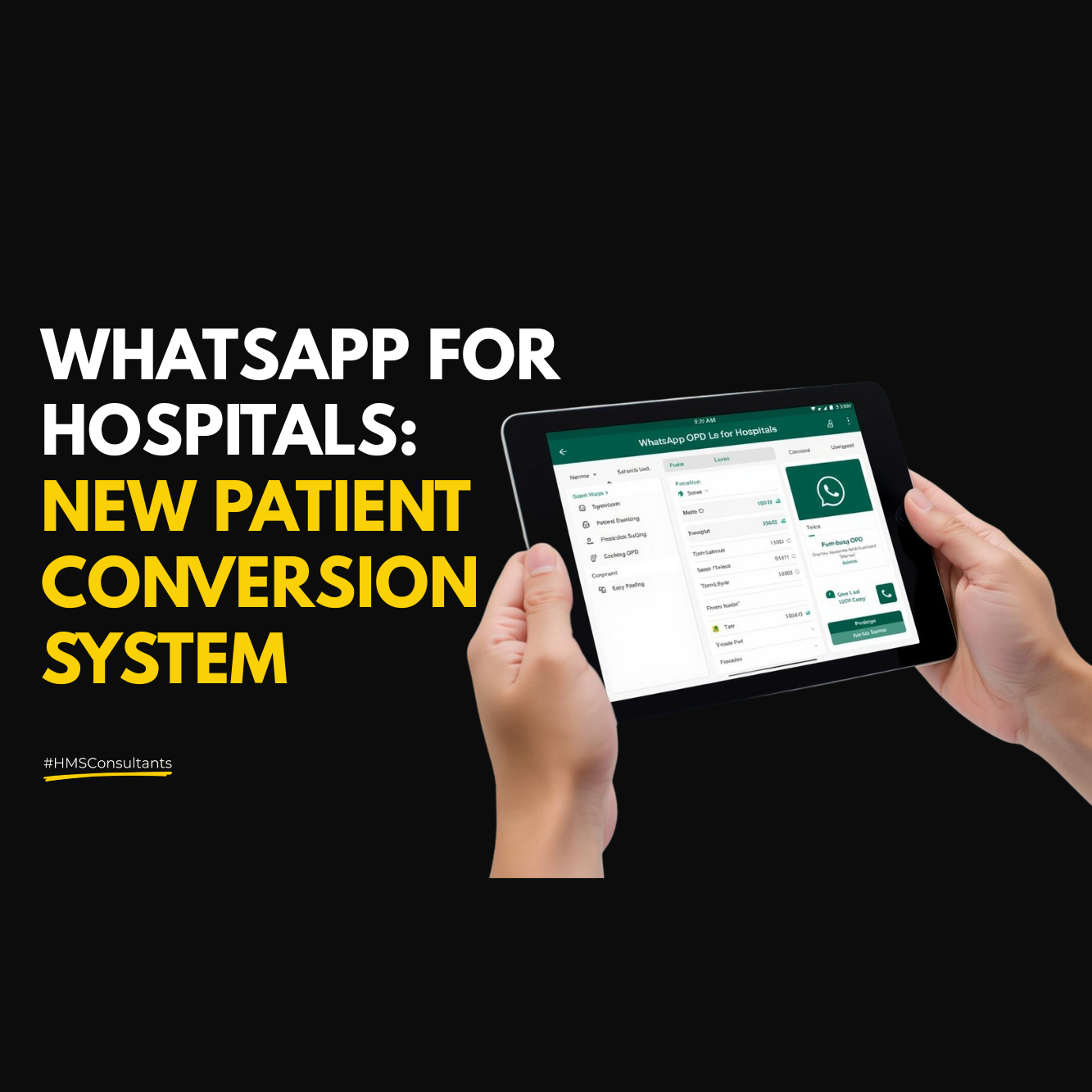
  • WhatsApp is the New OPD: How Hospitals in India Can Convert 3X More Patients With Smart Automations

    WhatsApp is the New OPD: How Hospitals in India Can Convert 3X More Patients With Smart Automations

    WhatsApp is the New OPD: How Hospitals in India Can Convert 3X More Patients With Smart Automations

    Written by
    Published on
    Share This

    Healthcare in India Has Moved to WhatsApp, Have Hospitals Caught Up?

    India has over 400 million WhatsApp users, making it the largest WhatsApp population in the world. Patients today do not call hospitals first they WhatsApp. They want quick answers, simple communication, clear instructions, and fast confirmation.

    This shift has fundamentally changed healthcare marketing, patient engagement, and OPD conversions.
    For most clinics, WhatsApp is silently replacing the first point of contact that reception desks once handled.

    Yet, many hospitals still treat WhatsApp casually, replying late, sending incomplete information, or not following up at all. As a result, they lose dozens of potential OPD patients without even realising it.

    With the right systems and automations, WhatsApp can become your most powerful OPD engine, improving conversion rates by 3X and dramatically reducing patient drop-offs.

    1. Why WhatsApp Has Become India’s Digital Waiting Room

    Patients prefer WhatsApp because it’s:

    • Convenient (no calling, no waiting)
    • Familiar (everyone uses it daily)
    • Quick (instant replies build trust)
    • Private (sensitive health queries feel safer)
    • Organised (easy to save details, prescriptions, invoices)

    The biggest shift?
    Patients no longer want to call,  they want to text.

    For many hospitals, WhatsApp messages outnumber phone calls by 200–300%.

    This makes WhatsApp the new pre-OPD, where patients decide whether they will actually visit your hospital.

    2. The Real Problem: Most Hospitals Handle WhatsApp Like a Casual Chat

    Here’s what typically happens at a clinic:

    • A patient sends a query
    • Reception replies after 15–20 minutes
    • Incomplete information is shared
    • No follow-up is done if the patient stops responding
    • Messages get buried
    • No reminders are sent
    • No lead data is captured

    This creates massive leakage.

    60% of potential OPD patients drop off on WhatsApp due to slow or unclear responses.

    The problem is not marketing.
    The problem is broken patient communication.

    3. WhatsApp Automations: The Cure to the Enquiry-to-OPD Gap

    With the right automation system, you can transform WhatsApp into a structured, high-conversion workflow.

    Automations can handle tasks like:

    Instant Greeting Message– Responds within 1 second of enquiry.

    Smart Quick Replies- Automatically shares:

    • Consultation timings
    • Doctor availability
    • Location
    • Services
    • Packages
    • FAQs
    • Instructions

    Appointment Booking Integration- Patients can book OPD slots without waiting for a receptionist.

    Follow-up Automated Nudges- If a patient stops responding, WhatsApp sends a soft follow-up to re-engage them.

    Review Collection Workflow- Triggers review requests after the visit.

    Post-Treatment Reminders- Medication, diet, follow-ups- all automated.

    This system creates a 24×7 digital front desk that never forgets, never delays, and never loses a lead.

    4. Why WhatsApp Converts Better Than Calls, Forms, or Websites

    A) Faster Than Calls- Patients don’t like waiting on hold. WhatsApp gives them instant clarity.

    B) More Effective Than Website Forms- Forms require time, details, and often feel overwhelming. WhatsApp feels natural.

    C) More Personal Than Email- Email lacks warmth. WhatsApp feels conversational.

    D) Easier for Patients to Revisit- Location, fees, instructions- everything stays saved.

    E) Reduces Fear and Increases Comfort- Patients often hesitate to call for sensitive issues. Texting feels emotionally safer.

    This is why WhatsApp creates deeper trust and drives faster decisions.

    5. The 6 Most Important WhatsApp Flows Every Hospital Must Build

    1. New Enquiry Flow- Collects patient name, age, concern, and preferred time automatically.
    2. Pre-OPD Flow- Shares doctor bio, timings, fees, location- improving show-up rate.
    3. Missed Enquiry Follow-Up Flow- Sends a gentle reminder after 30 minutes of no response.
    4. Appointment Confirmation Flow- Provides ticket number, OPD instructions, and check-in time.
    5. Post-Consultation Flow- Requests reviews, shares prescriptions/summary, and books follow-up.
    6. Continuing Care/Chronic Care Flow- Helps monitor diabetes, pregnancy, cardiac care, renal follow-ups, etc.

    These flows reduce operational load and improve patient satisfaction.

    6. How to Ensure WhatsApp Marketing Stays Ethical & Compliant

    WhatsApp may feel casual, but healthcare communication must follow rules.

    Ethical best practices include:

    • Take consent before sharing medical details

    • Never disclose sensitive reports without patient approval
    • Avoid aggressive marketing blasts
    • Keep messages clear and simple
    • Use verified business API for authenticity
    • Respond with empathy, not scripts

    WhatsApp should feel helpful, not promotional.

    7. Real Impact: How Hospitals See 3X Growth With WhatsApp Systems

    • Higher Show-Up Rates- Patients who receive reminders are far more likely to visit.
    • Faster OPD Conversions- Instant answers = faster decisions.
    • More Repeat Visits- Automated follow-ups keep patients engaged.
    • Higher Patient Satisfaction- Clear communication reduces anxiety.
    • Stronger Word-of-Mouth- Smooth experience → more referrals.
    • Reduced Front Desk Load- Reception handles fewer repetitive queries. 
    • Better Data Tracking- All leads, conversations, and conversions are recorded.

    WhatsApp becomes both a marketing channel and an operational engine.

    8. Why WhatsApp Is Not the Future It Is the Present

    Hospitals that understand this shift will gain a massive advantage. Those that don’t will continue losing patients silently. WhatsApp has already become:

    • The first enquiry platform
    • The fastest communication channel
    • The most reliable follow-up system
    • The easiest appointment tool
    • The best patient engagement platform

    In simple terms: WhatsApp is your new OPD, whether you accept it or not.

    Conclusion: Build a Patient Experience That Starts With Trust and Ends With Care

    If hospitals want to grow in 2025 and beyond, they must meet patients where they already are: on WhatsApp.

    The right automation and communication framework ensures that every patient:

    • Gets answers instantly
    • Feels valued
    • Feels confident
    • Understands next steps
    • Books faster
    • Stays longer
    • Refers more

    Marketing may bring enquiries, but smart WhatsApp systems convert them into real OPD patients.

    Hospitals that master WhatsApp engagement will build trust, loyalty, and consistent patient flow without relying on heavy advertising.

    Contact Us HMS Consultants

    Doctors Digital Marketing I Healthcare Marketing I Hospital Marketing Strategies I Marketing ideas for clinics I Marketing Trends 2025 I Medical Marketing I Social Media Marketing

    is something we strongly believe in, which means ‘Knowledge without application is the same as having no knowledge at all

    Akhil Dave

    Principle Consultant

    Ready to take your Personal Brand to the next level?

    Share your details below and we will connect with you to discuss your growth strategy.
    • Demystifying Patient Journey Analytics for Indian Hospitals From First Click to Discharge

      Demystifying Patient Journey Analytics for Indian Hospitals From First Click to Discharge

      Demystifying Patient Journey Analytics for Indian Hospitals From First Click to Discharge

      Written by
      Published on
      Share This

      Why Hospitals Cannot Rely on Guesswork Anymore

      The Indian healthcare sector is becoming more competitive every year. Patients have endless choices: multi-speciality hospitals, boutique clinics, online consultations, health-tech platforms, and home-care providers. Yet most hospitals in India still operate without understanding how patients discover them, why they choose them, and where they drop off in the journey.

      This is why patient journey analytics is no longer a “nice-to-have”, it is the foundation of sustainable, efficient, ROI-driven healthcare marketing.

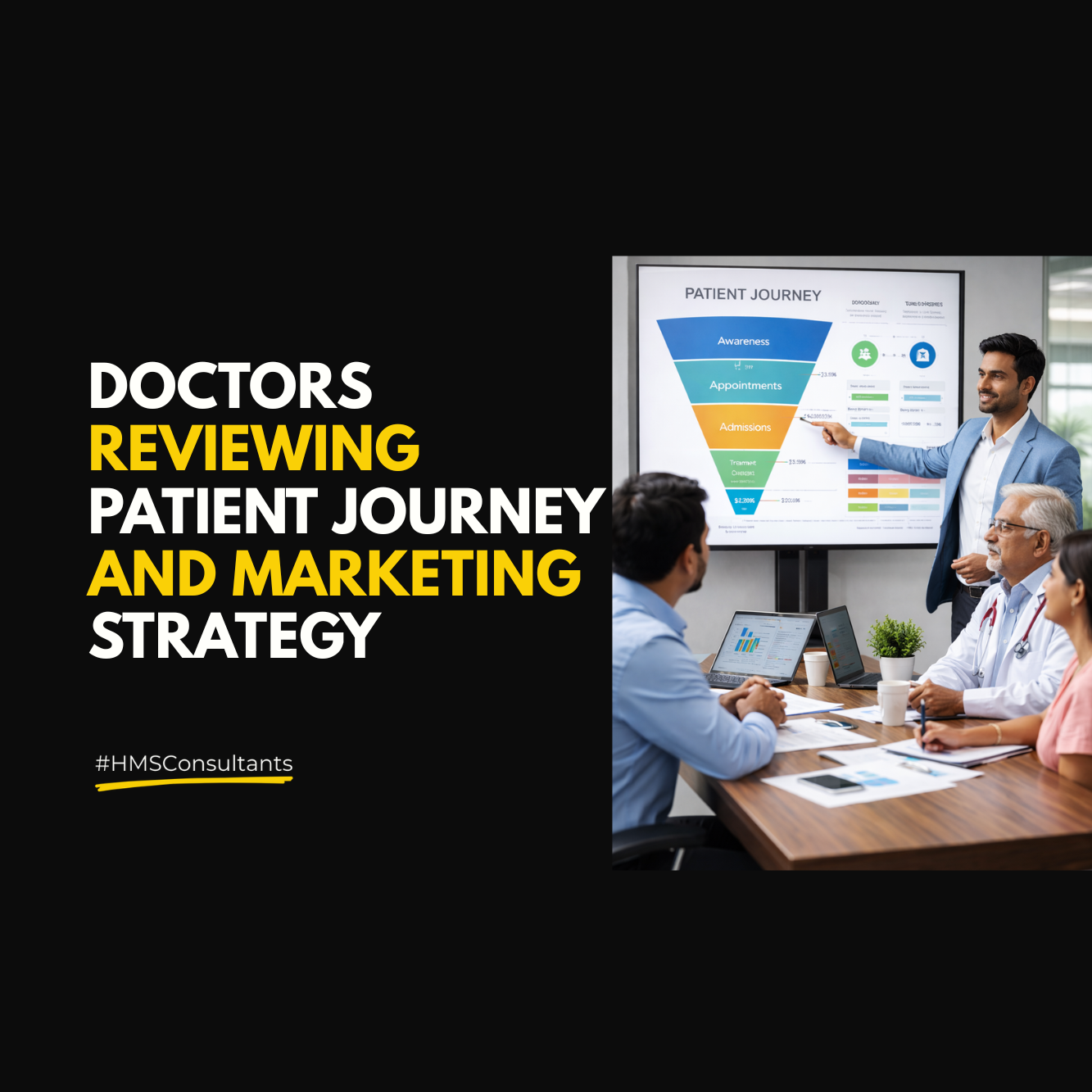
      Patient Journey Analytics = Tracking every stage of the patient’s decision from awareness to enquiry to OPD to discharge to follow-up.

      When hospitals understand these stages, they stop guessing and start making decisions backed by real patient behaviour.

      1. The First Click: Where Does the Patient Journey Actually Begin?

      Many hospitals assume the patient journey starts when someone calls the reception.

      In reality, the journey starts much earlier often days or weeks before that phone call.

      Common “first-click” entry points:

      • Google search (“best gynecologist near me”)
      • Google Maps discovery
      • Facebook or Instagram reels
      • YouTube doctor explanations
      • Patient reviews
      • Family referrals who still Google you to confirm
      • Website visit
      • Online articles
      • Health insurance search
      • WhatsApp forwards

      Modern patients behave like informed consumers.
      They compare, research, verify and then decide.

      Hospitals that track these early discovery touchpoints can understand which channels bring the highest-quality patients.

      2. Awareness → Consideration: What Makes Patients Shortlist One Hospital Over Another?

      After the first click, patients move into the consideration phase, where they evaluate credibility.

      They look for:

      • Website quality
      • Consistent branding
      • Doctor profile clarity
      • Google review authenticity
      • Appointment convenience
      • Cost transparency
      • Safety protocols
      • Specialisation match

      This is where hospitals lose the majority of patients.
      Patients do not say anything, they quietly shift to the next option.

      Patient journey analytics helps you identify:

      • Where website visitors drop off
      • Which pages they spend the most time on
      • Whether they click the “Book Appointment” button
      • Whether WhatsApp is more effective than Call buttons
      • What information they are still missing

      When hospitals analyse this behaviour, they fix friction points and increase conversions.

      3. The Enquiry Stage: The Make-or-Break Moment

      Once a patient is convinced enough, they finally take action:

      • Call
      • WhatsApp
      • Book online appointment
      • Fill website form
      • Reply to a WhatsApp broadcast
      • DM on social media

      This is where reception quality, speed of response, and clarity of information play a huge role.

      Did you know?
      25–40% of leads in Indian hospitals are lost due to slow or poor responses.

      Patient journey analytics monitors:

      • Response time
      • Tone of communication
      • Number of follow-ups
      • Conversion rates per channel (call vs WhatsApp vs website form)
      • Reasons for drop-off
      • Enquiry-to-OPD conversion ratio

      This reveals operational bottlenecks that marketing alone can never solve.

      4. The OPD Experience: What Happens Inside the Hospital Matters More Than Any Ad

      Marketing brings a patient to the hospital but the real journey starts once they walk in.

      Patients observe:

      • Reception behaviour
      • Waiting time
      • Queue management
      • Cleanliness
      • Consultation clarity
      • Doctor’s communication style
      • Billing process transparency
      • Follow-up instructions

      A poor in-hospital experience destroys marketing ROI.

      Patient journey analytics evaluates:

      • Appointment show-up rate
      • No-show patterns
      • Patient satisfaction insights
      • Feedback on staff behaviour
      • Time taken at each stage
      • Doctor-patient communication gaps

      This helps hospitals upgrade their operational efficiency and improve brand reputation.

      5. Treatment & Discharge: The Phase Most Hospitals Forget to Analyse

      Decision-making does not end at OPD.
      Patients continue analyzing:

      • How well treatment was explained
      • If risks were transparent
      • Whether they felt respected
      • Whether the process felt organised
      • Whether discharge instructions were clear

      Patient journey analytics identifies:

      • Treatment acceptance rate
      • Drop-offs between diagnosis → procedure
      • Common objections
      • Payment-related barriers
      • Discharge satisfaction score
      • Medical file clarity
      • Compliance with instructions

      These insights help hospitals design processes that reduce confusion and increase trust.

      6. Follow-Up & Long-Term Engagement: The Hidden Opportunity Most Clinics Ignore

      A patient journey doesn’t end at discharge. This is where long-term loyalty and referrals happen. But most Indian hospitals do not track:

      • Follow-up appointment success
      • Medication adherence
      • Repeat visits
      • Preventive care enrolments
      • Patient satisfaction over time
      • Referral patterns
      • Google review triggers

      When hospitals analyse post-treatment behaviour, they build strong retention systems.

      Examples of what analytics may reveal:

      • “Patients prefer WhatsApp reminders over SMS.”
      • “Post-surgery patients need 2 follow-ups to stay compliant.”
      • “Review requests work best 2 days after discharge.”

      These micro-insights build powerful growth loops.

      7. How to Practically Implement Patient Journey Analytics in an Indian Hospital

      You don’t need expensive software or complex dashboards.

      Start simple:

      A) Map the journey

      Break the funnel into:

      • Awareness
      • Consideration
      • Enquiry
      • OPD
      • Treatment
      • Discharge
      • Follow-up
      • Referral

      B) Track 3–5 metrics per stage

      Examples:

      • Website to WhatsApp conversion
      • Google Reviews per month
      • Enquiry response time
      • Show-up rate
      • Treatment acceptance
      • Repeat visits
      • Referral percentage

      C) Use everyday tools

      • Google Analytics 4
      • Google Business Profile Insights
      • WhatsApp Business analytics
      • Call recordings
      • CRM (basic or advanced)
      • Appointment software
      • Manual staff checklists

      D) Review monthly

      Discuss findings in management meetings to continuously improve operations.

      Patient-reported insights + digital data = the clearest picture of your hospital’s performance.

      8. Why Patient Journey Analytics is the Future of Healthcare Growth in India

      Because it ensures that:

      • Marketing becomes predictable
      • Patient experience becomes consistent
      • Operations become measurable
      • Staff performance becomes visible
      • ROI becomes trackable
      • Decision-making becomes data-driven
      • Every rupee spent produces results

      The most successful hospitals in India have one thing in common:
      They know exactly how a patient moves through their system and they optimise every step.

      When you understand your patient journey, you do not need massive marketing budgets.
      You need clarity, systems, and data.

      Conclusion: Every Patient Tells a Story, Your Job Is to Track It

      Patient journey analytics is not a technical concept; it is a simple mindset shift.

      It means:

      • Stop assuming- Start observing
      • Stop guessing- Start measuring
      • Stop reacting- Start improving

      When Indian hospitals adopt this approach, marketing becomes efficient, operations become smoother, and patient care becomes more meaningful.

      The future belongs to hospitals that combine:
      clinical excellence + digital intelligence + patient empathy.

      Understanding the patient journey is the bridge between all three.

      Contact Us HMS Consultants

      Doctors Digital Marketing I Healthcare Marketing I Hospital Marketing Strategies I Marketing ideas for clinics I Marketing Trends 2025 I Medical Marketing I Social Media Marketing

      is something we strongly believe in, which means ‘Knowledge without application is the same as having no knowledge at all

      Akhil Dave

      Principle Consultant

      Ready to take your Personal Brand to the next level?

      Share your details below and we will connect with you to discuss your growth strategy.

      • Sustainable & Ethical Healthcare Marketing in India: Balancing Growth, Regulation & Patient Rights (2026 Guide)

        Sustainable & Ethical Healthcare Marketing in India: Balancing Growth, Regulation & Patient Rights (2026 Guide)

        Sustainable & Ethical Healthcare Marketing in India: Balancing Growth, Regulation & Patient Rights (2026 Guide)

        Written by
        Published on
        Share This

        Why Ethical healthcare Marketing Is No Longer Optional for Indian Healthcare

        Healthcare in India is changing rapidly. Patients have more information, more choices, and more expectations than ever before. At the same time, hospitals are investing heavily in digital marketing, branding, social media, and advertising.
        But with this growth comes a critical responsibility: marketing must remain ethical, transparent, and patient-centric.

        Unlike other industries, healthcare is not just about sales it is about life, safety, trust, and long-term credibility. One misleading claim, one exaggerated promise, or one insensitive campaign can cause irreversible damage to a hospital’s reputation.

        This is why India is moving toward a future where sustainable and ethical healthcare marketing is the only acceptable standard.

        This guide explores how hospitals can grow responsibly while remaining in compliance with regulations and protecting patient rights.

        1. The Shift Toward Transparency: What Today’s Patients Expect

        The modern Indian patient is very different from the patient of 10 years ago. They:

        • Research symptoms online
        • Compare hospitals on Google
        • Check prices
        • Read reviews and complaints
        • Watch doctor videos
        • Verify credentials
        • Ask for second opinions

        In short, they do not trust fancy marketing they trust clarity.

        Ethical marketing starts by giving patients honest, simple, and complete information so they can make confident decisions. Any content that manipulates emotions, hides risks, or overpromises outcomes violates trust.

        Sustainable marketing = Transparent communication + Verified information + Realistic expectations.

        2. Understanding the Regulatory Landscape (ASCI + MCI + Digital Compliance)

        Healthcare marketing in India is governed by multiple bodies:

        ASCI (Advertising Standards Council of India)

        ASCI mandates:

        • No misleading claims
        • No guaranteed success rates
        • No before-after images without disclaimers
        • No fear-based messaging
        • No celebrity endorsements implying medical superiority

        Medical Council Regulations

        While updated over time, the spirit remains:

        • No self-promotion that misleads patients
        • No false claims
        • No unethical comparison with peers

        Digital Marketing Standards

        Platforms like Google and Meta also impose restrictions on medical advertising.

        Hospitals must ensure that all digital communication websites, reels, posts, WhatsApp broadcasts, flyers follow ethical guidelines.

        Compliance isn’t a burden; it is protection.
        One non-compliant campaign can lead to complaints, penalties, or reputation loss.

        3. Ethical Positioning: Growth Without Exaggeration

        Marketing often tempts hospitals to use bold words like:

        • “Guaranteed cure”
        • “100% success rate”
        • “Painless surgery”
        • “Instant results”
        • “Safest in the city”

        These claims attract attention, but they damage trust. Ethical marketing focuses on value, expertise, and care, not exaggerated promises.

        Examples of ethical positioning:
        – “Advanced treatment designed for faster recovery.”
        – “Experienced team with protocols for safety and comfort.”
        – “Personalised plans based on your condition and medical history.”

        No sensational promises, only clarity and confidence.

        4. The Rise of Patient Rights in Digital Healthcare

        Indian patients today care about:

        • Privacy
        • Consent
        • Data security
        • Transparency about costs
        • Honest communication
        • Access to information
        • Respect and dignity

        Hospitals must recognise that patients are not leads they are humans making vulnerable decisions.

        Ethical marketing involves:

        • Taking consent before sharing testimonials
        • Protecting patient data on CRM and WhatsApp
        • Avoiding sensationalised case stories
        • Being honest about risks, recovery timelines, and alternatives
        • Displaying price ranges clearly when possible

        If your marketing respects patient rights, your brand grows sustainably.

        5. Content Integrity: How to Create Educational, Non-Misleading Content

        Content is the heart of healthcare marketing videos, blogs, FAQs, reels, podcasts, infographics.

        But content must always be:

        • Medical accurate
        • Reviewed by experts
        • Free from unnecessary fear
        • Researched and updated
        • Explained in simple language
        • Culturally sensitive
        • Transparent about limitations

        Content should teach, not sell. Educate first → Build trust → Patients will choose you.

        Examples of ethical content ideas:

        • “5 early signs you shouldn’t ignore”
        • “Understanding lifestyle risks”
        • “What questions to ask before surgery”
        • “How to choose the right specialist”
        • “Evidence-based treatments explained simply”

        This makes the hospital a trusted advisor, not just a service provider.

        6. Ethical Use of Patient Stories, Reviews & Testimonials

        Patient stories are powerful but sensitive.

        Ethical guidelines require:

        • Written consent
        • Avoiding emotional exploitation
        • No exaggerated outcomes
        • No hiding of medical risks
        • No paid or fake reviews
        • Balanced storytelling

        Example of ethical storytelling: “Mrs. R needed help managing her diabetes. After 3 months of personalised care and regular follow-ups, her HbA1c improved. Results vary for each individual.”

        This ensures honesty and earns long-term trust.

        7. Sustainability in Marketing: Strategies That Build Long-Term Credibility

        Unethical marketing gives short-term growth. Ethical marketing gives sustainable growth.

        Hospitals should invest in long-term systems rather than shortcuts. This includes:

        • Strong patient experience
        • Well-designed website
        • Google review system
        • WhatsApp automation
        • Accurate information online
        • Consistent branding
        • Doctor education videos
        • Transparent pricing
        • Follow-up care
        • Community engagement

        These strategies create a brand that grows naturally through:

        • Referrals
        • Trust
        • Reputation
        • Patient loyalty

        Sustainability is not about cost; it is about commitment.

        8. The Intersection of Ethics & ROI: Why Responsible Marketing Converts Better

        A common misconception is:
        “Ethical marketing is slow, sales-focused marketing is fast.”

        Not true.

        In healthcare, trust drives conversions.
        Patients choose hospitals that demonstrate:

        • Honesty
        • Care
        • Competence
        • Transparency
        • Respect

        Ethical marketing improves ROI because:

        • Patients stay longer
        • They bring family referrals
        • They give genuine reviews
        • They follow treatment plans
        • They feel safe and respected

        Long term, ethical marketing is more profitable than aggressive marketing.

        Conclusion: The Future of Healthcare Marketing in India Is Ethical, Transparent & Human-Centric

        As India enters 2026, the hospitals that will rise to the top are not those shouting the loudest but those building the deepest trust.

        Ethical and sustainable healthcare marketing ensures:

        • Compliance with regulations
        • Respect for patient rights
        • Protection of hospital reputation
        • High-quality content
        • Transparent communication
        • Trust-driven patient acquisition
        • Long-term brand loyalty

        Healthcare is not an industry of transactions, it is an industry of trust.

        If hospitals want to grow meaningfully, ethically, and sustainably, they must embrace a new mindset: Marketing with compassion, honesty, and responsibility.

        Contact Us HMS Consultants

        Doctors Digital Marketing I Healthcare Marketing I Hospital Marketing Strategies I Marketing ideas for clinics I Marketing Trends 2025 I Medical Marketing I Social Media Marketing

        is something we strongly believe in, which means ‘Knowledge without application is the same as having no knowledge at all

        Akhil Dave

        Principle Consultant

        Ready to take your Personal Brand to the next level?

        Share your details below and we will connect with you to discuss your growth strategy.

        • The Marketing Audit Your Hospital Actually Needs: Why 80% Clinics Waste Money Without This 7-Step Review

          The Marketing Audit Your Hospital Actually Needs: Why 80% Clinics Waste Money Without This 7-Step Review

          The Marketing Audit Your Hospital Actually Needs: Why 80% Clinics Waste Money Without This 7-Step Review

          Written by
          Published on
          Share This

          The Hidden Cost of “Doing Marketing” Without Direction

          Across India, clinics and hospitals are investing heavily in digital marketing social media posts, Google ads, influencer videos, website revamps, WhatsApp broadcasts, offline activities, health camps, and more. But despite all the effort and money spent, most medical facilities continue to struggle with the same problems: inconsistent patient flow, low OPD conversions, poor engagement, and a vague sense of “nothing is working.”

          Why does this happen?
          Because 80% of hospitals never conduct a proper marketing audit.

          Without an audit, marketing becomes a set of isolated activities rather than a strategic system. Money leaks from multiple points in the patient journey, often without doctors or management even realising it. A marketing audit is not a fancy term; it is a structured, evidence-based review of every pillar that impacts patient acquisition, experience, and retention.

          This blog breaks down the 7-step audit your hospital must conduct, why each step matters, and how it prevents unnecessary marketing wastage especially in a competitive healthcare environment like India.

          1. Brand Clarity: What Do Patients Really Think You Do?

          Most hospitals assume their brand is clear because they know what they offer but that is rarely how patients see it. A marketing audit begins by identifying:

          For example, a diabetes clinic might say “We treat diabetes,” but a patient searches for: “Diabetes reversal doctor,” “HbA1c specialist,” “foot clinic near me,” “insulin management,” or “weight-loss for diabetics.”

          If your brand messaging does not match patient search intent, you will lose visibility no matter how much you spend.

          Audit outcome: A clear brand positioning statement, simplified service definitions, and aligned messaging across all channels.

          2. Your Google Presence: The First Digital OPD You Didn’t Even Know Exists

          In India, more than 70% of patients check a hospital on Google before deciding to visit.
          But most hospitals never audit:

          • Google Business Profile accuracy
          • Reviews (count, quality, recency, responsiveness)
          • NAP consistency (Name, Address, Phone)
          • Photo quality
          • Keywords used in the profile
          • Appointment links
          • Maps visibility

          This is where clinics lose the highest number of potential patients silently.

          A marketing audit examines how your hospital appears on search results and maps, where the gaps are, and what optimisation is required to ensure that when someone searches “best orthopaedic doctor near me” or “child specialist open now,” you appear on top.

          Audit outcome: A fully optimised Google profile that becomes your most powerful free marketing tool.

          3. Website Structure & Patient Experience: Is Your Digital Reception Helping or Confusing?

          Most patients visit your website for one of the following reasons:

          • To check credibility
          • To understand services
          • To find the doctor list
          • To see reviews
          • To book an appointment
          • To check prices or packages

          If your website fails to answer these in 30–40 seconds, patients will drop off.

          A marketing audit reviews:

          • Website load speed
          • Mobile friendliness
          • Clarity of service pages
          • Appointment flow
          • WhatsApp/Call-to-action placement
          • Medical accuracy and ethics
          • Patient education content
          • Landing page effectiveness for ads

          A confusing website equals lost patients. A clean, simple, mobile-optimised website increases patient conversions without spending a rupee extra on marketing.

          Audit outcome: A clear list of website changes that reduce bounce rate and increase enquiry conversions.

          4. Content & Communication: Are You Speaking the Language Patients Understand?

          Indian healthcare is filled with jargon and patients rarely understand what doctors mean.
          Your marketing audit checks:

          • Whether content is patient-friendly
          • Whether your posts address patient fears & motivations
          • Whether your content is solving problems, not showcasing “features”
          • Whether your tone is trustworthy and reassuring
          • Whether you’re using multi-format content (video, reels, blogs, FAQs)

          The biggest mistake hospitals make is content that’s about them instead of being about patients’ needs.

          Example:
          Bad: “We have state-of-the-art laparoscopic equipment.”
          Good: “Get faster recovery, smaller scars, and less pain with laparoscopy.”

          Audit outcome: A content strategy that builds trust, improves clarity, and attracts the right patients.

          5. Lead Management & WhatsApp Flow: Are You Following Up or Losing Patients?

          Every clinic loses at least 20–30% of enquiries because of poor follow-up. A marketing audit examines:

          • How leads are captured
          • How many are missed
          • How quickly your front desk responds
          • Whether WhatsApp automation exists
          • Whether reminders and follow-ups are consistent
          • Whether call recordings show quality conversation
          • Whether patients drop off between enquiry → visit

          WhatsApp can increase OPD conversions 3x if used properly but only if your audit identifies the gaps.

          Audit outcome: A streamlined follow-up system that ensures no patient enquiry is wasted.

          6. Staff Behaviour & Patient Touchpoints: The Offline Experience You Cannot Ignore

          Marketing can bring patients to the door but your staff determines whether they stay.

          A holistic audit includes:

          • Reception behaviour
          • Waiting room experience
          • Phone etiquette
          • Billing clarity
          • Doctor’s communication style
          • Follow-up planning
          • Discharge experience

          This is where hospitals often lose repeat patients and referrals.
          A marketing audit reveals operational gaps that directly impact your brand and patient satisfaction.

          Audit outcome: Action steps to align staff behaviour with your core brand promise.

          7. Analytics, Tracking & UTM Review: Are Your Decisions Based on Data or Guesswork?

          No marketing is effective if you can’t track it.
          Most clinics run ads, post content, or do offline activities without knowing what truly works.

          A good marketing audit reviews:

          • Google Analytics setup
          • UTM parameters
          • Campaign tracking sheets
          • Lead source analysis
          • Cost-per-lead
          • Cost-per-OPD
          • ROI measurement
          • Monthly performance trends

          Without tracking, you are not marketing you are guessing.

          Audit outcome: A clear monthly dashboard and decision-making framework based on real data.

          Why This 7-Step Audit Saves Money Instead of Spending It

          A hospital marketing audit does not add new expenses.
          It eliminates wastage caused by:

          • Wrong targeting
          • Weak online presence
          • Poor website structure
          • Staff gaps
          • Missed leads
          • No tracking
          • Confusing content

          When the audit fixes these bottlenecks, every rupee spent starts producing results.

          Imagine running ads after the audit → now you know your website is ready, your Google listing is strong, your staff is trained, and your follow-up system is tight.
          This multiplies conversions instantly.

          Conclusion: Before You Spend on Marketing, Fix the System First

          Marketing is not posting more.
          Marketing is not boosting ads.
          Marketing is not hiring an agency and hoping for miracles.

          Marketing is a system and a system only works when all parts are aligned.

          A 7-step hospital marketing audit ensures:

          • You stop wasting money
          • You start attracting the right patients
          • You build credibility
          • You improve patient experience
          • You track what truly works
          • You make informed decisions
          • You create a sustainable growth engine

          Before your next marketing activity audit your hospital.
          It’s not an expense; it’s the foundation of everything that follows.

          Contact Us HMS Consultants

          Doctors Digital Marketing I Healthcare Marketing I Hospital Marketing Strategies I Marketing ideas for clinics I Marketing Trends 2025 I Medical Marketing I Social Media Marketing

          is something we strongly believe in, which means ‘Knowledge without application is the same as having no knowledge at all

          Akhil Dave

          Principle Consultant

          Ready to take your Personal Brand to the next level?

          Share your details below and we will connect with you to discuss your growth strategy.

          • Where Do Hospital Marketing Budgets Really Go? A Transparent Breakdown

            Where Do Hospital Marketing Budgets Really Go? A Transparent Breakdown

            Where Do Hospital Marketing Budgets Really Go? A Transparent Breakdown

            Written by
            Published on
            Share This

            Every hospital wants more patients, better visibility, and stronger brand recall. But when the topic of “marketing budget” comes up, most hospital owners hesitate. They are unsure how much to spend, where to spend it, and what truly yields returns. Many assume marketing is just posters, social media posts or an occasional advertisement. Others believe that hiring an agency alone will solve the problem.

            In reality, hospital marketing is a broad ecosystem. The budget does not disappear on creativity or campaigns; it flows into systems, technology, communication, and experience. And unless a hospital understands how each element works, money gets spent without results.

            This is why two hospitals with the same budget can have completely different outcomes. One sees patient footfall increase; the other sees nothing change. The difference lies in how the budget is distributed and what it is invested in.

            To understand this better, let’s break down where hospital marketing budgets actually go and why each component matters.

            1. Digital Identity: The New Front Door of Healthcare

            The journey of a hospital begins online. A website, Google Business profile, doctor profiles, reviews, photos, and maps are no longer optional. They form the first impression of the hospital before anyone walks in. A significant portion of modern budgets is spent on building, updating, and improving this digital identity because, without it, patients simply cannot find or trust the hospital.

            A clean website is not a design expense; it is an investment in infrastructure. It reduces phone calls, explains services, and collects appointments while the receptionist sleeps. A well-maintained Google profile keeps the hospital visible to thousands of patients every month. In many hospitals, the people who eventually come for consultation are influenced long before reception ever answers a phone call.

            Hospitals that cannot be found online lose patients silently. That is why digital identity is often the first and most necessary investment.

            2. Patient Education and Content

            Marketing is not only about visibility; it is about clarity.

            Patients search for information on symptoms, procedures, risks, cost ranges, recovery times, and reassurance. When hospitals publish blogs, videos, FAQs, symptom guides and treatment explanations, they build trust. Good content reduces fear, improves decision-making and positions the hospital as a source of reliable information rather than an advertiser. The budget for medical content, whether created in-house or by specialists, is an essential component of long-term credibility building.

            Hospitals that educate do not need to convince. Patients arrive already trusting them.

            3. Lead Management and Enquiry Handling

            This is where most hospitals lose money without realising it.

            A campaign brings enquiries, but if calls are missed, WhatsApp messages go unanswered, or staff provide confused replies, the marketing budget collapses. A hospital may invest in ads, SEO or branding, but if the enquiry is not handled correctly, patients never convert.

            Part of the marketing budget goes into systems:

            • call tracking
            • CRMs
            • WhatsApp business setup
            • automated responses
            • training reception staff
            • monitoring conversion rates

            This is not promotion; it is operational efficiency. The smartest hospitals invest here because every saved enquiry is a saved rupee.

            4. Reputation Management

            A single negative review can cancel the effect of twenty advertisements. Responding to feedback, encouraging satisfied patients to share their experiences, and resolving complaints politely are essential parts of modern hospital marketing. It requires time, manpower and coordination. When done right, it turns happy patients into ambassadors.

            Hospitals believe reviews “happen naturally.” In reality, reviews happen intentionally. The budget supports someone who actively manages them.

            5. Paid Campaigns, Media and Branding

            This is where most hospitals assume the entire budget goes. In truth, ads are just one part of the ecosystem. Paid campaigns, such as Google Ads, Meta Ads, print ads, hoardings, or radio ads, are used to reach specific audiences during specific seasons or for specific specialities. The important thing is not the spending, but the strategy behind it.

            Hospitals that jump into advertising without first fixing their identity, content, reviews, and enquiry handling end up burning money. Hospitals that advertise after building strong systems see tangible results. The budget is not about shouting louder; it is about being heard by the right people.

            6. Photography, Videography and Real Visuals

            Stock images don’t build trust. Real photos of doctors, reception, OPD, IPD, OT, staff and patient success stories create authenticity. A portion of the budget is dedicated to visual storytelling because healthcare is emotional. When families see the environment, they feel confident. When they see real faces, they feel safe.

            A hospital can have the best infrastructure, but if nobody has seen it, it does not exist in the patient’s mind.

            7. Patient Engagement and Retention

            The cost of getting a new patient is always higher than retaining an existing one. Engagement tools, such as post-discharge guidance, WhatsApp updates, reminders, preventive care messages, and festival greetings, are part of marketing budgets because they keep the hospital relevant even after treatment ends.

            Hospitals that take patient engagement seriously do not have to constantly chase new patients. Their existing patients return and refer others.

            8. Technology and Automation

            Hospitals that rely solely on human memory often lose enquiries, forget follow-ups, and delay communication. Automation, CRMs, chatbots, appointment systems and WhatsApp workflows solve this problem. These platforms require subscriptions, setup and monitoring, hence they are part of the marketing budget.

            A hospital that automates grows. A hospital that waits for staff to remember struggles.

            Why do Two Hospitals Spending the Same Amount Get Different Results

            One hospital spends on ads first.
            Another spends on the foundation first.

            The first sees noise.
            The second sees conversions.

            When a hospital allocates its budget to improve communication, identity, reviews, and enquiry handling, advertising becomes more effective. When those foundations are weak, no marketing agency or designer can save the hospital from losing patients who come, enquire, and disappear.

            This is why “How much should we spend?” is not the right question.
            The correct question is “Are we spending in the right order?”

            Conclusion

            Marketing budgets in healthcare are not just creative bills. They fund visibility, communication, reputation, systems, education and patient experience. They ensure that when a family looks for a trustworthy healthcare provider at midnight, in an emergency or from another city your hospital is visible, credible and reachable.

            Hospitals that question the value of marketing often see expenses.
            Hospitals that understand the value of marketing make informed investments.

            Because in 2025, the hospital with the best machines does not win.
            The hospital with the best communication does.

            Contact Us HMS Consultants

            Doctors Digital Marketing I Healthcare Marketing I Hospital Marketing Strategies I Marketing ideas for clinics I Marketing Trends 2025 I Medical Marketing I Social Media Marketing

            is something we strongly believe in, which means ‘Knowledge without application is the same as having no knowledge at all

            Akhil Dave

            Principle Consultant

            Ready to take your Personal Brand to the next level?

            Share your details below and we will connect with you to discuss your growth strategy.

            • The Hidden Blind Spots in Healthcare Marketing Attribution And How to Fix Them

              The Hidden Blind Spots in Healthcare Marketing Attribution And How to Fix Them

              The Hidden Blind Spots in Healthcare Marketing Attribution And How to Fix Them

              Written by
              Published on
              Share This

              In today’s multi-channel, multi-device world, marketing attribution has become more complex than ever. Doctors, hospitals, and healthcare businesses follow unpredictable journeys before making decisions. They discover your brand on social media, search for you on Google, get recommendations from peers, watch your videos, attend offline events, and finally take action through a call, WhatsApp message, or website form.

              This complexity creates blind spots: gaps in understanding where your leads and conversions truly come from. And when these blind spots grow, your ROI suffers because budget and strategy decisions are based on incomplete data.

              This blog highlights the four biggest attribution blind spots and provides practical solutions for doctors, clinic owners, hospitals, and healthcare entrepreneurs.

              Blind Spot 1: The Non-Linear Patient Journey

              A healthcare consumer rarely follows a straight line like:

              Instagram Ad → Website → Booking.

              Instead, their path looks more like:

              Reel → Friend Recommendation → Google Search → WhatsApp Inquiry → Walk-In Visit.

              This “zig-zag” journey goes across devices, platforms, and offline interactions. Traditional attribution models like first-click or last-click fail to capture this complexity.

              What to Do

              • Map out your multi-touch patient journey.
              • Track engagement across channels using UTMs, analytics, call tracking.
              • Use time-decay or linear attribution models instead of last-click.
              • Capture “How did you hear about us?” at the call centre and reception.

              Blind Spot 2: Zero-Click Search & Invisible Digital Touchpoints

              Increasingly, patients get their answers directly on search engines without clicking anything. Voice assistants and AI search responses also reduce “trackable clicks.”

              Example:
              “Best LASIK hospital near me”
              The user sees the answer directly on Google’s SERP no click.

              This results in invisible influence you cannot track but that still affects decisions.

              What to Do

              • Optimise for AI search and voice queries.
              • Strengthen your SEO + AEO (Answer Engine Optimization).
              • Track micro-metrics like: impressions, views, SERP visibility.
              • Create content that earns featured snippets, FAQs, and authority.

              Blind Spot 3: Walled Gardens & Limited Data Sharing

              Platforms like Meta, Google Ads, YouTube, and Amazon are “walled gardens.”
              They share only partial data due to privacy laws and tracking limitations. This means your campaigns may be performing well, but the platform won’t always show you the full journey.

              What to Do

              • Use server-side tracking where applicable.
              • Always combine platform analytics with Google Analytics 4.
              • Standardise all campaign links with UTM parameters.
              • Use dashboards that connect multiple data sources for a unified view.

              Blind Spot 4: Offline Interactions & “Dark” Channels

              This is the most prominent blind spot in healthcare.

              Most patient conversions happen offline:

              • Call centre
              • OPD desk
              • Referral from another doctor
              • Word-of-mouth
              • WhatsApp group messages
              • Offline events or CMEs

              These channels rarely get tracked in digital analytics and this is where attribution breaks down for hospitals and clinics.

              What to Do

              • Add attribution fields in EMR/CRM: What brought you here today?”
              • Maintain call logs with campaign source tagging.
              • Train reception & PRO staff to capture lead source.
              • Use WhatsApp Business API to track inquiry flows.
              • Bridge offline + online data through simple reporting.

              The Real Lesson: You Don’t Need Perfect Attribution, You Need Useful Attribution

              The goal is not “perfect tracking.” The goal is clarity for better decisions.

              A practical, flexible attribution system will help you:

              • Allocate budget to the right channels
              • Identify content that builds trust
              • Understand offline impact
              • Reduce waste in marketing spends
              • Improve patient acquisition ROI

              Even if some parts of the journey remain invisible, structured measurement gives you enough insight to guide your strategy confidently.

              Key Takeaways for Healthcare Businesses

              Here is the HMS Consultants 8-step Attribution Checklist:

              1. Map your complete patient journey (online + offline).
              2. Track all touchpoints using UTMs, website analytics, and call tracking.
              3. Capture offline conversions at reception, OPD, and call centre.
              4. Measure influence, not just last clicks.
              5. Standardise campaign links for all digital activities.
              6. Use blended reporting dashboards for a holistic view.
              7. Collect patient feedback on discovery channels.
              8. Review attribution quarterly and refine continuously.

              Attribution is not a one-time task, it is an ongoing strategic capability.

              Final Words

              Healthcare marketing is evolving. Patient journeys are getting longer, more complex, and harder to track. If you rely only on surface-level data, you’ll end up with blind spots that misguide your decisions.

              But by identifying these blind spots and building a realistic, multi-touch attribution framework, healthcare organisations can unlock accurate insights, optimise budgets, and accelerate growth with confidence.

              Doctors Digital Marketing I Healthcare Marketing I Hospital Marketing Strategies I Marketing ideas for clinics I Marketing Trends 2025 I Medical Marketing I Social Media Marketing

              is something we strongly believe in, which means ‘Knowledge without application is the same as having no knowledge at all

              Akhil Dave

              Principle Consultant

              Ready to take your Personal Brand to the next level?

              Share your details below and we will connect with you to discuss your growth strategy.

              • Can a Hospital Survive Without Digital Marketing in 2025?

                Can a Hospital Survive Without Digital Marketing in 2025?

                Can a Hospital Survive Without Digital Marketing in 2025?

                Written by
                Published on
                Share This

                For many years, hospitals in India did not need digital marketing to grow. A respected doctor, a known family physician, or an established nursing home could thrive on reputation alone.

                Patients made decisions based on personal recommendations, neighbourhood familiarity, or advice from relatives. But the way people choose healthcare in 2025 is fundamentally different. The first step of the patient journey has moved online, and this shift is reshaping how hospitals gain trust, visibility, and new patients.

                Today, whether someone in Ahmedabad is searching for a neurologist, or a family in Indore is looking for a good maternity centre, or a senior citizen in Jaipur wants cataract surgery, the starting point is no longer a phone call or a walk-in. It is a Google search. Patients compare hospitals in the same way they compare restaurants, hotels, or travel options: by reading reviews, checking ratings, browsing websites, examining doctor profiles, and verifying credentials before visiting in person. This behaviour has become universal across metros, tier-II cities, and even semi-urban regions, because information gives patients a sense of security.

                A hospital without a digital presence immediately appears uncertain. When a patient cannot find basic details such as doctor qualifications, services offered, OPD schedules, success stories, photographs, or reviews, they quietly move to the next hospital that provides clarity. The decision happens silently; the hospital never even knows it lost a potential patient. This is the biggest challenge of remaining invisible online: there is no feedback, no complaint, no enquiry, just missed opportunity.

                Digital marketing in healthcare is often misunderstood as advertising. In reality, it is simply a matter of communication. Patients want answers: how experienced the doctors are, what procedures are available, how complex surgeries are handled, what recovery looks like, whether insurance is accepted, and what others have experienced at the hospital. When this information is available online through a clean website, Google Business listing, reviews and educational content, the hospital appears transparent and trustworthy. When information is missing, the hospital seems risky.

                The shift toward digital presence accelerated during the pandemic. Families learned to search for emergency numbers online, book consultations virtually, check bed availability and read reviews before stepping out. That change did not disappear after COVID; it became a permanent part of healthcare behaviour. Even older patients, who once depended entirely on local word-of-mouth, now validate hospital credibility on Google.

                In cities like Surat, Pune, Kochi, Lucknow, Jaipur, Indore or Rajkot, hospitals that invested in digital communication saw faster recovery in OPD footfall compared to those who relied only on traditional advertising. A website works all day, every day. A Google listing receives views even when the hospital is closed. Patient education builds authority without extra cost. Digital reviews influence reputation more than brochures. Compared to hoardings and newspaper ads, digital presence is more affordable and more permanent.

                So, can a hospital survive without digital marketing in 2025? A long-established hospital may continue operating because of its existing patient base, but survival and growth are two different things. Newer generations of patients do not choose hospitals purely based on local familiarity. They compare, verify, and make informed choices. Hospitals that are digitally visible appear safer and more professional. Hospitals that are invisible find it harder to attract first-time patients, corporate clients, medical tourism inquiries, or even new doctors.

                Digital marketing has also become part of patient service. Online appointment booking reduces waiting room crowd. WhatsApp communication improves follow-up and compliance. Educational content reduces fear. Reviews help patients feel confident about their decisions. In many ways, digital presence is no longer an “extra”, it is healthcare infrastructure.

                Clinical excellence matters once a patient enters the hospital. Digital visibility matters before they walk in.

                Conclusion

                The hospitals that will grow in the coming years will be the ones that treat communication with the same seriousness as treatment. They will use digital tools to answer patient questions, simplify processes, share outcomes responsibly, and build trust long before admission. In a world where the decision begins on a screen, visibility is not marketing; it is credibility.

                A hospital without digital presence might continue operating, but it will slowly lose relevance in a system where patients expect transparency, clarity and accessible information. Digital marketing is no longer a promotional activity. It is a bridge between medical expertise and patient confidence. And in 2025, confidence decides everything.

                Contact Us HMS Consultants 

                Doctors Digital Marketing I Healthcare Marketing I Hospital Marketing Strategies I Marketing ideas for clinics I Marketing Trends 2025 I Medical Marketing I Social Media Marketing

                is something we strongly believe in, which means ‘Knowledge without application is the same as having no knowledge at all

                Akhil Dave

                Principle Consultant

                Ready to take your Personal Brand to the next level?

                Share your details below and we will connect with you to discuss your growth strategy.

                • When Your Hospital’s Google Reviews Become More Powerful Than Your Doctors

                  When Your Hospital’s Google Reviews Become More Powerful Than Your Doctors

                  When Your Hospital’s Google Reviews Become More Powerful Than Your Doctors

                  Written by
                  Published on
                  Share This

                  For years, hospitals believed patients chose them based purely on medical expertise.
                  “People will come because our doctors are good.”
                  “Word of mouth is enough.”
                  “We don’t need online reviews.”
                  That was true once. Not anymore.

                  Today, before a patient even decides to walk through your door, they meet your hospital on Google.

                  Not through your machines, not through your doctors, not through your reception, but through your Google ratings and reviews.

                  Not through your machines, not through your doctors, not through your reception, but through your Google ratings and reviews.

                  A hospital with the best surgeons can still lose patients to one with better online feedback.
                  A hospital with modern infrastructure can fall behind a smaller clinic that simply responds to reviews politely.

                  And the scariest part? Most hospitals don’t even realise how many patients they lose because of poor or unmanaged reviews. Let’s understand why Google reviews have become more potent than traditional reputation and why hospitals cannot ignore them.

                  The First Impression Has Moved Online

                  A family in Ahmedabad needs a pediatrician.
                  A couple in Jaipur wants a fertility specialist.
                  A senior citizen in Indore needs cataract surgery.
                  A parent in Kochi is desperately searching for an emergency hospital at midnight.

                  They all do the same thing: open Google.

                  Type → “Best pediatrician near me.”
                  Google shows:

                  • Hospitals nearby
                  • Star ratings
                  • Number of reviews
                  • Good and bad comments
                  • Photos
                  • Timings
                  • Phone number

                  Within 7 seconds, the decision begins. Patients do not compare degrees first. They compare ratings.

                  A 4.8-Star Doctor With 30 Reviews Looks Less Trustworthy Than a 4.3-Star Doctor With 800 Reviews

                  It sounds strange, but it’s true. Patients do not think like doctors.
                  They think like consumers.

                  A restaurant with 20 reviews feels new. A restaurant with 1000 reviews feels trusted.

                  Hospitals follow the same psychology.
                  Numbers matter.
                  Volume matters.
                  Consistency matters.

                  A doctor may have treated thousands, but if only five reviews exist online, patients assume otherwise.

                  Good Reviews Bring Patients. Bad Reviews Scare Them Away. Silence Is Even Worse.

                  A negative review is not the problem. A negative review without a response is.

                  When a patient reads criticism and sees the hospital defend, explain, apologise, or resolve with respect, they feel reassured.

                  When a hospital remains silent, patients think:

                  • “They don’t care.”
                  • “The patient was probably right.”
                  • “What if this happens to me?”

                  Online silence looks like guilt. Hospitals often forget that reviews are not only feedback, but also public conversations.

                  Patients Trust Strangers More Than Advertisements

                  You can tell people you’re good. Your website can say you’re the best. Your brochures can say world-class.

                  But nothing is as powerful as a mother from your city writing:
                  “My child was treated with care, and the staff was very helpful.”

                  Or a senior citizen saying:
                  “The doctor explained everything patiently.”

                  Or a family saying:
                  “Emergency team responded immediately.”

                  These are not reviews. They are emotional proofs, and patients believe them deeply.

                  Even One Angry Review Can Push Away 50 Potential Patients

                  Worse, one angry review can go viral on WhatsApp, Telegram, and local groups.

                  People don’t share advertisements. They share experiences.

                  Hospitals spend lakhs on branding and lose patients because nobody replies to Google comments. A review is not a complaint. It’s an opportunity to show responsibility publicly.

                  Google Reviews Reveal What Internal Audits Miss

                  Doctors measure outcomes. Administrators measure revenue. But patients measure:

                  • attitude
                  • cleanliness
                  • clarity
                  • waiting
                  • kindness
                  • communication

                  These don’t show up in medical reports. They show up in reviews.

                  The review section is a mirror. Hospitals that read it grow, and the hospitals that ignore it repeat their mistakes.

                  Hospitals Don’t Realise How Often Patients Quit Mid-Search

                  Imagine this:

                  A family searches for a hospital for a normal delivery. They find your hospital with:

                  3.6 rating
                  18 bad reviews about rude staff, billing confusion, long waiting, and unresponsive reception.

                  They don’t call.
                  They don’t visit.
                  They don’t enquire.

                  You never even know you lost them.

                  Hospitals say, “We are not getting patients.”
                  Sometimes they are getting them, just losing them online, silently.

                  The Most Trusted Hospitals Are Not The Ones With No Negative Reviews

                  Patients don’t expect perfection. They expect honesty.

                  A hospital with 300 reviews and a few bad ones looks normal. A hospital with only 5 perfect reviews looks suspicious.

                  When a hospital responds respectfully even to criticism patients feel safer.
                  “No one will shout at us.”
                  “No one will ignore us.”
                  “They take feedback seriously.”

                  Respect builds trust faster than publicity.

                  Small Hospitals Win Big Because They Respond Personally

                  Large hospitals often ignore reviews because nobody is assigned to manage them.

                  Small clinics do the opposite:

                  • They respond
                  • They apologise
                  • They thank people
                  • They show concern

                  Patients feel noticed. And when patients feel valued, they return, even if others are cheaper or offer more. Human connection beats infrastructure.

                  Hospitals Say “We Don’t Ask for Reviews”, But They Should

                  A happy patient is willing to write a review, but they will not do it without being asked.

                  A simple, polite request:
                  “Sir/Ma’am, if your experience was good, please leave a review. It helps others feel confident.”

                  This is not marketing. It is reputation building.

                  Most angry reviews are voluntary. Most good reviews need a reminder.

                  Why Reviews Matter More Than Advertising

                  Ads cost money. Reviews cost nothing.

                  Ads reach strangers. Reviews convince them.

                  Ads tell your story. Reviews confirm it.

                  A hospital with 800 reviews does not need to prove credibility, the public has done it for them.

                  Conclusion

                  Hospitals often believe doctors are their biggest strength.
                  In treatment, they are. But before a patient chooses a doctor, they choose a hospital. And before they choose a hospital, they choose a Google listing.

                  A 30-second search can determine the next 10 years of patient loyalty.

                  Google reviews are no longer feedback.
                  They are digital referrals.
                  They are reputation.
                  They are marketing.
                  They are trust.

                  A hospital that actively collects reviews, responds respectfully, and learns from criticism will never struggle with patient confidence.

                  Because in today’s world, the most powerful diagnosis a patient makes happens before stepping into the OPD, it happens on Google.

                  Contact Us HMS Consultants 

                  Doctors Digital Marketing I Healthcare Marketing I Hospital Marketing Strategies I Marketing ideas for clinics I Marketing Trends 2025 I Medical Marketing I Social Media Marketing

                  is something we strongly believe in, which means ‘Knowledge without application is the same as having no knowledge at all

                  Akhil Dave

                  Principle Consultant

                  Ready to take your Personal Brand to the next level?

                  Share your details below and we will connect with you to discuss your growth strategy.

                  • What Small Hospitals Can Teach Big Hospitals About Patient Care

                    What Small Hospitals Can Teach Big Hospitals About Patient Care

                    What Small Hospitals Can Teach Big Hospitals About Patient Care

                    Written by
                    Published on
                    Share This

                    In every Indian city, you’ll find two kinds of healthcare setups: large hospitals with advanced equipment, multiple specialities, and huge staff… and small or mid-sized hospitals that run with limited resources but surprisingly loyal patients.
                    If size alone created trust, every patient would choose a corporate hospital. But that doesn’t happen.

                    There are families that have been visiting the same 25-bed hospital for 10, 20, or even 30 years. They deliver babies there, bring parents there, get surgeries done there and recommend others with confidence.

                    Why?
                    Because small hospitals offer something big hospitals struggle with: personal care, emotional comfort, and human connection.

                    While big hospitals perfect operations at scale, small hospitals perfect relationships. And when it comes to healthcare, relationships matter more than marketing.

                    Here’s what big hospitals can learn from them.

                    People Don’t Remember Machines. They Remember Behaviour.

                    A small hospital may not have the latest robotic arm or internationally branded medical equipment, but patients still trust them because the care feels personal.

                    When you enter a small hospital:

                    • Someone recognises your face
                    • The receptionist smiles
                    • The nurse remembers your child’s name
                    • The doctor asks about your family
                    • The staff treats you like a person, not a token number

                    Most patients don’t understand technology. They understand warmth, familiarity, and human touch.
                    Small hospitals excel at this without relying on training manuals, CRM tools, or scripts, because patient connection is an integral part of their culture.

                    Big hospitals invest in machines. Small hospitals invest in time.

                    In Small Hospitals, Doctors Are Not Busy; They Are Present

                    In large facilities, patients are prepared for rushed consultations, delayed OPDs, long waiting times, and heavy paperwork. A doctor may see 60–70 patients in a day. Each interaction becomes a race.

                    In smaller setups, patients feel heard. Doctors sit longer, explain better, answer questions, and reduce anxiety.

                    Medical outcomes are not just a matter of science; they are also a matter of psychology. When a patient feels understood, they trust the treatment, and when a doctor communicates, half the fear dissolves.

                    Sometimes, the cure starts before medicines.

                    Personal Follow-Ups Create Emotional Loyalty

                    A patient who gets a follow-up call after surgery or a message asking about recovery will never forget it. Small hospitals do this naturally, because they don’t treat patients as footfall. they treat them as families.

                    A simple phone call:

                    “Just checking if the pain is reducing.”
                    “Please don’t hesitate to come in if you feel discomfort.”
                    “We’ll see you on Wednesday for dressing.”

                    This is not marketing. It is humanity.

                    Big hospitals try to scale systems. Small hospitals scale trust.

                    Small Hospitals Offer Transparency Without Scripts

                    Ask a billing question in a small hospital, and someone will calmly explain the charges. Ask the same question in a large hospital and you’re often directed to three different counters, a TPA desk, and a printout full of codes.

                    Patients don’t need corporate communication. They need clarity.

                    In small hospitals:

                    • Charges are explained in Hindi, Gujarati, Marathi, Tamil whatever the patient speaks
                    • Reports are explained slowly
                    • Next steps are transparent
                    • Nothing feels hidden

                    Trust grows faster when nothing feels complicated.

                    Less Formality. More Comfort.

                    In a large hospital, patients follow formality:

                    • Registration slip
                    • Queue token
                    • Payment counter
                    • Wrist band
                    • Nurse rotation
                    • Doctor handoffs
                    • Several signatures

                    In a small hospital, the process feels human:

                    • “Come inside, the doctor is free.”
                    • “Sit, we will bring your file.”
                    • “Don’t worry, everything will be fine.”

                    Healthcare is frightening for patients. Comfort is a form of treatment.

                    Staff in Small Hospitals Don’t Need Training to Be Kind

                    Large hospitals spend lakhs on “patient communication workshops.” Small hospitals rarely need them; their staff behaves kindly without instructions.

                    Why?

                    Because smaller hospitals often hire staff who grew up in the same area.
                    They speak the same language.
                    They understand the people they serve.
                    They treat patients like neighbours, not customers.

                    Empathy is easier when familiarity is real.

                    Big Hospitals Win on Technology. Small Hospitals Win on Trust.

                    Corporate hospitals cannot copy everything small hospitals do, because scale changes behaviour. When thousands of patients walk in daily, processes become mechanical for survival.

                    But big hospitals can learn to keep humanity alive inside systems:

                    • Doctors shouldn’t speak only in medical terms
                    • Reception shouldn’t sound robotic
                    • Billing shouldn’t feel like a courtroom
                    • Critical updates shouldn’t be silent
                    • Patients shouldn’t feel lost in the building

                    A hospital may save a life through machines, but it earns loyalty through warmth.

                    Story: The 20-Bed Hospital That Becomes a Family Hospital

                    Every city has at least one. A small nursing home where:

                    • three generations are born
                    • broken bones are treated
                    • dengue and typhoid come and go
                    • stitches, dressings, blood tests all done there

                    No grandeur. No branding. Just trust.

                    People travel far for specialists, but come back to that small hospital for everything else.

                    What keeps them loyal?

                    • Familiar faces
                    • Familiar voices
                    • Familiar care

                    In critical times, reassurance matters more than architecture.

                    Patients Don’t Want Luxury. They Want Attention.

                    Corporate hospitals are designed for efficiency:

                    • check-in counters
                    • information desks
                    • queues
                    • ward allocations
                    • nursing rotations

                    This works… until the patient starts feeling invisible.

                    A small hospital may not have AC waiting rooms or digital kiosks, but the staff looks up when a patient walks in. Someone asks, “Bhookh lagi? Khana khaya?” Someone says, “Don’t worry, it’s a minor procedure.” Someone stays back 5 minutes longer than the shift time because the family is worried.

                    That care cannot be purchased. It has to come from people.

                    The Lesson for Big Hospitals

                    Growth should not erase warmth. Systems should not erase humanity. Efficiency should not erase connection.

                    The best hospitals in the future will be the ones that combine both:

                    • the clinical excellence of large hospitals
                    • the emotional intelligence of small hospitals


                    Patients want:

                    • advanced treatment
                    • but also personal reassurance
                    • modern machines
                    • but also a friendly voice
                    • organised processes
                    • but also human touch

                    The most successful hospitals will be those that excel in infrastructure and prioritise care.

                    Conclusion

                    Small hospitals often struggle to succeed because they have less to offer. They win because they provide something big hospitals often forget: a human connection.

                    Medicine is science. Healing is emotional.

                    Patients decide where to go based on how a hospital makes them feel, not how many floors it has.

                    Big hospitals can buy machines, design branding, and hire agencies. But the real competitive advantage comes from behaviours:

                    • empathy
                    • clarity
                    • presence
                    • follow-ups
                    • care

                    If large hospitals learn from small ones, Indian healthcare will become not just advanced, but genuinely humane. Because patients don’t remember the colour of the building. They remember the warmth of the experience.

                    Contact Us HMS Consultants 

                    Doctors Digital Marketing I Healthcare Marketing I Hospital Marketing Strategies I Marketing ideas for clinics I Marketing Trends 2025 I Medical Marketing I Social Media Marketing

                    is something we strongly believe in, which means ‘Knowledge without application is the same as having no knowledge at all

                    Akhil Dave

                    Principle Consultant

                    Ready to take your Personal Brand to the next level?

                    Share your details below and we will connect with you to discuss your growth strategy.

                    • Why Your Hospital Needs a Marketing Department, Not Just an Agency

                      Why Your Hospital Needs a Marketing Department, Not Just an Agency

                      Why Your Hospital Needs a Marketing Department, Not Just an Agency

                      Written by
                      Published on
                      Share This

                      Hospital marketing plays a crucial role in how patients choose and trust a hospital. For many hospitals in India, digital marketing begins with a simple decision: hire an agency. The expectation is clear: someone will make posts, run ads, manage the website, and patients will start coming in. But almost every hospital eventually reaches the same frustration:
                      “We are spending money, but nothing is changing.”

                      It isn’t because the agency is bad. It’s because hospitals assume that marketing is only about promotion. In reality, healthcare marketing begins much deeper, inside the hospital, not outside it.

                      Agencies can amplify a message, but someone has to define that message. Someone has to understand why patients are not converting, why enquiries are dropping, why reviews are negative, and why the hospital next door is taking your patients. That responsibility does not lie with a creative team sitting in another city. It belongs to the hospital’s own marketing department.

                      Agencies Execute. Marketing Departments Understand.

                      A hospital is not a retail showroom where advertising alone drives business. A hospital is an ecosystem consisting of various components, including reception, nurses, doctors, a website, reports, billing, emergency response, discharge, follow-up, and more. One weak link can break the entire chain. An agency may be excellent at designing posts, but it cannot walk to the OPD and observe how many calls are missed every day.
                      It cannot sit at the reception and notice how patients are spoken to.
                      It cannot correct misinformation given on the phone.
                      It cannot sense whether the hospital feels warm or mechanical.

                      Marketing inside a hospital is not graphic design, it is patient psychology.

                      Healthcare Communication Requires Sensitivity

                      In real estate or retail, a flashy offer may work. In healthcare, the same style looks unprofessional, even unethical. Patients don’t want glamour. They want reassurance, clarity, and trust.

                      A marketing department understands this because it resides within the hospital, absorbs the culture, knows the doctors, listens to patient queries, and faces real challenges every day.

                      An agency may know how to promote. A hospital team knows what is worth promoting.

                      Strategy Does Not Come From an Agency Brief

                      When footfall is low, most hospitals ask the agency to “boost ads.” But lower footfall may not be a marketing problem at all.

                      It could be:

                      • Reception staff answering calls poorly
                      • Enquiries are not being tracked
                      • No follow-up system for previous patients
                      • Negative reviews being ignored
                      • Confusing website information
                      • Delayed WhatsApp replies

                      An agency cannot fix these. Only an internal marketing team can. Good marketing begins the moment a patient thinks of visiting, not at the moment a post is published.

                      Content Cannot Be Outsourced Blindly

                      This is where almost every hospital struggles.

                      Agencies constantly request:

                      • Doctor photos
                      • Treatment details
                      • Before-after cases
                      • Patient stories
                      • Surgery updates
                      • Testimonials

                      But inside the hospital, nobody collects them. There is no system, no coordinator, no content owner. So content becomes theoretical, repetitive, or copied.

                      A marketing department solves this. They attend procedures (where allowed), capture stories, speak with doctors, collect testimonials, and ensure the content is authentic, not recycled from Google.

                      Authentic content builds trust. Stock content doesn’t.

                      When Agencies Stop, Everything Stops

                      A hospital pays the agency monthly. The moment payments stop, marketing disappears:
                      No posts, no campaigns, no progress. But a hospital with its own marketing department does not go dark. The systems continue, the communication continues, the patient engagement continues.
                      Agencies are support.
                      Departments are structure.

                      Hospitals need both, but one cannot replace the other.

                      The Most Successful Hospitals in India Have One Thing in Common

                      Not bigger buildings.
                      Not bigger budgets.
                      Not more equipment.

                      They have organised communication.

                      Patients receive appointment reminders.
                      Reviews are answered.
                      Follow-ups are done.
                      Websites are clear.
                      Reception is trained.
                      Reports are communicated.
                      The hospital feels human.

                      Agencies cannot manufacture these things.
                      They can only amplify them.
                      The foundation must come from inside.

                      So, Do Agencies Become Useless?

                      Not at all.

                      Agencies bring creativity.
                      They bring speed.
                      They bring design, ads, websites, campaigns, SEO, and things a hospital cannot do internally without a large team.

                      But agencies need direction. They need someone on the hospital side who understands the brand, the patients, the bottlenecks, and the priorities.

                      That someone is the hospital marketing department.

                      Agencies execute. Departments lead.

                      Conclusion

                      A marketing agency can be a powerful partner.
                      But a hospital cannot depend on an outside team to understand internal gaps, reception behaviour, enquiry failures, patient emotions, or the experience inside the building.

                      Healthcare requires sensitivity.
                      It requires clarity.
                      It requires trust.

                      Trust is built through communication, not only online, but also within hospital walls.

                      A hospital with an internal marketing department does not simply promote itself; it also fosters a culture of internal marketing. It learns, improves, engages, responds, listens, and grows.

                      In healthcare, marketing is not just decoration. It is a responsibility.

                      Contact Us HMS Consultants 

                      Doctors Digital Marketing I Healthcare Marketing I Hospital Marketing Strategies I Marketing ideas for clinics I Marketing Trends 2025 I Medical Marketing I Social Media Marketing

                      is something we strongly believe in, which means ‘Knowledge without application is the same as having no knowledge at all

                      Akhil Dave

                      Principle Consultant

                      Ready to take your Personal Brand to the next level?

                      Share your details below and we will connect with you to discuss your growth strategy.