The Future of Healthcare in India: AI, Telehealth & Digital Transformation 2025
The global healthcare industry is undergoing a seismic transformation. Two forces AI-driven personalization and telehealth are redefining how patients receive care, and how healthcare providers operate. While these innovations were accelerated by the COVID-19 pandemic, their continued integration into mainstream practice is now driven by necessity, demand, and technological advancement.
In India, where the healthcare system must balance massive population size with accessibility and affordability, these tools are not just futuristic conveniences they are essential instruments for scalability and better outcomes. Doctors, clinics, and hospitals that adopt these tools now will not only be better prepared for the future but will become leaders in a highly competitive healthcare landscape.
What is AI-Driven Personalization in Healthcare?
AI-driven personalization refers to the use of artificial intelligence technologies like machine learning, predictive analytics, and natural language processing to tailor healthcare services to individual patients.
Applications of AI in Personalized Care
- Predictive Diagnostics: AI can analyze vast datasets from EMRs, genetic data, wearable tech, and medical imaging to detect health issues before symptoms appear.
- Personalized Treatment Plans: AI tools can recommend treatment protocols based on patient history, lifestyle, genetic predisposition, and even socio-economic factors.
- Virtual Health Assistants: Chatbots and virtual assistants powered by AI can offer 24/7 health advice, reminders for medication, or answers to routine queries, freeing up human resources.
- Behavioral Insights & Adherence Monitoring: AI can detect whether patients are likely to skip medications or follow-up appointments, and trigger alerts or interventions in real time.
Real-World Example
Startups like HealthPlix and Qure.ai in India are already using AI to assist doctors in clinical decision-making, especially in radiology and cardiology.
Telehealth and Virtual Care – Expanding the Reach of Medicine
Telehealth refers to the use of video calls, apps, and remote monitoring tools to deliver healthcare services without requiring a patient to visit a hospital physically.
Why Telehealth is Booming
- Rural Access: It allows specialists to reach patients in Tier 2 and Tier 3 cities or remote villages.
- Convenience & Time-Saving: No queues. No commutes.
- Post-Treatment Monitoring: Chronic conditions like diabetes, hypertension, and post-surgery follow-ups are ideal for virtual care.
- Pandemic Preparedness: Infections and outbreaks may become seasonal threats. Teleconsultation is a safer alternative.
Key Features
- E-prescriptions & Digital Records
- Video & Audio Consultations
- Remote Monitoring via Devices (BP cuffs, glucometers, wearables)
In India, the Telemedicine Practice Guidelines by the MoHFW (March 2020) have legitimized this practice and encouraged widespread adoption.
How Doctors, Clinics, and Hospitals Can Leverage These Trends
These technologies are only as powerful as the implementation behind them. Here’s a roadmap for small clinics and large hospitals alike:
A. For Individual Doctors
- Adopt a Teleconsultation Platform: Use trusted platforms like Practo, that are compliant to the medico-ethical protocols and provide end-to-end tools – video, e-prescription, payments.
- Create a Digital Presence: Google My Business, YouTube explainers, and Instagram health tips help build your reputation and reach.
- Integrate AI-based Tools: Use AI assistants for preliminary assessments or EMR tools with AI-based suggestions for diagnosis.
- Continuous Learning: Stay updated through CME programs focused on digital health and AI. Many are now MCI/NMC accredited.
B. For Clinics
- Invest in Smart EMR/EHR Software: Choose platforms that include AI analytics to track patient outcomes, predict re-visits, and automate documentation.
- Remote Monitoring Services: Offer patients wearable-linked monitoring options for chronic care, especially for conditions like heart failure, diabetes, and asthma.
- Data-Driven Campaigns: Run personalized follow-up reminders, health alerts, and seasonal campaign messages using AI-based CRMs.
- Build a Hybrid Care Model: Allow patients to consult virtually for routine or non-emergency care, while keeping OPDs for more complex evaluations.
C. For Hospitals
- Develop a Unified Health Intelligence Platform: Consolidate lab, radiology, nursing, and patient data into a single AI-backed dashboard for improved decision-making.
- Set Up a Virtual OPD Department: Create dedicated virtual outpatient services with trained telemedicine coordinators and specialist consultants.
- Predictive Patient Management: Use AI to forecast bed occupancy, medicine needs, or seasonal surges (e.g., dengue season).
- Invest in Patient Journey Analytics: Understand drop-off points, patient satisfaction scores, and digital behavior to refine hospital strategy.
- AI in Marketing: Use AI-powered digital marketing to reach target audiences – specific by location, symptoms, and care needs – on platforms like Google and Meta.
Key Benefits of Early Adoption
Benefit | Description |
Better Outcomes | Predictive tools catch disease early and guide treatment more accurately. |
Increased Patient Satisfaction | Personalization and convenience boost loyalty. |
Operational Efficiency | AI reduces repetitive tasks, speeds up documentation, and optimizes workflows. |
Revenue Growth | Telehealth opens up new streams and reduces no-shows. AI helps with better targeting and retention. |
Scalability | Clinics and hospitals can reach thousands more patients without physical expansion. |
Challenges and Ethical Considerations
While the future is promising, the road isn’t without bumps.
Challenges
- Digital literacy among patients and some providers.
- Data privacy and cybersecurity threats.
- Regulatory ambiguities in AI use.
- Infrastructure limitations in rural areas.
Solutions
- Start with low-cost AI tools.
- Partner with certified telehealth platforms.
- Educate staff and patients.
Adopt Indian government-supported health stacks like ABHA ID and Ayushman Bharat Digital Mission (ABDM).
Beyond the Hype: Addressing Long-Term Impacts of Digital Health
As India and the world rapidly integrate AI-driven personalization and telehealth into mainstream care, the narrative has largely focused on efficiency, accessibility, and innovation. However, beneath the surface of this optimistic shift lies a deeper set of questions that require urgent attention. What will this transformation mean for society in the long run? Will it truly democratize access to healthcare or reinforce existing inequalities under a digital veneer?
There is an emerging need to systematically research the long-term societal, economic, and health equity impacts of digital health technologies. One critical area is the evolving nature of the patient-provider relationship. As AI chatbots and virtual care interfaces become the new norm, the warmth of traditional bedside interactions risks being replaced by sterile automation. While AI can improve diagnosis and personalization, it cannot replicate empathy, cultural understanding, or nuanced judgment qualities that patients still deeply value. This changing dynamic must be studied and balanced thoughtfully.
Moreover, the digital divide presents a real threat to health equity. Populations in rural or under-resourced settings, the elderly, people with disabilities, and those with limited digital literacy could find themselves further marginalized if digital health tools are designed without them in mind. There’s also the risk that AI algorithms, trained on skewed datasets, may unintentionally reinforce biases leading to suboptimal or even harmful outcomes for certain groups. These concerns cannot be addressed retrospectively. Proactive regulation, inclusive design, and community consultation must be part of the process from the outset.
Economically, while digital health may promise cost reductions in the long term, the short-term investment in technology, training, cybersecurity, and data governance is significant. Smaller clinics and hospitals, especially in Tier 2 and Tier 3 cities, may find it difficult to compete or stay compliant without support. Governments and private stakeholders must work together to create subsidies, standards, and training programs that ensure an equitable playing field in this new era.
In summary, the digital health revolution is not just a technological challenge it’s a human and societal challenge. To ensure this transition benefits everyone, we need research, policy, and practice that reflect the full complexity of healthcare not just its digital efficiency. What we design today will determine whether we build a system of inclusive healing or leave vulnerable populations behind.
Conclusion
The convergence of AI-driven personalization and telehealth is not a passing trend – it’s a structural shift. Indian healthcare providers must view these technologies not as threats or gimmicks, but as opportunities to deepen trust, widen access, and deliver care that is smarter, faster, and more humane.
Doctors, clinics, and hospitals that embrace this transformation early will be at the forefront of a more efficient and compassionate healthcare future. Now is the time to build, adapt, and lead.
Written by Dr. Omang Gupta
-HMS Consultants
is something we strongly believe in, which means ‘Knowledge without application is the same as having no knowledge at all
Akhil Dave
Principle Consultant
Ready to take your Personal Brand to the next level?
Share your details below and we will connect with you to discuss your growth strategy.

Public Relations in a Hospital: What It Actually Does and Why Most Hospitals Underestimate It
Public relations in a hospital is not about media or advertising, but about building patient trust through clear communication, consistent…
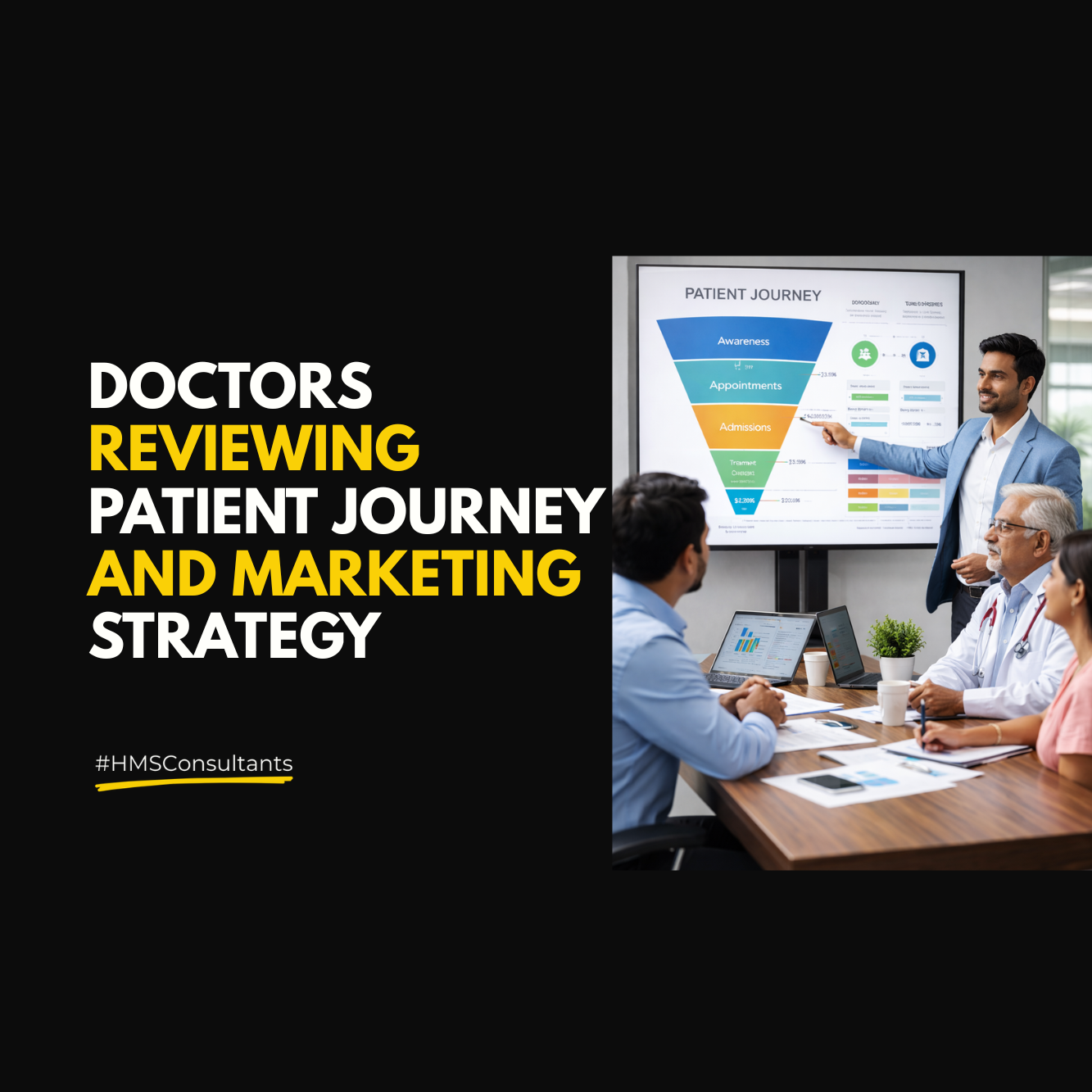
What a Hospital Marketing Expert Sees in the First 30 Days That Others Miss for Years
A hospital marketing expert can identify hidden friction in the patient journey within the first 30 days. Learn how patient…

Why “Best Hospital Near Me” Is Decided Before a Patient Visits And What Most Doctors Miss
Patients often decide which hospital to visit before their first consultation. Searches like “best hospital near me,” online reviews, and…

The Complete Clinic & Hospital Growth Guide for Doctors
Clinic marketing strategy guide for doctors explaining why OPD becomes inconsistent, why patients are not choosing your clinic, and what…

Why Hospital Patient Experience Breaks Long Before Patients Complain
Hospital patient experience often breaks silently before complaints surface, weakening patient trust, referrals, and long-term loyalty despite strong clinical outcomes.
Why Doctors Digital Marketing Fails When It Is Treated as a Content Problem
Doctors digital marketing fails when it is treated as a content volume problem. Patients do not need more information they…