Search results for: “experience”

  • Everyone Knows. Yet No One Checks.

    Everyone Knows. Yet No One Checks.

    Everyone Knows. Yet No One Checks.

    Written by
    Published on
    Share This

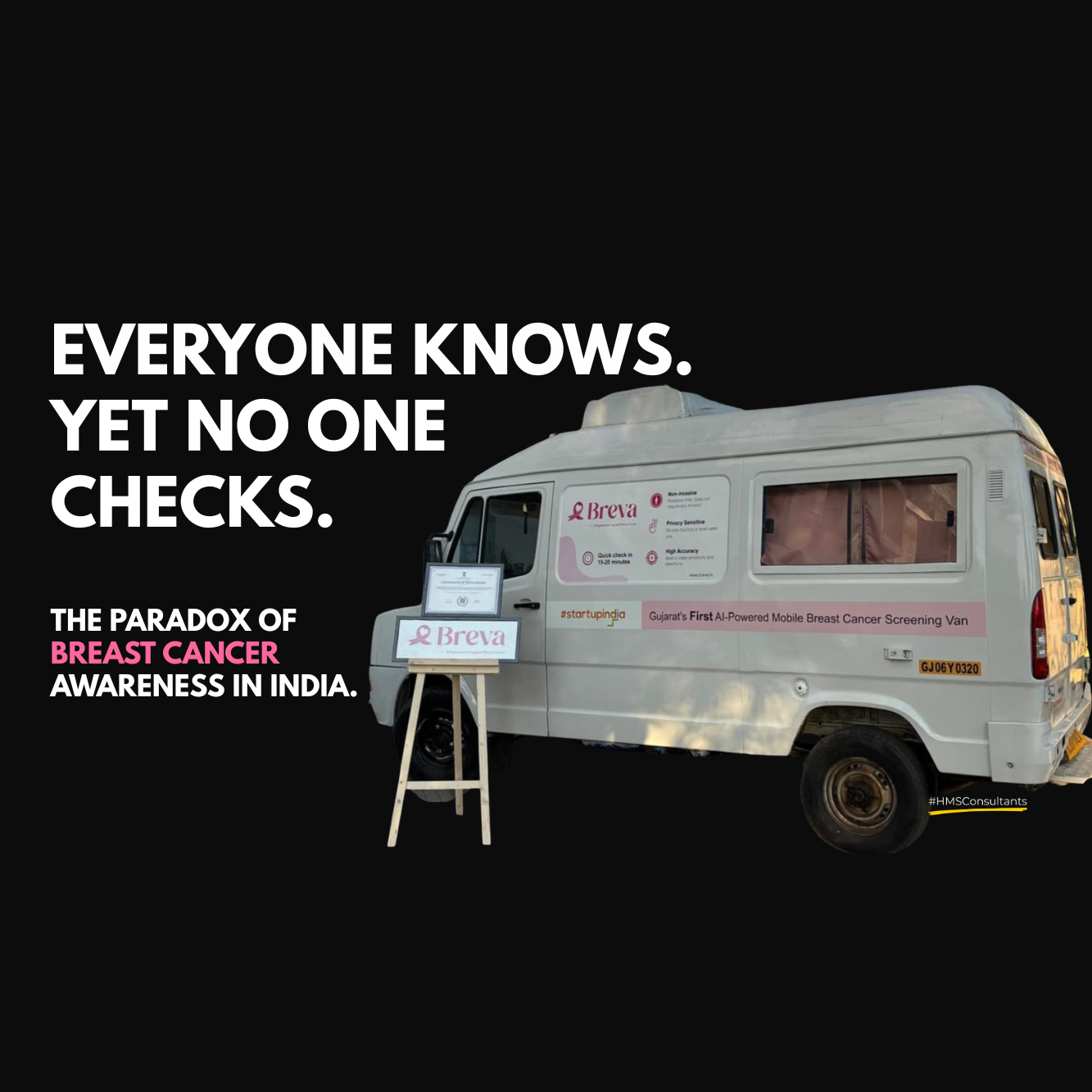
    The paradox of breast cancer awareness in India.

    Still Aware. Yet Unaware. Why Breast Cancer Awareness Needs a New Direction.

    Despite increasing awareness drives and pink campaigns every year, India is witnessing a silent surge in breast cancer cases. The numbers are alarming and they demand more than just talk. One woman is diagnosed with breast cancer every 4 minutes in India, and one woman dies from it every 8 minutes (National Cancer Registry Programme, ICMR 2020). By 2025, India is projected to witness 2,32,832 new breast cancer cases, with a rising incidence in both urban and rural regions (ICMR). What’s even more concerning is that nearly 50% of these cases are diagnosed in Stage III or IV, when treatment becomes more difficult and more expensive (WHO South-East Asia, 2021). The survival rate drops drastically when diagnosis is delayed, even though early-stage breast cancer is one of the most treatable forms of cancer.
    So why is early detection still such a challenge? Because awareness is not accessible. Because screening is still out of reach for most women, due to fear, privacy concerns, lack of knowledge, or simply no nearby facility.


    So why is early detection still such a challenge? Because awareness is not accessible. Because screening is still out of reach for most women, due to fear, privacy concerns, lack of knowledge, or simply no nearby facility.

    Why Women Still Miss the Bus on Breast Cancer Screening

    Despite growing awareness campaigns, there are persistent barriers that prevent women, especially in rural and underserved regions, from getting screened for breast cancer. The issue isn’t just ignorance; it’s a combination of fear, stigma, discomfort, and inaccessibility.

    1. Privacy Concerns

    Many women hesitate to undergo screenings because of the physical exposure it may involve. The idea of being examined by strangers, especially male technicians or in mixed-gender clinical settings creates anxiety and shame. This sense of vulnerability becomes a major deterrent.

    2. Fear of Pain

    Traditional mammograms are known to be physically uncomfortable or even painful. This fear amplified by stories or misinformation often leads women to postpone or completely avoid screening.

    3. Lack of Access

    Screening centres are often located in urban hospitals, out of reach for those in small towns or remote villages. For a woman managing household duties, travel time, costs, and unfamiliarity with hospital systems can make screening feel like an unachievable luxury.

    4. Social Conditioning

    There’s a deep-rooted tendency among Indian women to put their families’ health and needs before their own. Self-checks or preventive healthcare simply don’t feel like a priority even when they should be.

    5. Low Perceived Risk

    Younger women or those without a family history often assume “this can’t happen to me.” Breast cancer awareness campaigns may exist, but the call to action is still weak.

    A Founder’s Wake-Up Call: The Birth of Breva

    Kashyap Raval didn’t set out to build a breast cancer screening van. He wasn’t a doctor, nor a cancer specialist. But sometimes, a personal crisis pushes you into action even when the system doesn’t.

    It began at home. In a well-educated, urban household with access to healthcare, his own mother was diagnosed with breast cancer late. Despite years of awareness campaigns and access to doctors, she hadn’t known what to look for. By the time the family discovered it, the condition had progressed. And with it came the emotional, physical, and financial toll that so many Indian families silently carry.

    That moment lit a spark.

    Kashyap began digging deeper, talking to doctors, survivors, radiologists, health workers. What he found was both alarming and clear: awareness isn’t the problem anymore, access is. Women may have seen the pink ribbons, but they had no way to act on them. Hospitals were far. Mammography was expensive. And most importantly  it felt invasive, uncomfortable, even intimidating.

    This is where Breva was born a startup with one single goal:
    To bridge the last mile between breast cancer awareness and actual screening.
    WhatsApp Image 2025 09 05 at 16.11.52 e40a45a0

    What Is Breva?

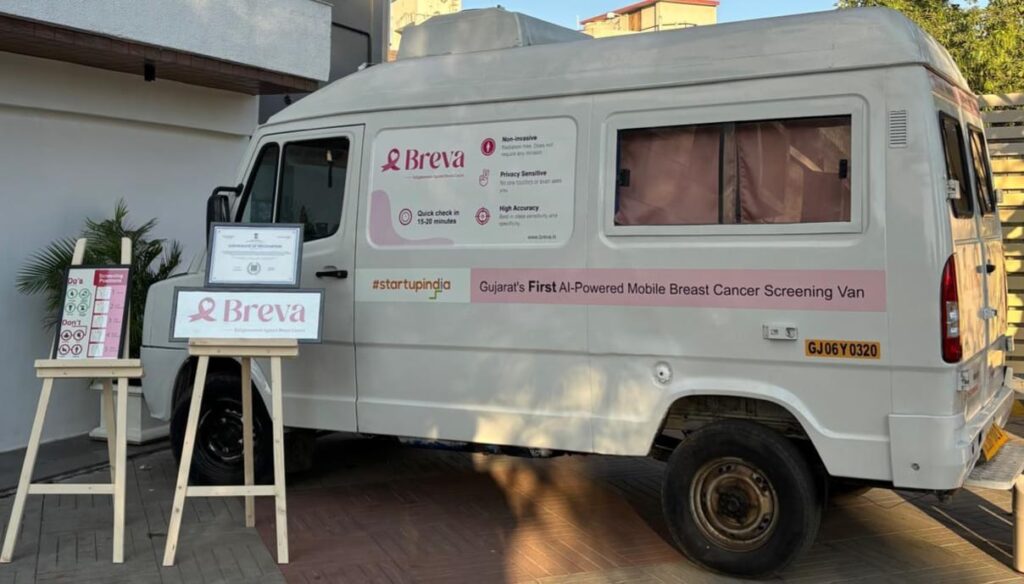
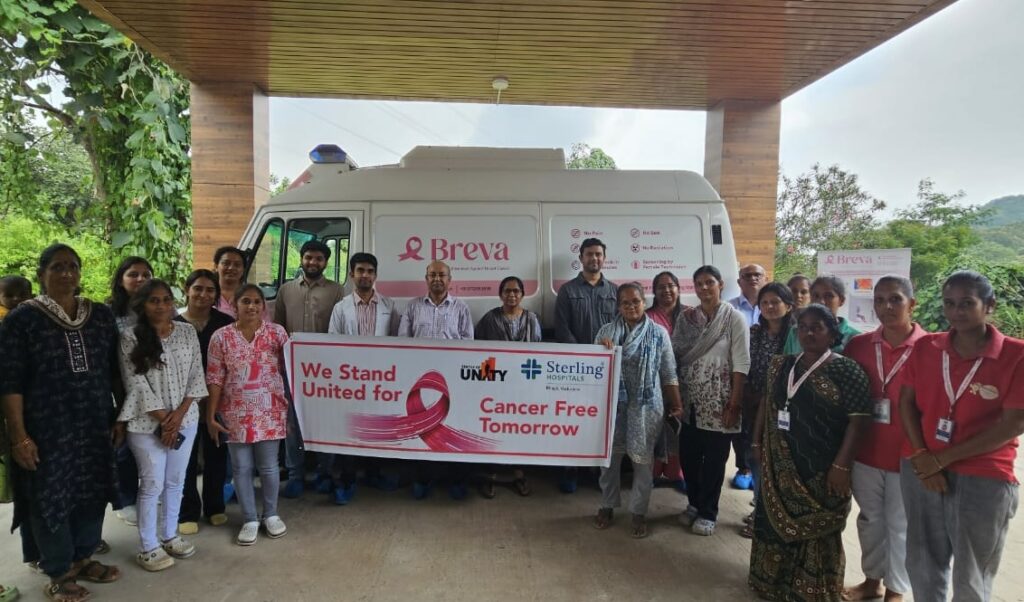
    Breva is India’s first privacy-first, portable, AI-powered breast screening solution, delivered through a mobile van that goes to the women, not the other way around. It reaches tribal belts, college campuses, factories, offices, even forest department staff quarters ensuring that no woman is left behind when it comes to early detection.

    But what truly sets Breva apart isn’t just the mobility it’s the experience inside the van:

    • No physical touch
    • No pain
    • No awkward exposure
    • No doctor needed at the site
    • Just 15 minutes per woman


    Breva uses thermal imaging combined with AI-based analysis, powered by NIRAMAI’s proprietary technology  already trusted by hospitals like Sterling and SSG. Women enter the van alone, are guided by female staff, and the screening is done without any contact. Reports are securely shared later, with clinical interpretation when needed.

    At every step Breva is powered on-ground by an all-female team. This isn’t just a token feature, it’s a powerful reason why women, especially in rural or conservative areas, feel safe and willing to step forward for screening. No embarrassment. No judgment. No pressure.

    The Experience, In 3 Words: Private. Painless. Portable. This is not just a slogan. It’s what 15,000+ women across Gujarat and beyond have already experienced and it’s why Breva is turning awareness into action.

    Impact: From Idea to Access – One Camp, One Woman at a Time

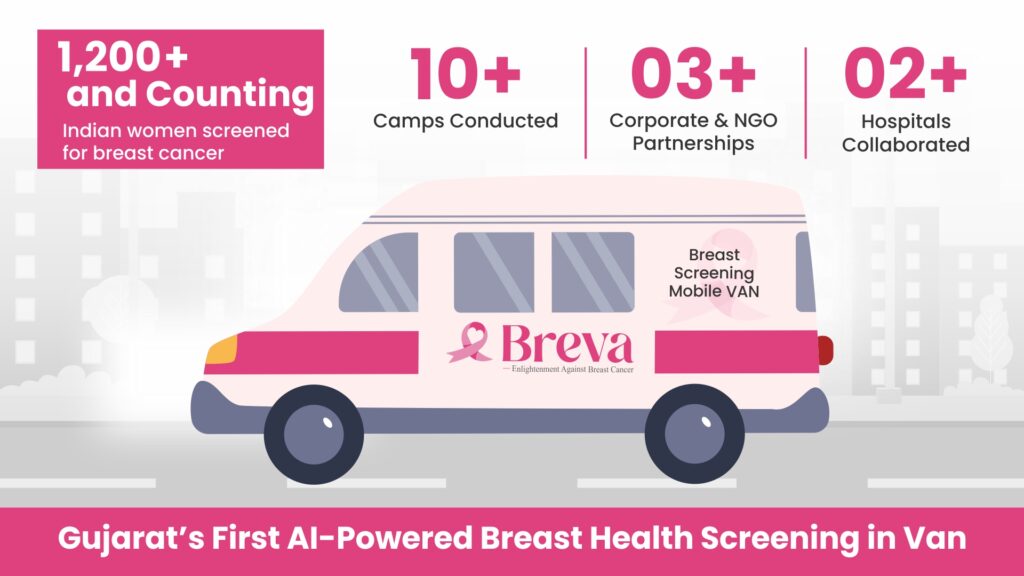
    In just over a year, Breva has gone from a seed of an idea to a high-impact movement creating real-world change in the space of breast cancer awareness and screening. What started as a response to a personal tragedy has now become a scalable healthcare solution with measurable results.

    • 15,000+ women screened across India
    • 10+ screening camps conducted in diverse environments, from tribal interiors and urban slums to government institutions, corporate townships, and zoological parks
    • Powered by an all-women team, ensuring trust, comfort, and cultural sensitivity
    • First-time screening for a large majority of participants, who had never accessed breast screening services before
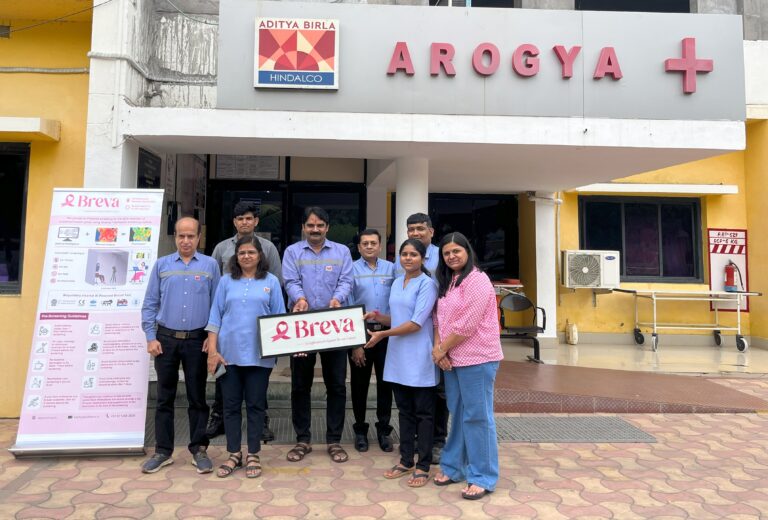
    • Partnerships with leading medical institutions like Sterling Hospital and SSG Hospital Vadodara for clinical alignment and post-screening support

    But these numbers only tell half the story.

    At every camp, women walk in hesitant and walk out empowered. One participant shared how she felt relieved that “nobody touches and nobody sees you” describing the process inside Breva’s AI-powered mobile van as “safe, private, and judgment-free.” Another said this was the first time in her life she felt she had control over her breast health.

    Most participants shared that they would never have gone to a hospital or clinic for this. Whether due to distance, fear, hesitation, or lack of awareness screening was not even a consideration until Breva brought it to their doorstep.

    This consistent feedback reveals an urgent truth:
    Lack of access, not awareness, is the bigger barrier.
    And Breva is changing that: one van, one village, one life at a time.

    More than a campaign, Breva is a solution on wheels with the power to reach, screen, and empower women before it’s too late.
    Breva Facebook event cover photo is 1920 x 1080 pixels

    How HMS Consultants Came Into the Picture

    While Breva was founded with an extraordinary vision, scaling that vision requires more than passion. It needs strategy, structure, and a brand story that resonates across the nation. That’s where HMS Consultants stepped in.

    At HMS, we don’t just guide healthcare brands we champion causes that have the power to reshape the landscape of preventive care in India. From the very beginning, we saw in Breva a rare combination of purpose, potential, and proof. A 100% women-led, tech-driven solution that wasn’t just talking about change, it was delivering it, screening after screening, camp after camp.

    From early brand-building and trust-building collaterals to strategic planning for October’s Breast Cancer Awareness Month, our goal has always been simple, make sure the right institutions hear about Breva, believe in it, and come forward to support it.

    At HMS, we believe this solution deserves national visibility, and we’re committed to helping Breva reach there.
    IMG 1604 1

    This October, Be the Reason Someone Gets Screened Early

    Every October, social media feeds turn pink. Awareness walks are organized. Posters go up. But how many women actually get screened?

    This Breast Cancer Awareness Month, let’s move from talking to doing.

    If you’re part of a corporate, educational institution, bank, community organization, or NGO you can bring breast screening directly to the women who need it most. Whether it’s your employees, your students, your community members, or the women in the villages you serve. This October, give them not just awareness, but access.

    Partner with Breva. Bring our private, painless, proven screening van to your campus, office, or outreach zone. Help the women around you take a simple step that could change or even save their lives.
    IMG 8828

    A few hours. A quiet parking spot. A life-saving opportunity.

    We invite institutions, CSR leaders, women’s cell coordinators, HR managers, program directors, and NGO teams to come forward. Let’s join hands to create an October that’s truly impactful.

    To book a screening or collaborate: 

    Write to us at kashyap@breva.in or Call +91 9712683838 or visit our website: breva.in 

    Doctors Digital Marketing I Healthcare Marketing I Hospital Marketing Strategies I Marketing ideas for clinics I Marketing Trends 2025 I Medical Marketing I Social Media Marketing

    is something we strongly believe in, which means ‘Knowledge without application is the same as having no knowledge at all

    Akhil Dave

    Principle Consultant

    Ready to take your Personal Brand to the next level?

    Share your details below and we will connect with you to discuss your growth strategy.
    • Are You Tracking What Matters in Healthcare Marketing?

      Are You Tracking What Matters in Healthcare Marketing?

      Are You Tracking What Matters in Healthcare Marketing?

      Written by
      Published on
      Share This

      Most teams track what is easy to see: page views, likes, impressions, ad clicks. These numbers look good in a report, but they rarely tell you if patients are actually moving closer to booking. If you want reliable growth in healthcare marketing in India, you need to track how people behave at each step of the journey and how engaged they feel with your brand.

      This guide focuses on simple, useful indicators you can measure today. It complements your standard analytics and helps you turn social media for hospital accounts and brand promotion for healthcare clinics into real visits, not just reach.

      The idea in one line

      Track behavior and engagement that show intent, not just attention. When you measure what people do next, you learn what to fix next.

      Discovery signals: how patients find you

      These signals tell you if people can reach you easily when they are looking for help. They are the front door of healthcare marketing in India.

      • Direction requests on Google Maps increase after local posts or events.
      • Click to call and click to WhatsApp from your profiles rise during clinic hours.
      • Service searches by location bring people to the right landing pages.
      • Profile views on directories and listings convert into calls or messages.

      If discovery is weak, most content on social media for hospital pages will not convert. Improve local listings, photos, and categories first to support brand promotion for healthcare clinics.

      Consideration signals: are people taking the next step

      These signals show if people are checking details that matter before booking.

      • Doctor profile views and time spent on bio pages.
      • FAQ opens for pricing, insurance, or procedures.
      • Download or view counts for pre-visit guides or checklists.
      • Clinic timing checks and parking information views

      When these go up, your brand promotion for healthcare clinics is doing real work. If they stall, your pages may be unclear or too long. In healthcare marketing in India, clarity beats decoration.

      Conversion signals: close to a booking

      These are the strongest indicators that your marketing is working.

      • Appointment button clicks and form starts.
      • Completed bookings and call connections during business hours.
      • Response time to web forms, calls, and WhatsApp messages.
      • Show-up rate after confirmation and reminder messages.

      You can grow reach on social media for hospital feeds, but until these conversion signals improve, the growth will not translate into patients. Track these weekly.

      Website behavior that predicts bookings

      Go beyond page views. Watch what people actually do on the page.

      • Scroll depth to see if visitors reach the booking call to action.
      • Time on task such as reading a procedure section or comparing two services.
      • Form field drop-off to find the questions that scare people away.
      • Heatmaps for taps on phone numbers, maps, or doctor names.

      This is where many teams in healthcare marketing in India find quick wins. Reduce the number of form fields, raise the call button above the fold, and make fees or next steps easier to understand.

      Social media signals that matter more than likes

      Treat social media for hospital growth as a way to earn attention you can later convert, not as an end in itself.

      • Saves beat likes. If many users save a post, it likely answers a real question.
      • Shares beat comments. Shares take your message into private chats where decisions happen.
      • Profile taps beat reach. After a post, how many people visit your bio, click your link, or tap the call button.
      • Story replies and DMs beat views. If people reply, your message sparked intent.

      Use these signals to plan brand promotion for healthcare clinics. Create posts that people want to keep, share, and act on, not just scroll past.

      Messaging and WhatsApp signals that show trust

      In healthcare marketing in India, WhatsApp and SMS are everyday tools. Measure how well they support care.

      • Opt-in growth for broadcast lists or reminders.
      • Reply rate to confirmations and follow-ups.
      • Average time to first reply during business hours.
      • Helpful keyword triggers such as “help,” “fees,” or “reschedule.”

      If people reply quickly and often, your tone and timing work. If not, adjust message length, send times, and language. Keep messages short and helpful. Always make it easy to reach a person

      Phone and front-desk signals that protect revenue

      You can do great brand promotion for healthcare clinics and still lose patients on the phone.

      • Missed calls during clinic hours and how many you return within 15 minutes.
      • Time to answer and first-call resolution for common questions.
      • Hold time during peak hours.
      • Number masking or tracking lines to link calls to campaigns.

      These numbers live outside analytics, but they decide real outcomes in healthcare marketing in India. A small drop in missed calls can beat a big rise in ad spend.

      In-clinic experience signals patients do not say out loud

      People rarely complain directly. Measure simple signs of comfort and clarity.

      • Perceived wait time captured in a 10-second, one-question survey.
      • Wayfinding errors such as wrong counters or repeated questions at billing.
      • Cleanliness checks logged by staff every shift.
      • Escalation mentions where a patient needed a manager.

      These are brand moments. They support what patients expect after seeing your social media for hospital content. Fixing them builds trust faster than another campaign.

      Follow-up and retention signals

      Growth is not just new patients. It is also loyal patients.

      • Rebook rate within 90 days for conditions that need review.
      • Click-through on aftercare content and checklists.
      • Open rate and reply rate for recall messages.
      • Referrals where a patient mentions who sent them.

      If your follow-up rate is low, brand promotion for healthcare clinics will feel expensive. Build routines that keep patients informed after the visit.

      Review signals beyond the star rating

      Stars are the surface. Words tell the story.

      • Topic trends in comments: staff warmth, clarity, fees, wait time, comfort.
      • Mentions of content from social media for hospital pages or your website.
      • Before vs after service changes you made.
      • Resolution quality when a complaint is handled.

      For healthcare marketing in India, reply tone matters. Keep it polite and specific. Thank people, explain fixes, and invite them back if needed.

      Community and offline signals

      Digital is not everything. Community proof matters for brand promotion for healthcare clinics.

      • Event sign-ups and attendance at camps or talks.
      • Local partnerships that bring new audiences.
      • Flyer QR scans and micro-site visits from offline campaigns.

      Add simple UTM codes and QR links so offline efforts connect to your reports.

      Signals that link to money and access

      Pick a few that tie directly to outcomes. Review them every week.

      • Cost per appointment by channel.
      • Net new patients per service line.
      • Show-up rate and no-show rate before and after reminders.
      • Average time to first response across all entry points.
      • Lifetime value proxy such as average number of visits per patient in a year.

      In healthcare marketing in India, these few numbers are more useful than long dashboards. They help you decide what to stop, start, or scale.

      Simple tools you can use now

      You do not need complex software to start tracking what matters.

      • Spreadsheets for call logs, missed calls, and returned calls.
      • Form tools with time stamps for response tracking.
      • Link builders for clean UTM tagging on ads and posts.
      • Free heatmaps to watch scrolling and clicks on key pages.
      • One-question surveys in the waiting room and by SMS after a visit.

      Set a weekly review. Keep the process light. The goal is steady improvement, not perfect measurement.

      A 30 day plan to switch from vanity to value

      This plan helps teams that rely too much on likes and impressions. It works across social media for hospital pages, the website, listings, and the front desk.

      Week 1. Map the journey

      • List all entry points: Google, maps, directories, website, WhatsApp, phone, social.
      • For each, write one action you want a patient to take next.
      • Add that action to your tracking list.


      Week 2. Fix the easy blockers

      • Raise the call and WhatsApp buttons above the fold.
      • Cut form fields to the minimum you need.
      • Update old photos and timings on listings.
      • Pin top FAQs and key posts on social media for hospital profiles.


      Week 3. Measure response and speed

      • Time to first reply for calls, forms, and messages.
      • Missed calls during open hours.
      • Reply rate to reminders and follow-ups.
      • Saves, shares, and profile taps on posts designed for brand promotion for healthcare clinics.


      Week 4. Review and reset

      • Stop one thing that does not move a key signal.
      • Double down on one thing that clearly does.
      • Plan two simple tests for the next month: a new landing page and a revised reminder flow.

      Keep repeating this cycle. Small, regular changes beat large, rare overhauls.

      How to use social media for hospital growth with behavior data

      Turn posts into steps, not posters.

      • Make “saveable” posts: checklists, do’s and don’ts, simple flows.
      • Add one clear next step: tap to call, get directions, open FAQs.
      • Watch profile taps, bio link clicks, DMs, and saves.
      • Repost winners and turn them into stories, reels, or a short guide.

      This is practical brand promotion for healthcare clinics. It connects content to care.

      Five questions to review every month

      1. What made the biggest difference to bookings this month?
      2. Where did most people drop off before booking?
      3. Which page or post did people save or share the most?
      4. How fast did we respond during clinic hours?
      5. What did reviews praise or criticize more than last month?

      These questions suit small clinics, large hospitals, and healthtech teams working on healthcare marketing in India. They keep the focus on action.

      Privacy and consent, kept simple

      Patients trust you with their data. Protect it.

      • Ask permission before adding anyone to lists.
      • Keep messages short and useful.
      • Make opt-out easy and immediate.
      • Store only what you need and keep it updated.
      • Avoid sending sensitive details over open channels.

      Good habits here support brand promotion for healthcare clinics and reduce complaints later.

      Common mistakes to avoid

      • Chasing followers instead of patients. Measure calls, bookings, and show-ups.
      • Crowded pages. Too many choices slow people down
      • Slow replies. Speed shows care. Set simple targets and meet them.
      • Unclear fees and next steps. Spell out what happens after someone clicks.
      • No link between online and offline. Use QR codes and short links everywhere.

      Fixing these will lift the right signals across healthcare marketing in India.

      Quick benchmarks you can aim for

      These are simple, realistic targets to guide social media for hospital teams and web teams.

      • Answer calls within 30 seconds during clinic hours.
      • Respond to WhatsApp or web forms within 10 minutes.
      • Keep missed calls under 10 percent and return them within 15 minutes.
      • Reach at least 50 percent show-up rate from online bookings, then improve.
      • See steady growth in saves, shares, and profile taps on helpful posts.

      Use these as starting points. Adjust for your specialty and city.

      Putting it all together

      Growth comes from measuring what people do, not just what they see. When you focus on discovery, consideration, conversion, follow-up, and simple experience signals, healthcare marketing in India becomes clearer and easier to manage. Treat social media for hospital efforts as steps in a journey. Build brand promotion for healthcare clinics around actions that reduce effort for patients. Review weekly, improve monthly, and keep the conclusion simple: if a change helps more people book and show up, keep it. If it does not, drop it.

      Written by Maitri Desai

      Doctors Digital Marketing I Healthcare Marketing I Hospital Marketing Strategies I Marketing ideas for clinics I Marketing Trends 2025 I Medical Marketing I Social Media Marketing

      is something we strongly believe in, which means ‘Knowledge without application is the same as having no knowledge at all

      Akhil Dave

      Principle Consultant

      Ready to take your Personal Brand to the next level?

      Share your details below and we will connect with you to discuss your growth strategy.

      • Doctor vs Hospital Branding: Finding the Right Balance

        Doctor vs Hospital Branding: Finding the Right Balance

        Doctor vs Hospital Branding: Finding the Right Balance

        Written by
        Published on
        Share This

        In healthcare, branding is no longer optional. Patients form impressions long before they step into a clinic or hospital. Sometimes it’s the doctor they remember, sometimes it’s the institution and often, it’s both. This is where the balance between doctor personal branding and hospital branding ideas becomes essential.

        A well-aligned healthcare marketing strategy ensures neither overshadows the other, and both work together to build lasting trust.

        Why Doctor Branding Matters

        Doctors are often the first point of trust for patients. A name, face, or reputation can feel more relatable than a building or logo. Doctor personal branding makes a healthcare professional more approachable and recognizable.

        What strong doctor branding achieves:

        • Builds personal trust and credibility.
        • Encourages patient loyalty and repeat visits.
        • Humanizes the medical profession in a way institutions cannot.
        • Helps specialists stand out in competitive fields.

        Patients often share stories about “their doctor” rather than “their hospital.” For example, a skilled cardiologist known for explaining procedures in simple words may receive referrals just because of that patient experience.

        Why Hospital Branding Matters

        While doctors build one-on-one trust, hospitals build institutional trust. Patients want reassurance that the infrastructure, support systems, and care standards are reliable. This is where hospital branding ideas play a key role.

        What strong hospital branding achieves:

        • Establishes credibility across specialties.
        • Builds recognition beyond individual doctors.
        • Supports growth by attracting patients, insurers, and partners.
        • Reflects values such as care, safety, and innovation.


        A well-branded hospital doesn’t just rely on individual reputations. It builds systems and experiences that consistently reflect quality, from the reception desk to discharge follow-ups.

        The Risks of Focusing on Only One

        • Only doctor branding: The hospital may feel invisible, especially if doctors leave or retire. Patients may follow the doctor elsewhere.
        • Only hospital branding: The institution may feel faceless or disconnected. Patients may struggle to form personal trust without seeing strong individual representation.


        Both scenarios show why balance is critical.

        Balancing Doctor and Hospital Branding

        The most successful healthcare marketing strategy doesn’t pick one side it aligns both. Here’s how:

        1. Unified Storytelling

          • Doctors and hospitals should share aligned messaging.
          • Example: A hospital emphasizes advanced technology, while doctors share stories of using that technology to help patients.


        2. Visual Consistency

          • Doctor profiles, hospital websites, and social media should follow the same branding guidelines.
          • A professional photo and consistent design increase recognition.


        3. Shared Platforms

          • Feature doctors on hospital channels and highlight hospital achievements on doctor profiles.
          • This cross-promotion builds trust on both levels.


        4. Patient-Centric Approach

          • Focus branding efforts on what patients value: clarity, care, and outcomes.
          • Doctor reviews + hospital reputation together provide a complete picture.


        5. Crisis and Reputation Management

          • If a negative review appears, both the doctor and hospital brand should address it with transparency.
          • A unified response protects long-term trust.

        Examples of Alignment in Practice

        • A pediatrician shares a short video on nutrition tips (doctor branding), posted on the hospital’s social media page (hospital branding).
        • A hospital highlights patient success stories while crediting the doctor by name.
        • LinkedIn profiles of doctors reflect the hospital’s brand tone and values.

        Key Takeaways

        • Doctor personal branding humanizes healthcare and builds individual trust.
        • Hospital branding ideas strengthen institutional credibility and long-term recognition.
        • A strong healthcare marketing strategy aligns both for maximum impact.

        When doctors and hospitals work together on branding, patients benefit from both personal trust and institutional assurance.

        Written by Maitri Desai

        Doctors Digital Marketing I Healthcare Marketing I Hospital Marketing Strategies I Marketing ideas for clinics I Marketing Trends 2025 I Medical Marketing I Social Media Marketing

        is something we strongly believe in, which means ‘Knowledge without application is the same as having no knowledge at all

        Akhil Dave

        Principle Consultant

        Ready to take your Personal Brand to the next level?

        Share your details below and we will connect with you to discuss your growth strategy.

        • What Healthcare Startups Must Fix Before Scaling

          What Healthcare Startups Must Fix Before Scaling

          What Healthcare Startups Must Fix Before Scaling

          Written by
          Published on
          Share This

          In India’s fast-growing healthtech and digital care ecosystem, startups are sprinting toward product launches, funding rounds, and user growth. But amid the rush to scale, many healthcare startups overlook core branding and marketing gaps that eventually block their growth.

          Before you amplify your message, you need to be sure it’s clear, compelling, and backed by the right systems. Here’s what to fix first.

          1. Your Brand Isn’t Clear to Patients (or Investors)

          Your logo, tagline, and product demo are not your brand. A strong brand begins with strategic positioning:

          • Who are you really for?
          • What specific problem do you solve and how is it different from others?
          • Can someone explain your value in one line?

          Many healthtech startups pitch features, not outcomes. Others copy what worked for B2C apps but healthcare runs on trust, not just convenience.

          Signs your brand is unclear:

          • Investors or patients confuse your service with others.
          • Doctors hesitate to collaborate because they are unsure what you stand for.
          • Your team gives different explanations of your offering.

          Fix it:

          • Define your positioning statement: We help [specific audience] solve [pain point] through [unique solution].
          • Align your website, app store text, and social bios to this positioning.

          2. Your Funnel Leaks You’re Losing Patients Midway

          Most healthcare startups in India focus on awareness (ads, SEO, PR), but not conversion. Your digital funnel should guide a user from discovery to trust to action. If your funnel is leaky, no amount of paid media will help.

          Where early-stage funnels break:

          • Website doesn’t explain the service in simple, patient-friendly terms
          • CTAs are vague (“Contact us” vs. “Book your free screening”)
          • No follow-up after a lead drops off
          • Generic landing pages with no targeting

          Fix it:

          • Map your funnel: awareness → consideration → decision → follow-up
          • Customize landing pages by target segment (e.g., diabetes, dermatology, fertility)
          • Build automated workflows for follow-up (reminders, SMS, WhatsApp)

          This is where a good healthcare ad consulting agency makes a big difference: you stop burning money on awareness and start converting intent into action.

          3. You Don’t Have a CRM(Customer Relationship Management) That Supports Growth

          When referrals come in, or website forms are filled, what happens next? For many healthtech startups, it’s either an Excel sheet or complete silence.

          You can’t scale if you don’t track:

          • Who’s shown interest
          • Where they came from
          • Whether they booked or converted
          • When to follow up

          Fix it:

          • Set up a basic CRM early even a simple one like Zoho, Hubspot, or WhatsApp CRM
          • Assign ownership of follow-ups
          • Tag patient types, campaign sources, and interaction stages

          This also helps track real ROI and it’s often the missing link in marketing health services effectively.

          4. You’re Not Telling Real Stories

          Healthtech is personal. Whether you’re helping with mental health, chronic care, weight loss, or remote diagnostics; patients want to hear real outcomes.

          But most startups skip this.

          Mistakes we see:

          • No testimonials or case stories on website or social media
          • Paid actor videos or generic stock content
          • Lack of human voices: patients, doctors, or care teams

          Fix it:

          • Ask every satisfied patient for a line of feedback
          • Use anonymized success stories with clear outcomes
          • Feature care team members.

          Good storytelling doesn’t require a big budget. It requires trust, consistency, and empathy.

          5. You’re Too Product-Focused, Not Behavior-Focused

          You’ve built a great platform or tool, but is it solving a felt need?

          In early-stage growth, marketing health services is about behavior:

          • Are people aware they have a problem?
          • Do they know solutions exist?
          • Do they trust digital solutions over traditional ones?

          Example:

          If you’re building a tele-rehab platform, your challenge isn’t tech adoption it’s building a habit. Patients need guidance, nudges, and education.

          Fix it:

          • Design your marketing to educate behavior, not just pitch features
          • Build simple journeys: first session free, progress tracking, rewards
          • Don’t assume awareness design steps or information for first-time users

          6. You’re Missing a Community or Doctor Network

          Scaling a healthtech startup in India doesn’t mean only reaching patients; it means partnering with doctors, healthcare professionals, and even micro-influencers.

          Weakness we see:

          • No early alliances with providers or hospitals
          • Influencer strategy built around B2C fitness instead of care credibility
          • No advocacy from actual users

          Fix it:

          • Create a small doctor advisory panel
          • Host webinars or collab content with clinicians
          • Design referral rewards ethically

          This builds the trust bridge needed in healthcare.

          7. Your Compliance + Ethics Aren’t Baked In

          This isn’t about legal paperwork, but about signals of integrity.

          Healthcare is a trust-first industry. If you try to scale growth before setting ethical foundations, it backfires.

          Avoid:

          • Exaggerated claims
          • Fake testimonials or reviews
          • Pushing cash rewards for patient referrals
          • Over-automating sensitive communication (e.g., sending bot messages after a failed IVF cycle)

          Fix it:

          • Create a brand playbook that includes tone, visual identity, and ethical boundaries
          • Work with a healthcare marketing agency that understands industry norms and industry regulations

          Get your team aligned from marketing to customer success

          Conclusion

          Before you focus on more downloads, ads, or outreach, make sure your foundation is ready. Most healthtech startups don’t fail because of bad products. They fail because they didn’t fix the early gaps that marketing growth depends on: clarity, consistency, systems, and trust.

          By addressing these quietly powerful issues early, you give your healthcare startup a real chance to scale responsibly and sustainably.

          Written by Maitri Desai

          Doctors Digital Marketing I Healthcare Marketing I Hospital Marketing Strategies I Marketing ideas for clinics I Marketing Trends 2025 I Medical Marketing I Social Media Marketing

          is something we strongly believe in, which means ‘Knowledge without application is the same as having no knowledge at all

          Akhil Dave

          Principle Consultant

          Ready to take your Personal Brand to the next level?

          Share your details below and we will connect with you to discuss your growth strategy.

          • The Psychology of Waiting Rooms: How Small Details Shape Patient Trust

            The Psychology of Waiting Rooms: How Small Details Shape Patient Trust

            The Psychology of Waiting Rooms: How Small Details Shape Patient Trust

            Written by
            Published on
            Share This

            A waiting room is not just a space before consultation. It is the first chapter of care. Patients are judging comfort, clarity, and respect long before they meet a doctor. Those small details influence patient experience, word of mouth, reviews, and every search choice that follows. In healthcare marketing in India, the waiting room is where brand promises turn into real feelings. Thoughtful hospital marketing ideas that focus on this moment can lift satisfaction and reduce anxiety without large budgets.

            This guide turns psychology into action. It covers comfort, communication, and design cues, along with practical clinical marketing ideas that any clinic or hospital can apply. The goal is simple. Reduce uncertainty, increase control, and make every minute feel respected.

            What patients notice in the first five minutes

            The first five minutes are a trust test. Patients are asking silent questions. When the answers are clear, stress lowers and patience grows.

            1. Am I in the right place
              Clear signage, visible reception, and a friendly greeting reduce doubt.
            2. Will I be treated with respect
              Warm tone, eye contact, and a name based welcome set a respectful baseline.
            3. How long will this take
              A visible time estimate and occasional updates make waits feel fair.
            4. Is this a safe and clean environment
              Clean surfaces, organized queues, and general hygiene matter
            5. Can I understand what to do next
              Simple directions for registration, billing, and follow up reduce cognitive load.

            These signals shape patient experience more than any decor choice. They are also the foundation of many marketing consultation and audit findings.

            Comfort reduces anxiety and changes time perception

            Comfort does not mean luxury. It means sensory calm and practical ease. Small changes can shift how long a wait feels.

            1. Seating and spacing
              Provide varied seating heights and armrests for elders. Keep a clear path for wheelchairs and strollers. Avoid squeezing rows too closely.
            2. Temperature and air
              Maintain steady airflow and comfortable temperature. Use plants or visual cues that suggest freshness. If possible, allow natural light or warm white lighting.
            3. Lighting for calm
              Bright but soft lighting reduces strain. Avoid flicker. Highlight the reception and wayfinding areas so people know where to look.
            4. Scent and cleanliness cues
              A neutral scent is better than strong perfume. Clean tables, dust free corners, and tidy magazines reassure quickly.
            5. Distractions with purpose
              Offer quiet reading options, health tips, and child friendly corners. Choose content that calms rather than agitates.

            Comfort reduces perceived wait time. It is one of the most cost effective clinical marketing ideas in healthcare marketing in India.

            Communication makes waiting feel fair

            People accept waiting when they understand why and for how long. Clear communication converts frustration into patience.

            1. Set expectations early
              Display average wait ranges by time of day. At check in, share a simple estimate and the next step. If you use tokens or a queue system, explain it in one sentence.
            2. Update when things change
              If a delay crosses the original estimate, post a new range and announce it politely. A small apology goes a long way.
            3. Use simple signage
              Replace cluttered posters with clean signs that explain registration, documents, payment options, and where to go next. Less text and bigger type help everyone.
            4. Offer self check information
              QR codes that link to basic FAQs, consent forms, or prep steps reduce line pressure and give waiting patients a sense of progress.
            5. Train for tone
              Scripts help staff handle tough moments. A warm line like thank you for waiting, you are next after this patient keeps stress low.

            When communication is steady, reviews improve and near me searchers choose you more often. That is why a healthcare digital marketing agency often begins audits with front desk scripts and signage checks.

            Design cues that quietly signal quality

            Design is not only about looks. It sends signals about safety, care, and organization.

            1. Color and materials
              Neutral walls with a few brand color accents create calm. Easy to clean surfaces signal hygiene. Add a small green touch with plants or nature prints to reduce stress.
            2. Wayfinding that works
              Arrows, icons, and short labels lead patients from door to desk to seating to counters. Make it obvious how to reach washrooms and water.
            3. Brand presence without noise
              Use one consistent typeface and a compact logo mark. Place it on the reception fascia, token screens, and name badges. Avoid heavy pattern walls that fight for attention.
            4. Real photos over stock
              If you display images, show your own facility and team. Real images strengthen trust. Rotate them so the room never feels stale.
            5. Clean technology
              Digital boards can display queue status, wait updates, and health tips. Keep transitions calm and slow so the screen does not add stress.

            These cues become part of hospital marketing ideas that patients remember. They also lift conversion from local search because the space matches what profiles and pages promise.

            Reduce cognitive load at the front desk

            Stress peaks at registration. The more mental steps you remove, the more the room relaxes.

            1. Keep forms short
              Ask only what you need for the first visit. Collect other details later. Pre-fill when possible.
            2. Show fees and payment options clearly
              A small rate card and an insurance acceptance list reduce surprises. Add a quick note about what is not included.
            3. Offer a single help point
              One counter or one staff who answers general questions lowers confusion.
            4. Make next steps visible
              A small card that says what happens after registration helps people feel in control.

            Manage sound and privacy

            Noise raises stress. Privacy protects dignity. Both shape trust.

            1. Control noise
              Use soft materials where possible. Keep background music low or off. Avoid loud news channels. White noise machines can soften chatter without feeling strange.
            2. Call names with care
              Call softly. Display token numbers on a screen. At the counter, avoid repeating sensitive details aloud.
            3. Provide privacy zones
              Mark one or two counters for private billing or sensitive queries. 

            Sound and privacy improvements often appear as patient experience wins in marketing consultation and audit reports.

            Accessibility and inclusion are brand signals

            Inclusive design is good design. It shows care without words.

            1. Physical access
              Ramps, handrails, wide doorways, and step free paths help elders and wheelchair users.
            2. Visual help
              High contrast signs, large type, and clear icons support low vision users. Good lighting helps everyone.
            3. Language and literacy
              Use simple words and common languages for your city. Add picture led instructions for basic steps. Avoid medical jargon.

            Inclusive spaces increase confidence and reduce complaints. They are strong hospital marketing ideas because they convert values into visible action.

            Use the digital layer to give control

            Digital touchpoints in the waiting room can improve flow and reduce uncertainty.

            1. Wi Fi with a landing card
              Offer a simple connection card that also shows QR links to FAQs, maps, and feedback.
            2. QR forms and checklists
              Allow patients to complete forms on their phones. Provide paper for those who prefer it.
            3. WhatsApp updates
              Send a friendly message when a patient is two turns away. Offer a quick link to reschedule if needed.
            4. Micro content for education
              Play silent captions on short videos about common questions. Keep each clip under one minute. Link to booking and aftercare pages.

            This digital layer supports clinical marketing ideas that turn waiting into learning and learning into confident action.

            Train micro interactions that matter most

            Small behaviors build or break trust. Train them and practice them often.

            1. Warm greeting
              A smile, eye contact, and a simple welcome changes the room tone.
            2. Name use
              Confirm pronunciation and use the name naturally. It signals respect.
            3. Listening posture
              Face the person and avoid multitasking while they explain. Repeat the request to confirm you understood.
            4. Clear closure
              Tell them what will happen next and who will call their name. Thank them for waiting.

            These behaviors cost nothing and create outsized shifts in patient experience. They are often the most impactful line items in hospital marketing ideas.

            Show hygiene in action

            People notice what staff do. Visible hygiene creates confidence.

            1. Hand hygiene stations
              Place them near doors and make them obvious. Refill often.
            2. Surface care
              Clean high touch surfaces at regular intervals and make the routine visible.
            3. Uniform and badge standards
              Neat attire and readable name badges create order and trust.
            4. Waste segregation done right
              Clear bins and correct use show professional discipline.

            When hygiene is visible and steady, reviews mention cleanliness more often. Those mentions help healthcare marketing in India because they influence local choice.

            Measure a few signals and adjust

            You do not need complex tools to see whether the room is working. Track a few indicators and review them weekly.

            1. Perceived wait time
              Ask one question at exit. How long did it feel you waited. Compare this with actual time.
            2. First five minute rating
              Collect a quick smiley scale on welcome, clarity, and comfort.
            3. Review themes
              Watch for mentions of staff warmth, wait time, cleanliness, and directions. Improve the theme that appears most.
            4. Queue health
              Track missed token calls, average time to first greeting at the desk, and number of updates during delays.


            Small reviews lead to small fixes. Small fixes add up. That is the practical heart of clinical marketing ideas.

            When to request a marketing consultation and audit

            Some patterns signal that expert help will pay off. If complaints about waiting rise, if reviews mention confusion at the desk, if missed calls climb, or if staff feel stuck, a focused marketing consultation and audit can map root causes and give a clear plan. Audits connect patient experience, local search performance, and front office routines. That connection turns ideas into daily habits.

            Conclusion

            Waiting rooms shape trust long before treatment begins. Comfort reduces stress. Clear communication makes delay feel fair. Design cues signal safety and order. Small routines at the front desk turn confusion into control. When clinics and hospitals focus on these details, patient experience improves and local searchers choose them more often. The most effective hospital marketing ideas start here. Real care feels organized, respectful, and calm from the first minute. That feeling is what patients remember and recommend.

            Written by Maitri Desai

            Doctors Digital Marketing I Healthcare Marketing I Hospital Marketing Strategies I Marketing ideas for clinics I Marketing Trends 2025 I Medical Marketing I Social Media Marketing

            is something we strongly believe in, which means ‘Knowledge without application is the same as having no knowledge at all

            Akhil Dave

            Principle Consultant

            Ready to take your Personal Brand to the next level?

            Share your details below and we will connect with you to discuss your growth strategy.

            • Future of Video in Healthcare Marketing: YouTube & Reels

              Future of Video in Healthcare Marketing: YouTube & Reels

              Future of Video in Healthcare Marketing: YouTube & Reels

              Written by
              Published on
              Share This

              Video has become the most powerful form of communication in healthcare marketing. For hospitals, clinics, and doctors, it combines education with human connection. Patients want to see, hear, and understand care in real terms before they make a decision. Whether it is a three-minute explainer on YouTube, a 30-second reel on Instagram, or a short patient story on WhatsApp, video marketing for hospitals is no longer optional. It is one of the fastest-growing ways to build trust, answer questions, and drive bookings.

              This blog looks at how long-form and short-form videos serve different roles, why both are important, and how a healthcare marketing consultant would plan them into a broader strategy.

              Why video matters in healthcare marketing

              Video brings a face and voice to healthcare services. It makes abstract promises feel real and human. In India, patients increasingly use social media for clinics as their first research step, often before a hospital website. Video helps meet this need in several ways:

              • Education: Explaining conditions, treatments, and recovery in simple words.
              • Promotion: Highlighting facilities, specialties, and new technology.
              • Reputation: Featuring doctors and staff in a relatable and trustworthy way.
              • Engagement: Keeping patients connected through updates, tips, and testimonials.

              For marketing health services, no other medium builds both scale and intimacy as effectively as video.

              Long-form video: depth and authority

              Platforms like YouTube, Facebook, and websites support long-form video. These are ideal when patients want detailed information or reassurance before a major decision.

              What works well in long-form video

              1. Doctor explainers: 3–8 minute clips where a doctor answers common patient questions in plain language.
              2. Treatment walkthroughs: Step-by-step explanations of what a patient can expect before, during, and after a procedure.
              3. Facility tours: Videos showing infrastructure, labs, wards, and safety processes to reduce uncertainty.

              Webinars and talks: Recorded sessions on health awareness days or special topics, posted for replay.

              Why it matters

              • Builds trust and authority in the doctor and hospital.
              • Helps with SEO since YouTube videos rank in Google search.
              • Serves as an evergreen resource patients can revisit.

              In healthcare marketing in India, long-form content helps position doctors as experts and hospitals as credible institutions.

              Short-form video: reach and recall

              Short-form videos on Instagram Reels, YouTube Shorts, and even WhatsApp Status updates are designed for fast consumption. They meet patients where they already spend time online.

              What works well in short-form video

              1. Myth vs fact clips: Quick clarifications of common health misconceptions.
              2. Doctor introductions: A 20-second welcome video from each doctor in the clinic.
              3. Tips and reminders: Simple preventive care messages that can be watched and shared quickly.
              4. Patient testimonials: Snippets where patients describe their experience in a natural way.

              Why it matters

              • Delivers reach and recall among wide audiences.
              • Feeds into algorithms that reward fresh, short content.
              • Creates daily or weekly touchpoints without overwhelming viewers.

              For clinic promotion, these videos are easy to produce, cost-effective, and ideal for regular posting.

              Education vs promotion: finding the right mix

              Every video must balance education and promotion. Patients are wary of content that feels like advertising, but they respond well to information that also introduces services.

              • Education-focused videos build trust, answer questions, and position doctors as experts.
              • Promotion-focused videos highlight hospital facilities, special offers, or awareness events.

              A good healthcare marketing consultant would suggest a mix such as:

              • 70 percent educational content
              • 20 percent promotional content
              • 10 percent community and engagement content

              This balance ensures patients feel informed, not sold to, while still supporting marketing health services.

              Practical steps to start video marketing for hospitals

              Many hospitals and clinics hesitate to begin because they assume video requires heavy production. In reality, simple steps work best.

              1. Use a phone with good lighting to record doctor messages.
              2. Keep scripts short and conversational. Avoid jargon.
              3. Brand consistently with intro slides, logos, and colors.
              4. Publish on multiple platforms: YouTube for long-form, Instagram and WhatsApp for short-form, and your website for integration.

              Track engagement: Watch views, shares, and comments. More importantly, track how many calls or appointments come from video clicks.

              Mistakes to avoid in healthcare video marketing

              1. Overloading with medical jargon instead of clear, simple language.
              2. Posting only promotional videos without real value.
              3. Ignoring subtitles and captions, which make videos accessible.
              4. Inconsistent posting, which breaks patient recall.

              The role of a healthcare marketing consultant

              While any clinic can begin with simple steps, a consultant can help create a structured approach. This includes:

              • Planning a video calendar aligned with patient needs and seasonal topics.
              • Training doctors to communicate effectively on camera.
              • Setting up video SEO for hospitals on YouTube and Google.
              • Running ad campaigns with video as the main creative.
              • Conducting audits to see which videos bring the most patient leads.

              With the right mix, video becomes more than content. It becomes a system for clinic promotion and brand growth.

              Conclusion

              Video is not the future of healthcare marketing. It is the present. Patients search, scroll, and decide based on what they see and hear. Long-form videos on YouTube build authority, while short-form videos on social media for clinics create recall and engagement. The smartest strategy is not choosing one over the other, but using both together with the right balance of education and promotion. Hospitals and clinics that adopt this approach will find video marketing the most reliable way to connect with patients, build trust, and grow in the competitive healthcare marketing in India landscape.

              Written by Maitri Desai

              Doctors Digital Marketing I Healthcare Marketing I Hospital Marketing Strategies I Marketing ideas for clinics I Marketing Trends 2025 I Medical Marketing I Social Media Marketing

              is something we strongly believe in, which means ‘Knowledge without application is the same as having no knowledge at all

              Akhil Dave

              Principle Consultant

              Ready to take your Personal Brand to the next level?

              Share your details below and we will connect with you to discuss your growth strategy.

              • How to Turn Patient Referrals Into Real Growth for Clinics and Hospitals

                How to Turn Patient Referrals Into Real Growth for Clinics and Hospitals

                How to Turn Patient Referrals Into Real Growth for Clinics and Hospitals

                Written by
                Published on
                Share This

                Referrals are the most believable kind of marketing in healthcare. A friend’s story, a note from a trusted doctor, a quick message from a partner clinic; these move people to act faster than any ad. Yet too often, referrals are left to chance. Teams hope they’ll happen, but there’s no clear path, no owner, and no way to see what’s working.

                This guide shows a simple, repeatable way to make referrals part of everyday healthcare marketing for clinic teams and marketing for hospital leaders. It explains the types of referrals to focus on, common mistakes to avoid, how to design an easy path from “referral” to “booked visit,” and the few numbers that prove your system works. You do not need complex software, you need clarity, quick responses, and a steady routine. This is the practical side of marketing health services.

                What “real growth” from referrals looks like

                A working system is quiet and steady. You don’t see random spikes you see dependable flow.

                Signs you’re on track

                • New patients mention who referred them without being asked.
                • Referred patients book faster and show up more reliably.
                • Staff know the next step for every referral, every time.
                • Partners feel informed and respected, so they refer again.

                If this isn’t happening yet, it’s not a failure of word of mouth it’s a missing system. Treat referrals as a core part of healthcare marketing for clinic operations and marketing for hospital growth plans, not a side activity.

                The three referral streams that matter

                Think in streams. Each one needs a clear message, a simple handoff, and a short path to booking.

                1) Patient-to-patient referrals

                Happy patients talk to friends, family, coworkers, and neighbors. This is your deepest trust pool.

                How to enable it

                • Share a short booking link, direct WhatsApp number, or QR at discharge.
                • Send a simple “share with a friend” text after the visit.
                • Ask for permission to contact the friend within the same day.

                This is everyday marketing health services: helpful, human, and easy.

                2) Professional referrals (doctor-to-doctor, clinic-to-clinic)

                These carry a good networking and clinical weight 

                How to enable it

                • Keep a one-page services sheet with current slots and key contacts.
                • Offer a priority line for referrers with clear escalation if the case is urgent.
                • Send brief outcome notes where appropriate and consented.

                If handled well, this becomes durable marketing for hospital service lines that need consistent case flow.

                3) Community and partner referrals

                Labs, diagnostics, pharmacies, corporate HR, schools, and local associations can all connect people to you.

                How to enable it

                • Co-host screening days or short talks with a clear next step.
                • Give each partner a unique QR or link for clean tracking.
                • Share a short “what happened next” summary after each activity.

                This is community-led healthcare marketing for clinic networks that want to grow locally.

                Why referral efforts fail (and how to avoid it)

                Most teams do pieces, not systems. They ask for reviews but never for referrals. They run events but forget follow-ups. They inform partners but leave out next steps.

                Common causes

                • Vague path: the referred person doesn’t know what to do next.
                • Slow replies: leads cool fast if calls or messages are missed.
                • Complex forms: too many fields kill momentum.
                • No tracking: you can’t improve what you can’t see.

                Fix these, and referrals become the most cost-effective marketing health services channel you have.

                The building blocks of a simple, ethical referral program

                You don’t need big tools to start. You need shared habits.

                1) A clear promise

                One sentence that explains when you’re the right choice.
                Example: “Same-week orthopedic consult with on-site imaging.”

                2) One short path to book

                Choose a single preferred route from referral to booking: direct number, WhatsApp link, or short form with a fast callback. Put it on your site, cards, and messages.

                3) Quick acknowledgments

                Thank the referrer within 24 hours. Thank the referred person at once. Say what will happen next and when.

                4) Helpful handouts

                Plain-language one-pagers and FAQs. Map, parking, payment options, prep steps. Keep them printable and shareable.

                5) Clean tracking

                Add a “Who referred you?” field at intake. Keep a simple sheet of weekly counts.

                6) Weekly review

                Spend ten minutes on volumes, response times, show-ups, and notes. Change one small thing each week.

                These are the basics of healthcare marketing for clinic teams that want steady results and of marketing for hospital departments that need predictability.

                Words that make referrals easy (scripts you can copy)

                Give people the language. It removes hesitation.

                Front desk / nurse

                “If a friend needs similar care, share this link. We’ll call them and guide them.”

                Doctor to patient

                “If someone you know has these symptoms, feel free to pass along my profile. We’ll help them understand the options.”

                Partner to clinic

                “I’m referring to Mr. Rao for a knee check. Here’s his number. Please confirm once you connect.”

                Print these on a one-page cheat sheet. Practice in morning huddles until they sound natural.

                Make the path short: less friction, more bookings

                Your referrer has already done half the job. Don’t lose the other half.

                Practical fixes

                • Keep call and WhatsApp buttons easily visible on your site and profiles.
                • Use short forms: name, phone, reason. Ask for details later.
                • Send directions and prep steps automatically after confirmation.
                • Offer a quick tele-check when an in-person visit isn’t urgent.

                Small changes here lift conversion more than another ad in marketing health services.

                Digital helpers: light tools that prevent misses

                Start with what saves time and avoids errors.

                • Shared inbox: One place for WhatsApp, email, and web forms so nothing is lost.
                • Unique numbers/links: Simple call tracking for referral lines and partner QR codes.
                • Calendar access: Quick internal booking views so staff can confirm slots fast.
                • Templates: Ready-to-send thank-yous, updates, and follow-ups.

                Partner playbook: pick, run, repeat

                Treat partners like long-term neighbors, not one-off events.

                Who to approach

                • Diagnostics and pharmacies near your locations.
                • Corporate HR teams, schools, health/sports clubs.
                • Healthtech platforms that need care pathways.

                What to do together

                • Screening days with a simple check and clear next step.
                • Short talks that answer common questions in plain language.
                • Micro-sites or WhatsApp flows to capture interest on the spot.

                How to close the loop

                • Share honest numbers: “30 screened, 12 needed follow-up, 9 booked.”
                • Thank the partner publicly (with consent).
                • Schedule the next activity while the momentum is fresh.

                This is low-cost, high-trust marketing health services that compounds over time.

                Reviews and referrals are twins

                Many referrals start after someone reads reviews, then checks with a friend. Use the loop.

                • Ask for reviews a day after the visit with a short, friendly message.
                • Share patient stories that explain the journey in simple terms.
                • Include a “How to reach us” box on every story.
                • Never script reviews; ask for honest, specific feedback instead.

                Handled well, this strengthens both healthcare marketing for clinic visibility and marketing for hospital reputation.

                What to offer referrers (and what to avoid)

                Keep it ethical, simple, and useful.

                Good ideas

                • Thank-you notes and updates (with consent).
                • Priority access for referrers’ patients when it helps care.
                • Early invites to education sessions or service briefings.

                Avoid

                • Unnecessary cash rewards for referrals
                • Influence on medical decisions
                • Complex/confusing schemes that feel like sales targets.

                If you’re unsure, choose transparency and patient benefit.

                Measure what matters (a short list)

                You need just a few numbers to guide decisions. Review weekly and monthly.

                Weekly

                • Referrals received by source (patient, professional, partner).
                • Bookings and show-ups from referred leads
                • Notes on where people got stuck.

                Monthly

                • Net new patients from referrals by service line.
                • Repeat visits and rebook rate from referred patients.
                • Top partners and what made it easier for them.

                These are the numbers that turn marketing health services from guesswork into steady practice.

                A 30-day plan to get started

                You can build the basics in a month. Keep scope small and pace steady.

                Week 1: Map and choose

                • Pick two services where referrals help most.
                • Pick one script each for patients, doctors, and partners.
                • Choose one path to book and one simple way to track source.

                Week 2: Prepare and train

                • Create one-page handouts and QR cards.
                • Set up a shared inbox and a unique referral line.

                Week 3: Launch and respond fast

                • Ask at discharge for the two chosen services.
                • Inform two partners and one friendly doctor.
                • Reply within 10 minutes during working hours to any referred lead.

                Week 4: Review and improve

                • Count referrals, bookings, show-ups, response times.
                • Fix one obvious blocker (e.g., shorten the form, move the call button).
                • Thank the referrers and share a short outcome note.

                Repeat the cycle next month. Add one partner and one script.

                Privacy and consent, kept simple

                Trust is the point of referrals. Protect it.

                • Ask before using a referrer’s name in any message.
                • Don’t share clinical details back unless you have consent.
                • Keep messages short and neutral on open channels.
                • Store only what you need; clean it up regularly.

                These habits support healthcare marketing for clinic growth without risking patient confidence.

                Quick assets you can copy today

                Discharge card

                “Know someone who needs similar care? Share this link. We’ll guide them step by step.”

                Partner poster

                “Free knee check this Saturday. Scan to register. Limited slots.”

                Referral line auto-reply

                “Thanks for the referral. We’ll call your contact within 10 minutes. If urgent, reply URGENT.”

                Thank-you note

                “We connected with your contact and booked them for Tuesday. Thank you for trusting us.”

                These small, clear touches help referrals feel natural and reliable; exactly what marketing for hospital and clinic teams need.

                Common questions from teams

                Do we need discounts?

                Only if allowed and only when it helps the patient. Don’t tie to volume.

                What if a partner refers outside our scope?

                Thank them, guide the person to a suitable center, and share a basic list. You still earn trust.

                What if referrals slow down?

                Call your top three partners and ask: “What would make this easier for you?” Fix that first.

                Do we need a CRM to begin?

                No. Start with a shared inbox, a simple form, and a weekly review. Add tools later if the basics are smooth.

                Conclusion

                Referrals become real growth when they are treated as a system: clear promise, short path to book, fast replies, simple tools, and a weekly habit of review. Focus on the three streams patients, professionals, and partners and keep the process human and easy. Do this consistently, and referrals will turn into the most dependable part of healthcare marketing for clinic teams and a strong pillar of marketing for hospital service lines. That is the practical heart of marketing health services.

                Written by Maitri Desai

                Doctors Digital Marketing I Healthcare Marketing I Hospital Marketing Strategies I Marketing ideas for clinics I Marketing Trends 2025 I Medical Marketing I Social Media Marketing

                is something we strongly believe in, which means ‘Knowledge without application is the same as having no knowledge at all

                Akhil Dave

                Principle Consultant

                Ready to take your Personal Brand to the next level?

                Share your details below and we will connect with you to discuss your growth strategy.

                • Grow Smarter with AI | Healthcare Marketing Toolkit

                  Grow Smarter with AI | Healthcare Marketing Toolkit

                  Grow Smarter with AI | Healthcare Marketing Toolkit

                  Written by
                  Published on
                  Share This

                  Healthcare has always been people first. But in today’s digital-first world, marketing, branding, and patient engagement require the same care and precision as medical treatment itself. Doctors and clinics are no longer just competing on medical expertise, they’re competing on visibility, reputation, and patient trust.

                  This is where Artificial Intelligence (AI) comes in. Once limited to tech companies, AI is now a powerful everyday companion for healthcare businesses. From writing personalized emails to analyzing complex data, AI is helping doctors save time, reduce costs, and focus on what matters most, patient care. At HMS Consultants, we recently attended a workshop that introduced us to an exciting range of AI tools. In this blog, we share a complete AI toolkit for healthcare marketing, with practical examples of how clinics and healthcare professionals can use these tools to grow smarter and faster.

                  1. Smarter Outreach with AI-Powered Emails

                  Cold emailing is often considered “impersonal.” But with AI, it doesn’t have to be. Tools like Microsoft Co-pilot and Claude can help craft super-personalized emails that feel authentic and relevant.

                  Instead of a generic “Hello, we provide healthcare services,” AI can automatically include:

                  • The recipient’s name and designation
                  • A recent LinkedIn post or company update
                  • A relevant connection point (e.g., their hospital just launched a new wing)

                  Example: A clinic proposing a health camp to a corporate HR can highlight the company’s latest CSR activity in the email, instantly making the message relevant.

                  Why it matters in healthcare: Personalized emails show patients, corporates, and partners that you understand them. This builds trust and increases response rates.

                  2. Everyday Assistance with AI Co-Pilots

                  • Co-pilot , chatGPT ,(Internet): Helps you summarize regulations, patient care guidelines, or the latest news in minutes. Perfect for doctors who need concise updates without reading endless PDFs.
                  • Claude (Writing + Dashboards): Converts raw dashboards into easy-to-read summaries and even drafts patient communication or SOPs.

                  Healthcare use case:

                  A clinic manager looking at a complicated dashboard of patient visits doesn’t need to spend hours decoding numbers. Claude can turn it into:

                  “This month saw a 12% increase in walk-ins, mostly for dermatology. Peak time is Saturdays between 11 AM – 2 PM.”

                  That’s instantly actionable.

                  3. AI for Research & Model Selection

                  • Open Router: Lists and ranks AI models, helping you choose the right one for specific tasks.
                  • Yupp AI: Combines all major AI models in one place.

                  Healthcare use case:

                  Marketing teams can quickly decide which model to use for drafting ads, analyzing competition, or running patient sentiment research, without wasting hours testing.

                  4. Deep Thinking with Reasoning Models

                  Traditional AI gives quick answers. Reasoning models (like DeepSeek) go further, they think through problems step by step.

                  Healthcare use case:

                  If a hospital is considering expanding to a new city, a reasoning model can evaluate:

                  • Market demand
                  • Competition
                  • Patient demographics
                  • Regulatory complexity

                  Instead of a surface-level “yes/no,” it provides a detailed, thought-out recommendation.

                  5. AI for Productivity & Workflow

                  Doctors juggle busy schedules. These tools cut down repetitive tasks:

                  • Flow: Creates speech-based shortcuts. Imagine saying, “Schedule a patient follow-up for next Monday,” and it’s done.
                  • Emily: Summarizes videos, gives meeting takeaways, and even drafts LinkedIn replies.
                  • Fireflies: Records meetings and generates searchable transcripts.

                  Healthcare use case:

                  After a strategy meeting, Fireflies creates notes and action items. Emily helps draft follow-up messages to collaborators, saving admin teams hours of work.

                  6. Creative & Branding Tools

                  • Phot.AI: Turns ordinary pictures into professional-quality visuals. Clinics can create campaign-ready images without hiring photographers every time.
                  • Supergrow: Optimizes LinkedIn posts with hashtags, post timings, and engagement strategies.

                  Healthcare use case:

                  A cosmetic clinic can use Phot.AI to create professional images for Instagram campaigns, while Supergrow helps the doctor’s LinkedIn post reach a wider audience of patients and peers.

                  7. Research & SEO Optimization

                  • Perplexity: Provides lightning-fast, cited research. Perfect for doctors writing patient blogs.
                  • Writesonic: Runs SEO audits on clinic websites and blogs to improve Google ranking.

                  Healthcare use case:

                  A diabetologist writing an awareness blog can use Perplexity to gather the latest statistics. Writesonic ensures the blog ranks for terms like “diabetes care in [city]”.

                  8. Learning & Data Management

                  • Notebook LM: Lets you upload clinic documents and policies so AI “learns” them and answers contextually.
                  • NumerousAI: Works inside Excel/Sheets to automate calculations and insights.
                  • Kaggle: Accesses datasets for research and benchmarking.

                  Healthcare use case:

                  Hospitals can upload staff SOPs into Notebook LM so new employees can instantly ask, “What’s the discharge process?” and get accurate steps.

                  9. Data Analysis & Dashboarding

                  • Claude (Data Analysis): Simplifies big datasets into human-readable summaries.
                  • Genspark: Creates custom dashboards that visualize trends.

                  Healthcare use case:

                  A chain of clinics can track patient inflow across locations. Instead of staring at raw numbers, they get a dashboard that shows:

                  • Which branch sees maximum growth
                  • Which service is underperforming
                  • ROI from campaigns

                  10. Going Beyond Marketing

                  • Suno: Composes music. While not directly healthcare-related, clinics can use it create brand music or music for awareness campaigns. 

                  Category

                  AI Tools

                  Healthcare Use Case

                  Personalized Outreach

                  Microsoft Co-pilot, Claude

                  Send tailored cold emails to corporates, partners, or patients with personalization.

                  Everyday Assistance

                  Co-pilot (Internet), Claude

                  Summarize policies, explain dashboards, draft SOPs & patient communication.

                  Research & Models

                  Open Router, Yupp AI

                  Compare AI models, benchmark strategies, and select the right tool.

                  Reasoning

                  DeepSeek (Reasoning Model)

                  Make thought-out decisions on expansion, compliance, or investments.

                  Productivity

                  Flow, Emily, Fireflies

                  Meeting notes, LinkedIn replies, speech shortcuts to save doctors’ time.

                  Creative & Branding

                  Phot.AI, Supergrow

                  Create visuals, optimize LinkedIn branding for doctors.

                  Research & SEO

                  Perplexity, Writesonic

                  Quick research with citations, SEO audits for clinic websites/blogs.

                  Learning & Data

                  Notebook LM, NumerousAI, Kaggle

                  Train AI with SOPs, automate Excel, access datasets for healthcare research.

                  Data Analysis

                  Claude (Analysis), Genspark

                  Simplify data insights, build dashboards to track clinic growth.

                  Beyond Marketing

                  Suno

                  Create a waiting room ambience or music for awareness campaigns.

                  Conclusion – The AI-Ready Clinic

                  AI is no longer an “extra.” It’s the new toolkit for growth. From emails that feel personal to dashboards that speak human, from quick SEO audits to futuristic patient engagement, AI tools give clinics an unfair advantage in today’s competitive landscape.

                  At HMS Consultants, we help doctors and healthcare setups navigate this evolving space with strategic consulting powered by smart AI insights.

                  The future belongs to clinics that combine medical excellence with digital intelligence.
                  The question is: Are you ready to add AI to your healthcare toolkit?

                  Written by Tusharika Ranjan

                  Doctors Digital Marketing I Healthcare Marketing I Hospital Marketing Strategies I Marketing ideas for clinics I Marketing Trends 2025 I Medical Marketing I Social Media Marketing

                  is something we strongly believe in, which means ‘Knowledge without application is the same as having no knowledge at all

                  Akhil Dave

                  Principle Consultant

                  Ready to take your Personal Brand to the next level?

                  Share your details below and we will connect with you to discuss your growth strategy.

                  • Is AI Ready to Be Your Healthcare Marketing Assistant?

                    Is AI Ready to Be Your Healthcare Marketing Assistant?

                    Is AI Ready to Be Your Healthcare Marketing Assistant?

                    Written by
                    Published on
                    Share This

                    Artificial Intelligence (AI) has become part of everyday healthcare marketing. From writing posts to sending reminders and tracking reviews, it promises speed and efficiency. But the big question is: Can AI really take over as your marketing assistant, or do you still need human expertise to guide the process?

                    For hospitals, clinics, healthtech, and wellness brands, the answer is clear: AI is useful, but it cannot replace the strategy, empathy, and cultural understanding that only people bring. Let’s break it down.

                    What AI Can Already Do Well

                    AI works best on tasks that are repetitive and require lots of data. Think of it as an assistant who never gets tired.

                    Examples where AI helps:

                    • Drafting blogs, captions, or FAQs quickly.
                    • Personalizing appointment reminders and follow-ups.
                    • Automating responses for common patient questions.
                    • Suggesting keywords, blog outlines, or titles for SEO.
                    • Spotting trends in patient queries or engagement.

                    This saves time and gives your team more space to focus on patients. But AI cannot decide your brand voice or how to position your hospital that’s where a healthcare marketing consultant or hospital marketing expert comes in.

                    Personalization: Making Patients Feel Valued

                    One of the most powerful uses of AI is personalizing messages. Patients appreciate when communication feels relevant to them.

                    How AI helps in personalization:

                    • Sending appointment reminders at the right time.
                    • Following up with post-treatment care messages.
                    • Customizing website or app content based on user behavior.
                    • Providing localized information in the patient’s language or city.

                    Why humans still matter:

                    Patients must never feel like they are talking to a robot. A consultant ensures your messages sound warm, respectful, and human not mechanical. Healthcare consulting services in India often advise balancing automation with empathy.

                    Automation: Doing the Repetitive Work

                    AI is great at automating routine tasks. For example:

                    • Filling and checking online forms.
                    • Chatbots for simple queries, with an option to connect to staff.
                    • Monitoring reviews and drafting polite responses.
                    • Scoring leads based on behavior and interest.

                    But… Automation should never replace a real conversation when patients need help. Sensitive cases, complaints, or complex medical questions must always go to trained staff or a hospital marketing expert.

                    SEO: Faster, Not Smarter

                    AI can speed up your SEO work, but it cannot create credibility on its own.

                    What AI does well:

                    • Suggesting blog topics and content outlines.
                    • Drafting meta descriptions and FAQ sections.
                    • Creating structured data for doctors and services.

                    What humans must do:

                    • Understand patient search intent.
                    • Write content that reflects real expertise.
                    • Make sure claims are accurate and compliant.
                    • Prioritize which services to highlight first.

                    AI builds the skeleton, but people give it heart and voice.

                    A Simple Way to Use AI and Human Strengths Together

                    Think of your marketing in three levels:

                    1. Strategy (Human) – Decide your brand’s position, audience, and goals.
                    2. Systems (Shared) – Design patient journeys, follow-up processes, and online presence. AI can help suggest ideas, but humans finalize them.
                    3. Content (AI + Human) – AI drafts social posts or SEO titles, and people refine them to match your brand voice.

                    This way, AI supports your work without taking over your identity.

                    Laying the Groundwork Before AI

                    AI will only be as good as the data you provide. Before using it:

                    • Keep your clinic information (timings, doctors, services) accurate and updated.
                    • Maintain a consistent naming style for services.
                    • Make sure patient data is used with permission.
                    • Define clear rules: what AI can send automatically, and when staff must step in.

                    This prevents mistakes and ensures trust.

                    Measuring Success

                    Don’t just measure likes or clicks. Instead, track:

                    • How fast you respond to patient queries.
                    • How many online leads convert into appointments.
                    • The drop in missed appointments after reminders.
                    • How reviews improve after automated follow-ups.
                    • The time staff save on routine tasks.

                    A hospital marketing expert can link these metrics directly to patient growth and satisfaction.

                    Quick Wins with AI (You Can Try Soon)

                    • FAQ Hub: Collect common patient questions, draft answers with AI, and let staff polish them.
                    • Content Calendar: AI suggests themes; doctors or consultants add depth.
                    • Follow-Up Flows: AI schedules reminders; staff approve tone and frequency.

                    Lead Scoring: AI ranks high-intent leads, but humans still call and convert them.

                    Personal Branding for Consultants

                    If you are a doctor or consultant building your brand, AI can help with drafts and outlines. But your real stories, case examples, and voice must always come from you. Patients and peers value authenticity over speed.

                    Conclusion

                    AI is ready to make healthcare marketing faster and easier, especially for personalization, automation, and SEO. But strategy, empathy, and cultural understanding will always need human guidance. The best results come when AI handles the repetitive tasks, while healthcare marketing consultants and hospital marketing experts guide the bigger picture.

                    Written by Maitri Desai

                    Doctors Digital Marketing I Healthcare Marketing I Hospital Marketing Strategies I Marketing ideas for clinics I Marketing Trends 2025 I Medical Marketing I Social Media Marketing

                    is something we strongly believe in, which means ‘Knowledge without application is the same as having no knowledge at all

                    Akhil Dave

                    Principle Consultant

                    Ready to take your Personal Brand to the next level?

                    Share your details below and we will connect with you to discuss your growth strategy.

                    • The Invisible Side of Healthcare Branding: What Patients See Without Saying

                      The Invisible Side of Healthcare Branding: What Patients See Without Saying

                      The Invisible Side of Healthcare Branding: What Patients See Without Saying

                      Written by
                      Published on
                      Share This

                      When patients walk into your clinic, or even before they step through the door, they are already forming opinions. Most never voice these observations, yet they strongly influence whether they will trust you, return for follow-ups, or recommend your services. In healthcare marketing, these silent impressions matter as much as clinical outcomes. They are invisible brand builders: cues that make patients feel welcomed, respected, and confident in your care.

                      For doctors, clinics, hospitals, healthtech, and wellness brands, understanding these subtle touchpoints and aligning them with your promise is essential. Whether you are exploring doctors digital marketing, implementing clinical marketing ideas, or investing in healthcare consulting services in India, the small details often create the biggest shifts in perception and conversion.

                      1) Staff Behavior and Communication

                      Before a patient meets the doctor, they meet your brand through people at the front desk, on the phone, and in the waiting area. This first human touch sets the tone.

                      What patients notice

                      • Warm, professional greetings
                      • Patience while answering questions
                      • Clear explanations about wait times or procedures
                      • Whether staff use the patient’s name and maintain eye contact

                      Why it matters

                      Even the best campaign will fail if in person interactions feel rushed or indifferent. Consistent training is one of the most powerful clinical marketing ideas because hospitality is part of care.

                      Quick wins

                      • Create a 60-second “arrival script” for reception that acknowledges the patient by name, explains next steps, and offers help.
                      • Set a response target for in-person and phone queries, and measure it.
                      • Coach tone and body language. A smile and a simple “You are in safe hands” can change the experience.

                      Link this to doctors digital marketing by reflecting staff warmth in online replies to reviews and inquiries. Patients expect continuity between what they read online and what they feel at the desk. Healthcare consulting services in India often start with a front-desk audit because small communication gaps tend to multiply downstream.

                      2) The Digital Experience

                      For many, the first contact point is not your reception. It is your website, Google Business Profile, and social media. Digital is your lobby at scale.

                      What patients notice

                      • How easy it is to find you online
                      • Whether websites and profiles look current and accurate
                      • How quickly someone responds on WhatsApp, email, or DMs
                      • Doctor profiles, fees signals, and appointment clarity


                      Why it matters
                      A smooth digital journey is a pillar of doctors digital marketing. It reassures patients that you are organized and responsive long before the first call.

                      Action checklist

                      • Publish clear service pages with doctor bios, timings, and a single “Book Appointment” action.
                      • Keep maps, categories, and photos updated on Google Business Profile.
                      • Add structured FAQs for common questions. This is one of the simplest clinical marketing ideas to reduce phone burden.
                      • Use templated replies for common queries so response times stay under five minutes during working hours.


                      If you partner with healthcare consulting services in India, ask for a “click-to-care” audit: the number of taps from search to confirmed booking. Every extra click costs you intent.

                      3) Clinic Environment and Cleanliness

                      Patients notice everything, even when they say nothing. Senses shape trust.

                      What patients notice

                      • Clean waiting areas, floors, and washrooms
                      • Airy, well-lit rooms and comfortable seating
                      • Thoughtful signage and consistent brand colors
                      • Whether medical waste bins and PPE are clearly organized

                      Why it matters
                      Visual consistency reinforces your identity. Subtle interior branding that echoes your website palette improves recall. Many healthcare consulting services in India include facility walkthroughs because infection control, tidiness, and wayfinding carry as much weight as wall art.

                      Practical upgrades

                      • Refresh high-touch paint and replace worn signage quarterly.
                      • Add a simple “What happens next” panel in the waiting area to reduce anxiety.
                      • Keep a short playlist at low volume and maintain temperature comfort.

                      These improvements pair well with doctors digital marketing: the same visual standards used in your posts and reels should show up in photography on the premises too.

                      4) Waiting Experience

                      Waiting is not the problem. Uncertainty is.

                      What patients notice

                      • Clear communication about delays
                      • Water, reading material, charging points, or kid-friendly options
                      • A sense of organized flow and privacy at billing and triage

                      Why it matters
                      Managed waiting can become a brand-building moment. This is where smart clinical marketing ideas shine.

                      Ideas to implement

                      • Display expected delay ranges and update them every 30 minutes.
                      • Offer QR codes to patient education micro-guides. These resources can be written once and reused across doctors digital marketing channels.
                      • Provide a simple triage ticketing system so patients feel the process is fair and transparent.

                      If you engage healthcare consulting services in India, ask for a queue experience review. Small tweaks in signage and announcements often deliver outsized improvements in satisfaction.

                      5) Follow-Up and Aftercare

                      Care does not end at discharge. Trust grows in the days after.

                      What patients notice

                      • A call or message to check recovery
                      • Friendly, personalized reminders
                      • Access to reports online and simple re-booking links
                      • Clear escalation protocol if symptoms persist

                      Why it matters
                      Follow-up is a cornerstone of doctors digital marketing because it turns one-time visits into relationships. It also drives organic reviews and referrals.

                      Build a lightweight system

                      • Send a templated SMS or WhatsApp 24–48 hours after the visit with three items: reassurance, next steps, and a contact path.
                      • Offer a one-click re-book link and a one-click review link.
                      • Create condition-specific micro-care flows. These are efficient clinical marketing ideas that compound trust without adding workload.

                      Experienced healthcare consulting services in India can help you automate these flows while keeping empathy intact.

                      6) Consistency Across Touchpoints

                      Patients trust what looks and feels the same everywhere.

                      What patients notice

                      • The same professionalism online and offline
                      • Messaging that matches the in-clinic experience
                      • A seamless journey from click to care

                      Why it matters
                      Inconsistent branding creates doubt. Alignment is an operational habit, not a design trick.

                      Unify your system

                      • Build a simple message house with your core promise and three support pillars.
                      • Use one color palette and typography across website, signage, and posts.
                      • Standardize how your staff sign off on messages and emails.

                      These are foundational clinical marketing ideas. Publish them in a one-page brand operating system so every team member can follow them. Your doctors digital marketing output will instantly feel stronger when operations mirror communication. If needed, bring in healthcare consulting services in India to facilitate cross-team alignment.

                      7) Measuring the “Invisible” Cues

                      If you can measure it, you can improve it.

                      Signals to track

                      • Greeting score: quick patient survey on staff warmth
                      • Time to first response on phone, WhatsApp, email
                      • Click-to-care distance from search to booking
                      • Washroom cleanliness checks and refill logs
                      • Average perceived wait vs actual wait
                      • Follow-up contact rate within 48 hours
                      • Review volume, rating, and sentiment trends

                      Blend these with your top-line metrics. Strong doctors digital marketing and smart clinical marketing ideas should reduce friction scores. When they do, conversion rises. Many healthcare consulting services in India package these into monthly dashboards with a single “Experience Health Index.”

                      8) A 30-Day Patient-Side Upgrade Plan

                      Make progress fast, then sustain it.

                      Week 1: Diagnose

                      • Shadow the journey of three patient types and record friction points.
                      • Audit website, GBP, social, and call handling.
                      • Gather five recent reviews and highlight common themes.

                      Week 2: Decide

                      • Define your promise and three support pillars.
                      • Prioritize five friction fixes with the highest impact.
                      • Draft a one-page brand operating system.

                      Week 3: Design

                      • Refresh key web pages and profile photos.
                      • Prepare reception scripts and waiting-area explainer panel.
                      • Create care-flow templates for follow-up.

                      Week 4: Deliver

                      • Train staff on scripts and response targets.
                      • Launch updated pages and map listings.
                      • Switch on follow-up automation with quality checks.

                      This plan is easy to run internally, or it can be accelerated with healthcare consulting services in India. It dovetails neatly with doctors digital marketing calendars and gives structure to your clinical marketing ideas.

                      9) Common Pitfalls to Avoid

                      • Polishing only the logo. Patients judge the journey, not just the mark. Tie identity to service behaviors.
                      • Posting without process. Great posts cannot compensate for slow replies. Fix response SLAs first. This is a core truth in doctors digital marketing.
                      • Overpromising online. If your in-clinic experience falls short, reviews will reflect the gap. Align promises with capacity.
                      • Ignoring micro-copy. The language on buttons and signs matters. Clear, calm wording is one of the most overlooked clinical marketing ideas.
                      • Treating follow-up as optional. It is retention, reputation, and revenue in one habit, and it is often where healthcare consulting services in India deliver the quickest wins.

                      10) Practical Examples You Can Copy

                      Reception script (45 seconds)
                      “Welcome to [Clinic]. I am [Name]. You are here to see [Doctor] at [Time], correct? May I confirm your number for updates? The current wait is about [X] minutes. If you need water or have questions, I am here to help.”

                      Delay update (15 seconds)
                      “Thank you for your patience. The current delay is about [X] minutes. We will keep you posted every 20 minutes.”

                      Post-visit follow-up (WhatsApp)
                      “Hello [Name]. Checking in after your visit with Dr [Name]. If pain increases or new symptoms appear, reply ‘HELP’ and our team will call. Your next step is [Action]. Re-book here: [Link]. Share feedback here: [Link].”

                      Each of these scripts belongs in your doctors digital marketing library too. Reuse them as content to teach patients what to expect. That transparency is one of the higher-impact clinical marketing ideas and a hallmark of high-trust healthcare consulting services in India.

                      11) Turning Staff Into Brand Amplifiers

                      Patients remember how your team makes them feel. Equip staff to reinforce your message.

                      Initiatives

                      • Five-minute daily huddles: the day’s promise and focus
                      • “Moments that matter” wall: celebrate small acts of care
                      • Quarterly refresher on tone, privacy, and empathy
                      • Micro-learning clips shared through internal WhatsApp

                      These practices improve morale and consistency. They also supply behind-the-scenes content for doctors digital marketing and provide authentic stories that power your clinical marketing ideas. Experienced healthcare consulting services in India can facilitate these rituals at scale.

                      12) Aligning Brand, Ops, and Content

                      Brand is the story you tell. Operations is how you keep the promise. Content is how you show it. When these three move together, growth compounds.

                      How to lock alignment

                      • Map each support pillar to operational standards.
                      • Decide which pillar each post or page serves.
                      • Review monthly: experience scores, review sentiment, and conversion.

                      This rhythm keeps doctors digital marketing practical and ensures clinical marketing ideas translate into process. It is also the core operating cadence recommended by mature healthcare consulting services in India.

                      Conclusion

                      Patients notice far more than they say. From the warmth at the front desk to the speed of a WhatsApp reply, from the clarity of signage to the calm of a follow-up message, small cues shape trust. These are the invisible brand builders that make your clinic memorable, reduce anxiety, and increase conversion.

                      Focus on staff behavior, the digital journey, environment, waiting experience, follow-up, and consistency across touchpoints. Measure the “invisible” signals, run a 30-day upgrade plan, and avoid common pitfalls. Treat these improvements as living clinical marketing ideas. Share your standards through doctors digital marketing so patients know what to expect before they arrive. When needed, bring in healthcare consulting services in India to accelerate the work and sustain it.

                      Strong brands are not built by slogans alone. They are built by consistent experiences that prove the promise, one moment at a time.

                      If you want patients to feel the promise of your brand from the first click to the final follow-up, HMS Consultants can help. We audit journeys end to end, align messaging with operations, and design scalable playbooks that teams actually use. Our approach blends doctors digital marketing, high-impact clinical marketing ideas, and hands-on healthcare consulting services in India so your clinic earns trust and grows with confidence.

                      Written by Maitri Desai

                      Doctors Digital Marketing I Healthcare Marketing I Hospital Marketing Strategies I Marketing ideas for clinics I Marketing Trends 2025 I Medical Marketing I Social Media Marketing

                      is something we strongly believe in, which means ‘Knowledge without application is the same as having no knowledge at all

                      Akhil Dave

                      Principle Consultant

                      Ready to take your Personal Brand to the next level?

                      Share your details below and we will connect with you to discuss your growth strategy.