Category: Social Media Marketing

  • From Waiting Room to WhatsApp: Modern Patient Engagement Strategies in India

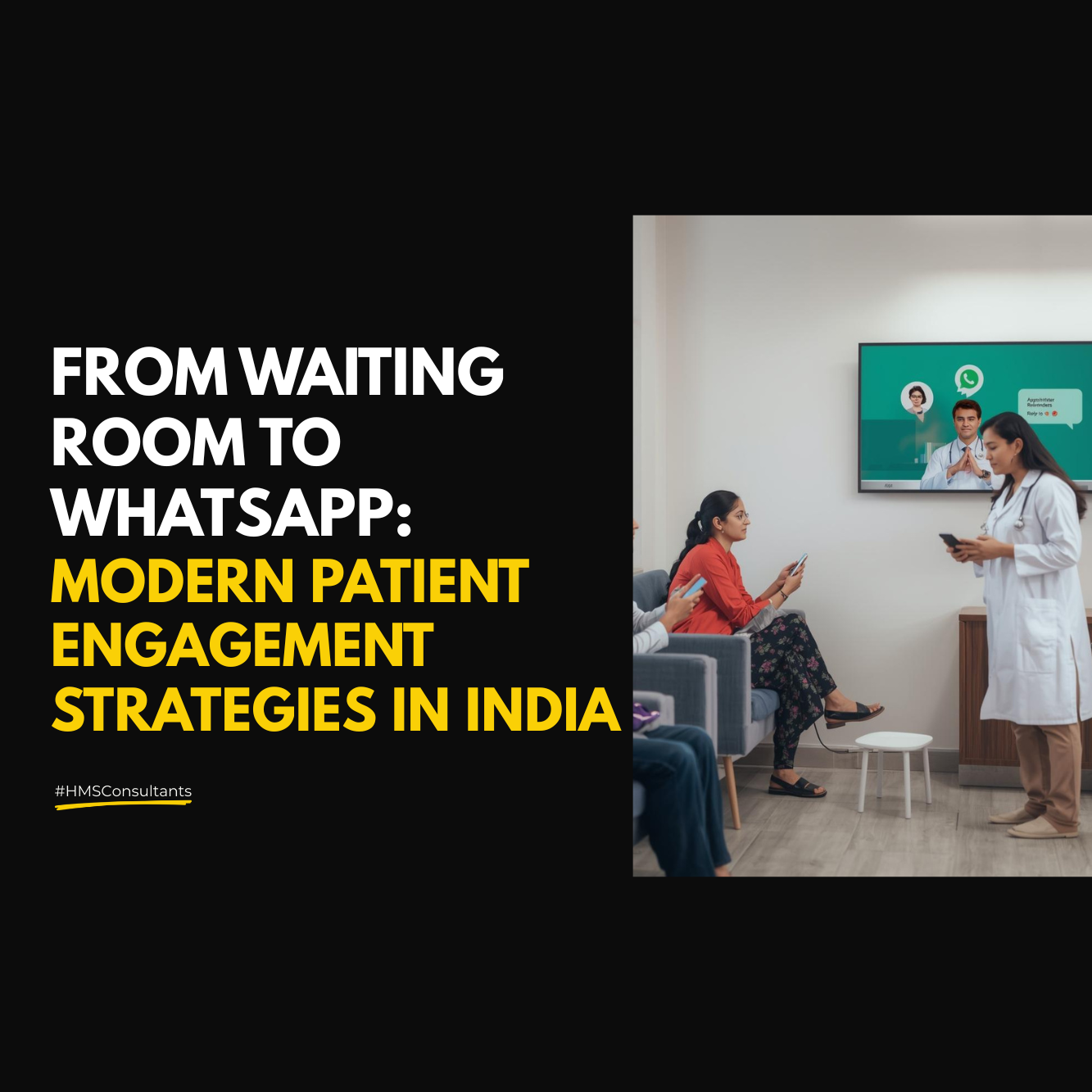
    From Waiting Room to WhatsApp: Modern Patient Engagement Strategies in India

    From Waiting Room to WhatsApp: Modern Patient Engagement Strategies in India

    Written by
    Published on
    Share This

    Not long ago, patient communication in India was simple: a phone call, a handwritten register, a reminder slip, and a crowded waiting room. Hospitals believed that once a patient left the premises, the relationship ended, until the next illness brought them back.

    But today’s healthcare environment is entirely different. Patients behave like modern consumers. They search, compare, review, and expect convenience.

    In fact, for many Indian patients, the relationship with the hospital begins long before they arrive at the reception desk. It starts on a mobile screen.

    This is why modern patient engagement is no longer about posters, pamphlets, or notice boards. It is about meeting patients where they already are on WhatsApp, Google, SMS, email, and social media.

    Hospitals that adapt to this new reality are seeing higher trust, recall, and patient footfall, all without aggressive advertising.

    Let’s explore how patient engagement has moved from the waiting room to WhatsApp, and why this shift is changing Indian healthcare.

    Patients Hate Waiting. They Love Convenience.

    Whether it is Ahmedabad, Surat, Pune, Jaipur, Indore, Kochi or Lucknow, one thing is universal: patients hate waiting.

    • Waiting for a phone call
    • Waiting in queues
    • Waiting for reports
    • Waiting for follow-ups
    • Waiting for discharge

    Hospitals that reduce waiting win trust faster than hospitals that run the fastest machines.

    Today, even small clinics can send:

    • Appointment confirmations
    • Report-ready alerts
    • Doctor delayed notifications
    • Follow-up reminders
    • Medicine instructions

    …with one click on WhatsApp.

    Patients don’t expect luxury, they expect respect for their time.

    WhatsApp Is the New Front Desk

    For years, the reception desk was the centre of all communication. But modern India has a new reception desk: WhatsApp.

    Patients are far more comfortable texting than calling. They ask about:

    • timings
    • fees
    • reports
    • doctors on duty
    • emergency availability
    • follow-up instructions

    A hospital that responds quickly wins trust. A hospital that delays, forgets, or ignores messages loses patients silently.

    In healthcare, speed is often a source of emotional reassurance.

    Follow-Ups Are Not Marketing, They Are Care

    Earlier, hospitals expected patients to remember:

    • When to return for a check-up
    • When lab reports would be ready
    • When medicines needed refill

    But people forget. Life gets busy. Work takes over.

    A simple follow-up message:
    “Your test report is ready.”
    “Your next visit is due next week.”
    “Please continue the medicine for 10 more days.”

    …does not feel like marketing. It feels like care.

    And when patients feel cared for, they come back, not because of discounts, but because of trust.

    Discharge Is Not the End of the Relationship

    Many hospitals lose patients after discharge because they stop communicating.

    Anxiety is highest after a patient goes home. They wonder:

    • “Is this pain normal?”
    • “Can we remove the bandage?”
    • “How should we sleep?”
    • “When do stitches come out?”
    • “When can we start walking?”

    One WhatsApp message from the hospital:
    “Hope you are recovering well. Here are basic precautions and a number you can message if you have questions.”

    …can completely change how a patient feels about the hospital. Patients never forget emotional security.

    Patients Want Information in Simple Language

    If a hospital sends post-operative care sheets filled with medical terms, patients panic.

    But if they receive simple WhatsApp instructions:

    • Eat lightly today
    • Do not lift weight
    • Drink water
    • Come for a check-up in 5 days

    …they feel guided. Hospitals that communicate like humans, not textbooks, build stronger relationships.

    Reports, Prescriptions, and Reminders, Digital Makes Life Easier

    Patients misplace papers. They forget dates. They remember instructions incorrectly.

    Digital engagement solves this.

    • Lab reports sent on WhatsApp prevent repeated hospital visits
    • Digital prescriptions reduce confusion
    • Automated reminders make compliance better
    • Diet plans and precautions can be sent as saved messages

    The patient does not feel lost. They feel supported.

    24/7 Availability Without 24/7 Staff

    A receptionist cannot answer calls at midnight.
    But WhatsApp Business automation can:

    • share OPD timings
    • share doctor profiles
    • collect patient details
    • guide emergencies
    • provide directions, fees, and FAQs

    Patients appreciate the feeling that the hospital is “always there.” Consistency is a form of comfort.

    Why This Matters for Hospitals

    For hospitals, patient engagement is not just goodwill it has real impact:

    • Reduced no-shows
    • Higher follow-ups
    • Better outcomes
    • Better reviews
    • Higher referrals
    • Higher lifetime value of each patient

    Modern patients remember engagement more than infrastructure. A hospital may have a ₹5 crore OT setup, but a ₹5 WhatsApp message creates loyalty.

    The Old Thinking vs. The New Reality

    Old thinking: “Why should we remind patients? They’ll come if needed.”

    New reality:
    Patients forget.
    They get busy.
    They lose paperwork.
    They hesitate to call.

    A message removes hesitation.
    A message prevents a missed appointment.
    A message shows responsibility.

    Engagement builds reputation faster than advertisements.

    From Urban Corporates to Small Clinics, Everyone Can Do This

    Many small hospitals think:
    “This is only for big hospitals.”

    But the opposite is true.

    Large hospitals are crowded and mechanical.
    Small hospitals have the advantage of personal touch.

    A small clinic can follow up with personalised WhatsApp messages, voice notes or calls and create stronger loyalty than a large corporate chain.

    In healthcare, size does not create trust. Care does.

    Patient Engagement Is Now Part of Treatment

    The Indian healthcare system is moving from episodic treatment to continuous care.

    Patients don’t want hospitals that just treat them. They want hospitals that stay connected.

    When a hospital communicates consistently:

    • Recovery improves
    • Fear reduces
    • Trust increases
    • Loyalty strengthens
    • Word-of-mouth spreads

    Every patient becomes a brand ambassador.

    The Future of Patient Engagement Is Emotional, Not Digital

    WhatsApp, SMS, CRM, automation these are tools.

    The real engagement comes from:

    • empathy
    • clarity
    • quick response
    • respect
    • reassurance

    Technology can deliver the message. Humanity makes it meaningful.

    Hospitals that combine both will always stay ahead.

    Conclusion

    The patient journey has moved from the waiting room to WhatsApp.
    Modern engagement is not complicated, it is consistent, caring, and convenient.

    Patients do not demand luxury. They just want a hospital that stays with them even after they leave.

    A hospital that answers doubts, reminds appointments, sends reports, and checks recovery does not need heavy advertising. It earns loyalty naturally.

    In the end:

    • Machines can treat the body
    • Medicines can cure the disease
    • But communication heals the mind

    And when a hospital communicates well, patients return with trust and bring others with them.

    Contact Us HMS Consultants 

    Doctors Digital Marketing I Healthcare Marketing I Hospital Marketing Strategies I Marketing ideas for clinics I Marketing Trends 2025 I Medical Marketing I Social Media Marketing

    is something we strongly believe in, which means ‘Knowledge without application is the same as having no knowledge at all

    Akhil Dave

    Principle Consultant

    Ready to take your Personal Brand to the next level?

    Share your details below and we will connect with you to discuss your growth strategy.
    • What Every Hospital Should Learn From Swiggy & Zomato

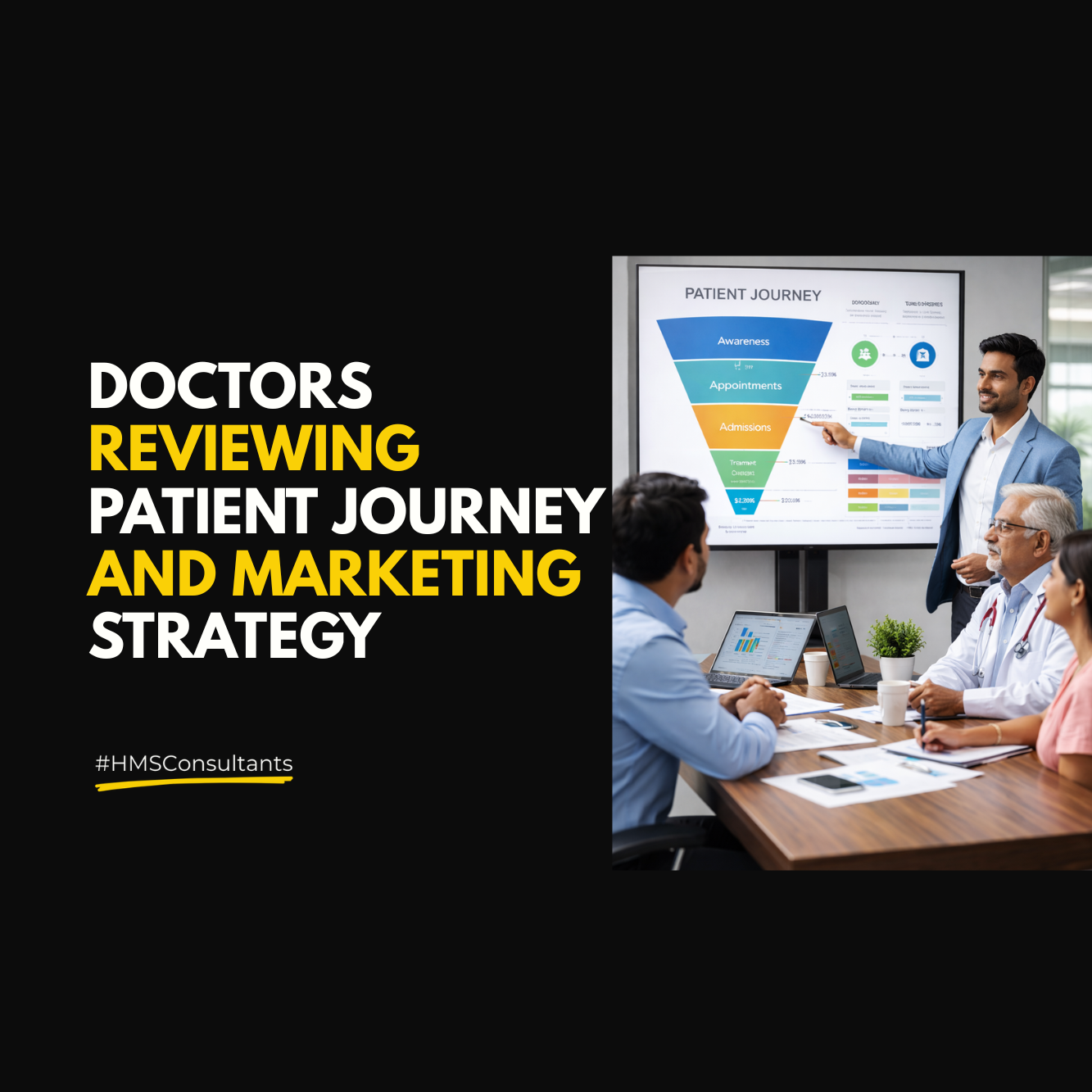
      What Every Hospital Should Learn From Swiggy & Zomato

      What Every Hospital Should Learn From Swiggy & Zomato

      Written by
      Published on
      Share This

      Hospitals and food delivery apps exist in completely different worlds.
      One deals with meals, the other deals with lives.
      One promises taste, the other promises health.

      But if we look closely, Swiggy and Zomato have transformed something much bigger than food, they have transformed customer experience, communication, transparency, and trust.
      And these are the exact things Indian hospitals struggle with every day.

      Today, if a restaurant delays food, users don’t panic.
      Why?
      Because they can see what’s happening.

      Imagine if hospitals offered the same clarity, transparency, and responsiveness.

      Let’s explore what every hospital can learn from these apps, not to commercialise healthcare, but to humanise and organise it better.

      1. Transparency Reduces Fear

      When you order food, you know:

      • where it came from
      • who is preparing it
      • how much it costs
      • when it will arrive
      • where the delivery person is

      Nothing is hidden. Everything is visible.

      Now think of a hospital:

      A patient gets admitted. They don’t know:

      • how long the doctor will take
      • when the report will come
      • what the final bill will be
      • how much each procedure costs
      • what the next step is

      Patients are not scared of treatment. They are scared of uncertainty.

      Swiggy and Zomato proved one thing: When information flows freely, fear disappears.

      Hospitals that provide clear instructions, transparent billing, expected waiting times, and regular report updates will always make patients feel calmer and safer.

      2. Real-Time Updates Create Trust

      Food delivery apps give instant updates:

      • Order received
      • Food prepared
      • Picked up
      • On the way
      • Delivered

      Even if something goes wrong, the customer remains relaxed, because they are aware of the situation.

      Imagine if hospitals sent real-time updates for:

      • report readiness
      • delayed appointments
      • surgery progress notifications to families
      • room readiness
      • discharge process

      One message can save hours of anxiety. Families sitting outside an OT are more scared of silence than surgery. Information is medicine.

      3. Reviews Are Public, And Hospitals Need the Same Courage

      Restaurants cannot hide bad reviews. They face them, reply to them, improve from them.

      Hospitals, however, often:

      • avoid Google reviews
      • ignore negative feedback
      • argue with patients online
      • fear public comments

      But here’s the truth: Patients trust feedback more than advertisements.

      A hospital that responds to reviews politely builds more credibility than one that remains silent.

      Reviews don’t destroy hospitals. Lack of response destroys trust.

      4. Personalisation Is Powerful

      Swiggy and Zomato know what you order often. They send offers based on your behaviour. They recommend restaurants based on your taste. Now look at hospitals.

      Every patient:

      • has different concerns
      • different history
      • different follow-up needs

      But hospitals send the same generic reminders, or no reminders at all. Imagine personalised healthcare:

      • Diabetes patients get diet reminders
      • Heart patients get walking goals
      • Pregnant women receive trimester care tips
      • Cataract patients get post-surgery check-up alerts

      Personalisation is not selling. It is caring.

      5. Even Complaints Feel Respectful

      When food goes wrong, customers receive:

      • Apology
      • Refund
      • Explanation

      Even if it’s automated, the experience feels respectful. Hospitals often fear complaints, but complaints are opportunities. A patient who gets a call from hospital staff saying:
      “We’re sorry for the delay. Thank you for telling us. We will resolve it.”

      …will remain loyal.

      A patient who is ignored becomes an angry reviewer or someone who never returns. Swiggy and Zomato taught the world that great service is not about perfection, but about response.

      6. Predictability Matters More Than Speed

      People don’t demand that food arrives instantly. They just need to know when it will arrive.

      In hospitals:

      • patients don’t demand zero waiting
      • they just want to know how long
      • they don’t demand instant reports
      • they just want a time and a message when ready

      Silence creates anxiety. Predictability creates peace.

      7. The Interface Is Simple, Hospitals Make Things Complicated

      Ordering food takes less than 60 seconds:

      • Click restaurant
      • Click dish
      • Pay
      • Done

      In hospitals:

      • forms
      • signatures
      • unclear departments
      • people moving from desk to desk
      • no signage
      • no guidance

      Patients are already stressed. Confusion makes it worse.

      A hospital that simplifies its processes appears more professional than one that invests in expensive machines.

      8. Swiggy and Zomato Turn Ordinary Into Experience

      Food was always available. Delivery was always possible. But these apps turned food delivery into a smooth, predictable, trustworthy journey.

      Hospitals can do the same:

      • Fast check-in
      • Clear communication
      • Digital payments
      • Report sharing
      • WhatsApp engagement
      • Transparent billing
      • Clean waiting areas
      • Polite staff

      Patients choose hospitals not because of machines, but because of experiences.

      9. Technology Helps Humans Work Better, Not Replace Them

      Delivery apps use:

      • automation
      • live tracking
      • AI recommendations
      • feedback systems
      • customer service chat

      But the delivery rider is still human. The experience is still personal.

      Hospitals should use:

      • WhatsApp automation
      • CRM
      • SMS reminders
      • Online booking
      • Digital reports
      • Feedback systems

      This won’t replace human touch, it will free staff to provide better human touch.

      10. In Healthcare, These Lessons Matter Even More

      People don’t panic when food is late, but they panic in hospitals.

      If a pizza arrives 10 minutes late, it’s an inconvenience. If a lab report is delayed 10 minutes without explanation, it becomes fear.

      Hospitals should communicate more than food apps, not less.

      Conclusion

      Swiggy and Zomato did not succeed because of food. They succeeded because of:

      • information
      • clarity
      • transparency
      • responsiveness
      • personalisation
      • trust

      These are the same things patients want from hospitals. Healthcare is not a business of food and delivery, it is a business of life and dignity.

      And yet, the lessons are the same:

      • when you communicate, patients trust you
      • when you update, patients stay calm
      • when you apologise, patients forgive
      • when you personalise, patients feel cared for
      • when you simplify, patients choose you

      Hospitals don’t need to copy food apps. They just need to learn what the apps understood:
      people want clarity, not confusion… trust, not fear.


      Contact
       
      Us HMS Consultants 

      Doctors Digital Marketing I Healthcare Marketing I Hospital Marketing Strategies I Marketing ideas for clinics I Marketing Trends 2025 I Medical Marketing I Social Media Marketing

      is something we strongly believe in, which means ‘Knowledge without application is the same as having no knowledge at all

      Akhil Dave

      Principle Consultant

      Ready to take your Personal Brand to the next level?

      Share your details below and we will connect with you to discuss your growth strategy.

      • The Hospital With No Website: Why Patients Will Never Find You

        The Hospital With No Website: Why Patients Will Never Find You

        The Hospital With No Website: Why Patients Will Never Find You

        Written by
        Published on
        Share This

        There was a time when hospitals grew purely through reputation and referrals. A family doctor recommended a specialist. A neighbour suggested a clinic. Word of mouth was enough.

        But healthcare has changed. Patients have changed. The way people search for doctors has undergone significant changes.

        Today, even when someone gets a referral, the first thing they do is Google the hospital name.

        And this is where many hospitals silently lose patients before they ever make an appointment because they don’t have a website, or they have one that looks outdated, incomplete, slow, or unprofessional.

        In a world where every business lives online, a hospital without a website looks invisible.
        And in healthcare, invisibility is a loss of trust.

        Patients Don’t Start Their Journey at the Reception Desk; It Starts Online

        In cities like Ahmedabad, Surat, Pune, Jaipur, Kochi, Nagpur, Lucknow, Bhopal, or Indore, when someone experiences pain, symptoms, pregnancy concerns, or a sudden emergency, they don’t leave the house to look for hospitals.

        They search:

        • “Best orthopedic doctor near me”
        • “Normal delivery hospital”
        • “Child vaccination clinic”
        • “Laser eye surgery cost”
        • “Pediatric dentist timing”
        • “Who is the best neurologist in Ahmedabad?”

        If your hospital does not appear online, you are not even an option.

        Even if you are the best hospital in the city, if the patient cannot find you online, someone else will get the case.

        But We Are Famous Through Word-of-Mouth, We Don’t Need a Website

        Many hospitals believe this. But here is how modern behaviour works: Even if a friend recommends your hospital, the patient still Googles it.

        When they search your name and see:

        • No website
        • No information
        • No doctor profiles
        • No photos
        • No timings
        • No phone number
        • No address

        They immediately lose confidence. A patient who cannot verify you online does not trust you offline.

        A Website Is Not for Show. It Is for Trust.

        Patients don’t judge hospitals by medical equipment, because they don’t understand it.

        They judge by what they can see online.

        A website tells patients:
        – Who are the doctors
        – What treatments are available
        – What it costs
        – Where the hospital is
        – How to book appointments
        – Why they should choose you

        Patients feel safe when they see clarity. Patients feel scared when information is missing.

        Google Searches Are Now Healthcare Gateways

        Let’s say two hospitals are in the same city: Hospital A has a clean website and Hospital B has no website

        A patient searches for “knee replacement Ahmedabad.”

        Hospital A appears with:

        • Doctor profiles
        • Success stories
        • Procedure explained
        • Contact button

        Hospital B: no result.

        Hospital A gets the enquiry. Hospital B loses a patient silently.

        No doctor got a chance to consult.
        No receptionist got a chance to speak.
        No marketing was done wrong.

        Simply, the hospital did not exist online.

        Even Small Hospitals Need Websites. Actually, They Need Them More

        Large coorporates have brand recall. Small and mid-sized hospitals depend on discovery.

        When a small hospital doesn’t have a website, patients assume:

        • It is new
        • It is unorganised
        • It is not trustworthy
        • It might be expensive
        • It might be unsafe

        Patients will not take risks with their health. A simple website can change this perception overnight.

        Patients Don’t Call for Basic Information Anymore

        Old mindset: “If they want information, they will call us.”

        New reality: “If the information is not online, patients won’t call at all.”

        Patients want:

        • Transparency of cost
        • Doctor timing
        • Location
        • Facilities
        • Insurance acceptance
        • Procedures
        • FAQs

        If they cannot find it in one click, they move to another hospital that explains it clearly. Healthcare can be stressful; patients prefer hospitals that minimise confusion.

        An Outdated Website Is Almost as Bad as No Website

        Some hospitals have websites that appear to have been created 10 years ago.

        • Old colours
        • Small blurry photos
        • No doctor details
        • Broken links
        • No online appointment button
        • Not mobile-friendly

        Patients think the same thing every time:

        “If the website is this outdated, how modern is the hospital inside?”

        A website does not have to be fancy. It just has to be clean, clear, updated, and mobile responsive.

        Patients Check Websites for One More Reason: Safety

        Before choosing a hospital, patients want to know:

        • What are the facilities?
        • How clean does the hospital look?
        • Are the doctors qualified?
        • Are there reviews or testimonials?
        • Is there emergency support?
        • What is the experience like?

        A website answers all of this without a phone call. A patient who feels safe online will walk in confidently offline.

        A Website Works 24/7, Even When Staff Cannot

        A receptionist can answer one call at a time. A phone cannot handle hundreds of enquiries simultaneously.

        A website can:

        • Explain everything
        • Collect appointments
        • Give directions
        • Share reports
        • Provide FAQ
        • Show doctor timings
        • Reduce waiting room chaos

        While the hospital is sleeping, the website is convincing patients to choose you.

        The Hospital Without a Website Misses These Opportunities Daily

        • Corporate clients searching for tie-ups
        • Students searching for internships
        • Doctors searching for job openings
        • Patients searching late at night
        • Relatives searching from outside the city
        • NRI families searching for parents’ care

        A hospital without a website is like a shop with a locked door. People who want to enter cannot.

        The Biggest Misconception: “Websites Are Expensive”

        They are not.

        A basic, clean, professional hospital website can cost less than:

        • One billboard
        • One hoarding
        • One month of newspaper ads

        And unlike ads, a website works permanently.

        It is not a cost. It is an investment in credibility.

        Conclusion

        Hospitals lose patients silently, not because of the quality of their treatment, but because patients cannot find or trust them online.

        A website is no longer optional. It is the digital front door of healthcare.

        Without it, patients choose someone else.
        Not because they are better, but because they are visible.

        A hospital that communicates clearly, transparently and professionally online will always remain the first choice offline.

        In today’s world, if you are not online, you don’t exist. If patients cannot find you, they cannot trust you.

        The hospital with the best doctors may win cases inside the building. But the hospital with the best communication wins them before the door.

        Contact Us HMS Consultants 

        Doctors Digital Marketing I Healthcare Marketing I Hospital Marketing Strategies I Marketing ideas for clinics I Marketing Trends 2025 I Medical Marketing I Social Media Marketing

        is something we strongly believe in, which means ‘Knowledge without application is the same as having no knowledge at all

        Akhil Dave

        Principle Consultant

        Ready to take your Personal Brand to the next level?

        Share your details below and we will connect with you to discuss your growth strategy.

        • Inside the Mind of a Patient: What They Really Notice About Your Hospital

          Inside the Mind of a Patient: What They Really Notice About Your Hospital

          Inside the Mind of a Patient: What They Really Notice About Your Hospital

          Written by
          Published on
          Share This

          Hospitals often believe that patients judge them only by medical expertise. Administrators assume that the deciding factors are the seniority of the doctor, advanced equipment, or the success rate. But patients don’t experience hospitals the way doctors do.

          Patients don’t see the ventilator first.
          They don’t notice the microscope.
          They don’t recognise the brand of the stent or implant.

          They notice something else entirely, something most hospitals underestimate.
          They notice how the hospital feels.

          From the moment a patient or family member steps inside (or even before that, when they search you online), their mind begins to make decisions:

          “Is this hospital organised?”
          “Does this place look clean?”
          “Will they take care of us?”
          “Will anyone listen to us?”

          The hospital may be highly qualified medically, but trust is built or broken long before treatment begins.

          Let’s step inside the patient’s mind and understand what they truly see, feel, and remember.

          Before They Arrive: The First Impression Happens Online

          In cities like Ahmedabad, Surat, Jaipur, Nashik, Lucknow, Nagpur or Indore, most patients start with Google. Not with the front door.

          They search:

          • Best child specialist near me
          • Normal delivery hospital
          • Kidney stone treatment
          • Cataract surgery cost

          If they see a hospital with a modern website, updated Google reviews, doctor profiles, OPD timings, photos, and clear contact details, they immediately feel more confident.

          But if they find:

          • No website
          • No Google listing
          • No updated information
          • Only two outdated reviews

          …their mind says, “Let’s try somewhere else.”

          Doctors may trust their skill. Patients trust what they can see.

          The Parking Lot and Entrance

          It sounds trivial, but the patient journey begins even before the reception. If the parking is confusing, unorganised, or chaotic, patients start the experience stressed.
          Their first impression becomes: “This hospital doesn’t manage things properly.”

          If the entrance is clean, bright, and welcoming, patients feel safer before anyone speaks a word.

          Cleanliness is psychological medicine.

          Reception: The Real Heart of the Hospital Experience

          Every hospital believes the doctor creates trust. But for most patients, trust (or fear) begins at the reception desk.

          If the receptionist:

          • Greets politely,
          • Explains patiently,
          • Answers clearly,
          • Guides confidently…

          …the patient calms down.

          But if the receptionist:

          • Looks irritated,
          • Speaks rudely,
          • Asks questions as if doing a favour,
          • Shows confusion or lack of coordination…

          …the patient immediately feels unsafe, even if the doctor is the best in the city.

          The patient decides: “If reception is this unorganised, what will happen during treatment?”

          One rude sentence can cancel a patient’s trust.
          One kind sentence can create it.

          Cleanliness and Hygiene Everywhere

          Patients are not medical experts, but they understand the importance of cleanliness deeply.

          They notice:

          • The smell of the waiting area
          • Dust on chairs or corners
          • Dirty bathrooms
          • Random slippers or waste lying around
          • Blood stains, used cotton, syringes not disposed properly

          Doctors may not see these things. Patients see everything.

          If the hospital looks dirty, no machine or doctor can save the hospital’s image. Cleanliness equals safety.

          Waiting Time: Do You Respect Their Pain?

          Patients expect waiting. But what they hate is uncertainty.

          They don’t get angry because of delay. They get angry because nobody tells them why or for how long.

          If a hospital simply communicates:
          “The doctor is running 20 minutes late, please wait.”
          “Your report will be ready in 15 minutes.”

          …their frustration reduces immediately.

          Silence makes patients anxious. Communication makes them comfortable.

          Staff Behaviour: Compassion is More Powerful Than Technology

          Most patients don’t remember what instrument was used in surgery. They remember how the nurse spoke to them.

          Was she gentle?
          Did she explain instructions?
          Did she show patience with an old person or a scared child?

          Patients are emotionally sensitive in hospitals.
          They notice kindness like medicine.

          They also notice anger like an injury.

          A single rude staff member can destroy the reputation that doctors spent years building.

          Doctor Interaction: Humanity Matters as Much as Skill

          Patients rarely judge medical accuracy.
          They judge communication.

          A doctor who:

          • Listens,
          • Explains simply,
          • Makes eye contact,
          • Doesn’t rush,
          • Reassures the family…

          …automatically becomes “the best doctor.”

          A doctor who seems busy, dismissive, or impatient makes the patient insecure, even if the treatment is brilliant.

          Patients want to feel heard, not processed.

          Billing and Transparency

          Money is one of the biggest fears in healthcare.

          If billing feels confusing, hidden, or uncertain, patients lose trust, even with good treatment.

          But if hospitals:

          • Explain charges,
          • Tell what’s included,
          • Make estimates clear,
          • Give receipts with breakdowns, and patients feel respected.

          Transparent billing is one of the strongest trust builders in the healthcare industry.

          Discharge and Follow-Up

          The hospital journey doesn’t end when the patient leaves. In fact, the final impression is formed at discharge.

          If the staff explains medicines, diet, care instructions, follow-up dates and provides contact details for questions, the patient goes home confident.

          If the discharge feels rushed, confusing, or disorganised, the patient goes home scared.

          After reaching home, a simple WhatsApp message:
          “Hope you are recovering well. If you need anything, message us anytime.”
          …creates emotional loyalty.

          Hospitals don’t realise how powerful small gestures are.

          What Patients Remember Forever

          At the end of the journey, patients remember:

          • How they were treated as humans
          • Not how the machine sounded
          • Not which stitch was used
          • Not which OT light was installed
          • Not which brand of implant was used

          They remember:

          • Who smiled
          • Who helped
          • Who guided
          • Who made them feel safe

          People don’t remember hospitals. They remember experiences.

          Conclusion

          Hospitals spend crores on infrastructure. Patients judge the hospital by behaviour, cleanliness, communication, transparency, and organisation.

          If hospitals could see themselves through a patient’s eyes, they would never ignore:

          • Reception training
          • Clear communication
          • Quick response
          • Cleanliness
          • Transparent billing
          • Follow-ups

          Because medical excellence yields results, emotional excellence fosters trust.

          A hospital becomes great not only when it treats patients well, but when it makes them feel cared for every step of the way.

          Contact Us HMS Consultants 

          Doctors Digital Marketing I Healthcare Marketing I Hospital Marketing Strategies I Marketing ideas for clinics I Marketing Trends 2025 I Medical Marketing I Social Media Marketing

          is something we strongly believe in, which means ‘Knowledge without application is the same as having no knowledge at all

          Akhil Dave

          Principle Consultant

          Ready to take your Personal Brand to the next level?

          Share your details below and we will connect with you to discuss your growth strategy.

          • Why Patients Don’t Trust Hospital Marketing, And How to Fix It

            Why Patients Don’t Trust Hospital Marketing, And How to Fix It

            Why Patients Don’t Trust Hospital Marketing, And How to Fix It

            Written by
            Published on
            Share This

            In every major Indian city, from Ahmedabad to Surat, Jaipur, Indore, Kochi, and Lucknow, hospitals are investing in digital marketing, branding, and social media. Yet, most patients still rely on recommendations, neighbours, relatives, or Google reviews before trusting a hospital.

            Why?
            Because patients don’t trust hospital marketing. Not fully. Not yet.
            This isn’t because healthcare advertising is bad. It’s because healthcare is different. Marketing a hospital is not like selling shoes, smartphones, or salon services. When a patient chooses a hospital, they are not buying a product; they are choosing a place where they believe their life, or their loved one’s life, will be safe.

            So when hospitals use promotional messaging, aggressive sales tactics, or generic content, patients feel uncomfortable, even suspicious.
            If hospitals want marketing to work, they must first understand why patients don’t trust it.
            Let’s break it down.

            Reason 1: Patients Have Been Misled Before

            Healthcare marketing in India is still young, and unfortunately, many early examples created distrust.

            • Big promises with poor service
            • Lowest-price campaigns that hide final billing
            • “World-class” claims in hospitals that lack basic infrastructure
            • Offers that sound commercial instead of clinical
            • Ads with exaggerated results

            Patients have seen:

            • Free checkups that become expensive tests
            • Discounts that disappear at billing
            • Promotions that don’t match reality

            So when patients see marketing, the first question that comes to their mind is:
            “Is this real, or is this a trap?”

            Trust is lost when marketing over-promises and the experience under-delivers.

            Reason 2: Healthcare Is Emotional, Not Commercial

            Patients don’t go to hospitals for something they want. They go because something is wrong, urgent, stressful, or scary.

            In that emotional moment:

            • Loud offers feel insensitive
            • Pushy ads feel unethical
            • “Limited time discount” sounds manipulative
            • Paid ads feel less trustworthy than genuine reviews

            Marketing cannot feel like selling. It must feel like helping. When hospitals communicate like retailers, patients feel uncomfortable.

            Reason 3: Lack of Transparency Creates Doubt

            One of the primary reasons patients lack trust in hospitals is the presence of information gaps.

            When a website says:

            • “Call us for pricing”
            • “Packages available”
            • “Affordable care”

            Patients think: “Why are they hiding details?”

            A patient is already anxious. They don’t want to negotiate for clarity.

            If hospitals simply explained:

            • Pricing ranges
            • What is included
            • Doctor timings
            • Expected waiting time
            • Process and documentation

            Trust would increase instantly. Transparency does not scare patients. Confusion does.

            Reason 4: Inconsistent Digital Presence Looks Suspicious

            Patients do not trust hospitals with:

            • No website
            • Old website
            • No doctor profiles
            • No reviews
            • No photos
            • No details about services
            • No Google Business listing

            When digital presence looks incomplete, patients feel the hospital is either:

            • Not serious
            • Too new
            • Unprofessional
            • Hiding something

            A clean, updated, and informative online presence is no longer optional; it is a testament to credibility.

            Reason 5: Reviews and Reputation Matter More Than Advertisements

            Most patients now check reviews before choosing a hospital. Even one negative review without a proper response creates doubt.

            A hospital might be clinically excellent, but if patients see:

            • Angry reviews
            • Complaints about staff behaviour
            • No response from management
            • Arguments in comment sections

            They assume the worst. Patients trust real experiences more than social media posts or advertisements.

            Marketing brings attention. Reputation brings trust.

            Reason 6: Medical Language Confuses People

            If a hospital’s communication sounds technical, complicated, or filled with medical jargon, patients mentally disconnect.

            For example:

            • “Phacoemulsification with PCIOL”
              vs.
            • “Painless cataract surgery with a foldable lens”

            Patients trust what they understand. Marketing is not for doctors; it is for patients. When hospitals speak clearly, simply, and patiently, trust grows.

            How to Fix Patient Distrust: The Trust-Building Approach

            Hospitals don’t need dramatic rebranding or aggressive campaigns. They need authenticity, transparency, clarity, and consistency.

            Here’s how trust is built.

            1. Stop Selling. Start Guiding.

            Hospitals earn trust when they help patients make informed decisions:

            • Explain symptoms
            • Share treatment options
            • Provide preventive advice
            • Use social media to educate, not advertise

            When patients learn from you, they trust you. The most trusted hospitals are educators, not promoters.

            1. Show Real People, Real Expertise

            Patients trust hospitals with:

            • Real doctor faces
            • Real credentials
            • Real photos of facilities
            • Real patient testimonials
            • Real success stories (shared ethically)

            Stock images, generic templates, and fake promises destroy trust. Authenticity wins.

            1. Fix Website and Google Presence

            A hospital website should answer every basic question:

            • Who are the doctors?
            • What treatments are available?
            • How much will it cost (at least approximate range)?
            • What are OPD timings?
            • How to book?
            • Parking availability?

            A complete Google Business Profile with updated photos, reviews, and doctor timings increases walk-ins overnight.

            1. Respond Fast. Respond Politely.

            Slow replies are the fastest way to lose trust. A patient asking for help is already anxious. A quick, kind response builds emotional confidence.

            Communication is as important as treatment.

            1. Collect Reviews, And Answer Them

            Don’t fear feedback.

            When hospitals reply to negative reviews calmly and professionally:

            • Public trust goes up
            • Patients feel heard
            • Future patients see responsibility

            Silence shows negligence. Response shows leadership.

            1. Communicate in Simple, Human Language

            Patients trust hospitals that speak like people, not textbooks. Explain procedures in plain words.
            Share instructions clearly. Remove fear, don’t add confusion.

            Healthcare is emotional. Language must be compassionate.

               Marketing Is Not About Making Hospitals Look Bigger, It’s About Making Patients Feel Safer

            When patients trust a hospital, they don’t need advertisements to convince them. When they don’t trust a hospital, no advertisement can save them.

            Trust is built through:

            • Clarity
            • Transparency
            • Responsiveness
            • Ethics
            • Respect

            Most hospitals try to improve marketing. Very few try to improve trust-building. The ones who do, never struggle with footfall.

            Conclusion

            Patients don’t distrust hospitals. They distrust the feeling of being misled, confused, ignored, or oversold.

            The good news? This can be fixed.

            Hospitals that communicate honestly, educate patients, demonstrate transparency, respond promptly, and maintain a clean digital presence naturally build trust without resorting to aggressive marketing.

            Because patients don’t choose hospitals based on ads. They choose hospitals based on confidence.

            Contact Us HMS Consultants 

            Doctors Digital Marketing I Healthcare Marketing I Hospital Marketing Strategies I Marketing ideas for clinics I Marketing Trends 2025 I Medical Marketing I Social Media Marketing

            is something we strongly believe in, which means ‘Knowledge without application is the same as having no knowledge at all

            Akhil Dave

            Principle Consultant

            Ready to take your Personal Brand to the next level?

            Share your details below and we will connect with you to discuss your growth strategy.

            • What India Is Secretly Asking About Healthcare Marketing (And What It Reveals About 2025)

              What India Is Secretly Asking About Healthcare Marketing (And What It Reveals About 2025)

              What India Is Secretly Asking About Healthcare Marketing (And What It Reveals About 2025)

              Written by
              Published on
              Share This

              When we recently analyzed what people across India are asking about “healthcare marketing” using AI-powered research tools like AnswerThePublic, the results were both fascinating and revealing.
              It wasn’t just about social media tips or Google Ads.

              Doctors, hospital owners, healthcare entrepreneurs, and startups are asking very different kinds of questions. Questions that reveal how the healthcare industry is maturing digitally, but still searching for clarity on how to connect business goals with meaningful marketing.

              At HMS Consultants, we always say marketing in healthcare isn’t about visibility alone; it’s about clarity before action.
              And this research proved exactly that.

              1. The Shift from Guesswork to Systems

              Across dozens of search queries, one theme was loud and clear people are looking for tools and systems, not shortcuts.

              Searches like:

              • “Best digital marketing platforms for healthcare providers in India”
              • “CRM software for healthcare marketing teams”
              • “Marketing automation tools for healthcare providers”

              show that hospitals and clinics are moving from one-off campaigns to structured marketing ecosystems.

              website 1
              IMAGE From AnswerThePublic

              Insight: 

              The next phase of healthcare marketing in India is process-driven, not personality-driven.
              Doctors no longer just want “someone to handle social media.” They want dashboards, ROI tracking, CRM-linked engagement data, and measurable growth.

              At HMS Consultants, we see this as a healthy sign an evolution from Doing without Knowing to Knowing before Doing.

              2. The Anxiety of Choosing the Right Partner

              Another strong pattern: the repeated search for the “best healthcare marketing agency,” “affordable marketing services for startups,” or “how to choose a healthcare marketing company.”

              Insight: 

              • There’s trust fatigue.
                Every clinic or hospital has likely worked with an agency at some point, but many are still unsure whether the partner truly understands the healthcare ecosystem.
              • The problem isn’t creativity it’s context.
                Healthcare requires a deeper understanding of ethics, compliance, and patient psychology. The challenge is not “who can run ads,” but “who understands patients, doctors, and the decision cycle.”

              That’s precisely where the consulting-first approach matters helping healthcare businesses make marketing decisions that are strategically sound, not just visually appealing.

              3. The New SEO: From Keywords to Credibility

              One of the most common clusters revolved around SEO and digital visibility:

              • “Where to buy healthcare SEO services”
              • “Effective social media strategies for healthcare businesses”
              • “Reviews of email marketing tools for healthcare professionals”

              Insight: 

              • Healthcare leaders know they need visibility but they’re equally aware that visibility without trust means little.
              • In today’s search algorithms (including AI-driven ones), Google and Bing don’t just track keywords they evaluate credibility signals: content quality, consistency, and empathy.

              So, while agencies chase algorithms, smart healthcare brands are now focusing on authority and authenticity the true foundations of SEO.

              As we tell our clients: “Search engines are learning to sense empathy.”

              4. The ROI Mindset: What Gets Measured, Gets Improved

              Queries like:

              • “How to measure ROI of healthcare marketing”
              • “Best analytics tools to track healthcare campaigns”
              • “Where to get patient engagement software”

              suggest a major shift healthcare businesses now expect marketing accountability.

              Insight: 

              • Indian healthcare marketing is entering a performance era.
              • Instead of vanity metrics like likes or followers, clinics and hospitals are focusing on patient inflow, appointment conversions, and referral networks.

              This is where clarity frameworks like HMS’s Knowing–Doing Framework™ make a measurable difference: aligning digital strategies with tangible business outcomes.

              5. The Rise of Healthcare Marketing as a Profession

              A surprising number of searches were about learning, certification, and skill development:

              • “Healthcare marketing webinars and workshops”
              • “Marketing certifications for healthcare professionals”
              • “Case studies on successful healthcare marketing in India”

              Insight: 

              • Healthcare marketing is no longer a side responsibility; it’s becoming a recognized career path.
              • Doctors, administrators, and even MBA professionals are looking to specialize not just in marketing, but in healthcare-specific marketing.

              This professionalization will be a major growth driver in the coming years and HMS Consultants is proud to be contributing to this transformation through our advisory work and educational collaborations.

              Key Takeaways for Healthcare Leaders

              InsightWhat It Means for You
              Tools over talentBuild a structured, measurable marketing system  not just social media presence.
              Partner with contextChoose advisors who understand healthcare, not just advertising.
              Credibility is the new SEOAuthenticity and authority drive visibility.
              ROI is not optionalTrack what truly matters awareness to appointments.
              Marketing is evolvingUpskill your internal teams to build a culture of growth.

              Conclusion: What India’s Questions Really Tell Us

              If you look closely, the questions themselves tell a story.
              India’s healthcare professionals aren’t confused they’re curious.
              They’re not looking for quick fixes they’re seeking direction.

              At HMS Consultants, we believe this is the right kind of curiosity.
              Because when curiosity meets clarity, healthcare brands evolve into trusted names.

              And that’s exactly what healthcare marketing in 2025 and beyond will be about.

              Email ID :- info@hmsconsultants.in

              Doctors Digital Marketing I Healthcare Marketing I Hospital Marketing Strategies I Marketing ideas for clinics I Marketing Trends 2025 I Medical Marketing I Social Media Marketing

              is something we strongly believe in, which means ‘Knowledge without application is the same as having no knowledge at all

              Akhil Dave

              Principle Consultant

              Ready to take your Personal Brand to the next level?

              Share your details below and we will connect with you to discuss your growth strategy.

              • If Hospitals Marketed Like Airlines: What Healthcare Can Learn About Strategy, Systems & Patient Experience

                If Hospitals Marketed Like Airlines: What Healthcare Can Learn About Strategy, Systems & Patient Experience

                If Hospitals Marketed Like Airlines: What Healthcare Can Learn About Strategy, Systems & Patient Experience

                Written by
                Published on
                Share This

                In today’s world, every industry is using strategy and technology to create personalised, seamless customer experiences. But there is one industry that has mastered it better than most: airlines.

                Whether you fly Indigo, Vistara, Emirates or Air India, the experience is predictable, organised, responsive, and carefully designed. From booking to boarding to feedback, airlines run on well-coordinated systems, not guesswork.

                Now imagine if hospitals did the same.

                Not by treating patients like passengers, but by adopting the same structured approach to marketing, communication, and experience that airlines follow every single day.

                Because while hospitals have better expertise, deeper emotional responsibility, and far higher trust stakes, most still rely on unstructured marketing, scattered communication, and outdated enquiry handling.

                Let’s explore how hospitals could transform their growth simply by thinking like airlines.

                Booking a Flight Is Easier Than Booking an OPD

                If you open an airline website or app, you can:

                • Check timing
                • Check pricing
                • Choose a doctor, if this were a hospital example
                • See availability
                • Change timing
                • Cancel
                • Get reminder notifications
                • Receive email confirmation
                • Track your booking

                Now compare this to many hospitals in India:

                A patient asks, “Is the orthopaedic doctor available today?” The receptionist doesn’t know.

                Someone needs to “check and call back.” Sometimes no one calls back. Sometimes the patient never gets an answer.

                Hospitals lose patients before they even arrive, not because of clinical quality, but because the system wasn’t organised for them. Airlines don’t run on memory. They run on systems. Hospitals must too.

                Airlines Don’t Market to “Everyone”, They Market to the Right Passenger

                When an airline launches an offer, it does not target every Indian with internet access. It targets:

                • Frequent flyers
                • First-time travelers
                • Business travellers
                • Student discounts
                • Festival routes
                • City-specific audiences

                They know exactly who to talk to, when to speak, and how to communicate effectively.

                Hospitals, on the other hand, often market without segmentation:

                • One generic post for everyone
                • No customised communication
                • No distinct messaging for pregnant women, diabetics, senior citizens, or chronic patients

                Healthcare is diverse. A single message cannot address everyone. Airlines succeed because they understand the concept of audience segmentation. Hospitals that segment patients, by age, speciality, geography, behaviour, or need will see far better conversions and loyalty.

                Airlines Don’t Wait for Customers to Remember, They Proactively Remind

                Think about the last time you flew. You received:

                • A booking confirmation
                • Payment receipt
                • Flight reminder
                • Check-in link
                • Gate number
                • Delay alerts
                • Feedback request
                • Offers for next booking

                All without asking.

                Now imagine a hospital doing this:

                • OPD appointment confirmation
                • Rescheduling/reminder
                • Discharge instructions
                • Post-surgery precautions
                • Medicine reminders
                • Follow-up alerts
                • Check-up due messages
                • Health package offers for existing patients

                This is not “marketing.” This is responsible care.

                Most hospitals depend on patients remembering appointments themselves. Airlines don’t trust memory; they trust systems.

                Hospitals should too.

                Airlines Turn Data Into Strategy, Hospitals Rarely Do

                Airlines track everything:

                • Booking patterns
                • Travel frequency
                • Preferred timings
                • Feedback
                • Food choices
                • Cancellation behaviour

                This helps them plan flights, pricing, offers, loyalty programmes, and communication.

                Hospitals also have data, but most of it is

                • Paper-based
                • Scattered
                • Not analysed
                • Not used for strategy

                If hospitals used even simple CRM data, they would know:

                • Which specialities need marketing
                • Which patients need follow-ups
                • Why cancellations happen
                • Peak OPD times
                • Which campaigns work
                • Which enquiries are converting

                Airlines grow by analysing data. Hospitals can too.

                Branding Matters, Hospitals Ignore It

                Airlines invest heavily in branding because branding builds trust.

                • Same colour theme
                • Same tone of communication
                • Same airport experience
                • Same uniforms
                • Same service behaviour

                Even the safety announcements sound consistent.

                In healthcare, branding is not about glamour; it’s about trust and confidence. A hospital must feel:

                • Clean
                • Modern
                • Safe
                • Transparent
                • Organised
                • Patient-friendly

                But many hospitals treat branding like an occasional poster or festive greeting. Branding is strategy, not decoration.

                When branding is consistent, patients feel secure.
                When branding is neglected, patients feel uncertain.

                Airlines Collect Feedback, And Respond to It

                After every flight, airlines request feedback. More importantly, they act on it.

                In hospitals, feedback often goes uncollected or unread:

                • No structured reviews
                • No follow-up to unhappy patients
                • No data to improve staff performance
                • No online reputation management

                Some hospitals are even afraid to ask for feedback. But feedback is not a threat, it is a roadmap for improvement.

                Airlines know feedback equals loyalty. Hospitals must treat it the same way.

                Loyalty Programs: Imagine Hospitals Doing the Same

                Airlines reward loyalty with:

                • Points
                • Discounts
                • Priority service
                • Special offers

                Healthcare rarely thinks of patient loyalty.

                Imagine:

                • Free annual checkup for patients with long-term association
                • Priority appointment for chronic patients
                • Lower OPD fee for yearly follow-up
                • Small benefits for referrals

                Loyalty reduces marketing costs. Airlines know this. Hospitals often miss it.

                Airlines Never Leave Customers Without Information

                Airlines communicate everything:

                • Weather delays
                • Gate change
                • Baggage status
                • Seat change
                • Boarding announcements

                Hospitals often leave patients confused:

                • “Doctor late? No announcement.”
                • “OPD shift change? No message.”
                • “Surgery postponed? No update.”

                When information is missing, fear grows. When communication is transparent, trust grows.

                Airlines prioritise clarity. Hospitals should too, especially because anxiety in healthcare is far higher than anxiety in travel.

                Airlines Train Their Teams to Speak With Empathy

                The aviation industry trains staff to:

                • Speak softly
                • Reassure when things go wrong
                • Solve problems politely
                • Never argue publicly

                Hospitals often underestimate the power of staff behaviour. A receptionist can either build trust or destroy it.

                Doctors have clinical power. Staff have emotional power.

                Airlines invest heavily in staff training. Hospitals must treat training as part of patient care, not as optional.

                If Hospitals Thought Like Airlines, The Patient Journey Would Transform

                • Patients would book appointments as easily as flights
                • Every enquiry would get a fast response
                • Communication would be proactive
                • Everything would feel organised and predictable
                • Branding would inspire confidence
                • Feedback would improve systems
                • Loyalty would reduce marketing costs

                Hospitals don’t need bigger budgets to do this. They need better systems.

                Because the hospital that communicates better, organises better, and follows up better, wins patient trust before any treatment begins.

                Conclusion

                Airlines mastered marketing by mastering systems, data, and communication.
                Hospitals have something even bigger: purpose, compassion, and impact.
                If hospitals combine medical excellence with structured marketing systems, the patient journey becomes smoother, safer, and more reassuring.

                Patients may not expect luxuries from hospitals. But they do expect clarity, comfort, transparency, and respect.

                If hospitals marketed like airlines, healthcare would feel simpler, not because of technology, but because of better strategy, better processes, and better communication.

                Contact Us HMS Consultants 

                Doctors Digital Marketing I Healthcare Marketing I Hospital Marketing Strategies I Marketing ideas for clinics I Marketing Trends 2025 I Medical Marketing I Social Media Marketing

                is something we strongly believe in, which means ‘Knowledge without application is the same as having no knowledge at all

                Akhil Dave

                Principle Consultant

                Ready to take your Personal Brand to the next level?

                Share your details below and we will connect with you to discuss your growth strategy.

                • The Hidden Cost of Poor Enquiry Handling in Hospitals

                  The Hidden Cost of Poor Enquiry Handling in Hospitals

                  The Hidden Cost of Poor Enquiry Handling in Hospitals

                  Written by
                  Published on
                  Share This

                  Hospitals across India invest heavily in infrastructure, equipment, branding, and digital marketing, yet many still struggle with low patient footfall. Administrators often assume the issue is competition, pricing, or a lack of advertising. But in reality, hospitals lose a massive number of potential patients at a much simpler point: the enquiry desk.

                  Whether it is a call, WhatsApp message, website query, or walk-in patient asking for details, enquiry handling is one of the most critical steps in the healthcare journey. And surprisingly, it is also one of the most neglected. Patients are not lost during surgery, treatment, or billing. They are lost before they ever meet a doctor.

                  Enquiries Are Not Enquiries, They Are Potential Patients

                  In a hospital, every enquiry represents a real person who is already interested. They are not “cold leads.” They are actively seeking healthcare. They have a pain, a symptom, a worry, or a family member who needs help.

                  But here’s the shocking truth: many hospitals treat enquiries as casual questions, not as future patients. A typical scenario plays out every day:

                  A patient sends a WhatsApp message at 10 AM asking: “Is the orthopaedic doctor available today?”

                  No response for hours. They call reception, and the call rings. No answer. Or a staff member replies abruptly or without interest.

                  Within minutes, the patient moves to another hospital, one that simply answers the phone.

                  No doctor was consulted.
                  No marketing was involved.
                  No treatment was rejected.

                  The hospital lost the patient in silence.

                  Slow Replies = Lost Trust

                  In today’s world, patients expect speed. They are used to WhatsApp responses, instant information, and clear communication. The hospital that responds fastest is often the hospital that gets the case.

                  If a patient asks:

                  • “What is cataract surgery cost?”
                  • “Do you have pediatric OPD on Sunday?”
                  • “Can I book an appointment today?”

                  …and the reply comes hours later, the decision has already been made somewhere else.

                  The patient doesn’t call back.
                  They don’t complain.
                  They simply move on.

                  And because hospitals don’t see the patient walking away, they assume nothing is wrong.

                  But poor enquiry handling is the silent leak in the system.

                  Marketing agencies can bring 500 enquiries. If staff only handle 200 properly, 300 are silently lost. No advertisement can fix this.

                  Why Enquiry Handling Matters More Than Marketing

                  Doctors and hospitals often ask:
                  “Should we spend more on digital marketing to increase patient flow?”

                  But there is a more important question: “What happens to the patients who already contacted us?”

                  If a hospital cannot convert existing enquiries, increasing marketing spend will only increase the number of patients lost.

                  The issue is not visibility. The problem is responsiveness.

                  A hospital with excellent enquiry handling can grow even with minimal marketing. A hospital with a poor enquiry response will struggle, regardless of how much money is spent.

                  Patients Judge Your Hospital by Your Response

                  Before a patient trusts a doctor, they trust the hospital’s communication. A rude receptionist, lack of clarity, or delayed reply can erase years of reputation.

                  When a patient is treated poorly at the enquiry stage, they think: “If they don’t care when I’m asking for help, how will they treat me when I’m admitted?”

                  The tone of voice, patience, and ability to guide the patient calmly matter as much as clinical skill. Enquiry handling is not just administrative, it is emotional.

                  The Cost You Can’t See

                  Let’s take a simple example.

                  A hospital receives:

                  • 50 calls per day
                  • 30 WhatsApp messages
                  • 10 website enquiries

                  Total: 90 enquiries daily. If only half get responded to properly, that’s 45 lost enquiries every day.

                  Even if 20% of those would have converted into paying patients, the hospital loses:

                  9 patients daily → 270 patients per month → 3,240 patients a year.

                  Even if the average revenue per patient is ₹2,000,
                  that is ₹64+ lakh lost every year
                  not from competition, but from poor enquiry handling.

                  And this is a conservative estimate.

                  Hospitals don’t feel this loss because patients never reach them.
                  But the revenue leakage is real.

                  Why Does This Happen?

                  Some hospitals assume inquiry handling is just reception work. But receptionists are overloaded with:

                  • phone calls
                  • walk-in patients
                  • paperwork
                  • billing issues
                  • discharge coordination
                  • doctor communication

                  Naturally, enquiries don’t get priority. Some hospitals believe: “If the patient is serious, they will call again.” That belief is outdated. Today’s patients have options.

                  If one hospital does not answer, another one will.

                  Enquiry Handling Is a Patient’s First Experience

                  Just as OT hygiene matters for surgery, enquiry hygiene matters for first impressions.

                  A smooth enquiry experience makes the patient feel:

                  • Respected
                  • Cared for
                  • Safe
                  • Confident

                  A poor enquiry experience makes them feel:

                  • Ignored
                  • Unimportant
                  • Confused
                  • Scared

                  Hospitals spend crores on machines, interiors, and advertising, but a phone call or WhatsApp reply creates the first impression. And most hospitals don’t even monitor this.

                  Technology Can Support, Not Replace

                  Even a simple system can improve conversion:

                  • WhatsApp Business auto-replies
                  • CRM tools
                  • Missed-call alerts
                  • Online appointment booking
                  • FAQ messages
                  • Call-back reminders

                  But technology works only when people use it properly. A polite human response still matters most.

                  The Best Hospitals Don’t Treat Enquiries as Questions

                  They treat them as:

                  • future patients
                  • people in distress
                  • families seeking help
                  • opportunities to make an impact

                  When enquiry handling becomes part of hospital culture, patients feel cared for before they even arrive.

                  The Real Competitive Advantage

                  Many hospitals believe their competitor’s big budget, fancy logo, or huge building is the reason patients choose them.

                  But often the real reason is simple:

                  • They answered quickly
                  • They spoke respectfully
                  • They explained clearly
                  • They followed up

                  Patients don’t remember marketing campaigns. They remember how someone made them feel when they were worried.

                  Conclusion

                  Hospitals believe patients are lost due to competition or a lack of advertising. But the truth is: most patients are lost before they enter the hospital.

                  Not because of clinical quality. Not because of price. Not because of reputation.

                  However, this is often due to slow replies, unclear information, or poor enquiry handling. Fix this, and footfall increases without spending more on marketing. In the modern era, patient trust begins with communication. The hospital that answers first, guides skillfully, and speaks with empathy, wins the patient long before admission.

                  Contact Us HMS Consultants 

                  Doctors Digital Marketing I Healthcare Marketing I Hospital Marketing Strategies I Marketing ideas for clinics I Marketing Trends 2025 I Medical Marketing I Social Media Marketing

                  is something we strongly believe in, which means ‘Knowledge without application is the same as having no knowledge at all

                  Akhil Dave

                  Principle Consultant

                  Ready to take your Personal Brand to the next level?

                  Share your details below and we will connect with you to discuss your growth strategy.

                  • Why Hospitals Lose Patients Before They Even Visit

                    Why Hospitals Lose Patients Before They Even Visit

                    Why Hospitals Lose Patients Before They Even Visit

                    Written by
                    Published on
                    Share This

                    In today’s digital healthcare environment, most hospitals believe they lose patients because of competition or pricing. The truth is far more surprising: in India, a large percentage of patients never reach the hospital door at all. They drop off somewhere in the journey before the first visit silently, invisibly, and without any chance for the hospital to explain its value.

                    For decades, healthcare was driven by referrals, reputation, and word of mouth. If a hospital had good doctors, patients walked in with confidence. But patient behaviour has changed. Today, the first consultation happens online, not in OPD.

                    Before making a decision, patients research symptoms on Google, check doctor profiles, read reviews, compare photos of facilities, and even check consultation fees. The hospital that looks more trustworthy, organised, and transparent wins the patient long before the first appointment.

                    And this is where many hospitals unknowingly lose them.

                    A Decision Is Made Before a Step Is Taken

                    A patient searching for a doctor in Ahmedabad, Surat, Indore, Jaipur, Nagpur, or any rapidly developing Indian city does not begin with a visit. Their journey starts with a search bar.

                    “Best oncology hospital near me.”
                    “Normal delivery package price.”
                    “Painless cataract surgery.”

                    If a hospital does not appear in search results, appears with outdated or incomplete information, or has poor reviews, the decision ends right there. The patient moves on. They don’t call to verify. They don’t walk in to check. The decision is already made, silently.

                    Hospitals often assume competition is taking away patients. In reality, visibility and credibility are.

                    The Trust Test Happens Online

                    Modern patients evaluate hospitals in much the same way they assess hotels, airlines, or even restaurants: through online presence and reviews. It may sound unfair, but it is logical from the patient’s perspective. Medical care is one of the most emotional decisions a family makes. Before trusting a doctor with their health, they seek reassurance.

                    They check:

                    • Are the reviews consistent or concerning?
                    • Does the website look modern and updated?
                    • Are there photos of real facilities, doctors, rooms, or OT?
                    • Does the hospital respond politely to negative feedback?
                    • Is there a WhatsApp number available for quick queries?

                    If these signals are absent or poorly managed, patients assume the experience inside the hospital will be equally unorganised.

                    In other words, the hospital may be clinically excellent, but digitally invisible.

                    Missing the Patient Because No One Answered

                    One of the biggest reasons hospitals lose patients, especially in Tier-II and Tier-III cities, is slow enquiry handling. A patient trying to call for an appointment, asking for cataract surgery cost, or enquiring about visiting hours does not wait anymore. If the call is missed or WhatsApp is seen but not replied to, the patient simply moves on to another provider.

                    Hospitals believe they lost the case to competition. Reality: they lost it to silence.

                    A receptionist who puts a patient on hold for too long, a coordinator who promises a call back but never does, or a WhatsApp response sent after 24 hours, all of these translate to one thing in the patient’s mind: “If they don’t communicate properly before admission, how will they treat us afterwards?”

                    Minor lapses in communication create big doubts.

                    Confusing or Hidden Information Drives Patients Away

                    Hospitals often keep pricing or service details vague, assuming patients will call for clarification. But patients no longer want to call for clarity, they prefer transparency.

                    If a hospital website or brochure says:
                    “Call for details”
                    “Contact reception for pricing”
                    “No listed timings or doctor schedules”

                    …the patient simply considers the hospital too complicated. Healthcare is already stressful. Patients prefer a hospital that makes the journey simpler, not harder.

                    Transparency is not a marketing tool; it is a trust builder.

                    A Website That Looks Like It Was Made 10 Years Ago

                    Hospitals don’t realise how often they turn patients away with outdated websites:

                    • Broken links
                    • Old photos
                    • No doctor profiles
                    • No facility details
                    • No patient testimonials
                    • Poor mobile experience

                    To patients, a website is a reflection of hospital management. If the digital presence appears neglected, patients fear a similar level of neglect in treatment or administration. A modern, clean, informative website can change perception instantly, even if nothing else changes.

                    Lack of Follow-Up = Losing Patients You Already Earned

                    Hospitals often have hundreds or thousands of past patients, yet very few maintain any relationship with them. A simple follow-up call, check-up reminder, medication reminder, or post-surgery care message could bring them back when needed.

                    Instead, hospitals spend money to attract new patients while ignoring the ones already loyal to them. In India, patients deeply value care shown outside the hospital. One follow-up message can build more trust than a full-page advertisement.

                    Patients Are Comparing Hospitals More Than Ever

                    Patients compare everything:

                    • Reviews
                    • Waiting time
                    • Staff behaviour
                    • Cleanliness
                    • Billing transparency
                    • Doctors’ communication style

                    Even if two hospitals have the same clinical outcomes, the one that looks more organised, responsive, and compassionate wins. Patients today are not just choosing treatment. They are choosing comfort, confidence, and experience.

                    The Silent Loss That Hospitals Never Measure

                    When a hospital says, “Footfall is low,” the question to ask is not:
                    “How many patients visited?”

                    The real question is:
                    “How many patients tried to reach us but never got through?”

                    Most hospitals do not track:

                    • Missed calls
                    • Dropped WhatsApp enquiries
                    • Website form submissions with no reply
                    • Patients who clicked “Directions” on Google but never arrived

                    These are invisible losses. No one sees them. But every day, hospitals are losing real patients who would have come if the journey wasn’t broken.

                    The Simple Fixes That Change Everything

                    Hospitals don’t need huge budgets to stop losing patients early. They need:

                    • Updated Google Business profile
                    • Accurate service details and timings
                    • Fast WhatsApp replies
                    • Website with basic clarity
                    • Staff trained to speak kindly and confidently
                    • Transparent pricing
                    • Consistent follow-ups

                    These minor improvements can transform trust and foot traffic faster than any ad campaign. Because patients don’t choose hospitals based on promotions, they choose them based on confidence.

                    Conclusion

                    Hospitals don’t lose patients due to poor treatment quality. They lose them because patients never get far enough to see it. In the digital era, trust is built before the first visit. The more a hospital simplifies the patient journey, the more patients walk in with confidence.

                    The hospital that communicates better, answers questions faster, explains things clearly, and appears trustworthy online wins the patient’s trust long before they reach the reception desk.

                    Contact Us HMS Consultants 

                    Doctors Digital Marketing I Healthcare Marketing I Hospital Marketing Strategies I Marketing ideas for clinics I Marketing Trends 2025 I Medical Marketing I Social Media Marketing

                    is something we strongly believe in, which means ‘Knowledge without application is the same as having no knowledge at all

                    Akhil Dave

                    Principle Consultant

                    Ready to take your Personal Brand to the next level?

                    Share your details below and we will connect with you to discuss your growth strategy.

                    • Turning Reviews Into Reputation: Building Patient Trust Online

                      Turning Reviews Into Reputation: Building Patient Trust Online

                      Turning Reviews Into Reputation: Building Patient Trust Online

                      Written by
                      Published on
                      Share This

                      In today’s healthcare market, patients rarely make decisions without checking online reviews. Whether it is a small clinic or a large hospital, digital feedback has become the new form of word-of-mouth. A single patient story can influence dozens of future choices, and a pattern of reviews can define your brand far more than ads or billboards.

                      For hospitals, reviews are no longer just comments, but a platter of opportunities. By managing feedback effectively, clinics can transform online ratings into trust-building tools. With the right approach, reputation management becomes one of the most impactful marketing ideas for hospital growth.

                      Why Online Reviews Matter in Healthcare

                      Unlike retail or restaurants, healthcare is deeply personal. Patients share experiences that reflect not only the treatment received but also emotions like comfort, respect, and empathy. This makes reviews powerful because they:

                      • Shape first impressions when patients search online.
                      • Act as proof of credibility for new visitors.
                      • Highlight areas of excellence and improvement.
                      • Influence patient choice more than traditional advertising.

                      In short, reviews are not just feedback they are the public version of your reputation.

                      Responding to Negative Feedback with Care

                      Every hospital will face criticism at some point. The difference lies in how feedback is handled. Instead of ignoring or deleting negative reviews, hospitals should:

                      • Acknowledge promptly: A quick response shows patients you are listening.
                      • Stay professional: Avoid defensive or overly emotional replies; keep tone calm and respectful.
                      • Offer solutions: Invite the patient to continue the conversation privately to resolve concerns.
                      • Show empathy: Patients value honesty and human understanding more than scripted replies.

                      Handled well, even a negative review can turn into proof of transparency and patient-first care.

                      Encouraging Positive Reviews

                      Patients who leave satisfied often don’t remember to review, while unhappy patients post immediately. Clinics need to gently encourage positive stories. Effective methods include:

                      • Asking for feedback after successful treatments or consultations.
                      • Sending a simple WhatsApp link to the Google review page.
                      • Displaying QR codes at reception for easy review submission.
                      • Training staff to request reviews in a polite, non-intrusive way.

                      These small steps build a steady stream of authentic, positive feedback that strengthens reputation.

                      Transparency vs. Perfection

                      A common mistake hospitals make is chasing only five-star ratings. But patients don’t expect perfection; they expect honesty. A mix of positive and constructive reviews feels authentic and believable.

                      Reputation management should focus on:

                      • Being transparent about areas of improvement.
                      • Using patient suggestions to refine services.
                      • Highlighting stories of care rather than only star counts.

                      Authenticity builds long-term credibility and sets hospitals apart from competitors who may rely on inflated ratings.

                      The Role of Staff in Reputation

                      Doctors are central, but every staff interaction adds to reputation. Receptionists, nurses, and support teams shape reviews because they represent the first and last impressions.

                      Simple behaviors like warm greetings, clear communication, and follow-up reminders often show up in patient stories. Training staff as brand ambassadors is just as important as advertising campaigns.

                      Marketing for Hospitals Through Reviews

                      Reviews are not just feedback they are marketing content. Hospitals can use them as:

                      • Website testimonials: Highlighting real patient words builds authenticity.
                      • Social media posts: Turning reviews into graphics or reels humanizes branding.
                      • Campaign material: Using positive stories in awareness drives shows community trust.

                      This approach transforms patient voices into natural marketing assets, more credible than any paid ad.

                      Practical Steps for Clinics

                      1. Claim and update profiles on Google, Justdial, and Practo.

                      2. Assign staff responsibility for monitoring and responding to reviews.

                      3. Build feedback loops through WhatsApp or email.

                      4. Share positive reviews across digital platforms.

                      5. Treat every review; good or bad, as an insight for growth.

                      Conclusion

                      In the digital age, reputation is healthcare’s most valuable currency. Online reviews are more than ratings; they are reflections of patient experience and trust.

                      Hospitals that engage with feedback, encourage positive voices, and balance transparency with professionalism can turn reviews into a powerful reputation-building tool. For patients, it shows honesty and care. For clinics, it becomes a sustainable form of clinic promotion and growth.

                      The role of a hospital marketing expert today is not only to run campaigns but also to help healthcare brands navigate this landscape of digital trust. Reviews, when managed well, become the bridge between patient experiences and hospital branding success.

                      Contact Us HMS Consultants 

                      Doctors Digital Marketing I Healthcare Marketing I Hospital Marketing Strategies I Marketing ideas for clinics I Marketing Trends 2025 I Medical Marketing I Social Media Marketing

                      is something we strongly believe in, which means ‘Knowledge without application is the same as having no knowledge at all

                      Akhil Dave

                      Principle Consultant

                      Ready to take your Personal Brand to the next level?

                      Share your details below and we will connect with you to discuss your growth strategy.